

North Korea 30 Years After Kim Il-sung's Death: Past, Present, and Future (6)
Kim Il-sung’s Disappointment in His Successor –
The Late Stage of Kim Il-sung’s Rule

Kang In-deok
Former Minister of Unification of the Republic of Korea
As the 1990s began, North Korea faced a major international crisis. The collapse of the Soviet Union and Germany’s reunification marked pivotal changes in global politics, ending the Cold War with capitalism’s victory over socialism. Isolated as the Soviet Union, Eastern Europe, and China normalized relations with South Korea, North Korea, under Kim Jong-il, turned to nuclear development as its only means to offset conventional military disadvantages and secure an edge.
After the Soviet Union’s collapse, North Korea believed recruiting Soviet nuclear scientists, now facing an uncertain future, would expedite its nuclear weapons development. Despite the worsening situation, Kim Il-sung prioritized preserving the regime’s hereditary system, seeing it as vital for both his security and the survival of North Korea’s socialist monarchy. He focused on promoting Kim Jong-il and strengthening his son’s hold on power.
One clear example of Kim Il-sung’s devotion to his son was the ode he composed for Kim Jong-il’s 50th birthday on February 16, 1992. The poem read:
"On Mount Paektu, Jong-il Peak rises high,
The waters of Paektu River flow freely.
The Bright Star was born, and fifty years have passed,
He embodies wisdom and strength, admired by all.
Unified voices sing his praise,
Their joyous cheers shake the heavens and earth."
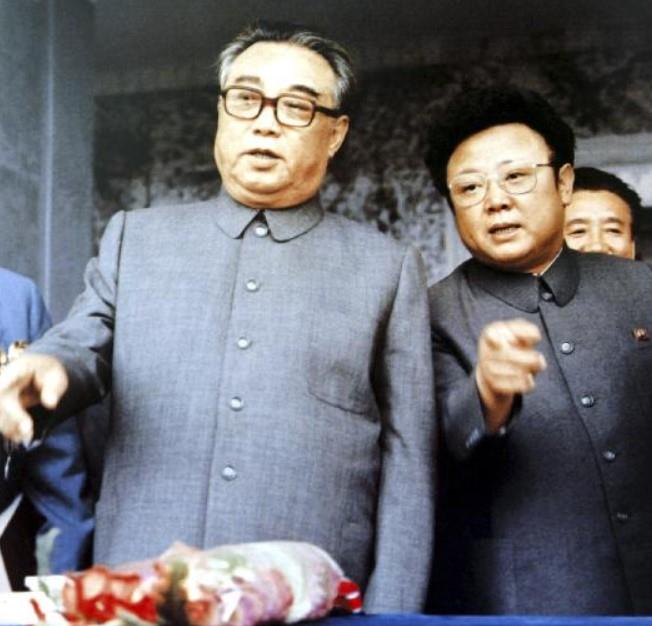
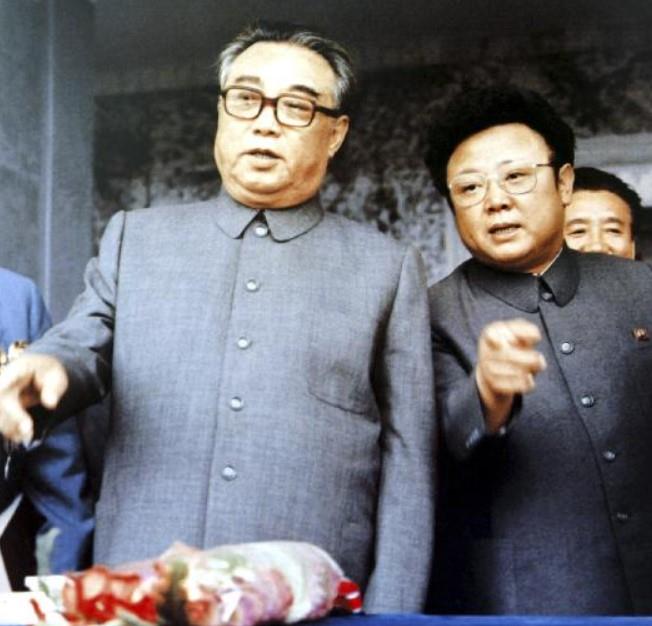
During the 6th Congress of the Workers' Party of Korea in October 1980, Kim Il-sung and Kim Jong-il stood
side by side on the podium / Korean Central Television (KCTV)
There’s an old Korean saying: "If you boast about your child, you’ll make a fool of yourself," and it’s hard not to see this as the foolish behavior of an elderly man.
I’d like to believe Kim Il-sung wasn’t fully aware of the damage caused by Kim Jong-il’s reckless policies. Kim Jong-il’s extravagance and unchecked ambition had pushed the North Korean economy to the brink, leaving the people in a dire situation. Perhaps Kim Il-sung didn’t yet grasp the full extent of the crisis. However, by July 1994, as the economic disaster became clear, Kim Il-sung realized he could no longer leave the situation in Kim Jong-il’s hands. He called for a meeting of top economic officials, but despite his efforts, it never took place.
The reason for this was simple: Kim Jong-il had already consolidated his control over the Party and the government. Evidence of this power shift is vividly illustrated in the novel Eternal Life, which not only recounts the economic meeting Kim Il-sung attempted to convene at his Mount Myohyang residence on July 5-6, 1994, but also describes the events leading up to his death.
A particular passage from this novel stands out to me, in which Kim Il-sung said: "Comrades, isn’t prioritizing agriculture, light industry, and trade our Party’s policy? We must push forward... We must also bolster the role of rail transport, which is vital to the people’s economy, and focus on metal, cement, and coal industries... If we succeed, we too can live well." (Baek Bo-heum and Song Sang-wi, “Eternal Life,” p. 392).
This wasn’t a new stance from Kim Il-sung. He had consistently emphasized these priorities throughout his rule.
However, this statement carried extra weight at the time. Just a month earlier, in June 1994, Kim Il-sung met with former U.S. President Jimmy Carter in Pyongyang, expressing a genuine interest in improving U.S.-North Korea relations. He even hinted that North Korea might freeze its nuclear program or hold inter-Korean talks if it would help. Could this have subtly reflected his concerns about Kim Jong-il and the military’s push for nuclear development?
More specifically, it may reveal his growing concern over the impact of the Korean War and the regime’s heavy focus on military industry, which had stunted the people's economy. This had created a situation where even basic needs were no longer being met. Perhaps this is why Kim Il-sung resisted Kim Jong-il’s opposition and insisted on leading the economic officials’ meeting, citing his role as General Secretary. His determination to preside over the meeting underscores his deep concern. Tragically, the day after the meeting, Kim Il-sung collapsed from illness and passed away on July 8, at the age of 82.
-
PREV [Feature Article]
-
NEXT [Featured Articles]