

Analysis and Outlook on North Korea's Social and Cultural Control
Kim Ho-hong
Director of the North Korea Strategy Center, Korea Research Institute for National Strategy
North Korea remains one of the world’s most closed and repressive states. Despite the prolonged suffering of its people due to severe economic hardships and widespread distrust of the regime, the hereditary dictatorship spanning three generations, from Kim Il-sung to Kim Jong-un, endures. The regime's strict policies of isolation and repression are the key reasons for its survival. North Korea has created a comprehensive social and cultural control system designed to monitor and suppress any grievances or non-socialist behavior before they can develop into collective resistance. This system has been central to the regime's long-term survival. From its inception, North Korea has been vigilant in cracking down on non-socialist activities and continues to do so today.
North Korea’s Chosunmal Dictionary defines "non-socialism" as "anything unhealthy that goes against socialist principles." This vague definition allows the regime to exploit it as a tool for suppressing the people and violating human rights. Initially, non-socialist behavior was limited to certain individuals or regions. However, with the collapse of the public distribution system and the economic crisis during the 1990s’ Arduous March, and as communication technology opened up more contact with the outside world, non-socialist activities spread across the country. As a result, the regime's control efforts have intensified, particularly under Kim Jong-un, becoming more systematic.
In his New Year's speech in 2012, shortly after taking power, Kim Jong-un set the goal of building a "socialist civilized nation." North Korean authorities described this as a country where socialist culture flourishes, with citizens enjoying a high level of creativity and civilization. However, beneath this grand rhetoric was a clear aim: to eliminate the spread of non-socialist influences, especially the so-called "South Korean wave." Kim Jong-un has repeatedly emphasized the importance of ideological struggle to root out these non-socialist elements.
Just months after announcing his vision, Kim Jong-un held a rare meeting of prosecution and judicial officials on November 26th 2012, calling for strict legal punishment against those involved in non-socialist activities. This marked the first such meeting in 30 years. At the 9th Congress of the Socialist Patriotic Youth League on August 28th 2016, Kim urged officials to "uproot all non-socialist and foreign influences early on."
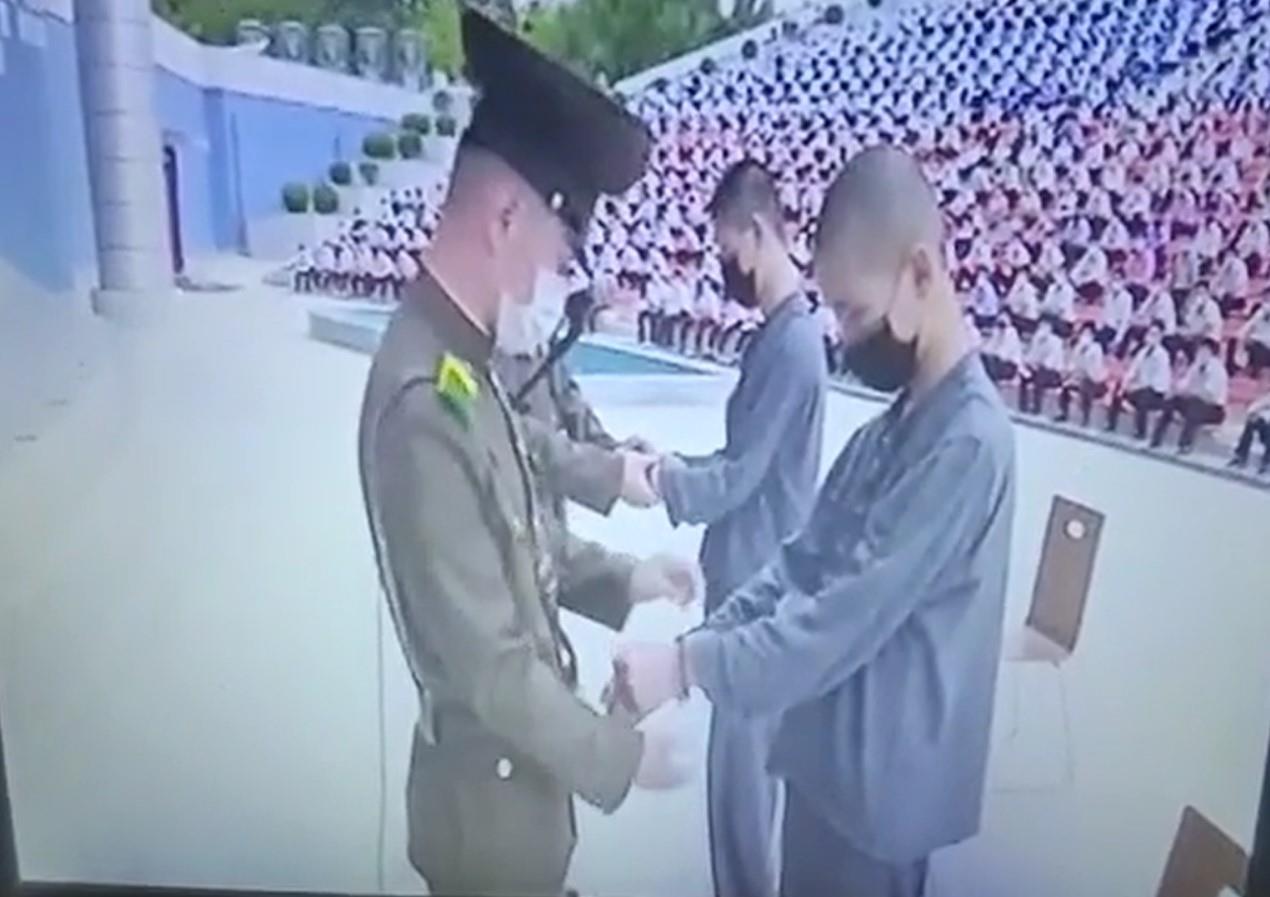
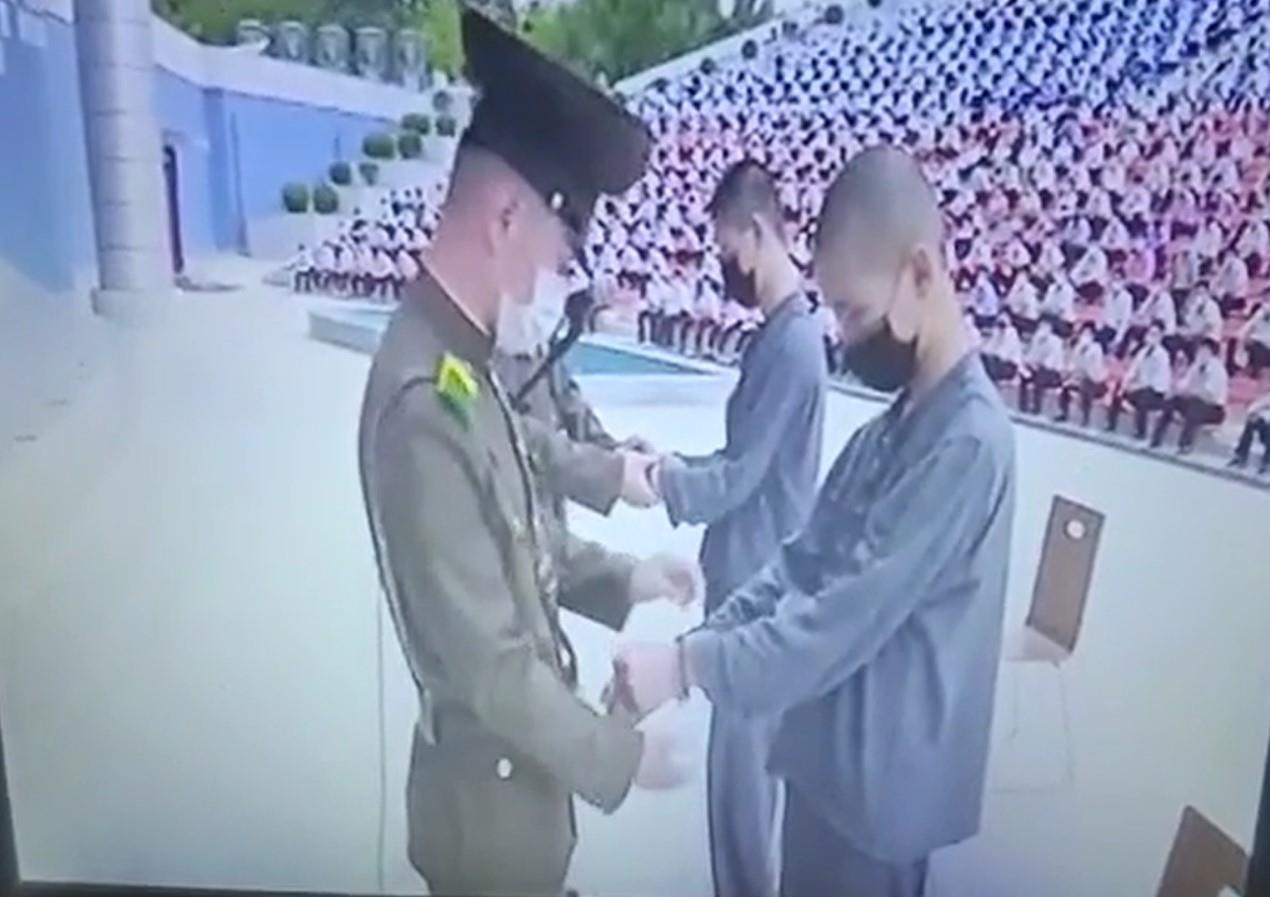
In 2021, two high school students in Pyongyang were subjected to a public trial for watching and distributing
South Korean dramas. / SAND Institute English Newsletter Team
At the Cell Secretaries' Conference on April 8, 2021, and the WPK’s Propaganda Training Session on March 28, 2022, Kim Jong-un expressed concern about the rise of anti-socialist and non-socialist trends in North Korea, urging officials to "intensify and refine ideological offensives" against these influences. For regime survival, he emphasized the need to secure the leader's absolute power and the people's unwavering loyalty. Non-socialist ideologies, promoting individual freedom and human rights, are seen as a serious threat, prompting officials to enhance surveillance and control efforts.
Following these directives, North Korea enacted several laws aimed at curbing the influence of South Korean culture. The Reactionary Ideology and Culture Rejection Law (2020), Youth Education Guarantee Law (2021), and Pyongyang Cultural Language Protection Law (2023) impose harsh penalties, including the death penalty, for violations. These laws are specifically designed to target South Korean cultural influences, such as language and media.
Recently, the regime has further tightened control by mobilizing grassroots administrative units to eliminate non-socialist influences, including the spread of the "South Korean wind," and cut off potential threats. One key method is through the People’s Units (Inminban), which consist of 20 to 30 households linked to local offices. The People’s Unit leader plays a crucial role in closely monitoring households for signs of deviation or suspicious behavior, reporting directly to the Party, the Ministry of People’s Security, and the Ministry of State Security.
In December 2023, the People’s Unit Organization and Operation Law was enacted, enhancing the authority of People’s Unit leaders to ensure that surveillance activities are carried out more systematically and efficiently. Additionally, from April 30 to May 1, 2024, the regime held the National Branch Office Directors' Meeting, emphasizing the need to "strengthen the ideological struggle against anti-socialism and non-socialism." This was the first national meeting of branch offices, the lowest-level police units, since November 23, 2012, Kim Jong-un's first year in power, highlighting the growing ideological instability and weakened discipline due to the spread of non-socialist influences.
Kim Jong-un's announcement of the "Two-State Policy" and the abandonment of unification with South Korea, made at last year’s Workers' Party Plenary Meeting and reaffirmed in this year’s Supreme People's Assembly address, reflects efforts to block the influence of the "South Korean wave." By designating South Korea as the "primary enemy," he has enforced policies that deepen hostility, including removing unification-related terms and cutting rail and road links. These actions aim primarily to prevent non-socialist elements from infiltrating North Korea.
By emphasizing South Korea's pursuit of unification by absorption and portraying it as a "subordinate colony of the United States," Kim Jong-un aims to heighten hostility toward the South and suppress sentiments that could encourage defection. North Korea’s ongoing launch of "trash balloons" toward the South, though serving various purposes, is also part of its control strategy, primarily aimed at deterring South Korean civic groups from sending anti-regime leaflets into the North.
Despite these strict controls, North Korea faces inherent challenges in completely suppressing non-socialist influences, particularly the "South Korean wave." The universal appeal of human freedom and rights, often termed as "soft power," cannot be entirely curbed by legal or institutional means. Many North Koreans have already been exposed to South Korean media and ideas, making it unlikely they will fully comply with the regime’s repressive policies.
Additionally, widespread corruption creates blind spots in enforcement, further undermining the regime's control. Capitalist behaviors and language have become so normalized, particularly among the younger generation, that efforts to eliminate them seem increasingly futile.
Defections from the regime are on the rise. The North Korean Economic and Social Conditions Awareness Report, based on interviews with 6,351 defectors by the Ministry of Unification in February 2024, shows a steady increase in defectors in their 20s, as well as those from Pyongyang and regime-supporting roles. Notably, there has also been a recent spike in defections among diplomats and military personnel.
According to Ri Il-kyu, a former North Korean diplomat who recently defected, Kim Jong-un admitted, "Our country will never collapse due to external invasion or military attacks. The only possibility of collapse lies in internal breakdown." This remark was widely circulated within the Workers' Party, highlighting Kim's awareness that the spread of capitalist thinking and open behaviors within North Korean society poses the greatest threat to the regime's stability.
In her report to the 79th United Nations General Assembly in September 2024, Elizabeth Salmon, the UN Special Rapporteur on human rights in North Korea, noted that Kim Jong-un's regime is harshly repressing private commercial activities as "anti-socialist acts" and has reintroduced public executions and trials to tighten its control.
Given these circumstances, it seems likely that the Kim regime will continue to strengthen its social and cultural controls to maintain its grip on power. Increasing ideological control over the population, while mobilizing public security, surveillance, and administrative bodies to identify and punish non-socialist elements, will likely become a central focus. These measures are expected to result in even more severe violations of human rights and freedoms for North Korean citizens.
At this critical juncture, the international community must focus on the human rights abuses perpetrated by the Kim regime and explore strategies to encourage change within North Korea. It is essential to build a global consensus that Kim’s policies are not just about maintaining order, but about criminal violations of fundamental human rights. By sharing information about these abuses and calling for their cessation, we can help pressure the regime.
At the same time, it is essential to help North Koreans understand the value of freedom and human rights. Providing them with accurate information about the outside world will empower them to reclaim their dignity and rights as human beings. Although it seems unlikely that Kim Jong-un’s policies will change in the short term, sustained international attention and effort can prove that change within North Korea is not impossible.
-
PREV [Featured Articles]
-
NEXT [Analysis of issues]