

Prospects for U.S.-North Korea Collaboration
as Trump Returns to Office

Hwang Joo-hee
Associate Research Fellow, North Korean Research Division,
Korea Institute for National Unification (KINU)
In January 2025, U.S. President Donald Trump highlighted his friendly ties with North Korea’s Kim Jong-un, mentioning the country’s "condo development capabilities" and coastal areas.1) Now in his second term, is the U.S. exploring tourism cooperation with North Korea? This article examines North Korea’s tourism potential and U.S.-North Korea collaboration prospects.
North Korea's International Tourism Zone: Kalma Coastal Tourist Area
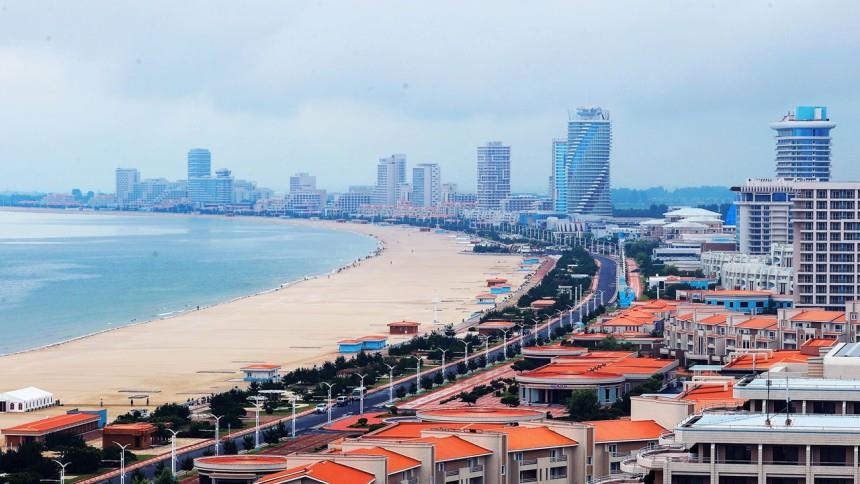
Trump’s reference to North Korea’s coast and condos likely points to the Kalma Coastal Tourist Area, a key project in the country’s economic development plan. At the 12th session of the 14th Supreme People’s Assembly last January, North Korea reaffirmed its commitment to developing the Kalma Coastal Tourist Area.
In Kim Jong-un’s early years, North Korea established special economic zones (SEZs) in each province to attract foreign investment based on regional characteristics. In 2013, it enacted the Special Economic Zones Law, designating 13 SEZs nationwide. North Korea stated their purpose was to promote regional economic balance, secure foreign currency, acquire advanced technologies, and improve living conditions.
In 2019, North Korea announced it had 27 special economic zones, including two international tourism zones: Wonsan-Mt. Kumgang and the Mount Kumgang Tourist Region. However, weak foreign investment led to operational challenges. In response, North Korea prioritized tourism zone development to strengthen foreign economic ties, but progress stalled after 2016 due to increasing sanctions and the COVID-19 pandemic in 2020.
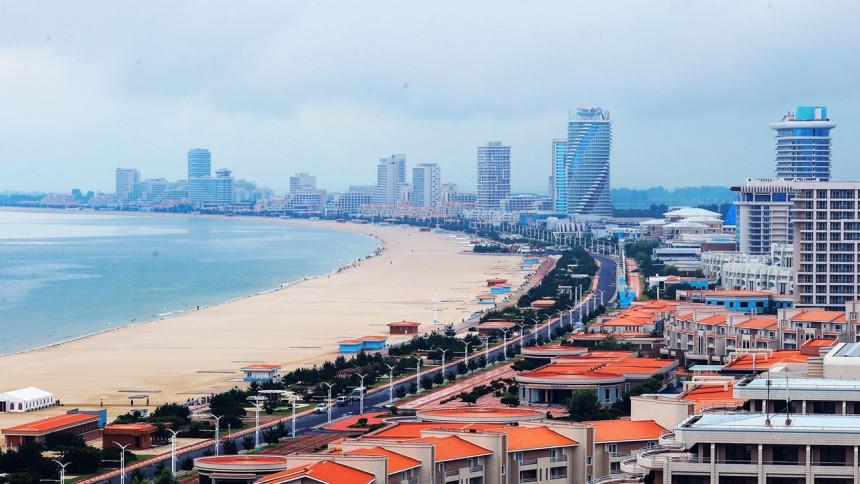
The Wonsan-Kalma Coastal Tourist Area, launched in 2018, has yet to be completed. However, in 2024, Kim Jong Un visited the site to personally oversee the project, signaling renewed efforts to develop the international tourism zone centered around the Kalma district.
In other words, international tourism cooperation is one of the key focuses for North Korea, reflecting its need for foreign investment. In this context, Trump also hinted at the potential for tourism cooperation between the U.S. and North Korea by mentioning "condos" and "coasts."
Sanctions Relief Needs to Come First for U.S.-North Korea Tourism Cooperation
Why did Trump hint at tourism cooperation? Sanctions remain the key issue in North Korea relations. In 2017, his administration imposed tough measures, including a 'secondary boycott' on foreign entities dealing with North Korea, alongside UN sanctions, under the North Korea Sanctions and Policy Enhancement Act of 2016 (Executive Order 13810).
In Trump’s second term, U.S. policy on North Korea must account for sanctions. U.S. sanctions, which prohibit most economic activities with North Korea, classify tourism infrastructure—such as hotels, casinos, and resorts—as sources of foreign currency. Therefore, without easing sanctions, investments in the North Korean tourism sector are effectively impossible.
Is tourism to North Korea possible? Following the death of U.S. student Otto Warmbier, who was detained in North Korea, the Trump administration banned U.S. passport holders from traveling to North Korea in September 2017. The ban has been extended annually, with the seventh extension in effect, valid until August 31, 2025.
Therefore, the U.S. travel ban to North Korea may change depending on the Trump administration's decisions. If tourism becomes a key topic in U.S.-North Korea talks, the most likely short-term outcome would be the lifting of the travel ban and the resumption of tourism.
North Korea Tourism Cooperation: A Persistent Challenge
However, North Korea has shown little response to Trump's willingness to engage, remaining focused on nuclear development, as seen in its January visits to nuclear sites and weapons research facilities.
North Korea has stated that "only nuclear-armed countries have not faced military invasions" while promoting policies like Economic Development Zones and international tourism zones. It emphasized that changes in the investment environment would depend on peace being guaranteed as a nuclear-armed nation.
In contrast, the second term of the Trump administration reiterated its commitment to North Korea's "complete denuclearization," reaffirming its stance of not being willing to compromise on this issue.
Given the significant differences between the U.S. and North Korea, there is a high chance of repeating past failures, like the stalled agreement on dismantling the Nyongbon facility and lifting sanctions. Even if dialogue resumes during Trump's second term, numerous challenges will need to be resolved before meaningful economic cooperation can occur.