

Marketing In North Korea (16)
- 'Kangwon Spirit', Spring Breeze on the East Coast

Jeon Byung-kil
Senior Consultant of YESInnovation
former of Secretary General of UniKorea Foundation
A Land of Hardship
Kangwon is the only province in Korean peninsula that remains divided between North and South. Both South Korea and North Korea have their own Kangwon Province. In South Korea, this region is known for its beautiful natural scenery but also struggles with a weaker local economy. But what image does Kangwon Province have in North Korea?
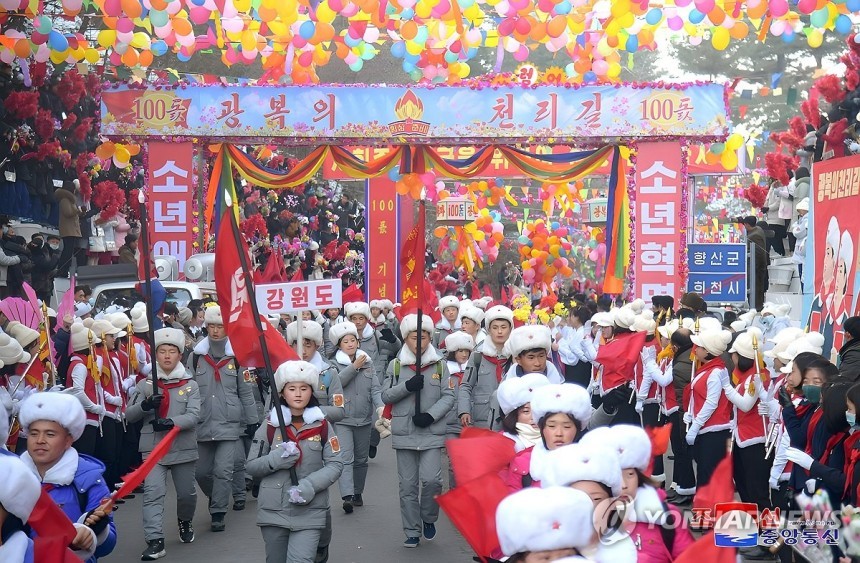
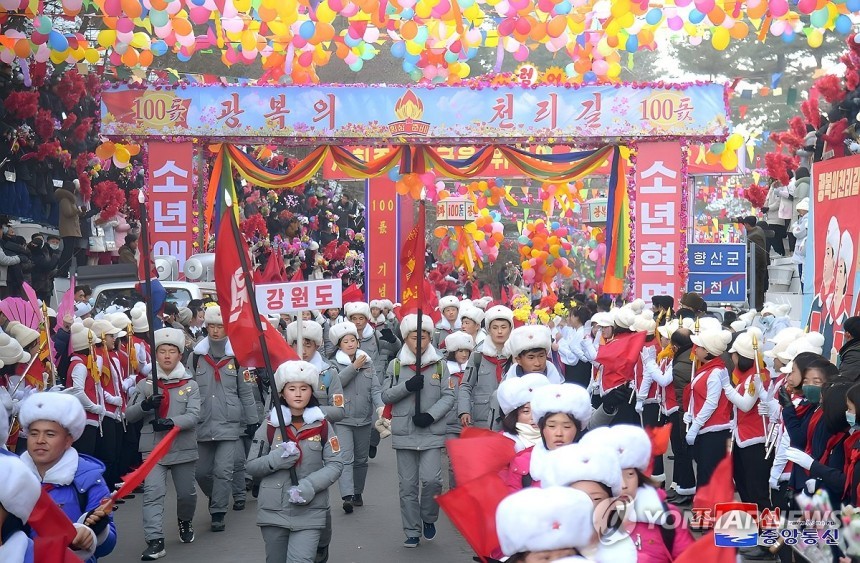
On January 24, 2017, Rodong Sinmun, the official newspaper of North Korea’s Workers' Party, published an editorial emphasizing the "Kangwon Spirit." According to the newspaper, the Kangwon Spirit represents the idea of overcoming hardships through strong belief and self-reliance.
This follows North Korea’s common propaganda style, which links ideological messages to place names. In North Korea, the government often glorifies the most impoverished regions, presenting them as symbols of resilience and loyalty. One example is the "Kanggye Spirit," named after Kanggye, a city in Jakang Province. First mentioned in 1998, the Kanggye Spirit symbolized economic recovery efforts after North Korea’s economic crisis in the late 1990s.
Both Kangwon and Jakang Provinces are mountainous regions with a long history of food shortages. During the 1990s famine, known as the Arduous March, these areas suffered severe hunger. A Rodong Sinmun article from January 29, 2020, described Kangwon Province as "the region with the harshest conditions for development in North Korea. It has few natural resources, a weak industrial base, and poor climate and land conditions. It also borders the enemy (South Korea) and suffered the most destruction during the Korean War."
'Self-Reliance', The Core of the 'Kangwon Spirit'
Since Kim Jong-un came to power in 2012, North Korea has promoted Kangwon Province as an example of success. North Korean media often highlight achievements linked to the "Kangwon Spirit," mainly focusing on the construction of essential infrastructure like power plants, steel production, reforestation, and livestock farms. They also mention improvements in factories that produce bottled spring water, cement, and various goods.
Additionally, Kangwon Province is reported to produce lithium-gel batteries, artificial turf, heat-reflective glass, bathtubs, and toilets. These developments reflect North Korea’s goal of solving long-standing economic problems—such as energy shortages, food scarcity, and lack of basic goods—through self-reliance.
In December 2019, North Korea opened an exhibition hall in Wonsan, Kangwon Province, to showcase local industries. The hall displays thousands of products from over 700 different categories, most of which are made from raw materials sourced within the province. North Korean propaganda presents this as proof that Kangwon Province has achieved economic success entirely on its own. Other regions in North Korea are now encouraged to follow the "Kangwon Spirit," reinforcing the idea of self-reliance as a national goal.
Another 'Kangwon Spirit': The Wonsan-Mt. Kumgang International Tourist Zone
North Korea officially defines the "Kangwon Spirit" as self-reliance, but in reality, it aims to attract foreign investment and generate economic profits from Kangwon Province. One example of economic cooperation between North and South Korea was the Mt. Kumgang tourism project, which operated from 1998 to 2008. This project was made possible by Chung Ju-yung, a South Korean businessman originally from Tongcheon, near Mt. Kumgang. It became a key inter-Korean cooperation effort, connecting South Korea’s Kangwon Province with North Korea’s Kangwon Province.
After gaining experience in tourism from the Mt. Kumgang project, North Korea expanded its tourism industry under Kim Jong-un’s leadership. Since 2012, it has developed the Masikryong Ski Resort, modernized Wonsan Airport, and upgraded Songdowon Internation Children’s Camp. Tourism is an attractive industry for North Korea because it can bring in foreign currency with relatively little investment by using its natural scenery. It is also less affected by international sanctions compared to other industries. North Korea sees tourism as a key driver for economic recovery.
In 2014, the North Korean Supreme People’s Assembly announced the creation of the Wonsan-Mt. Kumgang International Tourist Zone. Since then, North Korea has actively sought foreign investment by holding promotional events domestically and internationally. To attract investors, it established the Wonsan Zone Development Corporation under the Ministry of External Economic Relations. North Korea has even presented specific financial projections, such as an internal rate of return (IRR) of 16.3% and a net present value (NPV) of 13% for the planned construction of the Songdo One Hotel and Haesang Hotel in Wonsan.
Wonsan, the central city of Kangwon Province in North Korea, is a port city with a population of about 350,000 and an area of 320 square kilometers. It was first opened to foreign trade in the late 19th century during the Joseon Dynasty. With the opening of the Gyeongwon railway line connecting Seoul and Wonsan in the early 20th century, it became an important city in the northeastern Korean Peninsula.
The Wonsan-Mt. Kumgang International Tourist Zone covers 440 square kilometers and is planned to include six main areas: Wonsan, Masikryong Ski Resort, Ulim Falls, Mt. Kumgang, Tongcheon, and Seokwangsa Temple. North Korea’s goal is to create a world-class tourist destination with nature-based attractions, year-round tourism, and international cultural and economic exchanges. Wonsan itself is set to become an international tourism hub with various leisure and cultural facilities, while the surrounding areas will focus on eco-tourism, historical sites, and wellness retreats.
This region has a strategic location, within a three-hour flight of over 40 major cities, including Beijing, Shanghai, Shenyang, Seoul, Busan, Tokyo, and Osaka. However, development has faced challenges due to sanctions related to North Korea’s nuclear program. The Wonsan-Kalma coastal tourism project was initially scheduled for completion by April 2018, but delays caused by sanctions and the COVID-19 pandemic pushed the expected completion date to the second half of 2025.
How to Market the Region?
The Wonsan-Mt. Kumgang International Tourist Zone has a higher chance of success than other regions in North Korea, mainly because Mt. Kumgang has already hosted South Korean tourists in the past. In late 2024, North Korean leader Kim Jong-un visited the area, subtly signaling its importance to the international community. Then, in January 2025, former U.S. President Donald Trump, who had a friendly relationship with Kim during his first term, mentioned a "coastal condo" in the Wonsan-Kalma area. If tensions with North Korea ease, global investment in this region could naturally increase.
Tourism is more than just an economic industry—it also encourages openness and cooperation with neighboring countries. However, several fundamental challenges must be addressed first. These include resolving the North Korean nuclear issue, easing international sanctions, creating legal and institutional frameworks, and ensuring a level of economic autonomy that meets global standards.
North Korea’s tourism industry faces many obstacles. Tourism is typically associated with freedom of movement and speech, but in North Korea, strict rules and potential risks can make visitors uneasy. There is also no clear system to handle disputes or unexpected issues, making it difficult for tourists to feel safe. To ensure the future success of the Wonsan-Mt. Kumgang International Tourist Zone, it is essential to develop a strong regional branding and marketing strategy.
Another crucial step is training tourism professionals in Wonsan and Mt. Kumgang. Under Kim Jong-un’s leadership, North Korea has established a Department of Tourism Economics at Wonsan Chong Jun Taek University of Economics and a Department of Hotel Management and Service at Chang Chol-gu Pyongyang University of Commerce to train tour guides and hospitality workers. The introduction of these programs is significant because, in the past, North Korean universities mainly taught Marxist economics, and tourism was viewed as simply visiting historical or cultural sites. The concept of leisure was not well understood, and entertainment was often associated with capitalist decadence.
For North Korea, which seeks both economic survival and regime stability, traditional tourism without ideological messaging is no longer attractive. The success of the tourism industry depends on the availability of well-trained, specialized professionals. In the long run, cooperation with South Korean universities in tourism education could be mutually beneficial. South Korean universities, currently facing a decline in student enrollment due to low birth rates, could find new growth opportunities through such partnerships.
Lastly, global marketing efforts must be strengthened. One effective strategy is to develop various tourism products and promote them through international tourism fairs. A strong regional brand will make Wonsan and Mt. Kumgang more appealing to foreign visitors. This branding effort should go beyond the "Kangwon Spirit" of self-reliance and instead position the region as an attractive, world-class tourism destination.