

Possibility of the Reduction of US Forces in Korea and Its Impact for the Future of the Korean Peninsula

SHIN, Beomchul
Senior Research Fellow, The Sejong Institute
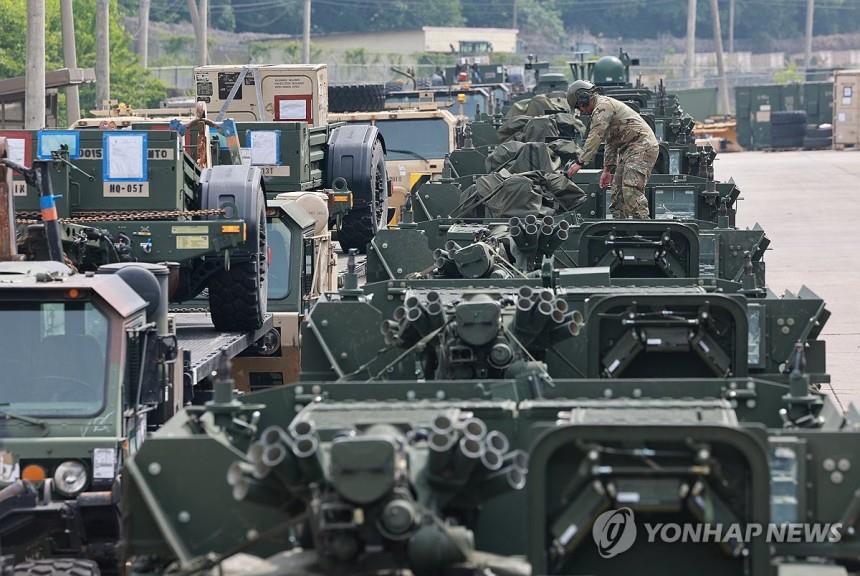
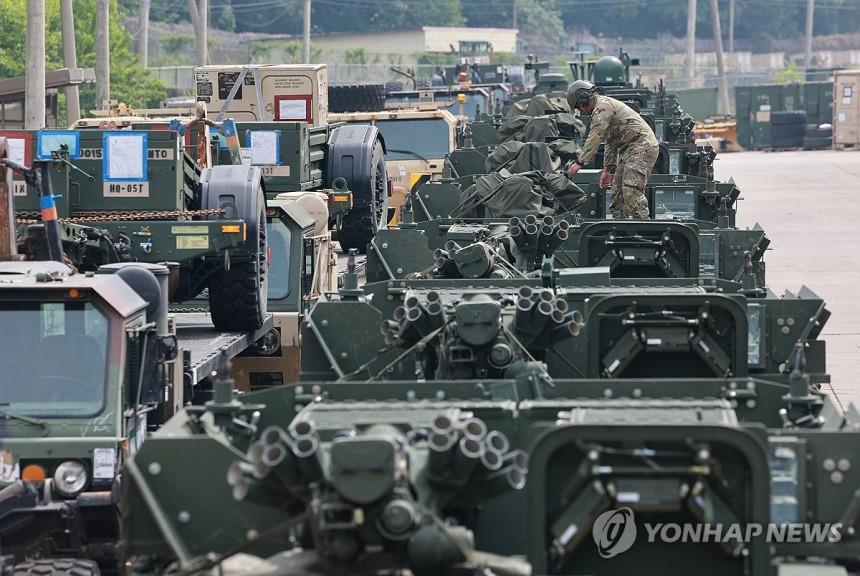
Recently, various concerns have been expressed regarding the reduction of US forces in Korea(USFK). This is because of the strategic consideration of the U.S., which is reorganizing the operation of US forces abroad to strengthen the deterrence against China. In the past, the USFK was often referred to as a “tripwire.”
It was a symbolic expression that if a war were to break out on the Korean Peninsula, the U.S. would send large-scale wartime reinforcements. However, since China’s military rise, the US’s threat perception has changed. Today, deterring China is the top priority in the U.S. defense strategy, and thus, the reality is that the North Korea issue is being pushed to the back burner.
On the other hand, in the first year of the new administration in the United States, the Department of Defense(DoD) issues the strategy document named ‘Nation Defense Strategy.’ In this process, the DoD will also prepare a report called the ‘Global Posture Review’ to adjust the U.S. forces deployed around the world.
In the process of this review, the DoD is goibg to consider the size of USFK along side with the size of U.S. Forces in Japan and Germany. This is the reason why news related to the USFK has been coming out frequently recently.
Strategic Flexibility of US Forces in Korea and the Issue of Reduction of US Forces in Korea
In order for the U.S. to militarily check China, it must have military superiority in the Indo-Pacific region. However, the US does not have enough military presence in the region that can overwhelm China, e.g. the Taiwan Strait or the South China Sea. Thus, the U.S. hopes to utilize its’ forces in Japan and Korea and use them in conflicts with China. This multi-purpose operation of the U.S. force is called strategic flexibility.
Strategic flexibility is a very effective approach to containing China, as it integrates the U.S. military capability in the Indo-Pacific region and maximizes the capacity to deploy its’ military to the area of conflict as promptly as possible. Although strategic flexibility does not mean that the conflict with China is inevitable, it is close relation to the U.S. military readiness to deter China by maintaining a strong posture.
It is expected that strategic flexibility issues will affect the size of the USFK in the near future. From the U.S. perspective, particularly under the Trump administration, if the force is not utilized for the China issue, the importance of the USFK will be difficult to recognize.
The Pentagon might regard the USFK inefficient if the force’s function is solely to deter North Korea. Because the South Korean military capability has advanced, thanks to investments made over the past decades, the U.S. starts to believe that if it provides extended deterrence to the South, the deterrence against North Korea's nuclear threat can be maintained.
If South Korea does not cooperate with the issues of strategic flexibility, the U.S. might reduce the burden to defend Korean Peninsula, and let the the South Korean military take the lead in military operation against North Korea, i.e. reduction of the USFK.
Thus, if the Korean government responds to this US defense strategy regarding strategic flexibility, the US will maintain the current size of the USFK and operate in a way that maximizes its military capability for the dual purpose.
However, if the Korean government opposes the strategy and insists that the USFK must remain to respond to North Korean threats, the US is likely to reduce the size of the USFK, and eventually, the U.S. might attempt to relocate the force to other parts of the Indo-Pacific region.
If the U.S. decides to reduce the USFK, a reduction in ground forces is expected. Today, the US is trying to reduce the size of ground forces as part of its Army transformation initiative, and ground forces deployed in Korea can be subjected to this.
Therefore, if the U.S. decides the downsize of the USFK, it can either to disband the unit or to assign the force to guard the border with Mexico, for example. It this case, a significant reduction in the USFK will occur. If the US Air Force in Korea is to be reduced, some forces may be moved to Guam to secure air superiority over China in the East China Sea and the South China Sea.
However, the possibility of such a reduction is too early to predict at this stage. Further, this kind of problem can be sufficiently prevented through close cooperation between the new administrations in Korean and the U.S.
The necessity of stable stationing of USFK and the direction of ROK-US cooperation
The main function of the USFK is to deter North Korea's military ambition to invade the South. It addition, the USFK is a symbol of the ROK-US alliance, which is as strong as its war-fighting capabilities. In economic terms, the USFK also plays a significant role because foreign investment in Korea is based on the belief that Korea's security will be well managed through the presence of the USFK.
The reduction of US forces in Korea is a serious matter that can shatter this traditional perception. And its aftermath can have a fatal negative impact on Korea's security and economy. Therefore, the Korean government needs to make efforts to ensure the stable stationing conditions of USFK.
An approach that acknowledges the strategic flexibility of the USFK to some extent is necessary. The idea that the USFK should only deter North Korean threats on the Korean Peninsula is not compatible with the text of the R.O.K.-U.S. Mutual Defense Treaty of 1953.
This is because Article 3 of the R.O.K.-U.S. Mutual Defense Treaty provides “Each Party recognizes that an armed attack in the Pacific area on either of the Parties..., would be dangerous to its own peace and safety and declares that it would act to meet the common danger in accordance with its constitutional processes.” As a result, the US will likely recognize the strategic flexibility of the USFK as its own right.
Therefore, rather than unconditionally opposing strategic flexibility, it is desirable to embrace it. In addition, when a conflict breaks out in relation to China, the ROK military should focus on deterring North Korea's threats because North Korea may try to use this opportunity to attack South Korea. This kind of approach can resolve the dilemma and will help the USFK carry out necessary activities while the South can avoid direct conflict with China.
On the other hand, China probably criticize the strategic flexibility of USFK as something that harms peace and stability in the region. Further, China may threaten to attack USFK bases to scare South Korea, and economic retaliation targeting Korea, as it did in the past when THAAD was deployed in 2016, cannot be ruled out.
Therefore, while acknowledging the strategic flexibility of USFK, the R.O.K. must exercise its best to manage the Korea-China relationship. Even if there is pressure from China, the ROK should not respond directly and must maintain a low-key stance. As a peace-loving country, South Korea should consistently maintain the direction of its’ foreign policy of not antagonizing neighboring countries and continuously express its’ intention to develop good bilateral relations.
In particular, if the ROK make it clear that Korean military will not directly intervene in regional issues and will focus on deterring North Korea on the Korean Peninsula even in the crisis in the Taiwan strait, it will minimize the deterioration of relations between Korea and China.
Frankly speaking, many challenges are expected in the ROK-US alliance. In order to overcome them, various pending issues such as tariffs, economic security issues, diplomatic and defense cooperation must be resolved without dissonance. A so called ‘comprehensive strategic alliance between the R.O.K. and the U.S.’ must be continuously developed through the endless consultation between the two ministries.
If necessary, a new vision document must be created that goes beyond the previous government's ‘Washington Declaration’ and ‘Camp David Declaration.’ Through these efforts, preemptively blocking the possibility of a reduction USFK will be the wisest way to strengthen R.O.K.'s security.
-
PREV [Current Affairs Analysis]
-
NEXT [Feature Article]