

Marketing In North Korea (26)
Pyongyang: Branding the Revolution

Jeon Byung-kil
Senior Consultant of YESInnovation
former of Secretary General of UniKorea Foundation
The Role of Pyongyang
Using a local name in a brand—called local brand naming—can help people feel more connected to a product. It also makes the brand more competitive by using the image or feelings people have about that place. For example, the South Korean water brand Jeju Samdasoo uses the clean and pure image of Jeju Island. Another example is Paris Baguette, a bakery brand that uses the name of Paris, the French city known for its fine food culture. Many other brands also use place names to promote their image—including in North Korea.
In North Korea, the most powerful and influential city is Pyongyang, the capital. Pyongyang was once the capital of the ancient Goguryeo kingdom and later an important city called Seogyeong during the Goryeo Dynasty. It is also the birthplace of Kim Il-sung, the founding leader of North Korea. Today, Pyongyang represents the ideas of North Korea’s socialist system. Compared to other areas, Pyongyang receives more economic and social benefits and plays a central role in culture and politics.
This importance is also seen in North Korean brands. Over 80% of the North Korean brands registered with WIPO (World Intellectual Property Organization, part of the UN) are made or managed by factories and companies based in Pyongyang.
North Korea’s Constitution (Article 172) clearly says, “The capital of the Democratic People’s Republic of Korea is Pyongyang.” In 1998, North Korea’s parliament passed a law called the Pyongyang City Management Law, which calls Pyongyang the “capital of the revolution.” This law says the goal is to make Pyongyang a modern, cultural city with clean and quiet living conditions, and good working environments for its people (Article 1).
Because Pyongyang is considered a “sacred place of the revolution,” managing and building the city has a deeper meaning than just running a city. Article 2 of the law says that Pyongyang didn’t become important overnight. During the Korean War (which started in 1950), Pyongyang was almost completely destroyed. After the war, North Korea used many people and resources to rebuild the city.
Brands Named After "Pyongyang"
Among North Korean brands registered with the World Intellectual Property Organization (WIPO), 15 of them are named after Pyongyang or places within Pyongyang. These include 3 brands named directly Pyongyang, 3 named after the Taedong River (which runs through Pyongyang), 3 using Ryugyong (an old name for the city), 2 named after Taesong Mountain, 2 named after Ryongak Mountain, and one brand called “Pyeongmaek,” which combines the words Pyongyang and beer in Korean.
The three brands using the name Pyongyang are for noodles, cigarettes, and kimchi. The noodle and cigarette brands were registered internationally in 2001, and the kimchi brand followed in 2003. Even though they all use the name Pyongyang, each brand has its own unique logo and font style. For the noodle and cigarette brands, North Korea used its traditional handwriting-style font.
After 2003, no new Pyongyang brands were registered—until 2019, when Pyeongmaek, a beer brand, was introduced. This name is different from older styles because it uses the first syllables of two words: Pyongyang and maekju (the Korean word for beer). The logo features an image of barley, one of the main ingredients in beer. The font style is more modern compared to the traditional handwritten look.
In 2022, a textile factory in Pyongyang called Kim Jong-suk Pyongyang Textile Factory registered a brand named Pyeongbang, short for Pyongyang Bangjik (Bangjik means textile).
North Korea often uses local names from Pyongyang to give their brands a special meaning. One of the most well-known is the Taedong River, which is as closely tied to Pyongyang as the Han River is to Seoul. The Taedonggang (Taedong River) brand was registered internationally for different products: fruit items in 2016, food in 2018, and beer in 2019. The beer known as Taedonggang Beer is produced at a brewery located in Sadong District, along the Taedong River in Pyongyang.
North Korea’s Love for Pyongyang’s Old Name: “Ryugyong”
The old name for Pyongyang is Ryugyong (류경/柳京). In Chinese characters, “ryu (柳)” means willow tree and “gyong (京)” means capital city. So, Ryugyong can be understood as “the capital of willows.” This name reflects Pyongyang’s long history and cultural tradition.
Today, many places in Pyongyang still use the name Ryugyong. You can find it in the names of neighborhoods (like Ryugyong-dong), public facilities (like Ryugyongwon convenience center), hotels (like Ryugyong Hotel), gyms (Ryugyong Jong Ju Yong Gymnasium), hospitals (Ryugyong Dental Hospital), and restaurants (Ryugyong Neungra Restaurant). The name has been used throughout the leadership of Kim Il-sung, Kim Jong-il, and Kim Jong-un.
The most famous building with this name is the Ryugyong Hotel, a 101-story pyramid-shaped skyscraper located in Pyongyang’s Potonggang District. Construction began in 1987 but stopped in the 1990s due to North Korea’s economic crisis. It resumed in 2008 with investment from an Egyptian company called Orascom, but construction was halted again in 2012.
Next to the hotel is the Ryugyong Jong Ju Yong Gymnasium, which opened in 2003. It was named after Chung Ju-yung, the founder of South Korea’s Hyundai Group. This gym was built as a symbol of economic cooperation between North and South Korea. South Korea provided the design, materials, and technology, while North Korea provided labor and construction materials.
North Korea has also registered three Ryugyong trademarks with the World Intellectual Property Organization (WIPO). One of them, registered in 2012, is for alcohol. The logo includes a drawing of willow leaves, symbolizing the meaning of ryu (willow). Another trademark, registered in 2019, is for musical instruments. Its logo features a violin and is written in a flowing, cursive-style font.
North Korea even named a smartphone model Ryugyong. This phone was assembled in North Korea using imported parts. Also, the names of two famous restaurants in Pyongyang—Okryugwan and Chongryugwan—include the character “ryu (柳),” again referring to willow trees, a symbol closely tied to Pyongyang.
Pyongyang's Brand Image Under Kim Jong-un
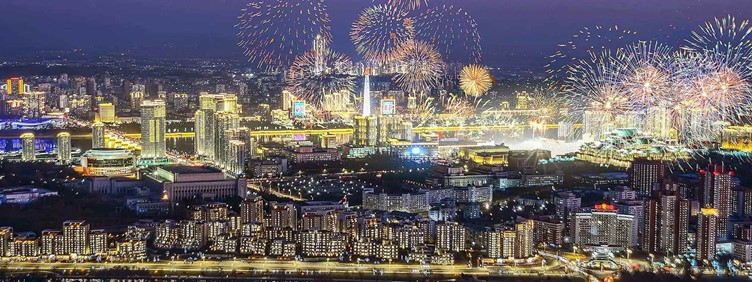
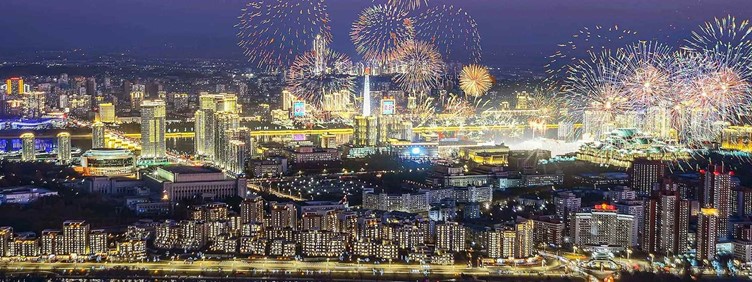
Since Kim Jong-un came to power in 2012, Pyongyang has gone through major changes. Along the Taedong River, North Korea built a new area called Mirae Scientists Street, where many science and technology buildings are located. On Ssuk Island, they built a large science center called the Sci-Tech Complex.
New neighborhoods like Songshin-Songhwa District and Hwasong District were also developed. These areas now have tall apartment buildings, convenience facilities, and improved infrastructure. Pyongyang International Airport was remodeled as well. In just over 10 years, Pyongyang’s skyline and night view have completely changed.
North Korean media calls this time “a new golden age of Juche architecture,” celebrating the construction achievements under Kim Jong-un’s leadership. The city’s new look tries to show a mix of modern technology and style, built on North Korea’s socialist values.
However, while the buildings may look impressive, there are concerns. Some projects were rushed to meet deadlines, and there have been reports of poor construction quality. This has led people to question how strong and lasting the new buildings really are.
A brand’s true value comes from its authenticity—how real and meaningful it is. For Pyongyang, which North Korea calls the “capital of the revolution,” its authenticity depends on one key question: Who is the city for? What is the purpose of the city?
A city’s brand becomes meaningful when it truly cares about the people who live there. If Pyongyang is meant to represent all of North Korea, its brand should start from thinking about its citizens. North Korea often uses the phrase “Iminwicheon” (以民爲天), which means “treating the people like heaven.” This idea should be reflected in the real meaning behind the Pyongyang brand.
-
PREV [Feature Article]
-
NEXT [Feature Article Series]