

July’s Legacy in Inter-Korean Relations

Kim Hyung-seok
Former Vice Minister of Unification
July has long been a month of significance in inter-Korean relations. Key moments such as the July 4 South–North Joint Statement in 1972, the death of Kim Il-sung on July 8, 1994, and the signing of the Korean Armistice Agreement on July 27, 1953 all took place during this month. Personally, I recall July 7, 2007, when an agreement was made during inter-Korean talks to resume daily train service between Seoul and Kaesong, reconnecting the Gyeongui Line after decades of disuse. July has brought both setbacks and progress to the Korean Peninsula.
This July also raises anticipation and curiosity about what kind of historic moment might unfold in inter-Korean ties.
Since the breakdown of U.S.–North Korea talks in Hanoi in 2019, Pyongyang has distanced itself from Seoul. In 2020, it demolished the Kaesong Liaison Office and dismissed South Korea’s mediation role, aiming instead for direct talks with the U.S. When the Yoon administration offered the “Audacious Initiative”—economic aid and security guarantees in exchange for denuclearization—Kim Yo-jong quickly dismissed it as a fantasy, likening it to turning the ocean into a mulberry field.
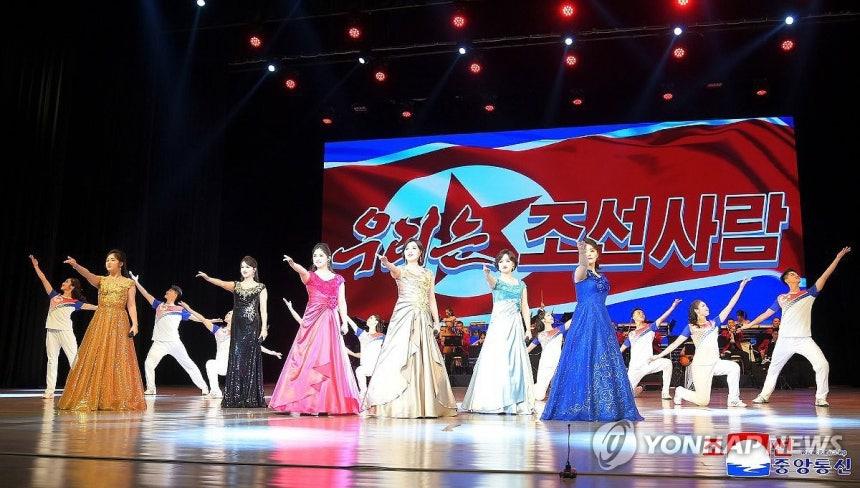
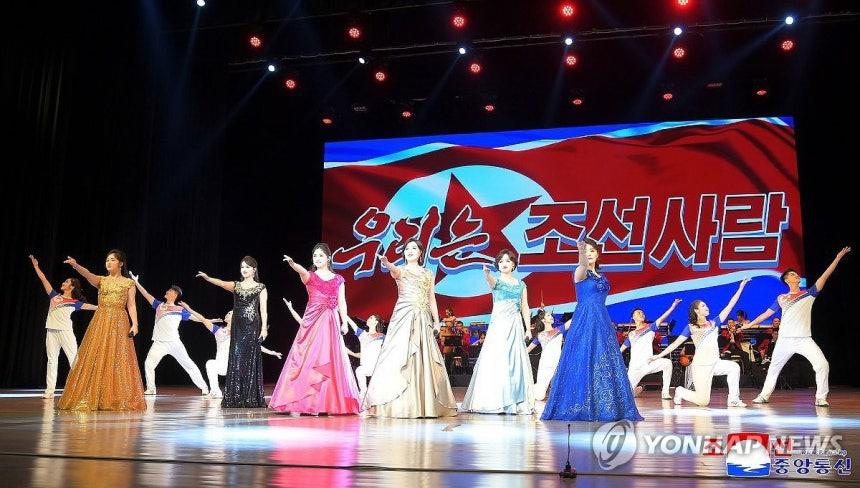
From late 2023, North Korea pushed a “two-state” narrative, cutting off cross-border roads, erecting barriers, and dissolving unification-related agencies. It renamed Panmunjom’s “Tongilgak” to “Panmumgak” and swapped the slogan “From Baekdu to Halla” for “From Baekdu to Songak.” Even its reference to the South shifted—from “Namjosun” to the formal “Republic of Korea.”
These moves suggest that North Korea, having seen Seoul’s inability to act on its 2019 offer to restart Kaesong and Mount Kumgang tourism—due to international sanctions—has concluded that the South is no longer strategically useful. Confident in its rapport with Washington after three summits, Pyongyang appears to have deprioritized Seoul.
Meanwhile, to suppress the growing influence of South Korean pop culture among its youth, Kim Jong-un has enacted laws like the “Reactionary Ideology and Culture Rejection Law,” portraying the South not as a partner in reunification but as an ideological enemy.
The newly inaugurated Lee Jae-myung administration, which took office on June 3, has made early gestures of goodwill. Emphasizing peace and coexistence, it has halted propaganda loudspeaker broadcasts near the border and taken steps to limit anti-North leaflet campaigns by activist groups—moves intended to foster a more amicable climate for dialogue.
However, Pyongyang’s response has been lukewarm. Aside from ceasing its own broadcasts that had kept border-area residents awake at night, it has shown little interest in meaningful engagement with the South. Instead, it is tightening its partnership with Russia, providing more troop support for the Ukraine war, and after 11 years of construction, has completed the Wonsan-Kalma Coastal Tourist Area, signaling its commitment to economic growth through “self-reliance.”
Despite Donald Trump’s claims of a strong personal rapport with Kim Jong-un and his ambitions to develop North Korean resorts, reports suggest Pyongyang recently rejected a personal letter from Trump via the UN, opting to observe rather than act.
North Korea aims to solidify its status as a nuclear power to ensure regime stability and drive economic growth. It sees the United States, its “primary adversary” as the only essential negotiating partner. While Russia’s wartime support offers short-term relief and China’s backing is limited by its own strategic interests, Pyongyang knows it can't depend on them indefinitely.
As economic conditions worsen, discontent may grow not only among citizens but also within the ruling elite. For Kim Jong-un, this is a serious concern—nuclear weapons alone cannot sustain his regime.
The recent joint U.S.–Israeli operation “Midnight Hammer,” which targeted Iran’s nuclear infrastructure over twelve days, likely reinforced Pyongyang’s resolve to maintain its nuclear arsenal. This makes denuclearization efforts by South Korea and the global community all the more difficult. Yet the more North Korea leans on nuclear threats, the tighter international sanctions will grow.
Even allies like China and Russia may be unwilling—or unable—to offer more than vetoes at the UN Security Council. Sooner or later, to ensure its survival and economic revival, North Korea may have no option but to bring denuclearization to the negotiating table with the United States.
Several critical variables will shape the Korean Peninsula’s future: the end of the war in Ukraine, how engaged President Donald Trump becomes in Korean affairs amid wider global crises—including trade tensions and Middle East conflicts—and, crucially, what choices North Korea makes within the growing strategic alignment of Pyongyang, Beijing, and Moscow.
Given these dynamics, the Lee Jae-myung government has a clear mission: to steer North Korea away from nuclear brinkmanship and toward cooperation with the South and the international community. This will require a strong U.S.–ROK alliance to maintain credible deterrence, along with skillful diplomacy rooted in national interest and pragmatism.
On this foundation, South Korea must pursue a steady, bipartisan effort toward realistic reunification—one that doesn’t rush, but patiently works to guide the North toward openness and collaboration.