

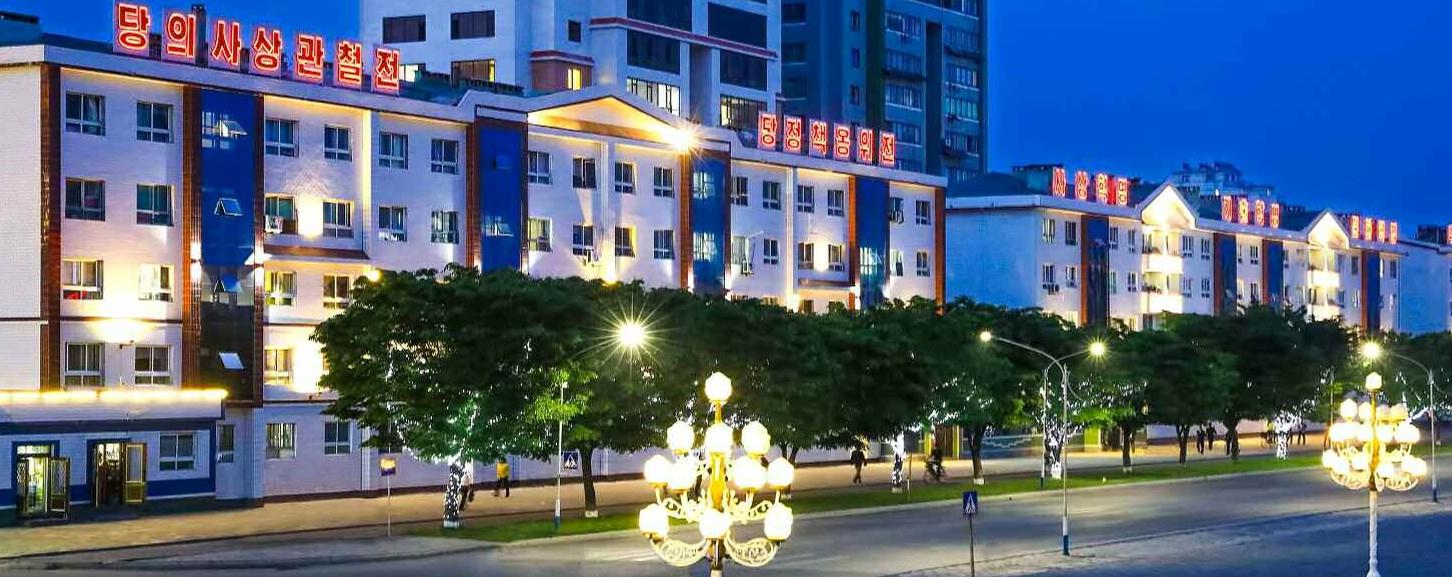
Ten Causes of Collapse in North Korea’s Planned Economy:
Decline, Survival, and Structural Shift
Kwak In-ok
Professor, ICT Convergence Research Institute, Sookmyung Women’s University
1. Collapse of the Planned Economy and the Emergence of New Survival Tactics
One winter morning in the 1990s, ration trucks stopped appearing on the streets of Pyongyang. The queues that once waited for rice gradually vanished, replaced by the clamor of local markets, Jangmadang, as people scrambled to survive. For decades, North Korea’s economy was built on the belief that the state would provide everything. Workers reported to factories, and ration coupons guaranteed access to food and necessities. Then, without warning, that vast system came to a halt.
In powerless nights, people lit candles and fretted over how to feed their families. With factories idle and even schools and hospitals closing, citizens realized they could no longer rely on the state. They began to act for themselves. From the back alleys of Pyongyang to border markets and tiny rural stalls, a new economic reality defined by the marketplace, began to spread across the country.
This article explores the ten pivotal causes behind the collapse of North Korea’s planned economy and how that collapse gave rise to new means of survival. Amid systemic breakdown, how did ordinary people find their own answers? And what can this dramatic shift teach us? We delve into the lived experience of a society whose very foundation was being rewritten.
2. Ten Causes of North Korea’s Economic Collapse
North Korea’s centrally planned economy, once firmly under state control, began unraveling rapidly in the mid-1990s. A cascade of crises including the breakdown of the rationing system, halted factory operations, and chronic energy shortages forced citizens to turn away from the state and toward markets and individual effort to survive. This section outlines the ten core reasons behind the unraveling of the system.
① Breakdown of the Rationing System
By the mid-1990s, North Korea’s rationing network had virtually ceased to function. With supplies of food and essentials drying up, people could no longer expect rice, corn, soap, or clothing from the state. Ration coupons became meaningless, and the state-managed economic order fell apart.
In a bitter Pyongyang winter, a mother heads to a distribution center at dawn, bundled in thick layers. Dozens wait, clutching ration slips like lifelines. But the doors never open. A sign flaps in the wind: “No distribution today.”
Back home, her children sit in hunger. She quietly pulls out an old silver spoon and a dusty wristwatch to sell on the black market. The money buys a bit of rice and corn. In the Jangmadang, rice is traded quietly, while others peddle soap, clothes, or potatoes.
The state’s hold on daily life had vanished. The hum of market trade replaced official systems. This shift wasn’t merely economic, it reshaped family roles, survival strategies, and community trust.
② Declining Factory Operations
With energy and materials in short supply, North Korea’s state-run factories have fallen to less than 10% of their former productivity. Plants in Pyongyang and Nampo have stopped or drastically reduced production due to a lack of electricity and inputs. Many workers, seeing no point in showing up, have turned instead to market activities to feed their families.
Factories once bustling with workers now sit still under layers of dust. Machines don’t run, lights stay off, and raw materials are nowhere to be found. “There’s nothing to do. We just sit around smoking before going home,” one worker says. Some now sell homemade soap or liquor, others head to the Jangmadang to survive.
Idle chimneys are a stark symbol of economic collapse. Today, it’s the market, not the state, that workers rely on to support their families.
③ Persistent Power Shortages
The collapse of the Soviet Union led to a sharp drop in North Korea’s energy imports. The country’s electricity generation now meets only a fraction around 20% of its needs. Essential services like factories, schools, hospitals, and trains operate erratically or not at all. Residents anxiously await the return of power.
Pyongyang’s apartment blocks go dark each night. Families eat by candlelight; children do homework under flashlights. Mothers stare at unused electric rice cookers, wondering if today will bring power.
In hospitals, surgeries pause as flashlights replace surgical lights. Public transit stalls. Schools have no heat, and students shiver in heavy winter clothes.
In desperation, people scour the black market for batteries or small generators. These outages paralyze more than daily life, they choke the nation’s entire infrastructure.
④ Shortages of Raw and Auxiliary Materials
North Korea once relied heavily on imports for key materials—steel, fertilizer, oil. Now, with dwindling foreign reserves and strained international relations, those imports have nearly vanished. Factories can’t replace broken parts, and production has stopped. Farmers, lacking fertilizer, are left to sow seeds in exhausted soil.
A factory manager in Pyongyang says, “There are no parts, no materials, machines are just sitting there.” A farmer laments, “Without fertilizer, our harvest has been halved.”
With state supply chains severed, people must fend for themselves. Iron rods and machine parts, once factory stock, now circulate through Jangmadang stalls. Productivity has plummeted, and the economy sinks deeper into dysfunction.
⑤ Outdated Equipment and Technology
Much of North Korea’s machinery dates back to the 1970s and '80s. Frequent breakdowns and low efficiency plague production, with little access to upgrades or modern technology. In many factories, 30- to 40-year-old equipment still struggles to operate.
“We strip parts from one machine to patch up another. Getting new equipment is out of the question,” says one technician. Even engineers and managers have thrown in the towel, there’s simply no solution left.
As productivity and quality decline, North Korea’s industries lag further behind. These aging machines serve as relics of a system frozen in time.
⑥ Rise of Dollarization and Foreign Currency Use
As the North Korean won lost value, people turned to more stable currencies, primarily U.S. dollars and Chinese yuan. Today, most Jangmadang trades use foreign money. After the disastrous 2009 currency reform, faith in the national currency evaporated, weakening the state’s grip on its economy.
In the Jangmadang, U.S. dollars and Chinese yuan have replaced the North Korean won. Everything is priced and sold in foreign currency. After the failed 2009 currency reform, a common saying took hold: “Money is just paper now.” From then on, people began scrambling to collect foreign currency however they could.
Money changers whisper exchange rates in dark corners, while Chinese electronics sold only for dollars, fly off shelves. The state's monetary policy has lost authority, and with it, control over its own economy.
⑦ Bribery and the Informal Economy
The breakdown of state structures in the 1990s normalized bribery and unofficial trade. To engage in Jangmadang activity which is technically illegal, people must pay off local officials. Bribes became a survival tool.
A few hundred dollars secures school placement, hospital care, or housing. Officials routinely accept payoffs to overlook market trading. Everything is for sale—permits, rations, even state goods. Bribery is no longer hidden; it’s accepted wisdom that “nothing happens without money.” Officials exploit their authority, pushing costs onto ordinary people. This system of corruption has become self-perpetuating.
The rise of the informal economy and widespread bribery exposes the structural flaws of North Korean society, chiefly its lack of rule of law and authoritarian nature. As formal systems break down, bribery has become a substitute for public services. In North Korea, it’s more than corruption, it’s a basic cost of survival and system upkeep.
⑧ Labor Drifting into the Informal Sector
As wages from state-owned enterprises lost their value, many North Korean workers began paying “8.3 fees” to skip work. Instead, they turned to informal market activities like those in the Jangmadang to support their families.
Now, entire households hustle to survive—fathers selling fish, mothers making tofu, children helping at market stalls. The market, not the state, has become the center of daily life.
Some young people risk crossing into China for better opportunities. Labor has moved en masse from formal sectors to the informal economy, distorting factory management. "8.3 fees” often go toward managers' salaries or factory expenses, even as operations grind to a halt.
Ultimately, this large-scale shift from formal to informal work is reshaping North Korea’s economic structure and how people make a living.
⑨ Increasing Dependence on China
In recent years, North Korea has grown increasingly reliant on foreign imports, especially from China, for basic necessities such as food, fuel, and consumer goods. In Jangmadang markets near the border, Chinese-made clothing, groceries, and electronics are widely available.
Even in Pyongyang’s supermarkets, shelves are filled with Chinese brands of instant noodles, tobacco, and liquor. It’s often said now that “everything from ramen to cigarettes to cell phones in North Korea comes from China.”
Since the early 2010s, more than 70% of North Korea’s imports have come from China, making its trade disproportionately dependent on a single partner. By 2023, that figure surged to a record 96.7%. With such deep reliance, any disruption in cross-border trade or diplomatic ties triggers immediate economic turmoil. Among ordinary citizens, a common phrase captures the reality: “We can’t survive without China” a stark reflection of the regime’s economic fragility.
⑩ Waning State Control and Expanding Market Activity
As state control weakens, individuals, local officials, and businesses increasingly make independent decisions. Jangmadang has spread throughout the country from official markets in Pyongyang to border black markets and rural stalls. Despite official bans, underground trading continues.
By the 2010s, the government could no longer suppress markets entirely and began tolerating them. A hybrid economy emerged, where formal and informal sectors coexist.
Now, citizens manage their own production and sales. The market has become a dominant force in society. Amid this blend of regulation and freedom, North Koreans are charting new paths. The retreat of state control has allowed a market-based society to take root.
The collapse of North Korea’s planned economy is more than just the failure of an economic system, it has reshaped everyday life. As state control receded, markets and informal networks stepped in, and citizens carved out their own means of survival. Today, North Korea continues to adapt under a hybrid order where planned and market economies exist side by side.
3. The Rise of the Market Economy in Place of the Planned System
What followed the collapse of North Korea’s planned economy wasn’t just chaos—in the midst of it, people showed extraordinary resilience and a strong instinct to survive.
As rations ended, housewives became vendors, factory workers became traders. Kids skipped school to help their families earn money. Bribery and unofficial trade became routine. Power outages, material shortages, outdated machinery, an influx of foreign currency, and a surge of Chinese goods—all these crises also opened up new opportunities for survival.
Markets expanded in the vacuum of state control. People began shaping their lives on their own terms. The result is a dual economy. Part state-run, part market-driven. That spans from capital city stalls to rural outposts.
At the heart of this transformation are ordinary people who didn’t give in to despair. Their choices and determination are writing North Korea’s present. The future remains uncertain, but one thing is clear: the collapse wasn’t just a downfall, it opened doors.
North Korea is no longer just a closed, stagnant system. Its people are shaping a new chapter—a story of change, adaptation, and human resilience.
The country’s market economy experiment isn’t over. And at the center of that experiment are the very people trying to survive it.
-
PREV [Feature Article]
-
NEXT [Feature Article Series]