

Alternative Thinking on the North Korean Nuclear Issue and Peace on the Korean Peninsula

Jungsup Kim
Principal Fellow, Sejong Institute
1. Evolving Dynamics
North Korea’s nuclear capabilities have advanced well beyond rudimentary deterrence, reaching the level of a de facto nuclear-weapon state. Although estimates differ across institutions, Pyongyang is widely assessed to possess approximately 50 nuclear warheads.
It is also nearing completion of a strategic ICBM force capable of threatening the U.S. mainland. After a successful test of Hwasong-15 in 2017—with an estimated range of 13,000 km—North Korea unveiled the Hwasong-19 in 2024 and the Hwasong-20 in 2025.
Notably, its tactical nuclear strike capabilities have developed dramatically since the 2019 Hanoi summit. North Korea has introduced short-range missiles such as the KN-23/24/25, developed the strategic cruise missile “Arrow,” and launched the “Manrikhyung-1” military reconnaissance satellite. To complete its credible second-strike capability, North Korea is advancing underwater nuclear deterrence through assets like the SLBM Pukguksong-5-S and a 3,000-ton tactical nuclear-powered submarine, which is currently under construction.
Beyond technical progress, Pyongyang’s political resolve to maintain its nuclear arsenal has also hardened. In September 2022, it adopted the Nuclear Forces Policy Act, codifying an offensive nuclear doctrine. The following year, it amended its constitution to enshrine “the strengthening of nuclear forces,” thereby institutionalizing its nuclear permanence. Kim Jong-un has since declared nuclear weapons an “eternal strategic asset.”
The broader strategic environment has also shifted. The war in Ukraine and the tightening North Korea-Russia alignment have largely neutralized the impact of international sanctions. With external pressure diminished, momentum toward denuclearization has eroded. Pyongyang now enjoys its most favorable strategic position since the end of the Cold War—being able to pursue survival and development without dependence on the United States or South Korea.
Meanwhile, the Trump administration appears inclined toward dialogue with North Korea, while tacitly accepting its nuclear status. At the same time, Pyongyang has redefined inter-Korean relations as a “hostile relationship between two sovereign states,” cutting off all contact and communication. Under these conditions, neither inter-Korean rapprochement nor progress on denuclearization can be achieved through Seoul’s efforts alone.
2. The Lee Jae-myung Administration’s Pragmatic Approach
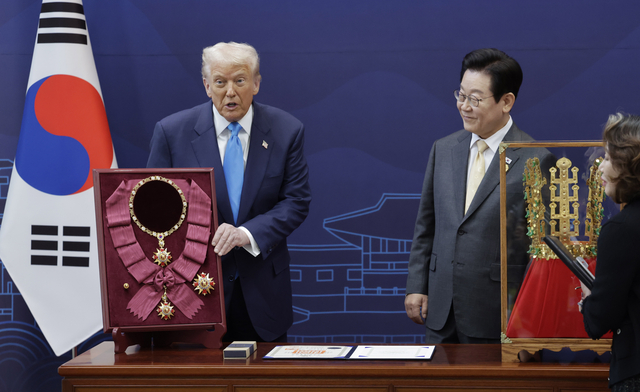
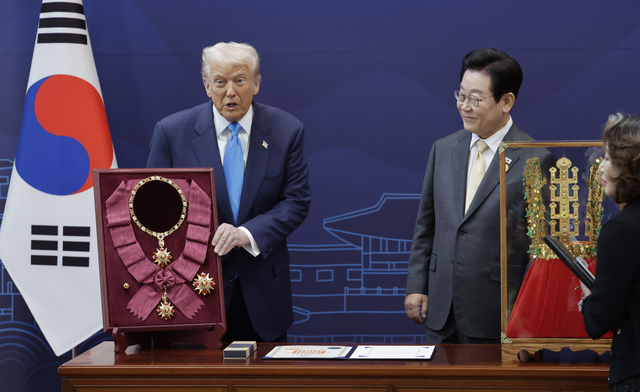
In response to this new environment, the Lee Jae-myung administration has adopted a pragmatic and phased approach to both inter-Korean relations and denuclearization. Recognizing the limited room for immediate progress, Seoul is looking to a possible U.S.-North Korea dialogue as the next political inflection point. President Lee’s remark during his summit with President Trump—that he would act as a “pace-setter” rather than a “peacemaker”—reflects an adjustment to these new strategic realities.
The administration has proposed a three-step denuclearization process (suspension → reduction → dismantlement) and the E.N.D. (Exchange → Normalization → Denuclearization) Initiative. These represent a practical, incremental strategy toward nuclear risk management and peace-building.
However, achieving tangible progress remains challenging. For the foreseeable future, it is unlikely that substantive denuclearization talks or a renewed peace process will resume. Even if a U.S.–North Korea summit were held, meaningful agreements would be difficult to reach.
Potential outcomes can be envisioned in tiers:
Minimal level: A limited “stabilization exchange,” where North Korea halts ICBM and nuclear testing in return for scaled-back ROK-U.S. joint exercises and restraint in strategic asset deployments.
Intermediate level: A freeze, in which Pyongyang suspends fissile material production and expansion of its warhead stockpile.
Advanced level: Disablement, such as the verified closure of Punggye-ri or dismantlement of Yongbyon facilities.
Final stage: Full denuclearization, involving verified removal and disposal of all existing warheads.
At present, the minimal stabilization exchange appears to be the most realistic expectation. Still, improved U.S.–North Korea relations could help manage tensions and create conditions for gradual progress. Accordingly, close Seoul-Washington coordination to support renewed dialogue remains essential.
In the interim, inter-Korean efforts should prioritize reducing hostility, managing military risks, and building political trust—laying the groundwork for a long-term peace process rather than immediate breakthroughs.
3. Toward a Forward-Looking Peace Framework
Building sustainable peace on the Korean Peninsula requires a realistic and forward-looking strategy.
First, to reduce military tension, Seoul should consider reinstating key provisions of the 2018 September 19 Military Agreement, suspended under the Yoon Suk-yeol administration. Restoring land and maritime buffer zones could include halting artillery drills within 3km of the DMZ, ceasing live-fire exercises near the West Sea’s Northern Limit Line (NLL), and resuming inland rotational training for Marine artillery units on the five northwest islands—contingent on reciprocal restraint from Pyongyang.
Second, Seoul must work to shape a favorable international environment. Close consultation with Washington, both before and after any U.S.–North Korea engagement, is essential. Moreover, broader diplomatic efforts should aim for cross-recognition among the four major powers—the U.S., China, Japan, and Russia—an opportunity which was missed after the Cold War.
Normalizing North Korea’s relations with the U.S. and Japan, while simultaneously repairing South Korea’s strained ties with China and Russia, would help reduce Northeast Asia’s bloc confrontation and create a more conducive setting for managing the nuclear issue.
Third, it is time to reframe the relationship between denuclearization and peacebuilding. Whereas conservative governments prioritized “denuclearization first,” and progressive ones pursued “parallel progress,” the current reality renders both paths difficult. A more flexible dual-track approach—advancing peace and deterrence management separately—may now be the most viable.
In this context, Seoul must define what kind of relationship it seeks with a nuclear-armed North Korea. The challenge is to combine credible deterrence with diplomatic engagement to reduce risk. What is needed most is alternative thinking—a strategic confidence that the North Korean nuclear threat can be managed, not merely contained or matched by nuclear armament.
Concerns about the credibility of U.S. extended deterrence, including the so-called “torn nuclear umbrella,” are often overstated. Deterrence operates not solely on certainty but also on probability and perception. Despite lingering doubts, Pyongyang cannot ignore the potential consequences of a U.S. nuclear response. As long as U.S. Forces Korea remain on the peninsula, a North Korean nuclear strike remains highly improbable.
Additionally, South Korea’s growing non-nuclear deterrence capabilities—including advanced conventional precision strike systems, missile defenses, and ISR assets—further strengthen stability. The belief that “only nuclear weapons can deter nuclear weapons” is a misconception. Effective deterrence is rooted in fear, not parity.
Thus, the North Korean nuclear threat can be strategically managed if the ROK-U.S. alliance remains robust, conventional military superiority continues to expand, and Seoul carefully manages relations with Beijing and Moscow. Based on this premise, it is time to envision a forward-looking peace architecture for the Korean Peninsula—anchored in pragmatic deterrence, diplomatic engagement, and strategic patience.