

The Strategic Imperative for
South Korea–NATO Defense Industrial Cooperation

Chan Yang
Senior Research Fellow
Korea Defense Industry Promotion Association
The war in Ukraine has fundamentally reshaped the international security environment. Russia's growing military cooperation with North Korea, the rise of gray-zone threats targeting cyber networks, space assets, and critical undersea infrastructure, and the intensifying strategic competition between the United States and China have increasingly linked security in the Euro-Atlantic and Indo-Pacific regions. North Korean artillery ammunition and troop deployments directly affect the sustainability of the war in Europe, while the military technologies Pyongyang may receive in return could significantly enhance its military capabilities on the Korean Peninsula. Europe is therefore no longer a distant theater of conflict for South Korea, just as the Korean Peninsula can no longer be regarded as a peripheral security concern for NATO.
The most consequential question arising from this changing strategic environment is not which country possesses more advanced weapons, but which defense industrial base can sustain military operations over time. The credibility of deterrence increasingly depends on how rapidly combat losses can be replenished, how quickly damaged systems can be repaired, and how effectively operational lessons can be incorporated into weapons development and production. Simply increasing defense budgets is insufficient. Financial resources translate into military capability only when supported by an integrated industrial base encompassing production facilities, skilled labor, critical raw materials, testing and certification infrastructure, component inventories, and maintenance networks.
1. A Changing Security Environment Exposes Structural Constraints on Both Sides
At the 2025 Hague Summit, NATO committed to investing 5 percent of GDP in defense and security-related expenditures by 2035. Building on its revised Defense Production Action Plan (DPAP), the Alliance is pursuing demand aggregation, multinational procurement, expanded production capacity, and greater standardization across member states.
This initiative reflects not a lack of awareness of evolving security threats, but rather a recognition of the persistent lag between increased defense spending and the generation of actual military capability. Europe continues to possess globally competitive industries in aerospace, missile systems, sensors, and electronic warfare. However, decades of post-Cold War optimization around just-in-time production and limited-volume procurement have reduced surge production capacity, particularly for ammunition, ground systems, critical components, and maintenance support.
Fragmentation presents an even greater structural challenge. Differences in operational requirements, certification procedures, procurement schedules, and export regulations across NATO member states have resulted in multiple variants of similar weapons systems, each requiring unique components and logistics support. Consequently, increased defense spending often generates competition for limited industrial capacity rather than proportionate increases in production. This dynamic contributes to rising procurement costs and longer delivery schedules.
Between 2020 and 2024, European arms imports increased by 155 percent compared with the previous five-year period, while 64 percent of NATO Europe's imported defense equipment originated from the United States. Although U.S. suppliers have successfully met urgent operational requirements, this pattern has also highlighted the risks associated with dependence on a single supplier and export-control processes beyond Europe's direct control.
Accordingly, NATO's strategic objective should not be framed as a choice between European and non-European suppliers. Rather, the priority is to establish diversified, resilient supply chains capable of expanding production, substituting suppliers, and sustaining maintenance during prolonged crises.
South Korea confronts a different, yet equally important, set of structural constraints. Over several decades, South Korea has developed exceptional capabilities in rapid mass production, timely delivery, and integrated manufacturing through sustained government investment, stable domestic procurement, and highly coordinated industrial supply chains. Nevertheless, the domestic market alone cannot sustain this industrial base. Once major acquisition programs conclude without follow-on orders, production lines become dormant, highly skilled engineers disperse, suppliers exit the market, and testing infrastructure deteriorates. Reconstituting this industrial ecosystem requires significant time and financial investment.
Furthermore, the historical reliance on government-directed research and development has limited incentives for private firms to undertake high-risk investments in next-generation defense technologies.
Expanding exports alone cannot fully resolve these structural challenges. European governments increasingly require local production, technology transfer, and regional sourcing of components. Initiatives such as the Strategic Technologies for Europe Platform (SAFE) and the European Defence Industrial Programme (EDIP) are specifically designed to strengthen Europe's defense technological and industrial base. In addition, systems incorporating U.S.-origin components remain subject to the International Traffic in Arms Regulations (ITAR), including re-export approval requirements and restrictions on the transfer of technical data. Financing requirements, localization costs, concerns about creating future competitors, and differing national export-control policies further complicate market access.
Consequently, if South Korea limits its engagement to exporting finished systems, it risks being viewed merely as a temporary supplier addressing Europe's current production shortfall rather than as a long-term strategic industrial partner.
2. Why South Korea–NATO Defense Industrial Cooperation Is a Strategic Necessity
First, South Korea and NATO possess complementary comparative advantages across different time horizons.
South Korea offers rapid production capacity through existing manufacturing lines, agile industrial decision-making, and integrated supplier networks. NATO, by contrast, provides long-term demand visibility through capability planning, common standards, and multi-year multinational procurement.
Combining South Korea's manufacturing speed with NATO's predictable procurement framework would enable the Alliance to address immediate capability gaps while providing South Korean industry with the production stability needed to sustain investment in research and development, workforce development, and industrial expansion.
This relationship should therefore evolve beyond one in which South Korea merely fills temporary production shortfalls. Instead, it should follow a phased approach in which Korean manufacturers address immediate production requirements while joint production capacity and localized manufacturing are progressively expanded across Europe over the longer term.
Second, cooperation should focus on establishing a distributed defense industrial base rather than maximizing individual weapons sales.
Modern warfare increasingly rewards resilience over efficiency. Supply chains concentrated in a single factory or country may minimize costs during peacetime but become highly vulnerable to wartime disruption.
Integrating South Korean manufacturing with European assembly, component production, ammunition manufacturing, and maintenance hubs would enable production to continue even if individual facilities were disrupted by military attack or supply-chain interruptions.
Localization should therefore be understood not simply as increasing domestic content but as strengthening industrial resilience through redundant production capacity, interchangeable manufacturing processes, strategic stockpiles, rapid production conversion, and the mutual recognition of industrial certifications.
Third, the principal objective of cooperation should be operational readiness rather than export volume.
During prolonged conflicts, sustaining deployed systems becomes more important than delivering new equipment. Europe would benefit from multinational maintenance, repair, and overhaul (MRO) hubs, shared spare-parts inventories, standardized maintenance certification, and integrated configuration management.
The adoption of predictive and condition-based maintenance would enhance operational readiness while reducing lifecycle costs. At the same time, South Korean manufacturers would gain access to operational data collected across diverse training and combat environments, enabling continuous improvements in system design, software performance, and future product development.
Fourth, defense industrial cooperation serves as strategic insurance that strengthens deterrence across both the Euro-Atlantic and Indo-Pacific theaters.
Given the growing military relationship between Russia and North Korea, security challenges in Europe and Northeast Asia have become increasingly interconnected. Expanded South Korean production capacity can strengthen Europe's wartime resilience, thereby reducing Russia's ability to achieve its objectives through a prolonged war of attrition. Conversely, deeper cooperation with NATO in areas such as advanced technologies, intelligence, cyber defense, and space security would enhance South Korea's ability to monitor and respond to North Korea's evolving military capabilities.
Finally, industrial capacity itself contributes directly to deterrence.
Potential adversaries are more likely to initiate conflict when they believe they can exhaust an opponent's stockpiles or disable its industrial base through an initial offensive. Conversely, an alliance capable of rapidly replacing combat losses, restoring damaged systems, sustaining maintenance networks, and continuously adapting weapons designs significantly reduces the likelihood that an initial offensive can achieve decisive strategic gains.
Defense industrial cooperation should therefore be understood not primarily as an arms export policy, but as a long-term strategy for strengthening deterrence by demonstrating the collective capacity to sustain prolonged military operations.
3. The Strategic Significance and Future Prospects of the “Korea–NATO Defense Industry Partnership 2.0”
At the 2026 North Atlantic Treaty Organization (NATO) Summit, President Lee Jae-myung unveiled the "Korea–NATO Defense Industry Partnership 2.0," a strategic initiative designed to transform existing defense cooperation from a relationship centered primarily on arms exports into one based on joint research and development (R&D), co-production, and operational collaboration. The proposal reflects Seoul's broader objective of positioning South Korea not simply as a supplier of military equipment, but as an integrated partner within NATO's evolving defense industrial ecosystem.
The initiative is particularly notable because it closely aligns with NATO's recent emphasis on strengthening defense industrial resilience, expanding multinational defense production, and accelerating innovation in emerging technologies. President Lee highlighted cooperation in artificial intelligence (AI), autonomous systems, drones, robotics, space capabilities, ammunition production, and defense supply chains—areas that have become central priorities for NATO in response to the changing security environment.
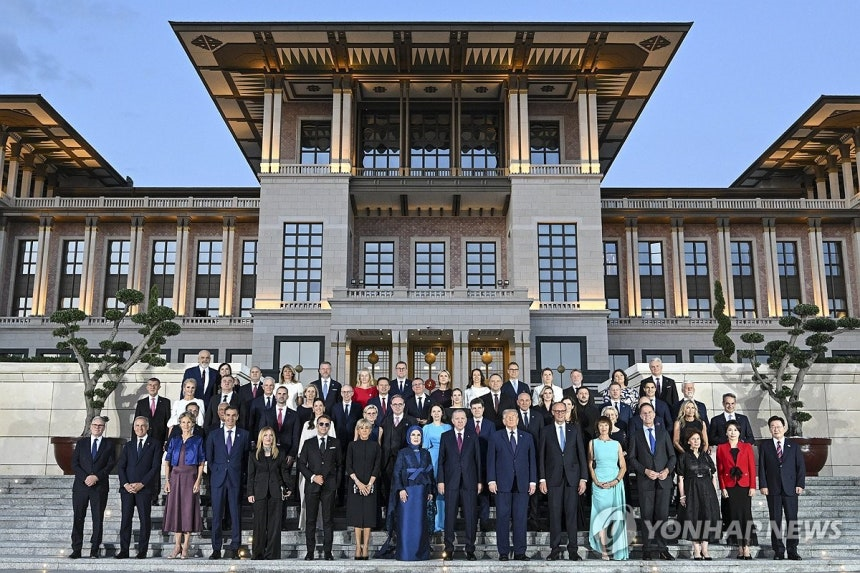
Speaking at the NATO Defense Industry Forum in Ankara, Türkiye, President Lee argued that defense industrial cooperation should evolve beyond the traditional export-oriented model toward one based on jointly developing, producing, and operating advanced weapons systems. He emphasized that the increasingly volatile international security environment requires deeper industrial integration among like-minded partners and faster mechanisms for technological cooperation.
The proposal represents more than an expansion of existing defense cooperation. It reflects a broader strategic vision that treats the defense industry as a pillar of national security, economic security, technological competitiveness, and supply chain resilience. In this framework, defense cooperation is no longer viewed solely through the lens of commercial arms sales but as a long-term strategic partnership encompassing innovation, industrial capacity, and technological leadership.
A central component of President Lee's proposal is expanded joint R&D in next-generation defense technologies. Citing South Korea's participation in NATO's ammunition and space-related cooperation initiatives, he called for broader collaboration in AI, autonomous systems, drones, robotics, and space technologies. These priorities closely complement NATO's own innovation agenda, including the Defense Innovation Accelerator for the North Atlantic (DIANA), the NATO Innovation Fund, and expanding cooperation in space security. As technological superiority increasingly determines military effectiveness, advanced defense innovation has become a defining element of strategic competition.
Supply chain resilience constitutes another major pillar of the initiative. President Lee proposed establishing a multinational defense supply chain management mechanism modeled on the International Energy Agency's (IEA) strategic petroleum reserve system. The proposal mirrors NATO's post-Ukraine efforts to strengthen joint ammunition procurement, diversify defense production, and expand co-production among allies. The prolonged Russia-Ukraine war has demonstrated that sustained deterrence depends not only on advanced weapons systems but also on the industrial capacity to manufacture, replenish, and sustain military capabilities over time. In this context, President Lee's observation that "the supply chain itself has become an essential element of deterrence" reflects an increasingly accepted assessment within contemporary defense planning.
South Korea has already expanded defense cooperation with NATO member states—including Poland, Germany, Romania, and Norway—through exports of major defense platforms such as the K2 main battle tank, K9 self-propelled howitzer, FA-50 light combat aircraft, and Chunmoo multiple rocket launcher system. However, previous cooperation has largely been transactional, centered on arms sales and follow-on logistical support. Partnership 2.0 seeks to establish a more comprehensive model incorporating joint R&D, local manufacturing, maintenance, repair, and overhaul (MRO), lifecycle sustainment, and operational interoperability. If successfully implemented, the initiative could facilitate the deeper integration of South Korean defense firms into European defense supply chains while enhancing interoperability under NATO standards.
President Lee also underscored that strategic trust is the foundation of successful defense industrial cooperation. He argued that meaningful collaboration requires confidence that critical supplies will remain available during crises and that sensitive technologies will be adequately protected. Emphasizing the shared democratic values of South Korea and NATO, he presented Seoul as a reliable long-term defense partner capable of contributing to the Alliance's collective security objectives.
The proposal reflects broader structural changes in the international security environment. The prolonged Russia-Ukraine war and intensifying U.S.-China strategic competition have elevated defense industrial capacity from a supporting function to a central component of national power. Modern conflicts increasingly depend on technological innovation, industrial production capacity, resilient supply chains, and sustained logistical support rather than battlefield performance alone. President Lee's characterization of research institutions and production facilities as the "front lines of national security" captures this evolving understanding of strategic competition.
Nevertheless, significant challenges remain before the initiative can be translated into concrete policy. Joint R&D will require careful management of technology transfer, intellectual property protection, and security standards. Differences in defense procurement policies among NATO members, coordination with U.S. and European defense industries, export control regulations, and varying national industrial interests could all complicate implementation. Moreover, the extent to which NATO members are prepared to integrate South Korea into critical defense supply chains remains an open question. The long-term success of the Korea–NATO Defense Industry Partnership 2.0 will ultimately depend on whether both sides can institutionalize cooperation beyond arms procurement and establish durable mechanisms for industrial integration, technological collaboration, and shared defense production.
4. From Strategic Necessity to Institutionalized Cooperation
The first priority should be to institutionalize a Korea–NATO–EU Defense Technology and Supply Chain Dialogue, integrating the Korea–NATO Individual Tailored Partnership Programme (ITPP), NATO science and technology cooperation, and the EU–Republic of Korea Security and Defence Partnership.
Rather than serving as a purely declaratory forum, this mechanism should establish permanent working groups focused on:
. Long-term capability planning and multi-year procurement;
. Standards, testing, certification, and interoperability;
. Joint research, production, and maintenance, repair, and overhaul (MRO); and
. Export controls, technology security, and supply-chain resilience.
NATO should provide greater transparency regarding future capability requirements and procurement timelines, while South Korea should provide realistic assessments of its industrial capacity, production schedules, and supply-chain constraints.
Institutionally, this foundation already exists. South Korea and NATO concluded the Individual Tailored Partnership Programme (ITPP) in 2023, while South Korea and the European Union signed a Security and Defence Partnership in 2024. At the 2026 Summit, both sides reaffirmed their commitment to expanding cooperation, including in defense industrial collaboration.
Conclusion
Defense industrial cooperation between South Korea and NATO should not be viewed as a relationship in which one side compensates for the other's deficiencies. Rather, it represents a partnership between two highly complementary industrial ecosystems.
NATO and Europe possess advanced research capabilities, mature defense standards, operational expertise, and predictable long-term demand. South Korea contributes rapid manufacturing capacity, integrated production systems, and highly efficient supply-chain management. Together, these complementary strengths create a strong foundation for a mutually beneficial and enduring strategic partnership.
However, this opportunity will remain temporary if cooperation is confined to exports of finished platforms and limited localization initiatives.
Instead, both sides should move beyond viewing South Korea merely as a temporary supplier until European production recovers—or Europe merely as a large export market for Korean firms. Future cooperation should integrate common capability requirements, collaborative system design, distributed manufacturing, multinational maintenance networks, long-term procurement arrangements, and robust export-control frameworks into a single strategic ecosystem.
In an era in which security challenges increasingly span multiple regions, defense industrial capacity must become equally interconnected. The ultimate objective of South Korea–NATO defense industrial cooperation should not simply be to sell more weapons, but to establish a distributed technology and industrial alliance capable of collectively designing, producing, sustaining, and continuously improving military capabilities over the long term.
-
PREV [Feature Article]
-
NEXT [Current Affairs Analysis]