

On the Threshold of Renewed U.S.–North Korea Dialogue:
Recommendations for a Pragmatic Approach Prioritizing a Freeze on North Korea's Nuclear Program

Min Hong
Senior Research Fellow
Korea Institute for National Unification (KINU)
A New Chapter in Leader-to-Leader Diplomacy
During a press briefing following his return from Europe and the G7 Summit on June 19, President Lee Jae-myung stated that the North Korean nuclear issue was the most extensively discussed topic in his meeting with President Donald Trump. According to Lee, President Trump expressed frustration over the prolonged stalemate in U.S.–North Korea relations and suggested that the time may be ripe to reengage in dialogue with Kim Jong-un. Trump also reportedly acknowledged that completely halting North Korea's nuclear development is unlikely to be achievable in the near term and indicated that a phased approach should therefore be considered.
President Lee advocated a pragmatic strategy that North Korea could realistically accept, emphasizing that "the North Korean nuclear issue cannot be approached in the same manner as other nuclear challenges." He proposed a phased process beginning with an immediate suspension of additional fissile material production. According to Lee, President Trump responded that he would give the proposal careful consideration. Lee also encouraged Trump to take a leading role in pursuing a peaceful resolution to the North Korean nuclear issue, drawing a parallel with his diplomatic efforts to address conflicts in the Middle East.
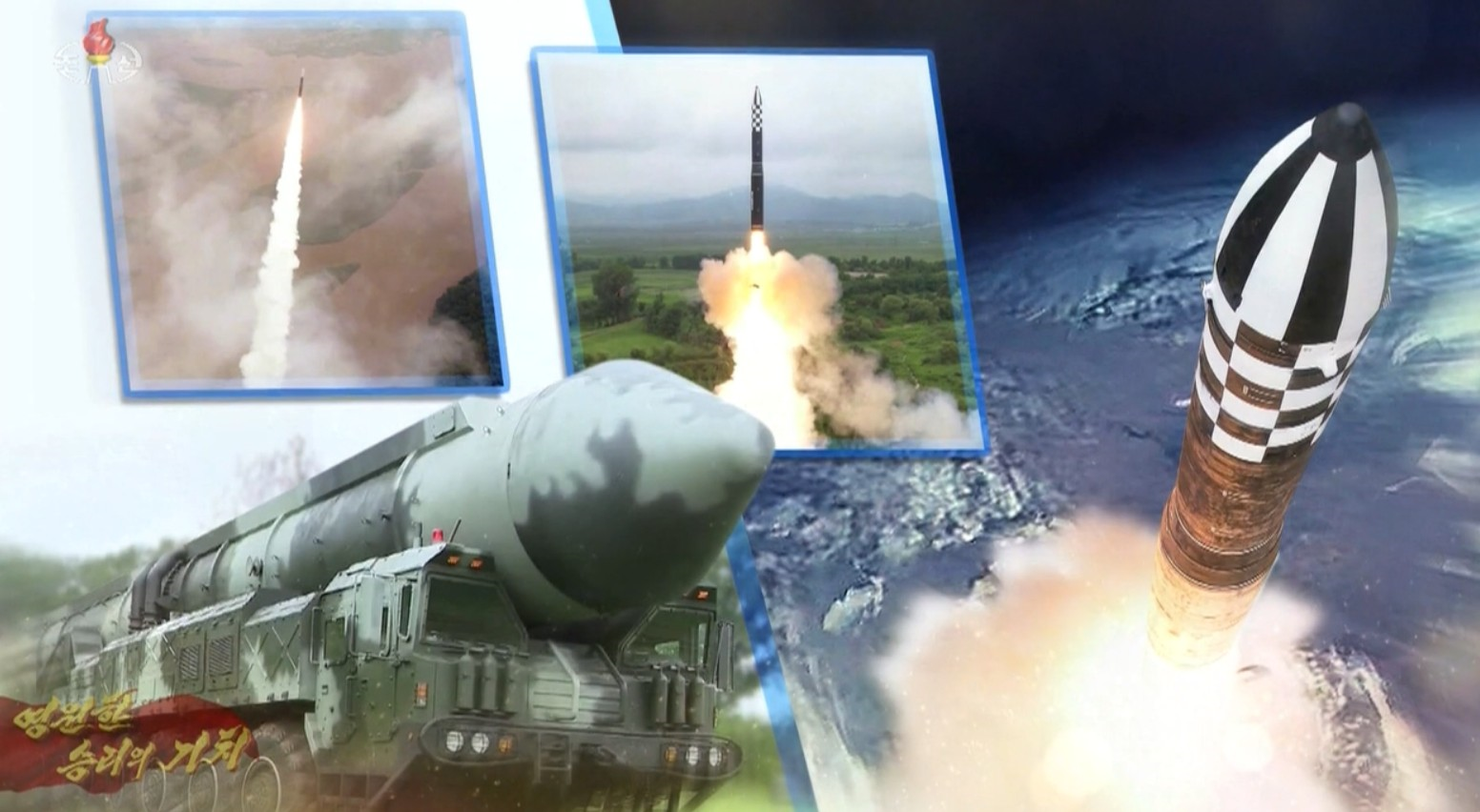
To fully understand the significance of this exchange, it is important to consider the broader strategic context. At its Ninth Party Congress in February, North Korea formally redefined inter-Korean relations as those between "two hostile states," describing this shift as an irreversible historical choice. In March, Pyongyang further institutionalized its status as a "nuclear-armed state" through a constitutional amendment. Subsequently, at an expanded meeting of the Party's Central Military Commission in July, the regime designated the qualitative and quantitative expansion of its nuclear forces as an operational priority for the military.
Against this backdrop, North Korea has effectively foreclosed the prospects for meaningful inter-Korean dialogue and cooperation. Under these circumstances, facilitating direct U.S.–North Korea engagement while ensuring that South Korea's strategic interests are reflected in the process remains one of Seoul's few viable policy options. Equally important, the trust and communication demonstrated between President Lee and President Trump during this visit constitute valuable diplomatic assets in their own right.
The Strategic Rationale for a Phased Approach
President Lee's proposal reflects an increasingly pragmatic approach to the North Korean nuclear issue. While reaffirming denuclearization as the long-term objective, it acknowledges that achieving this goal in a single step is unrealistic. Instead, it proposes beginning with a freeze on North Korea's nuclear program, followed by subsequent measures implemented through a phased process designed to sustain peaceful coexistence.
This approach reflects the recognition that the longstanding strategy of "denuclearization first, compensation later," together with more than three decades of sanctions and pressure, has failed to halt North Korea's nuclear advancement. Indeed, North Korea's nuclear capabilities have expanded most rapidly during periods when negotiations broke down.
From a practical perspective, suspending additional fissile material production would cap the future growth of North Korea's nuclear arsenal, thereby slowing the expansion of the threat. If a comprehensive settlement is unattainable in the near term, preventing the problem from becoming more severe represents a rational interim objective. Such an approach could also help reduce military tensions on the Korean Peninsula and lower the risk of inadvertent escalation by consistently signaling that South Korea seeks peaceful coexistence rather than confrontation. In this sense, the proposal represents a meaningful departure from an approach centered primarily on coercive pressure and offers a more practical framework for managing current security risks.
Assessing North Korea's Strategic Calculus
The success of such an approach, however, depends on an accurate assessment of North Korea's strategic objectives. Most importantly, Pyongyang no longer seeks negotiations in which its nuclear weapons serve as the principal bargaining chip.
At the Ninth Party Congress, North Korea explicitly rejected the denuclearization framework and excluded South Korea from what it considers the appropriate framework for negotiations. Instead, Pyongyang has shifted toward a model of U.S.–North Korea relations in which both sides engage as de facto nuclear powers, focusing on reducing mutual threats, preventing military conflict, and improving bilateral relations.
The March constitutional amendment, which further institutionalized North Korea's status as a nuclear-armed state and constitutionally affirmed Kim Jong-un's command authority over the country's nuclear forces, reflects this broader strategic shift. From Pyongyang's perspective, nuclear weapons are no longer viewed as bargaining leverage but rather as a permanent foundation of its national security and foreign policy.
Consequently, if a proposal to prioritize a freeze on North Korea's nuclear program continues to treat denuclearization as the central negotiating objective, North Korea is likely to focus instead on issues related to the bilateral relationship—including military confidence-building, threat reduction, and the removal of what it characterizes as hostile policies—while excluding its nuclear capabilities from substantive negotiations.
Accordingly, even if another U.S.–North Korea summit were to materialize, policymakers must first recognize and manage a fundamental asymmetry: the two sides are no longer negotiating within the same conceptual framework. Before substantive negotiations can begin, they must first address the mismatch in their respective assumptions regarding the purpose, scope, and agenda of future dialogue.
This does not imply that President Lee's proposal should be dismissed. Rather, it underscores the need for a broader, long-term strategic framework to ensure that individual policy initiatives are neither subsumed within North Korea's preferred negotiating framework nor exhausted without producing lasting strategic gains. If Pyongyang has already shifted toward a framework centered on threat reduction and coexistence, South Korea must develop a strategy that fully accounts for this evolving environment while advancing its own strategic objectives. Effective policy must begin with an accurate assessment of the changing strategic landscape and translate that assessment into a coherent course of action.
Beyond the North Korean Nuclear Issue: Toward Expanded Strategic Stability
More fundamentally, the North Korean nuclear issue can no longer be viewed as a problem confined to the Korean Peninsula. Through its expanding military cooperation with Russia and the deployment of troops in support of Moscow's war effort, North Korea has become increasingly embedded in the broader European security environment. At the same time, intensifying strategic competition among the United States, China, and Russia—combined with rapid advances in artificial intelligence, hypersonic weapons, space capabilities, and cyberspace operations—has transformed Northeast Asia into a focal point where military, political, and technological competition increasingly converge.
North Korea's nuclear development is therefore not simply a product of its domestic security calculations but also a reflection of broader shifts in the international balance of power. Consequently, any strategy that focuses exclusively on changing North Korea's behavior through denuclearization negotiations is likely to encounter significant structural limitations.
South Korea's strategic framework should therefore move beyond the traditional linear linkage between denuclearization and improved inter-Korean relations. Instead, it should adopt a broader concept of expanded strategic stability—one that manages not only the nuclear dimension but also the broader military, technological, economic, and geopolitical environment surrounding the Korean Peninsula.
Such a strategy begins by recognizing the interaction among global, regional, and theater-level security dynamics and by incorporating these overlapping strategic layers into policy planning. It must also seek to promote stability across multiple domains, including nuclear deterrence, conventional military balances, cyberspace, outer space, intelligence, economic security, and supply chains. Equally important, South Korea should articulate a broader strategic vision that defines the regional order it seeks to promote and sustain.
In today's increasingly complex security environment, no single actor possesses either complete situational awareness or the capacity to shape the strategic environment unilaterally. Accordingly, the appropriate strategic paradigm is no longer one of dominance and control but rather one of coexistence, risk management, and strategic stability. Within such a framework, initiatives such as prioritizing a freeze on North Korea's nuclear program acquire lasting strategic value only when they are integrated into a broader architecture for regional security management.
South Korea's Leadership: Advancing Multilayered Threat Reduction and Arms Control
A central requirement is a renewed understanding of trust. Trust cannot be built through rhetorical commitments to peace alone; it must be grounded in tangible measures that reduce security risks. Calls for trust unaccompanied by concrete threat-reduction measures fail to address the underlying sources of instability.
Three practical approaches merit particular consideration.
First, South Korea should pursue incremental and reciprocal threat-reduction measures. Rather than waiting for a comprehensive agreement, Seoul could initiate limited but meaningful confidence-building measures that gradually create the conditions for broader negotiations. Such calibrated reciprocity can provide a practical foundation for sustained leader-level dialogue.
Second, policymakers should encourage behavioral and tacit forms of arms control. Even in the absence of formal agreements, predictable military behavior, operational restraint, and the avoidance of provocative actions can significantly reduce the risks of miscalculation and unintended escalation.
Third, South Korea should assume a leading role in promoting regional cooperative security and arms control in Northeast Asia. Seoul could propose a multilateral framework for consultations on threat reduction aimed at minimizing strategic misperceptions arising from competition over nuclear weapons and advanced conventional strike capabilities. If broader strategic arms control discussions among the United States, China, and Russia were eventually incorporated into such a framework, the North Korean nuclear issue could also be addressed within a more comprehensive and sustainable regional security architecture.
As demonstrated during President Lee's recent diplomatic engagements, South Korea's growing national capabilities and international standing provide an opportunity to move beyond the role of a facilitator between Washington and Pyongyang. Instead, Seoul should seek to establish itself as a strategic architect capable of shaping a durable framework for peaceful coexistence and long-term stability in Northeast Asia. Achieving this objective will require a comprehensive strategy centered on sustained threat reduction, cooperative security, and regional stability.
From Managing the Status Quo to Shaping the Strategic Environment
The renewed momentum toward U.S.–North Korea dialogue and the proposal to prioritize a freeze on North Korea's nuclear program represent meaningful efforts to adapt policy to a changing strategic environment. As an initial step, such measures can contribute to reducing tensions and strengthening crisis management on the Korean Peninsula.
Their true significance, however, lies not in their immediate policy outcomes but in their potential to serve as the foundation for a broader strategic framework. Individual initiatives should therefore be embedded within a three-tiered strategy: short-term measures focused on reducing tensions and restoring crisis-management mechanisms; medium-term efforts emphasizing threat reduction and arms control; and long-term objectives aimed at establishing a stable regional security order in Northeast Asia.
Such an approach would provide the foundation for a distinctly Korean model of strategic stability centered on mutual threat reduction and cooperative security. Ultimately, sustainable progress will require a broader transformation in strategic thinking—one that moves beyond outdated policy paradigms grounded primarily in normative aspirations or historical assumptions and instead embraces a forward-looking strategy capable of managing coexistence in an increasingly complex security environment. Only through such a strategic shift can the current opening for renewed dialogue be translated into durable strategic gains.
-
PREV [Current Affairs Analysis]
-
NEXT [Issue Analysis]