

MASGA and a New Vision for South Korea as a Responsible Maritime Power

Taejoon Kim
Professor Emeritus
Korea National Defense University
Prologue: Why South Korea's Nuclear-Powered Submarine Program Has Become an International Issue
South Korea's nuclear-powered submarine (SSN) is no longer merely a national defense issue. With the emergence of MASGA (Make American Shipbuilding Great Again), the discussion surrounding a Korean SSN has expanded beyond defense policy to encompass alliance strategy, the international order, and Indo-Pacific maritime security. The central question is no longer whether South Korea should acquire an SSN, but what strategic value and international responsibilities such a capability can deliver.
Originally conceived as an initiative to revitalize the U.S. shipbuilding industry, MASGA is evolving into something far broader. It is increasingly taking shape as a new alliance platform that integrates industrial capacity, advanced technologies, resilient supply chains, and maritime security. This evolution reflects a fundamental transformation in the nature of modern alliances, in which industrial capability has become an essential pillar of strategic power.
Within this evolving strategic environment, the significance of South Korea's SSN is also being redefined. Rather than being viewed merely as a military platform, it is increasingly recognized as a strategic capability that can strengthen allied maritime security, safeguard critical sea lines of communication, and contribute to maintaining a free, open, and stable maritime order.
Important questions nevertheless remain. Can a South Korean SSN coexist with the global nuclear non-proliferation regime? Can it earn the confidence of the international community? These concerns are both legitimate and necessary. They should be addressed through transparent governance, responsible operational principles, robust safeguards, and full compliance with international law and non-proliferation norms.
South Korea has earned the trust of the international community not by pursuing nuclear weapons, but by consistently upholding the Treaty on the Non-Proliferation of Nuclear Weapons (NPT), cooperating closely with the International Atomic Energy Agency (IAEA), and demonstrating its commitment to international law. Guided by these principles, a South Korean SSN should be understood not as a symbol of nuclear armament, but as a trusted instrument of Responsible Maritime Deterrence.
This article does not seek to make the case for the military necessity of a South Korean SSN. Instead, it addresses a more fundamental question: Why should the United States and the international community regard a South Korean SSN as a strategically valuable capability, and how can it contribute to the future of the U.S.–ROK alliance, Indo-Pacific maritime security, and the international order?
Ultimately, MASGA represents far more than an initiative to revitalize the U.S. shipbuilding industry. It reflects the evolution of industrial cooperation into strategic alliance-building. Within this broader transformation, South Korea's nuclear-powered submarine should be understood not simply as a military platform, but as a strategic milestone in the country's emergence as a Responsible Maritime Power.
Ⅰ. Why MASGA Represents a New Alliance Platform
MASGA (Make American Shipbuilding Great Again) was originally conceived as an industrial cooperation initiative aimed at revitalizing the U.S. shipbuilding industry. Today, however, its strategic significance extends far beyond that original objective. It is evolving into a broader alliance platform that integrates industrial capacity, advanced technologies, resilient supply chains, and maritime security within a unified strategic framework. In doing so, MASGA illustrates how the U.S.–ROK alliance is evolving beyond a traditional military partnership into a future-oriented alliance founded on shared industrial capabilities, technological innovation, and strategic resilience.
This transformation reflects a broader shift in the international strategic environment. National security can no longer be sustained by military power alone. Advanced shipbuilding, semiconductors, artificial intelligence, and resilient supply chains have become strategic assets that shape deterrence, operational readiness, economic resilience, and national competitiveness. Shipbuilding, in particular, has reemerged as a critical strategic industry that underpins naval power, maritime operations, and the long-term resilience of defense and commercial supply chains.
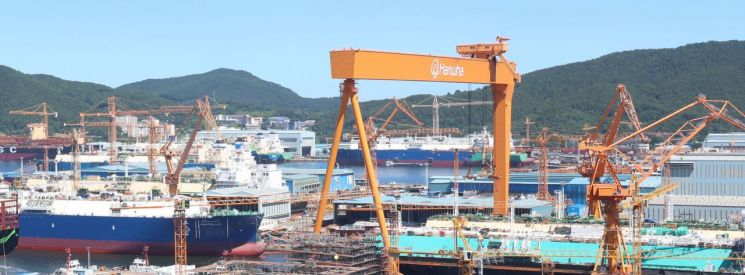
The United States is increasingly confronting this new reality. Although it continues to maintain the world's most powerful navy, constraints in shipbuilding capacity and in maintenance, repair, and overhaul (MRO) capabilities have emerged as significant strategic challenges. South Korea, by contrast, possesses world-class shipbuilding technology, advanced industrial capacity, and internationally recognized expertise in naval construction, ship maintenance, and fleet sustainment. Its expanding role in supporting the maintenance and repair of U.S. Navy vessels underscores the strategic value of these capabilities.
These complementary strengths are transforming MASGA from an industrial cooperation initiative into a framework for developing shared strategic capabilities. Traditionally, alliance burden sharing focused primarily on how allies should divide defense costs and military responsibilities. The emerging model, by contrast, places greater emphasis on Alliance Capability Sharing by integrating each ally's industrial, technological, and production strengths into collective strategic capabilities.
This evolution naturally leads to Strategic Capability Integration, in which industrial capacity, advanced technologies, maritime operational capabilities, intelligence assets, and maintenance, repair, and overhaul (MRO) systems are brought together within a unified strategic architecture. This is the central strategic significance of MASGA. Its value lies not merely in revitalizing the U.S. shipbuilding industry, but in transforming complementary national strengths into enduring alliance capabilities.
Ultimately, MASGA should be understood as far more than an economic initiative to support the U.S. shipbuilding industry. It represents a next-generation alliance platform through which the United States and South Korea can integrate industrial capacity, advanced technologies, and maritime security to strengthen their collective strategic capabilities. Within this evolving framework, South Korea's nuclear-powered submarine should be understood not as an instrument of unilateral military expansion, but as a core strategic capability that reinforces the alliance's collective maritime security and long-term strategic resilience.
Ⅱ. Why Does the International Community Need South Korea's SSN Capability?
Discussions surrounding South Korea's nuclear-powered submarine (SSN) have traditionally focused on national security, particularly the growing nuclear and missile threats posed by North Korea and the need to strengthen maritime deterrence. While these concerns are entirely legitimate, they do not address a more fundamental question: Why should the United States and the broader international community also regard a South Korean SSN as strategically valuable?
The answer lies in the changing nature of the Indo-Pacific security environment. Today, the principal challenge is not simply the growing military power of any single state, but the preservation of a free, open, and stable maritime order. China's rapid naval expansion, North Korea's advancing nuclear and missile capabilities, and the increasing strategic importance of global supply chains and critical sea lines of communication (SLOCs) have transformed maritime security into a shared strategic responsibility for the international community.
It is within this strategic context that South Korea's role has become increasingly significant. As MASGA evolves beyond an initiative to revitalize the U.S. shipbuilding industry into a broader alliance platform, South Korea's world-class shipbuilding industry, advanced naval construction capabilities, and globally recognized maintenance, repair, and overhaul (MRO) expertise have emerged as strategic assets for the alliance. South Korea contributes not only industrial capacity, but also operational capabilities that strengthen collective maritime security.
A nuclear-powered submarine represents a natural extension of this evolving partnership. Far more than an offensive weapons platform, it enables sustained underwater operations, intelligence, surveillance, and reconnaissance (ISR), enhanced maritime domain awareness (MDA), the protection of critical sea lines of communication (SLOCs), combined naval operations, and anti-submarine warfare (ASW). Its strategic value lies not in offensive power, but in its ability to strengthen allied maritime security across peacetime, crisis, and conflict.
The waters surrounding the Korean Peninsula constitute one of the Indo-Pacific's most strategically significant maritime regions. They are where the naval activities of North Korea, China, and Russia intersect, and where critical sea lines of communication connecting the United States, Japan, and the wider Indo-Pacific converge. Within this geopolitical environment, a South Korean SSN should be understood not as a weapon directed against any particular country, but as a strategic capability that enhances maritime domain awareness (MDA) and strengthens allied deterrence.
Its contribution extends well beyond the U.S.–ROK alliance. Like South Korea, Indo-Pacific partners and European allies share a common interest in safeguarding freedom of navigation, securing global supply chains, and preserving a free, open, and stable maritime order. Through intelligence sharing, combined exercises, anti-submarine warfare (ASW) cooperation, and coordinated maritime operations, a South Korean SSN can reinforce the maritime security network among democratic nations.
Ultimately, South Korea's nuclear-powered submarine should be understood as more than a national military asset. As MASGA evolves from an initiative to revitalize the U.S. shipbuilding industry into a broader alliance platform, a South Korean SSN likewise becomes more than a national capability. It emerges as a shared strategic asset that strengthens allied maritime security, enhances collective deterrence, and contributes to preserving a free, open, and stable Indo-Pacific maritime order.
Ⅲ. Why Can the International Community Trust South Korea's SSN Program?
As discussed in the previous chapter, South Korea's nuclear-powered submarine (SSN) should be understood not merely as a national military capability, but as a strategic asset that can strengthen allied and international maritime security. Strategic value alone, however, is not sufficient to secure international confidence. The central question is whether such a capability can operate in full harmony with the global nuclear non-proliferation regime. Ultimately, the issue is not one of military power, but of trust; not of technology, but of responsibility.
A nuclear-powered submarine is fundamentally different from a nuclear weapon. It is propelled by a nuclear reactor rather than armed with nuclear explosives. Nevertheless, the use of nuclear propulsion and the management of nuclear fuel inevitably raise legitimate concerns about nuclear proliferation. Those concerns should not be dismissed; rather, they should be addressed through transparent governance, credible institutions, rigorous safeguards, and strict adherence to international law and non-proliferation norms.
South Korea has consistently demonstrated its commitment to these principles. Despite facing persistent nuclear threats from North Korea, it has never pursued nuclear weapons. Instead, it has faithfully upheld the Treaty on the Non-Proliferation of Nuclear Weapons (NPT), cooperated closely with the International Atomic Energy Agency (IAEA), and maintained a strong record of responsible nuclear governance. This longstanding commitment provides the foundation for international confidence in South Korea as a responsible strategic partner.
The development of a South Korean SSN should continue to reflect these same principles. Its nuclear propulsion program must remain clearly separated from any nuclear weapons program, operate in full compliance with the international non-proliferation regime, and ensure transparent nuclear fuel management in close cooperation with the IAEA. The true value of a South Korean SSN lies not in the power of its reactor, but in the credibility of the principles, institutions, and safeguards that govern its operation.
To reinforce international confidence, South Korea should clearly commit itself to five fundamental principles.
First, it will neither develop nor possess nuclear weapons.
Second, it will continue to fully comply with the Treaty on the Non-Proliferation of Nuclear Weapons (NPT).
Third, it will actively cooperate with the International Atomic Energy Agency (IAEA) on safeguards, verification, and transparency measures.
Fourth, it will maintain transparent nuclear fuel management and ensure the highest standards of operational safety in accordance with international norms.
Fifth, it will operate its nuclear-powered submarine as a non-nuclear strategic capability dedicated to strengthening allied deterrence and enhancing international maritime security.
By adhering to these principles, South Korea's SSN would reinforce rather than undermine the global non-proliferation regime. More importantly, it would demonstrate that a responsible democratic nation can maintain credible deterrence while fully complying with international norms. In doing so, South Korea would offer an international model for reconciling national security requirements with non-proliferation commitments.
In today's international order, trust is earned through actions rather than declarations. Nations are judged not by what they promise, but by what they institutionalize and consistently practice. Ultimately, the success of South Korea's nuclear-powered submarine program will depend less on technological sophistication than on transparent governance, responsible operations, and sustained international cooperation.
Only on this foundation can South Korea's SSN become a trusted strategic asset. Only then can the Republic of Korea firmly establish itself as a Responsible Maritime Power worthy of the international community's trust.
Ⅳ. How Can South Korea's Nuclear-Powered Submarine Contribute to Maritime Security as a Strategic Public Good?
The international community does not evaluate military capabilities solely by their size or technological sophistication. More importantly, it assesses whether such capabilities contribute to preserving the international order and advancing collective security. Freedom of navigation, secure sea lines of communication (SLOCs), and resilient global supply chains are not the interests of any single nation alone; they are strategic public goods that benefit the international community as a whole.
Since the end of the Cold War, the United States has played the leading role in providing these strategic public goods by safeguarding freedom of navigation and protecting critical maritime trade routes. Today, however, the rapidly changing security environment in the Indo-Pacific, combined with China's expanding naval capabilities, has made it increasingly difficult for any single nation to shoulder this responsibility alone. The future of maritime security therefore depends on democratic allies integrating their strategic capabilities and sharing responsibility for preserving a free and open maritime order.
This is precisely where MASGA acquires its broader strategic significance. Having evolved beyond an initiative to revitalize American shipbuilding, MASGA now serves as a platform for integrating the industrial, technological, and operational strengths of the U.S.–ROK alliance. South Korea's nuclear-powered submarine should be understood within this broader strategic framework—not simply as a national military capability, but as a potential contribution to the provision of maritime security as a strategic public good.
A South Korean SSN is not intended simply to enhance national military power. It is a strategic platform capable of sustained underwater operations, continuous maritime surveillance, anti-submarine warfare, protection of critical sea lines of communication (SLOCs), and support for combined naval operations. Its greatest contribution lies not in offensive capability alone, but in strengthening the collective capacity to preserve a secure and stable maritime order.
The Indo-Pacific has become the center of global trade and energy transportation. Any disruption to its maritime routes would affect not only regional economies, but also global markets and international supply chains. Maritime security in this region has therefore become a shared responsibility requiring sustained cooperation among allies and partner nations.
South Korea occupies a pivotal position within this maritime environment. Supported by a world-class shipbuilding industry, advanced naval capabilities, and an increasingly integrated alliance with the United States, South Korea is well positioned to make a meaningful contribution to international maritime security. Within the evolving framework of MASGA, a South Korean SSN can serve not merely as a national military asset, but as a strategic capability that strengthens cooperation among allies and enhances collective maritime resilience.
Such a role, however, cannot be fulfilled through military capability alone. It requires continued respect for international law, full compliance with the Treaty on the Non-Proliferation of Nuclear Weapons (NPT), transparent cooperation with the International Atomic Energy Agency (IAEA), and responsible operational standards. Only under these conditions can South Korea's SSN become a trusted instrument of Responsible Maritime Deterrence and make a lasting contribution to preserving a free, open, and secure maritime order.
Ultimately, the objective of South Korea's nuclear-powered submarine program is not simply to build a more capable navy. Its broader purpose is to help safeguard maritime security as a strategic public good while strengthening the collective capabilities of allies and partners. In this sense, South Korea's SSN represents more than a national military asset; it is a strategic platform that can contribute to the future architecture of international maritime security cooperation.
Epilogue: A Responsible Maritime Power Is No Longer an Option but a Strategic Imperative
This article has argued that MASGA represents far more than an initiative to revitalize American shipbuilding. It embodies the evolution of industrial cooperation into a new alliance platform that integrates industrial capacity, advanced technology, maritime security, and shared strategic responsibility. Within this broader transformation, South Korea's nuclear-powered submarine should be understood not merely as a national military capability, but as a strategic asset that strengthens the collective maritime security of the alliance and the international community.
In the twenty-first century, no single nation can preserve the international maritime order alone. Freedom of navigation, secure sea lines of communication (SLOCs), and resilient global supply chains have become shared responsibilities requiring sustained cooperation among like-minded nations. The future of maritime security will therefore depend not only on military strength, but also on the willingness of allies to share capabilities, responsibilities, and strategic leadership.
South Korea is well positioned to assume such a role. Having earned international confidence through its consistent adherence to the Treaty on the Non-Proliferation of Nuclear Weapons (NPT), close cooperation with the International Atomic Energy Agency (IAEA), and steadfast respect for international norms, it possesses the credibility necessary to make a meaningful contribution to global maritime security. Guided by these principles, a South Korean nuclear-powered submarine can become not a symbol of military expansion, but a trusted strategic asset supporting a free, open, and stable maritime order.
Ultimately, the significance of South Korea's nuclear-powered submarine extends well beyond the acquisition of a new naval capability. It represents South Korea's readiness to assume greater responsibility for international peace, alliance cooperation, and collective maritime security.
Responsibility does not diminish national power—it completes it. As South Korea advances toward becoming a Responsible Maritime Power, its nuclear-powered submarine should be remembered not merely as a weapons system, but as a strategic platform embodying a new national vision: one that combines credible deterrence, responsible governance, and a lasting commitment to preserving the international maritime order.
-
PREV [Current Affairs Analysis]
-
NEXT [Feature Article]