


Professor, Philo Kim
The Institute for Peace and Unification Studies, Seoul National University, IPUS
New Cold War, Multipolar World
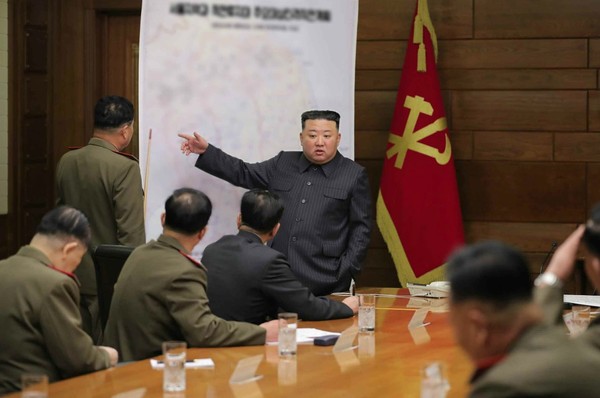
In the report released on January 1, 2023, at the Sixth Plenary Session of the 8th Central Committee of the Workers' Party of Korea, North Korea emphasized that "our Party and Republic government must be steadfast in safeguarding national sovereignty, national dignity, and national interests, and strictly observe regional peace and security, as the international order transitions to a 'new cold war' system and the trend towards multipolarity accelerates." North Korea evaluates the current international situation, where the competition between the US and China is accelerating, as a 'new cold war' and a trend towards multipolarity, and responds actively. Facing difficulties in external exchanges and cooperation due to the failure of North Korea-US dialogue, sanctions against North Korea, and the prolonged COVID-19 pandemic, North Korea has declared a "strong confrontation and struggle" towards South Korea and the United States with a heightened tone.
North Korea shares a perspective on the world that aligns with that of other socialist countries. According to this worldview, the world is fundamentally shaped by a capitalist international order, referred to as imperialism, and North Korea views socialist countries as new orders that oppose this world order. Since the collapse of the socialist international order, North Korea believes that the world is transitioning to a multipolar system, and it is now thought that a 'new cold war' order has emerged. Since the division, North Korea has viewed the international order and relations within the framework of the Cold War and the New Cold War for over 70 years. As a country that experienced the devastating destruction of the Korean War, North Korea believes that imperialist powers like the United States aim to completely isolate and annihilate North Korea and are a threatening presence that could topple the North Korean regime. Due to their harsh experiences with imperialist powers during the war, North Korea harbors a profound distrust of imperialism and the outside world. Therefore, for the past 70 years, North Korea has pursued an extremely closed-off route, cutting off exchanges with the international community, constructing its own ideology, and judging the world and international order through its own unique worldview.
North Korea's perception of South Korea
North Korea has been responding with hostile behavior towards South Korea and the United States with an intensified tone since 2023. In the report on the results of the 6th Plenary Session of the 8th Central Committee of the Workers' Party of Korea released on January 1, 2023, North Korea declared that it would pursue a "strong confrontation and struggle" against South Korea and the United States. In May 2022, the new conservative government of South Korea mentioned preemptive strikes against North Korea based on "Operational Plan 5015 (OPLAN 5015)" and the joint military exercise with the United States. This led to North Korea's comprehensive reversal of its strategy towards South Korea. North Korea has ordered the production of tactical nuclear weapons (TNW) in large quantities and to increase the possession of nuclear weapons exponentially, in case they are needed for preemptive use in the confrontation with South Korea and the United States. North Korea also showed that it would continue to develop intercontinental ballistic missiles (ICBMs) while announcing that military satellites would be launched in the near future.
North Korea's hostility towards South Korea dates back to the second half of 2019 and culminated in the ruthless destruction of the Kaesong Inter-Korean Joint Liaison Office in June 2020. Despite this, during a military parade in October 2020 commemorating the founding of the Workers' Party of Korea, Kim Jong-un expressed friendly remarks towards South Korea, hoping to overcome the public health crisis and hold hands. North Korea showcased new intercontinental and submarine-launched ballistic missiles, but stated that they wouldn't use them preemptively. However, since the conservative government's emergence in 2022, North Korea's attitude towards South Korea has changed completely. The country is now emotionally charged towards South Korea to the point that some believe South Korea's anti-North propaganda caused North Korea's desperate situation during the COVID-19 outbreak. North Korean citizens have varying views on their southern neighbor, apart from the national-level perception of South Korea. As of 2019, approximately 50% of North Korean citizens viewed South Korea as a potential cooperation partner, while 30.2% regarded it as an enemy and 11.2% saw it as a threat, as shown in the table below. North Korean government's approach of presenting South Korea as a cooperation partner or adversary during times of conflict contributes to the different perceptions of South Korea held by North Korean citizens. Consequently, approximately 50% of North Korean citizens consider South Korea a partner for cooperation, while 30-40% perceive it as an enemy or threat.
A notable fact is that despite the hostile and cautious attitude towards South Korea, there is also a curiosity and affection for South Korean culture among North Korean citizens. In fact, a considerable portion of North Koreans, 43%, frequently encounter Hallyu (Korean wave) content, such as music, movies, and dramas. The Institute for Peace and Unification Studies at Seoul National University (IPUS) conducted a 10-year trend survey and found that the more North Koreans are exposed to Hallyu content such as music, movies, and dramas, the weaker their political consciousness becomes. This finding is supported by North Korea's enactment of the "Reactionary Ideology and Culture" and the "Youth Moral Education Law," along with their strong enforcement and education. It highlights the significant impact of the Korean Wave on North Korean citizens.
-
PREV [Issue]
-
NEXT [Feature Article]