

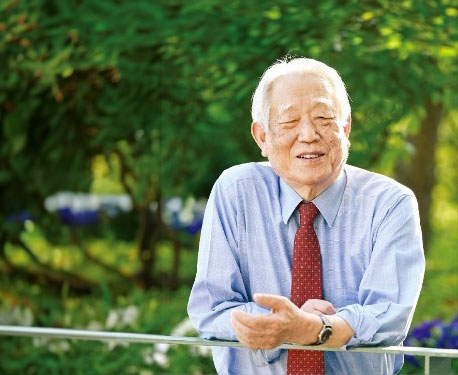
Interview with Kang In-deok, Former Minister of Unification (2)
Resolving North Korea's Nuclear Issue:
Ending Juche Ideology and Hereditary Rule in NK
⦁ Historical Precedents: China and the Soviet Union's Reforms and Opening Up After First-Generation Leader Passed Away
⦁ North Korea's Nukes: Vital for Sustaining Hereditary Regime
⦁ Choosing ‘Republic of Korea’ Over 'South Korea', 'NK': Signals Recognition as Separate Nation
⦁ Strengthening Deterrence: Empowering Self-Sufficiency in Nuclear Material Production
⦁ Psychological Warfare as an Asymmetric Weapon for North Korea's Weak Spot
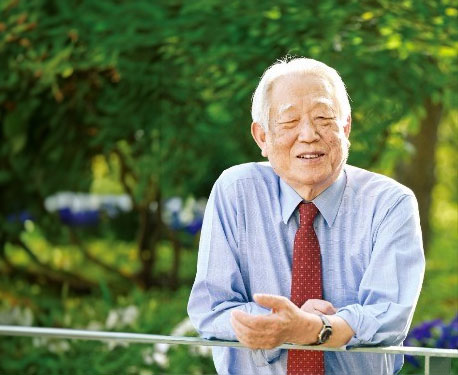
In his assessment of North Korea's nuclear issue, Former Minister of Unification Kang In-deok proposes a singular solution: the elimination of both the Juche idea and the hereditary regime. The Juche idea, which serves as the guiding ideology of North Korea's Workers' Party, wields substantial control over the population and forms the bedrock for three generations of hereditary leadership.
Kang underscores that as long as the Juche idea persists, the prospects for meaningful change remain dim. Removing this entrenched ideology could pave the way for nuclear disarmament.
He emphasized, "The reason socialist countries like China, the Soviet Union, and Vietnam were able to embark on reforms and open up after the demise of their first-generation leaders was their avoidance of bloodline succession." After Mao Zedong's passing, Deng Xiaoping, who assumed power in China, championed reform and openness through a pragmatic philosophy known as the 'black cat, white cat' ideology. In the Soviet Union, following the death of Joseph Vissarionovich Stalin, Nikita Sergeyevich Khrushchev emerged, critiquing Stalin's dictatorship and advocating for peaceful coexistence with the Western world. According to former Minister Kang's analysis, it wasn't until the 1980s, with the ascent of Mikhail Sergeyevich Gorbachev, that 'Perestroika' was vigorously pursued.
Minister Kang firmly asserted, "As long as the hereditary regime endures, North Korea will not abandon its nuclear pursuits," underscoring that "nuclear weapons serve as the only avenue for preserving their rule." He reproached Kim Jong-un for overreliance on nuclear-centric military might and diverting funds meant for food procurement and economic growth toward nuclear advancements.
Kang interprets North Korea's use of "Republic of Korea" as a shift away from a unique inter-Korean relationship, signaling their readiness to treat South Korea as a separate nation. This transformation absolves them of the moral restraint associated with launching nuclear attacks.
Minister Kang explained, "Since the late 1960s, North Korea has accelerated its nuclear and missile development to pressure the U.S.”. He also added “To solve the North Korean nuclear issue, we need to seek both pressure and negotiations based on our strong deterrence and close military cooperation with our allies. Above all, it's inevitable to showcase our overwhelming military superiority."
Furthermore, he asserted, "The decision to abandon nuclear reprocessing facilities in the 1991 Joint Declaration of the Denuclearization of the Korean Peninsula effectively signified our relinquishment of the potential for independent nuclear capabilities." He continued, "Even at present, we should actively pursue the reprocessing of spent nuclear fuel from power plants, which would allow for the production of weapons-grade plutonium."
Minister Kang highlights the necessity of South Korea utilizing its asymmetric warfare capabilities to counter North Korea's nuclear threat. As a seasoned expert in psychological warfare against North Korea, he hosted over 5,000 broadcasts targeting WPK high-ranking officials through KBS's program from 1980 for 18 years.
Minister Kang insists on resuming psychological warfare with a focus on universal values such as freedom, democracy, human rights, law, and market principles. He underscores the importance of condemning North Korea's hereditary system, exposing Juche idea flaws, and fostering resistance among North Korean residents against the ruling elite.
He asserted that psychological warfare, an asymmetric weapon at our disposal, can inflict severe distress on North Korea. He also pointed out that North Korea's actions, such as demolishing the Kaesong liaison office and enacting repressive laws during the COVID-19 pandemic, reflect their anxiety about the influence of South Korean culture on North Koreans.
He stressed the importance of altering North Korea's internal perspective through enhanced broadcasts as part of psychological warfare. Kang believed that shifting the deeply ingrained Juche idea within North Koreans' minds required changing their perceptions through intensified psychological warfare. He emphasized that psychological warfare is the asymmetric weapon to counter North Korea's nuclear capabilities, with particularly significant effects during periods of economic hardship in North Korea.
He noted, "In North Korea, a 'Jangmadang (North Korea’s Free Market) generation' is emerging, marked by increased information circulation and the rise of Donju (money masters), signaling a shift toward a more market-friendly economic system." He further commented, "North Korea attempts to curb this trend with various control policies, but it proves to be a challenging task."
Especially during economically challenging times, he stressed the importance of enhancing psychological warfare aimed at North Korean soldiers involved in various construction activities and those on the frontlines. He said, "It can be helpful if they understand why socialist countries failed."
Additionally, he stressed, "We need to ensure a flow of information to North Korean workers sent abroad to earn foreign currency." He pointed out, "When they return and share external information with various influential and intellectual groups in North Korea, it will significantly alter perceptions within North Korean society." He analyzed that North Korea's enactment of laws to restrict external information and its continuous organization of events for entities like the Korean Children's Union, Socialist Women's Union of Korea, and Socialist Patriotic Youth League reflect their ideological crisis.
Regarding Kim Jong-un's daughter, Kim Ju-ae, he drew a clear distinction, stating that she won't be his successor. Minister Kang remarked, "Due to the deeply ingrained Confucian culture in North Korea, where the husband is regarded as the 'head of the family' or 'father,' the emergence of a female leader is deemed impossible." He believes that Kim Ju-ae's public appearances are primarily intended to garner international attention.