

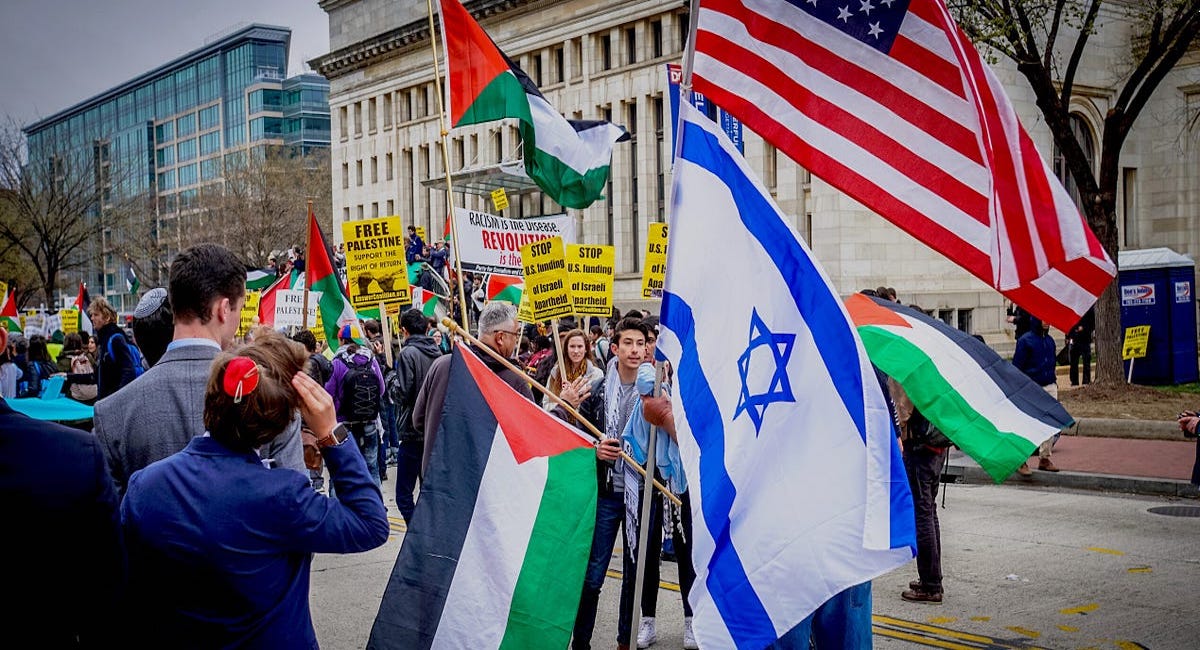
2023 Israel-Hamas War from a Korean Perspective

Park Hyondo
Professor, the Sogang Euro-MENA Institute, Sogang University in Seoul
Palestine and Israel
The British planned to withdraw their troops and end the Mandate in Palestine at midnight on May 14, 1948. At 4 p.m., while Palestine was still under British Mandate rule, Israeli Zionists secretly gathered in a Tel Aviv museum, and Ben Gurion declared Israel's independence. Israel was founded based on the partition plan for Palestine passed by the United Nations General Assembly on November 29, 1947, with 33 votes in favor, 13 against, 10 abstentions, and one absentee (Thailand). The Palestinian Arabs rejected the UN partition plan but did not prevent it from being presented to the UN General Assembly and passed. Unable to recognize Israel's independence, seven Arab states, led by Egypt and including Jordan, Syria, Iraq, Lebanon, Saudi Arabia, and Yemen, unsuccessfully attempted to cripple Israel by launching the First Arab-Israeli War on May 15. About 700,000 Palestinian Arabs were displaced from their homes. The war is known in Arabic as al-Nakba, or Great Catastrophe, because it created a significant number of refugees. While the refugees still hold the keys to their homes, Israel has never allowed them to return.
While the First War was a catastrophe for the Arabs, the Third War, known as the Six-Day War, was a setback in which Israel launched surprise attacks on June 5, 1967. The Arabs were devastated. At 7:45 a.m., an Israeli airstrike destroyed 391 Egyptian airplanes before they could even take off. The war ended in a complete Israeli victory: Israel captured the Sinai Peninsula and Gaza from Egypt, the West Bank of the Jordan River from Jordan, and the Golan Heights from Syria. After a surprise attack by Egypt in 1973 led to a fourth war, Israel signed a peace treaty with Egypt in 1979, returning the Sinai Peninsula to Egypt while retaining control of Gaza. In 1994, Israel also made peace with Jordan but did not return the West Bank. Israel is willing to trade the Golan Heights for a peace deal, but Syria has consistently refused, demanding an unconditional return.
The territories currently inseparable from the Palestinian issue are the Gaza Strip and the West Bank of the Jordan River. According to the Palestinian National Bureau of Statistics, as of 2022, there were 5.35 million Palestinians (2.72 million men and 2.63 million women), with 3.19 million living in the West Bank (1.62 million men and 1.57 million women) and 2.17 million in Gaza (1.1 million men and 1.07 million women). The West Bank covers an area of 5,655km2, more than 15 times larger than Gaza (365km2).
Palestine Liberation Organization (PLO) and Hamas
The Palestine Liberation Organization (PLO) was formed at the First Arab Summit in 1964, but with Egypt acting as its guardian, the Palestinian independence movement’s autonomy was significantly reduced. However, after suffering a humiliating defeat in the 1967 Six-Day War, the PLO realized the importance of its own movement and began to expand its radius of action without relying on its Arab brothers. It was only then that the Arabs living in Palestine realized that they had to create their own state.
In fact, even before Israel’s independence in 1948, the Palestinian problem was complicated by the lack of strong Palestinian nationalism. There was more of an Arab nationalist view of Palestine as a part of Syria than a nationalist view of Palestine as my homeland, defending it and making it my country. In 1919, the Palestinian delegation to the Paris Peace Conference resolved that Palestine was part of Syria. In 1937, before the British Royal Commission, Arab leader Auni Abdul Hadi argued that Palestine was a word coined by Jewish Zionists and that there was never a country called Palestine; it was part of Syria. In 1946, opposing the partition of Palestine at the Anglo-American Council, Arab historian Philip Hitti, a professor at Princeton University, argued that a country called Palestine had never existed in history. In a May 1947 statement to the UN General Assembly, the Arab League representative argued that Palestine was part of Syria and that Palestinian Arabs were not independent enough to form an independent political entity. Ahmad Shuqairi, the first chairman of the PLO, stated that it was customary to view Palestine as a southern province of Syria.
The PLO realized in hindsight that it needed to create its own state, but the road ahead was not smooth. In Jordan, where Palestinian refugees make up the majority, the PLO was labeled as a subversive force and ousted, and it was not welcomed in Lebanon or any other Arab country. At the 1976 Munich Olympics, the PLO’s “Black September” group kidnapped and murdered Israeli athletes, drawing international condemnation. The vicious cycle of terror, isolation, and marginalization continued. Palestinians raised the flag of resistance against the Israeli government in 1987. The first popular uprising (intifada) began. Hardliners traveling abroad grew increasingly resentful of the PLO, which had been leading the Palestinian independence movement. In response to the PLO's incompetence, Hamas emerged as an Islamist resistance movement. Founded in 1928 as the Palestinian branch of the Muslim Brotherhood, an Islamist movement founded by seven young men in their 20s in Ismailiya, Egypt, near the Suez Canal, to restore the glory of Islam, Hamas, unlike the secular PLO, emphasized Islam and led the Palestinian independence movement.
Amid fierce resistance from Palestinians, Israel and the PLO recognized each other’s existence in 1993 and signed a peace agreement. Israelis and Palestinians laid down their arms, marking a historic reconciliation of peaceful coexistence. In recognition of this, in 1994 the Nobel Prize Committee jointly awarded the Nobel Peace Prize to PLO Chairman Arafat, Israeli Prime Minister Yitzhak Rabin, and Israeli Foreign Minister Shimon Peres for turning war and hatred into peace and cooperation. But on November 4, 1995, Rabin was assassinated by Yigal Amiran, an Israeli far-right extremist.
In Israel, the political forces that most strongly reject peaceful coexistence with the Palestinians are led by far-right conservatives, such as the Jewish Home, Netanyahu’s current coalition partner. National Security Minister Ben Gvir is a prime example. Netanyahu, of course, is a staunch opponent of Rabin’s two-state solution. In Palestine, Hamas refuses to coexist with Israel. Hamas does not recognize Israel. In its 1988 charter, Hamas’s Palestinian homeland includes what is now Israel, meaning that an independent Islamic state of Palestine would be created by destroying Israel and reclaiming Palestine as its own. As Article 8 of Hamas' charter states, “Allah is the goal, the Prophet is the model, and the Quran is the constitution. Jihad is the way, and death for Allah is the noblest desire.”
In 1979, the Iranian Islamic Revolution marked a significant turning point. If the Muslim Brotherhood in 1928 marked the beginning of the anti-Western and anti-secularist movement of Sunni Muslims in the Middle East, it was in Shi‘i Muslim-majority Iran that Islamic Revolution replaced a pro-American secular monarchy in 1979 with a republic that was neither East (Soviet communism) nor West (Western capitalism) but solely Islamic. It was the first Islamist revolutionary state to integrate Islam into a political system. In 1973, Muslims in the Middle East regained their confidence when they startled the West with the oil crisis after the 1973 War, demonstrating Muslim power to the West for the first time since Napoleon’s invasion of Alexandria in 1798. The Iranian Revolution served as an example of how to live the Muslim way in the midst of such a massive historical shift.
Although Iran is a Shiite country, the Iranian Islamic Revolution was not a Shiite revolution, but an Islamic revolution as envisioned by the Sunni Islamist thinker Mawdudi. After toppling an oppressive monarchy with the slogan of liberating the oppressed, Iran’s Islamic Revolutionary leadership turned its attention to Palestine, which became a battleground between Arab nationalists and Zionists.
To liberate Palestine, Iran founded the anti-Israeli militant organization Hezbollah, or the Party of Allah, in Lebanon’s Shiite heartland in 1982 and has supported it ever since. Hezbollah is the jewel in crown for Iran. Iran does not recognize Israel.
Unlike Iran and Hezbollah, which are Shiite, Hamas is Sunni, but sectarian differences are irrelevant when it comes to the cause of destroying Zionist Israel. Iran, like Hezbollah, has consistently supported Hamas. In 2011, when the “Arab Spring” popular protests swept across the Middle East, Hamas and Iran feuded over support for the Syrian government. Iran wanted Hamas to support the Syrian government, but Hamas refused, which led to a falling out. After the Egyptian Muslim Brotherhood lost power and the Iranian-backed Syrian government gained ground in the Syrian civil war, the isolated Hamas reconciled with Iran, and Iranian support for Hamas resumed in late 2014.
So is Iran Behind the Hamas Attacks?
Logically, Iran, Hamas, and Hezbollah are allies in the struggle against Israel, but the relationship between Iran and Hamas is different from that between Iran and Hezbollah. Hamas does not do everything Iran wants it to do. It is not a master-servant relationship. There is a strong suspicion, but no proof, that Iran is behind Hamas attacks, as the United States puts it. Iranian Supreme Leader Ali Khamenei has emphasized that Iran has nothing to do with the Hamas attacks.
The reason the U.S. believes Iran is behind this is not solely due to Iran’s normal relationship with Hamas. The attack occurred at a time when Israel’s relationship with Saudi Arabia was moving towards normalization. Ayatollah Khamenei stated that normalizing relations with Israel is akin to “betting on a losing horse.” Israel hopes that by engaging with Saudi Arabia, the entire Arab world will not only normalize relations with Israel but also contain Iran, which seeks its destruction. Despite the resumption of ambassadorial-level diplomacy after a seven-year hiatus, Saudi Arabia remains concerned about Iran. As the U.S. is preoccupied with containing China, it encourages Israel and Saudi Arabia to work together to restrain Iran. Hamas is well aware that Saudi Arabia’s condition for diplomatic relations with Israel would marginalize it, leaving it out of important discussions in the Palestinian issue. Consequently, it is likely that Hamas carried out this attack to strain relations between the two countries. While there are various theories, including the involvement of Iranian masterminds and Hamas acting independently, one thing is certain: there will be no peace in the Middle East until the Palestinian issue is resolved. Let us refrain from the distressing practice of tallying precious lives as casualties. May the souls of the victims rest in peace.
-
PREV [North Korean Terminology]
-
NEXT [Opinion]