

Recent China-Japan Relations and Prospects:
Building Cooperation and Managing Conflicts in the Post-Covid Era

Oh Seung-hee
Research Professor at the Institute for Japanese Studies, SNU
The first China-Japan-South Korea summit since the Covid-19 pandemic is scheduled for May 26-27, 2024, almost four and a half years after the previous summit in China in 2019. Although there were attempts to hold a summit in 2023, it did not come to fruition. Instead, the China-Japan-South Korea Foreign Ministers' Meeting took place in Busan in November 2023 for the first time in over four years. This paper explores the potential for cooperation among the three countries in the post-Covid era, particularly in light of the ongoing US-China power struggle, with a focus on China-Japan relations.
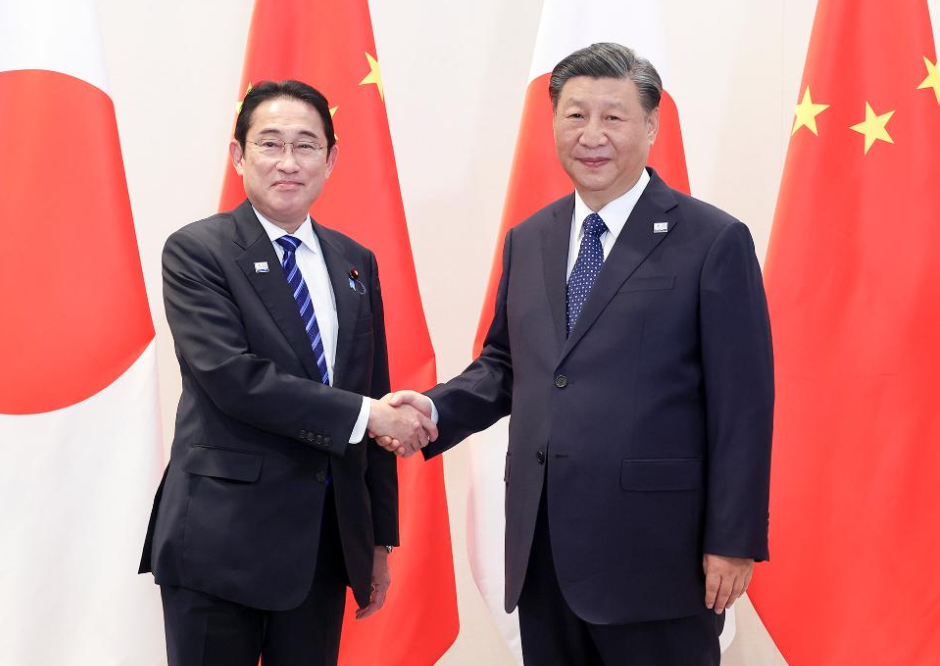
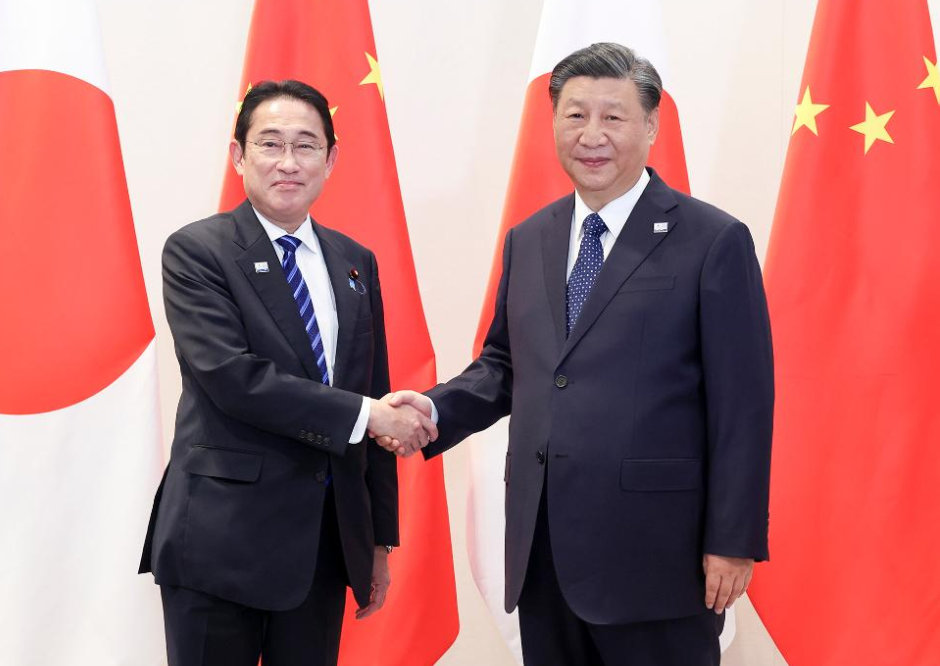
Chinese President Xi Jinping meets with Japanese Prime Minister Fumio Kishida in San Francisco, the United States, Nov. 16, 2023./(Xinhua)
In 2018, amid the early US-China trade conflict, China-Japan relations began improving. The Xi Jinping and Abe Shinzo administrations sought a new chapter, marking the 40th anniversary of the Treaty of Peace and Friendship. With the US exiting the TPP and heightening protectionism, China and Japan emphasized their historical ties and bolstered strategic cooperation. In June 2017, Abe expressed Japan's intent to join China's Belt and Road Initiative and in September, during the 45th anniversary of diplomatic normalization, he proposed mutual visits between the leaders of both nations at the Chinese Embassy in Japan.
In May 2018, Chinese Premier Li Keqiang visited Japan, and in October, Prime Minister Abe Shinzo visited Beijing, meeting President Xi Jinping, marking the first visit by a Japanese Prime Minister to China in seven years. Accompanied by 500 Japanese business leaders, they discussed resuming the China-Japan currency swap and collaborating on third-country infrastructure projects. President Xi attended the G20 summit in Osaka in 2019 and was invited to visit Japan in April 2020 during the cherry blossom season. At the end of 2019, Abe visited China for the China-Japan-South Korea summit, actively promoting Xi's visit and ushering in a "new spring" in China-Japan relations.
There were high hopes for a "fifth political document" to build on the four key agreements symbolizing China-Japan cooperation: the 1972 Japan-China Joint Communique, the 1978 Treaty of Peace and Friendship, the 1998 Joint Declaration on Friendship and Cooperation, and the 2008 Joint Statement on Strategic Relations. The Japanese government, eager for President Xi's visit, implemented travel restrictions from China later than other countries when Covid-19 first emerged. However, the pandemic halted active exchanges between the two nations, and the anticipated fifth political document never materialized.
As US-China competition persisted, the supply chain crisis revealed by the pandemic led to stronger economic security measures worldwide. The race for scientific and technological advancements accelerated, prompting the US to restructure global supply chains and impose stricter restrictions on China. Taiwan's strategic importance grew due to its semiconductor production, and tensions in the Taiwan Strait rose following US Speaker Nancy Pelosi's visit in August 2022. Taiwan's TSMC is building semiconductor factories in Arizona and Kumamoto, forging a technological alliance. Frequent US-Japan-Taiwan interactions challenge China's 'One China' principle, prompting strong reactions.
After the China-Japan summit in November 2022, Prime Minister Kishida Fumio and President Xi Jinping met again in San Francisco during the APEC meeting on November 16, 2023. They acknowledged that the international community is at a 'historic turning point' with intertwined opposition and cooperation. Marking the 45th anniversary of their Peace and Friendship Treaty, both nations agreed to work together for global peace and prosperity.
China and Japan reaffirmed their commitment to a 'strategic and mutually beneficial relationship' by adhering to the principles of their four key political documents. They confirmed their goal of establishing a 'constructive and stable relationship' to usher in a new era of China-Japan relations. Emphasizing the Taiwan Strait's peace and stability as crucial, Japan's position on Taiwan remains unchanged as stated in their 1972 Joint Communique. Both countries agreed to maintain close communication at all levels.
The 2024 Japanese Diplomatic Bluebook highlights concerns and perceives threats from China while stressing the importance of improving China-Japan relations. It describes recent Chinese foreign policies and military activities as 'serious concerns' for Japan and the international community, labeling China as Japan's 'biggest strategic challenge.'
Japan's primary response is to coordinate with allies and like-minded nations. Notably, the bluebook reintroduces the term 'strategic and mutually beneficial relationship,' first used in the 2008 joint statement, after a five-year hiatus. This underscores the shared responsibility for peace and stability in the Asia-Pacific and globally, emphasizing cooperation for peace and friendship as the only viable path. The bluebook also calls for enhancing dialogue and collaboration on common challenges to build a constructive and stable China-Japan relationship
Despite existing conflicts, the need to meet and discuss cooperation and conflict resolution remains crucial. China and Japan agreed to seek solutions through constructive dialogue while acknowledging their differences. They plan to promote cooperation in environmental protection, energy conservation, and healthcare, including the green economy. They also discussed international issues such as North Korea, the Middle East, and Ukraine, as well as the issue of Japanese abductions, committing to close communication on global affairs.
Managing conflict factors is crucial. During the 2023 China-Japan summit, issues causing friction between China and Japan were discussed. The Japanese side demanded the swift release of Japanese detainees under China's counter-espionage law. Additionally, Japan strongly reiterated its request for a calm, scientifically-based response to the release of ALPS-treated water into the ocean, which China strongly opposes, and called for the immediate removal of China's import restrictions on Japanese food products.
Conflicts between China and Japan are expected to increase. On April 27, 2024, five Japanese lawmakers, including the acting secretary-general of the Liberal Democratic Party, visited the waters around the Senkaku Islands, signaling rising tensions. Additionally, for the first time, Chinese 'comfort women' filed a lawsuit against the Japanese government in China. Eighteen family members sued in Shanxi Province, seeking 2 million yuan each for damages from wartime detention and assault, totaling 36 million yuan. Previous lawsuits in Japanese courts were dismissed based on the 1972 Japan-China Joint Communique, which forfeited individual war reparations claims.
The upcoming China-Japan-South Korea summit, scheduled before the US elections in November, is significant as these nations come together despite strained China-Japan relations. Conflicts should not deter meetings; instead, establishing a systematic foundation for managing conflict agendas is essential. It is hoped that these summits will become regular events, fostering cooperation in an era marked by conflicts and setting examples for future collaboration.
-
PREV [Academic Article]
-
NEXT [Feature Article Series]