

North Korean Refugee Crisis in China and Options for an Effective Pushback

Jung-Hoon Lee
Dean & Professor, Graduate School of International Studies, Yonsei University
Chair, Committee for the Promotion of North Korean Human Rights, ROK Ministry of Unification
Former Ambassador for North Korean Human Rights, ROK Ministry of Foreign Affairs
When the 2012 UNGA resolution (A/RES/66/290) stressed the “right of people to live in freedom and dignity, free from poverty and despair,” it appeared the UN was determined to reach out to the most vulnerable in all corners of the world. Well, not so fast! When it comes to the people living in North Korea, such a commitment proved to be more rhetorical than substantive.
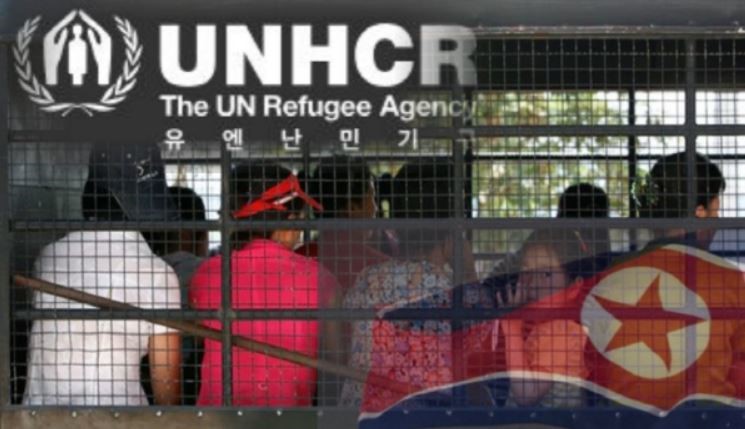
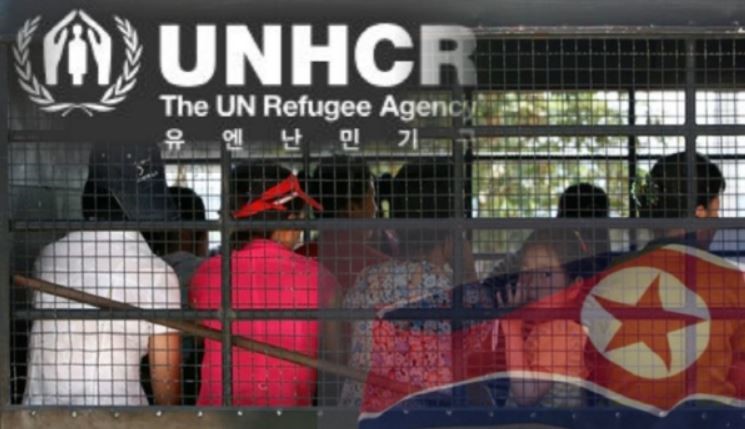
In North Korea, the people’s fundamental rights, including “freedom from fear and want,” are systematically trampled. Those who manage to escape to China in search of a better life do not fare much better. China’s discriminatory policy leaves North Korean refugees with two choices; forcible repatriation or inhumane treatment in hiding. The plight of the North Korean refugees in China stands out as one of the most troubling challenges to the UNHCR.
North Korean refugees in China: An overview
In the 1990s, facing severe political persecution and starvation, North Koreans fled the country en masse to take refuge in China. Up to 200,000 North Koreans crossed the border in search of a better livelihood. The fortunate few made it out of China to countries like Laos, Thailand, and Myanmar before finding safety in South Korea or other countries willing to take them in as asylum-seekers. This pattern of exodus has continued for nearly three decades. Today, there are 34,000 defectors living in South Korea. Having peaked in 2009 at 2,914, the number has significantly dwindled since 2020 due to three factors: one, COVID-19 border shutdown; two, stringent crackdown by both Chinese and North Korean authorities; and three, Moon Jae In government’s aversion to addressing the defector issue in favor of placating Beijing and Pyongyang.
When caught, the asylum-seekers are forcibly repatriated since Beijing considers them “illegal economic migrants,” not refugees. Those who are returned to North Korea often join 120,000 others in gulags (political prison camps). Their lives filled with fear, hunger, and persecution are well-chronicled by some of the escapees from these camps.
The COI finding and recommendation
In February 2014 the UN Commission of Inquiry (COI) on Human Rights in the Democratic People’s Republic of Korea (DPRK) identified the state’s systematic and widespread “crimes against humanity,” including forced labor, forced abortions, infanticide, public executions, a massive gulag system, and overseas abductions. The predicament of the North Korean escapees in China was also highlighted, accusing China of “aiding and abetting” crimes against humanity. By forcibly repatriating North Koreans, China was found to be in violation of the non refoulement principle. Still, China continues to violate this international human rights law which supposedly guarantees that “no one should be returned to a country where they would face torture, cruel, inhuman or degrading treatment or punishment and other irreparable harm.”
Of course the fundamental problem with the North Korean refugees begins in their country of origin—North Korea. But China’s position on interpreting their status as ‘illegal economic migrants’ certainly compounds the problem. The Office of the UN High Commissioner for Refugees (UNHCR) in China has not helped the situation by simply remaining silent despite not having access to these “migrants.”
The causal link between sŏngbun system and refugee status
It is true that famine-related economic migrants cannot be classified as refugees in the traditional international legal sense. But the case of North Koreans is different; the main reason for their defection to a foreign country—economic plight—is the political outcome of a failed socialist system under totalitarian rule.
The connection between political power and economic deprivation of a large percentage of the North Korean population can be traced to the state-sponsored discrimination policy known as sŏngbun.
It is not surprising that most of the victims of the widespread famine in the 1990s were those of the low sŏngbun class, as they were the first to be cut from the government’s public distribution system (baegŭpjedo). The famine led to the exodus of tens of thousands of North Koreans, primarily residents of the northernmost areas bordering China—North Hamkyŏng Province in particular. These areas were, and still are, largely mining areas, where many people had been sent as a form of punishment for their poor sŏngbun background. With international humanitarian agencies prevented from reaching out to these people, many of them escaped to China as the only means to ensure their survival.
Pushback Option #1: UNHCR must play a bigger role
The UNHCR’s lack of access to North Korean refugees is generally viewed as the main reason for its ineffectiveness. But in actuality, the 1995 agreement between the UNHCR and China gives the UNHCR unimpeded access to all refugees within China. Why, then, has the UNHCR not done more to help the North Korean refugees? The UNHCR Beijing Office is, after all, responsible for determining refugee status in China, as well as for providing life-sustaining assistance such as accommodation, living allowances and access to basic health care. The fact that China permits the presence of the UNHCR office in Beijing suggests at least a minimum level of professional partnership.
This begs the question why the UNHCR has not been more aggressive in obtaining access to interview the escapees. It is also puzzling that the UNHCR has never opted to invoke binding arbitration regarding China’s refusal to allow access to North Korean defectors. Binding arbitration in the event of a bilateral dispute is permissible as stipulated in the 1995 UNHCR–China agreement. In such a case, China is obligated to accept an arbitrator acceptable to both parties within a 45-day period.
Clearly, the UNHCR has failed to do its job on the North Korean refugee issue. At the very least, the UNHCR should have been more vocal in condemning Beijing’s refusal to provide legal protection for female refugees from being trafficked within China. China, after all, is obligated under the Convention on the Elimination of All Forms of Discrimination against Women, adopted by the General Assembly in December 1979, and the Protocol to Prevent, Suppress and Punish Trafficking in Persons Especially Women and Children, adopted by the General Assembly in November 2000, to take measures to safeguard against the trafficking of women and children inside its own borders.
Other measures the UNHCR could do include convincing Beijing to open an official corridor – “underground railroad” – through which North Korean refugees could pass, escorted by UNHCR officials on their way to Mongolia, Vietnam, Myanmar, or Laos. In addition, Beijing can be persuaded to periodically allow amnesty for “illegal aliens,” a conduct more becoming of a P5 and an aspiring global leader. Finally, a semblance of a refugee camp or a temporary settlement for the escapees to provide a much-needed shield from human rights violations would mean a major breakthrough. Considering many refugee camps are erected impromptu, establishing one specifically for North Korean refugees should not be complicated in practical terms. It’s just a matter of political will.
Pushback Option #2: Benchmarking the international campaign against South Africa’s apartheid system
What’s more, the UNGA Credentials Committee should be prodded to re-examine the credentials of the DPRK pursuant to its Rule 29. Question is: If South Africa was bad enough to be suspended from all UN activities for twenty years, shouldn’t the UNGA consider doing at least the same to North Korea until the nonproliferation and human rights goals are met? The answer may seem obvious but what actually transpired is mindboggling. For example, in June 2022, North Korea was elected to the Executive Board of the World Health Organization (WHO). Just a year before in June 2022, North Korea assumed, albeit for a month, the presidency of the Conference on Disarmament.
Accountability Requires Strong Political Will
Needless to say, such display of weakness in not dealing with countries like North Korea will only lead to the perpetuation of the human suffering in that country. There’s no question that a a more resolute effort has to be made to get at the root of the problem—the Kim Jong Un regime. Decades of “engagement” have failed to improve the dismal human rights condition in North Korea. If the international community is serious about wanting to make a difference, a tough decision has to be made to hit the Pyongyang regime where it hurts the most: its fragile economy. Better coordination of the existing international sanctions on North Korea may still be the best way going forward.
The circumstances endured by North Korean refugees merit an urgent and drastically different approach. The question is, does the UN and the international community have the political will to confront China and North Korea for the sake of humanity and freedom? The sad truth is, we all know the answer to this question. The debate is over on how terrible things are in North Korea. It is now time for concrete actions backed by a strong political will of the political leaders, liberal-democratic governments, and of course the United Nations. The clock is ticking…
-
PREV [Feature Article]
-
NEXT [North Korea in History]