

Marketing In North Korea (14)
- Dream up a brand that remains in the heart: Brand Marketing in North Korea

Jeon Byung-kil
Senior Consultant of YESInnovation
former of Secretary General of UniKorea Foundation
Marketing, as a concept, did not originally exist in North Korea because the country focused on building a socialist planned economy. Even in other socialist countries, the idea of marketing was only introduced after they adopted capitalist practices through reform and opening-up policies. In North Korea, universities with economics or business administration departments did not initially offer marketing courses.
After undergoing several rounds of economic reform, North Korea slowly began accepting foreign influences, including marketing concepts, though only in a limited way. Today, marketing in North Korea is mostly associated with production and sales.
In the 1960s, marketing in Western countries focused on "mass marketing," targeting the general public. By the 1970s, more advanced ideas like customer segmentation (dividing customers into specific groups) and customer targeting (focusing on certain customer groups) became popular. However, in North Korea, the idea of mass marketing—focused on production and sales aimed at the public—is only now gaining traction.
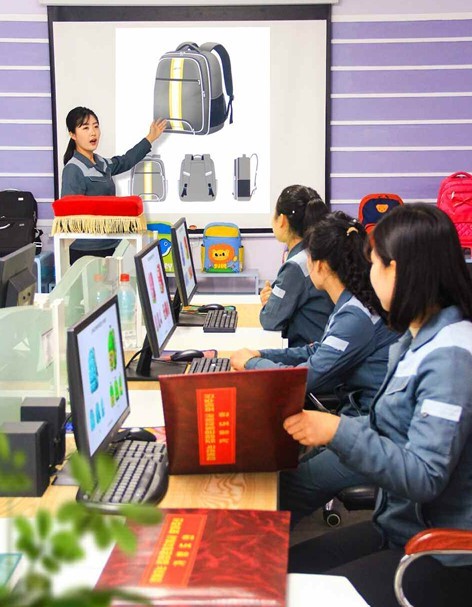
A bag design conference at a bag factory in North Korea/The Rodong Sinmun
As some capitalist ideas have made their way into North Korea, public interest in marketing, branding, and trademarks has grown. North Korean brands mostly emphasize domestic production and often reflect the country’s unique ideology and historical perspective.
An example of this can be seen in The Economic Studies Edition of the Journal of Kim Il Sung University (Vol. 3, 2000). It explains the difference between product brands in capitalist and socialist economies. In a capitalist economy, brands are described as “a way to attract consumers with flashy products to maximize profits, exploiting workers in the process.” In contrast, socialist brands are seen as “good brands that demonstrate the legitimacy of the party’s economic policies and inspire workers to take pride in their hard work.”
This unique perspective shows how North Korea's approach to marketing and branding differs from the rest of the world, shaped by its distinct ideology and economic system.
North Korea’s Lonely Scream
In 2002, Samsung Electronics in South Korea released a commercial for its mobile phone brand, Anycall. The advertisement starred Cho Myung-ae, a famous North Korean dancer from the Mansudae Art Troupe, alongside South Korean pop singer Lee Hyo-ri. This was a groundbreaking moment because Cho Myung-ae was the first North Korean model to appear in a South Korean advertisement since the Korean War divided the peninsula. The commercial’s slogan was “Digital Exciting – One Resonance,” symbolizing a sense of connection between the two Koreas. This story was later featured in the South Korean film The Spy Gone North (2018), which evoked nostalgia for the collaboration between Cho Myung-ae and Lee Hyo-ri.
From the late 1990s to the early 2000s, advertisements became a unique medium for the two Koreas to explore and better understand each other. Many people might assume that advertisements are banned in socialist countries like North Korea. However, advertising has existed in North Korea for over 30 years.
One example is Pyongyang Sinmun, a daily newspaper published by the Workers’ Party of Korea. While Rodong Sinmun, the party's main newspaper, and Minju Choson, the Cabinet's official paper, focus on political propaganda, government accomplishments, and Kim Jong-un’s activities, Pyongyang Sinmun includes articles on everyday life. It even features entertainment content like serial novels, cartoons, and, notably, product advertisements—although these make up only a small portion of the paper. Interestingly, Pyongyang Sinmun also has an English version called The Pyongyang Times.
Advertisements began appearing in Pyongyang Sinmun in the 1990s. This shift was driven by changes in the global political landscape, such as the collapse of socialist regimes in Eastern Europe and China’s embrace of reform and opening-up policies. These events pushed North Korea to experiment with advertising, which they saw as a key feature of capitalist economies that could help distribute products more efficiently.
Later, advertisements were also featured in North Korea’s English-language magazine Foreign Trade of DPRK, and formal advertising regulations were introduced in the Rajin-Sonbong Economic Special Zone in 1993. These efforts were part of the government’s attempt to promote exports and attract foreign investment through advertising.
However, these efforts were not as successful as the government had hoped. Advertisements did not significantly boost sales of North Korean products or attract foreign investments. Despite this, the presence of advertising in North Korea highlights an interesting intersection of its socialist ideology with market-driven practices, showcasing the country’s struggles to adapt in a rapidly changing world.
North Korean Advertisement On Air
After the 2000s, North Korea began to adopt a more active approach to advertising. One of the first notable examples was Pyeonghwa Motors, a joint venture between North and South Korea established in 1999. The company produced a car called Hwiparam, based on Italy’s Fiat Siena. At the time, it gained significant attention for using billboard advertisements—a first for North Korea.
In 2005, South Korea’s Samsung and Hyundai made history by running advertisements at Kim Il-sung Stadium, marking the first time South Korean companies advertised in North Korea. Then, in 2006, North Korea established its first dedicated advertising agency, the “Choson Advertisement Company.”
This company handles product and trade advertisements, taking orders from North Korean enterprises, agencies, and organizations, as well as foreign businesses operating in North Korea. The advertisements it produces are displayed in various locations, including streets, sports stadiums, exhibition halls, and meeting venues. They are also featured in publications and on websites. For example, during the 2018 FIFA World Cup qualification match between North Korea and Uzbekistan, held at Kim Il-sung Stadium, several billboards advertised North Korean companies like Kaesong Korean Ginseng and Pyongyang Construction Company. For North Korean businesses, these ads were a way to showcase their products and services to the international audience gathered for the sporting event.
In July and August of 2009, North Korea briefly experimented with television commercials. These ads promoted North Korean products like Taedonggang beer, Kaesong Korean ginseng, hairpins, and quail dishes from the Okryu Restaurant. However, this experiment was short-lived. Then-Chairman Kim Jong-il reportedly saw the commercials and was displeased. According to a report by South Korea’s Chosun Ilbo on November 9, 2009, Kim Jong-il commented that the commercials “resembled Chinese ads from the early days of their economic reforms.” Outraged, he ordered all the commercials to be withdrawn and even dismissed the KCNA Chairman responsible for overseeing the broadcasting system.
This brief venture into television advertising highlights the cautious and highly controlled nature of North Korea’s approach to marketing. While the country has made some progress in embracing advertising, it remains deeply tied to its leadership’s preferences and ideological priorities.
Taedonggang Beer: North Korea’s Famous Brew
One of North Korea's most talked-about TV commercials aired in 2009, featuring Taedonggang Beer. The beer started production in 2002 when North Korea imported brewing equipment from Ushers Brewery in the UK and drying facilities used for Germany’s Rauchbier. This project followed Kim Jong-il’s directive to “manufacture the best beer in the world.” With such high expectations and state-of-the-art foreign facilities, Taedonggang Beer became a global curiosity, sparking significant interest in the international community.
Initially, Taedonggang Beer was only available to party officials and foreigners living in Pyongyang. Today, it is served in approximately 200 pubs across the city. A 500ml glass of the beer costs 60 North Korean won (about 0.60 USD based on the official exchange rate, though black-market prices are much higher). The beer has an alcohol content of 5–5.7% and is made with unique ingredients: underground water from the Taedong River, rice from Jaeryong in North Hwanghae Province, and hops from Yanggang Province. It has less carbonation and a creamy head, giving it a distinct flavor. Some foreign media, like The Economist, even claimed that “North Korea makes better beer than South Korea,” highlighting Taedonggang Beer’s quality.
The 2009 TV commercial was notable simply because North Korea, a country known for its isolation, was advertising a beer product. The commercial sparked curiosity worldwide, but its messaging was somewhat unconventional. It ran for 2 minutes and 40 seconds—more like a short documentary than a typical ad. The commercial began by declaring Taedonggang Beer as the “pride of Pyongyang” and then launched into a detailed narration. It praised the beer’s large production scale, modern brewing technology, clean and certified facilities, premium ingredients, and flavorful taste. It even mentioned the locations of beer pubs in Pyongyang, ending with the statement that people would enjoy Taedonggang Beer more as time went on.
While South Korean media focused on the tagline “Tastes so cool!” as the highlight of the commercial, the ad actually included many selling points. Interestingly, after the ad aired, the North Korean newspaper Tongil Sinbo reported a significant increase in Taedonggang Beer sales. Despite its success, the commercial was discontinued after just two months, reportedly because Kim Jong-il disapproved of it, feeling it resembled early Chinese commercials during their economic reforms.
In 2013, however, North Korea's propaganda channel Uriminzokkiri TV released a promotional video calling Taedonggang Beer “North Korea’s popular soft drink.” The beer continued to be advertised indirectly through events like the Taedonggang Beer Festival, which North Korean media heavily promoted. The beer gained enough fame to inspire a 2019 tourist program where foreigners could learn about the brewing process. In 2020, Taedonggang Beer even made a cameo in the hit South Korean drama Crash Landing on You, showcasing its unique place in North Korea’s culture and international curiosity.
Through a mix of bold advertising, indirect promotion, and international intrigue, Taedonggang Beer has grown into one of North Korea’s most recognizable products, offering a glimpse into the country’s brewing craftsmanship and evolving marketing strategies.
Evolving Advertisement Methods in North Korea
As consumer goods and products became more widely available in North Korea due to commercialization, the country began experimenting with indirect advertising methods, such as news-style or documentary-style commercials. These types of ads are subtle, reflecting North Korea’s restrictions on explicit advertising.
News-style commercials often appear at the end of daily news programs. They typically feature two or three regional specialties displayed as still images for about 30 seconds, accompanied by background music. These ads don’t include any narration or sound effects and focus on showcasing products in a simple, straightforward way.
Documentary-style commercials are longer, usually lasting 5 to 10 minutes, and take the form of promotional videos. They provide detailed information about a product’s features, such as quality or user reviews, and sometimes introduce locations like streets, market stores, or entertainment facilities. Examples include commercials for the Taedonggang Fruit Farm, Rakyon Food Factory, Ryukyong Amusement Arcade, Mirim Riding Club, and Koryo Air. These in-depth reports act as indirect advertisements, a necessary compromise in a country where traditional TV commercials are prohibited, despite growing demand for advertising.
In the 2010s, advertising activities in North Korea grew significantly. One notable example is the rapid rise of Koryolink, a cellular service launched in 2008 as a joint venture with Egypt’s Orascom Telecom. As the number of mobile users increased dramatically, advertisements for the service also became more prominent.
In April 2016, video panels were installed in the Pyongyang metro to advertise products such as heart medicine and children’s goods. Why these products? The metro is a central mode of transportation for Pyongyang residents, as most people in North Korea don’t own cars. Major institutions like government agencies, schools, and shops are clustered near metro stations, making these areas ideal for targeting large audiences. Additionally, people who use the Pyongyang metro generally enjoy a higher standard of living than the average North Korean. This means they are more likely to invest in products related to health and childcare.
Advertising is no longer limited to Pyongyang. Other major cities in North Korea have also seen a rise in advertisements for a variety of products and services, including cosmetics, traditional medicine, electronics, food, medical products, and footwear.
While North Korea’s advertising has increasingly focused on consumer goods, it remains accessible to only a small portion of the population. These efforts to modernize advertising reflect the country’s cautious adaptation to changing social and economic dynamics, even as restrictions on explicit ads persist.
Future Direction of Advertisement in North Korea
In August 2013, North Korea introduced the Socialist Corporate Responsibility Management System. This system has played a role in encouraging advertising and marketing activities among North Korean companies and merchants. Its main purpose is to give companies more control over their operations, from planning and production to the disposal of goods and management of profits.
The system is significant because it provides factories and enterprises with greater autonomy and incentives, while also allowing the government to officially recognize a mix of planned and market economy elements. Under this system, manufacturers are encouraged to analyze the entire sales process carefully and consider consumer preferences, which is expected to lead to an increase in advertisements.
However, there are still many challenges North Korea must address to fully develop its advertising industry. For one, the industry remains underdeveloped due to international sanctions that heavily restrict the country’s economy. Additionally, North Korea needs substantial time and effort to improve the quality of its products and to foster a stronger consumer culture that supports advertising.
While the Socialist Corporate Responsibility Management System is a step toward modernization, North Korea's advertising industry is still in its early stages and faces many obstacles before it can grow significantly.
-
PREV [Feature Article Series]
-
NEXT [Issue Brief]