

Prospects for Inter-Korean Relations in 2025:
A Pivotal Moment of Crisis and Opportunity

Jung Yoo-suk
Research Fellow at the Korea Institute for National Unification (KINU)
The year 2024 was a time of significant turmoil and uncertainty for both South and North Korea.
At the end of the previous year, North Korea declared the two Koreas to be “two hostile states at war,” removed "unification" from its agenda, and cut all communication with South Korea. This hostile stance is likely to continue, with sporadic military provocations remaining possible. Since last year, North Korea has referred to South Korea as the “Republic of Korea,” rejecting ethnic unity and framing it as a “third country.” This approach aims to block ideological influence among its citizens and strengthen regime stability.
Despite ongoing economic struggles, North Korea has sought to justify its nuclear ambitions, declaring "complete territorial integrity" and enshrining its nuclear policy into its constitution. Additionally, it has used the Russia-Ukraine war as a diplomatic tool, deepening its alliance with Russia. This partnership has escalated to the point of North Korea supplying weapons and deploying troops, leading to the signing of a "Comprehensive Strategic Partnership Treaty" between the two nations. Such developments highlight a significant pivot in North Korea's domestic and foreign policy starting in 2024.
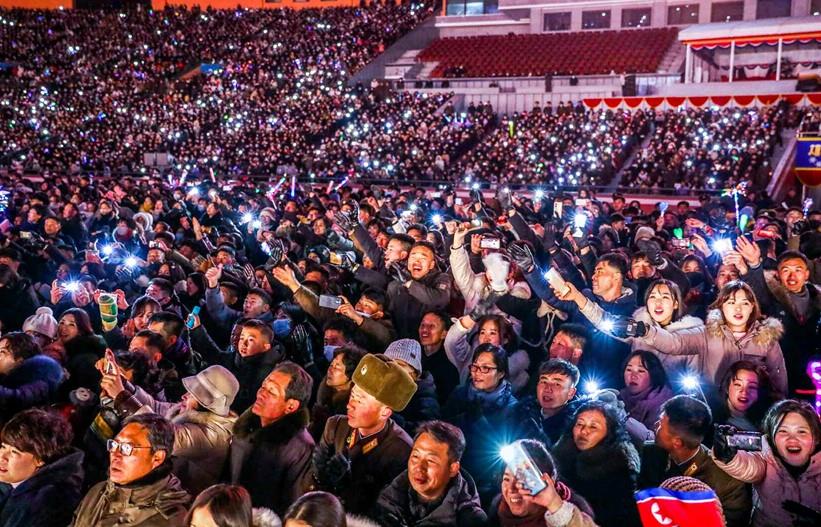
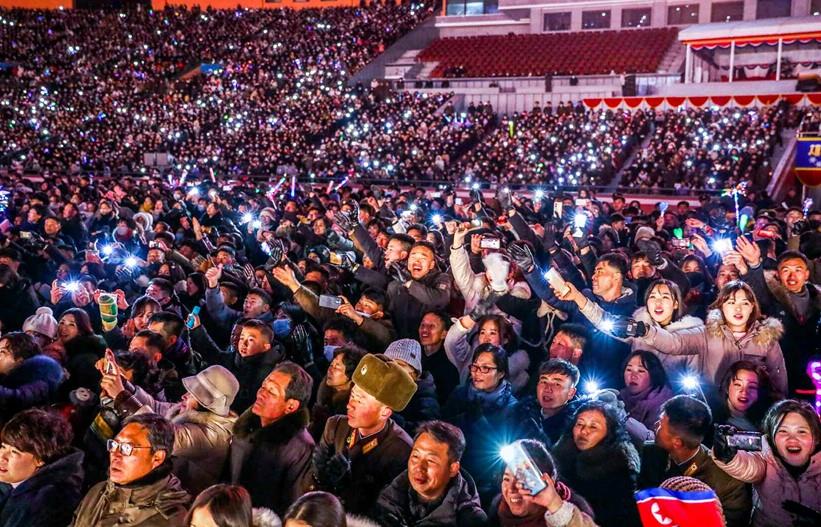
North Koreans at the New Year's celebration/North Korea Central News Agency
South Korea has also faced challenges. The "Audacious Initiative," intended as a roadmap for denuclearization, failed to secure North Korea's cooperation. In response, the Yoon Suk-yeol administration introduced the "August 15 Unification Doctrine" on the 79th Liberation Day, presenting a vision for unification focused on freedom, cooperation, and progress. It emphasizes that true liberation will come when South Korea's freedoms extend to the North, envisioning a unified state founded on liberal democracy.
At its core, the doctrine aims to extend the universal values of freedom and human rights to the North, envisioning a "unified nation based on liberal democracy." It also reinterprets and expands South Korea’s 30-year-old "Reunification Plan for the National Community," presenting a new milestone. The "August 15 Unification Doctrine" declares a clear vision for "a free and unified Korea" amidst worsening global crises, prolonged division, North Korea’s nuclear ambitions, and its anti-unification stance. This message targets South Koreans, North Koreans, and the global community, outlining a strategic path toward unification in a complex geopolitical landscape.
The path to unification remains fraught with obstacles. The unification environment, shaped by domestic and international complexities, is far from favorable. In 2025, several pivotal events could serve as turning points for inter-Korean relations.
One factor is the United States' North Korea policy under the Trump administration and potential shifts on the Korean Peninsula. While direct dialogue between Donald Trump and Kim Jong-un is conceivable, six years of significant global security changes since the 2019 U.S.-North Korea summit, coupled with declining international focus on North Korea, make rapid progress unlikely. Additionally, Kim Jong-un, wary of repeating past failures, is expected to proceed cautiously to avoid stirring unrest among his citizens.
North Korea is also expected to bolster its military capabilities through deeper ties with Russia, its newly formalized ally, while maintaining its relationship with China. This strategy poses heightened security risks to the Korean Peninsula, East Asia, and the international community. Should provocations escalate to approach the “red line,” sudden and significant shifts may occur.
Lastly, concerns are growing over the fading awareness of unification due to North Korea’s persistent hostility toward the South. Kim Jong-un has abandoned the ideals of "unification" and "ethnic solidarity" embraced by his predecessors, redefining inter-Korean relations as those of “two hostile states.” This reflects a retreat from regime competition and fear of cultural influence. Yet, unification may still be a source of hope for North Koreans.
If North Korea continues its path of isolation, internal unrest could escalate, potentially destabilizing the regime. Meanwhile, in South Korea, the need for unification is increasingly questioned. In reaction to North Korea’s “two hostile states” narrative, some now argue for permanent division, weakening nationalist discourse and spreading negative views of unification.
Younger generations, especially, find it difficult to relate to unification and often see it as an economic burden. Beyond generational divides, debates and internal conflicts over unification could hinder societal growth. Even with improved inter-Korean relations, gaining public support for cooperation with North Korea will likely remain a major challenge.
In 2025, North Korea’s willingness to adopt a more sincere stance will be critical to advancing inter-Korean relations. With a systematic and phased recalibration of its North Korea policy, South Korea has the opportunity to establish a major milestone in addressing the challenges of inter-Korean relations.