

Marketing In North Korea (18)
- Can Sweetness Be Imitated? - North Korea’s Chocolate Sweet Cake

Jeon Byung-kil
Senior Consultant of YESInnovation
former of Secretary General of UniKorea Foundation
Who Am I?
● Year of Birth: 1974
● Weight: 35 grams
● Ingredients: Flour, white sugar, water malt, egg, cocoa powder, etc.
● Calories: 155 kcal (for comparison, a bowl of rice is about 300 kcal)
● First impression: Sweetness
● Biggest fans: South Korean soldiers
● If I could trade myself for something, it would be: A blood donation
● One word to describe me: Affection
Most South Koreans already know the answer—Choco Pie. Choco Pie has been a beloved snack for people of all ages, from kindergarteners to seniors. It has been a staple at countless events, from tea parties and school trips to sports competitions. For many, a Choco Pie with a glass of milk has even served as a quick meal substitute.
Almost every South Korean has at least one memory linked to Choco Pie. Some remember celebrating a friend’s birthday at school by sticking a candle into a Choco Pie, while others recall enjoying Choco Pies received from churches during their military service. Over time, Choco Pie has become more than just a snack—it’s a part of everyday life and nostalgia.
The story of Choco Pie’s invention is quite unexpected. In the early 1970s, a researcher from Orion Confectionery was traveling in Europe when he discovered chocolate-coated snacks commonly paired with milk. Inspired by their sweet and rich flavor, he decided to create something similar in Korea. After more than two years of research and development, the first Choco Pie was released in April 1974. A combination of biscuit, chocolate, and soft cake, Choco Pie quickly became famous as a high-protein, high-calorie snack. It was an instant hit.
Choco Pie and Affection
In the late 1980s, Orion’s Choco Pie was growing in popularity, but the company faced a challenge. Sales growth was slowing, and consumers were becoming too familiar with the product. At the same time, copycat brands were emerging, creating competition. To overcome this, Orion decided to add something special to Choco Pie—not just a flavor, but a feeling: affection. By linking Choco Pie with emotions that Koreans could deeply relate to, Orion set its product apart from the competition.
In 1989, the company launched the "Affection of Choco Pie" commercial. It focused on heartwarming moments of family and community life that modern society was beginning to forget—such as moving day, a soldier’s farewell, or visiting grandma’s house. Soon, people naturally associated Choco Pie with warmth and affection. Thanks to this "Affection" campaign in the 1990s, Orion Choco Pie regained momentum, maintained steady sales, and remained the top-selling chocolate pie in Korea. After its comeback in the domestic market, Choco Pie expanded internationally, reaching China, Japan, Vietnam, and Russia.
Choco Pie also became a symbol of connection between people. It appeared in movies and dramas, often playing a key role in scenes of reconciliation, forgiveness, and communication. Over time, Orion’s message of affection transformed into something bigger—a universal symbol of warmth and human connection.
North Korea and Choco Pie: A Story of Imagination
One of the most memorable moments where Choco Pie is used to connect people appears in the movie JSA (Joint Security Area). This film is based on Park Sang-yeon’s novel DMZ and tells the story of North and South Korean soldiers stationed at Panmunjom in the Demilitarized Zone. In the movie, Choco Pie becomes a symbol of connection between the soldiers from both sides.
A Scene from JSA (Joint Security Area)
Kyung-pil (North Korean soldier): (happily holding a Choco Pie) “Why can’t we make this in North Korea, huh?”
(Kyung-pil opens the wrapper and takes a bite of the Choco Pie.)
Soo-hyuk (South Korean soldier): (to Kyung-pil) “Bro, I’m not asking for much… Do you want to come to South Korea with me? We can eat as many Choco Pies as we want. Ah, never mind.”
(Kyung-pil frowns, spits out the Choco Pie into his palm, and looks at Soo-hyuk.)
Kyung-pil: “Listen, Soo-hyuk, I’m only going to say this once, so pay attention. My dream is that one day, North Korea will make sweets even better than the ones in South Korea, got it? Until then, I can’t help but miss this Choco Pie.”
In this scene, Soo-hyuk tries to persuade Kyung-pil to defect to the South by offering him Choco Pie. At the same time, Kyung-pil uses Choco Pie to explain why he must stay in North Korea. For Soo-hyuk, the Choco Pie represents South Korea’s economic prosperity, while for Kyung-pil, it symbolizes North Korea’s ambition to grow stronger.
In JSA, director Park Chan-wook imagines a unique connection between Choco Pie and North Korea. By showing North Korean soldiers tasting Choco Pie and wondering, “Why don’t we have this?”, he uses the snack as a metaphor for the allure of capitalism. Before this movie, no one had thought of linking Choco Pie to North Korea in such a way.
Released in fall 2000, JSA came out at a time when the first-ever inter-Korean summit had sparked new hope for peace between North and South Korea. The film received more attention than expected because it aligned with this growing spirit of reconciliation. Initially, some doubted its success due to ongoing tensions between the two countries, but JSA ended up making history in Korean cinema about national division.
At the heart of JSA’s success is the imaginative story of two soldiers from opposite sides sharing their thoughts and emotions through a simple snack—Choco Pie. Though fictional, this scene captured the hopes and struggles of a divided Korea in a way that resonated deeply with audiences.
North Koreans Eating Choco Pie: A Movie Becomes Reality
In the movie JSA, North Korean soldiers taste Choco Pie for the first time—but what seemed like fiction later became reality. This time, the setting wasn't Panmunjom but the Kaesong Industrial Complex, a special economic zone in North Korea where South Korean capital and technology combined with North Korean labor to promote economic cooperation between the two Koreas.
When the Kaesong Industrial Complex became fully operational in 2004, South Korean companies working there provided Choco Pies as snacks for North Korean workers. At the time, over 42,000 North Korean workers were employed by more than 200 South Korean businesses. Each worker received two to three Choco Pies per day as an incentive. Instead of receiving cash rewards for outstanding performance, workers were often given extra Choco Pies—a system so common that a local joke in Kaesong said that a company’s success could be measured by the number of Choco Pies it handed out. At its peak, the Kaesong factories distributed about 2.5 million Choco Pies per month.
Despite more than 100,000 Choco Pies being handed out daily, almost none of the wrappers were found inside the factories. This was because workers didn’t eat them at work—instead, they secretly took them home. Over time, Choco Pies became a way for North Korean workers to get a small taste of South Korea and its capitalist lifestyle.
The Birth of 'Chocolate Sweet Cake'
In North Korea, Choco Pie was nicknamed "Kaesong bread" because it came from the Kaesong Industrial Complex. At first, North Korean workers brought home their Choco Pies to share with their families, especially their young children. But soon, Choco Pies began to spread beyond Kaesong, appearing in markets in major cities like Hamhung, Wonsan, Sinuiju, and Chongjin.
However, in May 2014, the distribution of Choco Pies was suddenly stopped when North Korean authorities requested that South Korean companies provide generic, unbranded snacks instead. The growing popularity of Choco Pies—and the international attention they attracted—likely made the North Korean government uneasy.
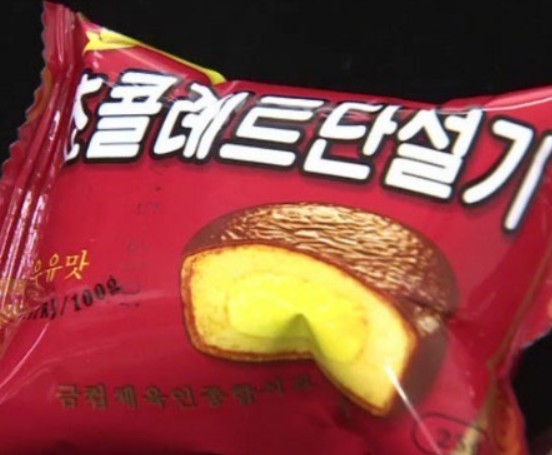
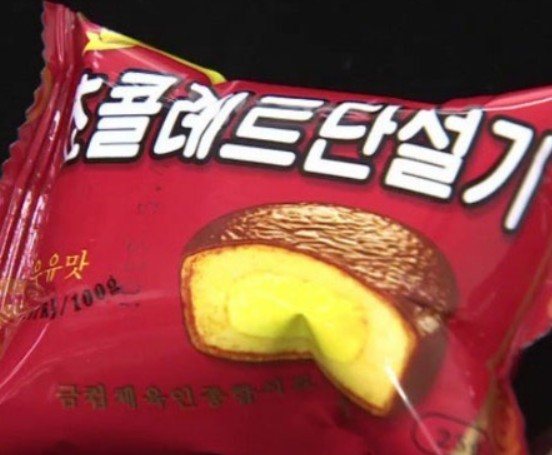
Rather than accepting the South Korean treat, North Korea decided to create its own version. In May 2015, the Khumcup Food Factory released the Chocolate Sweet Cake, a product that closely resembled Choco Pie in shape, packaging, and appearance. However, despite looking similar, its taste was nowhere near the original.
Imitation is the Mother of Creation
When news broke that North Korea was copying South Korean and foreign products, many South Korean netizens reacted with sarcasm and ridicule. However, if we look back at how South Korea’s confectionery industry developed in the 1970s and 1980s, it becomes clear that North Korea’s actions are not so unusual. At that time, South Korea modeled its confectionery industry after Japan.
Throughout history, imitation has been a natural part of progress. Countries with more advanced technology and culture have always been copied by others. Japan copied American products, South Korea copied Japan, and China copied South Korea. Now, North Korea is copying South Korea. This cycle continues—whenever a country produces something better, others replicate and refine it.
As Aristotle once said, "Imitation is the mother of creation." True opportunity comes when imitation goes beyond simple copying—when it leads to improvement, innovation, and something entirely new.
-
PREV [Current Affairs Analysis]
-
NEXT [Feature Article]