

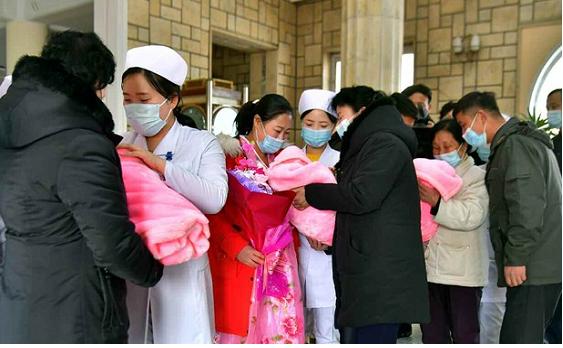
A Look Back at the Human Rights Situation of North Korean Women
on International Women's Day
Ihn Jiyeon
Attorney-at-Law (Washinton D.C. Bar), President of the NANK
Every year on March 8th, International Women's Day celebrates the political, economic, and social achievements and rights of women around the world. International Women's Day was proposed in 1910 and officially recognized by the United Nations in 1975. While the day celebrates the progress made in many countries to advance women's equality and human rights, it also serves as a reminder of the inequality and discrimination that still exists. However, not all women around the world have experienced this progress equally. In particular, the human rights realities for women in North Korea is a far cry from the ideals of International Women's Day.
The Double Whammy North Korean Women Face
In addition to the human rights violations experienced by all North Koreans under the state-controlled system, North Korean women are exposed to additional discrimination and oppression based on their gender. This is the “double whammy” that North Korean women face.
Officially, North Korean regime claims to be a gender-equal country, with women's rights guaranteed in its constitution. There is the Equal Rights of Men and Women Decree, adopted in 1946, and the Women's Rights Guarantee Act, enacted in 2010, but the reality on the ground is very different.
Patriarchal Social Structure and Entrenched Gender Roles
Strong patriarchal traditions and Confucian values are deeply rooted in North Korean society. North Korea's political ideology, based on the “Revolutionary Leader View” and “Socialist Big Family Theory,” reinforces a patriarchal system, with the leader as the “father,” the party as the “mother,” and the people as the "children."
In this society, women are primarily emphasized in their roles as “flowers of the revolution,” “loyal daughters-in-law,” and “wise mothers." Women's participation in the society is encouraged, but it is largely limited to their role as "revolutionary comrades" loyal to the party and state.
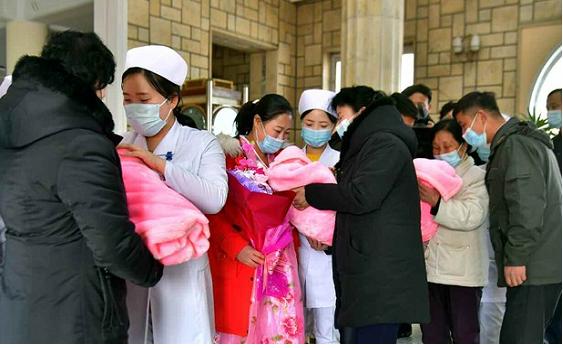
Economic Burden and Survival Responsibilities
Since the “Arduous March (North Korean Famine)" of the 1990s, North Korean women have become the primary breadwinners for their families. With the collapse of the state rationing system, women became responsible for the survival of their families through small-scale commercial activities in the marketplaces.
Paradoxically, this shift in economic roles has given North Korean women limited economic autonomy, but at the same time, the responsibilities of domestic labor and child care still fall completely on women, creating a “double burden.” In addition, their market activities expose them to various forms of human rights abuses, including crackdowns by public security agencies, bribe demands, and sexual harassment.
Sexual Violence and Human Trafficking
One of the most serious human rights violations North Korean women face is sexual violence and human trafficking. Sexual violence, especially by men in positions of power, is widespread, but perpetrators are rarely punished. Rather, when victimized women do speak up, they are often blamed for being "steeped in bourgeois culture."
The situation is even more serious and appalling in the borderlands with China. Trafficking in North Korean women has long been a serious problem here. There is a long and tragic history of North Korean women being sold by brokers as “brides” to men in rural China. In urban China, North Korean women are locked in small rooms, exposing their bodies and selling their sexual images online. They have no legal status and are at risk of forced repatriation, leaving them vulnerable to ongoing human rights abuses.
Suppressing Freedom of Expression
Not only men but also women are unable to express their opinions freely, and those who voice dissent or opposition are severely punished. In her March 2023 report to the United Nations Human Rights Council (UNHRC), the UN Special Rapporteur on Human Rights in North Korea, Elizabeth Salmon, cited testimonies from North Korean defectors who said, “Women are called ‘flowers,’ and their appearance, clothing, hair and makeup are controlled by the state.”
Limited Political Participation
North Korea's Supreme People's Assembly has about 20% female representation, but this is only symbolic. Women are underrepresented in the Central Committee or Politburo of the Workers' Party of Korea holding real power. In the era of Kim Jong-un, a female leader such as Kim Yo-jong has emerged, but this is an extremely rare exception based on personal kinship in the third-generation dictatorship.
International Community's Role and Tasks
On the occasion of International Women's Day, the international community's organized attention and support for the human rights situation of North Korean women is even more urgent. As the UN Security Council Resolution 1325 emphasizes, the protection of women in conflict situations and their participation in peace processes is very crucial on the international agenda.
The international community's efforts to improve women's human rights in North Korea should proceed as follows.
First, an accurate picture of the situation is needed. There is a need for systematic research and consistent documentation of the human rights situation of women in North Korea.
Second, there must be practical support for North Korean women who have fled the country. There must be real protection and support for North Korean women who are in third countries, especially China, and who are victims of serious human rights violations. Such a protection is currently almost non-existent.
Third, we must continue to raise the issue. In the international community, the issue of North Korean women's human rights must be raised consistently and uninterruptedly in formal meetings of the United Nations.
Fourth, the role of civil society must be strengthened. Domestic and international civil society organizations must continue their efforts to improve women's rights in North Korea, and they need policy support from the international community.
Persistent Journey to Realizing True Human Rights
International Women's Day is a day of global solidarity for gender equality. It is a day to recognize the vast disparity in women's rights between South and North Korea, and to call for our efforts to ensure that women in North Korea enjoy the same human dignity and rights as other women in the international community. Improving the human rights of North Korean women will be a long and arduous journey that cannot be accomplished in a short period of time, but it is my fervent hope that with the continued attention and support of the international community, as well as changes within North Korean society, they will at some point be able to enjoy true freedom and human rights together.
-
PREV [Opinion]
-
NEXT [Feature article]