


North Korea’s Food Crisis: Structural Challenges and Solutions
Amid Rising Prices and Starvation (March 2025)

Lee Seung-hyun
Ph.D in Public Administration (Research Fellow at the SAND Institute)
drharacearthur@gmail.com
As of March 2025, North Korea faces a severe food shortage and worsening agricultural crisis. For the 19th consecutive year, the Food and Agriculture Organization of the United Nations (FAO) has listed North Korea among 45 countries requiring external food aid—a situation that has continued since 2007. This is no longer a short-term problem but a deeply rooted, structural issue—one that demands practical, long-term solutions.
At the heart of North Korea’s food crisis lies a steep decline in agricultural productivity. The country’s rice output stands at just 36% of South Korea’s, having dropped sharply from 2.8 million tons in 2019 to 2.11 million in 2020, with no signs of recovery since. This drop is linked to a mix of natural disasters, climate change, and persistent shortages of essential inputs like fertilizer and fuel. Farming practices remain largely manual and outdated, with minimal access to modern equipment or agricultural technology. Furthermore, the collective farming system leaves farmers with little independence or incentive, locking the system into a cycle of low yields and inefficiency.
In March, as the spring sowing season for wheat and barley began, North Korean authorities instructed agricultural sectors across the country—including in the key region of Hwanghae-do—to complete planting by mid-month. But the reality on the ground tells a different story. Chronic food shortages and a lack of manpower are delaying vital prep work such as plowing and drainage.
One local source noted, “The central command called for swift and quality planting, but there’s no one left to do the work. Many farmers are too hungry to even show up, and those who do are too weak to work properly, so planting is falling behind.”
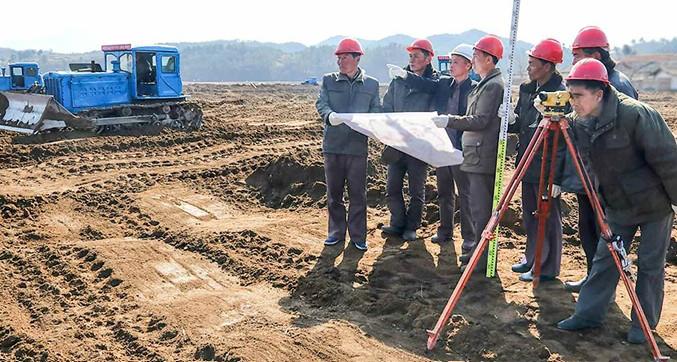
In short, the countryside faces a critical labor shortage. With young workers drafted into construction units or the military for national projects, most of the remaining workforce consists of elderly people and women—making it nearly impossible to meet the demands of the planting season.
This shortage in production is directly driving up food prices across the country. By late February, rice prices in major cities like Pyongyang, Sariwon, Pyongsong, and Hamhung had climbed from 8,700 to 9,100 won per kilogram, while corn prices rose from 3,900 to 4,100 won. In northern areas such as Chongjin (North Hamgyong Province), Hyesan (Ryanggang Province), and Manpho (Jagang Province), rice prices jumped from 8,800 to 9,200 won and corn from 4,000 to 4,300 won. On average, both staples saw an increase of 300 to 400 won in just one week—a clear indicator of worsening food insecurity as February came to a close.
Rising food prices in North Korea stem not only from outdated farming methods but also from deeper structural issues, such as currency fluctuations and the effects of 2024’s natural disasters. In particular, heavy rains and floods in late July severely damaged crops. In inland regions like South and North Hwanghae Provinces, flooding disrupted rice pollination, resulting in large amounts of empty husks. This led to a sharp drop in rice production and further price increases.
With crop yields down and prices rising, North Koreans are finding it harder than ever to secure food—especially under ongoing international sanctions. The flooding last July also contributed heavily to the current spike in rice prices. According to one source inside the country, “Once rice prices go over 5,000 won per kilo, starvation begins—and that threshold was passed long ago. Since early January, we’ve heard rumors of people dying from hunger on farms, especially in inland regions like Hwanghae Province.” In short, food prices have remained dangerously high for months, and as March begins, there’s growing concern that starvation deaths could surge unless conditions improve quickly.
As noted earlier, North Korea’s food crisis is rooted in structural issues beyond outdated farming. Addressing it requires systemic reform, including agricultural modernization through mechanization, better fertilizers and seeds, and improved irrigation. A more open stance toward international cooperation could also lead to stronger partnerships with countries like South Korea, China, and Russia.
Secondly, North Korea needs to reform its agricultural system by moving away from collective farming and allowing more autonomy for individual households. Experts say limited market reforms could boost productivity. In fact, when private crop sales were permitted in the early 2010s, some regions saw output rise. Expanding such measures could help ease the ongoing food crisis.
Third, humanitarian aid must be revived, as severe food shortages are expected during the May–August lean season. This crisis should be seen as a humanitarian emergency, not just an economic issue. The international community should continue food support regardless of politics, and Pyongyang must show greater openness in accepting it.
North Korea’s food crisis is far from being a domestic issue alone—it has broader implications for the Korean Peninsula’s overall stability. Continued internal hardship could fuel unrest and increase external tensions. That’s why solving the food shortage is not just a humanitarian responsibility, but also a matter of maintaining peace and security across the Northeast Asian region.
Ultimately, tackling North Korea’s food crisis will require a two-pronged approach: sustained international support and meaningful domestic reform. While short-term relief depends on external aid, long-term stability hinges on North Korea building its own capacity through agricultural transformation. If the regime takes a more open stance and works with global partners, it may finally find a path toward resolving its chronic food insecurity.