


South Korea–Syria Breakthrough:
Is North Korea Losing a Key Arms Trade Hub?

Lee Yoon Gyu
Director of Research, Korea Institute for Military Affairs (KIMA);
Ph.D. in Political Science
North Korea’s Dilemma, South Korea’s Diplomatic Win
On April 11, 2025, South Korea formalized diplomatic ties with Syria, completing its network with all 193 UN member states. Syria had been the final country with no official ties to Seoul.
This step goes beyond mere symbolism. It presents a serious challenge to North Korea, which is becoming increasingly isolated. South Korea’s deeper engagement in the Middle East—a region North Korea long leveraged for military, diplomatic, and economic advantage—threatens to disrupt Pyongyang’s networks for illegal arms trading and its strategic presence in the region.
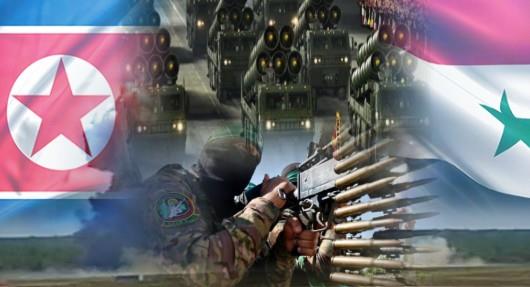
North Korea has spent decades cultivating military ties with Shia-dominated states such as Syria and Iran. These relationships have enabled Pyongyang to export weapons, earn foreign currency, and circumvent international sanctions. The Korea-Syria diplomatic breakthrough could now mark a fundamental disruption to those longstanding arrangements.
Behind the Alliance: Cracks in the North Korea–Syria Military Axis
Military collaboration between Pyongyang and Damascus dates back to the 1973 Yom Kippur War, when North Korea sent fighter pilots and military advisers to Syria. Over the years, Pyongyang expanded its assistance to include chemical weapons development and missile technology transfers. UN reports have highlighted substantial North Korean involvement in Syria’s chemical weapons program.
North Korea’s arms exports through Syria have ranged from light weapons like rifles and RPGs to ballistic missiles such as the Scud-B and Rodong, as well as drones and components for chemical weapons. During the Iran-Iraq War in the 1980s, Pyongyang sold Scud missiles to Iran for about $900,000 each, with annual weapons exports exceeding $300 million—briefly placing it among the world’s top eight arms exporters.
These deals often relied on intermediaries like Syria—states operating in legal and diplomatic gray areas. Tactics included front companies, covert diplomatic channels, and the dispatch of military technicians. Syria served as a key transit hub for North Korean arms across the Middle East and Africa. But recent geopolitical changes are steadily closing off these routes.
Since the outbreak of the Israel-Hamas war on October 7, 2023, which escalated into a broader Iran-Israel conflict, Iran’s sphere of influence has steadily crumbled. Tehran-backed groups such as the Houthis, Hamas, and Hezbollah have suffered serious setbacks under U.S.-led military action. Syria’s Bashar al-Assad regime also collapsed during this period, with Assad’s exile to Russia in late 2024 serving as a clear signal of North Korea’s fading grip in the region.
Strategic Implications of South Korea–Syria Normalization:
Disrupting North Korea’s Diplomatic Web
South Korea’s decision to normalize relations with Syria amid this regional upheaval is more than a symbolic gesture. By helping Damascus rejoin the international community, Seoul has created new structural realities that discourage further military cooperation between Syria and North Korea. As a state committed to upholding UN sanctions, South Korea is building legitimate and stable partnerships in the Middle East—including with Syria—thereby undercutting North Korea’s traditional arms smuggling channels.
This shift also sends a strong signal to other regional players: working with South Korea offers legitimacy and opportunity, while ties to North Korea carry growing risks. A diplomatic domino effect could unfold. Following its reestablishment of ties with Cuba in February 2024, Seoul’s normalization with Syria marks another step in peeling away North Korea’s old ideological and military partners.
North Korea’s Options and Possible Responses
As it faces growing international isolation, North Korea is scrambling to adapt. It has tried to deepen ties with Russia, but the results have fallen short. Acquisitions like Russia’s A-50 early warning aircraft and the launch of a 5,000-ton warship are largely symbolic and fail to address Pyongyang’s deeper strategic needs.
The evolving global order, shaped during Trump’s first term and Biden’s presidency, emphasized confronting authoritarian regimes—an approach now gaining momentum under Trump 2.0. The fall of Assad’s regime in late 2024 and the rise of a pro-Western Syrian government reflect this new alignment. Meanwhile, Trump’s second-term administration has downgraded North Korea’s diplomatic priority, and even China appears increasingly wary of backing Pyongyang too closely.
North Korea now faces an acute dilemma: it is moving against the tide of global realignment. Belatedly, Pyongyang is reverting to old tactics—using its nuclear and missile programs as bargaining chips to win concessions from Washington and reassert control over a disillusioned population. Although some speculate about potential provocations, the global environment is less receptive than in the past. Sympathy or negotiation leverage through brinkmanship is no longer assured.
North Korea’s Struggles and South Korea’s Strategic Challenge
The diplomatic breakthrough with Syria delivers a multifaceted blow to North Korea—diplomatic, economic, and strategic. This isn’t just about forming relations with another country; it’s a deliberate strategy to block North Korea’s illicit arms trade and diminish its sources of foreign income. Still, South Korea must prepare for Pyongyang’s potential reaction.
Facing mounting pressure, North Korea may opt for military provocations. To prepare for such contingencies, Seoul must reinforce its alliance with the United States and broaden multilateral cooperation with global partners. In this rapidly shifting international environment, South Korea must go beyond diplomatic victories—it must also prove it can manage the evolving strategic landscape with resilience and foresight.
-
PREV [Hacking & Coins]
-
NEXT [Feature Article Series]