

Remembering Sacrifice vs. Promoting Loyalty:
How Veterans Policies Differ in South and North Korea

Yoon Seung-bi
Professor, Department of Human Social Services, Seoul Christian University
As the 74th anniversary of the Korean War approaches, a key question returns: how do nations remember their fallen? South and North Korea’s veterans policies offer starkly different answers, reflecting the core of their political systems.
In South Korea, veterans policy reflects the state’s respect and responsibility toward those who sacrificed for freedom, independence, and democracy. Legal structures ensure their sacrifices are honored and promote shared patriotic values across society.
North Korea, in contrast, uses veterans affairs to reinforce ideological continuity. It praises those who resisted Japanese rule, fought in the war, or served the Kim dynasty as “revolutionary martyrs.” While South Korea sees veterans policy as a democratic obligation, the North treats it as a measure of loyalty to the regime.
South Korea’s veterans system is grounded in the 1984 Act on the Honorable Treatment of and Support for Persons of Distinguished Service to the State. The law outlines eligibility and provides broad support—covering compensation, education, healthcare, housing, jobs, loans, and funerals—across 87 articles and provisions.
Beneficiaries include independence fighters, Korean War veterans, democratization activists, fallen civil servants, and discharged soldiers—anyone who helped secure national growth and security. Support is tailored to the degree of sacrifice and family need, under the principle of lifelong state responsibility.
North Korea, lacking a unified law, manages veterans affairs through internal regulations and decrees. These include aid for soldiers’ families, job guarantees for veterans, and educational support for their children, offering basics like housing, food, jobs, and school supplies.
However, these benefits are given selectively, based on political loyalty and one’s songbun (social status). Veterans support is treated not as a right, but as a favor granted by the regime.
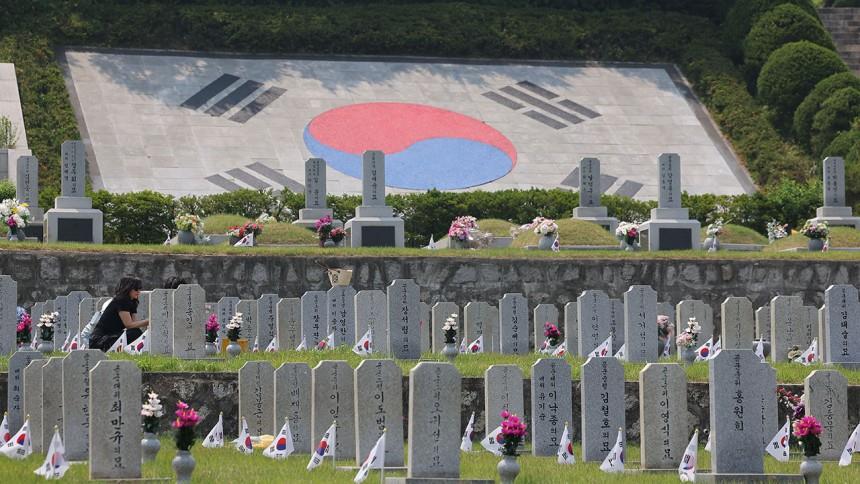
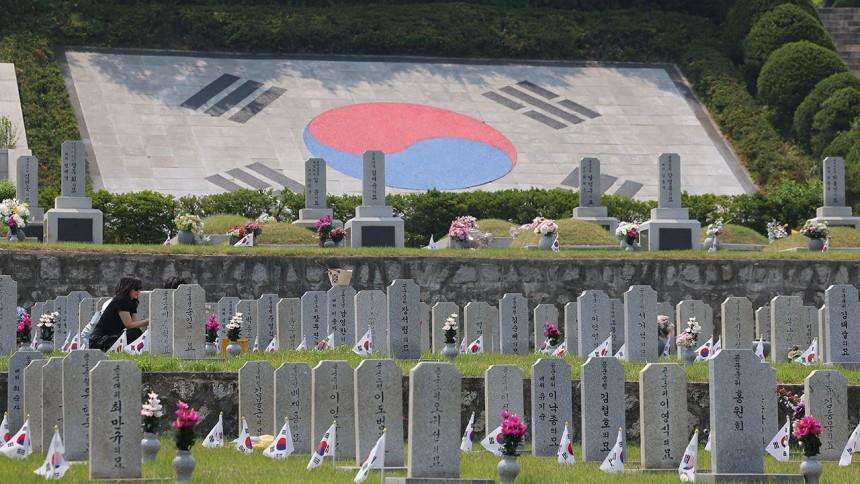
In South Korea, veterans affairs aim to preserve collective memory and provide fair compensation. Sites like the National Cemetery, Memorial Day ceremonies, and veterans hospitals embed remembrance in daily life. Education and outreach further foster unity and national identity.
North Korea, meanwhile, emphasizes glorification. Titles like “Hero of the Republic” and medals honor loyal fighters while reinforcing ideology. Their descendants often attend special schools and gain symbolic prestige as “revolutionary heirs,” ensuring the legacy aligns with regime propaganda.
South Korea continues to grow its veterans programs, now involving private-sector support. In 2024, the Ministry of Patriots and Veterans Affairs received nearly 6 trillion KRW to strengthen welfare for veterans and their families.
North Korea discloses no formal veterans budget. Its support system, cloaked in revolutionary rhetoric, is weakened by economic difficulties. Under Kim Jong-un, funding has shifted toward nuclear weapons and military buildup, leaving veterans care underfunded and largely symbolic.
Veterans policy is more than welfare—it shows how a nation remembers its past and shapes its future. South Korea’s system is legally grounded and structured, while North Korea’s remains a tool for loyalty and propaganda.
In the end, how a society treats its veterans reflects its stance on dignity, sacrifice, and legacy.
The two Koreas’ differing approaches reveal a deeper systemic divide—one that could challenge efforts toward unity in a post-unification era.