

North Korea and Russia Revive Cold War-Era Pact with Comprehensive Strategic Partnership, Shaking Regional Security

Lee Donghoon
Contributing editor of Tech Focus
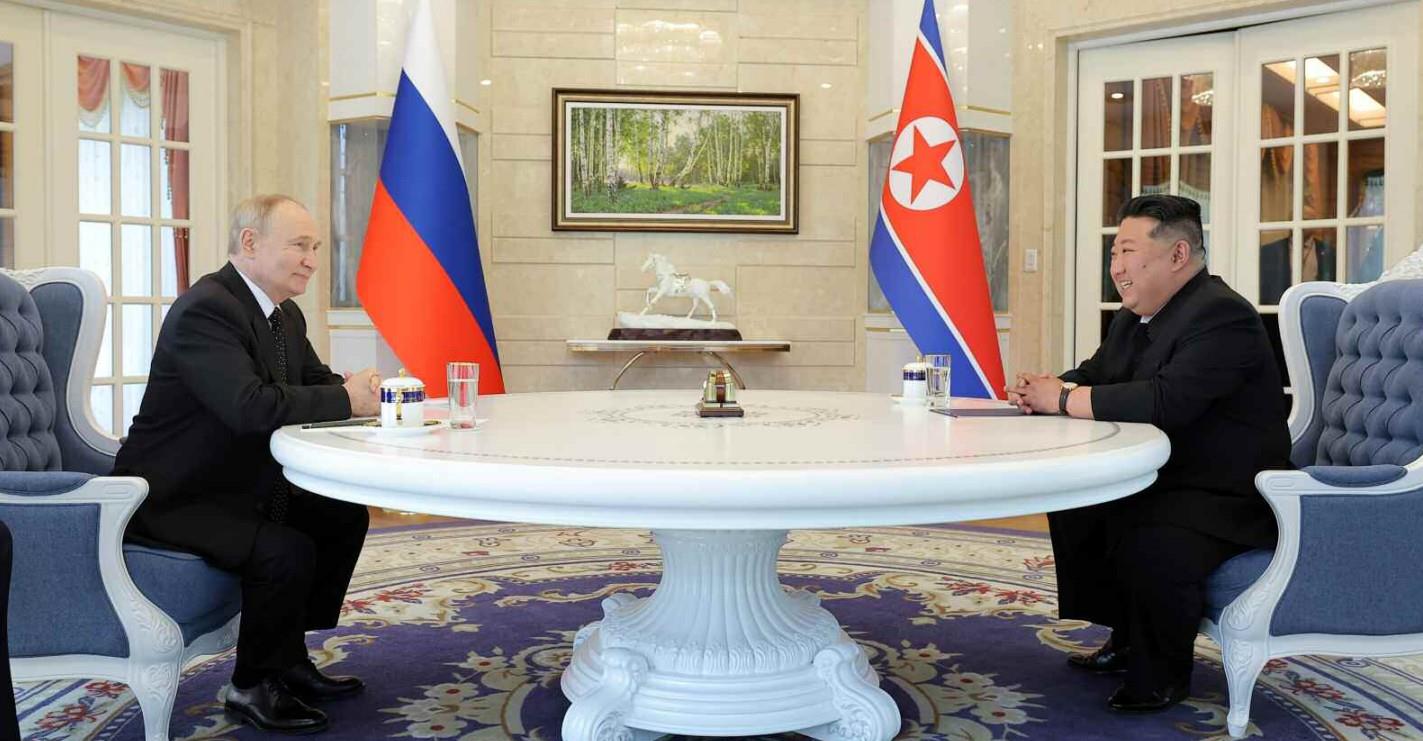
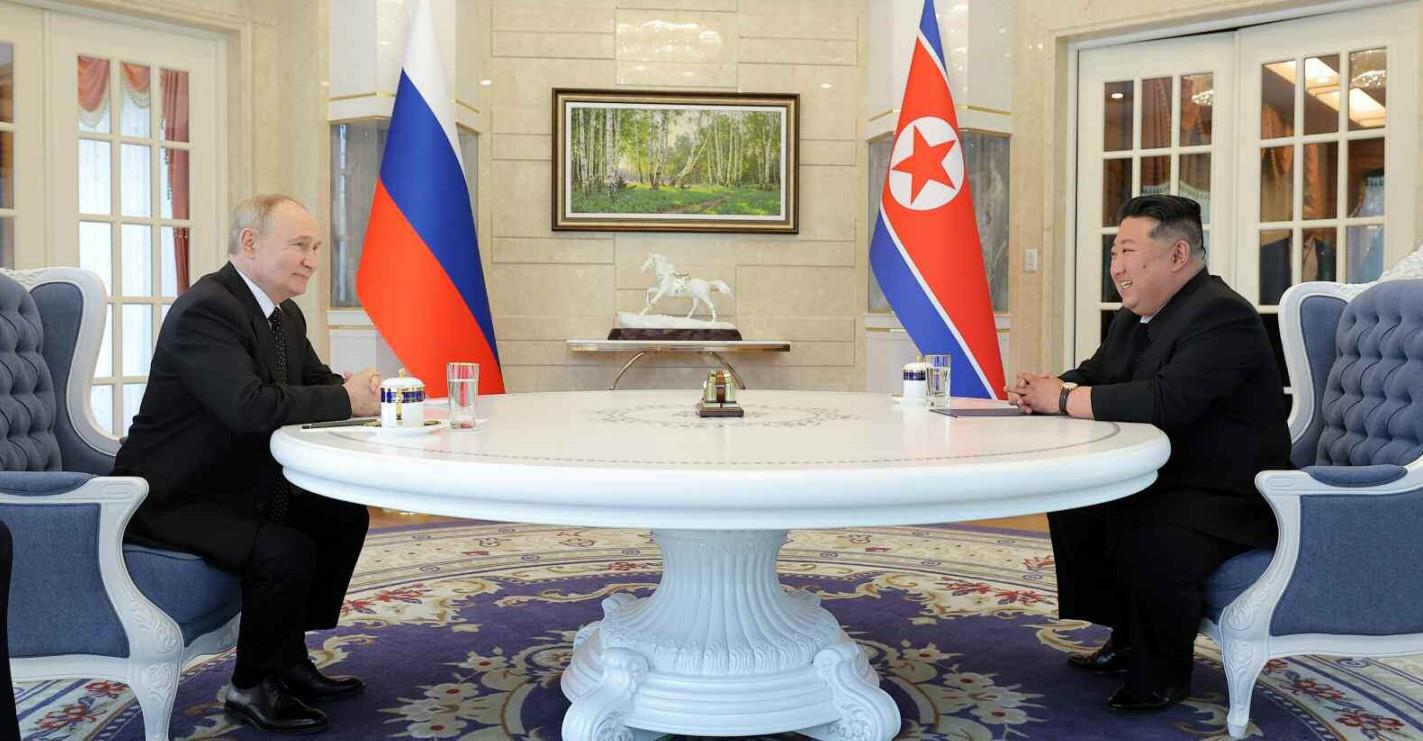
Pyongyang and Moscow have signed a "Treaty on Comprehensive Strategic Partnership," a landmark agreement that includes a mutual defense clause, significantly upgrading their relationship to a level reminiscent of their Cold War-era alliance. The pact, signed by North Korean leader Kim Jong Un and Russian President Vladimir Putin in Pyongyang, has sent shockwaves across the region and beyond, with major implications for the security dynamics of the Korean Peninsula and the broader international order.
The core of the treaty is its powerful mutual defense commitment. Article 4 of the treaty states that if either country is attacked, the other will provide "military and other assistance with all means in its possession without delay." This clause effectively restores a military alliance that had lapsed after the fall of the Soviet Union, providing North Korea with a significant security guarantee from a nuclear-armed permanent member of the UN Security Council.
Beyond the military dimension, the comprehensive nature of the treaty signifies a deep and wide-ranging alignment between the two nations. The main contents of the treaty span several key areas:
Military and Security Cooperation: The pact calls for joint measures to strengthen defense capabilities and institutionalizes security cooperation. This could pave the way for joint military exercises, exchanges of military technology, and Russian assistance for North Korea's satellite and missile programs, which are currently sanctioned by the United Nations.
Economic Partnership: The treaty aims to boost trade and investment, creating a framework to circumvent international sanctions. This includes developing alternative trade and payment mechanisms that are not controlled by the West, potentially providing a lifeline to North Korea's beleaguered economy and a source of munitions and labor for Russia's war effort in Ukraine.
Scientific and Technological Exchange: The treaty explicitly mentions cooperation in "peaceful nuclear energy," space exploration, and other high-tech fields. This has raised alarms about the potential for Russia to transfer sensitive technologies that could advance North Korea's nuclear weapons and ballistic missile programs.
Political and Diplomatic Alignment: Both nations have pledged to support each other on the international stage and to work together to create a "multipolar world," a clear challenge to the U.S.-led global order. They also jointly oppose what they term "unilateral coercive measures" – a direct critique of international sanctions.
The Exchanges
In accordance with this treaty, the following exchanges have taken place between North Korea and Russia to date.
● Deployment of North Korean combat troops to Russia:
In accordance with Article 4 of this treaty, North Korea deployed the first batch of 11,000 combat troops to Russia in October of last year. Article 4 of the treaty stipulates that if either side is invaded by force, military and other aid will be provided without delay.
North Korean authorities belatedly acknowledged the deployment in April of last year, explaining the justification for the deployment by saying, “The military activities of the Republic’s armed forces conducted within the territory of the Russian Federation are fully in accordance with the provisions and spirit of the Treaty on the Comprehensive Strategic Partnership between North Korea and Russia, and international law including the UN Charter.”
From the perspectives of Russia and North Korea, the argument is that since Kursk is an Russian area invaded by Ukraine, there is no problem with North Korea’s participation in the war according to the treaty. According to estimates by the British Military Intelligence Service, 6,000 of these soldiers were killed or wounded as of June of this year.
North Korea dispatched an additional 3,000 combat troops as the second batch in January and February of this year, and recently decided to dispatch an additional 6,000 engineering troops as the third batch during the Shoigu and Kim Jong-un meeting. This is because Russia, which needs to quickly rebuild bridges and military facilities in the recaptured Kursk region, is in dire need of excellent engineering personnel.
● Dispatch of North Korean workers to Russia:
Russia has been sending many young men who would otherwise be working to the military and defense industry to carry out the Russo-Ukrainian War. In order to operate the economy normally, workers are needed. It is estimated that North Korea dispatched about 8,000 workers to Russia.
● Export of North Korean military equipment to Russia:
The Russian defense industry has been unable to replenish the enormous equipment consumption due to the Russo-Ukrainian War that has been going on for more than three years. Therefore, the Russian military has no choice but to rely on North Korean military equipment.
According to a report titled “Unlawful Military Cooperation Including Arms Transfers Between North Korea and Russia” published by the Multinational Sanctions Monitoring Group (MSMT) on May 29, North Korea delivered approximately 9 million shells (including artillery shells) to the Russian military via cargo ships on 49 occasions from January to December of last year.
The shells were transported to ports in the Russian Far East and then transported by rail to ammunition depots in central-western Russia. Since September 2023, over 20,000 military supply containers have left North Korea for Russia. These include 82mm, 122mm, 130mm, 152mm, and 170mm shells used for D-20, D-30, M-30, M-46, and D-74 artillery. In 2024, North Korea transferred more than 200 heavy artillery pieces, including finished vehicles, rocket launchers, self-propelled guns, and reloading vehicles, enough for three Russian brigades.
● Russia's military and economic support for North Korea:
It is known that North Korea received significant military and economic support from Russia in return for sending troops. First of all, the monthly salaries of the dispatched North Korean soldiers come from Russia. It is known that each dispatched North Korean soldier receives $2,000 per month, which is a huge amount considering that the monthly salary of North Korean soldiers stationed in North Korea is only about 90 South Korean won. The North Korean authorities are embezzling a significant portion of this money instead of giving it to individual soldiers.
Through this, it is expected to upgrade the aging naval and air force capabilities, serve as a maintenance, repair, and operation (MRO) base for Russian military supplies, and fill foreign exchange reserves. It has been confirmed that Russia transferred advanced air defense technology and ballistic missile technology to North Korea in return for its military support. In addition, there is a possibility that some of the most advanced technologies, such as drone technology, military reconnaissance satellite technology, submarine technology, intercontinental ballistic missile (ICBM) technology, and nuclear weapon miniaturization technology, may also be transferred. Since no other ally has sent troops to Russia, North Korea should be given an appropriate countermeasure. Recently, as the instability in the Middle East deepens due to Israel’s surprise preemptive attack and Iran’s counterattack, there is also the possibility that Chairman Kim Jong-un demanded a written regime guarantee from Russia in return for sending troops.
Future Impacts of the Treaty
The North Korea-Russia pact is poised to have a profound and lasting impact on the two signatories and their neighbors.
For North Korea:
Enhanced Security and Deterrence: The mutual defense clause provides the Kim regime with its strongest security guarantee in decades, potentially emboldening it to act more assertively towards South Korea and the United States. It significantly raises the stakes for any potential military action against the North.
Economic and Technological Boost: The promise of Russian economic support and technology transfer could help North Korea weather the impact of sanctions and advance its military capabilities. This could lead to a more potent nuclear and conventional threat.
Reduced Diplomatic Isolation: The high-profile summit and treaty have elevated North Korea's standing and provided a powerful counter-narrative to its international isolation.
For Russia:
Access to Military Supplies: The treaty solidifies a critical partnership for Russia as it continues its war in Ukraine. North Korea is a significant source of artillery shells and other munitions for the Russian military.
Challenge to the West: By deepening ties with a designated adversary of the United States, Russia is actively working to undermine the international sanctions regime and challenge American influence in Northeast Asia.
Increased Leverage: The pact gives Moscow greater leverage in its dealings with other regional players, including China, and reasserts its role as a major power in the Asia-Pacific.
For Neighboring Countries and the International Community:
South Korea: The treaty poses a direct and immediate threat to South Korea's security. It fundamentally alters the military balance on the Korean Peninsula and is likely to spur Seoul to strengthen its own defense capabilities and its alliance with the United States. In response, South Korea has indicated it may reconsider its policy of not providing lethal aid to Ukraine.
United States: The pact represents a significant challenge to U.S. interests in the region and its efforts to denuclearize North Korea. It will likely lead to a bolstering of the U.S. military presence in the Indo-Pacific and a strengthening of trilateral security cooperation with South Korea and Japan.
Japan: Japan also views the deepening military cooperation between its two neighbors with alarm. The potential for advanced Russian technology to be transferred to North Korea heightens the missile threat to Japanese territory, likely leading to further investments in missile defense and a more robust security posture.
China: China, while sharing a desire to counter U.S. influence, finds itself in a complex position. While the pact strengthens the anti-Western bloc, it also risks destabilizing the Korean Peninsula, a scenario Beijing has traditionally sought to avoid. The close-knit military alliance between Pyongyang and Moscow could also diminish China's own influence over North Korea.
In conclusion, the North Korea-Russia Comprehensive Strategic Partnership treaty is a transformative development with far-reaching consequences. It marks a new era of alignment between two of the world's most isolated and anti-Western states, significantly raising the potential for conflict and an arms race in Northeast Asia. The international community now faces the challenge of navigating a more complex and volatile security landscape, with the specter of a revitalized and emboldened North Korea backed by a revanchist Russia.