

North Korea and the “Victory Day”

J.R. Kim
President, Korea Council For Peace and Cooperation
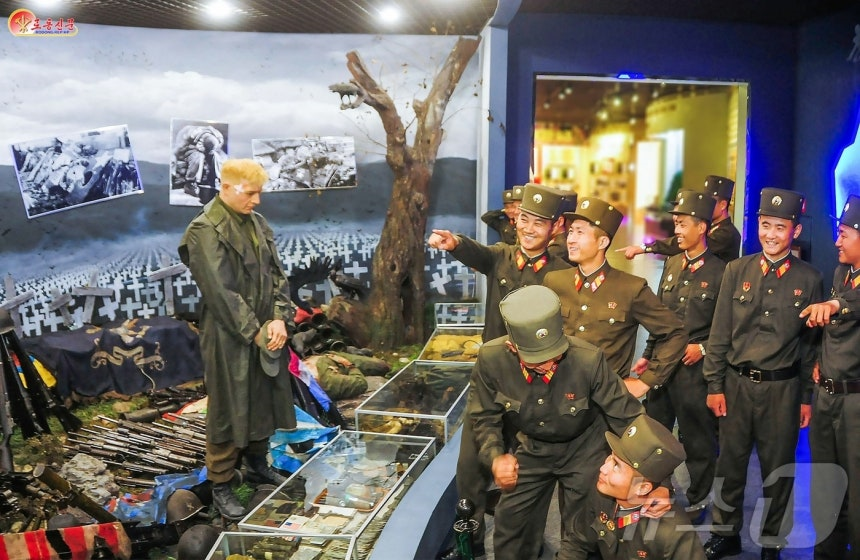
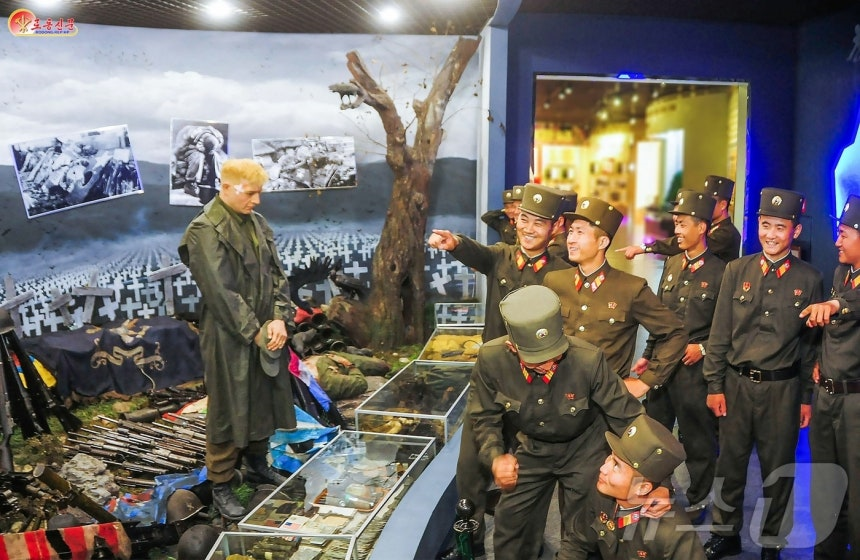
North Korea commemorates July 27—the date the Korean War armistice was signed in 1953—as “Victory Day.” From early childhood, North Koreans are taught that the Korean War was a “war of aggression” launched by the puppet regime of Syngman Rhee in South Korea, backed by American imperialists. According to this narrative, the North fought a counteroffensive war to liberate the South Korean people from U.S. imperialism.
Despite failing to unify the peninsula under communist rule, North Korea glorifies the war as a victory and holds grand annual celebrations to reinforce this narrative. In 1973, North Korea officially designated July 27 as “Fatherland Liberation War Victory Day.” In 1996, it was elevated to a national holiday under the name “Victory Day” (Jeonseungjeol) and has since been celebrated with increasing significance.
North Korea uses this day to inflame anti-American sentiment. On the evening before July 27, a mass dance event is held at Kim Il Sung Square in Pyongyang, featuring thousands of students. On the day itself, Korean War veterans participate in various commemorative events, including military parades. The regime portrays the occasion as a symbolic victory over the world’s most powerful military, the United States.
Songs as Propaganda Tools
To spread the ideology of July 27, North Korea employs a range of propaganda tools—music being one of the most prominent. A notable example is the song “Our July 27,” believed to have been composed in the early 1970s.
Since 1973, when July 27 was first officially designated as Victory Day, the song has been performed at many commemorative events. It evokes memories of the war among veterans, stirring emotions of camaraderie and encouraging a renewed fighting spirit in the event of future conflict.
In 2013, forty years later, the “July 27 March” was introduced as a military anthem. By that time, most Korean War veterans had aged, and the song was aimed at younger generations.
It claims that the armistice agreement was effectively a U.S. surrender and emphasizes that it was the older generation who burned the enemy’s flag in triumph. The lyrics stress unwavering loyalty to the leadership across generations until final victory is achieved.
Cigarettes as Ideological Carriers
Another propaganda vehicle in North Korea is cigarettes. Everyday items—including cigarette brands—are used to promote state ideology. Cigarettes are widely popular and often function as bribes. Due to high demand, dozens of factories across the country produce a wide variety of brands, with new products introduced regularly.
Kang Dong-wan’s book North Korean Cigarettes: A Variation of Propaganda and Branding, based on seven years of research in the North Korea–China border region, documents over 200 North Korean cigarette brands, accompanied by photographs.
One such brand is “7.27,” reportedly favored by Kim Jong-un at one point. The cigarette pack is marked with the war years “1950–1953,” according to Kang.
Many North Korean cigarette brands reflect the regime’s ideology. “Red Star” refers to the star on North Korea’s national emblem and symbolizes the Juche revolution. “Satellite” references the country’s long-range missile program.
“Baekdu Mountain” and “Cheonji” symbolize the ruling family’s origins. “Hana” (One) derives from unification slogans, while “Hometown” evokes Kim Il Sung’s birthplace of Mangyongdae and the song Nostalgia, which he reportedly sang when longing for his hometown. As Kang notes, unlike in capitalist societies—where brands reflect consumer preferences—North Korean branding inherently serves political and ideological purposes.
License Plates and Cars as Symbols of Power
Cars are another prominent symbol of July 27 ideology. In North Korea, vehicles signify wealth and political power. Leaders have historically gifted cars to close aides as a reward for loyalty.
License plates also reflect the status of their owners. Under Kim Jong-un, license plates beginning with “727” have become common among senior officials. During the Kim Jong-il era, plates often began with “216” (his birthday), but under Kim Jong-un, “727” has largely replaced it—underscoring the elevated importance of Victory Day.
Security vehicles escorting Kim Jong-un also carry “727” license plates. Footage aired by Korean Central Television shows vehicles with numbers such as “727 9002” and “727 9003.”
On June 19, 2024, during his first visit to Pyongyang in 24 years, Russian President Vladimir Putin gifted Kim Jong-un an upgraded version of the Russian luxury sedan Aurus Senat. The car’s license plate featured the North Korean flag alongside “727 1953,” referencing the date of the Korean War armistice.
Putin also visited the Liberation Tower to honor Soviet soldiers who died in the Korean War. The two leaders expressed a desire to elevate their relationship to that of a wartime alliance, echoing the Korean War-era ties between the two nations.
North Korea–Russia Alliance Echoes Korean War Ties
In the early stages of the Ukraine war, North Korea reportedly provided weapons and even troops to Russia, although both governments have denied it. North Korean soldiers were said to have served under Russian command, wearing Russian uniforms and carrying Russian identification cards.
Similarly, Soviet participation in the Korean War was originally concealed. Soviet aircraft bore Chinese markings, and pilots were instructed to communicate only in Chinese. It is only in recent years that the Russian government has begun openly acknowledging its role in the war.
Although North Korea and Russia have yet to officially confirm North Korean involvement in Ukraine, military cooperation between the two countries appears to be expanding.
Victory Day now serves as an effective propaganda platform for reviving military solidarity between North Korea and Russia. Both countries are using the memory of a supposed victory over the United States 72 years ago to justify their growing collaboration in the context of a new geopolitical conflict.
7.27 as a Platform for Regime Messaging
North Korea uses Victory Day annually to promote regime legitimacy and deliver political messages. Kim Jong-un personally attended the celebrations in 2020 and 2021, delivering speeches. In 2022, he directly criticized South Korean President Yoon Suk-yeol by name.
On July 27, 2025, marking the 72nd anniversary of the armistice, North Korea once again held a large-scale Victory Day celebration, stoking anti-American sentiment. Although Kim Jong-un did not issue a public statement this year, state media strongly emphasized the day’s significance.
In an editorial, the Rodong Sinmun, the Workers’ Party’s official newspaper, declared Victory Day “a symbol of national pride for having defeated U.S. imperialism.” Titled The Great Victory of July 27 Will Forever Shine as a Symbol of Juche Korea’s Invincibility and Strength, the editorial claimed the Korean War had proven that “even a nuclear-armed imperialist adversary can be defeated.”
What Will the Next July 27 Bring?
As the North Korea–Russia relationship continues to intensify, an unsettling question arises: what joint message might the two countries choose to send on the next Victory Day in July 2026?
It is a question already prompting unease among observers.
-
PREV [Feature Article Series]
-
NEXT [Thematic Analysis]