

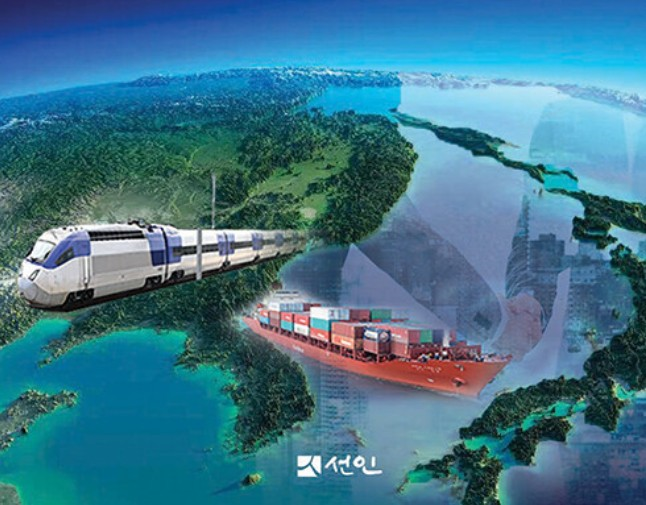
The Greater Tumen Initiative (GTI): A Strategic Platform for an Inter-Korean Peace Economy

Choi Jae-duk
Professor
Seoul School of Integrated Science and Technology
China’s renewed efforts to integrate the development of its northeastern provinces and the Tumen River basin—shared with Russia and North Korea—into the Belt and Road Initiative (BRI) have brought fresh attention to the region. As Beijing seeks to connect continental and maritime routes through its northern borderlands, the Tumen River area is once again emerging as a focal point for Northeast Asian regional cooperation.
Originally launched in the early 1990s under the auspices of the United Nations Development Programme (UNDP), the Greater Tumen Initiative (GTI) was once celebrated as a “laboratory for Northeast Asian cooperation.”
Yet progress has been remained largely stagnant since North Korea’s withdrawal in 2009, further hindered by regional geopolitical tensions and sanctions on Russia. In recent years, however, China’s plans to align the GTI with the northern corridor of the BRI suggest a renewed impetus for regional economic integration.
Chinese provincial and central documents increasingly emphasize “securing maritime access through regional cooperation.” The Jilin Provincial Government has explicitly stated its intent to “promote development in the Tumen River area and strengthen border cooperation with Russia and North Korea,” signaling an ambition that extends beyond basic trade to encompass logistics, maritime transport, and regional development corridors.
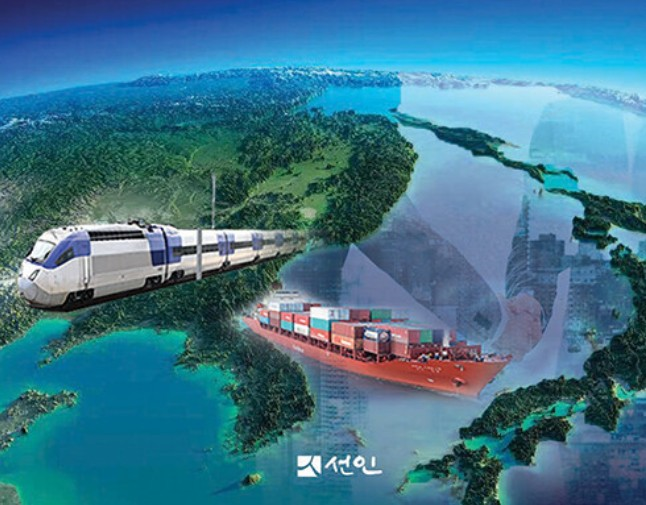
For South Korea, this evolving landscape presents both opportunities and strategic challenges. On the opportunity side, Seoul could position itself as a “coordinator and innovation partner” within a revitalized GTI framework.
Despite ongoing constraints such as Pyongyang’s absence and sanctions on Moscow, South Korea retains comparative advantages in sustainable development, smart logistics, and green infrastructure. A “GTI 2.0” model centered on sustainability, smart innovation, and people-to-people exchanges would align well with its technological and institutional strengths.
Major risks and constraints persist, however. GTI-related discussions still lack executable business models, and proposed initiatives, ranging from inter-Korean rail linkages to East Sea logistics networks and environmental cooperation in the Tumen River basin, face diplomatic and security barriers. Moreover, given the uncertainty surrounding North Korea policy and ongoing sanctions, investment protection and long-term project viability remain difficult to ensure.
The decisive variable is North Korea’s participation. Though Pyongyang was among the GTI’s founding members, its 2009 withdrawal effectively detached the initiative from broader regional cooperation. Chinese academic and policy circles have recently revisited the prospect of North Korea’s reentry, emphasizing that “revitalization of the GTI is feasible if the conditions for North Korea’s participation are restored.”
Signs of this possibility are emerging. Kim Jong-un’s prominent appearance beside Xi Jinping at China’s 2024 Victory Day ceremony, the reopening of the New Yalu River Bridge, and the refurbishment of customs facilities suggest a partial normalization of North Korea–China economic relations. These developments indicate that the preconditions for Pyongyang’s return to the GTI may be gradually aligning.
South Korea’s strategic engagement in the GTI framework should therefore be conceived not merely as participation in a China-led project, but as a platform for restoring inter-Korean economic cooperation.
While direct bilateral engagement with Pyongyang remains constrained, multilateral frameworks like the GTI provide a more politically manageable environment for incremental cooperation. Should North Korea rejoin the initiative, opportunities could reopen for collaborative infrastructure projects, such as reconnecting inter-Korean railways, establishing energy and power grids, and managing ecological and tourism assets in the Tumen River basin.
Ultimately, the GTI has the potential to evolve into a peace economy platform for Northeast Asia. As China intensifies its development of the three northeastern provinces, South Korea must calibrate its engagement carefully—participating not as a subordinate actor in northern development schemes, but as a co-architect of a balanced regional cooperation model.
The optimal timing for South Korea’s proactive participation would be when inter-Korean communication channels are reestablished or when Pyongyang reenters the GTI. At that point, a cooperative equilibrium among South Korea, North Korea, China, and Russia could take shape, one in which Seoul can exercise genuine bargaining power, minimize political risk, and expand economic opportunity.
The Tumen River region is more than a borderland between three states: it can serve as a “new coordinate for regional cooperation” and a testing ground for the Korean Peninsula’s peace economy. The founding spirit of the GTI was not limited to economic growth but aimed at transforming closed borders into zones of cooperation. North Korea’s re-engagement would represent a crucial step toward that vision.
As a GTI member, South Korea should closely monitor China’s northeastern development strategy and broader regional dynamics while clarifying its strategic role within the initiative. Even as inter-Korean economic cooperation remains at an impasse, new pathways are opening through multilateral mechanisms like the GTI. If Seoul articulates substantive proposals and a credible implementation roadmap, the Tumen River could emerge as a “corridor of cooperation” linking the Korean Peninsula with the wider Northeast Asian region.
In this sense, South Korea’s participation in the GTI is not a question of speed, but of timing.