

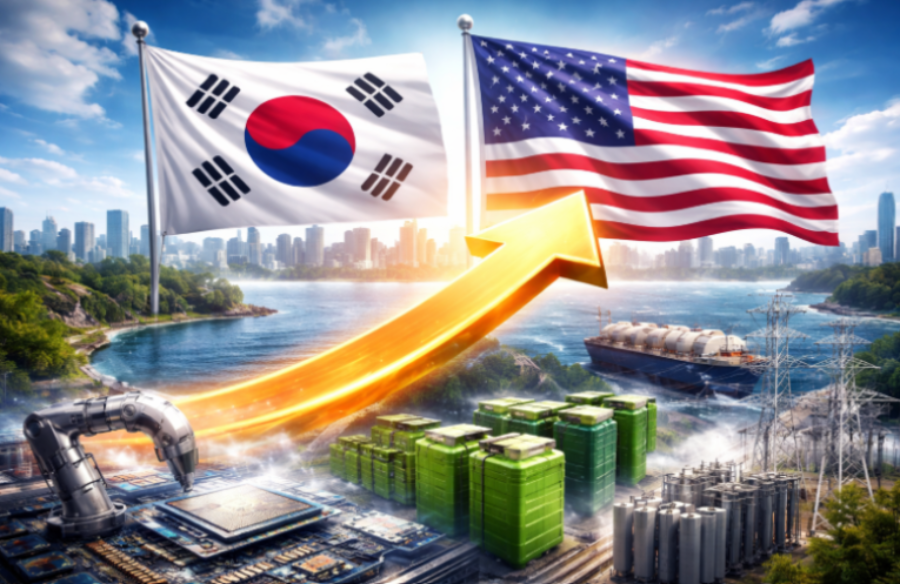
South Korean Investment in the United States: A New Engine of American Economic Revitalization and a Stronger U.S.–ROK Alliance Beyond Security Cooperation

Hur Jung
Professor of Economics
Sogang University
The ancient proverb, “When the lips are gone, the teeth grow cold,” offers a useful perspective on the evolving relationship between South Korea and the United States. For more than seven decades, the U.S.–Republic of Korea (ROK) alliance has been anchored primarily in security cooperation and a shared commitment to deterring military threats. Today, however, the strategic interests of the two countries are becoming increasingly intertwined across a much broader range of sectors, including semiconductors, artificial intelligence (AI), shipbuilding, nuclear energy, automobiles, and critical supply chains. Building on the enduring foundation of their security alliance, Washington and Seoul are developing new pillars of cooperation based on industrial integration, technological innovation, and economic interdependence.
At the center of this transformation is the growing investment by South Korean companies in the United States. These investments represent far more than the relocation of production facilities or efforts to gain access to the American market. They are becoming important drivers of U.S. manufacturing revitalization, high-quality job creation, and greater resilience in strategically significant supply chains. At the same time, South Korean companies are leveraging the scale of the U.S. market and its dynamic innovation ecosystem to strengthen their global competitiveness. By combining South Korean capital and advanced manufacturing capabilities with American technological leadership and market opportunities, the two countries are building a more integrated framework for long-term industrial growth.
Of particular significance is the contribution of South Korean investment to the strategic value of the U.S.–ROK alliance. Historically, the alliance has been understood primarily through the lens of military security. Increasingly, however, its significance is also reflected in the contributions of South Korean companies to American industrial competitiveness, technological innovation, and economic security. South Korea is thus emerging not only as an indispensable security ally but also as a major economic partner whose investments and technological capabilities contribute directly to U.S. industrial renewal and long-term economic prosperity.
South Korean Investment: A Catalyst for Revitalizing American Manufacturing
One of the most consequential developments in U.S.–ROK industrial cooperation is not merely the growing scale of South Korean investment but also the fundamental transformation in the nature of bilateral economic engagement. The $350 billion investment package agreed upon by the two governments illustrates this shift. Its significance lies less in the headline figure than in the opportunity it creates to strengthen the American industrial base through the integration of capital, advanced technologies, manufacturing expertise, and skilled labor.
A particularly important example is the $150 billion shipbuilding cooperation initiative associated with the Make American Shipbuilding Great Again (MASGA) framework. For decades, the United States has faced structural challenges in its shipbuilding industry, including declining production capacity, aging infrastructure, and shortages of skilled workers. South Korea, by contrast, has developed globally competitive capabilities in ship design, advanced construction technologies, production management, and workforce development. Bringing these complementary strengths together offers considerable potential to restore U.S. shipbuilding capacity, improve productivity, and enhance the technological competitiveness of the American maritime industrial base.
The establishment of the Korea–U.S. Shipbuilding Cooperation Center in Washington in July 2026 marks an important step toward translating this strategic vision into practical cooperation. Major South Korean shipbuilders, including HD Hyundai, Hanwha Ocean, and Samsung Heavy Industries, along with relevant institutions, are pursuing collaboration in supply chain development, workforce training, and joint technological innovation.
Importantly, South Korean participation in the U.S. shipbuilding industry extends well beyond vessel construction and delivery. It creates opportunities for sustained industrial collaboration in the modernization of shipyard facilities, improvements in production efficiency, the development of specialized technical personnel, and the rebuilding of domestic supply chains for maritime equipment and components. As American shipyards regain capacity and competitiveness, these improvements could also strengthen the maintenance, repair, and overhaul (MRO) capabilities essential to sustaining U.S. naval readiness.
This cooperation advances two mutually reinforcing American priorities: revitalizing domestic manufacturing and strengthening maritime security. South Korean investment and technological expertise can help rebuild critical U.S. industrial capabilities, while the resulting economic and security benefits can deepen strategic trust between Washington and Seoul. Over time, such cooperation could generate a virtuous cycle in which deeper industrial integration reinforces both economic resilience and the broader bilateral alliance.
Semiconductor and AI Cooperation: Strengthening America's Technological Leadership
South Korea's strategic importance to the United States is becoming increasingly evident in the semiconductor and AI sectors.
Semiconductors are no longer merely components of consumer electronics. They are foundational technologies that shape national competitiveness, economic security, and military capabilities. As rapid advances in AI drive growing demand for high-performance memory, advanced packaging, and sophisticated computing infrastructure, South Korean semiconductor manufacturers are assuming an increasingly important role in the global technology ecosystem.
The two countries possess highly complementary capabilities. South Korea maintains world-class competitiveness in memory semiconductor manufacturing, while the United States holds leading positions in AI chip design, cloud computing, software, and digital platforms. This complementarity provides a strong foundation for technological innovation, more resilient supply chains, and the continued expansion of the global AI industry.
The AI Declaration announced in San Francisco in July 2026 reflects the broader direction of this cooperation. South Korea's ambition to become a key partner in global AI supply chains, underpinned by its strengths in advanced memory technologies, aligns closely with American efforts to maintain technological leadership and expand domestic AI infrastructure.
Growing collaboration between leading American technology companies—including NVIDIA, OpenAI, Anthropic, and Broadcom—and South Korean firms further demonstrates that leadership in AI increasingly depends on internationally integrated technological ecosystems. No single country possesses all the capabilities required to design, manufacture, deploy, and operate the full range of technologies underpinning advanced AI systems.
By combining American strengths in AI research, semiconductor design, and software innovation with South Korea's advanced manufacturing capabilities, the two countries can accelerate technological progress, enhance production efficiency, and generate broader economic benefits.
South Korean investment in advanced manufacturing facilities in the United States is particularly significant in this regard. Such investment can expand domestic production capacity, strengthen supply chain resilience, and reduce vulnerabilities arising from the excessive geographic concentration of critical technologies. It also creates new opportunities for South Korean companies to become more deeply integrated into the American innovation ecosystem and strengthen their long-term global competitiveness.
The strategic implications extend well beyond the commercial interests of individual companies. South Korean technology, capital, and manufacturing expertise are becoming increasingly important to America's ability to maintain its competitive position in advanced industries. This growing interdependence is reinforcing the economic and technological foundations of the U.S.–ROK alliance.
Nuclear Energy Cooperation: Advancing U.S. Energy Security and Supporting the AI Economy
Nuclear energy is emerging as another important pillar of the expanding U.S.–ROK industrial partnership.
The rapid growth of AI data centers, advanced manufacturing facilities, and other electricity-intensive industries is placing increasing demands on the American power system. Reliable, affordable, and scalable electricity supplies are becoming essential to sustaining U.S. technological leadership and industrial competitiveness. Against this backdrop, nuclear energy is receiving renewed attention as a strategic resource capable of supporting both energy security and long-term economic growth.
South Korea has developed internationally competitive capabilities in nuclear power plant engineering, construction, equipment manufacturing, and large-scale project management. The United States, meanwhile, possesses substantial strengths in nuclear technology, reactor operations, advanced reactor development, and regulatory expertise. Combining these capabilities could create significant opportunities for cooperation in both conventional nuclear power generation and emerging small modular reactor technologies.
Collaboration between American companies such as Westinghouse, TerraPower, and X-energy and their South Korean counterparts illustrates the potential of this partnership. Integrating South Korea's manufacturing and construction expertise with American technological innovation could improve project execution, shorten construction schedules, strengthen supply chains, and enhance cost competitiveness.
Reports suggesting that a substantial portion of the $200 billion cash-investment component of the broader bilateral investment package could be allocated to nuclear energy projects further underscore the strategic importance of this sector. Nevertheless, the ultimate scale and distribution of such investments will depend on project-specific agreements, commercial feasibility, regulatory approvals, and implementation arrangements.
The potential benefits for the United States are considerable. South Korean investment could help expand American electricity generation capacity, modernize energy infrastructure, and support the reliable power supplies required by AI data centers and advanced manufacturing facilities. In doing so, it could contribute to the long-term productivity and competitiveness of the U.S. economy.
For South Korea, participation in the American nuclear energy sector offers opportunities to expand its global industrial presence, deepen technological cooperation, and secure a larger role in emerging energy markets.
This partnership therefore represents more than conventional energy cooperation. It positions South Korea as an important contributor to the infrastructure underpinning America's next generation of industrial and technological growth.
Automotive Investment: Creating American Jobs and Revitalizing Local Economies
The automotive industry offers one of the clearest examples of the direct economic benefits generated by South Korean investment in the United States.
In March 2025, Hyundai Motor Group announced at the White House plans to invest an additional $21 billion in the United States over the following four years. The investment initiative is designed to expand domestic vehicle production, strengthen automotive supply chains, and accelerate the adoption of advanced manufacturing technologies.
The economic impact of automotive investment extends well beyond individual assembly plants. New production facilities generate demand across a broad network of supporting industries, including automotive components, advanced materials, logistics, transportation, industrial equipment, and maintenance services. They also stimulate local economies through job creation, increased household spending, business development, and additional tax revenues.
For American communities hosting these investments, the benefits can be especially tangible. Manufacturing facilities can attract suppliers, stimulate infrastructure improvements, and create opportunities for workforce development. As production networks expand, their economic benefits can spread across surrounding regions, contributing to broader industrial revitalization.
South Korean automotive investment also aligns with U.S. policy priorities aimed at expanding domestic manufacturing capacity and strengthening supply chain security. The reduction in tariffs on South Korean automobiles and automotive components from 25 percent to 15 percent, agreed upon during bilateral tariff negotiations in October 2025, illustrates the close relationship between investment, market access, and trade policy.
For South Korean automakers, expanding production in the United States provides a means of managing trade-related uncertainty, responding more effectively to American consumers, and securing a stronger long-term position in one of the world's largest automotive markets. For the United States, these investments expand domestic production, create employment opportunities, and enhance the competitiveness of related industries.
The result is a mutually beneficial economic relationship in which South Korean companies strengthen their global competitiveness while contributing directly to American industrial growth.
At the same time, the expansion of overseas investment requires careful consideration of its implications for South Korea's domestic manufacturing base, employment, and supplier networks. To ensure that investment in the United States complements rather than undermines domestic industrial capabilities, the two countries should promote integrated supply chains, collaborative research and development, and cross-border technological partnerships.
Such an approach would ensure that the benefits of expanded American production also reinforce industrial competitiveness in both economies.
South Korea's Economic Contributions Enhance the Strategic Value of the U.S.–ROK Alliance
The broader significance of South Korean investment in the United States lies in its potential to transform the strategic foundations of the bilateral alliance.
For much of its history, the U.S.–ROK alliance has focused on deterring North Korean military threats and maintaining peace and stability on the Korean Peninsula. Although these objectives remain fundamental, the concept of national security has expanded considerably. Economic resilience, advanced technology, energy security, manufacturing capacity, and the reliability of critical supply chains have become integral components of national power.
The United States faces several major challenges in these areas, including revitalizing its manufacturing base, securing advanced semiconductor supply chains, rebuilding its shipbuilding capabilities, expanding reliable electricity generation, and sustaining its leadership in artificial intelligence.
South Korea possesses many of the industrial capabilities, technological expertise, and investment resources needed to help address these challenges.
This convergence of strategic interests is reshaping the character of the alliance. Just as the United States contributes to South Korea's national defense and regional security, South Korea is increasingly contributing to American economic security and industrial competitiveness. The relationship is thus evolving toward a more comprehensive form of strategic interdependence in which both countries provide capabilities essential to the other's long-term prosperity and security.
This transformation also has important implications for the alliance's political sustainability.
When South Korean investment generates tangible benefits for American workers, businesses, and local communities, it can broaden the domestic constituency in support of closer bilateral relations. The alliance becomes relevant not only to defense planners and foreign policy officials but also to manufacturers, technology companies, employees, and communities whose economic prospects are closely tied to bilateral cooperation.
Such economic linkages can provide an additional source of stability during periods of political transition or trade friction. Although economic interdependence cannot eliminate policy disagreements, it can create lasting incentives for cooperation by making the benefits of the alliance more widely distributed and more directly experienced.
In this respect, South Korean investment is helping transform the U.S.–ROK alliance from a predominantly security-centered relationship into a more comprehensive strategic partnership grounded in shared economic interests, complementary technological capabilities, and industrial resilience.
Beyond Investment Commitments: Building a Sustainable Industrial Alliance
To maximize the long-term benefits of South Korean investment for both economies, bilateral industrial cooperation must become more systematic, inclusive, and institutionally sustainable. First, the two countries should establish a framework for industrial cooperation that delivers mutual benefits.
South Korean investment should contribute to job creation, productivity growth, and stronger manufacturing capabilities in the United States while providing South Korean companies with opportunities for technological innovation, market expansion, and deeper integration into global supply chains.
Achieving these objectives will require broader participation beyond major conglomerates. Small and medium-sized enterprises, as well as mid-sized companies, should be encouraged to participate in emerging bilateral industrial networks. In particular, South Korean suppliers specializing in components, materials, and industrial equipment could play an important role in major shipbuilding, nuclear energy, and semiconductor projects.
Their participation would deepen industrial linkages, diversify supply chains, and help distribute the economic benefits of cooperation more broadly across both countries.
Second, industrial cooperation should be institutionalized as a lasting component of the bilateral alliance.
Japan's efforts to establish structured investment and technological cooperation arrangements with the United States offer useful lessons for South Korea. Washington and Seoul should consider developing permanent sector-specific consultation mechanisms, joint research programs, and coordinated implementation frameworks in strategically important industries, including shipbuilding, semiconductors, nuclear energy, and automobiles.
These arrangements should provide for regular assessments of investment implementation, technological progress, workforce development, and economic outcomes.
High-level political agreements and major investment announcements can generate momentum, but the long-term success of an industrial alliance depends on institutions capable of sustaining cooperation across changes in government and evolving market conditions.
Third, workforce development and technological collaboration should become central priorities.
The shortage of skilled labor in strategically important industries represents a significant constraint on industrial revitalization. Joint programs to train shipbuilding workers, facilitate exchanges among nuclear energy specialists, and develop advanced expertise in semiconductors and AI could help address these challenges.
Partnerships among universities, research institutions, businesses, and government agencies would further strengthen the foundations for sustained innovation. By combining South Korea's advanced manufacturing experience with America's research capabilities and entrepreneurial ecosystem, the two countries could develop a shared talent base capable of supporting future industrial growth.
Such initiatives would extend the benefits of cooperation beyond individual investment projects and establish a lasting foundation for technological competitiveness.
Ultimately, the success of the U.S.–ROK industrial partnership should not be measured primarily by the total value of announced investments. More meaningful indicators include the number and quality of American jobs created, improvements in manufacturing productivity, advances in technological capabilities, expanded market opportunities for South Korean companies, and the resilience of bilateral supply chains.
The central objective should be to translate financial commitments into tangible, measurable, and sustainable economic outcomes that strengthen the industrial competitiveness and long-term prosperity of both countries.
An Industrial Alliance as a New Pillar of Shared Prosperity
The U.S.–ROK relationship is entering a consequential new phase. For more than seven decades, military and security cooperation has provided the foundation of the alliance. That foundation remains indispensable. Yet the future strength of the partnership will increasingly depend on its ability to address shared challenges in industrial competitiveness, technological innovation, energy security, and economic resilience.
South Korean investment is already creating opportunities to advance these objectives. Shipbuilding cooperation under the MASGA initiative offers a pathway toward revitalizing American maritime industrial capabilities. Collaboration in semiconductors and AI can strengthen the technological foundations of U.S. competitiveness. Nuclear energy partnerships can help provide the reliable electricity needed to support the next generation of American industry. Automotive investments are expanding domestic production, creating jobs, and stimulating regional economic development.
Taken together, these initiatives demonstrate the significant contribution South Korean investment can make to the revitalization of the American economy. Their significance, however, extends well beyond immediate economic benefits. As South Korean capital, technology, and manufacturing expertise strengthen U.S. industrial capabilities, while American markets and innovation ecosystems support the global expansion of South Korean companies, the strategic interests of the two nations are becoming increasingly intertwined.
This growing interdependence broadens the foundation of the alliance and reinforces its long-term relevance.
South Korea is no longer simply a security ally that benefits from American defense commitments. It is also an economic and technological partner whose contributions can help revitalize American manufacturing, strengthen supply chain resilience, and sustain U.S. leadership in strategically important industries.
Likewise, the United States remains not only South Korea's principal security ally but also a critical partner in technological innovation, industrial development, and access to global markets.
The future of the alliance therefore lies in deepening the mutually reinforcing relationship between security cooperation and economic partnership.
The success of this emerging industrial alliance will not be measured by the size of investment announcements or the number of joint declarations issued at summit meetings. Rather, it will be demonstrated through tangible outcomes: more competitive American shipyards, expanded automotive production, more resilient semiconductor supply chains, reliable energy infrastructure, and new opportunities for workers, businesses, and communities in both countries.
Equally important, these achievements must be underpinned by durable institutions and policy frameworks capable of sustaining cooperation through political transitions, economic fluctuations, and changes in trade policy.
South Korean investment in the United States should therefore be understood not merely as an overseas transfer of capital, but as a long-term strategic investment in American industrial revitalization, bilateral economic security, and the future of the U.S.–ROK alliance.
If military and security cooperation has served as the first pillar of the alliance for more than seven decades, industrial, technological, and economic cooperation can become its second—one that strengthens mutual confidence, expands shared prosperity, and reinforces the strategic partnership for generations to come.
By translating investment commitments into sustained economic growth in the United States and deeper bilateral industrial integration, Washington and Seoul have an opportunity to build a more resilient, balanced, and comprehensive alliance—one capable of advancing the prosperity and security of both nations well into the future.