

Starvation Crisis in North Korea Deepens – Leading to Sharp Rise in Deaths and Suicides, Tripled Rate of Serious Crimes Compared to Previous Year
"People in North Korea should regret being born on this land."
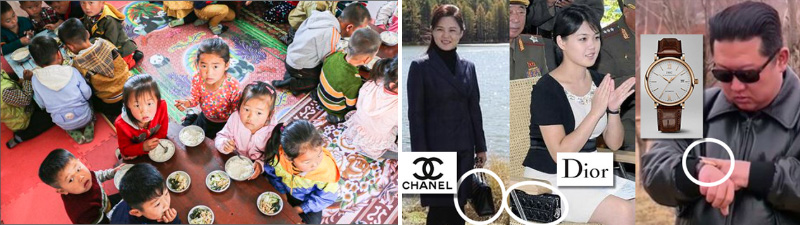
These were the words left behind in a heartfelt testament by a grandmother in her 70s and her grandson, who tragically took their own lives in their home amidst the February food shortage in Hyesan City, Ryanggang Province. This heart-wrenching incident sheds light on the severity of the economic situation in North Korea, with the resurgence of a homeless population known as "Kotjebi (Homeless people)" On the 31st, the National Intelligence Service presented a report to the National Assembly, stating that deaths from starvation and suicides have significantly increased due to worsening food shortages in North Korea. The unusual spike in suicides following deaths from starvation has raised concerns. Despite the dire economic conditions, the North Korean authorities continue to channel their resources into nuclear and missile development and the purchase of luxury goods. Observers speculate that the funds allocated for the satellite launch, carried out under the pretext of reconnaissance satellites, could have been used to procure several years' worth of food for North Korean citizens.
On the 1st June, a reliable source from North Korea shared the heartbreaking story, stating, "In February, a grandmother in Hyesan City, Ryanggang Province, who had been living with her grandson after losing her son and daughter-in-law, wrote a testament expressing her despair at the lack of food and her inability to survive starvation for several days. In the testament, she implored, 'People in North Korea should regret being born on this land.' The Ministry of State Security enforced strict surveillance in response to this testament." The National Intelligence Service informed the National Assembly, revealing that suicides have increased by approximately 40% compared to the previous year. Kim Jong-un, in response, has classified this as a betrayal of socialism and urgently ordered preventive measures.
The reappearance of Kotjebi, the homeless population, confirms the severity of the food shortage. It is said that numerous families have been displaced due to the scarcity of food, leaving behind abandoned children who have resorted to a life on the streets and in markets. Local orphanages are reportedly overwhelmed and unable to accommodate these children. There are reports indicating that more than 30,000 households in Samjiyŏn City and Pochŏn County, which North Korea regards as revolutionary sites in Ryanggang Province, are grappling with insufficient food supplies. Furthermore, a phrase reminiscent of the economic hardships endured prior to the Arduous March in the early 1990s, which can be roughly translated as "Eating rice and soybean paste..." made a reappearance in Rodong Sinmun on November 17, 2022. These occurrences serve as poignant reminders of the challenging economic conditions faced by the North Korean population.
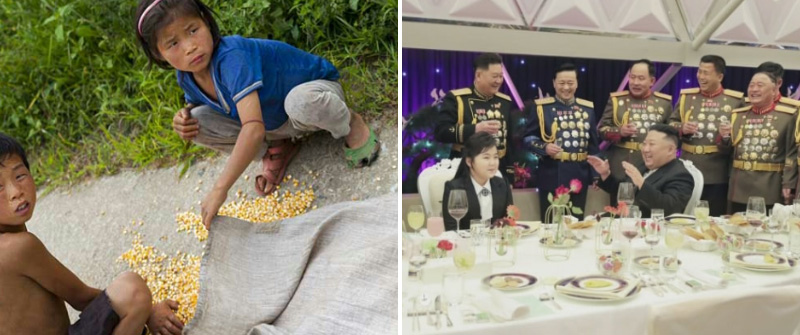
The National Intelligence Service reported that the price of corn in North Korea has risen by approximately 60% compared to the first quarter of the previous year, while rice prices have increased by nearly 30%. This marks the highest levels recorded since Kim Jong-un assumed power as the President of the State Affairs Commission.
According to the National Intelligence Service, deaths from starvation are estimated to be three times higher than usual. Consequently, the North Korean authorities have reportedly established emergency funds, namely the 'Childcare Fund' and the 'Mutual Aid Fund,' to provide relief to the growing number of Kotjebi, malnourished children, and impoverished households nationwide.
The National Intelligence Service further revealed that serious crimes have tripled compared to the same period last year, with reports of large-scale organized crimes involving bomb attacks and material theft. Asiapress International reported that earlier this year, there were violent robbery incidents in Hyesan, Ryanggang Province, North Korea, including a stabbing and theft of a woman's money bag. Additionally, a high-ranking member of the "Youth Shock Brigade" killed his subordinate for stealing his mobile phone and burned the body. These incidents indicate the occurrence of serious crimes in the area. Professor Nam Sung-wook from Korea University expressed his perspective, stating, "The significant increase in deaths and suicides is an extraordinary phenomenon, reflecting a loss of hope among residents who feel they have nowhere to turn." He added, "This tragedy is the result of unreasonable military buildup, prolonged COVID-19 lockdowns, and anti-market policies."
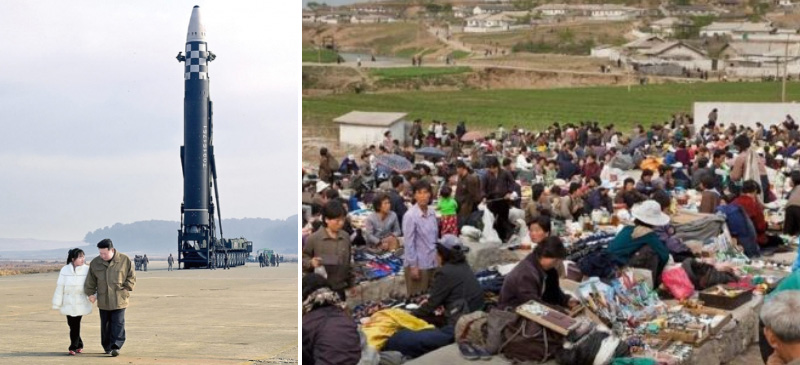
Despite the dire economic situation, the North Korean authorities continue to prioritize nuclear and missile development over the economy, exacerbating the hardships faced by the population. According to the United States Department of Agriculture (USDA), if North Korea were to import 800,000 tons of food annually, it would cost approximately 364.7 billion Korean won (278 million US dollars). The Korea Institute for Defense Analyses (KIDA) estimated that the total cost of the 71 ballistic missile launches conducted by North Korea in 2022 amounts to a maximum of 689 billion Korean won (530 million US dollars). This is an amount that could cover several years' worth of food for North Korean residents.
Furthermore, the NIS has disclosed that North Korea's Kim Jong-un is reportedly grappling with significant sleep disorders and is estimated to have a weight of around 140 kilograms. Kim Kyou-hyun, the Director of the NIS, made this revelation during a briefing to the Intelligence Committee on May 31st – representatives Yoo Sang-beom from the ruling party, People Power Party, and Youn Kun-young from the Democratic Party of Korea, shared this information with the press.
According to Congressman Yoo, the North Korean authorities have been actively gathering up-to-date medical information, including medications like zolpidem, to address sleep disorders among high-ranking officials abroad, indicating that Kim Jong-un is facing significant sleep disturbances. It was also noted that the importation of foreign cigarette brands such as Marlboro and Dunhill, along with luxury appetizers, has raised concerns about Kim's growing reliance on alcohol and nicotine, potentially exacerbating his insomnia. Additionally, reports suggest that Kim Jong-un's recent public appearances on the 16th showcased noticeable dark circles and signs of fatigue, with AI analysis estimating his weight to be approximately 140 kilograms.