

North Korea's Reconnaissance Satellite Launch, Pressured by Kim Jong-un and Nuri, Ultimately Ends in Failure
North Korea announced that during the military satellite launch on May 31, an accident occurred, resulting in the satellite crashing. They stated that they would conduct a second launch within a short period of time. On the first day of the officially announced advance notice period to the international community (from May 31, 0:00 to June 11, 0:00), they launched optimistically, but instead of entering orbit, the launch vehicle lost propulsion and crashed into the Yellow Sea.
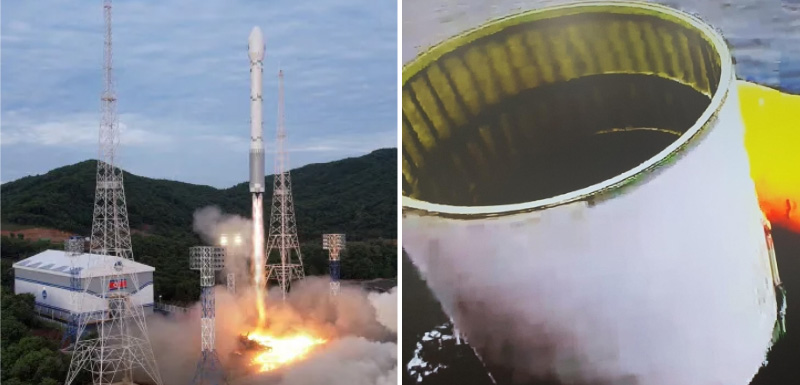
The National Aerospace Development Administration of North Korea officially acknowledged the "launch failure" that occurred at 9:05 am, approximately two and a half hours after launching the Space Launch Vehicle from the Dongchang-ri Satellite Launching Station.
The National Aerospace Development Administration stated, "There are issues with the reliability and stability of the new propulsion system introduced in the Chollima-1 model and the instability of the fuel used. Scientists, technicians, and experts will begin a detailed investigation to determine the specific cause." They admitted that there are technical deficiencies in the new engine of the satellite carrier rocket and the fuel used. It is speculated that North Korea hastily conducted the launch for political reasons, as they have not completed their technical preparations. The upcoming 70th anniversary of the Korean Armistice Agreement on July 27, which coincides with the anniversary of the truce every 5-10 years, likely added pressure to create a festive atmosphere of "successful satellite launch" in the first half of the year.
Additionally, it is suggested that North Korea convened the 8th Plenary Meeting of the 8th Central Committee of the Workers' Party of Korea, which could serve as a platform for evaluating the results of the satellite launch.
The rushed launch may have been influenced by South Korea's space development schedule. Just four days after South Korea's domestically developed Korea Space Launch Vehicle-II Nuri's successful third launch on May 25th, North Korea officially announced the timing of their satellite launch. The National Intelligence Service (NIS) reported during the parliamentary briefing on the 31st that "North Korea, stimulated by the success of South Korea's Nuri launch, rushed to complete the preparations, which usually take about 20 days, within a few days. This was done while the construction of the new Dongchang-ri launch site had not been completed yet," analyzing the cause of the failure.
Regarding the technical factors, Lee Chun-geun, a distinguished research fellow at the Science and Technology Policy Institute in South Korea, emphasized the importance of North Korea's announcement regarding the instability of the fuel used. He stated, "The liquid fuel used in North Korea's Space Launch Vehicle, which consists of unsymmetrical dimethylhydrazine (UDMH) and dinitrogen tetroxide (N2O4), is highly toxic and ignites violently upon contact. It exhibits high combustion shock and thrust, freezes at temperatures below -12 degrees Celsius, and boils at temperatures above 22 degrees Celsius, making it difficult to control." He pointed out that the frequent failures of North Korea's Musudan missiles in the past were also attributed to this fuel system, highlighting the instability of the fuel.
Regarding the North Korean announcement about the reliability and stability issues of the new engine, the research fellow mentioned that the advanced equipment with a vacuum chamber was not available at the Sohae Satellite Launching Station. This absence could make it difficult to anticipate and control the high-altitude ignition and combustion characteristics in advance. Furthermore, he suggested that the remaining thrust from the first stage could have impacted or caused damage to the elongated expansion nozzle upon separation, potentially resulting from the detonation of explosive bolts used for separation. He also pointed out the possibility that the mishandling of the separation process, where the first stage is intentionally detonated to avoid recovery, may have inadvertently damaged the second stage.
According to the NIS, there is a possibility that the technical issues in the failed launch of North Korea's military satellite could be attributed to an imprudent change in trajectory. They revealed that unlike previous launches with a straight flight path for the first and second stages, this launch involved a deviation towards the west and a challenging maneuver towards the east, which may have caused technical problems to arise.
Despite this failure, North Korea is expected to attempt another launch in the near future. Kim Yo-jong, deputy director of the WPK, also known as Kim Jong-un's sister, stated in a speech on the 1st, "The military satellite will soon enter the precise orbit and begin its mission."
North Korea publicly released the scene of the failed military reconnaissance satellite launch through external media the following day, intending to highlight the satellite nature of the launch vehicle and build a pretext for a re-launch.
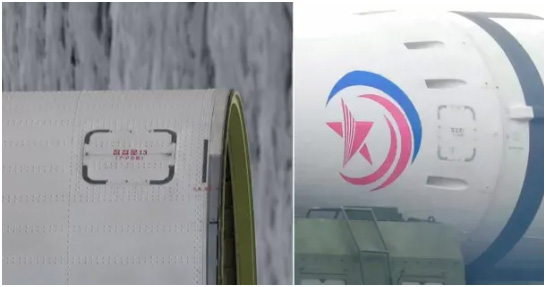
It has been confirmed that the engine ignition pattern of the reconnaissance satellite launch vehicle revealed by North Korea indicates the use of liquid fuel. In the photos, the distinctive shape of a liquid fuel flame, resembling a candle, was clearly seen. The flames of the launch vehicle also appear in multiple streams, indicating the coupling of the engines. Based on these observations, experts believe that the liquid-fueled "Paektu Engine," which is used in the ICBM Hwasong-17, has been applied.
On June 1st, Lee Jong-sup, the Minister of National Defense of the Republic of Korea, stated that North Korea's military satellite has a resolution of only 1 meter, indicating a lower level of technological capability. He explained that the satellite launch vehicle is primarily intended for intercontinental ballistic missile (ICBM) technology, considering the lower performance in terms of resolution and other satellite functions for military reconnaissance missions.
Regarding North Korea's preparations for a re-launch, Minister Lee mentioned that if the cause is identified and corrected promptly, another launch can be conducted in the near future. However, if the reliability of the second-stage high-altitude engine, as stated by North Korea, is an issue, it may take more time. The NIS assessed that although significant time may be required for the necessary improvements, the possibility of an early re-launch cannot be completely ruled out if the faults are minor.
In other news, according to Reuters and other sources, on the 31st, the International Maritime Organization (IMO), a United Nations agency, adopted a resolution at its 107th session held at the IMO headquarters in London, condemning North Korea's missile launches that pose a threat to international maritime safety and urging compliance with IMO regulations. This marks the first time that the Maritime Safety Committee (MSC), a subsidiary committee of the IMO responsible for maritime safety issues, has adopted a resolution specifically related to North Korea's missile launches.