

-
 [Kim Myongsung’s Inside North Korea]
Kim Myongsung’s Inside North Korea· Over 20 North Korean Officers Sent to Political Camp for Questioning Russia Deployment· Presumed Appearance of Reclusive Guitar-Playing Prince Kim Jong-chol… Contributes to North Korean Journal· North Korea Deploys ‘Expendables’ to Russia—Including Relatives of DefectorsKim Myong-sungSecretary General of the SAND InstituteOver 20 North Korean Officers Sent to Political Camp for Questioning Russia DeploymentOver 20 officers from North Korea’s Reconnaissance General Bureau were arrested after questioning the deployment of troops to Russia. Following months of investigation, they and their families were sent to a political prison camp.The inclusion of family members in the punishment has raised alarm within the military, seen as an unusually harsh application of collective punishment. The regime appears to have acted preemptively to quell dissent over the sensitive deployment issue.Observers believe Kim Jong-un’s recent visit to the Korean People’s Army Special Operation Force (KPASOF) was aimed at reassuring demoralized special forces leadership and reinforcing loyalty after the purge.A Pyongyang-based source told SAND Times that late last year, some Bureau officers questioned vague orders related to the Russia-Ukraine war—specifically why training was to occur in Russia rather than domestically. Their remarks led to arrest by the Military Security Command.That officers from such a loyal unit expressed doubt about deployment highlights growing unease within North Korea’s military ranks.This purge coincides with reports of North Korea sending additional troops to the Russian battlefield. On March 27, South Korea's Joint Chiefs of Staff announced that approximately 3,000 North Korean soldiers were deployed between January and February 2025.Since October, North Korea has dispatched troops—mainly from KPASOF—under loosely defined terms like “overseas training” or “joint exercises,” even within military circles.Sources say the detained officers had voiced unease about the lack of clear orders and suggested the training might be a cover for full deployment. While these comments seemed like reasonable concerns internally, authorities labeled them disloyal.The Military Security Command classified their statements as “anti-Party acts,” and arrested them. After being held in various detention centers and subjected to lengthy questioning, the officers and their families were transferred to a political prison camp on the 3rd—an extreme application of North Korea’s guilt-by-association policy.Following the incident, a saying began circulating: “Managing your expression is survival.” Fear has spread among soldiers and families, who now remain silent even when orders are unclear.Authorities reportedly called the case an example of a “lack of warrior spirit” and are intensifying ideological indoctrination, stressing that soldiers must only reply, “Yes, understood,” to Party orders.An anonymous source said the purge serves as a warning to enforce silent obedience across the military—demanding full acceptance of the Russia deployment without complaint. North Korea has a track record of punishing even perceived disloyalty.A national policy researcher added that internal dissent over the Russia deployment is slowly surfacing, and if the rising casualty numbers become widely known, it could trigger greater unrest.Presumed Appearance of Reclusive Guitar-Playing Prince Kim Jong-chol… Contributes to North Korean JournalA February 2024 article in North Korea’s academic journal History-Science, written by someone named Kim Jong-chol, has drawn attention due to the name’s match with Kim Jong-un’s older brother.Notably, this Kim Jong-chol was the only contributor in the issue who didn’t list an affiliation or title.SAND Times reviewed the issue and found that all 23 other authors disclosed their positions, such as department heads at the Academy of Social Sciences or Kim Il Sung University PhDs.Experts say the omission suggests more than a security precaution. A former high-ranking defector remarked that the author appears to be a key figure whose role cannot be publicly revealed.Cheong Seong-chang, director at the Sejong Institute, said the anonymity and timing suggest the author is indeed Kim Jong-chol. He added this could be part of a plan to quietly reintroduce Kim’s non-rival brother as Kim Jong-un’s grip on power solidifies. The article, titled The Immortal Achievements of Supreme Leader Kim Jong-il Who Elevated Our Republic to the Status of a Nuclear State, supports this view.The piece claims Kim Jong-il made a sovereign decision to pursue nuclear weapons under U.S. pressure in the 1990s, praising the 2006 and 2009 nuclear tests as proud milestones. Kim Jong-chol calls this a “heroic decision” and an “immortal achievement.”As denuclearization talks remain stalled, the article appears aimed at reinforcing North Korea’s narrative of legitimate nuclear power.Its timing is striking—it coincides with Kim Jong-un elevating his daughter, Kim Ju-ae, as the new face of the Paektu bloodline. The recent appearance of children thought to be Kim Yo-jong’s adds to the growing visibility of a fourth-generation succession.Director Cheong suggested Kim Jong-chol’s emergence aligns with efforts to reaffirm the family’s historic legitimacy and nuclear legacy, positioning him as a kind of family chronicler.A government source noted that while Kim Jong-chol is publicly known as a music lover, he may actually play a behind-the-scenes role in preserving the regime’s core ideological assets. For years, he’s been seen as an apolitical figure more drawn to music than power.Kim Jong-chol is the second son of Kim Jong-il and the elder brother of both Kim Jong-un and Kim Yo-jong. It’s widely believed he was excluded from succession early on due to being perceived as effeminate and lacking ambition.Kim Jong-il’s former chef, Kenji Fujimoto, wrote that Kim favored Jong-un, whose temperament was more similar to his own. By contrast, Kim Jong-chol was deeply immersed in music.When Kim Jong-chol visited the U.K. in 2015 to attend an Eric Clapton concert, Thae Yong-ho—then North Korea’s deputy ambassador in London—recalled how Kim urgently requested a stop at the HMV record store right after landing. At the concert, he cheered enthusiastically, pumping his fist in the air.He reportedly spent over 40 minutes playing guitar at a local music shop and said he had contacted every North Korean embassy to secure that particular instrument. At the time, this reinforced his image as a shy, music-loving prince with little interest in politics.But the recent journal article sharply contrasts with that perception. The fact that Kim Jong-chol—long seen as apolitical—authored a piece justifying North Korea’s nuclear path suggests he may be taking on a new, more influential role.Rather than a personal reflection, the article reads as a political statement aimed at legitimizing the country's nuclear status and reframing it as part of Kim Jong-un’s leadership legacy. In North Korea, revisiting the past is often a first step in signaling future shifts.Since late 2022, North Korea has steadily promoted Kim Ju-ae, Kim Jong-un’s daughter, as the heir to the Paektu bloodline. In that context, Kim Jong-chol may be stepping into a supporting role as a symbolic guardian of the family's revolutionary legacy.Reportedly, Kim Jong-un and Kim Jong-chol were close in childhood, even studying artillery together at a special program at Kim Il Sung National Defense University. According to defectors, Kim Jong-un preferred hands-on training, while Kim Jong-chol was more studious and often asked questions during class.Traditionally, North Korea's power succession has been brutal, eliminating all potential rivals to the heir. The assassination of Kim Jong-nam, Kim Jong-un’s half-brother, is a well-known example. But Kim Jong-chol appears to be an exception.Without political ambition and largely absent from public life, Kim Jong-chol poses no visible threat to the regime. Yet, his lineage as Kim Jong-il’s son gives him legitimacy. Analysts believe he may now serve as a discreet yet powerful figure, quietly managing the Kim family’s ideological and nuclear legacy behind the scenes.North Korea Deploys ‘Expendables’ to Russia—Including Relatives of DefectorsAmong the 12,000 North Korean combat troops sent to Russia last year, some reportedly came from families of defectors or had criminal backgrounds—suggesting the regime deliberately selected soldiers it deemed expendable.According to North Korean sources on March 24, deployment selections began in October, initially focusing on elite Storm Corps members. However, the list also included soldiers with disciplinary histories or ‘impure backgrounds’—a term used for those with family members who defected to South Korea or China.A source said the General Political Bureau of the Korean People's Army issued guidelines under the guise of “special overseas training,” instructing units to include problematic individuals in the deployment.At the time, Russian forces were suffering heavy losses, particularly in areas like Kursk, with hundreds of casualties daily. North Korea was reportedly aware that the chances of its troops returning alive were slim.Despite injuries sustained in combat, North Korean soldiers were not repatriated. Instead, they were treated locally and sent back to the front lines. Recently, signs of further deployments have emerged in units based in Pyongyang and the Pyongan provinces.In late November, families began receiving death notices for soldiers killed in action. A source described how bodies were transported from Moscow by train, and funerals were held in secret as soon as the remains arrived.One such case involved a woman named Choe in Hyesan City, Ryanggang Province. On November 30, she was notified by local authorities of her son’s death, five years after his enlistment. The local Workers’ Party arranged for her to travel—without a travel permit—to a military unit in Tokchon City, North Phyongan Province, where a quiet funeral was held and the body buried in a communal cemetery.Families were ordered to keep silent about the deaths. Authorities reportedly warned them not to speak out or cry publicly. Some families were so overwhelmed by grief they collapsed and remained in a state of shock for days.As more parents began to grieve openly, public sentiment soured. In response, the regime reportedly stopped issuing official death notifications. According to one source, authorities were trying to contain growing unrest.Despite the gag order, news of the Russian deployment is spreading quickly among citizens, fueling anger. Some residents have questioned the regime, saying, “What’s the point if they come back in coffins?” In some cases, families are now offering bribes to keep their graduating children from enlisting.North Korea previously sent pilots to fight in the Vietnam War in the 1960s but didn’t acknowledge it until 2002. Similarly, the current deployment was meant to remain secret, but rising casualties are making that impossible.While the regime has yet to make an official statement, it continues to enforce a strict gag order. Nevertheless, parents are desperate for news and are seeking updates through unofficial channels like military contacts or the families of their children's partners.Due to strict information control, most families remain unsure whether their sons are alive. Reports that officers’ children were excluded from deployment have only intensified public resentment.
25.04.18 -
 [Feature Article]
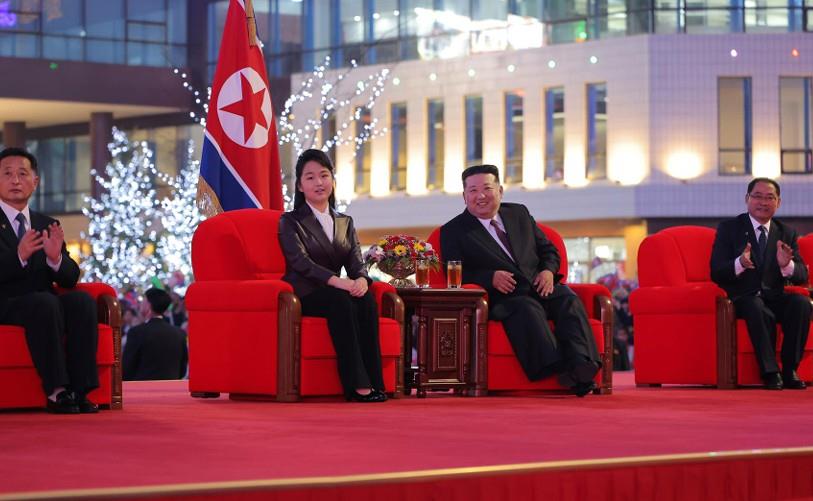
Kim Jong-un–Donald Trump Summit Outlook – From North Korea’s PerspectivePark, Hyeong Jung, Emeritus Research Fellow, Korea Institute for National UnificationSince being named the Republican nominee on July 18, 2024, Donald Trump has repeatedly expressed optimism about meeting Kim Jong-un again. He’s referred to North Korea as a nuclear power, highlighted his personal rapport with Kim, and noted ongoing outreach. This article examines four key points: the current state of U.S.–North Korea relations under Trump, North Korea’s official view of his apparent enthusiasm, how the North is preparing for a possible summit, and whether such a meeting is likely to occur.U.S.–North Korea Relations Since Trump’s ReturnAs of mid-April, both Washington and Pyongyang are taking dual-track approaches. Trump is sending conciliatory signals to Kim Jong-un, but his administration still emphasizes “complete denuclearization” and maintains military pressure and sanctions. North Korea, meanwhile, remains officially hostile in its rhetoric and military stance, yet likely evaluates the risks and potential opportunities in Trump’s seemingly friendly posture.North Korea’s Official Response to Trump’s EnthusiasmOn July 23, 2024—just days after Trump accepted the Republican nomination—North Korea responded, stating that the future of DPRK–U.S. relations hinges on America’s actions.1) A KCNA commentary outlined four points: First, while Trump emphasizes personal ties, diplomacy must be grounded in national interests. Second, the U.S. proposal for dialogue is viewed as a tactic to weaken North Korea and is therefore rejected. Third, the U.S. is seen as untrustworthy, often delaying talks and breaking promises with each administration change. Fourth, after 80 years of hostility, Washington’s calls for dialogue lack credibility.After Donald Trump was confirmed as the 47th U.S. President on November 6, 2024, North Korea announced a “maximum hardline strategy toward the United States” during the 11th Plenary Meeting of the 8th Central Committee of the Workers' Party in late December, citing long-term national interests and security.2) The details of the strategy, however, were not made public.Around Trump’s inauguration on January 20, 2025, North Korea’s Foreign Ministry issued multiple statements reaffirming this hardline stance (Jan. 15, 26; Mar. 9). By late March, Pyongyang criticized the Trump administration for easily overturning previous policies—except for its “hostile policy” toward North Korea, which it claimed had only intensified.3)North Korea’s Strategic Thinking on a SummitTrump’s open eagerness may lead Pyongyang to believe that it can raise the bar for U.S. concessions. From the North’s viewpoint, Washington seems to be approaching them—or Russia, in the Ukraine conflict—from a position of weakness. Pyongyang is likely monitoring how Trump deals with Putin, especially if he sidesteps Ukraine and opts for direct talks. North Korea may aim to apply the same dynamic to U.S.–North Korea relations. Kim Jong-un could demand generous, one-sided concessions upfront, and then leverage those to push for more—while staying deliberately vague on whether he will even agree to a summit.Kim Jong-un likely has a firm grasp of how Trump negotiates—and where he is vulnerable. It’s not just North Korea; countries like South Korea, the U.S.’s Western allies, China, and Russia have all scrutinized Trump’s behavior and tailored their strategies accordingly. Trump is known to use overt flattery and subtle threats to push his agenda. Kim is expected to take a similar approach with him. In particular, Kim may closely study Putin’s dealings with Trump to find effective tactics. But fundamentally, Kim doesn’t trust Trump—and that mistrust will frame how he engages with him.Kim is likely biding his time, watching for the right moment to signal interest in a summit. But choosing when to act won’t be easy. Trump’s unorthodox policies have created an unusually high level of uncertainty. North Korea will likely observe how the domestic and global crises triggered by Trump evolve before making any move. They’ll be looking for the moment when Trump is most desperate to meet—when his bargaining power is weakest. Whether that moment will ever arrive remains to be seen.Kim Jong-un–Donald Trump Summit OutlookThere’s a real chance that Trump and Kim might eventually reconnect and hold a summit. While nuclear issues will likely be the stated topic, both sides may have very different motives. For Trump, a summit could dominate global headlines, boost his image, and distract from political troubles. If Kim plays along, Trump wins big; if not, there’s little to lose. For Kim, just entertaining the idea of a summit elevates North Korea’s status and reinforces the legitimacy of its nuclear program. It also showcases North Korea as an equal to the U.S., boosting Kim’s leverage with China, Russia, and especially South Korea. Even if no summit takes place, the buzz around renewed contact would still benefit both leaders.For real negotiations to happen, both countries would need to face severe consequences from inaction—but that doesn’t seem to be the case yet. The North Korean nuclear issue is notoriously difficult, largely due to deep mutual distrust. Without a shared sense of urgency, it’s hard to start talks—and even harder to keep them going. In fact, it may take a new and dangerous nuclear standoff to push both sides into serious negotiations.The odds of a summit also depend on how high the Trump administration ranks the North Korean nuclear issue on its priority list—and the answer is likely: not very high. A recent Pentagon memo titled “Interim National Defense Strategic Guidance” suggested that the U.S. should accept greater risks in other areas in order to focus on its rivalry with China. Based on this thinking, the North Korea issue may be left for South Korea, Japan, and China to handle.Some experts speculate that if the Russia–Ukraine war ends, a Kim–Trump summit could be arranged in Vladivostok under Putin’s mediation. But this is unlikely. For such a scenario to unfold, Trump would have to end the war on terms acceptable to Putin and successfully execute a “reverse Kissinger strategy” to draw Russia away from China. Neither condition seems probable. If the war ends poorly for Putin, he may double down on his support for North Korea to pressure the U.S. Moreover, Putin could exploit Trump’s friendliness toward Russia for unilateral gains.
25.04.18 -
 [Feature Article]
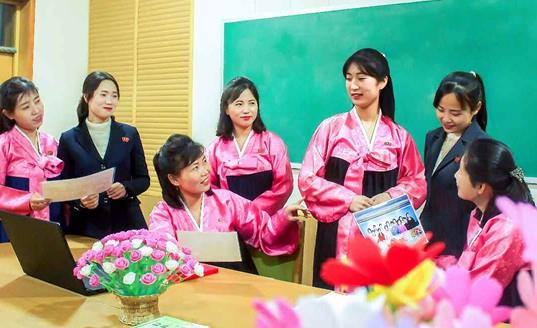
North Korea Seeks to Revive Grassroots Control: The 3rd Inminbanjangs Meeting and Daily Life Under the RegimeJeong Joon-hee, Auditor, Korea Institute for National Unification (KINU)□ Inminban: The Capillaries of the North Korean SystemOn March 16–17, 2025, North Korea held its 3rd Nationwide Meeting of Neighborhood Unit Leaders in Pyongyang. Attendees included Cabinet Premier Pak Thae-song, party and government officials, top-performing Inminbanjangs (local unit leaders), local administrators, and officials from related sectors.The Inminban is the smallest administrative unit in North Korea, akin to neighborhood blocks in South Korea. It is defined as a grassroots social structure, formed by grouping households to enforce party policy, carry out public duties, and manage everyday life.Inminban units handle local matters like sanitation efforts and public order through routine resident meetings. Their leaders, often politically loyal women from trusted families, are appointed by local People’s Committees. This latest meeting can be seen as a move to reactivate the regime’s grassroots control network.□ Background of the Nationwide Meeting of InminbanjangsDuring the economic collapse of the 1990s, North Korea’s social system weakened, rendering the Inminban ineffective. But as the economy stabilized in the 2000s through limited marketization, the regime began tightening control over both society and markets. In 2007, North Korea held its first nationwide meeting of Inminbanjangs to revamp the system and align it with the Songun (military-first) era (Minju Joson, January 25, 1997). However, with no real incentives and increasing mobilization demands, public resistance grew, and Inminban control was reduced to merely maintaining the status quo.In Kim Jong-un’s early years, North Korea held over 30 grassroots organization events between 2012 and early 2014 to push task completion. He appeared at major grassroots events—like the Youth League and Women’s Union meetings, the 4th Party Cell Secretaries Conference, and the Three-Revolution Team gathering—to show closeness to the people. This helped him present himself as both relatable and absolute leader, reinforcing his fragile authority. Now, over a decade into his rule, with changes in both society and foreign policy, the regime sees this as a timely moment to reassert control through grassroots structures.Since early 2024, North Korea has faced growing strain from massive projects like the 20x10 Regional Development Policy and nationwide housing construction—both championed by Kim Jong-un. To ensure their success, the regime has pushed all citizens and party members into action. This has made it necessary to tighten mobilization efforts, suppress discontent, and root out ideological instability.At this year’s meeting, Deputy Prime Minister Kim Myong-hun emphasized the need to firmly establish socialist moral discipline and launch a mass campaign against anti-socialist behavior, signaling the regime’s direction. The Inminban was praised for its role in ideological education and party policy promotion over the past decade. At the same time, the regime called for a full overhaul, outlining tasks like honoring past leaders, addressing livelihood issues, promoting patriotism, collecting idle materials, and eliminating legal and safety risks—all to boost mass mobilization. A key backdrop to the meeting was the enactment of the People’s Unit Organization and Operation Law in December 2023. The law aims to reorganize North Korea’s administrative system by enhancing the role of local unit leaders. It outlines their duties, leadership structure, and status, describing them as loyal servants and messengers of the people.The law promises preferential treatment for Inminbanjangs, including living expenses and full food rations—an effort to address the disparity from the 2002 reforms, which raised factory workers’ wages by about 30 times while barely adjusting theirs. It also outlines their wide-ranging duties in mass mobilization for state projects.The law also emphasizes monitoring household conditions, promoting socialist lifestyles, supporting core groups like revolutionary families, and encouraging ideological campaigns such as “learning from model citizens.” It calls for reporting suspicious individuals, cracking down on anti-social behavior, backing the military, and preparing for national resistance—effectively requiring involvement in nearly all state affairs. The Inminban system has evolved to reward those enforcing control, reinforcing the regime’s surveillance network. This legal framework also provides a basis for assessing and revitalizing Inminban units nationwide, laying the groundwork for reorganizing local populations ahead of the expected 9th Party Congress next year.□ Tightening Social Control and Escalating Public BurdensThe 2010 Jasmine Revolution in Tunisia sparked a wave of anti-government protests across authoritarian regimes in the Middle East and Africa, raising global speculation about whether similar uprisings could reach China or North Korea. In North Korea, however, mass resistance has been absent—likely due to the regime’s strict surveillance system and tightly structured organizations, from the Children’s Union to the Youth League, designed to control ideology and enforce conformity.Despite tight controls, the spread of marketization and Korean Wave culture has sparked a quiet push for new ideas and personal freedom among younger North Koreans. In response, Kim Jong-un has introduced a series of strict laws—often called the “three evil laws”—including the Reactionary Ideology and Culture Rejection Law (2020), the Youth Education Guarantee Law (2021), and the Pyongyang Cultural Language Protection Law (2023), all aimed at ramping up surveillance and punishment. The 2023 People’s Unit Organization and Operation Law and the recent meeting of neighborhood unit leaders also reflect efforts to more systematically control youth behavior and thought. Article 19 of the 2023 People’s Unit Organization and Operation Law requires Inminbanjangs to establish systems for citizen reporting, self-defense patrols, and strict lodging registration within their local units. This effectively mandates routine surveillance and obliges reporting of anyone merely suspected of wrongdoing. Such measures violate international legal norms by ignoring the presumption of innocence and enabling arbitrary arrests based on suspicion alone. The law also permits late-night home inspections, posing a serious threat to privacy. Despite these human rights concerns, social control under the regime is expected to grow even stricter.At the same time, the law includes provisions aimed at addressing long-standing issues in livelihoods and welfare, raising questions about how it should be interpreted.Articles 30 and 31 mandate full food rations and living expenses for Inminbanjangs, potentially easing the economic burden on ordinary households. Article 10 also outlines their welfare role, requiring them to assess residents’ health and living conditions and take timely action when needed.Article 14 requires Inminbanjangs to care for retirees and welfare recipients, while Article 24 bans the long-standing practice of collecting money or goods from residents under false pretenses. Article 38 sets penalties for violations. These provisions appear to balance tighter social control with policies framed as pro-people. While they may curb corruption tied to labor mobilization, it’s unclear whether North Korea can afford expanded welfare nationwide. There’s also the risk that the regime will shift the burden to Inminbanjangs, who may pass it on to residents, repeating past exploitative patterns. North Korea currently faces the strain of too many high-priority projects being pursued at once under Kim Jong-un. While the regime seeks to boost mass mobilization and control to ensure their success, the burden on citizens is overwhelming. In addition to seasonal land management efforts, they’re expected to support raw material supply centers and infrastructure for the 20x10 Regional Development Policy—such as electricity, roads, and water—alongside reforestation and building raw material production bases.This year, Kim Jong-un added three more key construction targets: advanced medical facilities, science and culture hubs, and grain management centers—further increasing the workload on citizens. Combined with troop deployments to Russia and growing material demands, public fatigue is rising. If these burdens go unaddressed and the regime continues relying on superficial “people-first” policies and tighter control, rising dissatisfaction and a weakening of the system are inevitable.Going forward, North Koreans will likely continue to support the regime by adapting to the changing Inminban system—but they also hold the potential to become a driving force for change.□ Strategic Response The more North Korea tightens internal control, the deeper its contradictions will grow—and the harsher life will become for its people. South Korea must present itself as a compelling model, so that both North Korean leaders and citizens see unification as the only hopeful path. To do so, South Korea’s liberal democracy must be strengthened to live up to its ideals. Without reform, even successful unification could amplify the South’s own flaws and erode its meaning. In the short term, South Korean and global culture should serve as a source of hope and comfort for North Koreans. To support this, every effort must be made to deliver uncensored information into the North. Like the U.S.-run Radio Free Asia, similar broadcasts should be supported from third countries, and South Korea’s KBS Hanminjok Radio should expand its transmission capacity to ensure easier access in North Korea and nearby regions. North Korea should also be encouraged to increase its engagement with the outside world. As Kim Jong-un seeks to present the country as a more “normal state,” indirect support for hosting international events and projects could be valuable. Even under sanctions, expanded human and material exchanges—such as through tourism—can help ease social control and gradually shift North Korean society.
25.04.04 -
 [Defectors' Podium]
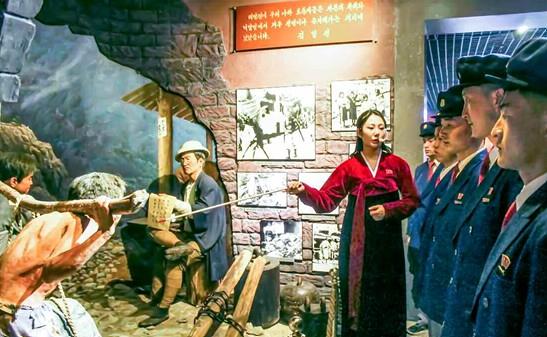
North Korea Ramps Up Tourism Push Amid Cash Crunch- Called One of the Worst Travel Spots for Lack of Internet - Kim Dong-suFormer North Korean DiplomatNorth Korea is stepping up efforts to attract foreign tourists amid a deepening financial crisis. Along with resuming its Shanghai route, it’s adding more flights to Vladivostok. Events like the April Pyongyang Marathon and the June opening of the Wonsan-Kalma resort are part of the push. Still, strict travel rules and a near-total lack of internet keep the country among the world’s least favored destinations.On March 31, Air Koryo announced a new Wednesday flight between Pyongyang and Vladivostok. This adds to its regular Monday and Friday schedule, bringing the total to three flights per week.Russian agency Vostok Intour, which specializes in North Korea tours, confirmed the update via Telegram on March 29, noting the JS-272 flight was newly added to Vladivostok International Airport’s schedule and operates on a Tupolev Tu-204.Air Koryo recently listed the fare for the Pyongyang–Shanghai route at 1,840 yuan (approx. 373,000 KRW). While Shanghai isn’t yet in the official timetable, posting the fare suggests operations are nearly ready—mirroring how North Korea resumed flights to Beijing, Shenyang, and Vladivostok.The last Shanghai flight departed on December 27, 2019, just before North Korea closed its borders due to COVID-19. If reinstated, Shanghai would join Beijing and Shenyang as a third direct route to China.The Ministry of Unification previously noted North Korea’s push to draw Chinese tour groups to Rason. In February, construction also resumed on what seemed to be customs facilities near the New Yalu River Bridge.Tourism events like the April Pyongyang Marathon—celebrating Kim Il-sung’s birthday—and the June opening of Wonsan-Kalma suggest North Korea is rebuilding travel infrastructure. The marathon, expected to draw 200 participants from 46 countries, will be Pyongyang’s first international event since the pandemic began. The race, held annually since 1981, was suspended in 2020 due to COVID-19.Wonsan-Kalma is a major state project, personally visited by Kim Jong-un and his daughter Kim Ju-ae. Ahead of its launch, road and rail expansion is underway. North Korea is also developing all-season tourism zones near Mount Paektu in Samjiyon, including cultural and mountain resorts.Despite global concerns, Pyongyang’s drive to revive tourism reflects its urgent need for legal foreign revenue. In 2019, about 300,000 foreigners visited, generating an estimated $90–150 million. With heavy sanctions over its nuclear program, tourism remains one of the few legal sources of income for the regime.Still, North Korea is wary of the risks tourism brings. With global platforms like YouTube and X (formerly Twitter), the regime fears foreign tourists could reveal unfiltered views of life in the country. Its abrupt suspension of Rason tours just three weeks after launch shows its sensitivity to exposure.North Korea recently signaled plans to resume tourism by releasing new photography guidelines. A travel agency specializing in North Korea published a guidebook outlining rules for content creation. Tourists may take photos and videos but must follow strict regulations, stay with a guide, respect local culture, and avoid filming military or restricted areas.Koryo Tours warns that breaking these rules—like taking unauthorized pictures—could have serious consequences for both tourists and guides. “If you're unsure, always check with your guide first,” the agency advised. When photographing locals, tourists must get permission in advance. “Secret filming or unauthorized close-ups are highly frowned upon in North Korea,” the guide stated.Tourists can use small devices like smartphones or GoPros, but professional cameras are restricted to avoid being mistaken for journalists.Lenses over 150mm are banned, and drones are confiscated at the airport—asking about them can even raise suspicion. The agency noted that North Koreans are curious about foreign visitors, but using gear that looks professional can cause misunderstandings and affect entry. It’s best to film quietly with small, unobtrusive devices.Tourists are also warned not to produce provocative content. The agency suggests focusing on culture, history, or daily life—and avoiding politics. “Exaggerating North Korea’s image could harm not just you but also your guide and agency,” it said.Internet access is virtually nonexistent in North Korea. Sites like Google and YouTube are entirely blocked, the guide noted. Violating tourism rules could lead to harsh punishment.The danger was made clear in the case of Otto Warmbier, an American student who visited in 2015. Detained for allegedly stealing a propaganda poster, he was later returned to the U.S. in a vegetative state and died soon after.In another case, South Korean tourist Park Wang-ja was shot and killed by a North Korean guard in 2008 while visiting Mount Kumgang.Recent tourists have expressed shock at the high level of control they experienced. They caution that even minor missteps could lead to serious consequences, especially for those visiting out of curiosity.
25.04.04 -
 [Kim Myongsung’s Inside North Korea]
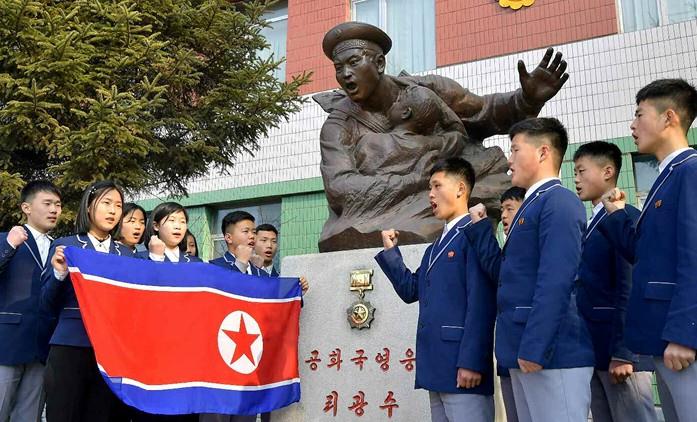
Kim Myongsung’s Inside North Korea· No Parents, No Choice: Orphans Pushed into Military Service After Graduation· Multiple North Korean Casualties from Landmine Explosion in DMZ· Curbing Youth Deviance: North Korea Trains Children’s Union Instructors in Echo of Hitler YouthKim Myong-sungSecretary General of the SAND InstituteNo Parents, No Choice: Orphans Pushed into Military Service After GraduationAs North Korea urges youth to petition for military service, state media reported that 110 graduates from Pyongyang Orphans’ Secondary School have applied to enlist. While under 30% of regular high school graduates join the military, nearly all from the orphan school do.With forced enlistment campaigns stirring backlash from parents, some believe the regime is coercing orphans into joining the military.On the 25th, Rodong Sinmun reported that 110 graduating students from Pyongyang Orphans’ Secondary School had pledged to join the Korean People’s Army. At the ceremony, the students said it was only right for them to defend the country, having grown up under the Party’s special care.The school, which Kim Jong-un first visited after becoming leader in 2016, educates orphans who came through Pyongyang’s baby homes. Built on a large scale, similar schools were established across provinces. State media framed them as symbols of Kim’s love for children and the future.Improved conditions at these schools have led to a noticeable decline in the number of homeless children who once roamed the streets due to forced detentions.It’s well known that orphans from Ryanggang Province were sent to help build Samjiyon City. Many couldn’t endure the cold and hunger, according to local sources, and returned to a life on the streets.Critics say the regime sees orphans as disposable labor, using them for unwanted jobs like construction and military enlistment with little public pushback. Mass enlistment of orphans is seen as a response to rising opposition from students and parents resisting the extreme enlistment pressure.Since last year, North Korea has launched organized campaigns to grow its military and escalate tension, even instructing schools to designate entire graduating classes as military petition groups.This forced enlistment is spreading beyond orphans to students in certain regions. In Hwanghae Province, ceremonies were held to send graduates—mostly children of workers and farmers—to frontline posts.A source said some graduates used to volunteer for farms or mines, but this year many are being sent to the harshest units in Gangwon Province—places so tough they say you won’t see your family for 10 years and leave malnourished.According to one source, orphans and students from Hwanghae are chosen for these tough posts because border-region students are more exposed to outside info and less obedient.Multiple North Korean Casualties from Landmine Explosion in DMZOn the 27th, South Korea’s Joint Chiefs of Staff announced that a landmine explosion caused multiple North Korean casualties during resumed military work near the DMZ.The military also revealed recent North Korean activity in the DMZ, noting this was the first mine-related incident involving the North this year.Last year, North Korean forces triggered over 20 mine explosions while working along the DMZ.Officials believe the recent casualties were due to rushed operations without proper troop rotations or preparation.North Korea has completed dismantling 11 power towers along the Gyeongui Line within its section of the DMZ.After pausing for winter drills late last year, North Korea resumed frontline work like reinforcing fences. Surveillance cameras have been spotted on dismantled tower sites.It was also revealed that North Korea recently sent over 3,000 more troops to Russia and continues to supply weapons and ammunition.According to South Korea’s military, around 4,000 of the 11,000 North Korean troops sent to Russia have been killed or wounded. Over 3,000 more were deployed in January and February as reinforcements.They added that North Korea has supplied Russia with missiles, artillery, and ammunition—including SRBMs, 170mm self-propelled guns, and about 220 240mm rocket launchers—with the total likely to rise depending on battlefield conditions.Curbing Youth Deviance: North Korea Trains Children’s Union Instructors in Echo of Hitler Youth For the first time, North Korea brought youth group instructors from across the country to Pyongyang for intensive training, aiming to tighten ideological control over its young generation.KCNA reported on the 31st that a nationwide training session for Korean Children’s Union instructors was held in Pyongyang from the 26th to 29th—marking a first in the country’s history.The Korean Children’s Union is a mandatory group for kids aged 7 to 14, with about 3 million members. Present in every elementary and middle school, its instructors oversee ideological education. Members wear red scarves and badges while being taught collectivism and loyalty.KCNA said the training aimed to help instructors fulfill their duty to raise “young revolutionaries and patriots.” The event also served to reinforce instructor loyalty and tighten control over the next generation.Like Nazi Germany’s Hitler Youth or China’s Young Pioneers, the group instills regime ideology from an early age. North Korea uses it to teach obedience and loyalty to preserve its system.Experts see the training as a response to growing ideological drift among North Korea’s youth, influenced by K-culture and outside information.A video released by the SAND Institute last year showed 12-year-old Union members on trial for watching and sharing K-dramas—proof that even children are exposed to foreign culture.Going forward, North Korea is expected to intensify ideological control and organizational discipline among its youth.
25.04.03 -
 [Feature Article]
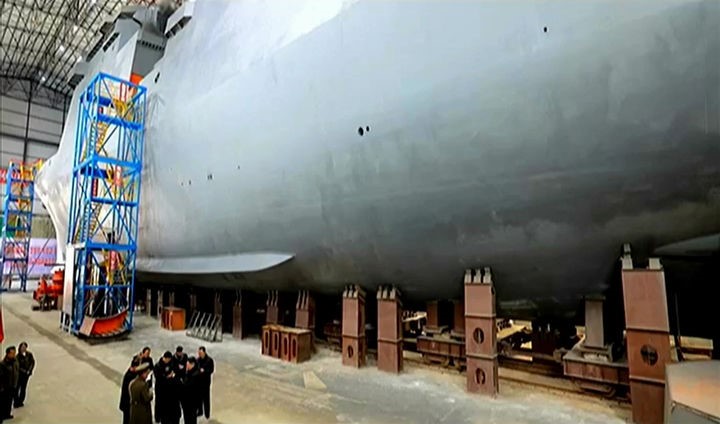
Analysis of North Korea’s Publicized “Nuclear-Powered Strategic Submarine”- Is North Korea Really Constructing Its Final Nuclear-Armed Strategic Submarine? - Choi IlDirector of the Submarine Research Institute (PhD political science, Retired Navy Captain, First Commanding Officer of ROKS Son Won-Il)On March 8, 2025, North Korea publicly unveiled a ‘nuclear propulsion’ submarine through the Rodong Sinmun.The Reality of the Publicized SubmarineNorth Korea has named this newly revealed vessel the "Nuclear-Powered Strategic Missile Submarine." This is the first time North Korea has used the term "nuclear-powered submarine," a term that is also uncommon in South Korea.In English, submarines are categorized based on propulsion systems as either nuclear-powered or conventional (diesel-electric) submarines. Additionally, since submarines require energy not only for propulsion but also for onboard systems, the term nuclear-powered submarine is often used to emphasize the use of nuclear energy. In South Korea, this is typically referred to as a "nuclear submarine."Although "nuclear-powered submarine" is not a commonly used term, it essentially means the same as a "nuclear submarine." Thus, North Korea's terminology aligns with what is typically referred to as either a "nuclear propulsion submarine" or a "nuclear submarine."Now, what does "Nuclear-Powered Strategic Missile Submarine" mean? At the September 2023 launch ceremony of the Hero Kim Kun Ok, North Korea described it as a "tactical nuclear attack submarine." Tactical nuclear weapons refer to small nuclear warheads mounted on ballistic or cruise missiles, whereas strategic guided missiles refer to large nuclear-capable ballistic missiles.Ultimately, a Nuclear-Powered Strategic Missile Submarine refers to a nuclear-powered submarine armed with nuclear-tipped strategic ballistic missiles (SLBMs), which is commonly known as a nuclear-powered ballistic missile submarine (SSBN).Why North Korea is Building an SSBNNorth Korea's ultimate objective is to develop the capability to launch nuclear strikes against the U.S. mainland. If the United States perceives a direct nuclear threat to its homeland, it may hesitate to intervene in a Korean Peninsula conflict, potentially enabling North Korea to pursue its goal of unifying the peninsula under its control.While North Korea is extending the range of its ICBMs (Intercontinental Ballistic Missiles) to reach the U.S., an even greater threat would be a submarine launching nuclear ballistic missiles from waters near the U.S. coastline.North Korea's Pukkuksong series SLBMs are designed for such underwater launches. The country aims to operationalize an SSBN that can carry multiple SLBMs and conduct extended-period missions, further strengthening its nuclear deterrence.Analysis of the Released Submarine FootageSizeNorth Korea released two submarine images, but its full length is unclear. Based on individuals' height and proportions, the diameter is estimated at about 12.5 meters.This measurement is comparable to existing SSBNs worldwide. The UK’s Vanguard-class SSBN (16,000-ton submerged displacement) has a 12.8-meter diameter, while France’s Triomphant-class (14,300 tons, submerged) measures 12.5 meters. China’s Jin-class (11,000 tons, submerged) has a diameter of 11.8 meters, and the U.S. Virginia-class nuclear-powered attack submarine (SSN) is 10 meters wide. Although the submarine’s length remains uncertain, its diameter suggests a displacement exceeding 10,000 tons.Construction ProgressPoor image quality and angles make analysis difficult, but the submarine doesn’t seem to be under active construction. A construction site is usually busy, yet the images suggest otherwise.If it were near completion and preparing for launch, its hull would appear more refined, but instead, it looks far from finished. The current state suggests that construction may have stalled.If North Korea were truly constructing an SSBN, it would likely adopt a double-hull design influenced by China or Russian collaboration. However, the released images suggest a single-hull structure, raising further doubts.Additionally, the hull appears overly simplistic, lacking visible sensors or penetration ports. The smooth, unmarked exterior gives the impression of a cylindrical metal casing rather than an actual submarine.Moreover, despite the poor image quality, the hull appears to have been painted a long time ago, with visible signs of wear. This raises questions about whether the structure is an actual submarine hull or merely a land-based test model.Reasons for Revealing an Unfinished SubmarineTypically, a national leader attends the launch of a completed submarine, but this time, North Korea revealed an unfinished vessel. The key point in their announcement was that Kim Jong-un personally inspected shipbuilding projects at major shipyards, including a submarine under construction. Facing growing maritime threats from South Korea-U.S. naval exercises, a U.S. aircraft carrier deployment, and a nuclear-powered submarine docking in South Korea, North Korea sees naval modernization as urgent. By showcasing warships, it aims to emphasize its expansion and modernization efforts.Prospects for Russian Technical Support for North Korean SubmarinesIf North Korea were to receive compensation from Russia in exchange for dispatching troops to the Russia-Ukraine war, the most likely form of support would be military technology to enhance its naval power, particularly submarine technology.Possible assistance from Russia could include nuclear reactor technology for submarines, design and construction expertise for nuclear-powered submarines, or even leasing an entire submarine. This support could extend beyond nuclear-powered submarines to conventional submarines as well.However, it seems unlikely that the submarine North Korea revealed would incorporate a Russian nuclear reactor. The images suggest that its design and construction began before the Russia-Ukraine war, making it improbable that North Korea initiated the project expecting to receive Russian reactor support later.ConclusionIf North Korea successfully builds an SSBN equipped with SLBMs, it would pose a significant threat not only to South Korea but also to global security. While this warrants close monitoring, it is essential not to overstate the immediate threat.At the September 2023 launch ceremony of the submarine Hero Kim Kun Ok, Kim Jong-un stated that existing medium-sized submarines (Romeo-class) would be converted into tactical nuclear-weaponed submarines and that future plans included the construction of new submarines, including nuclear-powered ones.If Kim Jong-un’s plans had been progressing as announced, the Hero Kim Kun Ok should already be operational, with additional units deployed. However, no such developments have materialized.In this context, North Korea is once again seeking attention with claims of building a nuclear-powered submarine. So far, its provocations have been largely symbolic, with little tangible progress.The Pukguksong series of submarine-launched ballistic missiles, small ballistic missiles, the nuclear torpedo Haeil, submarine-launched cruise missiles (SLCMs), and the Hero Kim Kun Ok submarine have all been showcased to draw attention, yet none have entered full operational service.In July 2019, Kim Jong-un publicly inspected a new submarine under construction, but the vessel has since vanished.While North Korea’s goal of constructing an SSBN is clear, achieving this ambition will take considerable time. Instead of overreacting to its provocations, a rational approach should be taken—one that assesses North Korea’s technological limitations and prepares appropriate countermeasures.
25.03.21 -
 [Kim Myongsung’s Inside North Korea]
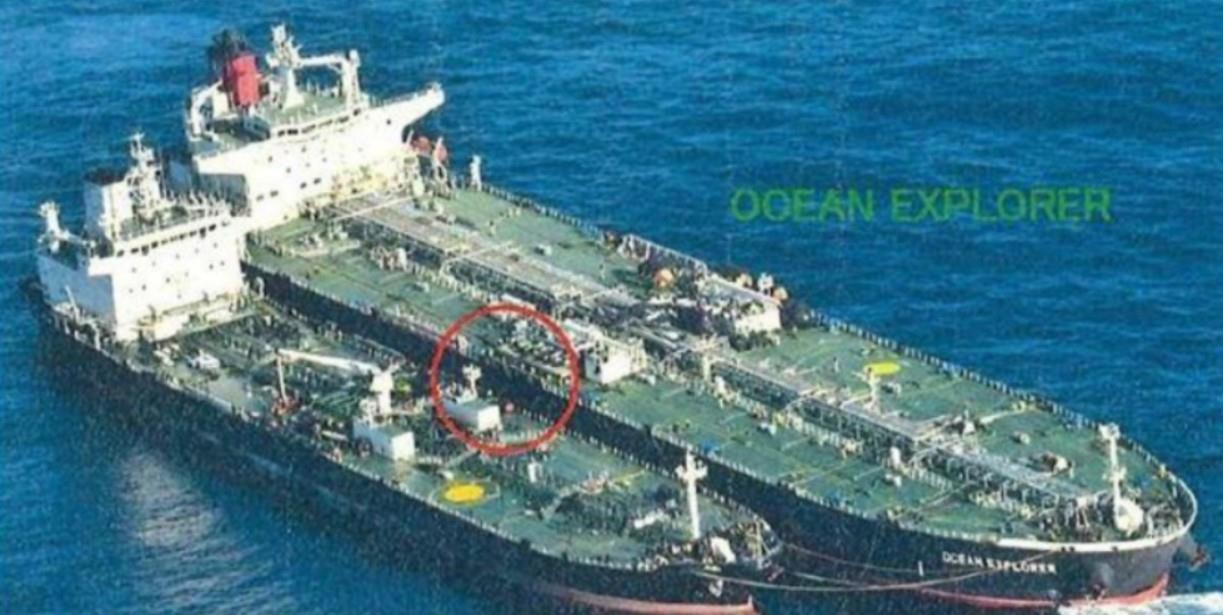
Kim Myongsung’s Inside North Korea· North Korean Smuggling Ship Sinks After Collision with Chinese Vessel, Killing 20· North Korea Prepares to Demand Compensation from Russia as War Nears Its End?· Three Young North Koreans Publicly Executed for Attempted Sea Escape … A Brutal Warning Against DefectionKim Myong-sungSecretary General of the SAND InstituteNorth Korean Smuggling Ship Sinks After Collision with Chinese Vessel, Killing 20A North Korean cargo ship, allegedly smuggling coal, collided with a Chinese vessel and sank in the Yellow Sea last month, killing nearly 20 crew members. As the incident involved illegal coal smuggling in violation of international sanctions, both North Korea and China have kept quiet.On March 13, Yonhap News Agency reported, citing a key North Korea source, that in late February, a North Korean cargo ship with its AIS turned off collided with a Chinese vessel near a southeastern Chinese port and sank. AIS transmits a ship’s location and speed, but North Korean ships often disable it to evade sanctions monitoring.Chinese authorities led the rescue operation, but only a few crew members were saved. Between 15 and 20 North Korean sailors reportedly died, while the Chinese vessel sustained only minor damage.The accident occurred in an area frequently used for smuggling North Korean coal, a key export banned under United Nations Security Council sanctions.Thick fog reportedly reduced visibility during the accident. Despite the weather, the North Korean ship attempted to smuggle coal while evading sanctions. With its AIS off, the Chinese vessel likely failed to detect it, leading to the collision. The overloaded North Korean ship sank along with its cargo.Despite the severity of the incident, North Korea and China have kept it quiet. A North Korea expert told Yonhap News, “Revealing this would harm North Korea and create diplomatic issues for China, which has ignored sanctions violations.”This isn’t the first incident. In March 2017, a North Korean cargo ship without proper tracking sank after colliding with a Chinese vessel near Jiangsu Province. However, all crew members were rescued, and China’s Transport Ministry acknowledged the accident.Coal is one of North Korea’s key exports. In April last year, the U.S.-based media outlet NK News reported that a Russian-operated cargo ship had docked at North Korea’s Rason Port, raising suspicions of smuggling between North Korea and Russia.In 2022, Japan’s Nihon Keizai Shimbun analyzed ship tracking data and satellite images, reporting that China was secretly importing North Korean coal. Meanwhile, in 2019, South Korea’s National Intelligence Service detected a vessel suspected of smuggling North Korean coal.North Korea Prepares to Demand Compensation from Russia as War Nears Its End?North Korean FM Choe Son-hui Meets Russian Deputy FM Rudenko, Sparking Speculation on POW Repatriation.As the Ukraine war nears peace talks post-Trump, North Korea and Russia are moving quickly. Having sent troops, North Korea seems poised to present its demands to Russia.On March 16, reports confirmed that Choe Son-hui met with Russian Deputy Foreign Minister Andrey Rudenko, likely discussing North Korean troops in Ukraine and the repatriation of captured POWs. Rudenko also met with North Korean Vice Foreign Minister Kim Jong Gyu.According to North Korean state media, the high-level talks were conducted in a “friendly atmosphere.” Both sides reportedly discussed concrete measures to strengthen bilateral exchanges and mutual support on the international stage.Since both Rudenko and Kim played key roles in last year’s North Korea-Russia treaty ratification, their talks likely included discussions on North Korea’s troop deployments and broader military cooperation.With Ukraine reportedly capturing two North Korean soldiers, Pyongyang may have pushed for their repatriation. If the U.S.-mediated peace talks lead to an end to the war, prisoner exchange negotiations between Russia and Ukraine will likely take place.If this happens, South Korea’s efforts to secure the defection of North Korean POWs could face difficulties. Russia may claim the captured soldiers as its own and demand their return.Since neither North Korea nor Russia officially acknowledges North Korean troop deployments, the captured soldiers were reportedly carrying forged Russian military IDs. Ukraine, prioritizing the return of its own POWs held by Russia, might struggle to refuse Russia’s demand for their repatriation.Meanwhile, North Korea and Russia are accelerating economic and scientific cooperation. On March 18, Rodong Sinmun reported that North Korea’s Minister of External Economic Relations, Yun Jong-ho, led a government delegation to Russia for trade and technology discussions.Yun Jong-ho is North Korea’s chairman of the North Korea-Russia Trade, Economic, and Scientific-Technical Cooperation Committee. That same day, a Ministry of Public Health delegation, led by Vice Minister Jon Sol-ryong, also left for Russia.North Korea has not disclosed the specific purpose or schedule of these visits, but the discussions are expected to be part of efforts to implement the "Comprehensive Strategic Partnership Agreement" signed during the North Korea-Russia summit last June.There is also speculation that North Korea, which has supported Russia through troop deployments, may now push more actively for compensation. Reports indicate that North Korea sent over 12,000 troops last year and deployed at least 1,000 more at the start of this year, with a significant number of them suffering injuries.North Korea may seek financial compensation by expanding trade and cooperation. Along with securing resources and technology, it might push for more Russian tourists or increased North Korean labor exports to earn foreign currency.The Ministry of Public Health delegation is expected to discuss securing medical equipment, personnel, and technological assistance for new hospitals set to open in North Korea.Three Young North Koreans Publicly Executed for Attempted Sea Escape … A Brutal Warning Against Defection North Korean authorities recently carried out a public execution of three young men who attempted to defect by sea, even burning their bodies afterward, according to a report by Radio Free Asia (RFA).Since North Korea officially designated South Korea as a "hostile nation," it has intensified punishments for defectors. This execution appears to serve as a chilling warning: "Going to South Korea means death."On March 10, RFA, citing an internal source from North Pyongan Province, reported that the three men were caught while trying to escape to South Korea using a wooden boat from North Korea’s east coast.The executed individuals were two brothers surnamed Kim and their friend Lee, all in their 30s. After months of preparation, they purchased a wooden boat and set off southward in January. However, they got lost in thick fog and were intercepted by a North Korean patrol boat.Mistaking the vessel for a South Korean fishing boat, they reportedly shouted, "We are defectors trying to go to South Korea. Please save us!" but were immediately captured and later executed.On February 20, North Korean authorities publicly executed them by firing squad in South Hwanghae Province. Hundreds of residents from factories, farms, and schools were forcibly gathered to witness the event. A source described the horrific scene: "Children screamed in terror, and some residents fainted from shock."North Korean authorities reportedly burned the bodies after the execution to instill fear and prevent further escape attempts.A resident told RFA, "At the execution site, we were told that defectors heading to South Korea would no longer be sent to reeducation camps but executed immediately." They added, "In the past, defectors faced up to 15 years of reeducation, but the punishment has completely changed."A North Korean insider stated, "Hundreds of residents were forced to watch the public execution. Burning the bodies was intended to create an atmosphere of fear, ensuring that no one would even consider defecting." The execution was meant to send a clear message to the public: "Going to South Korea means death."When asked about the report, security officials said they cannot verify individual cases.
25.03.21 -
 [News&Issue]
North Korea’s Political Situation and Key Activities in February 2025- Kim Jong-un's Economic Development Policies and Military Moves - Lee Seung-hyunPh.D. in Public AdministrationResearch Fellow at the SAND Institutedrharacearthur@gmail.comOn February 16, 2025, North Korean leader Kim Jong-un visited the Kumsusan Palace of the Sun to mark his late father Kim Jong-il’s birthday, his first visit in four years. Later, on February 25, he inspected Kang Kon Military Academy and attended a strategic cruise missile launch in the West Sea the next day. However, he made no direct remarks on the upcoming U.S.-South Korea joint military exercise (FS) in March.On March 4, Kim Yo-jong, via Rodong Sinmun and the Korean Central News Agency, condemned the U.S. aircraft carrier USS Carl Vinson’s arrival in Busan on March 2. Notably, instead of direct statements, Kim Jong-un, Kim Yo-jong, and other key figures have relied on state media for criticisms, marking a shift from past practices.This shift in communication reflects two key strategies. First, it aligns with North Korea’s Theory of Two Hostile States, a policy aimed at downplaying South Korea’s significance. Second, it highlights Kim Jong-un’s focus on economic progress under the 20x10 Regional Development Policy, both of which remained priorities in February.In February 2025, Kim Jong-un made ten public appearances, up from eight in January, with no significant change in focus. His engagements included politics (four), military (one), and socio-economic affairs (five), emphasizing economic priorities. Under the 20x10 Regional Development Policy, the government continued promoting regional factory projects. Kim Jong-un’s first economic event of the year was attending the groundbreaking ceremony for Kangdong County Hospital and a comprehensive service center.Despite indications of a military focus around February 16, Kim Jong-un’s only direct involvement was overseeing a strategic cruise missile test in the West Sea, where he emphasized “full preparedness for nuclear attacks.” At Kang Kon Military Academy, he stressed military modernization and strengthening the armed forces. Meanwhile, North Korea’s Ministry of National Defense condemned U.S.-South Korea-led denuclearization talks, reaffirming its commitment to nuclear weapons development.Despite its active promotion of the 20x10 Regional Development Policy, North Korea continues to face economic hardships. In response, it is strengthening diplomatic and military ties with China and Russia to secure economic aid and defense cooperation. Key developments by sector include:1. Strengthened Military ActivitiesThey conducted a strategic cruise missile test, with Kim Jong-un overseeing the launch and stressing nuclear readiness. At Kang Kon Military Academy, he emphasized military modernization and stronger defense. The government reaffirmed its opposition to U.S.-South Korea-led denuclearization, vowing to continue nuclear development.2. Diplomatic and Political TrendsThey denounced U.S. and regional denuclearization efforts as “groundless” and reaffirmed their intent to enhance nuclear capabilities despite international pressure. They strengthened diplomatic and military cooperation with China and Russia to secure economic and defense-related support.3. Economic and Internal AffairsThey continue to struggle under international sanctions, with reports of worsening food shortages in some regions. In response, they have intensified domestic crackdowns, increasing ideological education and tightening control over the population. North Korea is likely to escalate military provocations in response to U.S.-South Korea drills while advancing its nuclear and missile programs. Rejecting denuclearization, it is expected to strengthen its nuclear capabilities as resistance to international pressure, as it previously vowed to do. Similar to last year, it may conduct a large-scale military command exercise and deepen military ties with Russia, potentially holding joint drills to enhance strategic cooperation.
25.03.21 -
 [Current Affairs Analysis]
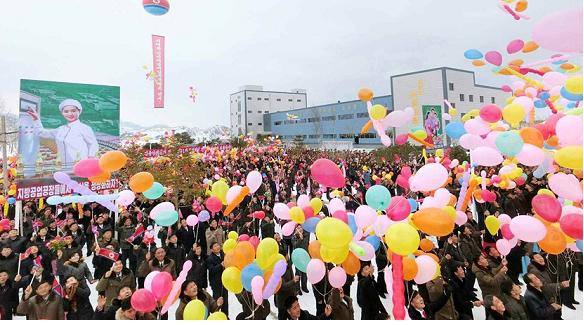
Evaluation and Prospects of Regional Development Policy in the Kim Jong-un Era: Focusing on the ‘20×10 Regional Development Policy’ Choi Eun-juResearch Fellow, Center for Korean Peninsula Strategy, Sejong InstituteOn February 12, 2025, North Korea completed the first year of its 20×10 Regional Development Policy with the inauguration of a local industrial factory in Kim Hyong Jik County, Ryanggang Province. This policy aims to boost regional economies and improve living standards. While North Korea has long pursued local development, this initiative introduces distinct features that set it apart from past efforts. Whether it will yield tangible results remains to be seen.North Korea’s local economy relies on independently sourcing and utilizing production factors to supply essential consumer goods. Achieving this requires a broad approach spanning agriculture, construction, light industry, distribution, services, and trade. A key goal is creating a mutually reinforcing relationship between agriculture and industry, where local factories support farming, and agriculture provides raw materials for industry. The government promotes self-sufficient regional development, urging localities to craft tailored economic plans.Since taking power, Kim Jong-un has prioritized regional economic development through various initiatives. In 2012, policies were introduced to strengthen local industries and improve livelihoods, with a more structured mid-to-long-term vision emerging after 2015. At the 7th Congress of the Workers' Party of Korea in 2016, the Regional Development Policy was officially introduced, designating counties as key economic hubs. Efforts followed to modernize and construct local factories, but the rural-urban economic gap remained a major challenge.In 2021, North Korea revised its strategy to strengthen cities and counties by expanding infrastructure and improving urban-rural integration. The 8th Congress of the Workers' Party of Korea that year further expanded the 20×10 Regional Development Policy, emphasizing a self-sustaining economy based on local industry and rural development. In December, the Rural Development Strategy was introduced to boost agricultural productivity and living conditions, aiming to create a cycle where improved livelihoods motivate farmers, helping to address food shortages and raise incomes.In 2024, North Korea introduced the 20×10 Regional Development Policy as a new strategy for regional economic growth. During the Supreme People’s Assembly in January, Kim Jong-un criticized the slow progress of local industrial development and proposed this initiative to reduce regional disparities. The plan aims to build factories in 20 counties annually over the next decade, eventually covering all 200 counties. These factories—producing food, clothing, and daily necessities—will directly supply essential goods to local communities.To implement the policy, North Korea restructured its administrative system. In January 2024, Party secretaries received training, and the Local Industrial Construction Guidance Department was established under the Central Committee’s Organization and Guidance Department. Central and Provincial Promotion Committees were formed to improve execution, while the 124th Military Unit handled factory construction. Researchers and university experts provided technical support, while local efforts focused on worker training and raw material procurement.A key aspect of this policy is the expanded role of the central government. Previously, regional governments developed and implemented their own economic plans, but now, the Party’s leadership directly oversees industrial development to ensure balanced growth. Without a basic industrial foundation, expecting regions to drive their own development would only widen disparities—better-equipped areas might progress while underdeveloped ones lag further behind. To address this, the government has adopted a centrally led approach, prioritizing nationwide factory construction to establish essential conditions for local economic growth.Despite its ambitious scope, the policy faces several challenges. First, a structured approach is necessary to prevent uncoordinated development. Without adequate infrastructure, newly built factories and public facilities may struggle with operational inefficiencies. Second, securing financial resources is crucial. The policy now includes hospitals, cultural centers, and grain management facilities, making funding a decisive factor in its success. Third, effective oversight is essential. Given the aggressive construction timeline, there is a high risk of substandard building quality, and ensuring a stable supply of materials and equipment remains a significant challenge.For the policy to achieve sustainable success, further considerations are needed. Expanding local governments’ financial autonomy could enable more independent economic growth, but current restrictions on budget control require institutional reforms. Additionally, the policy’s goal of creating a mutually reinforcing relationship between agriculture and industry depends on agricultural productivity. If farming yields fall short, raw material shortages could disrupt industrial operations, making a stable agricultural output critical.In conclusion, the 20×10 Regional Development Policy aims to promote balanced regional growth in North Korea by building an industrial base, reducing economic disparities, and improving living standards. However, its success hinges on thorough planning, stable funding, strict oversight, and greater local economic autonomy. If effectively implemented, it could strengthen self-sufficiency, support regional economies, and enhance overall living conditions for North Korean citizens.
25.03.07 -
 [Kim Myongsung’s Inside North Korea]
Kim Myongsung’s Inside North Korea· Kim Yo-jong Warns U.S. Over Aircraft Carrier’s Arrival in Busan: “Considering Strategic Countermeasures”· ‘North Korea Conducts Another ‘Tomahawk-Style’ Missile Test in a Month—Kim Jong-un Calls It a "Reliable Nuclear Shield“· North Korea Sends Up to 3,000 More Troops to Russia, Refuses to Repatriate Fallen SoldiersKim Myong-sungSecretary General of the SAND InstituteKim Yo-jong Warns U.S. Over Aircraft Carrier’s Arrival in Busan: “Considering Strategic Countermeasures”"The U.S. is proving our need for nuclear deterrence… They must not test us."Kim Yo-jong, Deputy Director of the Workers' Party of Korea (WPK), criticized the U.S. aircraft carrier USS Carl Vinson's (CVN-70) arrival in Busan, calling it a clear sign of U.S. hostility. She warned that North Korea is "seriously reviewing options to strengthen strategic deterrence measures."According to the Korean Central News Agency (KCNA) on the 4th, Kim Yo-jong issued a statement accusing the U.S. of persistently engaging in "provocative actions that heighten tensions while disregarding North Korea’s security concerns.”She further claimed that the U.S. is nearly permanently deploying strategic assets near the Korean Peninsula, citing the USS Carl Vinson and the nuclear-powered submarine USS Alexandria as examples.She noted that the upcoming trilateral naval drill involving South Korea, the U.S., and Japan, along with the Freedom Shield (FS) joint exercises, would further escalate tensions."We strongly denounce the reckless and provocative military displays by the U.S. and its allies," she stated. "America’s hostile policy, backed by military action, provides full justification for us to indefinitely enhance our nuclear deterrence.“She warned that North Korea would not merely stand by and observe, emphasizing, "If the U.S. continues to break records in military provocations, we will be compelled to set new records in our strategic deterrence as well.“Analysts suggest that her statement aims to gauge the new U.S. administration’s response, using criticism of former President Donald Trump’s North Korea policy to provoke a reaction.‘North Korea Conducts Another ‘Tomahawk-Style’ Missile Test in a Month—Kim Jong-un Calls It a "Reliable Nuclear Shield"On the 28th, North Korea announced it had tested a strategic cruise missile over the West Sea on February 26, following a similar launch on January 25. Leader Kim Jong-un oversaw the test of what Pyongyang calls its ‘Tomahawk-style’ missile. State media reported the missiles flew for approximately 7,961 and 7,973 seconds over 1,587 km before hitting their targets.South Korean military officials believe the missile launched was likely the "Hwasal-1," while the January 25 test involved a presumed upgraded "Bulhwasal-3-31" submarine-launched missile. Analysts suggest North Korea is accelerating efforts to validate its cruise missiles for both land and submarine-based launches.Unlike ballistic missiles, which exceed five times the speed of sound, cruise missiles are subsonic but fly at low altitudes, making them harder to detect and intercept. North Korean state media released images of the missile skimming the sea before striking its target.Kim Jong-un declared, "Ensuring our national sovereignty and security through a reliable nuclear shield is the fundamental duty of our nuclear forces." Unlike before, he now explicitly signaled that the cruise missiles serve as nuclear delivery systems. This move counters Washington’s denuclearization stance under Trump’s second term and increased sanctions while also demonstrating force ahead of the mid-March Freedom Shield (FS) drills.North Korea Sends Up to 3,000 More Troops to Russia, Refuses to Repatriate Fallen Soldiers North Korea has reportedly sent 1,000 to 3,000 more troops to Russia since early this year, following an initial deployment in October last year. Observers suggest that if Russia persists in its fight for Kursk amid ceasefire talks, a third wave of North Korean reinforcements may follow.On February 27, South Korea’s National Intelligence Service (NIS) reported that North Korean troops resumed deployment to the Kursk front in early February after a month-long pause. While intelligence confirms additional deployments, exact numbers are still being assessed. A military source noted signs of further troop preparations for Russia.Sources indicate that between January and February, North Korea sent 1,000 to 3,000 troops. Ukrainian officials estimate the first deployment included about 10,000 soldiers, with around 4,000 killed or wounded. As those troops became combat-ineffective, North Korea seemingly sent a second wave of similar size. Analysts suggest Russia, aiming for an advantage in ceasefire talks under Trump’s administration, may have requested additional support from Pyongyang.Reports indicate that North Korean soldiers were transported to the battlefield via Russian cargo ships and military aircraft. Intelligence agencies are closely monitoring transport activities between North Korea and Russia using satellite imagery.North Korean troops were reportedly reintroduced to combat early this month. Ukrainian sources had noted that North Korean forces had been absent for roughly three weeks starting in mid-January before resurfacing in the Kursk region on February 7.Some analysts doubt the second deployment's effectiveness due to its shorter preparation period. While the first wave trained for three months, the latest deployment was reportedly completed in just three weeks. This suggests Russia may be using undertrained North Korean troops as expendable frontline units.A key change in the second deployment is the addition of mechanized infantry and electronic reconnaissance units, signaling a shift in North Korea’s tactics.Despite sending more troops, North Korea has reportedly refused to repatriate fallen soldiers' remains, likely to prevent domestic unrest. Pyongyang has allegedly ordered overseas operatives to acquire rapid-freezing and body disposal equipment, suggesting efforts to conceal battlefield casualties.
25.03.07 -
 [Analysis and Criticism]
State Control Over Food Distribution Could Trigger Market BacklashTrends and Outlook of Food and Agriculture in North KoreaKim Young-hoonKorea Economic Cooperation InstituteFood Supply and Agricultural Policy in 2024Last year, North Korea's food supply improved, mainly due to increased domestic production. In 2023, food production reached 4.82 million tons, up 6.8% from the previous year (Rural Development Administration, December 15, 2023).As a result, domestic food supply in 2024 increased. However, it remains unclear whether grain imports also rose that year. Still, North Korea likely imported a substantial amount of Russian grain, leveraging the North-Russia treaty and the Russian war effort.Despite the overall improvement in grain supply, grain prices surged in North Korean markets. This anomaly appears to be linked to increased government grain purchases and rising import prices due to a sharp currency devaluation.In 2024, North Korea's agricultural policy continued and strengthened the direction set in 2022. To implement the conservative agricultural strategy (New Era Socialist Rural Construction Program, December 2021), it was legalized with the establishment of the Socialist Rural Development Act in 2022.Meanwhile, North Korea reinforced its agricultural management system, led by the Cabinet and Agricultural Commission, while defining specific goals and tasks for its agricultural policy.Under this framework, the North Korean government focused on tasks like repairing irrigation systems, supplying farm machinery, promoting agricultural technology, and building rural housing and local factories.Food Production in 2024In 2024, North Korea's food crop production totaled 4.78 million tons, slightly down from 2023 by 40,000 tons (0.8%), but still above the average level (see table).This was largely due to generally favorable agricultural weather. But, localized flooding occurred at the end of July, and slight heatwaves in August and September in certain areas likely caused a small decline in food crop production compared to the previous year.<Table> 2024 North Korea Food Crop Production (Standardized Conversion)Source: Rural Development Administration, December 19, 2024A notable event in North Korea's 2024 agriculture was the July flooding in the Sinuiju area along the Amnok River. Reports state that over 4,100 homes and 3,000 ha of farmland were flooded (Rodong Sinmun, July 31, 2024), and around 15,400 displaced people were relocated to Pyongyang (KCNA, August 10, 2024).The international community has evaluated the impact of heavy rainfall on North Korea's crops in the year's second half. Organizations like FAO and Global Agricultural Monitoring found that while July's heavy rains were limited to a small area, agricultural conditions remained favorable before and after the flood.The U.S. Department of Agriculture (USDA) estimated the July flood damage to be larger than reported by North Korea but believed it would have minimal impact on food crop production. Despite frequent large-scale natural disasters, the 2024 flood caused relatively limited damage.Food Supply and Agricultural Production in 2025 North Korea's 2024 food production was forecasted based on agricultural weather, evaluations and projections from international observers, North Korea's own assessments, and crop estimates from South Korea's Rural Development Administration.According to the forecast, North Korea's 2025 food supply is expected to be slightly lower than the previous year but still above the historical average.Meanwhile, North Korea's agricultural production in 2025 is expected to remain similar to the previous year, as no significant policy changes have been observed.According to KCNA (December 29, 2024), North Korea is maintaining its existing agricultural policy direction and has set similar agricultural goals and tasks as last year. Unless there are significant weather-related issues, North Korea's agricultural production in 2025 is expected to remain stable.Uncertain Mid-to-Long-Term Outlook Unlike the short-term outlook, the mid-to-long-term prospects for North Korean agriculture appear bleak. This is due to persistent, unresolved issues in the economy and agriculture, along with the emergence of new uncertainties not seen before.There is a constant shortage of capital goods for agriculture, and the collective farming system hampers productivity. Recently, the government has reinforced its state grain procurement system, which contradicts reforms and suppresses the market. North Korea's policy to limit food market trade is evident in the revised regulations. The 2021 amendment to the "Agriculture Act" specifically mandates the creation of both "food distribution centers" and "grain sales offices" (North Korean Agriculture Act, March 11, 2021).The 2022 amendment introduced a new requirement to establish a separate procurement plan for securing the state’s grain sales supply (NK Economy, July 28, 2023).The formalization of state-run grain sales will significantly impact North Korea’s food distribution, with signs of a shrinking grain market already emerging.North Korea may shift towards increasing the sales share and reducing distribution in its food supply. If the state controls food distribution without managing capital goods, market resistance is likely to rise.Close monitoring is needed regarding the potential instability and the likelihood of market resistance to changes in North Korea's food distribution.
25.02.21 -
 [Analysis of issues]
The Trump-Ishiba Summit and Its Impact on the Korean Peninsula Yoon Suk-jungKorea National Diplomatic AcademyThe U.S.-Japan summit held on February 7, 2025, marked the official start of the U.S.-Japan relationship under President Trump's second term.This summit marked the first in-person meeting between President Trump and Prime Minister Shigeru Ishiba. During Trump's first term, the U.S.-Japan alliance grew strong, largely due to the close "bromance" between Trump and former Prime Minister Shinzo Abe.There are concerns about how leadership changes in Trump’s second term might impact the alliance. The key question is whether the meticulous Prime Minister Ishiba can build trust with President Trump.As the U.S. embraces 'America First' again under Trump’s second term, questions are arising about the challenges the U.S.-Japan alliance would face. With these uncertainties, both countries approached the summit. However, the summit confirmed that the U.S.-Japan alliance remains strong despite the leadership change. In their joint statement, the two leaders agreed to uphold a free and strengthen the alliance for a new era of strategic partnership. At the heart of the leaders’ emphasis on the alliance is the China factor. Under Trump’s second term, both Japan and the U.S. recognize that their alliance is crucial in countering China, their 'sole competitor.‘The shared understanding of the strategic value of the U.S.-Japan alliance meant that the leaders' differences didn’t pose a problem. Former Prime Minister Abe met with President Trump on February 10, 2017. Similarly, Prime Minister Ishiba had his official meeting with Trump around the same time, showing that the alliance remains strong despite leadership changes.Another key point to note is that this summit highlighted a transactional alliance fitting for the America First 2.0 era. Looking at the details of the joint statement, it’s clear that the U.S. and Japan made a favorable deal regarding the roles and contributions of the alliance.The U.S. reaffirmed its extended deterrence commitment to Japan, including nuclear weapons, and confirmed that Article 5 of the Security Treaty applies to the Senkaku Islands. Japan pledged to strengthen its defense and increase its defense-related spending in the U.S. to $1 trillion, maintaining its position as the top contributor for the fifth consecutive year.The U.S. reinforced its security commitments to Japan, and in response, Japan pledged to strengthen its defense and boost its defense spending related to the U.S. Through this exchange of security assurances, defense enhancements, and financial commitments, the U.S.-Japan alliance has been further strengthened.In Japan, the summit is largely seen as a success. The February 9 editorial of Yomiuri Shimbun described it as a positive outcome, highlighting achievements such as strengthening the alliance and reaffirming Japan's importance as a key U.S. ally both domestically and internationally.I generally agree with this assessment. While the U.S.-Japan summit was successful, it also made it clearer that Japan’s foreign policy will likely face more challenging tasks ahead.The "challenging tasks" I refer to here stem from the shifting international landscape, where the U.S. holds less influence. This becomes evident when comparing the joint statement from the Ishiba-Trump summit with that of the April 2024 summit between Prime Minister Fumio Kishida and President Biden.The joint statement from the February 2025 U.S.-Japan summit omits many key issues that were previously emphasized by Prime Minister Kishida and President Biden. Notably, it lacks any mention of the rule of law and the liberal international order, both of which were central to their discussions.The April 2024 joint statement addressed issues such as climate change, renewable energy cooperation, support for Ukraine, engagement with the Global South, infrastructure development, and G7 solidarity. However, these topics were notably absent from the Trump-Ishiba joint statement.The issues absent from the Trump-Ishiba joint statement were key priorities for the U.S. in its efforts to uphold the liberal international order. In other words, the absence of these issues in the Trump-Ishiba joint statement suggests that Japan will face significant challenges in a global landscape where U.S. leadership is diminishing. As Prime Minister Kishida stated in his U.S. Congress speech, Japan sees protecting freedom, democracy, and the rule of law as its national interest.The U.S.-Japan summit occurred amid global shock over President Trump’s remarks on Gaza and his withdrawal from the Paris Climate Agreement. As Trump focuses heavily on an America-first approach, the question is: "Can Japan still uphold a liberal international order?" Japan's foreign policy may face a difficult test ahead.2. Implications for the Korean Peninsula Situation The Trump-Ishiba U.S.-Japan summit carries significant implications for North Korea and the situation on the Korean Peninsula.The U.S.-Japan joint statement and President Trump's remarks indicate both progress and lingering concerns about North Korea. The statement mentions 'the complete denuclearization of North Korea,' which may ease concerns raised when Trump referred to North Korea as a nuclear power.On the other hand, President Trump stated in a press conference, "My good relationship with Kim Jong-un is a great asset for everyone." Despite the mention of "complete denuclearization of North Korea," this suggests that direct negotiations between the U.S. and North Korea remain a possibility.The underlying anxiety stems from concerns that Trump’s America is indifferent to the principles of the liberal international order and failing to exercise global leadership.President Trump has already attempted direct ceasefire negotiations with President Putin, excluding Ukraine, raising concerns in Europe over a "dirty deal." To prevent his America-first approach from extending to Asia through direct U.S.-North Korea dealings, South Korea must intensify its diplomatic efforts. To achieve this, enhancing the strategic value of the U.S.-South Korea alliance is essential. This closely relates to how South Korea will negotiate with President Trump regarding the burdens and contributions of the alliance.Potential U.S.-South Korea deals may include defense spending, investments in the U.S., and expanding the alliance to counter China. In the Trump 2.0 era, South Korea faces tough choices and must act wisely to protect its national interests.
25.02.21 -
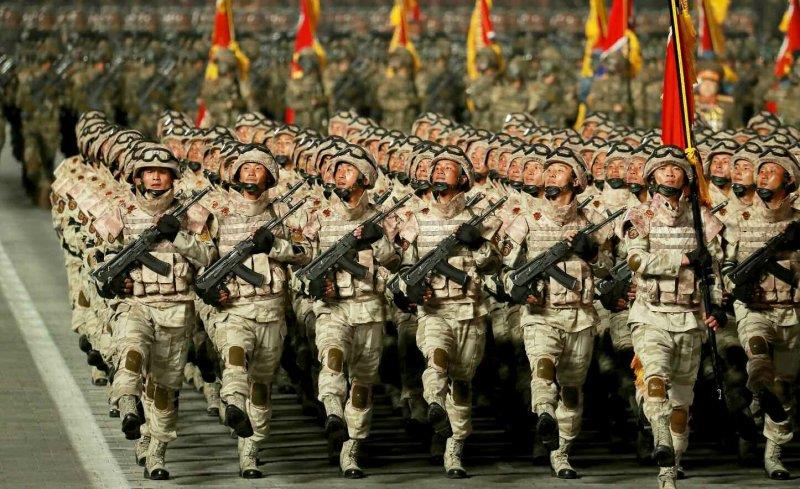 [Kim Myongsung’s Inside North Korea]
Kim Myongsung’s Inside North Korea· South Korea to Accept All North Korean POWs Wishing to Settle· North Korea Criticizes U.S. Commander's ICBM Threat Remarks· North Korea Ranks Second in Watch Exports to China, Each Watch Sold for Just 11 CentsKim Myong-sungSecretary General of the SAND InstituteSouth Korea to Accept All North Korean POWs Wishing to SettleThe South Korean government said that it would accept all North Korean soldiers captured by Ukraine who wished to defect.South Korea's Defense Ministry said 20 that newspaper interviews with a pair of North Korean prisoners of war (POWs) captured by Ukraine have "confirmed once again" the "deceptive and inhumane" nature of Pyongyang's deployment of troops to Russia.In a regular briefing at the Defense Ministry, spokesperson Jeon Ha-gyu also condemned the Kim Jong-un regime's behavior and "strongly urged an immediate halt to additional troop deployments" to Russia.The South Korean newspaper Chosun Ilbo published a pair of interviews with two North Korean POWs, surnamed Ri and Paek, on 19 and 20.In Wednesday's interview, Ri — who was captured by the Ukrainian military last month — said he was a member of the Reconnaissance General Bureau, an elite North Korean unit usually tasked with intelligence missions.He said he left his homeland in early October last year, trained in Vladivostok in the Russian Far East, and was deployed to the battleground Kursk region of western Russia in mid-December.In the interview, Ri expressed his intention to defect to South Korea.“First, I plan to apply for refugee status and go to South Korea," he said. "If I apply for refugee status, will they accept me?”Ri went into battle thinking he was fighting South Korean soldiers, having been deceived by a North Korean security agent who said that Ukraine's drone pilots "were all South Korean soldiers."One or two agents from North Korea's Ministry of State Security were assigned to each battalion of about 500 soldiers to enforce ideological discipline, he said.Since Ri could not contact home for three months before deploying to Russia, his parents didn't even know he had been sent.Asked if he had been ordered to blow himself up, he said that in the North Korean army, "being a prisoner is like being a traitor” and that he might have blown himself up if he had a grenade.In Thursday's interview, Paek — a 21-year-old rifleman sent to Russia as part of North Korea's "Storm Corps" special forces unit last December — also said he was considering defecting to South Korea.North Korea Criticizes U.S. Commander's ICBM Threat Remarks’On the 15th, after the U.S. Northern Command chief suggested North Korea could soon produce ICBMs, North Korea called the remarks proof of U.S. hostility and reaffirmed its commitment to strengthening its nuclear defenses.The director of the Ministry of Defense's Policy Office stated that enhancing self-defense capabilities is crucial to deter enemy provocations and ensure national security, according to the Korean Central News Agency.He voiced strong concern, accusing the U.S. military of justifying its aggressive ambitions by exaggerating a non-existent "threat" from North Korea to gain a military advantage in the region.Earlier, on the 13th, U.S. Northern Command Chief General Gregory Guillot told the Senate Armed Services Committee that North Korea might soon start producing ICBMs capable of reaching the U.S. mainland. He stated that he was losing confidence in the U.S.'s ability to defend against such threats.The North Korean policy director highlighted recent events, including the U.S. nuclear submarine's public entry into the Korean Peninsula, missile detection cooperation between the U.S. Space Force and Japan, joint space drills, and the upcoming continuation of the U.S.-South Korea "Freedom Shield" exercise in March.He argued that all these actions provide ample justification for strengthening North Korea's defense capabilities in response to the growing military threats from adversary nations.He stated, "If the U.S. truly worries about its homeland's safety, the only solution is to abandon its military threats and hostile policies toward sovereign nations." He stressed that enhancing self-defense is a legitimate right of any sovereign state.North Korea Condemns Trump’s Gaza Remarks, Pledges Stronger Nuclear Forces North Korea criticized U.S. President Donald Trump's proposals, including the "Gaza plan," the U.S. territorial claim over Greenland, and the assertion of control over the Panama Canal, calling him a "ruthless plunderer.“In a commentary titled "Ruthless Plunderer, This is the U.S.," the state-run Korean Central News Agency (KCNA) on the 12th pointed out that the current U.S. administration stated that if Palestinians in Gaza were relocated, the U.S. would take control of the area.It continued, "The U.S.'s survival has always depended on slaughter and plunder, driven by its hegemonic ambition for world domination—something clearly evident in the situation in Gaza today."On the 4th (local time), after a summit with Israeli Prime Minister Netanyahu, President Trump unilaterally announced that the U.S. would take control of Gaza and develop it into the "Riviera" of the Middle East, causing widespread controversy.KCNA criticized the U.S. administration, accusing it of trying to annex Greenland, claiming control over the Panama Canal, and proposing to rename the Gulf of Mexico as the "Americas Gulf," disregarding international law and principles.This also targets President Trump’s statements in his inauguration speech on January 20th, where he said, "China is operating the Panama Canal. We will take it back," and "We will rename the Gulf of Mexico to the Americas Gulf.“President Trump repeatedly claimed before and after his inauguration that he would make Greenland a U.S. territory.KCNA stated, "The U.S. is a ruthless plunderer that tramples on the rights of other nations, seizing their territories and sovereignty for its own gain." It added, "A nation's sovereignty, self-determination, and territorial integrity can never be a bargaining chip for the U.S."This commentary by KCNA is North Korea's first public criticism targeting President Trump's actions and statements since his re-election.On the 18th, North Korea, in response to the U.S.-South Korea-Japan foreign ministers' statement on "complete denuclearization," reiterated its commitment to strengthening its nuclear capabilities.North Korea’s Foreign Ministry spokesperson, in response to the joint statement on "complete denuclearization" issued after the U.S.-South Korea-Japan foreign ministers' meeting in Munich, stated, "We will continue to follow the nuclear strengthening path outlined by our leader."
25.02.21 -
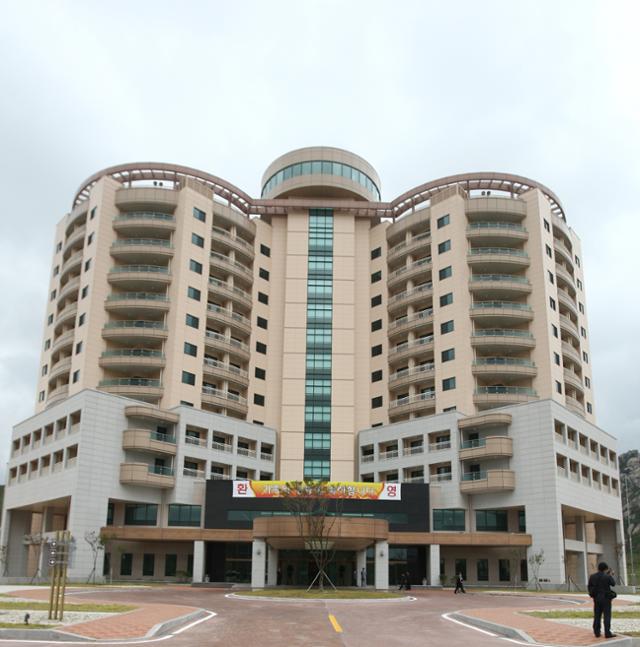 [NK Focus]
North Korea Demolishes the Mount Kumgang Family Reunion Center, Raising Tensions on the Peninsula Lee Seung-hyunResearch Fellow at SAND InstitutePh.D. in Public Administrationdrharacearthur@gmail.comNorth Korea has begun the full-scale demolition of the last South Korean government facility in the Mount Kumgang tourism area, the Reunion of the Seperated Family members Reception Office.On the 13th, Ministry of Unification spokesperson Koo Byeong-sam confirmed that North Korea had started demolishing the Mount Kumgang Family Reunion Center, which represents the hope for regular family reunions.The Ministry of Unification said demolition at the Mount Kumgang facility was first spotted late last year, but recent reports confirm that actual work, including removing tiles from the main building, has now started.The Family Reunion Center, built after the 5th inter-Korean Red Cross talks in November 2003, was funded with 55 billion won ($38.2 million USD) from the Inter-Korean Cooperation Fund. The main building includes a basement, 12 floors, 206 guest rooms, a banquet hall, and separate offices for both Koreas.The center unused for over a year due to the 2008 Mount Kumgang tourist shooting incident, was first activated in September 2009 for a family reunion event during Chuseok. Subsequent reunions were held in October 2010, February 2014, October 2015, and August 2018.This demolition effectively cuts off the final remaining link between North and South Korea.After the "Hanoi no-deal" summit with Trump in February 2019, Kim Jong-un adopted a more hostile stance toward South Korea. That October, he visited Mount Kumgang and ordered the removal of South Korean facilities, calling them "shabby."Following a pause during the COVID-19 pandemic, North Korea resumed demolishing or dismantling facilities in 2022, including the Hotel Haegumgang (owned by Hyundai Asan), the Kumgangsan Culture Center, and Onjeonggak.Last April, North Korea removed the South Korean fire station in Mount Kumgang, and by October, all overland routes between the two Koreas, including the Gyeongui and Donghae liens, were cut. With the Family Reunion Center's demolition, all South Korean facilities will be gone.Given the current state of inter-Korean relations and North Korea's recent actions, it is clear that North Korea is actively working to sever ties between the two countries.The demolition of the Mount Kumgang Family Reunion Center, attempts to cut the air traffic control system, and a shift in policies on unification and denuclearization signal North Korea's strategy to solidify the inter-Korean relationship as one of hostility.In particular, the demolition of the Family Reunion Center is significant, not just as the removal of a physical structure, but for further complicating the possibility of dialogue between North and South Korea.The issue of separated families is a humanitarian matter, yet North Korea's outright rejection of it is a factor that reduces the chances of restoring inter-Korean relations.Additionally, North Korea's shift to formalizing its "two-state policy" and its stance on denuclearization is significant. Once pushing for a "nuclear-free Korean Peninsula," North Korea now focuses on completing its own nuclear capabilities, effectively rejecting denuclearization.This indicates that the likelihood of North Korea engaging in denuclearization talks has further diminished. As a result, tensions on the Korean Peninsula are expected to rise, further destabilizing the security environment in Northeast Asia.
25.02.21 -
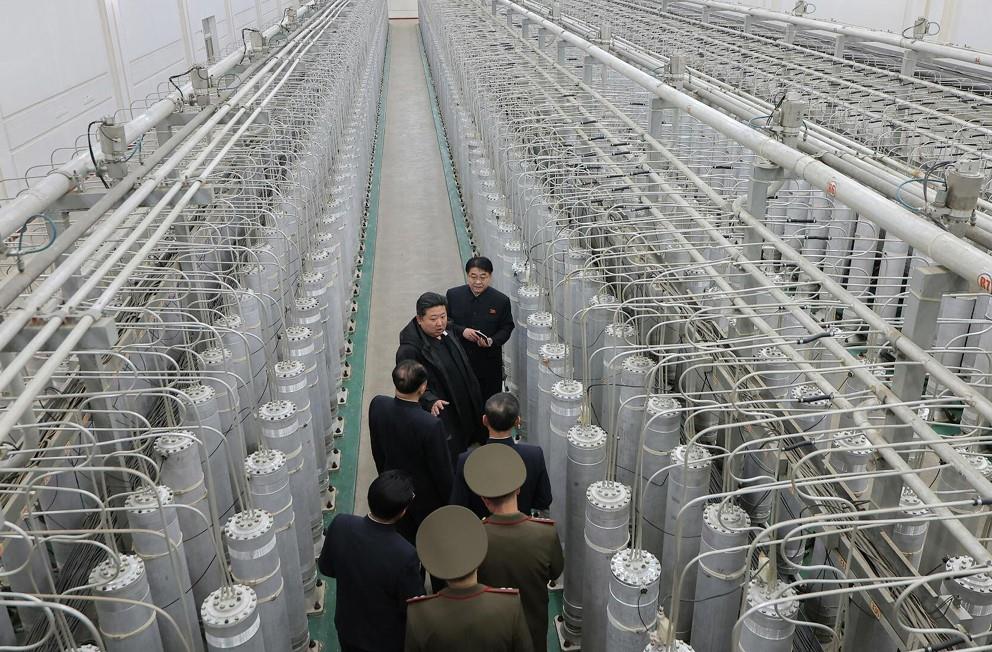 [Current Affairs Analysis]
North Korea’s Political Situation and Key Activities in January 2025- Focus on Nuclear Provocations and the 20×10 Regional Development Policy - Lee Seung-hyunResearch Fellow at SAND Institutedrharacearthur@gmail.comInstitutedrharacearthur@gmail.comOn December 31, 2024, Kim Jong un attended the New Year’s banquet in Pyongyang with his daughter, Kim Ju-ae, and watched a performance with a torch lighting and fireworks at midnight. In January 2025, he held 8 public activities, similar to the 9 in 2024. His focus remained on nuclear provocations abroad and regional development at home. On January 6, North Korea launched a medium-range hypersonic missile, attracting international attention. On January 28, Kim visited a nuclear facility and research center, declaring 2025 a pivotal year for strengthening nuclear capabilities.Looking back at January 2025, it becomes clear that North Korea has yet to achieve the goals it set in 2024. In terms of foreign policy, specifically regarding nuclear weapons, the Biden administration continued to resist formally recognizing North Korea as a nuclear power. While North Korea has made internal adjustments, such as constitutional changes, these have had little external effect. This context likely explains Kim Jong Un's January 28 visit, where he declared 2025 as a pivotal year for strengthening nuclear capabilities.Regarding domestic policy, North Korea's regional development efforts failed to improvement in the economy, as the effects of sanctions, the Russia-Ukraine war, and the Israel-Palestine conflict have led to restrictions on raw material imports. As a result, in January, North Korea continued to emphasize the "20×10 Regional Development Policy" and, on January 23, the Rodong Sinmun praised its progress. The newspaper described 2024 as a year when local people shed many tears and suffered, emphasizing that 2025 should be a victorious year for regional revival, marking the 80th anniversary of the Party’s founding.However, major issues remain with the internal and external policies North Korea emphasized last January. The success of its domestic policies depends on its foreign policy achievements. In other words, if its nuclear policy fails, regional development goals are also unlikely to succeed.The current nuclear provocations are closely linked to its strategy of securing and expanding its “win-set” in the context of North-U.S. negotiations. To engage in talks, the U.S. must offer a level of guarantees in both the economic and military sectors that would ensure the stability of the North Korean regime.If the "win-set" the U.S. offers falls short of North Korea’s expectations, the provocations are intended to sway U.S. public opinion in their favor. By showcasing missile launches and nuclear facilities, North Korea aims to expand its "win-set" ahead of negotiations, securing a more advantageous position for concrete gains.North Korea’s nuclear weapons are seen as a symbolic tool to ensure the regime’s survival, with the goal of easing sanctions and recovering the country’s economy. With the start of Donald Trump’s second term, North Korea likely believed it could achieve these goals through a “top-down negotiation strategy.” This was further reinforced when President Trump, on his first day in office, made remarks suggesting that he might recognize North Korea as a nuclear state, which seemed to align with North Korea’s intentions. Despite Trump’s outreach, Kim Jong un has responded with continued provocations, likely aiming to increase North Korea’s leverage in negotiations.However, several factors complicate this strategy. One key element is the "win-set." In game theory, a "win-set" refers to the set of all agreements that can secure domestic approval. For North Korea, its "win-set" is all-or-nothing, dependent on Kim Jong Un's decisions. Conversely, the U.S. "win-set" can be influenced by its perception of the North Korean threat. This explains why provocations are inevitable as North Korea prepares for talks.At the beginning of Trump’s second term, North Korea likely sought to provoke tensions in order to secure a summit with him and achieve either a "big deal" or a "small deal." However, North Korea seems to have miscalculated. While Trump initially made conciliatory gestures, White House spokesperson Brian H. stated on January 28 that, “like in his first term, Trump would pursue North Korea’s complete denuclearization”.Ultimately, it’s more likely that the negotiations will follow the approach Trump prefers rather than North Korea’s, which could lead to a result similar to the 2019 Hanoi summit's "no deal." In the end, the U.S. win-set regarding North Korea is "complete denuclearization," though this win-set is closer to zero than 100. Therefore, negotiating with the Trump administration, which prioritizes "America First" and profit, makes it very difficult to reach an agreement.North Korea's 20×10 Regional Development Policy has led to internal issues. From the start, this policy involved the regime abandoning the central planning of the socialist economy and shifting responsibility to the local regions. By delegating power to local party officials and holding them accountable for results, the policy relies solely on punishment without offering any incentives. As a result, it could lead to growing internal discontent and the potential for sporadic collective issues.An example of this can be seen in the 30th Enlarged Meeting of the Secretariat of the Eighth Central Committee of the WPK held on Jan. 27. The Secretariat explained that the meeting was convened due to serious incidents in Nampo’s Oncheon County and Wonsan County, where party regulations were violated and privileges abused, severely infringing on the people’s dignity and rights.As a result, this may appear to ordinary citizens as the central party's effort to root out corruption and implement Kim Jong un's people-centered policies. However, for local party officials, it could be seen as an unreasonable policy, placing an overwhelming burden on them with no incentives. This could lead to divisions between mid-level officials and the elite. Given the internal and external factors, the success of the 20×10 Regional Development Policy seems unlikely.Overall, North Korea prioritized military expansion and closer ties with Russia while also facing economic and ideological challenges in January 2025. Through these efforts, it seeks to strengthen its military capabilities, drive economic growth, and reinforce internal unity while extending its global influence.
25.02.07 -
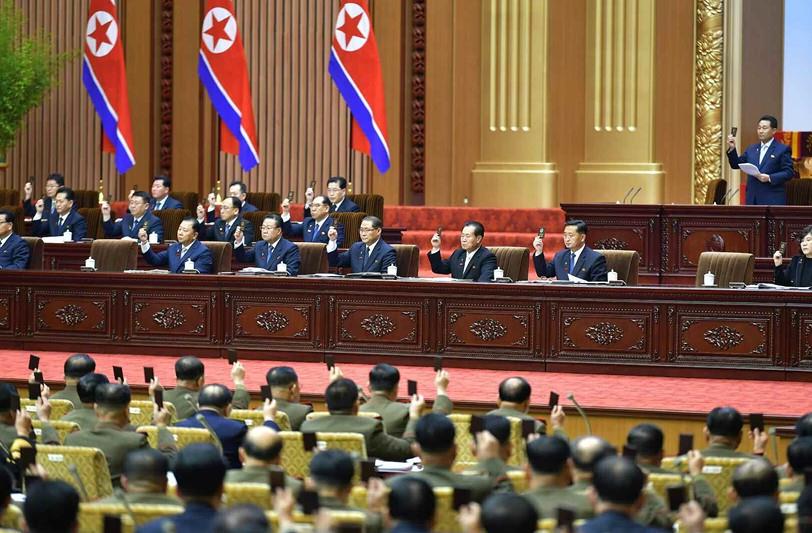 [NK Focus]
North Korean Parents in Fear as Reports of Young Soldiers Dying Grow,Posing a Risk to Kim Jong-un's Regime Kim Dong-suformer North Korean diplomatReports of North Korean soldiers killed or injured in the Russia-Ukraine war have spread among local residents, raising concerns among parents with children in the military.On January 24, the North Korea-focused media Daily NK cited sources in North Hamgyong Province reporting that rumors were spreading in Hoiryong City about North Korean soldiers deployed to Russia facing near-certain death. This has left parents with children in the military in a state of fear.Sources say news of the deployment began spreading in border areas around November last year. Recently, rumors have rapidly circulated that some soldiers have been killed or taken as prisoners of war.Sources reported hearing about the condition of North Korean soldiers' bodies, saying, "They were covered in blood, their faces so swollen they were unrecognizable," and "Some young soldiers died with their eyes open." They added that these accounts have deeply shocked local residents.A source from another border area, Ryanggang Province, reported, "Many parents in Hyesan City are anxiously worrying if their sons have been sent to the battlefield." Some parents have even said, "Even if we're executed or exiled, it doesn't matter—what we hope for is that our son escapes and survives.“North Korea enforces a "collective punishment" system, holding the families of those who commit serious crimes, such as defection, accountable alongside them.A source said, "Parents who have lost contact with their children in the military are overwhelmed with worry and anxiety, unable to sleep," adding, "This isn’t just a problem for a few—it’s becoming a widespread issue.“A report states that North Korean forces in the Russia-Ukraine war have suffered over 4,000 casualties, with around 1,000 dead and 3,000 wounded. The U.S.-based Institute for the Study of War (ISW) warns that at this rate, all deployed North Korean soldiers could be killed or injured by mid-April."With news of the troop deployment already known, reports of heavy casualties are expected to emerge soon. This could trigger unrest in North Korea and threaten Kim Jong-un's regime.Despite the risks, Kim Jong-un is pushing forward. Ukrainian President Zelenskyy recently stated that intelligence suggests North Korea may send another 25,000 troops. Financial incentives play a key role, with North Korea earning $2,000 per soldier per month—a significant sum. Militarily, the deployment offers real combat experience, while Russia is expected to provide advanced technologies, including ICBM reentry tech, nuclear submarines, fighter jets, and reconnaissance satellites.Diplomatically, this shifts the dynamic from a U.S.-South Korea vs. North Korea framework to one including Russia on North Korea’s side. It also raises the possibility of direct Russian involvement in a future Korean Peninsula crisis.However, parents' anger toward Kim Jong-un's regime—sending young soldiers to die in a distant war to maintain power—could potentially erupt.
25.02.07
News Letter
We are leading the global communication via Newsletter.
We will deliver the latest information and proven facts on Korean Peninsula status including North Korea situation.