

-
 [NK Focus]
North Korean Trends in March 2026 - Systemic Transition and the Shift Toward a Navy-Centric Military Strategy Following the Ninth Party Congress - Seung-hyun LeeResearch Fellow SAND InstituteNorth Korea’s developments in March 2026 indicate that the systemic transition initiated at the Ninth Party Congress of the Workers’ Party of Korea has entered a phase of full-scale policy implementation. At the Party Congress held in late February, Kim Jong-un was re-elected as General Secretary, and the “Five Major Party-Building Guidelines” were codified into the Party Constitution, thereby institutionalizing a Party-centered governance system.Subsequent developments observed in March can be understood as efforts to operationalize these political decisions, marked by concurrent adjustments across the political, economic, and military domains.First, in the political sphere, the regime concentrated on disseminating the outcomes of the Party Congress nationwide. Through plenary sessions of Party committees at all levels, mass mobilization rallies, and coordinated study campaigns, North Korea sought to reinforce ideological cohesion and organizational discipline. These efforts extend beyond symbolic propaganda and reflect a systematic attempt to reconfigure the institutional foundations necessary for policy execution.In particular, the renewed emphasis on discipline and work style appears aimed at curbing bureaucratic inefficiencies and corruption while strengthening centralized Party oversight. This trend underscores a deliberate effort by the leadership to consolidate a Party-centric governance model and ensure unified policy implementation.In parallel, North Korea’s external posture suggests continuity in its adversarial stance toward South Korea and the United States, as evidenced by repeated statements from Kim Yo-jong condemning ROK–U.S. joint military exercises. At the same time, Pyongyang appears to be maintaining a stable—albeit largely formal—relationship with China through the exchange of diplomatic messages. This reflects a dual-track approach in which North Korea sustains external tensions while seeking to mitigate diplomatic isolation.In the economic domain, the implementation of a new five-year plan has been accompanied by a renewed emphasis on expanding production in key industrial sectors. Efforts to enhance capacity and modernize facilities in core industries—such as metallurgy, chemicals, and energy—are proceeding in tandem, supported by sector-specific mobilization campaigns that stress output targets and technological innovation.Notably, Kim Jong-un’s on-site guidance at the Sangwon Cement Complex highlights a broader strategy of economic revitalization centered on the construction sector, underscoring the role of foundational industries in supporting large-scale infrastructure development and regional growth. This approach suggests a shift away from short-term, output-driven policies toward the stabilization of the production base and the promotion of qualitative economic development.More significant shifts are evident in the military sphere. Kim Jong-un’s on-site inspection of a major shipyard, including the public disclosure of a strategic nuclear submarine program, signals an emerging emphasis on naval power as a central component of national defense strategy. By framing maritime sovereignty as integral to state sovereignty and calling for the development of elite, nuclear-capable naval forces, the leadership has articulated a clear directive to modernize the shipbuilding industry and expand naval capabilities.This development suggests a transition from a traditionally ground-force-centric military posture toward a force structure increasingly oriented around strategic assets, particularly in the maritime domain. The introduction of a strategic nuclear submarine capability is especially noteworthy, as it enhances the survivability and second-strike potential of North Korea’s nuclear deterrent, indicating an evolution toward a more advanced operational concept for its nuclear forces.At the same time, North Korea has continued a range of military activities—including strategic cruise missile launches, long-range artillery drills, and marksmanship competitions—albeit at a relatively calibrated level of intensity.The practice of observing missile launches via recorded footage, rather than through direct on-site attendance, appears designed to preserve signaling effects while limiting escalation risks. Collectively, these patterns point to a “managed tension” strategy, whereby North Korea seeks to demonstrate credible deterrence capabilities while carefully calibrating the level of provocation in response to the external security environment.
26.04.03 -
 [North Korea Inside]
North Korea Inside· Kim Jong-un Attends Tree-Planting Event and Observes 600mm Multiple Rocket Launcher Test with Daughter Ju-ae· Can North Korea-China Tourism Take Off?· Kim Jong-un Visits Construction Site of Memorial Hall for Russian SoldiersKim Myong-sungSecretary General of the SAND InstituteKim Jong-un Attends Tree-Planting Event and Observes 600mm Multiple Rocket Launcher Test with Daughter Ju-aeNorth Korean State Affairs Commission Chairman Kim Jong-un participated in a tree-planting event at Saebyeol-gil, a residential street in Pyongyang developed for the families of soldiers who died while serving in Russia, in observance of Tree-Planting Day (March 14). On the same day, he also continued his security-related activities by observing a test firing of a 600mm multiple rocket launcher.The Korean Central News Agency reported on March 15 that Chairman Kim planted trees the previous day at Motga Park on Saebyeol Street alongside senior officials. His daughter, Ju-ae, was also in attendance. Photographs released by KCNA depicted Chairman Kim and Ju-ae, clad in a leather jacket, jointly moving soil.Additional images showed Chairman Kim, Ju-ae, Foreign Minister Choe Son-hui, Workers’ Party General Affairs Department Director Kim Yo-jong, and other officials working together with shovels.During the event, Chairman Kim recalled North Korean soldiers dispatched to the war in Ukraine who had fallen in battle, expressing his hope that “the noble spirit of these martyrs will be preserved on this land, firmly embedding a pillar of patriotism in the hearts of all people and serving as sustenance to raises successive generations into the most righteous citizens.”He further emphasized, “Patriotism is the wellspring of passion that generates extraordinary power transcending all limits,” adding, “Through the great force of patriotism, we will assuredly build a prosperous and powerful state, a nation of the highest standing in the world.”Chairman Kim personally announced plans last August to construct a housing complex for veterans and bereaved families, and the residential project was completed on February 15 this year.North Korea appears to be emphasizing its treatment of, and support for, troops deployed to the war in Ukraine as a means of underscoring the legitimacy of its involvement and reinforcing internal cohesion.North Korean media further reported that Chairman Kim Jong-un, accompanied by his daughter Ju-ae, observed a live-fire drill involving 600mm ultra-precision multiple rocket launchers on the same day. KCNA stated that the long-range artillery units of the Korean People’s Army’s Western District conducted the drill the previous day, mobilizing twelve 600mm ultra-precision multiple rocket launchers and two artillery companies. This activity has been interpreted as a response to the ongoing “Freedom Shield” (FS) joint military exercises between South Korea and the United States, which commenced on March 9.Can North Korea-China Tourism Take Off?Following the recent resumption of passenger train services between North Korea and China after a hiatus of approximately six years, Chinese travel agencies have begun marketing group tour packages to North Korea.While there are expectations that tourism may resume amid signs of expanding bilateral exchanges, North Korean authorities have not indicated any intention to reopen the sector, resulting in divergent assessments regarding the viability of these packages. Ultimately, observers note that the final decision rests with Pyongyang.According to the Chinese travel industry on March 18, agencies in major cities, including Beijing, have recently promoted North Korean tour packages on social media platforms such as Douyin, the Chinese version of TikTok, and have begun accepting deposit payments.One such package includes departure from Beijing, rail entry into North Korea, and visits to Pyongyang, Kaesong, the Demilitarized Zone (DMZ), and Mount Kumgang. Most itineraries span seven nights and eight days, with prices ranging from 4,680 to 9,380 yuan (approximately 1.01 million to 2.02 million won).However, travel agencies note that departure dates remain “subject to confirmation following approval by North Korean authorities,” underscoring the uncertainty surrounding the actual resumption of tourism. While reservations are being accepted, implementation remains contingent on Pyongyang’s decision.This development has drawn attention as it coincides with indications of resumed passenger rail services between North Korea and China. International passenger trains connecting Pyongyang and Beijing, as well as Dandong and Pyongyang, resumed operations on March 12.Although the resumption of rail services is seen as a signal of expanding people-to-people exchanges and increases the prospects for tourism reopening, North Korea continues to maintain a cautious posture.Notably, North Korea abruptly canceled the Pyongyang International Marathon, scheduled for April 5, despite completing participant recruitment and collecting participation fees last year. Since the Pyongyang Marathon has served as a flagship tourism event—attracting hundreds of foreign participants annually and generating significant foreign currency revenue—the cancellation underscores North Korea’s continued reluctance to fully reopen to international tourism.At the same time, signs of a broader restoration in North Korea–China relations are emerging. North Korea has taken steps to strengthen ties with China, including reinstating the position of KWP International Secretary at the Ninth Party Congress last month and appointing Kim Song-nam to the Political Bureau. On March 15, it also hosted a friendship event at the Wonsan-Kalma Coastal Tourist Zone, inviting Chinese Ambassador Wang Yajin and other officials, signaling its intent to enhance bilateral relations.North Korea–China relations, which had cooled somewhat amid Pyongyang’s closer alignment with Russia, appeared to recover following Chairman Kim’s attendance at China’s Victory Day commemorations last September. Nevertheless, subtle tensions have persisted. The publication of Chairman Kim’s reply letter to General Secretary Xi Jinping on the front page of Rodong Sinmun on March 10, immediately after the Ninth Party Congress, has prompted speculation that bilateral relations may be entering a renewed phase of stabilization.Kim Jong-un Visits Construction Site of Memorial Hall for Russian SoldiersNorth Korean State Affairs Commission Chairman Kim Jong-un has once again visited the construction site of a memorial hall dedicated to Russian soldiers, marking his third inspection of the facility this year.The memorial hall, currently under construction in North Korea, is nearing completion and is scheduled for inauguration next month.The Korean Central News Agency reported on March 17 that Chairman Kim, while providing on-site guidance at the construction site of the Memorial Hall for Military Merits in Overseas Operations the previous day, stated, “The Memorial Hall will be completed to mark the first anniversary of the liberation of Kursk.”According to the report, construction is approximately 93 percent complete.On April 27 of last year, the Central Military Commission of the Workers’ Party announced in a statement transmitted through North Korean media that “the operation to liberate the Kursk region has been victoriously concluded.” In light of this timeline, the memorial’s completion ceremony is expected to take place at the end of next month.North Korean forces deployed abroad participated in the Kursk liberation operation. Kursk, located in southwestern Russia near the Ukrainian border, was partially occupied by Ukrainian forces in August 2024 before being recaptured by Russian troops. North Korean forces are assessed to have played a significant role in Russia’s recapture of the region last April.The scale of casualties remains a key concern. Reports indicate that approximately 6,000 North Korean soldiers were killed or wounded during the Kursk operation. The North Korean leadership belatedly disclosed the deployment last April and subsequently undertook measures to manage domestic sentiment, including holding a state funeral. Chairman Kim’s repeated visits to the memorial site and to the residences of bereaved families are widely interpreted as efforts to underscore that the leadership continues to recognize and commemorate these sacrifices.
26.03.20 -
 [NK Focus]
North Korea Holds Elections for Supreme People’s Assembly Deputies; 75% of Seats ReplacedOn March 15, North Korea conducted elections for deputies to the Supreme People’s Assembly (SPA), the country’s highest legislative body, functionally comparable to South Korea’s National Assembly. The election follows the Ninth Congress of the Workers’ Party of Korea, which set the strategic direction for North Korea’s governance and foreign policy over the next five years, and forms part of an institutional process aimed at consolidating a “new power structure” centered on Kim Jong-un. Of the 687 deputies elected to the 15th SPA, 520 are newly appointed, reflecting a turnover rate of approximately 75 percent.◇ Kim Jong-un Casts Vote in the Coal Mine ConstituencyKim Jong-un, Chairman of the State Affairs Commission of North Korea, visited the coal mine constituency on the day of the SPA election to cast his vote. The Korean Central News Agency (KCNA) reported on March 16 that Chairman Kim visited the Chonsong Youth Coal Mine, part of the Sunchon District Youth Coal Mine United Enterprise in South Pyongan Province, on the eve of the election for the 15th SPA and cast his ballot at an on-site polling station.Chairman Kim cast his ballot in favor of Jo Chol-ho, manager of the Chonsong Youth Coal Mine and a candidate for deputy.In remarks delivered at the site, Kim emphasized that “the working class in the coal industry constitutes the core of the nation, achieving the most valuable contributions at the forefront of national development,” adding that “coal has long served, and continues to serve, as the lifeblood of our industry and the driving force behind the advancement of a self-reliant economy.”He further stated, “As development accelerates and our national aspirations materialize, demand for coal is becoming increasingly acute. The key sectors responsible for national prosperity and revitalization depend on coal as both fuel and raw material,” referencing the decision adopted at the Ninth Party Congress to raise coal production by 1.2 times over the next five years.Seven years earlier, during the election for the 14th SPA, Chairman Kim cast his vote at a polling station at Kim Chaek University of Technology, North Korea’s leading science and engineering institution.In 2014, during the 13th SPA election, he voted at Kim Il-sung Political University, an institution responsible for training senior political officers in the military.Whereas the 13th election underscored regime security and the 14th emphasized science and technology, the current election is interpreted as signaling a policy focus on revitalizing coal-based core industries, reflecting confidence in the broader economic situation.The SPA is the highest organ of state power under the North Korean Constitution and performs legislative and budgetary functions analogous to those of South Korea’s National Assembly. However, as only one candidate is registered per electoral district and voters are effectively compelled to approve that candidate, meaningful electoral choice is not guaranteed.◇ Voting Began Nationwide at 10:00 a.m.North Korea’s state media, including Rodong Sinmun, provided extensive coverage of polling stations across the country on election day. The Korean Central Broadcasting Station reported that evening that “the election for deputies to the 15th Supreme People’s Assembly was successfully conducted.”According to the broadcast, voting commenced simultaneously nationwide at 10:00 a.m. Korea Central News Agency (KCNA) reported that “voters unable to visit polling stations due to age or illness cast their ballots through mobile ballot boxes.”That evening, Korean Central Television aired footage of diplomatic representatives from Russia, Sweden, the Czech Republic, Poland, and Bulgaria stationed in North Korea, along with embassy staff and ethnic Koreans residing in China, observing a polling station in central Pyongyang.Rodong Sinmun, the official newspaper of the Workers’ Party, urged citizens through editorials and related articles to “actively participate in the election with firm conviction and will, ushering in a new era of national prosperity.”The SPA, as the highest sovereign body under the Constitution, holds legislative authority and is empowered to oversee the executive and judicial branches.Elections for SPA deputies are typically held every five years; however, this election took place seven years after the previous one in 2019, a delay interpreted as an effort to align the electoral cycle with the Party Congress schedule.Unlike in South Korea, where election day is a public holiday, North Korea conducts elections on Sundays. All citizens aged 18 and older are eligible to vote. Mobile ballot boxes are provided for those unable to travel to polling stations, and proxy voting is permitted.Following revisions to the Delegate Election Law in August 2023, the previous system—under which a single candidate endorsed by the Workers’ Party received all votes—was amended to incorporate elements resembling a primary selection process.In addition, the method of expressing opposition by crossing out a candidate’s name on the ballot has been replaced with a system in which voters deposit their ballots into either “yes” or “no” boxes.Despite these procedural changes, only one candidate is nominated and registered per electoral district, and voters are encouraged to cast unanimous “yes” votes; accordingly, all candidates were elected without contest.On the same day, Rodong Sinmun also published commentary aimed at encouraging voter participation.In an article titled “The Stark Contrast Between the Two Societies as Seen Through Elections,” the newspaper asserted that “in capitalist societies, it is inconceivable for ordinary workers to stand as candidates,” adding that “broad segments of the working population are excluded from elections due to various restrictions and discriminatory practices based on property, education, gender, race, and residency.”It further claimed that “only billionaires, their representatives, and other privileged elites are able to run as candidates.”◇ List of 687 Elected Delegates Announced; 0.07% Cast “No” VotesOn March 17, North Korea released the results of the election along with the full list of 687 deputies elected to the 15th SPA.SPA deputies are broadly equivalent to legislators in South Korea, and the composition of the list typically reflects the prevailing power structure, including key party and government officials as well as individuals wielding substantive influence.Among the newly elected members, Cho Yong-won—considered a close associate of Chairman Kim Jong-un and formerly serving as Party Organization Secretary—was included for the first time, having not been part of the 14th SPA in 2019.Given that he did not assume a Party secretary or departmental director role at the Ninth Party Congress, he is widely expected to be appointed as the next Chairman of the SPA Standing Committee, the highest position within the legislature.Choe Ryong-hae, who previously served as Chairman of the SPA Standing Committee but stepped back from frontline duties following the Party Congress, was not included on the list of deputies.Kim Yo-jong, Director of the Party’s General Affairs Department and sister of Kim Jong-un, was elected from the Galimgil constituency, as she was in the 14th SPA.Foreign Minister Choe Son-hui and Party International Secretary Kim Song-nam also retained their seats. Jang Kum-chol, former Director of the United Front Department and reportedly assigned a key role in inter-Korean affairs at the recent Party Congress, was likewise included.In the Panmunjom constituency, Party Secretary and military affairs official Jeong Gyong-taek was elected. Previously, this constituency was represented by Kim Yong-chol, a senior figure in inter-Korean relations, who, according to South Korea’s Ministry of Unification, was not included in the current SPA.Overall, analysis indicates that the composition of the 15th SPA reflects a 75 percent turnover compared with the 14th, signaling a significant personnel reshuffle aligned with the consolidation of the “Kim Jong-un era.”According to South Korea’s Ministry of Unification, approximately 520 of the 687 elected deputies are new figures, representing the highest turnover rate on record. By comparison, turnover rates in the 11th through 14th SPAs ranged from 40 to 50 percent.KCNA reported that voter turnout reached 99.99 percent, with 99.93 percent voting in favor and 0.07 percent voting against.North Korea has reported the presence of “no” votes since the November 2023 local People’s Assembly elections, a development widely interpreted as an effort to project the appearance of nominal electoral choice.Notably, the 99.93 percent approval rate marks the first departure from the previously consistent 100 percent approval recorded since the inaugural SPA election in 1948. Amendments to the election law in August 2023 introduced separate “yes” and “no” ballot boxes and provisions allowing for multiple candidates, measures ostensibly aimed at enhancing electoral transparency. However, some analysts assess that the appearance of dissenting votes may also serve a performative function, reinforcing the narrative of a “transparent electoral system.”Although SPA elections are typically held every five years, this election was conducted seven years after the previous one in 2019, likely to align with the five-year cycle of the Workers’ Party Congress, which resumed in 2016 after a 36-year hiatus.South Korea’s Ministry of Unification has suggested that the two-year delay may have contributed to the unusually high turnover rate, alongside broader trends of generational change and Kim Jong-un’s efforts to identify and address corruption within the officialdom.The Ministry further assessed that the personnel policy emphasizing performance and competence, highlighted at the Ninth Party Congress, was reflected in this election. During the Congress, 139 new members—55.6 percent of the total 250 full and alternate members—were appointed to the Party Central Committee.Following the 2019 constitutional revision stipulating that the Chairman of the State Affairs Commission cannot concurrently serve as an SPA deputy, Kim Jong-un was not included among the elected deputies, consistent with the precedent set in the previous election.◇ Ri Son-gwon, Head of Inter-Korean Affairs, Appointed Chairman of the Korean Social Democratic PartyIt has been confirmed that Ri Son-gwon, a former deputy director of the Workers’ Party’s Tenth Department who has long overseen inter-Korean affairs, has been appointed chairman of the Korean Social Democratic Party (KSDP), a nominal opposition party and an “allied party” of the Workers’ Party.On March 16, the Korean Central Broadcasting Station reported on voting by key figures in the 15th Supreme People’s Assembly elections held the previous day, identifying Ri Son-gwon with the title of Chairman of the KSP Central Committee.It had previously been confirmed that Ri Son-gwon was replaced as director of the Party’s Tenth Bureau and withdrew from frontline duties following the Ninth Party Congress, which concluded last month.The Tenth Bureau is an entity that was renamed from the United Front Department—the body responsible for inter-Korean affairs—after North Korea redefined inter-Korean relations as relations between two hostile states.The KSDP, now chaired by Ri Son-gwon, is a nominal political organization that North Korea employs, alongside the Chondoist Chongu Party, to project the appearance of a multi-party system.As an allied party aligned with the Workers’ Party’s political line, it does not function as a genuine opposition party.In practice, the KSDP frequently serves as a counterpart to South Korean political parties, civil society organizations, and religious groups in inter-Korean exchanges, or acts as a principal vehicle for propaganda directed at the South, effectively operating as a united front organization focused on South Korea.◇ First Session of the 15th Supreme People’s Assembly Scheduled for March 22Having completed elections for deputies to the Supreme People’s Assembly, North Korea is set to reconstitute the body—its de facto equivalent of South Korea’s National Assembly—and convene its first session on March 22. The Korean Central News Agency announced in a public notice on March 17 that “The First Session of the 15th Supreme People’s Assembly of the Democratic People’s Republic of Korea will be convened in Pyongyang on March 22, 2026.” This move constitutes a follow-up measure to the Ninth Congress of the Workers’ Party.The agency indicated that the session will address “issues related to the amendment and supplementation of the Socialist Constitution.” With constitutional revisions expected to be considered during this session, attention is focused on whether steps will be taken to codify the designation of inter-Korean relations as “hostile states.”Given the tension between North Korea’s current policy—which rejects unification and designates the South as an enemy state—and constitutional language referencing “peaceful unification” and “the nation,” the possibility of amendments has long been anticipated.However, as North Korea did not clarify at last month’s Party Congress whether it would revise the Workers’ Party Charter regarding inter-Korean relations, uncertainty remains over the scope of any constitutional amendments, as well as whether specific provisions will be disclosed even if revisions are enacted.The report also identified the “election of the Chairman of the State Affairs Commission” and the “elections of state leadership bodies and sectoral committees of the Supreme People’s Assembly” as agenda items for the session.Accordingly, North Korea is expected to re-elect Kim Jong-un as Chairman of the State Affairs Commission. While there had been speculation that the country’s highest office might be redesignated from Chairman of the State Affairs Commission to “President” in advance of the Ninth Party Congress, it has now been confirmed that the current title will be retained.In addition, personnel appointments to key state positions—including the Premier of the Cabinet and members of the State Affairs Commission—are expected. The session is also likely to address the implementation of the five-year national economic development plan unveiled at the Party Congress, as well as the settlement of the 2025 budget and deliberation over the 2026 national budget.Attention is also focused on whether Chairman Kim Jong-un will articulate additional policy positions on relations with the United States and South Korea through speeches or other addresses during the session.The Supreme People’s Assembly, as the legislative body, is designated under the North Korean Constitution as the “highest organ of state power.” In principle, following the conclusion of the Party Congress—held every five years—the Supreme People’s Assembly is convened to formalize the Congress’s decisions into law. In practice, however, its role is primarily serves to endorse decisions already made by the Party.◇ North Korea’s Domestically Produced Guide Robots Deployed at Polling StationsA notable feature of this year’s election for delegates to the Supreme People’s Assembly was the appearance of domestically developed “humanoid” guide robots.On March 17, Choson Sinbo, the official newspaper of the General Association of Korean Residents in Japan, reported on educational robots named “Dojon” and “Sujae,” developed by Pyongyang Teachers’ University, and published photographs of a female-form robot dressed in a white jacket and blue skirt.The newspaper did not clarify whether the robot’s body is merely a mannequin or, if operational, how it functions and what capabilities it possesses. It appears that the same robot has also recently been introduced to members of the diplomatic community in North Korea.On March 15—the day of the Supreme People’s Assembly elections—the Russian Embassy in North Korea posted a photograph on Telegram showing a robot of the same design operating at a polling station set up in the library of Pyongyang Teachers’ University. The Russian Embassy stated that the robot, “resembling a young woman in traditional Korean attire, greeted voters” and provided guidance throughout the voting process.Choson Sinbo reported that the educational robots developed by Pyongyang Teachers’ University are being actively utilized by both faculty and students. The outlet described the “Dojon” robot as one that “assists teachers in instructional activities and supports student learning,” noting that it contains detailed educational materials and provides clear explanations in response to student inquiries.Another educational robot, “Sujae,” which supports home-based learning for children aged 1 to 10, appears to be designed to present instructional contents on a large central screen.In addition, Choson Sinbo highlighted a “Geometry Robot,” designed to generate various shapes by combining basic geometric elements such as circles, straight lines, and cylinders, and to manipulate these components.The newspaper emphasized that “all of these robots are highly practical in enhancing students’ motivation to learn and fostering creativity,” adding that “their use is expanding nationwide.”Amid the accelerating convergence of artificial intelligence (AI) and robotics, along with the rapid advancement of bipedal humanoid technologies worldwide, North Korea appears to be sustaining efforts to keep pace with these developments.
26.03.20 -
[North Korea Inside]
North Korea Inside· Kim Jong Un Observes Test Launch of Strategic Cruise Missile· Kim Yo-jong Warns South Korea-U.S. Drills Could “Lead to Horrific Consequences”· North Korea Aims to Construct Hundreds of Thousands of New Housing Units Over Five YearsKim Myong-sungSecretary General of the SAND InstituteKim Jong Un Observes Test Launch of Strategic Cruise MissileNorth Korea demonstrated its sea-based nuclear strike capability by conducting another test launch of a strategic cruise missile from its newest 5,000-ton destroyer, the Choe Hyon Ho. This marks the second launch within a week and is widely interpreted as an effort to showcase its ability to conduct nuclear strikes from both land and sea.North Korean state media, including Rodong Sinmun, reported on March 11 that Chairman of the State Affairs Commission, Kim Jong-un, observed the test launch via video link the previous day. The launch was part of operational evaluation tests of the Choe Hyon Ho. North Korea had previously conducted a test launch of a ship-to-ground strategic cruise missile from the same vessel on March 4.According to the report, the missiles flew over the West Sea for approximately 11,160 to 11,380 seconds—roughly 2 hours, 48 minutes, and 58 seconds—before striking designated island targets. Photographs released by North Korea showed multiple missiles being launched sequentially from the destroyer.Military experts assess that the test goes beyond a routine weapons performance check, signaling a deliberate effort to demonstrate a nuclear counterstrike capability at sea, commonly referred to as “second-strike capability.” The Arrow-series cruise missiles developed by North Korea are reported to be capable of carrying the Hwasan-31, which Pyongyang claims is a tactical nuclear warhead.Kim Jong-un emphasized advancements in the operational capabilities of North Korea’s nuclear forces. He stated that maintaining and expanding a powerful and reliable nuclear war deterrent is a critical strategic task, noting that the components of the country’s nuclear deterrent are now being effectively and rapidly integrated into a highly sophisticated operational system. He further asserted that the national nuclear force has entered a multi-faceted operational stage.He further emphasized that significant progress has been made in the practical deployment and operationalization of both strategic and tactical strike capabilities, adding that confidence grounded in verified capabilities enables the country to take the initiative in military operations for national defense.Observers suggest that North Korea’s public emphasis on its sea-based nuclear strike capability may be linked to recent developments in the Middle East. The display is widely interpreted as a signal that, unlike Iran—where senior leadership figures were rapidly targeted and eliminated through U.S. military operations—North Korea possesses credible retaliatory capabilities grounded in its nuclear arsenal. At the same time, it is seen as sending a deterrent message in the context of the South Korea–U.S. combined exercise, Freedom Shield.Kim Jong-un also outlined armament plans for future destroyers and the broader direction for strengthening naval power. Regarding ship armaments, he directed that high-speed maneuvering vessels under 3,000 tons be equipped with shipboard automatic cannons. For 5,000-ton and 8,000-ton destroyers, he instructed that hypersonic weapon systems be installed in the space designated for shipboard automatic cannons, specifying that this measure should be implemented starting with the third vessel.He also ordered the completion of evaluations of naval vessels’ operational capabilities, including maneuvering, anti-aircraft, anti-submarine, and mine-warfare systems, with results to be delivered to the navy within the established deadline. In addition, he directed the advancement of another destroyer construction project timed to coincide with the anniversary of the ruling party’s founding on October 10. Tasks to reinforce existing naval bases and establish new infrastructure were also outlined.Kim Yo-jong Warns South Korea-U.S. Drills Could “Lead to Horrific Consequences”Kim Yo-jong, Vice Department Director of the Workers’ Party of Korea, warned on March 10 that the South Korea–U.S. joint exercise, Freedom Shield, could lead to “horrific consequences” if mishandled.She refrained from directly criticizing the United States, prompting interpretations that she may have deliberately left the door open for potential dialogue with Washington.Vice Department Director Kim made these remarks in a statement titled “Our State’s Will to Defend Peace and Security on the Korean Peninsula and in the Region is Firm,” which was released through the Korean Central News Agency (KCNA).South Korea and the United States are conducting the Freedom Shield exercise from March 9 to 19. This year’s exercise involves approximately 18,000 troops, a scale similar to last year. However, field maneuver training involving the movement of actual forces has reportedly been reduced by more than half compared with the previous year under the Yoon Suk-yeol administration.Regarding the exercise, Kim stated that it constitutes a provocative and aggressive demonstration by forces simulating and planning confrontation with North Korea, adding that although the exercise is described as “annual” and “defensive,” the openly confrontational nature of the large-scale field maneuvers remains unchanged.Kim warned that the hostile forces’ military show of force could easily lead to unimaginably horrific consequences, adding that the enemy must never attempt to test North Korea’s patience, will, or capabilities.She further stated that recent global geopolitical crises and complex international incidents demonstrate that there is no meaningful distinction between defense and offense, or between exercises and actual combat. Kim argued that this reality underscores the necessity of overwhelming, preemptive, and super‑powerful offensive measures rather than proportional responses.The geopolitical crises and international incidents referenced by Kim are widely interpreted as referring to the ongoing joint military actions by the United States and Israel against Iran and the U.S. operation that resulted in the ouster of Venezuela’s president, Nicolás Maduro.Unlike past statements condemning South Korea–U.S. joint exercises, Kim did not directly criticize the United States. Instead, she primarily used terms such as “enemy states” and “enemies,” explicitly mentioning “the United States and South Korea” only once.The statement did not include the term “nuclear force”; rather, it referred indirectly to such capabilities as “the most powerful offensive capability.”This statement marks Kim’s first public message since her promotion to Director of the General Administration Department at the Ninth Party Congress last month. Analysts interpret this as suggesting that, in addition to overseeing the party’s administration and financial affairs, she may now also be assuming the established role of managing messaging on inter-Korean and U.S. affairs.North Korea Aims to Construct Hundreds of Thousands of New Housing Units Over Five YearsNorth Korea has announced a target to construct hundreds of thousands of new housing units over the next five years, marking a significant expansion beyond the 50,000-unit supply target set in 2021.According to the Rodong Sinmun on March 7, in an article titled “Five Years Ago and Today: What Has Changed?”, the Ninth Party Congress outlined this ambitious goal, aiming to deliver hundreds of thousands of residential units over the next five years.The newspaper stated that, in response to this vision and blueprint, people across the country are confidently imagining the new streets and villages that will take shape over the next five years, while builders express strong confidence in their ability to complete these large-scale projects.This marks the first time North Korea has publicly announced housing supply targets—even in approximate terms—since the Ninth Party Congress. At the Eighth Party Congress in 2021, the government set a target of providing 50,000 housing units in the capital, Pyongyang.Subsequently, approximately 60,000 units were reportedly completed. The Ninth Party Congress also noted that the construction of rural housing in cities and counties had been actively promoted, allowing more than 110,000 agricultural workers to move into newly built homes.At last month’s completion ceremony for 10,000 housing units in Phase 4 of Pyongyang’s Hwasong District, Kim Jong-un stated that more ambitious milestones and creative goals would be set in the future, though he did not provide specific figures. Reports from the Party Congress similarly referred only in broad terms to capital construction and local development projects as the party’s most important undertakings, alongside references to large-scale construction tasks.Kim Jong-un’s focus on housing supply was also reflected in personnel appointments within the party leadership. At the Party Congress, Kim Jong-gwan was appointed both Secretary and Department Director of the Workers’ Party; he previously served as deputy prime minister overseeing construction. The Party Congress also saw the establishment of a new Construction Sector Council among the sector-specific research and consultation meetings.Following the conclusion of the congress, Kim Jong Un visited the Sangwon Cement Complex, urging increased production and emphasizing that even greater tasks and challenges lie ahead for the enterprise during the Ninth Party Congress period.
26.03.13 -
 [NK Focus]
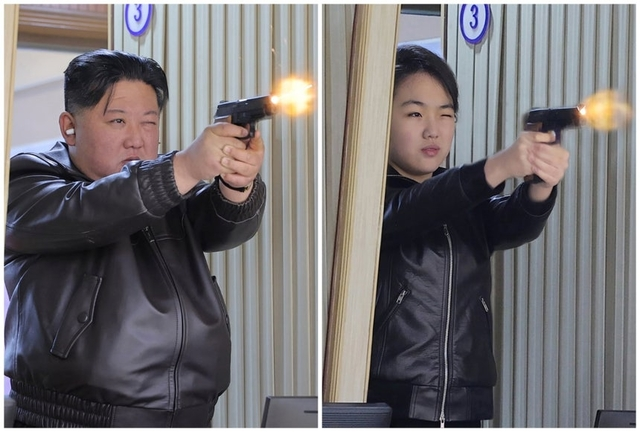
Kim Ju-ae Expands Public Role: Pistol shooting and Participates in Missile LaunchKim Ju-ae, the daughter of North Korean Chairman Kim Jong-un, has expanded the scope of her public activities since March. She has personally participated in pistol firing, attended an event marking International Women’s Day, and observed the launch of a strategic cruise missile conducted by the navy. In addition, photographs of Ju-ae have reportedly appeared on a photo display board at the North Korean embassy in China. These developments are widely interpreted as part of an effort to highlight Ju-ae’s presence as a potential successor both domestically and internationally.Rodong Sinmun reported on the 12th that President Kim Jong Un inspected a military factory producing portable light weapons, including pistols, together with his daughter Ju-ae, during which he fired the weapons. Ju-ae also attended an event on the 27th of last month where newly developed sniper rifles produced by the Academy of National Defence Science were presented as gifts to key party officials and senior military commanders, and she personally fired one of the sniper rifles.Photographs released by North Korea depict President Kim and Ju-ae wearing matching leather jackets while firing pistols. President Kim fired independently, whereas Ju-ae fired alongside military officials accompanying the inspection.The regime’s repeated recent coverage of Ju-ae participating in shooting activities is widely interpreted as an effort to underscore her image as a potential future leader to the domestic audience.On the 11th, Rodong Sinmun also reported that President Kim had observed the test launch of a strategic cruise missile via video link the previous day and released photographs showing Ju-ae accompanying him. In the images, Ju-ae—wearing a leather jacket and a headband—can be seen watching the same screen alongside President Kim.Ju-ae also attended an event commemorating International Women’s Day, during which Chairman Kim delivered a congratulatory speech—the first time he has done so at such an occasion. He drew particular attention by appearing alongside his wife, Ri Sol-ju, and their daughter.According to the Korean Central News Agency on March 9, Chairman Kim attended a performance at the Pyongyang Gymnasium commemorating International Women’s Day on March 8, during which he delivered a speech.In his remarks, Chairman Kim stated that, not long after the Ninth Party Congress, the celebration of International Women’s Day prompted him to reflect on the extraordinary—and often unseen—efforts of the women of the country that contributed to national achievements.He expressed deep gratitude for their dedication and sincerity toward both the nation and their families. Kim further emphasized that the warm support of women inspires husbands and children to excel in their workplaces, and that the unique strength, talent, and self-sacrificing devotion of women accelerate the advancement of the revolution.Chairman Kim further underscored the role of women in society, stating that they would continue to play a central role in fostering a more harmonious and prosperous country, and that their contributions to the development of socialist society are irreplaceably important.Photographs released that day showed Chairman Kim holding hands with Ju-ae while watching the performance, with Ju-ae seated between him and Ri Sol-ju. In the front row of the audience were Foreign Minister Choe Son-hui, a prominent figure among North Korean women officials; Ri Chun-hee, the longtime anchor widely regarded as the face of Korean Central Television; and Kim Yo-jong, director of the Party’s General Department and Chairman Kim’s sister.Although Chairman Kim has attended International Women’s Day performances in the past, this occasion marked the first time he appeared with both his wife and daughter. It was also the first time he delivered a speech at such a commemorative event.In response, Unification Ministry spokesperson Yoon Min-ho noted during a regular briefing that the event appeared intended to emphasize the role of women in promoting the comprehensive development of socialism following the Ninth Party Congress, while simultaneously projecting the image of a “socialist extended family.”Amid these developments, the North Korean Embassy in Beijing also updated the photographs displayed on its external bulletin board, prominently featuring images of Chairman Kim with his daughter Ju-ae. The repeated inclusion of Ju-ae in the embassy’s external display has led analysts to interpret the move as an effort to highlight her symbolic role as a potential successor.On March 11, the bulletin board next to the main gate of the North Korean Embassy in Beijing’s Chaoyang District displayed a recent replacement of 25 photographs, including the central image, arranged with 12 images on each side. At the center of the display is a portrait of Chairman Kim taken after his election as General Secretary of the Workers’ Party of Korea at the Eighth Party Congress in January 2021.Among the photographs, three images featuring Chairman Kim with Ju-ae drew particular attention. Newly posted images include a photo of Chairman Kim inspecting the Gwangchon Poultry Farm with Ju-ae on January 7, 2024, and another showing them attending the completion ceremony of the Kangdong Comprehensive Greenhouse on March 15 of the same year.A photograph from the completion ceremony of a hotel in Samjiyon near Mount Paektu in December of last year was also repositioned. All of these images were arranged along the central axis of the display board.This marks the second occasion that Ju-ae has been featured on the embassy’s bulletin board. Last month, a photograph of Chairman Kim and Ju-ae together occupied the central position on the board. Ahead of the Day of the Shining Star on February 16, which commemorates the birthday of the late Chairman Kim Jong Il, the display was replaced with content focused on Kim Jong Il. About one month later, photographs featuring Ju-ae have once again returned to the board.These developments are widely seen as an effort to expand Ju-ae’s public role and reinforce her status as a potential successor, both within North Korea and on the international stage.
26.03.13 -
[NK Focus]
North Korean TrendsFebruary 2026 - Power Realignment and Governance Stabilization Ahead of the Ninth Party Congress - Seung-hyun LeePh.D in Public AdministrationResearch Fellow, SAND InstituteIn February 2026, North Korea presented an outward appearance of relative stability. Beneath this surface, however, the regime appeared to be engaged in sustained political calibration and institutional preparation ahead of the Ninth Congress of the Workers’ Party of Korea (WPK). Patterns in Kim Jong-un’s public activities, the formal elevation of Kim Yo-jong, and the regime’s approach to military messaging and social control suggest deliberate strategy of power realignment and governance consolidation in the lead-up to the Congress.Leadership Activity and Governance PrioritiesKim Jong-un conducted 11 publicly reported activities in February, representing an increase from the previous month. The substantive focus of these engagements, however, diverged from prior patterns. While routine military inspections and oversight of strategic weapons programs continued, the regime refrained from high-visibility provocations or major weapons tests targeting external audiences. Instead, greater emphasis was placed on Party organizational management, cadre supervision, and the reinforcement of ideological guidance.This shift suggests that, in the run-up to the Ninth Party Congress, leadership priorities have moved away from performance-based signaling—such as demonstrations of military capability—and toward internal stabilization and system management.Kim repeatedly framed the upcoming Party Congress not as a ceremonial political event, but as an inflection point for recalibrating the regime’s operational direction. His engagement in cadre consultations, ideological study sessions, and guidance to Party departments responsible for organization and propaganda appears designed to lay the institutional groundwork for potential post-Congress policy adjustments or personnel changes.Political Mobilization and Ideological EmphasisThroughout February, state media messaging centered overwhelmingly on preparations for the Ninth Party Congress. Official rhetoric emphasized themes such as “all-Party advance” and unity-driven transformation. Notably, coverage prioritized ideological discipline, organizational cohesion, and loyalty over economic performance or foreign policy accomplishments.This messaging pattern likely reflects both structural constraints and political calculation. In the absence of demonstrable economic gains, the regime appears to have reverted to a traditional mobilization model—reinforcing internal cohesion through ideological consolidation rather than material achievement. Such an approach is consistent with past pre-Congress periods, during which political unity and discipline were foregrounded to ensure elite alignment.Institutional Consolidation and Kim Yo-jong’s AppointmentOne of the most consequential developments in February was the formal confirmation of Kim Yo-jong as Director of the General Administration Department of the WPK Central Committee. The department plays a central role in managing Party administration, finances, logistics, and internal coordination. Control of this portfolio confers significant influence over the Party’s operational infrastructure.Kim Yo-jong’s appointment appears to signal further concentration of functional authority within the Kim family. While she has long exercised political influence, her assumption of a key administrative post suggests a deeper institutionalization of her role. More broadly, it indicates that Kim Jong-un is reinforcing regime durability by consolidating control over core Party mechanisms within trusted familial networks.Military Posture and Managed TensionIn the military domain, North Korea maintained what can be characterized as a posture of managed tension. Publicized activities included inspections of strategic readiness, observation of tactical drills, and guidance visits to defense-industrial facilities. These actions appeared oriented toward verifying operational capability rather than signaling escalatory intent.Although official statements condemned ROK–U.S. joint exercises and alleged South Korean drone incursions, Kim Jong-un himself largely refrained from direct rhetorical escalation. Instead, messaging was delegated to the Ministry of National Defense, the Ministry of Foreign Affairs, and Kim Yo-jong. This division of labor is consistent with North Korea’s established crisis management approach—maintaining deterrent signaling while preserving strategic flexibility and avoiding premature escalation.The drone intrusion narrative, in particular, was framed around themes of sovereignty violation and the right of self-defense. Domestically, this messaging likely served to reinforce regime legitimacy and national cohesion ahead of the Party Congress by positioning the leadership as the defender of territorial integrity.Socioeconomic Messaging and MobilizationIn the socioeconomic sphere, state messaging intensified around the theme of greeting the Party Congress with “achievements.” Reports on expanded Cabinet meetings and field inspections emphasized implementation of the annual economic plan and fulfillment of production targets. However, there was no acknowledgment of material shortages or structural economic constraints.This asymmetry suggests that political mobilization synchronized with the Party calendar is currently being prioritized over substantive economic reform. Similarly, social-sector coverage emphasized ideological study, organizational life, and unity rather than improvements in household welfare. Such patterns are characteristic of the internal consolidation phase that often precedes major Party gatherings.Kim Ju-ae’s continued public appearances, particularly at military-related events, also carry symbolic significance. Nevertheless, no formal title or institutional role has been conferred upon her. Her exposure is better understood as gradual narrative positioning aimed at long-term regime continuity rather than evidence of an imminent succession framework.AssessmentOverall, February 2026 appears to have functioned as a preparatory phase ahead of the Ninth Party Congress. The regime avoided major external provocations while concentrating on internal alignment, personnel positioning, and ideological reinforcement. Kim Jong-un’s public engagements emphasized system management and the projection of symbolic authority, while the formalization of Kim Yo-jong’s administrative role points to continued consolidation within the ruling family.Taken together, these developments suggest that the leadership sought to stabilize elite cohesion, secure military loyalty, and mobilize societal support in advance of potential post-Congress policy recalibration. Political and military activity in the months following the Congress may therefore reflect the outward manifestation of this internal restructuring process.In this context, February can be characterized less as a period of inertia and more as a deliberate phase of controlled stabilization—a transitional moment preceding potential strategic shifts in North Korea’s domestic governance and external posture.
26.03.06 -
[North Korea Inside]
North Korea Inside· North Korea to Hold Supreme People’s Assembly Elections on March 15, with Institutional Actions Expected After Party Congress· Release of Solo Image of Kim Jong-un’s Daughter Viewed as Unusual· Kim Jong-un Inspects Cement Complex Following Party CongressKim Myong-sungSecretary General of the SAND InstituteNorth Korea to Hold Supreme People’s Assembly Elections on March 15, with Institutional Actions Expected After Party CongressNorth Korea has initiated procedures to hold elections for deputies to the Supreme People’s Assembly (SPA), the country’s unicameral legislature. This move appears to be part of a coordinated effort to institutionalize policy directives adopted at the Ninth Congress of the Workers’ Party of Korea (WPK) and to implement adjustments to state structures and personnel. Scheduled for March 15, the election will be the first since 2019 and the third under Kim Jong-un’s leadership.On March 4, state media outlets—including the Korean Central News Agency and the Rodong Sinmun—reported that the Presidium of the SPA had issued a resolution announcing that elections for deputies to the 15th SPA would be held in accordance with Article 90 of the DPRK Constitution. Kim Hyong-sik was appointed chairman of the Central Election Commission, with Jeon Kyong-chol serving as vice chairman.The SPA functions as North Korea’s highest state authority under its constitution, primarily serving to formalize and codify decisions made by the WPK leadership. It is typically convened following major Party gatherings, including Party Congresses and plenary meetings of the Party Central Committee, and its sessions are generally used to ratify personnel appointments, budgetary plans, and legislative revisions.The timing of the 15th-term election is notable. Although the five-year term of deputies elected in 2019 expired in 2024, the election was delayed for nearly a year and was announced immediately following the conclusion of the Ninth Party Congress. This sequencing suggests a deliberate effort to align legislative renewal with the Party’s newly articulated policy direction.The election is widely expected to facilitate a reorganization of state institutions and a recalibration of senior personnel. Choe Ryong-hae, who has served as President of the Presidium of the SPA since 2019 and has effectively held the state’s second-highest formal position, was not included among the members of the newly elected Party Central Committee at the Ninth Party Congress. His formal retirement may be confirmed during the forthcoming SPA session.Speculation has emerged regarding potential successors, including Jo Yong-won, a senior Party official previously responsible for organizational affairs and widely regarded as a close associate of Kim Jong-un.Observers are also assessing the likelihood of constitutional amendments. Of particular interest is whether Kim Jong-un’s articulation of “two hostile states” on the Korean Peninsula—recently reflected in revisions to Party rules—will be codified in the state constitution. Additionally, some analysts have raised the possibility that the long-vacant post of state “Chairman,” last held by Kim Il-sung, could be reinstated and reassigned to Kim Jong-un, signaling a further institutional consolidation of authority.Under North Korea’s constitutional framework, SPA deputies are elected for five-year terms at a ratio of one representative per 30,000 citizens. Elections are formally conducted by universal, equal, and direct suffrage through secret ballot, although in practice candidate selection is centrally managed.Release of Solo Image of Kim Jong-un’s Daughter Viewed as UnusualSouth Korea’s Ministry of Unification described as “unusual” North Korean state media’s recent release of a solo photograph showing Kim Jong-un’s daughter, Ju-ae, aiming and firing a rifle, while cautioning against reading too much into it with respect to succession planning.According to state media reports, Kim Jong-un presented newly manufactured sniper rifles to senior Party officials and military commanders at a meeting held at the Party Central Committee headquarters on February 27. Coverage by the Korean Central News Agency included images and video footage of Ju-ae independently handling the weapon. This appears to be the first publicly released imagery featuring Ju-ae without Kim Jong-un or other officials in the same frame.Additional images showed Ju-ae observing events through binoculars alongside her father and standing behind him during the presentation ceremony. While some observers interpret such imagery as indicative of early-stage succession grooming, South Korean officials emphasized that the available evidence remains insufficient to conclude that a formalized succession framework is in place.Kim Jong-un Inspects Cement Complex Following Party CongressKim Jong‑un chose an industrial site visit to a major cement production facility as his first public economic engagement following the conclusion of the Ninth Workers’ Party of Korea (WPK) Congress. The inspection took place amid heightened regional tensions after recent U.S. military actions, drawing attention to the leadership’s messaging priorities.According to state media reports on March 2, Kim inspected the Sangwon Cement Complex the previous day, instructing officials to increase output and modernize production facilities. He reportedly emphasized the complex’s central role in advancing national development goals and underscored the importance of expanded production for achieving economic revival.The visit marked Kim’s first on-site guidance since presenting a new five-year national economic development plan at the Party Congress. Notably, he visited a construction materials facility rather than a defense-industrial or strategic weapons site. The choice appears aimed at reinforcing the primacy of economic objectives—particularly housing construction and local industrial development—highlighted at the Congress.Cement production plays a critical role in North Korea’s centrally planned economy. Major initiatives—including large-scale housing construction in Pyongyang and the expansion of provincial industrial capacity—depend heavily on a steady supply of cement. The Sangwon Cement Complex, operational since 1989 and supported by nearby limestone reserves, remains one of the country’s principal production hubs.The timing of the visit has also drawn scrutiny. As developments in the Middle East intensified, including reports of the death of Iran’s Supreme Leader in a U.S. strike, Pyongyang publicly condemned the action through a Foreign Ministry statement carried in domestic media. Kim’s decision to proceed the following day with a domestically focused inspection may have been intended to project continuity and resolve in the face of external volatility.At the same time, the selected site is located in Sangwon County near Pyongyang, minimizing travel and security exposure during a period of elevated alert. The choice suggests a calibrated approach: signaling stability and policy continuity while limiting operational risk.Taken together, the cement complex visit underscored two parallel imperatives facing the North Korean leadership—demonstrating resilience amid external uncertainty while reinforcing the domestic economic agenda set forth at the Party Congress.
26.03.06 -
[North Korea Inside]
North Korea Inside· Anticipated Messaging to the United States and South Korea at the Ninth Party Congress· North Koreans Mark Kim Jong-il’s Birthday Amid Lunar New Year in a Muted Political Climate· As the Ninth Party Congress Nears, Prospects for a Supreme People’s Assembly Session in Its AftermathKim Myong-sungSecretary General of the SAND InstituteAnticipated Messaging to the United States and South Korea at the Ninth Party CongressRecent developments in Pyongyang suggest that North Korea’s leadership may be finalizing elements of a revised external strategy to be unveiled at the upcoming Ninth Congress of the Workers' Party of Korea (WPK). In particular, the absence of Foreign Minister Choe Son-hui from a key commemorative event—coupled with Chairman Kim Jong Un’s parallel scheduling decision—has prompted speculation that senior officials are engaged in intensive, late-stage coordination regarding foreign policy messaging. The convergence of these developments immediately prior to the Party Congress, North Korea’s most consequential political event, warrants close analytical attention.Choe’s Absence from Kumsusan: Symbolism and HierarchyOn February 16, marking the birth anniversary of former leader Kim Jong-il—known domestically as the “Day of the Shining Star”—senior party and government officials paid their respects at the Kumsusan Palace of the Sun. Photographs published the following day by Rodong Sinmun showed several key figures in attendance, including WPK Secretary for Organization and Guidance Jo Yong-won, Premier of the Cabinet Kim Tok-hun, Secretary for Military Industry Pak Jong-chon, Secretary for Agitation and Propaganda Ri Il-hwan, and Vice Chairman of State Affaires Commission Ri Hyo-yong. Notably, Foreign Minister Choe Son-hui’s presence was not visible in the published images.Participation in Kumsusan commemorations carries significance beyond ceremony. Such events serve as visible indicators of rank, loyalty, and proximity to the supreme leadership within North Korea’s political hierarchy. The foreign minister’s absence—particularly at an event marking the 83rd birth anniversary Kim Jong-il—is therefore notable, especially given her position as the regime’s chief diplomatic official.The contrast with recent precedent is striking. In January, Choe accompanied Kim Jong Un during a Kumsusan visit alongside his daughter, Ju-ae, and his wife, Ri Sol-ju, standing prominently at the front of the official procession. She was similarly visible during commemorations of Kim Jong-il’s death anniversary in December. Her absence from the February 16 ceremony, following months of high-profile proximity, represents a deviation from established patterns.Coordinated Appearance at the Hwasong District CeremonyCrucially, Choe’s absence from the Kumsusan ceremony does not appear to have been attributable to travel or personal circumstances. According to reports from Rodong Sinmun and Korean Central Television, she attended the completion ceremony for the fourth phase of a 10,000-unit housing project in Pyongyang’s Hwasong District on the same day, accompanying Kim Jong Un. Photographs showed her standing alongside other senior officials at the event.Kim Jong Un himself did not attend the Kumsusan Palace ceremony that day, instead presiding over the Hwasong completion event. Given the tradition of the supreme leader personally marking Kim Jong-il’s birthday at Kumsusan, this scheduling decision appears deliberate. The shared alternative itinerary of Kim and the foreign minister suggests coordinated prioritization rather than incidental overlap.From an analytical standpoint, the simultaneous absence of both the supreme leader and the foreign minister from a major symbolic event—particularly in the days immediately preceding the Party Congress—raises the possibility of focused consultations on foreign policy direction. In highly centralized systems such as North Korea’s, symbolic departures from protocol often reflect substantive political calculations.The Ninth Party Congress and Foreign Policy CodificationNorth Korea is expected to convene the Ninth Party Congress later this month. As the WPK’s highest decision-making body, the congress establishes policy direction for the ensuing five-year period. Although the party charter formally mandates quinquennial meetings, historical precedent demonstrates that timing remains subject to political discretion; the seventh Congress in 2016, for example, was convened 36 years after the Sixth Congress in 1980.Party congresses have historically served as venues for formalizing shifts in economic strategy, military doctrine, and external posture. In the current geopolitical context—marked by sustained tensions with the United States, strained inter-Korean relations, and deepening strategic coordination with Russia—attention is focused on whether Pyongyang will recalibrate its messaging toward Washington and Seoul.Any articulated “foreign policy line” at the Ninth Party Congress is likely to codify existing strategic trends while signaling future priorities. Toward the United States, messaging may emphasize deterrence and strategic parity, potentially coupled with conditional references to dialogue. With respect to South Korea, the regime could reaffirm its characterization of inter-Korean relations in state-to-state terms or adjust its rhetoric in accordance with its broader security calculus.Assessment of the SignalsWhile definitive conclusions must await formal pronouncements at the Congress, the overlapping movements of Kim Jong Un and Choe Son-hui at a moment of high symbolic importance suggest deliberate agenda-setting. In North Korea’s political system, personnel positioning and event prioritization often serve as indirect indicators of policy emphasis.Accordingly, the forthcoming Ninth Party Congress will provide a critical reference point for assessing whether Pyongyang intends to entrench its current confrontational posture or introduce calibrated adjustments in its approach toward the United States and South Korea.North Koreans Mark Kim Jong-il’s Birthday Amid Lunar New Year in a Muted Political ClimateThis year, the February 16 birth anniversary of Kim Jong-il coincided with the Lunar New Year holiday, producing a hybrid observance in which North Korean citizens balanced mandated political commemorations with traditional festivities. While the state organized a range of celebratory events, the overall tone appeared more restrained than in previous years, with subtle but notable shifts in official messaging.Although commemorative performances and competitions were held to mark Kim Jong-il’s birthday, the use of the term “Day of the Shining Star”—the formal designation of the holiday—was less prominent than in past coverage.The term has not been formally abandoned; however, its frequency and rhetorical emphasis in state media appear to have diminished. In parallel, reporting prominently highlighted the policy achievements and public activities of Kim Jong Un, reinforcing a narrative centered on the contemporary leadership era rather than solely on the legacy of prior leaders.On February 16, Rodong Sinmun reported that members of the North Korean Children’s Union welcomed new student inductees “on the occasion of the Day of the Shining Star,” encouraging them to develop into “pillars of the nation with ardent patriotism.” While the holiday’s formal name appeared in the article, it was not accompanied by the extensive laudatory formulations characteristic of earlier years.Commemorative activities were also reported in the agricultural sector. According to the newspaper, agricultural workers staged the “Third Celebration of February 16 People’s Art Festival,” featuring performances highlighting Kim Jong-il’s purported contributions to addressing agricultural challenges. Youth groups were said to have visited the Baekdu Mountain Secret Camp, which North Korea identifies as Kim Jong-il’s birthplace, where they toured historical exhibits and pledged to carry forward what state media described as the “spirit of Baekdu.”Across the February 14–16 editions, the term “Day of the Shining Star” reportedly appeared four times—noticeably fewer than in prior years. A February 14 article described a performance by the Mangyongdae Students’ and Children’s Palace art troupe as commemorating the holiday, while a February 15 report on the General Association of Korean Residents in Japan referenced the occasion in connection with a floral tribute. The designation was therefore retained, albeit with comparatively reduced repetition and prominence.This pattern parallels a broader trend observed in recent years with respect to April 15, the birth anniversary of Kim Il-sung. Since 2024, the regime has reportedly reduced overt use of the term “Day of the Sun” in official discourse. Both anniversaries remain among North Korea’s most important political holidays; however, this year’s observances appeared comparatively subdued in tone, pending the possibility of follow-on coverage.Notably, in 2025 state media reported, on the day after the event, that Kim Jong Un had paid respects at the Kumsusan Palace of the Sun on Kim Jong-il’s birthday. No such report was issued this year, and Kim did not publicly attend the Kumsusan commemoration.Instead, Rodong Sinmun devoted four of its six pages to coverage of the completion ceremony for the Saebyeol Street residential complex, described as having been constructed under Kim Jong Un’s direction for the families of fallen soldiers. The newspaper published extensive photographic documentation of Kim attending the ceremony with his daughter, Ju-ae, and provided detailed accounts of the event’s atmosphere.According to the report, attendees included commanders and personnel from overseas operational units, engineering corps officers and soldiers, senior officials from the Ministry of National Defense, and representatives of Korean People’s Army units at multiple echelons.Alongside political coverage, the newspaper emphasized nationwide Lunar New Year celebrations. On February 18, Rodong Sinmun reported that citizens from “all walks of life” paid respects at statues of Kim Il-sung and Kim Jong-il at the Kumsusan Palace of the Sun and on Mansu Hill during the holiday period.Cultural programming was also highlighted. The Pyongyang National Theater staged the one-act play The Person I Seek, while the Pyongyang Circus Theater hosted a comprehensive performance by the National Circus Troupe. Additional performances were reported in North Pyongan Province, North Hwanghae Province, South Hamgyong Province, and Nampo. Students and children were described as participating in traditional folk games—such as kite flying, spinning tops, and jump rope—at Arch of Triumph Square in Pyongyang and in regional localities.The newspaper further reported that major catering establishments nationwide were operating at full capacity during the holiday period and that numerous citizens visited the Central Zoo and the Natural History Museum. Decorative lighting displays were installed along Pyongyang’s Saebyeol Street, Hwasong Street, and Jeonwi Street.In addition, the National Ski Enthusiasts Competition 2026 was held from February 15 to 17 at Masikryong Ski Resort. According to state media, more than 140 participants selected from across the country competed in gender-segregated youth, young adult, middle-aged, and senior categories in giant slalom and slalom events. Party and government officials, personnel from the Ministry of Physical Culture and Sports, representatives of Kangwon Province, and members of the public reportedly attended the competition.Taken together, this year’s overlapping observances suggest a calibrated messaging approach: maintaining ritual reverence for prior leaders while foregrounding contemporary policy achievements and civic normalcy. The relative reduction in rhetorical emphasis on legacy designations, coupled with the prioritization of current leadership initiatives, may indicate an ongoing effort to recalibrate symbolic focus within North Korea’s political narrative.As the Ninth Party Congress Nears, Prospects for a Supreme People’s Assembly Session in Its AftermathNorth Korea is intensifying preparations for the forthcoming Ninth WPK Congress, widely regarded as the regime’s highest political forum and principal mechanism for setting national strategy.According to the Korean Central News Agency (KCNA), party delegates participating in the congress paid tribute on February 17 at the Kumsusan Palace of the Sun, where the embalmed bodies of Kim Il-sung and Kim Jong-il lie in state.KCNA further reported that a formal certificate presentation ceremony for delegates was convened at the same venue. During the ceremony, the two deceased leaders were symbolically proclaimed delegates to the Ninth Party Congress—an act consistent with the regime’s longstanding practice of reinforcing dynastic legitimacy through ritualized political symbolism.For reference, the analogous certificate presentation ceremony preceding the Eighth Party Congress in 2021 occurred six days prior to its opening, suggesting that the current timeline may indicate the congress is imminent.Party and government officials characterized the upcoming congress as “a significant milestone for our party and the development of the revolution,” emphasizing that it will establish new strategic objectives and guidelines intended to advance what state media describe as an era of “relentless creation and transformation.” Such language suggests that the leadership intends to frame the congress not merely as a routine quinquennial review, but as a forward-looking inflection point in policy direction.Delegates began assembling in Pyongyang on February 16, where they were welcomed by senior party secretaries, including Ri Hyo-yong, Kim Tok-hun, and Choe Dong-myong. Earlier, on February 8, North Korea announced that the Ninth WKP Congress—tasked with setting the state’s policy line for the next five years—would convene in “late February.”In North Korea’s political system, where the WPK exercises supremacy over all state institutions, the party congress represents the highest decision-making authority. The Ninth WKP Congress is expected to evaluate policy implementation over the past five-year cycle and articulate strategic priorities for domestic governance, economic management, defense policy, and external relations for the next planning period.Anticipated Convening of the Supreme People’s AssemblyAttention is now turning to the likelihood that the Supreme People's Assembly (SPA) will convene shortly after the congress concludes. Historically, SPA sessions have followed WPK congresses in relatively short order to formalize and codify party decisions into state law.Under the North Korean constitution, the SPA is designated the “highest organ of state power,” vested with the authority to amend the constitution, enact legislation, and appoint or elect key state officials, including the cabinet premier and members of the State Affairs Commission. In practice, however, the SPA functions primarily to institutionalize decisions already determined by the WPK leadership.Precedent supports expectations of sequential convening. In 2021, the SPA met five days after the Eighth Party Congress adjourned. In 2016, the SPA convened approximately 50 days following the Seventh Party Congress. Given this pattern, a similar procedural sequence following the Ninth Congress would be consistent with past practice.A complicating factor is that delegates to the 14th SPA were elected in March 2019, and their formal five-year term has technically expired. Observers assess that elections for the 15th SPA may have been deferred to synchronize institutional cycles between party and state organs. Consequently, elections for new SPA deputies could precede—or coincide with—the first SPA session following the congress.Should this occur, the inaugural session of the 15th SPA would likely ratify the policy decisions adopted at the Ninth Party Congress and proceed with appointments and personnel adjustments within state organs, including the cabinet, to ensure policy implementation.Leadership Titles and Constitutional StatusOne focal point of analysis concerns whether the SPA might further elevate the formal status of Kim Jong Un, Chairman of the State Affairs Commission (SAC). Speculation has emerged regarding the potential revival of the title “chairman” in a form analogous to that historically associated with Kim Il-sung.Following Kim Il-sung’s death, North Korea designated him “Eternal President” and eliminated the presidency as an active office. Kim Jong-il subsequently led state affairs as Chairman of the National Defense Commission, while Kim Jong Un has served as Chairman of the State Affairs Commission since institutional reforms in 2016.Since September 2024, North Korean state media have increasingly referred to Kim Jong Un as the “head of state,” prompting debate over whether additional constitutional revisions might formalize or expand this designation. Proponents note that the constitutional definition of “head of state” substantially overlaps with the authority historically associated with the chairman position.Counterarguments emphasize that constitutional amendments in 2019 already transferred the state-representative function from the Chairman of the SPA Standing Committee to the Chairman of the State Affairs Commission, explicitly stipulating that the latter “represents the state.” From this perspective, the legal framework already consolidates head-of-state authority in the SAC chairman, rendering titular revisions unnecessary.Supporting this interpretation, the December 2024 issue of The Worker, North Korea’s leading journal on political theory, asserts that the SAC chairman exercises “sole leadership over the entire state apparatus and all state affairs,” including supreme command authority over the armed forces. This language reinforces the view that Kim Jong Un’s head-of-state role has already been institutionally consolidated.Institutionalization of the “Hostile Two-State” PolicyAnother significant issue concerns the potential constitutional codification of North Korea’s recently articulated “hostile two-state” policy toward South Korea.In December 2023, Pyongyang declared a fundamental shift in inter-Korean policy, defining South Korea as an “enemy state” rather than a partner in national reunification. The leadership subsequently signaled its intention to institutionalize this policy shift in law. However, despite constitutional amendments adopted in October 2024, the revised preamble and related provisions have not been publicly released in full, leaving the precise legal changes unclear.It remains possible that the Ninth Party Congress will first incorporate the hostile two-state doctrine into party regulations, after which the SPA could formalize corresponding constitutional revisions. Such changes might include the modification or removal of longstanding references to “national reunification” and the Korean “nation,” as well as the introduction of new provisions clarifying territorial jurisdiction, airspace, and maritime claims in a manner consistent with a hardened inter-Korean posture.According to one official from a state-affiliated research institute, the process may unfold sequentially: justification in the party congress work report, consolidation in the WPK charter, and subsequent enactment through constitutional amendment at the SPA. If so, the period immediately following the Ninth Party Congress could mark a consequential phase in North Korea’s institutional restructuring of both leadership authority and inter-Korean policy.
26.02.20 -
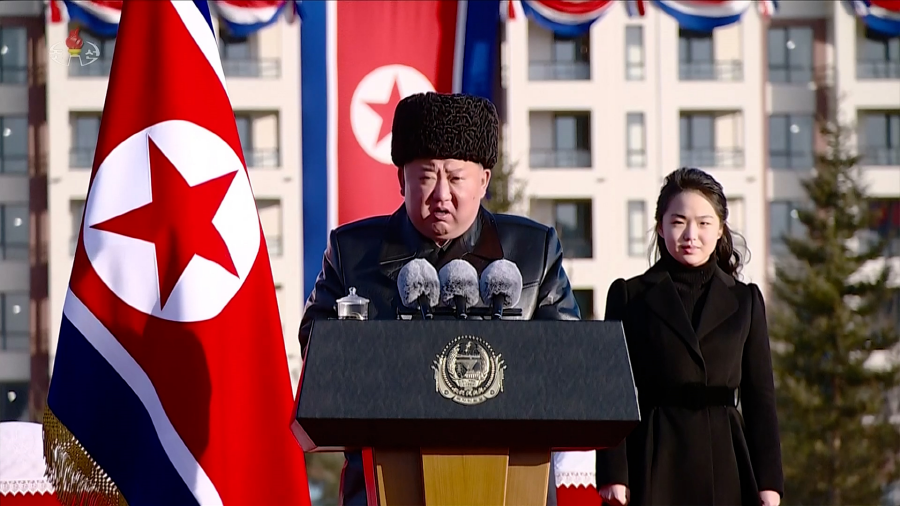 [NK Focus]
Kim Jong Un Attends Completion Ceremony for Saebyeol Street with Daughter Ju-ae, Underscoring Emerging Succession SignalsNorth Korea has formally declared that it has fulfilled its pledge to construct 50,000 housing units in Pyongyang, a flagship objective announced at the Eighth Congress of the Workers' Party of Korea in 2021. With the Ninth Party Congress approaching, the timing and presentation of this achievement appear calibrated to frame the past five years as a period of measurable progress in civilian living standards, while simultaneously reinforcing regime narratives of resilience under sanctions.The unveiling of the Saebyeol Street housing complex—reportedly designated for families of soldiers killed during overseas deployments—served not only as an urban development milestone, but also as a politically resonant gesture of state compensation and recognition.Chairman Kim Jong Un attended the completion ceremony alongside his daughter, Ju-ae, and his wife, Ri Sol-ju. State media highlighted images of Kim engaging directly with residents—embracing new occupants and even holding a puppy during a visit to a commercial facility—scenes that appeared carefully staged to project the image of a leader personally invested in the welfare of ordinary citizens. The visual messaging reinforced portrayals of Kim as both a “people-first” statesman and a paternal, family-oriented figure.Five-Year Capital Construction Plan Concludes with Fulfillment of 50,000-Unit TargetOn February 17, the official party daily Rodong Sinmun reported that the completion ceremony for the fourth phase of the Hwasong District—comprising 10,000 housing units—was held on February 16, marking what it described as the “grand conclusion” of the five-year capital construction initiative. The date coincides with the birth anniversary of Kim Jong-il, a symbolic national holiday, thereby amplifying the political significance of the event.The 50,000-unit housing campaign has been one of the most visible urban policy commitments endorsed at the Eighth Party Congress. The plan called for the construction of 10,000 apartments annually over five years to alleviate chronic housing shortages in the capital. According to state accounts, Phases 1 through 4 were carried out sequentially in the Hwasong area, beginning with the Songsin and Songhwa districts and culminating in what authorities describe as the project’s successful completion.The newspaper claimed that “nearly 60,000 residential units and public buildings” had been erected—framing the outcome as an “overfulfillment” of the original target. Such language appears designed to underscore economic performance despite ongoing international sanctions and pandemic-related constraints. Independent verification of occupancy rates, infrastructure reliability, and service provision—particularly electricity and water supply—remains limited, although commercial satellite imagery confirms large-scale structural completion.In his remarks at the ceremony, Kim characterized the initiative as “not merely a construction endeavor, but a practical demonstration of our party’s people-first ideology.” He credited the outcome to the “absolute loyalty” of builders and workers who implemented party directives “under the most difficult conditions.”He further argued that the emergence of new streets in Pyongyang constitutes a “measure of the nation’s pace of advancement and level of civilization,” insisting that socialist development must translate into visible improvements in everyday life rather than remain rhetorical.Looking ahead, Kim signaled that the forthcoming Ninth Party Congress would articulate “even more ambitious goals” for both capital construction and regional development, suggesting that urban infrastructure will remain central to the regime’s performance claims.Saebyeol Street: Compensation, Commemoration, and Political MessagingThe housing milestone coincided with the inauguration of Saebyeol Street, reportedly constructed for the families of soldiers who perished during overseas deployments, including personnel associated with the Russia–Ukraine conflict. State media reported that Kim attended this ceremony on February 16 with his daughter, Ju-ae. The complex, located in a prime section of the Hwasong District, has been framed as a privileged residential zone.In his address, Kim described the fallen soldiers as “heroes of our era” who sacrificed their lives in defense of national dignity and honor. He pledged that “the party and the state will never forget their sacrifice” and committed to ensuring that bereaved families receive preferential treatment and sustained societal support. He further asserted that Saebyeol Street would serve not only as housing, but also as an “educational space” where the spirit of heroism would be transmitted to future generations.This rhetoric suggests an effort to institutionalize the narrative of sacrifice and compensation, transforming potentially sensitive questions about overseas casualties into symbols of loyalty and patriotic virtue. Reports indicate that Kim also inspected commemorative sculptures at the Mansudae Art Studio and visited the construction site alongside senior military officials. Such actions appear intended to embed the project within both military prestige and ideological education.Analysts assess that visible compensation mechanisms may serve to mitigate domestic discontent and legitimize controversial deployments by framing them as meritorious national service. The allocation of a distinct residential district in Pyongyang—a city where residency privileges are tightly controlled—further underscores the regime’s intent to convey exceptional honor to the families involved.
26.02.20 -
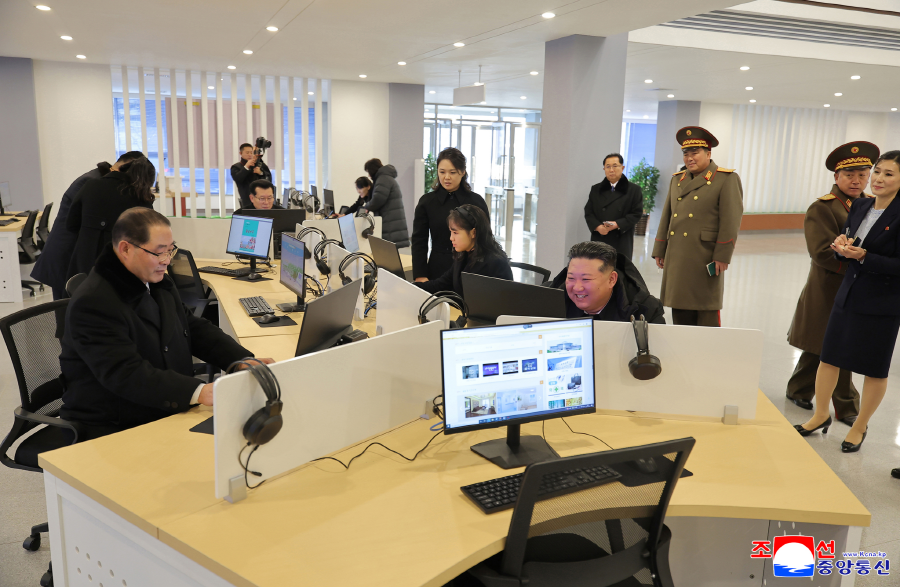 [NK Focus]
North Korea Elevates Science, Technology, and Education as Pillars of “National Dignity”Institutionalized Talent Management and Emerging Local “Scouting” CompetitionNorth Korea has increasingly framed science, technology, and education as the principal drivers of “national dignity” and “national prestige,” presenting them as central to both regime legitimacy and long-term economic development. In reviewing achievements over the past five years, Pyongyang has designated scientific and technical personnel as a strategic national resource and formalized a tiered, centralized management system grounded in law and regulation.Concurrently, local governments appear to be competing to secure high-performing students and technical specialists, by providing material support for students admitted to elite institutions in Pyongyang. Taken together, these measures suggest a coordinated effort to reinforce regime stability while pursuing incremental economic modernization through human capital development.On February 11, Rodong Sinmun, the official newspaper of the Workers’ Party of Korea (WPK), published a front-page article titled, “The Sacred Five Years That Unfolded a New Era of Comprehensive Development: A New Turning Point in Building a Scientific and Technological Powerhouse and an Educational Powerhouse.”The article asserted that national prestige has been elevated through advances in science and technology and through what it described as “revolutionary education.” It characterized science and technology as the “core task” and an “infinite strategic asset” of socialist construction, framing the past five years as a decisive policy inflection point.Centralized, Problem-Oriented Researches and Strategic Talent ManagementThe newspaper emphasized a shift toward “problem-solving-oriented” researches—prioritizing applied outcomes that directly support economic production and living standards over purely academic output. To that end, Pyongyang has reportedly strengthened centralized coordination mechanisms under the State Committee for Science and Technology and related institutions, consolidating oversight of research plans across universities, research institutes, and state-owned enterprises.Cited examples of applied achievements include import substitution efforts in the metal and chemical sectors, the introduction of energy-efficient blast furnaces, process improvements in soda ash production, and agricultural modernization initiatives such as mechanization, regenerative rice cultivation techniques, and the development of specialized agricultural materials. While independent verification remains limited, the messaging underscores a consistent focus on technological self-reliance and incremental productivity gains.North Korea is understood to operate a four-tier classification system for scientific and technical personnel under its Scientific and Technological Talent Management Law. Talent is categorized as: (1) outstanding scientific and technological talent, (2) provincial/central agency level, (3) county Level, and (4) city/county level.Individuals designated as “outstanding” are assessed through both quantitative indicators—such as academic credentials, professional achievements, and certification levels—and qualitative criteria, including analytical capability, innovation potential, and project leadership. Those selected are registered under a centralized national database and assigned to priority research tasks deemed of strategic significance.Mobility controls appear stringent. High-ranking talent and leading university graduates are preferentially assigned to research institutes and major industrial enterprises. Transfers reportedly require cabinet-level approval, suggesting that the state seeks to restrict lateral movement and allocate expertise in accordance with national priorities.Incentives include preferential housing allocations, enhanced access to information and communications infrastructure, medical services, transportation, research funding, and state honors. Public recognition—including state awards and media coverage—reinforces the elevated social status of scientists and engineers within the system.Education Reform and Local Competition for Human CapitalThe emphasis on science and technology extends into structural reforms in education. Rodong Sinmun reported the introduction of a “full credit system” at leading institutions such as Kim Il Sung University, signaling a shift—at least rhetorically—from rote memorization toward more research- and discussion-based pedagogy.Additional measures reportedly include the modernization of laboratory facilities, expansion of digital infrastructure, establishment of specialized education research institutes, and development of a national education information network. The WPK has also pledged to increase the budgetary share allocated to education and reduce disparities between urban and rural schools.Parallel to these central initiatives, local governments appear to be intensifying efforts to secure and retain talent. In a February 10 article titled “Let Us Continuously Strengthen Talent Resources in Cities and Counties,” Rodong Sinmun highlighted growing local demand for skilled personnel amid expanded regional development initiatives.Some county-level party committees are reportedly providing financial assistance to students from their jurisdictions who are enrolled in central universities, covering living expenses such as dormitory fees, meals, textbooks, and heating costs. Although tuition is nominally free nationwide, such targeted subsidies represent a notable intervention by local authorities.This local “talent scouting” dynamic is closely linked to Kim Jong Un’s “20×10 Local Development Policy,” under which dozens of regional industrial facilities have been established. Operational responsibility for these facilities rests largely with local authorities, heightening pressure to secure competent technical managers and engineers. Rodong Sinmun explicitly acknowledged that the performance of local factories depends on the “caliber of regional officials,” implicitly recognizing persistent constraints in power supply, logistics, raw materials, and skilled labor.In some coastal areas, including Sinpo City in South Hamgyong Province, local development plans reportedly extend to marine aquaculture and tourism. However, existing personnel in traditional sectors such as fisheries are deemed insufficient to support these initiatives, further intensifying competition for technically trained workers.Strategic ImplicationsCollectively, these developments suggest that Pyongyang is institutionalizing a model in which scientific and technical expertise is treated as a controlled national asset. Through tiered classification, mobility restrictions, targeted incentives, and localized patronage, the regime seeks to align human capital development with strategic economic objectives and political control.Whether this five-year effort—framed domestically as elevating science and education to the level of “national dignity”—will generate measurable economic transformation remains uncertain. Nonetheless, the policy trajectory indicates that North Korea views technological capability and talent management as central instruments for strengthening its self-reliant development model under conditions of sustained sanctions and geopolitical isolation.
26.02.13 -
 [North Korea Inside]
North Korea Inside· Kim Jong Un Visits Ministry of National Defense on 78th Army Foundation Day, Launching New Five-Year Defense Plan· North Korea Schedules Ninth Party Congress for Late February; 50,000 Housing Unit Completion Ceremony to Precede Event· Signs of Renewed North Korea–China EngagementKim Myong-sungSecretary General of the SAND InstituteKim Jong Un Visits Ministry of National Defense on 78th Army Foundation Day, Launching New Five-Year Defense PlanKim Jong Un, President of the State Affairs Commission of the Democratic People’s Republic of Korea (DPRK), signaled the launch of a new five-year defense initiative, stating that “the next five years, as indicated by the Ninth Party Congress, will be a period in which the irreplaceable and outstanding role of our army will be further elevated.”According to the Korean Central News Agency (KCNA), Kim delivered these remarks on February 8 during a congratulatory visit to the Ministry of National Defense, commemorating the 78th anniversary of the founding of the Korean People’s Army (KPA).Although Kim did not provide specific policy details, observers anticipate that—similar to the Eighth Party Congress in January 2021, which unveiled a “Five-Year Plan for National Defense Development”—the forthcoming Ninth Party Congress later this month will outline new defense priorities and force modernization objectives. Additionally, 2026 marks the third year of implementation of the regime’s “20×10 Local Development Policy,” with the military expected to play an expanded role in major state-led construction and infrastructure projects.Notably, Kim’s remarks did not include explicit criticism of the United States or South Korea. By contrast, during his Armed Forces Day address last year, he characterized the United States as a principal driver of global conflict and reaffirmed a policy of strengthening nuclear forces. The relative restraint in this year’s speech may reflect Pyongyang’s effort to calibrate external messaging ahead of the Party Congress, particularly amid fluid regional dynamics, including a planned U.S.–China summit in April.In his address, Kim paid tribute not only to senior commanders and military officials but also to “commanders and combatants of overseas special operations forces” reportedly deployed to Russia, highlighting the regime’s continued emphasis on external military engagement.He described the period leading up to the Ninth Party Congress as one in which the “greatness and preciousness” of the armed forces are particularly evident. Reflecting on the past five years, Kim asserted that the country’s achievements would not have been possible without the “immense role” played by the KPA.Kim characterized the previous year as one marked by “unprecedented and dramatic events” and “brilliant achievements” attributable to the military. He further stated that the coming year would represent “a grand year of transformation,” during which the operational scope of the armed forces would expand and necessitate more assertive action.Referring to the guidance of the Ninth Party Congress, he emphasized that the “grand struggle ahead” calls upon the Korean People’s Army, which he described as “the strongest and invincible heroic army in the world.”Following his remarks, Kim posed for commemorative photographs with senior Ministry of National Defense commanders and retired military personnel, and observed athletic competitions. Officials accompanying him included Pak Jong-chon, No Kwang-chol, Ri Yong-gil, Kim Kwang-hyok, Pak Kwang-sop, Jong Kyong-thak, and Hwang Pyong-so.Senior military leaders also paid tribute at the Kumsusan Palace of the Sun, where Kim Il-sung and Kim Jong-il lie in state, marking Army Foundation Day with floral offerings.Commemorative events were held nationwide. In Pyongyang, Choe Ryong-hae, President of the Standing Committee of the Supreme People’s Assembly, attended a concert and dance performance by the Ministry of National Defense Orchestra at the Ponghwa Art Theater. Additional celebrations included dance gatherings for Women’s Union members at Arch of Triumph Square and youth and student performances at various venues, including outside the Pyongyang Grand Theatre.Delegations from the Workers’ Party and government officials visited military units to express support for service members. Citizens, soldiers, workers, and youth also laid flowers at the statues of Kim Il-sung and Kim Jong-il on Mansu Hill and paid respects at memorial sites dedicated to those who died in the Korean War, reinforcing official narratives of patriotism and revolutionary continuity.North Korea Schedules Ninth Party Congress for Late February; 50,000 Housing Unit Completion Ceremony to Precede EventNorth Korea announced on February 8 that it will convene the Ninth Congress of the Workers’ Party of Korea (WPK)—the regime’s highest decision-making body—in late February.According to the Korean Central News Agency (KCNA), the decision was adopted at the 27th meeting of the Political Bureau of the Eighth Central Committee, held on February 7 at the WPK Central Committee headquarters under the guidance of Kim Jong Un. KCNA reported that the Political Bureau unanimously approved a resolution to convene the Ninth Party Congress in Pyongyang, described as the “revolutionary capital,” in late February 2026.The meeting reportedly reviewed and approved key agenda items, including the qualifications of delegates, proposals concerning the composition of the congress leadership bodies, including the executive body, presidium, and secretariat, and draft documents to be submitted for deliberation. KCNA stated that Kim “positively evaluated” the preparatory work undertaken by relevant subcommittees and outlined “fundamental issues and detailed tasks” to ensure the congress’s success.By formalizing the schedule through the Political Bureau—the Party’s core decision-making organ—Pyongyang appears to have completed the principal procedural steps required to convene the congress.The Ninth Party Congress is expected to assess policy outcomes over the previous five-year period and articulate domestic and foreign policy priorities for the next five years. Particular attention will be given to Kim Jong Un’s remarks concerning inter-Korean relations and policy toward the United States, especially amid ongoing regional security tensions.The session was reportedly presided over by Jo Yong-won, Director of the Organization and Guidance Department, acting pursuant to Kim’s instructions. Attendees included Politburo Standing Committee members Pak Thae-song and Choe Ryong-hae, as well as Politburo members Ri Il-hwan, Pak Jong-chon, Kim Tok-hun, and Choe Son-hui. Ri Pyong-chol, the Party’s senior advisor on military-industrial policy, was also observed in attendance.North Korea has concurrently completed the selection of delegates. KCNA reported that between January 28 and February 6, representative meetings of provincial and central-level party organizations—including the Cabinet, the Korean People’s Army, the Ministry of Social Security, and the Ministry of Railways—were convened to elect delegates and nominated observers. These meetings followed earlier delegate selections at lower-level party meetings.The Eighth Party Congress in 2021 was attended by approximately 7,000 participants, including 4,750 delegates, 250 senior Party officials, and roughly 2,000 observers. A similar scale of participation may be anticipated for the upcoming congress.In parallel with preparations for the Party Congress, North Korea appears poised to complete the “Pyongyang 50,000-Unit Housing Construction Project,” a flagship initiative first announced at the Eighth Party Congress in 2021. The project called for the construction of 10,000 housing units annually over five years to address chronic housing shortages in the capital.Rodong Sinmun, the Party’s official newspaper, reported on February 11 that the project is “on the verge of grand completion,” asserting that the goal has been achieved “on schedule as determined by the Party.” The newspaper characterized the new residential districts—particularly in the Hwasong area northeast of Pyongyang—as emblematic of “the remarkable transformation and development” of the Kim Jong Un era.Since 2022, 10,000 housing units have reportedly been completed each year, including developments in the Songsin-Songhwa district, as well as multiple phases of the Hwasong District project. KCNA previously reported that finishing work on the fourth and final phase had reached approximately 99 percent completion as of early January.Given the political significance attached to the project, observers assess that Pyongyang may stage a high-profile completion ceremony immediately prior to the Party Congress to reinforce narratives of economic progress and regime legitimacy.In addition, North Korea appears to be accelerating groundbreaking ceremonies for the third year of its “20×10 Local Development Policy,” which calls for the annual construction of industrial facilities, hospitals, and service centers in 20 regional areas. State media has reported ceremonies in more than 20 localities in recent weeks, suggesting a coordinated effort to demonstrate policy momentum ahead of the congress.Signs of Renewed North Korea–China EngagementSeparately, recent developments point to tentative signs of increased engagement between North Korea and China.Ri Ryong-nam, North Korean ambassador to China, stated that high-level exchanges between the two countries would “proceed normally” this year. According to Hong Kong-based Phoenix Television, Ri made the remarks on February 5 following a New Year reception hosted by Chinese Ministry of Foreign Affairs. He expressed confidence that bilateral relations would “develop well” in line with the intentions of both countries’ leaders.Phoenix Television noted that Ri—appointed in 2021—rarely engages with the media publicly, making the interview noteworthy.Since early this year, North Korea has dispatched multiple working-level delegations to China in the economic and technical sectors. NK News reported that a North Korean livestock delegation visited a biotechnology firm in Yunnan Province in mid-January, where discussions reportedly focused on breeding systems, feed production, and digital livestock management technologies. These areas align with recent domestic priorities emphasized by Kim Jong Un, including the modernization of agricultural and livestock production.In addition, a delegation from North Korea’s Ministry of Education reportedly visited artificial intelligence (AI) and extended reality (XR) technology companies in Shenzhen, China, in late January, where discussions included technology demonstrations and localization strategies.Taken together, these developments suggest a gradual normalization of practical cooperation in economic and technical fields, potentially signaling a broader stabilization of North Korea–China relations following a period of relative strain.With the Ninth Party Congress approaching, Pyongyang appears intent on entering the gathering amid carefully choreographed displays of domestic achievement and cautiously expanding external engagement.
26.02.13 -
[NK Focus]
Trends in North Korea: January 2026 - Regime Preparations for the New Year Period and the Ninth Party Congress - Lee Seung-hyunPh.D in Public AdministrationResearch Fellow, SAND InstituteIn January 2026, North Korea continued regime management activities across the political, military, social, and economic spheres, maintaining a relatively restrained outward posture to mark the New Year. Political, military, and social developments during the month unfolded within the dual context of preparations for the upcoming Ninth Party Congress and the New Year period.Chairman Kim Jong Un’s public activities and sectoral reports were organized around the themes of “summarizing” past performance and “implementing decisions” from the outset of the year, emphasizing symbolism and strategic messaging. At the same time, North Korea reiterated its external threat narrative by alleging a South Korean drone incursion—an effort that can be interpreted as part of broader regime management and internal cohesion-building measures ahead of the Workers’ Party Congress.Kim Jong Un attended a New Year celebration event on January 1, where he took commemorative photographs with Workers’ Party, government, and military officials. North Korean state media repeatedly employed the phrase, “Let us unite as one around the Party Central Committee to achieve new victories,” while emphasizing themes such as “unity of mind,” “conviction,” and “confidence.”This messaging highlighted the final-stage implementation of decisions adopted at the Eighth Party Congress and reinforced political cohesion in advance of the next party congress. The choice to emphasize this symbolic gesture instead of a New Year’s address can be interpreted as an effort to convey the leader’s message in a deliberately restrained and carefully managed manner ahead of the Ninth Party Congress.Concurrently, in late January, Kim Jong Un inspected the implementation status of key departments of the Party Central Committee, stressing that “Party decisions must be implemented without the slightest deviation.” This move can be interpreted as an effort to consolidate the collective achievements of the Workers’ Party ahead of its Ninth Congress and to reaffirm responsibility and discipline across the organization.Rodong Sinmun and the Korean Central News Agency likewise framed sectoral activities from the outset of the year as a “struggle to greet the party congress with glorious achievements,” underscoring the regime’s emphasis on fostering a mobilized political atmosphere.Meanwhile, in January, North Korea issued strong condemnations, claiming that South Korean drones had infiltrated its airspace. State media, along with statements from the military and the Ministry of Foreign Affairs, characterized the alleged incident as a “violation of sovereignty” and a “military provocation,” thereby underscoring the regime’s asserted legitimacy for countermeasures.This claim appears aimed not only at establishing a military narrative but also at heightening internal tension by emphasizing external threats. North Korea’s allegations of drone incursions therefore extend beyond immediate security concerns, fitting into the recurring “external hostile forces–internal unity” narrative commonly employed during preparations for the Ninth Party Congresses.Rodong Sinmun and the Korean Central News Agency used the incident to stress the “severity of the security environment” and the “necessity of defending the revolutionary stronghold,” thereby reinforcing regime messaging designed to unite the Party, the military, and the populace around a single political objective. In essence, the security threat narrative functions as a political instrument to mitigate the effects of economic hardship and social fatigue.In the military sphere, strategic weapons tests and on-site guidance of the military-industrial sector continued; however, these activities appeared focused more on inspecting existing capabilities and sustaining deterrence than on generating external provocation. Such military activities can also be interpreted as elements of broader regime stability management ahead of the Party Congress, reflecting an intent to incorporate military achievements into its overarching political narrative.The preparatory tone for the Ninth Party Congress was also evident across the social and economic sectors. Reports on agriculture, local industry, and education repeatedly employed phrases such as “upholding the Party’s decisions” and “responsibly conducting the final settlement.”Coverage of residential move-in ceremonies and production encouragement campaigns emphasized the stability of livelihoods and the normalcy of the system. This reflects a characteristic reporting strategy that downplays explicit references to economic difficulties while foregrounding achievements and social stability in advance of the Party Congress. Overall, January 2026 can be assessed as the point at which North Korea fully entered the preparatory phase for the Ninth Party Congress. During the New Year period, the regime prioritized system stability and control over abrupt policy shifts or overt provocations. Kim Jong Un’s public activities combined New Year symbolism with reinforced Party discipline, linking restrained leadership appearances, Party-centered review and implementation efforts, and the security threat narrative exemplified by the alleged South Korean drone incursion.Politically and diplomatically, North Korea largely reiterated existing positions through working-level engagements, while in the military sphere, activities remained focused on sustaining deterrence and inspecting combat readiness rather than pursuing escalation.In the socio-economic sphere, North Korea sought to reinforce internal cohesion by emphasizing livelihood stability and highlighting achievements. This approach reflects the regime’s typical pattern of recalibrating its governing foundations at the beginning of the year while simultaneously preparing for forthcoming political schedules and shifts in the external environment.Across the political, military, and social domains, the unifying theme of “solidarity and unity” was consistently emphasized. Taken together, these patterns suggest that preparatory groundwork is underway to politically consolidate past achievements through the upcoming Party Congress and to frame a new mid- to long-term policy direction.
26.02.06 -
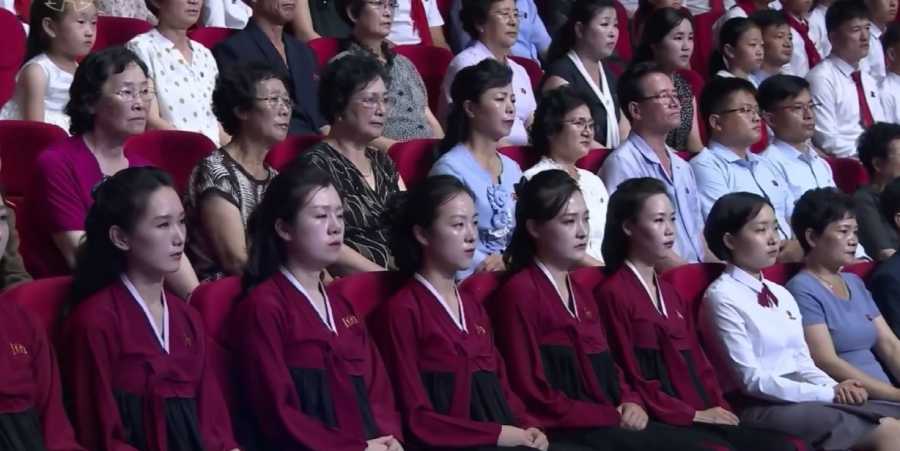 [North Korea Inside]
North Korea Inside· Sweeping Purge of Foreign Ministry Asia Bureau: Officials Deemed ‘Unworthy of Breathing Pyongyang Air’· Food Shortages Prompt Emergency Surveys Ahead of Kim Jong-il’s Birthday· North Korea Mobilizes Discharged Soldiers and Youth for Coal and Mining Operations· Mass Labor Mobilization Behind the Sinuiju Greenhouse ComplexKim Myong-sungSecretary General of the SAND InstituteSweeping Purge of Foreign Ministry Asia Bureau: Officials Deemed ‘Unworthy of Breathing Pyongyang Air’In the lead-up to the Ninth Workers’ Party Congress, North Korea appears to have conducted an unusually severe internal inspection of the Ministry of Foreign Affairs’ Asia Bureau, resulting in the removal of a significant number of senior and mid-level officials, including the bureau chief. The operation is widely interpreted as an exemplary purge aimed at eliminating perceived information leaks, ideological deviation, and “non-socialist behavior” within one of the regime’s most strategically sensitive foreign policy organs.According to sources inside Pyongyang, the purge reflects the leadership’s assessment that the Asia Bureau—responsible for managing relations with neighboring countries such as China and Japan—had become excessively exposed to external influences. There are indications that the scope of scrutiny may extend beyond the bureau itself, with internal speculation suggesting that even Foreign Minister Choe Son-hui, as the senior official with command responsibility, could face repercussions.A Pyongyang-based source reported on February 2 that a joint inspection team was formed by the 109th Standing Committee of the Party Organization and Guidance Department (OGD), the Domestic Counterintelligence Bureau of the State Security Ministry, and the Foreign Ministry’s Party Committee.Under the pretext of reviewing unfinished tasks from the Eighth Party Congress period, the team conducted an intensive, approximately ten-day inspection of the Asia Bureau beginning in mid-January. In practice, the operation functioned as an unannounced, surprise inspection rather than a routine administrative review.The inspection reportedly ran from January 15 to January 24. OGD officials and State Security agents simultaneously searched offices and private residences without prior notice, conducting comprehensive examinations of documents, electronic devices, and personal belongings. A two-day summary and criticism session held on January 24–25 was described by witnesses as emotionally charged, marked by shouting and public denunciations, and closely resembling a “people’s tribunal.”At the opening of the session, an OGD instructor reportedly asked, “Has the Asia Bureau become a playground for capitalism?” while presenting seized materials as evidence. He condemned the bureau as having “degenerated from a revolutionary stronghold into a back-alley shop saturated with capitalist decadence.”Investigators focused heavily on the ideological orientation and lifestyle practices of Asia Bureau personnel, whose frequent contact with foreign counterparts was deemed a source of contamination. According to one source, the core problem identified by inspectors was that officials had become “more accustomed to money and foreign goods than to the Party’s monolithic leadership system.” State Security personnel were stationed throughout the meeting hall to monitor reactions, and some officials were reportedly stripped of their positions immediately during the proceedings.One of the most serious charges concerned systemic failures in handling classified materials. During surprise checks at the main gate, several officials were reportedly caught attempting to leave the compound with Level 2 classified documents—such as foreign negotiation strategy plans—concealed in false-bottom bags or suit pockets. Some individuals were publicly removed from the meeting hall, with their rank insignia torn off.Additional violations included improper disposal of draft documents designated for incineration, some of which were allegedly taken home and repurposed as scrap paper for children’s study materials. Personal conduct also came under scrutiny. Forced searches of office safes reportedly uncovered bundles of personal cash, love letters, and family correspondence intermingled with official Party documents.Digital forensic inspections reportedly produced results described as “shocking” even by members of the inspection team. Files labeled as “Study Materials for the Ninth Party Congress ” were found to contain PDF captures of South Korean media articles and external political analyses. Investigators also discovered catalogs of overseas luxury brands and printed materials related to real estate investment concealed in desk drawers.The possession of external audiovisual media was found to be widespread. USB drives and SD cards were reportedly hidden in plant pots, sofa crevices, and even toilet water tanks. Some tablet computers were found to contain American films and South Korean television dramas obtained via overseas streaming platforms. Inspectors also identified traces of data-wiping software used to conceal viewing histories.Music consumption was likewise scrutinized. Although officials claimed to listen exclusively to revolutionary songs, mutual criticism sessions revealed that some had stored and listened to South Korean trot music or Chinese pop songs—often with modified lyrics—during work hours.Searches of private residences reportedly uncovered large quantities of consumer goods not sold in Pyongyang department stores, including American coffee, Japanese electric rice cookers, and South Korean cosmetics. One inspector was quoted as exclaiming, “I don’t know whether this is Pyongyang or Seoul.”Beyond material violations, inspectors also targeted expressions of ideological cynicism. Diaries kept by younger diplomats reportedly contained statements such as “Nothing will change even if the Party Congress is held” and “The outside world is running while we cannot even walk.” These individuals were subsequently classified as “anti-Party elements.”During mobile phone inspections, authorities reportedly took issue with private family messages using South Korean terms such as oppa or jagiya instead of the ideologically approved term “comrade,” categorizing this as evidence of a “failed domestic revolution.” Investigators also discovered bundles of U.S. dollars of unknown origin hidden under mattresses and behind bookshelves, raising suspicions of payments for leaking classified information.Punishments were severe and immediate. The Asia Bureau chief was stripped of his position and expelled from the Party on the spot before being transferred to a State Security detention facility. All officials found to have committed any of the twelve categories of violations identified by the inspection team were dismissed or reassigned. Those deemed guilty of more serious offenses were reportedly exiled with their families to remote mining regions in Yanggang and Jagang provinces, with the official judgment that they were “unworthy of breathing Pyongyang’s air.”Food Shortages Prompt Emergency Surveys Ahead of Kim Jong-il’s BirthdaySeparately, North Korean authorities have reportedly launched an emergency investigation into food-deprived households nationwide ahead of Kim Jong-il’s birthday on February 16, amid mounting evidence of acute food shortages and starvation-related deaths around the Lunar New Year period.According to a source on February 3, authorities launched a comprehensive survey of food-insecure households in both urban and rural areas this month. While such surveys are often associated with preparations for holiday distributions, sources indicate that the current effort is aimed at identifying households facing immediate risk of starvation. Notably, some families that received rations last year reportedly exhausted their supplies within two to three months, underscoring the severity of the situation.Despite official claims that last year’s grain output reached approximately five million tons, on-the-ground accounts tell a markedly different story. After prioritizing military allocations and state grain reserves, the amount distributed to farming households was reportedly reduced sharply. Some farmers are said to have depleted the grain they received last November within just two months.The timing is particularly precarious, as the country is entering the annual lean season—when previous harvests are exhausted and several months remain before the next crop. Historically, households mitigated shortages through market purchases, but intensified market controls and declining market functionality have sharply limited this option.Urban conditions appear similarly dire. Testimonies suggest that in non-productive households—excluding those of senior officials or major enterprise workers—one or two households per People’s Unit are already rationing food. Reports have emerged of individuals wandering in search of food and dying from exposure, raising concerns that the situation is escalating from chronic hardship into a full-scale survival crisis.A key structural driver of the crisis is the collapse of household income resulting from tightened market restrictions. Following the 2021 revision of the Grain Management Law, the regime banned private grain sales in markets and designated state-run grain outlets as the sole legal distribution channel. With intensified enforcement and harsh penalties for private transactions, residents’ last remaining coping mechanism for food emergencies has effectively been eliminated.North Korea Mobilizes Discharged Soldiers and Youth for Coal and Mining OperationsNorth Korean authorities have reportedly issued a large-scale labor mobilization order this year, directing discharged soldiers, young factory workers, and even recent high school graduates to coal mines, mineral extraction sites, and forestry (logging) operations nationwide.While the regime frames the measure as a response to chronic labor shortages in sectors critical to industrial production—particularly energy and raw materials—local sources indicate growing resentment and resistance, with the mobilization increasingly perceived as coercive and exploitative, particularly toward younger cohorts.According to multiple North Korea–related sources on February 1, Kim Jong Un recently characterized labor shortages in coal mines, mining complexes, and forestry sites as an “urgent task” during a high-level cadre meeting convened to review preparations for the Ninth Workers’ Party Congress. In evaluating this year’s initiatives under the third year of the “Regional Development 20×10” policy, Kim reportedly concluded that “fundamental constraints in energy and material supply have been laid bare, with chronic labor shortages as the underlying cause.”Kim emphasized that the completion and operation of factories in the 20 cities and counties targeted by the Local Development 20×10 initiative by 2026—and the revitalization of coal and mining districts as core pillars of national industrial capacity—would require the mobilization of “all available human and material resources.”In line with this directive, the Workers’ Party of Korea and the Socialist Patriotic Youth League reportedly issued instructions in early January, tasking provincial, city, and county party organizations with collectively deploying manpower—primarily discharged soldiers, young industrial workers, and non-conscription-age high school graduates—to coal mines, mineral extraction sites, and forestry operations.These measures have reportedly generated significant discontent at the local level. One source noted that “a sense of despair and anger is rapidly spreading among discharged soldiers and young people who have been abruptly sent to coal mines and logging camps.” Soldiers approaching the end of their service are said to have expressed particular frustration, stating that after enduring a decade of hardship in military service, they are denied the opportunity to return home and instead face what they describe as a “dead-end future.”The mobilization has also placed heavy burdens on local institutions and enterprises. According to sources, enterprises are required to meet fixed manpower quotas, often through the forced selection of young workers, creating internal tensions and competition over who is assigned to hazardous labor sites. This has reportedly led to heightened friction within workplaces and among local officials.A defector identified as a former senior local party official observed that securing coal—essential for power generation—and timber—necessary for tunnel maintenance and infrastructure—is indispensable for factory construction and operation.He emphasized that the root causes of persistent production shortfalls lie in outdated equipment, chronic energy shortages, and limited access to materials. In the absence of the capacity or resources to address these structural deficiencies, authorities have instead resorted to deploying young people to physically demanding and dangerous environments, to compensate through labor intensity rather than productivity gains.Mass Labor Mobilization Behind the Sinuiju Greenhouse ComplexRelated reporting indicates that North Korea mobilized at least 60,000 to 65,000 workers for the construction of the Sinuiju Greenhouse Complex Farm, completed on February 1, relying on what observers describe as an extreme form of labor-intensive construction. State media coverage suggests that the regime offset shortages of heavy equipment, construction materials, and energy by extensively exploiting the unpaid labor of soldiers and youth brigades.On February 2, Rodong Sinmun devoted unprecedented coverage to the completion ceremony attended by Kim Jong Un, expanding from its usual six pages to eight pages, with six pages dedicated exclusively to photographs and articles related to the project. A significant portion of the coverage featured commemorative group photographs of Kim alongside construction personnel.Analysis of these images provides insight into the scale of manpower mobilization. At least 13 distinct groups are visible in the published group photograph, each estimated to include approximately 4,000-5,000 individuals, suggesting that the workforce deployed may have exceeded 55,000 people. The regime’s intended display of mass loyalty thus inadvertently revealed the scale of labor exploitation underpinning the project.The Sinuiju Greenhouse Complex spans an area equivalent to approximately 625 soccer fields. Following severe flood damage caused by Yalu River overflow in the summer of 2024, Kim Jong Un announced plans in December of that year to construct greenhouse complexes covering several hundred hectares on Wihwa Island and Dajido. He attended the groundbreaking ceremony on February 10, 2025, and reportedly conducted nearly monthly on-site inspections thereafter.At the completion ceremony, Kim presided over the awarding of state commendations to selected soldiers and youth construction workers and oversaw the unveiling of a commemorative monument. Senior party and military officials attended in large numbers, including Cabinet Premier Pak Thae-song, Supreme People’s Assembly Standing Committee Chairman Choe Ryong-hae, Party Secretaries Jo Yong-won, Pak Jong-chon, and Ri Il-hwan, and Defense Minister No Kwang-chol. Former Cabinet Premier Kim Tok-hun, absent from public view since late 2025, also appeared at the event.North Korean media characterized the Sinuiju Greenhouse Complex as a “representative achievement of the local development policy” and a “monumental creation of the Kim Jong Un era.” The Korean Central News Agency described it as a “proud gift of loyalty from young builders to the Ninth Party Congress,” suggesting that it will feature prominently as a signature achievement at the forthcoming congress.Available evidence, however, indicates that the project’s completion relied less on modern construction technology or efficiency gains than on the extensive mobilization of unpaid labor. Large-scale construction projects in North Korea routinely depend on the compulsory deployment of soldiers, students, and civilians under party directives, effectively driving labor costs to near zero. In the case of the Sinuiju project, tens of thousands of personnel from the army, navy, and air force, along with youth shock brigade members, were reportedly mobilized.A defector who previously served in a youth shock brigade stated that soldiers and young workers were treated as “unpaid expendables” to reduce equipment rental and fuel costs, which typically constitute the largest share of construction expenses. An intelligence official assessed that the regime’s propaganda imagery—intended to demonstrate loyalty and achievement—instead exposed fundamental structural limitations and contradictions in North Korea’s development model.
26.02.06 -
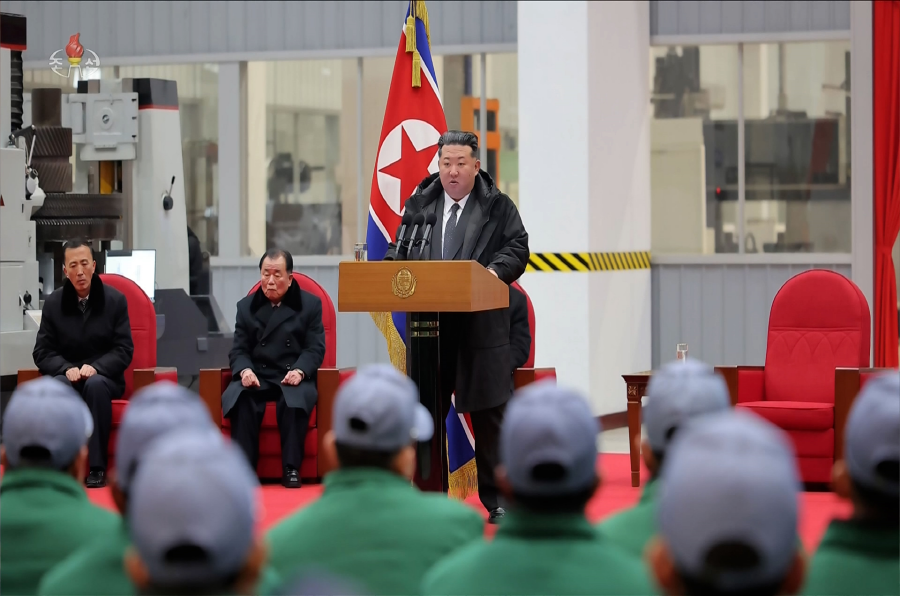 [North Korea Inside]
North Korea Inside· Kim Jong Un Publicly Rebukes Senior Cabinet Officials During Factory Inspection, Signaling Intensified Discipline Ahead of Party Congress· Differential Treatment of Russia and China in New Year’s Greetings Highlights Strain in DPRK–China Relations· Kim Jong Un Says North Korea’s Deployment of Troops to Russia Was Not Done in Exchange for Any Payment, Raising Questions About Compensation and Regime Intent· Military Indoctrination Materials Emphasize Defense of Baekdu Bloodline SuccessionKim Myong-sungSecretary General of the SAND InstituteKim Jong Un Publicly Rebukes Senior Cabinet Officials During Factory Inspection, Signaling Intensified Discipline Ahead of Party CongressKim Jong Un, Chairman of North Korea’s State Affairs Commission of North Korea, sharply criticized senior cabinet officials during a completion ceremony for the modernization of the Ryongsong Machinery Complex, publicly dismissing the deputy prime minister responsible for the machinery sector and signaling the possibility of broader personnel reshuffles ahead of the Ninth Workers’ Party Congress.According to the Korean Central News Agency (KCNA), Kim attended the ceremony on January 19 in Hamhung, South Hamgyong Province, where he delivered a speech emphasizing that the project’s significance lay not merely in physical modernization but in what he described as a decisive correction of “chronic irresponsibility and self-preservation” within the Cabinet. Kim asserted that the project, despite its importance to the national economy, had encountered problems from its earliest stages due to deficiencies in leadership and execution.During his remarks, Kim singled out Vice Premier Yang Sung-ho, who oversaw the machinery industry, criticizing his performance and declaring him unfit for his position. Kim ordered Yang to step down immediately, publicly announcing his dismissal during the ceremony. While Kim stated that Yang’s conduct did not constitute an “anti-Party act”—a designation that can carry the harshest penalties in North Korea—the public nature of the dismissal was widely interpreted as a severe warning to other senior officials.Yang Sung-ho is a prominent figure who previously served as minister of machinery Industry and director of the Daean Heavy Machinery Complex and was once an alternate member of the Politburo. His removal in such a public forum is widely viewed by analysts as an exemplary disciplinary measure intended to underscore Kim’s intolerance for bureaucratic inertia and to reinforce discipline across the Cabinet.Kim also extended his criticism to other senior officials, including former Cabinet Premier Kim Tok-hun and Party officials responsible for economic policy guidance. He argued that these officials had failed to provide effective oversight and had acted merely as bystanders during the modernization process.Notably, Kim Tok-hun—who was reassigned last December from premier to Workers’ Party economic secretary, a move widely interpreted as a demotion—has not appeared in state media since the Party’s plenary meeting last month, fueling speculation that he may already be under investigation or facing disciplinary sanction.Kim further stated that inspections conducted by a team of experts from the military-industrial sector had identified more than 60 deficiencies requiring corrective action. He accused Cabinet officials of attempting to evade responsibility by shifting blame onto other sectors even after these problems had been flagged, describing such behavior as emblematic of systemic failures in cadre management and administrative culture.In remarks suggesting broader institutional implications, Kim criticized the existing cadre appointment system and warned that “deep-rooted irresponsibility, self-preservationism, and factionalism” must be eliminated. Analysts interpret these comments as signaling the possibility of a wider purge of economic and administrative officials, particularly as the Party Congress approaches.Additional personnel changes appear to support this assessment. On January 21, North Korean state media reported that Kim Sun-myong delivered a speech as minister of chemical industry at a ceremony marking the completion of a catalyst production facility at the Namhung Youth Chemical Complex.His appearance confirms the replacement of former minister Kim Chol-ha, who has not been seen publicly since mid-2024. Observers note that responsibility for shortcomings at major chemical facilities, including Namhung and Hungnam, may have contributed to these leadership changes.Taken together, Kim Jong Un’s remarks suggest a broader indictment of the Cabinet’s capacity to manage economic restructuring and technological modernization. In his speech, Kim stated that the Ryongsong project had exposed systemic weaknesses in the Cabinet’s work system, as well as deficiencies in the qualifications and attitudes of senior cadres. He argued that retaining officials unable to adapt to current demands out of deference or political convenience would be detrimental to national development.North Korea specialists widely assess these developments as part of a pre-Congress campaign to reassert discipline, consolidate control over economic governance, and prepare the ground for a significant reshuffling of both Party and Cabinet leadership at the upcoming Party Congress and the subsequent session of the Supreme People’s Assembly.Differential Treatment of Russia and China in New Year’s Greetings Highlights Strain in DPRK–China RelationsSeparate reporting by Rodong Sinmun has drawn attention to apparent strains in North Korea’s relations with China. On January 18, the newspaper briefly noted that Kim Jong Un had sent New Year’s greetings to the president of the People’s Republic of China and his wife, without naming Xi Jinping or publishing the content of the message. The greeting was mentioned only in passing, alongside communications sent to leaders of several other countries.This treatment stands in sharp contrast to the extensive coverage afforded to exchanges with Russian President Vladimir Putin. Kim’s New Year’s message to Putin, as well as Putin’s reply, were prominently featured in state media, emphasizing what North Korea described as an “unbreakable friendship” and “combat-ready camaraderie.” Subsequent exchanges surrounding Kim’s birthday were similarly highlighted.Diplomatic observers note that the muted handling of correspondence with China—North Korea’s largest economic and political partner—appears deliberate, particularly given the delay between receipt of Xi’s greeting and its eventual mention in state media. The disparity in coverage has been widely interpreted as signaling Pyongyang’s dissatisfaction with Beijing, including China’s continued enforcement of UN Security Council sanctions and its recent diplomatic engagement with South Korea.Tensions appear to have intensified following North Korea’s deepening alignment with Russia, including reported troop deployments in support of Moscow. Despite expectations that Kim’s attendance at China’s Victory Day celebrations would help stabilize bilateral ties, North Korean media gave minimal attention to the event, while official narratives continued to emphasize relations with Russia.Additional indicators—such as changes in the operation of North Korean restaurants in China and the repatriation of overseas staff—have further fueled speculation that DPRK–China relations are entering a period of sustained strain. Diplomatic sources suggest that the symbolic downgrading of exchanges with Beijing reflects not merely temporary discomfort but a more structural recalibration of North Korea’s external priorities.Kim Jong Un Says North Korea’s Deployment of Troops to Russia Was Not Done in Exchange for Any Payment, Raising Questions About Compensation and Regime IntentKim Jong Un, chairman of the State Affairs Commission of North Korea, has publicly stated that North Korean soldiers deployed overseas are fighting “without any pay, compensation, or personal interest.” He made these remarks during a speech at the 80th anniversary celebration of the Socialist Patriotic Youth League, held on January 16 at Kim Il Sung Stadium in Pyongyang, according to reports by Rodong Sinmun and other state media on January 17.Kim’s comments echoed nearly identical remarks delivered one month earlier at a welcoming ceremony for an engineering regiment returning from deployment in Russia. While such language has previously been interpreted as ideological rhetoric emphasizing loyalty and sacrifice, analysts increasingly assess that Kim’s repeated emphasis on the absence of compensation may reflect the actual conditions of deployment.In his address, Kim stated that North Korean soldiers are “going to distant battlefields without any compensation, sacrificing their youth solely out of loyalty to the orders of the homeland.” He further asserted that no other soldiers in the world fight “without compensation or vested interests,” adding that the only desire shared by these troops is “the prosperity of the homeland.”Specialists note that these remarks strongly suggest that deployed personnel are not receiving individual payments for overseas service. This has raised questions about whether Russia failed to deliver agreed compensation, or whether payments were received at the state level but not distributed to individual soldiers. A diplomatic source assessed that Kim’s remarks appear designed to preempt internal dissatisfaction while countering international criticism that characterizes the deployment as mercenary activity.Soldiers who had reportedly served overseas were present at the event, where Kim praised them as exemplars of loyalty and discipline. He also remarked that “the world does not understand” such devotion—a statement observers interpret as a direct response to growing external scrutiny of North Korea’s overseas military deployments.Another central theme of Kim’s speech was “succession.” The term was reportedly used more than a dozen times, with Kim emphasizing the role of youth as inheritors of the “revolutionary cause.” He portrayed succession as an unbroken historical process and framed the Youth League as a key institutional vehicle for sustaining regime continuity.Kim also contrasted North Korea’s youth with what he described as social decay abroad, asserting that young people in other countries are mired in violence, decadence, and pessimism. By contrast, he claimed, North Korea’s youth, remain ideologically unified and resilient. Notably absent from the speech was any reference to the regime’s recent enactment of strict ideological control laws targeting youth culture and expression.Senior party and state officials attended the event, though state media did not identify them by name. Kim Jong Un’s daughter, Kim Ju-ae, was neither mentioned nor identified in coverage of the event. Official photographs showed Kim Il Sung Stadium filled to capacity, underscoring the event’s political significance.The Socialist Patriotic Youth League is one of the four major mass organizations affiliated with the Workers’ Party of Korea, with membership mandatory for most citizens aged 14 to 30. Its membership is estimated at approximately five million. The anniversary event marked the first major national political gathering ahead of the Ninth Party Congress, which is widely expected to convene in the near future.Analysts assess that Kim’s emphasis on overseas deployments, youth unity, and uncompensated sacrifice reflects an effort to suppress potential internal discontent ahead of the Party Congress. In particular, the glorification of “unpaid devotion” appears intended to preempt public discussion of compensation or accountability related to overseas military deployments.Military Indoctrination Materials Emphasize Defense of Baekdu Bloodline SuccessionSeparately, it was revealed on January 16 that the General Political Bureau of the Korean People’s Army (KPA) recently distributed political education materials titled “Crush Those Who Oppose the Revolutionary Succession of the Baekdu Bloodline with a Nuclear Club” throughout the armed forces.According to a military source in Pyongyang, the materials were disseminated in response to growing internal skepticism and unease, particularly within the military, over the increasing public prominence of Kim Ju-ae as a potential future leader. The materials reportedly emphasize the military’s obligation to defend not only Kim Jong Un personally but also a prospective fourth-generation hereditary succession.The indoctrination materials have been circulated to major military institutions, including the Ministry of National Defense, the General Staff Department, and the Military Security Department, and are scheduled for intensive study sessions in January and February. The source indicated that the initiative reflects the leadership’s intent to solidify ideological unity within the military ahead of the Party Congress and to formalize the armed forces’ role in succession politics.The materials place heavy emphasis on leadership succession and include anecdotal narratives portraying Kim Jong Un as a precocious and capable leader from an early age. Analysts interpret this as an effort to counter doubts about youthful leadership and to normalize the concept of a young successor.The language used in the materials is unusually explicit. One passage reportedly states that anyone who opposes or obstructs the succession of the Baekdu bloodline must be “crushed without mercy by a nuclear club.” Defectors and analysts suggest that this phrasing reflects heightened sensitivity within the leadership to internal skepticism, particularly concerning Kim Ju-ae’s age and gender.Reports indicate that reactions within the military have been mixed, with some officers expressing unease at the severity of the language. Others reportedly interpret the phrase as a warning that insufficient enthusiasm for the succession could result in severe punishment.The materials repeatedly describe the KPA as the “army of the leader,” the “vanguard of succession,” and the “first-line guard of the Baekdu bloodline,” reinforcing the expectations that the military will serve as the regime’s most reliable pillar during a future leadership transition. A source characterized the materials as effectively constituting a written order mandating absolute loyalty to the ruling bloodline across generations.Following the indoctrination campaign, large-scale loyalty pledge events are reportedly planned to begin in February, including ceremonies timed to coincide with Kim Jong Il’s birthday and other politically symbolic anniversaries.Image Politics and the Normalization of Hereditary SuccessionKim Ju-ae’s frequent public appearances are widely interpreted as part of Kim Jong Un’s broader strategy of image-based governance. Analysts describe these appearances as intended to cultivate an image of familial benevolence while simultaneously normalizing the next stage of hereditary succession.North Korea has long been described as a “theater state,” in which political authority is reinforced through carefully staged symbolism and mass spectacle. Observers note that Kim Jong Un has expanded this approach by incorporating his immediate family directly into the regime’s propaganda narrative—contrasting with the relative secrecy surrounding Kim Jong Il’s family.According to Eun-joo Park, a researcher at the Korea Institute for National Unification, recent imagery featuring Kim Ju-ae reflects a broader shift in North Korea’s governance style from text-centered ideological messaging to image-centered power signaling. Park notes that visual positioning—such as Kim Ju-ae standing beside or centrally aligned with Kim Jong Un—conveys implicit messages about authority and succession.Scenes depicting senior military officials bowing to Kim Ju-ae, as well as intimate father-daughter interactions, are assessed as deliberate efforts to reframe her image from that of a protected child to a recognized political figure. Repeated exposure to such imagery is intended to familialize the public with the future power configuration of the Baekdu bloodline and, ultimately, render it unquestioned.
26.01.23 -
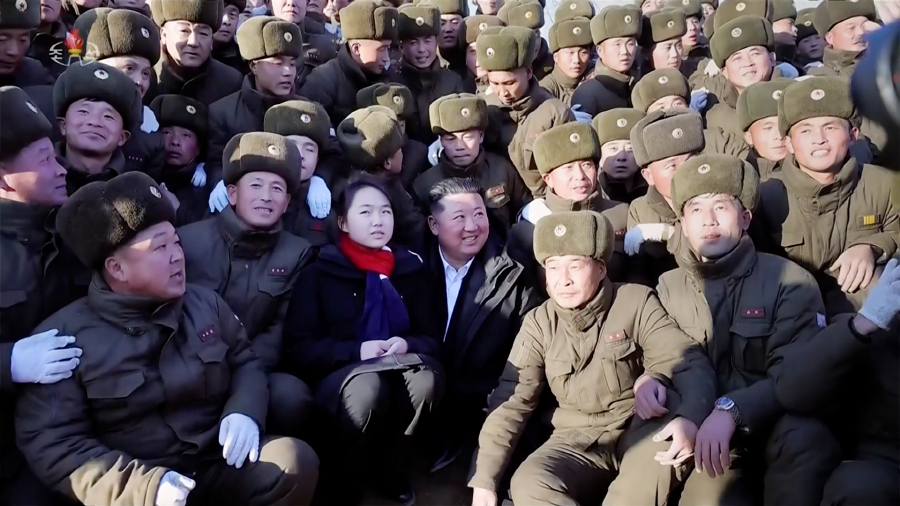 [North Korea Inside]
North Korea Inside· “Decapitation Anxiety” in Pyongyang After Maduro’s Arrest: Kim Jong-un’s Personal Security Elevated to a Quasi-Wartime Posture· Sinuiju Greenhouse Project and North Korea’s Potential Shift Toward Tourism-Based Foreign Currency Generation· North Korea Screens Film Depicting an Assassination Plot Against Kim Jong-il Nationwide and Broadcasts It on State Television· Kim Yo-jong Rejects Prospects for Improved Inter-Korean RelationsKim Myong-sungSecretary General of the SAND Institute“Decapitation Anxiety” in Pyongyang After Maduro’s Arrest: Kim Jong-un’s Personal Security Elevated to a Quasi-Wartime PostureNorth Korea has reportedly elevated security around Kim Jong Un to near–wartime levels following the sudden arrest and extradition of Venezuelan President Nicolás Maduro. According to sources familiar with internal developments in Pyongyang, the operation—widely perceived as a U.S.-led action directly targeting the sitting leader of an anti-American regime—has triggered acute regime anxiety in North Korea, particularly regarding the prospect of a leadership “decapitation” scenario.A senior source with knowledge of North Korea’s internal security indicated that on the evening of January 3, the day news of Maduro’s arrest became public, Kim Jong Un issued what is known internally as “Order No. 1,” placing the entire leadership security apparatus on maximum alert.Beginning at midnight on January 4, North Korea’s four principal protective bodies—the Workers’ Party Central Committee Guard Office, the State Affairs Commission Guard Bureau, the Guard Command, and the Guard Bureau—were reportedly placed under a quasi-war readiness posture, to remain in effect until further notice.These measures reportedly exceed routine security tightening. According to the same source, Pyongyang’s leadership assessed that “external physical threats could materialize at any moment,” prompting Kim Jong Un to order immediate reinforcement of personal protection. The arrest of Maduro appears to have reinforced a long-standing fear within the regime that the United States retains both the intent and capability to pursue regime change through targeted leadership removal should strategic conditions permit.Security conditions in central Pyongyang and surrounding areas have reportedly reached an unprecedented level of intensity. Following emergency directives issued jointly by the State Affairs Commission and the Party Secretariat in the early hours of January 4, personnel assigned to the protection of “Event No. 1”—a codename for Kim Jong-un’s movements—were reportedly increased to approximately five times their normal levels. Heavily armed units, including long-range sniper teams and machine-gun crews, were deployed at key locations, while orders were issued to increase individual ammunition loads by up to tenfold.All personnel assigned to Kim Jong Un and his family, including guards stationed at the Kumsusan Palace of the Sun, were placed on continuous standby within secure compounds and barred from leave or off-site movement. In the capital’s outskirts, including Pyeongseong and Samseok, mechanized and infantry units under the Guard Bureau reportedly conducted round-the-clock drills simulating external infiltration and precision strikes.According to a source, slogans such as “Defend Kim Jong Un at all costs” and “Defend the Paekdu bloodline at all costs” were prominently displayed, reinforcing an atmosphere in which operational error is intolerable. Even senior officials are reportedly proceeding with extreme caution amid heightened surveillance and discipline.This development is expected to further elevate the institutional status of Kim Jong Un’s guard units, which already function as a quasi-independent military force. These units reportedly encompass ground, naval, and air components, as well as special operations and electronic warfare capabilities. In an emergency scenario, all branches, including sniper and counter-infiltration teams, are reportedly tasked not only with leader protection but also with supporting strategic retaliation, including nuclear response contingencies.The apparent intent is to reorganize national military priorities around regime survival, with Kim Jong Un’s personal security placed above all other considerations. As of January 11, no order had been issued to downgrade the quasi-war posture. Party and guard authorities remain highly sensitive to U.S. military movements, and sources assess that this heightened security posture is likely to persist for an extended period.Personnel changes within the leadership security apparatus further underscore regime unease. According to the South Korean Ministry of Unification’s Key North Korean Figures 2025 and North Korean Agency Personnel Directory 2025, the head of the Workers’ Party Central Committee Guard Office has been replaced, as have the director of the State Affairs Commission Security Bureau and the commander of the Guard Command responsible for Kim Jong Un’s personal security. Although the precise timing remains unclear, the reshuffles reportedly occurred within the past two to three years, suggesting a broader effort to tighten loyalty and control within the security elite.Sinuiju Greenhouse Project and North Korea’s Potential Shift Toward Tourism-Based Foreign Currency GenerationSeparate developments suggest Pyongyang is simultaneously exploring new foreign currency channels. Analysts increasingly assess that the Sinuiju Greenhouse Farm Complex under construction near the Chinese border may be designed for purposes extending well beyond agricultural production, potentially functioning as a combined tourism, logistics, and export hub.In a report released January 12, Eun-yi Jung of the Korea Institute for National Unification noted that the Sinuiju facility differs markedly from existing greenhouse complexes in scale, infrastructure, and media portrayal. Covering approximately 4.46 million square meters—significantly larger than comparable facilities—it includes landscaped parks, fruit forests, processing plants, storage facilities, and upgraded transport infrastructure.Notably, Kim Jong Un has conducted repeated on-site inspections, visiting the complex five times last year and again at the start of this year, an unusually high level of personal attention. North Korean media coverage has conspicuously omitted customary references to “improving the people’s diet,” instead emphasizing scale, lighting, and scenic features, including prominent nighttime illumination—widely interpreted as catering to potential Chinese tourists.Logistics upgrades further reinforce this interpretation. Kim reportedly ordered the adjacent railway station to be converted into a combined passenger and freight hub, facilitating both mass transport and export. Field reporting from Dandong, China, indicates possible Chinese capital involvement, raising the likelihood that the project is oriented toward export markets and foreign currency earnings.Analysts suggest the Sinuiju greenhouse project may represent an attempt to merge agriculture, tourism, and logistics into a sanctions-resilient revenue model—a “tourism complex disguised as agriculture.”North Korea Screens Film Depicting an Assassination Plot Against Kim Jong-il Nationwide and Broadcasts It on State TelevisionNorth Korea has confirmed that a feature film depicting an assassination attempt on Kim Jong Il, former chairman of the National Defense Commission, is being screened nationwide and broadcast on state television. In a political system where even indirect references to the personal security of the supreme leader have traditionally been treated as taboo, the public dissemination of such content represents a notable departure from past practice. The regime’s decision to expose the entire population to a narrative centered on threats to the leader suggests a calculated effort to reinforce internal cohesion by underscoring the theme of “absolute loyalty” to the leadership. The portrayal of the would-be assassin as having links to South Korea further indicates an intent to channel public hostility toward external enemies. As one South Korean government source observed on January 9, “Kim Jong Un appears to harbor a significantly higher level of anxiety regarding his personal safety and regime security than his predecessors.”According to Rodong Sinmun, the Workers’ Party daily, the film—Day and Night of Confrontation, produced by the 4·25 Art Film Studio—has been screened since the beginning of the year at cinemas across Pyongyang, including the People’s Culture Palace, as well as at regional theaters nationwide.NK News, a U.S.-based outlet specializing in North Korean affairs, further reported that the film was aired on Korean Central Television (KCTV) on January 3. Broadcasting a film that is simultaneously in nationwide theatrical release on KCTV, an outlet watched by virtually the entire population, is unprecedented and underscores the regime’s determination to maximize its reach and impact.The film, which received awards in three categories at last year’s Pyongyang International Film Festival, is a sequel to the 2022 production A Day and a Night, which depicted an assassination attempt against Kim Il-sung. Together, the two films form a series centered on successive assassination plots targeting members of the Kim family.According to Rodong Sinmun, the first installment drew inspiration from an incident in which anti-regime elements infiltrated the railway sector in the so-called “New Liberation Zone” (present-day South Hwanghae Province) and were intercepted while attempting to assassinate Kim Il Sung aboard a train.Set in the 1990s following Kim Il Sung’s death, Day and Night of Confrontation follows prosecutor Kim Sung-jae, ostensibly tasked with investigating a series of murders. He is later revealed to be the mastermind behind a plot to assassinate Kim Jong Il. His true identity is Ri Tae-ul, the son of the would-be assassin from the first film, who inherits his father’s ideological mission and attempts to kill Kim Jong Il by sabotaging his train.Rodong Sinmun described audience reactions by stating that viewers were overwhelmed with anger upon witnessing “the son of a class enemy, who infiltrated key positions after the war, concealed his identity for decades, and plotted to overthrow the state in revenge for his father.”The train bombing depicted in the film closely parallels the 2004 Ryongchon train explosion in North Pyongan Province, in which a train carrying ammonium nitrate and fuel ignited after contacting overhead power lines, killing 154 people and injuring more than 1,300. The incident occurred only hours after Kim Jong-il’s special train had passed through the same station following a visit to China.At the time, North Korean authorities treated the explosion as a possible assassination attempt, launching a sweeping investigation that culminated in the confiscation of all mobile phones nationwide and the suspension of mobile communications—a measure unprecedented even by North Korean standards.The film concludes with Ri Tae-ul fleeing abroad after the failed assassination attempt, while his descendants later return to North Korea to attend the 2024 inauguration of Pyongyang’s Pioneer Street. Rodong Sinmun hinted at a future sequel, noting that the ending features “a grandson who vows revenge against our system.” This narrative arc, spanning three generations of assassination threats, strongly suggests that a subsequent installment may focus on a plot targeting Kim Jong Un himself.Several narrative devices reinforce the film’s ideological messaging. Notably, Ri Tae-ul’s wife addresses him using the term “oppa,” a South Korean expression prohibited under North Korean law. This linguistic choice implicitly frames the character as influenced by external forces, particularly South Korea, and functions as a tool for cultivating anti-South sentiment. As Rodong Sinmun asserted, the film conveys the lesson that “even after a thousand years, the nature of imperialists and class enemies does not change, and those driven by self-interest inevitably end in treason.”In contrast to traditional North Korean cinema, the film features graphic depictions of murder, torture, and armed confrontation, including train fights, car chases, and large-scale explosions reminiscent of Hollywood action films. The state media praised its fast-paced narrative and dramatic tension, noting that its unexpected plot developments kept audiences “immersed in excitement.” Analysts assess that this stylistic shift reflects a deliberate effort to appeal to younger viewers who have been increasingly exposed to foreign media.A senior official at a South Korea’s national research institute commented that the film’s objective is to attract viewers through spectacle and violence while embedding a core propaganda message: “Enemies are perpetually targeting the leadership, and the struggle against them is unending.” The official added that the timing of the release, coinciding with Kim Ju-ae’s increased public visibility and the apparent institutionalization of fourth-generation succession, was “highly consequential.”Kim Yo-jong Rejects Prospects for Improved Inter-Korean RelationsAgainst this backdrop, Kim Yo-jong, vice department director of the Workers’ Party of Korea, publicly dismissed the South Korean government’s expectations for improved inter-Korean relations as a “pipe dream.” Her remarks are widely interpreted as reinforcing Kim Jong Un’s doctrine of “two hostile states” and as an effort to foreclose any near-term prospects for dialogue with Seoul.In a statement released via the Korean Central News Agency late on January 13, Kim criticized the South Korean Ministry of Unification for suggesting that her previous remarks left room for communication and tension reduction, calling the assessment “pathetic” and “fundamentally misguided.” She asserted that all South Korean notions of improving inter-Korean relations were “unrealizable illusions” and that no change in North Korea’s stance should be expected.Analysts view the statement as a calculated move to seize the initiative vis-à-vis the Lee Jae-myung administration, leveraging the recent drone incident to underscore Seoul’s alleged responsibility while reaffirming Pyongyang’s refusal to engage. Kim reiterated demands for an apology and preventive measures, warning that repeated violations would result in “unbearable consequences” and implying that rhetorical warnings could translate into concrete action.Observers note that North Korea’s increasingly confrontational rhetoric since the start of the year coincides with President Lee’s active diplomatic engagement with the United States, Japan, and China on peace and denuclearization issues. From Pyongyang’s perspective, being placed back on the international diplomatic agenda appears to have provoked a hardened response.In this context, Kim Yo-jong’s statement is widely interpreted as delivering a dual message: reaffirming the regime’s policy of severing inter-Korean relations while simultaneously applying pressure on Seoul to acknowledge responsibility for recent incidents. Contrary to official South Korean assessments suggesting even a minimal opening for dialogue, prevailing analysis holds that North Korea is more likely to sustain its confrontational posture for the foreseeable future.
26.01.16 -
 [Thematic Analysis]
The 13th Plenary of the 8th Central Committee of the Workers’ Party of Korea: Key Outcomes and Implications for the 9th Party Congress In-tae KimInstitute for National Security StrategyOverview of the Plenary MeetingNorth Korea convened an enlarged session of the 13th Plenary Meeting of the 8th Central Committee of the Workers’ Party of Korea (WPK) from December 9 to 11. The meeting addressed five agenda items: (1) a review of the implementation of Party and state policies over the past year; (2) an assessment of the work of the Central Inspection Commission; (3) major issues related to preparations for the 9th WPK Party Congress; (4) deliberation on the execution of the 2025 state budget and formulation of the 2026 state budget; and (5) organizational matters.Since last year, North Korean media have departed from the previous practice of providing relatively detailed accounts of WPK plenary meetings, instead offering only high-level summaries. Coverage of this plenary followed the same pattern, largely limited to a listing of agenda items and General Secretary Kim Jong Un’s concluding remarks. This assessment therefore relies on the emphases evident in official reporting and recent propaganda trends to evaluate the year-end review and to anticipate the likely orientation of the forthcoming 9th WPK Congress.Conclusion of the 8th Central Committee Leadership Body’s Official TermThe leadership body of the 8th Central Committee was formed at the 1st Plenary Meeting held immediately after the 8th Party Congress of the Workers’ Party of Korea (WPK) in January 2021 and has carried out its official activities over the subsequent five-year term. Under the WPK Constitution, plenary meetings are to be convened “at least once a year” and function as the Party’s highest decision-making body between congresses, with responsibility for “organizing and guiding all Party work.”Over the past five years, plenary meetings have been held approximately twice annually, addressing core issues of state governance, including periodic assessments of Party and state policy implementation. These meetings primarily focused on executing the decisions of the 8th Party Congress and advancing the five-year plan. In practice, they have functioned as the central executive mechanism overseeing policy implementation within a ruling system centered on Kim Jong Un and the WPK.Quantitatively, the institutionalization of the plenary system has intensified. During the 8th Party Congress period, a total of 13 plenary meetings were held, compared to six during the 7th Party Congress term (2016), the first congress held under Kim Jong Un. This corresponds to an average interval of approximately 4.6 months. The number of formal agenda items also increased markedly—from 14 during the 7th term to 68 during the 8th—representing an almost fivefold rise. In terms of regularization and procedural density, the current system resembles the centralized Party leadership practices of the Kim Il Sung era (1960s–1980s), while also exhibiting an even stronger concentration of authority around a single leadership core.Characteristics of the 13th Plenary MeetingDespite traditionally serving as the annual review session and typically lasting five to six days, the 13th Plenary Meeting concluded in approximately three days. Held immediately ahead of the 9th Party Congress, the meeting focused primarily on summarizing key points related to “achievements and deviations,” while devoting greater attention to preparations for the upcoming congress and related political events, such as welcoming overseas-deployed troops and inaugurating major construction projects.Notably, the meeting did not adopt a formal “Party Decision,” which normally outlines the principal policy tasks for the following year. Under Party regulations, next year’s policy priorities are to be determined by the 9th Central Committee to be elected at the 9th Party Congress. In lieu of a formal decision, Kim Jong Un repeatedly emphasized the need for a “successful conclusion of the work of the 8th Central Committee” and underscored the responsibilities and role of members of the Party’s leading organs through the end of the current term.Overall Assessment for 2025: Completion of the Five-Year PlanIn his concluding remarks, Kim Jong Un characterized the year’s overall performance as marked by an “accelerated pace of advance” and “doubled self-reliance,” declaring that these achievements signified the “completion of the five-year plan.” This framing effectively preempted a formal evaluation by asserting the comprehensive fulfillment of the core objectives set forth at the 8th Party Congress. Kim further described the year as “a historic year of transition” that generated momentum for advancing to a new stage of development.Although the plenary report did not specify concrete achievements or shortcomings, key assessments can be inferred. North Korea defined the year’s overarching objective as successfully concluding the five-year plan while substantively advancing preparations for the next development phase, with particular emphasis on commemorating the 80th anniversary of the WPK’s founding and preparing for the 9th Party Congress.From the outset of the year, the regime prioritized visible economic and development initiatives, including the second-year groundbreaking ceremonies for the “20×10 Policy for Regional Development,” targeting 20 cities and counties. Kim Jong Un also expanded his pattern of on-site inspections at factories, hospitals, fisheries, and other civilian facilities, placing greater emphasis on direct field guidance rather than reliance on Party meetings alone. Unlike previous congress cycles, however, there was no formal “total mobilization” campaign, such as the “70-day” or “80-day” battles seen ahead of earlier congresses. Nevertheless, the sustained focus on economic tasks and propaganda campaigns from early in the year through the October anniversary period exceeded prior mobilization efforts in both scale and intensity.Preparations for the 9th Party CongressThe plenary meeting formally addressed preparatory steps for the 9th Party Congress, including: (1) the establishment of a congress preparatory committee and the organization of subcommittees and sectoral working groups; (2) the drafting of revisions to Party regulations; (3) the compilation of comprehensive reviews of the activities of Party leadership bodies at all levels; and (4) the outlining of procedures for recommending delegates to higher-level Party conferences and the congress itself.Compared with preparations for the 8th Party Congress initiated in August 2021, some elements appear delayed, and procedural variations are evident. Nonetheless, the ongoing trend under Kim Jong Un toward experimenting with new operational methods for Party leadership bodies, combined with detailed regulatory revisions, is expected to be further institutionalized through the 9th Party Congress.Key Economic Policy Themes Expected at the 9th Party CongressIn addition to existing policy priorities, the plenary meeting highlighted new tasks aimed at addressing “urban–rural disparities.” In agriculture, “revolutionary measures” were emphasized for restructuring underperforming units, including West Coast tidal flat farms. In industry, the renovation of coal mining villages was singled out for particular attention. The meeting also reiterated long-standing rural development tasks, such as ensuring full preparation for the upcoming farming season, expanding wheat cultivation and processing capacity, and reforming the distribution system in line with socialist distribution principles. Emphasis was also placed on extending region-specific transformation achievements under the banner of “self-reliance and self-sufficiency.”A notable continuity is the centrality of construction policy. Construction, a core pillar of the five-year economic plan, has mobilized national resources on a sustained basis, with both scope and targets steadily expanding. Since the 8th Party Congress, large-scale projects—including Pyongyang’s 50,000-unit housing initiative, rural modernization, local industrial factory construction, healthcare modernization and local hospitals, and greenhouse farms—have been added sequentially. The restructuring of tidal flat farms and coal mining villages highlighted at this plenary meeting also fundamentally constitutes construction-oriented tasks. The meeting further designated 20 cities and counties as targets for the third year of the regional development policy. As a result, construction-related tasks are likely to intensify further in next year’s economic agenda, accompanied by persistent challenges related to resource allocation and labor shortages.Economic Policy Orientation: Emphasis on “People-First” and “Self-Reliance”Finally, the meeting shed light on the anticipated direction of the next five-year plan in the Kim Jong Un era. It emphasized the need to “accurately set goals for the next five-year plan aimed at qualitative development across all sectors and to present scientific and realistic methods for their realization.” This language suggests a conceptual shift toward a “qualitative development stage” of comprehensive socialist development.Whereas the 8th Five-Year Plan prioritized establishing an economic foundation—revitalizing the overall people’s economy and laying the groundwork for improved living standards—the forthcoming plan appears intended to build on that foundation by accelerating comprehensive socialist development through qualitative improvements across the entire economy.
26.01.09
News Letter
We are leading the global communication via Newsletter.
We will deliver the latest information and proven facts on Korean Peninsula status including North Korea situation.