

-
 [Interview]
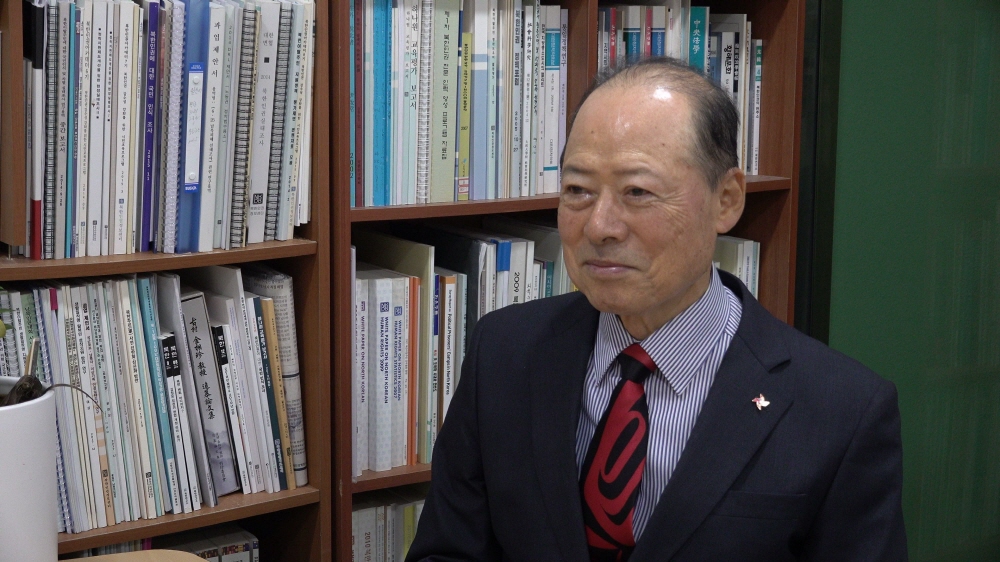
Former South Korean Ambassador to Russia Lee Jae-choon Predicts Russia-Ukraine War Will Mark the End of the Vladimir Putin EraLee Jae-choonformer South Korean Ambassador to RussiaLee Jae-choon, former South Korean Ambassador to Russia, predicts that the Russia-Ukraine conflict will mark the end of the Vladimir Putin era. In a recent interview with the SAND Newsletter team, conducted on the 4th at The North Korean Human Rights Museum in Seoul’s Sinyeong Building, Lee remarked, “Over the past two years and eight months, hundreds of thousands of Russian soldiers have perished. Putin is struggling to handle the rising public frustration.” He continued, “The fact that Putin, once dismissive of Kim Jong-un, is now seeking his help underscores his desperation.” Lee further projected, “The longer this costly, unproductive war drags on, the more precarious Putin’s political position will become, ultimately leading to a crisis.”What Was Vladimir Putin Like When You Met Him as Ambassador to Russia?I served as South Korea's Ambassador to Russia from March 2000 to February 2002, during that time becoming acquainted with President Vladimir Putin, who had just come to power. In the March 2000 election, Putin campaigned on restoring law and order and secured the presidency by May.At that time, in my observation, Putin appeared physically small yet resolute, with sharp judgment reminiscent of a former South Korean president who led the nation’s economic transformation. I often briefed him on South Korea’s economic development, encouraging him to consider our model for reviving Russia’s economy. Early in his presidency, he welcomed advice from others, including myself, earning him praise. However, he eventually revealed the limitations of his KGB background, steering Russia away from democratic market principles toward a more authoritarian economy.How Do You Assess Putin's Actions in Crimea and Ukraine?Russia is powerful in terms of military and defense industries, yet lacks strength in its domestic economy. Putin’s invasion of Ukraine was a major misstep, effectively sanctioning himself. His initial mistake, however, was in 2014, when he occupied and annexed Crimea. It’s regrettable that then-U.S. President Barack Obama and the Democratic Party didn’t respond more decisively to Putin’s actions.Lee Jae-choon, former South Korean Ambassador to Russia, predictsPutin’s current invasion brings him no clear benefit, yet he persists, seeing Ukraine as a buffer against NATO. Had the war ended swiftly, as in 2014, his ambitions might have solidified while the U.S. and NATO hesitated. This time, however, Russia lacks the resources to counter Ukraine’s strong defense. Since the annexation of Crimea, Russia has faced severe sanctions, stunting its economic growth to the point that, despite a population of 140 million, its GDP is now smaller than South Korea’s. Today, Putin is grappling not only with shortages in manpower and equipment but also with funding. A swift conclusion to the war might have limited the losses, but instead, he finds himself bogged down in Ukraine. The prolonged sacrifice of Russian soldiers has stirred public discontent, which will be difficult for Putin to manage. This war may very well mark the final chapter of the Putin era.What Are Your Thoughts on North Korean Troops Being Sent to Russia?A foreign policy expert group had anticipated the deployment of North Korean soldiers to Russia as early as a year and a half ago. The death of Prigozhin, leader of the Wagner Group, worsened Russia’s manpower crisis, making it almost inevitable that North Korean troops would be called in. Despite Putin's authoritarian rule, public discontent is high over the loss of some 700,000 soldiers in this war. Since Wagner forces mostly consisted of criminals, their deaths attracted little attention, but the loss of regular soldiers, who are entitled to higher compensation, has become a more sensitive issue. Many young Russians have fled the country, and rising opposition to the war has made it difficult to replenish the regular army. North Korean soldiers now in Russia are likely a consequence of the Wagner Group’s collapse, and further military support from North Korea seems likely in the near future.As the war drags on, more North Korean soldiers may be pulled into the conflict. Russia, having lost around 700,000 soldiers, now faces a critical manpower shortage. In desperation, Putin has turned to Kim Jong-un for both weapons and troops, with Kim effectively selling North Korean youth for a modest price. Putin is likely to keep requesting reinforcements, and Kim may continue to comply. Although exact payment details are unclear, reports suggest a significant increase to around $2,000 per mercenary. Still, given Putin’s financial constraints, there’s no guarantee he’ll pay Kim in dollars, nor can North Korea indefinitely sustain this support.Even if North Korean troops are deployed, reclaiming strategic areas like Kursk would be challenging. The North Korean military lacks real combat experience and would struggle against Ukraine’s well-equipped, battle-tested forces. Kursk has become a hub for advanced Western weaponry, including drones and modern fighter jets, making it unlikely that North Korean troops could assist in retaking Russian-held territories. Additionally, the outdated weapons provided by North Korea, mostly from the 1960s and 70s, are poorly suited to modern warfare.What Is the Internal Reaction in Russia to the Prolonged War?The loss of Kursk may prompt Russians to question Putin’s decision to invade Ukraine, especially as they start to see their own territory slipping away. If Kursk isn’t reclaimed, citizens may ask, “Why start this war only to lose Russian land in the first place?” Ongoing setbacks will inevitably weaken Putin’s political standing.Currently, Ukraine has mounted an effective counterattack, with President Zelensky even beginning to view parts of the Kursk region as Ukrainian territory. This mirrors Putin’s own strategy in Crimea, adding political pressure on him. Although official polls suggest 70% to 80% of Russians support Putin, genuine public opinion is likely suppressed in an authoritarian environment.Putin now faces a significant dilemma, criticized over the loss of territory, resources, and lives without meaningful gains from the war. Although he initially received support from Iran, that assistance has dwindled as Iran is now heavily involved in its own conflicts, backing Hamas, Hezbollah, and Houthi rebels against Israel in the Middle East, leaving it with limited resources to support Russia. As a result, North Korea has become Russia’s sole remaining ally. Domestically, Putin is under fire for reducing Russia to a diminished state, tarnishing its reputation as a permanent member of the United Nations Security Council by relying on support from a rogue state like North Korea. In short, Putin has embarrassed the Russian people. Historically, the House of Romanov fell in 1917 following a peasant uprising that led to the Soviet regime’s rise, and after the Soviet Union’s collapse, Putin emerged with a long-standing autocratic rule. Now, however, his rule appears to be weakening due to the Russia-Ukraine war.About Former South Korean Ambassador to Russia Lee Jae-choonFormer Ambassador Lee Jae-choon served as South Korea's Ambassador Extraordinary and Plenipotentiary to Russia from March 2000 to February 2002 and retired from the Ministry of Foreign Affairs and Trade in 2003. That April, he received the Order of Service Merit (Red Stripes).Career Highlights:△Director, Northeast Asia Division 1 (1981)△Counsellor, Korean Embassy in the U.S. (1983)△Director-General, Asian Affairs Bureau, Ministry of Foreign Affairs (1991)△Deputy Minister, Ministry of Foreign Affairs (1995)△Ambassador to the EU (1996)△Ambassador to Belgium and the EU (1998)△Ambassador to Russia (2000–2003)
24.11.08 -
 [Defectors' Podium]
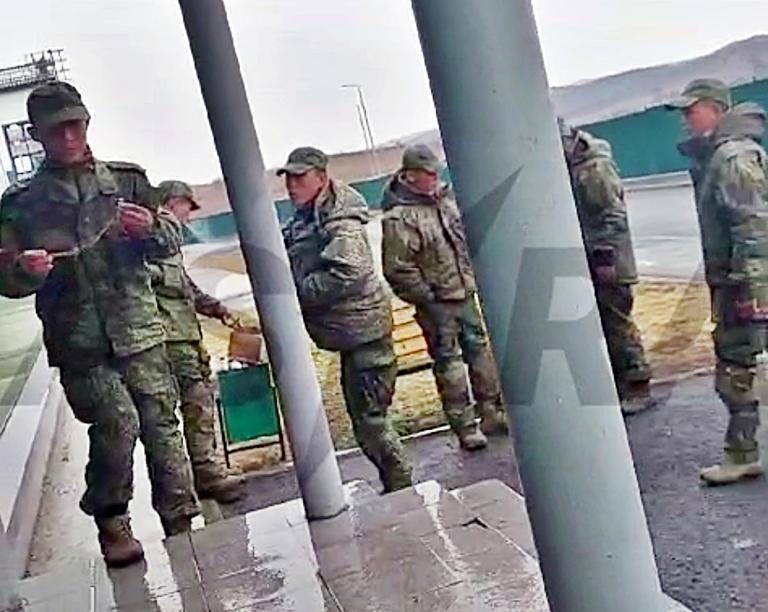
Letter from a Former North Korean Soldier, Dispatched to Russia and Now a Deserter - Part 1Dear North Korean Soldiers Deployed to Russia, at the Crossroads of Life and DeathLee Nam-suFormer North Korean Soldier Dispatched to RussiaMy Fellow Korean People's Army Soldiers, Likely Longing for Home from the Battlefields of RussiaI never imagined I’d be reaching out to you like this. I hope you’re all managing as best you can. With the weather turning colder, I worry if you’re able to stay warm. Russia’s climate is much harsher than back home in North Korea, and I know adjusting can’t be easy—it must be challenging for many of you in such a foreign place. My name is Lee Nam-su, a former soldier who left Russia five years ago and now lives freely while attending university. I enlisted in North Korea’s military back in 2009, so I’m technically your senior. I want to speak openly and honestly with you, with no pretense.Hearing recent news reports brought an unexpected shock. I learned that you have been taken to the brutal battleground of the Russia-Ukraine war, often called a “human slaughterhouse.” I couldn’t bear the anxiety this news stirred, which is why I’m reaching out. My hometown is Waudo District in Nampho City, known for its port and the Yellow Sea Water Barrage. I grew up there, attended primary and middle school, back when they weren’t split into junior and senior middle schools like they are now. After graduation, I joined the 7th Bureau, which might be familiar to you but differs from your Storm Corps. While your unit likely trains in martial arts from early morning, our work started with shovels and pickaxes. It may have changed since, but I’m sure the hard labor hasn’t eased.On the 22nd of last month, North Korean soldiers deployed to Russia’s Far East chat outside a buildingin the Primorye region. / Captured from Telegram channel AstraI was fortunate to be dispatched to Russia for military service in 2018. At first, the idea of traveling abroad to earn foreign currency was exciting. The thought of boarding a plane and going to another country felt thrilling. But over time, I realized that the capitalist world I’d heard about was very different from the one I was experiencing. In a free country, you control your fate, and you enjoy the results of your own hard work. You don’t have to do things you don’t want to. But in North Korea, I was expected to be bound by the Party’s orders and to comply with collective demands. I came to see this as a serious violation of freedom and human rights.In Russia, I worked harder than the locals—often twice as hard—but all my earnings went to the Party’s funds. This might seem normal in North Korea, but it would be unacceptable in a free, democratic nation, where it would be punishable by law. Like many, I was led to believe that South Korea was impoverished, but this was a complete lie; the real poverty lies in North Korea. Slogans like 'No Envy in the World' and 'Protect the Revolutionary Leadership with Our Lives' exist only to serve the Paektu bloodline. You are likely still undergoing indoctrination with Life Review Sessions, Greatness Education, and lectures. Why do they do this? Because they fear the truth. Lies continue to cover more lies to sustain their rule. Nothing in this world is worth more than your own life. The world without you is meaningless. I sincerely hope that you, at a similar crossroads, will choose not to blindly follow a dictator’s orders and instead live a life that honors your humanity.Right now, you are in the midst of the devastating conflict between Russia and Ukraine. This war isn’t simply between Russia and Ukraine; it’s a confrontation with the world. Russia’s unlawful invasion of Ukraine has led to international isolation and sanctions. Over the last three years, 700,000 Russian soldiers have died, with an average of 1,127 casualties per day.Putin, desperate for support, has called on North Korea to send mercenaries, labeling it a ‘blood alliance’ or ‘strategic partnership.’ The fact that Russia, with over 140 million people, would seek help from North Korea, with only about 25 million, reflects the extent of Russia’s military depletion. Despite its vast land—over 150 times the size of North Korea—Russia struggles in this war because people worldwide support Ukraine in the fight for justice and freedom. Truth and justice cannot be defeated.This war was never your choice. It isn’t your war. You need to recognize that your lives are being sacrificed by both the North Korean and Russian regimes. Putin’s ambition for power and Kim Jong-un’s pursuit of foreign currency are sending you to die on the battlefield. For the past three years, over a thousand Russian soldiers have perished daily. And now, you are at the forefront of this tragedy. Fighting in Russian uniforms under a minor ethnic group’s name, following orders from Russian officers—is this truly the life you deserve? Think deeply about what you stand to gain from this war, what is truly worth risking your life for. To Kim Jong-un and Putin, you are tools for their power and profit. Right now, Kim Jong-un is exchanging your sacrifices for Russian goods, technology, and luxuries. Your youth and lives are mere bargaining chips in their dealings.I hope you find the courage and hope to break the chains of this oppressive bondage. That’s all I have to say for now, and I look forward to connecting again soon. Take care.
24.11.08 -
 [Defectors' Podium]
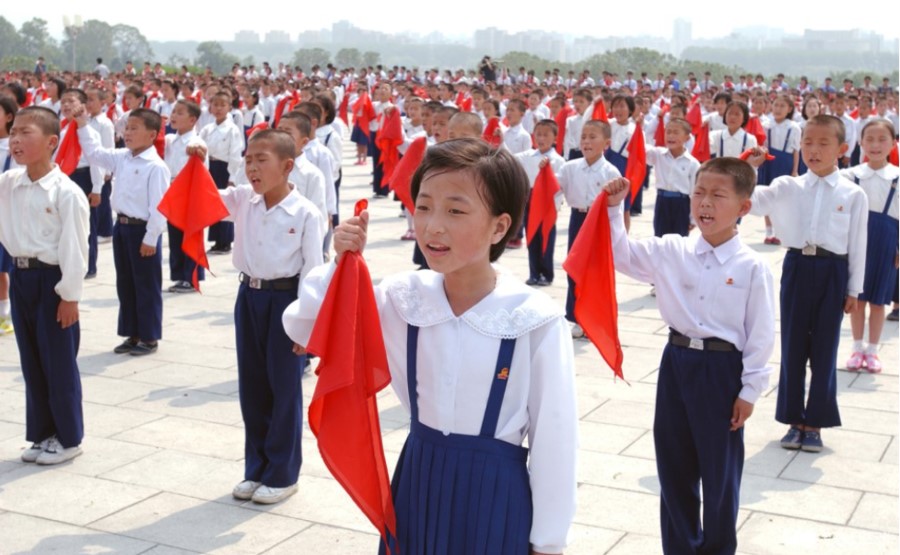
A Female North Korean Defector’s Story of Settling in South Korea:The Price of Freedom and ChoiceHyun Eun-haSogang University StudentLife in South Korea, as a young defector from North Korea, has been filled with a whirlwind of emotions. Adapting to a world so drastically different from what I knew back home was often overwhelming. But in that struggle, I discovered new opportunities and found hope for a brighter future.The Difference in Education: Ideology vs. CreativityIn North Korea, education was deeply rooted in ideology. From a young age, we were taught loyalty to the Kim family, and all lessons served to reinforce the communist system. Our textbooks were filled with stories of the Party's greatness, and students were expected to follow orders without question. Critical thinking or creative expression had no place in this environment; obedience was the primary virtue.In stark contrast, South Korea’s educational system fosters creativity and encourages critical thinking. Here, students are pushed to explore a variety of topics and freely voice their opinions. Initially, I struggled to adjust to this new way of learning. Participating in discus-sions and questioning teachers was completely foreign to me. The interaction with educa-tors here was entirely different from what I had experienced before.At first, I focused on writing down every word my teacher said, hoping to keep up. I also threw myself into after-school programs to improve. Over time, I began to grasp the lessons and grew confident enough to participate in class. Eventually, I came to realize that this new approach to education helped me grow signifi-cantly, teaching me not only new subjects but also how to think independently.A Scene from the Induction Ceremony of the North Korean Children's Union / Encyclopedia of Korean CultureThe Price of Freedom and My ChoicesThe most significant difference between North and South Korea is the concept of freedom. In North Korea, every aspect of life is controlled and monitored. From school lessons to the media we consume, even family trips are under strict supervision. But in South Korea, I was suddenly faced with the responsibility of making my own choices—what to do, what goals to pursue, and how I wanted to live my life. At first, this newfound freedom felt strange and even anxiety-inducing. The more choices I had, the more responsibility I had to take for them.New Opportunities and ChallengesLife as a young defector in South Korea has been a continuous series of challenges. In North Korea, decisions like going to university or choosing a career were made by the Party. Here, I quickly realized that my choices would shape my future. After finishing high school, I had to decide which university to attend, what major to pursue, and what kind of career I wanted. Every decision about my life was now in my hands. While this freedom filled me with both fear and anticipation, it also gave me a deep sense of fulfillment as I found my way forward.Now, as a part of South Korean society, I work to bridge the understanding between North and South, hoping for a better future. With my experiences from both worlds, I aspire to help other North Korean defectors achieve their dreams in South Korea and to continue walking this path alongside them.
24.10.18 -
 [Featured Articles]
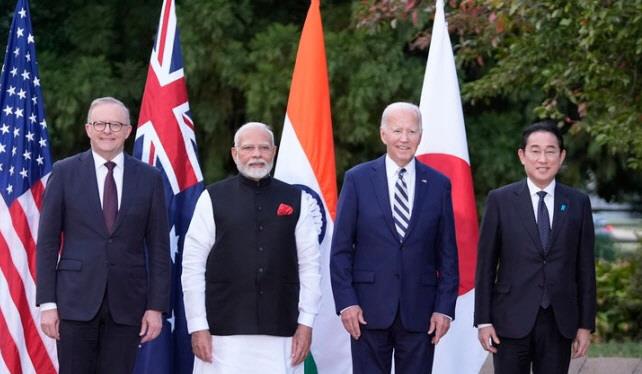
Post-2025: Scenarios for Quad 3.0 Huh Won-youngResearch Professor, Institute of Asian Culture Studies, Mokpo National UniversityOn September 22, the Quadrilateral Security Dialogue (Quad), comprising the U.S., Japan, India, and Australia, held its fifth summit. As both U.S. President Joe Biden and Japanese Prime Minister Kishida Fumio have announced they won't seek another term, the Quad is expected to shift direction after the upcoming elections. This presents a timely opportunity to assess its achievements, challenges, and implications for South Korea.To understand the Quad's trajectory, it’s important to revisit past analyses and timelines. Many mark 2007—when former Japanese Prime Minister Abe Shinzo proposed the ‘Arc of Freedom and Prosperity’—as the start of Quad 1.0, and its 2017 revival under the Trump administration as Quad 2.0. However, its evolution, including periods of stagnation and resurgence, spans a broader historical context.Quad 1.0 was driven by Japan's proactive geopolitical vision when China’s perceived threat was minimal. It originated from the 2004 ‘Tsunami Core Group’ formed for disaster relief after the Indian Ocean tsunami. Early developments included the 2008 election of Australian Prime Minister Kevin Rudd and Australia’s decision to withdraw from the Quad, as well as Japan’s 2009 shift to the Democratic Party, reflecting a less confrontational East Asia. From 2004 to 2013, there was a mix of optimism and caution regarding China’s rise, exemplified by Abe Shinzo’s efforts to strengthen Sino-Japanese relations despite past tensions over former Prime Minister Koizumi’s visits to the Yasukuni Shrine.The leaders of the 'Quad,' a security alliance comprising the United States, Japan, Australia, and India, pose for a groupphoto ahead of the summit in Wilmington, Delaware, U.S., on September 21 / Image circulated on Chinese social mediaQuad 2.0 did not emerge abruptly under the Trump administration. Its revival was closely linked to Japan’s introduction of the ‘Indo-Pacific’ as a strategic concept, a response to China’s expanding influence. After returning as Prime Minister in 2012, Abe proposed the ‘Asia’s Democratic Security Diamond,’ emphasizing collaboration among Quad countries. By 2016, he expanded it into the 'Free and Open Indo-Pacific' (FOIP) framework, encouraging U.S. support. This strategic shift was driven by rising threats from China, particularly the 2010 collision with a Chinese fishing vessel near the Senkaku Islands and Japan's 2012 decision to nationalize some of these islands.If Quad 1.0 was a phase of trial and error, then Quad 2.0 (2013–2024) marks the institutionalization of a small multilateral body aimed at countering China. Revived by the Trump administration, which supported Japan's geopolitical vision, the Quad responded to rising strategic competition with China. Annual foreign ministers' meetings in 2019 and 2020 reflected growing concerns over China’s political interference, the COVID-19 pandemic, and increased tensions for Australia and India, particularly after their June 2020 border clash. In 2021, the Biden administration held the third foreign ministers' meeting in February, followed by the first virtual leaders' summit in March. From September 2021 to September 2024, four in-person summits further solidified the Quad as a regional security consultative body.During this period, the U.S. promoted the concept of ‘Quad Plus,’ inviting participation from regional countries, including South Korea. Although both the Trump and Biden administrations pursued this, the Moon administration’s cautious approach—considering China’s stance—resulted in a passive response. However, with Yoon’s administration pledging to join the Quad, the U.S. began advocating more concretely for South Korea’s involvement, as demonstrated by the Senate Committee on Foreign Relations’ proposal in February 2023.How might the Quad evolve after 2025? Four major factors are expected to influence its trajectory. First, ongoing conflicts in Europe and the Middle East—like the protracted Russia-Ukraine war and the escalating Israel-Palestine situation—could push the Quad toward a more military-oriented alliance. Second, changes in China’s diplomacy and cross-strait relations will be significant, especially as Xi Jinping, facing economic pressure and nearing the end of his third term in 2027, might be forced to achieve a breakthrough with Taiwan’s pro-American President Lai Ching-te.The third factor is the stance of Japan’s Prime Minister Ishiba Shigeru. With a firm approach to security, he aims to establish an ‘Asian NATO’ by linking and expanding existing alliances, potentially including South Korea. The final factor is the outcome of the U.S. presidential election in November. If Kamala Harris wins, continuity in the Quad’s approach is expected, while a Trump victory could bring shifts in U.S.-China relations and increase pressure for a more active South Korean role.Two main scenarios emerge based on these four factors. The first is maintaining the status quo for Quad 2.0. If regional geopolitical tensions remain steady (even if Trump is elected) and no major incidents occur, the Quad will continue as a small multilateral consultative body. In this scenario, South Korea should recognize the importance of small multilateralism in the region. The U.S. is pursuing a broad deterrence strategy through various small frameworks, including the Quad, the Trilateral Strategic Dialogue (TSD) among the U.S., Japan, and Australia, AUKUS, U.S.-Japan-South Korea security cooperation, the D-10 (a democratic coalition), and Chip 4 Alliance between South Korea, U.S., Japan, and Taiwan. Rather than focusing on whether to join the Quad, South Korea should coordinate and expand its cooperation within these existing bodies as needed.The second scenario involves military expansion. If regional tensions worsen and the risk of conflict rises, the U.S. may push to transform the Quad into a more military-focused alliance, actively engaging surrounding countries. This expansion could not only involve the Quad but also accelerate cooperation with NATO and the Indo-Pacific 4 (South Korea, Japan, Australia, and New Zealand). If this occurs, South Korea’s absence from the Quad could create distrust among regional and global partners. Therefore, swift political decisions would be required, with South Korea proactively participating in areas like defense industry cooperation and maritime capability development to share responsibilities.The Quad is not a fixed institution but a response to regional geopolitical shifts. Its future will largely depend on these dynamics. As an influential middle power, South Korea must prepare for changes, especially as its own security situation intertwines with broader regional issues, such as the North Korea-Russia alliance and trilateral security cooperation with the U.S. and Japan. Understanding these shifts proactively and strategically aligning with neighboring countries is crucial for South Korea's diplomatic and security future.
24.10.18 -
 [Column]
Marketing In North Korea (8) - Go Global! Ryuwon- North Korean marathoner Jong Sung Ok's shoes - Jeon Byung-kilSenior Consultant of YESInnovationformer of Secretary General of UniKorea FoundationAugust 24, 1999. North Korea's unheralded athlete Jong Sung Ok won the women's marathon at the World Athletics Championships in Seville, Spain. It was a dramatic victory, as she edged out Japan's Hari Ichihashi by three seconds in a race that went down to the wire. "At the finish line, I remembered Supreme Leader Kim Jong-il calling out to me, 'Welcome home,' and I pushed myself to the end," said Jong Sung-ok. Jong's shoes and sportswear were made by Japanese sports brand ASICS.North Korea was thrilled with Jong's victory. A documentary was made of Jong's marathon finish and a postage stamp was issued. However, the Japanese trademark ASICS was obscured or erased in archival videos, photographs, posters, and stamps. There's even a scene like this in the novel that tells the story of Jong Sung-ok. After winning the marathon, a reporter asked Jong which country and which company's sneakers she was wearing. In response to this question, Jong looks at the shoes made in North Korea and smiles. Japanese ASICS shoes were a necessity for North Korean athletes, but something that they were not comfortable talking about in public. So, were there no sneakers being produced in North Korea at the time?North Korea's Jung Sung-ok wins the women's marathon at the 1999Seville World Athletics Championships/IMDBRyuwon founded in 1988In 1988, South Korea hosted the Seoul Olympics and the country was abuzz with sports fever. In the run-up to the Olympics, a fierce marketing battle raged between global sporting goods brands like Nike and Adidas and indigenous brands like Pro-Specs and Le Caf. Around the same time, in November 1988, North Korea's Ryuwon Shoe Factory was established in Pyongyang under the direction of Supreme Leader Kim Jong Il. This was a month after the Olympics were held in South Korea.Ryuwon Shoe Factory/YonhapNewsRyuwon Shoe Factory was founded by overseas Koreans. In the mid-1980s, North Korea enacted a law allowing foreign technology to be transferred and foreign investment to revitalize the economy. Capital from pro-North Korean diaspora living in Japan entered North Korea at this point. However, the program was notoriously unsuccessful due to North Korea's closed nature, excessive interference, and an investment environment that did not guarantee profits. Ryuwon Shoe Factory, which initially relied on overseas Korean capital, changed hands several times due to poor management. After 2012, with the advent of the Kim Jong-un era, Rywon begins to show signs of change.The Ryuwon Shoe Factory initially used old production lines imported from overseas and produced mainly cloth shoes and sneakers. The product's design was also bland. Since 2014-15, Ryuwon has been trying to change from the traditional format by diversifying the types of products and designs. In terms of production facilities, a line capable of manufacturing more than 1 million pairs of shoes per year was built in cooperation with the Pyongyang Shoe Factory. In 2017, the company installed 1,200 solar panels on the roof of the factory to power the plant with solar energy. The factory gets more than 80% of its power from solar energy.Copycat foreign products to its own designPrior to the mid-2010s, North Korea copied foreign shoe brands. On November 15, 2012, KCNA reported that the Ryuwon Shoe Factory had produced a new type of shoe, which was similar in design to the Japanese sports brand ASICS. Ryuwon's new sneakers looked almost identical to ASICS sneakers, but the shoe factory's name, "Ryuwon," was emblazoned on the back of the sneakers. At the time, North Korea had very little concept of design creation or intellectual property rights. They didn't have much of a problem with the press reporting on products that were copycats of foreign products.Since the mid-2010s, North Korea has begun to pay attention to industrial design in general. Design has also become a core part of shoe production. Instead of producing the same type of small items, they changed the product mix by age, season, and sport, and introduced different colors for shoes. On May 14, 2018, China's People's Net introduced the Ryuwon shoe factory and the designer who works there, Shim Eunshim. Shim has been working at the Ryuwon shoe factory since graduating from college, and says her design team creates more than 10 new designs every week."When designing for product planning, we first understand global trends and then try to create designs that are unique to North Korea by incorporating the styles that consumers like," said Shim. Footwear-conscious North Korean athletes have also begun to favor the Ryuwon shoe brand. Some of the North Korean athletes who competed in the 2018 Pyeongchang Winter Olympics wore "Ryuwon" shoes. The media focused on the similarity of the shoe design to Adidas, but the shoes clearly bore the markings of a 'Ryuwon' shoe. The shoes are designed similarly to ASICS, Adidas, and Nike sneakers and have the 'Ryuwon' logo on them, but it is true that the 'Ryuwon' logo is larger than in the past.Toward a global marketplaceThe products made in the Ryuwon shoe factory are focused on domestic demand in North Korea. The lower-priced products are supplied to elementary and kindergarten students nationwide, while the higher-priced products are sold mainly in department stores and markets. The final destination for the 'Ryuwon' shoe is the global market. On the outside wall of the Ryuwon shoe factory is a slogan that reads. "Compete with the world. Challenge the world. Stay ahead of the world!". It's a phrase with globalization in mind. Ryuwon also registered its trademark with the World Intellectual Property Organization (WIPO) in 2017.As a light industry, the footwear manufacturing is a labor-intensive industry that requires only basic facilities and skilled labor to create quality products. As a result, global footwear brands design and plan their products in the country where they are headquartered (usually a developed country) and use labor from developing countries for production. In South Korea, it served as a subcontract manufacturing plant for global sports brands during the high-growth period of the 1960s and 1980s. At the time, South Korea not only had lower wages than the developed world, but also better manufacturing technology. In 1981, South Korea's Kookje launched its own brand, PRO-SPECS, based on its long experience in subcontract shoe production. PRO-SPECS has been successful in the domestic market, competing with the likes of Nike and ASICS through a high-end strategy.NIKE and PRO-SPECS faced fierce competition in the marketplace. On January 29, 1983, South Korea's Dong-A Ilbo published an interview with business strategists from both NIKE and PRO-SPECS. At the time, NIKE's partnership in Korea was held by Hwaseung. Kookje, the maker of PRO-SPECS, and Hwaseung, NIKE's Korean partner, had the best shoe manufacturing technology, but they had different ideas about what an independent brand should be.PRO-SPECS (Kookje) : Why should we be satisfied with subcontracting to foreign companies when we can bring the added value to South Korea? We don't need to buy foreign trademarks with expensive royalties. We need to develop products and produce specialized sports shoes. We will compete in the global market with our own brand.NIKE (Hwaseung) : Although the trademark is American, the actual product is made in Korea. It is to sell goods made in Korea to the world market by American marketing, so it naturally increases exports greatly. It is much more advantageous to sell under a famous brand than to sell under our own trademark in the global market.PRO-SPECS's promotional slogan was "PRO-SPECS, a trademark of Korea," and the brand entered the global market. It was five years after the launch of PRO-SPECS' own brand, and Hwaseung, NIKE's partner in South Korea, who said that being a subcontractor of a global brand was a more favorable option for South Korean companies, parted ways with NIKE in 1986 to produce its own brand, ‘Le Caf’.The choice of South Korea's PRO-SPECS 40 years ago has implications for North Korea's Ryuwon. In order to increase the competitiveness of the footwear industry, the first step is to expand production facilities to serve as a production plant for foreign brands by utilizing cheap and high-quality labor. In addition, it should develop technology development and design capabilities and foster them as its own brand. Forty years ago, South Korea's footwear industry broke away from being a subcontracted factory for foreign companies and went global with its own brand. North Korea needs a sober assessment to understand where they stand now.
24.10.04 -
 [Defectors' Podium]
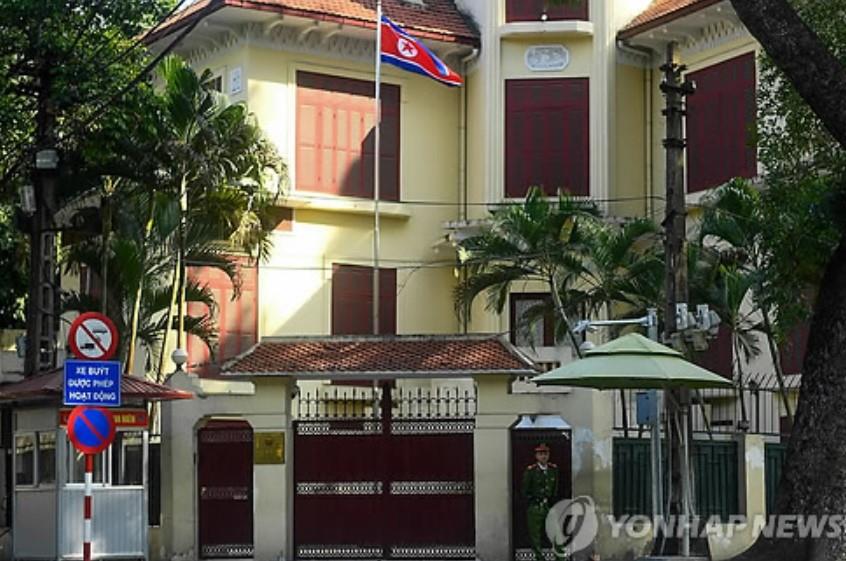
North Korean Young Generation Administrative Officials Defying the WPK-Led Control Han Jin-myungFormer Diplomat of the North Korean Embassy in VietnamEach of North Korea's past leaders governed with distinct ideologies, using these beliefs to consolidate power and control the population. Kim Il-sung's era was marked by People-First Politics, while Kim Jong-il's rule was defined by Military-First Politics.But what characterizes Kim Jong-un's leadership approach?At the beginning of his rule, Kim Jong-un promoted a system based on the rule of law and public order, seemingly in an attempt to mirror democratic states. However, given North Korea's lack of basic human rights and democratic examples, this was nothing more than an unrealistic, regressive initiative. Ultimately, Kim Jong-un couldn’t abandon the "Ten Principles for the Establishment of a Monolithic Ideological System," which underpins the regime, and continued to rule with absolute power.To begin, it's important to examine the shift from Kim Jong-il's Military-First approach to Kim Jong-un's WPK-centered governance, marked by the dismissal of Hwang Byong-so, former Director of the General Political Bureau of the Ministry of National Defence.As noted in Thae Yong-ho’s book, a former North Korean diplomat in the UK, various North Korean ministries submit daily reports to Kim Jong-un. However, one day, a serious incident occurred when all the documents and equipment from the Ministry of National Defence's political department were destroyed by fire. Hwang reported the situation to Kim Jong-un and suggested that, temporarily, reports be submitted through the WPK Secretariat. This suggestion angered Kim, who declared furiously, "Is the WPK Secretariat a department anyone can use at their convenience? From now on, treat the Central Committee of the Workers' Party of Korea with respect."North Korean Embassy in Vietnam / Yonhap News AgencyAfter this reprimand, Hwang was dismissed, marking a turning point where the military's influence over state power diminished, and the WPK's authority grew. Seizing this opportunity, Kim began implementing his WPK-led state management system. Through a series of party assemblies across the country, the WPK asserted its dominance, ensuring that North Koreans understood that the party was now in charge.Even North Korea’s Ministry of Foreign Affairs was not immune to this shift. The WPK’s International Department, which traditionally focused on relations with socialist and anti-American countries, has recently begun interfering with the Ministry of Foreign Affairs.This interference is evident in changes to the format of reports to Kim Jong-un. Previously, documents stated, "Agreed upon with the relevant WPK department," but now read, "Reported to the relevant WPK department," elevating the party's role from partner to authority. Additionally, WPK International Department officials have begun meddling in the daily operations of the foreign ministry, exerting pressure on its departments. According to Ri Il-kyu, a former North Korean diplomat in Cuba, these officials receive daily updates on the status of other countries through the heads of comprehensive departments. This illustrates a new era under Kim Jong-un, where the party leads every aspect of governance. However, there are emerging signs of resistance to Kim Jong-un’s party control within North Korea.One significant difference is the changing mindset and behavior of the young generation. North Korea has long relied on a system of strict obedience to administrative orders, but cracks are starting to appear in this tradition. The young generation is refusing to follow the submissive and unquestioning behavior expected toward their seniors. They are reportedly asking, "Why should we follow their outdated ways?"Administrative officials are struggling to manage and control the disobedience of the young generation. They admit, "It’s too hard to control the newly recruited staff. They refuse to accept guidance from their seniors, and the work environment has changed significantly." Like small streams converging into a river, these small shifts in North Korea may signify more significant changes ahead.Kim Jong-un may strengthen party influence to tighten control, but he cannot suppress fundamental human instincts. The North Korean people's long-suppressed desires for human rights, freedom, and democracy—repressed by the Kim family for over 70 years—are on the verge of becoming a reality.
24.10.03 -
 [Opinion]
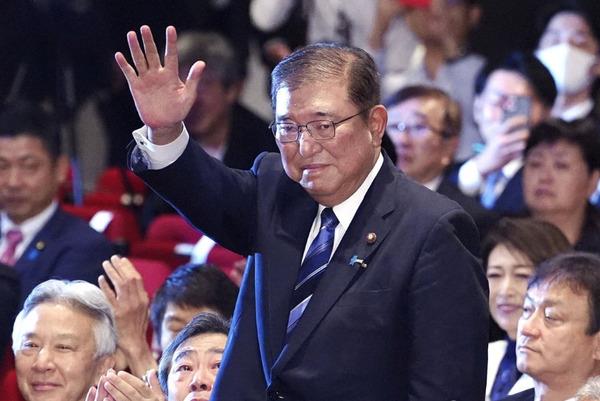
Ishiba Shigeru, Japan’s New Prime Minister: Moderate on Historical Issues, Tough on Security Yoo Min-youngPh.D. in Political Science,Survey Research Center, Academy of East Asian Studies, Sungkyunkwan UniversityOn September 27, Ishiba Shigeru, the former Secretary-General of the Liberal Democratic Party (LDP), was elected as its new leader. He is set to take office as Japan’s Prime Minister in a special parliamentary session on October 1. Known for being a reformist outsider in the LDP, Ishiba finally secured the party’s top position and the premiership on his fifth attempt. Other strong candidates in this race included Economic Security Minister Takaichi Sanae and former Environment Minister Koizumi Shinjiro. Ishiba is generally viewed as holding a moderate stance on Japan-South Korea relations but maintains a more hardline approach when it comes to national security.The LDP leadership election involves both party lawmakers and members voting. If no candidate wins a majority in the first round, a runoff is held between the top two contenders. In this case, the runoff was between Takaichi Sanae and Ishiba Shigeru. Although Takaichi led in the first round, Ishiba managed to turn the tables in the runoff. In the first round, Takaichi secured 72 votes compared to Ishiba’s 46 among lawmakers, but in the final tally, Ishiba won 189 votes to Takaichi’s 173. This shift is interpreted as a response to concerns among LDP lawmakers about Takaichi’s strong conservative stance, prompting them to support the more moderate Ishiba in the runoff.Ishiba Shigeru, former Secretary-General of the Liberal Democratic Party, waves to supporters after winningthe LDP leadership election on September 27. / Yonhap NewsIshiba Shigeru is often described as moderate, particularly with his views on historical issues. In 2019, during the rising tensions between Japan and South Korea over the termination of the General Security of Military Information Agreement (GSOMIA), Ishiba wrote on his blog that Japan’s failure to fully address its wartime responsibilities was the root of many problems. He expressed hope for a return to the cooperative relations seen during the Obuchi Keizo-Kim Dae-jung era. He has also criticized Japanese politicians’ visits to the Yasukuni Shrine and advocated for removing Class-A war criminals from the shrine, reflecting his progressive views on historical issues.Considering Ishiba Shigeru’s views on Japan-South Korea relations, it is expected that he will maintain a relatively moderate stance on the issue. Given that President Yoon Suk-yeol and Prime Minister Kishida Fumio have held 12 summits, with Kishida’s administration taking a conciliatory approach, there seems to be little reason for a drastic shift in policy. The power dynamics within the LDP also point in this direction. While Ishiba’s main competitor in the leadership race, Takaichi Sanae, received support from the factions of former Prime Ministers Aso Taro and Abe Shinzo, Ishiba had the backing of Kishida Fumio’s faction. Kishida's efforts to improve Japan-South Korea relations are seen as one of his major accomplishments, making it unlikely that Ishiba, who benefited from Kishida’s support, will pursue policies that could disrupt this progress. In his speech after the LDP leadership vote, Ishiba praised Kishida, saying, “I deeply respect the significant achievements made in both domestic and foreign affairs over the past three years.”Despite his moderate reputation, Ishiba holds conservative views on security. With experience as Director General of the Japan Defense Agency and Minister of Defense, he supports constitutional revisions to officially recognize Japan’s Self-Defense Forces and has advocated for transforming them into a national defense force. He has also proposed "nuclear sharing" with the U.S. and, in a recent article for the Hudson Institute, emphasized the need for greater equality between the Japan-U.S. alliance, similar to the U.S.-U.K. relationship.On North Korea, Ishiba has pledged to establish liaison offices in Tokyo and Pyongyang to address the issue of Japanese citizens abducted by North Korea. This proactive stance demonstrates his willingness to engage in dialogue, despite uncertainties surrounding the feasibility of this proposal.Though Ishiba is generally viewed as moderate, he remains aligned with the LDP’s basic conservative policies. For instance, he has criticized South Korea’s Supreme Court ruling on compensation for forced labor, calling it a violation of international law, and has maintained Japan’s claim over the Dokdo (Takeshima) islands. Thus, while he may bring a softer tone to bilateral relations, the potential for conflict between Japan and South Korea under his leadership remains.Ishiba is expected to dissolve the House of Representatives and call for a general election later this year, which will be his first major test as Prime Minister. He will need to navigate party factions and secure victory over the opposition. Following last year’s political funding scandal, many of the long-standing LDP factions have disbanded, and public trust in the party has declined. Ishiba faces the challenge of leading the party through this period of crisis. With the election of former Prime Minister Yoshihiko Noda as the new leader of the Constitutional Democratic Party, Ishiba’s moderate stance is seen as a strategic move to prevent the opposition from gaining centrist support. In this domestic political climate, there is anticipation that Ishiba and the LDP will continue on a moderate path to win over the public.
24.10.03 -
 [Column]
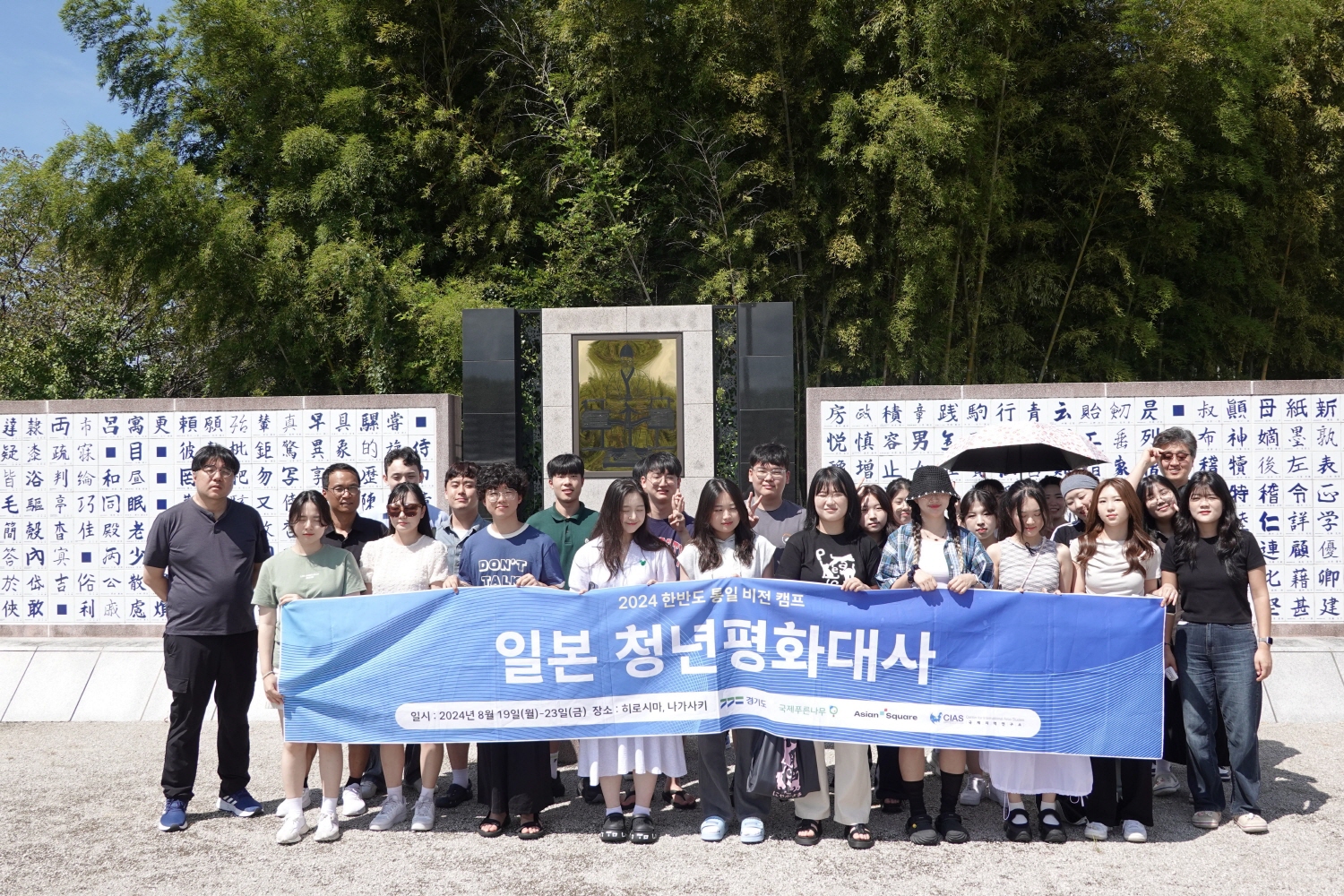
The journey to peace Visiting Hiroshima and Nagasaki with Korean youth Jeon Byung-kilSenior Consultant of YESInnovationformer of Secretary General of UniKorea FoundationFrom August 19th to 23rd, 2024, I visited Hiroshima and Nagasaki, Japan with 25 South Korean university students and had a great experience. Participating in the Global Youth Ambassadors for Peace program, organized by Green Tree International and sponsored by Gyeonggi Province, was an opportunity to witness the pain of war and the seriousness of the nuclear issue beyond just visiting historical sites, and to reaffirm the value of peace.Hiroshima and Nagasaki were the first cities to be bombed in August 1945, at the end of World War II. It's hard to describe the complexity of visiting the site in person. It was raining when I arrived at Hiroshima International Airport on August 19 from Incheon, South Korea. During the hour-long ride from the airport to my hotel in downtown Hiroshima, I stared out the rainy car window and thought about the events of 79 years ago. On August 20, I woke up at 6 a.m. and walked around the Peace Memorial Park near my hotel. I looked at the Atomic Bomb Dome, a symbol of the atomic bombing of Hiroshima, and imagined the destructive power of the bomb and the suffering of the people at the time. After the atomic bombs were dropped, many people died instantly or suffered from radiation, and their suffering continues to this day. As of August 2021, the Japanese government's "Atomic Bomb Death Register" lists 518,092 people - 328,929 in Hiroshima and 189,163 in Nagasaki - as having died from the two bombings and their aftermath. Korean victims account for 70,000 of them. One of the most memorable parts of my visit to Hiroshima was the Hiroshima A-bomb Archive. Visiting the site was more than just a record of the past, it was like stepping into a space that captured the devastation and despair of the time. Inside the archives, photos and artifacts of those affected by the bombing, as well as records of the time, were vividly displayed. In particular, the everyday items of the victims laid out there made me realize that each person's life had been devastated by war and violence. In addition, the writings and drawings left behind by the children, and the small objects they used, gave a sense of the tragedy.During a historical tour to Hiroshima and Nagasaki last August, 25 Korean university students visited the memorialfor Korean victims of the Nagasaki atomic bombing and posed for a commemorative photo. / Photo by Jeon Byung-kilOn August 21, on our way to Nagasaki from Hiroshima, we stopped at a highway rest area in Yamaguchi Prefecture. This area was formerly known as Choshu Bun, and many of the leading figures of the Meiji Restoration came from here. Yoshida Shoin, the spiritual leader of the Meiji Restoration, founded a school in his hometown of Hagi, Yamaguchi Prefecture, where he trained many talented students and spread new reform ideas. I bought some bags of drip coffee at a rest stop, and the bag had a portrait of Yoshida Shoin on it. Even in the brief moment I saw his portrait, I realized the historical significance of his face. A simple cup of coffee turned into a moment of deep contemplation, not just a daily break.In Nagasaki, the second city hit by the atomic bomb, we were shocked once again. The countless documents, photographs, and testimonies of victims at the Nagasaki A-bomb Museum reminded me of the brutality of war. The destruction of Nagasaki was especially heartbreaking because it was a religiously and culturally rich city.Nagasaki was Japan's first port city, opened by the Portuguese in 1570, and prospered as a trading post with the West and China, and developed a unique culture where Japanese and foreign cultures coexisted. The fact that Nagasaki, a city that symbolized cultural tolerance and peaceful international exchange, fell victim to the atomic bomb left a deep impression on me. The devastating consequences of the use of nuclear weapons on humanity as a whole have been reflected upon, and we have learned not to repeat them.We met with scholars, activists, and volunteers in Hiroshima and Nagasaki, organized by Professor Hyunjin Son of Hiroshima City University. They didn't just list the individual and community suffering caused by the war and the atomic bomb, they talked about what we need to do to make sure it never happens again. It made me realize how important it is to take action for peace and that it shouldn't just be a slogan, but a concrete action in our daily lives. Listening to their stories, I realized how important it is that the memory of the war is not forgotten and passed on to future generations.On the last day of the program, I gave a lecture to university students about the World Peace Cities. I highlighted the examples of Hiroshima and Nagasaki to the students as models of peaceful cities. These cities have become symbols of peace, remembering the horrors of war and sending a message of peace to the world to prevent such tragedies from happening again.It also talked about Coventry, England, which experienced intense air raids during World War II, and Northern Ireland, which has long suffered from ethnic and religious conflict. Coventry was heavily bombed by Nazi Germany, leaving the city nearly in ruins, but has since become a symbol of "forgiveness and reconciliation," and Northern Ireland is gradually moving toward reconciliation through a peace agreement after years of conflict and violence.These cities began their journeys to peace from different backgrounds, but they all have one thing in common: they have become symbols of peace through reconciliation and rebuilding in the midst of war and conflict. Their stories teach us an important lesson: peace is not something that is given, but something that is achieved through constant effort, dialog, and mutual understanding. The biggest takeaway from this program is the importance of peace. The tragedies of war don't end with the military conflict. It destroys the lives of countless people and scars them for generations to come. The Hiroshima-Nagasaka visit also brought to mind the North Korean nuclear issue. Today, peace on the Korean Peninsula is still threatened by North Korea's nuclear development, and the North Korean nuclear issue remains unresolved. It has serious implications not only for regional instability in Northeast Asia, but also for peace and security in the international community. Witnessing the devastation of nuclear weapons firsthand in Hiroshima and Nagasaki made me realize the importance of a peaceful resolution. North Korea's nuclear program is a complex problem that cannot be solved with a simple military response. We must find a peaceful way to resolve the nuclear issue and ensure peace not only on the Korean Peninsula, but throughout Northeast Asia. Beyond simply opposing war and nuclear weapons, we need to think about how to actively build and sustain peace.South Korea and Japan have a sensitive relationship due to historical issues in the past. It's time to let go of the past and work toward mutual understanding and healing. This is the beginning of true peace. Our visit coincided with Japan's National High School Baseball Championship season. I was able to watch the qualifying match of Kyoto International High School, a Korean school that won the tournament, on Japanese television. Kyoto International High School's championship win was not just a victory for a Korean school, but a success story of cultural fusion. More of these examples in Northeast Asia will strengthen the foundation for peace. South Korea-Japan, Inter-Korean, North Korea-Japan, South Korea-China, China-Japan, etc...We need to move beyond wishing for peace to creatively making it.
24.09.20 -
 [Defectors' Podium]
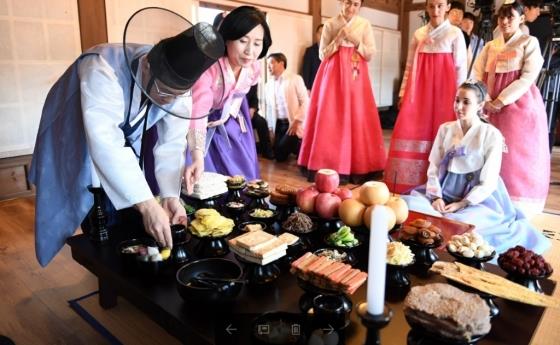
Differences in Chuseok between South and North KoreaJeon Kyung-heeNorth Korean defectorsChuseok, a traditional holiday since the Three Kingdoms era, remains a key cultural event in both Koreas, though much has changed as their division has deepened over time.In South Korea, Chuseok and Lunar New Year are major holidays, while in North Korea, they are secondary to politically significant “state holidays” like the birthdays of Kim Jong-il and Kim Jong-un, National Foundation Day, Party Foundation Day, Army Foundation Day, Victory Day in the Great Fatherland Liberation War, and Constitution Day.In South Korea, Chuseok comes with a three-day break, while in North Korea, only the day itself is a holiday. At one point, Chuseok was removed from the calendar for clashing with socialist values but was reinstated in 1988.During Chuseok in South Korea, a key tradition is the mass travel to hometowns, which often leads to heavy traffic. This stems from the custom of families gathering at the parents’ or eldest son’s home for ancestral rites, followed by visits to family gravesites.In North Korea, ancestral rites and grave visits are also part of Chuseok traditions. However, with the underdeveloped transportation system and only one day off, many are unable to visit graves during the holiday.Traveling back to one's hometown in North Korea requires government permission. Even with a travel pass, frequent power outages cause train delays that can stretch for days. Once people finally reach their destination, they must report their arrival to the local police station.Chuseok memorial table in South Korea / Yonhap News AgencySince the economic downturn of the 1990s, it has become rare for families to gather at relatives' homes, even if it means walking. It's also difficult to prepare enough food to share, as most households barely manage to gather enough for the Chuseok rites table by setting aside small amounts over time. Nonetheless, wealthier families in North Korea still prepare a variety of foods for Chuseok. Songpyeon, the traditional Korean rice cake, is a staple on the Chuseok table. One similarity between the two Koreas is the tradition of holding wrestling competitions during Chuseok.
24.09.20 -
 [Feature Article]
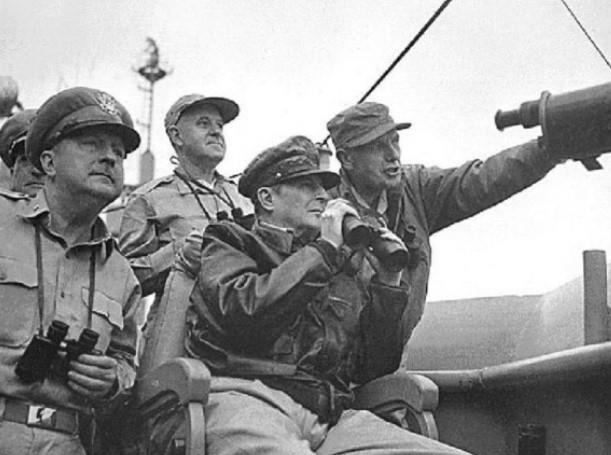
The Untold Story Behind Operation ChromiteShin JongtaeFormer Professor of Military Science at Chosun UniversityOperation Chromite marked a turning point in the Korean War, halting the North Korean advance and reversing the war's momentum in favor of the UN forces. On September 15, 1950, under General Douglas MacArthur, South Korean and UN troops launched a surprise amphibious assault on Incheon, then under North Korean control. This operation is as significant as World War II’s Battle of Midway and the Normandy landings. In North Korea, however, it is rarely acknowledged and instead misrepresented as the "Battle of Wolmido," distorting the broader conflict in the Incheon area.▶Who Conceived Operation Chromite?On June 29, 1950, General Douglas MacArthur, Commander of the Far East Command, visited the Han River defense line to assess the situation. The sight across the river was one of devastation, with Seoul engulfed in black smoke. South Korean troops were exhausted, and panicked civilians were fleeing southward. The South Korean army lacked the supplies and military structure necessary to mount a defense. With the destruction of the Han River bridge, heavy equipment losses made it impossible for South Korean forces to fend off the North Korean onslaught. After departing from Suwon Airfield, MacArthur’s plane flew along the Han River and turned toward Incheon.MacArthur then ordered his Chief of Staff, Edward Almond, to explore the possibility of an amphibious landing that would strike at the core of North Korean supply lines. His plan also involved deploying divisions stationed in Japan, including the 1st Cavalry Division and the 7th, 24th, and 25th Divisions. Initially, the 24th Division would be sent to the Korean Peninsula via Busan, while the 1st Cavalry would be used as the main landing force. On July 22, MacArthur devised a plan called Operation Blue Hearts, aimed at halting the North Korean advance at Incheon. However, the rapid progression of North Korean forces forced him to adjust, sending the 1st Cavalry and 25th Divisions to defend the Nakdong River instead. Although the original landing plan was scrapped on July 20, the defense of Nakdong River allowed MacArthur to revive and refine the plan, which eventually became Operation Chromite.▶ Overcoming Resistance to the Operation through a Powerful SpeechGeneral Douglas MacArthur Commanding Operation Chromite on September 15, 1950 / Doosan EncyclopediaWhen MacArthur's amphibious landing plan was presented to the U.S. Joint Chiefs of Staff, it faced significant opposition. The military leaders raised several concerns: “First, the tidal difference at Incheon is extreme, reaching up to 9 meters, leaving ships vulnerable at low tide. Second, the distance between Incheon and the Nakdong River defense line could expose our forces to piecemeal defeat. Third, there is a shortage of landing craft. Fourth, diverting troops for this operation would weaken the defense of the Nakdong River.”Lastly, they warned that deploying the 7th Division could leave Japan vulnerable to Soviet invasion. Despite the opposition, MacArthur stood firm. He countered these arguments by saying: “The main North Korean forces are tied up at Nakdong River, and they are not prepared for a defense in Incheon. Their commanders would never expect us to launch such a daring amphibious operation. Surprise is the key to victory. While I acknowledge the challenges posed by the tides and terrain, they are not impossible to overcome. If the operation fails, I will immediately withdraw the landing forces, and the only damage will be to my personal reputation. But Operation Chromite will not fail—it will succeed.” His speech convinced the skeptics, and despite its low odds of success, Operation Chromite dramatically altered the course of the war, saving South Korea from the brink of destruction.▶ How Did the UN Forces Deceive the North Koreans?To further confuse the North Korean army, a series of diversionary tactics were employed. Bombings and small landings were carried out in various locations, including Samcheok, Gunsan, and parts of North Korea like Malyang-do and Nampo. On September 13, major coastal bombardments targeted Incheon, Gunsan, Samcheok, and Malyang-do. The U.S. Navy and Air Force had already begun heavy bombardments in Incheon, including Wolmido, starting from September 10. A joint U.S.-British force made a surprise landing at Gunsan on September 12 but withdrew after intentionally exposing their presence to the North Koreans. In addition, a public statement from U.S. 8th Army Commander General Walker on September 13 indicated that a major counteroffensive would occur in mid-October, causing Kim Il-sung to commit his reserves to the Nakdong River front. The North Koreans, unable to match the strategic expertise of the U.S. military, were completely outmaneuvered.▶ The Hidden Intelligence OperationsFor Operation Chromite, vital intelligence had to be gathered, including enemy troop locations, mines, and tidal heights. On September 1, 1950, U.S. Navy intelligence officer Captain Mark Clark and three others landed on Yeongheungdo, an island 25 kilometers from Incheon, where a 17-member South Korean intelligence team led by Lieutenant Ham Myeong-su was already operating. The crucial information they risked their lives to collect was quickly relayed to Douglas MacArthur. South Korean operatives in Incheon, disguised as road workers, even inspected enemy supply trucks. However, on September 14, hundreds of North Korean troops launched a surprise attack on Yeongheungdo. Despite being heavily outnumbered, eight South Korean sailors and six members of the Agency of the Korean Youth fought to the death. Clark and five others, who had already left the island, were tasked with securing the Palmi-do Lighthouse in Incheon Harbor. Built in 1903, it was the first lighthouse on the Korean Peninsula and essential for guiding the UN ships. On the night of September 14, Clark's team covertly landed on Palmi-do, defeating the North Korean forces there. However, the lighthouse couldn't be lit due to a missing metal pipe connecting the fuel tank to the lamp. After hours of searching, they miraculously found the part. By 2:40 AM on September 15, the lighthouse was finally lit, allowing 261 UN ships off Incheon Harbor to advance toward the landing site using its beam as a guide.▶ How Should We Remember This War History?The site of the 1944 Landings of Normandy has been carefully preserved, with films, books, and commemorations ensuring its place in history. Each year, heads of state and citizens from participating countries gather to mark the anniversary of the operation, using the event to promote patriotism and national pride. South Korea has recently begun expanding commemorations of Operation Chromite, but the rapid urbanization of Incheon has erased many of the war's physical remnants. Still, efforts should be made to preserve the memory of this operation through the construction of memorials, securing UN military records, and inviting dignitaries from the nations that took part in the operation.
24.09.20 -
 [Current Affairs Analysis]
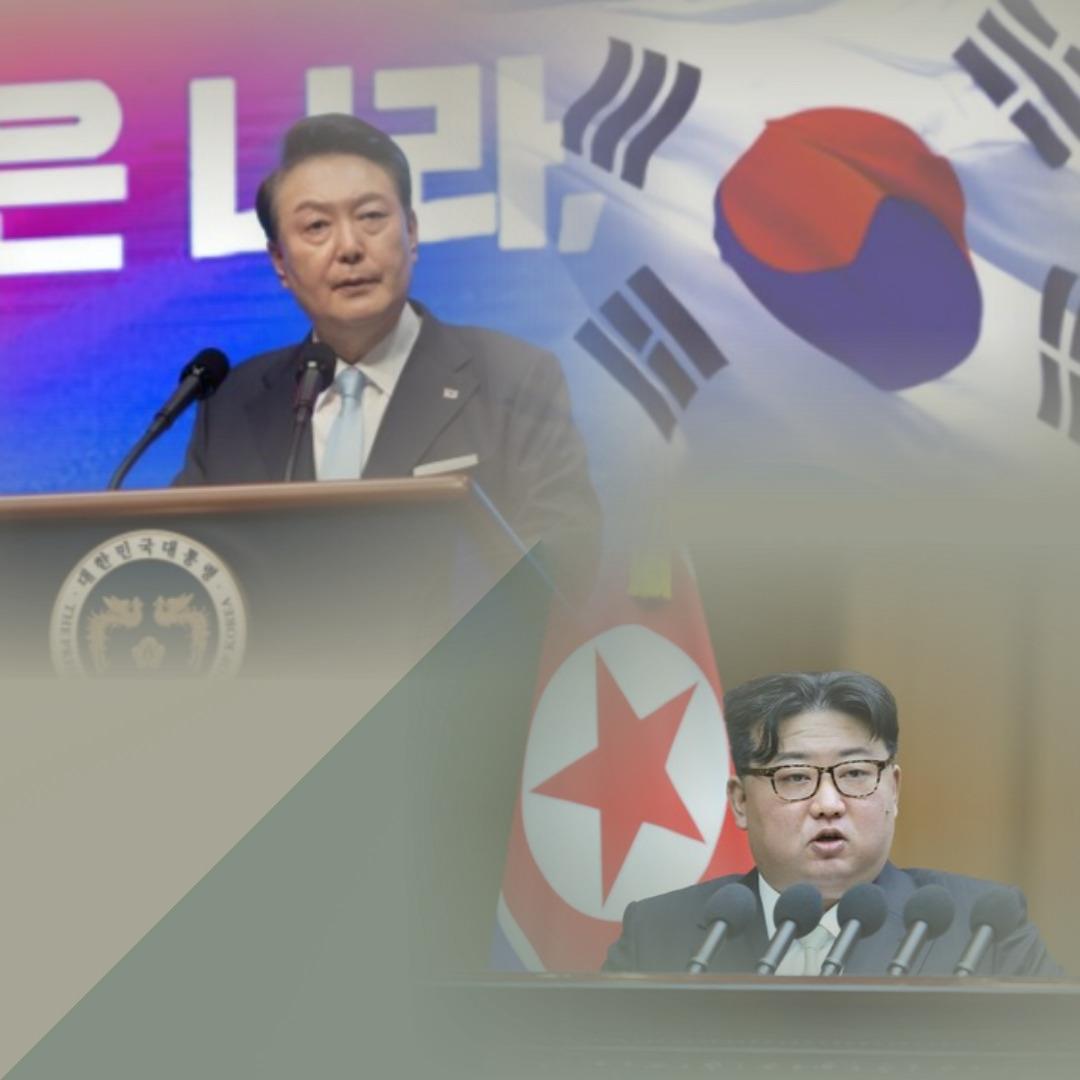
Anticipating North Korea’s Reaction to the ‘August 15 Unification Doctrine’ and Its OutlookKim Hyung-seokFormer Vice Minister of UnificationOn August 15th, President Yoon Suk-yeol of South Korea delivered a speech for the 79th Liberation Day, introducing the ‘August 15 Unification Doctrine’ under the theme ‘Challenges and Responses for Freedom and Unification.’ This doctrine builds upon the 1994 'National Community Unification Formula,' updating it to reflect the current situation on the Korean Peninsula and outlining clear strategies and plans for unification.The key points of the ‘August 15 Unification Doctrine’ are: South Korea's complete liberation requires the establishment of a unified, democratic state on the Korean Peninsula. Unification has long been seen as a critical historical task, needing three main elements: commitment to unification values and capabilities, desire for unification among North Koreans, and international solidarity. South Korea aims to drive change in North Korea by promoting democracy and freedom, continuing humanitarian aid, and improving human rights. This includes setting up an international conference on North Korean human rights and a ‘North Korean Freedom and Human Rights Fund.’ South Korea remains open to dialogue with North Korea and proposes setting up a ‘dialogue consultative body’ to address various issues such as reducing military and political tensions, economic cooperation, cultural and humanitarian exchanges, and responses to disasters and climate change. Additionally, South Korea aims to create an ‘International Korean Peninsula Forum’ with its allies and partners to build global support for its unification vision and advance the unification process.President Yoon aims to make 2024 a significant year for achieving a ‘Unified Korea of Freedom, Peace, and Prosperity’ under this doctrine.Since its start in 2022, the Yoon administration has followed a unification policy called the ‘Denuclearization, Peace, and Prosperity Policy for the Korean Peninsula,’ focusing on humanitarian aid, economic cooperation, and normalization of relations, based on North Korea's denuclearization. North Korea has rejected this approach as unrealistic and maintains a confrontational stance, backed by China and Russia. In 2017, North Korea declared it had completed its nuclear program and sought to negotiate with the U.S. to lift sanctions, which led to a brief period of warming relations between the Koreas.After the 2019 North Korea–United States Hanoi Summit ended without an agreement and Donald Trump, who had a close relationship with Kim Jong-un, lost his bid for a second term, North Korea’s stance shifted significantly. It began to view inter-Korean relations as adversarial, dismantling agreements between the two Koreas and, by 2023, publicly declared the existence of ‘two hostile states’ rather than a unified identity of ‘our people’.Since then, North Korea has been eliminating references to 'nation' and 'unification' from its rhetoric, including disbanding organizations like the ‘National Committee for the Peaceful Reunification of the Fatherland.’ It has also enacted laws like the Reactionary Ideology and Culture Rejection Law and the Pyongyang Cultural Language Protection Law to curb South Korean cultural influence, especially among the youth, to maintain regime control. Given these actions, North Korea's response to the Yoon administration's ‘August 15th Unification Doctrine’ is predictable.North Korea, after its two summits with the U.S., seems to view South Korea as a follower of the U.S. rather than a neutral mediator, favoring direct negotiations with the U.S. instead. Given its nuclear status, North Korea sees little benefit in engaging with non-nuclear South Korea, opting instead to negotiate directly with the U.S.Some criticize the Yoon administration for proposing an ‘August 15 Unification Doctrine’ that seems unlikely to gain North Korea's support. However, it's important to recognize that Korean unification is a gradual process that requires patience and a consistent approach. Even if North Korea rejects the vision of freedom, human rights, and prosperity that benefits all Koreans, presenting this vision is essential to avoid ambiguity, misunderstandings, and unnecessary tensions in the unification process. In this regard, regardless of North Korea's response, the ‘August 15th Unification Doctrine’ is important for clearly and publicly demonstrating South Korea’s commitment to unification.Over the 79 years of division, South Korea has made various efforts toward unification, from advocating for ‘"Marching North for Unification" and prioritizing development before unification to promoting unification through competition, dialogue, and cooperation. However, unification has not been achieved due to North Korea's rigid stance and provocative actions. Instead of progressing toward unification, North Korea remains isolated in the 21st century, where real-time communication is common, yet South Koreans cannot visit relatives just across the border. Inter-Korean relations are so strained that even at non-political events like the Paris Olympics, South and North Korean athletes avoid exchanging greetings and feel uneasy taking selfies together on the podium.Considering North Korea's focus on ‘Power for Power,’ ‘Frontal Confrontation,’ and ‘Self-Reliance,’ and its promotion of a ‘Two-Korea Policy,’ it's unlikely North Korea will embrace the path to peaceful unification proposed in the doctrine. Still, change is possible. If geopolitical tensions ease and North Korea's internal challenges grow, its leadership may be forced to reconsider its stance.The international community, including South Korea, does not recognize North Korea’s nuclear weapons but does not oppose its regime. It is hoped that North Korea’s leadership will recognize this and pursue cooperation with the international community, similar to China and Vietnam. If North Korea begins to open up, the ‘August 15 Unification Doctrine’ could serve as a valuable guide for its future.
24.09.06 -
 [Feature Article]
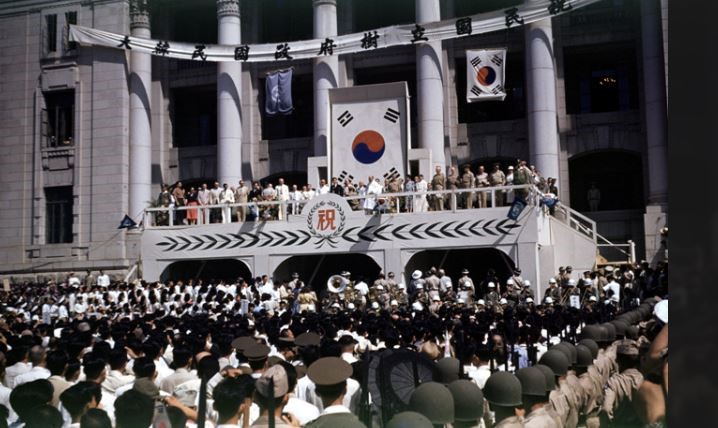
The Legitimacy Competition on the Korean Peninsula:The Founding of South Korea and the North Korean RegimeCho Young-kiSecretary-General of the Hansun Foundation,former professor at Korea University1. Legitimacy as an Essential Element of Modern State-BuildingLegitimacy is commonly understood as the general acceptance of a society or state's political system, authority, and traditions as rightful. In a state context, legitimacy involves the justification and legality of power that earns widespread trust and support from its people. Establishing legitimacy is crucial because it encourages the voluntary compliance of citizens with the state's order, which, in turn, fosters stable governance. Legitimacy provides a government with a foundational rationale for its rule, reinforcing both its authority and its appropriateness in the eyes of its citizens. Ultimately, a legitimate state secures voluntary adherence from its people and solidifies the authority of its governing powers.2. Securing Legitimacy through the Establishment of a ConstitutionA constitution serves as the cornerstone of a state's governance and is the primary mechanism for establishing national legitimacy. Recognizing its importance, both South and North Korea rushed to draft their constitutions immediately after liberation to assert their versions of a modern state. However, the processes they followed differed significantly. South Korea's constitution was crafted according to the "principle of parliamentary representation," which, while limited to regional representation, upheld democratic principles by ensuring multiple political parties were represented. On May 10, 1948, South Korea held a general election to form the Constitutional Assembly, which drafted and promulgated the constitution on July 17, thereby affirming popular sovereignty and leading to the Republic of Korea's founding on August 15, 1948.A celebration of the establishment of the South Korean government is being held on August 15, 1948 /the National ArchivesConversely, North Korea's constitutional drafting process followed the "Soviet principle," which aimed to fully express the people's will. However, this approach had a major flaw: while it claimed to represent all citizens by including various power structures, political parties, organizations, and regional representatives, the process was heavily dominated by members of the Workers' Party. This ensured that the constitution was shaped entirely by a single party, reinforcing the party's control over the state.Both constitutions espoused democratic ideals, but their interpretations diverged significantly. South Korea emphasized popular sovereignty within a liberal democracy framework, whereas North Korea focused on people's sovereignty under a people's democracy model. In North Korea's context, the "people" excluded certain classes like the bourgeoisie and landlords, and individual agency was overshadowed by collective participation in state-run assemblies. Thus, in South Korea, sovereignty rested with the citizens, while in North Korea, the concept of sovereignty was effectively absent from the individual perspective.On September 2, 1948, Kim Il-sung was elected Prime Minister at the first meeting of the North KoreanSupreme People's Assembly /National Archives3. The Competition to Secure Historical LegitimacyAfter liberation from Japanese colonial rule, South and North Korea developed different political systems, each seeking to claim historical legitimacy. While history should be based on objective facts, North Korea often distorted its historical narrative to strengthen its regime's legitimacy. A key example is the exaggerated portrayal of Kim Il-sung’s anti-Japanese resistance, manipulated through propaganda to justify the regime's authority. These distortions are frequently accepted as truth, contributing to misunderstandings, such as the belief that North Korea effectively purged pro-Japanese collaborators while South Korea failed to do so. Such claims distort the historical record and are fundamentally inaccurate.South Korea enacted laws specifically to punish those who collaborated with the Japanese, focusing on anti-national activities. The Rhee Syng-man government, formed on August 15, 1948, consisted mainly of independence activists, with no pro-Japanese figures among its 19 members. However, controversy arose when some former pro-Japanese police officers were appointed to investigate communists, which led to scrutiny of even former independence activists, creating tensions over the perceived leniency.In contrast, when the Democratic People's Republic of Korea was established, Kim Il-sung’s cabinet included numerous pro-Japanese collaborators, indicating that their purge was not as complete as claimed. Of the 20 original cabinet members, 10 were later purged through execution or exile to political prison camps, suggesting that these purges were more about solidifying power than justice. The absence of detailed records in North Korean history books further implies that these purges were largely propaganda tools rather than genuine efforts to eliminate collaborators. 4. The Results and Challenges of the Legitimacy Competition between South and North KoreaSouth Korea was founded as a liberal democracy on August 15, 1948, while North Korea was established as a communist state on September 9, 1948. Since their respective founding, both Koreas have been locked in a contest to prove the legitimacy of their systems. However, more than 70 years later, the vast differences in their achievements render such comparisons pointless. South Korea’s democratic system allows its citizens the freedom to shape their own lives, creating an environment where individuals can take active roles in their futures. This system has paved the way for values like prosperity, rule of law, human rights, equality, and peace to flourish.On the other hand, North Korea's communist regime has heavily restricted personal freedoms, compelling individuals to rely on the state for every decision, effectively reducing them to subjects under authoritarian rule. These contrasting political frameworks have resulted in significantly different economic outcomes. For example, in 2022, South Korea's Gross National Income (GNI) was 59.8 times that of North Korea's, and its per capita GNI was about 29.7 times higher. This enormous economic gap highlights the effectiveness of South Korea's system compared to North Korea's, clearly showing that South Korea's establishment was more successful and legitimate.North Korea continues to use propaganda, agitation, and distortion to uphold its claim to historical legitimacy. The regime seeks to justify its dictatorship through Juche ideology, using anti-American and anti-Japanese narratives. It labels the period before August 15, 1945, as "Korea under Japanese rule" and the period after liberation as "Korea under United States rule," falsely claiming that Korea has been under American occupation since liberation by American imperialists. North Korea's Juche-based interpretation of history undermines South Korea's legitimacy and is further supported by some left-leaning historians in South Korea, who unintentionally bolster North Korea's claims. This distorted view of history must be corrected to firmly establish South Korea's historical legitimacy, strengthen its national identity, and support its continued development.
24.09.06 -
 [Defectors' Podium]
Establishment of North Korean Defectors’ DayNam BadaSecretary General of People for Successful Corean Reunification (PSCORE)On July 14, 2024, South Korea designated the day as "North Korean Defectors' Day." This special day was established following a directive from President Yoon Suk-yeol during a Cabinet meeting on January 16, aiming to protect and warmly welcome North Korean defectors as fellow citizens. To implement this, the Ministry of the Interior and Safety issued a presidential decree on May 21, officially recognizing North Korean Defectors' Day as a national commemorative day.July 14 was chosen to commemorate the enactment of the Act on the Protection and Settlement Support of North Korean Defectors, providing the legal basis for their status and support. The Ministry of Unification stated, "By establishing North Korean Defectors' Day as a national holiday, we aim to annually honor this day by embracing defectors, promoting their rights, and fostering cultural integration between South and North Korean residents to enhance unification awareness."To celebrate the first North Korean Defectors' Day, various events were held both within South Korea and internationally. Here are some of the highlights.The 1st North Korean Defectors’ Day Festival (July 14)The first North Korean Defectors’ Day commemoration, now a national holiday, was held at the State Reception House Yeongbin-gwan. Over 200 attendees included defectors, support workers, government officials, and representatives from various organizations. Under the theme 'Courage Towards Freedom, Journey to Unification,' the event featured global congratulatory messages, awards, commemorative speeches, success stories from defectors, unification pledges, and performances.President Yoon Suk-yeol at the first 'North Korean Defectors Day' on July 14, posing with the defector youth choir./ Presidential OfficeVideo messages from around the world offered congratulations. Fred and Cindy Warmbier, parents of Otto Frederick Warmbier, said, "North Korean defectors are the strongest and bravest people in the world." Joachim Gauck, the first German president from East Germany, stressed, "Dictatorship cannot defeat freedom," and wished for the successful resettlement of North Korean defectors. Elizabeth Salmón, the UN Special Rapporteur on North Korean human rights, emphasized that establishing North Korean Defectors' Day as a national holiday is a significant step toward justice.Awards and commendations were given to four individuals who have devoted their lives to supporting North Korean defectors. Additionally, a video essay titled 'Dreaming,' which narrated the journey of North Korean defectors striving to achieve their dreams in South Korea, was presented by Yoo Ji-tae, the Unification Ministry's ambassador for North Korean human rights promotion.A view of Hanawon, a facility for education and settlement support for North Korean defectors located in Anseong, Gyeonggi-do/Ministry of UnificationPresident Yoon Suk-yeol, in his speech, assured, "Our government will ensure that your pursuit of freedom is not in vain," and pledged, “We will never send back any North Korean compatriot who seeks refuge in South Korea.” His words were met with applause and cheers from many defectors. He also committed to "making every diplomatic effort to prevent forced repatriation of North Korean defectors abroad," which was followed by another round of applause. He concluded, "Under South Korea's Constitution, North Korean defectors are now citizens of the Republic of Korea. Protecting our citizens is the nation's most fundamental duty," bringing many defectors to tears.North Korean Defectors’ Day Events (July 8 - 14)The Korea Hana Foundation hosted a citizen participation event themed 'Together for a Unified Future' at the Dongdaemun Design Plaza on July 14. The event included calligraphy performances, magic shows, street dances, quiz shows, a fashion show, an exhibition of artworks by North Korean defectors, and performances by a North Korean defectors' art troupe. Additionally, over 30 booths offered activities to better understand North Korea and its defectors, such as North Korean food tasting and professional skill demonstrations by defectors.Before this, from July 8 to July 14, the Seoul Metropolitan Government organized North Korean Defectors' Day week events at Seoul City Hall, Seoul Plaza, and various districts. Themed ‘Beyond Freedom, Towards Hope: Together as One’,' activities included the 'Seoul Forum on North Korean Human Rights 2024,' a North Korean human rights exhibition, and film screenings about North Korean human rights.From July 8 to July 13, the Citizens' Hall in the basement of Seoul City Hall hosted a photo and video exhibition on North Korean human rights, screenings of the documentary 'Beyond Utopia' with cast meet-and-greets, and a talk concert titled 'Life in Seoul for Young North Korean Defectors.' At Seoul Plaza, films on North Korean human rights were shown on July 12 and 13, including 'Crossing,' depicting families separated during escapes, and ‘Ayla: The Daughter of War’, set during the Korean War highlighting the bond and separation between father and daughter. Before the screenings, there were cultural activities and tastings of North Korean food like Sikhye (sweet rice drink) and Corn Cake.Seoul hosted the first 'Seoul Forum on North Korean Human Rights 2024' among local governments at 2 p.m. on July 11 in the multi-purpose hall of Seoul City Hall. The forum's themes were 'The Reality of North Korean Human Rights and International Cooperation Measures' and 'Journey to Freedom, Accompanying North Korean Defectors,' focusing on the future direction of human rights and support strategies for defectors. This forum commemorated the 10th anniversary of the UN Commission of Inquiry on Human Rights in North Korea (COI) report and the establishment of North Korean Defectors' Day.The forum was attended by domestic and international experts, including Lee Shin-wha, South Korea's Ambassador for International Cooperation on North Korean Human Rights; Julie Turner, the U.S. Special Envoy for North Korean Human Rights Issues; Elizabeth Salmon, UN Special Rapporteur on North Korean Human Rights; James Heenan, Representative of the UN Human Rights Office in Seoul; and Brian Reynolds Myers, a professor at Dongseo University, adding significance to the event.The Peaceful Unification Advisory Council’s EventsTo honor the first North Korean Defectors' Day, the Peaceful Unification Advisory Council organized events nationwide through its regional councils and associations. Key activities included meetings with defectors, concerts, and unification-themed music events. Additionally, regional councils hosted events like Jeonnam's 'Unification Camp with North Korean Defectors,' Ulsan Namgu's 'Sailing to the Sea of Freedom: Cultural Tours on North Korean Defectors' Day' and Ansan City Council's '1st North Korean Defectors' Day Commemorative Festival.'North Korea Freedom Week in the U.S. (July 7 - 12)The annual North Korea Freedom Week, focused on advocating for the human rights and dignity of North Korean people, was held from July 7 to 12 in Washington, D.C. Now in its 21st year, the event was led by Suzanne Scholte, the chairman for the North Korea Freedom Coalition. A 15-member delegation, including leaders of North Korean human rights organizations and witnesses to abuses, had a packed schedule. Scholte emphasized issues like China's forced repatriation of defectors and the North Korean people’s right to know. The delegation visited the U.S. Department of State's Bureau of Democracy, Human Rights, and Labor, as well as the U.S. Congress. They also held rallies at the Korean War Veterans Memorial in Arlington National Cemetery and in front of the U.S. Capitol.U.S. Department of State Press ReleaseThe U.S. Department of State expressed support for North Korea Freedom Week, highlighting the key role North Korean defectors play in promoting human rights. In a press release, the Department acknowledged the resilience and bravery of escapees and human rights advocates, as well as the ongoing suffering under the North Korean regime. This year’s North Korea Freedom Week concludes with South Korea’s North Korean Defectors' Day on July 14. Recognizing the critical role defectors play in advancing human rights, the United States reaffirms its commitment to a survivor-centered approach and amplifying defectors’ voices.In Commemoration of North Korean Defectors’ DayNorth Korean defectors are often regarded as the 'first wave of unification' or 'testbeds for unification,' but their feelings and challenges in adapting to life in South Korea have not received much attention. These defectors arrive after risking their lives on perilous journeys and, without time to heal from their numerous traumas, continue to struggle to adapt and compete in South Korean society. It is hard to grasp their pain without truly listening to their stories, and it is not easy for South Koreans to fully understand their experiences.During the North Korean Defectors’ Day ceremony, defectors were moved to tears by affirmations that they are protected citizens of South Korea. It is essential to understand the hardships they faced due to a lack of protection from their homeland and the immense effort required to adapt to a new country.I'm delighted to celebrate North Korean Defectors’ Day, honoring their new lives and hoping that all North Korean residents can fully enjoy universal human rights. Furthermore, I hope that future discussions on unification will prioritize improving human rights for North Korean residents and supporting the settlement of North Korean defectors as essential values.
24.08.16 -
 [Special Feature on National Liberation Day of Korea]
Reflecting on South Korea's Peace and Security on the 50th Anniversary of Yuk Young-soo's DeathShin Gak-sooFormer Vice Minister of Foreign Affairs and Trade,Former South Korean Ambassador to JapanThis year commemorates half a century since Yuk Young-soo, the wife of President Park Chung-hee, was fatally shot by Zainichi Korean Moon Se-gwang during the National Liberation Day ceremony on August 15, 1974. This tragic event, which occurred when I was a college sophomore, remains a vivid memory due to the significant impact it had. Despite its importance, it is a largely forgotten event, especially among those under 50.Like many high-profile assassinations, Moon's act is surrounded by conspiracy theories. According to the South Korean government's official account, Moon Se-gwang, born in Osaka with roots in Gyeongnam, joined the Korean Residents Union in Japan before being recruited by the General Association of Korean Residents in Japan in 1972. He became actively involved in the rescue committee following Kim Dae-jung's abduction in 1973. In September of that year, Kim Ho-ryong of Chongryon's Ikuno branch recruited him, and by May 1974, he had received ideological training aboard the North Korean ship Mangyongbong-92 in Osaka, where he was indoctrinated to assassinate President Park Chung-hee.With help from his Japanese girlfriend, he obtained a Japanese passport in October and received 500,000 yen from North Korea's South Liaison Department in November to execute his plan.On August 15, 1974, during the Liberation Day ceremony at the Sejong Center in Gwanghwamun, Seoul,Mrs. Yuk Young-soo was shot by Mun Se-gwang, a member of Chongryon. / Future Korea PartyIn July 1974, Moon Se-gwang stole two 38 caliber revolvers and ammunition from an Osaka police station. On August 6, he smuggled the weapons into South Korea through Gimpo Airport by concealing them in a portable radio. The morning newspaper confirmed President Park's attendance at the National Liberation Day ceremony, prompting Moon to move from the Chosun Hotel to the venue. With inadequate security, he easily entered and, during President Park's speech, attempted to shoot him but missed, hitting Yuk Young-soo instead. She was rushed to the hospital but did not survive.Moon Se-gwang was swiftly apprehended at the scene and admitted to the assassination during questioning by the Central Intelligence Agency's investigation team. He faced six charges, including murder with the intent to incite insurrection and breaches of the National Security Act. He was sentenced to death by the Seoul Central District Court on October 19, affirmed by the Seoul High Court on November 20, and upheld by the Supreme Court on December 17. His execution was carried out at the Seoul Detention Center on December 20.Moon Se-kwang, the assassin of First Lady Yuk Young-soo, during his trial on July 14, 1974. He was executed byhanging at the Seoul Detention Center on December 20, 1974, four months after the incident. / Namu WikiThe assassination attempt on President Park and the death of the first lady was a profound terrorist act with wide-ranging implications. Domestically, it had a significant impact, and internationally, it involved both North Korea and Japan, heightening tensions. At the time, the Cold War between the US and the Soviet Union was ongoing, and the economic burden of the Vietnam War prompted the U.S. to take measures to alleviate these pressures. The U.S. economy's share of global GDP had fallen from 35% to 27% over two decades. In August 1971, President Nixon ended gold convertibility and adopted a floating exchange rate system to address trade deficits and the declining dollar value, an event known as the Nixon Shock, which destabilized the Bretton Woods system. This was followed by the Paris Peace Accords in January 1973, leading to the U.S. military withdrawal. Meanwhile, the U.S. and the Soviet Union signed multiple arms reduction treaties and expanded trade in the late 1960s, maintaining a partial détente until the Soviet invasion of Afghanistan in 1979.One of the most impactful events for East Asia was President Nixon's visit to China in February 1972. This strategic move aimed at hastening the end of the Vietnam War and leveraging the Sino-Soviet ideological rift caused a significant psychological impact on U.S. allies in Asia, including South Korea and Japan. Startled by this unilateral U.S. action, Japan quickly arranged for Prime Minister Kakuei Tanaka to visit China, leading to the establishment of diplomatic relations in September 1972. Having rebuilt its post-war economy and emerged as the world's second-largest economy in 1967, Japan was rushing to expand into Southeast Asia. The international political landscape of the 1970s differed markedly from the Korean War era of the 1950s and the Vietnam War of the 1960s.For South Korea, the escalating military threat from North Korea was particularly concerning, especially as the Nixon administration reduced its engagement in Asia, including withdrawing one United States Forces Korea (USFK) from South Korea in 1971. North Korea continued its provocations, including the armed infiltration in Uljin-Samcheok (1968), the capture of the U.S. naval intelligence ship Pueblo (1968), and the shootdown of the U.S. reconnaissance aircraft EC-121 (1969). Notably, the Blue House raid on January 21, 1968, was a direct terrorist act targeting President Park Chung-hee. The Moon Se-gwang incident, under these circumstances, intensified tensions in Northeast Asia. The use of a stolen Japanese police revolver and the involvement of a Zainichi Korean with a Japanese passport under Chongryon's directives led the South Korean government to demand that Japan take responsibility, investigate accomplices, and regulate Chongryon. However, Japan's refusal to cooperate and conflicting investigation outcomes created significant discord. This reluctance stemmed from lingering tensions over Kim Dae-jung's kidnapping in August 1973, ongoing repatriation of Koreans residing in Japan to North Korea, and Japan's need to maintain ties with North Korea. Declassified South Korean diplomatic documents from 2005 reveal that South Korea even considered cutting diplomatic ties with Japan and sought U.S. pressure on Japan. The U.S. recommended a diplomatic resolution to avoid disrupting South Korea's defense. Ultimately, the investigation into accomplices was inconclusive, and Chongryon's regulation was only verbally addressed by former Foreign Minister Shiina Etsusaburo during his visit to South Korea, resolved through a memo exchange.Despite these challenges, resolving the Moon Se-gwang incident helped mend strained South Korea-Japan relations after Kim Dae-jung's kidnapping. Overcoming two major crises within a decade of establishing diplomatic ties facilitated further progress. Improved relations were crucial when the Carter administration planned to withdraw USFK from South Korea in 1978, with Japan's opposition playing a key role in maintaining security on the Korean Peninsula and in Northeast Asia.In the early 1970s, inter-Korean relations saw a brief thaw due to the détente between the U.S. and the Soviet Union, U.S.-China rapprochement, and efforts to end the Vietnam War. The July 4 South-North Joint Statement in 1972 marked the first South-North talks since the division, agreeing on unification principles. However, relations soon cooled again after North Korea halted talks in August 1973, citing South Korea's June 23 declaration. The Moon Se-gwang incident happened in this context, with Kim Il-sung denying North Korean involvement, similar to other provocations. It was also reported that Kim Il-sung suggested to the new Soviet ambassador Gleb Krilov that Kim Dae-jung supporters were behind the incident.North Korea has made three assassination attempts on South Korean presidents, the Moon Se-gwang incident, and the Rangoon bombing. The nature of North Korean provocations has evolved, but they remain audacious enough to target the head of state directly. Considering that North Korea is promoting a hostile two-state theory with South Korea, we must remain vigilant against future provocations, especially unexpected ones.The Moon Se-gwang incident had significant political repercussions domestically, resulting in the dismissal of Park Jong-gyu, Chief of Presidential Security, Seoul Mayor Yang Taek-sik, Interior Minister Hong Sung-chul, and Justice Minister Lee Bong-sung. The new Chief of Presidential Security, Cha Ji-chul, established security support units within the military and police and overstepped his authority, causing national confusion. The death of Yuk Young-soo, who was a supportive figure to President Park Chung-hee and cherished by the public, cast a significant shadow over Park Chung-hee's leadership.The authoritarian Yushin regime faced escalating democratization movements and increased repression, leading to instability and international pressure. This culminated in the Bu-Ma uprising and the October 26 incident, which ended Park Chung-hee's regime and the Yushin system. Although the Moon Se-gwang incident may not have directly caused these political shifts, it undeniably had a significant impact on modern Korean history. Over the past 50 years, both Korea and the world have undergone substantial changes. However, the Korean Peninsula remains tense due to North Korea's advanced nuclear capabilities and its hostile two-state theory. The journey toward peace and stability on the peninsula is still long. While managing inter-Korean relations in the long term is essential, we must always be prepared for unexpected provocations from North Korea, especially terrorism.Achieving peace on the Korean Peninsula requires not only dialogue but also effective deterrence and defense. The Moon Se-gwang incident, occurring during frequent North Korean provocations, could have been prevented with adequate vigilance. The harsh lesson from 50 years ago, resulting from a critical security lapse, should remind us to leave no gaps in our national security and public safety.
24.08.16 -
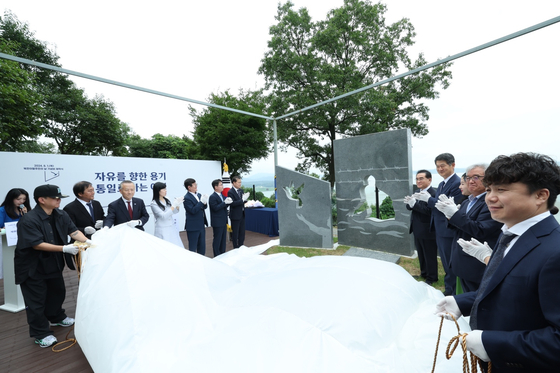 [Defectors' Podium]
The Mission and Role of the Committee for the Democratization of North Korea (CDNK)Huh Gwang-ilChairman of the Committee for the Democratization of North Korea (CDNK)Hwang Jang-yop's defection on April 20, 1997, caused a major stir, as he was the former Workers' Party of Korea secretary and the founder of North Korea's Juche ideology.Hwang dedicated his life to analyzing the North Korean regime, which had fallen into darkness under the Kim family's dictatorship. He aimed to expose the flaws of Juche ideology and focused on human-centered philosophy. He engaged with government, politics, society, and economics to raise awareness about the human rights abuses under Kim Jong-il and tirelessly worked for North Korea's freedom and democratization.On April 10, 2007, with former President Kim Young-sam as an advisor and Hwang Jang-yop as the inaugural chairman, CDNK was established at the Press Center International Conference Hall in Seoul. The goal was to achieve unification, supported by South Korean patriots.Following the establishment of CDNK, Hwang worked diligently to build the organization's structure and to foster the spiritual growth of its members. He aimed to complete his unique human-centered philosophy that transcended contemporary issues. Sadly, he passed away on October 10, 2010, without witnessing the unification he longed for.A monument erected to commemorate North Korean defectors who lost their lives trying to escape the regime in Paju,Gyeonggi, is unveiled in a ceremony for together in a ceremony attended by Unification Minister Kim Yung-ho, Tae Yong-ho,secretary-general for the Peaceful Unification Advisory Council, and some 60 defectors./YONHAPNEWSAs outlined in its founding mission, CDNK aims to democratize North Korea for the sake of human rights and freedom. It also focuses on helping North Korean defectors successfully settle in South Korea, preparing them to contribute to reunification.Given its critical mission, CDNK and other North Korean human rights organizations faced challenges whenever South Korea's political landscape shifted.Nevertheless, collaboration with North Korean human rights organizations has enabled efforts to bring information from the "free world" into North Korea, distribute leaflets, and broadcast hopeful messages via radio to North Koreans yearning for the voice of freedom.Additionally, to help North Korean defectors integrate into South Korean society, CDNK established the "Unification Volunteer Corps" to aid the underprivileged and conduct volunteer activities at the Daejeon National Cemetery in June (Veterans Month) and October (the month of Hwang Jang-yop's passing).Despite financial constraints, CDNK remains undeterred. Facing multiplied challenges, the organization will steadfastly protect its mission and continue to lead the fight for North Korea's freedom and human rights liberation.Support and interest are crucial for the tireless efforts of CDNK and other North Korean human rights organizations. Leading the unification movement, these groups strive for a future where North Koreans can enjoy freedom and South and North Korea can unite as one.
24.08.02 -
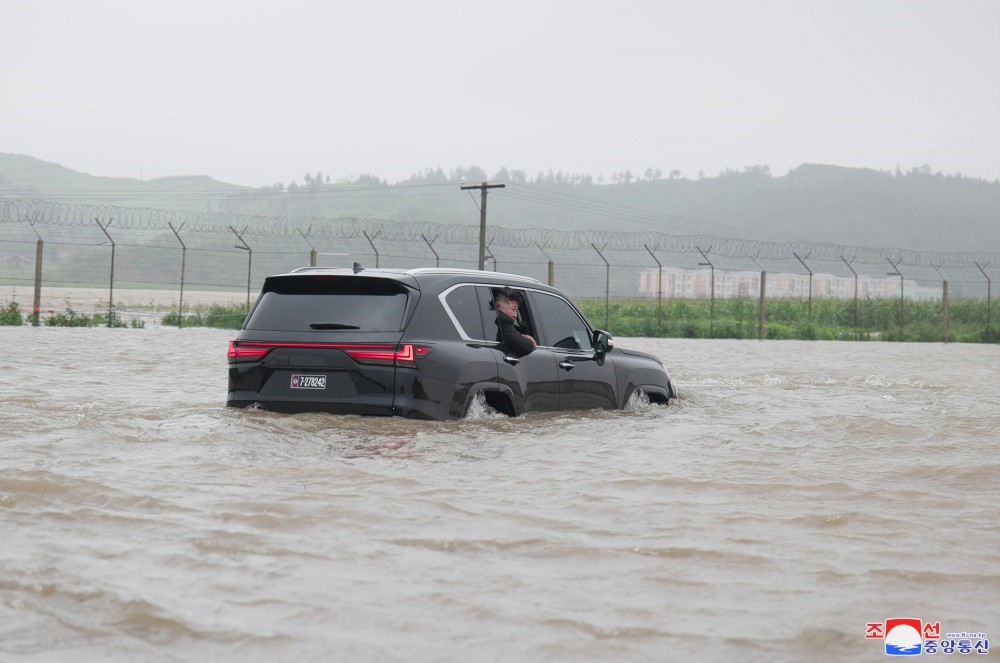 [Opinion]
North Korea’s Policy Change and the Unification of KoreaJaechun KimDean of Sogang GSISINTER-KOREAN RELATIONS: RELATIONS BETWEEN TWO HOSTILE STATESIn December 2023, North Korean Chairman Kim Jong-un made a statement saying, “The relationship between North and South Korea is no longer a relationship between the same nation, but has completely solidified into a hostile relationship between two countries at war.” He then mentioned that “we must completely remove the concepts of ‘unification’, ‘reconciliation’, and ‘nation’ from our republic’s national history.” In other words, two Koreas are not the same nation that should pursue unification, but merely two hostile warring states. This statement represents a tremendous change in North Korea’s policy. The concept of the same nation has occupied a very important position in North Korea’s policy. Kim Il-sung and Kim Jung-il both stressed that South and North Korea are the same nation and therefore should reject foreign forces like the United States, walk an independent path, and achieve independent national unification. Surprisingly, Kim Jong-un has discarded the policy he inherited from his father and grandfather. INTENTIONS OF NORTH KOREAN LEADER What is Kim Jong-un’s intention in changing the policy? First of all, it could be because Kim fears a kind of unification where North Korea is absorbed by South Korea. Kim is well aware of the fact that North Korea has lost in the ‘system competition’ between South and North Korea. He recognizes that the unification led by North Korea is now practically impossible. In such a situation, if two Koreas start with the first step of unification, which is exchange and cooperation, North Korean residents’ loyalty to the North Korean regime may decrease.Kim Jong Un, president of the State Affairs of North Korea, visited the flood-hit areas in the city of Sinuiju and Uiju Countyof North Phyongan Province on July 28./KCNAThe North Korean regime is extremely wary of the situation where North Korean residents are exposed to the ‘Korean Wave,’ such as South Korean dramas and songs, i.e., K-dramas and K-pop. It is alleged that Kim regime is punishing North Korean residents who secretly listen to K-dramas and K-pop. In order to prevent the regime from shaking, the North Korean regime may have changed its policy to remove unification from national policy. In addition, it is possible that Kim removed the concept of the same nation and unification to rationalize the North’s nuclear weapon and missile programs. If South Korea is just a hostile country not the same nation, Kim is in a position where he can justify his nukes and missiles both domestically and internationally. It is interesting to note that North Korean regime also publicly stated that “if a war breaks out on the Korean Peninsula, we will realize ‘territorial completion’ by unifying Korea by force.” Here, a big contradiction is found in the policy of two hostile states. The statement that it will realize territorial completion by unifying Koreas by force contradicts the statement that it will remove unification from North Korea’s policy. The term territorial completion originally means that South Korea is part of North Korean territory. It also means that South and North should be united territorially. In sum, North Korean regime has not given up a policy of unification by force, and this part clearly contradicts Kim Jong-un’s new policy of removing unification. Korean Unification: Our Duty and VisionHow does South Korea respond to the policy change in North Korea? First, the more the North Korean regime denies unification and the same nationhood, the more South Korea should actively pursue policy of unification and emphasize that South and North are the same nation. Some people in South Korea argue that South Korea should also adopt the policy of two states. But, if we also go with the two-state theory, it’s in violation of South Korea’s constitution. Unification is a constitutional duty that we must pursue. Article 3 of the Constitution of the Republic of Korea stipulates, “The territory of the Republic of Korea is the Korean Peninsula and its adjacent islands.” That is to say, the constitution stipulates that North Korea belongs to the territory of the Republic of Korea. And if you look at Article 4 of the Constitution, it says, “The Republic of Korea seeks unification and establishes and implements a peaceful unification policy based on the free democratic order.” The two-state theory also implies the risk of permanent division of the Korean Peninsula. It is giving up our rights to the North Korean region and also giving up our duties to North Korean residents. If we formalize the two-state theory, we have to delete the territorial clause through constitutional amendment. If we do that, our duty to protect North Korean residents will also disappear. The basis for protecting defectors in China will disappears as well. If the Chinese government forcibly repatriates North Korean defectors as it does now, South Korea has no justification to raise the issue because it is a problem of residents of another country. If a contingent situation occurs in North Korea, we lose the basis to intervene and claim territorial rights because it is a matter of another country. If we accept the two-state theory, the Korean Peninsula may seem peaceful for a while, but it cannot guarantee lasting peace on the Korean Peninsula. In order to build a sustainable peace on the Korean Peninsula, we have no option to pursue Korean unification. Then, what kind of unification should we pursue? Now, the Republic of Korea is on the path of an advanced civilization that our ancestors dreamed of. It is on the path of freedom, peace, and prosperity. Unfortunately, North Korea is on the opposite path. Therefore, first, we should pursue a unification that realizes the dream of freedom, peace, and prosperity that our ancestors pursued throughout the history. Unification is the expansion of the universal human values of freedom, peace, and prosperity throughout the Korean Peninsula. Second, when the North Korean regime denies unification, we must consistently pursue unification. We must present a unification vision that allows North Korean residents to enjoy freedom, peace, and prosperity. Therefore, our unification policy should target North Korean residents, not the North Korean regime. In particular, we must pursue a unification that guarantees human rights for North Korean residents. Third, when the North Korean regime denies that two Koreas are the same nation, we must emphasize that South and North are the same nation. South and North are really the same nation. They are the same nation that shares the same language, the same customs, and the same history. But a unified Korea avoids ‘exclusive nationalism’. It aims for an open nationalism, a nation of international civil society that contributes greatly to the international community. Fourth, we must remind the international community that the free unification of the Korean Peninsula contributes to peace and prosperity not only on the Korean Peninsula but also in the world. In recent years, it has become increasingly difficult to promote unification now. The unification discourse has lost its momentum domestically and not many people in South Korea are interested in Korean unification. Unification has become politically contested issue in South Korea. The relationship between South and North Korea is at its worst. The era of great power competition, i.e., the New Cold War, presents a challenging international environment to promote unification. The more it gets difficult to promote unification, the more we should put it unflagging efforts to promote unification. The state of Polish nation had disappeared from the map for 123 years due to the power struggles of surrounding great powers, but Polish people had never given up their national aspirations of independent and unified statehood. When the World War I ended and a favorable international environment was presented, Polish people seized the opportunity and reconstructed a unified Poland. Polish people had a unfaltering purpose, and eventually a path opened for them.
24.08.02
News Letter
We are leading the global communication via Newsletter.
We will deliver the latest information and proven facts on Korean Peninsula status including North Korea situation.