

-
 [Defectors' Podium]
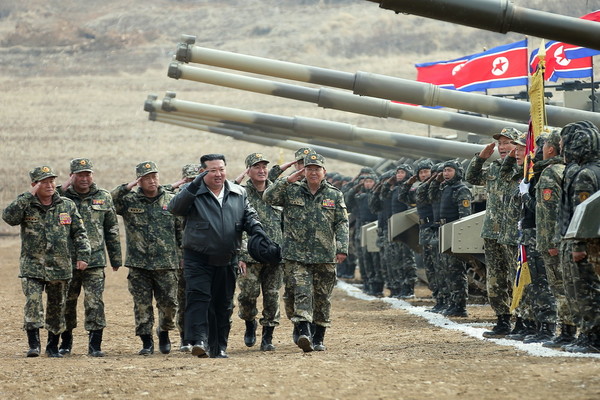
Kim Jong-un Abandons Peaceful Reunification for Military Conquest,Seizes Control of 127 South Korean Businesses at Kaesong Industrial Complex Lee Do-gon Former North Korean Official,Head of NK4D Human Rights Strategy CenterNorth Korea's unprecedented actions to erase all references to unification, combined with its hostile stance towards South Korea, have sparked speculation that Kim Jong-un may be abandoning the path to peaceful reunification. The divided Korean Peninsula faces two potential paths towards reunification: military conquest or peaceful integration. The question arises: which path has Kim Jong-un chosen to pursue?This year, tensions between North and South Korea sharply escalated. North Korea eliminated references to 'unification,' 'reconciliation,' and 'same ethnicity,' while dismantling related organizations. Following Kim Jong-un's declaration that the nations are hostile, North Korea conducted military drills in the West Sea Buffer Zone on January 30th, directly threatening South Korea. Kim's threats on February 10th of South Korea's 'total destruction' and readiness for war further deepened the divide.North Korea appears to have abandoned the pursuit of peaceful unification, opting instead for military conquest. With a fully developed nuclear arsenal, Kim Jong-un seems to believe there is no longer any need to uphold the pretense of peace that previous generations purportedly pursued.North Korean citizens' reaction to abandoning the idea of peaceful reunification is notable. Having been fed the promise of a united future, they now face a stark shift in narrative. Many might feel a profound sense of betrayal, having clung to the hope of unification as a beacon through decades of hardship. This could breed widespread disillusionment. Interestingly, for many North Koreans, unification wasn't about a grand future but a desperate escape from present suffering. With division blamed for all their woes, the fading dream of coming together only deepens their despair. Ironically, giving up on unification could, for some, feel like the conclusion they've been waiting for, offering a twisted form of relief from an endless wait.This perspective was vividly illustrated when Kim Jong-un, attending the groundbreaking ceremony for a local industrial plant in Songchon County, South Phyongan Province, expressed shame and regret for just beginning such endeavors, stirring an unexpectedly emotional response from the audience. This reaction reflects a deep-seated sentiment among North Koreans towards the abandonment of unification.North Koreans take pride in their country's military advancements, viewing them as a beacon of hope amidst economic decline. This sense of national pride is bolstered by the government's claims that even minimal defense spending redirection could uplift living conditions, a message that resonates deeply with the populace. Such sentiments suggest that enduring hardships were sacrifices for the noble goal of unification. However, moving away from the unification narrative represents a pivotal shift, marking an end to long-suffered adversities for many who never thought change was possible. The recent admission of starting late in economic initiatives has touched a nerve, reflecting the population's long-held hopes and their vulnerability to disillusionment. This scenario underscores the profound effect of even the slightest promise of change on the collective North Korean psyche.In a timely move, North Korea has rolled out its '20×10 regional development policy,' seemingly to justify the legitimacy of its decision to abandon the goal of unification. The '20×10' might appear random at first glance but is actually based on a precise political calculation. With North Korea divided into 206 administrative divisions, the '20×10' strategy is designed to engage the entire country, potentially securing the loyalty of its citizens for the next decade.Questions remain about Kim Jong-un's intentions to shift military funds to economic development, particularly after North Korea's constitutional change aimed at increasing its nuclear capabilities, which implies a rise in defense spending. Such moves cast doubt on the likelihood of reallocating military resources for economic growth, suggesting there might not be a real commitment to economic renewal amid ongoing conflicts and arms competition.Is Kim Jong-un playing a double game? It's a mix of truth and strategy. North Korea has adeptly adjusted to global dynamics for its benefit. Even if profits from illegal arms deals and other illicit transactions cannot solely sustain North Korea's economy, the partnership formed with Russia implies substantial economic support and aid. Recently, Vladimir Putin's significant remark that Kim Jong-un had not sought nuclear assistance suggests that North Korea's requests to Russia may extend beyond mere technological cooperation for satellite launches, possibly hinting at further economic aid, which for Russia, presents a less risky and burdensome proposition compared to nuclear technology transfers.The abandonment of unification efforts has inadvertently benefitted North Korea with the Kaesong Industrial Complex. The complex housed 127 South Korean businesses across various sectors various sectors like textiles, chemicals, machinery, electronics, food, and more, all equipped with advanced production facilities, until its closure in 2016. In 2015, the complex's output was $563.29 million, making up 20% of North Korea's GDP at the time. Occupying the Kaesong Industrial Region could significantly boost North Korea's economy. Interestingly, North Korea has voided all legal agreements concerning the complex, effectively erasing any legal obligations and paving the way for unilateral control. The mention of '20×10' brings to mind the 127 companies once operating there, highlighting this audacious move.North Korea's shift away from unification is not an abandonment of the ultimate goal itself but a choice to pursue military conquest at the expense of peace. In doing so, the regime admits to its anti-national and anti-historical stance.
24.04.05 -
 Launching Reconnaissance Satellites: A New Phase in Korean Rivalry
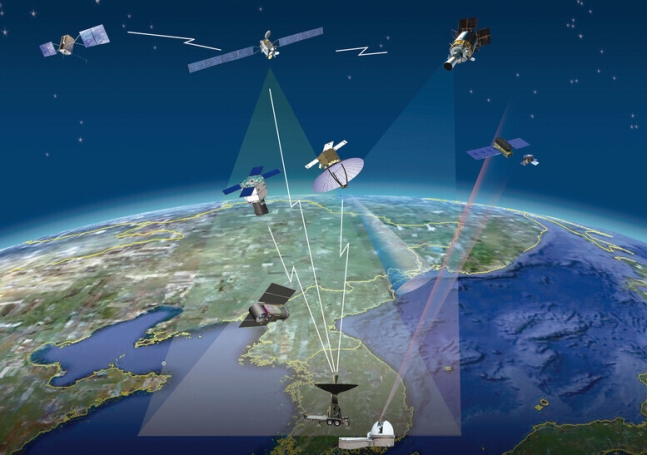
– Assessing the True Value of Korean Reconnaissance Satellites in the Space Age– Lee Seung-hyun Research Fellow at SAND Institute/Ph.D. in Public AdministrationIn 2021, at the 8th Congress of the Workers' Party of Korea, North Korea laid out a "Five-Year Plan for the Advancement of Defense Science and Development of Weapon Systems," setting its sights on advancing its nuclear arsenal, including the development of nuclear delivery mechanisms (missiles included) and reconnaissance satellites, to bolster its nuclear strike capabilities. After this announcement, North Korea focused its efforts on developing and planning to launch reconnaissance satellites, a project that was publicly announced both within the country and to the international community. Initially, the global community, including experts, viewed North Korea’s focus on reconnaissance satellites merely as a strategy to enhance their missile capabilities for nuclear armament.Such assumptions were not unfounded, as North Korea announced that its 1998 launch of Taepodong-1 successfully carried the Kwangmyongsong-1 satellite, affirming its operational success. Up until 2016, North Korea professed to have launched a series of five Kwangmyongsong satellites, capable of carrying nuclear warheads. Thus, when the discussion of launching reconnaissance satellites surfaced in 2023, it was naturally perceived as an effort to acquire delivery systems for nuclear weaponry. However, it soon became evident that Kim Jong-un’s real ambition in acquiring reconnaissance satellites was to gain the necessary 'eyes' for the operational use of nuclear weapons. This meant using reconnaissance satellites to monitor military movements of South Korea and the US and to ascertain precise target specifications and confirm Battle Damage Assessment (BDA) capabilities.The start of the Yoon Suk-yeol administration in 2022 further intensified the already strained relations between the North and South following the 2019 Hanoi summit. North Korea's dedication to launching reconnaissance satellites was part of its broader focus on developing new strategic and nuclear weapons. The South Korean government also revealed its significant advancements in defense technology. Notably, North Korea’s efforts to launch the Malligyong-1 on April 19, 2023, and subsequent attempts on May 31 and August 24 failed, which were promptly disclosed by North Korea. A pivotal moment occurred when Kim Jong-un, in September 2023, met Vladimir Putin at Russia’s Vostochny Cosmodrome, leading to a hinted military and technical cooperation for North Korea's space program. Consequently, North Korea declared the successful launch of its third reconnaissance satellite on November 21, 2023.* South Korean Satellite: SpaceX Falcon 9, launched from Vandenberg Space Force Base, deploying Ireland's first satellite and a South Korean reconnaissance satellite in December 2023North Korean Satellite: North Korea's third rocket launch, featuring the deployment of its own reconnaissance (or spy) satellite.In response, the South Korean government and military analyzed the debris from North Korea’s Malligyong-1 launch in June, concluding its lack of military utility. On December 2, 2023, the South Korean satellite, known as 425 Project, was set to launch, representing the first step in a government-led project initiated in 2018. Plans for additional satellite launches in 2024 and 2025 were also revealed, marking an escalation of the North-South rivalry into space.The competition in space development, driven by reconnaissance satellites over the Korean Peninsula, extends beyond North and South Korea, encompassing major global powers like the United States, China, Japan, and India. This rivalry reflects the quest for human survival and supremacy. Historically, space development has been dominated by governments due to its exorbitant costs. Only seven countries, including Korea, launched and maintained satellites in orbit. However, the emergence of SpaceX in 2002 catalyzed a shift towards private-led initiatives, slashing costs and timelines. This ushered in the era of 'New Space', revolutionizing satellite development and prompting initiatives like the United States' Space Development Agency (SDA), integrating Silicon Valley's business approaches.This ‘New Space’ era seems poised to establish a new international rivalry reminiscent of the Cold War. Just as the Cold War was characterized by ideological divisions between the United States and the Soviet Union, the ‘New Space’ era is likely to be divided between liberal democratic nations and communist/socialist countries, with the United States and China at the forefront. This division is expected to limit the exchange and cooperation in space development between these two camps.In this context, the reconnaissance satellite competition between North and South Korea appears to be creating a new framework of confrontation in line with the ‘New Space’ era. South Korea is expected to strengthen its capabilities through technological cooperation with allies such as the United States, Japan, and India, focusing on satellite launches, operation maintenance, and the construction of space communication networks. In contrast, North Korea will likely pursue limited technological cooperation with China and Russia.Experts, both domestic and international, analyzed North Korea's "Malligyong-1," launched in 2023, scrutinizing its surveillance equipment and resolution. The reconnaissance satellite's capabilities are estimated to lag behind South Korea's by approximately 20 years, with a speculated resolution exceeding 1 meter. Hence, its effectiveness as a surveillance tool is deemed limited compared to South Korea's Arirang-1 and Arirang-2 satellites launched since 1999.On the other hand, South Korea's 425 satellite, boasting a resolution of 30cm and equipped with various optical instruments, is ready for practical use. Given the alignment within the new space era's camps, South Korea is poised to lead the space race against North Korea for the foreseeable future. However, this lead is not guaranteed to last indefinitely. The pace of technological advancement in the space industry is not steady but rapid, making it impossible to declare that South Korea's current superiority will persist over the next decade or two. While South Korea's technological prowess is expected to surge through cooperation within the new camp, expanding the usable space infrastructure of its allies, the technological gap with North Korea could either narrow or widen depending on North Korea's hacking capabilities and its demonstrated rapid technology acquisition, particularly in nuclear development.With the rapid advancement of hardware technologies related to launch vehicles, satellites, and their onboard equipment, the technology for the software used in satellites and ground stations is also evolving. Additionally, security measures to protect this software are being strengthened. Therefore, despite North Korea's proficient hacking abilities, it will find it challenging to exfiltrate all technical information, and it's unlikely that China and Russia will fully transfer their key technologies to North Korea. This makes it difficult for North Korea to surpass South Korea's technological achievements in the short term. Also, while South Korea can boost its tech and expand its capabilities through collaborations beyond the US, North Korea's tech partnerships are limited to China and Russia, making short-term progress challenging.In summary, spurred by the launch of reconnaissance satellites in 2023, South Korea holds a lead over North Korea in the space competition. This is due to North Korea's technological limitations and constrained collaboration opportunities. Both countries plan to launch more satellites in 2024 to gain strategic advantage.Technological superiority directly impacts military utility, especially in the realm of satellite applications like surveillance and power projection. With South Korea's advantageous alliances in the new space era, its expanded reconnaissance and satellite capabilities bolster its military strength. Therefore, South Korea must maintain its superiority in the space sector while preparing for potential threats and technology acquisition attempts.
24.04.05 -
 [Defectors' Podium]
Insights into North Korea's Nuclear Ambitions from My Experiences There: Part 2Park Choong-kwon Research Engineer at Hyundai Steel Company,Specialized in Materials Engineering for ICBMs at Kim Jong Un National Defense University,Ph.D. in Materials Science and Engineering from Seoul National UniversityThe inaugural North Korean defector recruited for political talentIn my previous column, I touched upon North Korea's advancements in nuclear capabilities, shedding light on the anticipated developments and responses that we should prepare for. The nuclear prowess of North Korea has significantly evolved and diversified since the era of Kim Jong-il. This evolution is not solely attributed to the Kim Jong-un regime but also reflects a longstanding commitment to nuclear armament and its refinement since the time of Kim Il-sung. So, how is it even possible for North Korea to advance its nuclear capabilities?Deep within North Korea lies a highly secretive institution known as the National Defense University. Even among the populace of North Korea, the existence of this institution remained largely unknown, and I only became aware of it because I graduated from there before defecting in 2009.Established by Kim Il-sung in 1963, the National Defense University was exclusively dedicated to missile development, with meticulous attention paid to details such as student uniforms and institutional regulations. Kim Il-sung even affectionately referred to the university as his "only son."During the 1990s, Kim Jong-il intensified efforts in weapons development. To support this endeavor, a special admission system was implemented at the National Defense University, aimed at attracting the nation's most talented individuals. Substantial investments were made to enhance the quality of research personnel. Building upon this foundation, Kim Jong-un issued directives in 2015 to elevate the University to a "world-class institution above all others." The subsequent renaming of the university as the "Kim Jong Un National Defense University" in 2016 underscores the regime's unwavering focus and investment in nuclear armament and its advancement across three successive generations.Until Kim Jong-il's era, the National Defense University operated with such secrecy that even the general population remained unaware of its existence. Upon leaving the university, faculty and students adopted the guise of soldiers affiliated with the "852 military unit." The university's existence was a closely guarded secret, concealed from the outside world. However, during the reign of Kim Jong-un, significant changes occurred.On June 13, 2016, coinciding with the university's founding anniversary, Kim Jong-un's on-site inspection marked the first public acknowledgment of its existence under the name "Kim Jong Un National Defense University." This acknowledgment signaled a newfound level of confidence within the North Korean regime regarding its nuclear armament and capabilities.Prior to unveiling a new weapons system in early 2017, the regime strategically showcased the institution to the outside world. This move may have been intended to subtly indicate the reliability of the upcoming weapons, suggesting the presence of robust research and development capabilities spanning from R&D to mass production.Kim Jong-un's regime clearly exhibits confidence, bolstered by my observations of North Korea's defense sector. Despite the country's general underdevelopment, it has a notably advanced military-industrial complex, with significant research personnel and infrastructure. This indicates a military capability that disproportionately exceeds its broader national development.In a country where power outages are commonplace, any facility that maintains uninterrupted electricity supply round the clock is almost certainly tied to the military industry. My time at the National Defense University confirmed this; we never once faced a blackout. This unwavering power supply extends to all military-affiliated institutions and factories, underscoring their priority within the nation's infrastructure. During my visits to military factories, I observed their production infrastructure to be impressively advanced, with the latest imported manufacturing equipment and raw materials readily visible. This shows that, even under Western-led sanctions, North Korea has consistently secured the essential equipment and materials needed for weapons production.Questions might arise about how North Korea manages to finance these operations. It's reasonable to assume that the funding stems from diverse sources, including illicit activities such as diverting humanitarian aid, dealing in drugs, arms trading, and exploiting mineral and marine resources.During my time at the National Defense University, state-of-the-art computers supplied from South Korea were provided to both faculty and students. Interestingly, many students were engaged in studying Arabic, potentially to support them in roles related to technical support during arms and technology trade with Arab countries. This underscores the active nature of the arms trade relationship between Arab nations and North Korea.Turning our attention back to the National Defense University, it stands out as a globally unique entity. Initially, it offered eight majors during my time there, but a recent restructuring has increased this number to 12. The framework of these majors is vastly different from what you'd find in typical universities across the free world, with a clear emphasis on specialized, defense-oriented disciplines.The departments for the majors at this university include Aerospace Engineering, Electronics and Communication Engineering, Commercial Weapons Engineering, Optical Radar Engineering, Automatic Control Engineering, Satellite Engineering, Hypersonic Weapons Engineering, among others.Each department highlights a specific area of expertise, with further subdivisions focusing on a range of weapon systems like Rocket Engine Engineering, Rocket Body Design, Maritime Weaponry, Sniper Weaponry, and more. This demonstrates the university's extensive dedication to defense-related disciplines.Every year, this university produces between 500 to 700 specialists from its highly specialized departments. But that's not all. The university is connected to a wealth of resources, including the State Academy of Defense Sciences, which boasts 15,000 personnel and over 60 regional branches nationwide, as well as military factories under the Second Economic Committee, among others.A closer look at the National Defense University's departmental structure reveals a telling pattern. With a focus on the detailed segmentation of weapon systems, the institution appears primarily aimed at developing technical skills rather than encouraging the growth of versatile, creatively minded talents. Indeed, researchers at North Korea's State Academy of Defense Sciences frequently refer to their institution as a “reverse engineering academy.” Instead of pursuing innovative weapon development projects, North Korea focuses on replicating advanced weapon systems from other countries.Consider the "Songun-2" tank, for example, a North Korean replica of the U.S. M1A1 Abrams tank. This initiative was inspired by North Korea's analysis of how nine U.S. tanks were able to decisively defeat 80 Russian-made T-72 tanks during the Gulf War's Battle of 73 Easting, leading them to acquire and duplicate U.S. tank technology.<On March 19, 2024, North Korea tested a solid-fuel engine for its new-type intermediate-range hypersonic missile / Photo by Rodong Sinmun>Additionally, during my time there in 2006, there was ongoing development of portable 4th-generation night vision devices through reverse engineering. By April 2017, it was confirmed that the Korean People's Army Special Operation Force (KPASOF) showcased these devices at a military parade and had already deployed them in combat situations. At the same time, following Kim Jong-il's directives, North Korea's State Academy of Defense Sciences and its military factories were deeply involved in the development of anti-aircraft radar systems. Aimed at protecting North Korea's airspace, especially along the East and West coasts, these advanced radar systems were procured through black-market deals for the purpose of reverse engineering. It's believed that these systems have been fully developed and are now actively deployed for combat.However, North Korea's fondness for copying extends far beyond radar systems. Examples include the Hwasong-11 (a replica of Russia's Iskander), Hwasong-11Na (a replica of the U.S. ATACMS), the Pukguksong series (a replica of the U.S. Polaris series), and Saetbyol-4 (a replica of U.S. RQ-4 Global Hawk), Saetbyol-9 (a replica of U.S. MQ-9 Reaper), Haeil-2 (a replica of Russia's Poseidon), Hwasong-8 (a replica of China's Dongfeng-17), Pongae-5 (a replica of Russia's S300), and more.Given these circumstances, it's crucial to develop effective strategies to detect and block the channels North Korea uses to illicitly acquire foreign weapons technology and systems promptly.
24.03.22 -
 [Issue Brief]
Changes in North Korea-China Relations Following the Conclusion of China's Two SessionsLee Jae-youngResearch Fellow at the Korea Institute for National Unification (KINU) From March 5th to 11th, 2024, the Two Sessions convened at Beijing's Great Hall of the People, marking a pivotal moment for China. A standout feature of this year's sessions was the further cementing of Xi Jinping's solo rule and the Communist Party's tightening grip over the State Council. Li Qiang, China's second-in-command, steadfastly highlighted adherence to the Central Committee of the Communist Party of China's directives throughout his governmental work report. A notable reduction in the Premier's influence within the collective leadership structure was signaled by his constrained authority over key appointments in the State Council and the discontinuation of the Premier's annual press conference, a tradition since 1993.The Two Sessions also brought revisions to the State Council Organization Law, clarifying its function in executing Central Committee decisions, and subjugated the People's Bank of China, traditionally responsible for autonomous monetary policy, under State Council supervision, reflecting a direct commitment from Xi Jinping and the Central Committee to tackle pressing economic issues like local government debt, property market slump, and Western sanctions through fortified financial security.Despite setting a modest economic growth target of around 5% for the year, the Two Sessions fell short of presenting a concrete strategy or blueprint for China's broader economic ambitions, beyond announcing a significant $27 billion fund to boost the semiconductor industry and initiatives like the artificial intelligence movement to counteract U.S. sanctions. The postponement of the 20th Central Committee of the Communist Party of China's 3rd Plenum, expected last fall, indicates ongoing challenges in formulating solutions to structural economic dilemmas among China's leadership.This year, China's defense budget has exceeded 300 trillion won (309 trillion won, equivalent to 1 trillion 670 billion yuan), marking a 7.2% increase from the previous year. Shortly after China's Two Sessions concluded, North Korea fired more than three ballistic missiles into the East Sea on March 18th, seemingly targeting Antony John Blinken, the U.S. Secretary of State, who visited South Korea for the Freedom Shield joint military exercises from March 4th to 14th and the Democracy Summit in Seoul.North Korea's heightened military activities this year serve not only to initiate nuclear disarmament negotiations with the U.S. after the November presidential election but also to secure acknowledgment as a nuclear-armed state within its alliance, particularly from Russia and China. Vladimir Putin's statement in a local media interview on March 13th, mentioning North Korea's possession of its own nuclear umbrella, has been interpreted as Russia practically recognizing North Korea as a nuclear-armed state.While China still advocates for Korean Peninsula denuclearization, it now prioritizes North Korea's security concerns over denuclearization efforts, shifting blame for North Korea's provocations onto the U.S. and joint U.S.-South Korea military exercises. This implies that China does not outright deny North Korea's nuclear-armed status.2024 marks the 75th anniversary of diplomatic relations between North Korea and China. Wang Yajun, the Chinese ambassador to North Korea, visited Dandong on January 11th, while on January 5th, a delegation from Dandong City government visited Shinuiju, North Korea. The recent opening of the New Yalu River Bridge has led to signs of resumed logistics between the two countries.During a January 26th meeting, Sun Weidong, Deputy Director of China's Ministry of Foreign Affairs, and Choe Son-hui, North Korea's Foreign Minister, expressed their intent to commemorate the 75th anniversary of diplomatic ties in 2024 with a focus on friendly cooperation, emphasizing "tactical cooperation and joint support for common core interests."Discussions about a potential summit between North Korea and China have emerged. However, the summit's success hinges on tangible achievements and legitimacy. Recent deterioration in their relations, compounded by ineffective outcomes from past summits due to sanctions, raises doubts. China, aiming to mend ties with the US despite technology sanctions, sees limited benefits in closer ties with North Korea. Consequently, the likelihood of a summit on their 75th diplomatic anniversary remains low this year.
24.03.22 -
 US Suggests Interim Steps for Denuclearization
, Russia Describes North Korea's Nuclear Defense as 'Their Own Nuclear Umbrella'Son Gi-woongFormer President of the Korea Institute for National UnificationRecent comments from US senior officials and Russian President Putin on North Korea's nuclear issue have sparked concern.Mira Rapp-Hooper, the National Security Council's Senior Director for East Asia and Oceania, stated at a forum on March 4th that the United States is open to considering interim steps towards North Korea's denuclearization.She highlighted that the Biden administration has continuously offered unconditional dialogue with North Korea and is now prepared to engage in discussions with North Korea about 'reducing threats' in light of the current situation on the Korean Peninsula. These 'interim steps,' which could aid in regional and global stability, might initiate new dialogues with North Korea.At a forum on March 5th, U.S. Senior Official for North Korea, Jung Pak, highlighted the need for interim steps towards denuclearization, stating that it wouldn't happen "overnight" and underscored the importance of intermediate steps towards this goal.Meanwhile, some experts in the US argue that negotiations with North Korea should aim at reducing its nuclear arsenal, given the improbability of achieving complete denuclearization amidst ongoing development and enhancement of nuclear capabilities by North Korea.Adam Mount, Senior Fellow at the Federation of American Scientists (FAS), in his contribution to the United States Institute of Peace (USIP) on March 4th, argued for a strategy that involves peaceful coexistence with a nuclear-armed North Korea. He suggested arms control as a means to stabilize the situation on the Korean Peninsula, particularly focusing on the reduction of tactical nuclear weapons that North Korea is likely to use in a crisis.This stance suggests a US strategy to stabilize the Korean Peninsula by managing the scale and development of North Korea's nuclear capabilities while recognizing the regime's survival.The existence of a 'North Korean villain' with nuclear capabilities justifies the 'US police' role, ensuring its sustainability in Northeast Asia. By offering a nuclear umbrella, the US can keep South Korea and Japan in a military alliance. Well-managed nuclear capabilities in North Korea could also serve as a strategic point against China. Hence, negotiating nuclear disarmament with North Korea and easing international sanctions are considered strategies for reducing regional tensions.Negotiations for a 'freeze' on North Korea's nuclear program and 'partial lifting of sanctions' as 'interim steps’ are possible but must be part of the entire resolution process of the North Korean nuclear issue. Regardless of whether it's “Complete, Verifiable, Irreversible, Denuclearization (CVID)” or “Final, Fully Verified Denuclearization (FFID)”, a roadmap involving North Korea's agreement, international consensus, and a series of phased measures based on the current situation should be developed.It's vital not to label negotiations and dialogue with North Korea as ‘disarmament.' Using this term would allow North Korea to take advantage, complicating efforts to progress beyond the disarmament framework.The Yoon Suk-yeol government should challenge the Biden administration's motives and act decisively for peace and denuclearization in North Korea, honoring the "Joint Declaration on the Denuclearization of the Korean Peninsula" and the NPT, yet overlooking self-armament or reintroducing US tactical nukes in South Korea.We must reaffirm the commitment to the "complete denuclearization of North Korea," urging it to abandon its nuclear and missile programs as per the "Camp David" declaration last August.Additionally, it's important to recall the tripartite leaders' commitment to a "free and peaceful reunification of the Korean Peninsula," with the goal of establishing "One Korea."The statement by Russian President Vladimir Putin, which seems to accept North Korea's nuclear capabilities by referring to it as ‘their own nuclear umbrella’, should be strongly protested and countered.All South Koreans, whether part of the ruling party, the opposition, conservatives, or progressives, must unite in declaring that living under the threat of North Korean nuclear weapons and coexisting with the worst dictatorship does not align with our national interests or the aspirations of our people.
24.03.22 -
 Contrasting North Korea's "Expropriation without Compensation"
 with South Korea's "Compensated Expropriation": Understanding Land Reform DifferencesKim YongsoonVisiting Professor at Yonsei University's Graduate School of International StudiesCharacteristics of Land Reform in North and South KoreaLand reform represents a fundamental overhaul of land ownership structures within a nation or society, aimed at addressing economic disparities and modernizing landlord-tenant systems. The land reforms undertaken in the aftermath of Korea's National Liberation in 1945, both in the North and South, exemplify this pursuit. However, the divergent goals and methodologies employed in each region, influenced by distinct ideologies and political frameworks, profoundly shaped the subsequent economic and social landscapes of North and South Korea.In March 1946, the land reform in the northern region, overseen by the Soviet Civil Administration (SCA), was heavily influenced by socialist and communist ideologies. Initially, they introduced a "70-30 sharing arrangement" to distribute harvests between landlords and tenants. However, influenced by Cho Man-sik's growing popularity, the Soviet Union and Kim Il-sung swiftly abandoned this system and adopted a Soviet-style approach.The reform aimed to achieve a fairer distribution of resources among landlords while emphasizing social equality and bolstering the economic standing of peasants. Its ultimate aim was to forge a new social structure with a rural focus. By redistributing land, the reform sought to boost agricultural productivity by granting land to small tenant farmers, thus promoting social equality among peasants. However, it was unilaterally implemented without seeking residents' consent, completed in just over 20 days, facilitated by the strong policing powers and meticulous control of the Soviet authorities.Having experience in conducting land reforms while integrating neighboring countries, the Soviet Union executed the reform with considerable force and coercion under the program of “expropriation without compensation and distribution for free”. But peasants were only granted cultivation rights instead of outright land ownership. Instead of paying rent to landlords, they were required to contribute 40% of their produce as taxes to the state.With the establishment of the Democratic People's Republic of Korea in 1948, the concept of private property was abolished, and all land became state-owned. Following the Korean War in 1950, peasants lost their rights to cultivate land, transitioning into a state-employed workforce under the collective farm system. <North Korean peasants gather in support of the land reform in March 1945 (left), alongside a propaganda poster (right) / Photo by Naver Encyclopedia>On the other hand, land reform in the southern region began in March 1948 under the United States Army Military Government in Korea, emphasizing democratic values. Following the establishment of the Republic of Korea government in August 1948, the constitution explicitly stated the “Land to the Tiller” principle, leading to the state confiscating land from landlords and redistributing it to small tenant farmers. This aimed to crack down on landlords' illegal actions while granting economic independence to tenants through land distribution. Alongside promoting a free-market economy, efforts were made to stabilize agricultural regions and support farmers' livelihoods.In June 1949, a land reform law was enacted to respect landowners' property rights, instituting “compensated expropriation and distribution”. However, progress was slow until the early 1960s, post the Korean War. Compensation for expropriation was fixed at 150% of annual produce for both acquisition and distribution. Landowners relinquishing their land received government bonds matching this amount, while tenant farmers receiving land had to allocate 30% of their annual produce for five years to secure ownership rights.By parceling out vast tracts of land among small tenant farmers, the reform fostered more equitable income distribution within local communities, thereby enhancing the fairness of rural economies and fortifying the economic autonomy of farmers. Various factors, including the punitive measures against landlords and the considerable loss of land and property records amidst the upheaval caused by the Korean People's Army's occupation, facilitated the land reform process with minimal resistance.The Impact of Land Reform in North and South KoreaAdvancing with little opposition, land reforms implemented on the Korean Peninsula resulted in positive outcomes, such as reducing rural poverty and enhancing the living conditions of peasants. However, they also brought about negative consequences, including instability in agricultural production systems and increased political conflicts. In North Korea, the rushed and arbitrary land reform had serious consequences. Forced land distribution gradually decreased agricultural productivity, worsening rural food shortages and threatening food security.Furthermore, the reform process involved coercive collectivization without individual autonomy, which restricted economic freedom and rights. Landowners were compelled to surrender their land, diminishing incentives for individual effort and investment, thereby undermining economic stability and fostering an environment of instability. Inefficient land utilization due to forced redistribution lowered productivity, ultimately reducing overall economic efficiency. The government's strong control and coercive policies eroded trust among residents, leading to social unrest. Consequently, North Korea's land reform, aimed at achieving short-term goals, had negative implications for long-term stability and productivity.Similarly, land reform in South Korea aimed at short-term gains but yielded various negative effects. During the reform process, landowners were forcibly required to transfer land, sparking disputes and conflicts that destabilized local communities. Forced land distribution restricted landowners' income and investment incentives, diminishing individual economic motivation and consequently reducing agricultural productivity. This decline in productivity had adverse implications for the nation's food security. Moreover, the government's strong intervention curtailed individual economic freedom, depriving citizens of property rights and hindering creativity and entrepreneurial spirit. Inefficient land use and the loss of incentives for landowners' effort and investment led to decreased agricultural productivity, ultimately negatively impacting the country's economy as a whole. The Legitimacy and Public Support of Land ReformIn any reform effort, legitimacy and public support are pivotal factors, given their crucial roles in ensuring effective policy execution, national stability, and social cohesion. Land reform, like any other reform, adheres to this principle. Legitimacy serves to bolster public confidence in governmental decisions and enhances the viability of policy implementation.When land reform follows rational and equitable procedures, citizens are more inclined to place trust in governmental decisions, fostering greater consensus on government objectives and policies. Popular backing is indispensable for the successful execution of land reform. It's imperative for the government to value citizens' perspectives and facilitate their active involvement in the reform process. With citizens comprehending the necessity of land reform, sharing its objectives and rationale, and actively engaging, collaborative and effective reform becomes achievable.Moreover, if citizens find the outcomes satisfactory and throw their support behind them, it can mitigate potential resistance in the future, thereby playing a pivotal role in the country's long-term development.Nevertheless, both North and South Korea faced challenges regarding legitimacy and popular support in their land reform endeavors. Forced land redistribution, prevalent in both nations, raised concerns about individual property rights and economic freedoms. This approach had not only undermined individual initiatives and investments but also stifled economic efficiency. Furthermore, excessive government intervention curtailed citizens' economic liberties and hindered innovation. Such interventions impeded market functions and suppressed healthy competition among economic entities, thereby constraining overall economic growth and development. Additionally, inefficient land use exacerbated these challenges, contributing to a decline in agricultural productivity and posing threats to food security and economic stability.Furthermore, social unrest and conflicts arising from differing policies between North and South Korea likely worsened doubts about popular support and legitimacy. In North Korea, while some citizens may have initially gained from land reform, widespread distrust and restrictions on freedoms due to forced distribution and government interference hindered broad support. Similarly, in South Korea, citizens faced confusion, especially those treated unfairly during land transfers. The decline in agricultural productivity due to forced distribution further fueled negative perceptions of the reform among some.The Sustainability of Land ReformTo ensure the sustainability of land reform, it's crucial to consider several key principles and directions alongside achieving short-term successes. Above all, securing national consensus and participation is paramount. In the process of land reform, gathering the opinions of citizens and actively involving both field experts and the public are essential steps.When citizens are directly engaged in the reform process and transparency prevails regarding the outcomes, reform policies stand to gain more support and trust. Moreover, the reform's goal should prioritize fair and efficient resource distribution. Establishing a distribution system grounded in consensus and compensation rather than coercion is imperative. Education and support play pivotal roles in ensuring the land's efficient utilization.Introducing policies that promote sustainable agricultural practices by imparting agricultural techniques and management skills to residents is essential. Additionally, offering incentives for land conservation and sustainable management can bolster land productivity. Government intervention should prioritize fairness without impinging on the freedom of citizens and economic entities.The government's role in actively utilizing market mechanisms is especially crucial, while also focusing on regulation, support, and compensation. Reform efforts should aim to promote and nurture the economic freedom and innovation of citizens. Moreover, it's vital for land reform to prioritize long-term vision and sustainability, ensuring short-term objectives align with broader national development goals. This approach aims to improve both efficient land use and the overall quality of life for citizens.
24.03.14 -
 Examining Women's Status in North and South Korea on International Women's Day
Chae Su-lanKorea Maritime Institute (KMI) Research SpecialistInternational Women's Day in North KoreaNorth Korea celebrates International Women's Day, designated by the United Nations on March 8th, as a public holiday. According to reports from Rodong Sinmun, the country organizes various events like sports competitions, martial arts demonstrations, and celebratory performances during this time. On this day, North Korean men honor their wives, mothers, sisters, female teachers, and colleagues with flowers and gifts, often cooking meals for them. Women in vibrant traditional attire, holding flowers, grace the streets with smiles.North Korean media portrays their nation as a women's paradise, highlighting women's crucial role in advancing the revolution. Coined by Kim Il-sung, the phrase "one side of the revolution's cartwheel" symbolizes gender equality, but in reality, it was a facade to acknowledge women's essential contribution to the nation's development, especially during its inception. With the lack of male labor, women's active participation in industry and other sectors was indispensable for societal progress. <North Korea's International Women's Day commemorative events in 2023 (Photo by Rodong sinmun)>Women's Hectic Daily Lives in North KoreaIn exploring whether North Korean women live on par with men, I conducted extensive interviews with over 300 defectors from North Korea between 2018 and 2019 for my dissertation. Through dedicated study, I gained insights into North Korea's socialist political economy, while these interviews provided a window into the realities of life and income in North Korea, offering a glimpse of the 'real North Korea.' It's noteworthy that seventy percent of the defectors were women, a gender ratio commonly observed among defectors (with a male to female ratio of 3:7 among over 30,000 defectors). My inquiries delved into the paths they took and the incomes they earned in North Korea, requiring a deep understanding of their lives spanning several years or even decades.Interviews ranged from 40 minutes to over two hours, during which the emotional weight of their experiences became palpable, leading to shared tears. Their decision to defect to the South was driven by inevitable reasons, often rooted in the challenges they faced in North Korea. Many of the North Korean women I encountered had led profoundly demanding and busy lives.North Korean women start their day early, managing household chores and sending family members off to school or work. They then head to local markets (Jangmadang), selling goods until dusk. Handling goods involves extra effort, time, and labor. With men earning minimal wages from state-run enterprises, women often participate in Jangmadang business to supplement income.After concluding their tasks in Jangmadang and returning home, they immerse themselves in household chores and caring for their children. Additionally, they nurture small vegetable gardens and rear livestock. Weekly life review sessions and party-assigned tasks demand their labor, showcasing their versatility. Whether as traders, officials, farmers, or doctors, they prioritize their children's well-being, value education, and strive for better living standards. Despite similarities in managing households and earning supplementary income, North Korean women encounter tougher obstacles compared to their South Korean counterparts.Due to the country's inadequate infrastructure, facilities in North Korea are rudimentary, posing challenges for women in balancing social activities and household chores. The absence of electricity and unreliable water supply prolong cooking times. Life in rural areas is particularly harsh, with lengthy walks replacing short car rides. Despite enduring rigorous trading in Jangmadang and barely saving, frustration arises as currency reform renders their savings worthless. North Korean women face more hardships than men.Their Status and Position in North and South KoreaThis article refrains from exploring the human rights situation of North Korean women. Over the 70-year division, the income gap between North and South Korea has widened significantly, with South Korea's GNI surpassing North Korea's by 30 times as of 2023 (Statistics Korea). While patriarchal elements persist in North Korean society, a simplistic comparison of women's status between the two Koreas falls short. However, noteworthy is the exceptional dedication of women from both regions in nurturing their families.According to a recent report by the Ministry of Unification on perceptions of North Korean economic and social conditions, notable shifts include delayed marriages, increased divorce rates, lower birth rates, and an elevated status for women within households. Due to low wages in state-run enterprises, women bolster household economies through supplementary income from Jangmadang activities. Consequently, women with economic power are poised for increased status. Although an abrupt shift toward gender equality appears improbable within the confines of North Korea's patriarchal Confucian culture, the economic empowerment of North Korean women has the potential to instigate forthcoming societal transformations.North Korean women exhibit diligence and bravery as they resiliently lead their households. Their dedication has propelled the expansion of comprehensive markets, serving as North Korea's unofficial economic backbone. Even upon resettling in South Korea, their commitment endures. Some traveled long distances for interviews, while others reached out as early as 6 AM. Diligence is deeply ingrained in their everyday existence. We anticipate that the perseverance of North Korean women will catalyze future political and social changes in their homeland.
24.03.14 -
 [Contribution for SAND Institute’s Newsletter]
North Korea and Japan's Intentions Regarding Summit Talks: A Pivotal Moment in Japan-Korean Peninsula Relations Yoon Suk-jung Korea National Diplomatic Academy Relations between North Korea and Japan have remained tense, with ongoing discussions regarding a potential visit by Prime Minister Kishida Fumio and the prospect of summit talks. On February 9th, Prime Minister Kishida expressed Japan's keen interest in advancing summit talks with North Korea, urging significant shifts in approach. In response, on February 15th, Kim Yo-jong, Deputy Director of the WPK in North Korea, suggested the possibility of a future visit by the Prime Minister to Pyongyang if Japan made political decisions to open a new path. However, Kim Yo-jong clarified that her statement reflected her personal opinion. This swift response from North Korea following Prime Minister Kishida Fumio's remarks is noteworthy. Kim Yo-jong, sister of North Korea's leader Kim Jong-un, arrives at the Vostochny Cosmodrome in Russia's Far East on Sept.13, 2023. [AFP/YONHAP] Looking back, a significant development occurred in May of last year. On May 27, 2023, Prime Minister Kishida Fumio declared during a 'National Rally Urging for the Resolution of the Abduction Issue' his commitment to high-level consultations, directly aiming for early summit talks with North Korea. In January of this year, Kim Jong-un addressed Prime Minister Kishida Fumio as 'Your Excellency' and sent condolences regarding the earthquake in the Noto Peninsula. Entering 2024, interactions between the two nations intensified, hinting at a possible visit by Kishida to Pyongyang. Reports from Asahi Shimbun revealed secretive meetings in Southeast Asia between the countries in March and May of the previous year. These interactions have since evolved, suggesting a deepening and more substantive dialogue aimed at bridging differences. The Japanese government's active pursuit of a summit with North Korea stems from the abduction issue, considered a paramount concern. It's believed that only direct engagement with Kim Jong-un could provide a breakthrough in resolving this longstanding issue, especially as the calls from abduction victims for proactive measures are escalating. Sakie Yokota, mother of abduction victim Megumi Yokota expressed "North Korea's gesture is unprecedented, and I hope this opens the door to dialogue." As all family members of abduction victims are now elderly, there's a growing sense of urgency that time is running out for resolution. Prime Minister Kishida Fumio is therefore actively seeking direct talks with Kim Jong-un. The question now becomes: how receptive will North Korea be regarding the abduction issue? In her speech, Kim Yo-jong contended that Japan shouldn't bring up the abduction matter, echoing North Korea's past position that the issue has been resolved. Furthermore, she emphasized, "Japan ought to break the habit of making unfair accusations about our legitimate self-defense measures, such as North Korea's nuclear and missile development." In response to North Korea's assertion of resolving the abduction issue, Japan's Chief Cabinet Secretary, Yoshimasa Hayashi, countered by affirming Japan's commitment to addressing the abduction, nuclear, and missile concerns outlined in the North Korea-Japan Pyongyang Declaration. With significant disparities in their positions, the likelihood of an immediate North Korea-Japan summit is low.Negotiations regarding the summit agenda between them have commenced, indicating both countries' serious contemplation of a summit. Prime Minister Kishida Fumio will ultimately decide, weighing the diplomatic advantages of a North Korea-Japan summit against the potential ramifications for their relationship. Japan prioritizes the abduction issue, which North Korea considers resolved. North Korea is well aware of this. Importantly, despite this, North Korea shows interest in improving relations with Japan. Here, the paradox of the abduction issue is at play. The abduction issue is an obstacle in Japan-North Korea relations. Despite this, Japan has consistently expressed interest in dialogue with North Korea due to the abduction issue. During annual national rallies under the Abe, Suga, and current Kishida administrations, Japanese prime ministers have stated their willingness to hold summits with Kim Jong-un without preconditions. Considering the abduction issue's paradox within the US, Japan, South Korea trilateral relationship, we can grasp North Korea's calculations. The Biden administration shows passivity on North Korea, while the Yoon administration prioritizes the US-South Korea alliance and adopts a tough stance on North Korea. Consequently, North Korea might view dialogue with Japan, which consistently expresses readiness for a summit, as a viable option amid these dynamics—a sort of process of elimination. Situational factors prompt North Korea to pursue dialogue with Japan. Japanese media suggest North Korea aims to disrupt trilateral relations among the US, South Korea, and Japan. Additionally, there's a preventive diplomatic aspect, considering potential US-North Korea negotiations under a returning Trump administration. In anticipation, North Korea may seek to improve relations with Japan to prevent it from hindering US-North Korea talks. Regardless of North Korea's intentions, the relationship between the Korean Peninsula and Japan is at a turning point. Historically, this isn't the first time North Korea and Japan have engaged. Even during the Cold War, North Korea sought to enhance relations with Japan, engaging in contacts between the two nations. At that time, North Korea aimed to diplomatically isolate South Korea amid regime competition. Therefore, South Korea's normalization of diplomatic relations with Japan during the Cold War served to obstruct Japan's approach to North Korea. In the post-Cold War era, the Japan-North Korea Pyongyang Declaration saw North Korea seeking political and economic support from Japan to sustain its regime. South Korea viewed Japan as a partner for North Korea's reform. However, North Korea now argues that relations between North and South Korea are about hostile state relations, not national relations. North Korea's stance presents a challenge to South Korea's policy toward the North. As dialogue between Japan and North Korea intensifies, considerations also expand to South Korea's stance on North Korea and North Korea-Japan relations. With the belief that Korean Peninsula-Japan relations are evolving, the Korean government must contemplate comprehensive responses. .bbs-view-content {font-size: 14pt; text-align: justify;} .bbs-view-content .note {border: 1px solid #333333; padding: 15px; text-align: left; font-size: 12pt;} @media (max-width: 800px) {.bbs-view-content {text-align: left;}}
24.02.23 -
 [SAND Column]
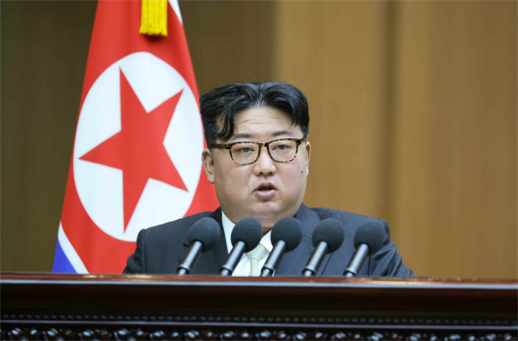
Kim Jong-un's Disdain for South Korea While Imitating Its InnovationsOn January 15, 2024, Kim Jong-un delivers a policy speech at the 14th Supreme People's Assembly's 10th session. (Photo by Rodong Sinmun)North Korean leader Kim Jong-un has resolutely implemented measures after defining relations with South Korea not as ties between people of a shared country but as adversarial, during the 9th Plenary Meeting of the 8th Central Committee of the WPK at the end of last year. In a speech to the SPA on the 15th of the previous month, Kim emphasized his hostility toward South Korea, advocating for the complete elimination of the concepts of unification, reconciliation, and kinship. Since December 2020, North Korea has embarked on a campaign to purge South Korean cultural influence within its territory by enacting the 'Reactionary Ideology and Culture Rejection Law.'Yet, it's clear that despite these strict policies aimed at isolating South Korea, North Korea has been subtly adopting many of South Korea's practices.Kim Jong-un vacated his deputy role at the Supreme People's Assembly (SPA) and updated his title from 'Chairman' to 'President.' Remarkably, Kim abstained from contesting in the March 2019 elections for the 14th term, marking the first occurrence since North Korea's inception in 1948 that its top leader did not participate in SPA elections. The SPA, defined by the North Korean constitution as the ultimate sovereign authority with a five-year tenure, holds the legislative power and the capacity to appoint or dismiss the Chairman.In June 2016, at the 4th Session of the 13th SPA, Kim Jong-un first assumed the newly established role of Chairman while serving as an SPA deputy. However, in 2019, he chose not to pursue the deputy position again and was instead re-elected as Chairman.This action seems to mirror the South Korean system where the President is not a member of the National Assembly. Mimicking this, Kim Jong-un did not serve as an SPA deputy and instead chaired the State Affairs Commission as Chairman. Additionally, Kim Jong-un's practice of taking a central seat at SPA meetings, positioning him above the SPA’s Standing Committee Chairman and Vice Chairmen, likely aims to underscore the SPA's ostensible autonomy by addressing this unusual protocol.Kim Jong-un at the 1st Session of the 14th SPA on April 12, 2019, where he's seen engaging with Choe Ryong-hae, the SPA’s Standing Committee Chairman, following a policy address. (Photo by Yonhap News Agency)In a historic move in February 2021, following the 8th Congress of the WPK —often dubbed imperial crowning event for Kim which is made on his own—the 'Chairman' title was updated to 'President’. It is interpreted as Kim Jong-un's bid to consolidate his autocratic rule, aligning himself with his grandfather's legacy. Concurrently, the 'Chairman' title continues to be used for the SPA’s Standing Committee Chairman, akin to South Korea's National Assembly Speaker.Previously, in a move to mirror a more conventional state apparatus similar to South Korea, North Korea renamed the Ministry of the People's Armed Forces to the Ministry of National Defence in October 2020.North Korea's emulation extends to the cultural realm, blatantly copying South Korean girl group songs while outwardly rejecting them. Last January, allegations surfaced that Chong Hong-ran's performance of 'Should envy us' at a New Year's Concert plagiarized 'FINGERTIP' by the South Korean girl group GFriend.At the 2023 New Year's Concert, North Korean singer Chong Hong-ran (right) gave a performance reminiscent of 'FINGERTIP' by the South Korean girl group 'GFriend' (left). (Photo by Professor Kang Dong-wan)According to Professor Kang Dong-wan from Dong-A University, following last year's incident where North Korea was accused of copying a hit song from a famous South Korean girl group, in the 2020 September 9th celebration, singers Kim Yu-kyong and Chong Hong-ran similarly performed songs styled after South Korean R&B.Professor Kang remarks that there's a growing fascination with South Korean music among North Korea's youth but the regime cannot solely rely on repression and control. He sees that blending South Korean girl group songs into North Korea's popular tracks is a deliberate strategy to make them seem more familiar.North Korea's penchant for mimicking South Korea now encompasses food and characters.Taking cues from South Korean products, like ramen and snacks, Kyonghung, a leading North Korean food manufacturer, has launched a 'Spicy Chicken Flavor Stir-fried Noodles' product, closely imitating South Korea's widely celebrated 'Buldak Hot Chicken Flavor Ramen.' The similarity in packaging design makes it challenging to tell them apart at first glance.The packaging of South Korea's 'Buldak Hot Chicken Flavor Ramen' (above) and the North Korean product 'Spicy Chicken Flavor Stir-fried Noodles' (below) are strikingly similar. (Photo by X (formerly Twitter))North Korea's take on South Korea's Shin Noodle Soup and Sogokimyun (Beef Ramen), dubbed 'Beef Instant Noodles,' have also gained notoriety. The trend extends to snacks, with South Korea's Jolly pong replicated as ‘Puffed Rice Snack,' Onion Flavored Rings as 'Onion Flavored Fried Snack,' Shrimp Crackers as 'Shrimp Flavored Fried Snack,' and Pepero as ‘Long biscuits with nuts.' The mimicry includes not just the packaging but the shape of the snacks themselves.In North Korea, the South Korean Choco Pie has been rebranded as 'Sweet Chocolate Bread,' inspired by its popularity boost from distribution in the Kaesong Industrial Region and its assimilation into the North Korean market. This heightened interest in South Korean products spurred the imitation of South Korean brands and designs, particularly after the 2014 launch of the Socialist Enterprise Responsibility Management System (SERMS), which stimulated competition among companies.Furthermore, the local infrastructure and rural development initiatives launched by North Korea since 2022 bear a striking resemblance to South Korea's 'New Community Movement (Saemaul Undong),' a significant campaign for rural modernization and community development from the 1970s.Imitation is often the first step towards development. North Korea's recent initiatives in areas such as state governance, policy-making, socio-cultural aspects, and the economy reflect South Korean models. This approach appears to be aimed at securing rapid economic gains without extending broader freedoms, subtly integrating South Korea's development blueprint into North Korean society.However, the 'development with limiting freedom' approach promoted by North Korean leadership is just a continuation of previously failed strategies. True progress depends on embracing South Korea's holistic development model, which emphasizes the recognition of citizen freedoms and property rights, along with an open national policy. .bbs-view-content {font-size: 14pt; text-align: justify;} .bbs-view-content .note {border: 1px solid #333333; padding: 15px; text-align: left; font-size: 12pt;} @media (max-width: 800px) {.bbs-view-content {text-align: left;}}
24.02.13 -
 [Opinion]
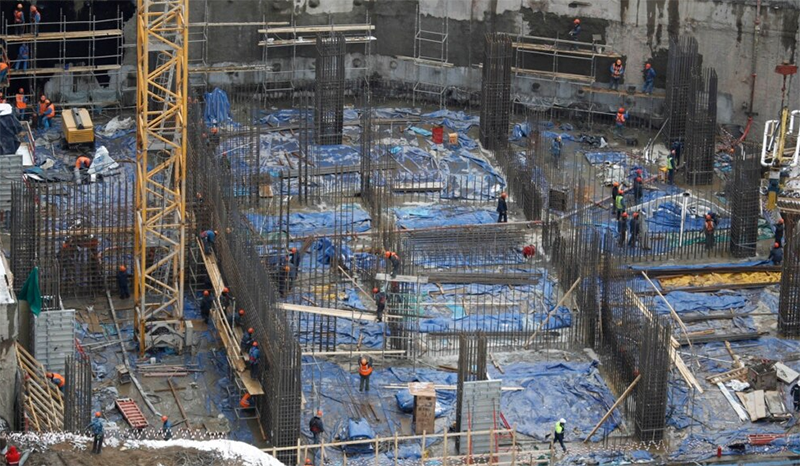
Escalating Russia-North Korea Relations Raise Concerns over Human Rights Violations against North Korean Workers in Russia Oh Gyeong-seob Korea Institute for National Unification (KINU) Number of North Korean Workers Sent to Russia As of 2024, it's challenging to pin down the exact count of North Korean workers living in Russia. The situation is complicated by the fact that many workers returned to North Korea by 2019 following the adoption of UNSCR 2397. Russia reported to the UNSC that by the end of 2019, it had repatriated most North Korean workers, leaving only about 1,000. [reference: Lee Sang-keun, "Challenges and Solutions for Increased North Korean Workers in Russia," published in "Institute for National Security Strategy (INSS) / Notes on Strategy," 2023, vol. 11, no. 232, p. 5.] Construction site in Moscow, Russia / Photo by Voice of America (VOA) However, doubts linger about the accuracy of Russia's report. According to the U.S. State Department's annual "2023 Trafficking in Persons Report", it was revealed that "the Russian government issued or reissued 4,723 visas to North Koreans in 2022 to circumvent UNSCR banning North Korean overseas labor." [reference: "Closer Ties between North Korea and Russia Raise Concerns about North Korean Defectors in Russia" VOA, September 6, 2023.] The majority of these workers are engaged in construction and logging industries in the Far East, with thousands more employed in construction in Moscow and Saint Petersburg. [reference: Lee Aelia, Bang Il-kwon, Lee Chang-ho, "North Korean Workers in Moscow and Saint Petersburg, Russia," KINU 2017 Commissioned Project, pp. 32-33.] Given the tightening bond between North Korea and Russia, it's estimated that the number of North Korean workers expected to remain in Russia will surge to approximately 30,000 to 50,000. This projection is supported by the quota of North Korean labor allocated to Russian companies in 2015. The Ministry of Labor and Social Protection of Russia disclosed that the quota for North Korean labor allocated to Russian companies in 2015 was 47,279. However, according to statistics on foreign residents released by the Russian Federal Immigration Service on July 16, 2015, there were 34,020 North Korean residents, of whom 33,682 were over the age of 18 and thus eligible for employment. [reference: Russian Federal Immigration Service, Statistical Yearbook (July 16, 2015), Choi Young-yoon, "Status of North Korean Overseas Workers; Focusing on Statistical Data, KDI North Korean Economy Review, February 2017, recitation: p. 109.] North Korean workers assembling steel bars on a construction site in Russia A North Korean defector interviewed by KINU attested that there were over 30,000 North Korean workers dispatched to Russia. [reference: Lee Sang-sin, Oh Gyeong-seob, Rim Ye-joon, "Status of North Korean Overseas Workers" (Seoul: KINU, 2017), pp. 15-16.] There's a possibility that the number of North Korean workers sent to Russia could reach the level of 2015. Violation of Sanctions against North Korea Russia's employment of North Korean workers violates the sanctions imposed by the United Nations Security Council. UNSCR 2397 requires member states to repatriate all North Korean workers with earnings within 24 months and report to the sanctions committee within 27 months. Additionally, the resolution mandates an interim report after 12 months, with reasons provided if repatriation falls below half. Despite these regulations, it's been reported that Russia and North Korea find ways to evade or circumvent the sanctions, avoiding the obligation to repatriate North Korean workers and continuing to engage in new hiring. One of the reasons for this is the severe labor shortage in Russian localities such as the Primorsky Krai, where young people migrate to major cities like Moscow and are also involved in the war in Ukraine, particularly in the construction sector. Russia is utilizing North Korean labor to address the shortage of low-wage workers in regions like the Primorsky Krai. Marat Khusnullin, the Russian Deputy Prime Minister, revealed plans in a September 2022 interview with Russian media (RBC TV) to deploy up to 50,000 North Korean workers to alleviate the labor shortage in the Russian construction market. Khusnullin emphasized the ongoing discussions and stated that attracting 20,000 to 25,000 North Korean workers would be a viable option. [reference: "Russia Plans to Attract Up to 50,000 North Korean Construction Workers," Yonhap News Agency, September 15, 2022.] The influx of North Korean workers has increased following the resumption of regular flights by North Korea's Air Koryo to Vladivostok, Russia, in August. To circumvent North Korea sanctions, Russia frequently issues student visas to North Korean workers and allows them to stay under the guise of tourism or technical visas. In October 2023, job postings targeting North Korean workers appeared on Russian government recruitment websites. For instance, the North Korean construction company "Bugan" posted notices on the employment portal operated by the Russian Ministry of Labor, seeking workers and translators fluent in the North Korean language for construction projects in various locations including Nizhny Novgorod. The recruitment announcement specified the need for various skilled workers proficient in the North Korean language. [reference: "Open Recruitment of North Korean Workers in Russia, Violating UN Sanctions," Yonhap News Agency, October 26, 2023.] It is anticipated that the issue of North Korean workers in Russia was discussed during the summit between Kim Jong-un and Vladimir Putin held at the Vostochny Cosmodrome in Russia on September 12, 2023. The National Intelligence Service stated that they are closely monitoring the recent moves by North Korea to dispatch workers to Russia. [reference: "Why North Korea and Russia are Sending Workers to Primorsky Krai," BBC NEWS Korea, December 15, 2023. (https://www.bbc.com/korean/articles/cd1jy0d677yo, on February 4, 2024.)] Dmitry Peskov, the Kremlin spokesperson, stated before and after the September 2023 North Korea–Russia summit that Russia is open to discussing UN sanctions with North Korea if necessary. He emphasized that while Russia maintains its position in the UN Security Council, it should not hinder further development of Russia-North Korea relations. [reference: "North Korea Relies on Russia to Overcome Economic Crisis... Sending Workers for Food and Fuel," Yonhap News Agency, September 13, 2023. (https://www.yna.co.kr/view/AKR20230913144400504, accessed on February 4, 2024.)] Despite UN sanctions, the dispatch of North Korean workers to Russia is expected to continue increasing steadily. North Korea needs to maintain foreign currency earnings through the dispatch of overseas workers, while Russia needs to accept North Korean workers to fill labor shortages caused by the war in Ukraine and vacancies in regional cities. Human Rights Abuses of Dispatched Workers North Korean workers sent abroad face various human rights violations, including the right to fair pay, safe working conditions, and protection from forced labor. Firstly, they are denied fair compensation, earning only around $2,000 to $3,000 annually, which is significantly lower than both local workers and those from other countries, often falling below 50% of the standard. The primary reason for North Korean workers not receiving fair compensation lies in excessive state deductions, embezzlement by middle managers, and illegal practices by employers such as wage withholding. In 2016, a North Korean laborer working in construction in Russia testified that they had to pay the state $7,000 annually, making it challenging to earn more than $2,000 a year. (reference: Lee Sang-sin, Oh Gyeong-seob, Rim Ye-joon, "The True Reality of North Korean Overseas Workers" (Seoul: KINU, 2017), pp. 52-54.) Secondly, North Korean workers are deprived of the right to work in safe conditions. They perform strenuous and dangerous tasks like logging and construction in Russia. Defectors from North Korea testify that although they receive basic safety training and equipment like helmets, it is often insufficient to protect them from various accidents. North Korean workers find it challenging to receive proper medical treatment when they are injured or fall ill. Due to the poor and hazardous working environment, accidents are frequent among North Korean workers. However, even if they suffer accidents or disabilities, they often do not receive proper compensation. Minor treatments are usually paid for by the workers themselves, while those with serious injuries often cannot afford the high medical expenses and are repatriated to North Korea. (reference: Lee Sang-sin, Oh Gyeong-seob, Rim Ye-joon, "The True Reality of North Korean Overseas Workers" (Seoul: KINU, 2017), pp. 61-68.) To cover the required payments, North Korean workers often take on additional jobs outside of their regular working hours. This practice infringes upon their fundamental right to enjoy safe and healthy working conditions, as North Korean authorities impose excessive fees on workers in Russia. Furthermore, North Korean managers frequently disregard local labor regulations and compel workers to undertake arduous tasks. A defector who worked in Magadan Oblast, Russia, until 2014 testified that they were required to work 16-hour shifts daily. (reference: "North Korean Overseas Workers," Ministry of Unification North Korean Human Rights Portal, Searched on February 4, 2024.) In May 2023, North Korean workers at a construction site in Vladivostok were reported to work until 10 p.m. without dinner breaks, engaging in risky steelwork at heights without proper safety gear. (reference: "North Korean Workers Flourish in Russia," The JoongAng, May 3, 2023.) Thirdly, North Korean workers are denied the right to refuse forced labor. Article 8(3) of the International Covenant on Civil and Political Rights prohibits forced labor, encompassing any work or service extracted under threat of punishment. North Korean overseas workers are subject to surveillance and control by North Korean authorities, facing punishment if they disobey state directives. Most North Korean workers live collectively near their workplaces, enduring poor living conditions. North Korean authorities dispatch supervisors and security personnel to monitor the workers. These supervisors and security personnel enforce a centralized control system, monitoring and controlling the workers even in local settings. North Korean workers have their identification documents, such as passports, confiscated and are forced into communal living situations with restricted access to the outside world, working long hours, often 16 hours a day, without control over their schedules. Moreover, even those workers who wish to return to North Korea upon contract completion are often compelled to remain overseas. (reference: "North Korean Overseas Workers," searched on February 4, 2024, from the Ministry of Unification's North Korean Human Rights Portal; https://unikorea.go.kr/nkhr/current/matters/worker/forcedlabor/) The foreign currency is believed to be primarily used for nuclear and missile development. North Korea sends workers to Russia to earn foreign currency and it's estimated that in 2017, North Korea imposed hefty taxes on around 80,000 workers sent to China (about 50,000) and Russia (about 30,000), garnering over $500 million annually (approximately 671 billion won). (reference: "FACT SHEET: UN Security Council Resolution 2397 on North Korea," United States Mission to the United Nations, Dec. 22, 2017, searched on Feb. 4, 2024, from https://usun.usmission.gov/fact-sheet-un-security-council-resolution-2397-on-north-korea/) North Korean workers remit 70% of their monthly salaries to the North Korean authorities, 20% to local management, and receive only about 10%. (reference: "North Korean Workers Making Waves in Russia with Foreign Currency Earnings," The JoongAng, May 3, 2023.) The UN Security Council Sanctions Committee on North Korea has stated that funds earned through cryptocurrency theft and the dispatch of overseas workers are diverted into nuclear development. According to a report by expert panels, North Korea's cryptocurrency theft in 2022 amounted to over $17 billion. It has been revealed that North Korea uses the foreign currency earned through cryptocurrency hacking and the dispatch of overseas workers to finance the development of nuclear weapons and mass destruction weapons. (reference: "North Korea Utilizes Cryptocurrency Hacking for Nuclear Development Funding," Yonhap News Agency TV, October 28, 2023, searched on February 4, 2024/ https://m.yonhapnewstv.co.kr/news/MYH20231028009100641.) The UNSC should strongly urge Russia, as a permanent member of the UNSC, to comply with UNSCR, which prohibits the further employment of North Korean workers. .bbs-view-content {font-size: 14pt; text-align: justify;} .bbs-view-content .note {border: 1px solid #333333; padding: 15px; text-align: left; font-size: 12pt;} @media (max-width: 800px) {.bbs-view-content {text-align: left;}}
24.02.13 -
 [Defectors' Podium]
Insights into North Korea's Nuclear Ambitions from My Experiences There Park Choong-kwon, Research Engineer at Hyundai Steel Company,Specialized in Materials Engineering for ICBMs at Kim Jong Un National Defense University,Ph.D. in Materials Science and Engineering from Seoul National UniversityThe inaugural North Korean defector recruited for political talentThe nuclear menace posed by Kim Jong-un's regime escalates by the day. Following the death of Kim Jong-il in December 2011, Kim Jong-un assumed power and, by December 2013, had solidified his rule by executing his influential uncle, Jang Song-thaek, thereby establishing a totalitarian regime. With internal stability achieved, Kim Jong-un turned his attention outward. This new focus was underscored by the debut test of a submarine-launched ballistic missile (SLBM) in May 2015. The March 2017 trial of the Paektu engine (a high-thrust liquid fuel engine, producing a thrust of 100 tons) marked a significant achievement in North Korea's liquid fuel engine capabilities.Subsequently, North Korea tested the Hwasong-12 in April 2017, Hwasong-14 in July, conducted its sixth nuclear test (a hydrogen bomb) in September, and launched the Hwasong-15 in November. By March 2022, it introduced the Hwasong-17, a Multiple Independently Targetable Reentry Vehicle (MIRV) ICBM, demonstrating the maturity of its liquid fuel ICBM technology and securing one of the three pillars of its nuclear capability: the ICBM.October 2019 saw the stable test launch of the Pukguksong-3, heralding the completion of its SLBM development and securing another cornerstone of its nuclear triad. The regime is currently advancing the construction of a ballistic missile submarine to finalize this capability.Nonetheless, North Korea's ambition doesn't end here. It seems to be reinforcing the remaining two components of its nuclear triad, given that acquiring long-range bombers would be geopolitically and economically impractical. On April 14, 2023, Rodong Sinmun reported that Kim Jong-un oversaw the test launch of a new ICBM type, "Hwasongpho-18 (HS-18)" on the 13th, poised to become a pivotal strategic asset and fulfill a critical deterrence role. (Photo by Rodong Sinmun)The initial effort is directed at further advancing its ballistic missile capabilities, a key element of its nuclear triad. April 2023 showcased the Hwasong-18, a solid-fuel ICBM, matching the range of the liquid-fuel Hwasong-15 and capable of targeting the entirety of the US. The advantages of solid-fuel missiles include shorter launch times and enhanced stealth and mobility over their liquid-fuel counterparts.The advancement doesn't stop there. Beginning in September 2021, North Korea started unveiling hypersonic missiles, testing two variants. The glider-type warhead version, Hwasong-8, is believed to have failed, while the new type of hypersonic missile with a cone-shaped warhead reportedly reached speeds of up to Mach-10, suggesting some success. This missile, however, is assessed as a Maneuverable Reentry Vehicle (MARV), essentially utilizing the Hwasong-12's liquid fuel engine as its first stage, with the second stage and warhead resembling North Korea's Iskander-equivalent, the Hwasong-11 (KN-23). Essentially, it's a nascent hypersonic missile.The development of hypersonic missiles, demanding cutting-edge technology, poses a challenge even for advanced nations, with only a handful achieving operational deployment – the United States, China, and Russia. The efficacy of China and Russia's hypersonic missiles remains unproven, hindered by the need to develop materials that can withstand the intense heat and shock from aerodynamic heating at hypersonic speeds, and the complexity of accurately controlling such swiftly moving objects.However, it is assumed that Kim Jong-un's regime will not halt its endeavors here. While the currently showcased missiles have a range of roughly 1,000km, future iterations might incorporate engines from the Hwasong-15 or 17, or possibly feature a hypersonic missile powered by the solid-fuel engine used in the Hwasong-18. Essentially, they might standardize the hypersonic warhead while interchanging the engines.Certainly, numerous technical obstacles remain, suggesting that such advancements may not occur swiftly. Initially, they might forgo using an ICBM-level engine like that of the Hwasong-18. Immediate testing could be viable with shorter-range solid-fuel engines like those in the Pukguksong-2, 3, and 4, significantly enhancing stealth and mobility compared to the liquid-fuel Hwasong-12 engine.In November 2023, the launch of the reconnaissance satellite Malligyong-1 into orbit unveiled North Korea's intent to target mobile objectives. This move signals a strategy to counter the deployment of the US Carrier Strike Group near the Korean Peninsula. The cruise missiles tested since the start of the year are also intended to deter the US Carrier Strike Group (CSG).The rationale behind developing missiles with an approximate range of 2,000km is to thwart the CSG from nearing the Korean Peninsula within the operational range of its aircraft. Possessing strategic nuclear submarines could escalate North Korea's threat further. The regime has long endeavored to counter the US Carrier Strike Group, incorporating hacking to disrupt its command systems. Additional measures might include the underwater drone "Haeil," the North Korean equivalent of ATACMS Hwasong-11Na, super-large multiple rocket launchers, drones, and beyond.On November 21, 2023, North Korea's National Aerospace Development Administration announced the successful launch of the reconnaissance satellite 'Malligyong-1' aboard the new satellite carrier rocket 'Chollima-1' on November 22. (Photo by Rodong Sinmun)While our policy towards North Korea has been indecisive, the regime's nuclear arsenal has alarmingly grown in diversity and sophistication. It's crucial to acknowledge that Kim Jong-un's pursuit of weapons development is far from over. We must wisely assume that their technology is at least 5 to 10 years ahead of our current understanding and tailor our responses accordingly.North Korea's ICBM program was nearing completion back in 2006 and 2007 when I was there; the development finalized under Kim Jong-il was essentially a legacy gift passed to his son, Kim Jong-un. This context clarifies the baffling speed of technological progress North Korea displayed starting in 2015. Without this insight, the rapid succession of unveiling a new ICBM engine in March 2017, followed by the launches of Hwasong-12 in April, Hwasong-14 in July, and Hwasong-15 in November, would be perplexing. Each missile test represented technological leaps, effectively skipping developmental stages. For instance, although Hwasong-18 was only revealed in April 2023, North Korea had already established the infrastructure for solid-fuel production while I was there.Another worrying development is the resurgence of North Korea-Russia exchanges, triggered by the Russia-Ukraine conflict. North Korea is supplying weapons to Russia and expects compensation in return. The possible rewards are both numerous and concerning. Critical technologies, such as high-resolution cameras for reconnaissance satellites, early warning aircraft systems, Aegis Combat System, techniques for building strategic nuclear submarines, and weapons manufacturing equipment, should never fall into Kim Jong-un's hands. Close monitoring and strict control of the North Korea-Russia dealings are crucial. The question remains: How has North Korea managed to significantly advance its nuclear capabilities?To be continued in the next issue… .bbs-view-content {font-size: 14pt; text-align: justify;} .bbs-view-content .note {border: 1px solid #333333; padding: 15px; text-align: left; font-size: 12pt;} @media (max-width: 800px) {.bbs-view-content {text-align: left;}}
24.02.13 -
 [Defectors' Podium]
Defending the Freedom I Sacrificed Everything For Kim Geum-hyok Policy Advisor to the Minister at the Ministry of Patriots and Veterans Affairs I'm a North Korean defector. When we hear the term 'North Korean defector,' it encompasses more than just individuals who escaped North Korea; it signifies those who risked their lives for the sake of freedom. I willingly left behind everything I had, including a high-ranking life, to embark on a journey to South Korea, where I now reside as a citizen. What exactly is freedom? For contemporary South Koreans, freedom is a given, a right from birth. It's as essential as the air we breathe. However, for North Korean defectors like me, freedom paints a starkly different picture – an arduous battle that requires risking everything for something that was once unimaginable. Regardless of whether one hails from Hamgyeong Province or Pyongyang City, irrespective of regional and social status, all North Koreans yearning for freedom find themselves in direct opposition to the North Korean regime. To North Koreans, freedom resembles a perilous game of chance with a steep price tag. Escaping North Korea came at the cost of leaving behind my loved ones, abandoning a promising career, and severing ties with my parents forever. My family paid the price for my actions, and for over a decade, I have had no information about their fate. This is the toll I paid for freedom. Yet, this newfound freedom granted me the opportunity to pursue my education. Books that I once read in secret, hiding from surveillance, can now be openly accessed in university libraries and bookstores. I've traveled across the globe, visiting over ten countries, including the USA, UK, and Germany – a dream I could only have dreamed of. Through sheer merit, without any family influence, I was appointed as the youngest Policy Advisor to the Minister at the Ministry of Patriots and Veterans Affairs at the age of 31. I also became the youngest member of the Unification Future Planning Committee at the Ministry of Unification, dedicated to shaping South Korea's long-term unification policies. Freedom allowed me to meet my loving wife, raise a son who resembles me, and establish a new family. Freedom bestowed upon me the world, the platform to showcase my abilities, and a new sense of belonging. This, to me, is the essence of freedom. Therefore, today, I'd like to delve deeper into the subject of our freedom. When was the last time you engaged in a meaningful discussion about freedom? In a world where various issues and political disputes capture our attention only to disappear, leaving behind their volatile remnants, the concept of freedom is gradually fading into the background, relegated to an outdated ideological debate that no longer commands our collective attention. As freedom's significance wanes, its void is filled by anti-freedom actions such as false propaganda and fake news, posing a direct threat to the fundamental principles of liberal democracy. Some are undermining the very foundation of our hard-won democracy for their own political gain. The casualties of this 'take it or leave it' approach to fake news are the people themselves, causing us to sink into a swamp of skepticism where trusting any information becomes increasingly challenging. Our freedom is at stake. I carry a deep sense of responsibility to protect the freedom I exchanged everything for. This conviction is rooted in the belief that I am the sole guardian of my own freedom, and the freedom of our community can only be preserved by our collective efforts. My acceptance of a talent recruitment offer from the People Power Party before the 22nd general election was driven by an urgent need to ensure the preservation of our freedom. I firmly believe that liberal democracy is an integral part of South Korea's identity, shaping the lives of its citizens and safeguarding our collective future. However, we must recognize that liberal democracy cannot be taken for granted. It requires all of us to act with a sense of urgency and determination, knowing that our freedom is at stake. The future of liberal democracy lies squarely in our hands. There is no room for error, no retreat, and certainly no room for complacency. .bbs-view-content {font-size: 14pt; text-align: justify;} .bbs-view-content .note {border: 1px solid #333333; padding: 15px; text-align: left; font-size: 12pt;} @media (max-width: 800px) {.bbs-view-content {text-align: left;}}
24.01.19 -
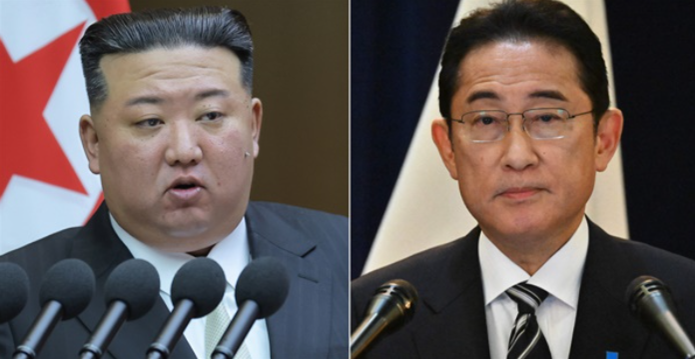 Re-examining North Korea-Japan Relations: Analysis of Factors and Prospects
Re-examining North Korea-Japan Relations:Analysis of Factors and Prospects Cho Jin-goo The Institute for Far Eastern Studies, Kyungnam University From left, North Korean leader Kim Jong-un and Prime Minister Kishida Fumio of Japan. (Photo by Rodong Sinmun, Yonhap News Agency) North Korea-Japan Relations and the Pyongyang Declaration “Japan–North Korea Pyongyang Declaration, crucial in our efforts to better North Korea-Japan relations, has been consistently undermined by Japan’s self-interested interpretations. Despite our genuine and ongoing dialogue, Japan has misconstrued the agreement to suit its own needs, using it primarily to address 'abductions, nuclear, and missile issues' for political gain.” This statement was made by Song Il-ho, Ambassador of the North Korean Ministry of Foreign Affairs, on September 15, 2022. On September 17, 2002, Prime Minister Junichiro Koizumi of Japan, despite the absence of formal diplomatic relations with North Korea, embarked on a historic visit and held a summit with Kim Jong-il. The Pyongyang Declaration, jointly signed by both leaders, underscored the mutual national interest in addressing contemporary issues and reconciling historical grievances as prerequisites for normalizing diplomatic ties. Notably, Kim Jong-il officially acknowledged for the abduction of Japanese citizens by North Korea, pledging to take necessary steps for investigation and prevention. About a month after the DPRK-Japan Summit, on October 15, 2002, five Japanese abductees returned home. However, North Korea's negative portrayal in Japan, particularly over the abduction issue, hindered bilateral relations improvement. Japan labeled the abductions a 'national crime by North Korean authorities.' In October 2006, Japan adopted a comprehensive strategy to tackle abductions, nuclear issues, and missile programs, seeking to resolve past conflicts and normalize ties. Japan insisted on resolving the abduction issue as a key condition for progress, but unfortunately, no more abductees have been repatriated beyond the initial five. In 2002, five Japanese people kidnapped by North Korea are returning home. (Photo by Sisa) North Korea's ultimate goal in normalizing diplomatic relations with Japan centers on reconciling their historical grievances and securing economic cooperation. However, even if diplomatic normalization materializes, it is crucial to recognize that Japan's economic cooperation hinges on the lifting of sanctions against North Korea. During his tenure, the former Prime Minister Shinzo Abe (21 September 1954 – 8 July 2022), who held the record for the longest-serving Prime Minister, advocated for solving the abduction issue as a national priority and expressed a willingness to engage in a DPRK-Japan Summit without preconditions. Unfortunately, the abduction issue remained unresolved, and the summit never came to fruition. On May 27, 2023, Prime Minister Fumio Kishida made a significant announcement, expressing his intention to conduct high-level discussions directly with Kim, without any preconditions, in a bid to expedite the summit. In a statement two days later, on May 29, North Korean Ministry of Foreign Affairs Deputy Minister Pak Sang-gil responded positively, asserting that there was no reason for the two nations not to engage in talks. If The Asahi Shimbun's reports published on September 29, 2023, suggesting secret contacts between North Korea and Japan in Southeast Asia from March and May 2023, hold true, then Pak’s statement was not just a mere exchange of words; it represented a call for tangible actions and a signal of potential shifts in Japan's policy towards North Korea following the passing of Shinzo Abe, a noted hardliner on North Korea. Japan's Major Shift in Security Policy and the Statement from North Korea's Ministry of Foreign Affairs On December 16, 2022, the Japanese government released three critical security documents, including the 'National Security Strategy (NSS).' This framework outlines Japan's diplomatic and security strategies. Prime Minister Kishida Fumio highlighted the urgency of reassessing Japan's security policy at a 'historic turning point,' characterized by threats to the free and open international order, notably Russia's invasion of Ukraine. This policy shift was prompted by a host of factors, including North Korea's launch of approximately 59 ballistic missiles in 2022, seven of which were ICBM-class, China's expanding military capabilities and maritime presence, frequent territorial violations around the Senkaku Islands, and the deepening military collaboration between North Korea, China, and Russia. Japan has been enhancing its defense readiness due to the escalating military threats from North Korea, China, and Russia. This strengthening began in December 2012 with the second Abe administration, marking a reversal from declining defense budgets to a consistent increase in spending. The 2022 Defense of Japan report, presented in July 2022, represented a notable shift by redefining 'enemy base attack capability' as 'retaliation capability.' This change acknowledges the inadequacy of solely relying on interception in the face of rapidly advancing missile technologies. Japan's national security strategy is now anchored by three key policy documents: the National Security Strategy, National Defense Strategy, and Defense Buildup Plan. There is also a goal to increase defense spending to 2% of GDP by 2027. A major element of Japan's shift in security policy is its plan to develop retaliation capability. This move could significantly alter the traditional roles of the Japan Self-Defense Forces and the U.S. military, which have operated under an exclusively defensive principle, with the former as 'shield' and the latter as 'spear.' The Japanese government intends to use this capability as a 'minimum necessary self-defense measure' in response to armed attacks, following specific criteria for force use. However, accurately deciding the timing of retaliation, whether at the onset of an attack or post-attack, poses challenges. While there is uncertainty about whether this capability will effectively deter invasions, concerns remain that it could be viewed as a pre-emptive attack, potentially clashing with international law. In the previously mentioned statement, North Korean Ambassador Song Il-ho criticized Japan for overstating the 'North Korean threat' and aggressively expanding its military capabilities. He believes the actions could destabilize regional peace and stability. On December 20, a follow-up statement escalated this criticism. The statement voiced concern about Japan's latest security strategy, which includes pre-emptive strike capabilities, suggesting this turns Japan into an offensive military force and exacerbates tensions in East Asia. It criticized Japan's remilitarization as a breach of the United Nations Charter and a threat to international peace, warning that North Korea would take 'actual actions' in response to Japan's military buildup. On April 18, 2023, the G7 Foreign Ministers condemned North Korea's ballistic missile tests and called for the dismantlement of its nuclear and missile programs. Responding on April 21, North Korean Foreign Minister Choe Son-hui stated that North Korea would keep bolstering its defense capabilities, citing legitimate rights, until the perceived military threats from the U.S. and other hostile forces are resolved and the hostile environment ceases. Choe further justified North Korea's defense enhancements as a legitimate exercise of sovereignty in response to provocative actions by the U.S. and its allies, reiterating that only the comprehensive and complete withdrawal of the U.S.'s hostile policies could guarantee North Korea's security. Consequently, deep-seated mistrust between North Korea and Japan persists, with their respective stances on international affairs in direct opposition. 2024 Forecast for North Korea-Japan Relations From December 26 to 30, 2023, the 9th Plenary Meeting of the 8th Central Committee of the Workers' Party of Korea took place. At the meeting, Kim Jong-un evaluated the policies implemented in 2023 and unveiled strategic goals for 2024. He emphasized the September 2023 constitutional amendment aimed at enhancing the national nuclear force. This move, he stated, represents a direct challenge to the U.S. and its key allies, especially the South Korea-U.S.-Japan alliance, and serves as a means to safeguard the security of the state and its citizens. During President Yoon Suk-yeol's tenure, South Korea-Japan relations, once strained, have seen improvement. Prime Minister Kishida has called for stronger U.S.-Japan and South Korea-U.S. security cooperation. He advocates not only for a united front against North Korea's nuclear and missile threats and strict enforcement of sanctions but also for expanded collaboration in critical areas like supply chain management, marking a new chapter in the trilateral partnership for a free and open Indo-Pacific. However, this heightened trilateral cooperation could strengthen the alliance between North Korea, China, and Russia. The increase in Japan's defense capabilities may spark a regional arms race, illustrating the security dilemma in international politics. In such a scenario, countries increase their military power due to security concerns, which can lead to mutual distrust and heightened threat perceptions, potentially escalating into an arms race and prompting pre-emptive strike impulses. Amidst the 'new Cold War', North Korea has been deepening ties with China and Russia, adopting an aggressive stance towards South Korea, the U.S., and Japan. Firmly supporting the 'One China' principle, North Korea criticizes U.S. involvement in Taiwan, accusing it of escalating regional tensions. Following Russia's invasion of Ukraine, North Korea has consistently supported Russia, notably by recognizing the independence of the Donetsk and Lugansk People's Republics. This move has further strengthened its strategic alliance with Russia. At the December 2023 Central Committee Plenary Meeting of the WPK, Kim Jong-un announced a policy to actively foster ties with anti-imperialist nations opposing U.S. and Western dominance. He pledged to engage in strong international anti-imperialist actions, emphasizing confrontation and direct opposition to the U.S. and its allies with a robust, hardline approach. Specifically, he denounced the increased security collaboration between South Korea, the U.S., and Japan as a 'conspiracy against the republic,' cautioning that their plan to regularize tripartite exercises and hold various diplomatic and defense ministerial meetings from 2024 could create a more unstable and uncertain situation in the Korean Peninsula. The multi-year exercises involving South Korea, the U.S., and Japan, while not exclusively targeting North Korea, may also cover joint operations to secure maritime routes from the Middle East through Southeast Asia, and to maintain peace in the Taiwan Strait, crucial for global security and prosperity. Additionally, the real-time exchange of missile warning data about North Korea between these nations is seen by North Korea as a direct challenge to its security and that of China and Russia, potentially leading to the formalization of the South Korea-U.S.-Japan military alliance. In 2024, developments in the Russia-Ukraine war and the Israel-Hamas conflict, along with key political events like the Taiwanese presidential election, Russian presidential election, South Korean legislative election, and U.S. presidential election, will significantly affect the Korean Peninsula. North Korea’s Supreme People's Assembly legalized its nuclear force policy in September 2022, with Kim Jong-un firmly ruling out denuclearization or disarmament negotiations. Kim asserted that any change in North Korea's nuclear policy hinges on a global shift and changes in the Korean Peninsula's political and military environment. Given North Korea's capability to target Japan with nuclear weapons and missiles, Japan must pursue diplomatic engagement with North Korea alongside strengthening its defense, to address this pressing threat. In his 2024 New Year’s reflection, Prime Minister Kishida described 2024 to be a 'year of tension' due to diplomatic challenges and committed to engaging in proactive summit diplomacy. He emphasized the need for North Korea and Japan to resolve their mutual distrust and historical grievances for peace in the Korean Peninsula and East Asia. While a DPRK-Japan Summit would be a significant move, the current geopolitical climate makes meaningful changes in North Korea-Japan relations, including a summit, unlikely in 2024. .bbs-view-content {font-size: 14pt; text-align: justify;} .bbs-view-content .note {border: 1px solid #333333; padding: 15px; text-align: left; font-size: 12pt;} @media (max-width: 800px) {.bbs-view-content {text-align: left;}}
24.01.19 -
 [Feature Article]
Evaluating North Korea's Military Provocations and Our Strategic Response Park Hwee-rhak Political Science Professor, at Kookmin University The Growing Danger of a North Korean Nuclear Attack on South Korea Dr. Siegfried Hecker, who made seven trips to North Korea between 2004 and 2010 and saw their nuclear facilities firsthand, contributed an article to '38 North' on January 1, 2024. In it, he voiced concerns that the Korean Peninsula is in its most perilous state since early June 1950. Hecker's analysis indicates that Kim Jong-un has decided to pursue a path to war, mirroring the actions of his grandfather, Kim Il-sung, in 1950. North Korea has successfully developed nuclear weapons and Intercontinental Ballistic Missiles (ICBMs) with the capability to strike the U.S. mainland. They seem to be operating under the belief that the U.S. would not honor its nuclear umbrella commitment if its mainland were threatened. Following this line of thought, on April 25, 2022, which is the Korean People's Army Foundation Day, Kim Jong-un initiated a 'second mission.' This move is interpreted as a pivot towards a possible assault on South Korea, based on their assumption that the U.S.'s nuclear deterrent will be effectively neutralized. North Korea has significantly updated its military strategies and laws regarding nuclear forces in September 2022, enabling Kim Jong-un to use nuclear weapons at will. Furthermore, they've coined the term 'territorial integrity' to describe the role of their nuclear arsenal, signaling a clear intention to use these weapons for potential unification efforts under North Korean control. Recently, North Korea's blatant nuclear threats have intensified. At the end of 2023, during the Central Committee of the Workers' Party of Korea Plenary Meeting, Kim Jong-un emphasized the need to continue accelerating preparations for a 'major transformation' to subdue the entire territory of South Korea using all physical means and capabilities, including nuclear forces. This statement implies that North Korea, given the chance, intends to attack South Korea with nuclear weapons at the center to achieve unification under its leadership. This is not unfounded, as argued by Dr. Hecker, and the real issue is our lack of concern. A Call for Reflection on Past Approaches and a Sober Assessment of North Korean Nuclear Threats While urgently preparing for North Korea's nuclear capabilities is critical, it's equally important to reflect on previous missteps. The past administration's focus on denuclearization through dialogue, while neglecting to strengthen defenses against North Korea's growing nuclear power, inadvertently allowed them to bolster their capabilities. Had there been a more proactive and firm response to these threats, North Korea might not be as bold in its current nuclear posturing towards South Korea. It raises a question about how to address former officials who still defend these past policies. Relying solely on diplomatic talks without a robust defense strategy is akin to capitulating to a nuclear-armed adversary. The South Korean public needs to acknowledge the errors of the previous government and realistically grasp the grave nature of North Korea's current nuclear threat. This is a matter of national survival. To prevent history from repeating itself, we must be ready for the worst-case scenario, embracing the principle that true peace can only be maintained through strength, especially in dealings with North Korea. Any perception of weakness on South Korea's part could embolden North Korea to initiate a nuclear strike, aiming to force unification on its own terms. The Need for Focused Actions by the Government and Military to Counter North Korea's Nuclear Threat It's imperative for the government to place national security at the forefront, particularly in response to North Korea's nuclear threats. This involves openly evaluating and communicating the reality of these threats, reinforcing the alliance with the United States, and significantly boosting South Korea's defensive capabilities, notably through the 'Kill Chain' system. Needless to say, the military is at the forefront of responding to North Korea's nuclear threat. Therefore, the Korean military should greatly increase the importance of North Korea's nuclear capabilities in its operations, and all commanders and officers must tirelessly work on understanding the reality of the nuclear threat and developing countermeasures. Continuous enhancement of advanced weapons needed for North Korea's nuclear response, strengthening realistic training, and solid mental preparation for all soldiers are essential. However, this should not lead us to an excessive fear of North Korea's nuclear capabilities. Practically, it would be challenging for North Korea to deploy these weapons. With the United States as a powerful ally, boasting the world's most formidable military and nuclear force, we are under a protective nuclear umbrella. The U.S. has made it clear that any nuclear aggression from North Korea would be met with decisive retaliation, potentially leading to the collapse of the North Korean regime. Moreover, North Korea would likely face significant hurdles in using nuclear weapons without the approval of key allies like China and Russia, even in the face of reckless behavior. Now is the time for both our citizens and the military to demonstrate unwavering determination to safeguard our nation's survival, even if it means facing the risk of a nuclear conflict. It's crucial to convey to North Korea that its nuclear threats are ineffective against South Korea. The old adage, 'If you want peace, prepare for war,' has never been more relevant or urgent than in our current situation. .bbs-view-content {font-size: 14pt; text-align: justify;} .bbs-view-content .note {border: 1px solid #333333; padding: 15px; text-align: left; font-size: 12pt;} @media (max-width: 800px) {.bbs-view-content {text-align: left;}}
24.01.19 -
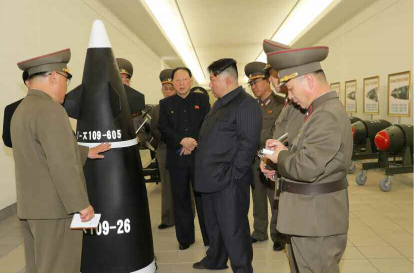 [Opinion]
2024 Outlook on Advancements in North Korea's Nuclear and Missile Capabilities and South Korea's Strategy for Nuclear Latency Cheong Seong-chang,Ph.D.THE SEJONG INSTITUTE Director, Center for Korean Peninsula Strategy In December 2022, Kim Jong-un declared at a Workers' Party of Korea meeting his intention to ‘significantly expand’ North Korea's nuclear warhead collection. This led to South Korean and U.S. research institutions reassessing and increasing their estimates of North Korea's nuclear capabilities. On March 27, 2023, Kim Jong-un was seen receiving a briefing on the nuclear weapons research institute's progress, with the 'Hwasan-31' tactical nuclear missile debuting in the background. (Photo by Rodong Sinmun) A January 2023 study by Dr. Pa Yong-han and Dr. Lee Sang-kyu from the Korea Institute for Defense Analyses (KIDA) proposed that North Korea had around 80-90 nuclear warheads made of uranium and plutonium at that time. They predicted this number could rise to 166 by 2030, with North Korea aiming for approximately 300 nuclear warheads. In the August 2023 report "Options for Strengthening ROK Nuclear Assurance" by RAND Corporation and Asan Institute for Policy Studies, it was estimated that North Korea could have at least 180 nuclear weapons, potentially rising to 300 by 2030. The report also noted that if Kim Jong-un doubles nuclear production from 2025, North Korea might reach 300 nuclear weapons by 2028. In December 2023, at the Workers' Party of Korea meeting, Kim Jong-un discussed the "2024 nuclear weapons production plan" and revealed plans to launch three reconnaissance satellites. He also stressed improving the navy's capabilities, both underwater and on the surface, and focusing on five key areas of defense development that had been ‘previously overlooked’. This year, North Korea is anticipated to carry out its 7th nuclear test for tactical weapon development, advance its nuclear submarine program, and transform existing medium-sized submarines into "tactical nuclear attack submarines." At the meeting in December 2023, Kim Jong-un emphasized the need to continue preparations for a "grand revolution to conquer South Korea's entire territory," which implies a full-scale military invasion to occupy South Korea. If North Korea's nuclear weapons development is for "survival" or "negotiation," having 50-60 nuclear weapons would be sufficient. However, North Korea is estimated to aim for 300-500 nuclear weapons and is prepared for a full-scale invasion of South Korea. As a result, North Korea's nuclear weapons pose a realistic threat to South Korea's security. However, if a Republican Party candidate wins the 2024 U.S. presidential election, the United States' commitment to South Korea's defense may weaken. On October 4, 2023, a survey by the Chicago Council on Global Affairs (CCGA), a U.S. foreign policy think tank, showed that out of 3,242 American adults surveyed from September 7-18, only 50% believed that the U.S. military should defend South Korea in the event of a North Korean invasion. This percentage decreased from 63% in 2021 and 55% in 2022. While 57% of those who support the ruling Democratic Party were in favor of U.S. military defense of South Korea, only 46% of Republican Party supporters shared this view. This sentiment reflects a growing trend in the U.S. towards isolationism and 'America First' policies, particularly with the resurgence of former President Donald Trump, weakening the national mood to defend allies like South Korea. According to a survey by the Chicago Council on Global Affairs (CCGA) on October 4, 2023, following the Ukraine conflict and Hamas attacks on Israel, 48% of Americans believed that President Biden was spending too much on the Ukraine war. If a military conflict escalates on the Korean Peninsula, American war fatigue could increase, making it difficult to expect strong U.S. support for South Korea. The recent reduction in military support for Ukraine by the United States and Western allies following their setbacks in the Ukraine conflict highlights the limitations of assistance to allies. If North Korea ramps up its production of solid-fueled intercontinental ballistic missiles (ICBMs) capable of reaching the U.S., achieves its goal of acquiring nuclear submarines as stated by Kim Jong-un at the 8th WPK meeting, and expands its nuclear arsenal to about 300 warheads, the U.S. would face greater challenges in countering North Korean nuclear threats. With U.S. presidential elections every four years, the election of an isolationist leader could lead to a reduction in America's defense commitments to South Korea. Therefore, it is not wise for South Korea to heavily rely on the United States, which changes its leadership every 4 or 8 years, to secure its destiny. Consequently, South Korea's independent nuclear capability is essential in the medium to long term to prevent North Korea from misusing nuclear weapons and engaging in nuclear warfare. In the short term, South Korea needs to acquire nuclear latency similar to Japan's, which involves securing the ability to reprocess nuclear fuel and enrich uranium. This would ensure that if Japan, spurred by events like China's Taiwan invasion, pursues nuclear armament, South Korea does not remain the only non-nuclear state in Northeast Asia. With the potential to quickly arm itself with nuclear weapons like Japan, South Korea could effectively discourage North Korean threats and provocations. To achieve nuclear latency, South Korea should form a trilateral consortium with the U.S. and Japan, focusing on uranium enrichment for civilian nuclear power plants, enhancing economic security. Also, to address North Korean submarine threats, a collaborative effort to create a trilateral consortium for jointly building and operating nuclear-powered submarines is necessary. While South Korea does not have nuclear weapons, collaborating with Japan in possessing nuclear-powered submarines would significantly enhance their surveillance and response capabilities against North Korean nuclear attack submarines. Given the extensive time required to develop these submarines, it's vital for South Korea, the U.S., and Japan to begin discussions on this initiative promptly. .bbs-view-content {font-size: 14pt; text-align: justify;} .bbs-view-content .note {border: 1px solid #333333; padding: 15px; text-align: left; font-size: 12pt;} @media (max-width: 800px) {.bbs-view-content {text-align: left;}}
24.01.05 -
 [Voice of North Korean Defectors]
Hallyu and Religious Impact in North Korea: Prosecutors and Police Engage in Watching South Korean Films and Adopting ChristianityKim Eun-deokFormer Prosecutor of Yanggang Prosecutor's Office, North KoreaThe spread of Hallyu (Korean Wave) culture and Christianity is causing a political crisis in North Korea. In response, the government, under the Workers' Party of Korea (WPK), formed the '109 United Command' (Central Crackdown Team) in the early 2000s. Comprising public security agencies, youth league organizations, and information and communication technology experts, this team also includes public security agencies, youth organizations, and information and communication technology experts including the State Security Department (akin to secret police), military police (secret police commanders), prosecutors, and police officials.The 109 United Command targets 'impure content' like South Korean dramas, songs, and music, aiming to prevent their viewing, inflow, and distribution. Despite these measures by North Korean authorities, not only ordinary citizens but also security officers, prosecutors, and police officials are increasingly drawn to South Korean entertainment.Even while serving as a prosecutor in North Korea and being a member of the 109 United Command, I found myself watching South Korean movies and dramas. During holidays, senior officials in the prosecutor's office would often ask for 'something good.' I would discreetly provide them with South Korean movies and dramas that I had gathered during crackdown operations.Even when engrossed and forgetting to close the doors, local residents, security officers, and patrolling police would stop by and join in watching. Embracing South Korean culture, people of all ages imitated the language and would send text messages using South Korean phrases and tones.The spread of Hallyu, particularly among North Korean youth, was so pervasive that even military enlistees secretly watched South Korean movies and dramas. Documents I encountered as a prosecutor in North Korea revealed that since Kim Jong-un's rise to power, over 50 soldiers were discharged annually in various provinces for watching South Korean content.As it spreads throughout North Korea, there is growing interest in all aspects of South Korean society, including politics, economics, and the military. It is significant that North Korean citizens recognize South Korea's development as a product of its pursuit of freedom and democracy.In essence, North Koreans exposed to Hallyu are coming to the realization that their society harshly infringes upon human rights and freedoms, in stark contrast to South Korea, where citizens genuinely experience rights in a free and democratic society.North Koreans are increasingly recognizing that life in their country largely amounts to serving the Kim family's dictatorship, rendering it meaningless. This shift in consciousness is fueling growing discontent with Kim Jong-un's regime among both officials and citizens, prompting them to resist in various forms.Amidst continuing economic struggles, even government officials are beginning to lose faith in Kim Jong-un's policies of 'self-reliance.' Incidents of embezzlement by officials, looting of state property, and widespread draft evasion are on the rise, indicative of the shifting mindset among the populace.If the Kim regime persists in breaking its promise of 'never letting our people go hungry' and continues to funnel resources into nuclear and missile development, it risks sparking internal rebellion or a public uprising.As economic challenges persist and Hallyu's influence grows, the half-century-long legitimacy of Juche ideology is eroding, with Christianity increasingly filling the void. Despite the regime's initial crackdown on religious figures, a substantial number of underground Christians remain active within North Korea.I'd like to share about the underground Christian activities in North Korea through my family's experience. Discharged from the North Korean military in August 1998, I was introduced to Christianity by my mother, who had embraced the faith during her visits to relatives in China since the early 1990s, where she met a South Korean pastor. Deeply moved by her newfound belief, she returned to North Korea and began preaching Christianity to us.Initially, I was skeptical about Christianity. In North Korea, where believing in anything other than the Suryong (supreme leader) was unthinkable, it was hard for me to accept my mother's words. Yet, amid growing social contradictions, escalating conflicts, and worsening living conditions, I found myself with nothing else to believe in.Kim Jong-un and the WPK were unable to ease the people's hardships. Echoing my mother's belief, I came to realize that only God had the capacity to intervene in such matters, and I grew to believe that only God had the power to change my fate.My mother consistently reminded me, "God created the heavens, the earth, and all people. Jesus Christ, who rules over all, is the master of our destiny. He grants us strength and blessings." Following her lead, I began to pray with her, asking God to watch over our family. I made a commitment to lead a life of kindness, trusting that Jesus was overseeing each step I took. In time, all twelve members of our family, including my brother, who was a police officer, embraced Christianity. We eventually fled to South Korea, where we now enjoy freedom. We are forever grateful to Jesus Christ for guiding us safely to South Korea, where we live contentedly.Despite the Kim Jong-un regime intensifying its crackdowns on Hallyu and Christianity, it cannot quell the aspirations of North Korean citizens who view South Korea as a beacon of hope. While the regime may rely on nuclear and missile capabilities for protection, Kim Jong-un's rule, having lost the hearts of its people, is unlikely to endure indefinitely. .bbs-view-content {font-size: 14pt; text-align: justify;} .bbs-view-content .note {border: 1px solid #333333; padding: 15px; text-align: left; font-size: 12pt;} @media (max-width: 800px) {.bbs-view-content {text-align: left;}}
23.12.22
News Letter
We are leading the global communication via Newsletter.
We will deliver the latest information and proven facts on Korean Peninsula status including North Korea situation.