

-
 [Defectors' Podium]
The Day I First Met Freedom—and the Mirror of Emotion Lee Eun-pyeong,President, Unification Talent Development AssociationIn 2017, while serving in the North Korean military, I was sent to Russia as a construction worker. Under such tight control, I had no real sense of freedom—or even my own emotions.Looking back, I realize I didn’t just live without freedom—I didn’t even know it was missing. In North Korea’s closed-off world, “freedom” was just a textbook word, distorted and dismissed as a dangerous capitalist temptation.Everything shifted when I made it to South Korea.And for the first time, I discovered that freedom wasn’t just a word—it was something alive. It had feelings. It had weight. It came with responsibility.After the upheaval of defection, I found myself at a university surrounded by unfamiliar faces. There, reading a book called Capturing Freedom with classmates my age, we began to open up and share our stories.The book suggested that freedom isn’t some fixed ideal—it’s something we recognize in fleeting emotional moments.One line stuck with me: “Freedom begins with choices we take responsibility for.” As I read it, memories of my past life in North Korea came flooding back.Back then, everything was decided for me. Orders were absolute, and having options was unheard of. Now, I choose what to wear, what to read, and what to say—and with that freedom come even deeper, more difficult questions.“Am I really free?” “Do I truly own the choices I make?”In our group discussions, we came to see freedom not just as something we deserve individually, but as a shared value that needs to respect others’ boundaries too.One person saw freedom as a path to happiness; another, as a way to express their identity.Each person’s words were more than reflections—they were lived truths. For those of us starved of freedom, it felt like discovering a language of our own.Our next book was Emotion Class by Kang Shin-ju.This book felt like another mirror, one that showed me the emotions I’d buried deep—anger, sorrow, fear, and emptiness.Even while dreaming of a free life, I often found myself overwhelmed by my emotions, believing that made me weak.But the book offered something different. It said, “Don’t silence your emotions—listen to what they’re trying to tell you.” That message changed me.I finally understood that freedom isn’t about holding back your feelings—it’s about recognizing them, understanding them, and standing back up again.I also came to see that pain doesn’t destroy us. It builds the foundation for strength.As we read and shared, healing began. One person opened up about their anger. Another spoke of grief. Each story was a step in learning how to live freely.I no longer run from where I am. I’ve come to believe that freedom begins the moment we stop hiding and start facing how we truly feel.Now, mornings no longer feel unfamiliar. Even when I stumble or fall, every choice, struggle, and doubt is proof that I’m living freely.And today, once again, I face the mirror of emotion. To live freely, to better understand myself, and to open my heart to others—this is how we keep growing, day by day.
25.05.16 -
 [Analysis and suggestion]
Can North Korea’s Final Bet on Financing Loyalty Withstand New Realities? Sukeui SOHNNortheast Asian History FoundationIn April 2025, Yonhap News reported that Kim Jong-un, the North Korean leader, sent two million dollars to Chongryon (or Sōren), a pro-North Korean residential organization in Japan. This "scholarship" was the 171st of its kind since the era of Kim Il-sung, under the pretext of encouraging "democratic and nationalist education for Zainichi Korean children."Nationalist education has always been one of the core missions of Chongryon's organizational directives. Chongryon operates about 100 Chōsen gakkō, or North Korean schools, across Japan, where approximately 5,000 students of Korean heritage continue their studies. The Japanese government categorizes these schools as "miscellaneous schools," which prevents Chōsen gakkō from receiving financial support from the Japanese government. While some local governments have continued to provide limited support, Japan–North Korea relations have deteriorated since the 2000s due to abduction incidents and North Korea’s ongoing provocations. Consequently, support has been steadily shrinking. It is not difficult to imagine the distressed state of North Korean schools—financially and otherwise.Little has been revealed about the financial sources sustaining Chōsen gakkō, but it is speculated that donations from the Zainichi Korean community play a major role, along with the aforementioned "scholarships" sent from North Korea. Sankei Shimbun recently reported that Chongryon also receives financial support from a South Korean civil organization—even after North Korea's constitutional revision declaring the Republic of Korea "a thoroughly hostile state." It may seem only natural to suspect a "fishy" financial network linking the North Korean regime, Chongryon, Chōsen gakkō, and progressive South Korean civil organizations, where the indoctrination of North Korean ideology at ethnic schools is sponsored by Kim Jong-un and pro-North groups in both Japan and South Korea. Yet such claims are also difficult to conclusively disprove.However, the reality is far more complex. North Korea’s constitutional revision, which labeled the Republic of Korea "a hostile state," had a profound and disconcerting impact on the North Korean community in Japan. "Peaceful unification" and "one nation" policies have long underpinned the hopes and beliefs that give meaning to both individual and communal identities among Zainichi Koreans. Despite periodic diplomatic and political tensions at the governmental level, which have hampered communications between the two Zainichi communities, Koreans in Japan are now more interconnected than ever. Confrontations and sheer antipathy toward one another between Mindan and Chongryon may still exist, but mostly at the organizational level. One reason for this is the shrinking number of so-called "Old Comers"—the Korean and Taiwanese descendants of those whose "Japanese nationality" was revoked at the dawn of Japan's regaining state sovereignty in 1952. It has become increasingly difficult for the Zainichi community, whether pro-South or pro-North, to maintain ethnic networks.Such changes have led to unexpected transformations within the Zainichi Korean communities. Once rigorously divided, ethnic "Old Comers" can no longer afford to stick to old labels such as "pro-Mindan" and "pro-Sōren." The distrust toward the two nationalist organizations has certainly played a part in generating grassroots-level interdependence, but it was a long-term process for the two sides to come to terms with cooperating, despite confronting political differences. One Zainichi owner of a yakiniku restaurant told me that the local chamber of Zainichi business owners now has both pro-Mindan and pro- Sōren members on the executive board, because they can no longer find replacements from their communities. In fact, it was a process of "incidental unification" forced upon the Zainichi due to changing socioeconomic circumstances surrounding the ethnic group. Given these developments, North Korea’s recent declaration of the Republic of Korea as a "hostile state," along with its directives to remove terms such as "unification" and "one nation" from school curricula, runs counter to the increasingly complex relations among Zainichi communities. It is not only anachronistic to attempt to reinstitute ideological confrontations, but its effectiveness is also highly questionable, to say the least. Kim Jong-un’s attempts to maintain the loyalty of younger Zainichi Koreans toward the regime by "financing" Chōsen gakkō are clear, but the children are well aware of the sacrifices their communities have made to sustain the ethnic integrity. Moreover, progressive local governments and civil activists in Japan have provided significant support to help these schools integrate into broader Japanese society.Perhaps even more so than the situation on the peninsula, the confrontations between pro-North and pro-South Zainichi Koreans were direct throughout postwar history in Japan. Their physical proximity, combined with the fact that many lived in relatively closed, isolated communities, fostered hostile and confrontational relations, distrust, and even hatred between the two camps, each of which claimed legitimacy in leading the unification of the Korean people. At the same time, they shared a common identity as "aliens" in a foreign land and held onto the imagination of being "one nation," destined to reunify by overcoming the division of their homeland. What has perhaps been overlooked is their shared experience of survival—enduring socio-political injustices, the loss of homeland, and severe economic hardships brought about by their unique historical circumstances. Over time, ideological divisions came to matter less, and communal segregation gradually loosened.Kim Jong-un’s continued support for ethnic education reflects the regime’s last grasp at maintaining attachment to the old-style ideological loyalty to the Kim legacy. Yet it was precisely the burden of loyalty that older generations of Zainichi sought to shoulder, hoping to spare their children from its weight. Ultimately, it is the sense of commonality, rather than division, that has endured—and there appears little prospect of this reality shifting in the foreseeable future.
25.05.02 -
 [Defectors' Podium]
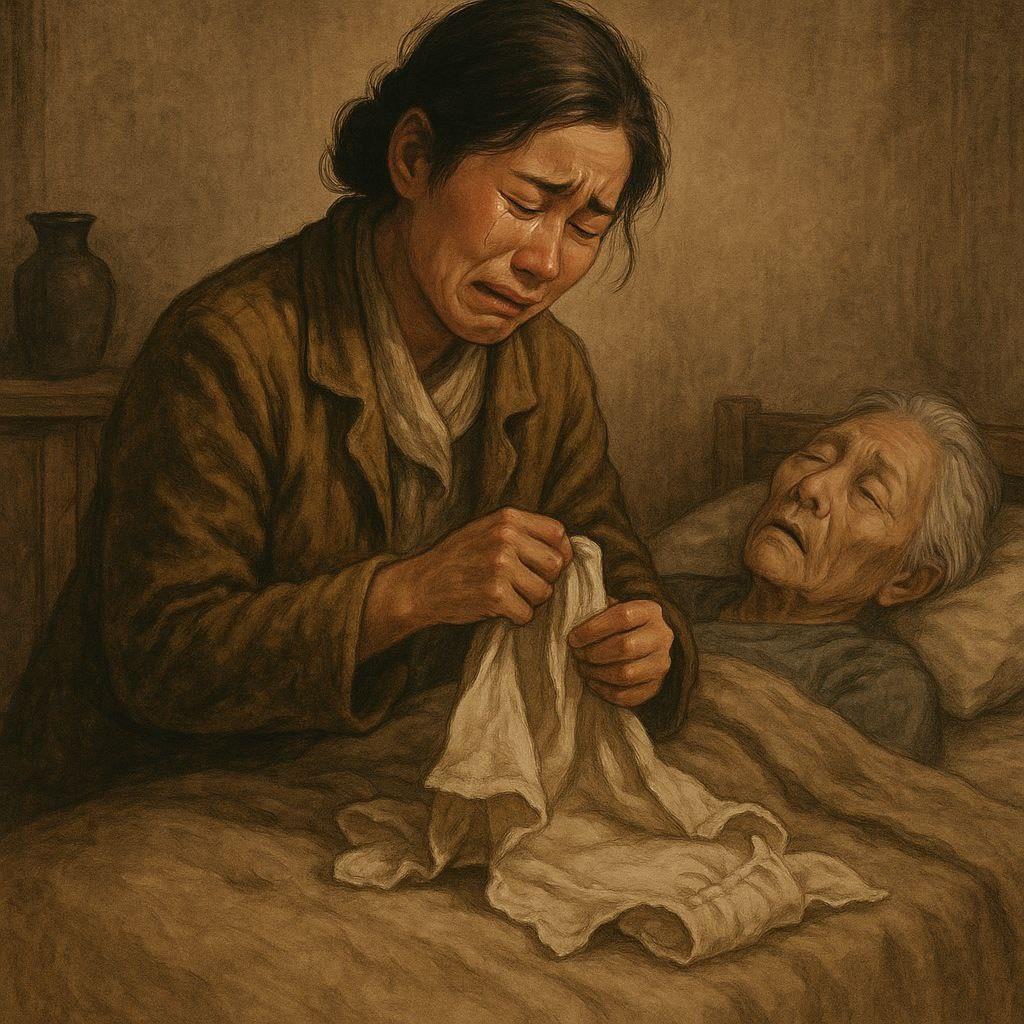
Parents' Day: I Dream of Freedom— My Confession from a Life of Bondage in North KoreaKim Hyo-joo,North Korean DefectorWhen May arrives, I find myself staring blankly at the sky, lost in thought.In South Korea, Parents' Day is a heartfelt time to honor parents with carnations and kind words. But to me, the tradition feels distant.My memories of "Parents' Day" are filled not with love, but with hunger, hardship, and an unrelenting struggle to survive.I was raised in North Korea, a country that doesn’t celebrate Parents' Day, but rather enforces “Mother’s Day”, a day used to demand sacrifice from women.There, Mother’s Day has nothing to do with gratitude or celebration.Instead, it's a time when the state reminds women of their duty to bear children, labor without rest, and dedicate themselves to their households — not out of love, but obligation.A mother in North Korea is not seen as someone to cherish, but as a tool, expected to serve the system without question.I’ll never forget the fall of 2020 in the remote mountain village of Sinbok, Pochon County, the place where I spent my mother’s final moments.One day, while working in the fields, I heard she'd collapsed. I rushed to the farm shelter and found her unconscious, her forehead split open after hitting a rock.Without time to cry, I carried her on my back down a steep mountain path. After walking for three dusty hours, we finally arrived at the hospital. She regained consciousness but was too weak to stand.After a brief treatment, we returned home. I cooked her meals, bathed her, and helped her with everything, even the most private needs, since she couldn’t move at all.I tore old clothes to make diapers and snuck out at night to wash them by the frozen Amnok River. My hands were numb from the cold, and tears streamed down my face without end.To support us and try to save her, I became a traveling medicine seller. I traveled as far as Pyongsong to buy costly foreign medicine, but most people couldn't afford it.I once heard someone say, “If you only sell real medicine, you’ll starve.” Those words stuck with me. In the end, I gave in — mixing real pills with fakes and selling yellow-dyed sugar as vitamins. It brought in some money.I sold fever reducers too. One real pill mixed with two fake ones.Customers thanked me, unaware of the truth. But inside, I was drowning in guilt.In my desperation to save my mother, I had harmed others, perhaps fatally.Every time I handed someone a pill, it felt like a piece of my heart was breaking.Despite all I did, my mother passed away that winter.In her final moments, she dragged over a bottle labeled "Hyminal" and swallowed a handful of pills — without water, not even knowing what they were.No amount of crying could bring her back.Her funeral was unspeakably painful. We burned rice husks all day to thaw the frozen ground and dug her grave by firelight, our hands stiff with cold.I bore every ounce of the financial and emotional weight alone. And that’s when it hit me: In North Korea, especially for poor women, we are not people. We are property — slaves to the state.We are not born to be loved, but to silently carry the burden of endless labor and sacrifice.In South Korea, Parents' Day is a celebration of love between parent and child. A single carnation, a short letter, a gentle smile — that’s enough.There is no command, no obligation — just love, freely given.But in North Korea, even Mother’s Day is another reminder that a woman must surrender herself for the regime.There, women live not as cherished daughters or respected mothers, but as faceless workers with no home and no freedom.Even now, countless women must sell fake medicine just to care for their loved ones as I once did.On this Parents' Day, I pray from the depths of my heart.I hope North Korean women will one day be able to show love to their parents, live with dignity as daughters, and smile without fear.Until that day comes, I will carry this pain and these memories with me, always.
25.05.02 -
 [Listening to North Korea’s True Public Mood (Part 2)]
“Kicked out for using a rice cooker” Power watchdogs grow unchecked amid North Korea’s chronic energy crisisLee Jong-woo,Former Official in Charge of Judicial and Prosecution Affairs at the Workers' Party of KoreaNorth Korea keeps building apartments and factories, but electricity remains scarce and tightly controlled, giving power watchdogs increasingly unchecked authority.For decades, North Korea’s electricity situation has seen little improvement. In 2024, the country’s annual electricity output is about 22 billion kWh—only around 3% of what South Korea generates, which is close to 700 billion kWh.Most of North Korea’s electricity still comes from aging hydroelectric plants built in the 1960s and 70s with Soviet and Chinese support, now running at very low efficiency.During winter or peak farming seasons, power distribution often comes to a halt. Outside of Pyongyang, many areas receive electricity for only one or two hours a day, if at all.In factories, production is sluggish, with operation rates hovering around 20–30%. For regular citizens, using electricity at home has become almost a luxury.Reports by the International Energy Agency and the United Nations say that over 60% of households in North Korea lack stable electricity access, with rural areas struggling even to keep lights on at night.Because of this dire energy shortage, the government has imposed strict limits on household electricity use.Even common appliances like electric rice cookers, frying pans, heaters, or heated blankets require official approval. Using them without permission can lead to penalties.If residents are caught using such devices, the government confiscates the items and fines them between 30,000 and 50,000 won.Well-off families or those with government ties often avoid punishment by bribing the power watchdogs with up to 200,000 or 300,000 won.They pay to quietly resolve the issue without official reports being filed. But average citizens, without money or influence, face severe punishments. In serious cases, they can be sent to labor camps or forcibly relocated to remote areas.Corruption among power watchdogs is widespread—they frequently resell confiscated goods on the black market for profit, shielding the wealthy while preying on the powerless.One insider explained, “They team up with their superiors to secretly sell seized goods for profit. What was supposed to be law enforcement has turned into just another business.”The country’s ongoing power crisis is not only making everyday life harder for its people—it’s also undermining the overall stability of the regime.Frustrated citizens question the government's priorities: “What’s the point of building new apartments or factories if they can’t even keep the lights on?”
25.05.02 -
 [Opinion]
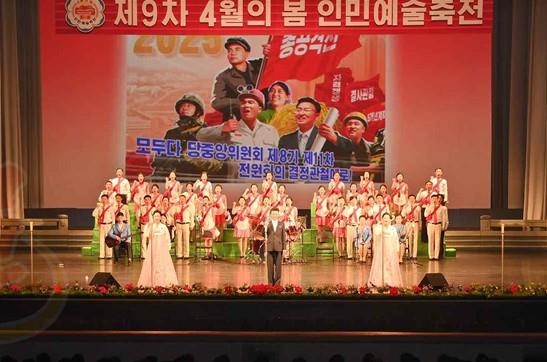
North Korea’s Reality, Seen Through the April Spring Festival Kang Dong-wan,Professor at Dong-A University/ YouTube Channel: kangdongwantvThe Korean Peninsula experiences four distinct seasons, with spring symbolizing renewal as new life emerges after winter's chill. People eagerly await its warmth—but in North Korea, April feels more like the harshest winter. Citizens are forced to participate in state-orchestrated events honoring Kim Il-sung’s birthday, celebrated on April 15 as the “Day of the Sun.” In a regime rooted in the hereditary rule of Kim Il-sung, Kim Jong-il, and Kim Jong-un, idolizing its leaders is unavoidable. This serves to legitimize Kim Jong-un’s rule and demand loyalty. The Immortality Tower, inscribed with “Great Comrades Kim Il-sung and Kim Jong-il Will Always Be With Us,” embodies the regime’s ideology.North Korea’s regime knows no bounds—declaring a deceased leader’s birthday a national holiday is only the beginning. Each April, citizens are mobilized for state-run celebrations with no reprieve. Imagine the toll that takes. Events like the People’s Art Festival and Friendship Art Festival may sound cultural and friendly, but their reality is far from it. The <Friendship Art Festival> features foreign performers invited by the regime, alternating yearly with the <People’s Art Festival>, which showcases domestic groups.The <People’s Art Festival>, launched in 2008 on Kim Jong-il’s orders, is held annually to honor Kim Il-sung’s birthday. Participants come from institutions, factories, farms, and local offices, competing in various group categories: city/county ensembles, institutional troupes, factory teams, and agricultural performers. North Korea promotes the event as a “grand political arts celebration by the people for the great leaders.”This year, it’s taking place from April 10 to 17 in multiple venues around Pyongyang, including the People’s Culture Palace and the Pyongyang Grand Theatre. A speech rally by workers and union members kicked off the festivities at the Central Workers’ Hall on April 10. Rodong Sinmun reported that the event would “inspire boundless revolutionary passion and optimism among those advancing the comprehensive development of our great state, united around the Party Central.” It’s clear from such propaganda that the event is less about art and more about reinforcing loyalty to the ruling Kim family.In contrast, the <Friendship Art Festival> takes place biennially, inviting international artists. It began in April 1982 to commemorate Kim Il-sung’s 70th birthday. From 1984 to 2007, it was held annually, and since then, every two years. A dedicated fund was established in 2011 to support its operations. The most recent event, the 33rd edition in 2024, was held online due to continued border restrictions following COVID-19. Despite claiming the pandemic had ended, North Korea kept its borders closed. Instead, foreign performers submitted videos, which were reviewed and edited for broadcast on Korean Central TV. Festival updates and judging outcomes were posted on sites like <Joseon Art>.North Korean media boasts that “renowned troupes, dance companies, circus groups, and overseas Korean performers from dozens of countries” participate in the festival. The message is clear: the world respects and celebrates Kim Il-sung, and by extension, Kim Jong-un. By showcasing global praise, the regime seeks to boost its internal legitimacy. They emphasize international friendship and cultural exchange, but the reality in North Korea paints a very different picture. Instead of genuine openness, the regime selectively invites participants for political theater—hardly the spirit of true international friendship.What’s more troubling is that North Korea covers all costs—airfare, lodging, gifts, and lavish banquets—for its foreign guests, while its own people face hunger and uncertainty over their next meal. Enormous sums are poured into celebrating Kim Il-sung, exposing the regime’s distorted priorities.And the regime’s efforts don’t stop there. In April, it crafts a facade of celebration, as if the whole world is honoring Kim Il-sung’s birthday. A prime example is the <Pyongyang International Marathon>, launched in 1981 for this very purpose. After a five-year pause due to the pandemic, the event returned this year. State media reported participation from athletes in North Korea, China, Romania, Morocco, Ethiopia, and “running enthusiasts from around the world.” Chinese agency Koryo Tours offered a six-day “Marathon Tour,” combining race entry with sightseeing in Pyongyang, including stops at Okryu Restaurant, Kim Il Sung Square, the Juche Tower, Hwasong Street, and Kangdong Greenhouse Farm.Poster for the 9th April Spring People’s Art Festival in 2025 / Photo by Rodong SinmunHwasong Street and Kangdong Greenhouse Farm are both heavily promoted by Kim Jong-un as models of improved living standards. Including them in tour itineraries reveals the event’s true purpose: regime propaganda. What should be a celebration of fair athletic competition is reduced to a stage-managed political showcase, aimed at portraying North Korea as a global sporting power—a directive from Kim himself. The participation of an Ethiopian athlete, who finished second in the full marathon behind a North Korean runner, seems more symbolic than competitive. In the half-marathon, North Korean runners swept all three top spots. Rather than a fair contest, it was a spectacle for domestic audiences to reinforce national pride. It’s hard to ignore the tourism aspect either—this event doubles as a way to generate foreign currency for Kim Jong-un’s coffers.For North Koreans, April may well be the harshest month of the year. They’re forcibly recruited to stage political spectacles like the People’s Art Festival, while also bearing the cost of hosting foreign guests for the so-called Friendship Art Festival.Meanwhile, April in South Korea is vibrant and full of life, with cherry blossom festivals and seasonal food celebrations bringing communities together. In stark contrast, the North spends the entire month in service of glorifying a single figure. No time of year is crueler than this.
25.04.18 -
 [Listening to North Korea’s True Public Mood (Part 1)]
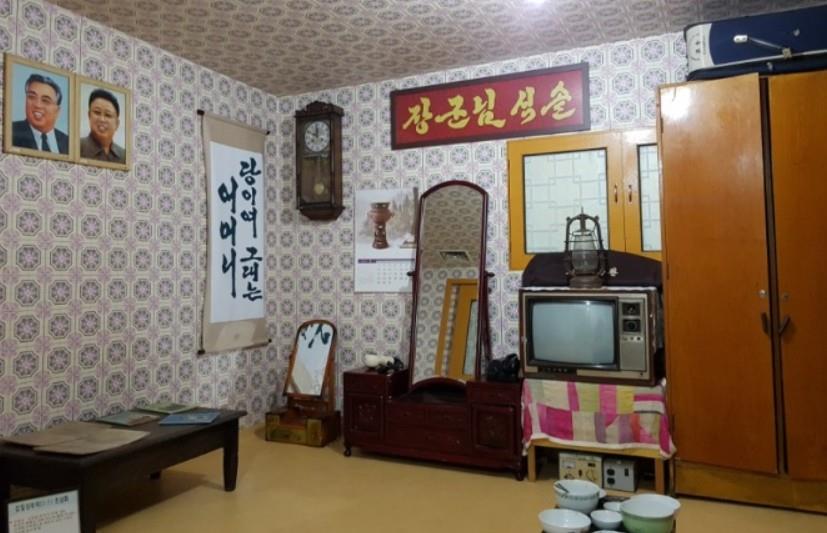
When the Portraits No Longer MatteredLee Jong-woo,Former Judicial and Prosecutorial Officer, Workers' Party of KoreaI recently heard something startling from a contact in North Korea’s judicial system: during the 2024 floods in Sinuiju and Uiju, not one person took portraits of Kim Il-sung or Kim Jong-il while fleeing.In North Korea, this isn’t just surprising—it’s hard to imagine. That no one tried to save the Suryong’s portraits during a disaster affecting tens of thousands is unprecedented.Portraits of Kim Il-sung and Kim Jong-il hang in every home, school, office, and farm across the country. The long-standing rule—“If there’s a fire, save the portraits first”—has been etched into people’s minds like a survival commandment.Stories once praised as heroic include students dying to retrieve portraits from burning classrooms, or ship captains drowning with the leaders’ images wrapped in waterproof covers held to their chests.But the Sinuiju flood told a different story. Faced with disaster, people chose their lives over ideology. Though authorities demanded self-criticism letters, the response was milder than before. Even Party officials left the portraits behind. Kim Jong-un was reportedly displeased, but no one was punished—in fact, some victims were invited to Pyongyang for comfort.This wasn’t just a one-time exception. It showed the portraits no longer carry the sacred status they once held—their symbolic power is starting to fade.And that shift is spreading. Lately, North Koreans have quietly begun using Rodong Sinmun pages—especially those with the leader’s face—turned backward as wallpaper. In the past, even folding a photo of the leader was taboo. Placing objects on it, sitting nearby, or stepping over it could bring serious charges of disrespect.Yet now, people are discreetly covering the leaders’ faces and pasting the newspaper’s blank sides to their walls. It’s subtle, but the symbolism is powerful.North Korea is still a dictatorship, built on surveillance, punishment, and control. But its symbolic power—the emotional and ideological hold over the people—is weakening. Leaving behind portraits of the Kim family points to a deeper shift: the regime’s spiritual grip is slipping.The flood in Sinuiju may have been a natural disaster, but within it, people made a conscious choice. The portraits no longer held absolute importance. The instinct to protect life outweighed the conditioned duty to show loyalty.In that moment, the regime faced a true test. What once symbolized absolute power was reduced to paper—buried beneath wallpaper, both literally and figuratively.This quiet yet powerful shift in how North Koreans think shouldn’t go unnoticed. In place of Kim Il-sung and Kim Jong-il’s portraits, new values are taking hold—ones grounded in freedom and the dignity of individual life.What’s been discarded is just paper, but what’s emerging is a quiet hope for a future written by the people.
25.04.18 -
 [News&Issue]
Russia’s Captured North Korean Soldiers:War Prisoners or Civilian Lawbreakers?Lee Dong-hoonCorrespondent, SAND Times- Not recognized as lawful combatants… May be extradited to South Korea under a criminal treaty- Ukraine affirms commitment to humanitarian law… North Korea and Russia’s official stance remains unknownUkraine confirmed on January 11 that it had captured two North Korean soldiers in Kursk, a region in western Russia. South Korea’s National Intelligence Service (NIS) also verified this report.Now, more than two months later—and well into the second Trump administration, which is pushing for a swift resolution to the Russia-Ukraine war—attention is turning to what will happen to these North Korean captives once the fighting ends.Because this is an international matter involving multiple nations with differing interests, any solution must be grounded in international law. That starts with defining the legal status of these individuals.In this context, International Humanitarian Law (IHL) becomes particularly relevant. IHL governs conduct during armed conflicts, and it includes rules for how prisoners of war (POWs) are to be treated—most prominently set out in the Third Geneva Convention, signed on August 12, 1949.According to the Third Geneva Convention, even during active hostilities, POWs in certain categories must be returned either to their home country or a neutral state. After the conflict ends, this requirement applies to all prisoners without exception.At first glance, the process seems straightforward. If the North Koreans are recognized as POWs for fighting alongside Russian forces, they could be repatriated to Russia, stay in Ukraine, or move to a third country like South Korea. According to PPP lawmaker Yoo Yong-weon, who reportedly spoke with them, they seem inclined toward relocating to South Korea.The complication lies in whether they actually qualify as POWs. Only lawful combatants are eligible for that status. To meet the definition, a person must serve under a commander accountable to a recognized authority, wear identifiable insignia or uniforms, and carry weapons openly. Of these, the North Korean detainees appear to meet only the last requirement.They were reportedly wearing Russian military uniforms, holding fake Russian military IDs, and—critically—neither Pyongyang nor Moscow has acknowledged their existence.If they fail to meet the standards for POW status, they fall into the category of "unlawful combatants" or "unprivileged belligerents"—in other words, civilians engaged in unauthorized acts of violence. This means Ukraine could potentially continue to detain and prosecute them under domestic criminal law, even after the war ends.That said, Ukraine and South Korea have a criminal extradition treaty. Under this agreement, they can request the transfer of suspects. In addition, South Korea’s Constitution considers all North Koreans as South Korean citizens, as it defines the national territory as the entire Korean Peninsula and its adjacent islands.Under this framework, the North Korean captives could be viewed as South Korean nationals who committed crimes overseas, allowing Seoul to request their extradition. However, Ukraine’s approval would still be required, as it currently holds custody.International Humanitarian Law also includes the principle of non-refoulement, which prohibits sending a person back to a country where they would likely face threats to their life, safety, or basic human rights.North Korea considers defectors, including captured soldiers, as traitors. Even if these captives wished to return, they would likely face severe punishment—possibly even execution. As such, repatriating them could violate humanitarian law.Ukraine, which has the ultimate authority in determining their fate, has stated that “all captives, regardless of nationality, are treated as prisoners of war.” This indicates that Kyiv is currently affording them POW status.Ukraine’s ambassador to South Korea, Dmytro Ponomarenko, emphasized that the handling of these North Korean soldiers must strictly follow IHL and humanitarian principles. He added that Ukraine is responsibly addressing South Korea’s official concerns and taking them seriously.Taken literally, this statement implies that Ukraine intends to factor in the preferences of the North Korean captives when deciding what to do with them.The South Korean government maintains that the captured North Koreans are its citizens under the Constitution and will accept them if they wish to come. While North Korea and Russia haven’t made official statements, it's believed that Kim Jong-un and Russia’s Security Council Secretary Shoigu discussed the matter in recent high-level talks.
25.04.04 -
 [Opinion]
Ushering in the North Korean Human Rights Movement 2.0Kwak Gil-supPresident of One Korea CenterPh.D. in Public PolicyThere’s a saying: "In the midst of every crisis, lies great opportunity." It’s a reminder that tough times can lead to meaningful change. That’s the message I want to share with North Korean human rights advocates—at home and abroad—now facing the fallout from the Trump administration’s deep cuts to federal jobs and foreign aid.U.S. Government Restructuring: Background and DirectionSince returning to office, President Trump has doubled down on his core campaign promises—“Make America Great Again” and “America First.” The Biden-era priorities of big government, free trade, and value-driven diplomacy are now relics of the past. Today, the focus is trimmed-down governance and unwavering pursuit of national interest.Following this vision, the U.S. has launched global trade disputes, pulled out of major international agreements like WHO, UNESCO, and the Paris Agreement, and even hinted at leaving NATO. It marks a major shift in the post-WWII global order—what many see as the return of great-power geopolitics.The North Korean human rights field has taken a direct hit. Early in his term, Trump signed Executive Order 14169, cutting nearly all foreign aid except for urgent humanitarian relief. Citing inefficiency and misalignment with national interests, Elon Musk’s Department of Government Efficiency (DOGE) branded USAID—a major force in global development—as a “criminal organization” and effectively shut it down, despite its $43 billion budget.According to The Munhwa Ilbo on March 17, about 90% of USAID’s international aid contracts are being canceled. Key agencies like DRL and NED, which each contribute around $10 million annually to North Korean human rights efforts, have also suspended funding during a three-month review.Even VOA and RFA, crucial outlets for reporting on North Korea, are facing possible shutdown. Although a Maryland federal court issued an injunction on March 18 to stop further closures, many believe the U.S. has already crossed the Rubicon.Voices from the Front Lines of Human Rights WorkPresident Trump has pushed for deeper cuts, while Elon Musk highlighted his reform agenda with a symbolic “chainsaw performance.” Since March 15, new broadcasts have stopped, and VOA and RFA’s Korean-language services—once vital channels for promoting democracy in North Korea—now face closure. With annual budgets of $6.8 million and $3.19 million, they’ve long served as lifelines into one of the world’s most closed societies.As North Korea tightens control through laws like the “Reactionary Ideology and Culture Rejection Law,” which allows the death penalty for sharing foreign media, shutting down these services cuts off one of the last remaining links to the outside world—something few anticipated.One RFA journalist expressed their disbelief on Facebook: “As of today, we’re operating in emergency mode. For many of us, this could be our last day. When the Trump administration first cut development aid, I never thought it would go this far.”A representative from a North Korean human rights NGO in South Korea, speaking anonymously, said nearly all U.S. funding has been cut. “We can’t sustain regular operations, and even basic costs like salaries and rent are a struggle. About 70% of our work is gone—closer to 90% for smaller groups,” they told *The Munhwa Ilbo* on March 17.Challenges and the Way ForwardFor years, funding from the U.S. State Department has been the lifeblood of North Korean human rights organizations. The Trump administration’s abrupt decision has shaken the entire ecosystem—especially the independent broadcasters and civic groups that have carried out North Korean democratization efforts under incredibly tough conditions.Some fear this may lead to a full collapse. Many of these groups don’t just share news from the outside world with North Koreans—they operate paid informant networks, conduct investigative journalism, and provide the world with critical reports on human rights abuses inside the regime. These core functions are now in serious jeopardy.But the crisis is already here—and now isn’t the time for despair. What’s needed is a collective push for solutions. Domestic human rights organizations must take this moment to invest in self-sufficiency. At their core, NGOs are meant to be powered by civil society—not reliant on government handouts.To move forward, these groups need to reduce their reliance on U.S. funding and adopt more sustainable practices—like building grassroots donor networks and creating stable income sources. At the same time, we should work with media and civil society to build public support and ask: “Does cutting this funding really align with America’s long-term goals?” and “Are we trading something far greater for short-term gains?”
25.04.04 -
 [Defectors' Podium]
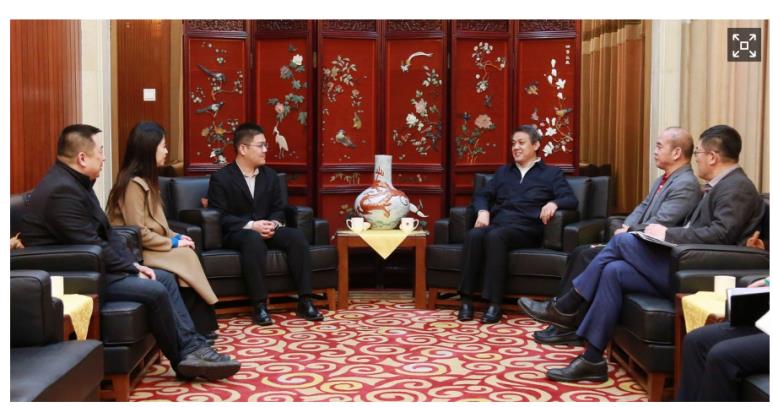
Surge in Refined Oil Exports and Strengthening North Korea-China Ties:Maximizing Mutual Interests Amid Trump’s Return and Russia-Ukraine TalksKim Dong-suFormer North Korean DiplomatLast month, China’s refined oil exports to North Korea surged, alongside other signs of improving bilateral ties, drawing attention. This suggests North Korea is seeking diplomatic balance while strengthening its cooperation with Russia. At the same time, China appears intent on reaffirming its influence on the Korean Peninsula amid shifting global dynamics.According to a March 13 report by Radio Free Asia (RFA), China informed the UN Security Council’s North Korea Sanctions Committee that it had exported 131,521 barrels of refined oil to North Korea between September and November last year.From January to November 2023, China supplied North Korea with a total of 280,928 barrels of refined oil, surpassing the 256,861 barrels exported over the entire previous year.Refined oil shipments from September to November last year surged compared to the same periods in 2023 (86,459 barrels) and 2022 (39,221 barrels). The increase was even more dramatic compared to early 2024—4,884 barrels in January, 2,988 in February, and 7,064 in March.With North Korea facing economic hardship and energy shortages, refined oil supplies are crucial. The rise in exports signals a revival of North Korea-China economic cooperation.The strengthening ties between North Korea and China go beyond oil exports. Various other developments indicate improving relations.Journalists from People’s Daily and CCTV have returned to Pyongyang for the first time in five years. This suggests a resumption of cultural and human exchanges and signals North Korea’s renewed acceptance of Chinese media.Excavation work on the North Korean side of the New Yalu River Bridge, linking Sinuiju and Dandong, has sparked speculation that Pyongyang is preparing customs facilities for resuming border trade.Diplomatic exchanges have resumed, with North Korea’s Vice Foreign Minister Pak Myong-ho meeting China’s Ambassador Wang Yajun. Their first official meeting in over a year may have been a step toward deeper diplomatic coordination.In 2023, North Korea strengthened ties with Russia while keeping some distance from China. However, its recent efforts to rebuild relations with Beijing suggest a strategic move to balance its alliances.As North Korea expanded military cooperation with Russia last year, even sending troops, China reportedly showed discomfort.Despite declaring 2023 the "Year of Friendship" to mark 75 years of diplomatic ties with China, North Korea held no significant celebrations. It also gave only brief coverage to Xi Jinping’s New Year’s greeting while prominently featuring Vladimir Putin’s, highlighting its pro-Russia stance.With the Russia-Ukraine war entering peace negotiations, North Korea may be reassessing its strategy. It remains heavily dependent on China economically, and if Russia’s isolation eases, Pyongyang could receive less support from Moscow. This likely explains its recent efforts to restore ties with China.China also has reasons to strengthen ties with North Korea. As the U.S. and Russia grow closer through peace talks, China may seek to reinforce its influence in East Asia by deepening its relationship with Pyongyang.If U.S.-North Korea relations improve, China will need to maintain its leverage over Pyongyang. Strengthening ties could help Beijing solidify its connection with Russia while using North Korea as a strategic buffer.It is too soon to say North Korea-China relations have fully recovered, but several signs such as increased oil exports, potential border trade resumption, and renewed diplomatic exchanges, suggest they are drawing closer.North Korea is motivated by economic necessity, while China sees growing geopolitical value in strengthening ties amid shifting global dynamics.The future of North Korea-China relations will likely depend on U.S.-North Korea diplomacy and the outcome of the Russia-Ukraine war. However, based on current trends, their improving ties are clear and will significantly impact Northeast Asia’s geopolitical landscape.
25.03.21 -
 [Opinion]
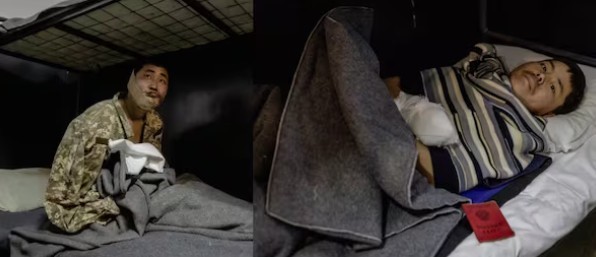
Russian Invasion of Ukraine:North Korean War Crimes and the POW Soldier Repatriation IssueWADE ROBERT PETERSEJONG Institute Research FellowIntroductionIn November last year, reports began to emerge that North Korea was dispatching soldiers to fight in the war in Ukraine. Initially, these reports were met with skepticism, as the U.S. government did not confirm them, and the evidence provided by the Ukrainian and South Korean governments appeared inconclusive—including satellite imagery of alleged troop ships and videos of East Asian-looking soldiers receiving training.However, subsequent evidence—including North Korean soldiers on the frontline, captured documents, and even captured soldiers—demonstrated relatively conclusively that North Korean troops were actively involved in the fighting, particularly in the Kursk region of Russia. In August 2024, Ukrainian forces launched an incursion into Kursk, and expelling them from Russian territory has been a priority for the Russian military ever since. According to Ukrainian authorities, North Korea has dispatched approximately 12,000 soldiers, 50% of whom have either been injured or killed in combat. One apparent reason for these heavy losses is the tactics employed by the Russian military, which relies heavily on human wave assaults. Another factor is the widespread use of drones by the Ukrainian military—a technology with which North Korean soldiers, including allegedly deployed Special Forces, have limited familiarity.War Crimes and POWsNonetheless, as of January 2025, at least two North Korean soldiers have been captured by Ukrainian forces. The small number suggests that Ukrainian estimates of North Korean casualties are likely accurate or that relatively few North Korean troops have actually engaged in combat.Recently, perhaps due to the temporary freeze on U.S. military aid and intelligence sharing, Ukraine has suffered significant territorial losses in the Kursk region. This could lead to North Korean forces being deployed to other fronts, increasing the likelihood of their direct involvement in combat within Ukrainian territory.If North Korean troops were deployed into Ukraine itself, Kim Jong Un and North Korea’s military leadership could face charges of war crimes under the International Criminal Court (ICC)’s Rome Statute—of which Ukraine is a signatory. Russian President Vladimir Putin has already been charged under the same statute. In fact, given North Korea’s large-scale shipments of shells and missiles to Russia since at least 2023—materially aiding Russia’s commission of war crimes—it is arguable that such charges could already be applicable.ICC arrest warrants would severely restrict the freedom of movement of North Korea’s ruling elite. While both Putin and Israeli Prime Minister Benjamin Netanyahu currently face ICC warrants, neither is expected to be arrested anytime soon. However, as demonstrated by the recent arrest of former Philippine President Rodrigo Duterte, such warrants can be enforced under the right circumstances.Beyond the legal risks facing North Korean leadership, the status and fate of captured North Korean soldiers raise additional complex legal questions.The Geneva Convention III relative to the Treatment of Prisoners of War provides the legal framework governing Ukraine’s treatment of POWs. Although the treaty does not explicitly ban the forced repatriation of POWs to their country of origin, it does establish that repatriation should occur without delay after the cessation of hostilities, ensuring the protection of detainees’ human rights.However, the Refugee Convention and the Convention Against Torture enshrine the principle of non-refoulement (prohibition of forced repatriation). As Ukraine has ratified both treaties, it is legally bound to ensure that POWs are not forcibly returned to a country where they could face persecution or mistreatment.There are still uncertainties regarding the exact legal status of these North Korean soldiers. Since Pyongyang has not officially acknowledged its military involvement in the war, Ukraine may not classify captured North Koreans as regular POWs under international law. Instead, they could be treated as mercenaries, in which case direct repatriation to North Korea would be less likely.Furthermore, many North Korean soldiers are reportedly disguised as Russian troops. They wear Russian military uniforms, carry Russian identification papers, and are apparently instructed to pose as Russian soldiers even if captured—although it is unlikely that most of them speak Russian well enough to maintain the deception.OutlookThe war in Ukraine continues, with peace negotiations so far failing to produce substantial results. U.S. President Trump had hoped that Russia would agree to a 30-day ceasefire, but as of March 19, Moscow has only committed to refraining from attacks on Ukrainian energy infrastructure.There is a real possibility that North Korean forces could be deployed directly into Ukraine, having previously fought only in Russia’s Kursk region. Such a development could intensify calls for North Korea’s leadership to be indicted under the Rome Statute for war crimes.Currently, the number of North Korean POWs in Ukrainian custody remains low. However, if the war persists, their numbers could rise significantly. Their status remains somewhat ambiguous, as North Korea has not officially acknowledged its involvement in the conflict. Nevertheless, under the principle of non-refoulement, captured North Korean soldiers should be given the choice at the war’s end—whether to return to North Korea, remain in Ukraine, or seek asylum in South Korea.
25.03.21 -
 [Analysis and Suggestion]
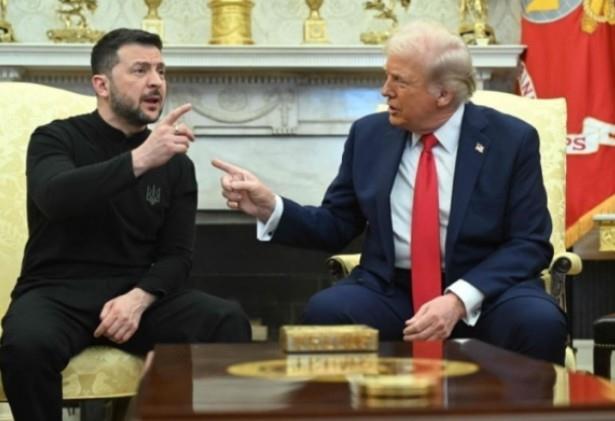
Donald Trump and Volodymyr Zelenskyy: Implications of Their Negotiations for the Korean PeninsulaOh Gyeong-seobSenior Research Fellow, Korea Institute for National Unification (KINU)U.S. Efforts to End the Ukraine WarAs promised during the election, the Trump administration has begun efforts to end the Ukraine war. On March 11, the U.S. and Ukraine announced a 30-day ceasefire at a high-level summit in Jeddah, Saudi Arabia—just 12 days after Trump and Zelenskyy's February 28 meeting collapsed over mineral agreements and security commitments.In the statement, both countries committed to a 30-day ceasefire and a comprehensive mineral development agreement. The U.S. also announced the immediate resumption of intelligence sharing and security aid to Ukraine. Both sides appointed negotiation teams and agreed to start talks on long-term security. The U.S. also planned to discuss these proposals with Russian representatives.President Trump urged Russia to respond, saying, “Now the ball is in Russia’s court.” Secretary of State Marco Rubio echoed this, stating, “If they say no, we will see who is blocking peace.” However, Russia remained hesitant about the 30-day ceasefire.Kremlin spokesperson Dmitry Peskov stated on March 12, “We need to hear the U.S.'s detailed explanation of the ceasefire proposal.” President Putin took a harder stance. That afternoon, while visiting a Russian military command post in Kursk, he ordered his forces to "eliminate the enemy as quickly as possible and fully liberate the Kursk region." He effectively rejected the ceasefire, demanding that Ukraine cede the region to Russia as a precondition. Despite this, the U.S. remains committed to further negotiations.U.S.-Russia Ceasefire Negotiations, Excluding UkraineEnding the Ukraine war will be difficult due to the stark differences in strategic interests between Russia and Ukraine. Russia wants Ukraine within its sphere of influence and demands recognition of occupied territories like Donetsk, Luhansk, Kherson, and Zaporizhzhia as Russian land. It also insists on Ukraine’s demilitarization and withdrawal from NATO. In contrast, Ukraine seeks to reclaim all lost territories, including Crimea, and demands Russian troop withdrawals and security guarantees. These opposing goals make negotiations challenging.The Trump administration takes a different approach to ending the war compared to Biden’s. The Biden administration, citing NATO’s collective defense and the Budapest Memorandum, deemed Russia’s invasion illegal and provided military aid to Ukraine. In a UN speech on September 24, 2024, President Biden stressed, “Will we keep supporting Ukraine so it can win and defend its freedom, or will we turn away from aggression? We must not tire or look away—we will support Ukraine until peace is secured.”The Trump administration views the war differently. Trump claims Ukraine’s NATO ambitions sparked the conflict, aligning with Russia’s justification. His administration faces criticism for sidelining Ukraine and its European allies, raising concerns of pro-Russia bias. Ukraine and the EU strongly oppose his Russia-focused diplomacy.U.S. security expert Peter Baker reported in The New York Times International on February 20 that U.S. and Russian diplomats drafted three key principles to end the war: recognizing Russian control over occupied Ukrainian territories, ensuring Ukraine’s security through U.S.-EU cooperation, and lifting U.S. sanctions on Russia. He criticized the deal as violating the Budapest Memorandum, favoring Russia while ignoring Ukraine’s stance.After the summit with Zelenskyy fell apart, the Trump administration intensified pressure on Ukraine. Trump ordered a complete halt to intelligence sharing and military aid. U.S. diplomatic and security officials even suggested that Zelenskyy should step down and consider territorial concessions.National Security Advisor Michael Waltz hinted in a March 2 CNN interview that Zelenskyy’s resignation could facilitate U.S.-Ukraine negotiations. Treasury Secretary Scott Bessent also stated that without a peace agreement, an economic deal would be impossible. He emphasized that Ukraine’s leadership must actively seek an economic agreement.Zelenskyy expressed regret over the failed summit but ultimately accepted U.S. demands. However, Ukraine was unable to fully reflect its concerns in the joint U.S.-Ukraine statement. It failed to secure European participation in the peace process and remained dissatisfied with the lack of U.S. security commitments, even as a mineral agreement was signed.The joint statement lacked specific U.S. security assurances for Ukraine. As Russia hesitated to accept the 30-day ceasefire, concerns grew over a potential U.S.-Russia deal forcing Ukraine into unilateral concessions. Trump remains opposed to Ukraine joining NATO and sees little chance of it reclaiming pre-2014 territories.Implications for the Korean PeninsulaThe Trump administration’s approach to the Ukraine war offers key implications for the Korean Peninsula, particularly regarding North Korea’s nuclear issue. On March 13, Trump met with NATO Secretary-General Mark Rutte and was asked whether he planned to rebuild relations with Kim Jong-un as he did in his first term. He replied, “I would.” He also referred to North Korea as a “nuclear power,” mentioning it alongside India and Pakistan. Some experts worry that Trump may focus more on a "small deal" rather than full denuclearization.Victor Cha, Korea Chair at the Center for Strategic and International Studies (CSIS), argued that Trump’s remarks signaled a shift toward negotiations focused on threat reduction rather than denuclearization. By likening North Korea to India and Pakistan, Trump may have implicitly acknowledged it as a de facto nuclear state, suggesting he no longer sees complete denuclearization as a realistic goal.A potential U.S.-North Korea deal could have North Korea dismantle its Yongbyon nuclear facility, halt ICBM tests, and suspend nuclear experiments, while the U.S. scales back joint drills, reduces strategic deployments, suspends the NCG, and considers downsizing its forces in Korea.However, recent statements from Trump administration officials suggest that abandoning North Korean denuclearization is unlikely. The White House reaffirmed that, just like in his first term, President Trump remains committed to achieving North Korea’s complete denuclearization.The Trump administration has reaffirmed its commitment to North Korea’s denuclearization. On February 15, at the Munich Security Conference, U.S. and South Korean foreign ministers pledged to coordinate closely on North Korea policy, emphasizing complete denuclearization. They also expressed concern over Russia-North Korea military ties and vowed to monitor the situation.The foreign ministers of South Korea, the U.S., and Japan also reaffirmed their strong commitment to North Korea’s denuclearization and pledged to strengthen sanctions further. They agreed to firmly respond to North Korea’s sanctions violations and evasions while maintaining strong pressure. They also made it clear that any threats or provocations from North Korea would not be tolerated.The possibility of the Trump administration bypassing South Korea in North Korea negotiations is low. However, a situation similar to Ukraine’s exclusion from talks cannot be entirely ruled out. To prevent this, the South Korean government must strengthen its alliance with the U.S. and enhance trilateral security cooperation with the U.S. and Japan.The South Korea-U.S. alliance must collaborate closely on global security threats. Diverging priorities would make it harder to uphold alliance commitments. South Korea, the U.S., and Japan share the goal of countering China’s threats and denuclearizing North Korea. To achieve this, South Korea should strengthen trilateral cooperation and frame North Korea’s nuclear program as a shared security concern.
25.03.21 -
 [Analysis and suggestion]
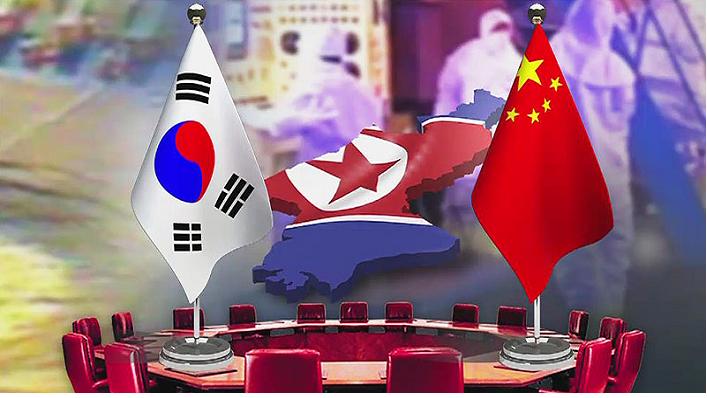
North Korea’s Nuclear Issue and China’s RoleYoo Seong-okChairman, Institute for National Security Strategy 1. The Strategic Significance of Nuclear Weapons in North Korea and the Risks of Its Nuclear StrategyNorth Korea regards nuclear weapons as an "almighty sword," a force Kim Jong-il asserted could make anything possible. Domestically, they help secure Kim’s grip on power. Internationally, they serve as leverage to pressure the U.S. into normalizing relations and withdrawing troops from South Korea. Against the South, they act as a hostage mechanism, reinforcing Pyongyang’s push for forced reunification under a communist regime. For North Korea, nuclear weapons are more than military assets—they are an "absolute weapon" with multifaceted strategic significance.Nuclear weapons are often seen as military, political, and psychological tools, frequently called the “poor man’s weapon.” For economically struggling North Korea, they offer a crucial strategic edge over South Korea’s conventional military. Its nuclear development follows a typical rogue-state pattern: (1) deception—hiding its activities, (2) repeated violations of agreements like the Joint Declaration on Denuclearization, the Agreed Framework, and the September 19 Joint Statement, and (3) illicit funding, including cryptocurrency theft.North Korea claims that Kim Jong-un’s nuclear advancements have freed its people from the fear of war, bringing them prosperity for the first time. This narrative masks economic failures and silences public discontent. As Kim himself has emphasized, nuclear weapons are not just military assets but the very foundation of the state.Given their direct link to the regime’s survival, it is virtually impossible for North Korea to give them up voluntarily or through negotiations. This underscores the need for a more calculated and strategic approach to resolving the North Korean nuclear issue.North Korea’s nuclear strategy became more defined with the enactment of the Nuclear Forces Policy Law in September 2022. Key aspects of this law include: (1) declaring that the primary mission of its nuclear forces is deterrence, and (2) specifying that their "operational mission" includes repelling aggression and achieving a decisive military victory should deterrence fail—explicitly outlining an offensive role for nuclear weapons. The law also details five conditions under which nuclear weapons may be used, significantly lowering the threshold for deployment. It further asserts that preemptive nuclear strikes are always an option, and even conventional military threats could warrant a nuclear response. This aggressive stance makes North Korea’s nuclear strategy exceptionally reckless compared to other nuclear-armed states.2. Concerns Over U.S.–North Korea Nuclear Negotiations Under a Second Trump AdministrationAfter beginning his second term, Donald Trump called North Korea a "Nuclear Power" and reiterated his intent to "build a good relationship with Kim Jong-un." While his administration reaffirmed its commitment to "complete denuclearization" (as stated in the February 15 U.S.-South Korea-Japan meeting), it is likely to pursue closer U.S.–North Korea ties.Once urgent global issues like the Russia-Ukraine war and Middle East conflicts are resolved, Trump is expected to push for normalized ties with North Korea. While the failed Hanoi summit may give him pause, his ambition for a Nobel Peace Prize could strongly influence his approach.Despite efforts to improve U.S.–North Korea relations, the issue of denuclearization cannot be ignored. North Korea will only engage in negotiations if the U.S. recognizes it as a nuclear state and abandons its so-called hostile policies.To rekindle his “bromance” with Kim Jong-un, Trump may seriously consider these demands. If another Trump-Kim summit occurs, negotiations will likely focus on a small-scale agreement rather than a sweeping "big deal." The concern is that such a deal could see North Korea dismantle only its strategic nukes threatening the U.S. while keeping its tactical arsenal targeting South Korea and Japan—gaining de facto recognition as a nuclear state. In return, the U.S. might ease sanctions, end hostile policies, and normalize ties.During a February 26 visit to South Korea, Kevin Kim, Deputy Assistant Secretary of State, suggested that Trump’s second-term negotiations with North Korea might focus on freezing select nuclear facilities in exchange for partial sanctions relief—a shift from the 2019 Hanoi summit approach. However, such limited steps are unlikely to bring North Korea back to the table. The bigger risk is that, in its haste to improve relations, the U.S. could end up legitimizing North Korea’s nuclear status, leaving South Korea perpetually exposed to its threats. Moreover, Trump’s administration cannot guarantee that the extended deterrence promised under the Washington Declaration will be enough to address South Korea’s security concerns.Surveys indicate that about 70% of South Koreans support developing an independent nuclear arsenal. If the U.S. recognizes North Korea as a nuclear state, demands for South Korea’s own deterrent will likely surge, potentially driving the country toward nuclear armament. This could trigger a regional arms race, with Japan and Taiwan following suit. A poorly negotiated small deal between the U.S. and North Korea risks destabilizing East Asia and sparking a major security crisis.3. China’s Role in North Korea’s Denuclearization and the Importance of South Korea-China CooperationSince the Six-Party Talks began in 2003, China has played a key role in diplomatic efforts to resolve North Korea’s nuclear issue. These efforts led to the 2005 9.19 Joint Statement, where North Korea pledged to abandon all nuclear weapons and return to compliance with the Nuclear Non-Proliferation Treaty (NPT) and International Atomic Energy Agency (IAEA) safeguards. However, Pyongyang later reneged on the agreement and conducted its first nuclear test in 2006, effectively nullifying the deal. As of March 2025, North Korea is estimated to possess around 50 nuclear warheads, with projections exceeding 100 by 2030. China has consistently upheld three core principles regarding the Korean Peninsula: (1) peace and stability, (2) denuclearization, and (3) resolving disputes through dialogue. It has joined international sanctions and condemned North Korea’s provocations as a permanent member of the United Nations Security Council (UNSC). However, as U.S.-China strategic competition intensifies and a global divide emerges between democratic and authoritarian blocs, China’s stance on North Korea has shifted—partly due to its alignment with Russia, which opposes Western sanctions over the Ukraine war.China’s shift from its previous role in addressing North Korea’s nuclear issue became evident when it aligned with Russia’s strategic interests. By siding with Moscow, China has weakened UNSC-led sanctions on North Korea, undermining the global non-proliferation regime and rendering the Nuclear Non-Proliferation Treaty (NPT) ineffective. This has raised international concerns that China, despite being a P-5 member and a self-proclaimed global peace leader (G-2 nation), is neglecting its responsibility in nuclear non-proliferation. Russia effectively recognized North Korea as a de facto nuclear state by signing the Comprehensive Strategic Partnership Treaty with Pyongyang in June 2024. If Donald Trump and Kim Jong-un strike a small deal allowing North Korea to keep tactical nuclear weapons, it could trigger the collapse of the NPT system. A nuclear domino effect may follow in Northeast Asia, with Japan and Taiwan pursuing nuclear armament alongside South Korea. Even in Xi Jinping’s third term, regional peace and stability remain crucial for China’s vision of "national rejuvenation" and its goal of becoming a modern socialist superpower by 2049. The May 2024 trilateral summit between China, Japan, and another nation reaffirmed that peace, stability, and prosperity in the region are shared interests and responsibilities, reflecting China’s position. For its own security and long-term prosperity, China must take a "responsible power" approach and actively seek solutions to the North Korean nuclear issue, which is destabilizing Northeast Asia.North Korea’s ongoing nuclear and missile provocations are heightening tensions, inevitably strengthening U.S.-led military cooperation in the region. This, in turn, intensifies bloc-based confrontations that put pressure on China. Premier Li Qiang has emphasized China’s opposition to bloc-based alliances and geopolitical divisions, yet continued inaction on North Korea’s nuclear issue risks reinforcing the China-Russia-North Korea axis, pushing the world toward a new Cold War. The deepening security ties among U.S. allies in the region are largely a response to China’s passive stance on North Korea’s growing nuclear threats. China cannot ignore its responsibility in this dynamic. If it moves away from shielding North Korea and adopts a more pragmatic approach to denuclearization, it will help restore stability while also serving its own security and national interests.As 2025 begins, the Chinese Ministry of Foreign Affairs has outlined five key diplomatic priorities—peace, unity, openness, justice, and inclusiveness—signaling China’s intent to play a more active role on the global stage. In his New Year’s address, President Xi Jinping reiterated the Responsible Power Theory first introduced in 1997. To uphold this principle, China must present a clear vision for global peace and, most urgently, take concrete steps toward resolving the North Korean nuclear issue. Demonstrating a proactive commitment to this challenge is essential for China to earn the trust of the international community and assert its leadership. In particular, close cooperation with regional partners directly affected by North Korea’s nuclear threat is vital in leading a peaceful resolution and ensuring long-term stability in Northeast Asia.
25.03.07 -
 [Defectors' Podium]
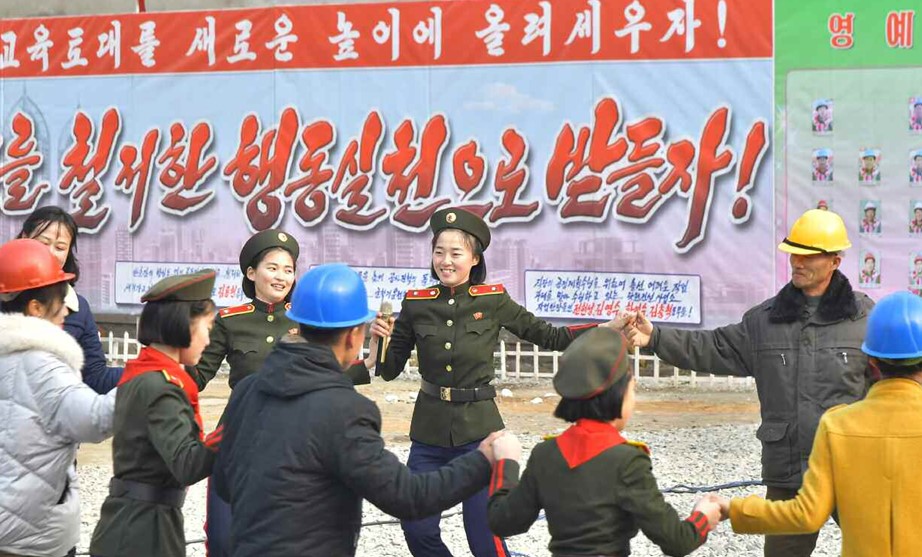
Why North Korean Soldiers Captured by Ukrainian Forces Should Be Sent to South KoreaKim Young-jaeNorth Korean Defector and University StudentThe world is closely watching the fate of North Korean soldiers captured in Ukraine, with reports indicating they seek asylum in South Korea. Soldiers Paek and Ri have publicly stated in interviews their desire to defect to South Korea.As a former North Korean soldier who defected, I stress that these captured soldiers should be sent to South Korea for humanitarian, legal, and security reasons. Their relocation ensures safety, aligns with international law, and supports regional stability.Article 3 of South Korea’s Constitution states, "The territory of the Republic of Korea consists of the Korean Peninsula and its adjacent islands," legally defining North Korea as part of South Korea. This grants all North Koreans, including soldiers, South Korean nationality, obligating the government to protect their rights.If sent back to North Korea, these soldiers would likely face severe punishment. The regime views defectors and captured troops as traitors, subjecting them to forced labor or even execution—serious human rights violations that the international community cannot ignore. South Korea is the safest and most viable option for their protection.International organizations, including the UN and human rights groups, have long condemned North Korea’s oppressive policies. Allowing these captured soldiers to seek refuge in South Korea would reinforce global human rights principles and set a precedent for handling similar cases in future conflicts.Additionally, these soldiers may possess valuable intelligence on North Korea’s military operations, training, and strategies. Granting them asylum in South Korea could provide crucial insights, strengthening national security.Ukraine and South Korea also share strategic interests, particularly given Russia’s invasion and North Korea’s military support for Russia. Facilitating the transfer of these soldiers would enhance diplomatic ties between Ukraine and South Korea, opening doors for broader cooperation.The case for bringing these captured soldiers to South Korea is clear—it is justified on humanitarian, legal, international, security, and diplomatic grounds. The South Korean government must actively negotiate with global partners to secure their safe transfer.Recent statements from Ukrainian authorities suggest openness to transferring North Korean POWs to South Korea, raising hope for a resolution and underscoring the need for continued diplomatic efforts.
25.03.07 -
 [NK Focus]
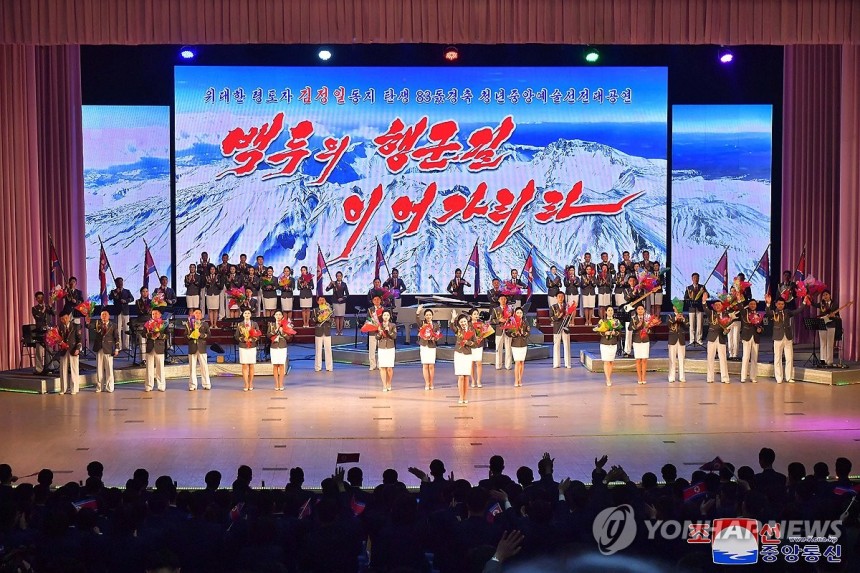
The March 1st Movement: Different Perspectives and Identities in the South and North Lee Seung-hyundrharacearthur@gmail.comLee Seung-hyunPh.D in Public Administration (Research Fellow at the SAND Institute)drharacearthur@gmail.comMarch 1st commemorates Korea’s 1919 independence movement against Japan, a pivotal event in its history. While both Koreas observe it, their interpretations differ.On March 1, 2025, South Korea marked the 107th anniversary of the independence uprising under Japanese rule. Civic groups held commemorative events, while political discussions drew comparisons to the December 3 martial law incident under the Yoon Suk-yeol administration.In contrast, North Korea did not issue any statements or official reports regarding the March 1st Movement. However, the absence of formal events does not imply that North Korea denies or considers the movement insignificant.North Korea, especially the Kim dynasty, ties its origins to the anti-Japanese resistance. However, the lack of official statements or events on the March 1st Movement reflects the contrasting historical identities of the two Koreas. Before examining the March 1st Movement’s identity in South and North Korea, it is essential to first understand their differing perceptions of it.In South Korea, the March 1st Movement is viewed as the start of the independence struggle and a peaceful protest against Japanese rule. It led to the Provisional Government’s establishment on April 11, 1919, laying the foundation for national legitimacy. Today, it is a national holiday with annual commemorations.In contrast, North Korea views the March 1st Movement as a worker- and peasant-led anti-Japanese struggle, framed through socialist class struggle. It is closely linked to the 1930s armed resistance in Manchuria, which it claims was led by Kim Il-sung.Thus, North Korea dismisses the Provisional Government as a "bourgeois movement" and instead emphasizes the communist-led anti-Japanese struggle, including the Korean Communist Party and Kim Il-sung’s partisan activities, using the March 1st Movement as a propaganda tool.South Korea views the March 1st Movement as a peaceful fight for independence that led to the founding of the Republic of Korea, while North Korea sees it as an anti-Japanese struggle by workers and peasants linked to armed resistance. This highlights the different historical perspectives shaped by their political systems.The differing views also reflect differences in their identities. In South Korea, it is celebrated as a symbol of democracy and independence, with a national holiday honoring the spirit of these values.The March 1st Movement led to the establishment of the Provisional Government of the Republic of Korea, which is seen as the legal foundation of the current government. It promoted non-violent resistance, national unity, and democracy. As a result, the South Korean government made it an official national holiday in 1949.Each year on March 1st, South Korea holds an official government ceremony, with the president giving a speech and honoring independence activists. In contrast, North Korea sees the March 1st Movement as the start of the anti-imperialist struggle for national liberation against Japan.Unlike South Korea, North Korea views the movement as a failed struggle and associates it with Kim Il-sung’s anti-Japanese resistance, emphasizes his partisan struggle as the true independence movement. Therefore, March 1st is not an official holiday, and events are limited.The March 1st Movement is used as propaganda to highlight the Kim family regimes. North Korea focuses more on the anti-Japanese partisan struggle and the founding of the Workers' Party of Korea, mentioning the March 1st Movement mainly to stir anti-Japanese sentiment within the South Korea-U.S.-Japan alliance. The table below summarizes the differing views between South and North Korea.In conclusion, South Korea officially commemorates the March 1st Movement as the peak of the independence movement, recognizing it as a peaceful struggle that laid the foundation for the Republic of Korea and its democratic principles.In contrast, North Korea views the March 1st Movement as part of the anti-imperialist struggle, linking it to Kim Il-sung’s armed resistance and portraying it as a worker- and farmer-led uprising against Japan.Thus, South and North Korea have developed differing historical perspectives based on their democratic and socialist systems, leading to contrasting interpretations of historical events shaped by political ideologies.
25.03.07 -
 [Analysis and Prospects]
The UN Report on North Korean Human Rights: Key Insights and Global ActionKim Tae-hoonAttorneyOn February 6, the Office of the United Nations High Commissioner for Human Rights (OHCHR) released Promoting Accountability in the Democratic People’s Republic of Korea, set for submission to the 58th UN Human Rights Council (UNHRC) session in Geneva on the 24th. As mandated by UNHRC resolutions (52/28, 55/21), OHCHR publishes a biennial report on North Korea’s human rights situation and accountability efforts. This edition covers November 2022 to October 2024, drawing on interviews with 175 defectors and 229 stakeholders.In August 2023, North Korea partially reopened its borders, but strict restrictions on movement and emigration persisted. As a result, the number of defectors dropped sharply from 1,047 in 2019 to just 196 in 2023 and 181 between January and September 2024. Before COVID-19, most defectors were women, but recently, more men have escaped after being sent abroad as laborers.The report examines human rights violations in North Korea through international legal standards, focusing on freedom of expression and the right to food. It also assesses efforts to enhance, institutionalize, and advance accountability while fostering consultative processes.OHCHR is expanding its central information repository to document human rights conditions in North Korea and strengthen evidence preservation. It contains interview materials, satellite imagery, internal government documents, court rulings, academic research, and testimony records.OHCHR examines the collected data to identify potential international crimes and works with UN and global investigative bodies to improve digital tools and evidence management. These efforts are vital for future criminal trials and truth and justice initiatives.OHCHR calls on member states to use universal jurisdiction to investigate and prosecute North Korean perpetrators of international crimes. While progress is slow, some countries have pursued civil and criminal cases. Though no criminal prosecutions have occurred, civil lawsuits by victims and civil society groups in domestic courts have seen some success.OHCHR welcomes the growth of non-judicial accountability efforts, such as truth-seeking, memorialization, and education. It stresses the need for North Korea to be held accountable and for victim-centered justice. To support victims, OHCHR recommends legal reforms, psychological and legal aid, amplifying their voices, and raising awareness.OHCHR has identified major human rights violations in North Korea, including arbitrary detention, torture, forced labor, inhumane treatment, enforced disappearances, abduction, forced labor abroad, and human trafficking. Arbitrary arrest and detention were the most frequently reported abuses by defectors. Many female defectors were trafficked, forcibly repatriated, and detained, making them the primary sources of detention facility abuse reports. Over half of the victims experienced forced labor, torture, inhumane conditions, and food shortages. The most frequently mentioned detention centers were operated by the Ministry of State Security and the Ministry of Social Security near the North Korea-China border.OHCHR has confirmed at least 295 cases of detained repatriated defectors. North Korean authorities treat those fleeing to South Korea as political prisoners, subjecting them to torture, imprisonment in labor camps, or execution. OHCHR warns that forced repatriation leads to severe human rights violations and urges the international community to uphold the principle of non-refoulement (prohibition of forced return).OHCHR voiced deep concerns over North Korea’s severe restrictions on information access and suppression of free expression. A frequently reported issue was the violation of the right to food. All interviewees who endured the 1990s famine described extreme hardship after the public distribution system collapsed.Victims consulted by OHCHR stressed the importance of criminal prosecution but also prioritized legal aid, psychological support, restoring honor, compensation, and preserving historical records. They also expressed concern over declining youth interest due to the politicization of North Korean human rights issues.OHCHR supports victim organizations by enhancing their capacity through international law education, interview training, and evidence collection methods, improving access to UN human rights mechanisms. In August 2023, it hosted an international conference on enforced disappearances and, in collaboration with Japanese victim families, submitted 290 cases to the UN.OHCHR urged North Korea and the international community to take the following actions: (1) Refer North Korea’s case to the International Criminal Court (ICC) via the UN Security Council (UNSC). (2) Make human rights a priority in Korean Peninsula peace efforts and uphold victims' rights to truth, justice, reparation, and non-recurrence. (3) Investigate and prosecute international crimes using universal jurisdiction. (4) Implement non-judicial measures like compensation, truth-seeking, and memorialization, along with victim registration and a reparations fund. (5) Support OHCHR’s ongoing defector interviews, evidence collection, and international information-sharing on North Korean human rights.On February 4, U.S. President Donald Trump announced via executive order his administration’s decision to withdraw from the UNHRC again, following the first withdrawal in June 2018. With the U.S. also exiting the World Health Organization (WHO), concerns have grown over its retreat from international leadership.Beyond domestic human rights abuses, North Korea has aided Russia since its February 2022 invasion of Ukraine by supplying ammunition and missiles used to attack civilian infrastructure, amounting to war crimes. More recently, it has reportedly deployed troops to the frontlines, endangering the lives of North Korean youth as "cannon fodder.“The U.S. and the international community must uphold OHCHR’s recommendations, actively intervening to hold North Korea accountable for its grave human rights violations and potential international crimes while protecting victims' rights.
25.02.21 -
 [Defectors' Podium]
South Korean Soldiers Earn 1.5 Million KRW ($1,100) Monthly, While North Koreans Work 10 Years UnpaidLee Eun-pyeongformer North Korean soldier dispatched to RussiaNorth Korea established the '124th Regiment' on January 24th last year, following a decision at the 19th plenary meeting of the 8th WPK Central Committee, as part of the 'Local Development 20×10 Policy.'According to North Korean media, the 124th Regiment, organized across various military units, consists of a total of 20 groups: 16 construction regiments and 4 equipment regiments.North Korea, which has previously used specialized construction units for economic projects, seems to have greatly expanded troop mobilization for local factory construction.Since Kim Jong-un came to power, the military has been mobilized for large-scale construction projects, including 50,000 homes in Pyongyang and 25,000 in Komdok, along with major infrastructure such as greenhouse farms, local factories, reclaimed land, and hydroelectric power plants.In North Korea's military, the slogan "Let us take charge of both defense and socialist construction" reflects the expectation that the army handle both national defense and economic development.The reason North Korea is deploying more troops for economic construction is simple: it can exploit unlimited unpaid labor.For seven years as a North Korean soldier, I was forced into unpaid construction labor in Pyongyang. While building Ryomyong Street, one of Kim Jong-un's prestige projects, I woke up at 4 a.m. and worked nearly 18-hour days to finish a floor each day.At dawn, I carried sandbags up to the 40th floor, and while transporting cement, my entire body was coated in sweat and dust.In the evening, trying to scrape off the hardened cement from my back would often tear my skin, causing it to bleed.I could barely sleep lying down. Exhausted and working without safety gear, many soldiers dozed off and fell from buildings over 30 stories high.In North Korea, soldiers are continuously mobilized for large-scale, long-hour labor in state construction projects, resulting in severe exploitation and threats to their safety. For 10 years, North Korean soldiers endure unpaid labor, receiving no fair compensation. Both commanders and enlisted soldiers face the same exploitation without pay.The North Korean military operates as a modern-day slave force, used as unpaid construction workers to prop up the economy.Especially since Kim Jong-un came to power, the military has taken on major economic development projects, intensifying the exploitation of labor.Soldiers receive no compensation or welfare and continue to endure food shortages and grueling training.While North Korean soldiers endure unpaid labor, corruption, and shortages, their South Korean counterparts benefit from improved conditions and regular pay raises.According to the Ministry of National Defense, South Korean soldiers' monthly salaries were 720,000 KRW (~$550) for privates, 800,000 KRW (~$610) for Private First Class, 1,000,000 KRW (~$760) for corporals, and 1,250,000 KRW (~$950) for sergeants. In 2025, these will increase to 860,000 KRW ($650), 960,000 KRW ($730), 1,200,000 KRW ($910), and 1,500,000 KRW ($1,140), respectively.Such conditions are unimaginable in North Korea. Its soldiers would be stunned by the stark contrast in South Korea.If North Korea’s military had the same conditions as South Korea’s, I would have gladly served for a lifetime. I hope North Korean soldiers will one day experience that same freedom and dignity.
25.02.21
News Letter
We are leading the global communication via Newsletter.
We will deliver the latest information and proven facts on Korean Peninsula status including North Korea situation.