

-
 [Issue Brief]
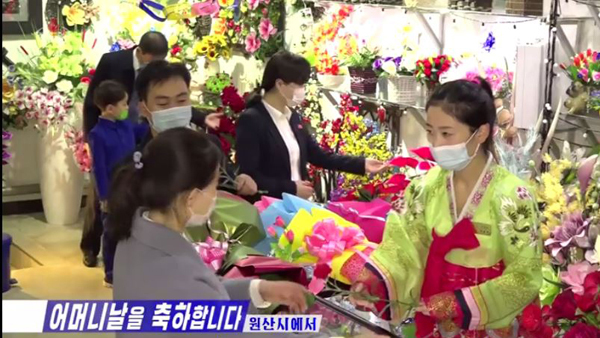
What North Korean Women Mean to North Korean LeadersNovember 16th is celebrated as 'Mother's Day' in North Korea. While South Korea observes 'Parents' Day' to honor both parents, North Korea specifically dedicates a day to mothers. This tradition was established in 2012 during Kim Jong-un's first year in power, and this year marks the 11th celebration of 'Mother's Day.' Interestingly, North Korea now has two holidays dedicated to women, with International Women's Day on March 8th being the other one.However, despite appearances, North Korea's treatment of women does not necessarily reflect genuine respect. Women in North Korea hold minimal political status and are often burdened with substantial responsibilities and sacrifices. They may be tasked with supporting their households or mobilized for labor on construction sites, especially during times of economic hardship. This discrepancy between the holiday's image and the reality has led North Korean women to refer to Mother's Day as the 'Day of Tears' and describe themselves as 'slaves' due to these challenges. On November 16, 2022, North Korean women were photographed purchasing flowers to celebrate Mother's Day. (Photo by Korean Central Television)What is the "real" reason North Korea portrays itself as caring for women by creating national holidays dedicated to them? Since the inception of Mother's Day in 2012, it has been used to promote Kim Jong-un's policies, ostensibly showcasing his respect for women. North Korean media publishes articles emphasizing the happiness of North Korean women on International Women's Day or Mother's Day. Through these narratives, North Korea aims to deflect external criticism regarding the actual state of women's rights within the country, often highlighting alleged violations of women's rights in capitalist countries to promote anti-capitalist propaganda.North Korea's efforts to showcase respect for women serve multiple purposes. One objective is to bring women engaged in livelihood activities in Jangmadang (markets) under government control and encourage them to contribute to public life. Another motivation is to address the declining birthrate issue. According to the U.S. Central Intelligence Agency (CIA), North Korea is facing challenges related to low birthrates and an aging population, and the situation is deteriorating. Data from the 'World Factbook' in March revealed that North Korea's total fertility rate, which indicates the number of births per woman over her lifetime, dropped from 1.9 births in 2022 to 1.89 births, ranking 126th in the world. The crude birth rate, representing the number of births per 1,000 women, also decreased by 0.15 births compared to the previous year, reaching 14.06 births and positioning North Korea among the countries with the lowest birth rates, ranking 120th globally.On November 8, 2023, the North Korean newspaper Rodong Sinmun featured a report on women construction workers who were mobilized for apartment construction in Pyongyang City. These women, numbering in the hundreds, have been organized into 20 work teams and are actively participating in construction activities. (Photo by Rodong Sinmun)North Korea has given the designation of "Mother Heroine" to women with multiple children, actively promoting childbirth. However, North Korean media seldom addresses the role of men in relation to childbirth and child-rearing, indicating a lack of awareness about gender equality.While North Korea's Socialist Constitution of the Democratic People's Republic of Korea (Article 77) emphasizes that "women have equal rights and status as men," discrimination against women exists in all aspects of North Korean politics, society, education, and even within households. According to the Ministry of Unification's "2023 White Paper on Human Rights in North Korea," North Korean women have lower university enrollment rates compared to men, and there is a prevailing social atmosphere where men are prioritized in terms of party membership, promotions, and job placements.In photos from North Korea's 8th Congress of the Workers' Party of Korea and the Supreme People's Assembly held in January 2021, women are scarcely visible. In photos from the 1st City and County Party Secretaries' Training Session held in March of the same year, women are entirely absent.Violence against women is also a serious issue in North Korea. One North Korean defector stated, "My husband used to beat me when he drank, and I reported it once, but they said there were no regulations for such cases and told us to resolve it within the family. In North Korea, many men use violence against women, with approximately 70-80% of households experiencing such violence."Sexual violence is a disturbingly common issue in North Korea, occurring in schools, the military, storm trooper units, and detention facilities. Within the military, reports of sexual assault cases involving senior officers or fellow soldiers are distressingly frequent. One account highlights the prevalence of sexual assault by male superiors on female soldiers, emphasizing that female soldiers often feel compelled to comply with the sexual demands of their superiors due to fear of facing difficulties or suffering disadvantages if they refuse.Additionally, North Korean women are frequently mobilized for manual labor. On November 8, the Rodong Sinmun published a special article titled "Women Construction Workers Contributing Significantly to the Prosperity of the New Pyongyang Era." According to the Rodong Sinmun, hundreds of women are actively engaged in 20 work teams dedicated to the construction of 10,000 households' living quarters in Pyongyang. These female construction workers come from diverse backgrounds, including bank and welfare workers, plasterers, party members, members of the Socialist Patriotic Youth League, and members of workers' unions. They range from young women to middle-aged women. Housewives who moved into the newly built apartments during Kim Jong-un's reign are also among those mobilized for this labor force.The Rodong Sinmun claims that these women volunteer to work on construction sites to express their gratitude to their leader Kim Jong-un and the WPK. They reportedly organize female construction teams to coincide with July 30, which is the foundation date of the "Day of the Announcement of the Law on Gender Equality." However, defectors have contradicted North Korean media claims, stating that women were forcibly mobilized by the authorities to address labor shortages.They mentioned that women were actively involved in labor-intensive construction tasks alongside men at the apartment construction site. This included duties such as concrete mixing, carrying various construction materials, and other physically demanding construction work. Lee Si-won, a defector who escaped from Pyongyang in 2020, provided insight, stating, "Women who were mobilized for construction work in Pyongyang were tasked with activities like mixing cement, gravel, and sand for concrete mortar, as well as transporting various construction materials. After completing their work, they would return home in the evening to prepare meals and handle laundry for their husbands and children."While North Korea emphasizes gender equality and some argue that women's influence has increased due to the activation of Jangmadang and vibrant economic activities, deep-seated structural factors hindering women's human rights persist. These include a long-standing male-centric power structure and a strict bureaucratic system. Moreover, despite referring to women as needing to be cared for and beautiful like flowers, North Korea regulates every aspect of women's lives, from their appearance and clothing to their makeup. This underscores the dire state of women's rights in North Korea. .bbs-view-content {font-size: 14pt; text-align: justify;} .bbs-view-content table {width: 100%; border: 1px solid #333333; border-collapse: collapse;} .bbs-view-content table td {border: 1px solid #333333; padding: 5px;text-align: center; font-size: 12pt;} .bbs-view-content .note {border: 1px solid #333333; padding: 15px; text-align: left; font-size: 12pt;} @media (max-width: 800px) {.bbs-view-content {text-align: left;}}
23.11.17 -
 [Issue Brief]
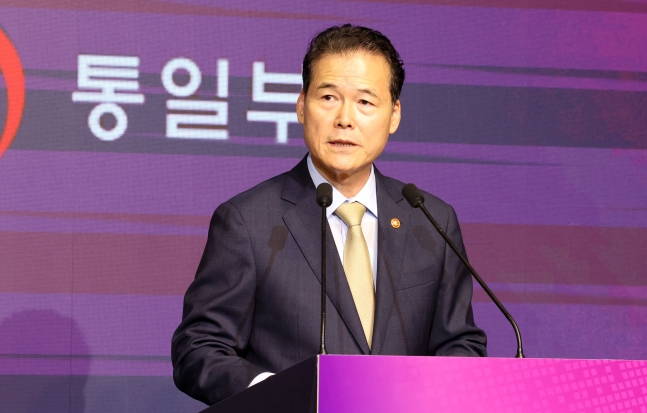
The Republic of Korea's Unification Minister Predicts Inevitable Regime Change in North Korea Due to K-Culture In North Korea, South Korea's K-Culture has permeated the dominant culture, prompting Minister Kim Young-ho to repeatedly emphasize that the North Korean regime can no longer avoid change due to K-Culture. Kim Young-ho, Minister of Unification, participating in the inaugural Separated Families' Day ceremony at The Plaza Hotel in Jung-gu, Seoul, on September 27, 2023. / News1 Speaking at a seminar held on August 24 at the Seoul Press Center, Minister Kim stated, "The influx of K-Culture into North Korea has offered a glimmer of hope to its residents, establishing itself as an alternative culture that replaces the repressive regime's dominant culture." Minister Kim also quoted a passage from a book written by a North Korean defector writer, highlighting that "the portrayal of South Korean society's development and the glamorous lives of South Koreans through K-dramas not only exposes the hypocrisy of North Korean authorities but also serves as a beacon of hope for the North Korean people." Continuing, Minister Kim remarked, "The North Korean authorities are well aware of this influence, which is why they have banned the viewing of South Korean content, tightened ideological control through the 'Reactionary Ideology and Culture Rejection Law,' and imposed severe penalties on violators. However, they cannot indefinitely ignore the yearnings of the North Korean people for freedom and human rights, as these desires align with universal human values." Minister Kim publicly called for the North Korean regime to repeal the 'Reactionary Ideology and Culture Rejection Law.' During a lecture at the 'Future Korea Forum' on September 25, Minister Kim highlighted that "even in oppressive circumstances, North Korean people clandestinely continue to watch South Korean content, finding hope in it. It is indeed true that the majority of North Korean youth secretly watch South Korean content." According to Minister Kim, the observed phenomenon within North Korea represents the emergence of a new culture that replaces the dominant Juche ideology in North Korea. He pointed out, "Despite the North Korean regime's considerable efforts to enforce the 'Reactionary Ideology and Culture Rejection Law,' it is expected to face significant challenges in succeeding." Furthermore, Minister Kim emphasized, "To substantially improve human rights in North Korea, it is crucial for both South Korea's and the international community's efforts to facilitate the flow and dissemination of external world information and culture within North Korean society, allowing its people to gain awareness of their own situation." Minister Kim criticized North Korea for its refusal to abandon its nuclear weapons program and its persistence in following the wrong path since the failure of the 2019 DPRK-USA Hanoi Summit, which resulted in a record number of ballistic missile launches in 2022. Minister Kim also noted that Kim Jong-un has characterized inter-Korean relations as adversarial and openly threatened to "preemptively attack South Korea" if the Nuclear Deterrence Act is enacted. Despite a dire food situation in North Korea leading to deaths from starvation, the Kim Jong-un regime continues to allocate significant resources to nuclear and missile development. Regarding North Korea's delayed third attempt to launch a reconnaissance satellite, Minister Kim suggested it may be connected to technical support from Russia. On his 100th day in office, Minister Kim disclosed, "Evidence suggests North Korea is receiving technical support from Russia for a reconnaissance satellite." He also highlighted that Russia's provision of satellite technology support contravenes United Nations Security Council resolutions. Minister Kim stated, "North Korea-Russia military cooperation and technology transfer not only pose a threat to South Korea but also jeopardize international peace and stability. Therefore, South Korea will collaborate closely with the United States to mount a robust response." Recently, North Korea designated November 18, the date of its intercontinental ballistic missile (ICBM) test launch the previous year, as Missile Launched Day. During this event, Kim Ju-ae, the daughter of Kim Jong-un, made her first public appearance on the grandstand. Minister Kim assessed that North Korea intends to imbue such events with significance. Minister Kim further elaborated, "Kim Ju-ae has appeared on the grandstand 16 times, indicating a persistent effort to showcase her potential as a successor." Additionally, Minister Kim took note of the gestures shown to Kim Ju-ae during the military parade on September 9, the anniversary of North Korea's regime establishment. He remarked, "It closely resembled the occasion when O Jin-u kneeled before Kim Jong-il during his time. This time, Pak Jong-chon was observed kneeling before Kim Ju-ae. Hence, we must consider the possibility that Kim Ju-ae may become a successor." .bbs-view-content {font-size: 14pt; text-align: justify;} .bbs-view-content table {width: 100%; border: 1px solid #333333; border-collapse: collapse;} .bbs-view-content table td {border: 1px solid #333333; padding: 5px;text-align: center; font-size: 12pt;} .bbs-view-content .note {border: 1px solid #333333; padding: 15px; text-align: left; font-size: 12pt;} @media (max-width: 800px) {.bbs-view-content {text-align: left;}}
23.11.17 -
 [NK Focus]
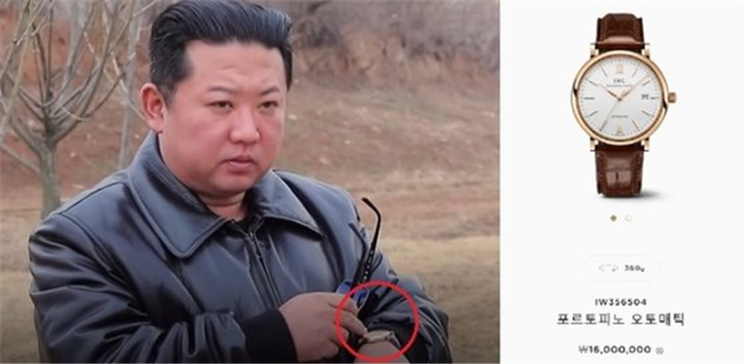
Kim Family Spends Billions on Luxury Imports Amidst North Korean Starvation Crisis Kim Jong-un and his family blatantly flaunt their luxurious lifestyle, with their annual spend on luxury imports estimated by the South Korean government to be in the billions of won. All the while, North Korean residents are facing a dire food crisis, with some even succumbing to starvation. Kim Jong-un donned a 16-million-won Swiss luxury watch while overseeing the ICBM test launch in March 2022 / Newsis At an October 19 press briefing on recent economic and social trends in North Korea, a Ministry of Unification official underscored the stark disparity in living conditions. He emphasized that since Kim’s regime began, his family has been openly flaunting their wealth, wearing pricey garments and accessories without any regard for public sentiment. Even during a September 13 summit at Russia’s Vostochny Cosmodrome, Kim was seen wearing a high-end Swiss watch and using a prestigious German fountain pen, all of which was reported by North Korean media. The official went on to elaborate that the procurement of these luxury items is meticulously managed by North Korea's highest-ranking officials. They leverage diplomatic networks, employing embassy and trade representatives across several countries, including China, Russia, and various European nations. Most of these luxury items are smuggled into the country, mainly via cargo ships, with the annual value of goods meant for Kim family alone estimated to be in the hundreds of millions to billions of won range. Educated in Bern, Switzerland, Kim Jong-un has acquired a fondness for luxury watches. He showcased a 16 million won 'Portofino Automatic' from International Watch Company (IWC) at a Hwasong-17 ICBM launch in March of the previous year. In 2015, he was also spotted wearing a Patek Philippe watch worth around 200 million won during a Workers' Party of Korea anniversary event. Korean Central Television aired footage on March 16, 2022, showcasing the Hwasong-17 ICBM launch at Pyongyang International Airport, with Kim Jong-un in attendance. Noticeably, his daughter, Kim Ju-ae, is spotted in the background, clad in a coat believed to be from a high-end fashion label. /Korean Central Television Kim Yo-jong, accompanying Kim on his trip to Russia, was spotted with a handbag from the French luxury brand, Christian Dior. The 'Lady Dior Large Bag' she carried is priced at approximately 10 million won. Considering the average annual income of North Korean residents has plummeted to about 1.42 million won in 2021, primarily due to the impacts of COVID-19, Kim Yo-jong is essentially flaunting a handbag that costs as much as seven years' worth of income for an average North Korean citizen. From left to right: Kim Yo-jong, Choe Son-hui, and Hyon Song-wol, each elegantly holding a handbag /NK News, Korean Central News Agency Foreign Minister Choe Son-hui was seen sporting a high-end handbag during her visit to the Yuri Gagarin Aviation Plant in Khabarovsk, Russia. She carried a Gucci handbag crafted from ostrich leather, a product that is no longer in production. Currently, this rare item is fetching around $10,000, equivalent to approximately 13.3 million won, on various secondary market platforms. Kim Jong-un's penchant for luxury seems hereditary, with his daughter Kim Ju-ae spotted in a 2.5 million won Christian Dior coat during a March ICBM launch. This caught the media’s attention globally. However, in a noticeable shift, she donned a modest 20,910 won blouse from a Chinese mall during an April visit to the DPRK’s National Aerospace Technology General Bureau. Considering the United Nations Security Council's sanctions resolution 1718 from 2006, which bans the export of luxury goods to North Korea and has seen consistent updates to its list of prohibited items over the past 17 years, the Kim family's display of luxury items may directly contravene these sanctions. .bbs-view-content {font-size: 14pt; text-align: justify;} .bbs-view-content table {width: 100%; border: 1px solid #333333; border-collapse: collapse;} .bbs-view-content table td {border: 1px solid #333333; padding: 5px;text-align: center; font-size: 12pt;} .bbs-view-content .note {border: 1px solid #333333; padding: 15px; text-align: left; font-size: 12pt;} @media (max-width: 800px) {.bbs-view-content {text-align: left;}}
23.11.03 -
 [Issue Brief]
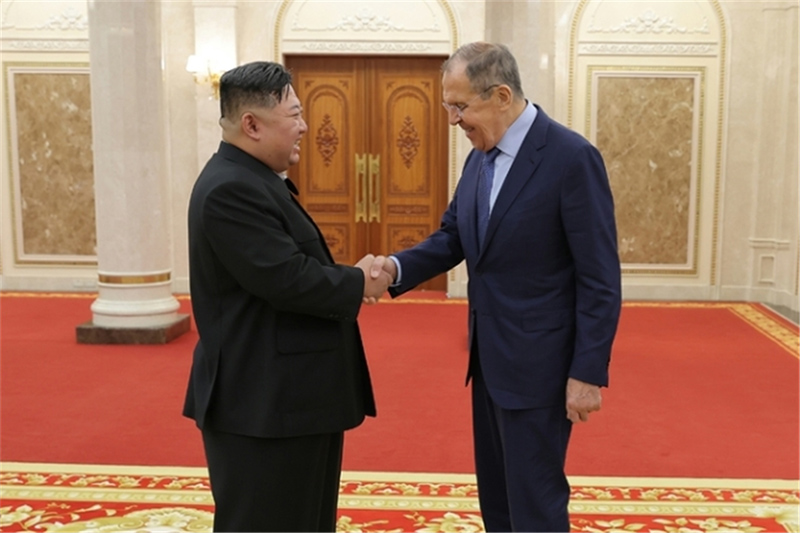
A Closer Look at Kim Jong-un's Limited Public Appearances in October: Is a Satellite Launch on the Horizon? October has seen a noticeable decline in Kim Jong-un's public appearances. His sole known engagement was with Russian Foreign Minister Sergey Lavrov during a visit to Pyongyang City on the 19th. For the rest of the month, Kim has kept a low profile, even missing the 78th anniversary celebrations of the Party Foundation Day on the 10th. Kim Jong-un engaged in discussions with Russian Foreign Minister Sergey Lavrov, captured in a photo dated October 20, 2023. / Rodong Sinmun The scarcity of public appearances has led to widespread conjecture about Kim's current focus and potential future plans. Analysts are pondering whether he is channeling his efforts towards the imminent launch of a reconnaissance satellite, frequently overseeing the developments with the help of Russian satellite technicians. Despite this, the anticipated third launch of a reconnaissance satellite, slated for October as per North Korea's public declarations, has yet to materialize, sparking a variety of theories about the reasons for this postponement. An examination of the state media outputs from North Korea in October highlights that Kim's meeting with Sergey Lavrov was his only public engagement, as documented by Rodong Sinmun on the 20th. The same media outlet reported on a series of non-public activities undertaken by Kim, including dispatching a reply message to the General Secretary of the Lao People's Revolutionary Party on the 21st, sending a message to Russian President Vladimir Putin on the 12th in celebration of 75 years of diplomatic ties between North Korea and Russia, laying a wreath in honor of the late Workers’ Party of Korea Secretary Kim Yong-il on the 2nd, and extending greetings to Chinese President Xi Jinping on the 74th anniversary of China’s founding on the 1st. Compared to his active public presence in the months of July, August, and September, Kim’s level of engagement in October can almost be described as reclusive. Kim Jong-un has a history of disappearing from the public eye for extended periods. After his visit to the Kumsusan Palace of the Sun to kick off the new year, he went unseen for 36 days. He finally made a public appearance at the military parade marking North Korean Army Foundation Day on February 8th. From March onward, he resumed his usual provocations, which included launching short-range missiles at South Korean military installations and conducting artillery firing exercises. A photo captures North Korea's reconnaissance satellite launch attempt on May 31st, a mission that ultimately concluded in failure. / Korean Central News Agency (KCNA) A subsequent period of inactivity followed his visit to the National Space Development Agency on April 18th, lasting about a month. During May, while Kim was absent from public view, North Korea proceeded to test-fire a Hwasong-17 type Intercontinental Ballistic Missile (ICBM) aimed at the United States and conduct short-range missile launch drills aimed at South Korea. Some speculate that his absence in October could be attributed to his involvement in preparations for a satellite launch. Despite North Korea’s explicit intentions to execute a third reconnaissance satellite launch within the month, the event did not transpire. On the final day of October, October 31st, there were no observable indicators at the Sohae Satellite Launching Station in Cholsan County, North Phyong-an Province, suggesting an imminent launch. Usually, in the lead-up to a satellite launch, North Korea demonstrates distinct preparatory activities. These activities include a noticeable increase in staff presence at the launch site, the commencement of fueling procedures, and the dissemination of alerts to international organizations such as the International Maritime Organization (IMO). Considering that launch preparations, particularly the liquid fueling phase, typically span about a week, the likelihood of the third launch attempt occurring within the month of October appeared to be slim. North Korea revealed its October satellite launch plans through the Korean Central News Agency (KCNA), unavailable to its citizens, showing little regard for public opinion in scheduling such events. Cho Han-bum, a Senior Research Fellow at the Korea Institute for National Unification, noted, "Considering August’s failed launch, North Korea likely faced significant challenges fixing the technical issues in time for an October launch. Kim Jong-un’s lack of public appearances during the month suggests the satellite launch may have been postponed." Some analysts speculate that the delay in North Korea's third launch could be tied to its military-technical cooperation with Russia. Technical assistance for the satellite has been highlighted as a key area of cooperation. According to an intelligence source, Russian technicians are believed to have been sent to North Korea to aid in the satellite launch. Cho added, "Given Putin’s pledge to support the satellite launch, North Korea seems to be taking this opportunity to upgrade their basic satellite’s capabilities and get ready for a subsequent launch." He also mentioned that authorities from South Korea and the U.S. had previously deemed the 'Manrikyong-1' satellite — which fell into the West Sea during its initial launch in May — to be rudimentary and devoid of any military utility. Faced with the urgent need for a successful satellite launch, North Korea may have chosen to seek satellite launch assistance from Russia, rather than food aid. Speculation around the time of the North Korea-Russia summit in September suggested that North Korea might trade conventional weapons for food aid and strategic weapon-related technical support from Russia. Nevertheless, Russia's offer of food aid was declined by North Korea. Russian Ambassador to North Korea, Aleksandr Matsegora, confirmed this on the 17th to TASS, mentioning that North Korea had a satisfactory harvest this year. However, this claim of a successful harvest is contradicted by North Korea's substantial food imports from China throughout the first three quarters of this year. Reporting on the 28th, Voice of America, citing data from China's General Administration of Customs, revealed that North Korea had imported food worth $71.08 million (152,216 tons) from China between January and September. This amount is 13 times the total imported during the same period last year, which was $5.66 million. The surge in rice imports, despite official North Korean media boasting a bountiful harvest, points to persistent food shortages in the country. Even with the food scarcity in North Korea, the rejection of Russian food aid suggests a more pressing need for technical support for the satellite. Kim Jong-un's desperation is apparent in the hastened announcement of the third launch in October, just two months after the failed attempt in August. Typically, it would take about six months to plan a relaunch after a failed satellite launch. Nevertheless, North Korea is pressing forward, motivated by political considerations. However, the lack of a satellite launch in October suggests that North Korea might be taking extra time to fix the problems encountered during the second launch. Shortly after that failure, they cited an 'emergency explosion system error during the third stage of flight' as the issue, downplaying it as a minor glitch. Nevertheless, there is speculation that the problems could be more complex than they have let on. Solving the reliability issues of the engine is already a significant challenge, and there’s speculation that the team might have promised an October launch as a way to avoid responsibility. Producing a new satellite body might also be contributing to the delay. Given that the previous two satellites were likely lost in the failed launches, a new satellite body would need to be created for the third launch, and it’s possible that this has not yet been completed. Cho commented, "Even though the launch did not happen in October, North Korea is highly likely to attempt a satellite launch with improved technical capabilities within this year, possibly during the winter months, similar to their actions in 2012." .bbs-view-content {font-size: 14pt; text-align: justify;} .bbs-view-content table {width: 100%; border: 1px solid #333333; border-collapse: collapse;} .bbs-view-content table td {border: 1px solid #333333; padding: 5px;text-align: center; font-size: 12pt;} .bbs-view-content .note {border: 1px solid #333333; padding: 15px; text-align: left; font-size: 12pt;} @media (max-width: 800px) {.bbs-view-content {text-align: left;}}
23.11.03 -
 [Kim Myung-sung’s Inside North Korea]
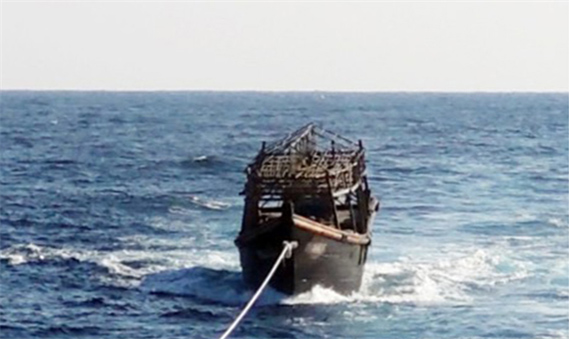
Kim Myungsung SAND's Secretary General Editor for the SAND Newsletter ⦁ Daring Journey to Freedom: Four North Koreans Execute ‘Long-Term Plan Escaping’ on a Wooden Boat ⦁ North Korea Masks Food Crisis with Grand Harvest Claims ⦁ North Korea Retracts Global Footprint: Embassies Close in Uganda, Spain, and Hong Kong Amidst Currency Woes Daring Journey to Freedom: Four North Koreans Execute ‘Long-Term Plan Escaping’ on a Wooden Boat In the early morning of October 24th, four North Korean residents navigated a small wooden boat across the Northern Limit Line, setting course for a new life in South Korea. During their debriefing, they spoke of their admiration for South Korean society—a view shaped by various sources depicting its better living conditions. Their defection, they revealed, was the culmination of a carefully thought-out, long-term plan. Transferring a wooden boat back to North Korea, used by its residents in 2019 / Ministry of Unification Back in May, two families embarked on a daring journey, navigating a fishing boat across the NLL to find sanctuary in South Korea. They had covertly accessed South Korean TV broadcasts and received flash drives filled with information from defector organizations inside North Korea, spreading awareness through balloon propaganda. Facing severe food shortages and oppressive rule in North Korea, they meticulously planned their escape, addressing every detail with care. Taking advantage of reduced North Korean surveillance, four family members made their escape on a modest wooden boat. Now secure in South Korea, the group—comprising three women, one in her 60s, and a man—are all in stable health. This recent maritime defection, echoing incidents from May, indicates a possible surge despite the ongoing closure of the North Korean-Chinese border. Third-quarter data from this year shows that 40 North Korean defectors have arrived in South Korea, totaling 139 individuals up to September— a notable increase from the 42 documented in the same timeframe last year. Prior to the COVID-19 pandemic, yearly defections regularly exceeded 1,000. Officials from the Ministry of Unification explained the recent increase in defections, attributing it to "the partial reopening of borders and eased travel restrictions within China. However, accurately projecting future numbers is complicated due to numerous factors, and it’s uncertain if defections will ever reach pre-COVID-19 figures again." North Korea Masks Food Crisis with Grand Harvest Claims On October 25th, Rodong Sinmun, North Korea's main state newspaper, boasted of a supposed record harvest in South Hwanghae Province, describing an unprecedented bounty with claims of paddies yielding over double their usual output. Some suspect that this narrative is a strategic move to enhance Kim Jong-un's image as he tackles the nation's food shortage crisis. It highlights the successful distribution of rice from the fertile fields of South Hwanghae Province. / Rodong Sinmun On the ground, there has been a notable drop in grain prices within North Korea. AsiaPress International, a Japanese media outlet specializing in North Korean affairs, reported that the price of corn hit its lowest for the year at 2,550 North Korean won per kilogram as of October 20th. Even rice, which had surged to 6,800 won per kilogram in September, saw a decrease to 5,700 won. This year’s harvest has seen a turn for the better compared to the last, where poor weather conditions severely affected crop yields. However, despite these improvements and the current favorable weather conditions, experts are unanimous in their opinion that it falls short of resolving the longstanding issue of food shortages. Kwon Tae-jin, Director of the GS&J Institute and an agricultural expert, shared his insights, stating, "This year’s favorable weather and external factors such as grain imports have indeed played a part in boosting North Korea’s grain harvest compared to previous years. However, these partial improvements are far from sufficient in addressing the chronic food shortages." The root of the issue lies in the limitations of the socialist collective farming system employed in North Korea, and experts agree that without a substantial overhaul through reform and opening up, solving the food crisis remains a distant dream. In a report titled "Conflict between Distribution and Markets," published on October 12th, researcher Lim Su-ho from the Institute for National Security Strategy (INSS) highlighted a stark reality: From 2020 to 2022, North Korea’s per capita grain supply nosedived to 182 kilograms, even lower than the 201 kilograms average during the Arduous March period from 1994 to 1999. Lim Su-ho attributes this severe supply crisis to the government’s shift from a "distribution-market parallel system" to a "grain monopoly system" under the "grain preemption system," which centralizes grain distribution control in the hands of the state. He suggests that the food situation in North Korea is likely far worse than official reports indicate, with low-income groups bearing the brunt of the impact. Alarmingly, if North Korea persists in sidelining marketplaces (“Jangmadang”) and maintains its direct control over grain production and distribution under the “new grain policy” (which mandates that grains produced in each region’s farms be sold according to a planned schedule, leaving no surplus), there is a looming threat of another food shortage crisis as early as next spring. North Korea Retracts Global Footprint: Embassies Close in Uganda, Spain, and Hong Kong Amidst Currency Woes North Korea has been confirmed to be withdrawing its diplomatic mission in Spain, following a series of embassy closures across Africa. It is reported that around ten foreign missions are being shut down, including the consulate in Hong Kong, China, due to the increased international sanctions on North Korea making it financially challenging to maintain these diplomatic posts. In addition, after more than 50 years, North Korea has withdrawn its embassy from Uganda, a key diplomatic hub in East Africa. On October 25th, Ugandan media outlets including The Independent reported that the North Korean Ambassador to Uganda, Jeong Dong-hak, explained during a visit to Ugandan President Yoweri Kaguta Tibuhaburwa Museveni, "To enhance the efficiency of our foreign institutions, North Korea is adopting a strategy of reducing the number of embassies in Africa, and Uganda is included in this plan." The main gateway to the North Korean Embassy in Spain / Yonhap News Agency Amidst these developments, North Korea has also withdrawn its embassy in Spain. According to a diplomatic document titled "Draft" published on November 1st by the Communist Party of the People of Spain (Partido Comunista de los Pueblos de España (PCPE)), the acting charge d'affaires of the North Korean embassy in Spain, Seo Yun-seok, announced the withdrawal of the North Korean diplomatic mission on October 26th, and stated that the Italian embassy in Spain would handle related matters in the future. Recently, North Korea has shown a trend of downsizing its foreign embassies. News of the closure of diplomatic missions in Uganda and Angola in Africa around October 25th was reported through North Korean media, and there were reports in foreign media that the North Korean Consulate General in Hong Kong had informed China of its plan to close. Ryu Hyeon-woo, a former North Korean deputy ambassador to Kuwait who defected in 2019, stated that the closure of North Korean overseas missions had been decided before the spread of COVID-19. He added, "Due to the exacerbation of North Korea's overall financial situation, which was influenced by the effects of sanctions following the 2019 missile launch, North Korea reached a point where it could not guarantee foreign currency." He believed that the process of closing North Korean embassies had been temporarily halted due to the spread of COVID-19, but it had resumed recently following measures to ease the pandemic and reopen borders. The United Nations Security Council imposed successive sanctions against North Korea in 2016 after North Korea's fourth and fifth nuclear tests, and these sanctions have been strengthened. African countries, including Angola and Uganda, also participated in these sanctions and expelled North Korean construction workers, laborers, and military advisors in 2017. Ryu said, "There may be further closures of embassies," and he considered Senegal, Guinea, Nepal, Libya, and Algeria to be likely candidates. Until the closure of embassies in the African region, North Korea operated embassies (47 embassies, 3 consulates general, 3 representative offices) in 53 countries worldwide. Thae Yong-ho, a former North Korean diplomat who defected and is now a member of South Korea's People Power Party, stated in a Facebook post on October 31st regarding North Korea's recent series of embassy closures, "North Korea's simultaneous withdrawal of numerous overseas embassies is the first time in over 20 years since the 'Arduous March' crisis of the late 1990s." .bbs-view-content {font-size: 14pt; text-align: justify;} .bbs-view-content table {width: 100%; border: 1px solid #333333; border-collapse: collapse;} .bbs-view-content table td {border: 1px solid #333333; padding: 5px;text-align: center; font-size: 12pt;} .bbs-view-content .note {border: 1px solid #333333; padding: 15px; text-align: left; font-size: 12pt;} @media (max-width: 800px) {.bbs-view-content {text-align: left;}}
23.11.03 -
 [Issue Brief]
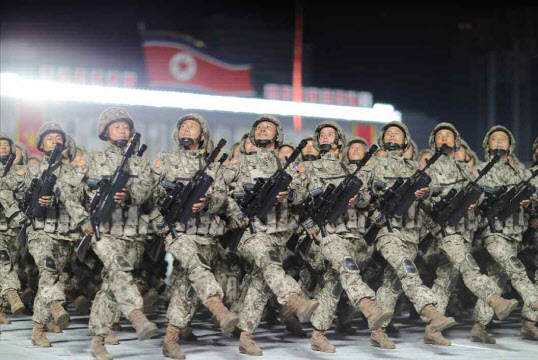
Revealing the Challenging Realities of North Korean Military Life Behind the Grand ParadesNorth Korea has flexed its military might with three grand military parades this year. However, beneath the spectacle lies a stark reality: North Korean soldiers struggle to secure three full meals a day due to severe food shortages. Amidst ongoing economic hardships, disturbing reports of corruption within the North Korean military, involving bribery and embezzlement of food supplies, have surfaced. Additionally, incidents of physical assaults and accidents within military units persist, as does the longstanding issue of sexual violence against female soldiers. The younger generation of soldiers, often referred to as the "Jangmadang generation," is reportedly showing significantly diminished loyalty. Recently, South Korea's Ministry of National Defense voiced concerns that North Korea might resort to various strategic and tactical provocations, including a seventh nuclear test, in response to internal dissatisfaction stemming from food shortages and failed economic policies.Soldiers mark Korean People's Army Foundation Day with a grand military parade on February 8, 2023. / Rodong SinmunIn 2013, North Korea initiated the 'Byungjin policy (parallel development),' which aimed to simultaneously develop nuclear weapons and the economy. Part of the policy involved a promise that, once nuclear capabilities were achieved, some funds would be redirected to improve soldiers' rations and enhance civilian living standards. However, by November 2017, when North Korea declared the completion of its nuclear capabilities, heavy international sanctions had eroded the regime's ability to fulfill this promise. Instead of bolstering civilian welfare, military rations had to be managed on a unit-by-unit basis through 'Self-reliance.' Despite North Korea's status as one of the world's poorest nations, with 24% of its GDP allocated to the military, most of these resources were channeled into nuclear and missile development, leaving soldiers with inadequate rations.Consequently, North Korean soldiers typically consume meals primarily composed of corn rice, with rice mixed with corn reserved for special occasions. According to North Korean defectors who served in the military, the official ration per soldier should be 200g per meal. In practice, this often falls significantly short due to embezzlement by commanding officers.In 2011, North Korean soldiers, malnourished due to chronic starvation, await a train. / ASIAPRESS INTERNATIONALAccording to the 2018 report 'Prisoners in Military Uniform' by the Database Center for North Korean Human Rights (NKDB), North Korean soldiers experience insufficient rations due to corruption and embezzlement by senior officers during food distribution.Mr. No Cheol-min, who defected from North Korea via the Korean Demilitarized Zone (DMZ) in 2017, disclosed that a North Korean military officer's monthly salary could purchase only 1 kilogram of rice in the Jangmadang (North Korea's local market). In contrast, a soldier's monthly salary equated to the price of a pack of cigarettes. Mr. Lim Kang-jin, another North Korean defector and a former battalion commander with 27 years of service, received a meager retirement payment of approximately 10,000 North Korean won (about $1.20 USD). During his military tenure, his monthly salary was just 3,500 North Korean won (approximately $0.35 USD).In stark contrast, the salary for South Korean military personnel this year, based on a corporal rank, stands at 1,000,000 won (approximately $737 USD) per month. It is slated to increase to 1,250,000 won (about $922 USD) in 2024 and 1,500,000 won (around $1,100 USD) in 2025, making it more than 736 times higher than the salary of a high-ranking North Korean military officer.Mr. No Cheol-min also shared his experience of standing guard for 13 hours a day during winters with temperatures plummeting to -40°C in the DMZ. He endured these harsh conditions while wearing clothing with minimal insulation. Considering that DMZ units are comparatively better supplied than other North Korean military units, the conditions elsewhere are likely even more challenging.In this harsh environment, many North Korean soldiers are diverted from military training to engage in various side jobs, including farming, goat raising, and fishing, simply to survive. To combat hunger and malnutrition, soldiers sometimes resort to theft in civilian areas, raiding food storage on farms and pilfering dogs, pigs, chickens, and even cabbage and radishes meant for kimchi preparation.A North Korean soldier guiding a goat along the North Korea-China border in the mid-2000s. / Free North Korea RadioOne of the major issues in the North Korean military is the widespread culture of "bribes." Much like Newton's Third Law of Physics states that 'for every action, there is an equal and opposite reaction,' in the realm of human behavior in North Korea, they say that when you offer someone money or a bribe, their actions tend to reflect the incentive given. Soldiers often have to offer bribes to superiors and administrators to obtain permissions such as "joining the army," "going out," "visits," and even "early discharge." The long, grueling 10-year military service period, which takes a toll on the physical and mental health of North Korean youth, has also been a subject of criticism. Persistent problems, such as sexual violence against female soldiers, continue unabated.North Korean soldiers, armed with shovels and tools, mobilize for embankment construction. / NewsisEspecially during Kim Jong-un's leadership, another grave issue has emerged—the increased deployment of military personnel across various sectors of society. This has resulted in labor exploitation, posing safety threats due to inadequate safety equipment and sleep durations of less than 2 hours. Despite Kim Jong-un's initial policies aimed at eradicating corruption and ending physical abuse and cruelty within the military, the impact of these measures has proven to be short-lived.The challenging living conditions and poor treatment of soldiers have become widely known in North Korean society, leading to a negative perception of "military enlistment" among North Korean youth. The dwindling number of male enlistment applicants indicates a diminishing status for "military enlistment" as a pathway for social advancement. Observations suggest that the introduction of "mandatory female military service" in April 2015 in North Korea was a response to the decline in male enlistment applicants. This sobering reality lies hidden behind the grand military parades of North Korea.
23.10.20 -
 [Issue Brief]
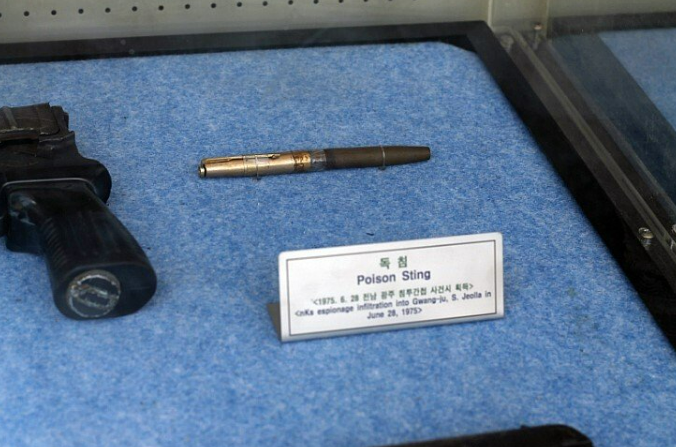
Facing Currency Shortfalls, North Korea Still Funds Espionage Against the South"Remember when North Korea's payouts to spies were generous, often reaching figures like $20,000 or $50,000? Now, it's a mere $7,000. What's behind this drastic drop?""The word on the street is that North's espionage division is feeling the pinch too. They're seemingly skimming off the top of the funds they receive from central authorities and handing over only the remnants to their agents."On October 6th, at a seminar commemorating the 27th anniversary of the diplomat Choe Deok-geun, jointly organized by the Korea University College of Political Science and Economics, the Korea Association of National Intelligence Studies (KANIS), and the National Spirit Preservation Propagation Association, former National Intelligence Service (NIS) investigators who investigated spies and North Korean operatives sat together for a discussion. The key figures were Dr. Jang Seok-guang, the Secretary-General of KANIS, who had served as a former NIS investigator, and Dr. Kim Dong-sik, a former North Korean operative.The seminar served as a poignant tribute to diplomat Choe Deok-geun's unwavering patriotism and dedication to his nation. Assassinated in Vladivostok, Russia, in 1996, he fell victim to North Korea's covert operations. Beyond the commemoration, the event sought to pull back the curtain on North Korea's clandestine espionage activities directed at the South. At the time of his tragic demise, Choe wasn't just any diplomat; he played a dual role, collecting intelligence for North Korea while stationed at the Russian Far East Consulate General. Additionally, he held a significant position with the National Security Planning Agency, which would later evolve into the National Intelligence Service (NIS).Diplomat Choe Deok-geunDiplomat Choe Deok-geun stands out as one of the rare figures publicly acknowledged on the 'Unsung Heroes' memorial, a tribute to martyrs of the National Intelligence Service (NIS). On the night of October 1, 1996, after a quiet dinner out, Choe met his tragic end on the stairwell of his own apartment building. Despite the untouched money and passport at the scene, which led Russian police initially to suspect personal vendettas or political terrorism, the subsequent autopsy told a more sinister story. Traces of 'Neostigmine bromide', a chemical synonymous with the poison-tipped pens wielded by North Korean agents, were discovered in his system. This alarming finding shifted suspicions towards North Korean foul play. It's believed by South Korean intelligence that at the time of his demise, Choe was delving into North Korea's illicit activities, specifically counterfeiting of US dollars and drug operations, potentially marking him as a prime target for North Korean spy agencies.Jang Seok-guang, Secretary-General of the Korea Association of National Intelligence Studies (KANIS), voiced a heartfelt tribute, remarking, "We will eternally honor the unwavering patriotism and commitment of those who dedicated themselves to the nation and its citizens." The discussion took a chilling turn when Dr. Kim Dong-sik, once a North Korean operative, disclosed that during his 1995 operations in South Korea, he was armed with three poison-tipped pens and a handgun. Dr. Kim highlighted the lethal potential of these instruments, stating, "Such pens can take down a target from as far as 5 meters." While he admitted to using the handgun during his tenure, he noted that he never found occasion to deploy the poison-tipped pens, which were reserved for specific assassination assignments. Poison Sting, a poison-tipped pen used by North Korean spiesHe graduated from the 'Kim Jong Il Political Military University,' a North Korean espionage training institution, and was sent to South Korea on multiple occasions. From 1981 until the year just before his assassination in 1995, Choe Deok-geun conducted espionage activities in South Korea.In May 1991, he was tasked with intercepting and repatriating a key South Korean spy, Lee Sun-sil, during the first wave of South-North repatriations. He was also responsible for capturing and recruiting activist figures who were active within the country, subsequently forming an underground organization within the WPK. He succeeded in recruiting some activist figures into the WPK, and he returned to North Korea along with Lee Sun-sil. For these achievements, he was awarded North Korea's highest honor, the title of "Hero of the Republic."Five years later, in September 1995, he was sent back to South Korea during the second wave of South-North repatriations. His mission included safely repatriating the already-infiltrated South Korean spy, codenamed 'Bonghwa 1,' and recruiting key figures from the pro-South Korean faction to build an underground organization. He attempted to contact and recruit seven activist figures in South Korea, but he failed to convince them to join the WPK. On October 24th, while attempting to intercept 'Bonghwa 1,' he engaged in a shootout with undercover police and NIS investigators at the 'Jeonggak Temple' in Buyeo County, Chungcheongnam-do, and was subsequently arrested.During the height of the Cold War, North Korea often dispatched specially trained operatives directly from Pyongyang to spy on South Korea. Nowadays, the narrative has shifted: it's believed North Korea is more inclined to nurture sympathizers within South Korea. Their spy network strategy has transitioned from the overt 'direct infiltration and stationary spies' model to a more discreet 'global espionage' approach, orchestrating covert groups within South Korea from far-flung locales like China and Southeast Asia. The United Front Department of the WPK keeps a close eye on anti-government and left-leaning forces in South Korea and focuses on recruiting them in third countries. The Cultural Exchange Bureau of the United Front Department is responsible for these operations, operating independently but still under the umbrella of the United Front Department, and receiving direct guidance from Kim Jong-un. Their primary mission involves recruiting South Korean individuals under the guise of 'cultural exchange' for the purpose of restoring ethnic solidarity. North Korean spy Kim Dong-sik (center), who was arrested in Buyeo, Chungcheongnam-do in 1995, leaving a press conference with NIS officials. / Source: the Government ArchivesIn March, the South Korean Public Prosecutor's Office revealed that members of a spy ring in Changwon had been recruited by North Korea's Cultural Exchange Bureau of the United Front Department (UFD). These individuals had engaged in espionage activities from March 2016 to November 2022 in Cambodia and other locations, meeting with UFD-affiliated operatives five times during that period. After pledging allegiance and submitting loyalty oaths, they received espionage funds totaling $7,000 (approximately 9.2 million KRW) and carried out activities related to regime change and other objectives. They received more than 20 directives from North Korea between August 2018 and 2022.Lee Do-geon, a North Korean defector who had previously worked for North Korea's Ministry of State Security and entered South Korea in 2020, stated in a lecture that "North Korea's espionage against South Korea is becoming increasingly sophisticated." He mentioned that espionage funds can now be paid in either US dollars or cryptocurrencies. North Korean espionage agencies are known to establish cryptocurrency accounts in foreign countries like China and Russia to transfer espionage funds to their agents. He explained that North Korea continues to provide espionage funds to its agents even in the midst of a foreign currency shortage because their overseas espionage aims at destabilizing the Republic of Korea.He also revealed that North Korea's espionage efforts against South Korea are increasingly taking the form of psychological warfare in the cyber space. He stated, "Four North Korean agencies, including the UFD, Cultural Exchange Bureau of UFD, Reconnaissance General Bureau, and Naval Reconnaissance Bureau, conduct psychological warfare against South Korea both online and offline under the goal of 'Complete Victory on the Korean Peninsula.'" He added, "They produce articles strongly critical of South Korea's conservative forces, the United States, Japan, and other Western countries, while thoroughly reflecting the assertions of the North Korean regime, including Kim Jong-un."In 2020, Kim Jong-un directed an enhancement of external propaganda through new media channels. Lee Do-geon analyzed this as an attempt to manipulate public opinion and steer South Korea's political situation in North Korea's favor by distorting public sentiment. Recently, to maximize the effects of propaganda, North Korea has been aggressively using global platforms such as Twitter and YouTube, which are more accessible to younger generations, to fuel internal conservative factionalism and boost anti-Japanese sentiment.Participants at the seminar highlighted the importance of remaining vigilant. Given Kim Jong-un's aggressive pursuit of nuclear and missile development, they anticipate a range of espionage activities targeting both domestic and overseas South Korean communities.
23.10.20 -
 [Kim Myung-sung’s Inside North Korea]
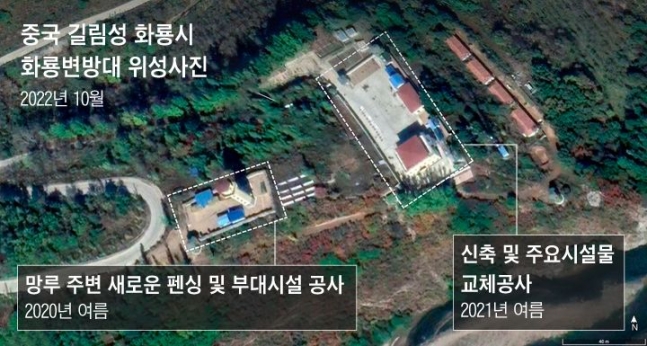
Kim MyungsungSAND's SecretaryGeneral Editor for the SAND Newsletter⦁ China sends some 600 defectors back to North Korea on the night of the 9th⦁ Hamas Uses North Korean Weapons and Tunneling Technology in Attacks on IsraelChina sends some 600 defectors back to North Korea on the night of the 9thSome 600 North Koreans may have been repatriated from China following the Asian Games, according to multiple rights groups. “Forced repatriation of North Korean defectors imprisoned at several border regions between North Korea and China, including Dandong in Liaoning Province, and Hunchun, Tumen, Nanping, and Changbai in Jilin Province, appears to have taken place simultaneously”, said Justice for North Korea, an NGO on North Korean human rights, in a statement on Wednesday. <사진 : 2022년 10월 촬영한 중국 길림성 화룡시 화룡변방대 위성사진/ 사진=NK 뉴스>The group estimated the mass repatriation occurred at around 8 p.m. on Monday(9th), shortly after the conclusion of the Hangzhou Asian Games. The deportees reportedly included young children. “In some areas, there were allegedly North Korean security officials who came over to the Chinese territory to command the repatriation,” said the group. Another rights group, One Korea Network, also put the number of deportees at around 600. "The sources said that up to 200 North Koreans were repatriated through Dandong, and the rest were divided up between the other cities and sent back to North Korea via the border facilities in those cities," it said in its statement on Tuesday. If verified, these repatriations would account for the largest number of North Koreans forcibly sent back from China to North Korea since Pyongyang closed its borders during the Covid-19 pandemic. Unification Minister Kim Yung-ho, upon being questioned about the reports during a National Assembly meeting on Wednesday, said the ministry was trying to verify them. Seoul has repeatedly urged Beijing to send North Korean defectors held in China to South Korea instead of deporting them. An estimated 2,000 North Korean defectors are detained in China. China regards North Koreans entering its country as illegal immigrants rather than refugees. Repatriated North Koreans face harsh punishment, including torture, imprisonment or even execution. Hamas Uses North Korean Weapons and Tunneling Technology in Attacks on IsraelIt has been revealed that Hamas employed North Korean weapons and tunneling technology in their attacks on Israel. The Republic of Korea Joint Chiefs of Staff (ROK JCS) stated on the 17th that they believe Hamas, a Palestinian armed group responsible for the attacks on Israel, had direct and indirect connections with North Korea in terms of arms trading and tactical training. A senior official from ROK JCS made these statements during a press briefing, also noting the possibility of North Korea utilizing Hamas' attack methods for surprise attacks against South Korea.Weapons believed to be of North Korean origin seized by the Israeli military from Hamas (Yonhap News Agency)Since Hamas' terror attack on Israel on the 7th, the ROK JCS have been closely observing Hamas' method of attack and any potential ties with North Korea. An official discussed the connection between North Korea and Hamas concerning armament, pointing out that Hamas' use of anti-tank weaponry, labeled as F-7, aligns with North Korea's designation for its exported RPG-7. Moreover, the official indicated that there's emerging evidence of North Korea's weapon exports to various Middle Eastern countries and factions. Among these exports are the North Korean-made 122mm rocket-propelled grenades, which some believe are being used by groups that either align with or support Hamas, especially considering that these weapons have been discovered near Israel's border.ROK JCS pointed out numerous similarities in tactical training between North Korea and Hamas. The recent Hamas attack, which included a surprise dawn assault on a holiday, large-scale rocket launches aimed at neutralizing the Israeli Iron Dome missile defense system, drone attacks aimed at disrupting surveillance, communication, and fire control systems, and penetration following the destruction of border barriers, was deemed to resemble North Korea's asymmetric attack tactics, as assessed by ROK JCS. They also raised the possibility that Hamas may have learned tactical skills, including paragliding infiltration, from North Korea.An official from the ROK JCS explained, "In the mid-2010s, after completing the establishment of a scientific boundary system that made it difficult for infiltrators to cross through land routes, North Korea enhanced its training for airborne infiltration using paragliders." The official further added, "In December 2016, North Korea publicly demonstrated an attack training involving paragliders, which was attended by Supreme Leader Kim Jong-un." This official suggested that North Korea might have passed down such expertise to Hamas. North Korean gliders are made of wood and can operate at low altitudes, making them capable of evading radar, according to the ROK JCS's explanation.North Korean-dug southern tunnels (Yonhap News Agency)There is also analysis suggesting that Hamas' tunneling technology may have been acquired from North Korea. North Korea is known to have accumulated significant expertise in tunnel construction during the 1970s and 1980s, primarily for the purpose of infiltrating spies and special forces members into South Korea's Demilitarized Zone (DMZ).According to RFA on the 17th, Sarit Zehavi, the head of the Israeli security organization Alma Research and Education Center, stated in an interview with the media, "It is not certain whether Hamas directly obtained tunneling technology from North Korea," but added, "North Korea has transferred technology to Hezbollah, and it appears that technology passed down to Hezbollah has ended up in the hands of Hamas."Hamas is known to have constructed extensive underground mazes to evade surveillance by Israeli military reconnaissance aircraft and drones. The purpose of these tunnels is to transport troops and military supplies clandestinely while also providing command and control facilities. The total length of these tunnels, often referred to as the "Hamas metro," is claimed to be as long as 500 kilometers. If this claim is accurate, it represents an enormous scale, roughly 1.5 times the total length of Seoul's subway system, which spans approximately 350 kilometers.North Korea's tunnel excavation technology, advanced enough to be passed down to Hezbollah and Hamas, is well-known. South Korea discovered four North Korean infiltration tunnels from the mid-1970s to 1990. These tunnels included the first tunnel in the Gorangpo area in Yeoncheon County, Gyeonggi Province (approximately 3.5 kilometers in length, discovered in 1974), the second tunnel in Cheorwon County, Gangwon State (approximately 3.5 kilometers in length, discovered in 1975), the third tunnel in Panmunjom, Paju City, Gyeonggi Province (approximately 1.6 kilometers in length, discovered in 1978), and the fourth tunnel in Yanggu County, Gangwon State (approximately 2.1 kilometers in length, discovered in 1990).
23.10.20 -
 [NK Focus]
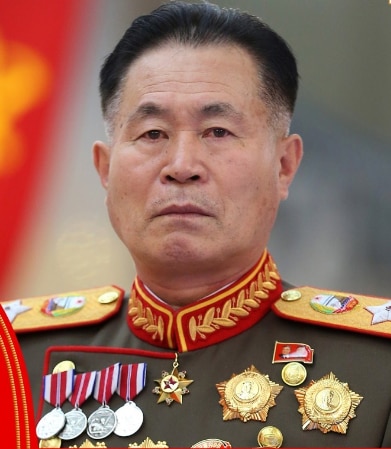
Pak Jong-chon: Who is Kim Jong-un's Close Military Aide and Former Artillery SpecialistPak Jong-chon, Chief of the General Staff of the Korean People's Army, as reported by the Korean Central News Agency on January 11, 2020. (Photo by Rodong Sinmun)On the occasion of the 78th anniversary of the founding of the Workers' Party of Korea (WPK) on October 10th, all eyes are on the absence of Pak Jong-chon. As a trusted military aide to Kim Jong-un and the head of the WPK's Military Affairs Department, his notable absence alongside the Supreme Leader, Kim Jong-un, during the event has raised eyebrows. While Prime Minister Kim Tok-hun, along with four members of the Presidium of the Politburo of the Workers' Party of Korea and other senior party, government, and military officials, were seen paying their respects at the Mansudae Hill — home to the statues of Kim Il-sung and Kim Jong-il — both Jong-un and Jong-chon were conspicuously absent.Although the subdued nature of this year's anniversary might account for their absence, it's significant to note this within the backdrop of North Korea's announcement about the upcoming launch of its third reconnaissance satellite. Speculation is rife that the absence of these two pivotal figures might be linked to military endeavors, and further updates on this matter are anticipated soon. Recent statements from North Korea have further solidified its resolve towards launching reconnaissance satellites, emphasizing that space development is a pivotal strategic move to ensure the nation's longevity.Pak Jong-chon, head of the Military Affairs Department, was seen kneeling and whispering to Kim Jong-un, the Supreme Leader, and Kim Ju-ae, seated next to him, who holds the title of '5-star General.' during the September 8th midnight military parade marking the 75th anniversary of the establishment of the North Korean regime. (Photo by Rodong Sinmun)Following the North Korea-Russia summit, Kim Jong-un and Pak Jong-chon have refrained from public activities, but there have been continued reports of movement involving trains and ships near the North Korea-Russia border, suspected to be related to weapons trade. These developments have led to speculations that North Korea may be engaged in significant military activities.Pak Jong-chon, a figure prominently linked with Kim Jong-un in military circles, has an impressive track record. He has held pivotal roles like the artillery corps commander, commander of the artillery forces, and Chief of the General Staff in the North Korean military hierarchy. Moreover, he's been a pivotal player in steering North Korea's missile development initiatives. Under Kim Jong-un's leadership, Pak Jong-chon has also stepped into the shoes of an on-site commander during various missile launches.Pak Jong-chon's early career remains somewhat shrouded in mystery, with limited documentation available to the public. However, it is established that he is an alumnus of the Kim Il Sung National Defense University, a prestigious institution dedicated to molding high-ranking military personnel in North Korea. He first stepped into the limelight in April 2006 upon being elevated to the rank of Army Lieutenant General. With the ascendancy of Kim Jong-un in 2012, Pak Jong-chon's military engagements became more pronounced, including his involvement in joint photo-ops and overseeing military drills firsthand.In August 2012, he accompanied Kim Jong-un during his on-site guidance on the western coast with the title of 'Lieutenant General of the Korean People's Army'. Around March 2013, he was promoted to a three-star general, and in April 2019, in commemoration of Kim Il-sung's birthday, he was further promoted to the rank of Army General. That September, he was appointed as the Chief of the General Staff of the North Korean military, succeeding Ri Yong-gil. The following October, during the 19th Politburo meeting of the 7th WPK, he, along with Ri Pyong-chol, experienced a rapid promotion to the rank of Marshal of the Korean People's Army.In April 2014, Kim Jong-un, Chairman of the National Defense Commission, oversees artillery drills by the Women's Artillery Unit of the North Korean Army's 851st Unit in Anbyon County, Gangwon State. To his left is Pak Jong-chon, the artillery commander / Yonhap News Agency.Pak Jong-chon's rapid ascent through the military ranks, especially during the eight years of Kim Jong-un's leadership, can be attributed to Kim Jong-un's prioritization of artillery. A graduate of the Kim Il Sung National Defense University, Kim Jong-un specialized in artillery. His thesis was centered on 'Enhancing Artillery Accuracy Using GPS.' This fascination with artillery can be traced back to North Korea's skepticism towards air power. Recollections from the Korean War reveal Kim Il-sung's apprehension of air strikes due to the dominant air power of adversaries. To counter this perceived vulnerability, artillery was championed as the key deterrent.Data sourced from the International Institute for Strategic Studies (IISS) indicates that North Korea's artillery arsenal is approximately 21,000 pieces strong. Excluding their fleet of short-range mortars, which amounts to roughly 7,500, North Korea commands the largest artillery force globally. This includes towed artillery, self-propelled artillery (collectively totaling around 8,500 units), and formidable 5,100 rocket launchers.Kim Jong-il also emphasized artillery, stating that "modern warfare is artillery warfare." Kim Jong-un, who majored in artillery, has progressively increased investments in artillery firepower since taking power. In just three years, he added over 200 pieces of self-propelled artillery, even deploying artillery to the Worker-Peasant Red Guards (WPRG), a paramilitary organization. Kim Jong-un appointed artillery specialist Pak Jong-chon to key positions, including Artillery Commander, Chief of the General Staff (combined with Director of the Artillery Command), and ultimately elevated him to Vice Chairman of the Central Military Commission, the top military position in North Korea.Pak Jong-chon was removed from his role as North Korea's leading military official last December, primarily due to lapses in countering South Korean drones and other operational challenges. Nevertheless, he has recently reemerged, coinciding with heightened military collaboration between North Korea and Russia. Now, as the Director of the Military Affairs Department of the WPK, which oversees the party's military supervision, Pak is believed to be instrumental in military ties, encompassing arms transactions. During North Korea's 75th anniversary celebration of its regime establishment in September, North Korean media broadcasted a moment where Pak Jong-chon was captured bending a knee and whispering to Kim Ju-ae, Kim Jong-un's daughter. Despite his evident devotion to Kim Jong-un, Pak has previously been demoted twice. Additionally, should the anticipated 3rd reconnaissance satellite launch set for October not succeed, Pak could potentially face further consequences.
23.10.20 -
 [State of Affairs]
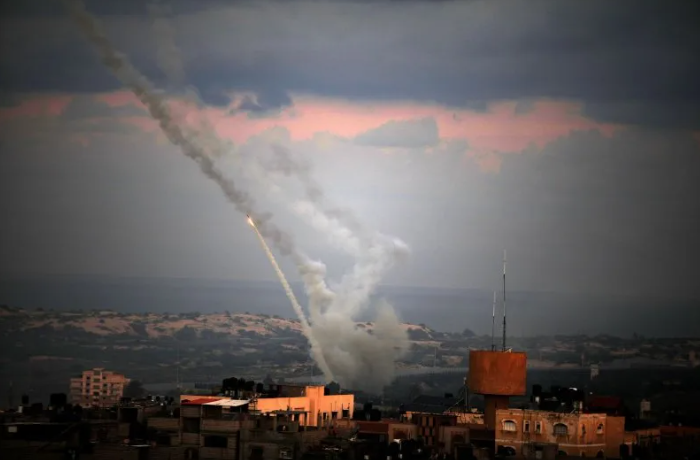
North Korea 'Sold Arms to Hamas'Roh Suk-joNewsroom / Political Desk at ChosunilboHamas militants may have been armed by North Korea and have other military links to the renegade country, the Joint Chiefs of Staff here said Tuesday.The JCS is analyzing Hamas' surprise incursion into Israel on Oct. 7, a senior officer told reporters. "There's a possibility that North Korea could use similar tactics to attack South Korea," he added.Militant group Hamas appeared to use weapons and tactics from North Korea in its surprise assault on Israel from Gaza on October 7, a senior officials with Seoul's Joint Chiefs of Staff said Tuesday. Photo by Ismael Mohamad/UPI"Hamas' F-7 rocket launcher that was reportedly used in the attack has the same name that North Korea uses when it exports its RPG-7 anti-tank rocket-propelled grenade launcher," the JCS said.Israel soldiers point at weapons presumed to be made in North Korea on Oct. 11, in this photo from the website of the Israel Defense Forces.Artillery shells with the marking "Bang-122" have been found recently in the Gaza Strip held by Hamas and along Israel's northern border near an area held by Lebanon's pro-Iranian Hezbollah militants and are presumed to be made in North Korea."It has repeatedly been found that the North is exporting a wide variety of weapons to countries and militant groups in the Middle East," the JCS officer added.Analysis also shows that Hamas' tactics are very similar to those used by North Korea. Hamas incapacitated Israel's "Iron Dome" air defense system with a massive number of rockets in the early morning of a holiday and made the incursion after using paragliders and small armed drones to destroy various surveillance, communication and fire control systems on top of the separation walls around Gaza.This resembles the "asymmetrical" attack patterns North Korea would use in a war here, according to the JCS.An infiltration drill using paragliders is being conducted in North Korea, in this file photo from December 2016.The North stepped up training using paragliders in the mid-2010s to overcome difficulties in infiltration on the ground as South Korea installed an automated surveillance system along the border.Learning a lesson from the failure of Israel's early warning system, the JCS will combine South Korean and U.S. surveillance assets to detect any unusual military movements in the North.The JCS also wants to develop a "low-altitude missile defense system," a South Korean version of the Iron Dome, by 2026.
23.10.20 -
 [North Korea Focus]
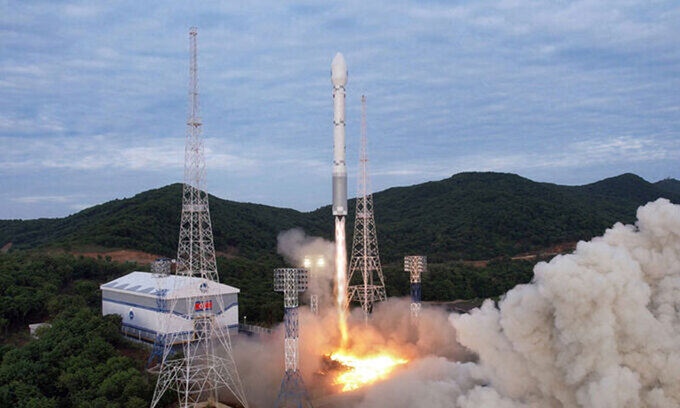
Potential North Korean Satellite Launch on Party Foundation Day: Russian Technical Assistance in the SpotlightAs North Korea signals its intent to launch a third military satellite, eyes turn towards the significance of Party Foundation Day, slated for the 10th. This year marks the 78th commemoration of the day, and while not a rounded milestone, its political weight could make it the chosen date. Such a successful launch would be a monumental accolade for Kim Jong-un, demonstrating both military prowess and further consolidating the regime's power. Yet, the ongoing Asian Games in Hangzhou, China might cause a delay, pushing the launch to mid-October. The potential involvement of Russia, providing technical aid, is generating buzz among international observers.The rocket, 'Military Reconnaissance Satellite' Manlyeong 1st model launches from Sohae Satellite Station, North Phyongan, North Korea, on May 31st / Photo by Korean Central News AgencyReports from the Korean Central News Agency on the 3rd relay that North Korea has admitted to the unsuccessful second attempt at launching a military reconnaissance satellite on August 24th. The statement suggested a thorough investigation into the failure, pledging a third attempt in October. Their first try on May 31st also didn't pan out. A mere 85 days later, a second attempt was made, which unfortunately culminated in another crash. The North Korean regime attributed the failure of the initial launch to issues encountered post-separation of the first stage, specifically abnormalities during the ignition of the second-stage engine. The subsequent launch seemed promising as they managed to rectify the second-stage engine glitch, only to encounter problems with the 'flight termination system' during the satellite's third stage. However, they seem optimistic about a re-launch, hinting that some software tweaks might solve the issue.Speculations are rife about the timing of the next launch. With the 78th Party Foundation Day on the horizon, many anticipate a launch around this significant date. Yet, the festivities of the Asian Games in Hangzhou, China, might nudge the timeline to mid-October. If collaborations between Russia and North Korea materialize for this satellite initiative, it would demand some preparatory time, possibly earmarking the latter half of the month for the launch.Chairman Kim Jong-un of North Korea alongside Russian President Vladimir Putin at Vostochny Cosmodrome, September 13th / Photo by Korean Central News AgencySpeculation surrounds Russia's potential technical support for North Korea's upcoming satellite launch. Last September, Kim Jong-un met Putin at Russia's Vostochny Cosmodrome, closely inspecting its facilities. When queried about assisting North Korea's satellite project during the summit, Putin hinted at collaboration, stating, "That's why we are here at the cosmodrome."Russia, renowned for its advanced rocket technology, could aid North Korea's third satellite launch and boost their rocket and ICBM capabilities. Potential North Korea-Russia satellite collaborations might encompass Russian spacecraft provision, development support for North Korea's 'Chollima-1' rockets, main satellite body assistance, advanced testing equipment supply, and shared reconnaissance satellite use.Chairman Kim Jong-un's keen interest in reconnaissance satellite development became evident after he assumed power and prioritized space development. In April 2012, a year into his leadership, North Korea's artificial satellite launch failed. However, they achieved success with the 'Kwangmyongsong-3' unit 2 launch in December. By April 2013, they founded NADA (National Aerospace Technology General Bureau of the DPRK) and later, in 2016, launched 'Kwangmyongsong-4'. Despite its orbit placement, the satellite's operational status remains uncertain as no images or videos have been shared.South Korea's navy displays remnants of the North Korean Chollima-1 rocket salvaged from the western sea, showcased at the Second Fleet Command, Pyeongtaek City, on June 15th / Photo by Joint Press CorpsDuring the 8th Congress of the Workers' Party of Korea in January 2021, Kim Jong-un emphasized the development of a military reconnaissance satellite as a top defense priority. Given North Korea's accelerated efforts in developing ICBMs aimed at the U.S. and tactical nuclear-armed short-range missiles for South Korea, the push for enhanced 'surveillance and reconnaissance assets' became imperative for their evolving arsenal.Russia's willingness to provide North Korea with advanced military technology remains uncertain. Historically, countries at the forefront of military innovation have been hesitant to share critical advancements, such as rockets or nuclear technologies. Given this, Russia may be reluctant to divulge its state-of-the-art military secrets.From Russia's viewpoint, while there's an immediate demand for ammunition from North Korea, the dynamics might shift if tensions in Ukraine simmer down or a ceasefire emerges. If so, North Korea's primary value to Russia could be supplying labor for reconstruction in regions like Donetsk, under Russian control. Consequently, some analysts believe that Russia might prioritize aid in the form of traditional weaponry over sharing advanced technologies. This could involve Russia offering essential supplies like food, fertilizers, and energy to North Korea, as well as parts for weapons such as the 'MiG-29', which North Korea finds challenging to procure.Moreover, given Russia's agreement to the sanctions imposed on North Korea, including the United Nations Security Council Resolution 2397 from December 2017, any technology transfer, especially satellite technology, might subject Russia to further international penalties. Should North Korea, potentially with Russian assistance, fail in another satellite launch attempt in October, any debris landing near the Korean peninsula could reveal the depth of cooperation between Russia and North Korea.
23.10.06 -
 [Kim Myungsung’s Inside North Korea]
Constitutional Inclusion of Nuclear Force Deployment: Strengthened Internal SecurityKim MyungsungSAND's Secretary, General Editor for the SAND Newsletter○ North Korea Takes a Defining Step with its 'Nuclear Power Strengthening Policy'○ North Korea Dislikes "North Korea" Label, Calls South Korea "Puppet"○ North Korean Antibiotic Manager Publicly Executed...Kim Jong-un Intensifies Reign of Terror○ N. Korea spurs efforts to raise crop production during fall harvest seasonNorth Korea Takes a Defining Step with its 'Nuclear Power Strengthening Policy'In a significant move, North Korea has formalized its 'Nuclear Power Strengthening Policy', a mere year after its introduction in legislation. This momentous decision was confirmed during the recent 9th meeting of the 14th Supreme People’s Assembly in Pyongyang on the 26th and 27th as informed by the Korean Central News Agency. 14th Supreme People’s Assembly's 9th meeting at Mansudae Assembly Hall in Pyongyang, 26th-27th last month. / Photo by Korean Central News Agency/Yonhap.At the top of the assembly's list was an amendment to the Socialist Constitution. The revision cements North Korea's stance as a nuclear nation committed to its survival, development, and the preservation of regional and global peace through enhanced nuclear prowess.Interestingly, this isn't North Korea's first legislative step towards nuclear power. Last September, they laid the foundation with a policy that outlined the purpose and structure of nuclear power. During that assembly, Kim Jong-un resolutely announced that their nuclear status was now an irrevocable fact.In his speech at this Supreme People’s Assembly, Kim Jong-un argued, "Regulating the nuclear power strengthening policy clearly in the supreme law of the state is the most legitimate and appropriate major measure, thoroughly in line with not only the immediate demands of the current era but also the legality and prospective demands of socialist state construction."Especially as a major task, he ordered to "rapidly enhance nuclear power in terms of quantity," "exponentially increase nuclear weapon production," "realize diversification of nuclear strike means," and "strongly execute the project of operational deployment to various military branches."North Korea Dislikes "North Korea" Label, Calls South Korea "Puppet"During the 2022 Hangzhou Asian Games, North Korea labeled South Korea's national name as "puppet". In North Korea, this term is used to mean a "puppet" of the United States.North Korean TV's coverage of the Hangzhou Asian Games soccer match, South Korea labeled as "puppet." / Photo by KCTNorth Korea's Korean Central Television (KCTV) broadcasted the results of the women's soccer knockout match between South Korea and North Korea from the Hangzhou Asian Games, which took place on the 30th of last month, on the 2nd. In the broadcast, a caption at the bottom of the screen labeled North Korea as Joseon and South Korea as "puppet" alongside the score. The Rodong Sinmun newspaper also referred to South Korea as "puppet" in their coverage of the match on the 1st. Since the "South Korea-US Washington Declaration" in April, North Korea has been referring to South Korea as the "puppet region."Sensitive to the naming of the two Koreas, North Korea, which has labeled South Korea as "puppet" in this Asian Games, has expressed disapproval towards the term "North Korea." After a women's basketball game between the North and South on the 29th of last month, a North Korean official responded sharply in a press conference when a reporter mentioned "North Korea," saying, "We are 'DPR Korea'. Do not call us 'North Korea'. It's offensive."North Korean Antibiotic Manager Publicly Executed...Kim Jong-un Intensifies Reign of TerrorFollowing a public execution of a beef distributor in the border region at the end of August, North Korean authorities have recently executed a pharmaceutical manager in the same place. Observers suggest this highlights the increasing use of fear politics to consolidate Kim Jong-un's regime.A drawing based on testimonies from North Korean defectors who witnessed public executions in North Korea (Unified Era People)On the 2nd, RFA, drawing from sources in Ryanggang Province, reported a shocking event: nine managers, accused of illegal beef distribution, were publicly executed at Hyesan airfield. Just a few weeks prior, on the 25th, a man in his 40s faced a similar fate. Responsible for overseeing medicines at the No. 4 warehouse in Hyesan City, he was charged with the theft of a significant amount of stored penicillin.According to sources, Hyesan City residents were instructed to assemble at the execution venue by midday. Yet, only housewives and a few officials heeded the call. In a departure from the past, daily activities weren't disrupted: factories, farms, and even the Jangmadang, a local market, remained open.In a separate report by the specialized North Korean outlet Daily NK, three trading company executives met their end in Pyongyang this past September. Officially, they were accused of misappropriating funds meant for the Party. But analysts suggest these executions might be more symbolic, serving as a warning against unapproved individual smuggling.N. Korea spurs efforts to raise crop production during fall harvest seasonSEOUL, Oct. 2 (Yonhap) -- North Korea has been ramping up efforts to boost crop production during the fall harvest season amid expectations that the impoverished country's food shortages have improved, compared with the first half of the year.The Rodong Sinmun, the North's main newspaper, recently carried a report that a "critical" time has come in attaining the goal of this year's grain production, while urging officials to lead efforts to produce satisfactory outcomes in the agricultural sector."It is essential for the country's provincial, city and county committees to well guide efforts to produce achievements in the agricultural sector with the attitude that they are fully responsible for the outcome of farming in their regions," North Korean leader Kim Jong-un was quoted as saying by the paper issued Sept. 23.In a separate report, the newspaper also called on people to plant wheat and barley this year in an apparent bid to diversify crop production, which has been centered on rice and corn so far.This image, captured from footage of North Korea's Korean Central Television on Sept. 3, 2023, shows a North Korean farmer harvesting rice in a county in North Pyongan Province. (For Use Only in the Republic of Korea. No Redistribution) (Yonhap)South Korea's unification ministry said the North's food situation appears to have improved, compared with the first six months of the year, on the back of an increase in the crop harvest and imports.With deaths from starvation reported in some regions, North Korea has reportedly been facing serious food shortages, as its prolonged COVID-19 border closure and disruptions in state-controlled food supply have aggravated the situation.Russian Ambassador to North Korea Alexander Matsegora said in a recent interview with Russia's state news agency TASS that North Korea turned down Russia's offer to provide food aid, saying it has had a "good harvest."North Korea's crop production is estimated to have reached 4.51 million tons last year, down 3.8 percent from a year earlier, according to a report by the South's Rural Development Administration.
23.10.06 -
 [North Korean Society]
North Koreans Immersed in Smartphone Games... Rise of 'Smombies' in the NorthJung Chung-sinSenior Reporter at Munhwa Ilbo○ KDB Future Strategy Research Institute's Report on "Current Smartphone Game Usage in North Korea"○ Emergence of "Smombies" (Smartphone + Zombie) Phenomenon in North Korea'Imjin War 1.0,' a strategic mobile game developed by North Korea's Daeyoung Information Technology Exchange Center. (Photo by Yonhap News)It has come to light that smartphone and tablet-based games are gaining popularity in North Korea. While smartphone gaming is expected to expand further, especially among North Korean youth, there are anticipated limitations due to regulatory constraints and technological challenges within the country.According to a report titled "Recent Trends in Smartphone Game Usage in North Korea," released by KDB Future Strategy Research Institute's Development Finance Research Center on the 2nd, the number of smartphone and tablet PC users in North Korea has been steadily increasing since the 2010s. Recently, residents have been enjoying a variety of games, starting with the pre-installed games on these devices.Statistics show that 28% of North Korea's total population, and over 70% in major cities, are now using mobile phones. Tablet PCs, assembled within North Korea using imported parts from China, have gained popularity, particularly among residents in cities like Pyongyang, for their easy charging and portability.In North Korea, games are distributed by smartphone and tablet PC manufacturers, who pre-install applications on these devices. The majority of these games are puzzle-based or simple arcade games such as chess and checkers. While North Korea does produce some games domestically, most of them are actually unauthorized adaptations of popular foreign games.Several game development companies are also actively engaged in game production. They sell apps through "Information Technology Exchange Centers," and North Korea's own app store called "Naui Gildongmu," and on their own websites, offering paid content.An action game titled 'Invincible Boy Jangsu 1.4.' (Photo by Seoul Pyeogyang News, SPN)While North Korea had previously prohibited games involving multiple players, Bluetooth-based games and games that allow multiple users to participate directly through websites have become increasingly common. With the continued growth in smartphone and tablet PC usage among residents, and a rising generation that is increasingly comfortable with technology, the proliferation of smartphone gaming in North Korea seems inevitable.Qualitative development of locally produced games in North Korea faces limitations due to technological constraints, copyright awareness gaps, and online gaming restrictions. According to KDB Future Strategy Research Institute, North Korea's smartphone game development is unlikely to see significant improvement as it does not align with the global trend of allowing games with unspecified multiple participants online.On the other hand, it's been reported that North Korean residents engage in multiplayer gaming using Bluetooth functionality on their mobile phones. There are dozens of game genres available, and some residents are known to enjoy games with paid downloadable content (DLC).Arirang Bluetooth earphones – They use Bluetooth 4.1, operate on the 2.4GHz band, and provide 5 hours of playback time with 130 hours of standby time.Daily NK, quoting a Pyongyang insider from last September, stated, "There are around 30 collective entertainment options using Bluetooth, including horse racing, car racing, Tetris, fishing, shooting, space exploration, and school trip." They also mentioned that it's possible to have group games within a single classroom or a room within a 10-15 meter radius. Notably, among North Koreans, car racing is popular among teenagers, space exploration among those in their twenties, horse racing among those in their thirties, and fishing games among those in their forties.North Korea is actively promoting smartphone adoption and is focusing on developing a variety of applications, particularly in the gaming sector. These gaming apps are reportedly gaining significant popularity among North Korean residents who use smartphones. Some residents are willing to pay for additional downloadable content (DLC) to enjoy a broader range of games. DLC refers to items, clothing, episodes, and more that can be installed separately from the base game. The gaming industry uses DLC to generate additional revenue, and North Korean authorities are also seen capitalizing on this through DLC sales.Amid the growing popularity of smartphone games in North Korea, social issues have emerged. According to reports, North Korean teenagers are constantly engrossed in their phones, even when crossing roads, riding buses to visit historic sites, or attending lectures at these sites. Their phone obsession often leads them to overlook adults they encounter. This phenomenon, known as "Smombies" (a portmanteau of the words "smartphone" and "zombie"), has also emerged in North Korea. Insiders have noted that women in their thirties and forties sit in Jangmadang, playing phone games when their merchandise isn't selling or during their free time. They frequently discuss their gaming preferences, and the trend is to adopt the latest entertainment as hobbies.
23.10.06 -
 [Insights from within North Korea]
Unpacking Hereditary Logic in North KoreaThe Legacy of Patriotism: More Than Just a SentimentEditor's Note: In North Korea, there's a deep-rooted tradition where family members follow in their ancestors' professional footsteps. Upon high school or college graduation, the state assigns roles. Farming families see their children become farmers, mining families send their offsprings to the mines, and children of laborers embrace labor-intensive roles. They often continue these roles in the same vicinity they grew up in. This societal norm makes it unsurprising when the progeny of the Supreme Leader is groomed to ascend the leadership ladder.Dive deeper with our related article below.Tradition of Patriotism Is Carried ForwardThere are many patriotic families in the country whose members have engaged in the same job down through generations.Among them who regard patriotism as their outlook on life and family tradition is a coal miner family whose five sons work in the Konggup Mine in Jagang Province.A Multi-Generational Family of Coal Miners Who Have Sustained Their Underground Business. A Family of Five Coal Miners from a Coal Supply Mine in Jagang Province / Photo by Rodong Sinmun“Fertilize the soil of the country by your own efforts and think about the country’s wealth before your small family property.” This is the creed of their father.He was a man who devoted himself for coal production throughout his life. He had neither an illustrious career nor honour nor property to be handed over to his children. As he spent most of his life in a pit, he had not a good memory of enjoying happy time together with his family members. But he treasured coal production rather than the happiness of his own and his family. That was why he brought up his five sons into coal miners.His family members are rendering services to coal production through generations with a single mind to devote themselves for the prosperity of the country like coal giving light and heat by burning itself.There are many similar families in the country.The family of Kim Myong Chol, workshop head of the Sogu Public Building Construction Company, are working in the construction sector for three generations to build streets and monumental structures in the capital city of Pyongyang. The family of Kang Yong Su at the Unsan County Forestry Management Station are looking after green forests for three generations. All family members of Kim Kyong Su, teacher at Changju branch of Songryon Senior Middle School in Pyokdong County, including his son and daughter-in-law, are devoting themselves to the education of the rising generations.During the 9th Congress of the Korean Children's Union, Korean Central Television Reports 'Successors Upholding the Revolutionary Legacy' Arriving in Pyongyang, Pledging Generational Loyalty to Kim Jong-un. / Photo by Korean Central TelevisionAs there are so many such families with warm love for the country, the tradition of patriotism is steadily being carried forward in the country.
23.10.06 -
 [Insights from within North Korea]
North Korea Excludes Kim Jong-un's Birthdate and Early Life Details from Historical RecordsEditor's Note: "Our Nation," North Korea's external propaganda website, provides extensive chronicles of the 'Supreme Leaders,' including birth details, parentage, upbringing, education, and achievements. The record for Kim Il-sung is comprehensive, including birthdate, birthplace, parents' names, and their relationship. It covers his middle school years and societal activities in his twenties. Similarly, for Kim Jong-il, it details his birthdate, birthplace, parentage, and upbringing, along with his education through his twenties. However, the chronicle for Kim Jong-un begins with his promotion to the Central Committee of the Workers' Party of Korea in September 2010. Missing are his birthdate, birthplace, and information about his mother. Despite his 12-year tenure, details about his origin and upbringing remain undisclosed.Below, we present the chronicle of Kim Jong-un as portrayed by North Korea.The respected Comrade Kim Jong Un is the General Secretary of the Workers’ Party of Korea, President of the State Affairs of the Democratic People’s Republic of Korea and Supreme Commander of the armed forces of the DPRK.- Graduated from Kim Il Sung Military University.- Elected member of the WPK Central Committee at the Third Conference of the WPK in September Juche 99 (2010).- Elected Vice-Chairman of the WPK Central Military Commission at the September 2010 Plenary Meeting of the WPK Central Committee in September Juche 99 (2010).- Conferred the military rank of General of the Korean People’s Army in September Juche 99 (2010).- Appointed Supreme Commander of the armed forces of the DPRK in December Juche 100 (2011).- Elected First Secretary of the WPK at the Fourth Conference of the WPK in April Juche 101 (2012).- Elected member of the Political Bureau of the WPK Central Committee, member of the Presidium of the Political Bureau of the WPK Central Committee and Chairman of the WPK Central Military Commission at the Fourth Conference of the WPK in April Juche 101 (2012).- Elected First Chairman of the DPRK National Defence Commission at the Fifth Session of the 12th Supreme People’s Assembly of the DPRK in April Juche 101 (2012).- Conferred the title of Marshal of the DPRK in July Juche 101 (2012).- Elected First Chairman of the DPRK National Defence Commission at the First Session of the 13th SPA of the DPRK in April Juche 103 (2014).- Elected Chairman of the WPK at the Seventh Congress of the WPK in May Juche 105 (2016).- Elected member of the WPK Central Committee, member of the Political Bureau of the WPK Central Committee, member of the Presidium of the Political Bureau of the WPK Central Committee and Chairman of the WPK Central Military Commission at the Seventh Congress of the WPK in May Juche 105 (2016).- Elected President of the State Affairs of the DPRK at the Fourth Session of the 13th SPA of the DPRK in June Juche 105 (2016).- Re-elected President of the State Affairs of the DPRK at the First Session of the 14th SPA of the DPRK in April Juche 108 (2019).- Elected General Secretary of the WPK at the Eighth Congress of the WPK in January Juche 110 (2021).- Elected member of the WPK Central Committee, member of the Political Bureau of the WPK Central Committee, member of the Presidium of the Political Bureau of the WPK Central Committee and Chairman of the WPK Central Military Commission at the Eighth Congress of the WPK in January Juche 110 (2021).
23.10.06 -
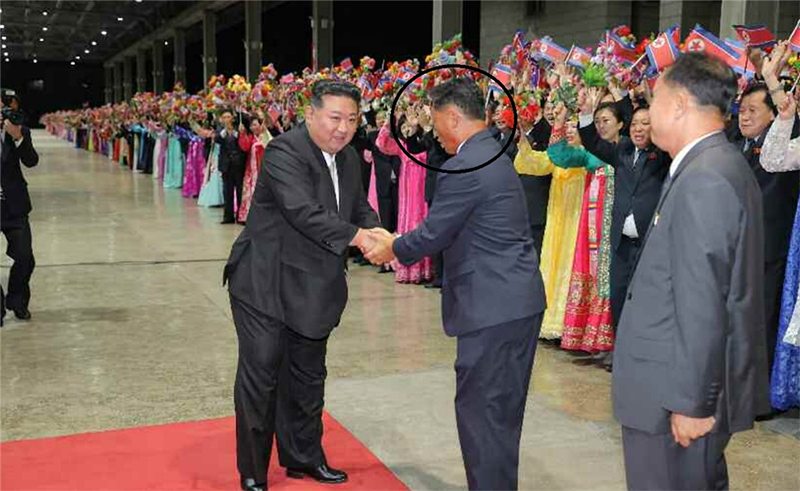 [North Korea Focus]
Analyzing Prime Minister Kim Tok-hun's Resilience Despite Kim Jong-un's CriticismIn the aftermath of North Korean leader Kim Jong-un's public criticism, there has been considerable intrigue surrounding Prime Minister Kim Tok-hun's unwavering presence in his official role. Following Kim Jong-un's return from his trip to Russia on the 19th, the media captured the Prime Minister's visibly flushed face as he greeted the leader. On September 20th, North Korea's official newspaper, Rodong Sinmun, described the scene at Pyongyang station as "brimming with fervent passion," featuring Prime Minister Kim engaging in a handshake with Kim Jong-un. Despite earlier speculations of his possible purge or demotion, Kim Tok-hun appeared robust. However, since the criticism, he seems more cautious, even showing signs of tension during Kim Jong-un's reception at the Pyongyang station.<Photo> On the 19th, upon returning from Russia to Pyongyang, North Korean leader Kim Jong-un is welcomed by Prime Minister Kim Tok-hun (highlighted). The Prime Minister's face displays tension and flushness. /Rodong SinmunOn August 21, during his visit to flood-affected areas in South Phyongan Province, Kim Jong-un squarely attributed the damage to embankments and farmland to Prime Minister Kim Tok-hun. Kim Jong-un criticized, stating, "Over the past few years, under Prime Minister Kim Tok-hun's leadership, administrative and economic discipline has deteriorated significantly, leading to the disruption of national economic projects due to the irresponsible actions of certain individuals."He also highlighted grave issues with the Prime Minister's lackadaisical approach to business, vowing to hold him accountable both within the party and under the law. Emphasizing that "those who neglect their duties cannot be pardoned," he convened a collaborative task force involving the Organization and Guidance Department of WPK, the Discipline Inspection Department, the National Inspection Commission, and the Central Prosecutor's Office to identify culpable organizations and individuals. Their mandate: "rigorously critique and profoundly penalize them," both from a party and legal standpoint. In essence, Kim Jong-un mobilized all North Korean investigative agencies to jointly probe the cabinet and entities linked to the flood damage.The unusual aspect of this situation is that North Korean media featured an article in which Kim Jong-un explicitly criticized and named a specific official. Many had predicted that such criticism might signal Kim Tok-hun's imminent dismissal or demotion. Surprisingly, Kim Tok-hun was not removed from office and continued to fulfill his duties, albeit with a noticeable reduction in the scope of his responsibilities, including provincial inspections. Nevertheless, he retained his position as Prime Minister.<Photo> Kim Jong-un criticized Prime Minister Kim Tok-hun's irresponsible business attitude during his visit to the disaster recovery site in South Phyongan Province on August 21, as per the Korean Central News Agency report on the 22nd. / Yonhap News AgencyMerely three days following Kim Jong-un's public criticism, on August 25, the Korean Central News Agency briefly announced that Prime Minister Kim had sent congratulations to the Thai Prime Minister. Subsequently, as the 75th anniversary of the regime's establishment approached, Kim Tok-hun's activities surged, and his standing appeared to strengthen. In commemoration of this milestone, he met with Liú Guózhōng, the Chinese vice premier leading a delegation to North Korea. During the central reporting meeting, which Kim Jong-un attended, Kim Tok-hun took the stage as the presenter, affirming, "We have embarked on an era that marks the end of unilateral nuclear threats from the U.S." On September 9th, the Rodong Sinmun newspaper introduced him as 'Comrade Kim Tok-hun, among the distinguished officials of the Party and the government' in the key attendee lineup during the parade. Furthermore, on the 12th, the newspaper reported that 'Comrade Kim Tok-hun, among the esteemed officials of the Party, the government, and the armed forces,' was present at Kim Jong-un's farewell event for his visit to Russia.Kim Tok-hun's status appears to have been elevated, contrary to what was expected after such explicit criticism from Kim Jong-un. It is unprecedented for a Prime Minister, who was harshly criticized by the leader, not to be immediately dismissed or purged but to lead significant government events. This suggests that Kim Tok-hun may have been given another opportunity due to a lack of suitable replacements and the potential for intensified economic cooperation with China and Russia, as well as the possibility of lifting border lockdown measures.The upcoming 75th anniversary of the regime's establishment likely played a significant role in the decision to retain Kim Tok-hun. Changing Prime Ministers at such a critical juncture could have been perceived as a risk, especially when facing the seemingly insurmountable task of economic revitalization. It may have been a strategic move to avoid internal dissent and divert responsibility from the regime and the WPK. Notably, both North Korean elites and citizens recognize that Kim Tok-hun and his cabinet had limited influence from the beginning, which raises concerns about the potential consequences of following the past practice of sacrificing economic officials during crises.Despite surviving Kim Jong-un's public rebuke, Kim Tok-hun's behavior has notably shifted towards caution and restraint. During Kim Jong-un's reception at Pyongyang station, he appeared excessively tense, with his face and neck visibly flushed. His demeanor contrasts sharply with previous events, such as the inauguration of a tactical nuclear submarine, where cameras captured him keeping his legs tightly together, reflecting an unusual level of tension.At the central reporting meeting, just before he stepped up to the podium to deliver his speech, Kim Tok-hun made a deep, respectful bow to Kim Jong-un. This was quite different from his previous behavior in February when, during a sports event attended by Kim Jong-un, he either abruptly stood up or displayed clear emotions. On this occasion, he presented himself with a noticeably composed and cautious demeanor.While Kim Tok-hun remains in his role for now, some observers believe that the strong public criticism by Kim Jong-un in the Rodong Sinmun may lead to further scrutiny and official censures in the near future. North Korean defectors, who were former high-ranking officials, speculate that the Prime Minister's public criticism might have been intended to serve as an example for the renewal of cabinet officials. They also suggest that, even if Kim Tok-hun is not dismissed, other officials in the cabinet and those responsible for core tasks may face legal accountability.
23.09.22
News Letter
We are leading the global communication via Newsletter.
We will deliver the latest information and proven facts on Korean Peninsula status including North Korea situation.