

-
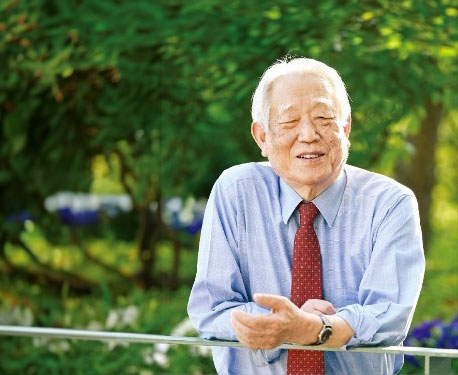 [Interview with Kang In-deok, Former Minister of Unification (2)]
Interview with Kang In-deok, Former Minister of Unification (2)Resolving North Korea's Nuclear Issue: Ending Juche Ideology and Hereditary Rule in NK⦁ Historical Precedents: China and the Soviet Union's Reforms and Opening Up After First-Generation Leader Passed Away⦁ North Korea's Nukes: Vital for Sustaining Hereditary Regime⦁ Choosing ‘Republic of Korea’ Over 'South Korea', 'NK': Signals Recognition as Separate Nation⦁ Strengthening Deterrence: Empowering Self-Sufficiency in Nuclear Material Production⦁ Psychological Warfare as an Asymmetric Weapon for North Korea's Weak SpotIn his assessment of North Korea's nuclear issue, Former Minister of Unification Kang In-deok proposes a singular solution: the elimination of both the Juche idea and the hereditary regime. The Juche idea, which serves as the guiding ideology of North Korea's Workers' Party, wields substantial control over the population and forms the bedrock for three generations of hereditary leadership.Kang underscores that as long as the Juche idea persists, the prospects for meaningful change remain dim. Removing this entrenched ideology could pave the way for nuclear disarmament.He emphasized, "The reason socialist countries like China, the Soviet Union, and Vietnam were able to embark on reforms and open up after the demise of their first-generation leaders was their avoidance of bloodline succession." After Mao Zedong's passing, Deng Xiaoping, who assumed power in China, championed reform and openness through a pragmatic philosophy known as the 'black cat, white cat' ideology. In the Soviet Union, following the death of Joseph Vissarionovich Stalin, Nikita Sergeyevich Khrushchev emerged, critiquing Stalin's dictatorship and advocating for peaceful coexistence with the Western world. According to former Minister Kang's analysis, it wasn't until the 1980s, with the ascent of Mikhail Sergeyevich Gorbachev, that 'Perestroika' was vigorously pursued.Minister Kang firmly asserted, "As long as the hereditary regime endures, North Korea will not abandon its nuclear pursuits," underscoring that "nuclear weapons serve as the only avenue for preserving their rule." He reproached Kim Jong-un for overreliance on nuclear-centric military might and diverting funds meant for food procurement and economic growth toward nuclear advancements.Kang interprets North Korea's use of "Republic of Korea" as a shift away from a unique inter-Korean relationship, signaling their readiness to treat South Korea as a separate nation. This transformation absolves them of the moral restraint associated with launching nuclear attacks.Minister Kang explained, "Since the late 1960s, North Korea has accelerated its nuclear and missile development to pressure the U.S.”. He also added “To solve the North Korean nuclear issue, we need to seek both pressure and negotiations based on our strong deterrence and close military cooperation with our allies. Above all, it's inevitable to showcase our overwhelming military superiority."Furthermore, he asserted, "The decision to abandon nuclear reprocessing facilities in the 1991 Joint Declaration of the Denuclearization of the Korean Peninsula effectively signified our relinquishment of the potential for independent nuclear capabilities." He continued, "Even at present, we should actively pursue the reprocessing of spent nuclear fuel from power plants, which would allow for the production of weapons-grade plutonium."Minister Kang highlights the necessity of South Korea utilizing its asymmetric warfare capabilities to counter North Korea's nuclear threat. As a seasoned expert in psychological warfare against North Korea, he hosted over 5,000 broadcasts targeting WPK high-ranking officials through KBS's program from 1980 for 18 years.Minister Kang insists on resuming psychological warfare with a focus on universal values such as freedom, democracy, human rights, law, and market principles. He underscores the importance of condemning North Korea's hereditary system, exposing Juche idea flaws, and fostering resistance among North Korean residents against the ruling elite.He asserted that psychological warfare, an asymmetric weapon at our disposal, can inflict severe distress on North Korea. He also pointed out that North Korea's actions, such as demolishing the Kaesong liaison office and enacting repressive laws during the COVID-19 pandemic, reflect their anxiety about the influence of South Korean culture on North Koreans.He stressed the importance of altering North Korea's internal perspective through enhanced broadcasts as part of psychological warfare. Kang believed that shifting the deeply ingrained Juche idea within North Koreans' minds required changing their perceptions through intensified psychological warfare. He emphasized that psychological warfare is the asymmetric weapon to counter North Korea's nuclear capabilities, with particularly significant effects during periods of economic hardship in North Korea.He noted, "In North Korea, a 'Jangmadang (North Korea’s Free Market) generation' is emerging, marked by increased information circulation and the rise of Donju (money masters), signaling a shift toward a more market-friendly economic system." He further commented, "North Korea attempts to curb this trend with various control policies, but it proves to be a challenging task."Especially during economically challenging times, he stressed the importance of enhancing psychological warfare aimed at North Korean soldiers involved in various construction activities and those on the frontlines. He said, "It can be helpful if they understand why socialist countries failed."Additionally, he stressed, "We need to ensure a flow of information to North Korean workers sent abroad to earn foreign currency." He pointed out, "When they return and share external information with various influential and intellectual groups in North Korea, it will significantly alter perceptions within North Korean society." He analyzed that North Korea's enactment of laws to restrict external information and its continuous organization of events for entities like the Korean Children's Union, Socialist Women's Union of Korea, and Socialist Patriotic Youth League reflect their ideological crisis.Regarding Kim Jong-un's daughter, Kim Ju-ae, he drew a clear distinction, stating that she won't be his successor. Minister Kang remarked, "Due to the deeply ingrained Confucian culture in North Korea, where the husband is regarded as the 'head of the family' or 'father,' the emergence of a female leader is deemed impossible." He believes that Kim Ju-ae's public appearances are primarily intended to garner international attention.
23.09.08 -
 [Current Affairs Review]
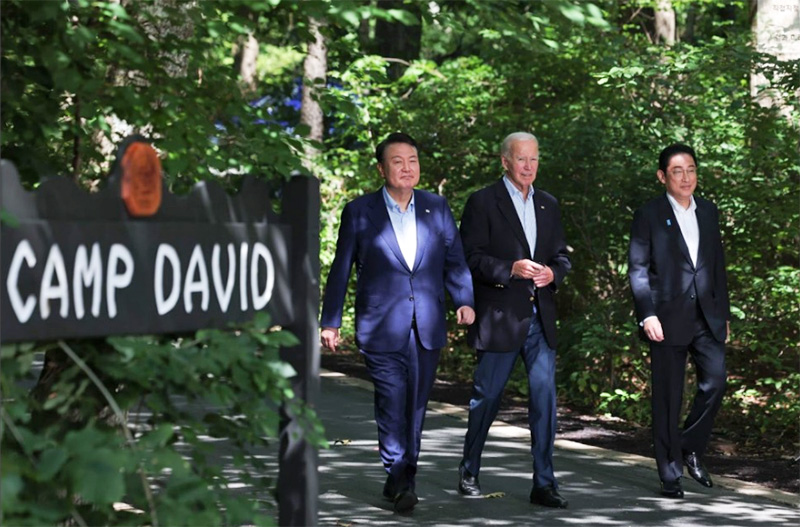
Camp David Time: Resolving the Trilateral Summit of South Korea, the United States, and JapanWon-gon Park(Ewha Womans University)⦁ Discourse on the Change of World Order⦁ A Shared Worldview ⦁ Restoration of the Norm-Based International Order⦁ US-Korea-Japan Action Plan⦁ Camp David TimeThe Camp David summit on August 18, 2023, marked a historic turning point for security and economic cooperation among the United States, South Korea, and Japan. As defined by the South Korean Presidential Office, this summit holds such immense significance that it will divide our history into "before" and "after." Beyond its symbolic location and being the first independent meeting of these three nations, the summit presented a united vision for the global order and a shared Indo-Pacific strategy. If this cooperative momentum continues to evolve, future historians may well refer to August 18, 2023, as the "Camp David Time."Discourse on the Change of World OrderIn the year 2023, the world finds itself deeply immersed in debates regarding the transformation of the global order. The conversation on global order, initially sparked by the 2008 U.S.-triggered financial crisis, reached its zenith with the U.S.-China rivalry in the latter half of 2018 and Russia's incursion into Ukraine in 2022. Economist Niall Ferguson boldly asserts, "Much like the Korean War ushered in the Cold War, the war in Ukraine will serve as the catalyst for a new Cold War." North Korea's Kim Jong-un has joined this chorus, heralding the dawn of a 'New Cold War.' Samuel Phillips Huntington's seminal work, 'The Clash of Civilizations and the Remaking of World Order,' originally published in the early 1990s, is now experiencing a resurgence in relevance. There are growing predictions that the liberal normative system rooted in Western modernity may no longer suffice, hinting at a resurgence of particularistic civilizationism, akin to China's historical stance. Anticipating an "ambiguous divide," many nations are opting not to align with major powers such as the U.S. or China, instead choosing to employ hedging strategies. German Chancellor Olaf Scholz goes even further, discussing a 'global paradigm shift' known as Zeitenwende, which signals the decline of U.S.-centric unipolarity and the rise of a multipolar system. Some even draw parallels to the historical "Interregnum" period in German history between 1254 (or 1256) and 1273 when the enthronement of a king (Holy Roman Emperor) failed to materialize, underscoring the uncertainty surrounding the fate of the United States, currently the world's most powerful nation.Presidents Yoon, Biden, and Prime Minister Kishida meet for a photo before the trilateral summit at Camp David, Maryland, on August 18th (Photo by Newsis).A Shared Worldview The trilateral summit held at Camp David between South Korea, the United States, and Japan assumes profound significance as it showcased the shared worldview of these three nations during a period of unprecedented global upheaval. It also presented a strategic vision for the Indo-Pacific region founded on this shared perspective. If the collective efforts of these nations succeed in restoring stability to the world order, the Camp David Agreement will undoubtedly leave an indelible mark on history. All three nations have acknowledged that the traditional global order is currently under duress, and the world is confronting an unparalleled crisis. During their joint press conference, President Joe Biden characterized the current situation as an "inflection point," President Yoon Suk-yeol labeled it an "unprecedented complex crisis," and Prime Minister Kishida said it's a "crisis threatening the free and open international order rooted in the rule of law." In particular, the trio perceives that the international order established on norms dating back to 1945 is encountering formidable challenges. This norm-based global order encompasses principles such as free trade, adherence to the rule of law, respect for sovereignty, territorial integrity, open multilateralism, freedom of navigation, non-proliferation, and opposition to altering the status quo through force. The jointly agreed-upon document, referred to as the "Spirit of Camp David," underscores that the very "foundation of the international order," centered on respect for sovereignty and territorial integ rity, faced a grave challenge on February 24, 2022. This was when Russia, a nuclear-armed and one of the P5, embarked on an aggressive imperialistic campaign by invading a neighboring sovereign state with territorial ambitions reminiscent of 19th-century imperialism. China's economic coercion and blatant disregard for the July 2016 ruling by the International Court of Arbitration, which deemed China's claims in the South China Sea illegal, are perceived as actions violating the rule of law and freedom of navigation, amounting to attempts to "alter the status quo through force." North Korea's pursuits in nuclear and ballistic missile development are characterized as clear-cut illegal activities that pose a severe challenge to the nuclear non-proliferation regime. In summation, the consensus among South Korea, the United States, and Japan is that the world stands at a critical juncture, with the established order facing profound challenges.Restoration of the Norm-Based International OrderSouth Korea, the U.S., and Japan have aligned their stance on restoring the norm-based international order, emphasizing their commitment to liberal democracy in the face of global order threats. During the summit, President Joe Biden stressed that "strengthening our bonds among democratic nations would enhance global security”. President Yoon Suk-yeol, in a joint press conference, highlighted “the essential role of South Korea, the U.S., and Japan in advancing a norm-based international order based on shared principles of freedom, human rights, and the rule of law for regional stability and prosperity”. Prime Minister Kishida echoed this sentiment, deeming trilateral cooperation as a "historical necessity" in addressing challenges to a free and open international order.The Camp David Agreement is not aimed at any specific nation but rather identifies challenges in the pursuit of a rule-based international order aligned with their shared values. Rooted in the 'Spirit of Camp David,' the three countries endorse a "free and open international order based on the rule of law," champion democracy, and advocate for human rights protection. Importantly, they emphasize that this partnership benefits not only their citizens but the entire Indo-Pacific region. It signifies their concerns about actions that undermine regional peace and prosperity and deviate from the norm-based international order. This includes addressing disruptive actions by China, North Korea, and Russia. Contrary to some assertions, the Camp David Agreement is not a precursor to a new Cold War but rather a response to countries undermining efforts to restore and sustain the norm-based international order.US-Korea-Japan Action PlanThe three pivotal documents - 'Spirit', 'Principle', and 'Commitment' - adopted during the Camp David summit lay out a tangible action plan for the United States, South Korea, and Japan to revive a norm-based international order. Their initial objective is to institutionalize the shared worldview and its implementation strategy. Of paramount importance is the regularizing of the US-Korea-Japan summit and various ministerial meetings. In particular, the annual US-Korea-Japan summit can serve as a mechanism to dispel uncertainties in trilateral cooperation and ensure its ongoing continuity. A notable challenge to this trilateral cooperation is the upcoming US presidential election next November. The potential return of former President Donald Trump to the White House might herald a reinforced 'America First' policy rooted in increased isolationism and sovereignty. His approach during his previous tenure, which reduced alliances to a cost-benefit calculus, could reemerge. The established regular US-Korea-Japan summit through the Camp David agreement can facilitate direct communication between South Korea, Japan, and the US president, fostering mutual understanding. It also plays a significant role in managing Korea-Japan relations. Given the historical and territorial sensitivities between these two countries, the risk of conflict is ever-present. While it may be challenging to fundamentally alter the conflict structure, effective conflict management is paramount, with a primary emphasis on maintaining open channels of communication between South Korea and Japan. Considering previous communication breakdowns during Korea-Japan disputes, the trilateral summit ensures consistent consultations at the highest level. Within this trilateral framework, the US can also assume a mediation role between Korea and Japan.The most attention-grabbing announcement after the agreement was the ‘Commitment to Consult among Japan, the Republic of Korea, and the United States of America’. It states that the three nations will coordinate their responses to regional challenges, provocations, and threats that impact their shared interests and security by promptly consulting, sharing information, aligning messages, and coordinating response actions. This agreement showcases several features. First, the Camp David 'Spirit' emphasizes the 'commitment' as voluntary, not a mandatory 'duty', reiterating its content in a separate document. While open to interpretation, it's understood to consider potential military conflicts in the Taiwan Strait, South China Sea, and the Korean Peninsula. At the Camp David Summit, a key focus was on advancing integrated deterrence. South Korea, the United States, and Japan have committed to conducting annual trilateral exercises designed to bolster coordinated capabilities and cooperation. These exercises will be named, with multi-year training plans established for their regular implementation across a range of domains. Importantly, the exercises are not geared toward addressing potential global military conflicts but rather to counter threats originating from North Korea, with a primary goal of normalizing existing training areas.Examples of these exercises include anti-submarine drills held in September 2022 and April 2023, maritime missile defense exercises for detecting, identifying, and intercepting North Korean missiles conducted in October 2022, as well as in February, April, and July 2023. Additionally, plans involve the resumption of maritime blockade and anti-piracy exercises, alongside the introduction of disaster response and humanitarian assistance drills. In the domain of space, a cornerstone for modern security, South Korea, the U.S., and Japan have also reached a cooperative agreement. They intend to address space domain threats, develop national space strategies, and responsibly utilize space through trilateral security conferences aimed at countering shared threats.These collaborative endeavors significantly bolster deterrence against North Korea's nuclear capabilities. In essence, North Korea no longer faces only the U.S.-South Korea alliance but confronts a formidable security cooperation network encompassing the U.S., South Korea, Japan, and core NATO allied nations across multiple domains, including cyber and space. The overarching goal is to effectively deter North Korea, a nation that challenges the non-proliferation regime, while preserving an international order grounded in established norms."Camp David TimeThe recent Camp David agreement has opened up opportunities for South Korea to expand its global horizons and significantly enhance its capacity to respond to North Korean nuclear threats. Despite being the world's sixth-largest military power and ranking in the top 10 in terms of economic strength, South Korea has historically tended to focus inward on the Korean Peninsula, albeit to varying degrees depending on the government in power. The Camp David summit showcased South Korea's emergence as a 'Global Pivot State' (GPS), confidently articulating its worldview beyond the Korean Peninsula, elucidating the principles of the international order it seeks, and solidifying its approach through Indo-Pacific strategies.Consequently, South Korea's approach to North Korea, which previously relied solely on the U.S.'s extended deterrence, has undergone a fundamental shift, significantly bolstering its deterrence capability by participating in the global alliance transformation. Moreover, concerns about potential involvement in regional conflicts, which were previously viewed with apprehension, can now be addressed more proactively and assertively, as South Korea has established mechanisms to assert its position confidently.However, this marks just the beginning of the journey. No matter how well-crafted an agreement may be, its implementation is of paramount importance. Given the multitude of challenges that lie ahead, maintaining consistency and steady progress is essential to ensure persistence and stability. It is imperative to keep in mind that South Korea must shoulder certain responsibilities and costs as it moves forward with this endeavor.
23.09.08 -
 [In Focus: The Korean Peninsula]
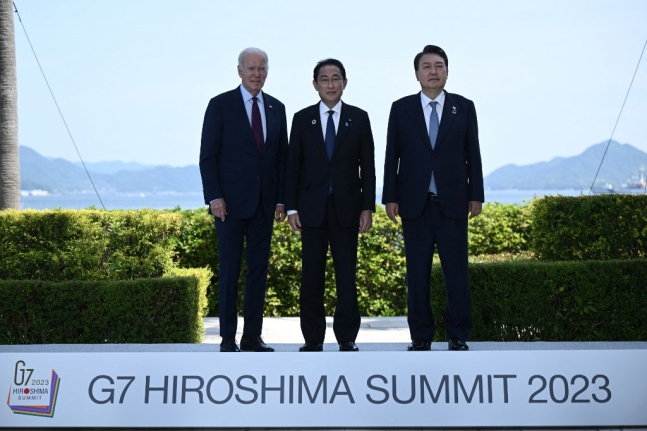
South Korea, US, and Japan Summit to Address Global Security Challenges with Focus on North Korea, China, and RussiaThe White House made an official announcement on July 28th (local time) regarding a forthcoming summit among the leaders of South Korea, the US, and Japan. The summit will take place at the presidential retreat known as 'Camp David,' situated near Washington, D.C., next month. – Camp David, a secluded location on the slopes of Catoctin Mountain in Maryland, has been historically significant for critical diplomatic decisions, including the planning of the Normandy landings in 1943, the 1959 meeting between the US and Soviet leaders, and mediation efforts for the Middle East Peace Treaty in 1978.Prior to the South Korea-US-Japan summit held during the G7 Summit in Hiroshima, Japan, on May 21, 2023, President Yoon is seen in a photo with President Joe Biden of the United States and Prime Minister Kishida Fumio of Japan. - Photo by AFPBBNewsAs North Korea strengthens ties with China and Russia, it is anticipated that the three countries' leaders will form a united front on global issues beyond North Korea's nuclear and missile problems, including the Taiwan issue, establishing supply chains for decoupling from China, and Russia's invasion of Ukraine.The White House mentioned that the summit meeting would address "regional and global security challenges," which is a veiled way of criticizing China, and it aims to "promote a rules-based international order."Former President Lee Myung-bak and George W. Bush of the United States walk together to hold a joint press conference at Camp David in Maryland, USA, on April 19, 2008. - Photo by Yonhap News AgencyDuring the Camp David summit meeting, the three countries emphasized their joint vision to strengthen economic prosperity. They also mentioned that they would discuss ways to expand cooperation with ASEAN and Pacific island nations. This clear intention to counter China's influence has led to speculation that the United States will demand a clear stance on the China issue from South Korea and Japan during the summit.It is likely that issues related to China's 'core interests,' such as Taiwan and conflicts in the South China Sea with Southeast Asian countries, and the East China Sea, will be discussed during this summit. There is a possibility that the joint statement may include phrases such as "upholding freedom of navigation in the South China Sea and East China Sea" and "opposing attempts to change the status quo" in the Taiwan Strait.The three leaders are expected to focus on urging China and Russia, as permanent members of the United Nations Security Council, to play a "constructive role" in addressing North Korea's nuclear and missile issues. South Korea, the US, and Japan are also likely to announce increased support for Ukraine during this summit. With the possibility of expanded arms trade between North Korea and Russia due to the Russian Defense Minister's visit to North Korea, the level of cooperation between South Korea, the US, and Japan in countering this situation is expected to be further strengthened.The presidential office emphasized during a briefing on the 29th that through this summit, the three countries expect to contribute more actively to promoting a rules-based international order and enhancing regional and global security and economic prosperity.
23.08.04 -
 [In Focus: The Korean Peninsula]
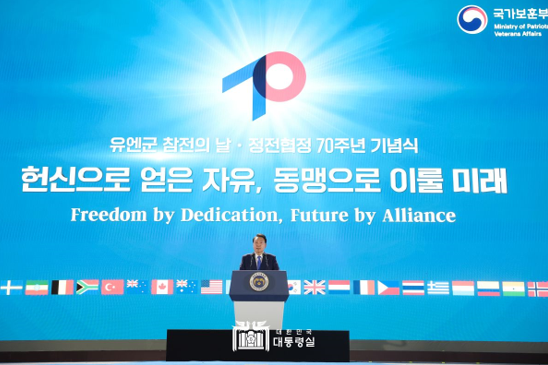
"South Korea today stands on the shoulders of United Nations (U.N.) forces' sacrifices and dedication, on their blood-stained uniforms." President Yoon Suk-yeol delivered a speech at the Commemorative Ceremony for the Korean War Armistice Agreement & UN Forces Participation Day President Yoon attended the "Commemorative Ceremony for the Korean War Armistice Agreement & UN Forces Participation Day," which took place at the Busan Cinema Center on the evening of July 27th. During the ceremony, President Yoon welcomed 62 UN veterans who were escorted by members of the South Korean military and the United Nations Command. During his speech, President Yoon expressed gratitude to the UN forces, highlighting their sacrifices made 73 years ago to defend the freedom of a country they knew little about, the Republic of Korea. He praised the 1.95 million young men from 22 countries who rushed into the saturated battlefield of war under the UN banner. Among them, a total of 41,000 UN forces including 37,000 US soldiers sacrificed their lives, with 110,000 wounded or taken as prisoners. President Yoon addressed the UN veterans as true heroes who dedicated everything to protect the freedom of a foreign nation at the most beautiful age of their lives. President Yoon Suk-yeol delivering a commemorative speech at the "Commemorative Ceremony for the Korean War Armistice Agreement & UN Forces Participation Day" at Cinema Center in Haeundae-gu, Busan on July 27th. – Photo by Office of the President of the Republic of Korea President Yoon emphasized that, even after 70 years since the signing of the 1953 Korean Armistice Agreement, the United Nations Command remains vital in preserving peace on the Korean Peninsula and protecting South Korea. He highlighted the Command's role as a platform under the UN flag, allowing allied nations on the peninsula to provide immediate military support and securing seven essential UN rear bases during wartime operations. President Yoon described this significant role of the United Nations Command as unprecedented in UN history and a testament to the international community's resolute commitment to stand united for freedom. President Yoon Suk-yeol presenting the Civil Merit Medal to veteran Donald Reed during the Commemorative Ceremony for UN Forces Participation Day held at Cinema Center in Haeundae-gu, Busan on the 27th, marking the 70th anniversary of the Korean Armistice Agreement – Photo by News1 “South Korea today stands on the shoulders of United Nations (U.N.) forces' sacrifices and dedication, on their blood-stained uniforms. The country was able to safeguard its freedom from the forces of communist totalitarianism through their sacrifices and dedication," President yoon said. He also expressed gratitude, saying, "Their dedication allowed us to overcome the difficult aftermath of war and achieve remarkable growth and prosperity, built on the foundation of democracy and a market economy." At the commemorative ceremony, the oath to the flag was recited by the soldiers of the Hanbit Unit, part of the RoK Joint Support Group for the South Sudan, on their 10th anniversary of deployment. Alcyion Cynthia Simpson, the Governor-General of New Zealand, then delivered a message representing the UN participating countries. Patrick Finn, a veteran who served in the United States Marine Corps' 1st Marine Division during the Battle of Changjin Reservoir, and Colin Thackery, the oldest contestant to win "Britain's Got Talent," performed a joint chorus with the United Choir, singing "Amazing Arirang." The government also conducted award ceremonies. President Yoon presented the Order of Civil Merit (Seongnyu Medal) to the late Private Thomas Colon Parkinson, an Australian veteran who led the establishment of the Melbourne Korean War Memorial. The medal was received on behalf of Parkinson by his daughter. Donald Reed, who contributed to the construction of the Korean War Veterans Memorial in the USA and the development of the South Korea-US relationship, was directly awarded the Civil Merit Medal.
23.08.04 -
 [In Focus: The Korean Peninsula]
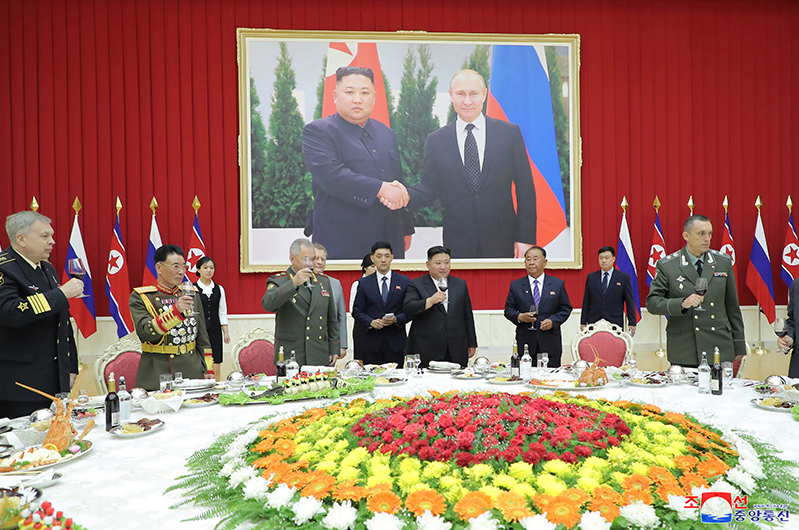
North Korea Prioritizes Closer Ties with Russia Over China, Highlighting Russian Delegation at Anniversary Event During the commemoration of the 70th anniversary of the Korean Armistice Agreement, North Korea extended invitations to delegations from both China and Russia, aiming to bolster solidarity against the alliance of the United States, South Korea, and Japan. However, North Korea displayed more attention to the Russian delegation, possibly due to shared interests in facing international sanctions and weapon shortages amid the Ukraine conflict. Kim Jong-un (on the right), North Korea's leader, engaged in discussions with Sergei Kuzhugetovich Shoigu, Russia's Defense Minister, during a dinner at the Workers' Party of Korea (WPK) headquarters in Pyongyang on the 27th. - Photo by Korean Central News Agency North Korean state media reported that Kim Jong-un, Chairman of North Korea, spent significant time with the Russian delegation, led by Defense Minister Sergei Kuzhugetovich Shoigu, during their visit. Kim accompanied Shoigu to a "military equipment exhibition" and held a separate meeting in his office with interpreters only. Additionally, Kim engaged in conversations with Shoigu during the night military parade. The Russian delegation received two grand banquets, and Kim Jong-un personally attended one of them, a notable occurrence during a ministerial-level visit. The special treatment given to the Russian delegation was apparent in the post-event coverage. The North Korean weekly external publication, Tongil Sinbo, published on the 29th, featured a notable disparity in the number of photos. Russian Defense Minister Sergei Kuzhugetovich Shoigu had around 84 photos, while Li Hongzhong, Chairman of the Standing Committee of the National People's Congress and leader of the Chinese delegation, had only 30 photos published in the Rodong Sinmun on the 27th and 28th. On July 26th, Kim Jong-un attended a weapon exhibition in Pyongyang together with Russia's Defense Minister Shoigu. He personally explained the displayed weapons. - Photo by Korean Central News Agency This growing closeness between North Korea and Russia is seen as a strategic response to nuclear and missile provocations and the Ukraine conflict, aligning both countries against the United States and Western nations. The day after the military parade commemorating the 70th anniversary of the Korean Armistice Agreement, Kim met with the head of the Chinese delegation dispatched from China on the 28th. - Photo by Korean Central News Agency On the other hand, China appears to be relatively cautious in its relationship with North Korea, as it also needs to consider its ties with the United States. This caution is evident in the choice of the head of the Chinese delegation. In 2018, they sent Li Zhanshu, who holds a higher position as a Politburo member of the Chinese Communist Party and the Chairman of the National People's Congress. However, this year, they sent a lower-ranking official, reflecting their awareness of the current situation and the delicate balance they must maintain. As a result, some analyses suggest that North Korea is choosing to strengthen its ties with Russia, which adopts a more confrontational stance against the West, instead of China, which takes a more measured approach amid the US-China competition. There are even speculations that North Korea may engage in more explicit weapon deals and cooperation with Russia while escalating missile provocations targeting the US and its allies.
23.08.04 -
 [In Focus: The Korean Peninsula]
North Korea's July 27 Parade Showcases Advanced UAVs and UCAVs Resembling Global Hawk and ReaperOn July 27, during the Military Parade commemorating the 70th anniversary of the Korean Armistice Agreement, North Korea showcased unmanned vehicles resembling the U.S. RQ-4 Global Hawk, strategic reconnaissance drone and the Unmanned Combat Aerial Vehicle, General Atomics MQ-9 Reaper. Korean Central Television reported on the parade the next day, stating, "The newly developed and produced Unmanned Aerial Vehicles and Unmanned Combat Aerial Vehicles, which will be equipped in our Air Force, flew in the skies above Kim Il Sung Square during the parade."North Korea's Unmanned Aerial Vehicle on display during the military parade in Pyongyang on July 27, commemorating the 70th anniversary of the Korean Armistice Agreement – Photo by Korean Central TelevisionThe unmanned vehicle revealed by North Korea bears a striking resemblance to the United States Air Force's Unmanned Aerial Vehicle 'Global Hawk,' from its appearance to the markings on its body, making it almost look the same.The Global Hawk is a highly acclaimed long-range strategic Unmanned Aerial Vehicle, recognized for its exceptional performance on a global scale. On the other hand, the Reaper, nicknamed the 'Silent Assassin,' is a widely used Unmanned Combat Aerial Vehicle, notably deployed in actual combat scenarios like the Iraq War, Afghanistan War, and the War on Terrorism. While countries like China, Russia, Iran, and others have developed unmanned vehicles resembling those of the U.S., none have been as remarkably similar as North Korea's, sparking speculation about possible hacking of U.S. defense contractor blueprints. North Korea is known for engaging in cyber espionage activities that target defense industries worldwide, aiming to gather essential information.During the military parade, North Korea unveiled its Unmanned Aerial Vehicle named 'Saetbyeol-4' and the versatile Unmanned Combat Aerial Vehicle named 'Saetbyeol-9,' which interestingly share the same numerical designations as the 'RQ-4 Global Hawk' and 'MQ-9 Reaper,' respectively. Notably, the attack-type Unmanned Combat Aerial Vehicle, Saetbyeol-9, was observed being transported on vehicles, with a total of five units seen— one in flight and four on the ground, suggesting at least five units have been produced. North Korea also presented a video showcasing the Saetbyeol-9 launching a surface-to-surface missile, indicating significant progress in its development.North Korea Showcases Its Version of the Reaper, Unmanned Combat Aerial Vehicle at the Military Parade on the 70th Anniversary of the Korean Armistice Agreement in Pyongyang's Kim Il Sung Square. - Photo by Korean Central TelevisionDuring the 8th Congress of the Workers' Party of Korea in January 2020, Kim Jong-un assigned the development of Unmanned Aerial Vehicles and Unmanned Combat Aerial Vehicles. The actual unveiling of these drones has happened faster than expected, leading to the need for performance analysis and countermeasures. Last month, the U.S.-based NK News, which covers North Korea issues, reported the sighting of a drone with a wingspan of approximately 35 meters at Panghyon Airport in North Phyongan Province on July 14th. This drone was about twice the size of another one with a wingspan of approximately 20 meters, spotted at the same location on July 3rd. Considering the wingspans of the U.S. Global Hawk (40 meters) and Reaper (20 meters), it is likely that these sightings were indeed unmanned vehicles.North Korea Unveils Intercontinental Ballistic Missile (ICBM) at the Military Parade on the 70th Anniversary of the Korean Armistice Agreement in Pyongyang's Kim Il Sung Square. - Photo by Korean Central TelevisionDespite their resemblance to the original drones, there are doubts about the actual performance of North Korea's versions. Replicating engines and advanced sensors like Electro-Optica (EO) cameras and synthetic aperture radar (SAR) is a challenging task, raising questions about their capabilities. The U.S. Global Hawk, for instance, is equipped with a powerful 10,000-pound Rolls-Royce turbofan engine, allowing it to fly for over 32 hours and cover a maximum range of 22,000 km. Additionally, it can detect objects as small as 30 cm from an altitude of 20 km, having a length of 14.5 meters and a cruising speed of 570 km/h.The MQ-9 Reaper is equipped with a 900 horsepower Honeywell turboprop engine, enabling it to remain airborne for 14 to 28 hours. It measures 11 meters in length, has a maximum speed of 480 km/h, and a range of 6,000 km. The Reaper can carry up to 14 AGM-114 Hellfire missiles and other munitions, including Joint Direct Attack Munition (JDAM), Laser-Guided Bombs, and AIM-92 Stinger. Currently, the South Korean Air Force operates four units of the Global Hawk, while the Reaper is not deployed by the South Korean military or the US forces stationed in South Korea. Instead, the US forces in South Korea utilize the Gray Eagle-Extended Range (ER) Unmanned Combat Aerial Vehicle, which has slightly lower performance compared to the Reaper but consists of 12 units.North Korea Reveals 'Haeil' Nuclear Torpedo at the Military Parade on the 70th Anniversary of the Korean Armistice Agreement in Pyongyang's Kim Il Sung Square. - Photo by Korean Central TelevisionConcerns have been raised regarding the core sensor and equipment capabilities of North Korea's unmanned vehicles. For instance, the electronic optical camera capabilities (resolution) observed in the satellite imagery of the 'Manri-gyeong-1' military reconnaissance satellite, salvaged by the South Korean Navy after a failed launch on May 31, were found to be significantly lower. Additionally, the lack of satellite communication capability poses a problem as it hinders real-time information relay from ground relay stations for long-range operations. During the Military Parade, North Korea publicly revealed the nuclear torpedo 'Haeil,' which was first showcased during the 'Armed Equipment Exhibition 2023' on the 26th and later appeared in photos from the 'Military Parade' in Rodong Sinmun on the 28th.During the Military Parade, Intercontinental Ballistic Missiles (ICBMs) named 'Hwasong-17' and 'Hwasong-18' were showcased. Rodong Sinmun reported their presence during the parade and emphasized that these missiles are the most potent core means of North Korea's strategic military power. They are capable of effectively deterring hostile forces' threats of nuclear war and provocative acts of invasion while ensuring the country's safety.
23.08.04 -
 [North Korean Terminology]
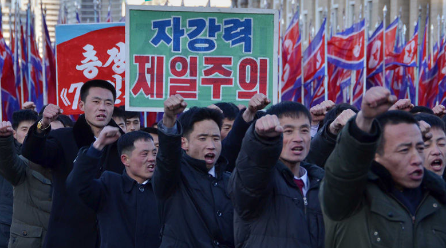
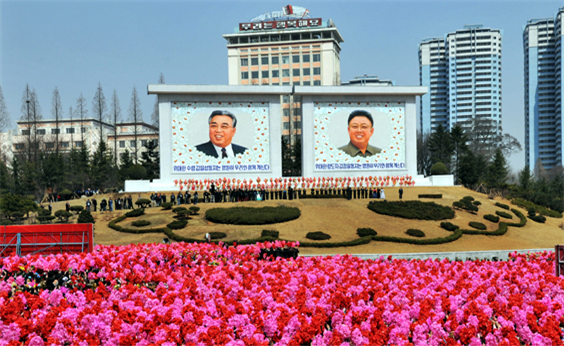
Self-development-first PrincipleA mass rally in Pyongyang promotes "The Principle of Self-help." (Image/Korean Central News Agency - Photo by Korean Central News Agency"The Principle of Self-help" is a term that emerged during Kim Jong-un's leadership, reflecting North Korea's ambition for "self-reliance" and reducing reliance on imports. Since the 1950s, North Korea has advocated this principle during unfavorable international conditions and economic hardships. This approach resulted in the country's economy becoming isolated and detached from the international division of labor. Under Kim Jong-un's regime, "The Principle of Self-help" has been emphasized even more, showcasing North Korea's pride as a nuclear-armed nation with advanced science and technology. The primary goal of this concept is to strengthen the spirit and awareness of the nation, beyond mere economic growth. The following presents the story of how "The Principle of Self-help" became prominent in North Korea under Kim Jong-un's leadership.On the right, a slogan declares "The Principle of Self-help: Locomotive of Science and Technology," and on the left, another slogan reads "Let's Live in Our Own Way" at the site of the Sangwon Cement Joint Enterprise. - Photo by Rodong SinmunOne day in November Juche 104 (2015), the respected Comrade Kim Jong Un guided a trial operation of a subway train made by the workers of the DPRK.That day, he, traveling through several stations by the subway train, highly appreciated the workers for producing the subway train with their own efforts and technology. And he said that this time the heroic working class of Kim Il Sung and Kim Jong Il clearly showed that the nature of the working class is still alive and nothing is impossible when they believe in their own strength and rely on it.Stressing the importance of self-development to firmly consolidate our revolutionary position and attain the grandiose goal of building a powerful socialist country, he said that the source of self-development is trust in and attachment to one's own things and pride and self-confidence in one's own things, adding that our own things are the best and self-development is the best.He stressed in his New Year Address for 2016 that the principle of giving priority to self-development should be maintained in building a powerful socialist country and that sycophancy and dependence on foreign forces are the way to national ruin and self-development is the only way for sustaining the dignity of the country and the nation and opening up a broad avenue for the revolution and construction.
23.08.04 -
 [North-South Korea Relations Series 3]
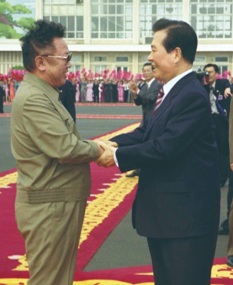
[Inter-Korean Relations Series 3]Nuclear Negotiations with North Korea and Exploratory Talks between North and SouthJung Seung-hun, Professor extraordinaryDepartment of Politics and International Studies at Sunmoon UniversityFormer head of office of the Inter-Korean Dialogue; Former chief of North Korea Intelligence and Analysis Bureau;Worked at the Ministry of Unification from 1990 to 2020(Continued from the previous issue) The June 15th North-South Joint Declaration and Inter-Korean Cooperation Projects The Breakdown of the 2003 U.S.-North Korea Agreed Framework & the Pursuit of the Six-Party Talks through China's Mediation Role 1. The June 15th North-South Joint Declaration and Inter-Korean Cooperation ProjectsThe summit meeting between President Kim Dae-jung and Chairman Kim Jong-il in Pyongyang from June 13th to 15th, 2000, marked a historic dialogue between the leaders of the divided governments. At this pivotal event, they unveiled the "June 15th North-South Joint Declaration," encompassing resolutions for reunification, family reunions, economic cooperation, and various collaborative endeavors. The first clause of the statement emphasizes the principle of "our nation's people, the true owners of the reunification issue, solving it together independently," echoing North Korea's perspective while reaffirming the "independence" principle from the July 4 South-North Joint Statement.On June 13, 2000, President Kim Dae-jung arrived in Pyongyang for the inter-Korean summit, warmly exchanging greetings with Chairman Kim Jong-il – Photo by EhistoryAbout ten days before the inter-Korean summit, on May 29th, 2000, North Korean Chairman Kim Jong-il made an unofficial visit to China, engaging in communication and coordination with Chinese President Jiang Zemin ahead of the summit. This customary practice of North Korean leaders preceding talks with South Korea or the United States continued in subsequent processes.The period between the June 2000 inter-Korean summit and North Korea's first nuclear test in 2006 witnessed the addressing of the North Korean nuclear issue through bilateral negotiations with the US and the Six-Party Talks. As the focus shifted, there arose a window of opportunity for advancing inter-Korean cooperation projects and initiatives.During the Six-Party Talks in China on September 19, 2005, a Joint Statement was adopted, encompassing six principles, including the denuclearization of the Korean Peninsula. This image symbolizes cooperation as they shook hands, marking a positive outcome. – Photo by Yonhap News AgencyStarting in 1998, the Mount Kumgang tourism project began to expand significantly through land routes. After the 2000 inter-Korean summit, efforts were made to connect the North and South by rail and road, as well as to establish the Kaesong Industrial Complex. The South Korean government facilitated North Korea's response by providing rice and fertilizer assistance, leading to increased reunions of separated families and enhanced inter-Korean exchanges. This period can be considered "unprecedented" in terms of the implementation of specific cooperation projects based on the agreements reached between North and South Korea.2. The Breakdown of the 2003 U.S.-North Korea Agreed Framework & the Pursuit of the Six-Party Talks through China's Mediation RoleThe resolution of the North Korean nuclear issue, centered around North Korea-U.S. bilateral talks, faced a crisis in 2002 when the Bush administration raised concerns about North Korea's highly enriched uranium (HEU) program. This led to a second nuclear crisis, involving North Korea's withdrawal from the NPT, the freezing of its nuclear facilities, and suspension of heavy fuel oil supplies.As a result, the North Korea-U.S. dialogue reached a deadlock, and as an alternative, multilateral talks were initiated in 2003 with active mediation by China. The backdrop for this was the Bush administration's reluctance to engage in bilateral talks with North Korea, which they had classified as part of the "Axis of Evil." China sought to leverage its influence over North Korea as a way to facilitate negotiations.In April 2003, China hosted a three-party talk involving North Korea and the U.S., in Beijing, which later evolved into the Six-Party Talks from August 2003 to September 2007, involving South Korea, Japan, and Russia. China played an actively involved role, persuading North Korea to come to the negotiation table and providing a venue for the talks, acting as a mediator and facilitator throughout the process.The process of the Six-Party Talks demonstrated a distribution of roles, with North Korea and the United States facing each other while South Korea and China acted as mediators. Through a process of negotiation and mediation, they reached the September 19, 2005 Joint Statement. The core elements of the agreement were that North Korea would abandon all nuclear weapons and existing programs, while the U.S. and other participating countries would provide North Korea with non-aggression assurances, promote normalization of relations, discuss the provision of energy (including discussing the provision of a light-water reactor at an appropriate time), and pursue a peace regime.However, shortly after reaching the September 19 Joint Statement, the U.S. Department of Treasury announced financial sanctions on the Macao-based Banco Delta Asia (BDA) bank, accusing it of handling North Korea's illegal funds. This created significant obstacles in implementing the agreement. As the unfreezing of North Korean funds became a precondition for agreement implementation, it took a year to resolve this issue. Eventually, it led to North Korea's long-range missile test (Taep'odong-2) and UN Security Council sanctions, culminating in North Korea's first nuclear test in October 2006.Subsequently, although there were initial measures agreed upon for implementing the September 19 Joint Statement within the framework of the Six-Party Talks, the verification of North Korea's submitted nuclear activity records became a contentious issue, resulting in the suspension of both the Joint Statement implementation and the Six-Party Talks.In July 2011 and February 2012, North Korea and the U.S. resumed bilateral talks, leading to agreements on the North Korean nuclear and missile test moratorium, the freezing of Yongbyon nuclear facilities, and other North Korean assistance. However, they were unable to prevent North Korea from conducting additional missile tests and a third nuclear test in 2013. Following these events, the Obama administration adopted a policy of so-called "strategic patience."On March 12, 2013, the power and characteristics of an artificial earthquake resulting from North Korea's forced third underground nuclear test were analyzed by officials from the Korean Meteorological Administration. The data was compiled from the Ministry of National Defense, Korea Meteorological Administration, Japan Meteorological Agency, and various media sources. (Source: Seoul Shinmun)In the absence of bilateral or multilateral nuclear negotiations, Kim Jong-un, who emerged as North Korea's new leader in 2012, focused on the development of nuclear and missile capabilities under the slogan of "parallel development of nuclear weapons and the economy." The international community responded to North Korea's provocations, including nuclear and missile tests, through UN Security Council sanctions resolutions and diplomatic pressures, leading to a vicious cycle of such actions that persisted until the end of 2017.
23.08.04 -
 [Common Terminology]
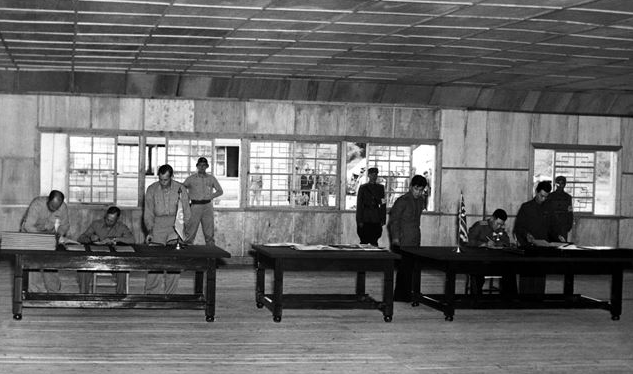
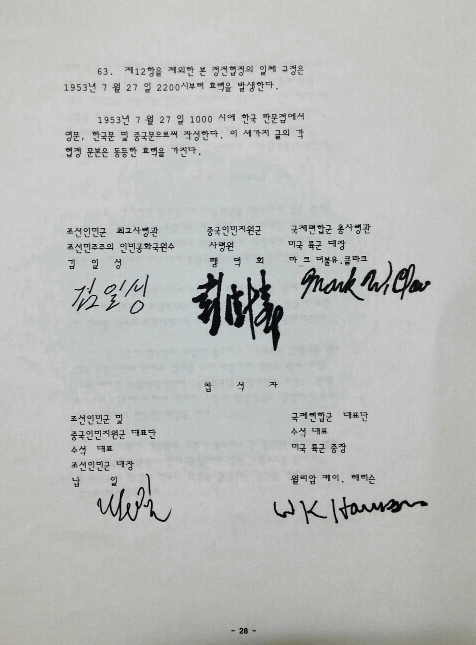
Korean Armistice AgreementOn July 27, 1953, at Panmunjom, Lieutenant General William Henry Harrison (seated on the left), the chief representative of the UN forces, and Nam-il (seated on the left), the chief representative of North Korea, signing the armistice agreement. / Photo by Yonhap News AgencyThe Korean Armistice Agreement, signed on July 27, 1953, is an agreement concerning the military armistice in Korea. It designated the Supreme Commander of the United Nations Command as one party and the Supreme Commander of the Korean People's Army and the Commander of the Chinese People's Volunteers as the other party.After the outbreak of the Korean War on June 25, 1950, and during the protracted conflict, the United Nations Command and the communist army engaged in secret contacts, leading to the first armistice talks held in Kaesong on July 10, 1951. Subsequently, the talks moved to Panmunjom in July 1952 but were suspended for nine months due to issues like prisoner of war problems. Finally, on July 27, 1953, at Panmunjom, the Supreme Commander of the United Nations Command, Mark Wayne Clark, together with the Supreme Commander of the Korean People's Army, Kim Il-sung, and the Commander of the Chinese People's Volunteers, Peng Dehuai, signed the agreement, stopping the Korean War.The agreement was drafted in English, Korean, and Chinese, consisting of a preamble, five articles with 63 clauses, and an appendix with 11 articles and 26 clauses. The preamble stated the purpose, nature, and application of the agreement. Article 1 addressed the Military Demarcation Line and the Demilitarized Zone, Article 2 specified measures for the cessation of hostilities, Article 3 dealt with prisoner-of-war issues, Article 4 made recommendations regarding the governments involved, and Article 5 included additional provisions. The appendix covered the scope of authority of the Neutral Nations Supervisory Commission.As a result of the armistice agreement, hostilities between North and South Korea ceased temporarily, but the war state continued, entering a localized ceasefire situation. The Demilitarized Zone (DMZ) and the Military Demarcation Line (MDL) were established as physical boundaries between the two countries. The Military Armistice Commission, located in Panmunjom, comprised officers from the United Nations Command and the communist army. Additionally, the Neutral Nations Supervisory Commission, consisting of Switzerland, Sweden, Czechoslovakia, and Poland, was established. The armistice agreement has remained in effect for over 60 years, making it a unique case in terms of its longevity.A map and Korean Armistice Agreement signed by North Korea, China, and the United States on July 27, 1953, without South Korea. / Photo by Yonhap News AgencyHowever, in March 1991, a senior representative of the Korean military was appointed to the Military Armistice Commission, and in the following year, North Korea and China withdrew from the commission, rendering many provisions of the agreement ineffective. Consequently, there was a growing consensus among South and North Korea, as well as the United States and other countries involved, that a peace agreement should replace the armistice agreement. In 1997, representatives from North and South Korea, the United States, and China convened for the Four-Party Talks in Geneva, Switzerland, but no significant progress was achieved.Since 1974, North Korea has consistently advocated for replacing the armistice agreement with a peace agreement, specifically between the United States and North Korea. They argued that as the United States signed the armistice agreement as the Supreme Commander of the United Nations Command, a peace agreement should also involve the United States. However, it is important to recognize that South Korea, as a main belligerent and a direct party affected by the conflict, plays a crucial role and is a key participant in pursuing a substantive peace agreement.
23.07.17 -
 [North Korean Terminology]
The Premiere Brand “7.27”The "7.27" brand, derived from the "Day of Victory in the Great Fatherland Liberation War," serves as a means to legitimize Kim Jong-un's regime.It has come to light that North Korea's "7.27" cigarettes, which Kim Jong-un is known to favor, cost over 90,000 Korean won per pack. The significance of "7.27" lies in its representation of the ruling means of victorious leaders, commemorating the Day of Victory in the Great Fatherland Liberation War (July 27th), a date that North Korea claims as its victory over the United States. These cigarettes, labeled as "7.27," are sold for $80 (approximately 91,000 won) per box in foreign currency stores located in major cities like Pyongyang and the Sinŭiju duty-free shop. In Chinese currency, they are priced at 560 yuan. Chinese individuals who have experienced smoking "7.27" cigarettes compare their taste and aroma to the renowned Chinese brand "Chunghwa." Although they may be perceived as somewhat stronger than Korean cigarettes, they enjoy popularity among Chinese smokers due to their preference. These cigarettes contain 0.7mg of nicotine and 10mg of tar.7.27 Cigarettes / Frequently smoked by Kim Jong-un and senior officials. The name is derived from the Day of Victory in the Great Fatherland Liberation War, observed on July 27th. /KBSMoreover, Kim Jong-un's "the 1st Car" bears the distinct number "7,27598." The initial three digits, 727, represent the signing date of the Armistice Agreement, while 59 signifies the date of the inauguration of the Workers' Party of Korea (WPK) Chairman, which took place on May 9th. The final digit, 8, symbolizes Kim Jong-un's own birthday. This practice is reminiscent of the era of Kim Jong-il, where the number 216, representing his birthday, was employed in various symbolic locations associated with Kim Jong-il, including gift vehicles.Photo by Korean Central Television (March 10, 2019) / Kim Jong-un's Mercedes-Maybach with the number "7•27598" on the license plate / Source: KBSThe 7.27 brand is promoted through North Korean propaganda songs such as "Our 7.27," "Victory on 7.27", “7.27 March” and others, establishing it as a symbol of triumph for the North Korean people and serving to legitimize the three-generation power succession.North Korean propaganda songs "our 7.27" and the "Victory on 7.27" parade, commemorating the Day of Victory in the Great Fatherland Liberation War / Korean Central Television
23.07.17 -
 [Kim Il-sung Series]
 Captain Kim Il-sung, Selected by Stalin in the Soviet Armed Forces Lee Seung-hyun Ph.D in Public Administration (Research Fellow at the SAND Institute) Among the five communist factions (Soviet faction, Yan'an faction, domestic faction, Kapsan faction, Manchurian faction) after the liberation, Kim Il-sung's faction, the Manchurian faction, initially emerged as the weakest. However, it was Stalin's robust backing that propelled Kim Il-sung to a leadership position. Despite the presence of other influential figures with notable backgrounds, influence, recognition, and anti-Japanese credentials surpassing Kim Il-sung, Stalin specifically selected him as the leader of the puppet state. A captured moment of Captain Kim Il-sung during his service in the Soviet Armed Forces' 88th Separate Rifle Brigade before the liberation. / Yonhap News The connection between Kim Il-sung and Stalin dates back to the pre-liberation period. During this time, Kim Il-sung served in the 88th Separate Rifle Brigade of the Soviet Armed Forces, a unit that provided refuge to the partisans of the Northeast Anti-Japanese United Army (NAJUA) who had fled from Japanese forces in Manchuria. While officially designated as a border guard unit under NKVD, Kim Il-sung, who held the rank of battalion commander, discreetly reported the activities of his NAJUA comrades to the Commander of the Far Eastern Front and the Chief of Intelligence, catching Stalin's attention. Following the liberation, Kim Il-sung secretly arrived at Wonsan Port aboard a Soviet warship in mid-September 1945. For a while, he remained out of the public eye until finally making a public appearance on a raised platform in October. The reason for his secretive arrival and initial absence from public view can be attributed to the fact that Kim Il-sung, who had borrowed the name of the renowned anti-Japanese hero 'Kim Il-sung,' held a relatively minor position as a leader within a small unit. Additionally, he had spent several years living a humble life within Soviet barracks. The complex factors influencing his decision to adopt the persona of an 'anti-Japanese war hero' without proper preparations, as well as concerns about the potential consequences of his sudden public appearance, likely contributed to the delay. North Korean magazine "Dengdae" shows Kim Il-sung with comrades, with a shift in his position and the absence of a Chinese member. / NewsTown Kim Il-sung seized power in North Korea under the control of the Soviet military administration during the liberation period. Political commissar Grigory Konovich Mekler and KGB officer Leonid Vasin, who entered Pyongyang, testify as follows: "To make Kim Il-sung the leader in Pyongyang, which was under Cho Man-sik's influence at the time, political maneuvers were carried out, and pressure was exerted through the political activities and the military power of the Soviet Union, while portraying Kim Il-sung as a legendary anti-Japanese hero." After liberation, Kim Il-sung lured and co-opted various communist factions in the northern region to establish a communist regime. He formed an alliance with Park Heon-yeong, a former member of the South Korean People's Party, and obtained the approval of the Soviet Union and China to launch the June 25 invasion. Kim Il-sung, after his failure in the Korean War, held others accountable and purged Pak Hon-yong and their faction. Since then, starting from the August Faction Incident in 1956, he gradually marginalized the Yan’an and Soviet factions and eventually suppressed the Kapsan faction. This consolidation of power laid the groundwork for a dictatorial regime. In the establishment of a dictatorial regime, Kim Il-sung named his son, Kim Jong-il, as his successor in 1972. North Korea manipulated Kim Jong-il's birthplace and birthdate, emphasizing the Paektu bloodline for propaganda purposes. Kim Jong-il was born on February 16, 1941, in Wondong, after his mother, Kim Jong-suk, escaped with Kim Il-sung's small unit to the Soviet Union ㅡ Kim Jong-il went by the Soviet name 'Yura'. However, North Korea claims that Kim Jong-il was born on February 16, 1942, on Mount Paektu. Chinese records from Baekdu refute this, stating that "Kim Jong-suk gave birth to Kim Jong-il in a camp of the Soviet Far Eastern Front's 88th Infantry Division in Khabarovsk," denying the birth on Mount Paektu. Lee Jae-deok, an anti-Japanese martyr from the Northeast Anti-Japanese United Army, refuted the claim of Kim Jong-il's birth on Mount Paektu. North Korea persistently tried to convince Lee to acknowledge the birth on Mount Paektu instead of the Soviet Union, but he refused. Eventually, they suggested changing his birth record to 1942. Mount Paektu, widely promoted as the revered birthplace of Kim Jong-il. The highest peak is marked with the name "Jong-il Peak." / Rodong Sinmun In an effort to solidify the idea of the Paektu bloodline, Kim Il-sung personally identified the location of Kim Jong-il's birth on Mount Paektu in February 1987. A cottage was built at the designated spot, which was proclaimed as the revolutionary headquarters and Kim Jong-il's birthplace. During Kim Jong-il's visit to Russia in July 2001, he shared his childhood name, "Yuri," and mentioned that he was born in a small village near the Borosilov train station called Hamatan, as recorded in Konstantin Tsiolkovsky's memoir. The disclosure that Kim Jong-il's birth did not occur on Mount Paektu has the potential to challenge the fabricated narrative of the Kim family's "revolutionary history" and could significantly impact the belief system of the North Korean population as a whole. A residential complex in Razdolnoye, Svobodny, Vladivostok, Russia, which is recognized as the verified birthplace of Kim Jong-il. Based on testimonies from local maternity homes and caregivers at the time of his birth, it has been confirmed that Kim Jong-il was born in a second-floor unit of the row house located at 88 Village Road, Razdolnoye (the leftmost unit on the second floor). / NewDaily Furthermore, the Juche ideology, the guiding philosophy of the Workers' Party of Korea (WPK), was officially formulated during Hwang Jang-yop's tenure at Kim Il Sung University. However, under the influence of Kim Jong-il's coercion and persuasion, it was declared that Kim Il-sung had founded the ideology.
23.07.17 -
 [North-South Korea Relations Series]
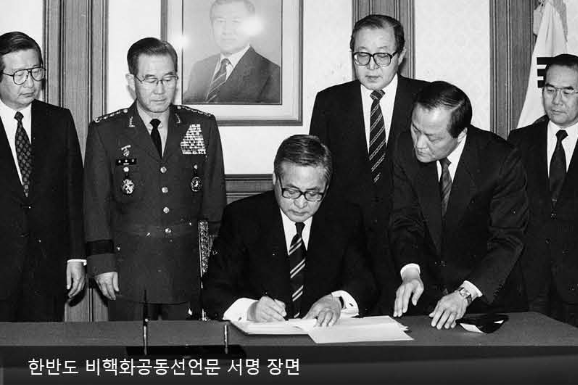
 North Korean Nuclear Issue and Inter-Korean Basic Agreements in the 1990sJung Seung-hun, Professor extraordinaryDepartment of Politics and International Studies at Sunmoon UniversityFormer head of office of the Inter-Korean Dialogue; Former chief of North Korea Intelligence and Analysis Bureau;Worked at the Ministry of Unification from 1990 to 2020The principles for resolving the Korean Peninsula issue between North and South Korea encountered a new obstacle when the international community began expressing concerns about North Korea's nuclear program in the mid-1990s. The issue gained prominence during high-level talks between the two Koreas, resulting in the "Inter-Korean Basic Agreements" in December 1991 and the "Joint Declaration of the Denuclearization of the Korean Peninsula." These agreements established a link between addressing North Korea's nuclear problem and enhancing inter-Korean relations through dialogue.In 1991, during the third representative contact on nuclear issues at Panmunjom, North and South Korea adopted a joint declaration on denuclearization. The declaration took effect during the 6th high-level talks on February 19, 1992. / Photo by Joongang IlboThe "Joint Declaration of the Denuclearization of the Korean Peninsula" imposed eight prohibitions and obligations on North and South Korea, including "testing, manufacturing, production, acquisition, possession, storage, deployment, and use" of nuclear weapons. In an effort to implement the declaration, the two Koreas established the Nuclear Control Joint Committee from March to December 1992. However, the committee's progress was derailed due to issues surrounding mutual inspections and North Korea's lack of cooperation with the International Atomic Energy Agency (IAEA).As the resolution of the nuclear issue through inter-Korean dialogue became challenging, it shifted towards bilateral negotiations between the United States and North Korea or multilateral negotiations involving neighboring countries. These discussions on denuclearization also encompassed the peace issue of the Korean Peninsula and economic incentives, leading to increased international involvement in matters that were previously considered bilateral issues between North and South Korea.Inviting China to the Negotiating TableIn April 1996, President Bill Clinton of the United States and President Kim Young-sam proposed a four-party dialogue involving North and South Korea, the United States, and China to discuss the establishment of a peace regime on the Korean Peninsula and the issue of tension reduction. At the time, bilateral channels between North Korea and the United States were already operational based on the "Agreed Framework" reached in Geneva in October 1994, which aimed to address North Korea's nuclear program and provide light water reactor.While there had been a single ministerial-level meeting between North and South Korea in Beijing in 1995 regarding rice aid, overall dialogue between the two Koreas remained at a standstill. China expressed principled support for direct talks between North Korea and the United States but refrained from direct involvement. The proposal for a four-party dialogue aimed to create a platform for inter-Korean discussions while also urging China to play a more active role.North and South Korea, as well as the four participating countries in the Six-Party Talks, the United States, China, Japan, and Russia, for the denuclearization of North Korea / Photo by SBSThe four-party dialogue took place from preliminary contacts and consultations in New York and Beijing to subsequent meetings in Geneva from December 1997 to August 1999. However, the talks concluded without significant progress as North Korea did not approach the negotiations with a sincere attitude, insisting on a peace agreement with the United States and the withdrawal of US forces from South Korea. Nevertheless, the four-party dialogue served as an opportunity for China to be recognized as a key player in resolving the Korean Peninsula peace issue and participating in the negotiation process. China has consistently demonstrated its willingness to engage in resolving the Korean Peninsula peace issue on various occasions since then.
23.07.17 -
 [Feature Article]
The Korean Armistice Agreement and the Path to a Peace RegimeHong Yong-pyoProfessor at Hanyang University,Former Minister of the Ministry of UnificationThis year marks the 70th anniversary of the Korean Armistice Agreement and the Mutual Defense Treaty Between the United States and the Republic of Korea. These agreements have played a crucial role in ending the Korean War and ensuring the security of South Korea. While minor military clashes have occurred along the Military Demarcation Line and in the Yellow Sea, a full-scale war has been avoided. Despite occasional concerns about war, most people focus on their daily lives. So, why do we stress the need for a "peace regime" and engage in discussions about it?The Korean Armistice Agreement is the only internationally recognized legal document between the warring parties, aimed at ceasing hostilities and military actions on the Korean Peninsula. It has effectively managed the division since the war. The United Nations Command Military Armistice Commission, established to supervise the agreement, has served as a crisis management channel, preventing misunderstandings and de-escalating tensions. The 1992 Basic Agreements of North and South Korea also emphasize joint efforts to transform the current armistice into a state of peace until a formal peace is achieved.Korean Armistice Agreement signed by representatives of North Korea, China, and the United States on July 27, 1953, with a map / Yonhap News AgencyHowever, it is important to acknowledge the limitations of the Korean Armistice Agreement. The absence of a clear institutional framework to address violations has resulted in frequent non-compliance incidents. Additionally, while the Military Demarcation Line on land is well-defined, there is no clear demarcation line at sea, making it challenging to prevent disputes. North Korea's strategy to undermine the agreement as a useless framework in their pursuit of peace agreements has further weakened its implementation. The exclusion of South Korea as a signatory during the negotiations is another destabilizing factor, although South Korea plays a significant role in the peace issue on the Korean Peninsula.Considering these challenges, there is consensus that transforming the armistice system into a peace regime is essential for lasting peace on the Korean Peninsula. However, it requires careful and thoughtful deliberation to determine the roadmap for establishing such a regime.In 2018, through the Panmunjom Declaration, the leaders of North and South Korea agreed to "declare an end to the war and transform the Korean Armistice Agreement into a peace agreement," with the aim of building a permanent and solid peace regime. While this agreement between North and South Korea is a positive step towards peace, it is crucial not to perceive it as the only method for establishing a peace regime. Throughout history, peace has been achieved in various ways, sometimes without specific declarations or agreements, or with the involvement of only one party.The argument for the need to declare an end to the Korean War is based on the perception that the 1953 Korean Armistice Agreement only brought a cessation of hostilities, leaving the war legally unresolved on the Korean Peninsula. However, as mentioned earlier, the war is effectively over. In the current situation, a declaration could potentially provide North Korea with an opportunity to demand the dismantling of the United Nations Command and the withdrawal of US forces from South Korea. Moreover, with little progress in North Korea's denuclearization efforts, a declaration alone could pose significant security concerns for South Korea. It is important to consider the broader implications, such as the prioritization of denuclearization, the impact on the Mutual Defense Treaty between the US and South Korea, the concerns of the parties involved, and the issue of war responsibility, rather than assuming that a peace agreement will solve everything.Creating a lasting peace regime is a complex process that goes beyond signing agreements or treaties. It necessitates the establishment of genuine peace and a foundation of trust among the parties involved. History has demonstrated that a mere agreement is insufficient without true peace and trust. Additionally, it's essential to recognize that a peace regime doesn't automatically solve all issues on the Korean Peninsula. We must remain focused on our ultimate goal of unification and not lose sight of that objective.
23.07.17 -
 [Feature Article]
The Immortality of Kim Il-sung in North Korea:The Black Hole of the 'Suryong, Great Leader Authoritative System'Kyong-hui Choi, Research Director of SANDa Ph.D. student in Politics from the University of Tokyo;Defected from North Korea in 2001As men, we are all equal in the presence of death.On July 8, 1994, North Korean residents were devastated by the sudden news of Kim Il-sung's death. They believed that their country's future and their own fate relied on him, and his passing at the age of 82 shattered their hopes, leaving them with a sense of despair and uncertainty about the future.The mourning of Kim Il-sung's death by North Korean residents is a natural response. They never considered the possibility of his mortality, as they viewed him as an immortal figure during his lifetime. In my doctoral thesis submitted to The University of Tokyo in 2015, I conducted interviews with 100 North Korean defectors who had resettled in Korea and Japan. I asked them if they ever contemplated the idea of Kim Il-sung's eventual death, given his human nature – I continue to pose this question whenever I have the chance to meet North Korean defectors— and surprisingly, their consistent response was that they never entertained such thoughts, perceiving Kim Il-sung as a divine being exempt from mortality. Even though I personally had a similar experience when I was 22 years old during Kim Il-sung's death in North Korea, I remained astounded by the steadfast mindset of the North Korean defectors who had lived in the country. This psychological phenomenon is challenging to comprehend from an external perspective.Throughout North Korea, murals with a sun emblem and the phrase "Suryong and General will be with us forever" can be seen. / by Rodong SinmunNorth Korea defines its political system as a "socio-political organism" that encompasses the Supreme Leader (Suryong), the Party, and the unified masses. This concept of a socio-political organism was introduced in a document titled "Several Problems Arising in the Ideological Education of Juche Idea,” which was initially announced on July 15, 1986, under the name of Kim Jong-il. Although the document was initially confidential, it was made public one year later, on July 15, 1987. At the core of the socio-political organism theory discussed in this document is the "Suryong-centric theory," which builds upon the "Suryong's existence theory" presented in “All about Juche Idea” announced by Kim Jong-il in March 1982. Within the Suryong-centric theory, Kim Jong-il assigns significant meaning to the dual relationship of absolute authority and succession, considering the dimensions of time and space. The Suryong-centric theory is based on the power and authority of the Supreme Leader. In North Korea, the interpretation and establishment of ideology require the approval of Kim Il-sung. Without his approval, concepts like the existence theory, centrism, and socio-political organism theory of the Supreme Leader would not be possible. When Kim Jong-il was officially designated as the successor in February 1974, he declared the slogan, "Let's Kim Il-sung-ify the entire society." This reflected Kim Il-sung's intention to pass on his monopolistic position in ideology to Kim Jong-il, which he himself could not fully achieve. The socio-political organism theory asserts that Suryong is the ultimate guiding force in North Korean society, occupying a position of absolute authority as the center of the past, present, and future. With a history of leading revolutionary efforts and nation-building, the Supreme Leader holds a central role in safeguarding and controlling all aspects of society. The Workers' Party of Korea, once considered the heart of the revolution, now functions as the central nervous system and organizational structure. The people are regarded as essential elements within this socio-political organism.Kim Il-sung often used a metaphorical comparison to a peach when describing the North Korean regime in his discussions with foreigners and overseas compatriots. He explained that a peach has flesh on the outside, a hard shell inside, and a seed within. In this analogy, the seed represents the Suryong, the hard shell represents the party, and the flesh represents the masses. The objective was to strengthen the party by firmly uniting the masses around the core of the Suryong. This analogy reflects the closed system of the nation, with a Suryong-centric regime at its core, establishing an ideological and leadership system where individuals think and act according to the Suryong's understanding.During this period, Kim Il-sung experienced a decline in both physical and mental functions as a result of the aging process, significantly impacting his life. From 1982 onwards, when Kim Il-sung was 70 years old, he began to suffer from hearing loss, which progressed to a serious impairment by the late 1980s (Selected Works of Kim Jong-il, Volume 12). It is known that he battled heart disease for several years, underwent eye surgery, and due to fatigue, reports and novels were recorded using the voice of actress Yu Gyeong-ae (Kim Il-sung's Collected Works, Volume 43).Kim Jong-il later revealed that despite the challenges posed by aging, Kim Il-sung "never took a break from work despite his illnesses," illustrahighlighting his relentless pursuit of power and his persistent drive to push himself to the limits.As Kim Il-sung aged, Kim Jong-il's role and influence expanded, positioning him as the successor to the all-powerful Suryong Kim Il-sung. Tasked with supplementing Kim Il-sung's power, Kim Jong-il demonstrated unwavering loyalty and filial piety as a son. Selected as an absolute obedient follower who could never replace Suryong, Kim Jong-il became a presence like Suryong's incarnation, considering giving absolute loyalty to Kim Il-sung as his highest mission. In 1991, when presented with plans for Kim Jong-il’s statue at the Mansudae Art Studio, Kim Il-sung directly refused it, also refusing the establishment of memorials such as the "Jangjasan Memorial" and "Changgwangsan Memorial" that conveyed Kim Jong-il's achievements. However, he gave his approval for the construction of the "Three Revolutions Exhibition Hall," deliberately modifying it to emphasize Kim Jong-il's achievements and portray him as a loyal follower of Kim Il-sung. These facts provide a clear illustration of Kim Il-sung's monopolistic ambition for power.Pyongyang Mansu Hill Grand Monument – Statue erected in April 1972 to commemorate the 60th birthday of Kim Il-sung (Left). Statue erected after the death of Kim Jong-il in 2012 (Right), proclaiming the Kim Family Regime.Kim Il-sung's power concept was manifested through revisions made to the socialist constitution and the restructuring of state institutions in April 1992. These changes legalized the state's command system under the leadership of the Chairman, granting executive authority to President Kim Jong-il. A similar approach was adopted in foreign policy as well.In September 1990, Kim Il-sung directly raised the important issue of normalizing relations between Japan and North Korea during a visit by Kanemaru Shin, the vice president of Japan's Liberal Democratic Party. This demonstrated Kim Il-sung's active involvement in shaping foreign relations. Additionally, during the Second Inter-Korean High-Level Talks in Pyongyang in October, Kim Il-sung expressed a willingness to coexist with "two governments." In his New Year's speech for 1991, he further proposed a reunification plan characterized by "one nation, one state, two systems, two governments," which marked a departure from the previously held principle of a unified Korea. These actions reflected a significant shift in stance and a willingness to make concessions.Even during the visit of former US President James Earl Carter Jr. to Pyongyang in June 1994, it was Kim Il-sung who held the ultimate decision-making authority. He aimed for negotiations with the US, conditional on halting nuclear development. Furthermore, it was Kim Il-sung, not Kim Jong-il, who made the decision to proceed with the Inter-Korean Summit on July 25 of the same year and expedited the preparations for it. He even had plans to visit Seoul in August 1995, on the occasion of the 50th anniversary of the Liberation of Korea, following the Summit in Pyongyang, with the intention of delivering a speech to the citizens of Seoul. These significant shifts in foreign policy were made possible due to Kim Il-sung's complete control over decision-making in all matters as the supreme authority of the socio-political organism, leaving no room for Kim Jong-il to participate in foreign policy matters.Kim Il-sung planned for his 90th and even envisioned his 120th birthday, demonstrating his determination to maintain power indefinitely despite the effects of aging. While he succeeded in achieving his goal of eternal leadership, he fell short in fulfilling the policy objectives he had long proclaimed, including improving the lives of the people, resolving the reunification issue, and addressing hostilities with the United States. As the supreme leader of the nation, Kim Il-sung left behind a legacy of unfulfilled promises, leaving behind a burden of unaccomplished political tasks.Kim Jong-un's arrival at Vladivostok railway station in Russia on April 24, 2019, caught people's attention due to its resemblance to Kim Il-sung's visit to Beijing in November 1953. What Kim Il-sung left behind was the enduring Suryong system, a perpetual power structure that does not involve the transfer or separation of power. This system is upheld by the divine authority attributed to the Suryong, a principle that extends to the reigns of Kim Jong-il and Kim Jong-un as well. Following Kim Il-sung's passing, Kim Jong-il declared a three-year mourning period and implemented a system of hereditary rule. The teachings imparted by Kim Il-sung, who passed away decades ago, have become official policies, and governance practices have continued through the lineage, emphasizing the need to emulate the Suryong. This is referred to in North Korea as the "the Mount Paektu bloodline”. While Kim Il Sung's efforts on Anti-Japanese, the birth myths surrounding Kim Jong-il, and the founding myths may be fabrications, they serve to legitimize the power of the Suryong through the perceived legitimacy of tradition and lineage. It is crucial for the people of North Korea to liberate themselves from the deceptive grip of the Suryong system, which offers no progression, enlightenment, or intrinsic worth.
23.07.01 -
 [Defectors' Podium]
Unveiling the Operations of North Korea's Diplomatic Missions:A Closer Look into RealityPh.D. Kim Dong-soo in North Korean studiesFormer North Korean diplomatKim Dong-Soo, the 3rd secretary of the Food and Agriculture Organization of the United Nations (FAO) North Korea representative office, fled to South Korea with his family on February 6, 1998 / by ehistoryDuring the 1960s and 1970s, North Korea's diplomatic missions actively engaged in external activities, exerting influence over South Korea in the Third World, including the United Nations (UN). Their success was attributed to the country's robust national economic power, which supported their external endeavors. North Korea followed the principles of political and economic independence and unity in defense, as advocated by Kim Il-sung, and focused on developing a socialist economy. They actively pursued economic exchanges and cooperation with socialist countries, particularly the Soviet Union, resulting in significant achievements in establishing friendly relations and providing economic and military assistance to Third World nations. The selection and deployment of North Korean diplomats during this period proceeded smoothly, considering factors such as individual ranks, party affiliation, and diplomatic competence. The operation of diplomatic missions in over 120 countries was generally successful, with few major issues.However, North Korea's diplomatic standing began to decline in the 1980s under the sole dictatorship of Kim Jong-il. The collapse of the Soviet Union and the Eastern Bloc socialist countries in the 1990s, along with China's comprehensive reform and opening-up, had a significant impact on North Korea. In response, North Korea adopted a "cliff-edge nuclear diplomacy" approach, focusing heavily on nuclear weapons development. This approach led to strained relations with the international community and a decline in diplomatic effectiveness. Additionally, the country faced a severe famine in the late 1990s, which further weakened its diplomatic position, pushing it towards a state of relying on foreign aid and support.During the 6th Congress of the Workers' Party of Korea on October 10, 1980, Kim Jong-il was officially designated as the sole successor to Kim Il-sung, solidifying his position of power and reinforcing a hereditary monarchist rule and military dictatorship. This was achieved through the implementation of the "10 Principles for Establishing the Party's Monolithic Ideological System and Its Sole Leadership System." In line with this, North Korea directed substantial resources towards the idolization of Kim Jong-il, allocating significant funds and prioritizing the pursuit of a "cliff-edge nuclear diplomacy" strategy centered around nuclear development.The situation had a significant impact on North Korea's external affairs, directly affecting the functioning of its diplomatic missions abroad and the selection and deployment of diplomats. In the late 1980s, Kim Jong-il instructed Kang Sok-ju, the Minister of Foreign Affairs, to withdraw over half of the diplomatic missions. Up until that point, the special activity funds of the Ministry of Foreign Affairs and the maintenance expenses of the diplomatic missions were supported by Office 39 of the Central Committee of the Workers' Party of Korea. However, due to severe shortages of foreign currency, the financial management department reported to Kim Jong-il that they could no longer ensure the availability of special funds for foreign affairs activities and the maintenance expenses of diplomatic missions. In response, Kim Jong-il issued the directive to "withdraw all unnecessary diplomatic missions that are depleting the country's precious foreign currency reserves without providing significant benefits to the nation." Consequently, the Ministry of Foreign Affairs withdrew more than 50 diplomatic missions, reducing their presence from 120 embassies and representative offices worldwide.Diplomatic missions operate in a manner that reflects the revolutionary and militant practices of their home country. Their daily schedule from Monday to Friday includes reading Rodong Sinmun from 8 am to 9 am, study sessions from 9 am to 10 am, engaging in external activities from 10 am to 6 pm, and participating in summarizing and reporting activities from 8 pm to 10 pm. On Saturdays, they have organizational meetings from 9 am to 10 am, lectures from 10 am to 11 am, general cleaning from 11 am to 12 pm, policy learning sessions from 2 pm to 4 pm, sports activities from 4 pm to 7 pm, and collective activities such as watching documentaries or art films from 8 pm to 10 pm.In an event related to North Korean human rights held at the United Nations Headquarters in New York on April 30, 2015, North Korean defectors (left) protest against the sudden actions of North Korean diplomats (right) / by Yonhap News AgencyDue to the foreign exchange constraints in their home country, diplomats often face delays and non-payment of living expenses for extended periods, ranging from six months to a year. As a result, some diplomats resort to engaging in illicit activities such as drug trafficking, counterfeiting currency, and involvement in the illegal trade of alcohol and tobacco. These activities are undertaken at great personal risk. In cases where a diplomatic mission experiences a delay of six months to a year in receiving funds, and the ambassador sends a special telegram requesting the funds, the response from Pyongyang is a clear directive to "withdraw the embassy!" Consequently, most diplomatic missions are unable to visit department stores regularly, and diplomat spouses collectively visit local grocery stores once a week to purchase canned food for pets or animal feed. They rely on discarded rice or corn with product defects for their sustenance.Currently, the Ministry of Foreign Affairs has a total of approximately 1,500 personnel, out of which around 1,000 are diplomats. However, only a small fraction, approximately 100 diplomats, are repeatedly sent on diplomatic missions. This means that more than 80% of diplomats have not had the opportunity to go on overseas trips, including to countries like China and Russia. Among the preferred destinations for North Korean diplomats are the Middle East, despite the ongoing conflicts and unrest, and various African countries, where they can engage in lucrative illicit trade and accumulate foreign currency. Southeast Asia, China, Russia, and Europe are also ranked as preferred destinations. On the other hand, the United Nations in New York is the least preferred diplomatic mission for North Korean diplomats to be dispatched to.In order to secure a position in major diplomatic missions in the Middle East or Africa, where illicit foreign currency earning is prevalent, individuals are expected to offer bribes of approximately $20,000. Even for regular diplomatic missions, a minimum of $10,000 in bribes is required to be considered for deployment. For instance, to be assigned to diplomatic missions known for successful foreign currency earning, such as Pakistan, Iran, Syria, and Iraq, individuals need to provide bribes of $1,000 to the department head, $1,000 to the deputy department head, $2,000 to the personnel department director, $2,000 to the personnel department head, $3,000 to the first deputy director, $1,000 to the Party Central Committee member, $2,000 to the organizational secretary, and $1,000 to the responsible director in the Organizational Department of the Central Committee of the Workers' Party of Korea. Furthermore, bribes of $2,000 to the section chief, $3,000 to the deputy director, and approximately $1,000 each to officials from the Ministry of State Security and the Ministry of Social Security, stationed abroad, are required.North Korea currently finds itself at a critical juncture. On one hand, accepting support from various international financial and economic organizations, including the United States and the United Nations, would entail subjecting the country to extensive scrutiny of its internal affairs, which is unacceptable. On the other hand, without international assistance, the already bankrupt economy will struggle to recover, leading to severe internal class conflicts and a potential regime collapse. The evolving foreign policy of North Korea presents us with both challenges and opportunities. It holds the potential for peace, coexistence, and prosperity on the Korean Peninsula. However, if the ongoing phase of dialogue fails, it may result in renewed periods of tension and confrontation. Resolving the North Korean nuclear issue and achieving peace on the Korean Peninsula are tasks of utmost importance in our time, requiring collective wisdom and concerted efforts.
23.07.01 -
 Unraveling the Realities of Kim Il-sung's Anti-Japanese Struggle
 Lee Seung-hyunPh.D in Public Administration (Research Fellow at the SAND Institute)July 8th marks the 39th anniversary of the death of Kim Il-sung, the founding leader of North Korea, who passed away in 1994. Before the liberation of Korea, he was an independence activist under the armed anti-Japanese organizations affiliated with the Communist Party of China and the Union of Soviet Socialist Republics. He was strategically chosen by Joseph Vissarionovich Stalin for political purposes and emerged as the leader of North Korea after liberation, maintaining the highest authority until his death. Kim Il-sung laid the foundation for the three-generation lineage of leadership in North Korea, which continued with his son Kim Jong-il and grandson Kim Jong-un.It is known that Kim Il-sung was born in Pyongyang in 1912 during the period when Korea was under Japanese rule. At a young age, he migrated to Manchuria and received education at a local primary school there. During his time in Manchuria, he acquired a moderate level of proficiency in the Chinese language. At the age of 11, he returned to his homeland and attended Changdeok School while living with his relatives. However, when he turned 14 in 1925, he once again returned to China. It should be noted that the records of Kim Il-sung's education found in publications in North Korea until 1968 may have been manipulated as his power and influence grew.Kim Il-sung was indeed born with the name Kim Sung-ju. Even in the revolutionary history of North Korea, there are records of his childhood under that name. However, after the liberation of Pyongyang on August 15, 1945, he began using the name Kim Young-ho. It was on October 14th when he made his first official appearance on the grandstand at a mass rally in Pyongyang that he adopted the name "General Kim Il-sung." There have been claims suggesting that Kim Sung-ju impersonated the renowned figure of the anti-Japanese struggle, Kim Il-sung.The name Kim Il-sung, when translated into Chinese characters, means "sun." North Korea attributes the choice of Kim Il-sung's name to the people's aspirations at that time, who longed for the sun. This is why it is used in Kim Il-sung's idolization. However, the North Korean residents are unaware of the period when Kim Yong-hwan, who was a Soviet soldier, existed, as it is concealed from them.Grigory Konovich Mekler, a propaganda secretary who was dispatched to North Korea in 1945 to assist Kim Il-sung, testified that before his entry into North Korea, he had a meeting with the “real” Kim Il-sung in Khabarovsk in 1944 and revealed that someone was impersonating the name of Kim Il-sung, the anti-Japanese hero widely known among the Koreans at that time.<On October 14, 1945, after the celebration event held at Pyongyang's Open-Air Theatre, Kim Il-sung visited his hometown and was accompanied by Mekler, the Soviet 25th Army's political representative (on the right), and interpreter Khan Mikhail Ivanovich for a commemorative photograph. / by Media Korea News Agency>Due to Kim Il-sung's childhood spent in Manchuria, he had limited opportunities to deeply learn about Korean history and the Korean people. During his time in the Northeast Anti-Japanese United Army and later in the Soviet 88th Separate Rifle Brigade, he was able to speak Chinese fluently in his daily life. "Park Il," who taught Marxism-Leninism to Kim Il-sung after his entry into Pyongyang, shortly after liberation, recalled that although Kim Il-sung was proficient in Chinese, he struggled with the Korean language and had a habit of organizing his thoughts in Chinese, making it difficult to distinguish whether he was Chinese or Korean. "Leonid Timofeevich Vassin," a KGB officer who was responsible for writing Kim Il-sung's speeches before the 1st Congress of the Communist Party of Korea, confessed that Kim Il-sung had very limited knowledge of the Korean language, which posed challenges in preparing appropriate speeches.There are research findings that suggest North Korea may exaggerate or fabricate certain aspects of Kim Il-sung's anti-Japanese struggle experiences and achievements. For instance, while North Korea claims that Kim Il-sung established an independent anti-Japanese guerrilla unit in 1932, historical evidence indicates that it was actually part of the guerrilla organizations organized by the Communist Party of China in various provinces of Manchuria. Kim Il-sung's unit was known for engaging in banditry and looting activities.Furthermore, the existence of the "Korean People's Revolutionary Army," which North Korea claims was independently established by Kim Il-sung in 1934, lacks historical records and is not mentioned in Japanese literature documenting the presence of anti-Japanese armed forces in Manchuria.Additionally, in 1935, during the "Minsaengdan incident" where Japanese spy organizations infiltrated anti-Japanese armed forces in Manchuria, Kim Il-sung was in danger of execution but reportedly survived with the help of a Chinese officer named Wang Yunseong. However, North Korea conceals these facts and propagates a narrative where Kim Il-sung burned the Minsaengdan list to save the Korean people.It is important to highlight that North Korea's portrayal and promotion of the organization known as the "National Liberation Organization," which is claimed to be formed by uniting overseas Korean anti-Japanese forces in places like Manchuria and the Korean Peninsula, does not correspond to the actual organization. In reality, the organization referred to was created by "Wei Zhengmin" specifically for the 7th Congress of the Communist Party of China.
23.06.30
News Letter
We are leading the global communication via Newsletter.
We will deliver the latest information and proven facts on Korean Peninsula status including North Korea situation.