

-
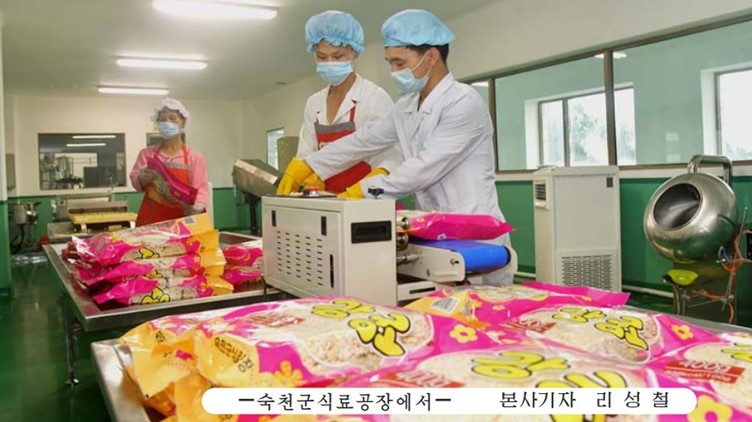 [Feature Article Series]
Marketing In North Korea (29)Distilling Hope from History Jeon Byung-kilSenior Consultant of YESInnovationformer of Secretary General of UniKorea FoundationIn the introduction to this series, I introduced the persona of Kim Yu-kyung, a fictional university student living in Pyongyang. She is an imagined character created against the backdrop of North Korea’s current reality.Looking ahead, what role might this fictional Pyongyang woman, Kim Yu-kyung, play in the future of Korean Peninsula brand collaboration?I intend to conclude this series by envisioning who Kim Yu-kyung will be ten years from now. This is purely a fictional story.The Architect of a New ConnectionWhen Kim Yu-kyung graduated from Pyongyang’s Jang Chol-gu University of Commerce with top grades, her future looked bright. She spoke excellent English, she worked hard, and she soon landed a job at North Korea’s Ministry of External Economic Relations. Her role was to gather information on foreign trade and help organize international events.For almost ten years, Yu-kyung planned the Pyongyang International Trade Fair and traveled abroad as part of North Korea’s delegations to world expos. At these events, something kept catching her eye: brands.She noticed that South Korea had famous global brands everyone recognized, but North Korea had almost none. Wherever she went, people compared the two Koreas’ economies, and the gap was obvious. South Koreans she met at fairs seemed confident, friendly, and quick to connect with foreigners—especially Americans and Europeans. Yu-kyung admired that.This experience sparked her dream: to make North Korean brands known to the world and even build brand collaborations between North and South. She studied the World Intellectual Property Organization(WIPO)’s trademark system and read about successful brand collaborations in other countries. She began to imagine what such partnerships could mean for her own country.Meanwhile, the political climate on the Korean Peninsula was changing. The U.S. and China still clashed, but both avoided full-scale confrontation. The North Korean nuclear issue was being managed under an international agreement package. In this new atmosphere, the North Korean government gave Yu-kyung a bold assignment: launch a “Brand Collaboration” project to help develop the country’s industries.Until then, South-North collaborations in branding were rare. One of the only examples happened in 2002, when Samsung used a famous North Korean dancer, Jo Myong-ae of the Mansudae Art Troupe, in its Anycall phone commercials alongside Korean pop star Lee Hyori. The ad, with the slogan “Digital Exciting – One Sound,” drew massive attention. Years later, the 2018 film The Spy Gone North even brought that story back to the public eye.As Yu-kyung thought about her new mission, she remembered the cosmetics she used in college—brands like Pomhyanggi(Meaning "spring fragrance") and Eunhasu(meaning Milky Way or Galaxy). She reflected on how universal the pursuit of beauty is. People everywhere want to look more attractive or a little younger, especially women. Cosmetic companies around the world build their products around these desires, and their brands carry that promise.Yu-kyung wondered: Could North Korean brands, too, carry such meaning and value? Could they one day stand alongside South Korean names on the global stage?State Slogans vs. Consumer DesiresBack in school, Kim Yu-kyung was taught something very different about brands. In most capitalist countries, brands focus on what consumers want—beauty, convenience, or fun. But in North Korea, brands were expected to carry political and cultural messages that the state wanted to spread.Two “model brands” she often heard about were Pomhyanggi and Eunhasu, both North Korean cosmetic labels. Yu-kyung even preferred them over South Korean or foreign products, because she believed they represented the ideals she was taught to value.But times were changing. As more South Korean TV dramas secretly made their way into North Korea through the informal markets, people began to admire the glowing makeup of K-drama actresses. While state media promoted Pomhyanggi and Eunhasu, many ordinary North Koreans were quietly dreaming of South Korean cosmetics.Yu-kyung realized that if Pomhyanggi and Eunhasu wanted to survive, they needed to evolve. These brands had to listen to consumers’ desires and reflect the trends of the times. Only then could they compete—or even collaborate—with South Korean brands. She believed their future lay not in slogans but in helping people feel more beautiful than the characters they admired on screen.Her imagination went further. What if Spring Fragrance filmed a commercial in Namwon, South Korea—the hometown of Chunhyang, the heroine of the classic Korean love story Chunhyangjeon (The Story of Chunhyang, Chunhyang means "spring fragrance."), from which the brand’s name came? And what if Eunhasu partnered with Samsung’s world-famous Galaxy smartphones for a joint promotion—cosmetics and technology side by side?For Yu-kyung, these weren’t just dreams. They were a vision: North Korean brands stepping beyond national borders and entering the global stage. Of course, she knew this would only be possible if North Korean products met international standards of quality. But in her mind, that was the path toward the future.More Than a Beer, A Symbol of Connection Inspired by her dreams of North-South brand collaboration, Kim Yu-kyung thought about something close to her own life—Taedonggang Beer, the drink she often shared with her friends. She imagined it could become the centerpiece of a new Korean Peninsula brand collaboration.Daedonggang Beer wasn’t just any beer. Back in the early 2000s, North Korean supreme leader Kim Jong-il gave an unusual order: “Create the world’s finest beer.” To make that happen, North Korea bought the entire brewing equipment of Ushers, a British brewery that had shut down, and also imported drying equipment from Germany. By 2002, Taedonggang Beer was being brewed in Pyongyang.Because it began with such international origins and was linked directly to the leader’s interest, the beer drew global attention. At first, it was served only to party officials or foreigners living in Pyongyang. But soon, beer houses around the city began offering it to locals too. A pint (about 500ml) cost just 60 North Korean won—roughly the equivalent of 60 cents at the time—but on the black market, it sold for many times more.The beer itself was special. It used clean underground water from the upper Taedong River, barley from Hwanghae Province, and hops from the northern mountains. With less carbonation and a thick, foamy head, it developed a unique taste. Foreign media even took notice: The Economist once reported that North Korean beer was “tastier than South Korean beer.”North Korea never advertised the beer in the Western sense, but state media cleverly promoted it through “news reports” and features, such as coverage of the Taedonggang Beer Festival. In 2019, a special “beer tourism” program was even launched for foreigners to experience North Korean brewing culture.Taedonggang Beer’s fame spread even further in 2020, when it unexpectedly appeared in the hit South Korean drama Crash Landing on You. In three different scenes, characters were shown drinking Daedonggang Beer: villagers bonding together, the heroine easing her loneliness, and the two main characters sharing an emotional moment. It wasn’t paid product placement, but the exposure acted like free advertising, making the beer famous beyond North Korea.For Yu-kyung, this wasn’t just a drink. It was a symbol of connection—a product with both local pride and international recognition. She dreamed of building a brand collaboration around it, where Taedonggang Beer could bring people together across borders, just as it already had on screen.A Cool Dream in a BottleWhen Kim Yu-kyung shared her first idea online—using Taedonggang Beer for a North-South Korea brand collaboration—the world had mixed reactions.Some people were hopeful. They said, “If this business can become a seed for peace on the Korean Peninsula and in East Asia, that would be amazing.” Others were harshly critical. Many mocked the North Korean system itself, while some, who had painful memories of life under that regime, left angry comments.At one point, people even posted parody images—photoshopping Taedonggang Beer trucks into pictures of North Korea’s military parade vehicles.Yu-kyung thought long and hard. In the end, she chose three words to guide her project: dialogue, empathy, and reconciliation. They might not sound like the usual themes of a beer brand, but she wanted to build on beer’s natural image of being cool. Her concept became: cool conversations, smooth empathy, and warm reconciliation.For “cool conversations,” she imagined holding joint beer festivals in two symbolic places: Yeongdeungpo Park by the Han River in Seoul and the riverside near Yanggakdo in Pyongyang.Why those two? Yeongdeungpo Park used to be the birthplace of modern Korean beer. From 1933 until 1996, the site was home to breweries—first run by Japan’s Kirin, and later by South Korea’s OB Beer(Now Cass). There’s even an old brewing kettle still on display in the park today.Meanwhile, Yanggakdo in Pyongyang was also home to a brewery built in the 1930s by the Japanese to spread beer culture in the northern part of the peninsula. For Yu-kyung, these places were the starting points of Korean beer history. What if the two Koreas held a joint beer festival here—celebrating beers from across the peninsula and the world, mixed with music and art? She believed cool conversations would flow naturally.For “smooth empathy,” she looked at the food that goes with beer. In South Korea, drinking culture always comes with anju—snacks and dishes paired with beer. Yu-kyung dreamed of creating new recipes that combined Taedonggang Beer with local specialties from all over the peninsula: sauces from Jeju, seafood from Gangwon, spicy dishes from Jeolla, barbecue flavors from Gyeongsang, and more.Even in North Korea, where dried pollack had long been a standard beer snack, she imagined introducing fresh and creative pairings.If this idea spread, Taedonggang Beer could stop being just a Pyongyang brand and instead become a shared brand of the entire Korean Peninsula—something that represented not division, but connection.The “Reconciliation” Beer ProjectFor Kim Yu-kyung, the final step of her North-South beer collaboration project was also the most emotional. She wanted to create a public campaign about healing and reconciliation—a message for both Koreas to let go of past pain and move toward unity.Her idea? A limited-edition beer series called “Reconciliation.”Daedonggang Beer already came in seven varieties, each with a slightly different alcohol level, taste, and recipe. Yu-kyung decided to design a story for each of the seven beers, tying them to key moments in Korea’s modern history. These wouldn’t be political or religious statements, but themes of healing, gratitude, and shared humanity.She knew not everyone would agree. Some would welcome it, others might resist. But to Yu-kyung, reconciliation required courage—and even if the message wasn’t universally accepted, it was worth trying.Special Edition 1: Taedonggang 1866Inspired by the General Sherman Incident (an American merchant ship destroyed in the Taedong River in 1866): A message of reconciliation toward the United States."• 4.5% alcohol, rich malt flavor with balanced bitterness.Special Edition 2: Taedonggang 1894The First Sino-Japanese War broke out in 1894, with a major battle taking place in Pyongyang along the Taedong River: A message of reconciliation towards Japan and China.• 5.5% alcohol, light and clean taste, a classic beer style.Special Edition 3: Taedonggang 1897In 1897, Soongsil Academy, a modern educational institution, was founded in Pyongyang. A message of gratitude to those who worked for the enlightenment and modernization.• 5.5% alcohol, a mix of barley and rice for a refreshing yet smooth flavor.Special Edition 4: Taedonggang 1920Honoring the Economic Self-Sufficiency Movement in 1920 led by Cho Man-sik, promoting economic independence.• 4.5% alcohol, a blend of rice and barley with a crisp, clean taste.Special Edition 5: Taedonggang 1950A painful memory—the outbreak of the Korean War in 1950, which divided families and devastated the land. This edition carried a message of repentance and reflection.• 4.5% alcohol, very light in color, with a soft rice aroma and gentle hops—aimed at women and lighter beer drinkers.Special Edition 6: Taedonggang 1985Commemorating the first reunion of separated families in Seoul and Pyongyang during the Chuseok holiday in 1985. A tribute to the millions of divided families.• 6% alcohol, a dark beer with strong coffee flavor, rich and bitter, representing deep emotions.Special Edition 8: Taedonggang 2000Marking the first-ever inter-Korean summit in 2000, carrying a message of peace and hope for 80 million Koreans and neighboring countries.• 4.5% alcohol, a light but refreshing dark beer with a hint of chocolate—appealing to a new generation.When Yu-kyung finished her plan, she leaned back and thought: Now, it’s up to the people.If consumers and surrounding environments were ready, they would embrace it. If not, it would take more time—or perhaps a new approach. She didn’t expect a perfect answer or instant success. But to her, the important thing was to keep searching for ways forward, believing that reconciliation could one day be poured into a glass, shared across a table, and toasted to a better future.
25.08.22 -
 [Korea–Japan Relations]
The Korean Peninsula and Japan after Eight Decades of Division:Negative Chain Reactions among North Korea, South Korea, and JapanYoon Seok-jungNational Diplomatic AcademyI. The Divided Korean Peninsula and Japan in the Cold War EraThe year 2025 marks the 80th anniversary of Korea’s liberation from Japanese colonial rule. On August 15, 1945, the Korean Peninsula emerged from 35 years of colonial subjugation—but its liberation was immediately overshadowed by division.Rather than full independence, the peninsula was partitioned along the 38th parallel, with the United States and the Soviet Union administering the South and North respectively.The onset of the Cold War ensured that division hardened into permanence. In 1948, two separate governments were established, and with the outbreak of the Korean War in 1950, division escalated into systemic confrontation. The 1953 Armistice halted hostilities but cemented the Peninsula as a frontline of Cold War rivalry, with Seoul and Pyongyang entrenched under the respective patronage of Washington and Moscow.Japan’s role in this history is complex. In 1965, twenty years after Korea’s division, South Korea and Japan normalized relations. However, negotiations failed to resolve fundamental issues surrounding the illegality of colonial rule and the matter of compensation.Article 2 of the Basic Treaty—stating that “previous treaties are already null and void”—was interpreted differently: Seoul maintained that all pre-1910 treaties were invalid from the outset, while Tokyo argued that their nullification resulted from Korea’s independence.The accompanying Claims Settlement Agreement was framed not as compensation but as the settlement of financial and civil claims, largely presented as economic cooperation. Cold War imperatives weighed heavily: Seoul required Tokyo’s support in its contest with Pyongyang over legitimacy and systems, and anti-communism became the driving force behind normalization.This anti-communist alignment with Seoul had direct implications for Tokyo’s approach to Pyongyang. While Japan formally maintained that its relations with North Korea remained “a blank slate,” its choice to normalize ties with South Korea constrained its diplomatic maneuverability toward the North.Japan could not risk undermining the security and economic benefits of its partnership with Seoul, an essential anti-communist outpost. Consequently, normalization with South Korea came at the expense of relations with North Korea, effectively foreclosing options for engagement.Thus, Cold War–era relations among the Peninsula and Japan were shaped by a “negative chain reaction”: Seoul and Pyongyang engaged in mutual non-recognition and ideological hostility; Tokyo aligned with Seoul on the basis of anti-communist solidarity; and as a result, Tokyo’s relations with Pyongyang were locked into hostility and non-normalization.The legacy of this chain remains visible in 2025—the 80th anniversary of Korea’s division, the 60th anniversary of Japan–South Korea normalization, and simultaneously, the 60th anniversary of Japan–North Korea non-normalization.II. Contemporary Dynamics in 2025The structure forged in the mid-20th century continues to shape present-day relations among the Peninsula and Japan. In this sense, Cold War legacies represent “history in the making.” As the German legal scholar Carl Schmitt noted in his concept of war as a state, a conflict may persist even after open hostilities end, if adversaries continue to perceive each other as enemies.The Korean Peninsula remains in precisely such a condition. Hostilities ceased with the armistice, but the war has never formally ended, and both Koreas continue to treat each other as enemies. Japan, in turn, remains entangled in this unresolved conflict structure.Two cases illustrate this persistence:First, South Korea–Japan tensions amid Seoul’s peace initiatives. During the Moon Jae-in administration, Seoul pursued rapprochement with Pyongyang under the banner of a Korean Peninsula peace process. Yet as inter-Korean tensions temporarily eased, Seoul and Tokyo clashed over unresolved historical disputes.This dynamic reflected a structural reality: the basis of Seoul–Tokyo cooperation has long rested on shared perceptions of a North Korean threat. When that threat perception diverged, bilateral frictions resurfaced—echoing Cold War–era zero-sum dynamics.Second, the abduction issue and North Korea–Japan hostility. In 2002, Kim Jong-il admitted to the abduction of Japanese nationals, returning five survivors while claiming that eight had died. Japan, however, maintains that at least 17 citizens were abducted, with potentially more victims unacknowledged.Tokyo views these abductions as tied to Pyongyang’s covert operations against both South Korea and Japan. The abduction issue has since become the central obstacle to normalization, reinforcing hostility. This too reflects the enduring linkage: inter-Korean confrontation perpetuates abnormal Japan–North Korea relations.III. North Korea’s Hostile Two-State Doctrine and Implications for JapanSince 2023, Pyongyang has recast the international order as a “new Cold War” and redefined inter-Korean relations as those of two hostile states. In January 2024, Kim Jong-un declared: “We must completely eliminate the concepts of unification, reconciliation, and kinship from the history of our republic.” Unlike the externally imposed division of 1945, this “two-state doctrine” represents a self-chosen perpetuation of division.For Seoul, however, peaceful unification remains a valid and necessary policy objective. The more Pyongyang emphasizes hostility, the more Seoul must internationalize the discourse on peaceful unification and assert leadership in shaping the Peninsula’s future. Division, in Seoul’s view, is not permanent but a problem to be resolved through diplomacy and eventual reunification.Japan too faces a choice. Since 1965, Tokyo has largely mirrored Seoul’s antagonism toward Pyongyang, paying its own price through unresolved issues such as abductions and non-normalization. Going forward, Japan must broaden its strategic perspective.Rather than being constrained solely by the perception of North Korea as a shared threat, Tokyo should seek opportunities to cooperate with Seoul in fostering conditions for dialogue with Pyongyang. If inter-Korean relations improve, Japan could normalize ties with North Korea on a foundation not premised on hostility—advancing its broader interests in East Asia, including security, trade, and cultural exchange.ConclusionEighty years after liberation and division, the Korean Peninsula and Japan remain bound by Cold War legacies. The negative chain reaction among North–South, South Korea–Japan, and North Korea–Japan relations continues to shape the region.Breaking this cycle will require strategic flexibility, sustained dialogue, and future-oriented approaches in both Seoul and Tokyo. Only then can the abnormality of this trilateral relationship be overcome and replaced with a structure conducive to stability, cooperation, and peace in Northeast Asia.
25.08.22 -
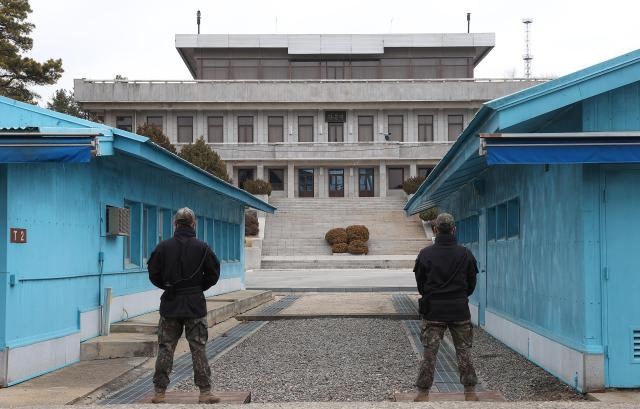 [Current Affairs Analysis]
“From Washington and Tokyo to Pyongyang”:Now Is the Time for a “North Korea–U.S. First, Inter-Korean Second” StrategyJeong Se-hyunFormer Minister of UnificationThe Lee Jae-myung administration has expressed a strong commitment to improving inter-Korean relations—a welcome gesture. However, this is not a moment for haste. The strategic landscape has shifted, and North Korea has already redefined the framework for engagement.On June 28, Kim Yo-jong, vice department director of the Workers’ Party of Korea, issued a statement sharply criticizing the South Korean government, claiming that its “blind faith in the U.S.-ROK alliance and its confrontational posture are no different from the previous administration.”Yet just one day later, she shifted her tone—emphasizing the importance of “normalizing relations between nuclear powers” and noting that the personal relationship between Chairman Kim and President Trump was “not bad.”This signals a critical reality: the starting point for diplomacy is no longer Seoul, but Washington—just as it was in 2018.North Korea has made clear that normalization with the United States is its primary objective. Pyongyang understands better than anyone that without U.S. engagement, sanctions relief, security guarantees, and meaningful economic cooperation—especially for achieving its five-year economic plan and “20×10 regional development policy”—are unattainable.Since its adoption of the “two-state theory,” North Korea no longer sees South Korea as a primary interlocutor. This is the cold strategic calculus.Nonetheless, this is not a cause for resignation. On the contrary, it is precisely in this context that South Korea can play a vital role—not as a protagonist, but as a facilitator. The priority should not be to lead the process, but to create the right diplomatic conditions. Seoul must help lay the groundwork for renewed U.S.–North Korea dialogue in a way that enables both sides to return to talks without losing face.North Korea has consistently signaled that inter-Korean relations are not a priority. Ignoring that message and acting unilaterally risks damaging Seoul’s credibility without yielding tangible progress.What is now needed is a strategy of “circumvention.” Mao Zedong famously took control of the countryside before surrounding the cities—a lesson that applies to diplomacy as well. Instead of heading directly to Pyongyang, a more viable route may run through Washington and Tokyo.Japan has its own political rationale for engagement—most notably, resolving the abduction issue—and would also be motivated by the prospect of establishing diplomatic ties and economic cooperation with North Korea.To bring Pyongyang back to the table within the broader framework of denuclearization, a realistic roadmap must be presented—starting with a freeze and eventual reduction of the nuclear arsenal, paired with phased incentives such as limited sanctions relief, humanitarian assistance, and the establishment of liaison offices.This kind of “conditions-based diplomacy” was effectively practiced by the Kim Dae-jung administration. At that time, a breakthrough was achieved through a dual-track approach: people-to-people exchanges led by Hyundai, and U.S.-driven diplomacy under the Perry Process. That experience offers a useful precedent for today.Pyongyang now explicitly rejects the term “denuclearization,” and Washington is well aware of this. President Trump effectively acknowledged North Korea as a de facto nuclear state and adopted a posture closer to arms control than denuclearization. If dialogue between North Korea and the United States resumes, it will likely take the form of “disarmament talks.” Restoring mutual trust will be the first step—and in this, South Korea’s role as a diplomatic catalyst could prove essential.Some may raise concerns about marginalizing South Korea in favor of U.S.–North Korea engagement. But it is time to move past this anxiety. A meaningful path toward inter-Korean engagement will only reopen once U.S.–North Korea dialogue resumes and tensions de-escalate. Seoul should position itself as a credible facilitator and mediator in U.S.–DPRK talks.The road to engaging Pyongyang need not begin in Seoul—it may start in Washington, Tokyo, or even Vladivostok. The detour may seem long, but it could ultimately prove to be the shortest path to sustainable peace.What the Lee Jae-myung administration needs now is not an urgent push for inter-Korean breakthroughs, but a deliberate strategy to support U.S.–North Korea engagement and foster a broader diplomatic environment conducive to progress on the Peninsula.This means adopting a calibrated approach: strengthening cooperation with Japan, supporting conditions for renewed dialogue between Washington and Pyongyang, and guiding inter-Korean engagement within that broader framework.Peace on the Korean Peninsula rarely comes in a straight line. It often arrives through curves and detours. Now is the time to embrace this reality—and to take strategic, patient steps toward durable peace.
25.08.08 -
 [Thematic Analysis]
North Korea’s Climate Change Response and Opportunities for Cooperation with South Korea and the International CommunityChan-Kwon JeongDirector, National Security and Disaster Management Research InstituteClimate change has emerged as one of the most urgent global challenges, increasing the frequency and severity of extreme weather events such as floods, droughts, heatwaves, and typhoons. Traditional disaster management systems—including early warning mechanisms, emergency supplies, and critical infrastructure—are increasingly inadequate in addressing these escalating risks. This shifting threat landscape calls for a new paradigm in disaster preparedness and response.In North Korea, the challenge is further compounded by a fragile disaster management system. The country’s limited capacity to respond effectively amplifies both human and economic losses, and in turn, poses potential risks to regime stability.Recognizing these challenges, the Kim Jong-un regime has positioned climate change response as a central pillar of its governance strategy. Since assuming power in 2012, Kim has emphasized environmental resilience as essential to regime stability—particularly in the context of chronic food insecurity and recurrent natural disasters.In 2014, North Korea enacted the Disaster Prevention, Rescue, and Recovery Act, establishing a four-stage disaster management framework: prevention, preparedness, response, and recovery. The government also created the National Emergency Disaster Countermeasures Committee and delegated disaster preparedness and emergency coordination responsibilities to provincial and local People’s Committees. More recently, in July 2025, Pyongyang established a new Disaster Prevention Bureau, reportedly aimed at reforming and consolidating the country’s existing disaster response institutions.Alongside domestic reforms, North Korea has engaged with international climate governance frameworks. It is a party to the United Nations Framework Convention on Climate Change (UNFCCC), the Kyoto Protocol, and the Paris Agreement.In 2019, it launched a National Climate Change Response Strategy to align with global adaptation and mitigation efforts. On paper, these developments mirror the institutional frameworks adopted by other countries. In practice, however, North Korea’s efforts are constrained by structural challenges: centralized governance, lack of transparency, outdated infrastructure, chronic resource shortages, and limited engagement with international partners.The impact of these limitations was starkly illustrated in July 2024, when severe flooding in Sinuiju submerged over 4,100 homes, 30 million square meters of farmland, and key transport infrastructure, forcing the relocation of 5,000 residents to Pyongyang.Kim Jong-un is reportedly aware of the growing threat that large-scale natural disasters pose to North Korea’s economy, public health, and political stability. In this context, recent high-level exchanges—such as the July 2025 visit by Russia’s Deputy Minister for Emergency Situations—suggest a gradual opening toward external cooperation in disaster response.Climate change transcends ideology and national borders. It is a shared threat that demands transnational solutions. North Korea lacks the technical and financial capacity to rebuild its degraded forests, manage transboundary water resources, disseminate early warnings, or effectively mitigate flood and drought risks without external assistance. Consequently, there are clear opportunities for cooperation with South Korea and the broader international community.Past Precedents and Ongoing PotentialThere are precedents for inter-Korean disaster cooperation. Following the 2004 Ryongchon Station explosion, South Korea provided $1 million in humanitarian assistance. After major flooding in 2006, Seoul sent rice, cement, steel bars, and medical supplies.In 2007, it delivered tree saplings and pest control materials to support reforestation efforts. During the 2009 H1N1 influenza outbreak, South Korea supplied 500,000 antiviral doses along with sanitation supplies.Beyond inter-Korean efforts, multilateral channels—such as the UNDP, FAO, UNICEF, the Green Climate Fund (GCF), and various international NGOs—have supported projects in food security, health, forest restoration, renewable energy, and disaster resilience. These examples suggest that humanitarian and environmental cooperation remains feasible, even amid ongoing political tensions.To advance future cooperation, a depoliticized, pragmatic approach is essential—focusing solely on humanitarian and environmental goals while minimizing political or military entanglements.South Korea, in particular, should prioritize data sharing, climate monitoring, and transparency through multilateral platforms such as the Green Climate Fund and UN agencies, rather than relying exclusively on bilateral channels.However, several constraints remain: heightened political tensions, sanctions, North Korea’s reluctance to share disaster data, and institutional opacity continue to hinder progress. Overcoming these barriers will require shifts in North Korea’s external posture and greater flexibility in legal and institutional frameworks.Pathways for Future CooperationIf North Korea signals openness, the following initiatives could serve as meaningful entry points:1. Joint Forest Restoration ProjectsSouth Korea and international partners can provide financial and technical assistance, while North Korea contributes labor for pilot afforestation programs. These efforts could later be scaled nationwide to reduce the risk of flooding, landslides, and drought. Incorporating digital technologies and climate data would support the development of a sustainable forestry and agricultural management system.2. Joint Disaster Response TrainingScenario-based drills involving South Korea, North Korea, and international actors could significantly enhance North Korea’s preparedness for floods, droughts, earthquakes, and other natural hazards. Exercises might include evacuation simulations for flooding along the Yalu River, seismic events near Mt. Baekdu, or emergency responses to potential releases from the Hwanggang Dam.3. Integrated Water Resource ManagementA peninsula-wide system for water management and disaster information sharing could reduce response times and minimize damage during environmental crises. In cases of marine pollution or extreme weather affecting shared waterways, a joint mechanism could facilitate timely alerts, mobilize equipment, and coordinate pollution control efforts.4. Peninsula Climate Change Research InstituteA provisional joint institute could serve as a hub for climate data collection, policy development, and scientific collaboration. South Korea already hosts key institutions such as the National Climate Change Adaptation Center and the Greenhouse Gas Inventory and Research Center, but these efforts are limited by the absence of North Korean participation. Engaging the DPRK would strengthen regional research infrastructure and improve policy coordination.ConclusionNorth Korea’s pursuit of self-reliance in climate and disaster policy—combined with its isolation from South Korea and the broader international community—remains a significant obstacle to effective cooperation. Yet, if Pyongyang demonstrates even modest flexibility, increases transparency, and separates humanitarian concerns from political calculations, opportunities for meaningful engagement could expand considerably.Climate resilience cannot be achieved in isolation. Just as determination can pierce the hardest barrier, and a seedling can sprout from frozen ground, sustained and steady efforts by both Koreas and the global community can pave the way for productive cooperation. In an era of shared environmental vulnerability, pragmatism, trust-building, and science-based collaboration offer the surest path forward.
25.08.08 -
 [Analysis and suggestion]
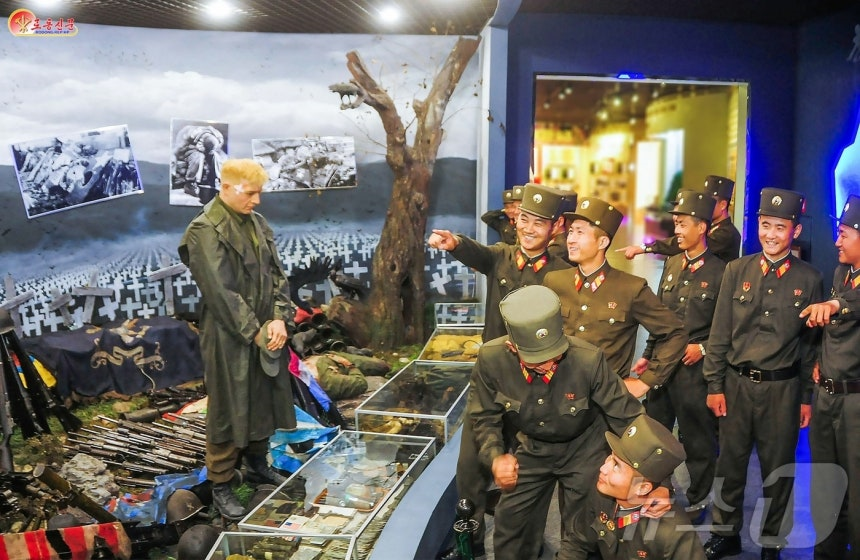
North Korea and the “Victory Day”J.R. KimPresident, Korea Council For Peace and CooperationNorth Korea commemorates July 27—the date the Korean War armistice was signed in 1953—as “Victory Day.” From early childhood, North Koreans are taught that the Korean War was a “war of aggression” launched by the puppet regime of Syngman Rhee in South Korea, backed by American imperialists. According to this narrative, the North fought a counteroffensive war to liberate the South Korean people from U.S. imperialism.Despite failing to unify the peninsula under communist rule, North Korea glorifies the war as a victory and holds grand annual celebrations to reinforce this narrative. In 1973, North Korea officially designated July 27 as “Fatherland Liberation War Victory Day.” In 1996, it was elevated to a national holiday under the name “Victory Day” (Jeonseungjeol) and has since been celebrated with increasing significance.North Korea uses this day to inflame anti-American sentiment. On the evening before July 27, a mass dance event is held at Kim Il Sung Square in Pyongyang, featuring thousands of students. On the day itself, Korean War veterans participate in various commemorative events, including military parades. The regime portrays the occasion as a symbolic victory over the world’s most powerful military, the United States.Songs as Propaganda ToolsTo spread the ideology of July 27, North Korea employs a range of propaganda tools—music being one of the most prominent. A notable example is the song “Our July 27,” believed to have been composed in the early 1970s.Since 1973, when July 27 was first officially designated as Victory Day, the song has been performed at many commemorative events. It evokes memories of the war among veterans, stirring emotions of camaraderie and encouraging a renewed fighting spirit in the event of future conflict.In 2013, forty years later, the “July 27 March” was introduced as a military anthem. By that time, most Korean War veterans had aged, and the song was aimed at younger generations.It claims that the armistice agreement was effectively a U.S. surrender and emphasizes that it was the older generation who burned the enemy’s flag in triumph. The lyrics stress unwavering loyalty to the leadership across generations until final victory is achieved.Cigarettes as Ideological CarriersAnother propaganda vehicle in North Korea is cigarettes. Everyday items—including cigarette brands—are used to promote state ideology. Cigarettes are widely popular and often function as bribes. Due to high demand, dozens of factories across the country produce a wide variety of brands, with new products introduced regularly.Kang Dong-wan’s book North Korean Cigarettes: A Variation of Propaganda and Branding, based on seven years of research in the North Korea–China border region, documents over 200 North Korean cigarette brands, accompanied by photographs.One such brand is “7.27,” reportedly favored by Kim Jong-un at one point. The cigarette pack is marked with the war years “1950–1953,” according to Kang.Many North Korean cigarette brands reflect the regime’s ideology. “Red Star” refers to the star on North Korea’s national emblem and symbolizes the Juche revolution. “Satellite” references the country’s long-range missile program.“Baekdu Mountain” and “Cheonji” symbolize the ruling family’s origins. “Hana” (One) derives from unification slogans, while “Hometown” evokes Kim Il Sung’s birthplace of Mangyongdae and the song Nostalgia, which he reportedly sang when longing for his hometown. As Kang notes, unlike in capitalist societies—where brands reflect consumer preferences—North Korean branding inherently serves political and ideological purposes.License Plates and Cars as Symbols of PowerCars are another prominent symbol of July 27 ideology. In North Korea, vehicles signify wealth and political power. Leaders have historically gifted cars to close aides as a reward for loyalty.License plates also reflect the status of their owners. Under Kim Jong-un, license plates beginning with “727” have become common among senior officials. During the Kim Jong-il era, plates often began with “216” (his birthday), but under Kim Jong-un, “727” has largely replaced it—underscoring the elevated importance of Victory Day.Security vehicles escorting Kim Jong-un also carry “727” license plates. Footage aired by Korean Central Television shows vehicles with numbers such as “727 9002” and “727 9003.”On June 19, 2024, during his first visit to Pyongyang in 24 years, Russian President Vladimir Putin gifted Kim Jong-un an upgraded version of the Russian luxury sedan Aurus Senat. The car’s license plate featured the North Korean flag alongside “727 1953,” referencing the date of the Korean War armistice.Putin also visited the Liberation Tower to honor Soviet soldiers who died in the Korean War. The two leaders expressed a desire to elevate their relationship to that of a wartime alliance, echoing the Korean War-era ties between the two nations.North Korea–Russia Alliance Echoes Korean War TiesIn the early stages of the Ukraine war, North Korea reportedly provided weapons and even troops to Russia, although both governments have denied it. North Korean soldiers were said to have served under Russian command, wearing Russian uniforms and carrying Russian identification cards.Similarly, Soviet participation in the Korean War was originally concealed. Soviet aircraft bore Chinese markings, and pilots were instructed to communicate only in Chinese. It is only in recent years that the Russian government has begun openly acknowledging its role in the war.Although North Korea and Russia have yet to officially confirm North Korean involvement in Ukraine, military cooperation between the two countries appears to be expanding.Victory Day now serves as an effective propaganda platform for reviving military solidarity between North Korea and Russia. Both countries are using the memory of a supposed victory over the United States 72 years ago to justify their growing collaboration in the context of a new geopolitical conflict.7.27 as a Platform for Regime MessagingNorth Korea uses Victory Day annually to promote regime legitimacy and deliver political messages. Kim Jong-un personally attended the celebrations in 2020 and 2021, delivering speeches. In 2022, he directly criticized South Korean President Yoon Suk-yeol by name.On July 27, 2025, marking the 72nd anniversary of the armistice, North Korea once again held a large-scale Victory Day celebration, stoking anti-American sentiment. Although Kim Jong-un did not issue a public statement this year, state media strongly emphasized the day’s significance.In an editorial, the Rodong Sinmun, the Workers’ Party’s official newspaper, declared Victory Day “a symbol of national pride for having defeated U.S. imperialism.” Titled The Great Victory of July 27 Will Forever Shine as a Symbol of Juche Korea’s Invincibility and Strength, the editorial claimed the Korean War had proven that “even a nuclear-armed imperialist adversary can be defeated.”What Will the Next July 27 Bring?As the North Korea–Russia relationship continues to intensify, an unsettling question arises: what joint message might the two countries choose to send on the next Victory Day in July 2026?It is a question already prompting unease among observers.
25.08.08 -
 [Feature Article Series]
Marketing In North Korea (28)Sealing the Brand: How Pyongyang Uses Trademarks to Prepare for Global Markets Jeon Byung-kilSenior Consultant of YESInnovationformer of Secretary General of UniKorea FoundationInternational Trademark RegistrationNorth Korea has been registering trademarks with the World Intellectual Property Organization (WIPO) every year—about 5 to 10 on average—to prepare for overseas business expansion and promote exports. It joined WIPO in 1974 and became a member of the Madrid Agreement in 1980. This membership allows North Korea to protect its trademarks in international trade.As of 2023, North Korea has applied for or is waiting for final approval on 109 trademarks through WIPO.Between 1998 and 2014, 39 trademarks were officially registered in WIPO’s Global Brand Database—about 2.3 per year. Two of these were simply the national flag and emblem, so they weren’t commercial brands. Three were trademarks related to the International Taekwon-Do Federation (ITF), which North Korea leads.Most of the other brands from this time were for food products. A few were for manufactured goods, like “Pomhyanggi” (a cosmetics brand) and “Seorikkot” (a toothbrush brand), showing that North Korea was trying to prepare for exports in manufacturing as well.After North Korea introduced the Socialist Enterprise Responsibility Management System in 2015, trademark applications increased sharply. From 2015 to May 2022, North Korea applied for 68 trademarks—about 9 per year.That’s roughly four times the annual rate from 1998 to 2014, and these accounted for 63.6% of all North Korean trademarks filed with WIPO. This growth reflects the country’s efforts to encourage new product development and strengthen its foreign trade after the policy change.After Kim Jong Un came to power, North Korea has registered a variety of international trademarks through the World Intellectual Property Organization (WIPO). Between 2012 and 2023, the registrations were:• Food products – 39 trademarks• Cosmetics – 7 trademarks• Construction and agriculture – 6 trademarks• Tourism – 5 trademarks• Fashion – 5 trademarks• Medicines – 3 trademarks• Others – 13 trademarksThese numbers show that food products make up the largest share of North Korea’s international trademarks during this period.Since 2015, most of North Korea’s newly registered brands have been for everyday consumer goods like food, school supplies, cosmetics, and shoes. But the range has expanded to other products too—such as buses, musical instruments, video equipment, plastic packaging, and building materials.Some brands are linked to leisure and tourism, like “Kumgangsan International Travel Company” and “Masikryong” (a ski resort and hotel), suggesting a push to attract more international visitors. Building material brands like “Chollima” (tiles) and “Sangwon” (cement) seem aimed at competing in overseas construction markets. This shows that North Korea’s trademark registrations have broadened from mostly consumer goods to a variety of industries.Under Article 9 of the Madrid Protocol, every international trademark must list the countries where the trademark will be protected. For North Korean trademarks, China appears almost every time on this list. Other frequent countries include Russia, Vietnam, and Mongolia—all of which have a socialist background.The Connection Between Trade and International TrademarksNorth Korea pays close attention to registering international trademarks because trademarks and trade are closely linked. A trademark is a key part of branding—it helps consumers recognize a product or service and connect it to a company’s reputation. In international trade, a trademark makes it easier for people to identify and choose a specific product or service.First, a trademark shows where a product or service comes from and who made it. This is important in trade because a trademark often signals a certain quality and standard. When people see a familiar trademark, they trust that the product will be consistent.Second, trademarks play a big role in spreading awareness and distributing products in global markets. A trademark tells consumers which company—or even which country—produced a product, which can build trust.Third, a trademark is one of the most valuable types of intellectual property a business can own. Once it’s registered, the company has the exclusive right to use it, preventing others from copying or imitating it. Protecting trademarks helps keep competition fair and ensures that the original producer is recognized. In international trade, protecting intellectual property is becoming more and more important.Finally, trademarks can be part of trade negotiations between countries. Rules about trademark rights and usage often come up when nations make trade agreements.In short, trademarks matter in many areas of trade: branding, product identification, quality assurance, intellectual property protection, and international cooperation. They benefit both businesses and consumers in the global marketplace.More Than Just a Logo — North Korea’s Trademark Strategy in a Global ContextWhen we think of trademarks, we often picture a simple logo or a catchy brand name. But in North Korea’s case, international trademark registration is far more than a matter of marketing—it’s a calculated move in economic strategy.Over the past decade, the country has steadily expanded its trademark portfolio, shifting from a narrow focus on food products to a wider spectrum that includes cosmetics, construction materials, tourism services, and even transportation and cultural goods.This evolution tells us two important things. First, North Korea is positioning itself for broader participation in global markets, even if its political and economic relationships remain limited. The emphasis on registering brands in countries like China, Russia, Vietnam, and Mongolia shows a targeted approach, building protection and recognition in friendly or ideologically aligned markets.Second, the surge in registrations since the introduction of the Socialist Enterprise Responsibility Management System in 2015 reflects an internal policy shift—one that encourages product development and export-oriented thinking among domestic enterprises.Trademarks are more than legal tools; they are trust signals in global commerce. They tell consumers not only what they are buying but also where it comes from and what quality they can expect.For North Korea, protecting these signals through WIPO is a way to guard its intellectual property, maintain brand identity, and prepare for trade opportunities—even in a highly restricted international environment.In the end, the story of North Korea’s trademarks is not just about products—it’s about image, access, and readiness. Whether these brands will ever achieve global commercial success is uncertain.But the steady, deliberate growth in international trademark filings suggests that Pyongyang is playing a long game, one in which even the smallest brand name could become a key piece in its broader economic puzzle.
25.08.08 -
 [Analysis and suggestion]
Ten Causes of Collapse in North Korea’s Planned Economy: Decline, Survival, and Structural ShiftKwak In-okProfessor, ICT Convergence Research Institute, Sookmyung Women’s University1. Collapse of the Planned Economy and the Emergence of New Survival TacticsOne winter morning in the 1990s, ration trucks stopped appearing on the streets of Pyongyang. The queues that once waited for rice gradually vanished, replaced by the clamor of local markets, Jangmadang, as people scrambled to survive. For decades, North Korea’s economy was built on the belief that the state would provide everything. Workers reported to factories, and ration coupons guaranteed access to food and necessities. Then, without warning, that vast system came to a halt.In powerless nights, people lit candles and fretted over how to feed their families. With factories idle and even schools and hospitals closing, citizens realized they could no longer rely on the state. They began to act for themselves. From the back alleys of Pyongyang to border markets and tiny rural stalls, a new economic reality defined by the marketplace, began to spread across the country.This article explores the ten pivotal causes behind the collapse of North Korea’s planned economy and how that collapse gave rise to new means of survival. Amid systemic breakdown, how did ordinary people find their own answers? And what can this dramatic shift teach us? We delve into the lived experience of a society whose very foundation was being rewritten.2. Ten Causes of North Korea’s Economic CollapseNorth Korea’s centrally planned economy, once firmly under state control, began unraveling rapidly in the mid-1990s. A cascade of crises including the breakdown of the rationing system, halted factory operations, and chronic energy shortages forced citizens to turn away from the state and toward markets and individual effort to survive. This section outlines the ten core reasons behind the unraveling of the system.① Breakdown of the Rationing SystemBy the mid-1990s, North Korea’s rationing network had virtually ceased to function. With supplies of food and essentials drying up, people could no longer expect rice, corn, soap, or clothing from the state. Ration coupons became meaningless, and the state-managed economic order fell apart.In a bitter Pyongyang winter, a mother heads to a distribution center at dawn, bundled in thick layers. Dozens wait, clutching ration slips like lifelines. But the doors never open. A sign flaps in the wind: “No distribution today.”Back home, her children sit in hunger. She quietly pulls out an old silver spoon and a dusty wristwatch to sell on the black market. The money buys a bit of rice and corn. In the Jangmadang, rice is traded quietly, while others peddle soap, clothes, or potatoes.The state’s hold on daily life had vanished. The hum of market trade replaced official systems. This shift wasn’t merely economic, it reshaped family roles, survival strategies, and community trust.② Declining Factory OperationsWith energy and materials in short supply, North Korea’s state-run factories have fallen to less than 10% of their former productivity. Plants in Pyongyang and Nampo have stopped or drastically reduced production due to a lack of electricity and inputs. Many workers, seeing no point in showing up, have turned instead to market activities to feed their families.Factories once bustling with workers now sit still under layers of dust. Machines don’t run, lights stay off, and raw materials are nowhere to be found. “There’s nothing to do. We just sit around smoking before going home,” one worker says. Some now sell homemade soap or liquor, others head to the Jangmadang to survive.Idle chimneys are a stark symbol of economic collapse. Today, it’s the market, not the state, that workers rely on to support their families.③ Persistent Power ShortagesThe collapse of the Soviet Union led to a sharp drop in North Korea’s energy imports. The country’s electricity generation now meets only a fraction around 20% of its needs. Essential services like factories, schools, hospitals, and trains operate erratically or not at all. Residents anxiously await the return of power.Pyongyang’s apartment blocks go dark each night. Families eat by candlelight; children do homework under flashlights. Mothers stare at unused electric rice cookers, wondering if today will bring power.In hospitals, surgeries pause as flashlights replace surgical lights. Public transit stalls. Schools have no heat, and students shiver in heavy winter clothes.In desperation, people scour the black market for batteries or small generators. These outages paralyze more than daily life, they choke the nation’s entire infrastructure.④ Shortages of Raw and Auxiliary MaterialsNorth Korea once relied heavily on imports for key materials—steel, fertilizer, oil. Now, with dwindling foreign reserves and strained international relations, those imports have nearly vanished. Factories can’t replace broken parts, and production has stopped. Farmers, lacking fertilizer, are left to sow seeds in exhausted soil.A factory manager in Pyongyang says, “There are no parts, no materials, machines are just sitting there.” A farmer laments, “Without fertilizer, our harvest has been halved.”With state supply chains severed, people must fend for themselves. Iron rods and machine parts, once factory stock, now circulate through Jangmadang stalls. Productivity has plummeted, and the economy sinks deeper into dysfunction.⑤ Outdated Equipment and TechnologyMuch of North Korea’s machinery dates back to the 1970s and '80s. Frequent breakdowns and low efficiency plague production, with little access to upgrades or modern technology. In many factories, 30- to 40-year-old equipment still struggles to operate.“We strip parts from one machine to patch up another. Getting new equipment is out of the question,” says one technician. Even engineers and managers have thrown in the towel, there’s simply no solution left.As productivity and quality decline, North Korea’s industries lag further behind. These aging machines serve as relics of a system frozen in time.⑥ Rise of Dollarization and Foreign Currency UseAs the North Korean won lost value, people turned to more stable currencies, primarily U.S. dollars and Chinese yuan. Today, most Jangmadang trades use foreign money. After the disastrous 2009 currency reform, faith in the national currency evaporated, weakening the state’s grip on its economy.In the Jangmadang, U.S. dollars and Chinese yuan have replaced the North Korean won. Everything is priced and sold in foreign currency. After the failed 2009 currency reform, a common saying took hold: “Money is just paper now.” From then on, people began scrambling to collect foreign currency however they could.Money changers whisper exchange rates in dark corners, while Chinese electronics sold only for dollars, fly off shelves. The state's monetary policy has lost authority, and with it, control over its own economy.⑦ Bribery and the Informal EconomyThe breakdown of state structures in the 1990s normalized bribery and unofficial trade. To engage in Jangmadang activity which is technically illegal, people must pay off local officials. Bribes became a survival tool.A few hundred dollars secures school placement, hospital care, or housing. Officials routinely accept payoffs to overlook market trading. Everything is for sale—permits, rations, even state goods. Bribery is no longer hidden; it’s accepted wisdom that “nothing happens without money.” Officials exploit their authority, pushing costs onto ordinary people. This system of corruption has become self-perpetuating.The rise of the informal economy and widespread bribery exposes the structural flaws of North Korean society, chiefly its lack of rule of law and authoritarian nature. As formal systems break down, bribery has become a substitute for public services. In North Korea, it’s more than corruption, it’s a basic cost of survival and system upkeep.⑧ Labor Drifting into the Informal SectorAs wages from state-owned enterprises lost their value, many North Korean workers began paying “8.3 fees” to skip work. Instead, they turned to informal market activities like those in the Jangmadang to support their families.Now, entire households hustle to survive—fathers selling fish, mothers making tofu, children helping at market stalls. The market, not the state, has become the center of daily life.Some young people risk crossing into China for better opportunities. Labor has moved en masse from formal sectors to the informal economy, distorting factory management. "8.3 fees” often go toward managers' salaries or factory expenses, even as operations grind to a halt.Ultimately, this large-scale shift from formal to informal work is reshaping North Korea’s economic structure and how people make a living.⑨ Increasing Dependence on ChinaIn recent years, North Korea has grown increasingly reliant on foreign imports, especially from China, for basic necessities such as food, fuel, and consumer goods. In Jangmadang markets near the border, Chinese-made clothing, groceries, and electronics are widely available.Even in Pyongyang’s supermarkets, shelves are filled with Chinese brands of instant noodles, tobacco, and liquor. It’s often said now that “everything from ramen to cigarettes to cell phones in North Korea comes from China.”Since the early 2010s, more than 70% of North Korea’s imports have come from China, making its trade disproportionately dependent on a single partner. By 2023, that figure surged to a record 96.7%. With such deep reliance, any disruption in cross-border trade or diplomatic ties triggers immediate economic turmoil. Among ordinary citizens, a common phrase captures the reality: “We can’t survive without China” a stark reflection of the regime’s economic fragility.⑩ Waning State Control and Expanding Market ActivityAs state control weakens, individuals, local officials, and businesses increasingly make independent decisions. Jangmadang has spread throughout the country from official markets in Pyongyang to border black markets and rural stalls. Despite official bans, underground trading continues.By the 2010s, the government could no longer suppress markets entirely and began tolerating them. A hybrid economy emerged, where formal and informal sectors coexist.Now, citizens manage their own production and sales. The market has become a dominant force in society. Amid this blend of regulation and freedom, North Koreans are charting new paths. The retreat of state control has allowed a market-based society to take root.The collapse of North Korea’s planned economy is more than just the failure of an economic system, it has reshaped everyday life. As state control receded, markets and informal networks stepped in, and citizens carved out their own means of survival. Today, North Korea continues to adapt under a hybrid order where planned and market economies exist side by side.3. The Rise of the Market Economy in Place of the Planned SystemWhat followed the collapse of North Korea’s planned economy wasn’t just chaos—in the midst of it, people showed extraordinary resilience and a strong instinct to survive.As rations ended, housewives became vendors, factory workers became traders. Kids skipped school to help their families earn money. Bribery and unofficial trade became routine. Power outages, material shortages, outdated machinery, an influx of foreign currency, and a surge of Chinese goods—all these crises also opened up new opportunities for survival.Markets expanded in the vacuum of state control. People began shaping their lives on their own terms. The result is a dual economy. Part state-run, part market-driven. That spans from capital city stalls to rural outposts.At the heart of this transformation are ordinary people who didn’t give in to despair. Their choices and determination are writing North Korea’s present. The future remains uncertain, but one thing is clear: the collapse wasn’t just a downfall, it opened doors.North Korea is no longer just a closed, stagnant system. Its people are shaping a new chapter—a story of change, adaptation, and human resilience.The country’s market economy experiment isn’t over. And at the center of that experiment are the very people trying to survive it.
25.07.18 -
 [Feature Article]
July’s Legacy in Inter-Korean RelationsKim Hyung-seokFormer Vice Minister of UnificationJuly has long been a month of significance in inter-Korean relations. Key moments such as the July 4 South–North Joint Statement in 1972, the death of Kim Il-sung on July 8, 1994, and the signing of the Korean Armistice Agreement on July 27, 1953 all took place during this month. Personally, I recall July 7, 2007, when an agreement was made during inter-Korean talks to resume daily train service between Seoul and Kaesong, reconnecting the Gyeongui Line after decades of disuse. July has brought both setbacks and progress to the Korean Peninsula.This July also raises anticipation and curiosity about what kind of historic moment might unfold in inter-Korean ties.Since the breakdown of U.S.–North Korea talks in Hanoi in 2019, Pyongyang has distanced itself from Seoul. In 2020, it demolished the Kaesong Liaison Office and dismissed South Korea’s mediation role, aiming instead for direct talks with the U.S. When the Yoon administration offered the “Audacious Initiative”—economic aid and security guarantees in exchange for denuclearization—Kim Yo-jong quickly dismissed it as a fantasy, likening it to turning the ocean into a mulberry field.From late 2023, North Korea pushed a “two-state” narrative, cutting off cross-border roads, erecting barriers, and dissolving unification-related agencies. It renamed Panmunjom’s “Tongilgak” to “Panmumgak” and swapped the slogan “From Baekdu to Halla” for “From Baekdu to Songak.” Even its reference to the South shifted—from “Namjosun” to the formal “Republic of Korea.”These moves suggest that North Korea, having seen Seoul’s inability to act on its 2019 offer to restart Kaesong and Mount Kumgang tourism—due to international sanctions—has concluded that the South is no longer strategically useful. Confident in its rapport with Washington after three summits, Pyongyang appears to have deprioritized Seoul.Meanwhile, to suppress the growing influence of South Korean pop culture among its youth, Kim Jong-un has enacted laws like the “Reactionary Ideology and Culture Rejection Law,” portraying the South not as a partner in reunification but as an ideological enemy.The newly inaugurated Lee Jae-myung administration, which took office on June 3, has made early gestures of goodwill. Emphasizing peace and coexistence, it has halted propaganda loudspeaker broadcasts near the border and taken steps to limit anti-North leaflet campaigns by activist groups—moves intended to foster a more amicable climate for dialogue.However, Pyongyang’s response has been lukewarm. Aside from ceasing its own broadcasts that had kept border-area residents awake at night, it has shown little interest in meaningful engagement with the South. Instead, it is tightening its partnership with Russia, providing more troop support for the Ukraine war, and after 11 years of construction, has completed the Wonsan-Kalma Coastal Tourist Area, signaling its commitment to economic growth through “self-reliance.”Despite Donald Trump’s claims of a strong personal rapport with Kim Jong-un and his ambitions to develop North Korean resorts, reports suggest Pyongyang recently rejected a personal letter from Trump via the UN, opting to observe rather than act.North Korea aims to solidify its status as a nuclear power to ensure regime stability and drive economic growth. It sees the United States, its “primary adversary” as the only essential negotiating partner. While Russia’s wartime support offers short-term relief and China’s backing is limited by its own strategic interests, Pyongyang knows it can't depend on them indefinitely.As economic conditions worsen, discontent may grow not only among citizens but also within the ruling elite. For Kim Jong-un, this is a serious concern—nuclear weapons alone cannot sustain his regime.The recent joint U.S.–Israeli operation “Midnight Hammer,” which targeted Iran’s nuclear infrastructure over twelve days, likely reinforced Pyongyang’s resolve to maintain its nuclear arsenal. This makes denuclearization efforts by South Korea and the global community all the more difficult. Yet the more North Korea leans on nuclear threats, the tighter international sanctions will grow.Even allies like China and Russia may be unwilling—or unable—to offer more than vetoes at the UN Security Council. Sooner or later, to ensure its survival and economic revival, North Korea may have no option but to bring denuclearization to the negotiating table with the United States.Several critical variables will shape the Korean Peninsula’s future: the end of the war in Ukraine, how engaged President Donald Trump becomes in Korean affairs amid wider global crises—including trade tensions and Middle East conflicts—and, crucially, what choices North Korea makes within the growing strategic alignment of Pyongyang, Beijing, and Moscow. Given these dynamics, the Lee Jae-myung government has a clear mission: to steer North Korea away from nuclear brinkmanship and toward cooperation with the South and the international community. This will require a strong U.S.–ROK alliance to maintain credible deterrence, along with skillful diplomacy rooted in national interest and pragmatism.On this foundation, South Korea must pursue a steady, bipartisan effort toward realistic reunification—one that doesn’t rush, but patiently works to guide the North toward openness and collaboration.
25.07.18 -
 [Current Affairs Analysis]
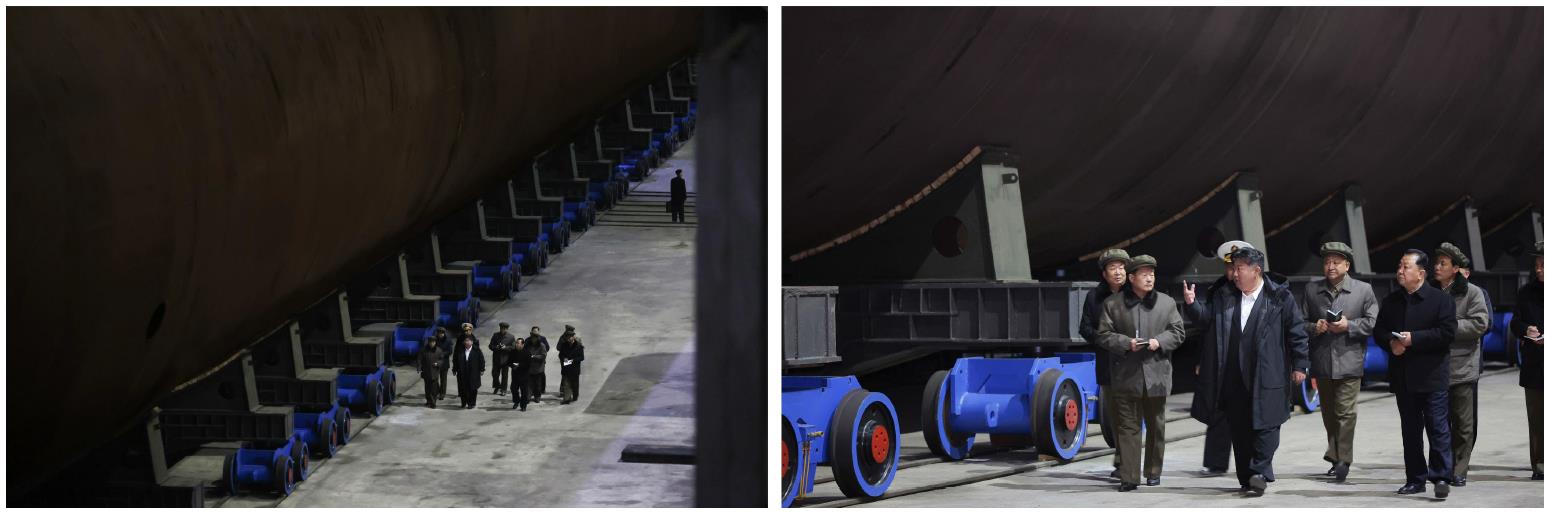
Assessing North Korea’s Nuclear Submarine Threat and South Korea’s Strategic ResponseCheong Seong-changActing Vice President, The Sejong InstituteNorth Korea’s Accelerating Strategic Submarine ProgramAt the 8th Congress of the Workers' Party of Korea in January 2021, North Korea officially committed to developing strategic ballistic missile submarines (SSBNs). By March 2025, the country unveiled footage showing the hull of an SSBN under construction—signaling a notably rapid advancement in its submarine program.During the 2021 congress, Kim Jong-un announced that the design of a new nuclear-powered submarine had been finalized and was undergoing a comprehensive review. He emphasized the acquisition of nuclear submarines and underwater-launched strategic weapons as one of five core priorities for strengthening national defense.This commitment was reaffirmed in December 2023 at a plenary session of the Party Central Committee, where Kim called for a “second shipbuilding revolution” to expand naval power—both underwater and surface-based—and expedite outstanding defense modernization goals.Until recently, many outside observers believed that North Korea’s nuclear submarine program was experiencing setbacks. That perception shifted in March 2025, when the Rodong Sinmun released images of a “nuclear-powered strategic guided missile submarine” (commonly referred to as an SSBN) under construction.This development strongly indicates that North Korea may be nearing the capability to conduct sea-based second-strike nuclear operations. Hull of North Korea’s Strategic Nuclear Submarine Under Construction / Source: Rodong Sinmun, March 8, 2025Though SSBN development is a highly complex endeavor, North Korea’s progress could accelerate if it receives small reactor technology from Russia, possibly in exchange for sending troops to assist in the Russia-Ukraine war. While some analysts argue that Moscow is unlikely to share such sensitive technology, it’s worth noting that Russia previously offered related expertise to South Korea in the 1990s and supported India’s SSBN program by leasing a nuclear submarine to New Delhi. Based on the images of a strategic nuclear submarine under construction released by North Korea in March 2025—considering factors like the hull size relative to nearby personnel and the number of support blocks—the vessel is estimated to have a displacement of around 5,000 to 10,000 tons. To operate a submarine of this size reliably, its propulsion system would need to be powered by nuclear fuel.Given that strategic nuclear submarines are capable of covert, long-duration missions, it appears that North Korea intends to equip its submarine with at least the minimum capabilities comparable to the U.S. Navy’s Ohio-class SSBNs, in pursuit of a mutual assured destruction (MAD) deterrence posture.Although its shipbuilding technology lags behind South Korea's, North Korea leads the world in the number of submarines it operates and has extensive construction experience. With Kim Jong-un’s strong political will and the mobilization of state resources, North Korea seems poised to complete an operational SSBN in the near future. Should this happen, it could significantly shift the strategic balance and threaten nuclear stability for both the U.S.–ROK alliance and Japan.If North Korea complements its intercontinental ballistic missile (ICBM) capability with SSBNs able to approach the U.S. mainland undetected, it could seriously complicate Washington’s response to a nuclear or electromagnetic pulse (EMP) attack on South Korea. With stealthy submarines in play, North Korea would gain a far more credible and survivable platform for nuclear coercion, making its overall deterrent more effective than its current land-based arsenal.The Need for South Korea to Acquire Nuclear-Powered SubmarinesShould South Korea acquire nuclear-powered submarines, it would greatly enhance its ability to track and deter both North Korea’s current diesel-powered submarines carrying diesel-powered nukes and any future SSBNs. Nuclear submarines offer unmatched stealth, speed, and underwater endurance.With top speeds reaching 46 km/h—over three times faster than diesel subs—and the capacity to carry a greater payload, their advantages are clear. These benefits led the U.S. to retire all of its diesel submarines in the 1990s and switch entirely to nuclear-powered fleets.South Korea already has the technological capacity to design and build submarines on its own, even exporting them to other nations. The development of the 3,000-ton Jang Bogo-III-class submarine placed South Korea among the few nations capable of independently designing and constructing mid-sized submarines.This advanced diesel sub integrates cutting-edge features such as lithium-ion batteries, air-independent propulsion (AIP), and vertical launch systems, with a localization rate of about 80%. It has earned praise for its weapons systems, submerged endurance, and automation capabilities.A major sticking point in the debate over nuclear-powered submarines is cost. Some experts argue that constructing such vessels would be prohibitively expensive. However, according to Professor Moon Keun-sik of Hanyang University, a leading expert in the field, each South Korean nuclear-powered submarine would cost around 2.5 trillion KRW (approximately USD 2.5 billion).In comparison, a 3,000-ton diesel-electric submarine costs about 1 trillion KRW (roughly USD 845 million). While nuclear submarines are indeed more costly, the strategic advantages they offer—such as extended underwater endurance and enhanced stealth—far outweigh the additional expense.Furthermore, South Korea benefits from lower labor costs than the United States and boasts a highly efficient shipbuilding industry, which would significantly reduce overall construction costs compared to American programs.Trilateral (South Korea, the U.S., and Japan) and International CooperationIf North Korea launches an SSBN capable of stealthy operations near U.S. territory, it would secure a robust second-strike capability—intensifying the threat to the U.S., South Korea, and Japan. In light of this development, it is critical for both Seoul and Tokyo to pursue their own nuclear submarine programs.Joint development and operation among the U.S., South Korea, and Japan would align well with U.S. strategic interests in the region. Additionally, if a Taiwan crisis were to erupt, Washington could count on the support of allied nuclear submarines from Seoul and Tokyo. South Korea should also consider forming a broader consortium with the U.S., Japan, the UK, and Australia for nuclear submarine cooperation. However, if the Trump administration refuses to work with South Korea in this area, Seoul would be wise to look toward France—much like Brazil has.Since South Korea is aiming to build nuclear-powered submarines using low-enriched uranium (LEU), similar to France’s approach, it could learn more from France’s operational experience than from the U.S. model.
25.07.18 -
 [Feature Article Series]
Marketing In North Korea (27)Why Brands Matter in North Korea: More than just propaganda Jeon Byung-kilSenior Consultant of YESInnovationformer of Secretary General of UniKorea FoundationExploring Brands: A Fun Way to Understand SocietyTo really understand a society, you need to connect with it. One great way to do that is by visiting its local markets. In these places, you’ll find people’s daily lives in action—buying and selling all kinds of things they need. And on every product, you’ll see names, symbols, or designs that help you tell them apart. These are called brands.A brand is more than just a name or a logo. It represents the special qualities of a product or company and helps it stand out from others. The word "brand" actually comes from an old Norse word brandr, which means “to burn.” A long time ago, farmers would burn marks onto their cattle to show which ones belonged to them—kind of like an early brand!Today, brands are used to help customers recognize and remember products. According to the American Marketing Association, a brand can be a name, phrase, design, symbol, or a mix of these. It’s something made to help people tell one seller’s products apart from another’s.How Do You Create a Brand?To build a brand, you need to do more than just give something a cool name. You have to ask questions like:• What does this product do?• What makes it different or special?• Why should people care about it?• How can we show its value to customers?These questions help shape the brand's identity. And branding doesn’t only apply to physical things like phones or shoes—it can also apply to services, people, companies, places, and even ideas!What’s the Difference Between a Brand and a Trademark?When a brand is officially registered with a government office (like a patent or trademark office), it becomes a trademark. A trademark gives the owner legal rights to use that brand and protects it from being copied. This means no one else can legally use that exact brand without permission.So, all trademarks are brands, but not all brands are trademarks.In South Korea, the law defines a trademark as any sign, letter, or image that helps people tell one business’s products apart from another’s. The U.S. law says something very similar: a trademark is any word, name, or symbol used by a business to identify its goods.Whether you're in Korea, the U.S., or anywhere else, brands and trademarks play a big role in how we shop, choose, and trust products. They also reflect the culture and values of the society they come from. By exploring brands, you’re not just learning about business—you’re learning about people, ideas, and the world around you.Brands in North Korea: A New DirectionDid you know that even in a closed country like North Korea, brands are becoming important?North Korea first created its trademark law in 1998, during a time known as the “Arduous March,” when the country faced a major economic crisis. According to the law, a trademark is a sign—like a name, symbol, number, color, or design—that helps people tell one product or service apart from another. This is pretty similar to how brands work everywhere else.In the early 2000s, North Korea started talking about brands, but in its own way. A paper published by Kim Il Sung University of North Korea in 2000 said that brands were important because they make people want to buy something—especially for exports. The article also stressed the need to improve brand design and modernize how brands are used in business.But back then, North Korea was still very wary of the outside world. They followed what’s called the “Mosquito Net Theory”—letting in only a small amount of outside influence while blocking most of it. So, in their writings, they made a clear distinction between capitalist and socialist brands. They said capitalist brands were flashy and used to trick people for profit, while socialist brands were about national pride and showing the people how good their government was.A Shift in Thinking After 2012Things started changing after Kim Jong-un came to power in 2012. North Korea stopped criticizing capitalist brands and began seeing brands as valuable tools for business. In a 2016 article, their main newspaper Rodong Sinmun even said that brands are now seen worldwide as one of a company’s most important assets.By 2020, another article from the same newspaper noted that although products today are often similar in quality, brands still matter. They mentioned that brands help companies gain trust and stand out in the marketplace.Why Brands Matter in Today’s North KoreaSince 2012, North Korea has been trying to manage brands more strategically. It’s starting to use marketing ideas to make its products—like food, medicine, and electronics—more appealing. These changes are not just about packaging. They show that North Korea is trying to grow its economy, boost exports, and create competitive local brands.In this way, branding has become part of North Korea’s bigger goals: helping people feel proud of their country, strengthening the economy, and showing the world a better image of itself.Brands are no longer just names or logos in North Korea—they are becoming tools for survival and growth. If the country wants to become more self-reliant and competitive globally, it needs to keep improving how it builds and manages brands. Brand strategy may just be one of the key paths for North Korea’s future.
25.07.18 -
 [Feature Article Series]
Marketing In North Korea (26)Pyongyang: Branding the Revolution Jeon Byung-kilSenior Consultant of YESInnovationformer of Secretary General of UniKorea FoundationThe Role of PyongyangUsing a local name in a brand—called local brand naming—can help people feel more connected to a product. It also makes the brand more competitive by using the image or feelings people have about that place. For example, the South Korean water brand Jeju Samdasoo uses the clean and pure image of Jeju Island. Another example is Paris Baguette, a bakery brand that uses the name of Paris, the French city known for its fine food culture. Many other brands also use place names to promote their image—including in North Korea.In North Korea, the most powerful and influential city is Pyongyang, the capital. Pyongyang was once the capital of the ancient Goguryeo kingdom and later an important city called Seogyeong during the Goryeo Dynasty. It is also the birthplace of Kim Il-sung, the founding leader of North Korea. Today, Pyongyang represents the ideas of North Korea’s socialist system. Compared to other areas, Pyongyang receives more economic and social benefits and plays a central role in culture and politics.This importance is also seen in North Korean brands. Over 80% of the North Korean brands registered with WIPO (World Intellectual Property Organization, part of the UN) are made or managed by factories and companies based in Pyongyang.North Korea’s Constitution (Article 172) clearly says, “The capital of the Democratic People’s Republic of Korea is Pyongyang.” In 1998, North Korea’s parliament passed a law called the Pyongyang City Management Law, which calls Pyongyang the “capital of the revolution.” This law says the goal is to make Pyongyang a modern, cultural city with clean and quiet living conditions, and good working environments for its people (Article 1).Because Pyongyang is considered a “sacred place of the revolution,” managing and building the city has a deeper meaning than just running a city. Article 2 of the law says that Pyongyang didn’t become important overnight. During the Korean War (which started in 1950), Pyongyang was almost completely destroyed. After the war, North Korea used many people and resources to rebuild the city.Brands Named After "Pyongyang"Among North Korean brands registered with the World Intellectual Property Organization (WIPO), 15 of them are named after Pyongyang or places within Pyongyang. These include 3 brands named directly Pyongyang, 3 named after the Taedong River (which runs through Pyongyang), 3 using Ryugyong (an old name for the city), 2 named after Taesong Mountain, 2 named after Ryongak Mountain, and one brand called “Pyeongmaek,” which combines the words Pyongyang and beer in Korean.The three brands using the name Pyongyang are for noodles, cigarettes, and kimchi. The noodle and cigarette brands were registered internationally in 2001, and the kimchi brand followed in 2003. Even though they all use the name Pyongyang, each brand has its own unique logo and font style. For the noodle and cigarette brands, North Korea used its traditional handwriting-style font.After 2003, no new Pyongyang brands were registered—until 2019, when Pyeongmaek, a beer brand, was introduced. This name is different from older styles because it uses the first syllables of two words: Pyongyang and maekju (the Korean word for beer). The logo features an image of barley, one of the main ingredients in beer. The font style is more modern compared to the traditional handwritten look.In 2022, a textile factory in Pyongyang called Kim Jong-suk Pyongyang Textile Factory registered a brand named Pyeongbang, short for Pyongyang Bangjik (Bangjik means textile).North Korea often uses local names from Pyongyang to give their brands a special meaning. One of the most well-known is the Taedong River, which is as closely tied to Pyongyang as the Han River is to Seoul. The Taedonggang (Taedong River) brand was registered internationally for different products: fruit items in 2016, food in 2018, and beer in 2019. The beer known as Taedonggang Beer is produced at a brewery located in Sadong District, along the Taedong River in Pyongyang.North Korea’s Love for Pyongyang’s Old Name: “Ryugyong”The old name for Pyongyang is Ryugyong (류경/柳京). In Chinese characters, “ryu (柳)” means willow tree and “gyong (京)” means capital city. So, Ryugyong can be understood as “the capital of willows.” This name reflects Pyongyang’s long history and cultural tradition.Today, many places in Pyongyang still use the name Ryugyong. You can find it in the names of neighborhoods (like Ryugyong-dong), public facilities (like Ryugyongwon convenience center), hotels (like Ryugyong Hotel), gyms (Ryugyong Jong Ju Yong Gymnasium), hospitals (Ryugyong Dental Hospital), and restaurants (Ryugyong Neungra Restaurant). The name has been used throughout the leadership of Kim Il-sung, Kim Jong-il, and Kim Jong-un.The most famous building with this name is the Ryugyong Hotel, a 101-story pyramid-shaped skyscraper located in Pyongyang’s Potonggang District. Construction began in 1987 but stopped in the 1990s due to North Korea’s economic crisis. It resumed in 2008 with investment from an Egyptian company called Orascom, but construction was halted again in 2012.Next to the hotel is the Ryugyong Jong Ju Yong Gymnasium, which opened in 2003. It was named after Chung Ju-yung, the founder of South Korea’s Hyundai Group. This gym was built as a symbol of economic cooperation between North and South Korea. South Korea provided the design, materials, and technology, while North Korea provided labor and construction materials.North Korea has also registered three Ryugyong trademarks with the World Intellectual Property Organization (WIPO). One of them, registered in 2012, is for alcohol. The logo includes a drawing of willow leaves, symbolizing the meaning of ryu (willow). Another trademark, registered in 2019, is for musical instruments. Its logo features a violin and is written in a flowing, cursive-style font.North Korea even named a smartphone model Ryugyong. This phone was assembled in North Korea using imported parts. Also, the names of two famous restaurants in Pyongyang—Okryugwan and Chongryugwan—include the character “ryu (柳),” again referring to willow trees, a symbol closely tied to Pyongyang.Pyongyang's Brand Image Under Kim Jong-unSince Kim Jong-un came to power in 2012, Pyongyang has gone through major changes. Along the Taedong River, North Korea built a new area called Mirae Scientists Street, where many science and technology buildings are located. On Ssuk Island, they built a large science center called the Sci-Tech Complex.New neighborhoods like Songshin-Songhwa District and Hwasong District were also developed. These areas now have tall apartment buildings, convenience facilities, and improved infrastructure. Pyongyang International Airport was remodeled as well. In just over 10 years, Pyongyang’s skyline and night view have completely changed.North Korean media calls this time “a new golden age of Juche architecture,” celebrating the construction achievements under Kim Jong-un’s leadership. The city’s new look tries to show a mix of modern technology and style, built on North Korea’s socialist values.However, while the buildings may look impressive, there are concerns. Some projects were rushed to meet deadlines, and there have been reports of poor construction quality. This has led people to question how strong and lasting the new buildings really are.A brand’s true value comes from its authenticity—how real and meaningful it is. For Pyongyang, which North Korea calls the “capital of the revolution,” its authenticity depends on one key question: Who is the city for? What is the purpose of the city?A city’s brand becomes meaningful when it truly cares about the people who live there. If Pyongyang is meant to represent all of North Korea, its brand should start from thinking about its citizens. North Korea often uses the phrase “Iminwicheon” (以民爲天), which means “treating the people like heaven.” This idea should be reflected in the real meaning behind the Pyongyang brand.
25.07.04 -
 [Feature Article]
A Knot Yet Untied: Is There Hope for North Korea–Japan Relations?Park Hyong-joonKonkuk University GLOCAL Campus, KU Global Innovation CollegeJune 22 marked 60 years since South Korea and Japan normalized diplomatic ties. While the two have clashed over history, territory, and security, they’ve also advanced in trade, culture, and people-to-people exchanges. Amid shifting global dynamics, strategic cooperation is gaining importance, with both sides seeking new ways to partner for a shared future.By contrast, improving ties between North Korea and Japan remains a steep uphill climb. Following the Noto Peninsula earthquake on January 1, 2024, Kim Jong-un extended condolences to Prime Minister Kishida. Around the same time, Kim Yo-jong hinted at the possibility of a summit—if Japan showed political resolve—sparking some optimism. But hopes quickly faded. On March 27, Kim declared an end to all contact, criticizing Japan for lacking the resolve to initiate a new relationship. Since then, progress has stalled.1)The primary barrier to better ties is the abduction of Japanese citizens by North Korea. Both nations are firmly at odds—Pyongyang claims the matter is settled, while Tokyo sees its resolution as essential for normalizing relations. With no common ground, the prospect of improved ties seems dim. To understand this stalemate, one must consider North Korea’s internal logic. Admitting fault in the abduction issue would challenge the leader’s infallibility, a core tenet of the regime. As such, Pyongyang is unlikely to revise its long-held position. At the core of North Korea’s claim that the abduction issue is “completely resolved” lies the principle of the Suryong(leader)’s infallibility. In the North Korean system, the Suryong symbolizes regime unity, stability, and development, with his absolute authority deeply embedded in all aspects of society. Every decision by the supreme leader is seen as deliberate, flawless, and final. Revisiting the abduction issue, previously addressed in the 2014 Stockholm Agreement under Kim Jong-un—would imply a mistake in his leadership, contradicting the regime’s portrayal of the Suryong’s perfection. Reopening talks would therefore deal a serious blow to Kim’s authority.Acknowledging any error would shake the foundation of Kim’s authority, especially as he consolidates power. This fear keeps Pyongyang from engaging further on the abduction matter, reinforcing its claim that the issue is resolved.If Japan continues to prioritize the abduction issue, North Korea is likely to remain uncooperative. Yet Japan, facing domestic pressure, can’t afford to drop the matter either. In such a stalemate, what’s needed is a courageous shift in approach—one that is both incremental and layered. By first collaborating on less contentious issues, both sides can gradually build the trust needed to tackle more difficult challenges ahead.
25.07.04 -
 [Analysis and suggestion]
Agriculture in 2025: Current Trends and Future OutlookCho Chung-huiPh.D. in North Korean StudiesDirector, Good Farmers (a non-profit organization)With the first half of 2025 behind us, early assessments suggest that crop yields and farm incomes will likely keep falling. Key staple crops like rice, corn, wheat, and barley are expected to produce less than they did last year. Wheat and barley yields, in particular, are projected to drop in most regions, having no effect on the ever-rising grain prices. Additionally, delayed rice transplanting, caused by various issues—has cast a shadow over the outlook for this year’s harvest.1. Wheat and Barley Production in the First Half of 2025In June, as wheat harvesting began, a critical part of North Korea’s food production, TV broadcasts showed golden wheat fields across South Phyongan Province, a major grain area. Yet, once harvesting got underway, reports emerged that the actual yield was lower than it appeared, falling short of last year's already poor levels.An official from South Phyongan cited a confidential report from the province’s Rural Management Committee, revealing that this year’s wheat and barley yield came to roughly 51,300 tons.According to that report, the province has around 269,000 jeongbo (approximately 267,000 hectares) of farmland, with about 27,000 jeongbo used for wheat and barley. The average yield per jeongbo was 1.9 tons, ranging from 1.5 to 2.3 tons, outpacing yields in regions like North Pyongan and both South and North Hwanghae Provinces. To compare, South Korea’s wheat yield averages 5.3 tons per hectare, while leading European producers report between 7 and 9 tons. Some British farms have even achieved yields as high as 16 tons per hectare.Based on South Phyongan Province, nationwide wheat and barley output for the first half can be estimated as follows: Of the 159,000 jeongbo sown, about 40% is from South Phyongan, North Pyongan, South and North Hwanghae, Gangwon, and parts of South Hamgyong—excluding Ryanggang (wheat 55.06%, barley 31.79%), North Hamgyong (wheat 15.5%), and Jagang (wheat and barley 16.44%).Assuming 40% of the national wheat and barley area—about 63,600 jeongbo—yields 1.9 tons per jeongbo, first-half production totals an estimated 120,840 tons. At 500 grams per person daily, this would feed the entire North Korean population for roughly 12 days.Despite the harvest being over, market grain prices remain high: rice at 13,000 won/kg and corn at 4,500 won/kg—double the 2023 rates and still climbing. This underscores how the small wheat and barley output has done little to stabilize grain prices or ease food shortages.What caused the production decline in early 2025? The main issues were a lack of high-quality seeds, nutrient-depleted soils, and poor weather. This March, colder temperatures and low rainfall during the tillering stage reduced the number of stalks per plant. Barley typically sprouts 6–7 stems, but this year only produced 3–4, resulting in fewer grain heads and lower overall yields.2. Delayed Rice Transplanting and Grain Production OutlookThis year, rice transplanting across North Korea’s countryside fell behind schedule by about 20 days. Though officials claim most transplanting finished around June 15, field reports suggest it actually wrapped up closer to the end of June.Timing is critical for rice planting. Transplanting at the right moment boosts plant growth and final yields. Delays, or even early planting, can reduce harvests. When seedlings go into the ground too late, the shortened growing period prevents the rice from maturing fully, leading to reduced yields.This year’s delay was mainly due to weather. Spring temperatures were low, and there was a lack of protective materials like plastic covers and windbreaks. These shortages caused cold damage to seedlings. On top of that, limited supplies of fertilizer and pesticides hindered seedling growth, adding to the delays.Normally, a transplanting delay of 10 days cuts yields by about 20%. With delays closer to 20 days this year, a 40% drop in output is possible.Despite the government’s nationwide mobilization orders, trying to recover through sheer manpower, reminiscent of 1970s tactics—won’t solve today’s agricultural problems or food shortages.If North Korea hopes to avoid further losses in the second half of 2025, immediate investments are essential. Crop management must improve, including proper drainage to prevent flooding and timely topdressing with nitrogen.As climate disasters like droughts, floods, and heatwaves grow more frequent, relying on slogans and mass mobilization without external support is risky. Lacking fertilizers and pesticides hampers nutrient management and weed control, increasing the risk of severe crop failure and famine.
25.07.04 -
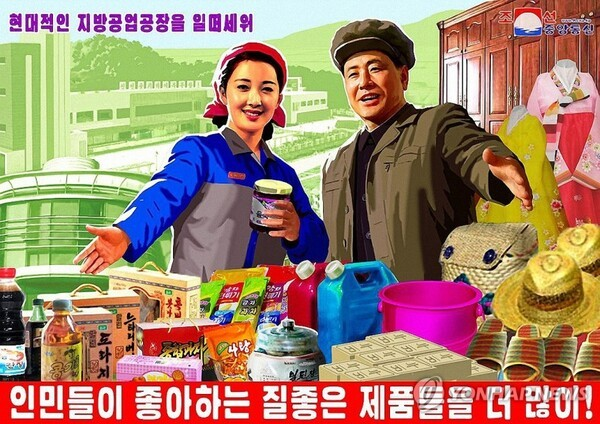 [Feature Article]
North Korea’s “20x10 Regional Development Policy”: Current Status and Future Outlook Kang Mi-jinCEO, NK Investment DevelopmentNorth Korea unveiled its “20x10 Regional Development Policy” at the 10th Session of the 14th Supreme People’s Assembly in January 2024, outlining plans to build modern industrial factories in 20 counties each year. The goal is to raise material and cultural living standards nationwide within a decade.To implement the policy, the government formed a central temporary committee and corresponding provincial bodies. The first project began in Songchon County, South Phyongan Province, followed by similar initiatives in 20 other regions.North Korean state media, including the Rodong Sinmun, has actively promoted the policy by highlighting factory completion ceremonies and early production achievements. Images of smiling residents and functioning facilities present an optimistic narrative.However, observers remain skeptical about its viability under ongoing international sanctions. While some analysts view it as a strategic effort by the Kim Jong-un regime to boost living standards and narrow urban–rural and industrial–agricultural divides, doubts persist over the regime’s ability to secure sustainable funding.A domestic research institute suggests that if successful, the policy could improve local living conditions by expanding consumer goods supply and stimulating regional markets, ultimately reducing the central government’s financial burden. Flexible pricing of light industrial goods may also boost market activity and promote decentralization in production, consumption, and trade.However, the same report concluded that the policy’s broader political and economic impact would likely be limited. Some South Korean media echoed this concern, warning it could even deepen regional imbalances. Inside North Korea, public opinions about the policy are also split. On the positive side, residents appreciate being able to purchase daily necessities locally, saving time and money while enjoying greater convenience. They also noted that economic returns from locally produced goods are helping to drive regional economic growth.On the other hand, some respondents raised concerns about long-term sustainability, particularly regarding the availability of raw materials. One local investigator remarked, “We’re currently managing, but if raw materials take years to cultivate or are in short supply, we’ll need careful planning to keep production stable.” These concerns point to the importance of securing reliable material bases to sustain the initiative.The “20x10 Regional Development Policy” originated in Kimhwa County, Kangwon Province, where the government launched housing reconstruction following typhoon and flood damage in 2020. Alongside this, the county independently set up textile, paper, and household goods factories on a former food plant site. To support production, it established a raw material forest and expanded sesame farming.These efforts laid a strong foundation, making Kimhwa a model for nationwide development. Local production based on local resources became a key principle. Today, Kimhwa produces various light industrial goods, including soap from oil by-products, and even sells cooking oil at lower prices than neighboring areas—earning admiration from nearby counties. North Korea now aims to scale this model across the country through the 20x10 policy.Through its research, NKID identified both positive outcomes and resident concerns. Some of the challenges appeared to be region-specific. For example, while certain areas had sufficient labor and resources, others assigned recent high school graduates to factories regardless of their educational background, causing discomfort for those placed in unfamiliar roles.Another issue emerged when workers were relocated to factories farther from their homes, leading to longer commutes and the need to purchase bicycles for transportation. In the past, many residents could walk to nearby workplaces, but these relocations have disrupted that convenience.These inconveniences, however, are relatively minor compared to broader concerns. A more pressing issue is whether the factories can operate sustainably over time. Residents are increasingly being mobilized to help develop raw material bases, often through voluntary efforts that can unintentionally pressure others to follow suit.For instance, when the wives of certain local officials volunteered, others felt compelled to participate as well. The government has also started offering incentives to volunteers, using their participation as a model to encourage broader involvement.Regions with abundant natural resources such as seafood, chestnuts, or wild berries tend to have more stable access to raw materials. In contrast, areas without these advantages face greater challenges and are forced to invest significant effort into developing their own resource bases, leading to disparities in productivity. Sales channels also differ depending on the region.In some cases, products from resource-rich areas are exported to countries like China or Russia, while factories producing everyday goods for domestic use must rely on local markets, which offer lower profit margins. To bridge these gaps, North Korea has been actively promoting successful factories and organizing experience-sharing programs aimed at spreading best practices across the country.One frequently cited issue is the poor packaging quality of domestically produced goods, even when the products themselves are of decent quality. North Korean food, health supplements, and alcohol are often labeled as “natural,” a designation that appeals to consumers in China and elsewhere.Producers hope to expand into export markets, but subpar packaging remains a significant barrier. Improving this aspect could substantially boost the export potential of locally made products.Since its launch, the “20x10 Regional Development Policy” has evolved beyond industrial factories to include hospitals, schools, cultural centers, and grain facilities. While this broader rollout reflects ambitious goals, it has raised concerns about whether essential equipment and materials for institutions like hospitals and schools can be consistently secured.One field investigator pointed out that the site designated for Kangdong General Hospital near Pyongyang was previously farmland, suggesting that food production may be losing priority. At the same time, building modern medical facilities demands substantial investment in equipment and infrastructure, adding to financial strain.These challenges are compounded by the large-scale housing projects currently underway in Pyongyang, further increasing the overall burden of realizing the 20x10 policy.Expectations for the policy’s success remain divided. However, NK Investment Development presents a more optimistic perspective. As North Korea deepens its ties with Russia and gradually restores relations with China, financial pressures may begin to ease. Strengthened diplomatic ties could also help open new trade routes for goods produced in regional factories. If the policy is effectively carried out, it could help modernize North Korea’s economic structure, stimulate market development, and improve the livelihoods of its citizens. Furthermore, by establishing efficient distribution networks among regional factories and encouraging the exchange of locally produced specialty goods, the country could narrow regional disparities.In the long run, the ambitious ‘20x10 Regional Development Policy’ may even contribute to raising the average GDP of the North Korean population.
25.07.04 -
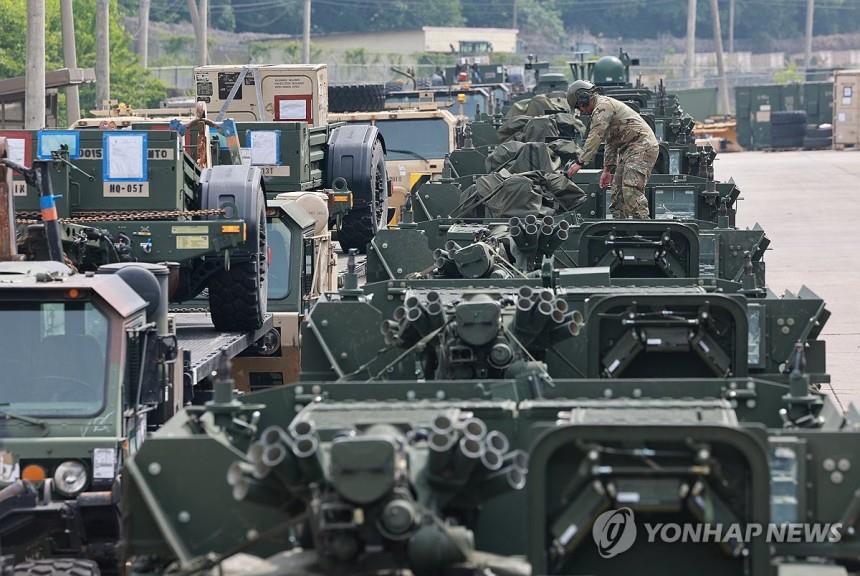 [Feature Article]
Possibility of the Reduction of US Forces in Korea and Its Impact for the Future of the Korean Peninsula SHIN, BeomchulSenior Research Fellow, The Sejong InstituteRecently, various concerns have been expressed regarding the reduction of US forces in Korea(USFK). This is because of the strategic consideration of the U.S., which is reorganizing the operation of US forces abroad to strengthen the deterrence against China. In the past, the USFK was often referred to as a “tripwire.” It was a symbolic expression that if a war were to break out on the Korean Peninsula, the U.S. would send large-scale wartime reinforcements. However, since China’s military rise, the US’s threat perception has changed. Today, deterring China is the top priority in the U.S. defense strategy, and thus, the reality is that the North Korea issue is being pushed to the back burner.On the other hand, in the first year of the new administration in the United States, the Department of Defense(DoD) issues the strategy document named ‘Nation Defense Strategy.’ In this process, the DoD will also prepare a report called the ‘Global Posture Review’ to adjust the U.S. forces deployed around the world.In the process of this review, the DoD is goibg to consider the size of USFK along side with the size of U.S. Forces in Japan and Germany. This is the reason why news related to the USFK has been coming out frequently recently. Strategic Flexibility of US Forces in Korea and the Issue of Reduction of US Forces in KoreaIn order for the U.S. to militarily check China, it must have military superiority in the Indo-Pacific region. However, the US does not have enough military presence in the region that can overwhelm China, e.g. the Taiwan Strait or the South China Sea. Thus, the U.S. hopes to utilize its’ forces in Japan and Korea and use them in conflicts with China. This multi-purpose operation of the U.S. force is called strategic flexibility.Strategic flexibility is a very effective approach to containing China, as it integrates the U.S. military capability in the Indo-Pacific region and maximizes the capacity to deploy its’ military to the area of conflict as promptly as possible. Although strategic flexibility does not mean that the conflict with China is inevitable, it is close relation to the U.S. military readiness to deter China by maintaining a strong posture.It is expected that strategic flexibility issues will affect the size of the USFK in the near future. From the U.S. perspective, particularly under the Trump administration, if the force is not utilized for the China issue, the importance of the USFK will be difficult to recognize. The Pentagon might regard the USFK inefficient if the force’s function is solely to deter North Korea. Because the South Korean military capability has advanced, thanks to investments made over the past decades, the U.S. starts to believe that if it provides extended deterrence to the South, the deterrence against North Korea's nuclear threat can be maintained.If South Korea does not cooperate with the issues of strategic flexibility, the U.S. might reduce the burden to defend Korean Peninsula, and let the the South Korean military take the lead in military operation against North Korea, i.e. reduction of the USFK.Thus, if the Korean government responds to this US defense strategy regarding strategic flexibility, the US will maintain the current size of the USFK and operate in a way that maximizes its military capability for the dual purpose.However, if the Korean government opposes the strategy and insists that the USFK must remain to respond to North Korean threats, the US is likely to reduce the size of the USFK, and eventually, the U.S. might attempt to relocate the force to other parts of the Indo-Pacific region.If the U.S. decides to reduce the USFK, a reduction in ground forces is expected. Today, the US is trying to reduce the size of ground forces as part of its Army transformation initiative, and ground forces deployed in Korea can be subjected to this.Therefore, if the U.S. decides the downsize of the USFK, it can either to disband the unit or to assign the force to guard the border with Mexico, for example. It this case, a significant reduction in the USFK will occur. If the US Air Force in Korea is to be reduced, some forces may be moved to Guam to secure air superiority over China in the East China Sea and the South China Sea.However, the possibility of such a reduction is too early to predict at this stage. Further, this kind of problem can be sufficiently prevented through close cooperation between the new administrations in Korean and the U.S.The necessity of stable stationing of USFK and the direction of ROK-US cooperationThe main function of the USFK is to deter North Korea's military ambition to invade the South. It addition, the USFK is a symbol of the ROK-US alliance, which is as strong as its war-fighting capabilities. In economic terms, the USFK also plays a significant role because foreign investment in Korea is based on the belief that Korea's security will be well managed through the presence of the USFK.The reduction of US forces in Korea is a serious matter that can shatter this traditional perception. And its aftermath can have a fatal negative impact on Korea's security and economy. Therefore, the Korean government needs to make efforts to ensure the stable stationing conditions of USFK.An approach that acknowledges the strategic flexibility of the USFK to some extent is necessary. The idea that the USFK should only deter North Korean threats on the Korean Peninsula is not compatible with the text of the R.O.K.-U.S. Mutual Defense Treaty of 1953.This is because Article 3 of the R.O.K.-U.S. Mutual Defense Treaty provides “Each Party recognizes that an armed attack in the Pacific area on either of the Parties..., would be dangerous to its own peace and safety and declares that it would act to meet the common danger in accordance with its constitutional processes.” As a result, the US will likely recognize the strategic flexibility of the USFK as its own right. Therefore, rather than unconditionally opposing strategic flexibility, it is desirable to embrace it. In addition, when a conflict breaks out in relation to China, the ROK military should focus on deterring North Korea's threats because North Korea may try to use this opportunity to attack South Korea. This kind of approach can resolve the dilemma and will help the USFK carry out necessary activities while the South can avoid direct conflict with China. On the other hand, China probably criticize the strategic flexibility of USFK as something that harms peace and stability in the region. Further, China may threaten to attack USFK bases to scare South Korea, and economic retaliation targeting Korea, as it did in the past when THAAD was deployed in 2016, cannot be ruled out.Therefore, while acknowledging the strategic flexibility of USFK, the R.O.K. must exercise its best to manage the Korea-China relationship. Even if there is pressure from China, the ROK should not respond directly and must maintain a low-key stance. As a peace-loving country, South Korea should consistently maintain the direction of its’ foreign policy of not antagonizing neighboring countries and continuously express its’ intention to develop good bilateral relations.In particular, if the ROK make it clear that Korean military will not directly intervene in regional issues and will focus on deterring North Korea on the Korean Peninsula even in the crisis in the Taiwan strait, it will minimize the deterioration of relations between Korea and China.Frankly speaking, many challenges are expected in the ROK-US alliance. In order to overcome them, various pending issues such as tariffs, economic security issues, diplomatic and defense cooperation must be resolved without dissonance. A so called ‘comprehensive strategic alliance between the R.O.K. and the U.S.’ must be continuously developed through the endless consultation between the two ministries.If necessary, a new vision document must be created that goes beyond the previous government's ‘Washington Declaration’ and ‘Camp David Declaration.’ Through these efforts, preemptively blocking the possibility of a reduction USFK will be the wisest way to strengthen R.O.K.'s security.
25.06.20 -
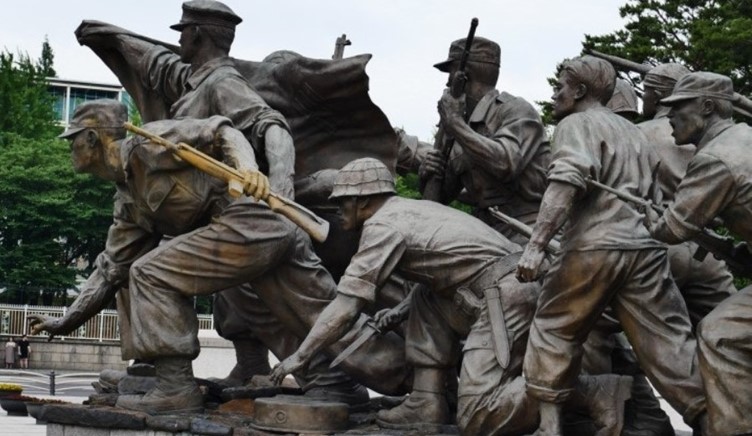 [Current Affairs Analysis]
Reflection of the Korean War and Peace Regime Building Professor Chung Kyung-youngGraduate School of International StudiesHanyang UniversityThe study aims to reflect the Korean War and build a peace regime on the Korean Peninsular. The year 2025 was the 75th anniversary of the Korean War. The Korean War constituted a turning point in the history of the Cold War. North Korea launched largescale attack along the 38th parallel on June 25, 1950 after the close coordination among North Korea, the Soviet Union, and the People’s Republic of China.The Republic of Korea (ROK) forces lost Seoul within three days after the invasion and conducted the delaying operations. 67 countries of 91 member states of United Nations supported the ROK to save it from the communist attack. 16 countries including the U.S. sent combat forces, along with 5 medical supporting countries and 46 material and post-reconstruction supporting countries. The ROK forces conducted the counter-offensive operations with UN forces advancing toward the Yalu River along the international border. Chinese Communist Forces (CCF) massively intervened in the Korean War to protest the U.S. and to support North Korea. We lost again Seoul on January 4, 1951. It took more than two years to sign the Korean Armistice Agreement as of the result of two fronts war of trench combat and armistice negotiations. The Armistice Agreement was signed between the Commander-in-Chief, United Nations Command, on the one hand, and the Supreme Commander of the Korean People's Army and the Commander of the Chinese People's volunteers, on the other hand on July 27, 1953. The study addresses the meaning of world history of the Korean War, along with casualties from the war and comparison of the Two Koreas national power. It examines three-dimensional peace and unification efforts including inter-Korean, international politics, and domestic politics to draw lessons. It will be followed by discourse on U.S.-China hegemony rivalry and explore the Two Koreas strategy for U.S.-China support of Korean unification. Finally, the study makes policy recommendations for building a peace regime on the Korean Peninsula. The Catastrophe and Meaning of World History of the Korean War, Huge Gap between the Two Koreas The Korean War resulted in four million four hundred sixty thousand casualties not only the Two Koreas but also the U.S.and China, along with 15 member states of the United Nations along with destruction of huge property and territorial degradation. The Korean War was international war, not local war. If anther war breaks out on the Korean Peninsula, it looks like highly likely that a third world war will be. The Korean War was the first case for the application of the UN collective security system. One of the most important meanings of the war is that the war represented the struggle for power and influence between free liberal bloc and the communist bloc. The Korean War began to be reevaluated after the victory of free world in the Cold War. The war resulted in the tightening of the bipolar structure between the U.S.-led North Atlantic Treaty Organizationand the Soviet Union-led Warsaw Treaty Organization. The U.S. also signed defense treaties with South Korea, Japan, and Taiwan. The U.S. assumed the role of a balancer in Northeast Asia which greatly contributed to the stability and prosperity of the region. In particular, what factors made the Two Koreas, which shared same culture and language and political system for 1300 years, to create huge gap between the Two Koreas in the past eighty years since liberation, division and war of Korea. Freedom, liberal democracy, rule of law, human rights, and free market supersede personality cult, garrison state, control economyComprehensive Review of Peace and Unification Effort on the Korean Peninsula The unstable armistice structure continues to remain on the Korean Peninsula in the past seventy-two years despite of peace and unification efforts between the Two Koreas, international politics, and domestic politics. South-North Koreas have made peace and unification efforts since the Korean War. Phase 1 is National Identity, July 4 Communique in 1974. The Two Koreas agreed self-reliance, peace, and national unity. Phase 2 is South-North Detente, the Basic Agreement in 1991: Reconciliation, Non-Aggression, Exchange & Cooperation, Phase 3 is Progress, June 15 South-North Joint Statement in 2001, one nation & two system unification, and Oct 4 Summit Declaration in 2007, peace regime and judiciary institutionalization. Phase 4 is Turbulence, the sinking of Cheonan Warship and the shelling of Yeonpyong-island, the shutdown of Kaesung Industrial Complex due to the North Korea’s nuclear program and long ballistic missile in 2010. Phase 5 is Roller Coaster, the April 27 Panmunjom Joint Statement, the Sep 19 Pyongyang Joint Statement and Sep 19 South-North Comprehensive Military Agreement in 2018, and Explosion of South-North Liaison Office in 2020. Phase 6 is Suspension, breakdown of South-North relations. abolition of the Sep 19 South-North Comprehensive Military Agreement in 2024. From the perspective of international politics, twenty nations which participated in the Korean War held Geneva conference for political settlement of Korea in 1954. The Four Party Talks was held in Geneva from 1997 to 1999 for peace agreement. The Six Party Talks was held in Beijing from 2003 to 2007 for North Korea’s denuclearization. At Camp David, on Aug 18, 2023, the Japan-ROK-U.S. leaders support a unified Korean Peninsula that is free and at peace. From domestic politics perspective of the Two Koreas, North Korea asserted the doctrine of Two Hostile States in December, 2023. It has since encouraged their domestic population to brace for a major upheaval in the name of territorial unification, while simultaneously mobilizing tactical nuclear units and conducting full-scale maneuver training for its commanding officers aimed at occupying South Korea. Meanwhile, the conflicts between factions and generations regarding perceptions and policies towards North Korea in South Korea have struggled. Moreover, as can be seen in the changing public perception about unification, interest in unification has significantly weakened. According to a survey conducted by the Institute for Unification and Peace at Seoul National University since 2007, the percentage of respondents who believe unification is necessary dropped from 63.8% in 2007 to a record low of 36.9% in the 2024 survey, while those who believe it is not necessarily increased from 15.1% to 35.0%. The ROK adopted the Aug 15 Unification Doctrine in 2024Lessons from the Instable Armistice Structure Peace regime building is not possible solely between North and South Korea, cooperation between the U.S. and China is essential. North Korea's nuclear issue is the biggest obstacle to establishing a peace regime on the Korean Peninsula. Continuous political-military dialogue and civilian exchanges are crucial for building trust between the North and South. Regardless of the ROK’s conservative or progressive administrations, there should be a consistent North Korean and unification policy. Political and military factors have a significant impact on economic exchange and cooperation between the Two Koreas. Arms control contributes to building a peace regime. The national will for unification has a decisive influence on achieving unification.U.S.-China Hegemony RivalryTo shape co-existence and stable strategic environment surrounding the Korean Peninsula is to contribute to building a peace regime on the Peninsula. It is imperative to explore U.S.-China hegemony rivalry. The Indo-Pacific Strategy is a U.S. initiative aimed at promoting a free, open, connected, prosperous, secure, and resilient Indo-Pacific region. The U.S. led Indo-Pacific Strategy focuses on preventing China’s invasion of Taiwan and expansion of influence, containing China’s maritime hegemony with allied and partner countries, including South Korea, Japan, the Philippines, Australia, and India. From security perspective, isolating China in the international community, along with inducing an arms race, and long-term depletion of Chinese support and capabilities. In a view of economy, the Indo-Pacific Strategy attempt to exclude China from the industrial ecosystem through restructuring global supply chain and blocking technological capabilities. From ideological perspective, the strategy aims to dismantle China’s political system through discourse on democracy and human rights. The Indo-Pacific Strategy mobilizes the alliance network for technology blocking, supply chain exclusion, and military pressure. In the meantime, China hegemony strategy attempt dominates the world through the Chinese order by Belt and Road Initiative (B&LI), along with digital. China perceives American hegemony as the decline. China establishes a pro-hegemony coalition with North Korea, Russia, and Iran to occupy Taiwan, control the Philippines, and seize maritime hegemony through a focused sequential strategy. China employs Anti-Access & Area Denial (A2&AD) strategy. China plan to control the First Island Chain connecting southern Kyushu, Okinawa, Taiwan, and the Philippines by 2027. China installed structures in the China-Korea Provisional Measures Zone in the West Sea. China attempts to seize Second Island Chain connecting Ogasawara Islands, Guam, Saipan, and Papua New Guinea in the Western Pacific by 2035. China will bisect the Pacific to advance as far as the vicinity of Hawaii by 2049.The Two Koreas’ Strategy for Securing U.S.-China Support of Korean UnificationIn conjunction with U.S.-China hegemonic rivalry, we cannot exclude the possibility of a third world war on the Korean Peninsula in event of failing in managing the North Korean nuclear issue or and crises on the Korean Peninsula. South Korea should take the lead in building a multilateral security cooperation organization in Northeast Asia with its technological capabilities and K-culture to build a security regime in the New Cold War between China-Russia-North Korea bloc and U.S.-Japan-South Korea in the region. North Korea must halt the development of ICBMs and nuclear arsenal that threaten the U.S. mainland and the development of nuclear-powered submarines. The hostile relationship between the U.S. and North Korea must be resolved through normalization, moving toward a path of peace and prosperity. North and South Koreas need to promote arms control and persuade both the U.S. and China on the necessity of unification. Then it alleviates the threat of war. North Korea can transition from a garrison state to a welfare state. The Two Koreas-U.S.-China need to establish Korean Unification Council. The Korean Unification Council could develop unification strategies, along with common tasks and individual tasks for each country to build a peace regime.Two Strategies for Responding North Korea’s Nuclear ChallengeOption One: Strategy for Linking Denuclearization of the Korean Peninsula with the Unification ProcessThe denuclearization of the Korean Peninsula will be pursued in conjunction with the unification process. Step 1: South Korea, North Korea, the United States, and China will reach a comprehensive agreement to conclude a peace treaty aimed at the end state of dismantling North Korea's nuclear program. Step 2: Upon the dismantlement of the Yongbyon nuclear facility and ICBMs, economic sanctions will be alleviated, peace negotiations among the Two Koreas, U.S. and China and normalization talks between North Korea and the U.S. and North Korea and Japan will commence. Step 3: Upon the complete dismantlement of all nuclear weapons and long-range ballistic missiles, sanctions against North Korea will be totally lifted, a peace treaty will be signed among South Korea, North Korea, the U.S., and China, and diplomatic relations will be established between North Korea and the U.S. and between North Korea and Japan.Option Two : Nuclear Balance on the Korean Peninsula and the New Peace and Security StrategyThe nuclear threat posed by North Korea's hypersonic missiles is serious. North Korea is training to occupy South Korea by operating nuclear weapons. When North Korea launches a tactical nuclear preemptive strike, the sacrifice is catastrophe. It is promoting integrated extended deterrence to deal with North Korea's nuclear threat. If the Washington Declaration agreed upon by President Biden and President Yoon is not implemented, or if the redeployment of tactical nuclear weapons is not carried out, South Korea's nuclear armament is inevitable.The first stage is to build a control tower for nuclear armament and secure nuclear potential, the second step is to withdraw from the NPT in the event of a national emergency, the third stage is to persuade the United States and pursue nuclear armament with the connivance of the United States, and the fourth stage is to sign a peace treaty through nuclear arms control with North Korea after the North-South nuclear balance is realized.When South Korea engages in nuclear armament, both South and North Korea will achieve stability on the Korean Peninsula by relying on mutually assured destruction (MAD). The only purpose of South Korea’s nuclear armament is to protect itself against North Korea's nuclear threats, which is a matter of national survival. The United States would be able to deter North Korean nuclear threats without deploying strategic assets to the Korean Peninsula, resulting in savings in defense expenditure for the U.S. When nuclear-armed South Korea and Japan deter the nuclear threats from China and Russia, the U.S. can more easily implement its Indo-Pacific strategy.Transition from the Armistice Structure to a Peace Regime on the Korean Peninsula North Korea and China should return their delegation to the Military Armistice Commission at Panmunjom to stabilize the armistice structure. The Two Koreas need to achieve arms control by military confidence building measures, operational arms control, and structural arms control. The Two Koreas, U.S. and China need to sign the Korean Peninsula Peace Treaty and transforming the DMZ into a peace zone, with U.S. troops stationed as peacekeeping forces and the MAC as international peace supervisory mechanism In conclusion, the realization of a unified Korea embodying the philosophy of Hongik Ingan will not only signify the peaceful development of the Korean Peninsula but also promises co-prosperity for Northeast Asia and has the historical meaning of reborn as a global civilized community. Triangular harmony of South Korea civil unification movement along with world community, the political, military, economic, social-cultural, and territorial integration of the North and South, and the proactive U.S.-China support and cooperation toward Korean unification will undoubtedly help a free, unified Korea be achieved in our generation.
25.06.20
News Letter
We are leading the global communication via Newsletter.
We will deliver the latest information and proven facts on Korean Peninsula status including North Korea situation.