

-
 NK Inside-North Korea’s Military and Leadership Developments
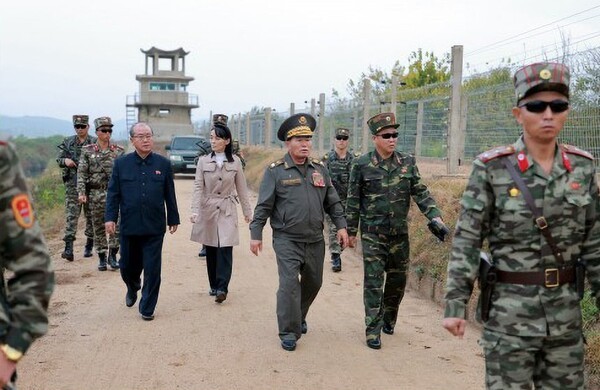
·Kim Yo-jong and Pak Jong-chon Inspect Border Fortifications, Warn of Immediate Retaliation Against Provocations·North Korea Test-Launches New AI-Enabled High-Speed Torpedo, Jam-2.0·Kim Ju-ae Accompanies Kim Jong-un to Clothing and Footwear Exhibition Wearing a Pink Skirt SuitMyongsung KimSecretary General of the SAND InstituteKim Yo-jong and Pak Jong-chon Inspect Border Fortifications, Warn of Immediate Retaliation Against ProvocationsSenior North Korean officials, including Kim Yo-jong, a senior Workers’ Party of Korea (WPK) official, and Pak Jong-chon, an adviser to the Ministry of National Defense, inspected fortification sites along the Military Demarcation Line (MDL) and warned that South Korean forces would face an immediate military response if they fired further warning shots. Notably, the officials disclosed that Kim Jong-un had ordered the inter-Korean boundary to be transformed into a permanent national border, directing the military to make no concessions in defending North Korea’s territorial sovereignty. These developments suggest that Pyongyang is seeking to institutionalize its designation of inter-Korean relations as those between two hostile states by reinforcing the boundary both physically and militarily.The Korean Central News Agency (KCNA) reported on October 21 that Pak Jong-chon had inspected key sites along the southern border fortification line the previous day. He was accompanied by Ri Il-hwan, Secretary of the WPK Central Committee; Kim Yo-jong, Kim Jong-un’s sister and a senior WPK official; and senior commanders of the Korean People’s Army (KPA) General Staff.According to KCNA, Pak reviewed progress on the construction of physical barriers intended to establish a permanent border and encouraged the military personnel assigned to the project. Kim Yo-jong’s participation, alongside senior military commanders, underscored the political and strategic significance of the fortification campaign. It also suggested that the effort was being pursued under the direct authority of Chairman Kim Jong-un.During the inspection, Pak sharply criticized the South Korean military’s response to North Korea’s construction activities. He accused Seoul of using what Pyongyang describes as legitimate border reinforcement operations as a pretext for confrontation. He also dismissed South Korean allegations that North Korean troops had crossed the MDL, portraying them as deliberate attempts to shift responsibility for escalating tensions onto North Korea.Pak further asserted that North Korean forces knew the precise location of their country’s border and were conducting legitimate construction activities within what Pyongyang considers its own territory.Park also condemned South Korea’s warning broadcasts and warning shots, explicitly threatening military retaliation if similar incidents continued. He stressed that any South Korean action beyond warning broadcasts and warning shots that endangered North Korean personnel would be unacceptable and must be met with an immediate counterattack. Declaring that the time for verbal exchanges had passed, he signaled Pyongyang’s readiness to respond militarily to what it considers further provocations.Kim Yo-jong reinforced the warning by disclosing that additional North Korean firepower units had been deployed to frontline areas. She said the military leadership should ensure that South Korean forces were fully aware that these units had taken up firing positions. Her remarks suggest that Pyongyang is seeking to strengthen its forward-deployed firepower posture and reinforce its deterrent messaging in response to South Korean warning shots.Of particular significance, Kim Yo-jong disclosed that her brother, Kim Jong-un, had personally ordered the permanent establishment of the inter-Korean boundary as a national border. According to her, the North Korean leader instructed the military to make no concessions in exercising the country’s territorial sovereignty and to formalize the boundary with what Pyongyang considers a hostile state as a permanent national border.She characterized the initiative as a historic undertaking intended to end what North Korea regards as a longstanding misrepresentation of inter-Korean relations, emphasizing that the military must fully implement Chairman Kim’s directive. These statements underscore Pyongyang’s apparent determination to replace the traditional conception of inter-Korean relations as a special relationship oriented toward eventual reunification with a framework premised on the existence of two mutually hostile states. The fortification campaign appears intended to translate this political doctrine into a durable physical and military reality.Since 2024, North Korea has undertaken extensive fortification activities along the inter-Korean boundary, primarily on the northern side of the MDL. These efforts have included the installation of barbed-wire fencing, defensive barriers, anti-tank obstacles, and minefields. More recently, Pyongyang has expanded related construction, including improvements to tactical roads and the installation of additional barriers, further heightening military tensions along the boundary.Tensions escalated further following a landmine explosion in the western sector of the DMZ on September 21, which injured three South Korean military personnel. On October 5, South Korea’s military released its final investigative findings, concluding that the explosion had been caused by a plastic anti-personnel mine planted by North Korean forces south of the MDL. The United Nations Command also determined that the incident constituted a violation of the Korean Armistice Agreement. Pyongyang, however, rejected these findings, dismissing the incident as a fabrication by South Korea and accusing the South Korean military of provocations involving warning broadcasts and warning shots.In a statement issued on October 19, Kim Yo-jong claimed that South Korean forces had conducted 2,870 warning broadcasts and fired 201 warning shots toward North Korean personnel between August 1 and October 17. During the subsequent inspection, North Korean officials reiterated these allegations and again warned of possible military retaliation.The most consequential aspect of the inspection was Pyongyang’s explicit presentation of its fortification campaign as an effort to establish a permanent inter-Korean border, rather than simply reinforce existing military positions. This framing suggests that the construction campaign serves not only an immediate defensive purpose but also a broader political objective: to give physical and military expression to North Korea’s policy of treating the two Koreas as separate, hostile states.By publicly invoking Kim Jong-un’s direct orders and organizing a joint inspection involving Kim Yo-jong and senior military officials, North Korea appears intent on demonstrating, both domestically and internationally, that the permanent fortification of the inter-Korean boundary has become a central element of its long-term national strategy.The disclosure that additional firepower units have taken up firing positions, coupled with warnings of immediate retaliation against further South Korean military actions, raises concerns about the risk of inadvertent military confrontation along the MDL. Given Pyongyang’s rejection of Seoul’s interpretation of the MDL and its own territorial claims, further North Korean troop incursions followed by South Korean warning shots could create conditions in which a localized incident escalates into a broader armed confrontation.North Korea Test-Launches New AI-Enabled High-Speed Torpedo, Jam-2.0North Korea announced that it had conducted an underwater test launch of Jam-2.0, a new high-speed, precision-guided torpedo system reportedly incorporating artificial intelligence (AI) technology. Following a recent test of submarine-launched strategic cruise missiles, the announcement underscores Pyongyang’s efforts to modernize its naval forces and expand its underwater strike and precision-engagement capabilities.According to the Korean Central News Agency (KCNA), the Academy of Defense Science, the General Bureau of Missiles, and the Research Bureau of Torpedo Weapons conducted the underwater test launch on October 15 to assess technological improvements and verify the performance of the newly developed Jam-2.0 high-speed, precision-guided torpedo system. KCNA reported the test on October 17.KCNA stated that Jam-2.0 was jointly developed by several North Korean defense research institutions and incorporates AI technology for target detection and guidance. The agency also claimed that the system had undergone more than 180 tests over the preceding five years, leading to the development of key technologies intended to improve propulsion efficiency. The latest test reportedly demonstrated the performance of the system’s rocket propulsion mechanism.North Korea, however, did not disclose critical technical specifications, including the torpedo’s actual speed, maximum operational range, warhead configuration, destructive capability, or the specific mechanisms through which AI supports target detection and guidance. It also remains unclear how extensively AI technology has been integrated into the system or whether its incorporation offers measurable improvements in target acquisition, tracking, and engagement compared with existing torpedoes.According to KCNA, senior officials from North Korea’s defense research establishment who observed the test described it as an important achievement, marking a significant advance in the development of the country’s naval capabilities. Pyongyang also characterized the launch as part of routine research and development activities aimed at enhancing the technological sophistication of its weapons systems.North Korea’s claim that Jam-2.0 incorporates AI technology suggests an effort to enhance the precision, autonomy, and target-tracking capabilities of its underwater weapons. If the reported advances in rocket propulsion and high-speed underwater maneuverability are substantiated, the system could shorten the time needed to reach a target and reduce the response window available to opposing naval forces. Nevertheless, independent technical verification is needed to determine whether the system has achieved the claimed capabilities.Pyongyang has increasingly prioritized naval modernization as part of its broader military development strategy, unveiling successive advances in surface combatants, submarines, and underwater weapons systems. On October 14, North Korea announced that it had conducted test launches of two types of submarine-launched strategic cruise missiles in the East Sea. By expanding its destroyer fleet while simultaneously developing submarine-launched weapons, North Korea appears to be diversifying its maritime strike capabilities across surface and subsurface platforms.The disclosure of the Jam-2.0 test should therefore be viewed in the broader context of North Korea’s naval modernization campaign. It suggests that Pyongyang is pursuing two complementary objectives: developing longer-range strike capabilities through submarine-launched missiles and enhancing underwater engagement capabilities through AI-enabled precision-guided torpedoes.North Korea’s emphasis on the torpedo’s AI-assisted target detection and guidance capabilities, alongside improvements in propulsion and speed, also appears intended to demonstrate the growing technological sophistication of its naval weapons systems to both domestic and international audiences.It remains unclear whether Pyongyang will disclose further information about the torpedo’s operational deployment, intended launch platforms, or subsequent test results. If the system’s actual performance substantiates North Korea’s claims, it could pose additional challenges for the anti-submarine warfare and maritime defense operations of the South Korean and U.S. navies.Kim Ju-ae Accompanies Kim Jong-un to Clothing and Footwear Exhibition Wearing a Pink Skirt SuitKim Ju-ae, the daughter of North Korean leader Kim Jong-un, has increasingly accompanied her father not only to military and diplomatic events but also to industrial and economic activities closely linked to the daily lives of North Korean citizens, including clothing and footwear production. Her repeated appearances at events showcasing the achievements of Kim’s key economic initiatives suggest that her public role is expanding beyond military affairs to encompass economic development and public welfare. These developments have also fueled speculation that Pyongyang may be gradually cultivating her public image as a potential future successor.KCNA reported on October 20 that Kim Jong-un had visited the National Clothing and Footwear Exhibition 2026 the previous day, accompanied by senior Party and government officials. His wife, Ri Sol-ju, and daughter, Ju-ae, also attended the event. Wearing a pink skirt suit, Ju-ae toured the exhibition alongside her father and was photographed holding a pair of shoes at an exhibition display while speaking with him.Held under the theme “A Drive for New Product Development and Quality Improvement,” the exhibition brought together approximately 270 production units, including major North Korean light-industry enterprises and newly established garment factories in cities and counties. Participants displayed clothing in more than 30 categories, comprising approximately 70,700 items, as well as footwear in more than 60 categories, totaling approximately 170,000 pairs.Particularly noteworthy was Ju-ae’s attendance at an event showcasing the results of one of Chairman Kim’s key economic policy initiatives. Previously, her public appearances had been concentrated largely in military settings, including missile launches, inspections of military facilities, and military parades. More recently, however, her public activities have expanded to include diplomatic engagements, economic events, and occasions highlighting the daily welfare of North Korean citizens.The exhibition was particularly significant because it showcased achievements associated with Kim Jong-un’s Regional Development 20×10 Policy. Launched in 2024, the initiative aims to establish modern factories, hospitals, and public service facilities in 20 cities and counties annually over a 10-year period. Its stated objectives are to narrow regional economic disparities and improve living standards outside major urban centers.Now in its third year of implementation, the Regional Development 20×10 Policy has been accompanied by efforts to demonstrate that products manufactured at newly established regional industrial facilities are approaching the quality standards of those produced by major centrally managed enterprises.During his visit, Kim Jong-un stated that numerous stylish, high-quality clothing and footwear products manufactured by newly established garment factories in cities and counties under the Party’s regional development policy, as well as by other local light-industry enterprises, were now competing on equal terms with products from centrally managed factories.He further described this development as clear evidence of the legitimacy and effectiveness of the Party’s policy of reducing regional disparities, narrowing the urban-rural divide, and promoting balanced development nationwide.Kim also expressed satisfaction with the exhibition, held annually in October, stating that it demonstrated rapid and tangible progress in the light-industry sector as enterprises intensified competition, improved product quality, and pursued new product development.He also emphasized the importance of improving clothing and footwear design. He instructed the relevant authorities to organize design festivals and exhibitions in various formats and to enhance economic efficiency and scientific production management by identifying consumer preferences and incorporating them into product development.In addition, he called for promoting traditional Korean attire, developing products featuring symbols associated with the North Korean national flag, publishing photo features and magazines showcasing new clothing and footwear products, and fostering greater competition among manufacturing enterprises. Improving the quality of school uniforms, backpacks, and footwear for students was also identified as a priority.North Korea’s extensive coverage of the exhibition appears intended to showcase the achievements of its regional industrial development policy, bolster public confidence in the government’s economic agenda, and portray Kim as a leader attentive to improving everyday living standards.
26.10.23 -
 Current Affairs Analysis-Global Critical Mineral Security
Critical Mineral Security in an Era of Rising Geopolitical RiskThe Need for Global Cooperation and Resource Supply Chain Network-BuildingSeon-Yong Kim, Ph.D. in Economics Department of Gas Policy Research / Associate Research FellowThe Front Line of Resource Security Is Shifting to Critical MineralsIn October 1973, during the Fourth Arab–Israeli War, Arab oil-producing countries progressively cut production and imposed an oil embargo on the United States and the Netherlands. Oil prices nearly quadrupled within a few months, but the more immediate concern was the physical shortage of supply. Long queues formed at gas stations, several European countries introduced Sunday driving bans, and Japan experienced negative economic growth in 1974 for the first time since the war. The crisis made clear that energy security was not merely an economic concern but a matter of national security. It also prompted the establishment of the International Energy Agency (IEA) in 1974 and the introduction of emergency oil-stockholding arrangements.Half a century later, a similar dynamic is emerging in critical minerals. As U.S.–China strategic competition has intensified, extending to tariffs and technology controls, China has progressively expanded its export controls—from gallium and germanium in 2023 to graphite, antimony, tungsten, and seven rare earth elements. The effects were felt quickly. Following the controls introduced in April 2025, China’s rare earth magnet exports in May fell by approximately three-quarters year on year, forcing Ford, Suzuki, and several European auto-parts suppliers to suspend some production lines. In October 2025, China also announced extraterritorial controls covering products manufactured in third countries that contain Chinese-origin rare earths. Although implementation of these measures has been suspended under the U.S.–China trade truce, which has since been extended through early 2027, critical minerals have become instruments of retaliation and geoeconomic leverage. Unlike oil, however, critical minerals still lack an international safety net comparable to coordinated emergency stockpiles.Pressures are also mounting on the demand side. Critical minerals are essential to the energy transition: rare-earth permanent magnets are used in wind turbines and electric-vehicle motors, while lithium, nickel, cobalt, and graphite are key materials for batteries and energy-storage systems. Artificial intelligence (AI) is adding another source of demand. Data-center electricity consumption is projected to more than double by 2030, driving demand for renewable energy, copper for data centers and power grids, and minerals such as gallium for semiconductors. The spread of physical AI will add further pressure, as robots require permanent-magnet actuators in their joints and batteries to power their operations. With defense and other advanced industries adding to these demands, global consumption of critical minerals is expected to rise substantially above current levels.South Korea is among the countries most exposed to these changes. It hosts world-leading battery and semiconductor industries, yet relies almost entirely on imports for lithium, nickel, cobalt, and manganese. Its dependence on China for cathode precursors and anode materials reaches as high as 90 percent. The very industrial competitiveness that underpins Korea’s economic strength also leaves it highly vulnerable to supply chain disruptions.What Makes Critical Mineral Supply Chains DifferentOil and gas supply chains generally follow a relatively linear path from extraction and transportation to end use. The tools for managing supply risks—including strategic reserves, supplier diversification, and long-term contracts—are also well established internationally. Critical minerals, by contrast, pass through a complex, multi-stage supply chain, spanning mining, beneficiation, smelting, refining, and materials processing to component manufacturing and final-product assembly. Each stage requires distinct resources, technologies, and capital investment, creating its own potential bottlenecks. A disruption at any one stage can constrain the entire chain, bringing downstream production to a halt.The greater challenge is that supply concentration tends to increase, rather than decrease, farther downstream. China accounts for more than 60 percent of global rare earth mining, but its share exceeds 90 percent in separation and refining and permanent magnet manufacturing. Although lithium mining is distributed across Australia, Chile, and other countries, roughly two-thirds of global lithium refining still takes place in China. More than 90 percent of Australia’s lithium production is also shipped to China as spodumene concentrate for further processing. This “inverted funnel” structure—one that narrows farther downstream—means that simply acquiring equity stakes in mines is insufficient to secure supply chains.Policy shifts in resource-rich countries add another layer of uncertainty. Indonesia, Zimbabwe, the Democratic Republic of the Congo, and Chile, among others, are seeking to retain more economic value domestically through measures such as raw-ore export bans, higher royalties, nationalization, and domestic-processing requirements. Yet the outcomes have not always matched these ambitions. Indonesia, for example, developed a substantial nickel-processing industry after banning nickel ore exports, but Chinese capital controls an estimated 75 percent of the country’s processing capacity. Resource nationalism without the necessary processing technologies and investment capital can therefore reinforce, rather than reduce, China’s dominance. Experience repeatedly demonstrates that mineral reserves alone do not guarantee resource sovereignty.How Major Economies Are Responding: Midstream Focus, Direct Intervention, and AlliancesMajor economies are adopting approaches tailored to their respective circumstances. The United States has opted for direct government intervention to reshape market incentives and supply chains. It supports domestic production through measures such as the Section 45X advanced manufacturing production tax credit under the Inflation Reduction Act (IRA) and has invoked the Defense Production Act to expand domestic critical mineral production. In February 2026, it launched Project Vault, a $12 billion public–private initiative to build a strategic stockpile of critical minerals. It has also pursued direct intervention in the rare earth market: under an agreement with MP Materials, the U.S. Department of Defense established a $110-per-kilogram price floor for neodymium-praseodymium (NdPr) products and a 10-year offtake arrangement for magnets produced at the company’s planned manufacturing facility.Major economies are adopting approaches tailored to their respective circumstances. The United States has opted for direct government intervention to reshape market incentives and supply chains. It supports domestic production through measures such as the Section 45X advanced manufacturing production tax credit under the Inflation Reduction Act (IRA) and has invoked the Defense Production Act to expand domestic critical mineral production. In February 2026, it launched Project Vault, a $12 billion public–private initiative to build a strategic stockpile of critical minerals. It has also pursued direct intervention in the rare earth market: under an agreement with MP Materials, the U.S. Department of Defense established a $110-per-kilogram price floor for neodymium-praseodymium (NdPr) products and a 10-year offtake arrangement for magnets produced at the company’s planned manufacturing facility.The European Union, by contrast, leverages the regulatory power of its single market. The Critical Raw Materials Act (CRMA) establishes non-binding 2030 benchmarks under which EU capacity should meet at least 10 percent of annual consumption through domestic extraction, 40 percent through processing, and 25 percent through recycling. It also seeks to diversify imports by limiting dependence on any single non-EU country to no more than 65 percent of the EU’s annual consumption of any strategic raw material. Complementary measures, including the EU Battery Regulation and supply-chain due-diligence requirements, use access to the European market to encourage more sustainable and resilient global supply chains.Japan, a resource-poor country, offers a particularly relevant model for South Korea. In 2011, following the 2010 Senkaku Islands dispute with China, Japan’s state-backed Japan Oil, Gas and Metals National Corporation (JOGMEC), together with trading company Sojitz, invested in Australian rare earth producer Lynas to diversify Japan’s supply sources. Rather than treating the investment as a one-off response to a crisis, Japan continued its support in 2023, committing an additional AUD 200 million to expand production and develop heavy rare earth separation capacity. As a result, when China imposed export controls on heavy rare earths in 2025, Japan already had an alternative source of supply.Resource-rich Australia and Canada, meanwhile, are seeking to move beyond extraction by expanding domestic refining and processing capacity. They are also tightening scrutiny of investment from countries considered security risks while actively attracting capital and technology from trusted partners. Through these efforts, both countries are positioning themselves as important hubs in more diversified, non-Chinese critical mineral supply chains.Three common trends emerge from these policies. First, the policy focus is shifting from mining toward midstream and downstream activities, particularly refining and materials processing. Second, the role of government is evolving from indirect support through subsidies and tax incentives to more direct intervention through equity investments, offtake agreements, and price floors. Third, resource security has become a central agenda in alliance diplomacy, as reflected in initiatives such as the Minerals Security Partnership (MSP) and its successor, the Forum on Resource Geostrategic Engagement (FORGE), launched in 2026, the Quad Critical Minerals Initiative, and the G7 Critical Minerals Action Plan.Why Cooperation and Networks MatterCritical mineral supply chains are exceptionally long, extending from mining to finished-product manufacturing, with each stage requiring distinct capabilities. Mining depends on accessible reserves, permits, and supporting infrastructure such as reliable power and port facilities. Refining requires advanced process technologies and substantial, long-term capital investment. Materials and component manufacturing, in turn, depends on industrial capabilities, technical expertise, and reliable offtake arrangements. Few countries possess all these capabilities within their own borders. Even the United States is developing its supply chains on the basis of a division of labor with allies and partners, rather than pursuing complete self-sufficiency.Viewed from this perspective, a diversified, non-Chinese supply chain can be built only by combining the complementary strengths of different countries. Australia, Canada, and countries across Latin America and Africa possess abundant mineral resources. South Korea and Japan bring expertise in refining, materials processing, battery technologies, and advanced manufacturing, while the United States and the European Union contribute capital, market access, and regulatory standards. By dividing responsibilities across different stages of the supply chain, countries with abundant mineral resources can work with those possessing processing technologies to address bottlenecks without requiring any single country to bear the burden alone.Such cooperation is also the most practical way to respond to policy shifts in resource-rich countries. When these countries restrict raw-ore exports and require domestic processing, their underlying objective is generally to capture more value locally and promote industrialization. Achieving these goals requires processing technologies, investment, and capable partners. Countries that can offer these assets are therefore better positioned to negotiate mutually beneficial arrangements. To date, Chinese capital has played a dominant role in filling this gap. Countries with advanced processing technologies should now work together with like-minded partners to offer an alternative backed by financing and long-term investment.Japan’s involvement in a rare earth mining project in Namibia and a refining project in France illustrates this approach. Its appeal as a partner rests not simply on the scale of its financial resources, but also on the value of its refining expertise and magnet technologies. South Korea, too, could offer emerging resource-producing countries in Indonesia, Latin America, and Africa integrated partnership packages combining processing technologies, infrastructure investment, and workforce training. Because some of these countries are reluctant to join frameworks perceived as overly bloc-oriented, bilateral partnerships should be pursued alongside multilateral cooperation.South Korea’s circumstances make international cooperation all the more important. Through three supply chain-related laws and a series of critical mineral strategies, the country has rapidly established an institutional foundation for strengthening supply chain security. Its 2026 budget for overseas resource development loans also rose by 73 percent from the previous year, reaching KRW 67.5 billion. Nevertheless, competing for equity stakes in overseas mines on the basis of financial resources alone is difficult when major economies can commit comparable or even larger sums to individual projects.A more realistic strategy is for South Korea to establish a distinctive role within cooperative networks by offering an integrated package that combines its refining and materials-processing technologies with reliable demand from its battery and semiconductor industries. In this way, South Korea can serve as a technology and offtake partner for resource-producing countries while providing its allies with a source of midstream processing capacity outside China.Directions for Full-Cycle Supply Chain CooperationFirst, at the sourcing stage, South Korea should continue to secure equity stakes in overseas resource projects. The eligibility and allocation criteria for its overseas resource development loan program should be clarified to ensure that the program’s expanded support reaches critical mineral projects. FORGE and the MSP Finance Network, launched in 2024, provide channels through which South Korea can identify and pursue joint investment opportunities with the United States and other partners.Second, strengthening refining and processing capacity is the most urgent priority. The South Korean government has already identified the expansion of domestic refining and processing capacity as a policy objective. To translate this objective into action, the institutional framework should be strengthened to facilitate equity investments and debt guarantees for overseas refineries and domestic beneficiation and smelting facilities. Japan took steps in this direction through amendments to the JOGMEC Act in 2020 and 2022.In particular, jointly developing refining facilities in resource-rich countries using South Korean technology could help those countries meet domestic processing requirements while improving South Korea’s access to raw materials. Australia and Canada are promising partners. Australia seeks to move beyond raw-material exports toward greater domestic processing, but faces challenges in securing the necessary technologies and reliable offtake commitments. Canada, meanwhile, has nickel sulfide resources that could support the production of battery-grade materials, and its mineral supply chains are closely connected to the North American market in which South Korean battery manufacturers operate. Joint refining projects backed by long-term offtake agreements could therefore create mutual benefits by combining resource access, processing expertise, and reliable demand.Third, at the materials and demand stage, mechanisms are needed to ensure that non-Chinese supply chains remain commercially viable. When China expands production and drives prices down, alternative suppliers can struggle to remain competitive, as illustrated by the successive suspensions of operations at five nickel mines in Western Australia in 2024. A coordinated policy package could combine public guarantees for long-term offtake agreements, price floors, and environmental, social, and governance (ESG) and traceability requirements in public procurement.A price floor can function more like insurance against market collapse than a conventional subsidy: depending on its design, it may entail little or no fiscal expenditure under normal market conditions, with public support activated only when prices fall below a specified threshold. Such mechanisms are likely to be more effective when coordinated with allies. The United States, Australia, and Japan have incorporated price floors or other pricing arrangements into bilateral frameworks to support critical mineral supply chains. As an initial step, South Korea could explore linking North American raw-material procurement by Korean battery manufacturers with U.S. strategic stockpiling and price-support mechanisms.Fourth, at the recycling stage, Korea must prepare in advance for the large volumes of end-of-life batteries expected in the 2030s. Only by building both collection systems and refining capacity can Korea prevent the value of its “urban mines” from flowing abroad. If Korea can go further and become an international resource circulation hub that processes scrap from across Asia with its own recycling and refining capabilities, recycling itself will strengthen Korea’s position within cooperative networks. The recycled content, carbon footprint and due diligence requirements of the EU’s Battery Regulation and CRMA impose additional compliance burdens on Korean companies. However, if they are linked to cooperation on recycling and traceability technologies and to discussions on mutual recognition, these requirements could also become an opportunity for partnership.Conclusion: Acting After a Crisis Is Too LateDeveloping a mine typically takes more than a decade from exploration to production. If investment begins only after a supply disruption occurs, new sources of supply may not become available until long after the crisis has passed. Moreover, momentum behind efforts to diversify supply chains has repeatedly weakened whenever China has eased its export controls. Japan’s experience offers an important lesson: it had alternative sources of supply when a crisis struck precisely because it continued investing when the immediate pressure had subsided.This issue is particularly important for the South Korean economy. Batteries, semiconductors, and automobiles—and increasingly, defense and shipbuilding—are key drivers of South Korea’s exports and economic growth, and all depend on reliable access to critical minerals. In 2021, South Korea experienced firsthand how a disruption in the supply of even a relatively inexpensive input could have far-reaching consequences. China’s export restrictions on urea triggered a shortage of diesel exhaust fluid, raising concerns about nationwide disruptions to logistics and transportation. A disruption in critical mineral supplies could have an even broader impact, affecting not only South Korea’s major industries but also employment and exports.Securing critical minerals should therefore be treated not merely as a concern for the resource sector, but as a prerequisite for maintaining South Korea’s industrial competitiveness and safeguarding its economic security.At the same time, South Korea has the capabilities to contribute to building global supply chains. It is one of the few countries that combine refining, materials, battery and semiconductor manufacturing capabilities with large and stable demand, which can improve the viability of new supply projects. On this basis, South Korea can serve as a bridge, providing technology and offtake to resource-rich countries seeking industrialization, and non-Chinese midstream processing capacity to partner countries seeking to diversify supply. South Korea’s chairmanship of FORGE in 2026 also provides a basis for playing a more active role in shaping the rules of international cooperation on critical minerals.Resource security is no longer a matter of responding to crises as they arise; it is an ongoing strategic task that requires the integration of industrial, diplomatic, and technology policies. South Korea must ensure policy consistency through medium- and long-term strategies backed by multi-year budgets, using its First Basic Plan for Resource Security as a foundation. By leveraging its technological and industrial strengths through international cooperation networks, South Korea can move beyond its role as a consumer in global resource supply chains and become an indispensable partner in building more resilient ones.
26.10.23 -
 [NK Inside]
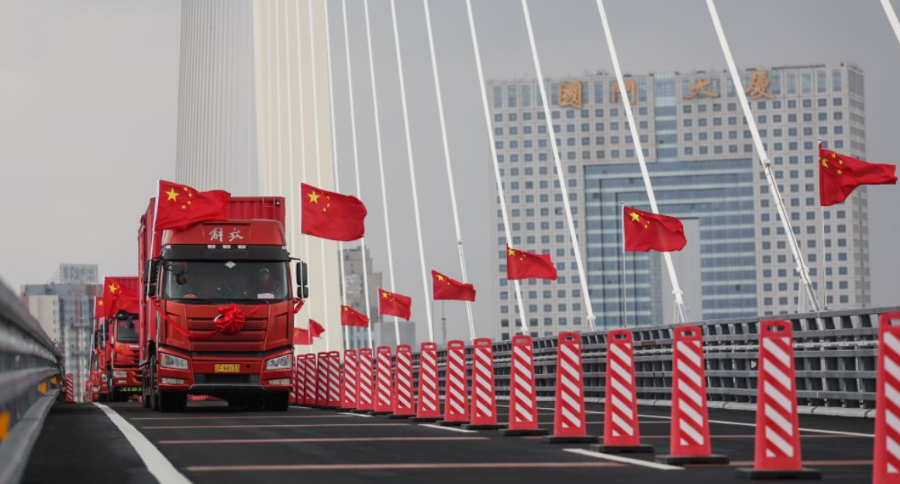
NK Inside· New Yalu River Bridge to Open After 12-Year Delay as North Korea and China Plan Joint Ceremony for October 15· North Korea Denies Responsibility for DMZ Landmine Incident Six Times but Keeps Its Own Population Uninformed· Kim Jong-un Showcases ICBMs Capable of Striking the U.S. Mainland, Signaling Defiance Toward TrumpMyongsung KimSecretary General of the SAND InstituteNew Yalu River Bridge to Open After 12-Year Delay as North Korea and China Plan Joint Ceremony for October 15The New Yalu River Bridge linking North Korea and China is finally set to open, 12 years after its construction was completed. The bridge remained unused amid North Korea’s nuclear tests, international sanctions, and deteriorating bilateral relations following Kim Jong-un’s rise to power. Its opening is expected to signal renewed efforts by Pyongyang and Beijing to strengthen bilateral ties. The development has also drawn attention to potential shifts in the strategic dynamics among North Korea, China, and Russia, particularly as Pyongyang seeks to expand trade with Beijing while deepening its economic and military cooperation with Moscow.On October 14, China’s state-run Xinhua News Agency announced that the opening ceremony for the New Yalu River Bridge would be held on October 15. The bridge connects Dandong in China’s Liaoning Province with Sinuiju in North Korea’s North Pyongan Province. Although construction of the main bridge structure was completed in October 2014, its opening was repeatedly delayed because connecting roads and customs facilities on the North Korean side remained unfinished. The opening marks the culmination of a major bilateral economic cooperation project financed entirely by China, at a cost of 2.2 billion yuan (approximately US $329 million).China initially proposed the construction of the New Yalu River Bridge in 2003, as Beijing advanced its Northeast Revitalization Plan to strengthen the industrial base of its economically underdeveloped northeastern provinces. The Chinese government sought to expand cross-border trade with North Korea and improve regional logistics infrastructure. Dandong, through which approximately 70 percent of North Korea–China trade has traditionally passed, faced growing logistical constraints due to the aging Sino–Korean Friendship Bridge, which opened in 1937.In 2007, China, represented by then-Vice Foreign Minister Wu Dawei, proposed building a new bridge on the condition that Beijing would cover the entire construction cost. Although North Korea did not respond immediately, the project gained momentum in October 2009, when the two countries signed an economic and technical cooperation agreement following a visit to Pyongyang by then-Chinese Premier Wen Jiabao. Construction began in December 2010 and was completed in October 2014.However, bilateral relations deteriorated sharply even as construction progressed. North Korea’s long-range rocket launch in 2012 and its third nuclear test in 2013 strained relations with Beijing. Tensions deepened following the December 2013 execution of Jang Song-thaek, who had maintained close ties with China. Chinese President Xi Jinping’s decision to visit South Korea before visiting North Korea in July 2014 was widely viewed as another symbolic indication of the deterioration in bilateral relations.Following North Korea’s three nuclear tests between 2016 and 2017, China joined other members of the United Nations Security Council in adopting increasingly stringent sanctions against Pyongyang. The New Yalu River Bridge, originally envisioned as a symbol of bilateral economic cooperation, consequently became emblematic of the prolonged deterioration in North Korea–China relations.Prospects for opening the bridge reemerged as bilateral relations improved following the diplomatic developments surrounding the 2018 U.S.–North Korea summit and amid escalating U.S.–China trade tensions. Nevertheless, the project remained stalled. Despite five summits between North Korean leader Kim Jong-un and Chinese President Xi Jinping between 2018 and 2019 aimed at restoring strategic cooperation, the bridge remained unopened. North Korea’s border closures in 2020 in response to the COVID-19 pandemic further delayed its opening.Following the reopening of North Korea’s borders in 2023, Pyongyang’s growing ties with Moscow became another factor shaping its relationship with Beijing. As North Korea expanded military and economic cooperation with Russia amid the war in Ukraine, its ties with China appeared comparatively less robust. Even in 2024, the 75th anniversary of the establishment of diplomatic relations between North Korea and China, the two countries held few notable high-level exchanges or major commemorative events.The diplomatic atmosphere began to shift in 2025. When North Korean leader Kim Jong-un visited Beijing in September to attend commemorations marking the 80th anniversary of China’s victory in World War II, the two countries reaffirmed their strategic cooperation. Since early 2026, regular passenger rail and air services between North Korea and China have resumed, while preparations for the opening of the New Yalu River Bridge have accelerated following Chinese President Xi Jinping’s reciprocal visit to Pyongyang in June.Analysts suggest that the bridge’s opening also reflects an adjustment in North Korea’s external economic strategy. Pyongyang has long sought to avoid excessive economic dependence on China while expanding cooperation with Russia. On September 7, the road bridge over the Tumen River connecting North Korea and Russia opened. North Korea’s decision to authorize group tours from Russia before resuming comparable arrangements for Chinese visitors has also been interpreted as evidence of this strategic orientation.Nevertheless, cooperation with Russia alone is unlikely to meet North Korea’s broader economic needs. Pyongyang therefore appears to be stepping up efforts to expand trade with China. The opening of the New Yalu River Bridge could strengthen the existing bilateral logistics network, which has relied heavily on rail transport, by increasing road freight capacity and improving the infrastructure supporting North Korea’s external trade. However, given the continued enforcement of UN sanctions, it remains uncertain whether the bridge’s opening will lead to a substantial increase in bilateral trade in the near term.Some diplomatic observers interpret this development as part of Pyongyang’s effort to maintain a strategic balance between Beijing and Moscow by preserving close military ties with Russia while restoring economic cooperation with China. With the possibility of renewed U.S.–North Korea dialogue also under discussion, Pyongyang may be seeking to leverage its relationships with both countries to strengthen its position in future diplomatic negotiations.A diplomatic source observed, “China has consistently sought to expand trade with neighboring countries, so the prolonged delay in opening the New Yalu River Bridge appears to have stemmed primarily from circumstances on the North Korean side.” The source added, “Having gained greater confidence through its strengthened relationship with Russia, and with the prospect of renewed U.S.–North Korea dialogue emerging, Pyongyang now appears to see greater strategic value in balancing its relations with China and Russia.”The opening of the New Yalu River Bridge is significant not only as an expansion of cross-border logistics infrastructure but also as a symbolic step toward restoring North Korea–China relations. If Pyongyang maintains its military cooperation with Moscow while deepening economic ties with Beijing, this development could have important implications for the effectiveness of international sanctions and the broader diplomatic and security landscape in Northeast Asia.North Korea Denies Responsibility for DMZ Landmine Incident Six Times but Keeps Its Own Population UninformedNorth Korea has officially denied responsibility six times for last month’s landmine explosion in the western sector of the Demilitarized Zone (DMZ), which injured three South Korean soldiers, while apparently keeping its own population uninformed about the incident. Although Kim Yo-jong, director of the General Affairs Department of the Workers’ Party of Korea, repeatedly condemned the incident as a staged provocation by Seoul, North Korea’s main domestic media outlets, including Rodong Sinmun and Korean Central Television, have not reported on it.This approach contrasts sharply with Pyongyang’s handling of the 2015 wooden-box landmine incident, which the regime publicized extensively to domestic audiences. Analysts suggest that the apparent information blackout reflects North Korea’s broader effort to institutionalize its designation of South Korea as a hostile state while minimizing references to the South in domestic political discourse.A review of North Korean media reports as of October 13 indicates that, since the September 21 explosion, Pyongyang has rejected the South Korean military’s investigation findings on five occasions through statements issued by Kim Yo-jong and the Ministry of Foreign Affairs. Including North Korea’s official denial of responsibility at the United Nations, the total number of denials stands at six.However, these statements were disseminated exclusively through externally oriented outlets, including the Korean Central News Agency, and were not carried by major domestic media outlets such as Rodong Sinmun or Korean Central Television, which serve as key sources of information for North Korean citizens.North Korea continues to portray the incident as a staged provocation orchestrated by Seoul, despite the South Korean military’s conclusion—based on an on-site investigation and forensic analysis of recovered mine fragments—that the explosion was caused by a plastic-cased antipersonnel mine planted by North Korean forces south of the Military Demarcation Line (MDL). Kim Yo-jong also ridiculed the South Korean government’s proposals to reduce military tensions and reiterated Pyongyang’s position that inter-Korean relations should remain permanently severed. The North Korean Ministry of Foreign Affairs further warned that it would respond forcefully if South Korean troops entered territory claimed by Pyongyang to remove landmines.These confrontational statements, however, have been directed primarily at external audiences. While denying responsibility and threatening military retaliation in messages aimed at Seoul and the international community, Pyongyang appears to be pursuing a differentiated information strategy, keeping its domestic population unaware of the incident altogether.This approach stands in marked contrast to North Korea’s response to the wooden-box landmine incident in 2015, 11 years earlier.On August 4, 2015, wooden-box landmines planted by North Korean forces exploded in the DMZ near Paju, Gyeonggi Province, seriously injuring two South Korean noncommissioned officers. North Korea issued an official statement denying responsibility 11 days later. Unlike its response to the recent incident, Pyongyang disseminated the statement not only through external media channels but also through Korean Central Television, making its position accessible to domestic audiences.At the time, North Korea strongly protested South Korea’s resumption of loudspeaker broadcasts directed toward the North and escalated military tensions by declaring a quasi-state of war. The regime actively publicized the confrontation to its citizens, using the standoff to promote domestic solidarity and intensify hostility toward South Korea. The crisis was eventually defused through high-level inter-Korean negotiations, which resulted in an agreement to ease military tensions.This time, however, North Korea appears to have chosen not to inform its citizens about the incident. Experts suggest that this shift is closely linked to Kim Jong-un’s policy of defining the two Koreas as separate, hostile states.Since late 2023, North Korea has fundamentally redefined inter-Korean relations, abandoning the longstanding view of the relationship as a special one oriented toward eventual reunification and instead characterizing the two Koreas as hostile states. As part of this policy shift, the regime has sought to deepen the social and psychological divide between the two populations, including by substantially restricting the flow of information about South Korea to North Korean citizens.Against this backdrop, analysts suggest that extensive domestic coverage of the DMZ landmine incident would be at odds with Pyongyang’s revised policy framework. Whereas military confrontations with South Korea were previously used to mobilize public support and reinforce anti-South Korean sentiment, the regime now appears to place greater emphasis on minimizing South Korea’s presence in domestic public discourse.North Korea’s ongoing efforts to fortify the DMZ may also have contributed to this approach.Building on activities undertaken in previous years, North Korean forces have continued installing barbed-wire barriers, laying minefields, and constructing tactical roads along the MDL in 2026, further reinforcing the physical separation between the two Koreas. During these operations, repeated crossings of the MDL by North Korean personnel, followed by warning shots from South Korean forces, have contributed to heightened border tensions.Analysts suggest that Pyongyang may have opted to issue forceful warnings to external audiences while limiting domestic coverage of the incident, as an escalation into direct military confrontation could disrupt its ongoing border fortification efforts.The contrast with 2015 is particularly significant: the earlier landmine incident ultimately led to high-level inter-Korean negotiations, whereas North Korea now categorically rejects dialogue with the South Korean government.Whereas Pyongyang previously had an incentive to use military tensions as leverage in negotiations, it now appears to prioritize institutionalizing the rupture in inter-Korean relations and completing physical fortifications along the DMZ.Kim Jong-un Showcases ICBMs Capable of Striking the U.S. Mainland, Signaling Defiance Toward TrumpNorth Korea has inaugurated the Museum of the Defense Revolution, showcasing an extensive array of strategic weapons and advanced military equipment, including the Hwasong-20, its latest intercontinental ballistic missile (ICBM), which is designed to reach the continental United States. Kim Jong-un, chairman of the State Affairs Commission, attended the opening ceremony in person, underscoring his ambition to build one of the world’s most powerful defense industries and reaffirming his commitment to advancing the country’s weapons systems, including its nuclear and missile capabilities. The event appears intended to highlight North Korea’s military strength while incorporating the achievements of its defense industry into the regime’s broader narrative of national power and political legitimacy.On October 13, Rodong Sinmun, the official newspaper of the Workers’ Party of Korea, reported that Kim Jong-un attended the opening ceremony of the Museum of the Defense Revolution on October 11, organized by the Second Economic Committee, and personally cut the ceremonial ribbon. The Second Economic Committee is a central institution responsible for overseeing North Korea’s military-industrial sector, including weapons research, development, and production.In his address, Kim described the museum as an “immortal archive” and a national treasure of exceptional significance. He asserted that it demonstrates how North Korea has safeguarded its national dignity and security, ensured the well-being of its people, and maintained peace through military strength.He further argued that institutions such as the Museum of the Defense Revolution embody revolutionary achievements made possible by a strong state and a people equipped with the military capabilities necessary for self-defense. His remarks framed the development of nuclear weapons and advanced military systems as essential to national survival and the preservation of peace.Kim also emphasized that the expansion of North Korea’s defense industry had been made possible by the sacrifices and sustained efforts of its people, who had supported the country’s self-reliant defense policy despite international sanctions and prolonged economic hardship.In particular, Kim declared that building the world’s strongest defense industry was a core mission of the Workers’ Party of Korea and reaffirmed the Party’s determination to continue developing and refining increasingly advanced and powerful weapons systems. He added that the museum’s exhibits and facilities would expand as new weapons systems were developed.Kim Jong-sik, first deputy director of the Workers’ Party’s Military-Industrial Department, similarly asserted that the Party’s defense development strategies and objectives represented a fundamental transformation of the country’s defense science and technology, as well as its military-industrial infrastructure.The opening ceremony is particularly noteworthy because North Korea presented the achievements of its defense industry not simply as milestones in weapons development but as enduring national assets and symbols reinforcing the legitimacy of the ruling system.The 29 photographs released by Rodong Sinmun showcased a range of strategic and tactical weapons systems, including North Korea’s latest ICBM, the Hwasong-20.First unveiled during the October 10, 2025, military parade at Kim Il-sung Square in Pyongyang, held to commemorate the 80th anniversary of the founding of the Workers’ Party of Korea, the Hwasong-20 represents the latest generation of North Korean ICBM technology. Designed to reach the continental United States, the missile is portrayed by Pyongyang as a central component of its nuclear deterrent.Other exhibits included a 600-millimeter super-large multiple rocket launcher and its transporter-erector-launcher vehicle, a 155-millimeter self-propelled howitzer, and Pukguksong-series submarine-launched ballistic missiles. The Saetbyol-4 strategic reconnaissance unmanned aerial vehicle and Saetbyol-9 attack drone were also displayed, highlighting North Korea’s efforts to demonstrate progress not only in ballistic missile development but also in modernizing its conventional military capabilities, particularly unmanned aerial systems.By bringing together a broad range of weapons systems—from strategic nuclear delivery platforms and long-range artillery to submarine-launched missiles and reconnaissance and attack drones—under one roof, Pyongyang appears intent on demonstrating to domestic and international audiences that its military modernization efforts are advancing across multiple domains simultaneously.The prominence given to North Korea’s latest strategic weapons also suggests an effort to portray nuclear and missile development not as temporary military achievements but as enduring national accomplishments to be preserved, institutionalized, and continuously expanded.Kim Jong-un was accompanied by his wife, Ri Sol-ju, and his daughter, Kim Ju-ae. Photographs released by North Korean state media showed the family touring the museum together.Kim Ju-ae’s presence is particularly noteworthy given her increasingly frequent appearances at major military events and activities involving strategic weapons. Her participation in the opening of a museum dedicated to North Korea’s defense achievements further underscores the symbolic importance the regime attaches to its military accomplishments. By portraying its nuclear and missile programs as enduring sources of national pride, Pyongyang may also be laying the political and ideological groundwork for the continued expansion of its strategic weapons capabilities and military-industrial base.
26.10.16 -
 [NK Inside]
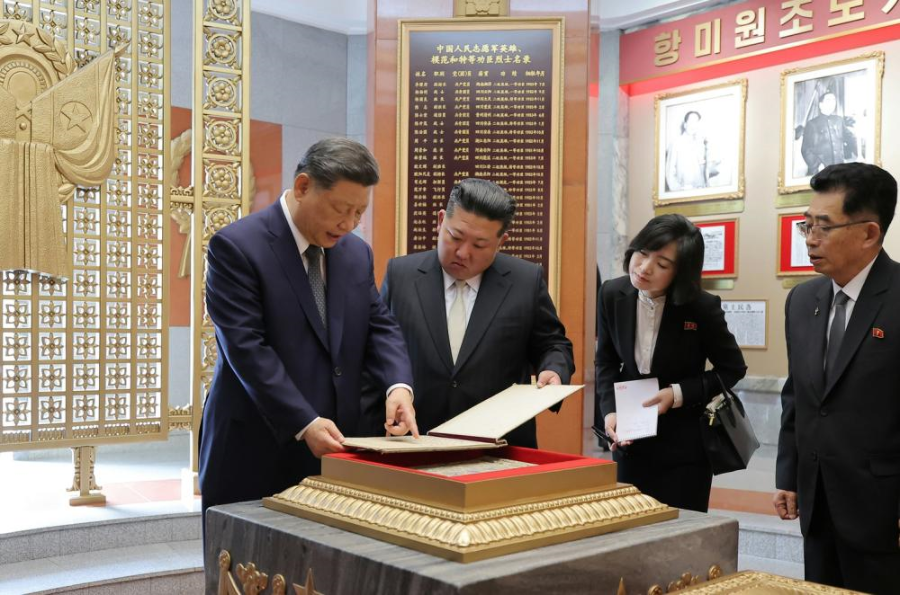
NK Inside· North Korea Sides with China on Taiwan Issue: “China’s Reunification with Taiwan Is a Just Cause”· North Korea Again Rejects South Korea’s Findings, Calling Them a “Fabrication”… “Will Respond Immediately to Territorial Violations”· Kim Jong-un Observes Medium-Range and Hypersonic Missile Launch… “Strengthening Nuclear Deterrence”Myongsung KimSecretary General of the SAND InstituteNorth Korea Sides with China on Taiwan Issue: “China’s Reunification with Taiwan Is a Just Cause”North Korea has explicitly endorsed China’s position on the Taiwan issue, arguing that U.S. policy toward Taiwan is contributing to growing instability in the region.The Korean Central News Agency (KCNA) reported on October 7 that international affairs analyst Myong-chol Kim stated in an article titled “The U.S. Is Acting Rashly” that “instability in the Taiwan Strait amounts to a crisis for the United States” and that “Taiwan’s return to China is a matter of time.”Referring to the recent arrival in Taiwan of new U.S.-made fighter jets—the first two of a batch of 66 F-16V Block 70 aircraft ordered in 2019—Kim criticized the United States, stating that “under the pretext of ‘opposing unilateral attempts to change the status quo’ in the Taiwan Strait, the United States is pursuing a dangerous course that systematically undermines regional stability and further exacerbates tensions.”He continued, “The Taiwan issue is an internal matter of China; how it is resolved is entirely a matter for the Chinese people, and no outside power has the right to interfere,” adding that “the United States has made a serious misjudgment on the Taiwan issue and has once again embarked on a dangerous course whose consequences are difficult to predict.”Kim further stated, “No one should question the People’s Republic of China’s capability or resolve to safeguard its national sovereignty, territorial integrity, and core interests.”He also asserted that “China’s reunification with Taiwan is an indispensable and just cause aimed at restoring normality to what is abnormal, justice to what is unjust, and stability to what is unstable,” adding that “the reunification of Taiwan with China is an inevitable historical process that no force can reverse.”North Korea’s explicit alignment with China’s position reflects the strengthening of bilateral ties between the two countries.Relations between North Korea and China have strengthened in recent years. The two countries held summits in Beijing in September 2025 and Pyongyang in June 2026, and during the latter meeting, they agreed to elevate bilateral ties to a “strategic partnership.”North Korea Again Rejects South Korea’s Findings, Calling Them a “Fabrication”… “Will Respond Immediately to Territorial Violations”North Korea has again rejected the South Korean military’s final findings, which concluded that an explosion in the western sector of the Demilitarized Zone (DMZ) was caused by a landmine planted by the North south of the Military Demarcation Line (MDL), dismissing the findings as a “fabrication” by South Korea.Regarding the “mine-clearing operation” announced by the South Korean military, North Korea also threatened to take forceful countermeasures if its “territory” were violated. The Korean Central News Agency (KCNA) reported on the 6th that the North Korean Ministry of Foreign Affairs issued a statement titled “We Will Be More Resolute and Clear in Exercising Our Sovereignty Against the Most Hostile Country.”The statement came one day after the South Korean military announced its findings on the cause of the DMZ landmine explosion.The North Korean Ministry of Foreign Affairs argued, “The so-called ‘landmine explosion incident’ is a sinister act of sabotage intended to portray our fortification of the southern border—a legitimate exercise of sovereignty—as a ‘military incursion’ and to delay and obstruct it,” adding, “It is nothing more than a flimsy attempt by the South Korean military to shift responsibility for this suspicious incident onto us in an effort to evade accountability.”It further protested, “Attempting to attribute responsibility for this fabricated incident, which South Korea unilaterally manufactured and concluded, to the Democratic People’s Republic of Korea in an effort to tarnish our international image constitutes a grave provocation that cannot be tolerated under any circumstances,” adding that “it is a serious violation of sovereignty for which they will inevitably pay a price.”It warned, “We categorically reject South Korea’s despicable attempts, and our nation’s legitimate sovereign rights to ensure the security of our southern border will be exercised in an even more resolute and decisive manner.”Regarding the South Korean military’s announced mine-clearing operation south of the MDL, the North Korean Ministry of Foreign Affairs stated, “If they wish to remove mines that have nothing to do with us, they may do so; if not, they may refrain—it is none of our concern.” It nevertheless warned, “If even a single military boot or a single spark crosses into our territory by even 1 millimeter, the DPRK’s border forces will immediately take powerful countermeasures.”It further stated, “We make clear that even if a similar incident occurs again on South Korean territory in the future, responsibility will not lie with us but entirely with the party involved in the incident.” The statement was understood as a warning that North Korea could respond with force if South Korean troops cross into North Korean territory during mine-clearing operations near the MDL. It also reiterated North Korea’s rejection of proposals for inter-Korean military talks and reaffirmed its intention to proceed with border fortification measures as planned.The ministry declared, “Under no circumstances will we discuss the exercise of military sovereignty within our own territory with an adversarial state,” adding, “We will defend our sovereign territory not through negotiations, but through the resolute exercise of force.” It further stated, “South Korea’s malicious attempts to achieve its ulterior objectives through childish, self-fabricated smear campaigns will never succeed,” and declared, “The Democratic People’s Republic of Korea’s exercise of sovereignty in the context of its relations with the most hostile state will be carried out in the most resolute and unequivocal manner.”On October 5, the South Korean military reached its final determination that the explosion that occurred on September 21, in the western sector of the DMZ, was caused by a landmine planted by North Korea south of the MDL.Kim Jong-un Observes Medium-Range and Hypersonic Missile Launch… “Strengthening Nuclear Deterrence”North Korean State Affairs Commission Chairman Kim Jong-un observed a medium-range strategic missile launch drill and reaffirmed the country’s policy of strengthening its nuclear forces, stating that the continuous verification and enhancement of weapons systems constitute “an exercise of deterrence.”The Korean Central News Agency (KCNA) reported on October 4 that a medium-range strategic missile launch drill was conducted in the eastern region toward the East Sea in the early morning hours of the previous day. It said the drill was intended to “enhance the combat capabilities of missile units operating hypersonic strategic weapon systems” and constituted “an evaluation of the reliability, effectiveness, and operational readiness of the war deterrent.”Kim Jong-un observed the exercise together with Kim Jong-sik, First Deputy Director of the Workers’ Party’s Munitions Industry Department, and Jang Chang-ha, Director of the General Missile Bureau. According to photographs released by North Korean state media, Kim’s daughter, Ju-ae, and his wife, Ri Sol-ju, also attended the exercise.At the site, Kim stated, “Building a powerful and reliable nuclear deterrent and demonstrating that our military’s counterstrike capabilities remain in a constant state of readiness are critically important measures and responsible actions for safeguarding national security.”Kim commended the missile unit commanders and personnel, saying, “The strategic missile forces have fully demonstrated their high level of proficiency in operating critical offensive weapons systems and their readiness to conduct a counterstrike at any time,” adding that they “have instilled confidence in our deterrent.”He emphasized, “We must continuously and without interruption make responsible efforts to ensure that our adversaries remain fully aware of the reliability and lethality of our strategic offensive capabilities,” adding, “This constitutes an exercise of deterrence.”He continued, “Our activities are clearly aimed at further strengthening the nation’s nuclear deterrence. This is essential to safeguarding the nation’s security and stability in today’s geopolitical environment,” thereby portraying weapons-system verification exercises, including missile launches, as defensive in nature.He further reaffirmed that the country would not abandon its policy of strengthening its nuclear forces, stating, “There can be no change in our position or policy,” and adding, “We must deter various threats through a powerful deterrent and create a safer environment for our national development and activities.”The news agency claimed that the missile was launched in a northeasterly direction and “struck the designated target point at 43°36′28.04″ north latitude and 138°00′47.02″ east longitude, 1,000 kilometers away in the East Sea.”North Korean media also released photographs showing the missile ascending into the sky amid flames. The missile bore the national flag and the number “17701922.”The photographs also showed Kim and his daughter, Ju-ae, from behind as they observed the launch, as well as Kim’s family members and senior military officials smiling. A monitor displaying the missile’s flight trajectory was also visible behind Ju-ae.The red trajectory displayed on the monitor appears to depict a hypersonic missile rather than a conventional ballistic missile, featuring a “pull-up” maneuver in which the missile climbs again during the terminal phase of its flight before gliding for a certain distance.The propulsion system and launch platform appear similar to those associated with the “Hwasong-16N” hypersonic medium-range ballistic missile (MRBM), which is designed to perform unpredictable maneuvers. The system is believed to have been configured with a conical hypersonic warhead mounted on the Hwasong-16N’s solid-fuel propulsion system.In January 2022, North Korea claimed to have successfully developed a new type of missile that would be more difficult to detect and intercept than conventional ballistic missiles, following two test launches of a ballistic missile equipped with a conical warhead conducted six days apart.Previously, Kim Yo-jong, Director of the General Affairs Department of the Workers’ Party, disclosed the missile launch exercise on the day it was conducted and claimed that South Korean and Japanese military authorities had failed to track the missile because of its technological superiority.
26.10.09 -
 [NK Focus & Inside] Trends in September 2026
[NK Focus]North Korean Trends in September 2026Modernization of Defense Capabilities and Strengthened Ideological Control amid Rising Tensions along the DMZSeung-hyun LeePh.D in Public AdministrationResearch Fellow SAND Research InstituteIn September 2026, North Korea accelerated the modernization of its defense capabilities and strengthened its military-industrial production capacity while simultaneously intensifying ideological campaigns aimed at implementing the decisions of the 9th Congress of the Workers’ Party of Korea (WPK). Externally, Pyongyang expanded the material foundations of its strategic cooperation with Russia and reaffirmed its position as a nuclear-armed state. Domestically, it sought to reinforce regime cohesion through celebrations marking the founding of the North Korean state on September 9 and strengthened ideological and propaganda activities, including efforts in the education sector.Toward the end of the month, military tensions along the inter-Korean border also increased as differences between North and South Korea became more pronounced over a landmine explosion in the Demilitarized Zone (DMZ) and North Korea’s efforts to fortify its border.Taken together, the major trends observed in North Korea during September can be summarized as follows: ① an increase in the proportion of military-related activities among Kim Jong-un’s public appearances; ② a shift in the modernization of defense capabilities from weapons development toward production, testing, and operational employment; ③ intensified ideological work as an instrument of internal mobilization to implement Party Congress decisions; ④ an expansion of North Korea–Russia cooperation from symbolic political gestures to physical infrastructure; ⑤ greater emphasis on the achievements of the state and patriotism during the September 9 state-founding anniversary; and ⑥ the fortification of the border and heightened tensions in the DMZ and surrounding areas.① Increase in Kim Jong-un’s Public Activities in the Military SectorKim Jong-un made nine public appearances in September, two more than the seven recorded in August. By sector, these activities consisted of three political, three military, zero economic, and three social events.The composition of his public activities shifted noticeably from August. While social and cultural activities—including appearances involving the National Symphony Orchestra, Liberation Day commemorations, and acrobatic performances—featured prominently in August, September saw a greater emphasis on direct military activities. These included the commissioning ceremony for the destroyer Ganggeon, inspections of production conditions at military-industrial enterprises, and tests of new combat weapon systems.The increased frequency of military-related activities suggests that the modernization of defense capabilities has become a more visible component of Kim Jong-un’s public agenda, alongside efforts to strengthen the industrial base supporting the armed forces.② Modernization of Defense Capabilities: From “Weapons Development” to “Production and Operations”A defining feature of North Korea’s military activities in September was the effort to connect military-industrial production more directly with weapons systems and operational capabilities.At the commissioning ceremony for the destroyer Ganggeon on September 6, Kim Jong-un emphasized the nuclearization of the navy and the diversification and practical application of nuclear deterrence. On September 12, a joint firepower exercise involving long-range artillery and missile systems demonstrated the integrated employment of multiple weapons systems, including attack drones, strategic cruise missiles, and tactical ballistic missiles.From September 16 to 18, Kim Jong-un personally inspected production conditions at key defense-industrial enterprises. On September 20, he observed the testing of a new major combat weapon system. On September 24, North Korea also conducted test firings of upgraded 240mm guided multiple-launch rocket system rounds.Taken together, these developments suggest a sequence extending from the reorganization of military leadership in late August to inspections of military-industrial production in September and subsequent testing of new weapons systems. This pattern indicates that North Korea’s defense modernization is moving beyond organizational restructuring and individual weapons development toward the more practical stages of production, testing, integration, and operational employment.③ Strengthening Ideological Work: Internal Mobilization to Implement Party Congress DecisionsFrom September 18 to 21, Pyongyang hosted the Third Training Session for Propaganda Workers of the Workers’ Party of Korea. Kim Jong-un attended both the opening and closing sessions, emphasizing the importance of ideological work and calling for innovation in propaganda and agitation activities, improvements in the qualifications of propaganda personnel, and a stronger role for the Party’s Propaganda and Agitation Department.This effort appears to go beyond the improvement of propaganda techniques. It points to a broader attempt to strengthen the internal mobilization system required to translate the policy objectives adopted at the 9th Party Congress into concrete implementation.Viewed together with criticism raised at the August Enlarged Meeting of the Political Bureau concerning the limited policy implementation capacity of economic leadership bodies, the September developments suggest a growing emphasis on execution and implementation rather than simply establishing policy objectives in North Korea’s governance during the second half of the year.④ North Korea–Russia Cooperation Expands from Symbolism to InfrastructureOn September 7, a new road bridge spanning the Tumen River and connecting North Korea and Russia was opened. While the existing railway bridge has served as the principal land-based connection between the two countries, the new road bridge provides an additional channel for the movement of vehicles, goods, and people.Both sides have presented the project as a tangible manifestation of progress in their strategic cooperative relationship. Its significance extends beyond symbolism, as the bridge provides physical infrastructure that can support greater logistical and economic interaction between the two countries.The development is also consistent with Kim Jong-un’s remarks in August during Liberation Day commemorations, when he highlighted the Soviet Army’s contribution to the defeat of Japan and emphasized the historical foundations of North Korea–Russia relations. Whereas August placed greater emphasis on the historical and revolutionary traditions underpinning bilateral relations, September saw those ties acquire a more concrete dimension through the development of transportation and logistics infrastructure.⑤ September 9: Emphasis on the Achievements of the State and PatriotismOn September 9, marking the 78th anniversary of the founding of the Democratic People’s Republic of Korea (DPRK), North Korea held a flag-raising ceremony and a central oath-taking gathering. Kim Jong-un emphasized national pride, patriotism, and confidence in the country’s development.The regime’s repeated use of these ceremonies, including similar events in 2025, underscores its effort to reinforce internal cohesion by linking individual responsibility to the state and the people with the defense of the socialist system and patriotic commitment.It is also noteworthy that several developments in military affairs and external relations were publicized around the state-founding anniversary. The commissioning of the Ganggeon and the opening of the North Korea–Russia road bridge were presented as achievements associated with the country’s national development and state capacity. In this context, the regime appears to have used both military and external cooperation achievements to reinforce the narrative of national strength and institutional performance.⑥ “Fortification of the Border” in the DMZ and Rising Tensions along the Inter-Korean BorderOn September 21, three South Korean soldiers were injured in a landmine explosion in the western sector of the DMZ. During a subsequent joint investigation by South Korea and the United Nations Command (UNC), an anti-personnel landmine believed to be of North Korean origin was identified near the site of the incident. The South Korean military subsequently assessed it as highly likely that a North Korean landmine had caused the explosion.The South Korean military called on North Korea to immediately halt such activities, issue an apology, and take responsible measures. The UNC determined that the relevant activities constituted a violation of the Korean Armistice Agreement.North Korea, however, denied responsibility. In a statement issued on September 30, Kim Yo-jong described the installation of barriers and other obstacles along the border as part of North Korea’s effort to “fortify the border” and characterized such measures as an exercise of its sovereignty. She also warned that North Korean forces would respond immediately to any live-fire incident directed against them.In this context, the most significant aspect of the recent developments in the DMZ may not be the landmine explosion alone, but rather the broader sequence of events: the strengthening of physical barriers along the border, increased activity near the Military Demarcation Line (MDL), the landmine incident, mutual accusations, and warnings of retaliation.Going forward, sustained monitoring will be necessary to assess whether these developments contribute to a higher risk of unintended military encounters or localized clashes along the inter-Korean border.ConclusionAn assessment of North Korea’s major activities in September indicates that the country continued to build on the policy priorities established in August, while moving those priorities into more concrete areas of implementation.Whereas August placed greater emphasis on implementing the decisions of the Party Congress and reorganizing the military leadership as part of broader defense modernization, September saw these efforts extend into military-industrial production, weapons testing, operational integration, ideological mobilization, infrastructure development with Russia, and enhanced control of border areas.Several developments stand out. First, North Korea’s defense modernization increasingly appears to involve not only the development of individual weapons systems but also the expansion of production capacity and the integration of those systems into operational concepts. Second, the strengthening of ideological and propaganda activities suggests that the regime is placing greater emphasis on mobilizing the population and administrative structures to implement Party decisions. Third, North Korea–Russia cooperation is taking on a more tangible dimension through transportation and logistics infrastructure. Finally, developments along the DMZ have introduced an additional source of military tension, particularly as North and South Korea have adopted conflicting positions over the landmine incident and North Korea’s border fortification measures.Against this backdrop, monitoring in October should focus in particular on military activity and force posture along the inter-Korean border, the pace of North Korea’s military-industrial production and weapons testing, the implementation of Party Congress decisions, and the further development of North Korea–Russia strategic cooperation.[NK Inside]Kim Yo-jong Calls DMZ Landmine Incident a “Self-Staged Farce,” Warns of “Merciless” Retaliation if Live Fire Is UsedKim Yo-jong, the sister of North Korean State Affairs Commission Chairman Kim Jong-un, has categorically rejected the South Korean military’s assessment that the explosion in the Demilitarized Zone (DMZ) was highly likely to have been caused by a landmine laid by North Korean forces. She also warned of “immediate and merciless retaliation” if South Korean forces were to open fire on North Korean troops.The Korean Central News Agency reported on September 30 that Kim Yo-jong had issued a statement on September 29 titled “The Perpetrators of the Provocation Must Be Prepared to Pay the Price for Their Self-Inflicted Farce.”In her statement, Kim claimed that the recent DMZ explosion was “a clear fabrication that closely resembles the ‘wooden box landmine incident’ that caused international concern about a decade ago, both in terms of its timing and the manner in which the alleged provocation was carried out.”Earlier, on September 21, the South Korean Joint Chiefs of Staff released preliminary findings indicating that the DMZ explosion was highly likely to have been caused by a landmine laid by North Korean forces. The South Korean military stated that, if the investigation ultimately determines that the mine was placed by the North, it would take corresponding measures.The 2015 landmine incident involved an explosion that South Korean military authorities determined was caused by a wooden-box landmine planted by North Korean forces south of the Military Demarcation Line (MDL). Two South Korean non-commissioned officers were seriously injured in the incident, prompting the South Korean military to resume loudspeaker broadcasts toward North Korea.Kim Yo-jong repeatedly criticized the South Korean military’s preliminary findings, claiming that “South Korean armed forces are fabricating groundless conclusions and openly discussing the implementation of ‘appropriate and commensurate measures,’ thereby creating a pretext for political and military provocations against us.”She continued, “How can we simply stand by and watch this absurd spectacle—where they step on a landmine of unknown origin and from an unknown location, detonate it, and then arbitrarily attribute responsibility to someone while claiming that it constitutes a clear violation of the Armistice Agreement?”Kim specifically characterized the fortification activities currently being undertaken by North Korean forces along the border as “a legitimate exercise of sovereignty unrelated to military purposes.” She, in turn, accused South Korean forces of threatening the safety of North Korean soldiers through warning broadcasts and gunfire while alleging that North Korean troops had crossed the border.She claimed, “This is a deliberate and premeditated attempt to construct a far-fetched narrative designed to shift responsibility for the escalation of tensions onto us,” adding, “Our soldiers have never crossed the border.”She also issued a direct warning concerning the use of live ammunition by South Korean forces. Kim Yo-jong stated, “If even a single bullet lands on our territory, they must be prepared to face serious consequences,” and added, “If the South Korean armed forces fire live rounds—not warning shots—at our soldiers, our border units will respond with immediate and merciless retaliation.”She continued, “Guidelines for responding to such circumstances have already been issued to the border defense units,” and stated that measures had been taken to reinforce tactical counterattack capabilities along the DMZ, particularly in areas facing the South Korean Army’s III Corps and 21st Infantry Division.The statement appears to attribute responsibility for the DMZ landmine incident to South Korea while strongly objecting to the possibility that the South Korean military could take “corresponding measures” against North Korea.Of particular concern is Kim Yo-jong’s explicit reference to South Korean live-fire activities as a potential trigger for retaliation, highlighting the risk of inadvertent military escalation or an accidental clash along the inter-Korean border.Notably, however, her statement was not carried by domestic North Korean media outlets such as the Rodong Sinmun or the Korean Central Broadcasting Station, which are accessible to the North Korean public.“Are You a Useless Presence or a Stumbling Block?” North Korea Pressures Officials to Deliver Economic ResultsAmid persistent domestic and international challenges, North Korea continues to pressure Workers’ Party and government officials to deliver tangible results, urging them to overcome obstacles rather than wait for conditions to improve. In an article titled “Let Us Overcome Objective Factors,” published on September 28, the Rodong Sinmun stressed that officials should confront difficulties directly and take proactive measures rather than passively wait for circumstances to change. In a separate article published the same day, the newspaper called for the elimination of “irresponsibility, self-preservation, and hooliganism” among officials, while underscoring the importance of professional expertise and a stronger sense of responsibility.The Rodong Sinmun stated that North Korea is “currently engaged in a truly arduous struggle,” acknowledging that “objective factors, including the challenges and obstacles confronting us, remain unfavorable.” Nevertheless, it argued that “we must not be constrained by objective factors or simply accommodate them; rather, we must proactively manage them and turn them to the advantage of the revolution.”The demands placed on Party and government officials were particularly strong. The newspaper called on officials to “advance the revolution by proactively confronting and overcoming challenges rather than sitting idle and waiting for conditions and circumstances to improve.” It urged not only officials but also Party members and workers to devote their knowledge, capabilities, and commitment to achieving new objectives and overcoming difficulties.On the same day, North Korea published a separate article titled “Let All Cadres Become Capable and Competent Revolutionary Talents,” effectively calling on officials to engage in systematic self-assessment, self-criticism, and professional development.The Rodong Sinmun stated, “If officials—who bear responsibility for implementing Party decisions and for the success or failure of national development—fail to fulfill their duties in realizing the vision of the Party Central Committee, they cannot regard themselves as leaders of the revolution.”The article specifically encouraged officials to ask themselves: “What is the true level of my qualifications and capabilities? Am I indispensable to my region, sector, and organization, and indeed to the revolution—or am I merely an unnecessary presence? Am I instead an obstacle whose absence would be preferable?”The newspaper also emphasized the importance of professional expertise. Officials were instructed not only to master knowledge in their respective fields but also to acquire knowledge in related areas, as well as in science and technology; understand the broader national situation; and develop the capacity to formulate strategies for economic and social development. The ability to organize and mobilize the population was also identified as an essential quality of Party and government officials.The newspaper instructed Party organizations to prioritize ideological education aimed at eliminating irresponsibility, self-preservation, and hooliganism among officials. It also called for stronger education and oversight through Party study sessions, organizational meetings, and reviews of Party activities. At the same time, officials were urged not to rely solely on past achievements or educational credentials but to continue studying international development trends, scientific advances, and technological developments.An official at a state-run research institute assessed that “North Korea appears to be placing greater pressure on officials regarding performance and accountability as it seeks to achieve its national development objectives during the second half of the year.” The official added that “the continued criticism of officials appears intended to attribute shortcomings in policy implementation and economic performance to individual officials’ capabilities and attitudes, thereby increasing organizational pressure and discipline.”
26.10.02 -
 [NK Inside]
-North Korea Confirms Hypersonic Missile Test as Kim Jong-un Observes with Daughter Ju-ae-Kim Jong-un Orders “Thorough Suppression” of Reactionary Ideology and Culture, Calls for Greater Use of Modern Information and Technology-Chinese Ambassador to North Korea Visits Jilin Province, Emphasizes “Economic and Trade Cooperation with North Korea” Kim Myong-sungSecretary General of the SAND Institute North Korea Confirms Hypersonic Missile Test as Kim Jong-un Observes with Daughter Ju-aeNorth Korea officially confirmed two days later that it had launched two short-range ballistic missiles on September 20, describing the launch as a “successful test of a new type of weapon.” Analysts assessed that the launch may have involved a hypersonic missile.On September 22, the Korean Central News Agency (KCNA) reported that State Affairs Commission Chairman Kim Jong-un and his daughter, Ju-ae, had attended a test in which “the Missile Bureau successfully conducted a test of a new weapon on the 20th, which holds significant meaning for the advancement of weapons-system technology.” KCNA added that the test “had no negative impact whatsoever on the security of neighboring countries.”According to the Republic of Korea Joint Chiefs of Staff (JCS), North Korea launched two short-range ballistic missiles (SRBMs) in relatively rapid succession from the Wonsan area toward the East Sea on the afternoon of the 20th. The missiles flew approximately 450 kilometers and more than 600 kilometers, respectively, with the two launches occurring approximately three hours apart. Although North Korea’s official report did not provide detailed technical specifications, the phrase “flight trajectory of Hwasongpho-11Ma-1” was visible on a monitor viewed by Kim Jong-un and Ju-ae in photographs released by North Korean state media. Experts have speculated that the designation may refer to an improved or successor variant of the Hwasongpho-11 series, a hypersonic short-range ballistic missile previously unveiled by North Korea.North Korea claimed that it had successfully secured the technology for a “hypersonic” short-range ballistic missile (SRBM). In a report published on September 22, Rodong Sinmun, the official newspaper of the Workers’ Party of Korea, described the SRBM test conducted two days earlier as “a test of a new type of weapon of great significance for the advancement of weapons-system technology.” Some analysts suggest that North Korea’s decision to disclose the launch, as well as the timing and extent of its public coverage, was linked to major international political events, including the opening of the UN General Assembly. One interpretation is that Pyongyang sought to demonstrate its military capabilities ahead of U.S. President Donald Trump’s address to the UN General Assembly while avoiding unnecessary escalation of tensions with the international community. Kim Jong-un Orders “Thorough Suppression” of Reactionary Ideology and Culture, Calls for Greater Use of Modern Information and Technology Kim Jong-un, Chairman of the State Affairs Commission of North Korea, has instructed officials in the Workers’ Party’s propaganda apparatus to make greater use of modern information and technological tools to prevent the influx of foreign ideology and culture. As North Korea continues its extensive efforts to block the flow of external content, including South Korean films, television dramas, and news, Kim has called for an “ideological struggle” that incorporates advanced technologies. Analysts assess that the directive may reflect the regime’s recognition that traditional propaganda and censorship measures alone may be insufficient to contain the spread of external information within North Korean society. Rodong Sinmun, the official newspaper of the Workers’ Party of Korea, and KCNA reported on September 22 that Kim Jong-un attended and delivered a speech at the closing ceremony of the Third Training Session for Propaganda Department Cadres, which was held the previous day in Pyongyang. The four-day training session began on the 18th, with Kim also attending and delivering a speech at the opening ceremony. This marks the first time North Korea has publicly disclosed the contents of Kim’s remarks at a training session for propaganda officials.Emphasizing the need to modernize propaganda work, Kim Jong-un said, “Our forms and methods of propaganda and education must constantly evolve in line with the progress of the times.” He added, “We must also focus on utilizing modern information and technological tools to enhance the speed and effectiveness of propaganda and educational work and to thoroughly suppress the spread of reactionary ideology and culture.” North Korea’s decision to publicly release Kim Jong-un’s directive calling for the active use of modern information and technological tools to block “reactionary ideology and culture” is noteworthy. The North Korean authorities have long strengthened censorship and punishment of citizens in an effort to prevent the inflow of foreign cultural content, including South Korean films, television dramas, and music. Kim’s directive suggests that the regime may now be seeking to supplement these existing measures with new forms of information technology–based monitoring and control. Kim Jong-un also criticized simplistic and repetitive approaches to propaganda. He stated, “If the laws governing the recognition of objects and phenomena and the principles of life are excluded from propaganda work, and information is instead instilled in a formulaic and mechanical manner, the truth may actually be distorted and misrepresented, leading only to skepticism and resistance.” He continued, “Ideological education must not only be logical but also firmly grounded in reality,” and instructed propaganda officials to develop new methods capable of resonating with the thoughts and emotions of the population. At the opening ceremony, Kim similarly emphasized that “today’s ideological struggle must be an innovative, creative, and offensive ideological struggle that leads the times.” In particular, Kim assessed that “the pace of change in the objective environment is faster than the pace at which the means and methods of ideological work are changing.” His remarks may indicate an internal perception that the Workers Party’s propaganda apparatus is struggling to keep pace with rapid changes in information access and living conditions within North Korean society. Kim Jong-un also issued a strong warning against corruption and bureaucratism among propaganda officials. He warned, “Even if a bolt of lightning were to strike your head or a knife were held to your throat, you must not compromise with negative phenomena that violate the Party’s ideology and socialist principles,” urging officials to refrain from abuses of power, bureaucratic practices, and the illicit accumulation of wealth. He also emphasized the role of the Workers’ Party’s Propaganda and Agitation Department. Kim stated that “revolutionary measures” must be taken to strengthen the political and theoretical education and practical capabilities of the propaganda sector, adding that the Central Party’s Propaganda and Agitation Department must serve as the starting point for this effort. The directive appears intended to reinforce the department’s central role and institutional capacity in overseeing the Workers Party’s ideological work. During the training session, participants discussed measures to enhance the effectiveness of ideological and political work aimed at consolidating the Worker Party and society around Kim Jong-un’s revolutionary ideology, as well as ways to improve propaganda and agitation in implementing the decisions of the 9th Party Congress. Participants also adopted a pledge of allegiance to Kim Jong-un. This was the third training session for North Korean propaganda officials since the first such session was held in 2022. Unlike the previous two sessions, Kim Jong-un attended both the opening and closing ceremonies this time, underscoring the importance he attaches to the propaganda sector. Observers assess that, as North Korea increasingly views the influx of foreign information and culture as a potential threat to regime stability, the regime may be seeking to move beyond its traditional reliance on ideological education and punitive measures toward a broader model of propaganda and social control that makes greater use of information technology. Chinese Ambassador to North Korea Visits Jilin Province, Emphasizes “Economic and Trade Cooperation with North Korea” China’s ambassador to North Korea visited Jilin Province, which borders North Korea, and emphasized the importance of economic and trade cooperation with Pyongyang. The visit has drawn particular attention amid speculation that the New Yalu River Bridge could soon become operational. According to the Chinese Embassy in North Korea and Yanbian Daily on September 22, Chinese Ambassador to North Korea Wang Yajun visited Yanji, in Jilin Province’s Yanbian Korean Autonomous Prefecture, the previous day and met with Hu Zafu, Party Secretary of Yanbian. Ambassador Wang stated, “Yanbian’s unique geographical location enables it to play an important role in exchanges and cooperation between China and North Korea.” He added, “We will actively promote exchanges and cooperation between Yanbian Korean Autonomous Prefecture and North Korea in areas including the economy, trade, and culture, thereby contributing more effectively to the broader framework of national diplomacy and supporting the high-quality economic and social development of Yanbian.” Hu noted that Chinese President Xi Jinping’s visit to North Korea last June provided an opportunity to deepen exchanges and cooperation between the two countries. He pledged, “We will fully leverage our geographic proximity and cultural ties to steadily advance economic and trade cooperation and cultural exchanges with North Korea, thereby making a greater contribution to the country’s overall diplomatic efforts through concrete actions.” He added, “I hope that the embassy will continue to pay close attention to and support Yanbian, serving as an even more effective bridge and link by providing greater guidance, assistance, and support in areas such as expanding economic and trade exchanges and promoting people-to-people exchanges.” On September 19, Ambassador Wang also met in Changchun with Huang Chang, Party Secretary of Jilin Province, and Hu Weiting, Deputy Party Secretary and Governor of Jilin Province. During the meeting, Ambassador Wang said, “China-DPRK relations are currently at a new historical juncture and facing new opportunities for development,” adding, “Jilin Province shares a border with the DPRK and has deep historical ties and a strong foundation for cooperation.” He also expressed his embassy’s intention to actively support efforts to deepen exchanges, diplomatic engagement, and economic and trade cooperation between Jilin Province and North Korea. Huang stated, “Jilin is firmly seizing this important opportunity to strengthen friendly exchanges with North Korea and steadily advance practical cooperation, thereby contributing through concrete actions to the country’s broader diplomatic efforts.” He also requested the embassy’s support for Jilin Province’s efforts to expand cooperation with North Korea. The visit is drawing attention amid speculation that the New Yalu River Bridge, linking Sinuiju in North Korea with Dandong in China’s Liaoning Province, could soon open. The four-lane, two-way bridge was completed in 2014. However, its opening has been delayed for 12 years because North Korea had not completed the necessary customs facilities and related infrastructure. China completed its customs facilities in 2016, but North Korea did not construct the corresponding customs facilities and connecting roads until recently. North Korea is now reported to have completed work on customs and immigration facilities and related infrastructure. Some observers speculate that the bridge could open on October 6, coinciding with the 77th anniversary of the establishment of diplomatic relations between North Korea and China.
26.09.25 -
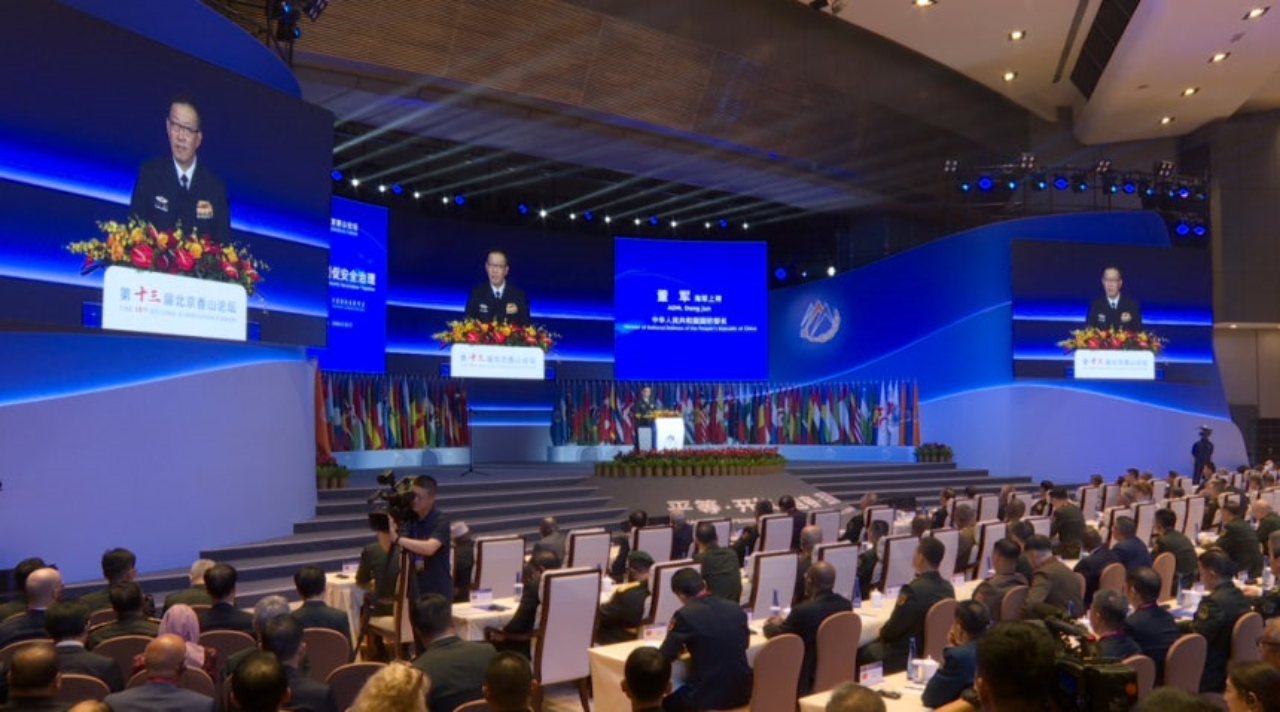 [NK Inside]
NK Inside· North Korean Deputy Minister of National Defense to Attend China-Hosted Beijing Xiangshan Forum· North Korea Received Putin’s Congratulatory Message First but Replied to Xi Jinping First· NIS: “Kim Ju-ae Has Entered the ‘Designated Successor’ Stage”; Verification of Possible Elder Brother ContinuesMyongsung KimSecretary General of the SAND InstituteNorth Korean Deputy Minister of National Defense to Attend China-Hosted Beijing Xiangshan ForumNorth Korea announced on September 16 that a delegation led by Kim Kang-il, Deputy Minister of National Defense, will attend the Beijing Xiangshan Forum.The Korean Central News Agency (KCNA) reported that day that a delegation from the Ministry of National Defense, led by Deputy Minister Kim, departed Pyongyang on September 15 to attend the forum.The Xiangshan Forum is an annual multilateral security conference hosted by China to promote dialogue on regional security and the development of a new security order in the Asia-Pacific. This year marks the 20th anniversary of the forum's establishment.The forum is widely regarded as China’s counterpart to the Shangri-La Dialogue, Asia’s largest Western-led multilateral security conference, which is held annually in Singapore by the International Institute for Strategic Studies (IISS), a British think tank.Kim Hyong-ryong, then Vice Minister of the People’s Armed Forces, now the Ministry of National Defense, attended the forum as North Korea’s representative in 2018 and 2019. However, amid cooling relations between North Korea and China, a military attaché from the North Korean Embassy in China reportedly represented Pyongyang at the forum in the past two years.North Korea’s decision to publicly dispatch a vice-ministerial-level delegation for the first time since 2019 has prompted speculation that military cooperation between Pyongyang and Beijing could be gaining momentum following the summit between North Korean State Affairs Commission Chairman Kim Jong-un and Chinese President Xi Jinping last June.North Korea Received Putin’s Congratulatory Message First but Replied to Xi Jinping FirstIn his reply to Russian President Vladimir Putin, North Korean State Affairs Commission Chairman Kim Jong-un emphasized the “alliance” between North Korea and Russia and reaffirmed his commitment to comprehensively expanding and deepening bilateral cooperation. However, his reply was publicly released two days after his response to Chinese President Xi Jinping was announced. Kim responded to Xi’s congratulatory message within three days, compared with five days for Putin’s message.According to North Korean media outlets, including the Rodong Sinmun, Chinese President Xi sent a congratulatory message to Kim Jong-un on September 9, while Russian President Putin sent his message a day earlier, on September 8. However, Kim’s reply to Xi was publicly released on September 13, while his reply to Putin was released on September 15. Thus, although Putin sent his message first, Kim’s response to Xi was announced first.The speed of Kim’s response is particularly notable when compared with last year. In 2025, Kim replied to Xi’s September 9 congratulatory message on September 20, 11 days later. This year, however, he responded within three days.The Rodong Sinmun, the official newspaper of the Workers’ Party of Korea, reported on September 15 that Kim stated in his reply, “I and the entire Korean people feel greatly encouraged and express our deep gratitude for the warm congratulatory message you sent on the occasion of the 78th anniversary of the founding of the Democratic People’s Republic of Korea.”Kim assessed, “Today, the two countries—North Korea and Russia—and their two peoples are strengthening their bonds of loyalty and unity amid the turbulent tides of history, jointly safeguarding justice and peace, and ceaselessly writing a new chapter in the history of our great alliance.”He went on to emphasize “a shared vision for the bright future of DPRK-Russia relations, based on the traditions of friendship, good-neighborliness, and mutual assistance, as well as the solid alliance between our two countries.“He added, “The resolve of myself and the government of the Democratic People’s Republic of Korea to comprehensively expand and deepen our cooperation with the Russian Federation is, without a doubt, unshakable.”Kim also reaffirmed his support for Russia’s war in Ukraine. He stated, “I am firmly convinced of the Russian Federation’s victory in today’s holy war to defend the country’s security interests and international justice,” and pledged “unwavering support” for Putin and the Russian people.NIS: “Kim Ju-ae Has Entered the ‘Designated Successor’ Stage”; Verification of Possible Elder Brother ContinuesSouth Korea’s National Intelligence Service (NIS) maintained its previous assessment that Kim Ju-ae, the daughter of North Korean State Affairs Commission Chairman Kim Jong-un, has entered the stage of being designated as his successor. The agency also stated that it has identified a younger sibling whose gender has not been confirmed, while the existence of an elder son has yet to be verified.On September 10, the NIS stated, “We currently assess that Ju-ae is in the stage of being designated as a successor, and we are investigating the existence of a sibling whose gender is unknown.” Regarding the possibility that Kim has an elder son, the agency explained, “We are continuing to verify this,” but added, “Even if he exists, it is the NIS’s assessment that he is not in a position to become a successor.”The NIS’s assessment of Ju-ae’s position in the succession process has become increasingly definitive over the past three years. Until 2023, the agency had left open the possibility that Kim Jong-un might have an elder son. In a report to the National Assembly’s Intelligence Committee last July, the NIS identified Ju-ae as a leading candidate for succession while leaving open the possibility that another sibling could emerge as successor.The assessment has become more specific since the beginning of this year. In February, the NIS assessed that Ju-ae had entered the “designated successor” stage, citing indications that she was expressing views on certain North Korean policy issues. The agency reaffirmed this assessment in its September 1 report to the National Assembly’s Intelligence Committee.In particular, the NIS assessed that the recent increase in Ju-ae’s public appearances is intended to establish her in the minds of North Korean citizens as the country’s next leader. The agency noted that Ju-ae has been raising her public profile as a potential successor by consistently appearing alongside Kim at major public engagements, including military and diplomatic events.Meanwhile, a media outlet previously reported, citing a high-level North Korean source, that all three children of Kim and First Lady Ri Sol-ju are daughters. The report also stated that South Korean and U.S. intelligence agencies were revising their previous assessment that at least one of the children was likely a son.In response, the NIS has maintained its assessment that Ju-ae has a sibling whose gender has not been confirmed, while reiterating that the existence of an elder son has yet to be verified. Given the secrecy surrounding Kim’s family and North Korea’s succession arrangements, further verification will be necessary to determine the gender of Ju-ae’s sibling and whether Kim has an elder son.
26.09.18 -
 [NK Inside] NK–Russia Border Bridge Opens, Warship Commissioned
NK Inside· Tumen River Road Bridge Linking North Korea and Russia Completedy· Kim Jong-un Attends Commissioning of New 5,000-Ton Destroyer Kang-gon· North Korean Defense Minister Warns of “Strong Countermeasures” Against U.S.-ROK-Japan ExercisesMyongsung KimSecretary General of the SAND InstituteTumen River Road Bridge Linking North Korea and Russia CompletedThe Tumen River Road Bridge linking North Korea and Russia has been completed just over a year after construction began, marking a significant expansion of the two countries’ cross-border transportation infrastructure. Pyongyang has portrayed the project as an important foundation for expanding economic cooperation, trade, tourism, and people-to-people exchanges, while also presenting it as a symbol of the increasingly close bilateral relationship.The Korean Central News Agency (KCNA) and Korean Central Broadcasting reported on September 8 that the bridge connecting Rason, North Korea, and Khasan, Russia, had been completed. Completion ceremonies were held simultaneously in Rason, North Korea, and Khasan, Russia, on September 7.According to North Korean state media, construction was completed in 495 days. The new bridge is designed to accommodate various forms of road transportation and facilitate the movement of people across the border. Pyongyang described the project as an important addition to the infrastructure supporting bilateral economic cooperation and said it would help expand cooperation in trade, tourism, and other sectors.The bridge is particularly significant because it complements the existing railway connection between North Korea and Russia. Until now, the Tumen River railway bridge has served as the principal land transportation link between the two countries. The new road bridge provides a separate route for vehicles and road-based cargo, potentially increasing the capacity and flexibility of cross-border commercial activity.North Korea also attached symbolic importance on the bridge’s name, Yakov Novichenko. Novichenko was a Soviet military officer who reportedly shielded Kim Il-sung with his body after a grenade was thrown at the North Korean leader during a ceremony at Pyongyang Station Square in 1946.North Korean media described the naming of the bridge as reflecting the two countries’ determination to strengthen their “friendly and good-neighborly” relations and deepen mutual trust. The emphasis on Novichenko’s historical connection to Kim Il-sung appears intended to frame the contemporary North Korea–Russia relationship as rooted in a longstanding political and military partnership rather than merely in current economic interests.North Korean Prime Minister Pak Tae-song and Russian Prime Minister Mikhail Mishustin participated in the completion ceremony via video link from Pyongyang and Moscow, respectively.According to North Korean state media, Mishustin said that the friendship, good-neighborly relations, and mutual assistance between the two countries would not be affected by changes in the international environment. He also pledged that Russia would continue its efforts to strengthen bilateral relations across a broad range of sectors.Pak similarly said that North Korea would continue pursuing cooperative projects designed to generate tangible benefits for the development and prosperity of both countries.The road bridge was included in the agreements reached during the June 2024 North Korea–Russia summit in Pyongyang. Construction began in April 2025 near the existing railway bridge over the Tumen River.The two-lane bridge is approximately 5 kilometers long, including its connecting sections, while the main bridge structure spans roughly 1 kilometer.The completion of the bridge is likely to facilitate greater movement of goods, vehicles, and people between North Korea and Russia. It could also increase the resilience and capacity of the two countries’ bilateral logistics network at a time when economic and strategic ties between Pyongyang and Moscow have expanded significantly.At the same time, the new road connection could have implications beyond commercial activity. Although there is no public evidence that the bridge was designed specifically for military purposes, its availability as an additional land transportation corridor could provide logistical value to the broader North Korea–Russia strategic partnership.Kim Jong-un Attends Commissioning of New 5,000-Ton Destroyer Kang-gonNorth Korean leader Kim Jong-un has emphasized the development of the country’s naval nuclear capabilities while overseeing the commissioning of the new 5,000-ton-class destroyer Kang-gon, signaling Pyongyang’s continued efforts to expand the role of naval forces in its nuclear deterrence strategy.According to the Rodong Sinmun and other North Korean state media outlets on September 7, Kim attended the commissioning ceremony for the destroyer at Wonsan Port in Kangwon Province on September 6. He was accompanied by his wife, Ri Sol-ju, and his daughter, Ju-ae.In remarks delivered at the ceremony, Kim argued that strengthening the Navy’s capabilities was necessary to deter potential attacks and safeguard North Korea’s security and development. He said that adversaries would be less likely to contemplate military action if they feared North Korea’s ability to retaliate.Kim also highlighted what he described as progress toward the “nuclear armament” of the Navy. He said that developing naval nuclear capabilities would diversify and operationalize North Korea’s deterrence posture and added that the country would demonstrate further progress in approximately eight months.North Korea did not specify what weapons systems or programs Kim was referring to. His remarks could indicate plans to unveil or deploy additional naval platforms, missile systems, or other capabilities, although the available information does not permit a definitive assessment.The Kang-gon is the second 5,000-ton-class destroyer of its class constructed by North Korea. It is named after Kang Gon, a prominent North Korean military figure who served as the country’s first Chief of the General Staff. The vessel follows the lead ship of the class, Choe-hyon, which was reportedly delivered to the West Sea Fleet in June.The commissioning of the Kang-gon follows a significant setback during its construction. At a launch ceremony at Chongjin Port in May, the vessel reportedly tilted to one side and failed to enter the water properly, leaving the ship partially grounded. Kim Jong-un publicly criticized those responsible for the accident, drawing attention to persistent questions surrounding North Korea’s shipbuilding capacity, industrial management, and quality-control systems.North Korea subsequently repaired and relaunched the vessel. Following weapons testing and inspections, the destroyer was formally commissioned, indicating that it entered operational service roughly one year and four months after the launch accident.Jo Chun-ryong, the Workers’ Party secretary responsible for the defense industrial sector, reported on the vessel’s construction and commissioning. Captain Choe Chol-jin also delivered remarks, pledging to carry out the ship’s assigned missions.Kim Jong-un later boarded the destroyer and posed for photographs with its crew, providing a highly publicized display of the vessel’s completion and operational status.The decision to stage a high-profile commissioning ceremony attended by Kim and members of his family appears designed to demonstrate progress in North Korea’s naval modernization program to both domestic and foreign audiences. It is particularly significant because Pyongyang has increasingly emphasized the development of maritime platforms capable of contributing to its nuclear deterrence posture.Nevertheless, important questions remain unanswered. North Korea has not disclosed the precise weapons systems deployed aboard the Kang-gon, nor has it provided evidence demonstrating that the vessel currently possesses an operational nuclear strike capability. Likewise, the specific military program that Kim Jong-un indicated would be completed or demonstrated “eight months” from now remains unclear.The coming months will therefore be important in determining whether North Korea’s latest naval initiatives represent primarily a conventional modernization effort or a broader effort to establish a more credible and survivable sea-based component of its nuclear forces.North Korean Defense Minister Warns of “Strong Countermeasures” Against U.S.-ROK-Japan ExercisesNorth Korea has issued a new warning of military retaliation against the United States and its allies, citing the trilateral Freedom Edge exercise involving the United States, South Korea, and Japan, as well as a series of other U.S.-led military activities across the Indo-Pacific.The statement, issued late on September 7 by North Korean Defense Minister Kim Song-gi through the Korean Central News Agency, was his first major public statement since assuming the post. Kim warned that North Korea would respond with “strong and reciprocal countermeasures” if the United States and its allies pursued what Pyongyang described as a renewed military confrontation.Kim specifically cited the Freedom Edge exercise, which began on September 7, as well as the Orient Shield exercise involving the United States, Japan, and Australia, which was scheduled to begin on September 8.He also criticized the planned deployment of the U.S. Army’s Typhon mid-range missile system in connection with Orient Shield and referred to plans to deploy a U.S. Army Special Forces-related unit, described by North Korean media as a Multi-Domain Rapid Deployment Force, to South Korea later this year.The minister characterized the succession of U.S.-led military exercises and deployments as evidence of an increasingly integrated military posture directed against North Korea. He argued that the accumulation of such activities was creating a serious security threat on the Korean Peninsula and in the broader region.The defense minister also portrayed North Korea’s continued military modernization as a necessary response to these developments. He argued that the most effective means of preventing conflict and safeguarding North Korea’s sovereignty and security interests was to continue developing and deploying advanced military capabilities.More significantly, the minister invoked North Korea’s constitutional mandate to deter hostile forces and punish provocations, suggesting that Pyongyang retains the option of responding militarily if it determines that its security interests have been threatened.The statement therefore goes beyond a routine denunciation of allied military exercises. By issuing the warning in the name of the newly appointed defense minister, Pyongyang appears to be signaling that its military leadership is prepared to link future allied exercises and U.S. force deployments to potential North Korean countermeasures.His appointment is also notable. At the Second Meeting of the Ninth Central Military Commission of the Workers’ Party on August 29, Kim Jong-un presided over a reshuffle of senior military leadership. Ro Kwang-chol was removed as defense minister and reassigned as first deputy director of the Party’s Military Industry Department, while Kim Song-gi, who had previously served as director of the General Political Bureau of the Korean People’s Army, was appointed defense minister.Minister Kim’s previous responsibilities centered on political and ideological affairs within the military. His rapid transition from the military’s senior political leadership to the defense ministry, followed almost immediately by a public warning directed at the United States, South Korea, and Japan, could indicate an effort by Pyongyang to reinforce the political and ideological messaging underpinning its military posture.North Korea has repeatedly used allied military exercises and the deployment of U.S. strategic assets as justification for demonstrations of military capability, including ballistic missile launches. The immediate question, therefore, is whether Kim Song-gi’s warning will remain rhetorical or be followed by concrete military activity.Particular attention should be paid to the timing and nature of any North Korean response as Freedom Edge, Orient Shield, and other regional exercises proceed. Any missile launches, naval activity, or other military demonstrations during this period would provide a clearer indication of whether Pyongyang intends to translate the new defense minister’s rhetoric into operational action.
26.09.11 -
 [NK Inside] Nuclear Retention, Military Overhaul, and Youth Ideology
- North Korea Responds to Trump’s Outreach: “Our Status as a Nuclear Power Must Not Be Weakened”- Major Military Leadership Shuffle in North Korea: Pak Jong-chon Makes a Sudden Return- North Korea Emphasizes Patriotism and Ideological Education for “Market Generation” Youth on Youth DayMyongsung KimSecretary General of the SAND InstituteNorth Korea Responds to Trump’s Outreach: “Our Status as a Nuclear Power Must Not Be Weakened”North Korea has reaffirmed that it will maintain its policy of responding to U.S. President Donald Trump with the “strongest possible measures,” asserting that there has been no fundamental change in Washington’s hostile policy toward Pyongyang. Although President Trump has repeatedly expressed his willingness to engage in dialogue with North Korean leader Kim Jong-un, Pyongyang has made clear that it is unlikely to enter negotiations as long as the United States maintains “complete denuclearization” as the objective of its North Korea policy. Against this backdrop, North Korea appears to be pressing Washington for a fundamental shift in its policy toward Pyongyang—including recognition of North Korea’s status as a nuclear-armed state, the suspension of ROK-U.S. joint military exercises, and an end to U.S. criticism of North Korea’s human rights record—as potential preconditions for a U.S.-North Korea summit.In a statement carried by the Korean Central News Agency on August 31, a spokesperson for the North Korean Ministry of Foreign Affairs stated, “There is not the slightest change in our policy toward the U.S., which is to respond with the strongest possible measures to the U.S.’s unchanging hostile policy until the very end.”The spokesperson stated, “The Republic will resolutely and clearly exercise its sovereignty to safeguard the supreme interests of national security on the premise that there has been and will be no change whatsoever in U.S. policy toward the DPRK.” The spokesperson further asserted, “The Republic’s current status as a nuclear-weapon state, which has been enshrined in the country’s supreme law, will not be weakened or diluted by the U.S.’s repeated statements on ‘denuclearization.’”The statement appears to have been issued in response to Washington’s continued refusal to recognize North Korea as a nuclear-weapon state and its insistence that denuclearization remain the central objective of U.S. policy toward Pyongyang. On August 26, a U.S. State Department spokesperson stated that there had been no change in U.S. policy toward North Korea, which remains centered on denuclearization, and reaffirmed Washington’s commitment to that objective.North Korea also adopted a hard-line position toward strengthened trilateral military cooperation among South Korea, the United States, and Japan. Referring to “Freedom Edge,” the multidomain exercise planned by the three countries to strengthen deterrence against North Korea, the spokesperson argued that “the Trump administration has reaffirmed its unchanging policy of hostility, which seeks to gravely infringe upon our nation’s sovereignty, political system, and security interests through ‘denuclearization’ hype, ‘human rights’ smear campaigns, and military threats.”The spokesperson further asserted, “A delusional obsession with the past cannot, under any circumstances, grasp reality or restrain the future.” He added, “In this grave situation, where the U.S.’s persistent policy of hostility toward the DPRK is evolving into an even more dangerous form, it is meaningless to expect a reduction in regional tensions.”North Korea’s statements can be interpreted as signaling that substantive dialogue would be difficult if Washington seeks to engage Pyongyang on essentially the same terms pursued during the first Trump administration. In particular, given North Korea’s self-identification as a nuclear-armed state, the statement represents another attempt to pressure Washington to adjust its policy in a manner that acknowledges the reality of North Korea’s nuclear capabilities. From Pyongyang’s perspective, such a shift appears to be a prerequisite for meaningful negotiations.North Korea also reiterated its stated rationale for maintaining and expanding its nuclear arsenal. The spokesperson asserted, “Our nuclear weapons are the absolute guarantee of our sovereignty, and the Republic’s possession of nuclear weapons and their continued strengthening are the most responsible and correct choices for ensuring regional peace and security.”The spokesperson cited the United States’ strengthening of its nuclear capabilities, growing trilateral military cooperation among the United States, South Korea, and Japan, Japan’s rearmament, and South Korea’s military buildup as factors underpinning North Korea’s nuclear policy. He argued, “The unstable regional security environment caused by the U.S. nuclear posture becoming more aggressive and by Japan’s rearmament and South Korea’s military buildup—which are intensifying within the framework of the U.S.-Japan-South Korea trilateral military cooperation—explains our choice.”The statement was issued as President Trump again raised the possibility of holding a summit with Kim Jong-un. Analysts interpret the statement not as an outright rejection of dialogue with Washington, but rather as an effort to strengthen North Korea’s negotiating leverage by making a change in U.S. policy toward Pyongyang a prerequisite for engagement. If working-level or back-channel contacts between North Korea and the United States intensify in the future, the competing positions of the two sides on “denuclearization” and recognition of North Korea as a nuclear-weapon state are likely to emerge as the central issues in any negotiations.Major Military Leadership Shuffle in North Korea: Pak Jong-chon Makes a Sudden ReturnNorth Korea has undertaken a significant reorganization of its military command structure, replacing or reassigning a number of senior military officials. Most notably, Pak Jong-chon, who stepped down from several senior Party positions at the 9th Workers’ Party Congress last February, has returned approximately six months later as Vice Chairman of the Party’s Central Military Commission and a member of the Political Bureau. With the replacement of the Minister of National Defense and changes to key positions responsible for internal military oversight and political control, the personnel changes are being interpreted as an effort to strengthen both defense modernization and military discipline.On August 30, the Korean Central News Agency reported that the 2nd Meeting of the 9th Central Military Commission of the Workers’ Party of Korea, held the previous day under the leadership of State Affairs Commission Chairman Kim Jong-un, discussed organizational matters and changes in the responsibilities of key military commanders.The most significant personnel change was the return of Pak Jong-chon. Under the reshuffle, Pak was reappointed as Vice Chairman of the Party’s Central Military Commission and returned to the Political Bureau of the Party’s Central Committee. Kim Jong-un serves as Chairman of the Party’s Central Military Commission.Pak stepped down from his positions as a member of the Political Bureau and Party Secretary at the 9th Party Congress last February and subsequently left his position as Vice Chairman of the Central Military Commission. At the time, his departure prompted speculation that he was being removed from the military’s front-line leadership because of his age. His latest appointment, however, brings him back into the core command structure of the North Korean military.Pak’s return can be viewed as an effort by North Korea to place a senior figure with extensive experience in the development and operational employment of advanced weapons—including missiles and artillery—in a key leadership position. Given Pyongyang’s recent emphasis on defense science and technology and the development of sophisticated weapons systems, the decision to restore a senior official with expertise in military operations and weapons development to key Party and military positions suggests an effort to reinforce the operational experience and technical expertise of the military leadership.Meanwhile, Defense Minister Ro Kwang-chol has been removed from his post. Following his departure as Minister of National Defense, Ro was transferred to the position of First Deputy Director of the Military-Industrial Department of the Party’s Central Committee. His apparent removal from the Party’s central leadership further indicates that he has been excluded from the senior military command structure.Ro’s reassignment, however, does not constitute a complete retirement from public service. As First Deputy Director of the Party’s Military-Industrial Department, which oversees the broader defense-industrial sector, he is expected to remain an important working-level official involved in weapons production and the defense-industrial base. His transfer from the Ministry of National Defense to the military-industrial sector may therefore indicate that Pyongyang regards the defense-industrial base and weapons production as central components of its broader effort to strengthen national defense capabilities.Kim Sung-gi, Director of the General Political Bureau of the Korean People’s Army, who was recently promoted to the rank of General, was appointed as the new Minister of National Defense. The transfer of the official responsible for the military’s political and ideological affairs to the country’s top defense position suggests an effort to strengthen the linkage between political control of the armed forces and defense administration. Following his appointment, the position of Director of the General Political Bureau of the Korean People’s Army was left vacant.Positions responsible for internal military control and inspection also underwent significant changes. Ryu Kwang-u, who had served as Director of the People’s Army Security Bureau, was transferred to the position of First Deputy Director of the General Political Bureau, while Om Ju-ho, who had served as Political Commissar of the Air Force, was appointed as the new Director of the Security Bureau. Ryu was also elected to the Party’s Political Bureau, while Om was elected as a member of the Party’s Central Committee.These personnel changes appear designed to strengthen the military’s internal oversight and counterintelligence functions while reinforcing political and ideological control. The decision to move an official with experience in internal military affairs and security oversight into a senior position within the General Political Bureau, while appointing a figure with a background in political and ideological affairs to head the Security Bureau, can be interpreted as an effort to further consolidate Party control over the military.North Korea’s recent public criticism of corruption and lax discipline within the military, accompanied by indications of tighter internal control, is also likely to have contributed to the reshuffle. The personnel changes appear intended to increase oversight of military commanders and officials, reinforce discipline within the armed forces, and strengthen control over the military leadership.In parallel with the military leadership reshuffle, Kim Jong-un personally met with scientists, researchers, and officials from defense research institutions who had contributed to the development of new weapons systems and improvements in weapons performance, and presented them with awards. He recognized their contributions to defense science and technology by conferring hero titles, medals, and state orders.The Korean Central News Agency emphasized advances in military technology, stating that North Korea’s defense science and research sector had recently developed technologies capable of enhancing war-fighting capabilities and strategic deterrence. It did not, however, identify the specific weapons systems or technologies involved.Kim Jong-un referred to the recently introduced “patented military scientific and technological achievements” and assessed them as technical accomplishments capable of significantly enhancing the modernization of the military’s weapons systems. This underscores North Korea’s determination to regard advances in defense science and technology and improvements in the performance of sophisticated weapons systems—not simply an expansion in the volume of weapons production—as core components of its military modernization strategy.North Korea Emphasizes Patriotism and Ideological Education for “Market Generation” Youth on Youth DayOn August 28, marking Youth Day, North Korea portrayed the younger generation as a central source of national strength and a key component of the country’s future governance, while repeatedly emphasizing patriotism and ideological education. This emphasis appears intended to reinforce the political loyalty of young people, particularly those belonging to the so-called “market generation”—the cohort that came of age during the “Arduous March” of the mid-1990s and subsequently became increasingly familiar with market-based economic activity.In a front-page editorial published on the occasion, Rodong Sinmun, the official newspaper of the Workers’ Party of Korea, emphasized that “the vast army of youth, possessing unparalleled revolutionary spirit and patriotic loyalty, is the pride and strength of our Party and state.” The newspaper described young people as “the Party’s loyal vanguard and reliable reserve force,” asserting that “loyalty to the Party is the foremost ideological and spiritual trait of our youth.”Rodong Sinmun also portrayed young people as a key source of momentum for national development. The newspaper stated, “Our youth are the creators of miracles who are illuminating this new era of national rejuvenation with their heroic deeds,” highlighting their participation in a range of national projects, including efforts to strengthen defense capabilities, increase cement production, and construct power-generation facilities.It also portrayed young people as a key source of momentum for national development. Rodong Sinmun stated, “Our youth are the creators of miracles who are illuminating this new era of national rejuvenation with their heroic deeds,” highlighting their participation in a range of national projects, including efforts to strengthen defense capabilities, increasing cement production, and constructing power-generation facilities.In particular, the newspaper credited young people with playing a leading role in construction projects that North Korean authorities have recently promoted as major national achievements, including Vanguard Street in a new development area of Pyongyang and the Sinuiju Greenhouse Complex Farm. This appears consistent with Pyongyang’s longstanding practice of mobilizing young people for large-scale construction and production campaigns, including during periods of economic hardship.North Korea also sought to reinforce the perceived superiority of its political and social system by contrasting its youth with young people in other countries. Rodong Sinmun claimed that, in the outside world, “youth steeped in extreme misanthropy, the poison of the worship of money, and decadence and pessimism” are contributing to social problems, while North Korea has “pure and steadfast youth who are loyal to society and the collective and devote themselves to the future.”The newspaper further emphasized that “today, as we must transform the pioneering period of the comprehensive development of socialism in our own style into a period of great upsurge,” young people are expected to remain at the center of the Party’s major national projects.It also introduced the concept of “youth-centered politics” in a separate section explaining political terminology. The newspaper defined the concept as “the politics of our Party, which always firmly trusts and promotes young people in revolution and construction, and accomplishes everything by relying on their strength.”Various commemorative events were held in Pyongyang to mark Youth Day. On August 28, the Korean Central News Agency reported that the “National Youth Science and Technology Achievements Exhibition” had opened the previous day at the Science and Technology Palace. The exhibition featured more than 1,800 entries showcasing scientific and technological achievements produced by young people from across the country.On August 27, the Central Youth Art Propaganda Troupe held a performance titled “Youth, Let Us Uphold Our Party” at the open-air theater in Pyongyang Youth Park. On the same day, officials from the Socialist Patriotic Youth League visited the Youth Movement History Museum, which commemorates the history of the youth movement under Kim Il-sung and Kim Jong-il.North Korea claims that Kim Il-sung founded the Korean Communist Youth League on August 28, 1927, and has commemorated the date annually as Youth Day since 1991.Analysts suggest that the authorities’ emphasis on patriotism and loyalty to the Party on Youth Day is closely linked to changing social and economic attitudes among North Korean youth. A significant portion of North Korea’s current younger generation grew up following the “Arduous March” of the mid-1990s and gained experience with economic activity through markets and informal marketplaces rather than relying exclusively on the state rationing system.This generation is generally considered to have greater familiarity with market-oriented economic behavior than previous generations and to have had relatively greater opportunities to encounter outside cultural influences. Against this backdrop, the authorities’ recent intensification of ideological education and restrictions on young people’s exposure to foreign culture appear to be closely connected to these generational characteristics. The emphasis on patriotism and Party loyalty therefore appears to serve not only as a means of political socialization but also as an effort to manage the potential social and ideological effects of greater exposure to market activity and outside information.
26.09.04 -
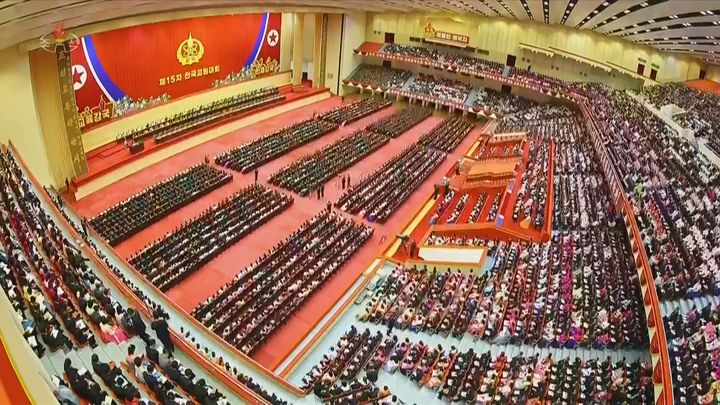 [NK Focus] North Korean Trends: August 2026
Strengthening Policy Implementation Following the Party Congress: Military Command Restructuring and Continued North Korea–Russia Strategic Cooperation Seung-hyun LeePh.D in Public AdministrationResearch Fellow SAND Research Institute In August 2026, North Korea intensified efforts to translate the decisions of the 9th Party Congress into concrete policy measures, while simultaneously accelerating defense modernization and restructuring its military command system. Externally, Pyongyang continued to deepen its strategic partnership with Russia while refraining from immediately responding to U.S. overtures for dialogue. Internally, it continued to pursue regional development while seeking to improve living standards and strengthen economic conditions for the population.Economic Policy: From “Setting Goals” to “Assessing Implementation Capacity”The 4th Plenary Meeting of the Political Bureau of the 9th Central Committee of the Workers’ Party of Korea, held on August 25, was the most significant political event in North Korea in August. The meeting reviewed progress in implementing major policy tasks adopted at the 9th Party Congress and subsequent plenary meetings. Kim Jong-un, meanwhile, criticized the operational and managerial capabilities of economic policymaking and leadership bodies, arguing that they had fallen short of the objectives set by the Party. This suggests that North Korea has moved beyond simply establishing new economic development goals following the Party Congress and is now focusing more explicitly on the administrative and economic management capabilities needed to translate those goals into tangible results.It is particularly noteworthy that North Korea has framed shortcomings in the economic sector not simply as consequences of sanctions or adverse external conditions, but also as matters of leadership and institutional competence. The future effectiveness of North Korea’s economic policies therefore appears likely to depend less on the formulation of additional policy initiatives than on the regime’s capacity to implement existing policies effectively and ensure control and performance at the production level.Military Modernization: Moving Beyond Weapons to Organizational ReformIn August, three instances of short-range ballistic missile launches were confirmed. On August 6, North Korea launched one short-range ballistic missile from the Wonsan area, followed by another launch on August 12. On August 20, approximately 10 short-range ballistic missiles were launched from the Pyongyang area. In particular, the August 20 launches coincided with the ongoing ROK-U.S. joint military exercises and were widely interpreted as a demonstration of North Korea’s military response capabilities.More significant, however, was the restructuring of North Korea’s senior military leadership at the end of the month. On August 29, the Central Military Commission of the Workers’ Party of Korea reinstated Pak Jong-chon as Vice Chairman, transferred Ro Kwang-chol from Minister of National Defense to First Deputy Director of the Military-Industrial Department, and appointed Kim Song-gi as the new Minister of National Defense. The reshuffle suggests that North Korea increasingly views military modernization not simply as a matter of developing and deploying advanced weapons systems, but as an integrated effort involving the military command structure, the defense-industrial base, and defense science and technology.North Korea-Russia Relations: From “War Cooperation” to “Generational Ties”Liberation Day once again provided a symbolic opportunity to reaffirm North Korea–Russia relations. On August 14, Kim Jong-un visited the Liberation Monument to pay tribute to Soviet troops and emphasized the historical traditions and blood ties underlying the relationship between North Korea and Russia. President Vladimir Putin likewise underscored the two countries’ comprehensive strategic partnership in a congratulatory message and referred to the continuation of bilateral joint projects.Of particular note was the presence of Kim Ju-ae during visits to the Liberation Monument and the Daesongsan Revolutionary Martyrs’ Cemetery. Following her appearance at the Victory Day commemorations in July, Kim Ju-ae again appeared at major historical and diplomatic events associated with Liberation Day in August. This may be interpreted as an effort by Pyongyang to convey that not only its revolutionary traditions but also its strategic relationship with Russia are intended to be carried forward by the next generation.No Response to the U.S. Call for DialogueAnother notable feature of developments on the Korean Peninsula in August was North Korea’s selective non-response to U.S. overtures for dialogue.Although the United States scaled back the scope of the ROK-U.S. joint military exercises and signaled the possibility of renewed engagement with North Korea, Kim Jong-un did not issue a direct response. Instead, Kim Yo-jong downplayed the significance of the reduced scale of the exercises and continued to criticize the United States and South Korea. From Pyongyang’s perspective, North Korea appears to be assessing the implications of Washington’s changing posture while concluding that it remains advantageous to preserve its strategic leverage rather than immediately interpret the shift as a basis for resuming dialogue.Accordingly, future U.S.-North Korea relations are likely to be shaped less by the immediate resumption of summit-level talks than by whether further adjustments in U.S. policy toward North Korea and Pyongyang’s demands can be brought into sufficient alignment to create conditions for substantive negotiations.Continued Regional Development and Improvement of People’s LivelihoodsDespite continued external and military tensions, North Korea has maintained its focus on regional development and improving the livelihoods of its population. Prime Minister Pak Tae-song conducted a series of on-site inspections of factories and enterprises, and toward the end of the month, he inspected construction at the Samjiyon Mountain Tourism District, as well as factories and enterprises in Hamhung. These activities appear intended to link the economic objectives pursued since the 9th Party Congress with improvements in residents’ daily lives and the performance of local economies. For North Korea, regional development is significant not merely as an economic undertaking, but also as a political instrument through which the regime seeks to ensure that residents can directly perceive and experience the achievements of its governance.In conclusion, following the 9th Party Congress, North Korea appears to have entered a phase in which it is placing greater emphasis on policy implementation in the economic and social sectors, restructuring its military organization and capabilities, and, in foreign affairs, assessing the prospects for engagement with the United States while further consolidating its strategic cooperation with Russia. Looking ahead to September, North Korean propaganda is likely to place particular emphasis on the achievements of the state system and internal unity, with National Foundation Day on September 9 serving as a central occasion for reinforcing these themes.
26.09.04 -
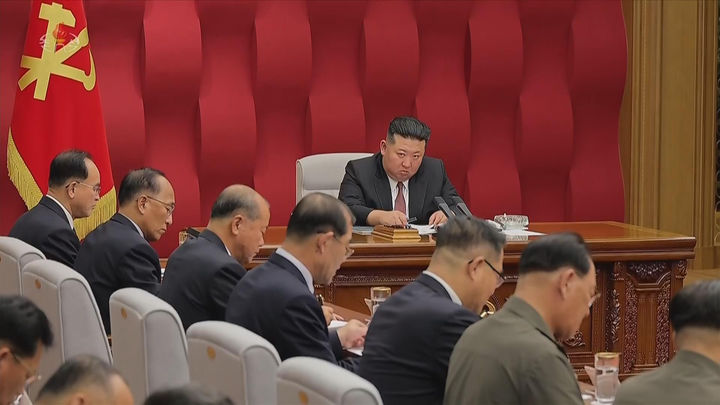 NK Inside
-North Korea to Send Approximately 100 Athletes to Nagoya Asian Games: Could the Games Open a Channel for North Korea–Japan Contacts?-Kim Jong-un Presides Over Enlarged Politburo Meeting, Offers No Response to Trump’s Overtures-Income Polarization in North Korea’s Market Sector Has Worsened Since the 2014–2015 Economic ShockMyongsung KimSecretary General of the SAND InstituteNorth Korea to Send Approximately 100 Athletes to Nagoya Asian Games: Could the Games Open a Channel for North Korea–Japan Contacts?North Korea plans to send a delegation of approximately 100 athletes to the 2026 Aichi-Nagoya Asian Games, which will open next month in Japan. The delegation is expected to compete in 14 sports, including men’s and women’s soccer, weightlifting, boxing, and wrestling.Ko Chol-ho, secretary-general of the North Korean National Olympic Committee (NOC), disclosed the plans in an interview with Choson Sinbo, the official newspaper of the General Association of Korean Residents in Japan (Chongryon), on August 25. The size of North Korea’s delegation will be significantly smaller than that sent to the previous Asian Games in Hangzhou in 2023, when North Korea dispatched 185 athletes to compete in 18 sports.Ko expressed confidence that, despite the smaller delegation and reduced number of participating sports, North Korea could improve its medal performance compared with the Hangzhou Games. “Our athletes, coaches, and sports officials have been preparing over the past four years to achieve even better results,” he said. “They are making every effort, motivated by the desire to meet the expectations of the country and its people through outstanding athletic performances.”Two Japan-based athletes of Korean descent are also included in North Korea’s delegation: Ri Song-a in women’s soccer and Jung Se-ri in karate. The fact that North Korea’s specific plans for the delegation were disclosed through Choson Sinbo, rather than through North Korean state media, appears to reflect, at least in part, the fact that the competition will be held in Japan.North Korea effectively suspended its participation in major international multi-sport events during the COVID-19 pandemic. It did not send a delegation to the Tokyo Olympics, which were held in 2021 after being postponed for one year because of the pandemic. As a result, the International Olympic Committee (IOC) suspended North Korea’s National Olympic Committee from participating in the Olympic Games.North Korea returned to the international multi-sport arena for the first time in five years at the 2023 Hangzhou Asian Games in China, having last participated in the 2018 Jakarta-Palembang Asian Games. North Korea won a total of 39 medals at the Hangzhou Games—11 gold, 18 silver, and 10 bronze—finishing 10th overall in the medal standings. In particular, it won six gold medals in weightlifting, a sport in which North Korea has traditionally been highly competitive.North Korea also sent a delegation to the Paris Olympics last year. Fifteen North Korean athletes competed in seven sports, winning two silver medals and four bronze medals. This participation appears to reflect a gradual normalization of North Korea’s involvement in international multi-sport competitions as the country continues to reengage with the international sporting community following the COVID-19 pandemic.The 2026 Aichi-Nagoya Asian Games will be held from September 19 to October 4 in Aichi Prefecture and Nagoya City, Japan.Against this backdrop, attention is increasingly focused on whether North Korea’s decision to send approximately 100 athletes to the Aichi-Nagoya Asian Games could create an opening for movement in the currently strained North Korea–Japan relationship. Although Pyongyang and Tokyo have remained at odds for years over issues including the abduction of Japanese citizens and North Korea’s nuclear and missile programs, the arrival of a sizable North Korean delegation in Japan could provide a rare opportunity for direct or informal contact between the two sides.The North Korean delegation’s visit to Japan is significant in its own right. Although Japan has, in principle, restricted the entry of North Korean nationals since 2016 in response to North Korea’s nuclear and missile activities, exceptions have been made for athletes participating in international sporting events. As the host country of the Asian Games, Japan has also been coordinating with relevant government agencies regarding the entry and participation of the North Korean delegation.In particular, there has been speculation that North Korea’s Minister of Sports could lead the delegation. If senior North Korean sports officials travel to Japan, they could have opportunities for informal interactions with Japanese government officials and representatives of Japan’s sporting community. Such contacts would be noteworthy because, unlike encounters between South and North Korean delegations at sporting venues or athletes’ villages, high-level contacts between North Korea and Japan remain relatively rare in the absence of formal diplomatic relations between the two countries.At the same time, it would be premature to assume that sports exchanges will immediately lead to high-level political dialogue between North Korea and Japan. The abduction issue remains one of the principal obstacles to improving bilateral relations. The Japanese government continues to call for the immediate return of all Japanese citizens abducted by North Korea. Since 2002, when North Korea acknowledged its abductions of Japanese citizens and five victims were returned to Japan, no additional abductees have been repatriated.The Japanese government has repeatedly expressed its willingness to engage in dialogue with North Korea. In May 2026, at a rally calling for the return of abductees, Japanese Prime Minister Sanae Takaichi stated that she would “not rule out any options,” including a summit with North Korean State Affairs Commission Chairman Kim Jong-un, and expressed her determination to make progress on the abduction issue during her tenure. She also appealed directly to Chairman Kim to take a “courageous step forward,” expressing hope that Japan’s message would reach the North Korean people.The critical question, however, is how North Korea will respond. Pyongyang has recently intensified its criticism of Japan’s efforts to strengthen its defense capabilities and its security cooperation with the United States and South Korea. In particular, North Korea has criticized Japan’s efforts to acquire long-range strike capabilities and its testing of U.S.-made Tomahawk cruise missiles, while warning that such developments could trigger a military response. Since last month, criticism of Japan in North Korean state media has also become more pronounced.Against this backdrop, North Korea’s decision to participate in an international sporting event hosted by Japan suggests that Pyongyang is not, at least in the sporting arena, seeking to eliminate all forms of external contact with Japan.From Japan’s perspective, the prospect of renewed U.S.-North Korea engagement also creates an incentive to ensure that North Korea-Japan relations do not become marginalized on the broader diplomatic agenda. Japan’s diplomatic space could become increasingly constrained as North Korea deepens its strategic relationships with China and Russia. North Korea and Russia continue to expand their military and security cooperation, while Pyongyang has also maintained high-level exchanges with Beijing.Accordingly, the Aichi-Nagoya Asian Games are unlikely, by themselves, to produce a fundamental breakthrough in North Korea-Japan relations. They could, however, provide a “low-threshold venue for contact” where the two sides can gauge each other’s intentions without immediately confronting the most contentious political issues.If interactions among athletes, sports officials, and other representatives lead to informal exchanges of views, the Games could provide a modest but potentially meaningful catalyst for reopening communication channels that have remained largely dormant. In this respect, the significance of the Aichi-Nagoya Asian Games may extend beyond the sporting arena: they could offer North Korea and Japan an opportunity to test whether limited engagement in the sports sector can eventually support broader dialogue on bilateral issues.Kim Jong-un Presides Over Enlarged Politburo Meeting, Offers No Response to Trump’s OverturesChairman of the State Affairs Commission Kim Jong-un convened an enlarged meeting of the Political Bureau of the Workers’ Party of Korea (WPK) Central Committee and called for corrective measures to address shortcomings stemming from the “immature operational and command capabilities of economic leadership bodies.” Although U.S. President Donald Trump has recently sent a series of conciliatory signals indicating an interest in resuming dialogue with North Korea, Kim made no public response to those messages.The Korean Central News Agency (KCNA) reported on August 26 that the Political Bureau of the WPK Central Committee convened the 4th Enlarged Meeting of the Political Bureau of the 9th Central Committee on August 25 to strengthen political and practical measures for the successful implementation of key policy tasks for 2026. It added that “Comrade Kim Jong-un presided over the meeting.”The meeting reviewed progress in implementing major policy and construction projects for 2026, as well as the performance of key economic sectors, in accordance with decisions adopted at the first and second plenary meetings of the 9th Central Committee.In this context, Kim pointed to shortcomings that had emerged in the implementation of decisions adopted at the Party Congress. He attributed these problems to “the immature operational and command capabilities of economic leadership bodies, which have failed to keep pace with our heightened ideals and strengthened momentum for progress.” He added that these shortcomings could be overcome through “renewed resolve and a fighting spirit.”Kim did not, however, specify the particular economic projects or policy areas in which such shortcomings had emerged.He further emphasized that the transformation goals established by the 9th Party Congress should not be viewed merely as quantitative economic targets. Rather, he described them as “major political struggle tasks” intended to safeguard the dignity of the state and demonstrate the superiority of North Korea’s political and economic system.He called for the country to “bring this year’s struggle to a victorious conclusion” in order to create the conditions necessary to pursue North Korea’s longer-term strategic objectives.KCNA also reported that the meeting established principles and guidelines for national economic leadership bodies to respond proactively and strategically to changes in the external environment, difficult conditions, and economic challenges. Particular emphasis was placed on ensuring progress in major policy-driven construction projects.The meeting also reviewed strategic adjustments and corresponding measures aimed at strengthening implementation in accordance with prevailing conditions and practical requirements. These measures were intended to ensure the completion of projects scheduled for this year while also improving the implementation of short-, medium-, and long-term economic tasks.Notably, the KCNA report made no reference to President Trump’s recent messages regarding renewed engagement with Kim.On August 25 (local time), President Trump reposted on Truth Social a message he had originally published nine days earlier regarding his decision to scale back U.S.-South Korea joint military exercises. On August 24, he also posted several photographs from his meetings with Kim during the 2018 U.S.-North Korea summit and the 2019 Panmunjom meeting, continuing a series of conciliatory signals toward the North Korean leader.Against this backdrop, Kim’s decision to focus publicly on domestic economic management rather than respond to Trump’s overtures suggests that Pyongyang is, at least for now, prioritizing the implementation of its domestic economic agenda. The absence of a public response does not necessarily indicate that North Korea has ruled out future engagement with Washington, but it underscores that Pyongyang has not yet signaled a willingness to respond directly to Trump’s latest overtures.Income Polarization in North Korea’s Market Sector Has Worsened Since the 2014–2015 Economic ShockIncome polarization in North Korea’s market sector, centered on the jangmadang, has reportedly intensified since the economic shock of 2014–2015, with lower-income households bearing a disproportionate share of the impact.According to a report released on August 23 by Yong-shin Jo, an associate researcher in the Economic Security Research Division of the Bank of Korea’s Economic Research Institute, the income gap among those engaged in informal jangmadang and other market-based activities widened following economic shocks associated with severe droughts and other factors.North Korea’s market sector began expanding rapidly in the mid-to-late 1990s as the country’s rationing system deteriorated amid prolonged economic hardship.The jangmadang, where producers and consumers engage in direct transactions, initially expanded primarily in rural areas before becoming more widespread. The range of goods traded through these markets subsequently broadened to include a wide variety of consumer products.Previous research has suggested that the market sector plays a critical role in household livelihoods, with approximately 70 percent of the general population’s income reportedly derived from market-related activities.North Korea’s market economy, however, lacks effective mechanisms to ensure fair competition, taxation and redistribution, and the protection of private property rights. As a result, it exhibits characteristics of a “quasi-market” system in which access to economic opportunities can be heavily influenced by political connections and access to capital.Jo analyzed changes in income distribution before and after the economic shock that affected North Korea in 2014–2015.During that period, severe drought reduced agricultural production and hydropower generation, while exports declined amid factors including China’s economic slowdown and falling commodity prices. North Korea’s economic growth rate, which had remained positive for the previous four years, fell to negative 1.1 percent in 2015.According to Jo, an analysis of survey data collected from North Korean defectors by Seoul National University’s Institute for Unification and Peace Studies between 2011 and 2020 found that income polarization in informal earnings deepened during 2015–2019 compared with the pre-shock period of 2011–2014.The analysis further found that the widening gap was driven primarily by a sharp increase in the share of lower-income households rather than by a larger share of upper-income households.The report also found that the increased level of income polarization persisted for a considerable period even after the North Korean economy began to recover from the shock.It explained that, in a “quasi-market” environment, external economic shocks can create opportunities for politically connected individuals and those with greater access to capital to increase their economic gains through rent-seeking and low-risk arbitrage. By contrast, lower-middle- and low-income households with weaker economic foundations are more likely to bear the effects of economic shocks directly, producing highly asymmetric outcomes.These findings suggest that economic recovery in North Korea does not necessarily translate into an equitable improvement in household welfare. Rather, the benefits of recovery may be distributed unevenly according to differences in access to political networks, capital, and market opportunities.Against this backdrop, the overall volume of North Korea-China trade has recovered to approximately pre-COVID-19 levels, but the recovery remains uneven and is accompanied by a persistent structural trade deficit.The Hyundai Research Institute reached this assessment in a report titled Analysis and Outlook on North Korea-China Trade in the First Half of 2026, released on August 23.According to the report, total North Korea-China trade reached approximately $1.51 billion in the first half of this year, representing a 19.6 percent increase from approximately $1.26 billion during the same period last year.Annual bilateral trade totaled approximately $2.736 billion in 2025, recovering to 98.1 percent of the level recorded in 2019, before the COVID-19 pandemic.The report assessed that the overall volume of North Korea-China trade had largely returned to pre-pandemic levels during the first half of this year. However, North Korea’s exports remained highly concentrated in a limited number of products, while a structural trade deficit continued to constrain its external economic position.North Korean exports to China during the first half of the year were concentrated in a small number of products, including tungsten ore, recarburizer, and goods subject to simplified customs procedures.The ten largest export categories at the four-digit HS code level accounted for 88.5 percent of North Korea’s total exports. By comparison, the ten largest import categories accounted for only 32.1 percent of total imports.This indicates a pronounced asymmetry in the structure of bilateral trade. North Korea’s exports are concentrated in a relatively small number of foreign-exchange-generating products, while imports are diversified across food, consumer goods, raw materials, and construction materials.Although North Korea’s export-to-import ratio improved from 20.0 percent in the first half of last year to 27.4 percent during the same period this year, the value of imports remained approximately 3.6 times greater than that of exports.As a result, North Korea’s chronic trade deficit with China persisted, widening to approximately $860 million.The report cautioned that an increase in the overall volume of trade should not necessarily be interpreted as an improvement in North Korea’s foreign-exchange earnings or external payment capacity. It emphasized that future assessments of North Korea-China economic relations should focus not only on the volume of bilateral trade but also on changes in the composition and structure of exports and imports.Taken together, the trends in North Korea’s domestic market and external trade point to a broader structural challenge. While North Korea has demonstrated some capacity to restore economic activity and expand external trade, the benefits remain unevenly distributed internally, and the country continues to face limitations in generating sufficient foreign exchange through exports. These constraints are likely to remain important factors shaping Pyongyang’s economic policy and its broader external strategy.
26.08.28 -
 [NK Inside]
NK Inside· Kim Jong-un Attends Circus Performance with Ju-ae and Visits Revolutionary Martyrs’ Cemetery on Liberation Day· North Korea Calls U.S.–South Korea Exercises a “Grave Military Threat” Despite Trump’s Order to Scale Back· ROK Unification Ministry Seeks to Reduce the “Language of Hostility,” Opens Public Debate on Inter-Korean Terminology and “Main Enemy” DesignationMyongsung KimSecretary General of the SAND InstituteKim Jong-un Attends Circus Performance with Ju-ae and Visits Revolutionary Martyrs’ Cemetery on Liberation DayNorth Korean leader Kim Jong-un marked the 81st anniversary of Korea’s liberation from Japanese colonial rule by attending a circus performance and other sports and cultural events, including swimming and diving competitions, alongside his daughter, Ju-ae. While North Korean state media have continued to report on commemorative activities marking Liberation Day, they have yet to issue any substantive response to South Korean President Lee Jae-myung’s proposal for discussions among the parties concerned on ending the Korean War and transitioning from the armistice regime to a peace regime.The Korean Central News Agency (KCNA) reported on August 17 that the “Comprehensive Acrobatic Performance Celebrating the 81st Anniversary of the Liberation of the Fatherland,” presented by the National Acrobatic Troupe, was held the previous day at the Pyongyang Acrobatic Theater, with Kim Jong-un in attendance.The performance featured tightrope walking and aerial acrobatics that had received awards at international circus festivals. KCNA reported that Kim expressed satisfaction with the performers’ achievements and praised their contributions.According to KCNA, Kim described the National Acrobatic Troupe as “a distinguished artistic ensemble” that has earned the affection of the North Korean people and brought honor and prestige to the country through its world-class acrobatic performances and more than seven decades of artistic activity.Following the performance, Kim posed for a commemorative photograph with officials and performers from the National Acrobatic Troupe. Later that day, he attended a sports and cultural event featuring swimming and diving competitions and watched the events.Kim was accompanied by his daughter, Ju-ae, and his wife, Ri Sol-ju. Photographs released by North Korean state media showed Ju-ae seated in the VIP section immediately beside Kim, occupying the central seat next to her father.The event was also attended by senior North Korean officials, including Workers’ Party of Korea secretaries Jo Yong-won, Ri Il-hwan, Ju Chang-il, and Jong Kyong-thaek; Premier Pak Thae-song; Foreign Minister Choe Son-hui; Defense Minister No Kwang-chol; and Defense Ministry Adviser Pak Jong-chun.Some analysts view Kim’s decision to bring Ju-ae to a high-profile public cultural and sporting event on Liberation Day as part of an ongoing effort to reinforce her public profile as a potential successor. The prominent placement of Ju-ae in official photographs—seated directly beside Kim in the central position—has also drawn attention as a possible indication that the regime continues to elevate her status within North Korea’s political elite.On the eve of Liberation Day, Kim also paid tribute to anti-Japanese revolutionary martyrs and Soviet soldiers who died in combat. The sequence of commemorative activities appears intended to reinforce the regime’s historical legitimacy through the legacy of the anti-Japanese revolution while simultaneously portraying North Korea’s increasingly close relationship with Russia—particularly in the military, diplomatic, and economic spheres—as rooted in a shared historical “blood bond.”According to Rodong Sinmun, the official newspaper of the Workers’ Party of Korea, Kim visited the Taesongsan Revolutionary Martyrs’ Cemetery in Pyongyang on August 14 to commemorate the 81st anniversary of liberation. The ceremony was attended by members of the Standing Committee of the Political Bureau of the Workers’ Party of Korea, as well as senior officials from the Party, government, and military; officials of the Presidium of the Supreme People’s Assembly; members of the Cabinet, committees, ministries, and other central institutions; and senior military commanders.The same day, Kim visited the Liberation Tower in Pyongyang’s Moranbong District. The monument was erected to commemorate Soviet forces that entered northern Korea following Japan’s defeat in 1945 and has long served as a symbol of North Korea-Russia relations.During the ceremony at the Liberation Tower, the Russian and North Korean national anthems were played in succession, and a wreath was laid in Kim’s name. The wreath carried the inscription, “We will never forget the exploits of the Soviet martyrs.”Kim’s decision to pay tribute in succession to anti-Japanese revolutionary martyrs and Soviet soldiers on the occasion of Liberation Day appears to be an effort to link North Korea’s current military cooperation with Russia to its historical relationship with the Soviet Union, thereby reinforcing the regime’s narrative of the legitimacy and durability of the North Korea–Russia partnership.The messaging is particularly significant given North Korea’s support for Russia’s war in Ukraine and the unprecedented expansion of bilateral military cooperation. By portraying the relationship as a “blood bond” that transcends narrower strategic interests, Kim appears to be framing North Korea–Russia solidarity as a long-term historical partnership rather than a transactional alignment driven solely by current geopolitical considerations.Some analysts interpret this messaging as an effort to link the Soviet military’s historical role in the defeat of Japan to the contemporary North Korea–Russia relationship, thereby presenting the current partnership as part of a continuing historical legacy.North Korea Calls U.S.–South Korea Exercises a “Grave Military Threat” Despite Trump’s Order to Scale BackNorth Korea has warned about the South Korea–U.S. joint Ulchi Freedom Shield (UFS) exercise, stating that its “exercise of the right to self-defense to thoroughly neutralize the military threats posed by the enemies” will be demonstrated through “even more explicit actions.”In a commentary released on August 19, KCNA stated that “it is necessary to respond to the increasingly evolving threatening actions of our enemies with evolved new forces.”KCNA further warned that “enemies who infringe upon and threaten the sovereignty and security of the Democratic People’s Republic of Korea will remain within the crosshairs of annihilating retaliatory measures.” It added that “all aggressive war exercises conducted by hostile nations will ultimately fail to achieve the objectives pursued by their perpetrators.”North Korea specifically criticized the content, format, and scale of this year’s UFS. KCNA described the exercise as undergoing an “increasingly dangerous evolution,” arguing that it differs from previous iterations in both scope and character.Pyongyang also expressed particular concern over the participation of the United Nations Command (UNC), arguing that the UNC’s involvement represents “a full-scale effort to revive its combat capabilities and expand its role” and constitutes a development that “cannot be overlooked.”North Korea further argued that the prolonged duration of UFS would contribute to a deterioration in security conditions on the Korean Peninsula. KCNA stated that the drills, which had continued for more than ten days, were pushing an already tense situation toward a “tipping point” for renewed conflict.It warned that the “dangerous expansion and intensification” of the exercises would inevitably contribute to further deterioration of the security environment on the Korean Peninsula and in the broader Asia-Pacific region.Notably, the commentary did not directly address U.S. President Donald Trump’s recent order to scale back certain South Korea–U.S. joint military exercises or the ongoing consultations between South Korean and U.S. military authorities on how to implement the directive.Instead, North Korea repeatedly emphasized that it would strengthen its military response, characterizing UFS as an “aggressive war exercise” conducted by the United States and South Korea. Its statement that it would respond to “evolving threats with evolved new forces” appears to leave open the possibility of additional military signaling or demonstrations of force.North Korea’s response is particularly noteworthy because it comes amid renewed discussion of the possibility of U.S.–North Korea dialogue, while South Korea and the United States continue to maintain their combined defense posture. Rather than immediately responding to signals suggesting a potential opening for diplomacy, Pyongyang appears intent on preserving military pressure by continuing to portray the allied exercises as a direct security threat.The statement that North Korea will exercise its “right to self-defense” through “even more explicit actions” has prompted some analysts to caution that additional demonstrations of military capability—including missile launches—cannot be ruled out. The commentary, however, did not identify any specific weapons systems or announce a concrete operational plan.North Korea has previously conducted military activities, including ballistic missile launches, around the time of major South Korea–U.S. military exercises, using the drills as justification for its own demonstrations of force. Whether Pyongyang will again use UFS as a pretext for military escalation remains to be seen.ROK Unification Ministry Seeks to Reduce the “Language of Hostility,” Opens Public Debate on Inter-Korean Terminology and “Main Enemy” DesignationSouth Korea’s Ministry of Unification is launching an effort to reduce what it describes as the “language of hostility” embedded in South Korean society, with the stated goal of promoting mutual respect and peaceful coexistence between the two Koreas. The initiative includes public discussions on how the two Koreas refer to one another and whether to reconsider the use of the term “main enemy.” The ministry also plans to pursue the restoration of inter-Korean communication channels, including the Panmunjom liaison channel and military hotlines, as well as the restoration of the September 19 Comprehensive Military Agreement.On August 15, the Ministry of Unification unveiled follow-up measures related to the three frameworks for peaceful coexistence on the Korean Peninsula—“inclusive peaceful coexistence,” “stable peaceful coexistence,” and “responsible peaceful coexistence”—presented by President Lee Jae-myung in his address commemorating the 81st anniversary of Liberation Day.Speaking at the Liberation Day ceremony at the Sejong Center for the Performing Arts in Seoul, President Lee stated that South Korea would “embark on a journey to end the war and transform the unstable armistice regime on the Korean Peninsula into a peace regime,” reaffirming his commitment to pursuing peaceful coexistence.The Ministry of Unification has decided to begin by addressing hostile perceptions, norms, and institutional practices that continue to shape inter-Korean relations, as part of its effort to advance “inclusive peaceful coexistence.”As its first follow-up measure, the ministry plans to initiate “public discourse aimed at changing the language of hostility within our own society.” Key issues will include the terminology and titles used by the two Koreas when referring to one another, as well as whether the term “main enemy” should be reconsidered. The ministry plans to solicit views from across South Korean society before consulting with relevant government agencies on specific policy measures.The government also plans to further develop the existing National Community Unification Formula to reflect changes in inter-Korean relations. A new implementation framework will be developed based on expert assessments, public consultations, and changes in the security and political environment surrounding the Korean Peninsula.In the area of inter-Korean exchanges and cooperation, initiatives in healthcare, the Wonsan-Kalma tourism zone, a Seoul–Beijing high-speed rail connection, and cooperation related to the Greater Tumen Initiative (GTI) are expected to be developed as part of what the government describes as the “Four Major Peace Exchange” projects.The government also plans to pursue measures designed to reduce military tensions and prevent accidental clashes between the two Koreas. The Ministry of Unification intends to propose dialogue with North Korea when appropriate to restore inter-Korean communication mechanisms, including channels at Panmunjom and military hotlines.The government has also decided to develop specific plans and timelines for restoring the September 19 Comprehensive Military Agreement in consultation with relevant ministries. Signed by the two Koreas in 2018, the agreement includes measures designed to prevent accidental military clashes in border areas and reduce military tensions. The government views its restoration as a means of reestablishing a basic safety mechanism for managing military tensions between the two Koreas.The government is also preparing initiatives for the peaceful use of border areas. These include establishing so-called “peace anchors” through projects such as the “Path of Peace” in the Demilitarized Zone (DMZ), the “DMZ Peace Link Train,” the designation of Peace Economy Special Zones, and the resumption of the Seoul–Wonsan rail line restoration project.The government also plans to accelerate discussions on transitioning from the current armistice regime to a peace regime. Seoul intends to explain its vision for a peace regime on the Korean Peninsula to key countries and seek broader international support, while developing practical measures to halt the continued advancement of North Korea’s nuclear capabilities.The approach is consistent with President Lee’s proposal in his Liberation Day address that the parties concerned should “set aside mutual threats and begin discussions to end this very long war.” President Lee also stated that inter-Korean dialogue could provide an opportunity to discuss “effective measures to halt the advancement of North Korea’s nuclear capabilities.”The Ministry of Unification stated that, based on the President’s firm commitment to peaceful coexistence on the Korean Peninsula, it would work closely with relevant ministries, engage in broad public consultation, and move forward without delay with follow-up measures to implement the three major frameworks.
26.08.21 -
[NK Inside]
NK Inside· North Korea Has Criticized Japan Eleven Times This Month Alone, Aligning Its Actions with China and Russia in “Cooperation Against Japan”· North Korea: “Increase Local Government Revenue and Residents’ Per Capita Income” · North Korea Fires Missile into the East Sea Ahead of U.S.-South Korea Joint DrillsMyongsung KimSecretary General of the SAND InstituteNorth Korea Has Criticized Japan Eleven Times This Month Alone, Aligning Its Actions with China and Russia in “Cooperation Against Japan”North Korea has already criticized Japan’s military buildup eleven times this month. Since the beginning of the month, a significant portion of Rodong Sinmun’s critical coverage of Japan has cited statements by Chinese foreign and defense ministry spokespersons, prompting speculation that North Korea is seeking to align its approach with those of China and Russia as part of a broader effort toward “cooperation against Japan.”From August 1 to 12, Rodong Sinmun, the official newspaper of North Korea’s Workers’ Party, published a series of articles and commentaries addressing Japan’s military buildup and nuclear policies. Eight of these pieces directly quoted statements by spokespersons for China’s Foreign and Defense Ministries criticizing Japan. Combined with a statement by Kim Yo-jong, Director of the General Affairs Department of the Workers’ Party, as well as North Korea’s own commentaries, these messages condemning Japan appeared at a rate of nearly one per day.The most notable aspect of North Korea’s campaign against Japan is the direct involvement of Kim Yo-jong.On August 5, Kim issued a statement titled “Japan’s Possession of Preemptive Strike Capabilities as a War-Crime Nation Poses a Serious Threat to International Peace and Stability.” Analysts note that her direct criticism of Japan’s military policies—despite her having primarily addressed issues involving South Korea and the United States—underscores the sensitivity with which the North Korean leadership views Japan’s ongoing military buildup.Kim specifically criticized the test launch of a Tomahawk long-range cruise missile from an Aegis destroyer of the Japan Maritime Self-Defense Force. Emphasizing that the Tomahawks acquired by Japan could place North Korea and other neighboring countries within range, she portrayed Japan’s acquisition of the system as evidence that Tokyo is developing a preemptive-strike capability.She warned, “We will absolutely not stand idly by.” More significantly, she stated that the North Korean military and leadership “will establish additional, clear military options in response to Japan’s transformation.” This suggests that North Korea may develop specific military countermeasures in response to Japan’s expanding defense capabilities.On August 6, one day after Kim’s statement, North Korea launched a short-range ballistic missile toward the East Sea. Although Pyongyang did not explicitly link the launch to its tensions with Japan, concerns have emerged that North Korea’s stated determination to respond to Japan’s strengthening long-range strike capabilities could translate into concrete military action.North Korea has also reacted strongly to the possibility that Japan could reconsider its Three Non-Nuclear Principles. On August 2, Rodong Sinmun published an article titled “Why Is Japan Trying to Revise the Three Non-Nuclear Principles?” criticizing the possibility of a review of Japan’s nuclear policy. It characterized discussions within Japan’s defense establishment regarding a possible policy review—including the potential deployment of nuclear weapons—as evidence of “ambitions to possess nuclear weapons.”On August 9, North Korea also criticized the Japanese government’s announcement that it would maintain the Three Non-Nuclear Principles. In a brief commentary titled “A Cheap Trick,” Rodong Sinmun described the government’s commitment to maintaining the principles as a “deception.” It argued that the Japanese government had merely put forward the Chief Cabinet Secretary to contain domestic and international criticism while, in practice, keeping open the possibility of acquiring nuclear weapons.On August 12, North Korea further intensified its criticism of Japan’s moves to revise the Three Non-Nuclear Principles, declaring, “Any attempt to acquire nuclear weapons must be resolutely nipped in the bud.”Behind North Korea’s “attacks on Japan” lies China. Another notable feature of Pyongyang’s recent campaign against Japan is its active amplification of Beijing’s criticism of Tokyo.A significant portion of Rodong Sinmun’s reporting on Japan this month has consisted of statements by spokespersons for China’s Ministry of Foreign Affairs and Ministry of National Defense. On August 1, it reported remarks by a Chinese Foreign Ministry spokesperson criticizing historical revisionism among Japan’s right-wing forces. On August 2, it featured comments by a Chinese Defense Ministry spokesperson criticizing the possibility that Japan’s defense authorities might review the Three Non-Nuclear Principles.On August 4, Rodong Sinmun published remarks by Chinese officials criticizing Japan’s plans to establish a National Intelligence Agency. On August 7 and 8, it featured Chinese comments challenging the “China threat theory” cited in Japan’s Defense White Paper, as well as criticism of Tokyo’s efforts to expand its long-range strike capabilities.On August 9, marking the 81st anniversary of the atomic bombing of Hiroshima, the newspaper carried remarks by a Chinese Foreign Ministry spokesperson condemning Japan’s moves toward acquiring nuclear weapons. On August 10, it reported comments by a Chinese Defense Ministry spokesperson criticizing Japan’s Tomahawk test launches, deployment of long-range missiles, and efforts to strengthen its counterstrike capabilities.On August 11, Rodong Sinmun even reported remarks by a Chinese Foreign Ministry spokesperson claiming that approximately 80 percent of the Japanese public opposes maintaining the Three Non-Nuclear Principles and “nuclear sharing.”North Korea’s intensive coverage of China’s criticism of Japan is widely interpreted as an effort to publicly underscore that Pyongyang and Beijing share broadly similar assessments of Japan’s military expansion.A South Korean Ministry of Unification official stated, “North Korea has recently intensified its criticism by portraying Japan’s military developments and trilateral security cooperation among South Korea, the United States, and Japan as threats to peace and security in the Asia-Pacific region.” The official added, “We assess that, while North Korea is actively seeking to justify the expansion of its nuclear capabilities, it is also seeking to strengthen its ties with China and Russia by aligning its position with theirs on regional security issues.”North Korea: “Increase Local Government Revenue and Residents’ Per Capita Income” As North Korea moves forward with the “Local Development 20×10 Policy,” a flagship economic initiative of the Kim Jong-un regime, it has begun to place greater public emphasis on increasing local governments’ revenues and raising residents’ per capita income. Until recently, the policy had focused primarily on expanding physical infrastructure—including factories, hospitals, and cultural facilities—across the country.The latest emphasis suggests a shift toward an “operational” phase in which newly built facilities are expected to generate revenue and contribute to improvements in living standards.In an article titled “The Development of Cities and Counties Must Be Thoroughly Self-Reliant,” published on August 8, Rodong Sinmun, the official newspaper of the Workers’ Party of Korea, emphasized that “we must effectively develop and utilize the region’s natural and geographical potential and resources, and achieve self-reliant development by firmly relying on our own capabilities.” In particular, it cited Sinpo City in South Hamgyong Province, noting that “measures are also being put in place to ensure that the city’s total revenue and per capita income can be increased beyond current levels.”It is notable that North Korean state media explicitly cited both “total regional revenue” and “per capita income”—conventional indicators of economic performance—when assessing local development. This suggests a potential shift in the policy’s performance criteria: rather than measuring success simply by the number of local factories constructed, the leadership appears increasingly interested in the revenue generated by local economies and whether residents’ livelihoods actually improve.The “20×10” local development policy, which North Korean leader Kim Jong-un has vigorously promoted since 2024, calls for transforming the industrial infrastructure of 200 cities and counties over a 10-year period by constructing local industrial facilities in 20 cities and counties each year. Initially, the policy focused on establishing local industrial plants producing food and everyday necessities. Beginning in late 2024, however, North Korea expanded the scope of the policy to include not only local industrial plants but also city- and county-level hospitals, scientific, educational, and cultural facilities, and grain-management facilities—the so-called “three essential projects.”The more difficult challenge lies in the post-construction phase. Even when the central government builds factories and facilities and transfers them to local authorities, those facilities cannot operate effectively if local governments are unable to secure raw materials or face shortages of electricity, transportation, and skilled labor. Even when goods can be produced, inventories are likely to accumulate if purchasing power remains weak and distribution networks are underdeveloped.Against this backdrop, analysts suggest that the North Korean leadership’s repeated emphasis on “self-reliant development” reflects an awareness of these practical constraints. Rodong Sinmun stated that “even when considering the operation of local industrial factories alone, raw material sources, production sites, and consumption areas must be concentrated within the region to ensure maximum effectiveness and achieve expanded reproduction.”In other words, the objective is to source raw materials locally, produce goods locally, and market them locally, thereby keeping economic activity and revenue within the region. This can be understood as an attempt to establish a “virtuous cycle” within North Korea’s local economies. North Korea has highlighted Sinpo City as a leading example. The city illustrates how Pyongyang is seeking to leverage marine resources as part of its local development strategy. Kim Jong-un visited Sinpo several times in 2024 to oversee the construction of a marine aquaculture facility. North Korea is now constructing a seafood processing plant in the same area.Rodong Sinmun reported that Sinpo is “increasing its economic potential by revitalizing modern marine aquaculture facilities and local industrial plants,” adding that “projects to build a modern seafood processing plant near the Sinpo City marine aquaculture facility are also making substantial progress.” This reflects a broader shift in how North Korea approaches local economic management. The objective is no longer simply to expand aquaculture production, but to establish an integrated value chain linking aquaculture, processing, and marketing.By processing locally sourced seafood such as kelp and clams, improving product quality, and marketing the resulting products, North Korea can potentially generate greater value than through the production and sale of raw materials alone.Consistent with this approach, North Korea, in highlighting the Sinpo case, emphasized not only “improving product quality,” but also “reducing costs” and “expanding product varieties.”In other words, local development policy appears to be moving beyond a narrow focus on production volumes toward greater attention to profitability and productivity. There also appear to be fiscal considerations behind North Korea’s growing emphasis on local “revenue.”The “20×10” policy entails large-scale construction projects in 20 cities and counties each year. Simultaneously constructing hospitals, factories, cultural facilities, and grain-storage facilities requires substantial financial resources, labor, and materials. North Korea has long devoted significant resources to its nuclear and missile programs and broader military sector. Expanding local development projects nationwide at the same time inevitably increases the fiscal and resource burden on the central government. Rodong Sinmun’s assertion that “amid the country’s still-limited economic circumstances, the state’s decision to bear the full cost and ceaselessly expand and deepen projects for local transformation on a nationwide scale is a bold decision that only our Party can make” can be understood in this context.The newspaper also emphasized local self-reliance, stating, “It is not the fighting spirit of our people to simply hope that the Party will solve everything and sit idly by waiting for conditions to improve.” Ultimately, this can be interpreted as an effort to establish a division of responsibility in which the central government finances major construction while local governments assume greater responsibility for subsequent operations. Particularly noteworthy is the reference to “per capita income.” Although North Korea has long emphasized improving residents’ livelihoods, it has rarely presented residents’ income at the local level as a key measure of policy performance in the way that market-oriented economies typically do.In this edition of Rodong Sinmun, however, the newspaper cited both “the city’s total revenue” and “per capita income” when describing the development of Sinpo City. This may indicate that Pyongyang is seeking to assess the success of its local development policy not merely in terms of construction achievements or production volumes, but also in terms of the economic value generated by local economies and its impact on residents’ living standards. According to South Korea’s Bank of Korea, North Korea’s nominal gross national income (GNI) in 2024 was estimated at 44.4 trillion won, while its per capita GNI was estimated at 1.719 million won. By comparison, South Korea’s per capita GNI stood at 50.12 million won—approximately 29 times higher.Given the low overall income level of the North Korean economy, simply increasing the supply of goods has clear limitations when it comes to raising household incomes.Ultimately, local economies need production and commercial activities capable of generating actual revenue and income. This appears to be one reason the North Korean leadership has increasingly emphasized not only factory operating rates, raw-material supplies, and product quality and costs, but also local revenues and residents’ incomes.The 20×10 Policy for Local Development is now approaching a critical test. Constructing buildings can, to some extent, be accomplished through centralized resource allocation and mobilization. Keeping factories operating efficiently and generating sustainable revenue, however, presents a fundamentally different challenge. North Korea’s local economies face persistent shortages of raw materials, energy, transportation infrastructure, and skilled workers. International sanctions also make it difficult to reliably import raw materials, equipment, and other production inputs. In particular, even if new consumer-goods factories are completed, sustaining sales will be difficult if local residents lack sufficient purchasing power.Electricity supply is another major constraint. Stable factory operations require reliable access to electricity and raw materials, yet chronic power shortages remain a structural problem in North Korea. Ultimately, whether the country’s concept of “self-reliant development” produces meaningful economic self-reliance will depend less on how many factories are built than on how consistently and efficiently those factories can operate.There are also structural limitations in the policy design itself. North Korea’s current “20×10” strategy relies heavily on the central government to lead major construction projects, after which local authorities are expected to assume responsibility for operations. This approach can reduce regional disparities in the short term by directing central resources to underdeveloped areas. At the same time, however, it risks leaving local authorities responsible for operating costs, raw-material procurement, and securing skilled technical personnel once construction is complete.Rodong Sinmun appears to acknowledge this challenge. It emphasized the need to proceed “with foresight” in training engineers and skilled workers, developing raw-material production bases, and securing supplies. Conversely, this may suggest that the leadership recognizes that local factories are already facing structural shortages of raw materials, labor, and technical expertise. Moreover, if the central government continues to concentrate resources in selected regions, regional disparities could, paradoxically, widen. Resources and skilled personnel may become concentrated in areas deemed politically important or in regions that Kim Jong-un has personally visited and prioritized.Regional development policies are not driven solely by economic considerations. Analysts suggest that the Kim Jong-un regime’s successive efforts to narrow the gap in living standards between Pyongyang and the provinces—and to expand access to consumer goods, medical services, and education in rural areas—also serve a broader political purpose: addressing public dissatisfaction stemming from regional disparities in living conditions.This is particularly important in a North Korean society where marketization has advanced considerably. For many residents, the state’s reported production figures matter less than practical questions: how easily they can obtain food and everyday necessities, how much income they can earn, and what educational opportunities they can provide for their children. Accordingly, simultaneously promoting local factory construction and raising residents’ incomes serves both economic and social-management functions. This helps explain why Kim Jong-un has repeatedly emphasized linking regional development to “improving the people’s livelihood.” The key concept in North Korea’s regional development strategy now appears to be shifting from “factory construction” to “self-reliant development.” The more fundamental question, however, is not whether the slogan of self-reliance is being promoted, but whether local economies can establish sustainable, revenue-generating structures. The Sinpo model—using local marine resources for aquaculture and then processing those products at nearby seafood-processing facilities to generate greater added value—offers one potentially viable model for North Korea’s local economies.In agricultural regions, North Korea could similarly establish raw-material production bases to supply local factories, which could then produce food and everyday necessities for local consumers. If successful, such a model could create a self-sustaining economic cycle: production → processing → sales → income → reinvestment. Conversely, if the central government must continue supplying raw materials, electricity, and skilled labor—and if factories operate primarily in response to political directives—local industrial facilities risk becoming little more than “showcase projects.”Ultimately, the success of Kim Jong-un’s “20×10” local development policy will not be measured by the number of completion ceremonies held. The more meaningful test will be whether local economies can establish a virtuous cycle in which they generate their own revenue, residents’ incomes actually increase, and those revenues are reinvested in local economic activity. From this perspective, North Korea’s decision to explicitly highlight both “total municipal revenue” and “per capita income” in this edition of Rodong Sinmun is particularly significant.North Korea Fires Missile into the East Sea Ahead of U.S.-South Korea Joint DrillsAhead of the U.S.-South Korea joint military exercise “Ulchi Freedom Shield” (UFS), North Korea launched another ballistic missile into the East Sea, marking its first such launch in six days. South Korea’s Joint Chiefs of Staff (JCS) announced that it detected one ballistic missile launched from the Wonsan area of North Korea toward the East Sea at approximately 6:00 a.m. on August 12.“The North Korean missile flew more than 700 kilometers, and South Korean and U.S. authorities are conducting a detailed analysis to determine its precise specifications,” the JCS said. Missiles with ranges of approximately 300 to 1,000 kilometers are generally classified as short-range ballistic missiles (SRBMs).North Korea’s known SRBM arsenal includes the KN-23, a North Korean system modeled on Russia’s Iskander, with an estimated range of approximately 700 to 800 kilometers. However, the JCS did not explicitly classify the missile launched on August 12 as an SRBM.This leaves open the possibility that the missile was a different system from those previously tested or that it was a medium-range ballistic missile (MRBM), generally defined as having a range of 1,000 to 3,000 kilometers, launched on a depressed trajectory to limit its flight distance.South Korean military authorities are reportedly considering both possibilities as they conduct a more detailed assessment of the missile’s characteristics and type.North Korea previously launched an SRBM toward the East Sea from the Wonsan area on the afternoon of August 6, raising the possibility that the latest launch involved the same or a similar missile system.At the time, North Korean state media did not report the launch, prompting speculation that the test represented a somewhat different pattern from Pyongyang’s usual practice of publicly highlighting major weapons tests.Regarding the latest launch, the JCS stated that “South Korean and U.S. intelligence authorities have been closely monitoring developments since the initial stages of the launch and have shared relevant information regarding North Korea’s ballistic missile activity with Japan.”“Under the robust U.S.-South Korea combined defense posture, our military is closely monitoring North Korea’s various activities while maintaining the capability and readiness to respond decisively to any provocation,” the JCS added. The projectile, assessed to have been a North Korean ballistic missile, was also reportedly visible to the naked eye from the coast near Gonghyeonjin in Goseong County, Gangwon Province, approximately 130 kilometers from Wonsan in a straight-line distance.The launch marks North Korea’s eleventh ballistic missile test of the year. The test came ahead of the annual Ulchi Freedom Shield (UFS), which is scheduled to take place from August 17 to 27. North Korea has consistently denounced UFS as a “drill for an invasion of North Korea” and has frequently conducted missile launches and other military demonstrations around the time of the exercises.In response to the latest launch, South Korea’s National Security Office convened an “emergency security situation review meeting” involving relevant agencies, including the Ministry of National Defense and the Joint Chiefs of Staff. Officials expressed concern over North Korea’s repeated ballistic missile launches, following the previous launch on August 6, and reviewed the security situation and the military’s readiness posture.
26.08.14 -
[NK Inside]
NK Inside· North Korea Also Hit by Extreme Heat as Temperatures Near 40°C; Water Parks and Wonsan Beach Attract Large Crowds· North Korea Warns Cadres Against Sycophancy, Declaring Flattery “Anti-Party and Counterrevolutionary”· North Korean Defense Minister Attends China’s PLA Anniversary Event in PyongyangMyongsung KimSecretary General of the SAND InstituteNorth Korea Also Hit by Extreme Heat as Temperatures Near 40°C; Water Parks and Wonsan Beach Attract Large CrowdsAs North Korea experiences a prolonged heat wave, with daytime temperatures approaching 40°C (104°F) and persistent tropical nights, state media have highlighted increasing attendance at beaches and water parks across the country. With Pyongyang recording its fifth consecutive tropical night, the Wonsan-Kalma Coastal Tourist Zone and major water parks in the capital have reportedly attracted large numbers of visitors. These developments underscore both the severity of this summer’s heat wave and the regime’s efforts to promote domestic leisure activities.According to the Korean Central Broadcasting Station (KCBS) on August 3, North Korea issued a heat wave warning for most regions south of the central provinces and parts of the northern areas through August 9. Meanwhile, a high temperature warning remains in effect for Pyongyang, North Pyongan Province, and parts of Jagang Province through August 8.In areas under the high temperature warning, daytime highs are forecast to range from 35°C to 40°C, while regions under the heat wave warning are expected to experience relative humidity levels above 70 percent, with daytime temperatures ranging between 33°C and 35°C.Pyongyang has experienced both extreme daytime heat and persistent tropical nights. On August 3, the city’s morning low reached 28°C, approximately 5°C above the seasonal average, while daytime temperatures were expected to rise to 35°C. The capital has recorded five consecutive tropical nights since July 27, with overnight temperatures remaining above 25°C.As the heat wave continues, North Korea’s principal summer recreation sites have reportedly seen a surge in visitors.Korean Central Television (KCTV) reported that tens of thousands of visitors have traveled to the Wonsan-Kalma Coastal Tourist Zone in the month since its opening on July 1. The broadcaster described crowds extending along the famous Myongsasipri beach, highlighting official efforts to promote Wonsan-Kalma as North Korea’s premier coastal tourism destination.KCTV also reported that the Mangyongdae and Munsu Water Parks in Pyongyang have been operating at full capacity, attracting workers, students, and families on a daily basis.In an August 2 article titled “A Sea of People, A Sea of Laughter,” the Rodong Sinmun stated that Munsu Water Park has been filled to capacity every day during the peak summer season. The article also noted that visitors have arrived not only from Pyongyang but also from other provinces.At the same time, North Korean authorities have intensified public messaging on heat-related health precautions in response to the prolonged period of extreme temperatures.Citing physicians at Pyongyang General Hospital, the Rodong Sinmun advised individuals with cardiovascular disease, diabetes, and hyperthyroidism to exercise particular caution during the heat wave.The newspaper also recommended consuming foods traditionally believed to help relieve heat stress—including watermelon, mung beans, and cucumbers—as well as nutrient-rich dishes such as dog meat soup, fish porridge, and red bean porridge. It further advised residents to avoid excessive outdoor physical activity during periods of high temperatures and humidity and instructed those experiencing symptoms of heat illness to immediately move to cooler environments, apply cooling measures, and seek medical treatment when necessary.The sustained emphasis in North Korean state media on heat-related health guidance appears aimed at mitigating public health risks associated with the prolonged heat wave while minimizing potential social disruption. At the same time, extensive coverage of crowded tourist destinations and recreational facilities serves to showcase the regime’s investment in domestic tourism infrastructure and project an image of social normalcy despite extreme weather conditions.North Korea Warns Cadres Against Sycophancy, Declaring Flattery “Anti-Party and Counterrevolutionary”As North Korea intensifies its recent campaign against corruption and lax discipline among Party officials, the regime has publicly identified flattery and sycophancy within the cadre corps as political threats. By portraying privilege and personal loyalty networks as sources of institutional corruption, Pyongyang appears to be seeking to curb both factionalism and abuses of authority while reinforcing centralized Party control.In a commentary published on August 1 titled “Let Us Make the Party’s Ideology and Intentions Our Creed in Work and Life,” the Rodong Sinmun argued that “when officials abuse their authority through privilege or bureaucratic practices, flattery inevitably takes root,” urging cadres to adhere strictly to Party principles.The newspaper further asserted that “idealizing individuals is itself contrary to Party principles” and declared that “there is no flattery divorced from personal gain or career advancement.” It characterized flattery as a process that “begins with ideological degeneration and ultimately leads to anti-Party and counterrevolutionary acts,” framing the issue as a systemic political threat rather than merely an individual ethical failing.According to the commentary, officials who abandon Party principles inevitably begin evaluating others based on personal relationships and political influence rather than institutional standards, creating an environment in which influential figures become the objects of personal loyalty. The newspaper warned that such practices undermine the revolutionary discipline and collective cohesion of Party organizations.The Rodong Sinmun also condemned officials’ sense of entitlement, arguing that the exercise of privilege reflects a belief that one is “a special being.” It emphasized that authority entrusted by the Party and the people must serve the public interest rather than personal power, privilege, or bureaucratic abuse.The commentary repeatedly emphasized absolute adherence to Party principles, urging officials to remain “not even 0.001 millimeters” removed from the Party line and declaring that cadres should be prepared to defend Party principles “even at the cost of their lives.” It further warned that the Party would continue to act uncompromisingly against any official who deviates from Party discipline, regardless of rank or status.The article is consistent with North Korea’s broader campaign to strengthen internal discipline among officials. In recent months, state media and Party meetings have repeatedly condemned abuses of power, bureaucratism, corruption, and privileged behavior while emphasizing ideological inspections and organizational discipline. One notable example was the recent prosecution of a deputy director of the Korean People’s Army General Political Bureau on corruption charges.Kim Jong-un has likewise repeatedly stressed the need to reform officials’ attitudes toward the public, arguing that changes in their moral character and work style must precede improvements in administrative competence. Against this backdrop, the latest commentary appears intended to identify sycophancy surrounding powerful officials as a root cause of corruption while reinforcing the principle that loyalty should be directed toward the Party and its institutional line rather than toward individuals.Taken together, North Korea’s public criticism of flattery appears to extend beyond efforts to improve organizational culture. Rather, it reflects an effort to curb corruption, factionalism, and excessive competition for political favor while strengthening centralized Party control over the cadre corps. By discouraging personal patronage networks, the regime seeks to reinforce a unified command structure centered on Kim Jong-un and the Party leadership.North Korean Defense Minister Attends China’s PLA Anniversary Event in PyongyangNorth Korea and China reaffirmed their traditional friendship and growing military ties during a reception in Pyongyang commemorating the 99th anniversary of the founding of the People’s Liberation Army (PLA). North Korea’s decision to send Minister of National Defense No Kwang-chol—representing a higher level of participation than in previous years—underscored the continued improvement in bilateral relations following recent summit diplomacy between the two countries.According to the Chinese Embassy in Pyongyang and the Rodong Sinmun, the reception was held on July 28 at the Chinese Embassy.The event was attended by senior Chinese officials, including Ambassador Wang Yajun, Minister-Counselor Chi Han, and Defense Attaché Brigadier General Wang Yisheng, as well as approximately 150 participants, including North Korean Minister of National Defense No Kwang-chol, senior Party officials, military officers, government representatives, foreign diplomats, and military attachés stationed in Pyongyang.Particular attention was drawn to North Korea’s decision to elevate the level of representation. Whereas last year’s ceremony was attended by Vice Minister of National Defense Kim Kang-il, this year’s delegation was led by Defense Minister No Kwang-chol, suggesting that bilateral military relations have continued to improve following the North Korea-China summit meetings held in September 2025 and June 2026. Beyond the higher-level representation, however, the overall composition and scale of the event remained largely unchanged.During the reception, officials from both countries emphasized the continuation of military exchanges and cooperation based on agreements reached by their respective leaders.Ambassador Wang Yajun stated that, under the strategic guidance of the top leadership of both countries, the armed forces should strengthen communication, deepen cooperation, and carry forward the traditional friendship forged through shared historical experiences. He further emphasized the importance of cooperation in advancing socialism, improving public welfare, and promoting regional peace and stability.Defense Attaché Wang Yisheng similarly pledged to faithfully implement the outcomes of recent China-DPRK summit diplomacy and reaffirmed China’s commitment to expanding military exchanges in accordance with the guidance of the leaders of both countries.Minister No Kwang-chol responded that the armed forces of North Korea and China have developed enduring comradely ties through a long history of shared struggle and continue to contribute jointly to regional peace, security, and international justice. He expressed confidence that implementing the agreements reached by the two leaders would further advance traditional bilateral friendship and socialist cooperation.China commemorates August 1, 1927—the date of the Nanchang Uprising, which marked the founding of the Chinese Red Army—as PLA Day. North Korea has traditionally recognized the occasion through official editorials in the Rodong Sinmun or by participating in commemorative events hosted by the Chinese Embassy.The Pyongyang reception had been suspended after the 2019 ceremony and resumed in 2025 following a six-year hiatus. The continued participation of senior officials and repeated public commitments to military cooperation suggest that North Korea and China are accelerating the restoration of bilateral cooperation not only in the political and diplomatic spheres but also in the defense and military domains.
26.08.07 -
 [NK Focus]
< North Korean Trends, July 2026 > Parallel Pursuit of Naval Modernization and Regional Development Amid Deepening Strategic Cooperation with China and Russia Seung-hyun LeePh.D in Public AdministrationResearch Fellow, Sand Research InstituteIn July 2026, North Korea continued to pursue a dual-track strategy of advancing naval modernization while implementing regional development initiatives, alongside a foreign policy increasingly centered on strategic cooperation with China and Russia. Although Kim Jong-un's public appearances declined modestly compared to the previous month, his activities reflected an effort to sustain regime stability and maintain policy momentum by balancing priorities across the diplomatic, military, economic, and social sectors. Strengthening strategic ties with China and Russia, modernizing naval capabilities, advancing the "20×10 Regional Development Policy," and reinforcing revolutionary traditions emerged as the regime's principal policy priorities throughout the month.In the political and diplomatic sphere, the 65th anniversary of the DPRK–China Treaty of Friendship, Cooperation and Mutual Assistance marked the month's most significant diplomatic event. Kim Jong-un met with Wang Huning, Chairman of the National Committee of the Chinese People's Political Consultative Conference (CPPCC), during the latter's visit to Pyongyang and emphasized the importance of further strengthening bilateral relations in response to the evolving strategic environment. The meeting is widely regarded as a follow-up to the June summit between the two countries' leaders and reaffirmed their shared commitment to expanding cooperation across the political, economic, and cultural domains while maintaining close strategic coordination. In addition, North Korean Foreign Minister Choe Son-hui traveled to Russia to participate in the third DPRK–Russia Strategic Dialogue, where both sides continued consultations on implementing the Treaty on Comprehensive Strategic Partnership. Collectively, these diplomatic engagements suggest that Pyongyang continues to rely on closer strategic alignment with Beijing and Moscow to expand its diplomatic maneuvering space amid an increasingly competitive international environment.In the military sphere, naval modernization and the enhancement of strategic deterrence remained central priorities. Kim Jong-un observed operational performance tests of weapons systems aboard the newly commissioned destroyer Ganggon-ho and personally inspected the operational readiness of strategic cruise missiles and shipboard weapons systems. Subsequently, an enlarged meeting of the Central Military Commission of the Workers' Party reviewed command-and-control arrangements, military preparedness, and future force development priorities aimed at addressing the evolving character of modern warfare. During commemorative events marking Victory Day, Kim also highlighted the sacrifices of the wartime generation and the importance of preserving revolutionary traditions, thereby reinforcing ideological cohesion between the military and society. Meanwhile, North Korea's Ministry of Foreign Affairs and Ministry of National Defense issued successive statements criticizing the expansion of trilateral security cooperation among South Korea, the United States, and Japan, reaffirming Pyongyang's longstanding hardline stance toward Washington and its regional allies. These developments suggest that North Korea continues to prioritize not only strategic weapons development but also broader military modernization—particularly naval force development—as a central component of its long-term defense strategy.In the economic sphere, implementation of the "20×10 Regional Development Policy" continued. Kim Jong Un conducted on-site inspections of regional development projects in Rakwon County, South Hamgyong Province, where he emphasized expanding local industrial capacity and improving public infrastructure. The regime also accelerated operations at the Wonsan-Kalma Coastal Tourist Zone, reinforcing its strategy of promoting tourism as a source of foreign currency earnings and regional economic growth. At the same time, authorities continued implementing seasonal disaster prevention measures and protecting agricultural infrastructure during the rainy season in an effort to safeguard agricultural production and maintain economic stability. These activities suggest that Pyongyang remains committed to a policy framework aimed at promoting balanced regional development while supporting broader economic recovery.In the social sphere, the regime continued efforts to reinforce revolutionary traditions and strengthen ideological cohesion. Through nationwide commemorations marking the 32nd anniversary of Kim Il-sung's death and Victory Day, North Korean authorities emphasized the continuity of revolutionary history and patriotic values. At the same time, the regime linked the activities of youth and women's organizations with ideological education campaigns aimed at strengthening socialist values among the population. These initiatives appear intended not only to reinforce the human capital foundation supporting national defense and economic development but also to preserve political loyalty and internal cohesion.In summary, North Korea's policy agenda during July 2026 centered on two overarching objectives: expanding its strategic diplomatic space and maintaining domestic stability. Although Kim Jong Un's public activities declined somewhat compared to the previous month, the regime appeared to focus its efforts on a limited number of strategic priorities, including strengthening relations with China and Russia, advancing naval modernization, implementing the "20×10 Regional Development Policy," and reinforcing revolutionary traditions. Notably, both naval modernization and regional development continue to be pursued not as short-term initiatives but as integral components of North Korea's broader long-term national development strategy. Looking ahead, Pyongyang is likely to continue emphasizing defense modernization and regional economic revitalization while deepening strategic cooperation with China and Russia as part of its broader effort to preserve regime stability and sustain its long-term policy objectives.
26.08.07 -
[NK Inside]
North Korea Inside· North Korean Women's Union Holds First Congress in Five Years, Prioritizing Ideological Education and Population Growth· Kim Jong-un Publicly Exposes Military Corruption, Labels Case a Political Crime Undermining Party Control· Pak Thae-song Visits China as North Korea and China Commemorate 65 Years of Friendship TreatyMyongsung KimSecretary General of the SAND InstituteNorth Korean Women's Union Holds First Congress in Five Years, Prioritizing Ideological Education and Population GrowthNorth Korea’s Korean Socialist Women’s Union, one of the Workers’ Party’s principal mass organizations, convened its first national congress in five years, identifying ideological education and the promotion of childbirth as its primary priorities for the next five-year period. The congress appears to be part of a broader effort by Pyongyang to strengthen regime cohesion and reinforce social control through party-affiliated organizations following the Ninth Workers’ Party Congress earlier this year.According to the Korean Central News Agency (KCNA), the Eighth Congress of the Korean Socialist Women’s Union was held in Pyongyang on July 13–14. Senior party officials, including Organization Secretary Jo Yong-won and Party Secretaries Jong Kyong-thaek and Ju Chang-il, attended the event, along with members of the Union’s Executive Committee. Kim Jong-un did not make a public appearance at the congress.In a congratulatory message, the Workers’ Party Central Committee argued that the role of mass organizations—including the Women’s Union—has become increasingly important in advancing what it described as the “transformation of the new era” aimed at building a stronger and more prosperous state. The message identified ideological education as the organization’s foremost responsibility and called for intensified campaigns promoting patriotism, class consciousness, and morality.The Party further instructed Women’s Union members to “resolutely reject reactionary capitalist ideology, culture, and lifestyles” while defending North Korea’s socialist values. This emphasis suggests that women remain a primary target of the regime’s ideological control efforts, particularly amid Pyongyang’s ongoing campaign to prevent the spread of South Korean media and other foreign cultural influences.The congress also highlighted the promotion of childbirth as a key policy objective. The Party’s message asserted that ensuring women “give birth to many children and raise them well” constitutes an important national task and called for expanding both the institutional responsibilities of the Women’s Union and the individual role of women in addressing the issue. This emphasis reflects Pyongyang’s growing concern over declining birth rates and demographic challenges and suggests that the regime intends to mobilize mass organizations in support of its pronatalist agenda.Delegates reviewed the Central Committee’s work report, amended the organization’s bylaws, and elected a new central leadership. The report stressed the need to further strengthen ideological education and political mobilization so that Women’s Union organizations can fully perform their role as instruments of political education. At the First Plenary Meeting of the Eighth Central Committee, held immediately after the congress, Chairwoman Jon Hyang-sun was re-elected to lead the organization.The Korean Socialist Women’s Union is one of North Korea’s four major mass organizations, alongside the General Federation of Trade Unions of Korea, the Union of Agricultural Workers, and the Socialist Patriotic Youth League. These organizations serve as key channels through which the Workers’ Party disseminates policy directives and mobilizes workers, farmers, youth, and women. Membership in these organizations is effectively compulsory for their respective constituencies.Since the conclusion of the Ninth Workers’ Party Congress in February, North Korea has accelerated the reorganization of its mass organizations to facilitate the implementation of the Party’s new five-year program. The Socialist Patriotic Youth League convened its Eleventh Congress in April, followed by the Ninth Congress of the General Federation of Trade Unions last month. Against this backdrop, the Women’s Union congress appears to represent another step in Pyongyang’s efforts to strengthen policy implementation, reinforce ideological discipline, and consolidate political unity throughout society.Kim Jong-un Publicly Exposes Military Corruption, Labels Case a Political Crime Undermining Party ControlNorth Korean leader Kim Jong-un has launched a sweeping anti-corruption campaign targeting senior figures within the military’s political establishment, publicly exposing alleged corruption involving officials responsible for personnel management and ideological supervision. The unusually public handling of the case suggests an effort to reinforce Party control over the military while warning senior officers against abuses of power.According to the Workers’ Party newspaper Rodong Sinmun, a joint meeting of senior Party, government, and military officials held in Pyongyang on July 10 publicly disclosed evidence of what the regime described as “extraordinarily serious criminal acts” committed by Pak Hui-chol, former director of the Organization Department of the Korean People’s Army General Political Bureau, and several associates. The meeting was attended by Kim Jong-un, senior Party and military leaders, commanders from across the armed forces, central and local government officials, and representatives from disciplinary and judicial institutions.The General Political Bureau serves as the Party’s principal mechanism for maintaining political control over the military. Through an extensive network of political commissars and political officers, it oversees ideological indoctrination, monitors Party discipline within the armed forces, and exercises significant influence over military personnel appointments. In his previous position, Pak reportedly oversaw organizational and personnel affairs within this system.According to Rodong Sinmun, Pak abused his authority over personnel decisions over the past four years by accepting bribes and promoting loyal associates to key military positions. Authorities accused him of institutionalizing the sale of official positions, engaging in political manipulation, and embezzling state funds and materials to finance an extravagant lifestyle.The newspaper stated that North Korea’s highest judicial authority had found Pak and his associates guilty based on “objective evidence” and announced that the Supreme Court had imposed criminal sentences. The regime, however, did not disclose the specific punishments.The investigation first became public late last month after the Workers’ Party Central Military Commission ordered an inquiry into corruption allegations involving Pak. Shortly afterward, the Second Plenary Meeting of the Ninth Central Committee removed him from the Party’s leadership and referred the case to judicial authorities.Addressing the joint meeting, Kim Jong-un framed the scandal not simply as corruption but as a direct challenge to the Party’s command over the military. He argued that an official entrusted with combating illicit enrichment had instead transformed his authority into “a weapon for personal gain,” describing the misconduct as “a political crime” that undermined the Party’s disciplinary principles while harming the interests of both the state and the people.Kim further argued that the significance of the case lies in the fact that it occurred as the Party has declared an intensified campaign against factionalism, bureaucracy, and corruption. He instructed disciplinary authorities to strengthen oversight and expand anti-corruption investigations throughout the military.He also emphasized that corruption cannot be eradicated without continuous ideological education and institutional oversight of officials, urging cadres to uphold personal integrity and prioritize the interests of the people.Reaffirming the Party’s broader anti-corruption campaign, Kim pledged to continue strengthening both ideological discipline and legal enforcement in order to eliminate corruption and improve the quality of the official corps.Publicly exposing corruption allegations against a senior official within the military’s powerful General Political Bureau is highly unusual in North Korea. The decision to announce the case at a large joint meeting attended by senior military commanders appears intended to deter corruption among military elites, particularly in personnel management, while reinforcing Kim Jong-un’s direct authority over the armed forces. The timing is notable, as the military assumes an increasingly prominent role in supporting North Korea’s expanding defense production, large-scale domestic mobilization campaigns, and overseas deployments, including military cooperation with Russia.Pak Thae-song Visits China as North Korea and China Commemorate 65 Years of Friendship TreatyNorth Korea and China commemorated the 65th anniversary of the 1961 Treaty of Friendship, Cooperation, and Mutual Assistance through an exchange of congratulatory messages between their leaders, high-level meetings, and renewed pledges to deepen strategic cooperation. Coming only one month after Chinese President Xi Jinping’s visit to Pyongyang, these diplomatic exchanges underscore both governments’ intention to elevate bilateral relations to what they describe as a “new strategic stage.”According to China’s state-run Xinhua News Agency and China Central Television (CCTV), President Xi Jinping met North Korean Premier Pak Thae-song at the Great Hall of the People in Beijing on July 10. Pak visited China from July 10 to 12 to participate in events commemorating the anniversary of the bilateral treaty.During the meeting, Xi stated that the increasingly complex international environment requires China and North Korea to maintain strategic resolve and deepen mutual confidence. He called for the implementation of the consensus reached with Kim Jong-un to ensure that bilateral relations continue to develop in accordance with the strategic objectives of both countries.Xi further emphasized the importance of preserving the traditional friendship between the two countries across generations and expanding strategic cooperation to safeguard their respective sovereignty, security, and development interests. He also stressed the need to foster an external environment conducive to each country’s socialist development path.Describing the bilateral relationship as one characterized by enduring friendship, mutual assistance, and a shared future, Xi argued that the 1961 treaty established the political and legal foundation for the continued development of China-DPRK relations.Pak conveyed Kim Jong-un’s greetings and praised Xi’s recent visit to North Korea, describing it as an important milestone in bilateral relations. He argued that the friendship treaty provides the legal foundation for long-term strategic cooperation and stated that both countries are jointly advancing socialist development while contributing to regional and international peace in accordance with the treaty’s principles.According to Xinhua, Pak also reaffirmed North Korea’s support for China’s core national interests, including Beijing’s position on Taiwan.Leaders Reaffirm Strategic Importance of the Bilateral RelationshipThe anniversary was also marked by an exchange of congratulatory messages between Kim Jong-un and Xi Jinping, with both leaders highlighting the enduring strategic significance of their bilateral relationship.According to Rodong Sinmun, Kim stated that North Korea seeks to develop relations with China into “the strongest and most strategic relationship among socialist countries.” He characterized the 1961 treaty as having established the legal foundation for the long-term development of bilateral friendship, unity, and mutually beneficial cooperation.Kim further argued that DPRK-China relations have reached “a new strategic height,” enabling both countries to safeguard their sovereignty, security, and development interests amid an increasingly complex international environment while contributing to regional stability. He reiterated that strengthening the traditional socialist partnership with China remains a consistent policy of the Workers’ Party and the North Korean government.In his response, Xi emphasized that China’s commitment to its traditional friendship with North Korea remains unchanged regardless of changes in the international environment. He also reaffirmed Beijing’s continued support for North Korea’s socialist development and its commitment to safeguarding the shared strategic interests of both countries.Referring to his summit with Kim in Pyongyang last month, Xi stated that the meeting established the strategic direction for bilateral relations in the new era. He pledged to maintain close strategic communication with Kim Jong-un to ensure the continued development of bilateral cooperation.Premier-Level Talks Highlight Continued Political AlignmentPak also held talks with Chinese Premier Li Qiang at the Great Hall of the People. According to the Korean Central News Agency (KCNA), Pak stated that China-DPRK relations have reached “a new height” under the leadership of Kim Jong-un and Xi Jinping.Pak described the friendship treaty as a firm political and legal foundation for bilateral cooperation and argued that the increasingly complex international environment requires both countries to uphold the treaty’s principles of unity, cooperation, and the protection of shared interests in order to advance the socialist cause.He further pledged to implement the strategic understandings reached by the two leaders and continue strengthening bilateral solidarity.Li likewise emphasized the strategic importance of the bilateral relationship, describing China and North Korea as neighbors sharing a common destiny that have historically supported one another. He argued that Xi’s recent visit to Pyongyang produced important strategic understandings with Kim Jong-un regarding the future direction of bilateral relations.Li reaffirmed that maintaining and strengthening China-DPRK relations remains a consistent policy of the Chinese government. He expressed Beijing’s willingness to expand high-level exchanges, deepen political trust, and broaden practical cooperation in ways that would benefit both countries while contributing to regional peace and stability.According to KCNA, the two sides also discussed expanding cooperation across multiple sectors in accordance with the agreements reached during the recent Xi-Kim summit in Pyongyang. However, neither side disclosed specific areas of cooperation or announced any new bilateral agreements.Economic Dimension Appears Increasingly ProminentPak’s delegation included senior officials from the Workers’ Party, the Foreign Ministry, and the Ministry of Foreign Economic Relations, including Party Secretary Kim Song-nam, International Department Deputy Director Mun Song-hyok, Vice Foreign Minister Kim Myong-su, and Vice Minister of Foreign Economic Relations Ryu Un-hae.The composition of the delegation suggests that both governments are seeking to broaden bilateral cooperation beyond traditional political and diplomatic ties by placing greater emphasis on economic engagement.Overall, Pak’s visit appears to have served three principal objectives: reaffirming political trust established through leader-level diplomacy; commemorating the 65th anniversary of the friendship treaty; and signaling both governments’ intention to deepen strategic coordination across diplomatic, political, and economic domains. The extensive high-level exchanges also indicate that Pyongyang and Beijing intend to further institutionalize their traditional partnership while adapting it to evolving regional and international circumstances.
26.07.17
News Letter
We are leading the global communication via Newsletter.
We will deliver the latest information and proven facts on Korean Peninsula status including North Korea situation.