

-
 [Featured Articles]
The 80-Year Legacy of North Korea’s Workers’ Party: Will a Fourth Generation of Hereditary Rule Follow?Kang DongwanDong-A University prof. / kangdongwan TVTo cut to the chase, North Korea’s fourth-generation succession must not happen, nor should it be allowed to. Ever since Kim Jong-un started bringing his daughter, Kim Ju-ae, to public events, speculation about a possible fourth-generation succession has intensified. Some scholars have attempted to analyze this issue through the lens of social science, debating whether Kim Ju-ae is the next heir. However, this issue is not one of academic debate but of fundamental values. Should we just sit back and watch as dynastic successions, reminiscent of feudal times, occur in the 21st century under the guise of dictatorship? Why did Kim Jong-un choose to publicly introduce his daughter? Kim Ju-ae was seen beside Kim Jong-un during a commemorative photo session with those responsible for launching the Intercontinental Ballistic Missile (ICBM) ‘Hwasong-17’ on November 18, 2022. Insights into North Korea’s intentions can be gleaned from the November 27 edition of Rodong Sinmun.In particular, words like “esteemed child,” “future generations,” and “Paektu bloodline” stand out in the article. The original text includes phrases such as, “We must first become stronger for the sake of our country and future generations…” and “We will continue to follow only the Paektu bloodline and remain loyal to the end.” This article, titled A Pledge of Loyalty and Conviction to the Party Center, takes the form of a loyalty letter from the scientists, technicians, workers, and officials involved in the missile launch, addressed to Kim Jong-un. In this pledge, they vow to “follow only the Paektu bloodline and remain loyal to the end.” Unlike previous documents, which typically pledged loyalty solely to Kim Jong-un, this one specifically mentions the Paektu bloodline—clearly encompassing Kim Ju-ae.North Korean leader Kim Jong-un and his daughter Joo-ae sit side by side at a military parade markingthe 75th anniversary of the founding of the North Korean regime/North Korea Central TVAdditionally, one of the 15 photos released that day, staged in front of the statues of Kim Il-sung and Kim Jong-il, was clearly deliberate. Previously, most commemorative photos with Kim Jong-un were taken in front of buildings or large squares. This time, however, the photo was staged with the statues of Kim Il-sung and Kim Jong-il at the center, subtly emphasizing the continuation of the Kim family’s rule across four generations. The intention here wasn’t to directly highlight Kim Ju-ae as the next leader but rather to reinforce that the Paektu bloodline will continue the hereditary leadership.The use of the honorific “esteemed child” in reference to Kim Jong-un’s daughter is also noteworthy. The word “esteemed” implies a person of noble and precious status. Yet, Rodong Sinmun described Kim Ju-ae, a teenage girl, in such lofty terms. In the photos, she can be seen shaking hands with military commanders significantly older than her, standing tall, exuding authority as though she is in a superior position. In contrast, the military commanders bow slightly, using “both hands” to shake hers respectfully. This scene starkly illustrates the prominence—and hypocrisy—of the Paektu bloodline.Kim Jong-un’s directives are absolute. Since coming to power, he has emphasized the ideology of “loving future generations and prioritizing youth.” North Korean propaganda even praises Kim for personally distributing school supplies to children and prioritizing dairy production for childcare. However, this so-called love for future generations is merely a pretext for strengthening ideological indoctrination from a young age, cultivating loyalty to the regime. The regime’s survival relies heavily on instilling strong ideological commitment, starting with the indoctrination of children to foster loyalty and belief in North Korea’s supremacy.North Korean propaganda often emphasizes Kim Jong-un’s supposed care for children, from providing school supplies to prioritizing dairy products. Now, they claim his completion of nuclear missiles guarantees a strong homeland for future generations. A key element of this narrative is Kim’s public appearances with his daughter, showcasing her as a symbol of pride and love. Instead of focusing on Kim Ju-ae as the heir, attention should be on why Kim is highlighting her now. The regime even produced a music video, Beloved Father, portraying him as a caring parent. In a system that depends on the leader’s absolute power, the crafted image of a loving father with his daughter serves to reinforce his authority.The current situation, where missile launch contributors—self-described as "members of the inner circle close to Kim Jong-un"—pledge loyalty exclusively to the Paektu bloodline, exposes the core of the North Korean regime. Despite struggling to provide basic necessities like dairy for its children, the regime continues to invest heavily in missile and nuclear development. They claim that nuclear weapons are the only defense against foreign threats, urging citizens to endure present hardships for the sake of future generations, using this narrative to suppress internal discontent.But do North Koreans really believe this narrative? As they watch their children suffer from hunger and malnutrition, how must they feel seeing the stark contrast with Kim Jong-un’s well-nourished daughter? What goes through their minds as they witness a regime so corrupt that it uses even a child to justify its rule? The idea of a fourth-generation succession is terrifying. The solution is clear: we must raise awareness among the North Korean people through external information, helping them become the agents of change in their own country. One thing is certain: we cannot let this dictatorship persist unchecked while talking about peace.
24.10.03 -
 [North Korea in History]
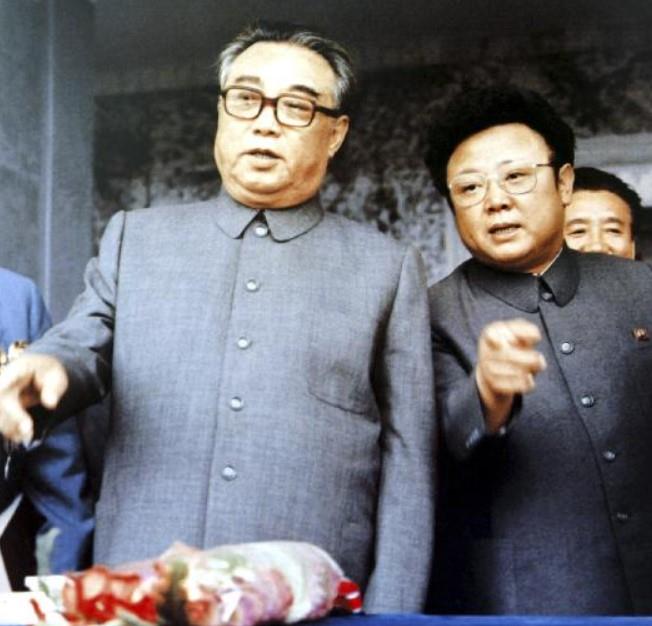
North Korea 30 Years After Kim Il-sung's Death: Past, Present, and Future (6)Kim Il-sung’s Disappointment in His Successor –The Late Stage of Kim Il-sung’s RuleKang In-deokFormer Minister of Unification of the Republic of KoreaAs the 1990s began, North Korea faced a major international crisis. The collapse of the Soviet Union and Germany’s reunification marked pivotal changes in global politics, ending the Cold War with capitalism’s victory over socialism. Isolated as the Soviet Union, Eastern Europe, and China normalized relations with South Korea, North Korea, under Kim Jong-il, turned to nuclear development as its only means to offset conventional military disadvantages and secure an edge.After the Soviet Union’s collapse, North Korea believed recruiting Soviet nuclear scientists, now facing an uncertain future, would expedite its nuclear weapons development. Despite the worsening situation, Kim Il-sung prioritized preserving the regime’s hereditary system, seeing it as vital for both his security and the survival of North Korea’s socialist monarchy. He focused on promoting Kim Jong-il and strengthening his son’s hold on power.One clear example of Kim Il-sung’s devotion to his son was the ode he composed for Kim Jong-il’s 50th birthday on February 16, 1992. The poem read:"On Mount Paektu, Jong-il Peak rises high,The waters of Paektu River flow freely.The Bright Star was born, and fifty years have passed,He embodies wisdom and strength, admired by all.Unified voices sing his praise,Their joyous cheers shake the heavens and earth."During the 6th Congress of the Workers' Party of Korea in October 1980, Kim Il-sung and Kim Jong-il stoodside by side on the podium / Korean Central Television (KCTV)There’s an old Korean saying: "If you boast about your child, you’ll make a fool of yourself," and it’s hard not to see this as the foolish behavior of an elderly man.I’d like to believe Kim Il-sung wasn’t fully aware of the damage caused by Kim Jong-il’s reckless policies. Kim Jong-il’s extravagance and unchecked ambition had pushed the North Korean economy to the brink, leaving the people in a dire situation. Perhaps Kim Il-sung didn’t yet grasp the full extent of the crisis. However, by July 1994, as the economic disaster became clear, Kim Il-sung realized he could no longer leave the situation in Kim Jong-il’s hands. He called for a meeting of top economic officials, but despite his efforts, it never took place.The reason for this was simple: Kim Jong-il had already consolidated his control over the Party and the government. Evidence of this power shift is vividly illustrated in the novel Eternal Life, which not only recounts the economic meeting Kim Il-sung attempted to convene at his Mount Myohyang residence on July 5-6, 1994, but also describes the events leading up to his death.A particular passage from this novel stands out to me, in which Kim Il-sung said: "Comrades, isn’t prioritizing agriculture, light industry, and trade our Party’s policy? We must push forward... We must also bolster the role of rail transport, which is vital to the people’s economy, and focus on metal, cement, and coal industries... If we succeed, we too can live well." (Baek Bo-heum and Song Sang-wi, “Eternal Life,” p. 392).This wasn’t a new stance from Kim Il-sung. He had consistently emphasized these priorities throughout his rule.However, this statement carried extra weight at the time. Just a month earlier, in June 1994, Kim Il-sung met with former U.S. President Jimmy Carter in Pyongyang, expressing a genuine interest in improving U.S.-North Korea relations. He even hinted that North Korea might freeze its nuclear program or hold inter-Korean talks if it would help. Could this have subtly reflected his concerns about Kim Jong-il and the military’s push for nuclear development?More specifically, it may reveal his growing concern over the impact of the Korean War and the regime’s heavy focus on military industry, which had stunted the people's economy. This had created a situation where even basic needs were no longer being met. Perhaps this is why Kim Il-sung resisted Kim Jong-il’s opposition and insisted on leading the economic officials’ meeting, citing his role as General Secretary. His determination to preside over the meeting underscores his deep concern. Tragically, the day after the meeting, Kim Il-sung collapsed from illness and passed away on July 8, at the age of 82.
24.10.03 -
 [Feature Article]
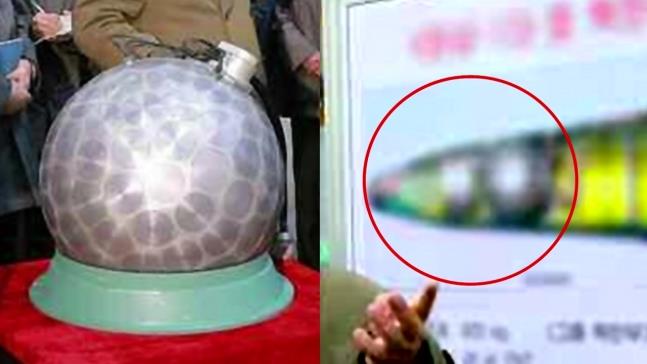
Why Nuclear Armament of South Korea and Japan is Necessaryfor Peace in Northeast AsiaCheong Seong-chang,Ph.D.Director, Center for Korean Peninsula Strategy, The Sejong InstituteOn September 13, North Korea's state media revealed a high-enriched uranium (HEU) production facility during Kim Jong-un's on-site inspection, a significant escalation. While North Korea had previously shown U.S. nuclear physicist Dr. Siegfried Hecker its uranium enrichment facility in 2010, this is the first time the regime has publicly released photos of the facility.During this visit, Kim Jong-un ordered the expansion of centrifuges and the introduction of new ones to increase the nuclear arsenal exponentially. This reflects Kim’s commitment to developing enough nuclear weapons to threaten South Korea, Japan, and even the U.S., irrespective of external developments like the U.S. presidential election.South Korean military officials estimate that the newly revealed facility contains over 4,000 centrifuges, capable of producing 80kg of HEU annually—enough for three nuclear warheads. Additionally, North Korea could potentially produce up to 10 nuclear warheads a year using its known facilities in Yongbyon and Kangson, if they operate at full capacity.A report titled “Enhancing Nuclear Assurance for South Korea”, released by RAND Corporation and South Korea’s Asan Institute for Policy Studies in August 2023, concluded that North Korea already has nuclear forces capable of posing a serious threat to South Korea and is close to threatening the U.S. as well. North Korea aims to use its nuclear weapons to weaken the U.S.-ROK alliance and dominate South Korea without military invasion. The report estimated that North Korea has at least 180 nuclear weapons, potentially reaching 300 by 2030. The recent revelation of North Korea’s uranium enrichment facility and Kim Jong-un's comments further support this analysis.In March 2016, North Korean leader Kim Jong-un claimed that North Korea had successfully miniaturized a nuclearwarhead to fit on a ballistic missile. Pictured here is the nuclear warhead. / Korean Central News AgencyNorth Korea’s nuclear arsenal is not just a threat to South Korea. If war breaks out, U.S. forces stationed in Japan would inevitably be deployed to the Korean Peninsula, drawing Japan into the conflict. Without nuclear weapons, Japan could become an easy target for North Korea. However, if Japan were to possess nuclear weapons, it would make a North Korean strike much more difficult, even with Japan’s support of U.S. forces. The possibility of China invading Taiwan cannot be dismissed. At an international conference in China in September 2023, I observed a strong desire among Chinese officials and experts to achieve unification with Taiwan. Given Xi Jinping’s aim to accomplish what Mao Zedong couldn’t—Chinese unification—there is a considerable chance he may resort to military force to secure his long-term rule. U.S. Indo-Pacific Commander John Aquilino, in a March 2024 testimony, predicted that China could gain the capability to invade Taiwan by 2027.If Donald Trump is re-elected in the upcoming U.S. presidential election, his administration is likely to prioritize American interests over alliances. Trump has expressed skepticism about the need for the U.S. to engage in conflict with nuclear-armed China over Taiwan. His stance raises the possibility of a deal with Xi Jinping that could leave Taiwan vulnerable.In January 2024, when questioned by Fox News about whether he would back Taiwan in the event of a Chinese military provocation, which could potentially escalate into a U.S.-China conflict, Trump made it clear that he didn’t see a need for the U.S. to intervene on Taiwan’s behalf. He also pointed out that Taiwan had taken control of 90% of the global semiconductor market, a sector once led by the U.S., further casting doubt on the necessity of defending Taiwan.In November 2020, just two months before leaving office, Trump ordered a partial withdrawal of U.S. troops from Afghanistan and Iraq. At that time, there were 4,500 U.S. troops stationed in Afghanistan and 3,000 in Iraq. By January 15, 2021, just days before Biden’s inauguration, Trump had already pulled out 2,000 troops from Afghanistan and 500 from Iraq, resulting in the withdrawal of 44% of U.S. forces in Afghanistan and 17% in Iraq in a very short span. Despite opposition from both parties and international allies, Trump pressed ahead with these significant foreign and defense decisions right before leaving office.The U.S. abandoned its post-Cold War strategy of fighting two simultaneous wars in 2012, replacing it with a "win-and-deter" strategy, which focuses on winning one conflict while deterring another. However, following Russia’s invasion of Ukraine in February 2022, four major global fronts have emerged: Europe, the Middle East, the Taiwan Strait, and the Korean Peninsula. The challenge is that the U.S. cannot effectively manage all four fronts at once. If a U.S.-China military clash occurs in the Taiwan Strait, and North Korea simultaneously escalates tensions with nuclear provocations on the Korean Peninsula, the U.S.'s ability to respond would be even more constrained.As North Korea’s nuclear threat grows, South Korean public support for nuclear armament is increasing. In a May 2024 survey by the Asan Institute for Policy Studies, 70.9% of South Koreans supported independent nuclear armament, the highest level since 2011.If Trump’s re-election leads to a reduction in U.S. forces in Korea or a cutback in joint military exercises, support for nuclear armament in South Korea will likely increase further, putting pressure on the Yoon Suk-yeol administration to seriously consider nuclear weapons. If a pro-nuclear candidate wins the 2027 or 2032 presidential election, South Korea could quickly move towards nuclear armament, possibly within the next decade.Japan, meanwhile, has long relied on the U.S. for its defense, trusting that the U.S. would protect it in any scenario. But if an isolationist U.S. government emerges, and South Korea pursues nuclear weapons to counter North Korea, Japan may be left as the only non-nuclear state in Northeast Asia. In such a situation, Japan might have no choice but to follow suit and pursue nuclear weapons. The most viable path for South Korea and Japan to avoid heavy international sanctions is for both countries to move towards nuclear armament simultaneously. A secondary option is for South Korea to go first, with Japan following closely behind. Either way, the U.S. and Western nations would likely avoid imposing harsh sanctions, given the economic consequences.If both South Korea and Japan become nuclear-armed, the security landscape in Northeast Asia would change dramatically, leading to a more stable peace. A balance of power would emerge, making it difficult for any of the six regional powers—North Korea, South Korea, Japan, China, Russia, and the U.S.—to threaten one another with nuclear weapons. Non-proliferation advocates fear that nuclear armament by South Korea and Japan would diminish U.S. influence in the region. However, failing to stop North Korea and China from expanding their nuclear capabilities while preventing U.S. allies from defending themselves would put South Korea and Japan at greater risk.Nuclear armament by South Korea and Japan would not only weaken the ambitions of authoritarian regimes like North Korea and China but also strengthen the U.S.-ROK and U.S.-Japan alliances as nuclear partners. This would provide the U.S. with stronger allies in Northeast Asia, allowing it to focus more effectively on containing China.
24.09.20 -
 [Interview]
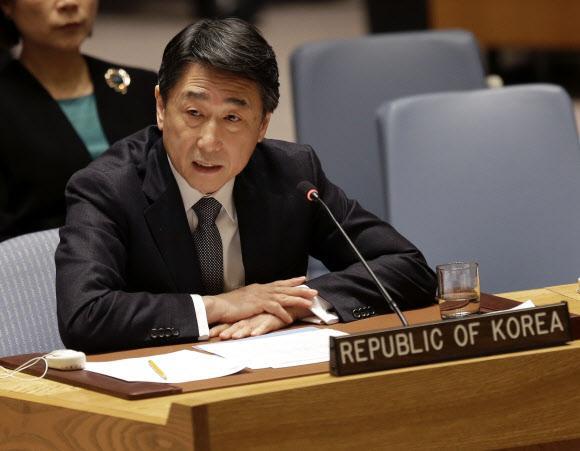
Can International Human Rights Pressure PromptChange in Kim Jong-un?- Surviving sanctions doesn’t mean everything is fine in North Korea- "To South Koreans, North Koreans are much more than just people from another nation."- Ambassador Oh Joon’s UN speech moved North Korean laborers abroad to tears- Sanctions being the “last straw”Oh JoonFormer UN Ambassador“If the world stays silent on North Korea’s human rights abuses and fails to maintain pressure, Kim Jong-un will likely feel empowered to continue his regime’s oppression and violations.”On the 11th, at the Save the Children office in Mapo, Seoul, Oh Joon emphasized, “Sustained pressure on human rights abuses keeps North Korea aware that the global community is always watching.”Oh Joon, a former South Korean Ambassador to the UN, became well-known for a powerful speech on North Korean human rights delivered over a decade ago. His words were so impactful that some North Korean laborers working abroad, after watching the speech on YouTube, were inspired to defect. One North Korean soldier stationed in Russia tearfully recalled hearing Oh Joon say, "To South Koreans, North Koreans are much more than just people from another nation." and it left a deep impression on him.During his diplomatic career, Oh Joon served four terms in South Korea’s UN mission, holding roles like Deputy Ambassador and Chair of the UN Economic and Social Council. After 38 years of service, he has earned a reputation as an expert in multilateral diplomacy. He now leads Save the Children, a global NGO committed to advancing children’s rights, regardless of race, religion, or political affiliation.Reflecting on his UN tenure, Oh Joon remarked, “The adoption of North Korea’s first human rights report by the UN was a significant milestone in our divided history.” He added, “Although the UN Security Council is typically focused on peace and security issues, a consensus emerged that severe human rights violations could also threaten stability. This paved the way for the historic inclusion of North Korean human rights on the Security Council’s agenda.”Ambassador Oh Joon speaks at the United Nations Security Council on the 'North Korea Sanctions Resolution'in March 2016. / Yonhap News AgencyExplaining his statement, "To South Koreans, North Koreans are much more than just people from another nation." Oh Joon said, "After over 80 years of division and both Koreas being separate UN members since 1991, fewer people remember our shared history. My message aimed to address that disconnect." He was surprised that it resonated not only with UN member states but also with younger generations in both Koreas. "Maintaining our shared identity and kinship," he added, "can help resolve the North Korean nuclear issue, foster cooperation and dialogue, and bring us closer to reunification."He stressed the importance of South Korea joining the international push to address human rights issues in North Korea, saying, “Our government must actively participate in these efforts.”Oh Joon discussed the “cumulative effect” of global sanctions on North Korea, stating that while the regime may initially withstand the pressure with internal resources and support from China and Russia, continued sanctions will eventually cause it to collapse, as the saying goes, "the straw that broke the camel's back." He added that North Korea’s endurance doesn’t mean everything is fine, pointing to the recent rise in defections by North Korean elites abroad as evidence.Regarding the U.S. presidential race, Oh Joon predicted, “If Donald Trump returns to office, he will likely intensify contact with North Korea, whereas Kamala Harris would likely maintain Joe Biden’s approach to North Korea.” While Trump’s meetings with Kim Jong-un were symbolically significant, Oh Joon noted that it’s uncertain how progress on denuclearization would unfold. “Even if a U.S. president meets with Kim in South Korea, we’ve seen that such encounters don’t necessarily bring about meaningful shifts in security issues like the North’s nuclear program.”On South Korea-Japan relations, Oh Joon noted, "The transition from Moon Jae-in to Yoon Suk-yeol has opened the door to improving ties with Japan." He emphasized the importance of managing historical issues to ensure continued growth in security cooperation and economic relations between the two countries.He concluded, “Though Yoon’s administration has made clear progress with Japan, the historical disputes between the two countries remain unresolved. Still, I believe we should continue strengthening our security and economic partnerships, even while grappling with these challenges.”
24.09.20 -
 [North Korea in History]
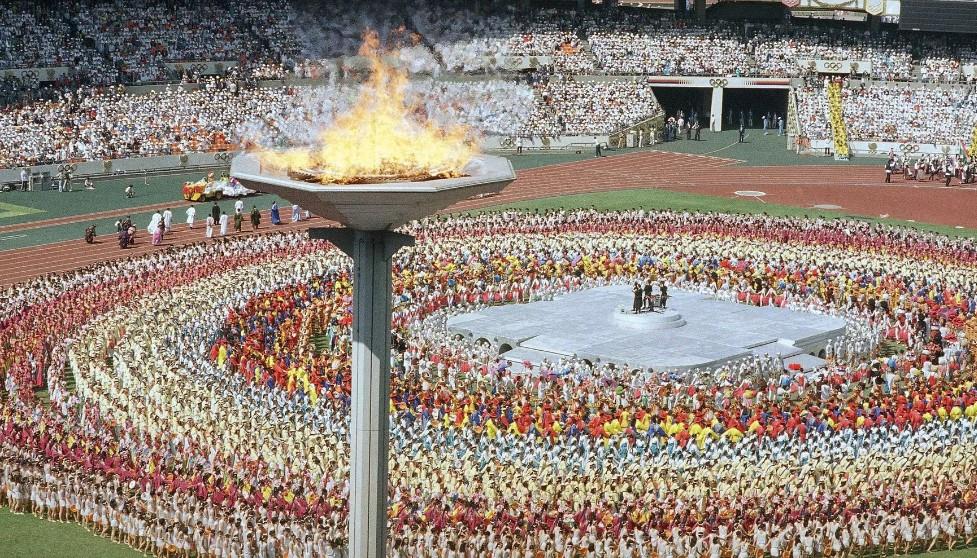
North Korea 30 Years After Kim Il-sung's Death: Past, Present, and Future (5)Seoul Olympics 1988 and North Korea's Defeatin the South-North System CompetitionKang In-deokFormer Minister of Unification of the Republic of KoreaAfter securing his position as successor, Kim Jong-il officially took leadership following the 6th Congress of the Workers' Party of Korea in 1980. However, he faced a major challenge: competing with South Korea's rising influence. This was highlighted by the upcoming Games of the XXIV Olympiad Seoul 1988, which offered South Korea a prime opportunity to showcase its growing power and international standing, further cemented by the fact that the event was being held in Seoul.By this time, China had shifted under Deng Xiaoping’s leadership towards economic reform and opening up to the outside world, marking a clear divergence from North Korea's path. The Soviet Union, under Mikhail Gorbachev, had also embarked on a course of reconstruction (Perestroika) and openness (Glasnost). Socialist nations in Eastern Europe had long moved away from their traditional systems of one-party rule and state-controlled economies. In this evolving global context, it became clear that the Soviet Union, China, and Eastern European socialist nations would undoubtedly participate in the Games of the XXIV Olympiad Seoul 1988.Opening ceremony of the Games of the XXIV Olympiad Seoul 1988 / APOn November 29, 1987, Korean Air Flight KAL858, carrying 113 passengers, including South Korean workers returning from the Middle East, was bombed mid-flight over Myanmar by a North Korean agent.How was North Korea to respond? Their primary goal was to prevent the Olympics from being held in Seoul, or, if that failed, to co-host with Pyongyang to save face. They pursued both domestic and international strategies, including an attempt to destabilize the Chun Doo-hwan government. This led to the October 8, 1983, bombing at the Aung San Mausoleum in Rangoon, Burma (Myanmar), targeting a South Korean delegation. While 17 key Cabinet members were killed, President Chun narrowly escaped as he had not yet arrived.Kim Il-sung attempted to negotiate with the International Olympic Committee (IOC), proposing a co-hosting arrangement for the Olympics, with Pyongyang hosting key events like soccer. However, these talks broke down due to disagreements. Undeterred by this setback, Kim continued his efforts to undermine the Games. On October 24, 1986, despite his aversion to air travel, he flew to Moscow to ask Gorbachev to boycott the Olympics, arguing that it was an imperialist scheme aimed at cementing the division of the Korean Peninsula. Gorbachev dismissed this idea as outdated, encouraging Kim to adopt a new perspective in line with Perestroika. Kim then proposed a 50-50 split in hosting the Games between Seoul and Pyongyang, but this was also rejected.A scene from the movie Mayumi depicting the bombing of Korean Air Flight KAL858 on November 29, 1987/ Movie still from MayumiWhen it became clear North Korea's allies wouldn't boycott the Olympics, Kim Il-sung resorted to more drastic actions. On November 29, 1987, a North Korean agent bombed Korean Air Flight 858, killing 115 people, including South Korean workers returning from the Middle East. South Korean authorities later revealed that Kim Jong-il had ordered the attack, further isolating North Korea internationally as it was labeled a terrorist state.Despite North Korea's violent attempts to disrupt the Game, the event proceeded with athletes from over 180 countries. As the international tide turned against North Korea, Kim Jong-il sought to overshadow the Seoul Olympics by hosting the 13th World Festival of Youth and Students in Pyongyang. At a February 20, 1988 meeting, Kim launched a "200-day battle" to prepare for the event, setting a deadline of September 9, the 40th anniversary of North Korea's founding, and allocated a staggering $10 billion to ensure its success.The World Festival of Youth and Students opened on July 1, 1989, with North Korean media proudly reporting participation from 180 countries, over 16,000 youth representatives, 1,245 youth and student organizations, and 470 honorary guests. North Korea covered all expenses except airfare. However, the festival's excessive costs further crippled the economy, leaving the "Ten-Year Economic Development Goals" set in 1980 less than half accomplished. As a result, the once fiercely contested North-South system competition could no longer be sustained.Opening ceremony of the World Festival of Youth and Students held in Pyongyang, July 1989 / Ministry of Foreign Affairs
24.09.20 -
 [Analysis of issues]
Sado Gold Mine Listed as a World Heritage Site: Issues and ChallengesSuk Ju-heeNortheast Asian History FoundationOn July 27, 2024, the 46th UNESCO World Heritage Committee (WHC) officially designated Japan's Sado Gold Mine as a World Cultural Heritage site. Located on Sado Island, 45 kilometers west of Niigata City, the Sado Gold Mine has been a site of gold extraction since the 12th century, yielding a total of 78 tons of gold and over 2,330 tons of silver. Mining activities at the Sado Gold Mine began in 1601 and continued for nearly 400 years until operations ceased in 1989. The Aikawa gold and silver mining area, which includes the Sado Gold Mine, spans a total of 400 kilometers. Some portions of this area have been opened to the public as historical sites and tourist attractions. Visitors can explore two types of tunnels: the Sodayu Tunnel, which shows mining techniques from the Edo period (1603–1867), and the Doyu Tunnel, which reflects the methods used during the Meiji era (1868–1912). The contrasting tunnel designs visually demonstrate the evolution of mining technology and practices at the Sado Mine, including vertical shafts and ore dressing facilities. However, the presence of Korean laborers is not easily noticeable unless one looks carefully.Three Issues Surrounding Sado Gold Mine as a World Heritage SiteThe designation of the Sado Gold Mine as a World Heritage site has sparked three major issues related to Korean laborers: the question of "coercion," the role of the Aikawa History Museum, and the organization of memorial services. The most controversial of these issues is "coercion." Although some exhibits and facilities acknowledge the harsh conditions that Korean laborers faced, they do not explicitly mention the forced nature of their work. The Aikawa History Museum's displays note that Korean laborers were often assigned to more dangerous tasks than their Japanese counterparts, but the specific term "coercion" is not used. Korean media has widely criticized the omission of terms like "forced mobilization" at the Sado Gold Mine heritage site and related facilities.The International Council on Monuments and Sites, one of three advisory bodies to the UNESCO World Heritage Committee, has recommended that Japan reflect the full history of the mining complex on Sado, an island that once had forced laborers from Korea and other countries, and build facilities there to promote global awareness of the site's full history. Shown is an underground shaft built after the Meiji era at the Aikawa Gold and Silver Mine on the island. (Yonhap News)In contrast, when Hashima Island (Gunkanjima) was listed as a World Heritage site in July 2015, the Japanese government admitted that Korean laborers were "mobilized against their will and forced to work under harsh conditions," committing to preserve this acknowledgment. The absence of a clear reference to "forced labor" in the context of the Sado Gold Mine keeps the debate alive.The second issue revolves around the exhibits at the Aikawa History Museum. Alongside the World Heritage listing of the Sado Gold Mine, the Japanese government mandated the installation of facilities on-site that reflect the comprehensive history of the mine. Consequently, the third floor of the Aikawa History Museum features an exhibition dedicated to Korean laborers. Although the museum is some distance from the Sado Gold Mine, it is accessible on foot via a route that passes the sites of the third and first dormitories, former residences for Korean laborers. For those interested in tracing the history of Korean laborers, walking is the recommended approach. This exhibition was part of a promise to depict the working conditions of Korean laborers at the Sado Gold Mine. Titled "The Life of Mine Workers Including Those from Korea," the exhibition displays documents detailing the workers' origins, their living conditions, and the harsh environments they endured. It states that Koreans were systematically mobilized by Japanese government policies and faced severe working conditions during the war. However, there is no direct mention of "coercion" or forced labor.Third, South Korea and Japan have agreed to hold an annual memorial service for the laborers who worked at the Sado Gold Mine, with the first ceremony potentially happening as early as September. However, the "Peninsula Laborer List," which details the Korean laborers mobilized to work at the Sado Gold Mine during Japan's colonial period, has yet to be made public. This register, labeled as "Document No. 1414" in the Niigata Prefectural Archives, is vital for understanding the experiences of Korean laborers at the mine. The decision on whether to release this document is likely to become a significant point of contention between South Korea and Japan before the memorial service takes place.Sado Gold Mine as a " Full History" Many experts, both domestic and international, agree on the importance of presenting a "Full history" of the Sado Gold Mine. In Japan, there are efforts to develop interpretive materials, exhibits, and facilities that comprehensively reflect the entire history of the site. Takeuchi Yasuto, who recently published a collection of documents about the Sado Gold Mine and the forced labor of Koreans, stressed the significance of displaying the full historical context. On June 6, International Council on Monuments and Sites (ICOMOS) called for a comprehensive strategy to explain and exhibit the entire history of the site, accompanied by appropriate facilities and installations. The Sado Gold Mine and its surroundings vividly reveal the site's historical evolution. Key facilities, such as the ore concentration plant, the Kitazawa flotation plant, and the Takato warehouse, all constructed during the modern era, remain under the mine area. These structures are widely recognized within Japan as significant examples of modern heritage. The severed peak of Doyu no Warito, a prominent feature of the Sado Mine, serves as a powerful symbol of the passage of time.Remaining Challenges after World Heritage Listing Following its recognition as a UNESCO World Heritage site, the Sado Gold Mine now stands as a symbol representing the universal values of humanity. Cultural heritage, like a river that flows continuously, cannot be severed from history; it must preserve every moment in time. Through the remnants left by people, we can piece together the broader history of humanity. The dark and extensive tunnels of the Sado Mine, developed since the Edo period, will continue to bear witness as a World Heritage site. Along with recognizing the cultural value and historical significance of the Sado Gold Mine, it is crucial to remember the Korean laborers who endured harsh conditions as part of its legacy.References- Japan Tourism Agency Official Website: https://www.japan.travel/ko/spot/1426/- Dong-A Ilbo: "Japan Should Also Acknowledge the Negative Aspects of Sado Gold Mine" (31 July, 2024)- Dong-A Ilbo: "Memorial Service for Korean Forced Laborers at Sado Gold Mine Scheduled After August" (30 July, 2024)- Yonhap News Agency: "Japanese Researchers Release 'Sado Gold Mine Korean Data Collection'... 'The Full History Needs to Be Revealed'" (17 July, 2024)- KBS News, [Correspondent Report]: "Sado Gold Mine - Japan Digging Its Own Trap" (13 January, 2022)- The Hankyoreh: "Actions South Korea Needed to Take in Response to the Sado Gold Mine Listing" (13 August, 2024)- Asahi Shimbun: "A Heritage That Conveys Both Light and Shadow"
24.09.06 -
 [North Korea in History]
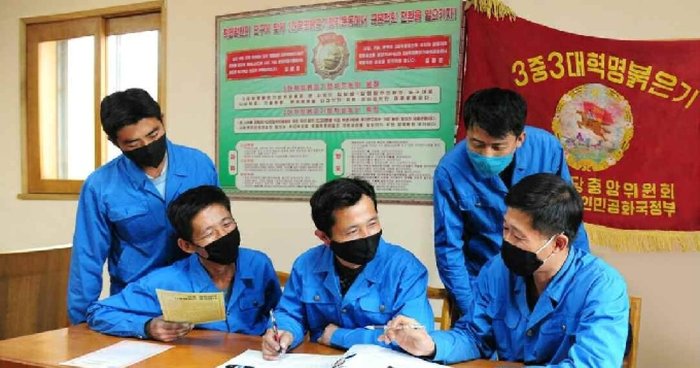
North Korea 30 Years After Kim Il-sung's Death: Past, Present, and Future (4)"Strengthening the Revolutionary Base," the Four Military Guidelines,and Provocations Against South KoreaKang In-deokFormer Minister of Unification of the Republic of KoreaKim Il-sung believed that purging dissenters had secured his regime's stability. Confident in this, he held the 4th Congress of WPK in September 1961, where he promoted the Juche ideology (self-reliance) to address the Sino-Soviet split and introduced a seven-year plan for national defense and economic growth. By December 1962, at the 5th Plenary Session of the Party Central Committee, he laid out the Four Military Guidelines: arming the population, fortifying the nation, creating an officer corps, and modernizing the military.During a period when economic support from China and the Soviet Union was dwindling due to their distrust of North Korea's neutral stance, this focus on military led to severe economic decline. Allocating over 25% of the GDP to military expenditure left little for economic development. The solution was to mobilize the masses' labor force. Initiatives like the "Chollima Movement" and the "Daean Work System" aimed to drive economic growth through ideology and mass labor, reflecting an anti-economic logic.North Korea's economy began to falter. Despite this, Kim Il-sung held the 8th Central Committee Plenary Session in February 1964, proposing the "Three Revolutions" strategy to strengthen North Korea's revolutionary base, boost revolutionary forces in South Korea, and enhance international support. He pushed for violent revolution and underground parties in South Korea. The 2nd Party Delegates' Conference in October 1966 attempted Mao Zedong's strategy of encircling cities from the countryside, aligning with anti-American movements, and using North Vietnam's support for armed struggle against South Vietnam. However, this plan failed completely.Kim Jong-il's Succession and North Korea's "Red Guards": The Three RevolutionsThe "National Conference of Enthusiasts for the Three Revolutions Teams" held in Pyongyang in February 2013/ Korean Central TelevisionAt the 5th Party Congress in November 1970, Kim Il-sung reviewed the past decade's accomplishments. He praised the success of the Four Military Guidelines, the strengthening of the Three Revolutionary Forces, and the simultaneous development of the economy and defense. He also highlighted the establishment of his Juche ideology as the party's sole ideology.However, new challenges arose with the end of the Vietnam War, improved U.S.-China relations, South Korea's economic superiority, and criticism from other communist parties. To address these issues, Kim engaged in inter-Korean dialogue and began selecting his successor.Reflecting on Nikita Khrushchev's efforts to de-Stalinize and China's Lin Biao's failed coup against Mao Zedong, Kim Il-sung decided that his eldest son, Kim Jong-il, was the only person he could fully trust. After discussing with loyal partisans Choi Hyun, Choe Yong-gon, and Kim Il, he named Kim Jong-il as his successor at the 8th Plenary Session of the 5th Central Committee in December 1972. However, the decision for the Workers' Party of Korea—supposedly committed to Marxist-Leninist revolutionary theory—to adopt hereditary succession, a trait of pre-capitalist feudal societies, was unusual and drew criticism from communist parties worldwide and North Korean intellectuals. How could this discontent and criticism be managed?In February the following year, Kim Il-sung directed the formation of the "Three Revolutions (ideological, technical, and cultural)" led by young university students under Kim Jong-il's leadership. These teams were sent to local regions to persuade party cadres, senior officials, and intellectuals to abandon outdated ideas. He instructed, "Your mission is to help and awaken the cadres. Your struggle is against their outdated ideas, not the cadres themselves. Fight uncompromisingly against old ideas" (Collected Works of Kim Il-sung, Vol. 7, p. 209).But was this directive genuine? Young members of the Three Revolutions Teams boldly confronted senior officials and their university professors, demanding they abandon old ideologies. These officials, aware of the implications, had no choice but to comply. The knowledge of past purges, like the August Faction Incident, and the Central Party's intense guidance projects meant they understood the consequences of non-compliance. Over a year, around one million young activists were dispatched across the country, joining the party with Kim Jong-il's endorsement. Finally, on February 13, 1974, Kim Jong-il was promoted to the political committee. From that point forward, he was known as the "Central Party" and focused on solidifying his power base.
24.09.06 -
 [Defectors' Podium]
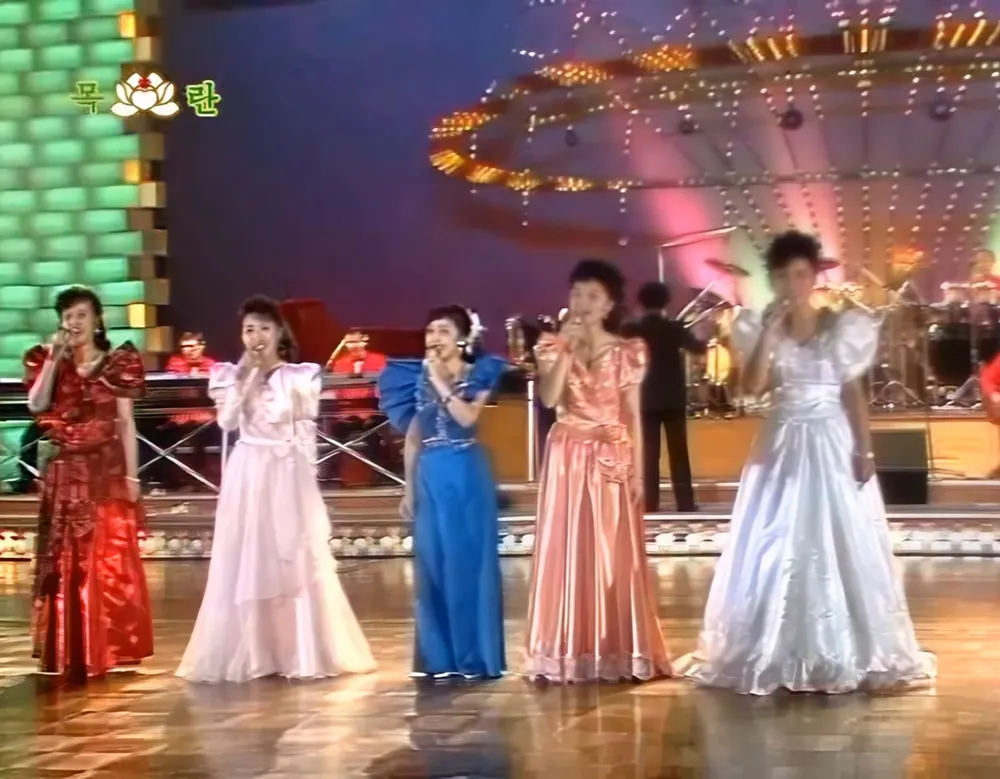
North Korean Otaku in Japan and Japanese Culture in North Korea:Which Japanese Songs Captivated North Koreans?Lee Young-miNorth Korean Defector of Repatriated Korean Descent Residing in JapanThe Hallyu (Korean Wave) phenomenon has sparked a significant increase in the number of Japanese people interested in learning Korean. Likewise, a fascination with Japan has emerged in Korea’s travel and culture sectors. These trends are helping to build friendly relations between the two countries at a civilian level.In 1991, singers from North Korea’s Pochonbo Electronic Ensemble visited Japan and performed / Namuwiki.In 2017, a group of Japanese women who enjoy North Korean music and culture, called Sen-gun Girls,dressed up as the North Korean girl group Moranbong Band / BBC News Japan.Despite the halt in exchanges between North Korea and Japan, there are North Korean 'otaku' (enthusiasts) in Japan who are as devoted to North Korean culture as members of the General Association of Korean Residents in Japan.How does North Korea, which rejects capitalist ideologies and culture, embrace Korean and Japanese cultures? While the Hallyu wave in North Korea is widely recognized, the perception of Japanese culture among North Koreans is less understood.After the 1945 liberation and severing ties with Japan, North Korea established the General Association of Korean Residents in Japan in 1955. Beginning in 1959, the ‘great migration from capitalism to socialism’ saw 93,340 Koreans in Japan relocate to North Korea, introducing Japanese culture there.A scene from the North Korean movie ‘Thaw of Spring Day,’ depicting the love between young repatriates in Japan/ Captured on YouTubeNorth Koreans, who were used to the rigid socialist cultures of the Soviet Union and China, were able to experience the softer capitalist culture of Japan through these repatriates.Japanese cars, household appliances, clothing, and daily necessities brought by the repatriates were highly popular in North Korea as they were top-quality products rarely found domestically.Ko Yong-hui, the mother of North Korean leader Kim Jong-un, was a repatriated Korean who settled in North Korea after arriving on a repatriation ship in 1962. Originally from Osaka, she caught the attention of Kim Jong-il while dancing with the Mansudae Art Troupe and became his consort, giving birth to Kim Jong-chol, Kim Jong-un, and Kim Yo-jong.In 1982, Kim Jong-il invited Japanese chef Kenji Fujimoto to be his personal chef. Fujimoto developed a close relationship with the young Kim Jong-un and Kim Yo-jong. Their familiarity with Japanese culture, influenced by their repatriated Korean mother, was further deepened through this interaction.Cultural exchanges between North Korea and Japan were mainly through the General Association of Korean Residents in Japan. In the early 1980s, North Korea produced films like ‘Silver Rod-like Hairpin’ and ‘Thaw of Spring Day’ based on the association. Despite criticizing capitalist Japan, these films offered North Koreans a glimpse into Japanese progress, and their theme songs became popular in North Korea.The 1984 Joint Venture Law enabled North Korea to attract companies and funds from the General Association of Korean Residents in Japan, boosting understanding of the Japanese economy and culture.The Japanese culture craze in North Korea began with the 1991 performance of the Pochonbo Electronic Ensemble, managed by Kim Jong-il, in Japan.The Pochonbo Electronic Ensemble, sponsored by NHK and The Asahi Shimbun and hosted by the association of history and culture for one Korea, toured Japan from September 17 to October 27, 1991, performing in cities like Tokyo, Sendai, Hiroshima, Kitakyushu, Osaka, Kyoto, Kobe, and Himeji.The Pochonbo Electronic Ensemble performed both North Korean and Japanese songs, gaining considerable popularity among Koreans in Japan and pro-North Korean Japanese. The ensemble was featured on NHK news, and the singers appeared on Japanese TV shows.North Korea broadcasted the Pochonbo Electronic Ensemble’s performance in Japan on Korean Central Television. Emotional Japanese songs like ‘Springtime in the North,’ ‘Seto No Hanayome,’ and ‘Tsugaru Strait - Winter Scene’ became popular in North Korea and remain nostalgic favorites among North Korean defectors in South Korea.In 2007, cultural exchanges between North Korea and Japan halted due to North Korea's abduction of Japanese citizens and nuclear tests. The General Association of Korean Residents in Japan's influence declined, and the rise of Hallyu in North Korea further diminished Japanese culture's presence.Despite the 'abduction issue' and unresolved 'colonial rule settlement' between North Korea and Japan, exchanges are nearly non-existent, with only occasional behind-the-scenes contact. If relations improve, North Korean 'otaku' in Japan and nostalgic repatriated Koreans could play key roles in revitalizing cultural exchanges.
24.09.06 -
 [Feature Article Series]
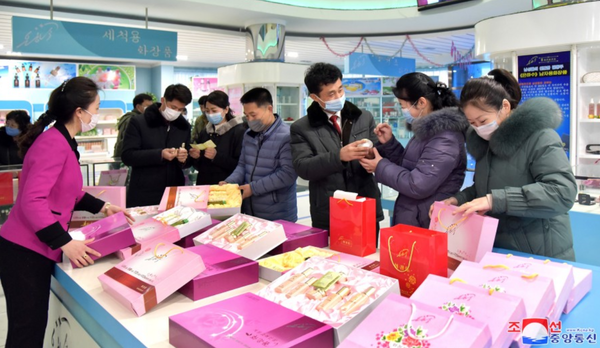
Marketing In North Korea (7)- Sanitary napkins for women, its name is 'Bongseonwha' (means garden balsam) Jeon Byung-kilSenior Consultant of YESInnovationformer of Secretary General of UniKorea FoundationProducts close to women's livesFrom their early teens to their early 50s, women experience more than 400 periods. Women are usually more concerned about quality than price of sanitary napkins. In other words, when women buy sanitary napkins, they pay close attention to what ingredients they're made of and how comfortable they are when they wear them. That's why sanitary napkin manufacturers customize their products for consumers.So what kind of sanitary pads are North Korean women using? Prior to the 2000s, North Korean women used lightweight, soft cheesecloth or artificial cloth sanitary napkins. Then, in the mid-2000s, disposable sanitary napkins started arriving from China. But North Koreans who couldn't afford it weren't interested in buying sanitary napkins. At the time, most North Korean women didn't think it was necessary to pay a lot of money for sanitary pads that would be used once and thrown away. Unsurprisingly, disposable sanitary napkins didn't sell well.After Kim Jong Un took power in 2012, sanitary napkin products of varying prices and quality began to appear on the market. Panty liners and winged sanitary napkins, customizable sanitary napkins in different thicknesses to fit menstrual cycle, and cheesecloth sanitary napkins and cheesecloth panty liners, which are said to be economically beneficial. In the North Korean market, cheesecloth sanitary napkins used to be sold individually with no packaging, but now some are sold in packs of 10. It also sell them individually packaged for travelers.North Korea's sanitary napkins 'Comsumer Report'North Korea's disposable sanitary pads 'Bongseonhwa' /Yonhap News AgencyCoreana Connect released a Consumer Report-style report, "Women's Hygiene Products in North Korea," comparing eight different types of sanitary pads distributed in North Korea in 2018. The group collected eight brands of sanitary napkins (six North Korean and two Chinese) sold mainly in department stores, supermarkets, and markets in Pyongyang and the Rason Special Economic Zone. Coreana Connect commissioned a laboratory specializing in the quality of paper and textile products to conduct functional tests on the collected products in terms of Absorption Before Leakage (ABL) and Multiple Acquisition Time (MAT). In other words, we evaluated absorbency and adhesion, which are the core functions of sanitary napkins.'Bongseonwha' was the highest rated brand in terms of absorption speed and amount. It was followed by 'Rakrang', 'Seolwha', 'Kkothyanggi', and 'Seonghyang'.The 'Rakrangbonghwa store', the parent company of the 'Bongseonhwa' brand, which topped the quality ranking, appears to be an affiliate of the 'Rakrangbonghwa cloth factory', which opened in 2010. The clothing products produced by this factory are branded as "Bongseonwha" and the trademark logo is almost identical to the logo on sanitary napkins.Ryukyung Household Goods Factory, the parent company of Rakrang, was originally the December 7th Factory, which produced military goods. After Kim Jong-un's era, the factory was reorganized into a modernized sanitary products production plant, which Kim visited in July 2015. There's a simple reason why North Korea's leading sanitary napkin company has "Rakrang" in its name. The factories are located in the Rakrang district of Pyongyang.Coreana connect tested women ages 18 to 24, but did not disclose the number of respondents, their nationalities, or the name of the organization that conducted the quality testing. Here's what people who have used North Korean sanitary napkins have to say about them 21-year-old respondent - It's comfortable to use. However, the adhesive doesn't seem to work well, my menstrual blood was spread all over and not absorbed and there was leakage. I think it would be better if they improved it a bit more.18-year-old respondent - Wearing it while sleeping caused my underwear to stain with menstrual blood, but I didn't have a problem with it during the day.Respondent, 20 years old - Not enough adhesive on the back to keep it in place, but the absorbency was fine.Respondent, 18 years old - I like that the sanitary napkins are lightweight and not particularly fragranced, but the adhesive on the wings and the back of the pad is not very good, making it difficult to keep them in place in my underwear, and the constant movement makes it uncomfortable because it stains my underwear. The plastic side of the sanitary napkin is too thin and tears easily. According to the report, North Korean sanitary napkins are similar to thin pads or regular sanitary napkins commonly sold in the West and are comfortable to wear. However, it was pointed out that they are inconvenient because they have poor adhesion and need to be replaced frequently. Best Sanitary Napkin - 'Bongseeonwha'The use of “Bongseonhwa” as a trademark targeting women in North Korea began in 2011. The trademark was first applied to women's clothing produced at the Rakrang Bonghwa cloth factory, and the word “Bongseonhwa” signifies women's coldness, anguish, and suffering.The packaging of Bongseonhwa, a sanitary napkin that received high marks in the report, states that it contains 10 pads and is 265mm long. Based on the Korean standard for sanitary napkins, medium is 240mm and large is 280mm, so it seems to be somewhere between medium and large. There is no separate size labeling.North Korean sanitary napkins are categorized into daytime and nighttime. When it open the outer packaging of a Bongseonhwa sanitary napkin, it can smell a strong wormwood odor. While South Korean sanitary napkins are usually made up of layers of absorbent sheets, the absorbent layer of North Korean sanitary napkins is more like a pulp. In terms of absorbency, North Korean "Bongseonhwa" sanitary napkins are not as absorbent as their South Korean counterparts, and liquids are not absorbed immediately, but instead remain on the surface for some time.North Korean women's sanitary napkins are advertised as being effective in preventing women's diseases, treating gynecological diseases, and stopping the pain of women with menstrual cramps, and having a strong adsorption and absorption capacity by adding polymer absorbents. These are not only the ingredients, but also the advertising phrases used to promote the product. North Korea has few restrictions on exaggerated advertisements, so the claims are often overstated compared to South Korea.Disposable sanitary napkins are an everyday item?According to NKDB's 2018 survey of 100 North Korean women, "North Korean Women's Perceptions of Menstruation and Menstrual Products," 56% of them used cheesecloth sanitary napkins, 38% used disposable sanitary napkins, and 5% used paper. Of the women who used cloth sanitary napkins, 77% used lobster cloth, while the rest used old clothes or blankets for economic reasons. The 38% of women who use disposable sanitary napkins may seem surprising given the economic situation in North Korea, but they are expensive and only used occasionally when needed.Most disposable sanitary napkins sold in North Korea are targeted at the upper class and foreign tourists, not the average North Korean. In fact, 'Kkothyanggi' sells for US$0.46 (KPW 2,800) for a pack of 10. 'Seolwha' costs between KPW 2,500 and 'Seonhyang' costs KPW 3,500. The average price of sanitary napkins is around KPW 3,000, which is about the same price as 500 grams of rice.Disposable sanitary napkins are not yet common in North Korean society. Alternative menstrual products, such as tampons, are also hard to come by. Tampons are only used by elite athletes and high-ranking women. Menstrual cups and reusable sanitary napkins can be effective alternatives for women in developing countries, but they are not available in North Korea.North Korea currently has a feminine hygiene culture that coexists between the use of disposable sanitary napkins and the use of cheesecloth, tissues, and paper as sanitary napkins. Developing quality products is important, but more important is universal access to feminine hygiene products.
24.09.06 -
 [Feature Article Series]
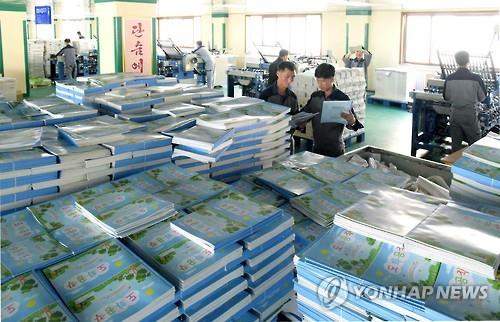
Marketing In North Korea (6)- Imagine school supply brand Jeon Byung-kilSenior Consultant of YESInnovationformer of Secretary General of UniKorea Foundation3 products for North Korean children - school bag, notebook, and soy milkRegardless of time and place, Parents are all the same. They want to provide their children with good school supplies. Even in North Korea, where the economy is struggling, parents don't skimp on school supplies. Merchants also actively attract customers by offering discounts. In the capital, Pyongyang, people buy school supplies in department stores, while in the provinces they buy them mainly at marketplaces, Jangmadong.Despite its high educational aspirations, North Korea has poor educational facilities and learning materials. The economic downturn of the 1990s prevented continued investment in education. Since Kim Jong-un took power in 2012, North Korea has been trying to improve its school supplies production facilities and innovate in education technology, as it has in other manufacturing sectors.North Korea's media often portrays an idealized image of happy children. On June 1, 2021, North Korean media outlet Uriminzikkiri reported, "Our children are learning with the benefit of 12-year compulsory education while carrying <Sonamu>(means pine tree) school bags and writing in <Mindle>(means dandellion) notebooks and drinking soy milk." While soy milk has been mentioned in North Korean media for more than 20 years, <Mindle> notebook and <Sonamu> school bag have only appeared since 2016. <Mindle> notebook with a hometown heartOn May 1, 2016, KCNA reported that the Dandelion Notebook Factory is producing a variety of high-quality notebooks./ Yonhap News Agency<Mindle> notebook was first launched in 2016 and produces more than 150 million copies of 65 different notebooks per year. <Mindle> categorized its consumers by age group, from kindergarteners to university students, and generated products according to the characteristics of each subject of study. The North Korean media has praised and promoted <Mindle> as a factory that the Workers' Party of Korea is most interested in. It is also reported that Kim Jong-un himself created the brand name and design for Mindle. The flower's name and brand title, "Mindle," is taken from the first verse of the North Korean song "Blue Sky of My Homeland." The song, written in 1986, emphasizes patriotism and is widely sung in North Korea. When Mindle notebook was released, there were various promotions related to it. One of the most prominent is a poem called "Mindle notebook". The poem, published in North Korea's Children's Literature magazine in September 2016, captures the excitement of using Mindle notebook and the pride of using national products.A North Korean woman tries on cosmetics from the Nari Cosmetics Factory at the '2022 Women's Clothing Exhibition'in Pyongyang, held from October to November 2022./Yonhap News AgencyOn December 1, 2021, the North Korean media outlet Korea Today published an article titled "Mindle Fruit". It is an anecdote about a daughter who attends middle school and a son who attends a elemantary school arguing about whether or not there are fruits in the <Mindle> notebook. The older sister said, "How do you get a fruit out of a notebook without being scientific?" while the younger brother said, "You just have to study hard and get a perfect score in your notebook to get a fruit stamp." The words of the pure son left a deep impression, and he hoped that the fruits produced through <Mindle> notebook would become the foundation of a strong country. <Mindle> gave meaning to the notebook and symbolized what would happen in the future through it. <Sonamu> school bag over shoulderAccording to the March 31, 2017 edition of the Rodong Sinmun, <Sonamu> school bag expresses the hope that North Korea's children will grow up strong, just like the green and powerful spirit of the pine tree.<Sonamu> school bag, like the <Mindle> notebook, was promoted through the media as soon as it was released. On May 27, 2017, <Uriminzikkri> introduced the <Sonamu> school bag as a synonym for products made in North Korea, and naturally, the article continued with pride. Sonamu school bags are also featured in the North Korean official promotional video "Friendly Parent" made in 2024.<Sonamu> school bags are popular among university students in North Korea. Backpacks are the most representative. July 23, 2018 issue of Choson Shinbo, a pro-North Korean media outlet in Japan, reported on the craze for backpacks among North Korean university students, noting that the company has enhanced the functional convenience of the bags by putting sponges inside to protect laptops, and has created various types of bags based on the lifestyle, hobbies and preferences of university students from the planning stage. A collaboration with Clever Racoon Dog and brand imagination<Mindle> notebook and <Sonamu> school bag are among the products that feature characters from the North Korean animated series Clever Racoon Dog. Clever Racoon Dog was produced and aired in North Korea from 1987 to the early 2000s and is considered a combination of knowledge transfer and fairy tales. Its popularity among North Korean children is reminiscent of the South Korean animation Pororo.The Clever Racoon Dog character, which is familiar to North Korean children, is featured on school supplies such as bags and notebooks, a kind of North Korean collaboration. This collaborative strategy is common in capitalist societies, but brand licensing is somewhat foreign to North Korea. The popular South Korean character Pororo has already monetized collaborations with more than 200 brands in various industries, including beverages, medicine, and school supplies. In North Korea, the Clever Racoon Dog's collaboration with school supplies is an expression of North Korean brand imagination.Imagination is what drives us to constantly create something new. Even if it's just an imitation. Imagination is a brand survivor and a weapon to generate ideas in the business jungle. When imagination and innovative ideas meet customer needs, powerful brands emerge that transform markets.The words "Let's learn for North Korea!" are emblazoned on every school in North Korea. The phrase is said to have been first uttered in 1953 by Kim Jong-un's father, Kim Jong-il, who was 10 years old at the time, and has remained the signature slogan of North Korean education ever since. When <Mindle> notebook was first produced in 2016, Kim Jong-un reportedly wrote "Let's learn for North Korea!" in notebook.Learning for the sake of motherland is important, but the "what," "how," and "why" of learning are just as important. Whether it is building a future workforce full of imagination and creativity or a rigid, regimented workforce. Even today, children and teenagers in North Korea go to school with <Mindle> notebooks in their <Sonamu> school bags.
24.08.16 -
 [Feature Article]
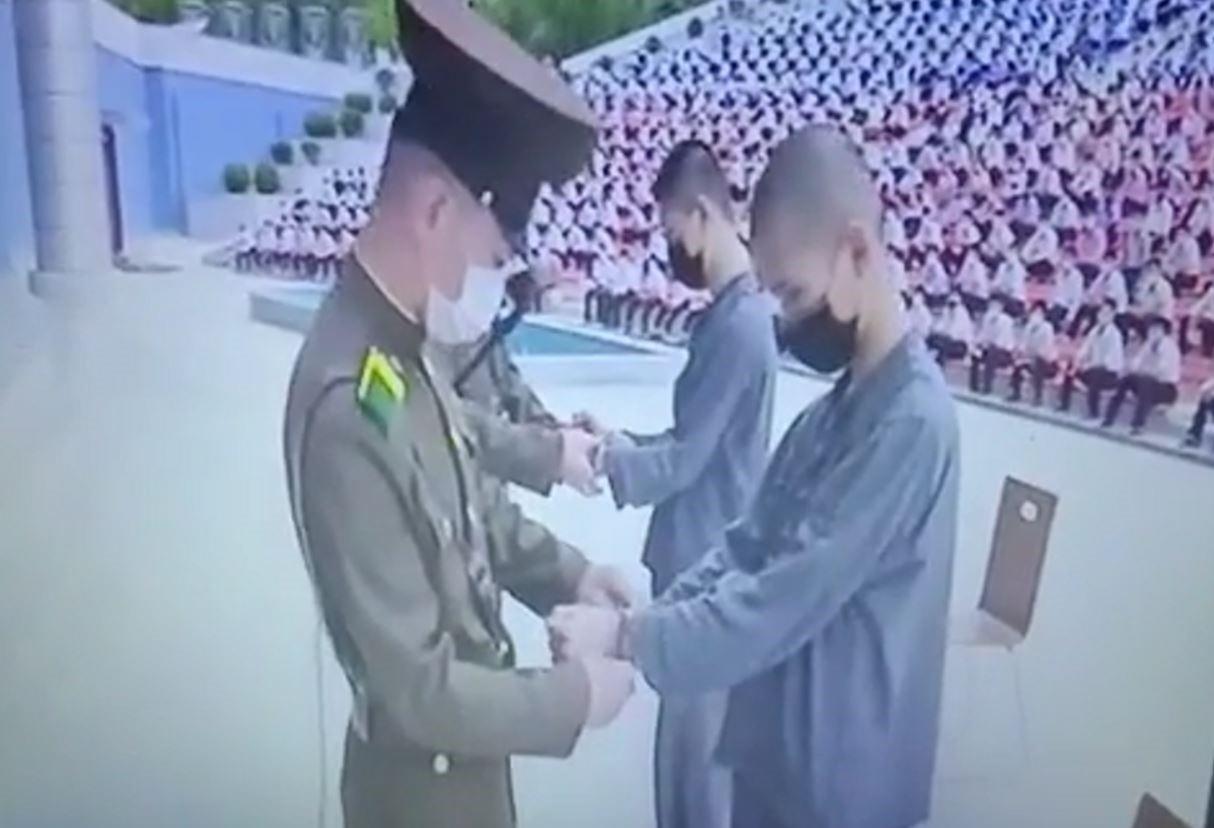
Shifting Mindsets of North Korean Youth: From Collectivism to Self-CenterednessChoi Kyong-huiPresident of SAND InstituteAugust 28 marks Youth Day in North Korea, a day established in 1991 to boost the ideology and pride of young people during the decline of the socialist and communist bloc. On this occasion, let's delve into the evolving characteristics of North Korean youth amid the country's societal changes.By 2024, the "market" has become crucial for sustaining North Korea's socialist system, giving rise to a "market political culture." Since the formal recognition of general markets in 2003, the intertwining of the Workers' Party of Korea (WPK) and Jangmadang (markets) has reshaped social order over the past two decades. This shift reflects a move from the vertical governance of collectivism and totalitarianism to the horizontal dynamics of market-driven individualism and self-interest. Central to this transformation is the "Jangmadang Generation," those born or raised during the "Arduous March" period in the 1990s.The term "North Korean youth generation" refers to individuals in their 20s and 30s who grew up in an environment where Juche ideology and marketization coexist. This article examines how this generation, which plays a pivotal role in the stability of the North Korean system, is gravitating toward a self-centered mindset and lifestyle amidst this dual ideological backdrop. The main traits of this generational shift are highlighted below.A 2022 North Korean internal education video shows Pyongyang middle school students publicly tried forwatching and sharing South Korean dramas. /SAND Institute English Newsletter TeamFirstly, the current generation exhibits a greater sense of autonomy and rationality in their thinking. While previous generations adhered to a vertical, passive relationship between the leader and the individual, today's youth are adopting a more horizontal and active mindset through their market interactions. This represents a shift from the command-obedience hierarchy of Juche ideology to a focus on self-centeredness. Unlike their predecessors, who were confined to the public sphere, the youth today value and seek to expand their private lives.The Kim Jong-un regime labels these market-driven changes as the "Yellow Wind of Capitalism" and Hallyu culture. According to an internal video released by SAND Institute earlier this year, the regime enforces strict legal measures against youth who embrace these influences. The government views the enjoyment of capitalist and individual pleasures by the youth, who are expected to be the revolution's driving force and future leaders, as bourgeois and toxic, thus intensifying control measures.In September 2022, North Korean female workers at a garment factory in Helong, Jilin Province, China.They protested unpaid wages in January. / SAND Institute English Newsletter TeamSecondly, there is a notable duality and quick cost-benefit analysis in their survival strategies. The ideology of North Korean youth in their 20s and 30s blends elements of the WPK and Jangmadang. They turn to the WPK for socio-political matters and rely on Jangmadang for economic survival. While older generations depended entirely on the WPK, the youth now find their own space in the market. The pervasive duality in society, such as control versus corruption, organizational life versus market activities, official versus market prices, official economy versus black market, and ideological education versus Hallyu experiences, cultivates dual personalities among the youth. In any society, youth challenge the stability and legitimacy of the existing order, dreaming of an ideal state. However, North Korean youth exhibit a dual attitude of enforced loyalty in public and self-interest.Thirdly, this generation has the least pride in ideology and the system. Unlike the older generations, who received comprehensive education on Juche ideology and communist principles during their childhood, North Koreans in their 20s and 30s missed out on universal education opportunities during chaotic times, leading to relatively low ideological consciousness. The ideological confusion during the Kim Jong-il era, marked by the emergence of Songun politics, also played a role. Consequently, loyalty is perceived merely as a social achievement, and what they value most is money.They are highly calculative and exhibit selfish tendencies (distinct from individualism). This normalization of resignation fosters extreme selfishness, leading society into stagnation and decline. The individualistic and selfish tendencies derived from the market culture of the North Korean youth generation are also seen as a measure of the stability of the Kim Jong-un regime.North Korea has viewed the youth period, marked by loyalty, love, solidarity, communal consciousness, and peer intimacy, as a means to demonstrate loyalty and self-sacrifice for Kim Il-sung, Kim Jong-il, and Kim Jong-un. Since its inception in 2012, the Kim Jong-un regime has recognized youth work as crucial to the regime's fate (Youth work is a critical issue related to the future of the revolution and the fate of the nation, 'Political and Legal Research', 2012, No. 2).Recently, under the concept of a 'one big family' with Kim Jong-un as the father, the regime has urged youth to show loyalty, devotion, camaraderie, and a collective spirit. This focus is because the youth are expected to be Kim Jong-un's companions throughout his rule.At the WPK Cell Secretaries' Conference in April 2021, Kim Jong-un acknowledged the significant changes in the youth's ideological and mental state, highlighting the need for intervention and even mentioning the 'theory of human reform,' reflecting the regime's concerns. The 'Youth Education Guarantee Law' was adopted in September 2021, and the 'Pyongyang Cultural Language Protection Law' was enacted in 2023 to control the Hallyu culture among the youth.The revised Administrative Penalty Law of 2020 mandates at least three months of labor training for anyone who avoids military service, falsifies health certificates to evade enlistment, or harbors deserters. This highlights the widespread issue of draft evasion. The 20s and 30s age group, which forms the bulk of the military, poses a significant social challenge in North Korea. Having been raised with individualistic and free-spirited values, they struggle to adapt to the strict military environment. Consequently, draft evasion, health certificate forgery, and frequent desertions are common.North Korea sees the decline in ideological consciousness and the resurgence of individual selfishness as internal threats to its system, while externally, it guards against capitalist cultural infiltration. Despite strict measures to block external influences using the COVID-19 pandemic as a pretext, the internal ideological changes continue unabated. The Kim Jong-un regime is focused on restoring the original consciousness that has already transformed.However, expecting only positive outcomes from these changes is unrealistic. When Juche ideology encounters market liberalization, it tends to produce selfish behavior rather than pure individualism. The youth, who frequently engage with and spread market and Hallyu culture, become increasingly aware of the absurdities and irrationalities in North Korean society and worry about the future. Faced with overwhelming political power, their dissatisfaction and desire for change often feel futile, leading them to prioritize personal interests over political engagement, which fosters selfishness.North Korean youth, caught between the extremes of dictatorship and the market, the WPK and Jangmadang, are developing pronounced dualities and selfish tendencies. They are shifting from a mindset of self-sacrifice for the leader, the collective, and the nation to one that prioritizes their own needs and desires.
24.08.16 -
 [Issue Brief]
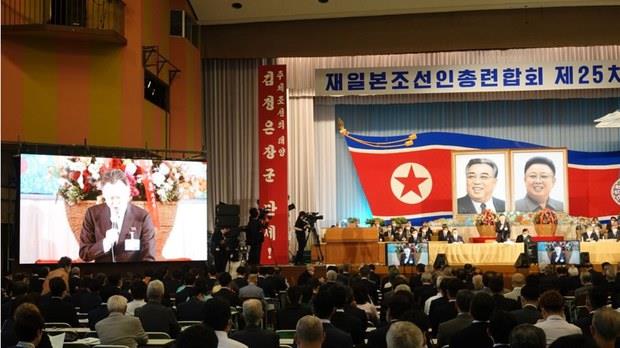
Kim Jong-un's 'Two Hostile States' Theory and Confusion Among Zainichi KoreansLee Ki-taeDirector, Global Strategy Research Division at the Korea Institute for National UnificationNorth Korea's Reclassification of Inter-Korean RelationsIn January 2024, North Korean leader Kim Jong-un took a bold step by ordering a constitutional amendment during his Supreme People's Assembly speech, classifying South Korea as the "primary hostile nation." This marked a significant shift in inter-Korean relations, changing the narrative from "kinship" to a "hostile state relationship." Historically, North Korea, under Kim Il-sung, pursued a policy aimed at reunifying with South Korea. However, the recent surge in popularity of South Korean culture among North Korean residents, posing a threat to internal stability, has prompted this policy shift.As part of this new direction, North Korea has begun to distance itself from South Korea by limiting the use of terms or symbols associated with unification. Kim Jong-un's move to abandon the reunification-based policy of his predecessors indicates his growing concern about the admiration for South Korea within North Korea and a diminished confidence in achieving reunification under North Korean terms.Policy Shift of the General Association of Korean Residents in Japan (Chongryon). and Korean Schools North Korea's policy shift has had a profound impact on the General Association of Korean Residents in Japan (Chongryon). Historically, Chongryon has promoted education in its schools aimed at "independent and peaceful reunification of the homeland." However, following the policy change, Chongryon has instructed its schools to ban terms like "independent unification" and "one nation." Teachers were specifically directed to avoid expressions such as "independent, peaceful unification" or "national unity" during their lessons.The General Association of Korean Residents in Japan is holding the 25th General Assembly at the Tokyo Korean Cultural Centerin Kita City, Tokyo, on May 28, 2022. /Radio Free Asia(RFA)A directive titled "On the Execution of Policy Line Changes" further stated: “We will change all phrases, slogans, propaganda posters, and artworks that contain words or expressions that could be mistaken for considering the puppets (South Korea) as compatriots.” They also emphasized that “flags, hats, T-shirts, and marks depicting the entire Korean Peninsula should not be used at all, especially during soccer matches.” Additionally, the directive indicated that existing materials related to reunification would not be used in education and would be fully revised for future publications. This shift reaffirms North Korea's substantial control over these schools through Chongryon. Japanese conservative forces, which have opposed financial support for Chosen gakko, may now have more justification for their stance, highlighting the connections between North Korea, Chongryon, and Chosen gakko. This move is likely to cause significant confusion and unrest among Zainichi Koreans who have long hoped for the reunification of the Korean Peninsula.Visits to North Korea by General Association of Korean Residents in Japan Officials and Korea University Students, and Issues of SanctionsThe 8th Plenary Meeting of the 8th Central Committee of the Workers' Party of Korea took place from June 16th to 18that the Office Building of the Central Committee of the WPK in Pyongyang, as reported by Rodong Sinmun on the 19th./ Rodong SinmunOn July 24, the financial chairman of Chongryon visited North Korea, marking the first visit by a senior official since 2019. The Japanese government, which has imposed sanctions on North Korea since 2006, restricts travel to North Korea for some senior Chongryon officials. However, the financial chairman who visited was not subject to the travel ban. In addition, Kim Jong-un granted special permits for around 140 fourth-year students from Japan’s Korea University, affiliated with Chongryon, to visit North Korea. These students will visit North Korea from August to November, each staying for about a month. Reports indicate that North Korea allowed these students to check in up to 50kg of luggage for free when boarding the Air Koryo flight from Beijing to Pyongyang.North Korea, which had banned visits from abroad since the COVID-19 outbreak, has begun accepting foreign tourists and students again. The visits by Chongryon officials and Korea University students raise concerns about how North Korean authorities will explain their new policy to the Zainichi Korean community and the potential violation of sanctions through indirect remittances resulting from these visits.Response Measures by the South Korean Government North Korea’s denial of Korean ethnic homogeneity and its two-state theory is an anti-nationalistic act, causing shock both on the Korean Peninsula and among Zainichi Koreans. The Zainichi community, sharing a common ethnic identity and aspiring for reunification, is particularly unsettled. In response, the South Korean government should strengthen efforts to promote unification policies that emphasize Korean unity. Highlighting that North Korea’s two-state theory fosters ethnic division, South Korea should advocate for peaceful reunification, which would benefit North Korean residents and contribute to regional peace, including in Japan.
24.08.16 -
 [North Korea in History]
North Korea 30 Years After Kim Il-sung's Death: Past, Present, and Future (3)Kim Il-sung's Stalinist Purges and Party Power StrugglesKang In-deokFormer Minister of Unification of the Republic of KoreaAfter the armistice in July 1953, tensions within the North Korean party regarding war responsibilities turned into power struggles. Kim Il-sung and his supporters blamed the failure of the Korean War on anti-party activities and espionage by Pak Hon-yong and his group. They argued that the claim that 200,000 South Koreans would rise up to welcome the People's Army was a lie, thus shifting the blame for the defeat to the South Korean Workers' Party (SKWP).In December 1955, a special court trial for Pak Hon-yong and over ten other cadres from the SKWP including Yi Kang-guk, Yi Sung-yop, and Yim Hwa, led to death sentences and immediate executions. The 3rd Congress of the Workers' Party of Korea in April 1956 reaffirmed the legitimacy of these purges and discussed economic plans for post-war reconstruction.During this meeting, the "heavy industry first" resolution (April Theses) was adopted amid debates. Kim Il-sung's faction pushed for the reconstruction of heavy industry to rebuild revolutionary bases, while the moderates (mainly the Yan’an and Soviet factions) prioritized addressing people's hardships through agriculture and light industry. Alongside these economic debates, a power struggle over party leadership emerged, fueled by disagreements on whether to adopt the "de-Stalinization and peaceful coexistence" policy introduced by the 20th Congress of the Soviet Communist Party in February 1956.Kim Il-sung's faction, the Yan’an faction, and the Soviet faction seated together at the 8th sessionof the Supreme People's Assembly of North Korea, 1954. / WINTOURTSTYLEThe key issue was that Kim Il-sung, like Stalin, should not act as a dictator by ignoring party democracy, similar to the Soviet Union's move to de-Stalinize. The anti-Kim faction's call for "de-Kim Il-sungization" was unacceptable to Kim Il-sung's supporters. They labeled members of the Central Committee of the Workers' Party of Korea, including Choe Chang-ik, Pak Chang-ok, and Yun Gong-heum, who made such claims, as factionalists and decided to arrest and purge them.Aware of this, some opponents, including Yun Gong-heum (Minister of Commerce), Seo Hui (Chairman of the General Federation of Trade Unions of Korea), and Lee Pil-gyu (Central Committee member), used a temporary recess to escape across the Yalu River to China, where they reported Kim Il-sung's tyranny to Chinese Communist Party leaders. Realizing the severity of the internal power struggle, the Chinese Communist Party, with Soviet leader Anastas Ivanovich Mikoyan, sent Peng Dehuai and Mikoyan to Pyongyang to ask Kim Il-sung to stop the purges. Kim Il-sung, unable to resist, revoked the expulsion orders for Choe Chang-ik, Pak Chang-ok, and others, marking the "August Faction Incident.“A year later, in August 1957, those involved in the "August Faction Incident," including Choe Chang-ik and Pak Chang-ok, were arrested and purged on charges of plotting a "state coup." Those who escaped fled to China or the Soviet Union. The purge activities expanded into a nationwide ideological scrutiny campaign under the "May 30th Resolution," adopted at the Central Committee plenary session chaired by Kim Il-sung on May 30, 1957.Kim Il-sung (front row, right) and Pak Hon-yong (center), representing the SKWP, voting at the 1st sessionof North Korea's Supreme People's Assembly, September 2, 1948. / Media Korean StudiesAfter the "May 30th Resolution," factionalists and impure elements in local parties were purged over the course of a year. By December 1958, with these purges complete, Kim Yong-ju, Kim Il-sung's brother and head of the Central Committee Organization and Guidance Department, launched the "Intensive Guidance Project," a comprehensive investigation of the entire North Korean population. Kim Yong-ju mobilized 7,000 people, including senior students from Kim Il Sung University and other universities, along with the heads of the Central Committee's administrative and organizational departments, the Ministry of Social Security, the Supreme Prosecutor's Office, provincial party vice-chairmen, and cabinet ministry chairmen, to conduct a nationwide identity inspection campaign.The "Intensive Guidance Project," a year-long purge campaign, rivaled the infamous purges of the Soviet Communist Party under Joseph Stalin in the late 1920s. During Stalin's agricultural collectivization, 20 million people, including landlords, wealthy farmers, innocent peasants, and resisters, were purged.In the 1930s, the purges continued, targeting party officials and military leaders, including Soviet Chief of Staff Marshal Mikhail Tukhachevsky, until 1940. During this period, 200,000 of our compatriots living in Primorsky Krai were forcibly relocated to the wastelands of Central Asia. Ethnic minorities, including Jews, Ukrainians, and residents of the Baltic states, were accused of being anti-Soviet and exiled to Siberia or remote areas of Central Asia. This project was comparable to Stalin's notorious purges.Note: Despite the devastating famine from 1927 to 1932 that killed 20 million people due to agricultural collectivization, Joseph Stalin still hailed the 17th Party Congress of 1934 as the "Congress of Victory." After the assassination of Sergei Kirov, Stalin's chosen successor, Stalin ordered the NKVD, led by Nikolai Yezhov, to purge and execute key party leaders who had participated in the October Revolution with Vladimir Lenin, including Lev Trotsky, Nikolai Bukharin, Grigori Zinoviev, and Lev Kamenev, as well as Central Committee members like Pyatakov and Karl Radek. Ironically, Yezhov himself was later purged for alleged leftist extremism. In June 1937, Stalin purged top military leaders, including Soviet Chief of Staff Mikhail Tukhachevsky, accusing them of being Nazi spies. Consequently, 98 out of 139 Central Committee members elected at the 17th Party Congress were executed as anti-party elements and imperialist spies.The "Intensive Guidance Project" in North Korea divided the population into three classes: loyal core, wavering middle, and hostile impure, further subdivided into 51 categories. The impure class included families of defectors to the South, wartime security force members and their families, anti-communist organization members and their families, Christians and their families, landlords, wealthy farmers, businessmen and their families, and sympathizers of the August faction and their families.Measures against these people were based on Cabinet Decision No. 149, aimed at eliminating impure elements and implementing the “Red Urbanization Plan”, which involved expelling impure elements 20 kilometers from the coast and the Demilitarized Zone, 50 kilometers from Pyongyang and Kaesong, and 20 kilometers from each city. These distances indicated expulsion to remote areas in northern North Pyongan, Jagang, and South Hamgyong provinces, and northeastern North Hamgyong province. Expulsion essentially meant confinement in political prison camps.According to "Cabinet Decision No. 149," 5,000 households from Pyongyang, 600 from the Kaesong Industrial Region, 1,500 from Hwanghae Province, and 1,000 from Gangwon Province, totaling about 8,000 households, were expelled. As a result, party members who were expelled, dismissed, or demoted accounted for 40% in the Pyongyang Party, 70% in the Kaesong Industrial Region Party, 60% in the Hwanghae Province Party, and 80% in the Gangwon Province Party, leading to an estimated punishment of over 60%. While conducting this nationwide identity investigation, they also emulated Stalin's agricultural collectivization by abolishing private farms and incorporating all farmers into collective farms, thus completing a socialist and totalitarian control system.
24.08.02 -
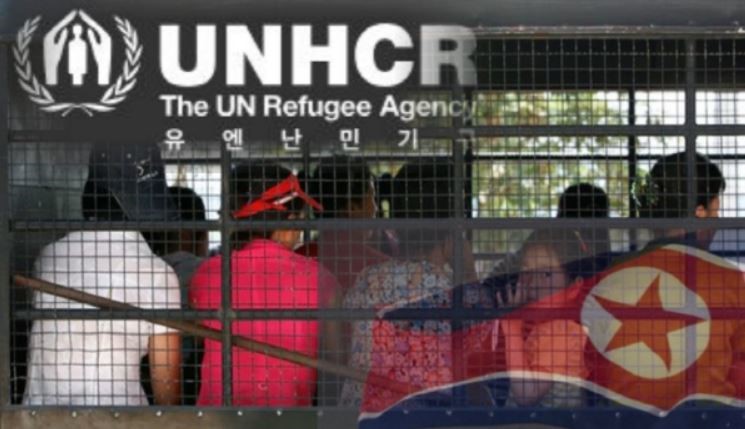 [Issue Brief]
North Korean Refugee Crisis in China and Options for an Effective PushbackJung-Hoon LeeDean & Professor, Graduate School of International Studies, Yonsei UniversityChair, Committee for the Promotion of North Korean Human Rights, ROK Ministry of UnificationFormer Ambassador for North Korean Human Rights, ROK Ministry of Foreign AffairsWhen the 2012 UNGA resolution (A/RES/66/290) stressed the “right of people to live in freedom and dignity, free from poverty and despair,” it appeared the UN was determined to reach out to the most vulnerable in all corners of the world. Well, not so fast! When it comes to the people living in North Korea, such a commitment proved to be more rhetorical than substantive.In North Korea, the people’s fundamental rights, including “freedom from fear and want,” are systematically trampled. Those who manage to escape to China in search of a better life do not fare much better. China’s discriminatory policy leaves North Korean refugees with two choices; forcible repatriation or inhumane treatment in hiding. The plight of the North Korean refugees in China stands out as one of the most troubling challenges to the UNHCR.North Korean refugees in China: An overviewIn the 1990s, facing severe political persecution and starvation, North Koreans fled the country en masse to take refuge in China. Up to 200,000 North Koreans crossed the border in search of a better livelihood. The fortunate few made it out of China to countries like Laos, Thailand, and Myanmar before finding safety in South Korea or other countries willing to take them in as asylum-seekers. This pattern of exodus has continued for nearly three decades. Today, there are 34,000 defectors living in South Korea. Having peaked in 2009 at 2,914, the number has significantly dwindled since 2020 due to three factors: one, COVID-19 border shutdown; two, stringent crackdown by both Chinese and North Korean authorities; and three, Moon Jae In government’s aversion to addressing the defector issue in favor of placating Beijing and Pyongyang.When caught, the asylum-seekers are forcibly repatriated since Beijing considers them “illegal economic migrants,” not refugees. Those who are returned to North Korea often join 120,000 others in gulags (political prison camps). Their lives filled with fear, hunger, and persecution are well-chronicled by some of the escapees from these camps.The COI finding and recommendationIn February 2014 the UN Commission of Inquiry (COI) on Human Rights in the Democratic People’s Republic of Korea (DPRK) identified the state’s systematic and widespread “crimes against humanity,” including forced labor, forced abortions, infanticide, public executions, a massive gulag system, and overseas abductions. The predicament of the North Korean escapees in China was also highlighted, accusing China of “aiding and abetting” crimes against humanity. By forcibly repatriating North Koreans, China was found to be in violation of the non refoulement principle. Still, China continues to violate this international human rights law which supposedly guarantees that “no one should be returned to a country where they would face torture, cruel, inhuman or degrading treatment or punishment and other irreparable harm.”Of course the fundamental problem with the North Korean refugees begins in their country of origin—North Korea. But China’s position on interpreting their status as ‘illegal economic migrants’ certainly compounds the problem. The Office of the UN High Commissioner for Refugees (UNHCR) in China has not helped the situation by simply remaining silent despite not having access to these “migrants.” The causal link between sŏngbun system and refugee statusIt is true that famine-related economic migrants cannot be classified as refugees in the traditional international legal sense. But the case of North Koreans is different; the main reason for their defection to a foreign country—economic plight—is the political outcome of a failed socialist system under totalitarian rule.The connection between political power and economic deprivation of a large percentage of the North Korean population can be traced to the state-sponsored discrimination policy known as sŏngbun. It is not surprising that most of the victims of the widespread famine in the 1990s were those of the low sŏngbun class, as they were the first to be cut from the government’s public distribution system (baegŭpjedo). The famine led to the exodus of tens of thousands of North Koreans, primarily residents of the northernmost areas bordering China—North Hamkyŏng Province in particular. These areas were, and still are, largely mining areas, where many people had been sent as a form of punishment for their poor sŏngbun background. With international humanitarian agencies prevented from reaching out to these people, many of them escaped to China as the only means to ensure their survival.Pushback Option #1: UNHCR must play a bigger roleThe UNHCR’s lack of access to North Korean refugees is generally viewed as the main reason for its ineffectiveness. But in actuality, the 1995 agreement between the UNHCR and China gives the UNHCR unimpeded access to all refugees within China. Why, then, has the UNHCR not done more to help the North Korean refugees? The UNHCR Beijing Office is, after all, responsible for determining refugee status in China, as well as for providing life-sustaining assistance such as accommodation, living allowances and access to basic health care. The fact that China permits the presence of the UNHCR office in Beijing suggests at least a minimum level of professional partnership. This begs the question why the UNHCR has not been more aggressive in obtaining access to interview the escapees. It is also puzzling that the UNHCR has never opted to invoke binding arbitration regarding China’s refusal to allow access to North Korean defectors. Binding arbitration in the event of a bilateral dispute is permissible as stipulated in the 1995 UNHCR–China agreement. In such a case, China is obligated to accept an arbitrator acceptable to both parties within a 45-day period. Clearly, the UNHCR has failed to do its job on the North Korean refugee issue. At the very least, the UNHCR should have been more vocal in condemning Beijing’s refusal to provide legal protection for female refugees from being trafficked within China. China, after all, is obligated under the Convention on the Elimination of All Forms of Discrimination against Women, adopted by the General Assembly in December 1979, and the Protocol to Prevent, Suppress and Punish Trafficking in Persons Especially Women and Children, adopted by the General Assembly in November 2000, to take measures to safeguard against the trafficking of women and children inside its own borders.Other measures the UNHCR could do include convincing Beijing to open an official corridor – “underground railroad” – through which North Korean refugees could pass, escorted by UNHCR officials on their way to Mongolia, Vietnam, Myanmar, or Laos. In addition, Beijing can be persuaded to periodically allow amnesty for “illegal aliens,” a conduct more becoming of a P5 and an aspiring global leader. Finally, a semblance of a refugee camp or a temporary settlement for the escapees to provide a much-needed shield from human rights violations would mean a major breakthrough. Considering many refugee camps are erected impromptu, establishing one specifically for North Korean refugees should not be complicated in practical terms. It’s just a matter of political will.Pushback Option #2: Benchmarking the international campaign against South Africa’s apartheid systemWhat’s more, the UNGA Credentials Committee should be prodded to re-examine the credentials of the DPRK pursuant to its Rule 29. Question is: If South Africa was bad enough to be suspended from all UN activities for twenty years, shouldn’t the UNGA consider doing at least the same to North Korea until the nonproliferation and human rights goals are met? The answer may seem obvious but what actually transpired is mindboggling. For example, in June 2022, North Korea was elected to the Executive Board of the World Health Organization (WHO). Just a year before in June 2022, North Korea assumed, albeit for a month, the presidency of the Conference on Disarmament.Accountability Requires Strong Political WillNeedless to say, such display of weakness in not dealing with countries like North Korea will only lead to the perpetuation of the human suffering in that country. There’s no question that a a more resolute effort has to be made to get at the root of the problem—the Kim Jong Un regime. Decades of “engagement” have failed to improve the dismal human rights condition in North Korea. If the international community is serious about wanting to make a difference, a tough decision has to be made to hit the Pyongyang regime where it hurts the most: its fragile economy. Better coordination of the existing international sanctions on North Korea may still be the best way going forward. The circumstances endured by North Korean refugees merit an urgent and drastically different approach. The question is, does the UN and the international community have the political will to confront China and North Korea for the sake of humanity and freedom? The sad truth is, we all know the answer to this question. The debate is over on how terrible things are in North Korea. It is now time for concrete actions backed by a strong political will of the political leaders, liberal-democratic governments, and of course the United Nations. The clock is ticking…
24.08.02 -
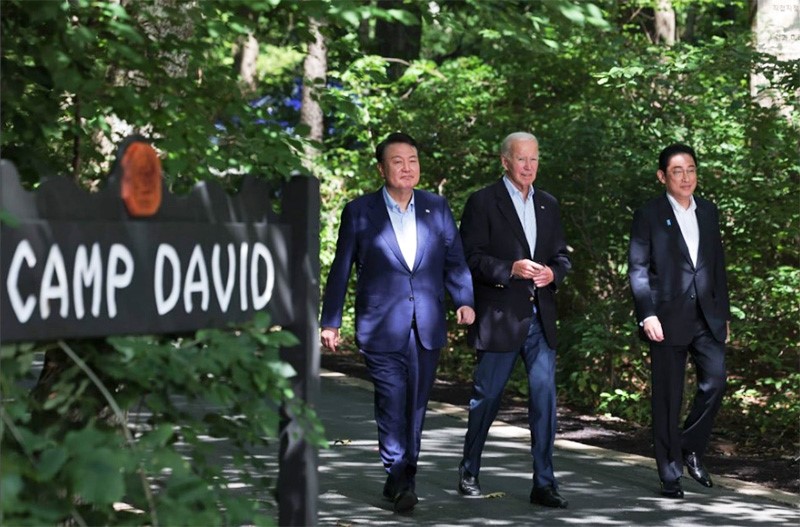 [Feature Article]
ROK-US-Japan Trilateral Camp David, One Year After:Milestones and ProspectsBee Yun JOAssociate Research Fellow, Korea Institute for Defense AnalysesMilestones since the Camp David SummitWith first-ever stand-alone trilateral summit at Camp David last year in August 2023, the leaders of the Republic of Korea(ROK), US, and Japan agreed to embark on a new era of trilateral partnership. Coming down to three set of documents – a comprehensive joint statement(“The Spirit of Camp David,), Camp David Principles, and Commitment to Consult – the three countries committed to increase and regularize their consultations between their leaders and high-level diplomatic, economic, and security officials; resume and expand their joint military exercises; and also venture into new areas such as real-time information-sharing of missile warning data on North Korea; and collaborating in areas of economic security, emerging technologies, and global supply chains.As we reach a year-end since Camp David, key accomplishments and progress are visible on multiple fronts. In the areas of consultation, to name few, a first-ever permanent secretariat is in the making. Holding trilateral defense ministerial meeting in Japan for the first time in history on July 28, 2024, the three defense leaders came down to signing the Memorandum of Cooperation on the Trilateral Security Cooperation Framework(TSCF). As stated, TSCF will institutionalize trilateral security cooperation among defense authorities, including senior-level policy consultations, information sharing, trilateral exercises, and defense exchange cooperation. US Deputy Secretary of State Kurt Campbell stated previously during press meeting on May 31, 2024, that the three countries have committed “to forming some sort of coordinating body, a secretariat of some kind." TCSF is a milestone to a permanent consultation and coordinating mechanism of the three countries.Trilateral defense exercises are another area with tangible developments. As agreed by three leaders at Camp David to hold multi-domain trilateral defense exercises on a regular basis, the three countries successfully launched Freedom Edge, this summer, as well as a trilateral tabletop exercise. Most notable development is that the three-day Freedom Edge brought together air, maritime, underwater, and cyber exercises for the first time. While the three countries have had exercises combining maritime and air, this was the first trilateral multi-domain exercise. It was also the first trilateral cyber exercise. Another visible progress is the location of the exercise. Convened in international waters south of ROK’s island of Jeju, three countries were able to hold exercise in real-time environment. While culminating historical and territorial disputes between ROK and Japan during previous administration have prevented military exercises adjacent to the waters of ROK and Japan, Freedom Edge symbolizes the depth of ROK-Japan rapprochement.Presidents Yoon, Biden, and Prime Minister Kishida meet for a photo before the trilateral summit at Camp David,Maryland, on August 18 last year (Photo by Newsis).In the areas of real-time information sharing, the three countries walked through several tests to coordinate and verify DPRK warning data sharing mechanism since the Camp David summit. And on December 19, 2023, the three countries finally announced that they have now fully activated the system to share real-time information on North Korea’s missile launches. They also agreed to jointly establish multi-year trilateral exercise plan on this front. As North Korea and Russia’s closer military ties further spur momentum to trilateral security cooperation, the three countries are also looking into how the three countries can more effectively, promptly, and coherently respond to North Korea’s nuclear and missile threats based on the real-time data sharing.Ways ForwardGiven the prospects of leadership changes in Washington and Tokyo, institutionalization appears to be one of the most pressing matter for trilateral security cooperation at this moment. While value of permanent body or secretariat may be questioned given how the presence of Trilateral Cooperation Secretariat(TCS) was not able to sustain regular talks and meetings of ROK, Japan, and China when relations turned rough, we have to distinguish how ROK-US-Japan have robust history of cooperation and clearer alignment on threats from North Korea. We have to also note the developments between Russia and North Korea since their signing of Comprehensive Strategic Parternership Agreement in June 2024. ROK-US-Japan trilateral body comes as the time is ripe. Once established, it will faciliate trilateral cooperation on multiple fronts and help to endure future period of difficulties. We can also anticipate the trilateral body to become interconnecting hub of other minilateral and multilateral frameworks in the region. In the areas of real-time information sharing, the three countries should also seek to expand their intelligence sharing to multiple domains such as maritime. By strengthening cooperation on maritime intelligence, surveillance, and reconnaissance for instance, the three countries will be able to enhance collective maritime domain awareness and intelligence sharing. Moreover, with trilateral exercises convening in adjacent waters, the three countries should focus on enhancing trilateral contingency planning including evacuation of civilians. Against possible scenarios of regional contingency, the three countries should use the momentum to enhance trilateral contingency planning, logistics, and interoperability. Another prospective area of cooperation is extended deterrence. In the backdrop of North Korea and Russia's increasing military ties, ROK-US-Japan trilateral discussions on extended deterrence may induce new measures that can prepare and enhance clarity and credibility of US's security commitments in the region. For ROK and Japan, it will be also strategic means to prepare for any uncertainties that may arise from leadership change in Washington. Last but not least, continued efforts on ROK-Japan relations are also important. Behind trilateral efforts since Camp David, bilateral rapprochement between ROK and Japan have been critical. With upcoming leadership change in the US and Japan, President Yoon has to play key role in maintaining and transposing Camp David Spirit and Principles with new leaders of the two countries. ROK and Japan will reach their 60th anniversary in 2025 since two countries’ normalization of diplomatic relations. As the Yoon administration explores new joint statement with Japan, 2025 will be imperative for both ROK-Japan and ROK-US-Japan relations.
24.08.02 -
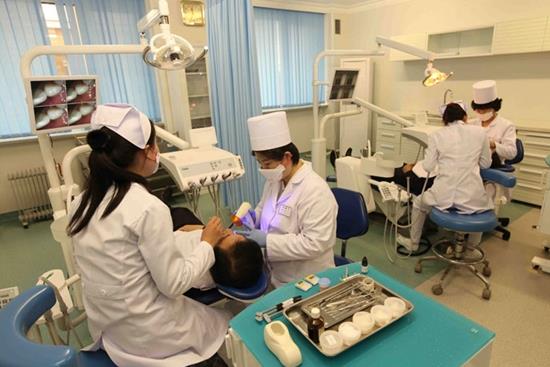 [Feature Article Series]
Marketing In North Korea (5)- Dental care as clean as a white crane Jeon Byung-kilSenior Consultant of YESInnovationformer of Secretary General of UniKorea FoundationDental Care for North KoreansDental health has a lot to do with our body. In order to be healthy, it need to eat well and well balanced. If teeth or gums hurt, it's hard to eat well. A malnourished body is more susceptible to illness, and passing food without chewing it properly can lead to indigestion. That's why most countries teach oral health education from a young age. According to a 2016 survey by the Korea Institute of Health and Social Affairs, the percentage of North Korean refugees entering South Korea with missing teeth is 35.1%. That's 1 in 3. More than 70% of North Korean defectors were younger than 40 years old when they entered South Korea. Given this, the dental health of North Koreans, especially the elderly, is likely to be worse. The percentage of South Koreans under 40 who have lost some teeth and have prosthetics is 8.4%. North Korean refugees often lack access to proper dental care due to poor healthcare, and when pain becomes too much, they often resort to tooth extraction. In addition, when staying in a third country such as China, they did not take proper oral care such as brushing teeth.It wasn't until around 2017 that North Korean authorities began to improve the quality of dental supplies and talk about the importance of oral care through media outlets. The August 20, 2017, edition of North Korea's Rodong Sinmun also featured oral hygiene tips, including brushing teeth, cleaning between teeth, and gargling.North Korea's Ryugyong Dental Hospital succeeded in localizing the implant in February 2016,according to North Korea's propaganda media. Pictured is the treatment room at Ryugyong Dental Hospital./Chosun's TodayIn February 2021, researchers from Pyongyang Dental Hygiene Supplies Factory appeared on North Korea's KC TV to talk about the importance of dental health care, introducing toothpaste, toothbrushes, mouthwash, and more. Previously, North Korean media rarely reported on dental care.Baikhak, Dental health brandFounded in 2017, Pyongyang Dental Hygiene Supplies Factory began producing toothpaste and other dental hygiene products. It is the first factory in North Korea to produce various dental hygiene products. Products produced by the Pyongyang Dental Hygiene Supplies Factory are branded Baikhak, which means white crane. The brand Baikhak is also the trademarked name of a toothpaste produced by Sinuiju Cosmetics Factory. Baikhak became a household name in North Korea as a toothpaste brand, and the toothpaste soon gained credibility as a Baikhak product.North Korean authorities also gave the name Baikhak to products produced by the Pyongyang Dental Hygiene Supplies Factory. The brand image of 'Baikhak' in the minds of North Koreans has been carried over to the new products produced in the new factory. The Baikhak brand was also registered as a trademark with the World Intellectual Property Organization (WIPO) in October 2017. It is not known if there was any consultation with Sinuiju Cosmetics Factory, the original producer of Baikhak toothpaste, in this process. Baikhak toothpaste was a well-known brand throughout North Korea, but it was overshadowed by Sinuiju Cosmetics Factory's flagship product, Pomhyanggi cosmetics. The quality of the product wasn't bad, but it wasn't as good as toothpaste made in South Korea or China.Pyongyang Dental Hygiene Supplies Factory has formed a wide range of dental hygiene products under the Baikhak brand. The dental hygiene supplies are categorized into chemical dental hygiene supplies and mechanical dental hygiene supplies. Chemical dental hygiene products include products like toothpaste and mouthwash. Toothpastes are categorized into functional toothpastes (removes plaque, whitens, prevents tartar, protects the mouth, etc.) and therapeutic toothpastes (treats inflammation, eliminates bad breath, etc.). In 2020, 12 toothpastes under the Baikhak brand, including fluoride toothpaste, salt toothpaste, ginseng toothpaste, yellow pine toothpaste, and children's toothpaste (strawberry flavor and mint flavor), were registered as "February 2 products" (North Korea's excellent product certification). North Korean media have also reported that Baikhak brand products have improved their quality by innovating in the refining of peppermint oil, one of the key technologies for making toothpaste.In 2017, it began marketing its mouthwash under the Baikhak brand. 'Mechanical dental hygiene products' are categorized as toothbrushes, dental hygiene instruments (interdental floss, tongue depilatories, etc.). Pyongyang Dental Hygiene Supplies Factory does not produce toothbrushes, the main dental hygiene tool. For toothbrushes, the Soriggot toothbrush, produced by the Pyongyang Daily Necessities Factory, is already a widely recognized brand in North Korea. It's a puzzling strategy for North Korea's leading dental hygiene brand, Baikhak, not to produce its signature dental hygiene product, toothbrushes. In 2002, Kim Jong Il, then North Korea's supreme leader, took a field guide to the Pyongyang Daily Necessities Factory, which produces Soriggot toothbrushes. Soriggot is a flower-like phenomenon in which the frost has various shapes, such as needles, fans, and scales. The name was reportedly given by Kim Jong Il himself. The meaning of 'Soriggot' is related to 'Soriggot of Paekdu', a metaphorical expression praising the achievements of Kim Jong Il at the time.The market makes sense to produce a quality, competitive toothbrush that is the consumer's choice. However, emphasizing the three generations of Kim Il Sung's family's orthodoxy is a taboo in North Korea, as it requires the brand to compete with the legacy of its ancestors. So it looks like Baikhak is producing other dental hygiene products besides toothbrushes. They even produce denture cleaning brushes, tongue plaque removal brushes, and more under the Baikhak brand, but not the most popular toothbrush.Diversity of consumer choice and product innovationIn addition to Baikhak, there are several other toothpaste brands in North Korea. One of the most popular is the Malgnachim brand of toothpaste. Malgnachim sells a number of functional toothpastes, including nano toothpaste. 'Malgnachim' means Crystal-claer morning.The 'Malgnachim' brand was launched by Taeyang Technology Joint Venture Company. The company is a trading company established for the purpose of exporting overseas. The "Malgnachim" toothpaste doesn't describe the factory where it was produced. However, the brand has appeared consistently in North Korean media since 2015. In 2024, Malgnachim was registered as a trademark with the World Intellectual Property Organization (WIPO).However, there are no media reports of Kim Jong-un's field guides to the factories that produce these brands, or of the expansion of research and production facilities. It is mainly a product introduction to the Malgnachim brand products. This is a departure from previous North Korean media reports, which often politicize products at the production site.'Malgnachim' does not have its own research and production facilities and appears to be using North Korea's existing cosmetics factories, chemical plants, and laboratories to produce its products on an Original Equipment Manufacturer (OEM) basis. In addition, several trading companies produce and sell toothpaste, such as the Malgnachim brand, for export and domestic self-reliance.But what about the quality of toothpaste made in North Korea? North Korean media reports that the quality of the products has improved due to state-of-the-art facilities and technological innovation. However, those who have tried North Korean toothpaste say it is better than in the past, but still not as good as products from South Korea and other industrialized countries. There are videos on YouTube of people using North Korean toothpaste and giving their honest impressions of it.In addition to a wider variety of toothpastes being produced in North Korea than ever before, the number of people who have tried South Korean and Chinese toothpastes through the market has increased. In other words, North Korean consumers have more experience with toothpaste and more options for purchase. Toothpaste is one of the hottest deals on the market. Improved quality and widespread availability of toothpaste, toothbrushes, and other dental hygiene products means better dental health for the population. South Korea developed domestic toothbrushes and toothpaste in the 1950s and campaigned for dental health care in the 1960s and beyond as the economy grew. Government and business have come together to raise awareness about dental health. This shift in consciousness has led to the active production and consumption of dental hygiene products. Currently, the quality of dental hygiene products in South Korea and the level of dental care among Koreans is on par with developed countries. This is a good example for North Korean authorities to benchmark. It's also the way forward for North Korea's dental health brand Baikhak.
24.07.19
News Letter
We are leading the global communication via Newsletter.
We will deliver the latest information and proven facts on Korean Peninsula status including North Korea situation.