

-
 [NK Focus]
Unveiling Kim Ju-ae's Red Guards: The True Motive Behind North Korea's Mangyongdae Revolution Academy Students in Propaganda Activities Recent revelations highlight students from Mangyongdae Revolution Academy, dubbed North Korea's aristocratic institution, engaging in propaganda at production sites. Renowned as a 'vassal training academy' linked to the Kim Il-sung family's fate, it's central in the fourth-generation succession, especially with Kim Jong-un's daughter, Kim Ju-ae, gaining prominence. Speculation surrounds its role as modern-day Red Guards, backing Kim Ju-ae's ascent. Students of North Korea's Mangyongdae Revolution Academy engaging in economic propaganda in front of workers at the Sangwon Cement Complex on January 20 (Rodong Sinmun) North Korean state media, including the Rodong Sinmun, recently showcased the active involvement of Mangyongdae Revolution Academy students in economic propaganda activities, notably at the Sangwon Cement Complex. Dressed in military attire, these students lauded Kim Jong-un and the regime while performing at the production site. Described as "successors steadfastly continuing the lineage of the Juche Revolution within the embrace of the Party," they extended their propaganda efforts to sites like the Taean Heavy Machine Complex and the Taean Friendship Glass Factory. State media extensively covered the Mangyongdae Revolution Academy students' participation in economic propaganda since last October, notably at construction sites in Pyongyang's Hwasong area, a significant project of Kim Jong-un. This departure from the norm is noteworthy, considering the prestigious stature of North Korea's aristocratic school, the Mangyongdae Revolution Academy. In October 2022, North Korean media intensified its focus on the Mangyongdae Revolution Academy with Kim Ju-ae's emergence. Kim Jong-un attended the academy's 75th-anniversary celebration on October 12 and revisited just four days later with his wife, Ri Sol-ju, affectionately calling the students "our sons." Media coverage of Kim Jong-un's visits to the academy spanned over a week, fostering a celebratory atmosphere. One month after Kim Jong-un's visit to the Mangyongdae Revolution Academy, Kim Ju-ae appeared at the launch site of North Korea's ICBM, Hwasong-17' on November 18. A mosaic mural depicting Kim Jong-un installed at the Mangyongdae Revolution Academy in September last year / Korean Central Television, (Yonhap News Agency) Furthermore, in September of the previous year, a striking mosaic mural venerating Kim Jong-un was unveiled at the Mangyongdae Revolution Academy. This portrayal of Kim Jong-un, adorned in a red scarf akin to the students, exudes warmth and camaraderie, reinforcing the academy's significance as torchbearers of the Juche Revolution. North Korean media hailed them as the "sons of Mangyongdae," embodying an unwavering commitment to the Paektu bloodline. Established in 1947, the academy originally catered to the offspring of those who sacrificed during the anti-Japanese partisan activities and the Korean War. Over time, it expanded its intake to include children of South Korean infiltrators and fallen military personnel. Offering a rigorous 8-year curriculum blending military training with political indoctrination, the academy serves as a conduit for its graduates into high-ranking roles within the party, state, and military. Dubbed as North Korea's aristocratic military academy, the academy ensures its graduates a trajectory towards influential positions within the party, state, and military, post-graduation from institutions like Kim Il Sung University or various military colleges. Its symbolic connection to Mangyongdae, Kim Il-sung's birthplace, endows students with the responsibility of safeguarding the Paektu bloodline, epitomizing their integral role in the hereditary succession system. Acting as a linchpin in perpetuating the Kim family's hereditary rule, the Mangyongdae Revolution Academy assumes paramount importance, especially amid the emergence of figures like Kim Ju-ae. Kim Jong-il initiated the 'Three Revolutions Red Flag Movement' for power consolidation, while Kim Jong-un spread the song 'Footsteps' through elementary school students. In the fourth-generation succession, the Mangyongdae Revolution Academy served as a key influencer in shaping societal attitudes. The Mangyongdae Revolution Academy has been consistently emphasized and utilized in the power successions of Kim family. Kim Il-sung's frequent visits, totaling over 100 during his lifetime, and Kim Jong-il's regular attendance underscore its importance. Notably, Kim Jong-un's early prioritization of the academy upon assuming power emphasizes its pivotal role in shaping the governance strategy of the Kim dynasty across generations. This special attention from the Kim family instills a sense of loyalty among the students, further solidifying their allegiance. Unlike typical educational institutions, the Mangyongdae Revolution Academy fosters Kim family loyalists, nurturing a shared destiny rooted in lineage and allegiance. Consequently, their engagement in propaganda is seen as calculated to support the fourth-generation succession, with Kim Ju-ae. This solidifies their role as guardians of regime continuity. Monuments at the academy symbolizing the 'Paektu bloodline' and 'suicidal-attack spirit' signify the succession and are part of the curriculum. It's assumed that amid changing sentiments influenced by 20 years of marketization and external information, the Mangyongdae Revolution Academy is central in reshaping the fourth-generation succession. .bbs-view-content {font-size: 14pt; text-align: justify;} .bbs-view-content .note {border: 1px solid #333333; padding: 15px; text-align: left; font-size: 12pt;} @media (max-width: 800px) {.bbs-view-content {text-align: left;}}
24.02.13 -
 [SAND Feature Article]
Samtaesong Symbolizes Kim Family:Expanding Influence of Kim Ju-ae and Ri Sol-ju with a Medal Recent indications suggest that North Korea is preparing for a fourth-generation succession involving Kim Jong-un's daughter, Kim Ju-ae. This has given rise to the concept of the 'Three Huge Stars,' symbolizing the 'Kim Jong-un family.' Kim Ju-ae's influence is on the rise, and Kim Jong-un's wife, Ri Sol-ju, has been seen wearing a medal. As Kim had his 40th birthday this year, it is believed that he is working to establish a new family lineage centered around his daughter and wife. This is in response to the complexities surrounding his ancestral lineage, particularly due to his Korean-Japanese mother, Ko Yong-hui. The recently unveiled 'Samtaesong 9' smartphone in North Korea. / Photo by Korean Central Television North Korea has recently launched a new addition to the Samtaesong series of smartphones. The latest model, 'Samtaesong 9', was introduced by Korean Central Television on the 9th during a segment titled 'Things to Know About Using Cell Phones 3'. The Samtaesong 9 is offered in three colors: gold, white, and black, and boasts three rear cameras, featuring a "64M pixel triple camera" inscription. This represents an advancement from the previous 'Samtaesong 8' model, which was revealed last year and had two cameras. Samtaesong, which consists of three prominent stars among the seven in the 'Big Dipper' constellation, is traditionally associated with a ladle-shaped pattern, with these three stars forming the 'handle.' In Western astronomy, it corresponds to the area near the foot of Ursa Major. In North Korea, the term Samtaesong was historically used during the anti-Japanese armed struggle period to signify 'three bright stars.' It symbolically represented Kim Il-sung, Kim Jong-il, and Kim Jong Suk. North Korea often referred to them as the 'Three Generals of Mt. Baekdu' or Samtaesong.' Since Kim Jong-un's rise, Samtaesong symbolizes Kim Jong-un, his daughter Kim Ju-ae, and his wife Ri Sol-ju. Kim Jong-un emphasizes the 'Paektu bloodline,' using Mt. Baekdu as a symbol of lineage and strength. Recent North Korean songs describe Kim Jong-un's late-night work as 'a time when even the three stars are asleep.' North Korean leader Kim Jong-un and his daughter Kim Ju-ae are seen applauding together at the 2024 New Year celebration performance in Pyongyang. / Photo by Korean Central Television Meanwhile, Kim Ju-ae is increasingly visible in various events this year. She has taken part in three public occasions, including the New Year celebration on the 1st, a missile launch vehicle factory inspection on the 5th, and a visit to a modernized chicken factory on the 8th, underscoring her involvement in state events, military-industrial activities, and public welfare initiatives. Particularly noteworthy is Kim Jong-un's visit to a civilian economic site on his 40th birthday on the 8th. North Korean media prominently featured photos of Kim Jong-un with Kim Ju-ae, referring to her as "the respected offspring" and mentioning her before the premier Kim Tok-hun, suggesting an elevation of her status above that of the premier. The Rodong Sinmun used honorifics to describe Kim Jong-un and Kim Ju-ae's joint attendance, while employing more casual language for other high-ranking officials, including premier Kim Tok-hun. On Kim Jong-un's 40th birthday, January 8th, the Rodong Sinmun featured a headline photo of Kim and his daughter Kim Ju-ae inspecting a chicken factory. / Photo by Rodong Sinmun Until recently, news reports only briefly mentioned Kim Ju-ae accompanying Kim Jong-un. However, from the 5th, she has been featured in separate paragraphs, signaling a shift in her visibility and role. The frequency of her public appearances is on the rise. Since her initial appearance at the test launch site of the Intercontinental Ballistic Missile (ICBM) 'Hwasong-17' in November 2022, she has been seen in public on 24 occasions in a little over a year. Kim Ju-ae is diversifying her activities. While 19 of her 24 appearances last year were military-related, this year she's broadened her involvement to include celebratory events and economic sites. The order in which individuals are mentioned in North Korean media typically indicates their hierarchy of power, hinting at Kim Ju-ae's elevated status. As speculations about her being a leading candidate for succession grow, it appears she has begun formal training for such a role. Ri Sol-ju, Kim Jong-un's wife, featured in the 2022 painting 'Kindergarten Teacher' by North Korean Merited Artist Jeon Geum-cheol, from the Baekho Creative Company. / Photo provided by Professor Kang Dong-wan A recent documentary film released by North Korea captures Ri Sol-ju, the wife of Kim Jong-un, wearing a brooch resembling a medal. / Photo by Korean Central Television With Kim Ju-ae's increasing public presence, there's a noteworthy development. Ri Sol-ju was seen wearing a medal-like brooch in a documentary aired on Korean Central Television on the 10th. The brooch resembled a golden pentagonal star, reminiscent of North Korea's 'Hero title'. Since beginning her public activities in July 2012, Ri has distinguished herself by not wearing the required badges depicting Kim Il-sung and Kim Jong-il. For instance, during the April 27, 2018 Inter-Korean Summit, she opted for an elaborate brooch and similarly, during a visit to China in March of that year, she wore brooches featuring butterflies and flowers. In 2022, which marked the 10th anniversary of Kim Jong-un's rule, Ri Sol-ju was prominently featured as the central figure in the painting 'Kindergarten Teacher' by Jeon Geum-cheol. This portrayal, casting her as a kindergarten teacher, appears to be an effort to present her as a relatable maternal figure and educator, further reinforcing the reverence for the Kim Jong-un family lineage. Ri Sol-ju wearing a medal-like brooch, suggestive of a 'Hero title,' signifies recognition for her support of Kim Jong-un and her role in nurturing Kim Ju-ae, the future bearer of the 'Paektu bloodline.ma' Choi Kyong-hui, president of SAND, believes that as Kim Jong-un turns 40 this year, he is planning to reorganize the family tree around his daughter and wife. She also suggests that the growing prominence of his wife, Ri Sol-ju, along with his sister Kim Yo-jong, close associate Hyon Song-wol, and Foreign Minister Choe Son-hui, may be part of a strategy to position women prominently in the regime, potentially as a step towards preparing Kim Ju-ae for succession. .bbs-view-content {font-size: 14pt; text-align: justify;} .bbs-view-content .note {border: 1px solid #333333; padding: 15px; text-align: left; font-size: 12pt;} @media (max-width: 800px) {.bbs-view-content {text-align: left;}}
24.01.19 -
 [Current Affairs Analysis]
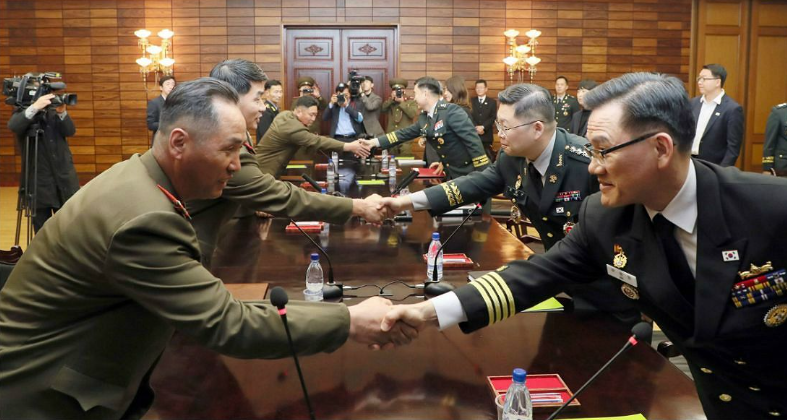
Assessment of the 9.19 South-North Korea’s Military Agreement and Its Outlook Jin Eui-lim Researcher, Korean Institute for Defense Analyses (Former) 2nd Secretary, R.O.K. Ministry of Foreign Affairs 1. Introduction On January 8, 2024, the South Korean military declared that, "due to North Korea's three consecutive days of artillery firing, the buffer zone set by the 9.19 South-North Korea’s Military Agreement, specifically the cessation of hostilities area, no longer exists." This marked the complete withdrawal of the 2018 military agreement, finalized five years after our military's declaration. While criticisms existed regarding our unilateral compliance with the 9.19 Agreement amid North Korean violations, no official termination had been declared. However, in the past two years, inter-Korean relations deteriorated with strong counteractions, leading to the official withdrawal of the 9.19 South-North Korea’s Military Agreement. In this article, we will assess how this agreement shaped the past five years and examine future prospects for inter-Korean relations. Military delegations from North and South Korea exchanging handshakes at the conclusion of the 10th Inter-Korean Defense Minister Talks on October 26, 2018 / Photo by Joint Press Corps, Nocut News 2. From Conclusion to the Collapse of the 9.19 South-North Korea’s Military Agreement In September 2018, during the inter-Korean summit, South and North Korea adopted a military agreement as an annex. Its primary objective was to prevent armed conflicts in all domains, including land, sea, and air, by halting all hostile activities. Immediately after its adoption, there was progress in various areas, including the demilitarization of the Panmunjom Joint Security Area (JSA), collaborative excavation projects in the demilitarized zone (DMZ), and the withdrawal of Guard Posts (GP) from the DMZ. However, North Korea started violating the 9.19 South-North Korea’s Military Agreement in November 2019 with coastal artillery firing in the Inter-Korean Maritime Buffer Zone near Changrin Island in the West Sea. In June 2020, they targeted a South Korean GP in the DMZ along the central front, and in 2022, simultaneous firing occurred in the Inter-Korean Maritime Buffer Zone in the East and West Seas. By December of the same year, North Korea completely disregarded the agreement's ban on aerial hostilities by deploying small unmanned aerial vehicles over northern Seoul and the Ganghwa area of Gyeonggi Province. According to the Republic of Korea Joint Chiefs of Staff, these violations had accumulated to approximately 3,600 by January 2024. In November 2023, the South Korean government issued an ultimatum: if North Korea proceeded with its third Reconnaissance satellite test launch, parts of the 9.19 South-North Korea’s Military Agreement would be suspended. After North Korea's test launch, some aspects of the agreement were indeed suspended. Then, in early 2024, as North Korea conducted coastal artillery firing over three consecutive days, the South Korean military declared on January 8th that 'the cessation of hostilities area no longer exists,' resulting in the complete withdrawal of the 9.19 South-North Korea’s Military Agreement. 3. Assessing the 9.19 South-North Korea’s Military Agreement and Future of Inter-Korean Relations Opinions on the effectiveness of the 9.19 South-North Korea’s Military Agreement vary. Some argue it reduced military tensions, while others feel it lost impact as North Korea neglected it while South Korea adhered. These perspectives gain significance considering political regime changes in the South. Initially, from its adoption until 2020, conventional provocations significantly decreased, with strong South Korean commitment. However, after the 2022 regime change, a tougher policy emerged in response to ongoing provocations, accompanied by increased conventional provocations and enhanced missile capabilities. When assessing the implementation of the 9.19 South-North Korea’s Military Agreement, it's evident that North Korea violated it more than 3,600 times, except for a few instances right after its adoption. With the recent abrogation of the agreement, it appears that North Korea used it as a smokescreen to reduce conventional provocations while bolstering its nuclear and missile capabilities. North Korea's complete withdrawal from the agreement in November 2023 might be linked to its belief that it had already achieved its military enhancement goals to a certain extent, rendering mere verbal compliance meaningless. What does the future hold for inter-Korean relations? At the end of 2023, North Korea, as a result of 9th Plenary Meeting of the 8th Central Committee of the WPK, redefined the relationship as no longer fraternal but hostile, between two belligerent states. They emphasized the subjugation of the entire territory of South Korea through all means, including nuclear forces, hinting at the possibility of strong military actions, including missile tests and intense conventional provocations. Furthermore, it's probable that North Korea is formulating a strategy for provocations aimed at influencing this year's South Korean general elections and the US presidential election, attempting to change the situation and gain a negotiating advantage. Therefore, considering these developments and South Korea's firm response, a strategy to deter further North Korean provocations seems necessary. .bbs-view-content {font-size: 14pt; text-align: justify;} .bbs-view-content .note {border: 1px solid #333333; padding: 15px; text-align: left; font-size: 12pt;} @media (max-width: 800px) {.bbs-view-content {text-align: left;}}
24.01.19 -
 [NK Focus]
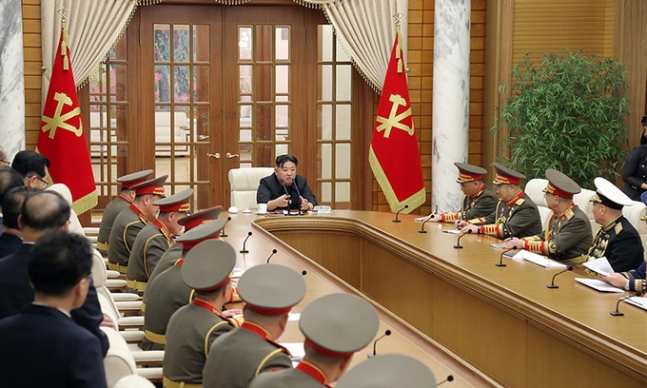
North Korea Dismantling South-Related Agencies, Removing Directives to Southern Spies from PBS North Korea is accelerating the dismantling of inter-Korean exchange organizations, and PBS, which previously sent directives to spies in the South, has gone silent since around the 12th. This appears to follow North Korean leader Kim Jong-un's declaration last year, labeling inter-Korean relations as 'hostile,' with a pledge to conquer South Korean territory through force. North Korea's leader Kim Jong-un met top military officials and key commanders at the Central Committee of the WPK’s Office Building on December 31 last year. / Photo by Korean Central News Agency The PBS, a radio broadcast operated by North Korea's agency for the South, has been inaccessible since the afternoon of the 12th. Its website, ‘National Unification’, is also currently unreachable. PBS has a history of being run by North Korea's South-related agency. Starting from the 1960s, PBS aired content that aimed to incite the 'people's democratic revolution.' Notably, it used to broadcast praises of Kim Il-sung and Kim Jong-il at midnight, followed by the recitation of random numbers used for sending directives to spies in the South. This number broadcast was suspended after the inter-Korean summit on June 15, 2000, but it resumed in 2016. North Korea has officially begun dismantling various organizations involved in civilian exchanges with South Korea. The Korean Central News Agency reported that officials from the opposing sector gathered on the 12th to implement Kim's South-oriented policy shift, proposed during the 9th Plenary Meeting of the 8th Central Committee of the WPK. All related organizations, including the North Committee for the June 15th South–North Joint Declaration, the Pan-Korean Alliance for Reunification Northern Headquarters, the Korean Council for Reconciliation and Cooperation, and the Dangun National Unification Advisory Council, will be dismantled. The North Committee for June 15th South–North Joint Declaration and the Pan-Korean Alliance for Reunification Northern Headquarters have their headquarters in South Korea. The Korean Council for Reconciliation and Cooperation is an external body of the WPK that has collaborated with South Korea's National Council for Reconciliation and Cooperation. The Dangun National Unification Advisory Council has focused on Korean nation legitimacy and unification. After Kim Jong-un declared South Korea as a hostile enemy country at last year's Plenary Meeting, South-related agencies were directed to be dismantled. Under Foreign Minister Choe Son-hui's leadership, North Korea is reorganizing these agencies, which might be closed or moved to the Ministry of Foreign Affairs. There is speculation about the integration of the United Front Department of WPK, responsible for psychological warfare and unification operations against the South, into the Ministry of Foreign Affairs. On North Korea's external propaganda website 'Naenara' with the national domain (.kp), the 'We Are One' section emphasizing unification has been removed. Other North Korean propaganda websites targeting the South, such as Uriminzokkiri, Echo of Unification, Ryugyong, Today's Korea, and Ryomyong, with '.com' domains, have been inaccessible since the 11th. The reorganization of North Korea's South-related agencies and its shift in South policy are significant. These agencies, which North Korea plans to dismantle, are external organizations of the WPK engaged in inter-Korean exchanges since the 1990s, seeking to overcome diplomatic isolation and secure economic support after the collapse of the Soviet Union and Eastern Bloc. This indicates a shift from a strategy of disguised peace and fundraising based on the concept of 'Our Nation First' to a policy of overpowering the South based on nuclear force superiority. Unlike Kim Il-sung's 'One Nation, One System' strategy for liberating South Korea, Kim Jong-un has adopted a 'Two Nations, Two Systems' military unification policy with the aim of forcefully conquering the entire territory of South Korea. During the 9th Plenary Meeting of the 8th Central Committee of the WPK from December 26 to 30 last year, Kim announced plans to actively prepare for a major event in coordination with powerful military actions to take control of the entire southern half. He also stressed that engaging in discussions about unification with a country he considers a colonial puppet of the United States, solely based on ethnicity, is incompatible with their national dignity and status. Furthermore, he defined South Korea as an enemy nation and emphasized the imperative need for a fundamental policy shift towards the South. This may be seen as an effort to dispel the South Korean influence among North Koreans, which has been fueled by the influx of South Korean culture. It aims to foster hostility toward the South through antagonistic actions. Simultaneously, as preparations are made to appoint his daughter, Kim Ju-ae, as a successor, cutting off inter-Korean exchanges and designating the South as an enemy seeks to instill a sense of hostility toward the South in the younger generation. It entails creating a more hostile atmosphere to unite people internally, shift the blame away from economic problems, and give reasons for strengthening nuclear and defense capabilities. North Korea's emphasis on creating crises to consolidate its regime under the guise of public control is noteworthy, especially as they are worried about their 2024 goals. Kim's labeling of inter-Korean relations as 'adversarial' last year and his mention of preparing for a 'major event' to gain control of South Korean territory suggests the potential for increased tensions on the Korean Peninsula ahead. .bbs-view-content {font-size: 14pt; text-align: justify;} .bbs-view-content .note {border: 1px solid #333333; padding: 15px; text-align: left; font-size: 12pt;} @media (max-width: 800px) {.bbs-view-content {text-align: left;}}
24.01.19 -
 [SAND Column]
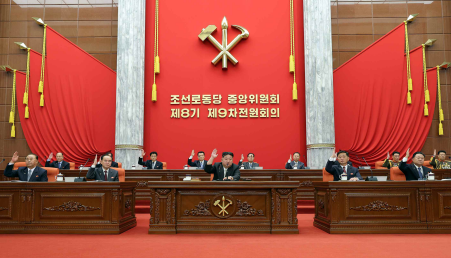
Kim Jong-un's Bellicosity with Hidden Intent of Ambition for Reunification: Winning Over Communism by Nuclear Force The extended meeting of the 9th Plenary Meeting of the 8th Central Committee of the WPK took place between December 26 and December 30, 2023. (Photo by Rodong Sinmun) On the early morning of the first day of 2024, Kim Jong-un issued a stark directive, intensifying preparations for a major conflict and signaling the potential use of nuclear power in emergent crises. His forceful proclamation, "We are hostile, no longer a close nation, so conquer the entire territory," made during the 9th Plenary Meeting of the 8th Central Committee of the WPK, highlighted an escalating risk of warfare and the imminent danger of an armed confrontation. These threats, while not entirely new, mark the first explicit expression of the regime's intention to pursue reunification through the nuclear force. This stance is perceived as the most critical threat of war since Kim Jong-un's ascent to power, heralding a period of increased instability. Furthermore, Kim Yo-jong, the leader’s younger sister, ascribed the advanced development of nuclear missiles to the current administration's policies, thereby shifting blame and setting the stage for future provocations. Kim Jong-un's denial of the North and South's shared ethnicity and labeling the South as an enemy represents a major departure from past unification policies like ‘the Democratic Confederal Republic of Koryo (DCRK)’ and the 'Among our people' philosophy. This shift indicates a troubling change in Korean Peninsula dynamics. Historically framing its nuclear program as a defense against U.S. aggression, North Korea has recently adopted a more aggressive posture, openly threatening to use nuclear weapons against Koreans amid a tense, Cold War-like atmosphere. Previously, on the Day of Victory in the Great Fatherland Liberation War – commemorating the 67th anniversary of the Korean Armistice Agreement on July 27, 2020 – Kim Jong-un reflected poignantly, 'I never forget our people who perished in the war due to our lack of guns, nor the emotions of leaving behind our soldiers on the Nakdong River.' He stressed the necessity to enhance nuclear capabilities, unveiling his long-held ambition to subdue South Korea using nuclear force. Kim's aggressive display of nuclear power, prioritizing missile development over domestic economic issues, peaked last year. He conducted five launches of the Intercontinental Ballistic Missile (ICBM) and succeeded in launching a Reconnaissance satellite on the third attempt after two failures. North Korea also enshrined the 'enhancement of nuclear power' in its constitution and legalized the preemptive nuclear strike against the South. During a recent training launch of the solid-fuel ICBM 'Hwasong-18' on the 18th of the previous month, Kim issued a stern warning about North Korea's readiness to rapidly counter any hostile actions from Washington, even hinting at nuclear strikes on the U.S. mainland. With escalated provocations expected this year, North Korea might undertake its seventh nuclear test and deploy more reconnaissance satellites, especially during the South Korean legislative elections in April and the U.S. presidential election in November. North Korea's nuclear threats appear to be imitating Russia's use of nuclear force as a deterrent card to prevent direct military intervention by the United States and other Western countries in the Ukraine-Russia war. Observing how the international community recoils from Russia's mere mention of nuclear weapons, avoiding direct involvement and opting for indirect support, North Korea seems intent on using nuclear threats to gain dominance over South Korea on the Korean Peninsula and block direct U.S. intervention, thereby shattering the South Korea-U.S.-Japan alliance. Kim Jong-un's aggressive nuclear threats are likely to fail, reflecting his regime's panic over the Yoon administration's efforts to normalize relations and enhance security. The Yoon administration is countering these threats with the U.S.-ROK Washington Declaration, the Nuclear Cooperation Group (NCG), U.S. strategic asset deployment in Korea, and joint military exercises with the U.S. and Japan, and the strategies have nearly turned North Korea's nuclear capabilities into a point of weakness. Additionally, South Korea's increasing global influence and the widespread popularity of its culture (the Korean Wave, or 'hallyu') are shifting public opinion in North Korea, posing a threat to the regime's internal stability. Kim Jong-un's escalating rhetoric is a clear indicator of his anxiety; typically, the more intense the fear, the more dramatic the response. With an economy only 1/60th the size of South Korea's, North Korea has plunged into a vortex of arms race by continuing its reckless development of nuclear missiles, leading its economy and civilian life into an inescapable quagmire. Despite Kim Jong-un's claims at the recent Plenary Meeting that last year's economic goals were achieved by over 100%, experts on the North Korean economy generally view these statistics without specific numbers as mere fabrications. Nevertheless, Kim continues to laud his regime with these questionable figures, showing little regard for the suffering of his people under oppressive governance and economic distress. The idea of achieving a strong and wealthy nation under sanctions and a closed economy is nothing but a delusion. The Soviet Union, the leading socialist state, did not collapse because it lacked nuclear weapons. It collapsed due to severe economic stagnation and excessive defense spending despite possessing thousands of nuclear weapons. The fall of the former Soviet Union mirrors the future of Kim Jong-un, who is solely focused on nuclear development for regime survival rather than improving the civilian economy. To foster stability and progress, the Kim regime needs to abandon its hazardous nuclear threats and aggressive unification tactics against South Korea, and instead embrace a path of denuclearization, peace, and cooperation. .bbs-view-content {font-size: 14pt; text-align: justify;} .bbs-view-content .note {border: 1px solid #333333; padding: 15px; text-align: left; font-size: 12pt;} @media (max-width: 800px) {.bbs-view-content {text-align: left;}}
24.01.05 -
 [Feature Article]
North Korea’s 2024 ‘Bromance’ with China and Russia: How Long Will It Last? Assessing the Potential Decline in Strategic Value for Russia Post-Ukraine SituationCho Han-bumSenior Research Engineer at the Korea Institute for National Unification (KINU)At the 9th Plenary Session of the 8th Central Committee of the Workers' Party of Korea (WPK) in December 2023, North Korean leader Kim Jong-un declared a complete severance of relations with South Korea and presented the 'Anti-U.S. Combat Principle' focusing on strengthening national defense and nuclear capabilities. He emphasized expanding strategic cooperation with anti-imperialist countries and joint international actions against imperialism, signaling an intensification of North Korea's new Cold War strategy.North Korea's new Cold War strategy has been in full swing since the breakdown of the 2019 DPRK-USA Hanoi Summit. North Korea reverted to its traditional approach after its strategy to improve relations with South Korea and the U.S. for tangible benefits, based on its nuclear arsenal, faced setbacks. In January 2021, at the party’s 8th Congress, Kim Jong-un pointed out that the essence of the U.S.'s policies toward North Korea never changes and emphasized the need to expand anti-imperialist capabilities and solidarity. In particular, Kim indicated an expansion of cooperation with socialist countries, specifically forecasting increased collaboration with China and Russia. In December 2022, at a WPK meeting, he defined the current international situation as a new Cold War and multipolar structure. He also stressed the reality of a global-scale new Cold War and the strengthening of anti-U.S. and anti-Western alliances in his speech at the Supreme People's Assembly in September 2022.The core of North Korea's new Cold War strategy involves China and Russia. With the intensification of U.S.-China strategic competition and the impact of the Ukraine war, a confrontation between the U.S.-led democratic camp and the authoritarian camp represented by China and Russia is forming, giving momentum to North Korea's version of the new Cold War strategy. Despite North Korea's numerous nuclear development activities since 2018, it's essential to recognize that the UN Security Council has become virtually inactive. Additionally, China and Russia are rapidly expanding their nuclear infrastructure to gain an upper hand in the nuclear competition with the U.S.North Korean leader Kim Jong-un, Chinese President Xi Jinping, Russian President Vladimir PutinFollowing the failure of the 2019 DPRK-USA Hanoi Summit, North Korea focused on strengthening its relationship with China, and the primary reason for the sustenance of the North Korean regime, despite severe sanctions, is China. However, China, being at the center of the international supply chain, finds it difficult to overtly support North Korea's violations of international order.North Korea is using Russia as a new breakthrough in its new Cold War strategy. In 2023, North Korea intensified its relationship with Russia to alleviate the costly deadlock in inter-Korean and DPRK-USA relations, enhancing its new Cold War strategy. Due to the Russia-Ukraine war, Russia has discovered the strategic importance of North Korea as a military supply base, including ammunition, a major reason for the rapidly strengthening Russia-North Korea ties.The visit of Russia's Defense Minister Sergei Kuzhugetovich Shoigu to North Korea in July 2023 marked the start of North Korea's weapon supply to Russia, and a Russia-North Korea summit in September led to an agreement on comprehensive relationship development. During this summit, President Putin openly promised to support North Korea's reconnaissance satellite launch. Following the summit, North Korea's Minister of External Economic Affairs visited Moscow in late September, and Russia's Foreign Minister Sergey Lavrov visited Pyongyang in October.The military cooperation between Russia and North Korea is also accelerating. Valery Gerasimov, Chief of the General Staff of Russia, stated on December 21, 2023, "We have established active and comprehensive cooperation with North Korea," indicating close military collaboration between the two countries. On October 13, John F. Kirby, the White House National Security Council (NSC) Coordinator for Strategic Communications, revealed in a briefing that North Korea had provided Russia with over a thousand containers of military equipment and ammunition, showing related photos. On November 2, the South Korean military stated that North Korea might have supplied Russia with portable anti-aircraft missiles and short-range ballistic missiles, estimating about 2,000 containers sent to Russia.The US-based North Korea-focused website 'Beyond Parallel' reported spotting containers at North Korea's Rason Port: approximately 780 on October 23, 800 on November 12, 1,010 on November 15, 990 on November 20, 550 on November 25, and 490 on November 30.Shin Won-sik, the Minister of National Defense of the Republic of Korea, mentioned in a press briefing on December 28, 2023, that the containers moved from Rason Port to Russia, initially about 2,000 by the end of October, had increased to about 5,000. This equates to over 400,000 rounds of 122mm rocket artillery and more than 2 million rounds of 152mm howitzer artillery.More concerning is the quid pro quo for North Korea from Russia. Experts and South Korean and U.S. authorities believe that Russia supported North Korea's successful third attempt in December 2023 to launch a reconnaissance satellite into orbit. North Korea is showing signs of converting its IL76 cargo planes, owned by Air Koryo, into Airborne Warning And Control Systems (AWACS). Given North Korea's limited capability to produce AWACS, Russian support is likely. Russia has operated AWACS based on the IL76 platform. There is also speculation about Russia providing second-tier MiG-29 fighter jets to North Korea.Ukraine's counteroffensive in 2023 appears to have failed, and one reason for Russia's successful defense of its occupied territories is believed to be North Korea's ammunition supply. As U.S. and Western support becomes uncertain, Ukraine faces real issues in the logistics sector, including ammunition, while Russia is intensifying its offensive. Russia cannot overlook North Korea's strategic importance as a military supply base. With the unclear end to the Russia-Ukraine war in 2024, the possibility of continued military cooperation between Russia and North Korea is significant. The likelihood of President Putin's visit to North Korea is high, and the 'dangerous bromance' between Russia and North Korea will be a threat to security in both Europe and Northeast Asia in 2024.Opening diplomatic channels is essential to effectively counter North Korea's new Cold War strategy and to enhance dialogue with Russia. Leveraging the situation in Ukraine as a strategic tool is crucial to prevent the military collaboration between Russia and North Korea from exceeding acceptable limits. This approach is vital since, although North Korean ammunition might support Russia's war efforts, supplying South Korea's advanced weapons to Ukraine has the potential to notably alter the dynamics of the conflict. It's important to acknowledge that the end of the Ukraine conflict could lead to a decrease in North Korea's strategic importance. President Vladimir Putin is advancing a new Eastern policy aimed at developing Siberia and the Far East as a major national growth strategy.Within this new Eastern policy framework, South Korea is a crucial collaborator, whereas North Korea is relegated to a mere transit role. Capitalizing on the differing strategic interests between Russia and North Korea is key to thwarting North Korea's new Cold War strategy. .bbs-view-content {font-size: 14pt; text-align: justify;} .bbs-view-content .note {border: 1px solid #333333; padding: 15px; text-align: left; font-size: 12pt;} @media (max-width: 800px) {.bbs-view-content {text-align: left;}}
24.01.05 -
 [Analysis]
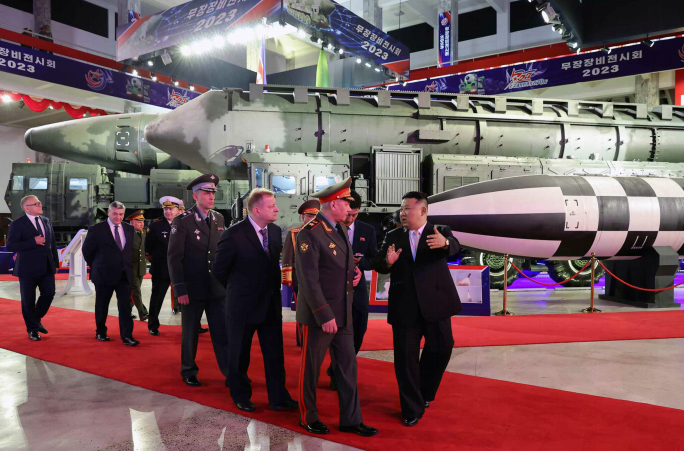
Analysis of North Korea's Military Policy and Expected Provocations In 2024 Kim Ho-hong Korea Research Institute for national Strategy Director of North Korea Strategy Center Kim Jong-un's 10 Years in Power: Concentrating National Resources and Capabilities on Enhancing Nuclear Forces “To let the dignity of Joseon shine through the ages and to successfully realize the construction of a strong and prosperous nation, prioritizing the People's Army is essential. Strengthening it in every way must be our first, second, and third priorities.” This was emphasized by the North Korean leader Kim Jong-un during his first public speech after assuming power at the centenary military parade of his grandfather, Kim Il-sung, on April 15, 2012. Ten years have passed since Kim Jong-un rose to power. During this period, despite economic challenges and the hardships faced by its people, Kim Jong-un has directed all national resources and capabilities towards strengthening national defense. Pursuing a policy of 'parallel development for economic construction and nuclear force', with a 'military-first, economy-later' approach, he concentrated all efforts on advancing nuclear forces. The constitution was amended to affirm 'nuclear possession', and through four nuclear tests, along with the launching of intercontinental ballistic missiles (ICBMs), among other forms of provocations, North Korea declared the 'completion of nuclear forces' in November 2017. Subsequently, at the 8th Party Congress in January 2021, Kim unveiled a 'Five-Year Plan for the Development of National Defense Science and Weapons System (2021-2025)'. This plan serves as a mid- to long-term roadmap for advancing nuclear weapons to a level where they can be operationalized as attack weapons. Key projects under this plan, including the development of tactical nuclear weapons, hypersonic missiles, reconnaissance satellites, submarine-launched ballistic missiles (SLBMs), unmanned vehicles, and solid-fuel ICBMs, are being implemented at a rapid pace, with many of them being physically revealed. North Korea's 2023: Boosting Nuclear Capabilities and Legal Framework Side by Side In 2023, North Korea launched 28 missiles, including 5 ICBM tests, which marks the highest annual number of ICBM launches since the regime's inception. The year saw an acceleration in their nuclear capability enhancement, showcasing diverse weaponry. On the 75th anniversary of the Korean People's Army Foundation Day (Feb 2nd), a solid-fuel ICBM and tactical nuclear units targeting South Korea were revealed for the first time. In late March, under Kim's supervision, an underwater explosion test of the nuclear-powered unmanned submersible 'Haeil' was conducted, and the actual photo of the tactical nuclear warhead 'Hwasan-31' was also disclosed. Kim Jong-un guiding Russian Defense Minister Sergei Kuzhugetovich Shoigu at the 2023 Armed Equipment Exhibition. (Photo by Rodong Sinmun) In July, on the 70th anniversary of the Day of Victory in the Great Fatherland Liberation War, the ' 2023 Armed Equipment Exhibition' was held to showcase new weapons. Kim Jong-un, along with Sergei Kuzhugetovich Shoigu, the Russian Minister of Defense, attended the exhibition, where strategic unmanned reconnaissance aircraft 'Saetbyol-4' and attack-type drones 'Saetbyol-9' were unveiled. Despite violations of United Nations Security Council resolutions, North Korea concentrated efforts on launching military reconnaissance satellites. After two failed attempts in May and August, the launch of the carrier rocket 'Chollima-1', carrying 'Malligyong-1', was successful on November 21st. In September, the launching ceremony of the tactical nuclear attack submarine 'DPRKS Hero Kim Kun-ok' was held with Kim's attendance. North Korea touted it as 'a new type of attack submarine the world has never seen', but its performance has received predominantly negative evaluations. Alongside its nuclear advancements, North Korea swiftly incorporated these developments into its legal framework. At the 9th meeting of the 14th Supreme People's Assembly, conducted on September 26-27, a significant constitutional amendment to bolster nuclear forces was ratified. This change elevated the 'Nuclear Forces Policy Law' from September 2022, which includes 'five conditions for a preemptive nuclear strike', to a constitutional level. Originally, Article 58 of Chapter 4 of the Socialist Constitution of the Democratic People's Republic of Korea was broadly framed, stating that 'The Democratic People's Republic of Korea relies on an all-people, all-nation defense system'. This was subsequently revised to specifically endorse 'enhancing nuclear weapon development as a responsible nuclear power'. This aims to ensure the country's survival and development rights, deter war, and maintain peace and stability in the region and globally. This amendment establishes a clear legal basis for improving nuclear capabilities and permits the execution of nuclear attacks in emergencies. 2024 Outlook: Projected Increase in North Korean Provocations Against the Backdrop of Global Events, Including U.S. Elections Kim Jong-un is increasingly showing a willingness to use nuclear and missile capabilities for provocation. In December 2023, North Korean media reported that after observing the Hwasong-18 solid-fuel ICBM launch, Kim Jong-un outlined ‘major tasks’ to boost nuclear strategic forces. He strongly advocated for ‘decisive nuclear strikes’, even threatening the capability to target the U.S. mainland. At the 9th Plenary Meeting of the 8th Central Committee of the Workers' Party of Korea, directives were given to speed up war readiness across military, military industry, nuclear weapons, and civil defense sectors, demonstrating a firm stance against the U.S. For 2024, Kim Jong-un is anticipated to heighten provocations, seeing the global political landscape, especially the 'South Korea-U.S.-Japan vs North Korea-China-Russia' dynamic, as an opportunity to reinforce his strategic position. He is likely to enhance nuclear capabilities, leveraging alliances with China and Russia, while keeping an eye on the U.S. presidential election to be held in November this year, and the Ukraine war, instead of pursuing major changes in the status quo. In the realm of nuclear technology, North Korea might test the operational readiness of the Hwasong-18 ICBM by demonstrating atmospheric re-entry capabilities. Plans for constructing a nuclear-powered submarine are also on the agenda. The upcoming tests of reconnaissance satellites and the public demonstration of the 'Hwasan-31' tactical nuclear weapon, are significant. Moreover, the possibility of a seventh nuclear test looms, with the International Atomic Energy Agency (IAEA) noting increased activities at the Nyongbyon Light Water Reactor, and the National Intelligence Service acknowledging the likelihood of such a test. North Korea's push for advanced nuclear and missile capabilities depends heavily on cooperation with China and Russia. It is expected to engage in diplomatic maneuvers to invalidate United Nations Security Council resolutions, using the backing of these allies. The potential visit of Vladimir Putin to North Korea could lead to more concrete military collaboration. The prospect of joint military exercises by North Korea, China, and Russia in the East Coast, in response to the South Korea-U.S.-Japan alliance, is something to monitor closely. Next is the provocation towards South Korea. North Korea openly displays hostility towards the Yoon Suk-yeol administration, and the recent nullification of the 2018 '9.19 South-North Korea’s Military Agreement' raises the chances of military confrontations. The likelihood of North Korea attempting to disrupt South Korea's April legislative elections through significant military conflicts along the West Sea Northern Limit Line (NLL) or the Military Demarcation Line (MDL) is a concerning possibility. In 2024, heightened tensions are expected in the Korean Peninsula and Northeast Asia, due to the escalating threat of North Korean provocations. This is a crucial time for collaboration and strategic thinking to counter these provocations and foster peace, relying on a strong South Korea-U.S. alliance, robust security measures, and coordinated policies. .bbs-view-content {font-size: 14pt; text-align: justify;} .bbs-view-content .note {border: 1px solid #333333; padding: 15px; text-align: left; font-size: 12pt;} @media (max-width: 800px) {.bbs-view-content {text-align: left;}}
24.01.05 -
 [Analysis]
North Korean Economy: Insights and Outlook from the 9th Plenary Meeting of the 8th Central Committee of WPK Hong Jae-hwan Korea Institute for National Unification North Korea held its 9th Plenary Meeting of the 8th Central Committee of the Workers' Party of Korea from December 26th to 30th last year. Detailed reports on the meeting were published in Rodong Sinmun, covering the economic achievements of 2023 and the goals for 2024. This article analyzes North Korea's current economic situation and prospects for the coming year, with a focus on Rodong Sinmun's reporting during the plenary meeting. Promoting ‘Grain’ and ‘Electricity’ as part of the '12 Key Heights of Economic Development for -People' announced in 2023. (Photo by Korean Central News Agency) Significant Emphasis on Publicizing Economic Achievements in 2023 According to Rodong Sinmun's article, North Korea's economic achievements are highlighted with specific figures. In 2022, North Korea had set "12 important goals for people's economic development" to be achieved in 2023, and the report provides production performance data for these items. The reported accomplishments include: grains at 103%, electricity, coal, nitrogen fertilizer at 100%, rolled steel at 102%, non-ferrous metals at 131%, logs at 109%, seafood at 105%, and housing at 109%. These figures indicate that production targets were met or exceeded for these items. Additionally, the article mentions the production of items not included in the 12 important goals, such as electric motors (220%), transformers (208%), electric zinc (140%), and cosmetics (109%), which also largely exceeded their targets. North Korea also emphasized its economic accomplishments, particularly the significant growth in GDP and the production of key heavy chemical industry items in comparison to 2020. According to the plenary meeting report, GDP has surged by 1.4 times over the past three years, with notable increases in the production of direct reduced iron (DRI) by 3.5 times, rolled steel by 1.9 times, machine tools by 5.1 times, cement by 1.4 times, and nitrogen fertilizer by 1.3 times. This comprehensive report on economic achievements represents a departure from the one published at the end of 2022, which had limited information on specific economic accomplishments and mainly focused on the construction sector. Moderate Recovery Assumed in the North Korean Economy According to the plenary meeting report, North Korea's economic performance in 2023 displayed relative resilience. Despite facing sanctions and implementing border closures to prevent the entry of COVID-19, North Korea claimed to have achieved an average annual economic growth rate of over 10% since 2021. However, these figures raise skepticism, as they significantly differ from the widely accepted understanding of the North Korean economy under sanctions. The reasons behind these seemingly unrealistic figures remain unclear. It is possible that North Korea achieved its positive economic performance in 2023 by setting more attainable targets for the "12 important goals for people's economic development." Alternatively, there may have been a different calculation method applied to report 1.4 times increase in GDP over three years. There could also be distortions in statistical data or inflated figures aimed at showcasing achievements. Regardless, the report does not provide an accurate reflection of the true state of the North Korean economy. The poster for North Korea's ‘Five-Year Economic Development Plan’ announced in 2023. (Photo by Korean Central News Agency) How can we assess the North Korean economy in 2023? A primary factor contributing to economic challenges since the late 2010s has been the reduction in trade due to sanctions and border closures. However, in the past year, as border restrictions gradually eased, trade expanded. From January to November, North Korea's trade with China surged by 132.7%, reaching $266.5 million in exports and 146.6%, totaling $1.78 billion in imports, compared to 2022. Both exports and imports experienced significant growth compared to the previous year, approaching pre-pandemic levels. This increase in trade likely contributed to a moderate recovery in the North Korean economy in 2023, although the extent of this recovery was not substantial, and citizens likely continued to face ongoing hardships in their daily lives. No Major Changes Expected in Economic Policy Direction What does the economic outlook for North Korea in 2024 look like? To gauge this, it's crucial to first delve into the economic policy direction for the year, as outlined in the plenary meeting report. However, the report suggests that 2024 will largely maintain continuity by adhering to the "12 important goals for people's economic development" without introducing significant new elements. This year marks the fourth year of the five-year economic development plans (2021-2025), which should ideally yield tangible results. However, there is no strong emphasis on achieving this, indicating that despite showcasing economic achievements, North Korean authorities are facing challenges in implementing proactive economic policies amidst tough economic conditions. Consequently, the report suggests that significant changes in North Korea's economic policy direction are unlikely for 2024. Uncertainty About the Continuation of Recovery With North Korea maintaining its unchanged economic policy direction, it's anticipated that the country's economy in 2024 will stay relatively consistent with its current state. The rebound observed in North Korea's economy in 2023 was primarily attributed to the rapid return of trade to pre-COVID levels. However, considering the ongoing strict sanctions and limited foreign currency reserves, it appears unlikely that North Korea's trade volume will experience significant growth in 2024, potentially hindering the continuation of the economic recovery. Nevertheless, North Korea may explore alternative means to secure foreign currency, such as expanding Chinese tourism, deploying overseas workers illicitly, and engaging in cryptocurrency theft and monetization through hacking, which could introduce variability in trade volume. Another critical factor in projecting North Korea's economy is the expected persistence of market control reinforcement policies. Since the 2000s, North Korea's economy had exhibited signs of recovery, driven by increased foreign trade and market development. However, from the late 2010s onward, North Korea has intensified its oversight and management of markets. For instance, the authorities have revised laws to ensure that goods are channeled through the state commercial network rather than the open market. This approach appears to be an attempt to leverage market efficiency while simultaneously bolstering state control and addressing financial challenges. However, this strategy may potentially compromise overall economic efficiency and place additional burdens on residents reliant on private economic activities. Consequently, the sustained push for market control reinforcement could also serve as a limiting factor in North Korea's economic recovery in 2024. Economic Policies for the Residents Are Needed The path forward for North Korean authorities to revitalize their economy appears clear. It involves resolving the nuclear issue to lift sanctions, fostering trade, and attracting investments. Furthermore, it necessitates reducing the state's economic footprint, expanding the market sector, and ensuring maximum economic autonomy for residents. However, indications suggest that North Korean authorities may lean toward contrary measures for 2024, potentially prioritizing regime stability over enhancing the well-being of their citizens. With this economic policy direction in place, the prospect of an improved quality of life for North Korean citizens remains uncertain. The hope remains that the North Korean regime will reconsider its economic policies in favor of enhancing the lives of its residents, rather than leaving it as an ambitious expectation for 2024. .bbs-view-content {font-size: 14pt; text-align: justify;} .bbs-view-content .note {border: 1px solid #333333; padding: 15px; text-align: left; font-size: 12pt;} @media (max-width: 800px) {.bbs-view-content {text-align: left;}}
24.01.05 -
 [Analysis]
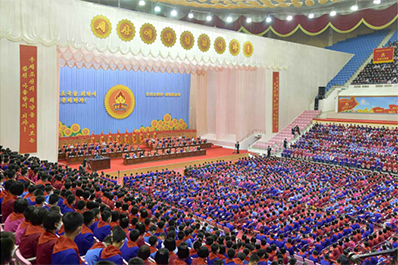
2024 North Korean Sociocultural Outlook:Insights from the 9th Plenary Meeting of the 8th Central Committee of WPKJeon Young-sunHK Research Professor, Konkuk UniversityDuring the 9th Plenary Meeting of the 8th Central Committee of the Workers' Party of Korea, the 2023 sociocultural sector received only a brief mention, with a vague assessment of "active and rapid progress" in socialist construction. While it may sound positive, the absence of specific accomplishments implies a lack of notable achievements.On January 1, 2024, Kim Jong-un is attending a New Year's celebration with his daughter Kim Ju-ae. (Photo by Rodong Sinmun)In the sociocultural realm of North Korea in 2023, there are no remarkable new accomplishments to highlight. Nevertheless, there were positive assessments, likely influenced by the overall success seen in various industries, particularly agriculture. During his 2023 business review, Kim Jong-un expressed, "This year has been filled with miraculous victories and events like never before." This notably positive appraisal is a departure from recent years. Achievements in agriculture, as well as the military sector, have garnered recognition. It appears that the sociocultural sector also benefited from the positive evaluations, reflecting the overall success of 2023, which were driven by achievements in other areas.Among various fields, science was highlighted as the most successful. Kim Jong-un said, "The most praiseworthy scientific and technological achievements have been made in the field of space science technology." He attributed these remarkable scientific accomplishments to the education efforts aimed at 'building a powerful country in education and talent'. The science sector has been a major focus since the beginning of Kim Jong-un's regime, with education being the foundation for building a strong scientific nation. Science and education are inseparable, and the emphasis on science policy has directly translated into advancements in scientific education, linking scientific achievements to the fruits of education.The establishment of the 'Educational Research Institute' in 2023 was highlighted as a major achievement in education. This institute is dedicated to specialized research in education science and represents a continued effort in educational innovation and scientification since the mid-2000s. It is expected to play a key role in the future of North Korean education. Other significant accomplishments include the modern remodeling of the science library at Kim Il Sung University and improvements in infrastructure for educational institutions, including kindergartens.In the healthcare sector, the establishment of infrastructure was evaluated as a significant achievement. Major pharmaceutical factories, medical equipment factories, and specialized disease prevention facilities were constructed, laying the material foundation for the healthcare field.In sports, participation in international events, including the 19th Asian Games in 2022, after a four-year hiatus following the COVID-19 pandemic, was highly regarded.Regarding the tasks and direction for the sociocultural sector in 2024, it was stated, "Tasks and plans for achieving continuous progress based on the achievements of the year have been outlined in various cultural sectors, including science, education, healthcare, literature and art, publishing, and sports."Specific details for each sector were not provided, but the emphasis is expected to be on the education sector. In regard to the education sector in 2023, it received high praise, stating, "The remarkable achievements in our educational efforts to become a powerful nation in education and talent this year are unparalleled." Furthermore, it emphasized that "2024 should be a year of even greater transformation to catch up with advanced education and practical skills." Infrastructure improvement and a focus on educational science will align with this direction.On December 26, 2022, the 9th Youth League Conference was held in Pyongyang, emphasizing ideological education and patriotic upbringing for student youth. (Photo by Rodong Sinmun)During the plenary meeting, the second agenda titled "Enhancing Responsibility in Implementing Timely Socialist Policies for Youth and Students" was adopted, focusing on strengthening education policies. This can be seen as an effort to bolster socialist patriotic cultural activities for the post-Jangmadang generation, with Kim Ju-ae as a representative figure. It also involves providing students with necessary items to help them experience socialist policies and nurture patriotism.In 2023, the establishment of student supply factories was noteworthy, including school uniform, bag, and shoe factories. These initiatives, along with local brands like Mindulle Notebook and Sonamu School Bag, contribute to local industry development and enhance the educational environment, fostering patriotism in future generations.The key focus in the sociocultural sector is rural infrastructure improvement, in line with the 8th Congress of the WPK’s emphasis on addressing rural issues. This includes economic development and enhancing educational and cultural facilities in rural areas.In 2024, it's expected to be set to reopen borders after the COVID pandemic, featuring tourism initiatives, sports events like the Pyongyang International Marathon, cultural events such as the April Spring Friendship Art Festival, and the Pyongyang International Film Festival (PIFF) in April. The adoption of the "Tourism Law" during the August 2023 27th Plenary Meeting of the 14th Standing Committee of the Supreme People's Assembly indicates ongoing openness. However, internal controls, including measures against foreign ideologies and internal monitoring in the name of ‘patriotic culture’, are expected to strengthen further. .bbs-view-content {font-size: 14pt; text-align: justify;} .bbs-view-content .note {border: 1px solid #333333; padding: 15px; text-align: left; font-size: 12pt;} @media (max-width: 800px) {.bbs-view-content {text-align: left;}}
24.01.05 -
 [SAND Exclusive]
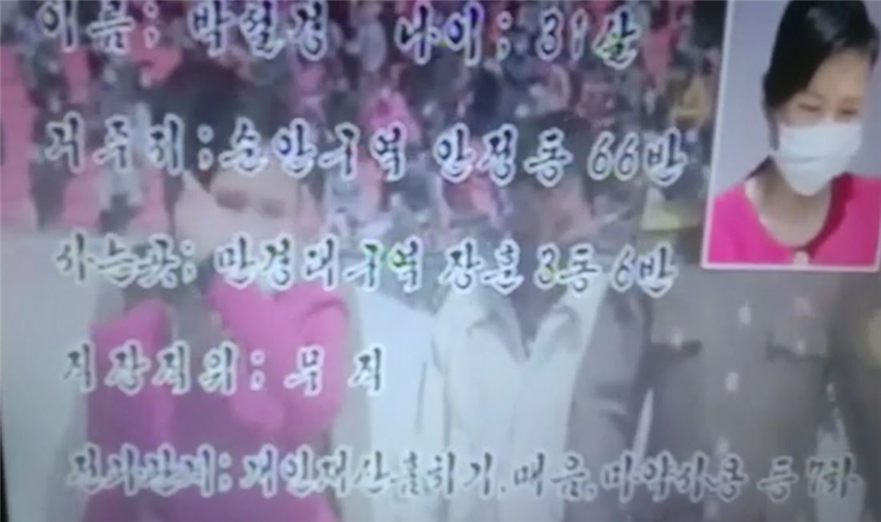
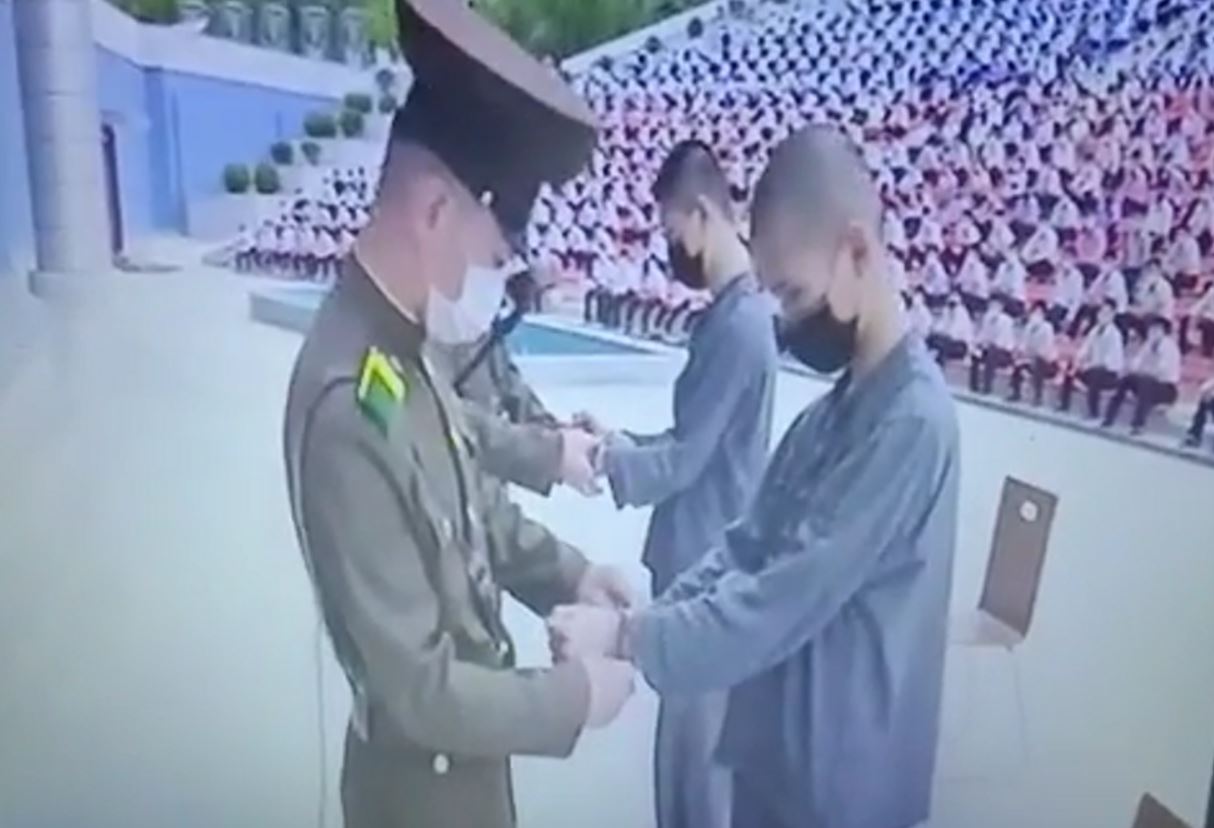
Pyongyang City Residents Convicted of Prostitution, Drug Offenses, Embezzlement, and Theft Deported to Rural Areas After Public TrialsIt has been officially confirmed that residents of Pyongyang City involved in crimes like prostitution, drug offenses, embezzlement, and theft faced public trials and were subsequently deported to rural areas. While North Korea promotes its crime-free socialist system and typically conceals domestic crime statistics, this information reveals the involvement of North Korean citizens in a range of crimes, including not only theft but also prostitution, drug offenses, and embezzlement.Pak Sol-gyong, arrested in Pyongyang City last year for crimes including prostitution and drug use / This photo was captured from the newsThe recent internal footage acquired by SAND includes scenes from a public trial held at a sports stadium in Pyongyang City last year, with the theme "Eradicating Anti-Socialist and Non-Socialist Phenomena."In front of a crowd of thousands, high-ranking officialsfromthe Police Department in Pyongyang City, dressed in military uniforms with one star, publicly listed the charges against five criminals, revealing their faces, photographs, workplaces, and home addresses. These individuals were arrested and prosecuted for crimes including theft, assault, prostitution, drug offenses, and embezzlement.According to the video footage, Kang Chul (37 years old), a laborer at the Hwacho Development Office in Pyongyang City's Sosong District, committed crimes such as theft and assault four times. It was revealed that Kang resided at 72 Wasan-dong, Sosong District.The video footage also indicates that Moon Young-hak (49 years old), a laborer of the Taesong District Automobile Development Office, had a criminal record of theft and was a repeat offender six times. Moon lived at 9Nangrang 1-dong, Nangrang District.Lee Jeong-ryeol (31 years old), a farm worker at the Songshinnam-sae Cooperative Farm in Sadong District, was identified as a repeat offender with a criminal record that included stealing both state and private property, totaling five offenses. He resided at 55Songhwa 1-dong, Sadong District.These crimes highlight the increasing prevalence of economic crimes such as theft and robbery, as well as social crimes such as corruption, in North Korea due to economic difficulties.Amidst the prominence of theft as a representative case of economic crime in North Korea, thieves are reported to steal national property such as essential goods distribution centers, factory components, telephone lines, electrical cables, and cultural assets. They also engage in pickpocketing from people encountered in Jangmadang (marketplaces), stations, and trains.There are also criminal organizations involved in various illicit activities, including smuggling essential goods in the black market and extorting rent fees. Violent gangs engage in smuggling cigarettes, alcohol, clothing, and pharmaceuticals through connections with the security officials. Even young people are drawn into violent gangs, committing crimes such as robbery, theft, rape, and pickpocketing in ports, major cities, and border regions.Prostitution has also been observed as a prevalent activity alongside theft.According to the video footage, Moon Cheol (31 years old), a laborer who worked inChanghun 3-dong, Mangyongdae District, committed six crimes, including theft of personal property and involvement in prostitution. Moon lived at 6Changhun 3-dong, Mangyongdae District.Pak Sol-gyong (31 years old), an unemployed resident of 6 Changhun 3-dong, Mangyongdae District, was involved in seven crimes, including theft of personal property, prostitution, and drug use. Importantly, Pak Sol-gyong's place of residence differed from the officially registered locationwhich is 66 Anjeong-dong, Sunan District, Pyongyang CityMoon Cheol was a pimp procuring and facilitating prostitution, while Pak Sol-gyong directly engaged in prostitution.While North Korea officially prohibits prostitution and upholds the idea that Pyongyang should symbolize revolutionary and moral purity, according to North Korean defectors, prostitution is widespread throughout the city. Women are involved in prostitution, often managed by pimps, as a means to address their economic hardships. Some individuals even combine prostitution with providing accommodation services for people waiting at train stations near Pyongyang City. There are also reports of high-end prostitution rings serving the elite and foreigners operating around luxury hotels.Sexual crimes are also occurring frequently in North Korea. Unlike the 1980s when cases of prostitution were rare, sexual crime incidents have increased since the 1990s, with rape and sexual harassment primarily committed by officials in positions of power.Furthermore, drug-related crimes are becoming increasingly serious, with around 30% of North Korean residents reportedly using drugs. Pak Sol-gyong, for example, was involved in both prostitution and drug use. These drug-related crimes are not confined to border areas but are also prevalent in central locations like Pyongyang City. Some North Korean residents have turned to drugs as a means of coping with tension and stress. Additionally, the economic hardships worsened by the COVID-19 pandemic have led many individuals to engage in drug trafficking as a source of income. These five individuals were all deported from Pyongyang City to rural areas, along with their families.Several factors underlie the rise in criminal activities in North Korea. The country's excessive control system, aimed at maintaining its dynastic dictatorship, has inadvertently led to frequent social injustices and deviant behavior due to the rigid nature of the regime and its distorted centralized structure. The economic challenges worsened by the COVID-19 pandemic and lockdown have fueled discontent among the population. Furthermore, the breakdown of distribution systems, increasing wealth disparities, and the influence of external factors have eroded collectivism and promoted individualistic values, resulting in various forms of deviant behavior.However, North Korea often overlooks these root causes and instead attributes criminal behavior to external forces, portraying it as actions aligned with 'enemy' interests.In the video, North Korea stated, "These crimes align with the actions of those challenging North Korea's sacred and dignified socialist system. We call for strict and unwavering punishment." Additionally, they emphasized their commitment to "safeguarding political stability in the capital."Choi Kyong-hui, the director of SAND, commented, "Pyongyang City, where Kim Jong-un resides, endeavors to present itself as a crime-free and pristine city. But, beneath the surface, various criminal activities are prevalent." .bbs-view-content {font-size: 14pt; text-align: justify;} .bbs-view-content .note {border: 1px solid #333333; padding: 15px; text-align: left; font-size: 12pt;} @media (max-width: 800px) {.bbs-view-content {text-align: left;}}
23.12.22 -
 [Story on support for North Korea]
'12 Words that Guided My Life' by Pastor Kim Jin-hong: Episode 2"Stop Farming Before More People Find Out"- Pastor Kim's Story: Why He Had to Halt Successful Farming Kim Jin-hongChair of Dure Cultural Foundation, Pastor at Dure Online ChurchWith the release of his autobiography '12 Words that Guided My Life' in October 2023, Pastor Kim Jin-hong of Dure Online Church has garnered significant attention. A prominent figure in South Korean theology and social activism, Pastor Kim is celebrated for his creation of the 'Dure Spirit' – a unique blend of church ministry, community service, and industrial innovation. His influential book, 'Wake Up The Dawn,' has reached a global audience, with translations in multiple languages, over 100 editions, and even inspiring a film adaptation. With '12 Words that Guided My Life,' Pastor Kim shares the depth of his experiences and insights, considering it a work close to his heart, much like 'Wake Up the Dawn.' In its introductory pages, he delves into the societal and personal upheavals he has witnessed for 82 years, pointing out South Korea’s extraordinary journey. Amongst the 120 new governments established post-World War II, South Korea remarkably stands out for its triumphant stride towards industrialization, democratization, and its transformation into a knowledge-based information society. He expresses immense pride in this unique legacy, highlighting the critical tasks that lie ahead – achieving an advanced South Korea and realizing national unification.The autobiography is brimming with personal stories, with a particular focus on Pastor Kim's dedication during the 1998 North Korean famine. He spearheaded the establishment of orphanages and Dure Farm, offering refuge to thousands of orphans in North Hamgyong Province. The previous episode focused on his account of establishing an orphanage in North Korea. In this second episode, we delve into his narrative about <Dure Farm> in the Rajin-Sonbong area, exploring its origins and the reasons behind his decision to withdraw, which were related to the North Korean authorities."<Episode 2>As working on constructing the orphanage, I initiated the development of a pilot farm. Since it was a directive from the central authority, the process proceeded smoothly. The head of the agricultural department, acting on instructions from the Mayor of Rajin-Sonbong City, accompanied me to a hillside. He pointed to the fields below and said, "Mr. Kim, choose the land you want to cultivate." I hesitated and said, “what if others were already tending to these fields?” With a solemn tone, he corrected me, saying, "Don't approach this with a capitalist mindset. All the land belongs to the nation and its people. It's the land of our great leader; why should there be separate landowners? You can have as much as you need, and we can relocate the current farmers to other areas." Their 'communistic' approach struck me as refreshingly straightforward. So, I promptly selected 30,000 to 40,000 pyeong for farming. The land was swiftly designated, and I ventured to inspect the soil. It was early November, and the autumn harvest had already concluded.I noticed neatly arranged broomcorn plants and asked, "I see you harvested sorghum this year?" To my surprise, the reply was, "No, it's not sorghum; it's corn." I remarked, "Corn from plants this size? The harvest must not have been very successful." They explained, "You're right. We faced a prolonged drought followed by heavy rain, causing flooding. It was beyond human control. Thus, we couldn't harvest that year." As I picked up a handful of soil and saw it being carried away by the wind like powder, I realized that the problem was not divine but human. I pointed this out to the head, "This year's poor harvest wasn't due to God; it was human neglect. Look, although soil needs to clump together to retain organic matter for a successful harvest, it's blowing away like powder in the wind, isn't it? It's because the soil hasn't been fertilized or manured for a long time, causing it to dry out, which is why there's no harvest."The head seemed momentarily at a loss for words but eventually said, "Well, you're the expert. Please cultivate it diligently. You can use it as an educational facility for our people, and we will fully support your efforts."This was how Rajin-Sonbong Dure Farm began. After returning home, I recruited three dedicated workers to the farm, along with seeds and a few farming tools, all determined to create a thriving farm within three years. The main challenge was the scarcity of fertilizer to enrich the soil there. While contemplating various options, we stumbled upon a remarkable solution—a vast peat deposit beneath the hill near our field. Knowing that properly fermented peat could serve as excellent fertilizer, I brought microorganisms to ferment the peat and generously spread it across the fields in North Korea. The transformation of the soil began.From that year, we started planting potatoes. North Korean potato seeds were of low quality, plagued by viral infections and low yields, often referred to as "ugly" potatoes. We recognized the importance of seed improvement and procured 40,000 seeds of a new potato variety developed by scientists at Daedeok Science Town. We also shared some with Pyongyang Kim Il Sung University's agricultural department when they expressed interest. As planned, within three years, we achieved bountiful harvests. On the day of the potato harvest, collective farm workers came to assist, and the women marveled, "Eight potatoes from one plant!" "Look, there are ten here!" However, a State Security Department official seemed uneasy about our remarkable success and cautioned, "Please work quietly."Yet, the problem arose the following week; we received orders from the authorities to halt all farming activities. I couldn't comprehend why, so I visited the Mayor of Rajin-Sonbong City and inquired, "Why are they instructing us to stop when our farming was finally thriving?" His response was hushed but revealing, "Mr. Kim, you succeeded too quickly. It was supposed to take time, but you accomplished it in just three years. The administration doesn't want ordinary people to know about this. You should cease before the news spreads. I'm sorry, but you'll have to wait for another opportunity."I was left speechless and decided to comply.Understanding that they had to follow orders from Pyongyang, I had no choice. The city mayor, feeling apologetic, invited me to a restaurant for lunch, where they served Dangogi (dog meat, a North Korean dish). I guess the meat had spoiled due to frequent power outages in the refrigerator because that night, I suffered severe food poisoning, with vomiting and diarrhea. In agony, I prayed, "Please help me, God. Dying from eating dog meat wouldn't be martyrdom, would it? I want to live and continue the work I must do in South Korea. Please spare me from this fate."Upon hearing of my critical condition, personnel from the city transported me to what appeared to be a clinic nearby. In a neighboring room, I could hear a patient undergoing an appendectomy without anesthesia, causing them great distress. It felt more like a slaughterhouse than a hospital. Doctors and nurses came to attend to me and suggested an IV injection. However, the injection didn't resemble conventional medication; it came in a container resembling a beer bottle, which made me uneasy. I feared that a medical accident might result in my death, so I refused the injection and chose to travel to Yanji City, China, for treatment and eventual recovery.Even to this day, I have sleepless nights when I think of the people in North Korea. We are all one people, but they suffer under the wrong regime, deprived of proper healthcare, leading to preventable deaths. Starvation prevails while Kim Jong-un focuses on missile and nuclear investments, despite their futility. The day he employs these weapons, he and his regime will vanish from this planet. In the 1960s, South Korea had a per capita income of $78, while North Korea's stood at $242. North Korea enjoyed a significantly better standard of living back then. However, today, South Korea's national power is more than 60 times greater than that of North Korea. When it comes to reunification and aiding North Korea, there may be differing opinions, but there is only one path ahead to save our people: dismantling the Kim Jong-un regime and achieving reunification. I am convinced that this day is drawing closer. .bbs-view-content {font-size: 14pt; text-align: justify;} .bbs-view-content .note {border: 1px solid #333333; padding: 15px; text-align: left; font-size: 12pt;} @media (max-width: 800px) {.bbs-view-content {text-align: left;}}
23.12.22 -
 [SAND Exclusive: Video Shows Public Trial in Pyongyang]
North Korean High School Students Sentenced to 12 Years of Hard Labor for Watching South Korean Content Recently, North Korea publicly released footage showing high school students in Pyongyang being subjected to a severe punishment of 12 years of hard labor. They faced this penalty for watching South Korean movies and music videos, thereby violating the 'Reactionary Ideology and Culture Rejection Law.' This footage, titled ‘Let’s Intensify Efforts to Eradicate All Forms of Reactionary and Non-Socialist Phenomena’ and obtained by SAND from an inside source, underscores the government's stringent efforts to suppress what it considers harmful foreign influences. A photo from last summer shows students Lee Kwang-bok and Moon Kwang-rim from Samma High School in Tongdaewon District, handcuffed after being sentenced for watching South Korean content / Photo by SAND The video, created as internal educational material by North Korean authorities, highlights cases that emerged during the implementation of the 'Reactionary Ideology and Culture Rejection Law,' which was established in December 2020. This law aims to curb the widespread influence of South Korean culture and content in North Korea. It features high school students engaging with South Korean movies, dramas, music videos, and mimicking the language and tone. The video also criticizes Pyongyang women for adopting South Korean fashion and hairstyles, revealing their identities to publicly shame them. Additionally, it condemns the influence of South Korean common-law marriages in Pyongyang as 'social contamination.'" This video confirms that South Korean culture has reached Pyongyang, which North Korea sees as the center of its ideology. It shows that there are big and fast changes happening in the culture and thinking of people in North Korea. Students Lee Kwang-bok and Moon Kwang-rim, who were sentenced to 12 years in prison for watching South Korean content; alongside them, the names of their teacher and a youth leader were also revealed / Photo by SAND The video also talks about more cases, showing South Korean culture as harmful and negatively affecting young people in North Korea. The video reveals that a big public trial was held at the Youth Park Open-air Theatre in Pyongyang last year, with more than a thousand students watching. The trial was for Lee Kwang-bok and Moon Kwang-rim from Samma High School. They were accused of watching and spreading South Korean movies, music, and 20 music videos from November 2021 to January 2022, breaking the 'Reactionary Ideology and Culture Rejection Law.' Even though they were only 16 years old, both students were given 12 years of hard labor as punishment. The video shows them with shaved heads and wearing prison clothes, being handcuffed by security officers. It also shows a young girl being handcuffed. The video says that these students were drawn to South Korean culture, and this led to them ruining their own lives. Since the 'Reactionary Ideology and Culture Rejection Law' was made in December 2020, North Korea has been more strict in stopping people from watching South Korean content. There have been other cases like this in different parts of the country. Students Lee Kwang-bok and Moon Kwang-rim from a Pyongyang high school during their public trial for watching South Korean content, observed by hundreds of fellow students. / Photo by SAND The punishments for these actions are getting harsher. This year, it was reported that a teenager in Ryanggang Province's Hyesan City was executed in public for sharing South Korean dramas and music.On the 26th of last month in Seoul, the Ministry of Unification hosted a discussion titled 'Improving Conditions and Enhancing Access to Outside Information for North Korean Residents.' During the seminar, it was revealed that in June, two farmers from Chondan County, South Hwanghae Province, were publicly executed for secretly watching South Korean movies and news. Additionally, in April, a military official from Pyongyang City was reportedly executed for distributing files with global news and street scenes. North Korea has also focused on the attire and hairstyles of residents influenced by South Korea. The video states, 'Some residents and teenage students are being influenced by propaganda from South Korea and Western capitalist countries. They copy everything from their clothing and hairstyles to what are perceived as odd South Korean accents. This leads to engagement in unconventional behaviors like common-law marriage, marking the infiltration of South Korean and Western cultures and disrupting our traditional culture.' The video shows Choi Ok-hyun from Taesong District, criticized for her clothing, and publicly shamed. Her personal details were shared as part of the effort to make people follow the rules. She is criticized for acting as though she has done nothing wrong, with the commentary suggesting that her behavior is a clear indication of her deep involvement in Western and South Korean cultures. The video goes on to declare her unfit to be a resident of Pyongyang City. A defector from Pyongyang noted that such public criticism in a broadcast could lead to expulsion from the city." Teenagers in Pyongyang City pictured in handcuffs following a public trial for watching South Korean content / Photo by SAND Additionally, the video tackles the issue of women wearing leggings. It features Shin Yang-sim from Yeongsan-dong, Mangyongdae District, dressed in leggings. The video criticizes this choice of attire, declaring it to be 'a shameful style unbecoming of our refined culture.' North Korea has intensified its enforcement efforts while also actively encouraging residents to voluntarily confess. In line with directives from Kim Jong-un, authorities are assuring residents that those who admit their wrongdoings will be forgiven, with a clear emphasis that no punitive measures will be imposed on those who come forward and confess. People are being told to give up any material that goes against the state's ideas, including religious books, foreign movies, and dramas. Individuals engaged in drug use, trafficking, or in the consumption and distribution of pornographic material are being encouraged to step forward and make honest confessions. North Korea reports significant results in the Sosong District of Pyongyang City, with over a thousand residents and students making voluntary confessions. However, the reliance on tactics like offering 'forgiveness upon confession' suggests a departure from previous, more unilateral control strategies. Despite earlier efforts to strengthen crackdowns and heighten punishments for consuming South Korean content, its influence has only continued to expand. This has led to a shift towards a combined strategy of strict enforcement and persuasive tactics. Under Kim Jong-un's rule, which has spanned over a decade and seen a reversion to anti-market policies, North Korean cultural and artistic output has increasingly focused on repetitive expressions of loyalty and patriotism. This departure from innovative and change-reflective artistic works has led to a sense of monotony among the youth and the general population. Those exposed to the advancements of South Korea through various media are growing increasingly hopeful for a future reunification. .bbs-view-content {font-size: 14pt; text-align: justify;} .bbs-view-content .note {border: 1px solid #333333; padding: 15px; text-align: left; font-size: 12pt;} @media (max-width: 800px) {.bbs-view-content {text-align: left;}}
23.12.08 -
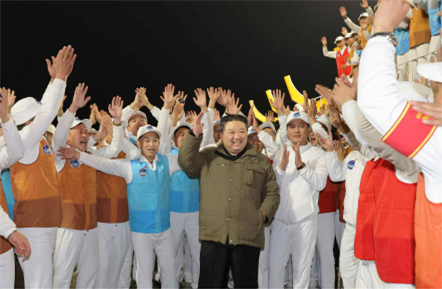 [Science Column]
South Korea's 30cm Resolution vs. North Korea's 3m Resolution: The Significance and Prospects of North Korea's First Reconnaissance Satellite Launch Lee Chun-geun Honorary Research Fellow at the Science and Technology Policy Institute North Korea launched its first reconnaissance satellite after facing previous setbacks in rocket and satellite launches. This achievement was hard-won, with persistent challenges stemming from instability and reliability issues in the second-stage high-altitude engine, identified as the root causes of past failures. Recent assistance from Russia seems to have played a pivotal role in addressing these challenges. Of course, there is global curiosity about the assistance Russia provided. This support likely included technical advice, test evaluations, component supply, and the provision of high-altitude engines. Russia received North Korean launch-related data that pinpointed issues, helping to identify problems and propose solutions. The primary focus was on providing technical advice. Resolving the instability and reliability issues in the second-stage high-altitude engine could potentially enhance the range and accuracy of liquid-propelled Intercontinental Ballistic Missiles (ICBMs) using similar engines. The launch timing raised controversy as it occurred over an hour earlier than North Korea had initially announced, sparking speculation about a surprise launch intended to deceive. However, this skepticism seems unfounded. Launch timings are typically chosen based on factors like optimal sunlight exposure for the satellite in orbit, ideal imaging conditions for the target area, and prevailing weather conditions. North Korea reportedly captured images as the satellite passed over the Korean Peninsula around 10 AM, suggesting they chose a favorable time for its reconnaissance duties. On November 21, at 22:42, Kim Jong-un was present at the ‘Malligyong-1’ launch site. (Photo: Rodong Sinmun) Malligyong-1 recently entered a Sun-synchronous orbit at about 500km altitude, moving at 7.6km/s, with a 94-minute orbit cycle, similar to typical reconnaissance satellites. The minimal altitude difference indicates an effective Chollima-1 launch. North Korean reports confirm initial communication, ground control, and power supply. They're now likely concentrating on camera imaging and optimization. On November 22, at 10:00, Kim Jong-un conducted an inspection of the Pyongyang's integrated control center. (Photo: Rodong Sinmun) Kim Jong-un has visited Pyongyang's integrated control center, reviewing images of global targets and commending officials. This is unusual as Malligyong-1 isn't fully stable yet. North Korea seems focused on domestic propaganda to compensate for past failures. Scientists at the control center likely face intense pressure to stabilize the system quickly and shift to routine operations. Russia can offer significant support in stabilizing and optimizing the system. The limited time for communication and control due to the narrow Korean Peninsula can be improved with Russia's extensive global ground control networks, reducing the normalization period. This also applies to the analysis and interpretation of image data. North Korea can leverage its existing opportunities from Russia's support in the Ukraine conflict and the North Korea-Russia summit. However, a significant challenge persists with Malligyong-1 as a Reconnaissance satellite. Information indicates its camera resolution is less than 3 meters, and it relies solely on electro-optical (EO) sensors, sensitive to weather conditions. This limited capability falls short of effectively monitoring crucial strategic assets and movements. Nevertheless, it remains valuable for observing large vessels at ports, aircraft carriers, buildings, facilities, and various applications such as agricultural assessments, forestry surveys, and construction monitoring. Overall, North Korea has established the foundation for its initial Reconnaissance satellite system through this launch, acquiring valuable experience, knowledge, and expertise. It seems they intend to enhance and expand the system step by step, progressing from "Reconnaissance satellite series 1.0" to 2.0 and 3.0. Potential measures may involve further launches in the Malligyong-1 series, launching optical satellites with better resolution, and developing and launching SAR and IR satellites. North Korea's acquisition of a Reconnaissance satellite brings it into competition and comparison with South Korea. While North Korea has just begun, and its capabilities are not on par with ours, South Korea is advancing its capabilities with optical cameras at 30cm resolution and SAR and IR satellites at 50cm resolution, and increasing their numbers. Thus, it's vital to track North Korea's Reconnaissance satellite development and improve our response accordingly. Collaboration between South Korea and the United States to share top surveillance and reconnaissance assets is also part of this effort. .bbs-view-content {font-size: 14pt; text-align: justify;} .bbs-view-content .note {border: 1px solid #333333; padding: 15px; text-align: left; font-size: 12pt;} @media (max-width: 800px) {.bbs-view-content {text-align: left;}}
23.12.08 -
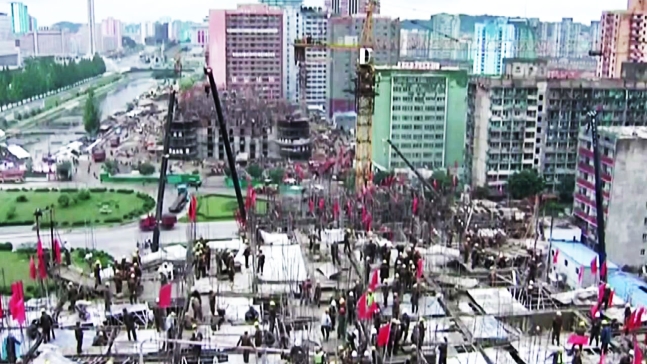 [Ryomyong Street Construction Site: Testimonies from a North Korean Defector Soldier]
Pyongyang's Manhattan: Built at the Cost of Young North Korean Soldiers' Lives “In the Ryomyong Street project, we were forced to work in perilous conditions, without any proper safety gear, enduring excruciatingly long hours – 13 to 18 hours a day. This grueling labor resulted in the heartbreaking loss of 2 to 5 soldiers each day.” said Mr. Lee. Back in 2017, Lee Eun-san, a defector who had worked on the construction site of "Ryomyong Street," often referred to as Pyongyang's Manhattan, shared his harrowing experiences with a trembling voice. Ryomyong Street was a city project in North Korea, personally planned by Kim Jong-un between 2016 and 2017, as an attempt to bypass international sanctions. It includes North Korea's tallest skyscraper, towering over 70 floors, situated between the Kumsusan Palace of the Sun, where Kim Il-sung and Kim Jong-il are laid to rest, and Yonghung Street. The project boasts 44 condominium buildings (4,804 units) for Kim Il-sung University educators and scientists, along with 28 public facilities like schools and nurseries. The stark difference between the grandeur of Ryomyong Street and the everyday lives of ordinary North Koreans led to the creation of a new term, "Pyonghattan," merging Pyongyang and Manhattan. North Korean soldiers working on the construction of Ryomyong Steet in May 2016 / Photo by Rodong Sinmun Mr. Lee had been sent to work on a construction site in Moscow, Russia, as part of his duties to earn foreign currency as a soldier. However, he couldn't endure the hardships and abuse any longer. In 2021, he made a brave decision to defect to South Korea. During a meeting with the SAND editorial board in Seoul on November 18th, Mr. Lee criticized the construction of Pyongyang's buildings, stating, "These structures were built at the cost of the blood and lives of young North Korean soldiers." Mr. Lee joined the North Korean military in 2010 and was assigned to the engineer elements after completing his basic training. These military engineer elements receive military training in January and February and are then put to work on construction projects from March to December. The military engineer element Mr. Lee was a part of was tasked with building Ryomyong New Street in 2016 under the orders of North Korean authorities. North Korea employs soldiers for major construction projects because they provide high-quality construction labor without getting paid. Mr. Lee described the harsh labor conditions and inhumane treatment he endured. Ryomyong Street: Construction began in April 2016 and concluded in April 2017; many soldiers lost their lives due to the relentless pace to meet deadlines / Photo by Rodong Sinmun. North Korean military leaders set an ambitious goal to complete one floor of a building each day. Remarkably, they achieved heights of over 10 floors just two months after starting construction in early April 2016. According to Mr. Lee, the soldiers had to work from 4 a.m. until midnight, with only short 20-minute breaks for lunch and dinner. To meet the tight construction deadlines, soldiers had to engage in life-threatening labor, working an average of 13 to 18 hours each day. The soldiers slept in makeshift tents at the construction site, without access to showers or laundry facilities. Water was scarce, making it impossible to wash properly. Mr. Lee mentioned, "Even when we had a little water, I was afraid to wash my face because the freezing cold water had made my nose bleed before." It was a tough environment where no one could even request a break or time off when they fell ill. Published by Rodong Sinmun on March 21, 2020, here is a glimpse of civilians working at a construction site without safety equipment. (Photo: Rodong Sinmun) He also recounted the most painful aspect - witnessing the tragic deaths of his fellow soldiers. Due to the long hours, lack of sleep, and extreme fatigue, their minds would become foggy. Working on the exteriors of high-rise buildings without safety equipment meant that if someone slipped or lost their footing, they would fall to their deaths. He recalled, "Some of my fellow soldiers fell from great heights, and I remember their bodies bursting like bombs upon impact and bouncing off other soldiers below. The image still haunts me, and it sometimes overwhelms me." He revealed that nearly every day, 2 to 5 soldiers lost their lives in accidents. However, the authorities dismissed these deaths as common occurrences in the construction industry, hastily closing accident cases. The funerals for the deceased soldiers were rushed, lasting only an hour, and their grieving parents received no financial compensation, only a "patriotic martyr's certificate." He added, "The grand buildings of Pyongyang City were built with the blood, sweat, and lives of young soldiers in their twenties. Every time I walked the street, memories of the comrades I had worked alongside came rushing back. It's a well-known fact that frequent accidents resulting in many injuries and deaths occurred during the construction process. In early February 2017, Radio Free Asia reported a structural collapse at the construction site that left over 30 people injured. Furthermore, it was reported that upon learning about the incident, Kim Jong-un sent Choe Ryong-hae, a member of the Workers' Party of Korea, to oversee the situation. Mr. Lee emphasized that various accidents happened due to the rushed construction efforts to meet Kim Jong-un's set deadlines and stressed that these projects were primarily intended for the privileged class, not the general population. The conditions for soldiers in other units were no different. North Korean soldiers often suffered from malnutrition due to poor-quality meals during their 10-year military service. They might also lose their lives due to inadequate medical care and treatment in case of accidents during their work. Brutal physical beatings within the units were also common. Mr. Lee was also beaten by his unit leader for not promptly washing his shoes during winter. Most defector soldiers had experienced or witnessed beatings as well. Moreover, there were various forms of cruelty within the North Korean military, including exposing soldiers to extreme cold, forcing them to undress and stand in freezing temperatures for extended periods, or tying parts of their bodies to cold objects, resulting in frostbite. Mr. Lee concluded saying "Since coming to this free country South Korea, I can't help but feel sorry for North Korean soldiers. I am determined to learn more and work towards the reunification of the Korean Peninsula." .bbs-view-content {font-size: 14pt; text-align: justify;} .bbs-view-content .note {border: 1px solid #333333; padding: 15px; text-align: left; font-size: 12pt;} @media (max-width: 800px) {.bbs-view-content {text-align: left;}}
23.12.08 -
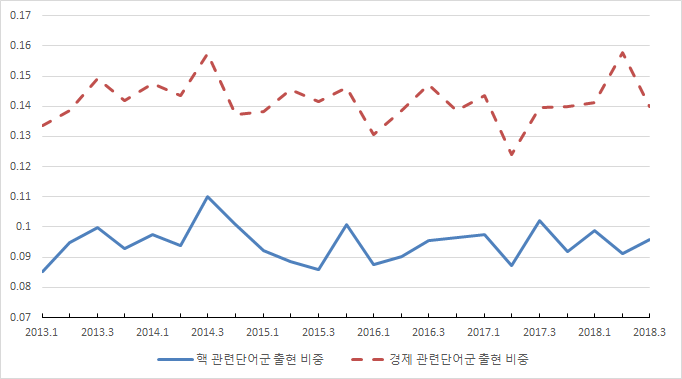 [SAND Research Report]
A Study on North Korea's Nuclear Economic Policy: Focusing on Correlation(3) Editorial Note: This research is a joint endeavor from the 2019 initiative aiming to lay the groundwork for reunification. This initiative was spearheaded by the SAND Research Institute in partnership with the Institute of Economic Research at Seoul National University. Within, we provide an up-to-date analysis examining the frequency, significance, co-occurrence, and implications of the terms "nuclear" and "economy" in various contexts. (Continued from Issue No. 13, 14) 7. Analysis of the Relationship between “Nuclear”, “Economy”, and Events on the Korean Peninsula 1) regression analysis A logistic regression analysis was employed to explore potential relationships between the prevalence of nuclear and economic related word groups in the entire document and events influencing peace on the Korean Peninsula—ranging from the destabilizing nuclear tests to the peace-fostering inter-Korean and North Korea-U.S. summits. Firstly, the trend of the proportion of nuclear and economic related word groups in the total number of words from Table 5 was calculated and set as an independent variable. The simple frequency of appearance of the words “economy” and “nuclear” were also used as independent variables. Additionally, since a number of economic related word groups were included in the nuclear-related word groups, “pure nuclear related word groups” were derived by removing the economic related word groups from the nuclear related word groups, and this was used as an independent variable. The quarterly trend of the appearance proportions of the two related word groups and the appearance proportion trend of the pure nuclear related word groups are as follows. <Figure 4> Trend of Appearance Proportions of Nuclear and Economic Related Word Groups and Pure Nuclear Related Word Groups ㅡ Proportion of Occurrence of Nuclear-Related Word Group -- Proportion of Occurrence of Economic-Related Word Group ㅡ Proportion of Pure Nuclear-Related Word Group Occurrence Overall, the vocabulary related to economics consistently maintained a higher presence throughout the entire period in comparison to vocabulary related to nuclear topics. Along with this, dummy variables for negative events affecting peace on the Korean Peninsula, such as North Korea's nuclear tests, and peaceful events such as high-level inter-Korean contacts, inter-Korean summits, high-level North Korea-U.S. contacts, and North Korea-U.S. summits were created and set as dependent variables. For the negative event variable, a dummy variable was created with a value of 1 for quarters in which North Korea conducted nuclear tests or ballistic missile launches, and 0 for other quarters. For the positive event variable, a dummy variable was created with a value of 1 for quarters in which high-level meetings and summits between North and South Korea, and North Korea and the U.S. took place, and 0 for other quarters. The content of the positive and negative event variables derived based on the above criteria is as shown in Table 8 below. Additionally, the study analyzed the impact of events that negatively influenced peace on the Korean Peninsula on the simple frequency of appearance of nuclear and economic words, the appearance proportion of related word groups, and the appearance proportion of pure nuclear related word groups in academic journals. It examined the impact of negative events, such as nuclear tests and ballistic missile launches, on the appearance of nuclear words and related words to investigate whether academic journals were attempting to justify these events after their occurrence.<Table 8> Details of the Dependent Variable Construction 부정적 사건 변수 Negative Event Variable 긍정적 사건 변수 Positive Event Variable 사건 Event 변수값 Variable Value 사건 사건 Event 2013 1Q 제3차 핵실험 Third Nuclear Test 1 2013 1Q 제3차 핵실험 Third Nuclear Test 2013 2Q 단거리 미사일 발사 Short-Range Missile Launch 1 2013 2Q 단거리 미사일 발사 Short-Range Missile Launch 2013 3Q - 0 2013 3Q - 2013 4Q - 0 2013 4Q - 2014 1Q - 0 2014 1Q - 2014 2Q 중거리 미사일 발사 Medium-Range Missile Launch 1 2014 2Q 중거리 미사일 발사 Medium-Range Missile Launch 2014 3Q - 0 2014 3Q - 2014 4Q - 0 2014 4Q - 2015 1Q 스커드 계열 미사일 발사 Scud Missile Series Launch 1 2015 1Q 스커드 계열 미사일 발사 Scud Missile Series Launch 2015 2Q KN 계열 미사일 발사 KN Series Missile Launch 1 2015 2Q KN 계열 미사일 발사 KN Series Missile Launch 2015 3Q - 0 2015 3Q - 2015 4Q - 0 2015 4Q - 2016 1Q 제4차 핵실험 Fourth Nuclear Test 1 2016 1Q 제4차 핵실험 Fourth Nuclear Test 2016 2Q 중거리 탄도미사일 발사 Medium-Range Ballistic Missile Launch 1 2016 2Q 중거리 탄도미사일 발사 Medium-Range Ballistic Missile Launch 2016 3Q 잠수함탄도미사일 발사 Submarine-Launched Ballistic Missile Launch 1 2016 3Q 잠수함탄도미사일 발사 Submarine-Launched Ballistic Missile Launch 2016 4Q 제5차 핵실험 Fifth Nuclear Test 1 2016 4Q 제5차 핵실험 Fifth Nuclear Test 2017 1Q 탄도 미사일 발사 Ballistic Missile Launch 1 2017 1Q 탄도 미사일 발사 Ballistic Missile Launch 2017 2Q 탄도 미사일 발사 Ballistic Missile Launch 1 2017 2Q 탄도 미사일 발사 Ballistic Missile Launch 2017 3Q 제6차 핵실험 Sixth Nuclear Test 1 2017 3Q 제6차 핵실험 Sixth Nuclear Test 2017 4Q 탄도 미사일 발사 Ballistic Missile Launch 1 2017 4Q 탄도 미사일 발사 Ballistic Missile Launch 2018 1Q - 0 2018 1Q - 2018 2Q - 0 2018 2Q - 2018 3Q - 0 2018 3Q - ※ Source: Ministry of Unification website, specifically the <Major Chronology of Inter-Korean Relations> and <Inter-Korean Summit Information> sections. Additionally, while there may be an impact occurring in the same quarter between the nuclear and economic related word groups, and the negative/positive events, that is, between the dependent and independent variables, considering that the impact may occur with a time lag, the lagged variables of the independent variables were created up to two quarters back, and the analysis was conducted. 2) Analysis Results According to the results in <Table 9>, the model that set the simple word occurrence proportion as an independent variable (columns 1 and 4) does not show statistical significance for both negative and positive events. The lagged variable of the pure nuclear-related word group occurrence proportion from the previous quarter shows a positive (+) influence at the 5% confidence level on negative events (column 3). However, its impact on positive events does not reach statistical significance (column 6). In other words, it is inferred that the higher the pure nuclear-related word group occurrence proportion in the previous quarter, the higher the probability of negative events such as nuclear tests and missile launches occurring in the current quarter. The lagged variable of the economic-related word group occurrence proportion from the previous quarter shows a positive (+) influence at the 5% confidence level on positive events (column 5). It is inferred that the higher the economic-related word group occurrence proportion in the previous quarter, the higher the probability of positive events occurring in the current quarter. While the simple frequency of occurrence of each nuclear and economic word does not influence positive/negative events, the lagged variables from the previous quarter show a significant impact on each event. The relationship between the lagged variables and the occurrence of events may not be logically explainable. There is also a possibility that this relationship occurred because of a tendency to detect the atmosphere of nuclear and missile tests or the atmosphere of talks in advance and respond to it beforehand. However, there is also a possibility that this is a mere statistical coincidence. According to the results in <Table 10>, when a negative event occurs on the Korean Peninsula, the simple frequency of nuclear word occurrence in that quarter increases, and the occurrence of negative events two quarters prior also increases the simple frequency of nuclear word occurrence in that quarter. Additionally, it decreases the occurrence proportion of the economic-related word group during quarters when negative events occur. 3) Implications The proportion of related word groups associated with "nuclear" and "economic" terms in academic journals seems to be intricately linked with positive and negative developments in peace across the Korean Peninsula. Negative events on the Korean Peninsula increase the simple frequency of nuclear word occurrence, suggesting that justification of events such as nuclear tests and ballistic missile launches is somewhat taking place after those events. On the other hand, when negative events occur, the appearance proportion of the economic-related word group decreases, suggesting that when events such as nuclear tests and ballistic missile launches occur, interest in the economic sector appears to be relatively low. <Table 9> Time-Series Logit Regression Analysis Results 종속변수 Dependent Variable 부정적 사건 Negative Event 긍정적 사건 Positive Event (1) (2) (3) (4) (5) (6) “핵” 단순 출현빈도 Simple Frequency of “Nuclear” 핵 관련단어군 비중 Proportion of Nuclear-Related Word Group 순수 “핵” 관련단어군 비중 Proportion of Pure “Nuclear” Related Word Group “경제” 단순 출현빈도 Simple Frequency of “Economy” 경제 관련단어군 비중 Proportion of Economy-Related Word Group 순수 “핵” 관련단어군 비중 Proportion of Pure “Nuclear” Related Word Group 핵 단어 출현 빈도t Frequency of Nuclear Word 0.1231 (0.1440) 핵 단어 출현 빈도t-1 Frequency of Nuclear Word 0.1483 (0.1561) 핵 단어 출현 빈도t-2 Frequency of Nuclear Word -0.0150 (0.1415) 핵 관련단어군 비중t Proportion of Nuclear-Related Word Group -152.5 (102.23) 핵 관련단어군 비중t-1 Proportion of Nuclear-Related Word Group -0.404 (84.11) 핵 관련단어군 비중t-2 Proportion of Nuclear-Related Word Group 15.38 (63.82) 순수 핵 관련단어군 비중t Proportion of Pure Nuclear-Related Word Group 7.742 (72.85) -27.75 (102.54) 순수 핵 관련단어군 비중t-1 Proportion of Pure Nuclear-Related Word Group 138.17* (61.24) -147.20 (75.38) 순수 핵 관련단어군 비중t-2 Proportion of Pure Nuclear-Related Word Group 38.99 (68.55) -12.00 (76.30) 경제 단어 출현 빈도t Frequency of Occurrence of Economic Words 0.0447 (0.0415) 경제 단어 출현 빈도t-1 Frequency of Occurrence of Economic Words -0.0697 (0.0543) 경제 단어 출현 빈도t-2 Frequency of Occurrence of Economic Words -0.0641 (0.0472) 경제 관련단어군 비중t Proportion of Economic-Related Word Group 98.88 (86.22) 경제 관련단어군 비중t-1 Proportion of Economic-Related Word Group 176.10* (70.07) 경제 관련단어군 비중t-2 Proportion of Economic-Related Word Group 59.29 (69.22) R-squared 0.1349 0.1120 0.1665 0.1663 0.2298 0.1665 관측치 Observations 21 21 21 21 21 21 ※ Note: Figures in parentheses represent the Robust Standard Error. The (*) symbol indicates significance at the 5% confidence level, highlighted in bold. The results estimated for each independent variable at each time point t for each dependent variable also show no significant difference in significance or coefficients from the above results. <Table 10> OLS Regression Analysis Results Table 종속변수 Dependent Variable (1) (2) (3) (4) (5) “핵” 단순 출현빈도 Frequency of Simple Occurrence of "Nuclear" 핵 관련단어군 비중 Proportion of Nuclear-Related Word Group 순수 “핵” 관련단어군 비중 Proportion of Pure Nuclear-Related Word Group “경제” 단순 출현빈도 Frequency of Simple Occurrence of "Economy" “경제” 관련단어군 비중 Proportion of Economy-Related Word Group 부정적 사건t Negative Event 2.800* (1.206) -0.0053 (0.0035) 0.0006 (0.0037) 6.180 (5.171) -0.0086* (0.0033) 부정적 사건t-1 Negative Event 2.586 (1.437) 0.0026 (0.0036) 0.0006 (0.0052) 4.866 (6.078) 0.0034 (0.0036) 부정적 사건t-2 Negative Event 4.300** (1.482) -0.0007 (0.0034) 0.0020 (0.0048) 5.880 (5.233) -0.0030 (0.0035) R-squared 0.5827 0.006 0.0091 0.2029 0.0070 관측치 Observations 21 21 21 21 21 ※ Note: Figures in parentheses represent the Robust Standard Error. The (*) symbol indicates significance at the 5% confidence level, and the (**) symbol indicates significance at the 1% confidence level, both highlighted in bold. The results estimated for each independent variable at each time point t for each dependent variable also show no significant difference in significance or coefficients from the above results. 8. Conclusion According to the analysis through North Korean academic journals, nuclear and economy are perceived as independent concepts in terms of their intrinsic connection. They are connected only by common goals, and no internal correlation between the two is observed. However, the connection between nuclear and economy is seen in the hostile policies of U.S. imperialism, revealing the passive nature of the nuclear-economic parallel development policy. In understanding the relationship between nuclear and economy, it is perceived that while the economy is complementary to nuclear, nuclear is not necessary for the economy, indicating a unilaterally complementary relationship. This implicitly reflects self-awareness that acknowledges the difficulty of securing legitimacy from the residents solely with nuclear capabilities. The trend in the frequency of occurrences of the words "nuclear" and "economy" is similar, which can be interpreted as an indication of the North Korean regime's censorship on publications. Despite the disparity between the two words, it seems that the state policy of nuclear-economic parallel development has been instilled through censorship of academic journals. In the period leading up to the first quarter, an increase in the prevalence of nuclear-related terms correlates with a higher likelihood of negative events on the Korean Peninsula, such as nuclear tests and missile launches. In contrast, a rise in the prevalence of economic-related terms correlates with an increased likelihood of peaceful events, like inter-Korean dialogues. The occurrence of negative events in the Korean Peninsula increases the frequency of nuclear word occurrences while decreasing the proportion of economy-related words. This is believed to be for post-justification of nuclear and missile tests. .bbs-view-content {font-size: 14pt; text-align: justify;} .bbs-view-content table {width: 100%; border: 1px solid #333333; border-collapse: collapse;} .bbs-view-content table td {border: 1px solid #333333; padding: 5px;text-align: center; font-size: 12pt;} .bbs-view-content table.hbm {width: 100%; border: none; border-bottom: 1px solid #333333; border-collapse: collapse;} .bbs-view-content table.hbm td {border: none; border-top: 1px solid #333333; padding: 5px;text-align: center; font-size: 11pt;} .bbs-view-content .note {border: 1px solid #333333; padding: 15px; text-align: left; font-size: 12pt;} @media (max-width: 800px) {.bbs-view-content {text-align: left;}}
23.11.17 -
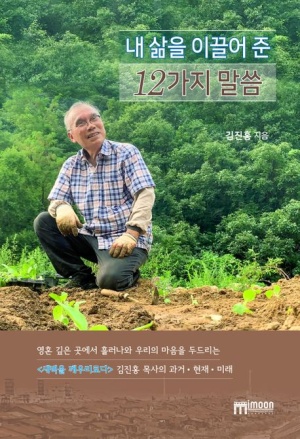 [Story on support for North Korea]
Pastor Kim's Real Thoughts: Pondering the Takedown While Circling Kim Il-sung’s Statue Kim Jin-hong Chair of Dure Cultural Foundation, Pastor at Dure Online Church In the illuminating pages of his latest autobiography '12 Words that Guided My Life,' released this past October, Pastor Kim Jin-hong of Dure Online Church has captured the attention and curiosity of many. A distinguished figure in the realms of theology and social activism in South Korea, Pastor Kim is celebrated for initiating the 'Dure Spirit' – a unique blend of church ministry, community service, and industrial innovation. His influential book, 'Wake Up The Dawn,' has reached global audiences, translated into various languages including Korean, English, Japanese, Chinese, and Russian, spanning over 100 editions and even inspiring a film adaptation. With '12 Words that Guided My Life,' Pastor Kim shares the depth of his experiences and insights, considering it a work close to his heart, much like 'Wake Up The Dawn.' In its introductory pages, he delves into the societal and personal upheavals he has witnessed for 82 years, pointing out South Korea’s extraordinary journey. Amongst the 120 new governments established post-World War II, South Korea remarkably stands out for its triumphant stride towards industrialization, democratization, and its transformation into a knowledge-based information society. He expresses immense pride in this unique legacy, highlighting the critical tasks that lie ahead – achieving an advanced South Korea and realizing national unification. The autobiography is rich with personal anecdotes and powerful narratives, particularly focusing on Pastor Kim's relentless efforts during the North Korean famine in 1998. His commitment led to the creation and personal supervision of orphanages and the Dure Farm, providing sanctuary for thousands of orphans across various regions in North Hamgyong Province. He staunchly believed and practiced the philosophy that aid directed towards North Korea must tangibly benefit its citizens, steering clear of the elites and privileged classes. Pastor Kim’s voice resonates with deep concern and empathy as he shares, “There are still nights filled with restlessness, my thoughts lingering on our North Korean brethren.” He underscores the imperative journey towards reunification, coupled with the necessity of supporting North Korea—a path he believes can only be achieved by dismantling the Kim Jong-un regime and establishing a democratic unification. He remains optimistic about the future, assuring his readers that this anticipated change is fast approaching. Given the depth and breadth of his experiences in North Korea, his fascinating stories will be unveiled across two engaging episodes. 1. Pondering a Monument’s Fall: Thoughts around Kim Il-sung’s Statue Each time I find myself in Pyongyang City, I make a reservation at the Koryo Hotel, situated atop Moranbong Hill. A short walk from the hotel reveals the towering statue of Kim Il-sung. (Editor’s Note: Post Kim Jong-il’s death in December 2011, a statue commemorating him was also erected.) The statues of Kim Il-sung and Kim Jong-il, situated on Mansudae Hill in Pyongyang City. This location was once the site of Jangdaehyun Church in 1907. / Korean Central News Agency This spot offers a panoramic view of the Taedong River and the heart of Pyongyang. On every visit, I ensure to take a moment to circle the statue, immersing myself in contemplative thought. I often find myself wondering, if one were to tie a rope around the statue’s neck, from which angle would it need to be pulled to bring the statue crashing down? My thoughts harbor a special purpose. This very spot was once home to Jangdaehyun Church, a cornerstone in the revival of the Korean church in 1907. A church rich in history was razed to the ground to erect the statue of Kim Il-sung. As a pastor deeply rooted in the Korean church, I am driven by a sense of mission to dismantle this statue and resurrect the Jangdaehyun Church in its rightful place. Following this, I crossed the Tuman River to Rajin-Sonbong, and began laying the foundations for an orphanage and a farm. The orphanage, now considered one of the finest in North Korea, stands as a testament to our success. Working in North Korea requires a level of shrewdness, and these are stories from those initial days of setting up the orphanage. During my trip to Rajin-Sonbong, I had securely stowed away $30,000 in cash, tucked away in my pocket. When I met with the Mayor of Rajin-Sonbong City, and we agreed to initiate the orphanage project, I had one crucial condition to lay out. “There’s one absolute condition when it comes to running the orphanage. If you're not on board with it, let's just forget the whole thing—I'm not moving forward with the project.” The North Korean authorities raised their eyebrows at my firmness, and questioned, “What kind of conditions could be so crucial for our country’s welfare?” I answered confidently, “This mission is to help our motherland, and for that, we need to lay down some clear ground rules from the very beginning.” The Mayor, now intrigued, urged me to continue, “Please, enlighten us about this condition you speak of.” I held my ground and declared, “I want full control of managing the orphanage, right from the construction stage to its day-to-day operations.” The Mayor hastily responded, asserting, “That’s not how things operate here. You provide the funding, and we will handle the management.” I held my ground, stating, “The funds for this orphanage are amassed from the donations of our compatriots worldwide. I bear a responsibility to them. I’ve brought $30,000 with me for this cause, and if you deny us self-management, I will just leave with these funds.” I reached into my pocket, pulled out the $30,000, and brandished it for them to see. Even after I firmly insisted on my terms and showed them the wad of cash, they continued to assert that such an arrangement was against their country's policies. I held my ground, responding, “If that’s how it is, then there’s nothing more to discuss. We can consider the orphanage project cancelled, and I will be on my way.” With that, I turned to leave. However, they weren’t ready to let go just yet. They sent an official after me, pleading for me to at least leave the funds as a donation. Yet, my resolve didn’t waver. As I was packing up and getting ready to leave, a North Korean official showed up, a mere 30 minutes before my departure time. He looked me straight in the eye and said, “Mr. Kim, your determination is truly remarkable. We’ve decided to accept your terms.” And so, we began the work of building the orphanage. We brought in a team of skilled carpenters from Yanbian, China, and assembled a construction crew, striking a balance between our own hires and those recommended by the city. As we wrapped up the construction and tallied the costs, it turned out we had managed to build the orphanage for just $27,500. Meanwhile, a large church in Seoul was undertaking a similar project, constructing a facility comparable to our orphanage. However, by following the city's extravagant recommendations, they ended up spending a staggering $3 million. This whole experience taught me a crucial lesson: when dealing with North Korean authorities, or in any similar situation, it is imperative to stand by your principles and stay firm. Straying from this path could lead to costs skyrocketing nearly tenfold. This principle is universal, applicable whether it's our government or private organizations seeking to assist North Korea; maintaining integrity and steadfastness is absolutely vital. <To be Continued> .bbs-view-content {font-size: 14pt; text-align: justify;} .bbs-view-content table {width: 100%; border: 1px solid #333333; border-collapse: collapse;} .bbs-view-content table td {border: 1px solid #333333; padding: 5px;text-align: center; font-size: 12pt;} .bbs-view-content .note {border: 1px solid #333333; padding: 15px; text-align: left; font-size: 12pt;} @media (max-width: 800px) {.bbs-view-content {text-align: left;}}
23.11.17
News Letter
We are leading the global communication via Newsletter.
We will deliver the latest information and proven facts on Korean Peninsula status including North Korea situation.