

-
 [North Korea Inside]
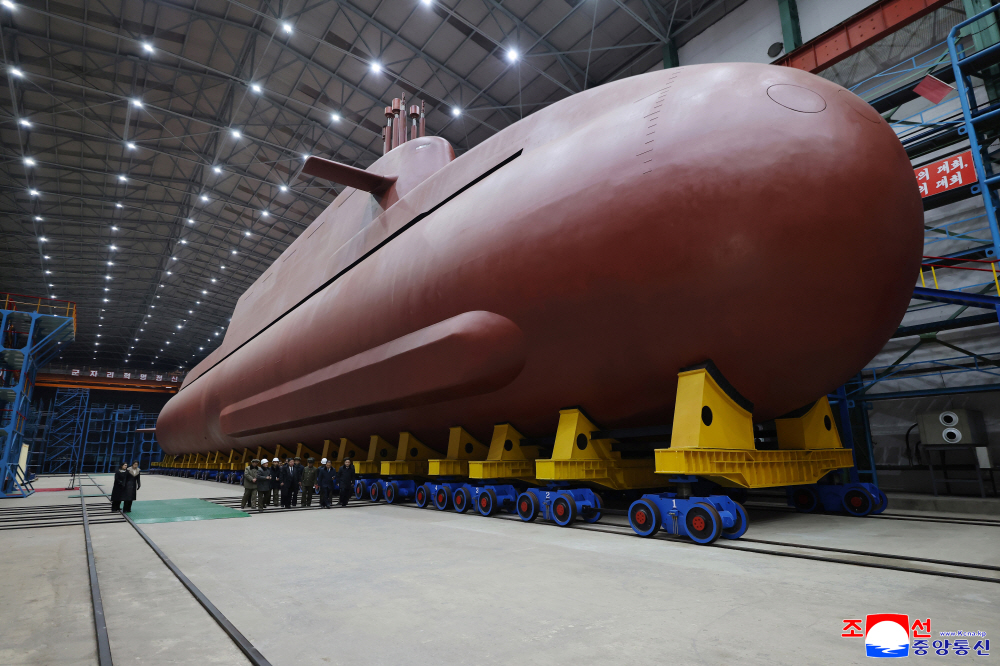
North Korea Inside· Kim Jong Un Sends Two Special Delegations to Pressure Moscow Over Nuclear Submarine Technology Transfers· Kim Jong Un’s Symbolic Appearances with Kim Ju-ae Signal Succession Plans· Kim Jong Un References “Maduro’s Ouster” While Overseeing Hypersonic Missile Launch· North Korea Downplays Xi Jinping’s New Year Message While Elevating Putin’s, Signaling Friction with BeijingKim Myong-sungSecretary General of the SAND InstituteKim Jong Un Sends Two Special Delegations to Pressure Moscow Over Nuclear Submarine Technology TransfersNorth Korean leader Kim Jong Un recently convened an emergency meeting with senior officials from the Workers’ Party of Korea, the government, and the military, during which he reportedly authorized a formal request for the transfer of nuclear-powered submarine technology from Russia. According to a Pyongyang-based source cited on January 6, Kim subsequently ordered the rapid deployment of two special delegations to Russia to pursue the matter.The emergency meeting, chaired by Kim on the evening of December 26, reportedly focused on measures to advance the long-delayed construction of a “nuclear-powered strategic guided missile submarine.” The timing is notable, as it occurred one day after North Korean state media revealed Kim’s inspection of an 8,700-ton nuclear submarine under construction at an undisclosed facility.At the meeting, Kim is said to have instructed officials to “conduct a comprehensive, phased review of all agreements reached with Russia over the past three years and prepare a precise implementation claim.” Sources emphasize that this directive went beyond routine bureaucratic reporting, instead amounting to a quasi-demand document intended to pressure Moscow into delivering advanced technologies and equipment commensurate with the military manpower and logistical support Pyongyang has provided to Russia.Kim reportedly followed this with a “first-priority directive” calling for strict accounting of what has been delivered, what remains outstanding, and which items require rescheduling.In the days following the meeting, North Korea dispatched two working-level delegations to Russia. These groups reportedly included officials from the State Affairs Commission, the Missile Guidance Bureau, the Reconnaissance General Bureau, and the Ministry of National Defense’s Equipment Bureau. Personnel from the State Security Department were also reportedly attached, suggesting concerns not only about technical coordination and logistical support but also about information control and the prevention of technology leakage.According to informed sources, the first working group is tasked with verifying on-site whether key equipment and materials essential to nuclear submarine construction are being delivered as agreed, as well as renegotiating timelines for technology transfers and component shipments delayed over the past three years.The second group is reportedly focused on assessing the scope and quality of cooperation in missile and intelligence-reconnaissance domains while coordinating contingency planning with Russian counterparts in anticipation of shifts in the international environment, including a potential end to the Russo-Ukrainian War. Both delegations are expected to contribute to a consolidated roadmap defining additional areas of cooperation required to complete the nuclear submarine program within the year.Analysts assess that Kim’s decision to abruptly form and dispatch these task forces reflects deeper structural problems in the submarine program. Kim identified the “possession of nuclear-powered submarines and underwater-launched nuclear strategic weapons” as a core objective of the five-year defense development plan unveiled at the Eighth Party Congress in January 2021. Under the original timeline, a launch ceremony would likely have already occurred.Against this backdrop, European media recently reported on a mysterious maritime incident in the Mediterranean roughly one year ago, in which a Russian cargo vessel allegedly carrying a compact nuclear reactor intended for a North Korean submarine was sunk in a torpedo attack attributed to a Western country.Diplomatic sources suggest the incident may have temporarily derailed Pyongyang’s ambitions. A subsequent Russian reactor shipment, however, is believed to have reached its destination. Military experts analyzing imagery released by North Korea have noted that the submarine’s external configuration suggests a small reactor may already be installed.While it remains difficult to independently verify the Mediterranean incident or assess its precise impact, the absence of a launch ceremony—expected around the time of the Ninth Party Congress—points to a significant delay in the program.A source familiar with North Korean internal dynamics noted that Kim Jong Un’s much-publicized “20×10 regional development policy,” prioritized last year, has produced few substantive results beyond ceremonial completions. The source added that the nuclear submarine represents the most tangible achievement available to showcase progress over the past five years. Its delay, the source suggested, is likely a source of acute frustration for the leadership.This interpretation is reinforced by reports that Kim abruptly suspended a provincial inspection tour on December 21 and convened another emergency meeting in Pyongyang, citing a “comprehensive crisis.” The meeting followed Kim’s visits to a local factory completion ceremony and the Sinpo submarine construction site on December 19, and a hotel completion ceremony in Samjiyon on December 20. Observers assess that the juxtaposition of underwhelming regional development outcomes and stalled strategic weapons programs may have prompted Kim’s unusually sharp internal directives.A high-level defector familiar with the program assessed that Kim has likely concluded that Russia’s transfer of advanced military technology is proceeding more slowly than promised or that the quality of transferred technology falls short of expectations. The defector added that Pyongyang is unlikely to stop at the current working-level engagements and may escalate its demands on Moscow in the coming months.Kim Jong Un’s Symbolic Appearances with Kim Ju-ae Signal Succession PlansSeparately, Kim Jong Un has continued a series of highly choreographed public appearances linked to North Korea’s overseas military operations, including a recent visit to the construction site of a memorial hall honoring fallen expeditionary forces, accompanied by his daughter Kim Ju-ae.Rodong Sinmun reported on January 6 that Kim visited the construction site of the “Overseas Military Operations Combat Merit Memorial Hall” in Pyongyang’s Hwasong District the previous day. Accompanied by senior party, government, and military officials, Kim toured the site, offered encouragement to soldier-builders, and personally planted the first commemorative tree in accordance with the memorial’s landscaping plan.In remarks carried by state media, Kim stated that the “noble sacrifices and heroic feats of the combatants will inspire patriotic fervor across all generations,” adding that the memorial would “powerfully demonstrate to the world the eternal vitality of the DPRK and the invincibility of the Korean People’s Army.”State-released photographs showed Kim personally operating a forklift to move trees and shoveling soil, while Kim Ju-ae was depicted planting a tree with a long-handled shovel. She wore a red, blue, and white scarf evoking the colors of the North Korean flag.Earlier, on January 1, Kim Ju-ae made her first recorded visit to the Kumsusan Palace of the Sun. Dressed in a purple suit, she stood prominently in the front row between Kim Jong Un and Ri Sol-ju, with Politburo Standing Committee members positioned half a step behind. Observers note that North Korean media’s decision to place Kim Ju-ae at the center of mourning imagery—visually ahead of senior officials—is highly unusual and reinforces perceptions that her public profile is being deliberately elevated through repeated appearances at major military and state events.Kim Jong Un References “Maduro’s Ouster” While Overseeing Hypersonic Missile LaunchNorth Korean leader Kim Jong Un has publicly emphasized the need for the continuous modernization of offensive weapons systems and the strengthening of nuclear war deterrence, citing recent “complex international incidents.” Observers assess that these remarks implicitly reference the recent U.S. operation involving the arrest and extradition of Venezuelan President Nicolás Maduro.The Korean Central News Agency (KCNA) reported on January 5 that Kim observed a hypersonic missile launch drill the previous day. According to the report, hypersonic missiles launched from the Ryokpo District of Pyongyang flew northeast and struck designated targets approximately 1,000 kilometers away in the East Sea.KCNA stated that the exercise was conducted “as part of an operational assessment to evaluate the readiness of the hypersonic weapons system, verify and confirm its mission capability, improve the combat proficiency of missile units, and ensure the continuity, effectiveness, and reliability of war deterrence.”While observing the launch, Kim underscored that “maintaining and expanding a powerful and reliable nuclear deterrent— through continuous verification of key components of war deterrence, systematic performance enhancement, and mastery of operational capabilities—constitutes a critically important strategic task.”He further argued that North Korea must “continuously renew its military capabilities, particularly offensive weapon systems,” characterizing this as “an essential requirement for self-defense.” Kim added that repeatedly compelling adversaries to recognize the constant readiness and lethality of North Korea’s strategic offensive forces is itself “a vital and effective means of exercising war deterrence.”Kim went on to stress that there should be “no misunderstanding” regarding the intent of these activities, stating that they are “clearly aimed at the step-by-step enhancement of nuclear war deterrence capabilities.” He attributed the necessity of this effort to “recent geopolitical crises and increasingly complex international incidents.”Analysts interpret Kim’s reference to “international incidents” as an indirect allusion to the U.S. arrest and transfer of Venezuelan President Nicolás Maduro to New York. By citing the case of a leader from a country Pyongyang considers politically aligned being abruptly detained by U.S. authorities, Kim appears to be reinforcing domestically the regime’s long-standing narrative that nuclear weapons constitute the ultimate guarantee of regime survival.Kim was accompanied at the launch drill by Kim Jong-sik, First Vice Minister of the Munitions Industry Department of the Workers’ Party of Korea, and Jang Chang-ha, Director of the Missile Bureau. Separately, South Korea’s Joint Chiefs of Staff announced that North Korea had launched multiple ballistic missiles toward the East Sea on the morning of January 4. The launches marked Pyongyang’s first ballistic missile tests of the year and occurred approximately two months after its previous short-range ballistic missile launch on November 7 of last year.North Korea Downplays Xi Jinping’s New Year Message While Elevating Putin’s, Signaling Friction with BeijingSigns of renewed strain have emerged in North Korea–China relations, which had appeared to stabilize following Kim Jong Un’s attendance at China’s Victory Day commemorations last September. On January 1, North Korean state media provided only minimal coverage of Chinese President Xi Jinping’s New Year greeting to Kim, treating it as a brief item alongside messages from other foreign leaders. Analysts note that such treatment would have been nearly inconceivable given the historical centrality of the bilateral relationship.Rodong Sinmun, the official newspaper of the Workers’ Party of Korea, reported that multiple heads of state, party leaders, and foreign figures had sent New Year’s greetings to Kim Jong Un. Xi Jinping and his wife were listed alongside leaders from Vietnam, Myanmar, Turkmenistan, Belarus, and Algeria. Notably, however, Rodong Sinmun neither published the full text of Xi’s message in a separate article nor indicated whether Kim had sent a reply.This approach represents a sharp departure from past practice. In 2024, designated by both sides as the “Year of DPRK–China Friendship,” North Korean media prominently published the full texts of congratulatory messages exchanged between Kim and Xi, highlighting efforts to restore and deepen bilateral ties. Given that China accounts for approximately 98 percent of North Korea’s external trade and remains indispensable to the North Korean economy, New Year’s greetings from China’s top leader have historically received exceptional coverage. Analysts argue that relegating Xi’s message to a brief mention constitutes not merely a diplomatic snub, but a visible cooling of relations.The shift is further underscored by Rodong Sinmun’s year-end special article published on December 31, which characterized 2025 as a year of historic transition. While the piece extensively highlighted achievements in national defense and construction, it made no reference to Kim Jong Un’s diplomatic activities.Conspicuously absent was any mention of Kim’s September visit to China to attend the 80th anniversary of Victory Day, his first appearance at a major multilateral diplomatic event since assuming power. At that event, Kim stood alongside Xi Jinping and Russian President Vladimir Putin atop Tiananmen Gate, symbolically projecting a close trilateral alignment.In contrast, North Korea has gone to considerable lengths to highlight its relationship with Russia. Following the publication of Russian President Vladimir Putin’s New Year’s message on December 18, Rodong Sinmun subsequently released the full text of Kim Jong Un’s reply on December 27. In the letter, Kim wrote that he felt “infinite pride” and was “deeply moved” to be jointly forging “the great history of DPRK–Russia relations and the century-long friendship” between the two countries with President Putin.Subtle indications of friction with China have also surfaced in the civilian sphere. Reports indicate that female staff members who had long worked at North Korean restaurants in Beijing have recently returned to North Korea in succession. Observers assess that this development is less likely the result of routine visa issues and more indicative of a shift in Chinese authorities’ tolerance toward the irregular operations of such establishments.In some cases, Chinese television broadcasts have reportedly replaced Korean Central Television programming, and menus have increasingly emphasized Chinese cuisine—suggesting that the personnel withdrawals may be permanent rather than temporary.Diplomatic sources assess that Pyongyang harbors resentment over what it perceives as inadequate compensation from Beijing for its participation in the Victory Day celebrations. To date, the only confirmed material support provided by China appears to have been shipments of sugar.Last month, China’s National Diplomatic Academy, citing customs data, reported that North Korea received approximately 19,000 tons of sugar following Kim’s summit with Xi. According to sources familiar with internal sentiment, this outcome reportedly generated dissatisfaction within Pyongyang, where expectations of more substantial economic or strategic benefits had been widespread.Additional frustration may stem from China’s continued engagement with South Korea. North Korea is reportedly displeased by the steady improvement in Seoul–Beijing relations, including the South Korea–China summit held on the margins of the APEC meeting in Gyeongju last year and President Lee’s state visit to China earlier this month. A diplomatic source in Beijing noted that Pyongyang’s sensitivities are likely heightened ahead of the upcoming South Korea–China summit in China, the first such meeting in nine years.
26.01.09 -
 [North Korea Inside]
North Korea Inside· China’s Strategic Concessions to Pyongyang: Sugar Aid, Symbolic Diplomacy, and Implications for Regional Order· Strategic Signaling Through Weapons Imagery: The Hwasong-20 and Calendar Diplomacy· Kim Jong-un Rebukes Cadres at Party Plenum, Signals Possible Party Charter Revision at 9th Congress· Kim Jong-un Attends Completion Ceremony of Food Processing Facility with Wife and DaughterKim Myong-sungSecretary General of the SAND InstituteChina’s Strategic Concessions to Pyongyang: Sugar Aid, Symbolic Diplomacy, and Implications for Regional OrderNorth Korean leader Kim Jong-un reportedly secured approximately 19,000 tons of sugar from China in connection with his participation in events commemorating the 80th anniversary of China’s victory in the War of Resistance Against Japanese Aggression.The sugar shipment—reportedly delivered in mid-October—appears to represent the most tangible outcome of Kim’s visit to Beijing, during which he was accompanied by his daughter, Kim Ju-ae. The transaction is widely interpreted as a dual-purpose gesture: alleviating chronic food shortages affecting North Korea’s civilian population while signaling the normalization and revitalization of bilateral relations between Pyongyang and Beijing to both domestic and international audiences.According to the South Korean National Diplomatic Academy’s 2026 International Situation Outlook, published on December 16, Chairman Kim secured 19,000 tons of granulated sugar through a bilateral summit with Chinese President Xi Jinping held in conjunction with the anniversary events. The report characterizes the aid as a measure aimed at stabilizing citizens’ livelihoods amid prolonged economic hardship.The institute further assessed the move as indicative of Kim’s intent to address internal economic pressures through expanded external diplomacy, projecting that similar efforts are likely to accelerate in the coming year. This assessment suggests a pattern in which Pyongyang seeks material compensation through strategic alignment—first with Russia via troop deployments and now with China through symbolic political engagement.Internal North Korean sources indicate that the sugar shipment entered the country around October 10, coinciding with the anniversary of the founding of the Workers’ Party of Korea. Sugar is a commodity entirely dependent on imports, and border closures during the COVID-19 period severed supply lines, leading to dramatic price inflation. Because sugar is not subject to international sanctions, the shipment is reportedly reflected in Chinese customs statistics.Within North Korea, sugar holds greater value than staple grains such as rice and is widely regarded as a luxury item accessible primarily to elites and officials. The prolonged shortage has produced broad socio-economic effects, including the suspension of operations at food-processing facilities, reduced availability of children’s snacks, and declining nutritional conditions among soldiers.Cuba, historically North Korea’s principal sugar supplier, has reduced shipments significantly following the normalization of diplomatic relations with South Korea last year, further exacerbating supply constraints. As a result, sugar prices have surpassed those of rice in domestic markets, placing the commodity beyond the reach of most citizens.Food-processing facilities have been particularly affected. Production of basic items such as candy, bread, snacks, and jam has either ceased or sharply contracted, disrupting supply chains for children’s institutions and military units. Reductions in snack allocations to daycare centers, kindergartens, and frontline units have raised growing concerns over nutritional imbalances.Historically, sugar played a symbolic role in regime legitimacy, distributed during major political holidays—such as the birthdays of Kim Il-sung and Kim Jong-il—as a tangible demonstration of state benevolence. The inability to sustain such distributions has therefore carried political as well as economic consequences, weakening propaganda narratives centered on paternalistic governance.In response, North Korean authorities have sought substitutes, including a stevia-like plant known domestically as “August grass,” which reportedly provides sweetness hundreds of times stronger than sugar but offers negligible caloric value. While artificial sweeteners such as saccharin are also in limited use, these alternatives remain inadequate for large-scale industrial food production.Sugar has also been identified as a potential medium for inter-Korean economic engagement. In 2020, a South Korean private organization explored a barter arrangement involving sugar shipments in exchange for Kaesong-produced ginseng liquor, reportedly eliciting significant interest from Pyongyang.Meanwhile, South Korea’s Institute for Foreign Affairs and National Security (IFANS) assesses that China is likely to incrementally deepen cooperation with North Korea to counter U.S. pressure and limit Russian influence on the Korean Peninsula. IFANS further anticipates renewed efforts by Pyongyang to restore traditional ties with Beijing, while noting the possibility of a renewed U.S.–North Korea summit in the coming year—a development that could further motivate Chinese diplomatic engagement.Strategic Signaling Through Weapons Imagery: The Hwasong-20 and Calendar DiplomacyNorth Korea’s 2026 external-propaganda calendar prominently features images of advanced strategic weapon systems, including the Hwasong-20 intercontinental ballistic missile (ICBM), often described by Pyongyang as its most powerful nuclear delivery system. The missile appears on both the cover and December page, depicted with a blunt-nosed MIRV configuration and mounted on an 11-axle transporter-erector-launcher similar to that used for the Hwasong-19.Experts assess that the warhead configuration is designed to accommodate multiple reentry vehicles—potentially five or more—intended to overwhelm U.S. missile defense systems.While military authorities believe the Hwasong-20 remains under development and has not yet undergone a test launch, recent activity at the West Sea Satellite Launching Station in Dongchang-ri suggests preparations for future testing.Satellite imagery analyzed by NK News indicates that the solid-fuel engine test facility has undergone significant upgrades, including the replacement of a fixed protective cover with a multi-stage folding structure that allows crane-assisted installation of large engines.Activity has also been detected at adjacent vertical test stands, suggesting the capacity for parallel testing of engines with varying thrust levels. Chairman Kim personally observed testing of a new carbon-fiber composite solid-fuel engine last September, a material critical for reducing missile weight while preserving structural integrity.North Korea’s most recent ICBM test occurred on October 31 of the previous year with the Hwasong-19. Intelligence assessments indicate a high likelihood of additional tests coinciding with the upcoming 9th Workers’ Party Congress. Some analysts interpret the inclusion of the Hwasong-20 in Chinese-language calendars, printed locally in China and distributed through diplomatic channels, as an effort to secure Beijing’s tacit approval or acquiescence.Beyond strategic weaponry, the calendar also depicts hypersonic missiles, suicide drone launchers, and large-caliber multiple rocket systems. Notably, January 8, widely believed by intelligence agencies to be Kim Jong-un’s birthday, remains unmarked as a public holiday, reinforcing assessments that the regime continues to manage internal symbolism cautiously amid succession sensitivities.Kim Jong-un Rebukes Cadres at Party Plenum, Signals Possible Party Charter Revision at 9th CongressNorth Korean leader Kim Jong-un sharply criticized the work discipline and ideological posture of senior officials at the conclusion of a three-day plenary meeting of the Central Committee of the Workers’ Party of Korea (WPK). Rodong Sinmun, the party’s official newspaper, reported on December 12 that in his closing remarks Kim identified “artificial obstacles to revolutionary development,” attributing them to “erroneous ideological perspectives and passive, irresponsible work attitudes” among certain leading officials and responsible cadres.The language used in the report suggests that shortcomings in the implementation of Kim’s flagship “Local Development 20×10 Policy” were implicitly attributed to bureaucratic failure rather than to structural or resource constraints. Kim reportedly characterized these problems as “defects and malpractices that must be rectified,” reinforcing a familiar pattern in which policy underperformance is framed as a function of cadre discipline rather than systemic limitations.In this context, Rodong Sinmun disclosed that organizational (personnel) issues constituted the fifth agenda item of the plenary meeting, noting that one Central Committee member and five alternate members were recalled. Although no names were released, the scope of the personnel action suggests that those removed were directly linked to Kim’s criticisms.A report issued by the Party Central Inspection Commission further highlighted deficiencies and bias in the enforcement of party discipline, raising the likelihood of a broader cadre reshuffle ahead of the 9th Party Congress scheduled for next year.Despite the critical tone directed at officials, Kim framed the current year as “a year of transformation through accelerated advance and doubled self-reliance,” asserting that notable achievements had been made across industry, agriculture, construction, and regional development.State media claimed that industrial production targets were exceeded through intensified efficiency campaigns, while grain output reportedly surpassed last year’s levels. Major construction projects tied to the local development policy were presented as tangible indicators of expanding “people’s welfare,” with the regime asserting that the modernization of the national economy and its technological foundations has entered a “consolidation phase.”Kim indicated that next year’s economic policy will largely extend existing priorities, identifying the restructuring of agriculture and rural areas as the foremost national task. He personally issued directives to expand wheat cultivation, increase processing capacity, reform the distribution system, and modernize tidal-flat farms along the west coast.For 2026, the regime finalized 20 cities and counties as targets for local development projects, citing examples such as the construction of six power plants in Gangwon Province and the modernization of the Unsan Paper Mill in South Pyeongan Province. Improving living conditions in coal-mining regions was designated a major national priority, alongside initiatives in education, trade, finance, and environmental management.The plenary meeting was attended not only by Central Committee members and alternates but also by provincial, municipal, and county officials, enterprise managers, and senior military commanders. The Politburo formally entrusted Kim with presiding over the meeting. Notably, unlike previous plenums, the session made no reference to external strategy toward the United States or South Korea, focusing instead on internal discipline, economic restructuring, and agricultural reform.Particular attention has been drawn to the announcement that the Party Charter will be amended at the forthcoming 9th Party Congress. While no details were provided, some analysts speculate that revisions could include provisions related to institutional reforms or frameworks that further entrench hereditary succession into a fourth generation.Kim Jong-un Attends Completion Ceremony of Food Processing Facility with Wife and DaughterNorth Korean leader Kim Jong-un attended the completion ceremony of a local factory and comprehensive service center in Gangdong County, near Pyongyang, accompanied by his wife, Ri Sol-ju, and daughter, Kim Ju-ae.The Korean Central News Agency (KCNA) reported on December 16 that the event marked Ri Sol-ju’s first public appearance in approximately six months. The facility forms part of the regime’s broader local development initiative aimed at expanding regional food-processing capacity and service infrastructure.State media images showed Ri Sol-ju tasting soy sauce produced at the facility alongside Kim. She was depicted carrying a luxury handbag believed to be a product of the French brand Gucci, similar to one previously observed at the Wonsan-Kalma Coastal Tourist Zone completion ceremony.Such items are prohibited from export to North Korea under UN Security Council Resolution 1718; nevertheless, luxury goods are widely believed to enter the country through diplomatic channels for elite consumption. Observers note that these images underscore the contrast between elite privilege and the material burdens imposed on local officials and residents tasked with meeting construction quotas.KCNA released 53 photographs of the event, many of which prominently featured Kim Ju-ae. In several images, she appeared positioned ahead of Kim Jong-un during site inspections or seated alongside him during briefings, while Ri Sol-ju was typically framed in the background or at the margins. The visual emphasis on Kim’s daughter has reinforced assessments that the regime continues to cultivate her public profile as part of longer-term succession signaling.During the visit, Kim reiterated that advancing provincial development and delivering “prosperity and civilization” to local populations constitutes a “sacred undertaking” of the Workers’ Party. He emphasized that the intended beneficiaries of the local development policy are ordinary residents and called for sustained momentum in expanding what he described as an unprecedented era of innovation and transformation.The 13th Plenary Meeting of the 8th Central Committee, held from December 9 to 11, ultimately confirmed the list of 20 cities and counties slated for development projects next year under the Local Development 20×10 Policy, further institutionalizing the regime’s emphasis on regional economic performance as both a governance priority and a source of political legitimacy.
25.12.19 -
 [NK Focus]
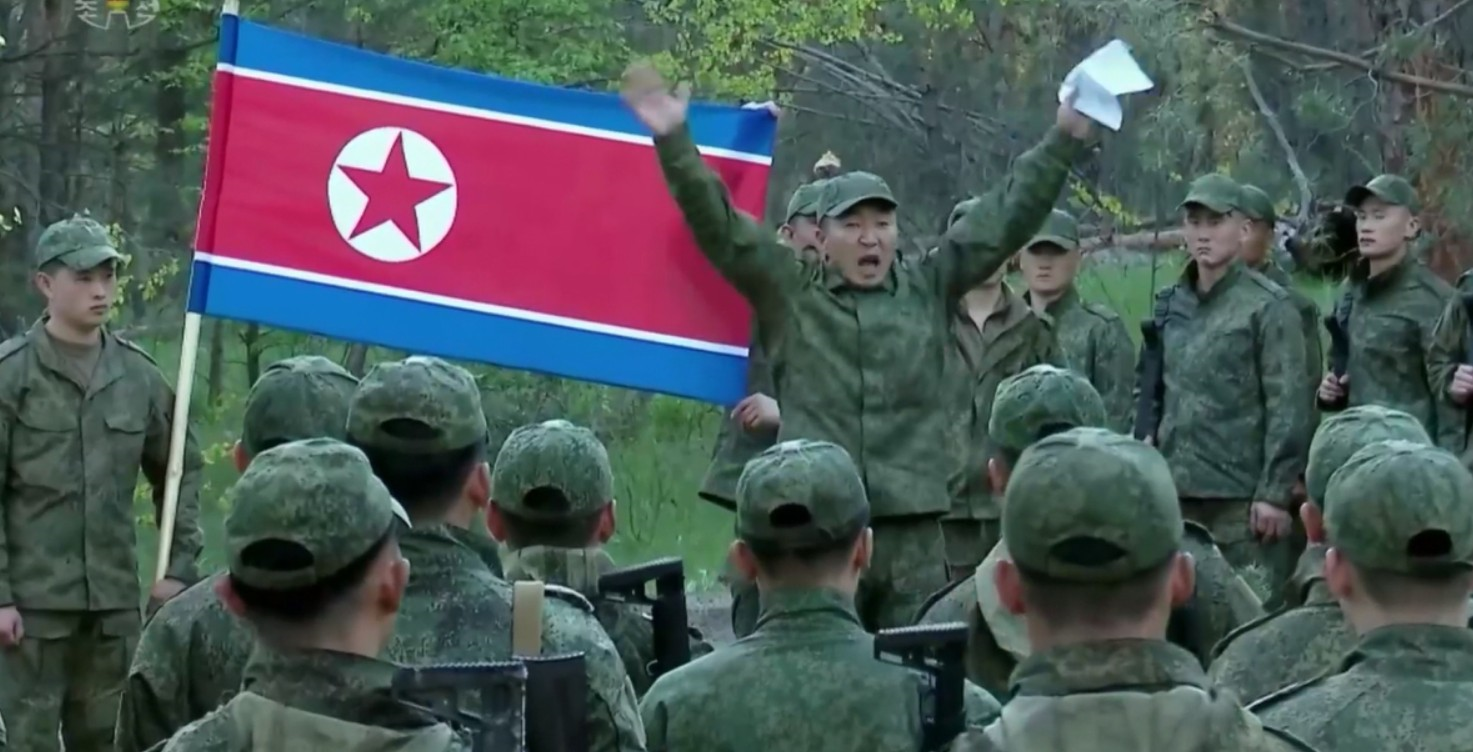
North Korea’s Growing Frustration with Russia: “Putin Stabbed Us in the Back”Kim Dong-sooFormer North Korean DiplomatMounting evidence suggests that discontent is deepening within North Korea over Chairman Kim Jong-un’s decision to dispatch troops to Ukraine—a move intended to highlight Pyongyang’s so-called “blood alliance” with Moscow. Instead, the decision increasingly appears to have backfired.Russia has reportedly scaled back, delayed, or outright failed to deliver on its initial commitments regarding financial compensation and defense-technology transfers. As funding channels constrict, internal frustration—captured in expressions such as “Putin stabbed us in the back”—is rising sharply within the regime.According to multiple North Korean sources and intelligence assessments dated December 8, Russia has so far provided only about 20 percent of the compensation originally promised for the troop deployment. Intelligence officials assess that the deployment was initiated by Kim Jong-un and accepted by President Putin, with Pyongyang securing pledges of monthly payments averaging roughly $2,000 per soldier, in addition to separate compensation packages. The North Korean leadership intended to claim more than 80 percent of these payments for state coffers.Reports indicate Russia initially promised monthly salaries of $5,000 for commanding officers, $3,500 for technical specialists, $3,000 for non-commissioned officers, and $2,000 for enlisted personnel. Moscow also pledged approximately $30,000 in compensation for each soldier killed in action and committed to providing medical treatment to the wounded.In the early phase of the deployment, North Korea reportedly received in-kind compensation from Russia—including air-defense missiles, military technologies, grain, and crude oil. Russia is also said to have transferred advanced systems such as R-27 and S-300 air-defense components, satellite-related technologies, and space-launch vehicle engines.In addition to grain and fuel deliveries, North Korea is believed to have obtained roughly 25 trillion won in cash through the provision of munitions and other military supplies. North Korean military units have also taken part in weapons-production cooperation, including artillery and drone manufacturing.Russia’s “20 Percent Payment” ProblemA major source of growing internal anger is Russia’s failure to pay the promised monthly salaries. Moscow is reportedly insisting that North Korean troops “did not fight effectively” and that their “performance was lacking,” a characterization many experts view as an excuse to avoid fulfilling its financial commitments. This has placed Pyongyang in a difficult position, forcing the regime to reconsider national economic plans that assumed substantial revenue from the deployment.Russia has likewise backtracked on its commitments to provide advanced military technology. According to intelligence reporting, Moscow rejected Pyongyang’s expectations for transfers of high-end air-defense systems and reconnaissance satellite capabilities, stating that “core technologies” could not be shared. Weapons provided to North Korean soldiers on the battlefield were reported to be outdated or otherwise unsuitable.Worsening Conditions and Desertion AttemptsConditions for North Korean troops appear dire. Local reporting suggests Russia is failing to provide adequate medical care, including basic surgery, for wounded North Korean soldiers. A source stated that Russian military hospitals “administer little more than painkillers and antibiotics before telling wounded North Koreans to return home.”There is also evidence of desertion attempts. Intelligence sources report that approximately seven injured North Korean soldiers fled a Russian military hospital and attempted to contact UN agencies to seek asylum.Rumors are circulating within North Korea that more than one million young Russian men have been killed or wounded in the conflict, leaving “only women behind.” Similar reports claim that thousands of North Korean troops deployed to Russia have been killed or injured.Economic Fallout and Market SignalsJeong Seong-hak, Director of the Image Analysis Center at the Korea Institute for National Security Strategy, stated in a recent interview on the security-focused YouTube channel Code-Q that the anticipated “war windfall” for North Korea has proven illusory. Despite heavy battlefield casualties and what Jeong described as a substantial “blood price,” the actual flow of food aid and other promised economic benefits from Russia has been minimal. Satellite imagery has shown no observable movement of large-scale grain shipments at border logistics facilities.The economic repercussions are visible in North Korean markets. Jeong reported that rice prices surged by more than 50 percent in just two weeks in major cities such as Pyongyang, Hamhung, and Sinuiju. He assessed the spike not as a temporary market fluctuation but as “an indication of systemic economic failure.” As goods fail to reach local markets, increasing numbers of residents are turning to high-interest private loans simply to secure food supplies—signaling severe dysfunction in distribution networks.The psychological impact is equally significant. Initial public optimism that Russia would provide substantial compensation has faded. Jeong explained that sentiments among residents have shifted from “Russia will help us” to “next year will be even worse.” Such perceptions, combined with deepening material hardship, may undermine internal regime stability.Outlook: 2026 as a Critical YearAnalysts broadly agree that 2026 will be pivotal for the North Korean economy. Jeong warns that if authorities impose strict administrative controls to suppress rising prices and exchange rates, market functions could collapse entirely. In a worst-case scenario, Pyongyang may attempt to revive limited forms of the rationing system used during the “Arduous March” of the 1990s.Key policy initiatives—such as Kim Jong-un’s “20×10” regional development plan and conventional military modernization—are reportedly encountering setbacks, as Russia’s failure to deliver expected compensation undermines financing assumptions. Diplomatic calculations have also faltered. Pyongyang’s decision to lean toward Moscow has strained ties with China, its traditional patron. North Korean workers sent from China to Russia to earn foreign currency are said to be returning home empty-handed due to unpaid wages.In response, internal control measures appear to be intensifying. A source reports an “unusual generational reshuffle” within the leadership in Pyongyang, with officials older than 42 being replaced. This move is seen as an effort to preempt criticism from older cadres over the failed deployment decision and mounting economic challenges, while reinforcing Kim Jong-un’s centralized authority.Overall, North Korea’s troop deployment to Russia increasingly appears to be a strategic miscalculation—one that has produced minimal financial gain while exacerbating human losses, economic fragility, diplomatic isolation, and internal instability.
25.12.12 -
 [North Korea Inside]
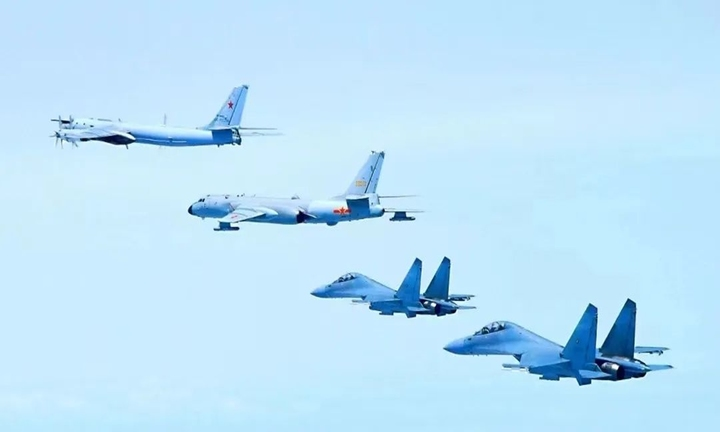
North Korea Inside· North Korean Artillery Fire and Sino-Russian Bomber Flights Create the Appearance of Strategic Encirclement· Ri Il-hwan, North Korea’s “Goebbels” and the Workers’ Party’s “Phoenix,” Returns to the Political Stage After Eleven Months Under Investigation· North Korea Uses the Term ‘On-Site Guidance’ for Choe Ryong-hae’s Provincial Visit for the Third Times· Cohabitation Constitutes a Severe Criminal Offense in North Korea; Evidence Suggests Some Executions Result in DecapitationKim Myong-sungSecretary General of the SAND InstituteNorth Korean Artillery Fire and Sino-Russian Bomber Flights Create the Appearance of Strategic EncirclementNorth Korea launched over ten artillery rounds into the West Sea on the afternoon of December 9. Earlier that morning, a combined formation of nine Chinese and Russian military aircraft entered the Republic of Korea’s Air Defense Identification Zone (KADIZ), operating over the East Sea and the South Sea.Although each of these activities has occurred individually in the past, it is uncommon for North Korea, China, and Russia to carry out military operations of this scale almost simultaneously across the air and maritime approaches to the Korean Peninsula. The timing and geographic distribution of these actions generated the impression of a coordinated encirclement posture—North Korea applying pressure in the West Sea, China maneuvering in the South, and Russia operating in the East.On December 10, the Republic of Korea’s Joint Chiefs of Staff (JCS) announced that they had detected “approximately ten multiple rocket launcher rounds fired by North Korean forces toward the northern waters of the West Sea at around 3:00 p.m. on the 9th.” The JCS stated that South Korean and U.S. intelligence authorities are conducting a detailed joint assessment.The munitions are believed to have been 240mm long-range multiple rocket launchers, systems capable of striking the Seoul metropolitan area. The JCS also emphasized that the military is maintaining enhanced surveillance of North Korea’s broader force posture.North Korea typically begins its winter training cycle in early December, and on its face the latest launch could be interpreted as part of that routine. The North had also fired roughly ten presumed 240mm rockets into the West Sea on December 1 and 3.However, because the most recent launch coincided with the opening of an enlarged plenary meeting of the Workers’ Party Central Committee—a high-priority political event—and because Chinese and Russian military aircraft entered the KADIZ only hours later without prior notification, defense analysts broadly assess that the activity exceeds the level normally associated with seasonal training.The Chinese and Russian aircraft entered the KADIZ sequentially over the East and South Seas beginning at approximately 10:00 a.m. on December 9. According to the ROK military, the Chinese contingent consisted of two aircraft, while the Russian contingent consisted of seven. Although the aircraft did not violate sovereign airspace, the ROK Air Force immediately scrambled fighter jets to ensure continuous monitoring and maintain interception readiness.Since 2019, China and Russia have conducted one or two annual entries into the KADIZ as part of what they describe as “joint training” or “strategic aerial patrols,” almost always without providing advance notice. The December 9 activity marked the first concurrent entry of Chinese and Russian aircraft into the KADIZ since November 29 of the previous year. While Beijing and Moscow publicly characterized the flights as a joint strategic patrol, the ROK military views the activity as a calibrated pressure operation.Analysts also noted that the aircraft entered not only the KADIZ but also Japan’s Air Defense Identification Zone (JADIZ) without prior notification. Against the backdrop of recently strained China–Japan relations—exacerbated by remarks from the Japanese Prime Minister signaling potential involvement in a Taiwan contingency—defense observers assess that the flights may have been intended as a multidirectional warning signal.According to one diplomatic source, the activity “appears designed to check both the unexpectedly stable South Korea–Japan relationship under the Lee Jae-myung administration and the increasingly confrontational alignment between the United States and Japan vis-à-vis China and Russia.”The ROK Ministry of National Defense announced on December 10 that Director-General for International Policy Lee Kwang-seok had formally lodged a protest with the Chinese and Russian defense attachés in Seoul regarding the unauthorized entry of their aircraft into the KADIZ. The Ministry stated that South Korea “will respond actively and in full compliance with international law to any future aircraft activity by neighboring countries within the KADIZ.”Ri Il-hwan, North Korea’s “Goebbels” and the Workers’ Party’s “Phoenix,” Returns to the Political Stage After Eleven Months Under InvestigationRi Il-hwan, the Workers’ Party secretary for propaganda whose whereabouts had been the subject of persistent speculation, has returned to public view after an 11-month absence. Ri, often described as “North Korea’s Goebbels,” had not appeared in state media since early January.Photographs released on December 10 by the Korean Central News Agency (KCNA) from the enlarged meeting of the 13th Plenary Session of the 8th Central Committee showed Ri seated prominently in the front row of the presidium.Ri’s last public appearance before his disappearance dates to January 2 of this year, when he was photographed alongside Kim Jong-un with labor innovators and meritorious workers. After that event, he vanished from official media and was notably absent from major party functions.In April, South Korea’s National Intelligence Service (NIS) acknowledged that it was monitoring the disappearances of both Ri Il-hwan and Jo Yong-won, suggesting possible personnel changes. According to sources familiar with internal developments in North Korea, Ri had been removed from his position on corruption charges and subjected to a period of “revolutionary re-education” during his nearly year-long absence.Following the 8th Party Congress, Kim Jong-un reportedly expressed concern about corruption, privileged lifestyles, and inaccurate reporting among senior officials, instructing the party leadership to carry out a comprehensive reinvestigation.The internal probe, which ran from January through late February, was overseen by Kim Hyong-sik, head of the Legal Affairs Department, and Kim Jae-ryong, head of the Disciplinary Inspection Department. Approximately 20 senior party officials were targeted, including Organization Secretary Jo Yong-won and Propaganda Secretary Ri Il-hwan.The investigation encompassed not only the officials themselves but also their spouses, children, siblings, and in-laws, scrutinizing “every aspect” of their lifestyles. Investigators reviewed workplace activities, foreign contacts, unauthorized use of state materials, and access to preferential allocation systems. Key areas of inquiry included:— omissions and distortions in the 8th Party Congress report;— privileged lifestyles of senior officials and their families;— procurement of materials through unofficial channels;— leakage of internal documents; and— illicit accumulation or diversion of funds.Sources familiar with the matter report that substantial evidence emerged implicating Ri Il-hwan in several corruption-related offenses. He was suspected of earning foreign currency through unreported dealings with Chinese counterparts during publishing projects overseen by an agency affiliated with the Propaganda Department.Investigators also uncovered indications that he had diverted party funds to support informal propaganda organizations linked to his personal network. In addition, he was reportedly connected to the smuggling of foreign equipment through the Bonghwa Joint Venture Company operated by his wife. At the time, internal assessments suggested that a political comeback was highly unlikely.Ri’s prominent appearance at the plenary meeting indicates that he ultimately received a disciplinary measure consistent with “re-education through labor,” rather than permanent removal. Within Pyongyang, observers noted widespread remarks referring to him as “a phoenix,” a reference to an earlier episode in his career.In 2002, while serving as First Secretary of the Youth League, Ri survived a severe automobile accident during a trip to a goat farm in Hamhung. His car plunged off a cliff, killing the student affairs secretary who was accompanying him. Ri had been driving the vehicle himself, reportedly to practice in advance of receiving a new sedan from Kim Jong-il.To avoid taking responsibility, he initially blamed the driver, but the truth emerged after the driver reported the incident. Kim Jong-il, reportedly furious, ordered Ri to undergo ideological re-education at the Deokseong Mine in South Hamgyeong Province, declaring that Ri had “killed two people that day.” The accident and its political aftermath left Ri with a reputation for improbable survival.Ri’s political durability is widely understood to stem from his long-standing connection to Kim Jong-un’s mother, Ko Yong-hui. During his tenure as First Secretary of the Kim Il-sung Socialist Youth League from 1998 to 2001, Ri led the propaganda initiative that formalized Ko Yong-hui’s deification—a key step in establishing Kim Jong-un as successor. According to a high-ranking defector, Ko Yong-hui personally invited Ri to her residence, introduced him to her son, shared meals with him, and presented him with gifts.At the December plenary session, military officials were visibly relegated to less prominent seating. Senior figures such as Pak Jong-chon, Secretary for Military Affairs; No Kwang-chol, Minister of National Defense; Jong Kyong-taek, Director of the General Political Bureau; and Ri Yong-gil, Chief of the General Staff, were positioned toward the back. Meanwhile, key officials associated with policy toward South Korea, such as Ri Son-gwon and Kim Yong-chol, were absent entirely.Although North Korea had previously announced five agenda items for the plenary session, state media reported on only three:— the review of 2025 policy priorities,— the work report of the Central Inspection Commission, and— preparations for the 9th Party Congress.Analysts believe the two undisclosed items likely pertained to personnel reforms, organizational restructuring, or amendments to the party constitution.North Korea Uses the Term ‘On-Site Guidance’ for Choe Ryong-hae’s Provincial Visit for the Third TimeNorth Korean state media has once again used the term “on-site guidance”—a designation traditionally reserved exclusively for State Affairs Commission Chairman Kim Jong-un—to describe Supreme People’s Assembly Standing Committee Chairman Choe Ryong-hae’s local inspection activities.This shift in terminology is notable, as Pyongyang has historically employed ryohae (inspection or assessment) for visits conducted by senior officials other than the supreme leader. Against the backdrop of speculation about Choe’s expanding political stature, some analysts have even suggested that he may have been tapped for the position of First Secretary of the Workers’ Party, a post created but left unfilled at the 8th Party Congress in 2021.According to the December 7 edition of the Rodong Sinmun, “Comrade Choe Ryong-hae, member of the Political Bureau Presidium of the Workers’ Party of Korea, provided on-site guidance on various sectors.” Choe toured the Namhung Youth Chemical Complex in North Hamgyeong Province, the Unchon County Food Processing Factory, and the Eup and Bojeok Farms, where he issued instructions on strengthening production management, improving food quality, and expanding organic fertilizer output.This marks the third instance this year in which North Korean media has applied the term “on-site guidance” to Choe’s provincial activities, following similar designations in June and September. On September 14, for example, the Rodong Sinmun reported that Choe had conducted “on-site guidance” at the Samjigang Farm in Jaeryong County, South Hwanghae Province, and the Daecheong Farm in Unpa County, North Hwanghae Province. A separate report on June 8 stated that Choe had provided “on-site guidance” at several economic facilities in South Hwanghae Province, including the South Hwanghae Steel Mill.Traditionally, North Korea distinguishes between “inspection”—a term applied to activities by senior officials—and “guidance,” which is framed as the exclusive prerogative of the top leader. This unwritten rule has, however, eroded to some extent under Kim Jong-un.In 2021, during typhoon-recovery efforts, the term “guidance” appeared in reports involving several senior officials, though this was generally attributed to the exceptional circumstances of a national emergency. By contrast, the terminology now applied to Choe Ryong-hae carries more deliberate and explicitly political overtones.In this case, the use of “guidance” appears to signal a notable expansion of Choe’s authority, particularly given that he is currently overseeing broad segments of the economy, including agriculture and the chemical industry. A researcher at a state-run institute observed that “the expression ‘on-site guidance’ carries significant political weight within North Korea’s system, which elevates the supreme leader’s exclusive authority,” adding that this terminology is “less indicative of a routine inspection and more suggestive of hierarchical adjustment.”Choe Ryong-hae’s political lineage is also relevant. As the son of Choe Hyon, former Minister of the People’s Armed Forces and a prominent anti-Japanese guerrilla who fought alongside Kim Il-sung, Choe carries substantial symbolic weight within the regime.North Korea recently highlighted this legacy by naming its first modern destroyer the Choe Hyon-ho. Since Kim Jong-un’s rise to power, Choe has held a succession of senior posts across both the Workers’ Party and the military, including Director of the Organization and Guidance Department (OGD) and Director of the Korean People’s Army General Political Bureau.South Korea’s National Assembly Research Service (NARS) assessment published last April concluded that after Choe assumed the OGD directorship in 2017, “the formalization of an unofficial organizational network” accelerated rapidly, enabling his associates to advance across key institutions in the Workers’ Party, government, and military.Among those considered part of Choe’s professional network—many of whom rose significantly during his tenure—are Chief of the General Staff Ri Yong-gil and former Minister of the People’s Armed Forces No Kwang-chol. The report found that Choe’s institutional influence is “substantially broader than the networks highlighted during the purge of Jang Song-thaek in 2013,” and argued that his power base has been “reproduced sustainably through the objective authority delegated by Kim Jong-un.”Following the collapse of the 2019 Hanoi Summit, Choe stepped down from the OGD, but observers note that his political weight actually increased as he assumed the positions of First Vice Chairman of the State Affairs Commission and Chairman of the Presidium of the Supreme People’s Assembly.The NARS report characterizes this evolution as “a unified patronage structure that merges Kim Jong-un’s legitimacy with Choe Ryong-hae’s administrative authority.” A researcher at a state-run institute further stated that empowering Choe “helps mitigate the excessive burden of governance concentrated on Kim Jong-un.”Lee Seung-yeol, also of the NARS, assessed that at the upcoming 9th Workers’ Party Congress, Choe Ryong-hae could be appointed First Secretary of the Workers’ Party, a role that would, in effect, make him Kim Jong-un’s delegate and potentially position him as a political guardian for Kim Ju-ae.An expert at a state-run research institute commented that “the Choe Hyon–Choe Ryong-hae lineage symbolizes a loyal guerrilla pedigree spanning three generations of the Kim family,” adding, “There is arguably no figure more capable than Choe Ryong-hae of legitimizing a fourth-generation succession to Kim Ju-ae.”Cohabitation Constitutes a Severe Criminal Offense in North Korea; Evidence Suggests Some Executions Result in DecapitationA recent defector account offers a stark illustration of the heightened repression in North Korea following the enactment of the Anti-Reactionary Ideology and Culture Rejection Law in 2020. According to this testimony, the number of people executed by firing squad for watching or distributing South Korean dramas, K-pop content, or other foreign media has increased significantly. The defector also described incidents in which stray bullets during public executions resulted in the decapitation of prisoners—imagery that underscores the extreme brutality of these punishments.Japan’s weekly current-affairs magazine Daily Shincho interviewed two defectors who fled North Korea after 2022, providing an updated account of human rights conditions inside the country. One interviewee, 35-year-old Kim Il-hyeok from Byeokseong County in South Hwanghae Province, described a July 2022 public execution as “a scene I will never be able to erase.”Two individuals were executed that day: one accused of watching and circulating more than 70 South Korean songs and three dramas, and another reportedly detained for a murder that had occurred nine years earlier.Kim explained that nearly the entire village, including children, had been compelled to attend under the pretext of “ideological education.” Approximately 1,000 residents stood in silence as the execution proceeded in severe weather conditions. The prisoners, tied to wooden stakes with white cloths covering their heads, faced a firing squad. Kim recalled that one bullet was so misaligned that it severed a prisoner’s head from his body.According to Kim, the frequency of public executions increased sharply after 2020. Whereas such executions had previously occurred perhaps once a year, they began taking place roughly twice every three months. He attributed this escalation to the Anti-Reactionary Ideology and Culture Rejection Law, which criminalizes the possession, viewing, or distribution of foreign media—particularly from South Korea, Japan, and the United States—and authorizes capital punishment in certain cases. Kim noted that offenses that once resulted in imprisonment can now lead to execution.Since the law’s implementation, censorship and surveillance have intensified significantly. Residential searches that were once conducted twice a year now occur as often as twice a month. Security agents reportedly dismantle beds, furniture, and storage spaces during inspections. Random street searches have also become more frequent, and personal devices capable of storing foreign content—USB drives, SD cards, MP3 players—are routinely confiscated.Kim emphasized that exposure to South Korean popular culture is nearly universal among North Koreans in their 20s and 30s. He admitted to listening to Girls’ Generation and to watching television dramas such as Iris. He noted that portrayals of prosperity abroad foster aspirations for a better life, sentiments the regime perceives as a direct threat.Kim also cited North Korea’s rigid songbun (caste) system as a major factor in his decision to flee. Because he was classified as a worker and his wife as a farm laborer, legalizing their marriage would have downgraded him to the farm-worker category, reducing his earnings. As a result, the couple lived together without official registration.Under the Youth Education Guarantee Law enacted in 2021, however, such unregistered cohabitation became a punishable offense, with the length of the sentence corresponding to the duration of cohabitation. Having lived together for three years, Kim faced a potential three-year prison term. He ultimately resorted to bribery to move his family from the interior to a coastal area, from which all nine members eventually defected.A second defector, 25-year-old Park Young-chul (a pseudonym), defected to North Korea in May 2022. He attributed his decision primarily to the severe economic deterioration that followed the COVID-19 border closures, which effectively halted trade with China.The resulting shortages drove the prices of food and basic necessities far beyond what many households could afford. Park said that foreign films and animations offered a glimpse of life beyond North Korea, reinforcing his belief that escape was essential for economic survival. He defected alone, leaving his parents behind.Taken together, these two accounts offer a vivid glimpse into the shifting domestic landscape inside North Korea. They illustrate the cumulative impact of what defectors describe as the regime’s “three draconian laws”: the 2020 Anti-Reactionary Ideology and Culture Rejection Law, the 2021 Youth Education Guarantee Law, and the 2021 Pyongyang Cultural Language Protection Law. As more such testimonies surface, the international community is likely to increase pressure on Pyongyang over its persistent and systemic human rights abuses.
25.12.12 -
 [NK Focus]
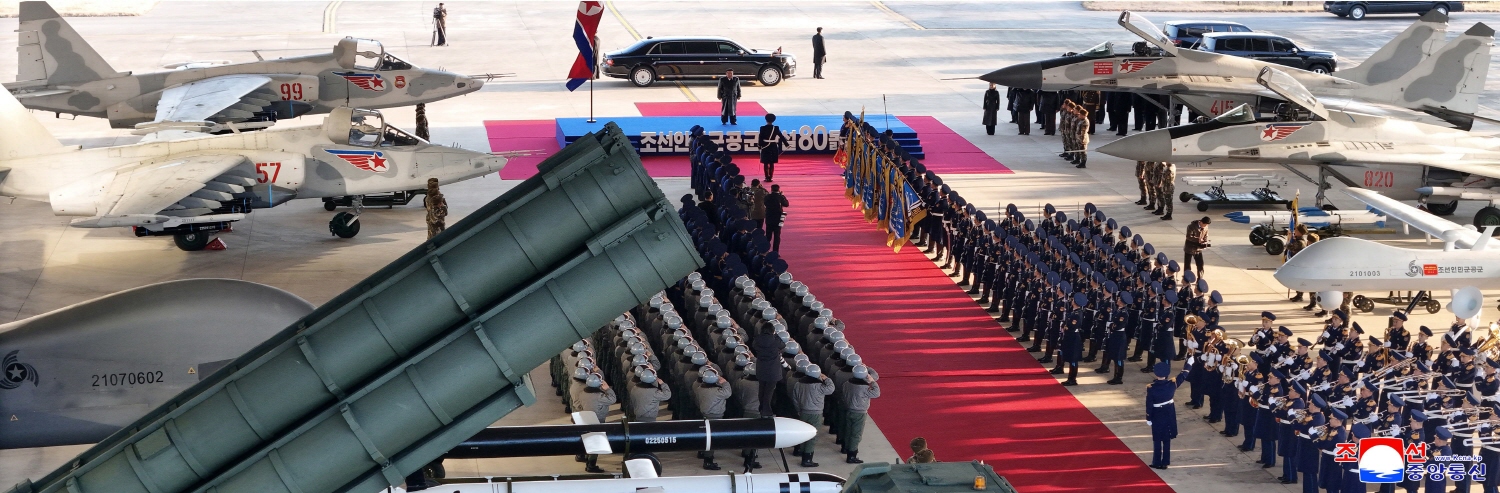
Monthly Trends in North Korea: November 2025- Institutional consolidation, military signaling, and parallel responses to external pressure - Lee Seung-hyunPh.D in Public AdministrationResearch Fellow, SAND InstituteNorth Korea’s political and security dynamics in November 2025 indicate a period in which the regime sought to consolidate internal control mechanisms, reinforce military signaling, and respond assertively to external pressure. According to state media reports, Chairman Kim Jong-un conducted nine public engagements during this month, one fewer than in October.Despite the slight numerical decline, the substance and sequencing of his activities conveyed a more deliberate and systematized approach to governance. His consecutive visits to key state security institutions, including the Ministry of State Security, the Ministry of Social Security, and the Ministry of Justice, timed around their respective 80th anniversaries, underscored the regime’s emphasis on restructuring internal control systems and tightening ideological discipline.Kim Jong-un’s public appearances were distributed across the following sectors: military (three), economy/industry (two), society/health (two), and politics/diplomacy (two). Whereas his activities in October leaned comparatively toward economic and social issues, his activities in November highlighted security, military, and judicial affairs as the principal areas of focus.This shift appears closely aligned with the regime’s three concurrent policy trajectories: strengthening military readiness and operational capabilities; reinforcing institutional power structures and domestic surveillance; and publicizing progress in local development initiatives.Kim’s visit to the 11th Corps headquarters and his attendance at the Air Force’s 80th anniversary event were especially notable. The subsequent unveiling of strategic weapons and new Air Force platforms suggested heightened military messaging aimed at both domestic and international audiences.Externally, North Korea maintained a confrontational posture, issuing a series of official statements criticizing U.S.–ROK joint military exercises and additional U.S. sanctions. Statements released in the names of Vice Foreign Minister Kim Un-chol, Defense Minister No Kwang-chol, and Foreign Minister Choe Son-hui suggest a coordinated messaging strategy.The statement responding to the G7 joint declaration reiterated Pyongyang’s narrative of safeguarding its “nuclear weapons state status” and ensuring “strategic balance,” while warning of unspecified “corresponding countermeasures” against what it characterized as unilateral U.S. actions. Relations with friendly states remained stable; the visit by Laos’ foreign minister was likely aimed at maintaining a minimal but functional level of diplomatic engagement.In the economic and social spheres, the regime concentrated on highlighting achievements attributed to the 20×10 regional development initiative. Kim Jong-un’s on-site attendance at the completion ceremonies for the Hoeryang County People’s Power Plant and the Gangdong County Hospital received prominent coverage in state media.Such efforts appear designed to signal that livelihood improvement and local development remain national priorities. However, reporting remained tightly curated, with no acknowledgement of chronic shortages in materials, energy, or distribution capacity. Harvest consolidation and settlement activities were also mobilized for nationwide propaganda, while a series of scientific, technological, and healthcare exhibitions, as well as cultural and athletic events, were orchestrated to reinforce internal unity.Taken together, the North Korean leadership appears to have pursued year-end domestic stabilization through four primary lines of effort:• strengthening institutional control mechanisms;• upgrading and showcasing military capabilities;• maintaining a defensive stance in external relations; and• strategically leveraging local development outcomes to bolster internal legitimacy.Although the total number of Kim Jong-un’s public appearances declined, his concentrated visits to core power institutions, particularly those responsible for security and judicial affairs, clearly reflect an intention to reaffirm the authority of coercive state apparatuses. Meanwhile, the unveiling of new strategic assets during the Air Force anniversary event conveyed an unambiguous military message.Looking ahead to the year-end period and early 2026, several indicators merit close monitoring to assess North Korea’s strategic trajectory:• potential deployment or operational testing of new Air Force and unmanned aerial vehicle (UAV) capabilities;• changes in the frequency, tone, and targets of external messaging;• the effectiveness of ongoing regional development initiatives and the scale of subsequent project completions; and• any renewed increase in Kim Jong-un’s public activity in the military domain.
25.12.05 -
 [North Korea Inside]
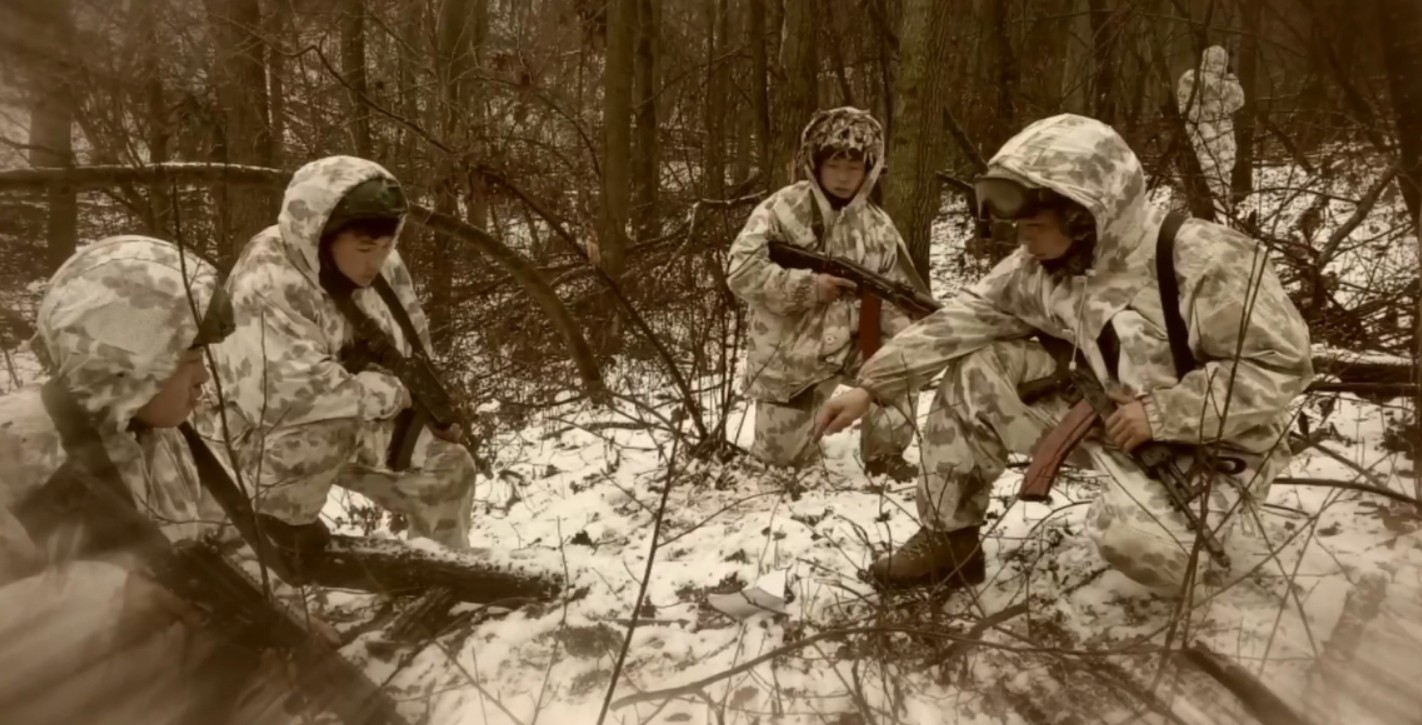
North Korea Inside· North Korea Conducts Drills Involving Returned Troops to “Transfer Battlefield Lessons” from the Ukraine War· North Korea’s Nighttime Brightness Has Increased Sevenfold in Four Years· Kim Jong Un’s Daughter Ju-ae Independently Receives Salute from Air Force Officers· North Korean Hacking Group Lazarus Likely Responsible for $445 Million Upbit HeistKim Myong-sungSecretary General of the SAND InstituteNorth Korea Conducts Drills Involving Returned Troops to “Transfer Battlefield Lessons” from the Ukraine WarRecent assessments indicate that North Korea is conducting integrated military training using personnel previously deployed to the Russia–Ukraine conflict, with the stated objective of institutionalizing lessons learned from contemporary high-intensity warfare. According to multiple sources, the Korean People’s Army (KPA) General Staff is developing a modern operations manual based on battlefield experience, marked by significant casualties, and is seeking to disseminate these tactics not only within special operations units but across the broader force structure.Analysts warn that should Pyongyang succeed in merging its enhanced nuclear capabilities with an upgraded and modernized conventional doctrine, particularly one informed by lessons from a conflict characterized by drones, AI systems, and precision-strike technologies, the resulting shift would pose a substantial challenge to the deterrence posture maintained by the ROK–U.S. Alliance.According to a knowledgeable source familiar with North Korean military developments, the General Staff initiated an inspection on November 7 of an integrated training program at its dedicated special operations training facility, following directives from the Supreme Command. Between November 8 and 22, combined training was carried out involving special operations forces and sniper units, with evaluators from the KPA Operations Bureau overseeing assessments of newly adapted combat tactics.The contingent deployed to Ukraine is reportedly the 11th Corps (commonly known as the “Storm Corps”), the KPA’s premier special operations unit, roughly analogous to the Republic of Korea’s Special Warfare Command.Training focused heavily on counter-drone measures and coordinated sniper–special forces operations. Reporting indicates that Pyongyang is attempting to codify operational norms on both drone evasion and tactical drone employment, drawing directly from front-line experience in Ukraine.Sniper units underwent intensive evaluation on precision observation, target identification, long-range marksmanship, communications proficiency, and target elimination. Special operations elements were assessed on infiltration, concealment, close-quarters engagement, rapid extraction, and small-unit tactical cohesion.One source noted that commanders have maintained an unusually high training tempo, reportedly instructing troops that they “have no right to die until the mission is accomplished.” The comment reflects growing indications that the KPA leadership is enforcing intensified training cycles even while deployment-related fatigue remains evident among units still operating in Ukraine.A military official familiar with allied assessments stated that Pyongyang “appears to have concluded from this conflict that modernization of conventional forces is as essential as nuclear development,” adding that the regime is attempting to institutionalize battlefield lessons before operational memory dissipates.According to South Korea’s National Intelligence Service, Kim Jong-un deployed roughly 10,000 elite personnel from the Special Operations Forces and the Reconnaissance General Bureau to the Russia–Ukraine war in October of last year. Analysts assess that Pyongyang avoided deploying frontline units facing South Korean forces and also refrained from sending second-tier units considered insufficiently combat-capable.Reporting from Ukrainian intelligence and international media indicates that North Korean forces initially faced significant distrust and discrimination within the Russian military due to racial prejudice, linguistic barriers, and skepticism regarding their combat effectiveness. Additional reports of desertion, theft, and disciplinary violations appear to have exacerbated tensions.Russian forces reportedly assigned North Korean units to high-risk open-field assaults without adequate fire support, resulting in substantial casualties under Ukrainian drone attacks. Nearly 3,000 North Korean soldiers are believed to have been killed or injured within the first month of deployment.U.S. intelligence reporting suggests that North Korean troops’ operational performance improved considerably by late February. Multiple sources indicate that the launch of Russia’s offensive to retake the Kursk region, timed immediately after the collapse of the Trump–Zelensky summit, relied heavily on “reorganized” North Korean units. Supported by Russian firepower, North Korean troops reportedly employed refined counter-drone tactics and played a central role in cutting Ukrainian supply lines, contributing materially to the Kursk operation.At the time, Pentagon spokesperson Maj. Gen. Pat Ryder assessed that North Korean forces were “relatively well-trained and capable,” noting that while they remain infantry-centric, they are emerging as a “meaningful threat” on the battlefield.Available intelligence indicates that within one month of their arrival, North Korean units reorganized their formations and incorporated updated counter-drone procedures. Despite sustained operations over roughly two months, casualties among reorganized forces are estimated to have remained around 2,000 personnel.North Korea’s Nighttime Brightness Has Increased Sevenfold in Four YearsSatellite imagery analysis indicates that North Korea’s nighttime illumination has increased sevenfold over the past four years. In the context of a decade of sanctions, this trend suggests substantial growth in military and heavy-industrial output, largely driven by North Korea–Russia defense cooperation. However, the expansion has not translated into improvements in the civilian economy, which continues to contract under inflationary pressures and tighter state controls over markets and foreign exchange.At a forum titled “Ten Years of Sanctions on North Korea: The North Korean Economy,” held in Seoul on December 3, KIEP researcher Kim Da-wool reported that nighttime brightness indices for the first three quarters of the year were approximately seven times higher than in 2021. Kim assessed that the trend reflects improvements in both electricity production and distribution, as well as increased consumption for lighting.Manufacturing activity indicators—derived from satellite measurements of radiant heat, temperature, illuminance, nitrogen dioxide levels, and surface activity—show a sharp rise beginning in the second quarter of 2023. Kim projected a higher manufacturing growth rate for 2024 relative to the previous year.Researchers at the Korea Development Institute (KDI) concluded that industrial regions specializing in heavy and chemical industries, as well as areas supporting military production, experienced disproportionate growth compared with light-industry zones. They attributed this divergence to expanded military cooperation with Russia, including large-scale artillery and materiel transfers, which have pushed heavy industry into what they describe as an “overheated” phase.However, satellite-based assessments of market logistics and stall activity indicate contraction in general market operations, pointing to stagnation in civilian livelihoods. Contributing factors include rising prices and declines in household income, driven by heightened state controls over grain distribution and foreign exchange transactions. KDI researchers reported no measurable spillover effects from defense-industrial growth into broader civilian economic activity.Experts warn that this divergence is reinforcing structural imbalances within North Korea’s economy. As one analyst noted, increasing nighttime illumination may signal industrial recovery, but it does not necessarily reflect improvements in living standards. With limited national resources increasingly diverted toward military and heavy-industrial sectors, conditions in the civilian economy are steadily deteriorating.Kim Jong Un’s Daughter Ju-ae Independently Receives Salute from Air Force OfficersKim Jong Un’s daughter, Kim Ju-ae, was recently observed receiving a formal salute from Air Force officers in the absence of her father, marking her first public appearance in roughly 90 days since attending China’s Victory Day celebrations last September. The incident underscores her increasingly prominent public profile and supports assessments that her status within the regime is being institutionally elevated, potentially in line with succession-related positioning.According to reporting by the Rodong Sinmun on November 30, “a grand event commemorating the 80th anniversary of the founding of the Korean People's Army Air Force was held on November 28 at Kalma Airfield of the 2nd Air Division,” noting that Kim Jong-un attended the event accompanied by his daughter.The state newspaper referred to her only as “the respected offspring who accompanied him,” omitting her name. At the event, Kim Ju-ae appeared in attire closely mirroring Kim Jong-un’s, including a long leather coat and sunglasses: available imagery suggests she may now also be taller than her father.Of particular note, footage from Korean Central Television showed Kim Ju-ae receiving salutes from officers independently, without Kim Jong-un present. This is the first known instance of such a scene since her public debut three years ago, suggesting that within North Korean protocol, she is increasingly treated as a representative or proxy for the supreme leader.A precedent highlighting her elevated status occurred exactly two years earlier. On November 29, 2023, she accompanied Kim Jong-un on visits to the Air Force Command and the 1st Air Division in Hwangju to commemorate the 78th anniversary of the Air Force’s founding.Among the photographs released at the time was an image in which Kim Jong-un positioned her directly in front of him, visually placing her at the center of the occasion. This moment is widely regarded as having prompted South Korean intelligence agencies to reassess her political standing.South Korea’s National Intelligence Service, the Joint Chiefs of Staff, and other government bodies are paying close attention to the timing of Kim Ju-ae’s latest appearance, noting its alignment with Aviation Day. A senior security official observed that, during his own succession period, Kim Jong-un was promoted domestically as a “genius of artillery tactics,” suggesting that it is plausible that Kim Ju-ae will be highlighted in connection with achievements tied to the Air Force.North Korea has a history of associating major weapons tests with Aviation Day. On November 29, 2017, the regime launched the Hwasong-15 intercontinental ballistic missile, declaring the “completion” of its nuclear force: Kim Ju-ae was five years old at the time. Five years later, on November 17, 2022, again in proximity to Aviation Day, North Korea launched the Hwasong-17, an upgraded variant of the Hwasong-15. That day also marked Kim Ju-ae’s first public appearance.North Korean Hacking Group Lazarus Likely Responsible for $445 Million Upbit HeistStrong indications suggest that the Lazarus Group, a hacking organization affiliated with North Korea’s Reconnaissance General Bureau, is responsible for the recent cyberattack on South Korea’s largest virtual asset exchange, Upbit, in which approximately 44.5 billion won (about $445 million) worth of virtual assets were stolen. Authorities remain cautious, however, emphasizing that securing definitive forensic evidence will take time.On November 28, the National Intelligence Service, the National Police Agency, the Financial Supervisory Service, and the Korea Internet & Security Agency (KISA) launched a joint on-site investigation at Upbit headquarters. The National Police Agency’s Cyber Terror Investigation Unit has opened a parallel inquiry and joined the interagency effort.The cybersecurity sector broadly assesses the likelihood of Lazarus involvement as high. Analysts point to the group’s previous operations, including the November 27, 2019 theft of 58 billion won in Ethereum from Upbit, an operation linked to Lazarus and Andariel, another unit under North Korea’s Reconnaissance General Bureau.Professor Yeom Heung-yeol of Soonchunhyang University noted that compromising a dual-key “multi-signature” security system exceeds the capabilities of ordinary attackers, suggesting involvement by a sophisticated state-sponsored entity such as Lazarus.North Korean state-backed hackers are estimated to have stolen roughly 2.8 trillion won (approximately $2 billion) in virtual assets through various operations this year.New evidence has also emerged suggesting that North Korea has been converting stolen digital assets into cash with assistance from Russian hacking groups. Forensic analysis indicates potential collaboration between these actors, including shared server infrastructure and similar operational techniques.On November 25, Politico reported, citing cybersecurity firm ZenDigital, that technical markers reveal both Lazarus and Gamaredon, a Russia-based hacking group, made use of identical servers and similar methods. According to ZenDigital, such evidence points to a high likelihood of shared systems and leaves open the possibility of a cooperative relationship. The firm also cautioned that one group may have imitated the other’s tactics.Michal Salat, Director of Threat Intelligence at ZenDigital, stated that this is “effectively the first time such direct indicators of technical exchange have been documented in the APT landscape,” noting that the findings suggest a level of potential state-to-state coordination not previously observed.
25.12.05 -
 [North Korea Inside]
North Korea Inside· Kim Jong Un Conducts Inspections of Security and Judicial Agencies Ahead of 9th Party Congress· North Korea Responds to U.S.-ROK Joint Statements and South Korean Nuclear Submarine Plans· North Korea-China Border Smuggling Expands, Exploiting Sanctions Loopholes· Residents of Sinuiju and Uiju Clash Over Administrative Reorganization of "Wihwa Island“Kim Myong-sungSecretary General of the SAND InstituteKim Jong Un Conducts Inspections of Security and Judicial Agencies Ahead of 9th Party Congress=Ahead of the 9th Workers’ Party of Korea Congress scheduled for early next year, Kim Jong Un, Chairman of the State Affairs Commission of North Korea, conducted a series of high-level inspections of the country’s security and judicial institutions to reinforce internal cohesion and ideological discipline. Marking the 80th anniversary of the State Security Agency, Chairman Kim visited the Ministry of State Security, the Ministry of Social Security, and judicial and prosecution agencies, instructing personnel to “thoroughly implement the Party’s ideology,” according to Rodong Sinmun reports on November 19. During his visit to the State Security Department, Kim delivered a congratulatory message describing the agency as “the pinnacle of loyalty that has tenaciously safeguarded the victorious advance of our revolution.” He emphasized that the security organs serve as “the Party’s reliable companions and steadfast supporters” and called for intensified loyalty competition among cadres.High-ranking party officials, including Secretary Cho Yong-won, Department Director Kim Hyong-sik, and Supreme People’s Assembly Vice Chairman Kang Yun-suk, accompanied him.At the Ministry of Social Security, North Korea’s equivalent of a national police agency, Kim underscored the role of social security and armed forces in defending the socialist system and ensuring public welfare through the enforcement of law. He praised the personnel for their “80 years of meritorious service” and took commemorative photographs with the staff.Kim also visited the Supreme Court and the Supreme People’s Prosecutor’s Office, urging judicial and prosecution organs to strengthen the socialist legal system and ensure law enforcement consistent with the principles of single-party leadership. Reporting to the Supreme People’s Assembly, the Supreme People’s Court oversees judicial administration and trials, while the Supreme People’s Procurator’s Office supervises law enforcement.Analysts interpret these inspections as part of the North Korean regime’s broader effort to “consolidate the security line,” aimed at solidifying Kim Jong Un’s power base ahead of the final phase of the five-year economic and defense plan launched in 2021 and the upcoming 9th Party Congress. A internal North Korean source reported that education and ideological training for cadres has intensified significantly, noting that loyalty verification within judicial and security organs has expanded.North Korea Responds to U.S.–ROK Joint Statements and South Korea’s Nuclear Submarine PlanNorth Korea issued a formal response to the U.S.–ROK Joint Fact Sheet and the Security Consultative Meeting (SCM) Joint Statement, describing them as institutionalizing “hostile intentions” toward Pyongyang. The response, released four days after the summit, appears intended to deliver a carefully calibrated message domestically while signaling a strategic posture externally.In a roughly 3,800-character commentary published by KCNA on November 18, North Korea criticized the documents for emphasizing “complete denuclearization of North Korea” instead of “the Korean Peninsula,” framing this as a denial of the country’s sovereignty and existence. It also condemned the Trump administration for referencing previous U.S.–North Korea agreements, calling it the “height of shamelessness.”Notably, KCNA refrained from explicitly naming President Trump or President Lee Jae-myung, suggesting that the commentary was aimed more at a diplomatic audience than at domestic consumption.North Korea also bitterly criticized South Korea’s plan to acquire nuclear-powered submarines, portraying it as destabilizing for the Asia-Pacific security environment and as a step toward South Korea’s own nuclear armament. The statement accused the United States of using South Korea as a “quasi-nuclear proxy” and expressed concerns about strengthened trilateral cooperation among the United States, South Korea, and Japan, implicitly linking it to regional efforts to counter China. KCNA asserted that the evolving alliance structure resembles a NATO-style security architecture and called for expanded strategic coordination among China, Russia, and North Korea.Experts suggest that North Korea’s reaction reflects structural anxiety over the formalization of U.S.–ROK cooperation, which could alter the strategic balance on the Korean Peninsula. In particular, North Korea appears concerned that advances in detection, tracking, and interception capabilities, combined with South Korea’s nuclear-powered submarine, could undermine Pyongyang’s strategic deterrent. A military analyst noted that, from the North Korean perspective, these developments approach a red line threatening the country’s perceived chances of national survival.Smuggling on the North Korea–China Border Expands, Exploiting Sanctions LoopholesSince April 2024, smuggling across the North Korea–China border has rapidly expanded in both scale and the diversity of goods exchanged. Initially limited to the light-industry commodities such as medicinal herbs and seafood, recent smuggling reportedly includes items explicitly restricted under UN Security Council sanctions, such as minerals, vehicles, and heavy construction machinery. Analysts suggest that these developments may reflect tacit tolerance by Chinese authorities following the normalization of relations between Beijing and Pyongyang.According to sources familiar with North Korea, cross-border trade resumed last April after the partial reopening of the border, which had been closed for four years due to COVID-19. Small-scale private transactions initially dominated, but the increased involvement of state-affiliated North Korean trading companies—including entities under the State Security Department and Office 39—has expanded the illegal trade to include strategic commodities and luxury goods. A Korean-Chinese trader confirmed that these companies have transported minerals, ceramics, and artwork to China while importing construction materials and luxury items.In the border cities of Hyesan, Musan, and Hoeryong, substantial quantities of seafood and medicinal herbs reportedly cross the border at night, with some shipments allegedly concealing illicit drugs. Heavy machinery such as excavators, bulldozers, and tractors is also being moved into North Korea, circumventing UN restrictions on industrial equipment exports. Visual evidence, including satellite imagery and field reporting, corroborates these accounts, with temporary bridges and river crossings facilitating the transactions.The resurgence of smuggling coincides with the restoration of high-level exchanges between North Korea and China in 2024, including reciprocal visits by senior officials from the International Department of the Workers’ Party of Korea and China’s National People’s Congress. Analysts note that China, while watching North Korea’s deepening engagement with Russia, appears willing to tolerate smuggling of resources critical to its own economic needs, such as zinc and copper.A border-area source reported that smuggling of heavy equipment increased substantially after Kim Jong Un’s visit to China in September 2024. Temporary infrastructure was built to facilitate the movement of vehicles and machinery across the border. Official trade data confirm a sharp rise in Chinese exports to North Korea, reaching $228.1 million in September 2024, a 30.7% year-on-year and 54.5% month-on-month increase. Experts warn that if China continues to allow these unofficial flows, the effectiveness of UN sanctions will be significantly undermined.Residents of Sinuiju and Uiju Clash Over Administrative Reorganization of Wihwa IslandWihwa Island, located in the Yalu River, holds historical significance as the site where Yi Seong-gye, the founder of the Joseon Dynasty, decided to withdraw his troops and launch the coup that ended the Goryeo Dynasty in the late 14th century. It has now emerged as a flashpoint in North Korea’s internal administrative realignment, generating tensions between local authorities.The North Korean government recently transferred jurisdiction over Wihwa Island from Uiju County, North Pyongan Province, to Seouri District, Sinuiju City. Following the transfer, Sinuiju authorities imposed new access restrictions and commercial controls on the island, fueling friction between Uiju residents and officials in Sinuiju.Observers report that these changes have disrupted local livelihoods and exposed underlying competition between economic and administrative interests. Sinuiju, North Korea’s largest border city facing Dandong, China, is strategically significant and tightly monitored by central authorities.After extensive flood damage last summer, Wihwa Island underwent major restoration under the direct oversight of Kim Jong Un. Recent developments include the construction of high-rise apartment buildings and a greenhouse farm spanning approximately 450 hectares. Analysts note, however, that these projects appear intended to showcase border city modernization rather than serve the needs of the local population.Sources indicate that, after the administrative transfer, Sinuiju authorities restricted access for Uiju residents, effectively granting market rights and commercial control to Sinuiju officials and merchants. As a result, residents of Uiju who historically relied on small-scale trade and informal commerce on the island have lost a key source of livelihood. One source described the reorganization as a mechanism for local elites to secure economic advantages rather than a measure to improve public welfare, highlighting a broader pattern of centralized power prevailing over local interests.The case of Wihwa Island illustrates how administrative realignments in North Korea can produce economic and social disruptions at the local level, reflecting the inherent tension between state policies and public welfare and demonstrating how strategic sites are used by the government to consolidate political and economic control.
25.11.21 -
 [Thematic Analysis]
Analysis and Outlook of Trade between North Korea and China: January–September 2025 Choi, JanghoKorea Institute for International Economic PolicyNorth Korea’s trade with China continued to expand during the first three quarters of 2025, signaling a near-complete recovery to pre-pandemic levels. From January to September 2025, imports from China rose 29.1% year-on-year to USD 1.60 billion, while exports increased 26.6% to USD 322 million. In terms of scale, North Korea’s trade volume has now surpassed 2018–2019 levels, underscoring a normalization of economic activity following years of contraction under COVID-19 restrictions and UN sanctions.1. Import TrendsNorth Korea’s imports from China reached USD 1.60 billion, almost matching the 2018 level (USD 1.56 billion) but still below the 2019 peak (USD 1.79 billion). Growth was broad-based across major categories, reflecting its improved domestic economic conditions, strengthened North Korea–China relations, and reduced logistics costs due to the restoration of overland and maritime routes.Top five import categories: . Human hair (HS 6703) – USD 166.9 million (10.5%) . Soybean oil (HS 1507) – USD 83.9 million (5.3%) . Synthetic filament fabrics (HS 5407) – USD 77.6 million . Knitted fabrics (HS 6006) – USD 38.5 million . Furniture and parts (HS 9403) – USD 36.5 millionSignificant structural changes were also observed. Fertilizer imports declined sharply, while imports of coke and construction materials increased. The reduction in fertilizer imports likely reflects the progress in North Korea’s coal gasification projects for nitrogen fertilizer production. Imports of coke, a key input in steelmaking, rose to USD 34.4 million, suggesting intensified industrial activity, possibly linked to arms production and exports to Russia. Construction material imports reached USD 123.7 million, up from USD 99.8 million a year earlier, indicating continued investment in housing and regional development under the “20×10 Regional Development Policy.”Figure 1. Annual imports (left) and exports (right) with China, 2015–2024 (January–September of each year) (Unit: 10,000 USD)Source: Author’s compilation.2. Export TrendsExports to China totaled USD 322 million, up 26.6% year-on-year, nearly double pre-pandemic levels.Top five export categories: . Wigs, beards, and eyelashes (HS 6704) – USD 157.0 million (48.7%) . Tungsten ore (HS 2611) – USD 20.5 million (6.4%) . Electric energy (HS 2716) – USD 20.1 million (6.2%) . Ferroalloys (HS 7202) – USD 20.0 million (6.2%) . Watch movements (HS 9108) – USD 16.7 million (5.2%)The surge in hair-related exports reflects China’s approval of North Korean wig and eyelash shipments since April 2023, along with Pyongyang’s adaptation to prolonged sanctions by prioritizing low-tech, labor-intensive industries.3. Trade Balance and Financing CapacityThe January–September trade deficit stood at USD 1.27 billion, which, if annualized, implies a USD 1.7 billion deficit for 2025, comparable to 2019 levels. Despite the widening deficit, North Korea appears capable of sustaining it, drawing on foreign currency reserves accumulated during the COVID-19 border closures, domestic foreign exchange absorption measures since 2021, and external revenue streams such as cyber operations and arms exports to Russia.4. Policy and Strategic ImplicationsLooking ahead, trade dynamics in 2026 will be shaped by both domestic policy milestones and external strategic alignments.Domestic: The 9th Party Congress in January 2026 is expected to declare the success of the 2021–2025 Five-Year Economic Development Plan and announce a new plan emphasizing localization and import substitution, influencing trade priorities.Bilateral: Following the September 2025 summit marking China’s Victory Day, North Korea–China relations have entered a phase of institutionalized economic cooperation, which is likely to expand further in 2026.Geo-strategic: North Korea continues to pursue a dual-track alignment, “security with Russia, economy with China.” This framework enables Pyongyang to exploit the partial enforcement of UN sanctions by both countries, reopening borders and revitalizing external trade networks.5. Limitations and OutlookDespite the recovery in trade volume, North Korea’s economy remains structurally constrained by sanctions, high logistics costs, and limited access to global markets. The current trade pattern reflects stabilization rather than expansion.Moving forward, the sustainability of North Korea’s economic recovery will depend on: . The durability of its partnership with China and Russia, . Its ability to finance trade deficits without eroding domestic liquidity, and . The degree of UN sanctions enforcement by Beijing and Moscow.Overall, North Korea’s trade normalization with China in 2025 represents a tactical adaptation rather than a strategic breakthrough. The coming year will test whether this recovery can evolve into sustainable growth within the constraints of the ongoing sanctions regime.
25.11.14 -
 [North Korea Inside]
North Korea Inside· North Korea’s Expanding East Coast Tourism Belt: From Wonsan-Kalma to North Hamgyong Province· Performance-Based Distribution in Agriculture· Party Discipline and the “Blue Carpet” System· Corruption and Patronage in North Korea’s Food Supply SystemKim Myong-sungSecretary General of the SAND InstituteNorth Korea’s Expanding East Coast Tourism Belt: From Wonsan-Kalma to North Hamgyong ProvinceNorth Korea is accelerating the establishment of a tourism belt along its east coast as part of its broader ambition to become a “tourism powerhouse.” Following the partial opening of the Wonsan–Kalma Coastal Tourist Zone in June, construction projects in Majeon, Geumya, and Yeombunjin have been launched in succession. The initiative marks the full-scale implementation of Pyongyang’s “tourism transformation” strategy, an effort that blends regime propaganda with local economic revitalization.The Korean Central News Agency (KCNA) reported on November 11 that the Yeombunjin Coastal Park District is nearing completion, with major infrastructure—including service buildings, restaurants, and roads—already finished. Final interior work on the Yeombunjin Marine Guesthouse is reportedly underway.Located near Mount Chilbo in Myeongchon County, North Hamgyong Province, Yeombunjin has a long development history. Construction began in 2011 under Kim Jong-il’s directive but stalled for years. Kim Jong-un’s 2018 on-site inspection and criticism that “even after six years, the plastering is incomplete” revived the project, which gained a new momentum in 2025 under direct state supervision.Kim Jong-un has positioned Yeombunjin as a comprehensive coastal park-style resort, integrating lodging, recreation, and public amenities along a 600-meter beachfront. He has also described the site as a potential regional hub due to its proximity to rail, road, and maritime routes.The broader strategy envisions a continuous tourism corridor running the length of North Korea’s east coast, centered on Wonsan–Kalma and extending northward through Majeon, Geumya, and Yeombunjin. During an inspection of the Wonsan–Kalma project in July, Kim stressed that “tourism resources at scenic sites such as Mount Kumgang, Mount Chilbo, Majeon, Geumya, Riwon, and Yeombunjin must be rationally developed.”This vision appears to be materializing. In September, a senior official from the State Tourism Administration announced plans to construct “large-scale tourism and cultural districts in multiple regions,” based on lessons from the Kalma peninsula development. Analysts interpret these moves as forming a “North Korean East Coast Tourism Belt,” designed to form a tourism backbone spanning from Wonsan to Mount Chilbo.According to a May report by the Hyundai Economic Research Institute, North Korea has redefined tourism since the 2020s—not merely as a means of earning foreign currency, but as a strategic industry for improving resident welfare and regional development. Supporting this shift, Pyongyang enacted the Tourism Law (2023) and the Wonsan–Kalma Coastal Tourism Special Zone Law (2025), providing an institutional foundation for new development models.The report assessed the Wonsan–Kalma zone as a testing ground for “stay-type tourism” centered on recreation and leisure, departing from the state-led, sightseeing-oriented group tours that characterized earlier decades.Nevertheless, major challenges remain. North Korea has been cautious about reopening to foreign visitors since the COVID-19 pandemic. Limited inbound tourism resumed in 2024, primarily targeting Russian visitors, though the revenue impact has been minimal. Strained relations with China and tight domestic controls further constrain the inflow of Chinese tourists.As a result, the regime has shifted focus toward “lifestyle tourism” for domestic residents, framing tourism as a form of leisure and balanced local development rather than a hard-currency source. Under the “Local Development ”20-by-10 Policy,” provincial capitals are constructing facilities such as aviation and horseback riding clubs, water parks, and youth theaters.While legislative and infrastructural progress is visible, experts note that foreign exchange earnings and long-term sustainability remain limited due to sanctions, political isolation, and inadequate infrastructure. The Hyundai report noted that “despite institutional advances, North Korea’s tourism sector struggles to achieve recovery amid political and economic constraints,” emphasizing the need for an autonomous domestic demand base and industrial linkages beyond external tourism revenues.Ultimately, analysts view Pyongyang’s tourism drive as dual-purpose: an economic initiative intertwined with political control. The regime seeks to allow limited leisure while simultaneously showcasing “the Party’s benevolence” through state-led tourism development. In this sense, the east coast tourism belt serves not only as an economic project but also as a strategic instrument for regime consolidation and image management.Whether the momentum from Wonsan–Kalma will extend to Yeombunjin and beyond remains to be seen. The current expansion represents more than regional development—it is a testing ground for North Korea’s attempt to construct a self-sustaining, politically functional tourism state model within the boundaries of a closed economy.Performance-Based Distribution in AgricultureNorth Korea has formally adopted a “performance-based distribution” system at the close of the 2025 harvest season, signaling a calibrated shift in the country’s socialist economic management.In a November 11 editorial, the Rodong Sinmun, the official newspaper of the Workers’ Party of Korea, declared that “those who work more should receive a larger share,” adding that “egalitarianism has no connection to the socialist principle of distribution.” The paper criticized what it called “egalitarian evaluation,” arguing that such practices “dampen workers’ enthusiasm and breed idlers.”This rhetoric reflects Pyongyang’s growing preference for differential rewards tied to labor output, marking a continued move away from strict collectivism toward quasi-market mechanisms within the socialist framework.The Rodong Sinmun highlighted Gocheon Farm in Kangnam County, Pyongyang, as an example of this new approach. Once a lagging operation, the farm reportedly met production targets this year and conducted its “settlement distribution” in a public ceremony, an event the regime likely intends to showcase as evidence of successful agricultural reform.Under North Korea’s settlement distribution system, the state and collective farms divide the annual harvest based on calculated “work units” (gong-su), assigning larger portions to those who contributed more labor. Recent reports indicate a growing preference for in-kind grain distribution rather than cash, reflecting farmers’ anticipation of higher profits when selling grain later in the season.The institutional basis for this shift appears rooted in the Farm Settlement and Distribution Law passed by the Supreme People’s Assembly in August 2025. Although its full text remains undisclosed, the law’s stated objective—“enhancing farm workers’ motivation”—suggests more favorable distribution ratios for producers.This development builds upon Kim Jong-un’s long-standing field responsibility system (June 28 Measures, 2012), which decentralized production to small work teams and allowed them to retain a share of the harvest after meeting state quotas. The approach effectively introduced incentive-based production within North Korea’s planned economy for the first time.Agricultural output in 2025 has shown modest improvement. According to the U.S. Department of Agriculture (USDA), paddy rice production is estimated at 2.27 million tons, roughly consistent with last year but 5 percent higher than the five-year average, while corn output rose by 1 percent to 2.3 million tons. The USDA attributed these gains to favorable rainfall and adequate irrigation conditions.Against this backdrop, Pyongyang appears intent on using improved yields to justify its emphasis on “performance-based distribution,” presenting the policy as both a productivity measure and a symbol of “scientific” economic governance.However, analysts caution that without structural reforms or improved resource access, these policy adjustments may serve less as genuine economic liberalization and more as an instrument of control—reinforcing state authority under the guise of competition and autonomy.North Korea’s Agricultural “Performance Distribution” and Internal Party Discipline: Emerging Trends in Regime ManagementPerformance-Based Distribution: Market-Oriented Adjustments under Central ControlNorth Korea has formally adopted a performance-based distribution system in its agricultural sector, signaling a continued evolution toward limited market-oriented management within a socialist framework.In an editorial published on November 11, the Rodong Sinmun, the official newspaper of the Workers’ Party of Korea (WPK), stated that “those who work harder should receive a larger share,” asserting that “egalitarianism has no connection to the socialist principle of distribution.” The newspaper further argued that egalitarian approaches “dampen workers’ enthusiasm for production and breed idlers.”This rhetoric represents an explicit ideological endorsement of “distribution according to labor,” a concept long present in socialist doctrine but selectively emphasized in times of production stress. The current campaign appears designed to stimulate agricultural productivity and reassert field-level accountability following this year’s relatively favorable harvest.Under North Korea’s “settlement distribution” system, farm outputs are divided between the state and individual producers following the autumn harvest. Labor contributions are quantified in “work units”, with higher contributors receiving larger shares. Analysts note that distribution has recently shifted back toward in-kind compensation—particularly grain—rather than cash payments, as farmers can profit more by selling grain later at higher market prices.The newly enacted Farm Settlement and Distribution Law, adopted by the Supreme People’s Assembly in August, appears to codify this performance-based model. While the full text of the law remains undisclosed, its stated objective—“to enhance farm workers’ production motivation”—strongly suggests adjustments favoring greater autonomy and incentive alignment at the cooperative level.Observers view this shift as a continuation of the 2012 “June 28 Measures,” which introduced the field-responsibility system early in Kim Jong-un’s rule. That system allowed smaller work teams to retain surplus production after repaying the state for inputs such as fertilizer and tools, effectively embedding a rudimentary performance incentive mechanism within the planned economy.The U.S. Department of Agriculture (USDA) estimates that North Korea’s 2025 paddy rice output reached 2.27 million tons—roughly consistent with 2024 levels but 5 percent above the five-year average—while corn production rose by 1 percent to 2.3 million tons. Favorable weather conditions and stable irrigation contributed to the gains. These conditions have provided Pyongyang with a favorable narrative environment to justify “performance-based distribution” as a policy success and ideological necessity.Nevertheless, analysts caution that structural deficiencies—including chronic input shortages, state procurement demands, and transport bottlenecks—limit the system’s impact. Absent substantive reform in state procurement pricing or land-use rights, the new approach may primarily serve as a political control mechanism, rewarding loyalty and compliance rather than genuine productivity.Party Discipline and the “Blue Carpet” SystemIn parallel with these economic adjustments, North Korea’s Workers’ Party Central Committee has intensified internal discipline, reinforcing a climate of administrative fear and ideological conformity.Multiple sources report that slogans such as ‘Let’s not stand on the blue carpet’ and ‘Let’s shed our faults’ have gained currency among Central Party officials. These phrases refer to an internal disciplinary practice in which cadres who err in executing Party directives are summoned to stand on a 1-square-meter “blue carpet” placed in the center of the presidium hall, a symbolic space of public criticism and sanction.Standing on the blue carpet reportedly symbolizes imminent punishment, which may include demotion, expulsion from the Party, reassignment to provincial posts, or mandatory “revolutionization” re-education lasting up to three years. The Organization and Guidance Department (OGD) monitors those undergoing re-education with high intensity, reportedly tracking even minor aspects of their daily life and ideological conduct.While younger cadres with elite connections may occasionally be reinstated following successful completion of this process and personal approval from Kim Jong-un, such cases remain rare. Most demoted officials are permanently reassigned to local enterprises, symbolically “shedding their faults” through manual or administrative labor.Among Central Party staff, fear of “stepping onto the blue carpet” has reportedly produced a culture of hyper vigilance and bureaucratic perfectionism. Officials repeatedly review reports before meetings, emphasizing “timely, error-free reporting” to avoid disciplinary scrutiny. As one source noted, “a single mistake can end not only one’s own career but also affect one’s family’s prospects.”Analysts interpret this environment as the institutionalization of a “revolutionary management system” under Kim Jong-un, one that combines performance-based economic rhetoric with coercive administrative discipline to maintain elite compliance. Together, these trends reflect a hybrid governance model: economic incentives at the production level paired with psychological control mechanisms at the bureaucratic level.AssessmentThe juxtaposition of performance-based distribution in agriculture and performance-based punishment in Party management reveals a consistent pattern in Kim Jong-un’s governance: incentivizing output while reinforcing control.While the rhetoric of efficiency and productivity suggests limited technocratic reform, both initiatives ultimately function to strengthen the regime’s vertical power structure. The result is a calibrated system of “managed autonomy,” where conditional freedoms—whether in farming or administration—exist strictly within the parameters of political loyalty and surveillance.Unless North Korea undertakes deeper structural reforms, the regime’s current approach is unlikely to generate sustainable gains in either agricultural productivity or bureaucratic competence. Instead, it may further entrench the system’s reliance on fear-driven compliance as the primary tool of governance.Corruption and Patronage in North Korea’s Food Supply SystemRecent internal testimonies suggest that North Korea’s state-run food distribution centers, nominally established to ensure food security for ordinary citizens, have effectively devolved into mechanisms of privilege, corruption, and bureaucratic patronage. Operating under the ideological slogan of “rations for the people,” these so-called ration stations have reportedly served as conduits for officials’ private trade and as tools to cultivate political and personal connections.A resident source in South Hamgyong Province observed, “Our local distribution center appears to serve residents, but in practice it functions as a supply hub for cadres. High-quality rice is diverted to officials’ households, while residents receive only the inferior grain.”North Korea’s food supply points are officially managed by grain distribution offices at the gun (county) level, with stations assigned to each ri (village). Rations are typically distributed twice a month, roughly 100 to 300 grams per household, at prices pegged at about half of prevailing market rates. However, residents bear all transportation and handling costs, including fuel and packaging, effectively negating much of the intended benefit.Each distribution center employs three to five staff members, including a manager, cashier, and weighmasters. Yet defectors and residents alike report that these facilities have become “microcosms of corruption.” According to one defector, “The weighmaster routinely manipulates scales to skim extra rice, while managers and cashiers siphon off higher-grade grain for officials’ households or for illicit sale. Connections with cadres determine who gets good rice.”When premium rice arrives, distribution center staff often exchange it with grain designated for officials as a way to cultivate favor, or sell the surplus for personal profit. Additional schemes include inflating moisture content to justify siphoning off more grain, or speculatively purchasing and reselling grain stockpiled by local work teams. Residents who discover ration shortages, often 200 to 300 grams below the recorded amount, rarely protest, fearing reprisal or blacklisting.“When inspections occur, they are largely performative,” another resident remarked. “Inspectors are bribed in advance, and the entire system functions through mutual cover-ups.” The corruption reportedly extends up the chain: county-level grain management offices assign fundraising quotas to local distribution centers, prompting employees to divert residents’ rations to fulfill bureaucratic obligations.Despite these systemic abuses, North Korean authorities continue to promote the food distribution network as a hallmark of the state’s commitment to social welfare. In reality, however, it has morphed into a mechanism of elite privilege and administrative control.As one defector from Pyongyang concluded, “The rationing system no longer sustains the people: it sustains the powerful. Hunger has become another arena for those with influence to profit and consolidate control.”
25.11.14 -
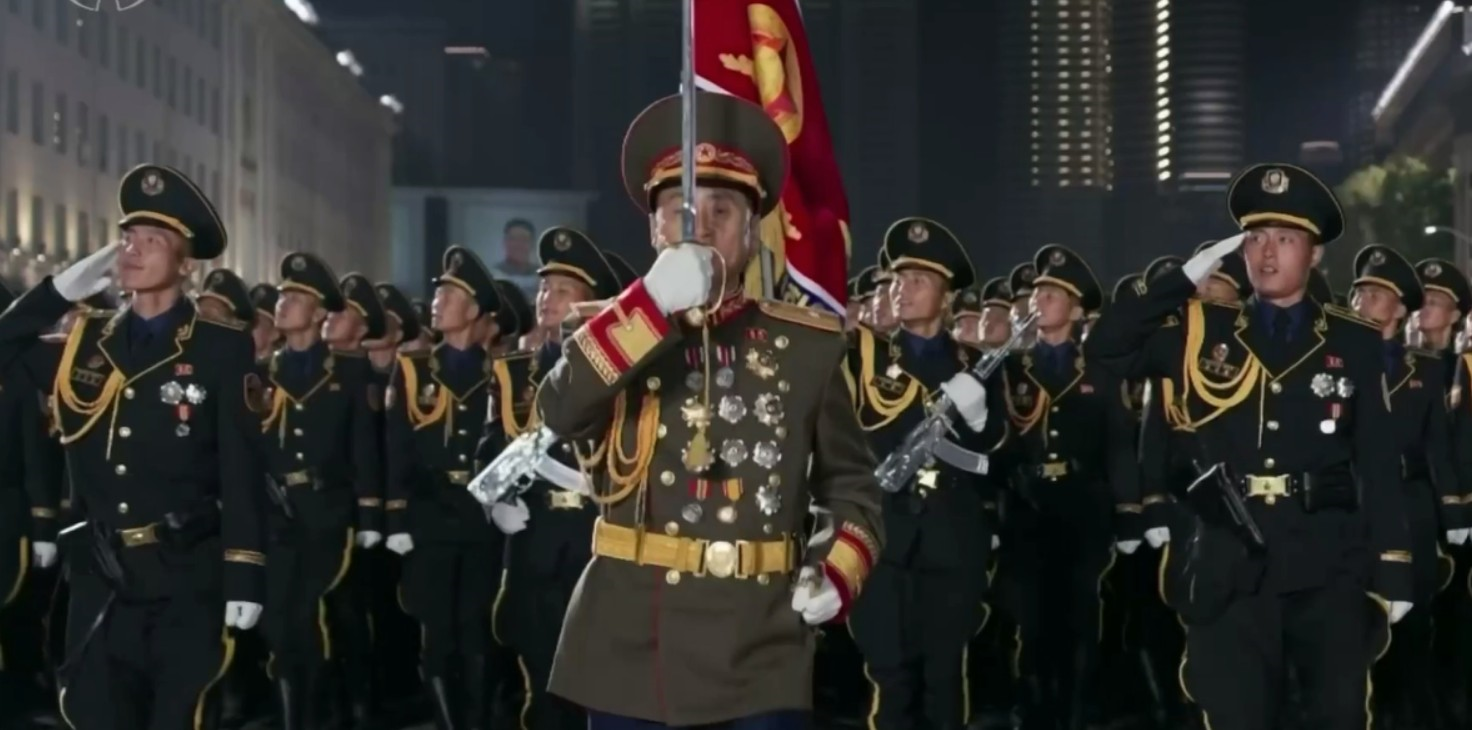 [News&Issue]
North Korean Trends/October 2025Deepening Internal Cohesion and Selective Silence: Avoiding Multilateral Diplomacy While Advancing Military Power and Self-Reliance Narratives Lee Seung-hyunPh.D in Public AdministrationResearch Fellow, SAND InstituteNorth Korea’s activities in October, coinciding with the 80th anniversary of the founding of the Workers’ Party of Korea (WPK), reflected three dominant themes: strengthening internal cohesion, demonstrating military power, and maintaining diplomatic restraint.Kim Jong-un carried out ten public activities—an increase from eight in September—comprising three political, three military, two economic, and two social or cultural engagements, indicating a notable expansion in the military and economic areas.1. Political and Diplomatic DevelopmentsIn the political and diplomatic spheres, Kim sought to reinforce regime legitimacy and highlight his state’s achievements in welfare and governance. He presided over various events, including the completion ceremony for the Pyongyang General Hospital, a meeting of party and government officials, and receptions for delegations from friendly nations.The attendance of Chinese Premier Li Qiang and a Russian delegation led by Dmitry Medvedev at the celebration marking the WPK’s founding anniversary provided Pyongyang with valuable propaganda material, emphasizing its ties with allied powers.In contrast, during the 2025 APEC Summit and 2025 ASEM Summit—both held in South Korea shortly after the October 10 military parade—North Korea’s official media made no comment on the events or their participants. Instead, a statement by Vice Foreign Minister Pak Myong-ho was released on October 31, declaring that multilateral denuclearization talks are an “impossible pipe dream.”This underscores Pyongyang’s deliberate preference for bilateral or allied-centered diplomacy over multilateral forums, using limited diplomatic exposure as a strategy to control narratives and avoid external pressure.2. Military and Weapons DevelopmentOctober also featured a surge of military activities and demonstrations of new weapons. The “Defense Development–2025” exhibition held in Pyongyang from October 4–5 unveiled new ground combat systems, air defense missiles, and rail-based launchers. In his address, Kim Jong-un called for a transition toward a “self-reliant, modernized armed force,” emphasizing modernization of the North Korean navy and air force.The October 10 military parade showcased strategic assets, including the new Hwasong-20 intercontinental ballistic missile. With foreign dignitaries in attendance and live broadcasts to domestic and international audiences, the event served dual purposes: projecting North Korea’s nuclear deterrence and national pride domestically, while asserting recognition as a nuclear power internationally.On October 28, North Korea test-launched a sea-to-land strategic cruise missile in the West Sea, describing it as the “practical application of war deterrence.”This sequence of events reflects North Korea’s multi-layered strategy aimed at reinforcing domestic stability, bolstering external deterrence, and signaling confidence in its strategic autonomy.3. Economic and Social TrendsIn the economic and social spheres, Kim Jong-un conducted a series of on-site inspections of industrial, agricultural, and construction sites, while repeatedly emphasizing that “self-reliance is the lifeline of the revolution.” He instructed officials to intensify output-oriented mobilization and strengthen cadre accountability.Despite these directives, North Korea’s state media made little mention of the country’s deepening economic distress—supply shortages, market instability, and livelihood hardships—indicating the regime’s continued efforts to maintain tight control over information and sustain propaganda-driven messaging.In the social and cultural domain, Pyongyang sought to enhance unity through large-scale public campaigns, mass gymnastics events, and intensified ideological education across schools and workplaces, thereby reinforcing collective discipline and loyalty to the regime.4. Assessment and OutlookOverall, in October, North Korea was active in military demonstrations, economic mobilization, and diplomatic minimization. The regime appears focused on internal consolidation and image management, using selective diplomatic engagement to maintain control over its international narrative while countering external isolation.If these trends persist, Pyongyang is likely to unveil a new policy line or adjustments in its policy direction at an upcoming plenary meeting of the WPK Central Committee or the year-end review of its military and economy. Key indicators to watch include: * The frequency and intensity of military tests, and how they are portrayed in state media. * The relative emphasis on bilateral diplomacy with its allies, China and Russia, versus engagement in multilateral platforms such as APEC and ASEM. * Any official acknowledgment of economic strain or shifts in rhetoric regarding people’s livelihoods.Taken together, these factors suggest that while Pyongyang’s external posture remains hardline, its core focus lies in fortifying domestic cohesion and recalibrating diplomatic exposure. The coming months—especially November and December, when the WPK plenary and economic review are expected to be held—could mark a strategic inflection point, possibly leading to public acknowledgment of economic difficulties and a need for adjustments in internal management or resource allocation.In essence, North Korea’s behavior in October reflects a regime seeking balance between assertive military signaling, domestic control, and strategic silence abroad. Pyongyang is taking a calculated approach designed to sustain stability as it faces mounting challenges both internally and externally.
25.11.07 -
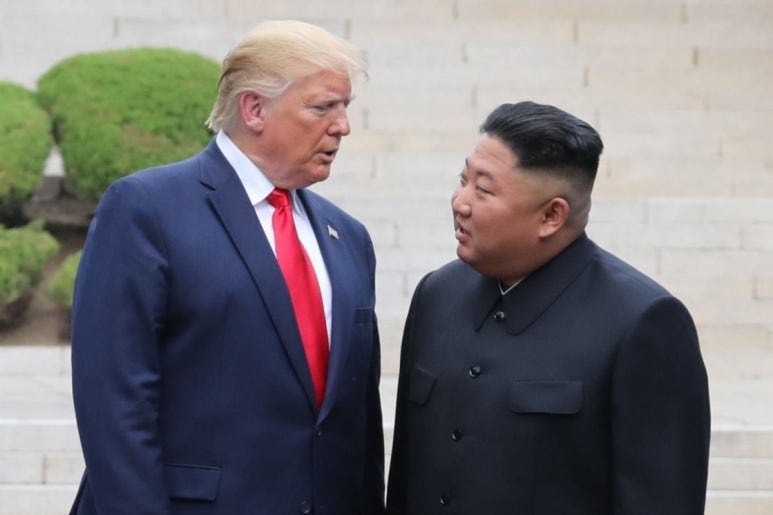 [North Korea Inside]
North Korea Inside· NIS: “March Next Year Could Mark a Turning Point for North Korea–U.S. Dialogue”· DIA: “North Korea Could Conduct a Nuclear Test at Punggye-ri within a Short Timeframe”· Relentless Construction Push Deepens Hardship Nationwide as North Korea Races Toward 9th Party Congress· Kim Jong-un Inspects the ‘Storm Corps,’ Calls South Korea and U.S. “World’s Most Despicable Enemies”Kim Myong-sungSecretary General of the SAND InstituteNIS: “March Next Year Could Mark a Turning Point for North Korea–U.S. Dialogue”South Korea’s National Intelligence Service (NIS) assessed on November 4 that “the period following the U.S.-ROK joint military exercises next March could represent a turning point in the dynamics of the Korean Peninsula, including the potential resumption of a U.S.-North Korea summit.”In a report to the National Assembly Intelligence Committee, the NIS noted that although the bilateral summit anticipated on the sidelines of the APEC meetings did not materialize, “various channels suggest that preparatory efforts had been quietly underway behind the scenes.”According to the NIS, the assessment draws upon several indicators, including the disposition of U.S. President Donald Trump’s working-level officials on North Korea, the relative restraint shown in nuclear-related rhetoric following Kim Jong-un’s policy speech at the Supreme People’s Assembly in September, and deliberations surrounding Foreign Minister Choe Son-hui’s planned visit to Russia during President Trump’s Asian tour, which reportedly continued until the last moment.The agency stated, “Based on evidence such as Kim Jong-un’s direct oversight of U.S.-related affairs and increased information collection by North Korean officials handling U.S. policy, the NIS assesses the prospects for improvement in U.S.-North Korea relations as relatively high.” It added that “the strengthening of Pyongyang’s ties with Russia and the restoration of its relations with China could provide the backdrop for renewed dialogue with Washington.”Regarding timing, the NIS projected that “a U.S.-North Korea summit could be pursued after the ninth Korea Workers Party Congress in February next year, possibly following the conclusion of the U.S.-ROK joint exercises in March and using a military parade as an occasion.”However, an NIS official underscored that “this is not a definitive forecast of summit-level engagement, but rather an analytical judgment that March could serve as an inflection point in broader peninsula dynamics.”The NIS provided a more pessimistic outlook for inter-Korean relations, reporting that “North Korea may seek a constitutional amendment that redefines inter-Korean relations as a de facto ‘two-state system.’” The agency added that discussions on such a change could occur at the Supreme People’s Assembly following a planned military parade early next year.The NIS further conveyed that Pyongyang had issued directives to its overseas missions to “prohibit contact with South Korean organizations” and to “distinguish sharply between interactions with the United States and South Korea,” effectively blocking avenues for inter-Korean engagement.DIA: “North Korea Could Conduct a Nuclear Test at Punggye-ri within a Short Timeframe”South Korea’s Defense Intelligence Agency (DIA) assessed on November 5 that “if Kim Jong-un makes the decision, North Korea could conduct a nuclear test in Tunnel 3 at the Punggye-ri site within a short timeframe.”The finding was presented during a closed-door session of the National Assembly Intelligence Committee, according to briefings by the ranking members of the committee, Rep. Park Sun-won of the Democratic Party and Rep. Lee Sung-kwon of the People Power Party.The DIA reported that “North Korea continues to advance its nuclear capabilities, aiming to secure the international community’s tacit acceptance of its nuclear status.” The agency added that Pyongyang is “expanding uranium enrichment facilities, including those in Yongbyon, and constructing infrastructure to produce multiple types and quantities of nuclear warheads.”On missile development, the agency noted that “North Korea appears close to operationally deploying four types of short-range missiles and 600mm multiple rocket launchers.” It further observed that “for its medium-range systems, Pyongyang is concentrating on hypersonic cruise missiles capable of evading allied missile defense networks.”Regarding North Korea’s intercontinental ballistic missiles (ICBMs), the agency assessed their maximum range as exceeding 13,000km. The agency added that “although North Korea has so far conducted tests on lofted trajectories, a full-range test launch to verify operational range remains a possibility under close monitoring.”The DIA also stated that North Korea “is pursuing the operational deployment of upgraded R-class submarines to enhance its nuclear delivery options and is accelerating efforts to develop covert underwater launch platforms, including nuclear-powered submarines.”On North Korea’s reconnaissance capabilities, the agency reported that “Pyongyang is preparing additional launches—reportedly with Russian technical assistance—to secure higher-resolution military reconnaissance satellites.”The agency added that “although balloon launches toward the South have remained suspended since last November, associated personnel and vehicle activities persist in approximately ten potential deployment zones.”The DIA also confirmed that “North Korea continues to operate several South Korean factories in the Kaesong Industrial Complex,” noting that “light industry and consumer goods production lines remain active.” It added that “demolition of the Kaesong Industrial Complex Support Center began in December last year and has now progressed to the eleventh floor of the fifteen-story building.”The analysis also highlighted ongoing modernization of North Korea’s conventional forces. “Development of small vertical takeoff and landing drones for reconnaissance, strike, and suicide missions has expanded significantly, with test flights and operator training increasing markedly from last year,” the DIA stated. “Two large vessels were launched at the Nampo and Najin shipyards between April and June, and Kim Jong-un has reportedly ordered the annual construction of two additional ships.”Politically, the DIA report assessed that “Kim Jong-un is prioritizing achievements in defense and foreign policy ahead of the ninth Korea Workers Party Congress, consolidating a loyalist-based succession structure and reinforcing the stability of his regime.”The DIA added that “Pyongyang is institutionalizing a ‘two-state framework’ by physically reinforcing the border through the construction of barriers, roads, and fences across the Demilitarized Zone (DMZ).”“GPS jamming and loudspeaker broadcasts targeting the South continue,” the agency continued, noting that “while some loudspeaker facilities were dismantled, two new ones have been added, bringing the total to over forty.”The report emphasized an emerging trilateral alignment among China, Russia, and North Korea. “Pyongyang is leveraging its relationships with Beijing and Moscow to demonstrate its nuclear capabilities and enhance its strategic leverage,” the DIA assessed. “Pyongyang’s cooperation on military supplies and troop deployments with Russia has entered a sustained, long-term phase.”Specifically, it reported that “North Korean troops deployed to Russia are engaged in patrol and mine-clearing operations near the Kursk region, while Russia is transferring air defense missile technology to North Korea.” It further analyzed that “lessons learned from the Russia–Ukraine conflict have been incorporated into training of North Korean troops, resulting in a more than twofold increase in infantry and artillery exercises and expanded use of drones.”Finally, the DIA noted that “since the Xi Jinping-Kim Jong-un summit in September, China-North Korea relations have shown a clear trajectory of comprehensive strengthening,” citing that “China’s exports to North Korea in September rose 30 percent year-on-year and 54 percent month-on-month.”Relentless Construction Push Deepens Hardship Nationwide as North Korea Races Toward 9th Party CongressNorth Korea has declared this year the “Year of Solidarity and All-out Advance,” launching what its officials call an “ultra-arduous march” through year-end. The campaign has effectively turned the entire country into a vast construction zone. As mass mobilization and tightened market controls continue, frustration is spreading among residents who complain, “They won’t let us earn money or give us food, yet they keep mobilizing us day and night.”Driven by the imperative to make visible “achievements” ahead of next year’s ninth party congress, North Korean authorities are pressing citizens into continuous construction work, leaving little room for rest or livelihood activities. Reports from inside the country describe widespread exhaustion and despair, with residents saying, “We can’t live like this anymore.”According to multiple North Korean sources on November 3, North Korean government recently issued a “national construction mobilization” order, requiring residents in urban and rural areas alike to participate in local construction projects.The regime is promoting a so-called “20×10 Policy,” aimed at constructing local industrial plants in 20 cities and counties each year. In addition, officials have announced simultaneous improvement of “three essential facilities”—modern hospitals, integrated service centers, and grain management complexes—at the city and county level.A resident of Hyesan, Ryanggang Province, reported, “Mobilization continues even on weekends, leaving no time to visit markets. Anyone who skips work is criticized at life review sessions, and trading is only possible late at night.”The North Korean authorities have restricted market operations to evening hours, permitting trading only after the mobilization duties end. Yet, residents lament that “even if stalls stay open until midnight, nothing sells,” underscoring the collapse of basic economic activities. With goods piling up unsold, even wholesale traders are reportedly considering closing their businesses.A source along the China-North Korea border added, “People arriving from Chongjin cry that life has become unbearable. They have no time to earn money, no cash to buy goods. They say, ‘We’re really going to die.’”Pyongyang promotes these local projects under the banner of “self-reliance” while the state financial support reportedly covers only 20–30 percent of total costs. Local governments are expected to raise the remainder, often by selling farm grains or imposing new “support contributions” on residents. As one source noted, “The state offers only slogans: everything else comes from the people’s pockets.”Mobilized residents express mounting anger. “Even if we work ourselves to death, we don’t get a single meal ration,” one resident said. Others complain, “Only if they gave us enough rice to fill our stomachs, who would refuse to work? This isn’t a place fit for human life.”A source in Hoeryong, North Hamgyong Province, stated, “We could once survive through small-scale trade, but now even that is blocked. All these construction achievements are being built on the people’s tears.”Reports from South Hamgyong and Kangwon Provinces suggest that food shortages are worsening, with cases of starvation deaths already being reported. Some accounts describe desperate residents stripping clothing from corpses on the street to sell for food. “Even after the harvest, farmers must first deliver grains for military rations and pay contributions for housing and factory construction,” one farmer said. “What remains for the family is barely a third of what we harvest.”The food crisis extends to the military. Witnesses report that soldiers increasingly steal food and clothing from civilians. “With the army taking what they want, there’s nothing left for us,” a farmer lamented.Despite an “all-out agricultural mobilization” this year, North Korea’s grain output reportedly fell sharply due to drought, fertilizer shortages, and widespread looting by military units. One cooperative farm worker in Kumya County said, “We lived on bean soup for days, but now even that’s gone. This year we may really starve to death.”Anger is rising over the regime’s priorities. Residents ask, “They sell weapons to Russia and send troops abroad for money, but not a single grain comes back to the people.”Reports also describe rising starvation deaths in labor camps, where prisoners receive minimal rations and their families are too impoverished to send aid.Meanwhile, state media continues to highlight large-scale construction projects daily. Analysts attribute this to Kim Jong-un’s directive for “visible results” before year-end. Local authorities, facing shortages of materials, reportedly requested an extension of project deadlines, but Kim is said to have rejected these appeals outright.According to Minju Joson on October 30, “When local officials proposed postponing construction schedules due to cement shortages, the Chairman instructed them to press ahead, declaring that ‘the reserves lie in the hearts of the people.’”Central inspection teams are now visiting local sites to verify reported achievements. A source said, “Rumors are spreading that any official caught inflating his achievements could be sent to a political prison camp, so everyone keeps quiet.”The Ministry of State Security has intensified surveillance, labeling public complaints as “reactionary acts.” CCTV cameras reportedly monitor key neighborhoods and workplaces in real time.One long-time observer of North Korea summarized, “Kim Jong-un’s style of governance—pushing projects through with so-called ”mental power explosions“—has only deepened the suffering of his people. Sacrifice in the name of achievement has become normalized.”Kim Jong-un Inspects the ‘Storm Corps,’ Calls South Korea and U.S. “World’s Most Despicable Enemies”On the same day that the South Korean and Chinese leaders met in Gyeongju to discuss regional security, Kim Jong-un showcased his commitment to military readiness by visiting one of North Korea’s most elite units—the 11th Corps, also known as the “Storm Corps.”The North Korean state media reported on November 2 that Kim provided “on-site guidance” at the Corps’ command headquarters, praising its troops as models for the entire military. Wearing a black leather jacket, Kim declared, “If the entire army fights like this unit, we can build a powerful, victorious army of heroes—this is the will and aspiration of our Party.”After receiving briefings on contingency plans, Kim outlined new strategic and organizational directives to strengthen the special operations forces, signaling a broader restructuring of the Korean People’s Army. “Institutional measures are needed to reinforce the core combat capabilities of our armed forces,” he stated.Emphasizing the importance of ideological unity, Kim said, “The decisive factor in war is ideology,” and lauded the unit’s readiness to defend North Korea’s sovereignty against what he called “the world’s most despicable and vile enemies.” While he did not name specific countries, the phrase was widely interpreted as targeting South Korea and the United States.Accompanying Kim were key military leaders, including Central Military Commission Vice Chairman Pak Jong Chon, Defense Minister Ro Kwang Chol, Chief of the General Staff Ri Yong Gil, and General Political Bureau Director Jong Kyong Tak.The following day, North Korea’s Foreign Ministry dismissed Seoul’s claim that denuclearization was discussed at the South Korea-China summit as a “pipe dream.” No such remarks appeared in the state report on Kim’s military inspection.
25.11.07 -
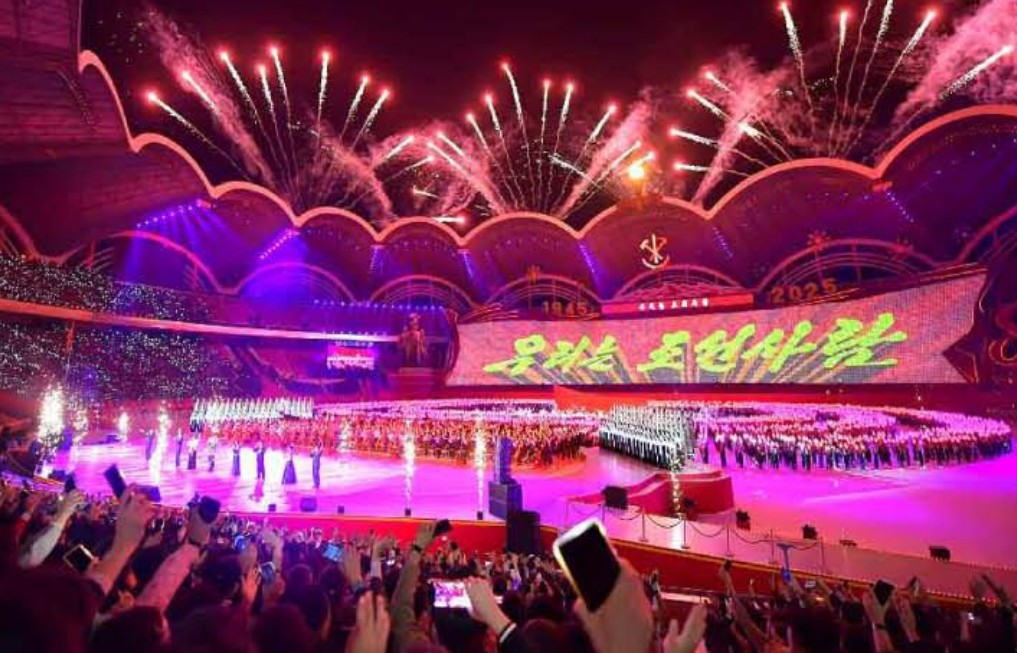 [Feature Article]
Analysis and Outlook on the Meaning of “Kim Jong-un’s Korea” Lee Soo-seokProfessor (Special Appointment), Graduate School of Global Peace and Unification,Kookmin UniversityThe Emergence of “Kim Jong-un’s Korea”Kim Jong-un ascended to power abruptly following the sudden death of his father, Kim Jong-il, in December 2011. From the outset, he engaged in symbolic politics designed to evoke nostalgia for his grandfather’s era, emulating Kim Il-sung’s image and style while carefully orchestrating continuity and renewal. Simultaneously, he dismantled the songun (“military-first”) policy that defined his father’s rule and convened two Party Congresses—an institutional practice entirely absent under Kim Jong-il.From the mid-2010s, Kim Jong-un began to promote new ideological motifs such as “improving the people’s livelihood” and “love for the next generation,” signaling a generational transition. He gradually reduced direct references to Kim Il-sung and Kim Jong-il, except through the official doctrine of “Kimilsung-Kimjongilism,” thereby constructing a distinct political identity encapsulated in the notion of “Kim Jong-un’s Korea.”At the Eighth Party Congress in 2021, the North Korean leadership formally declared the dawn of the Kim Jong-un era. Since then, the term “Kim Jong-un’s Korea” has appeared with increasing frequency in official discourse. Portraits of Kim Il-sung and Kim Jong-il have been partially withdrawn from public events, and nostalgia-driven imagery associated with the Kim Il-sung period has been noticeably curtailed.A striking example of this transformation was the mass gymnastics and artistic performance held in Pyongyang on October 9–10, 2025, which vividly illustrated the central themes of Kim Jong-un’s Korea. The production placed Kim Jong-un at its symbolic and aesthetic center, culminating in the grand finale proclaiming, “May Kim Jong-un’s Korea prosper forever.”This performance underscored a definitive transition from “Kim Il-sung and Kim Jong-il’s Korea” to “Kim Jong-un’s Korea,” reflecting Kim’s determination to transcend the shadow of his predecessors and construct an autonomous political order bearing his own imprint.The Meaning of “Kim Jong-un’s Korea”The concept of “Kim Jong-un’s Korea” carries several layers of significance.First, it signifies a projection of confidence—both domestic and international. Since consolidating power through systematic purges of elites linked to the Kim Jong-il era, Kim Jong-un has established unchallenged authority as supreme leader. Having secured his political foundation, he now feels less compelled to rely on the inherited legitimacy of his predecessors.Initially, efforts to institutionalize “Kim Jong-un’s Korea” faced serious obstacles. The collapse of the economy and the social disruptions caused by the COVID-19 pandemic generated widespread discontent. This instability prompted a temporary reversion to ideological symbols of the Kim Il-sung era in the early 2020s. However, the recent large-scale leadership reshuffle and the regime’s renewed propaganda focus signal Pyongyang’s confidence that the Kim Il-sung–Kim Jong-il era has conclusively ended and the Kim Jong-un era has fully begun.Second, Kim Jong-un’s Korea seeks to portray Kim as a benevolent and compassionate ruler. The discourse on “people-first politics” and improved livelihoods is rooted in economic stabilization—arguably the most tangible expression of leadership competence. In this narrative, Kim Jong-un presents himself as a paternal figure dedicated to enhancing the welfare of the masses. This political ethos is formally linked to Kimilsung-Kimjongilism, reinterpreted through the principle of “placing the people at the center.”Third, Kim Jong-un’s Korea asserts the regime’s status as a nuclear-armed state. Through nuclear and missile tests, publicized visits to weapons facilities, and rhetorical reaffirmation of nuclear deterrence, Kim underscores his leadership’s technological and strategic accomplishments. Confidence in the completion of the country’s nuclear forces has emboldened Kim to promote an image of Kim Jong-un’s Korea as a proud and self-reliant nuclear power. This self-perception also reinforces the regime’s “two states theory,” which defines South Korea as a hostile, separate entity—no longer an object of national unification but a rival state.Fourth, Kim Jong-un’s Korea provides an ideological and institutional foundation for legitimizing a potential fourth-generation succession. North Korea today functions not as a communist polity but as a dynastic state governed by the Kim family. The political architecture of Kim Jong-un’s Korea appears designed to pave the way for hereditary continuity—possibly through his daughter, Kim Ju-ae. Whether she will indeed emerge as the fourth-generation successor remains uncertain, but the regime’s consistent promotion of her public image suggests deliberate preparation for dynastic perpetuation.Prospects for “Kim Jong-un’s Korea”Looking ahead, the evolution of Kim Jong-un’s Korea will hinge on the consolidation of a political discourse that detaches itself from the aura of previous leaders. Just as Kim Il-sung was mythologized through constructs such as the “Sun Nation” and “the People of the Sun,” North Korea will likely intensify its idolization campaigns to institutionalize Kim Jong-un Thought and the Kim Jong-un Nation.Future ideological narratives are expected to focus less on inherited legitimacy and more on intergenerational loyalty and succession, thereby normalizing the idea of a fourth-generation transfer of power. The state-controlled media will continue to proliferate editorials, essays, and artistic works celebrating Kim Jong-un’s Korea, reinforcing ideological cohesion and cultivating public devotion.At the same time, Kim Jong-un’s Korea is inseparable from its nuclear posture. The regime’s domestic legitimacy and diplomatic strategy will remain anchored in its identity as a nuclear weapons state. Pyongyang will likely continue to pursue assertive, transactional diplomacy with Washington while simultaneously seeking to restore and deepen ties with Beijing and Moscow in order to mitigate the impact of international sanctions and secure economic and political support.In this context, the Ninth Party Congress, scheduled for 2026, is expected to serve as a major political stage for the full-scale articulation and glorification of Kim Jong-un’s Korea. This event will likely mark a new phase in the institutionalization of Kim’s personalist rule and the consolidation of a post-Kim Jong-il North Korean political identity.
25.10.24 -
 [North Korea Inside]
North Korea Inside· Pyongyang to Seoul in One Minute: North Korea Tests New Hypersonic Missile ‘Hwasong-11Ma’· North Korean soldier crosses MDL on foot, 1st military defection under Lee administration· North Korea: “The Emergence of a Multipolar World is an Irreversible Trend… Independence Remains an Unassailable Principle”· “Those Who Cherish Their Families Can Also Love Their Country”: North Korea Signals Concern Over Rising ‘Family Breakdown’Kim Myong-sungSecretary General of the SAND InstitutePyongyang to Seoul in One Minute: North Korea Tests New Hypersonic Missile ‘Hwasong-11Ma’SEOUL — North Korea’s short-range ballistic missile launched on the 22nd is assessed to be the newly unveiled hypersonic missile Hwasong-11Ma. The test marks Pyongyang’s first ballistic missile launch since the inauguration of the Lee Jae-myung administration in South Korea. Analysts view the move as an attempt to neutralize Seoul’s missile defense network and assert its presence ahead of the Asia-Pacific Economic Cooperation (APEC) summit slated for late October.The state-run Korean Central News Agency (KCNA) reported on the 23rd that “the Missile Bureau of the Democratic People’s Republic of Korea successfully conducted a test of an important weapons system,” adding that “two hypersonic flight vehicles launched from the Ryongpho District of Pyongyang City accurately hit their designated targets at the Gwisangbong Plateau in Urang County, North Hamgyong Province.”The distance between the launch and impact sites is estimated at approximately 400 kilometers. South Korea’s Joint Chiefs of Staff stated the previous day that “two short-range ballistic missiles were launched from the Jungha area in North Hwanghae Province, flying roughly 350 kilometers before falling into the East Sea.”The missile tested is believed to be the Hwasong-11Ma hypersonic system, first unveiled earlier this month during the “Defense Development 2025” military exhibition in Pyongyang. The weapon is an upgraded variant of the KN-23 (North Korea’s version of the Russian Iskander), equipped with a hypersonic glide vehicle (HGV) warhead designed for high-speed maneuvering.Unlike traditional conical warheads, the Hwasong-11Ma features a winged glider structure that enables lateral movement during high-speed flight, aimed at evading missile interception systems. The missile was also showcased at the military parade marking the 80th anniversary of the founding of the Workers’ Party of Korea on October 10, underscoring Pyongyang’s efforts to “diversify” its strategic arsenal.Hypersonic missiles travel at speeds exceeding Mach 5 (approximately 6,120 km/h) within the atmosphere and trace irregular trajectories. At such speeds, a missile launched from Pyongyang could theoretically reach Seoul in about one minute — a reminder of why these systems are often described as “game changers.”They combine the high velocity of ballistic missiles with the low-altitude flight and maneuverability of cruise missiles, making them nearly impossible to intercept with existing air defense technologies. However, according to South Korea’s military, the missile in this test did not exhibit “any irregular maneuvers involving sudden changes in altitude or direction.”This suggests that while North Korea may have mastered the basic gliding mechanics of hypersonic flight, its precision control and evasive capabilities remain incomplete. Notably, Kim Jong-un did not attend the launch. Experts interpret his absence as a sign that this was a technical verification test focused on performance assessment rather than a political demonstration.Even so, some analysts view the timing—just one week before the APEC summit—as a deliberate political message, designed to draw international attention and reinforce Pyongyang’s relevance amid shifting regional dynamics. With an estimated range of 400 kilometers, the Hwasong-11Ma could reach southern South Korean cities such as Gyeongju, further underscoring its potential operational significance.Defense analysts describe this test as part of an “intermediate phase” to verify the missile’s accuracy and stability, rather than the completion of North Korea’s hypersonic weapons program. Experts expect North Korea to conduct multiple additional tests to refine the Hwasong-11Ma’s glide performance and accuracy. Pyongyang is also believed to be developing strategies to expand the deployment of hypersonic systems from short- to medium-range categories.If such tests continue, they are likely to place growing pressure on the South Korea–U.S. integrated missile defense network, heightening regional security concerns in the months ahead.North Korean soldier crosses MDL on foot, 1st military defection under Lee administrationA North Korean soldier crossed the heavily fortified border into South Korea on foot on Oct. 19, and several armed North Korean troops breached the Military Demarcation Line (MDL) that same day in what appeared to be a tense pursuit, South Korean military sources said on Thursday.South Korean soldiers identified the defector near a thicket by the MDL and tracked his movement with thermal imaging equipment and other surveillance tools, according to military sources.The soldiers guided him into custody minutes later. The North Korean soldier wore a North Korean military uniform, was unarmed, raised his hands and said he came to defect to the South. This marks the first known military defection under the Lee Jae Myung administration.Although the North has installed triple-layer fences and buried land mines near the border, the South Korean military assessed that the defector did not take part in those fortification efforts.Observers believe that he likely fled from a frontline unit or guard post. At almost the same time, South Korean forces observed fewer than 10 North Korean troops searching around their guard post on the northern side of the MDL.Later in the afternoon, between 2 p.m. and 3 p.m., South Korean forces detected several armed North Korean soldiers south of the MDL.The group appeared to be a chase team sent after the defector. The South Korean military issued warning broadcasts and fired warning shots in accordance with standard procedure. The armed group reportedly got as close as about 200 meters (656 feet) to a South Korean guard post before retreating northward. The South's military has not issued further details regarding this incident.The exact point where the armed team crossed the MDL remains unclear. The terrain in the area features dense vegetation and rugged contours that complicate surveillance.Another group of about 10 armed North Korean soldiers crossed the MDL in Gangwon on April 8 along the same line of contact. At the time, the Joint Chiefs of Staff (JCS) said they had tracked the group from the northern side and issued a warning broadcast as soon as the crossing occurred.A JCS official said the forces “responded according to procedure” but declined to release further details due to operational security concerns.Observers say the breach reflects North Korea's intensified efforts to track down defectors after North Korean leader Kim Jong‑un declared South Korea a “hostile state.”Pyongyang has also strengthened border fortifications and surveillance along both the land frontier and the North‑China border.North Korea: “The Emergence of a Multipolar World is an Irreversible Trend… Independence Remains an Unassailable Principle”Amid its recent expansion of diplomatic engagements, North Korea has signaled, through state media, the advent of a multipolar world order as an inevitable development, framing the decline of the Western-led system as a historical certainty. Observers interpret this as a dual-purpose narrative: domestically, to reinforce the legitimacy of its self-proclaimed independence, and externally, to solidify strategic ties with China and Russia, thereby enhancing Pyongyang’s diplomatic leverage.In a commentary published on the 19th, the Rodong Sinmun, the official organ of the Workers’ Party of Korea, asserted that “the establishment of a multipolar world is an unshakable trend, and independence constitutes an unstoppable fundamental current in the contemporary international system.” In an article titled “The New Transformation in International Relations is an Irresistible Trend of the Times,” the paper elaborated that “the free world order, which the West has stubbornly maintained since the conclusion of the Cold War, is collapsing before our eyes,” emphasizing that “the West can no longer assert unchallenged dominance over other nations.”The commentary further noted that “countries that were once impoverished and subjugated now occupy positions on the international stage that demand recognition,” and cautioned that “the antiquated Western-led international economic framework is rapidly disintegrating, while attempts to expand military dominance are provoking inevitable backlash.”This narrative aligns with North Korea’s recent diplomatic maneuvers aimed at consolidating its position within a purported multipolar bloc. Chairman Kim Jong Un’s activities include attending China’s military parade commemorating the 80th anniversary of victory in the War of Resistance Against Japanese Aggression, and hosting senior officials from China, Russia, and Southeast Asia at the 80th anniversary celebrations of the founding of the Workers’ Party.These engagements underscore Pyongyang’s intent to position itself as an integral member of a multipolar order challenging the existing U.S.-centric unipolar system.In a birthday congratulatory message to Russian President Vladimir Putin on October 7, Chairman Kim stated, “The North Korea-Russia alliance will make a significant contribution to the establishment of a just and multipolar world order.”Analysts suggest that Pyongyang’s emphasis on multipolarity serves both to justify its confrontational stance toward the United States and Western powers and to reinforce the domestic perception of an independent, sovereign line of governance. The Rodong Sinmun’s commentary is widely regarded as a deliberate propaganda tool, crafted to convey to North Korean citizens that the ongoing transformation in the international system validates the country’s diplomatic and ideological orientation.“Those Who Cherish Their Families Can Also Love Their Country”: North Korea Signals Concern Over Rising ‘Family Breakdown’SEOUL — North Korea’s Rodong Sinmun highlighted the intrinsic link between familial devotion and patriotism in an article titled “Those Who Cherish Their Families Can Also Love Their Country Fervently,” published on October 17. Analysts interpret the piece as a response to increasing divorce rates and family disintegration amid the rise of the jangmadang (market) economy.The newspaper asserted, “The country and the family are like a single organism,” emphasizing that “the family is the fundamental unit where parents, spouses, children, and siblings coexist, and it is through these families that the nation itself is constructed.” It further argued, “In our society, where the nation functions as one extended family, the welfare of each household and the prosperity of the country are inseparable,” adding that “only those who cherish their family can ardently love their country and emerge as true patriots.”The commentary elaborated that “patriotism and familial devotion are mutually reinforcing, with the family serving as the wellspring of national loyalty.” It further proclaimed that “the family is the foundation of revolutionary spirit,” contending that “those who understand how to love their family can become loyal subjects who follow their leader and commander to the end, and true revolutionaries devoted to the homeland and its people,” thereby underscoring the regime’s focus on social cohesion and political loyalty.Observers suggest that this rhetorical emphasis reflects North Korea’s mounting domestic concerns over family breakdown, exacerbated by the growth of the market economy. Testimonies from defectors indicate that divorce has risen sharply among couples in their 30s, frequently leaving minor children vulnerable and homeless. Urban women, often the primary earners within the informal market system, increasingly assert dissatisfaction with patriarchal norms through divorce or leaving home.One defector, Ms. A, who entered South Korea three years ago, noted: “As women’s economic status rises and male authority diminishes, marital conflicts and divorce rates are high.” Reports indicate that children are often neglected or left on the streets due to inadequate enforcement of child support and the absence of a functioning social safety net.The growing prevalence of sexual openness and infidelity has also accelerated family disintegration, while experts argue that North Korea’s family law remains largely disconnected from social realities, compounding the impact on children.Analysts contend that family breakdown in North Korea is not merely a matter of individual behavior but a structural issue stemming from the intersection of political, economic, and institutional forces. Traditional family bonds have been weakened by early indoctrination that elevates loyalty to the leader as a surrogate paternal figure.Economically, the 1990s famine and ensuing mass defections severely disrupted family structures, with many women who fled to China facing human trafficking, forced marriages, or prolonged separation from their families. The collapse of the rationing system forced couples to live apart, and remarriage and defection further eroded marital norms.Institutionally, family laws—covering child support enforcement and remarriage regulations—are inconsistently applied, leaving women and children vulnerable. In some cases, women abandon their families due to the prohibitive costs of education or restricted access to universities for children outside elite cadre families.A senior official from a state-run research institute assessed, “North Korea is confronting a structural crisis of family disintegration, arising from the tension between its ‘socialist extended family theory’ and the realities of a market economy. This phenomenon is generating social instability, moral erosion, and rising juvenile delinquency.”The Rodong Sinmun article thus reflects the regime’s concern that family cohesion is not only a social issue but also a matter of national stability and political loyalty, underscoring the inseparability of private life and state imperatives in North Korean society.
25.10.24 -
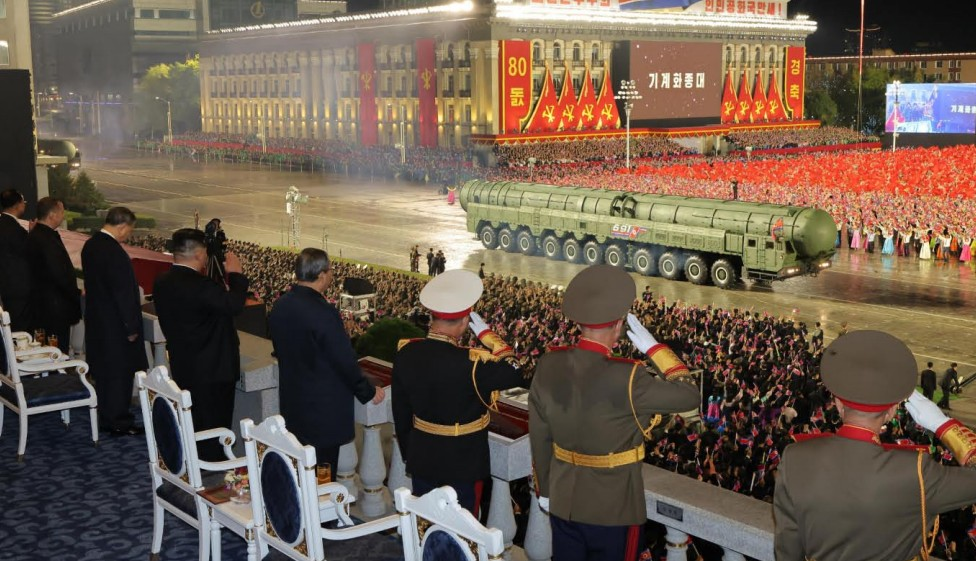 [Current Affairs Analysis]
North Korea’s 80th Party Founding Anniversary: Assessment and Outlook of Its External Messaging Yonghwan ChoiInstitute for National Security StrategyA Predictable Celebration, Yet Signals Worth WatchingOn October 10, North Korea marked the 80th anniversary of the founding of the Workers’ Party of Korea with an elaborate celebration, including a military parade and the unveiling of new weapons systems. Despite the scale of the festivities, international reactions were largely muted. The event’s structure, tone, and messaging aligned closely with expectations. Even the centerpiece—the Hwasong-20 intercontinental ballistic missile (ICBM), described by Pyongyang as its “most powerful nuclear weapon”—was already familiar to the world.As anticipated, senior delegations from China and Russia attended, and Kim Jong Un was seen at the parade reviewing stand flanked by Chinese Premier Li Qiang and Russian Security Council Deputy Chairman Dmitry Medvedev. While the optics reinforced trilateral solidarity, the imagery was not new—similar scenes were observed during China’s Victory Day parade on September 3.Nevertheless, several noteworthy elements distinguish this year’s commemoration.Expanded Diplomatic Outreach to Southeast AsiaWhile the Chinese and Russian delegations drew the most attention, North Korea also welcomed representatives from Vietnam, Laos, and Indonesia. Vietnam’s Communist Party General Secretary To Lam, Laotian President Thongloun Sisoulith, and Indonesian Foreign Minister Retno Marsudi were all in attendance—reflecting Pyongyang’s interest in expanding diplomatic ties beyond its traditional partners.In particular, To Lam’s presence beside Kim Jong Un and Premier Li Qiang during the military parade signaled Hanoi’s willingness to balance its outreach to both Koreas. Kim also held bilateral meetings with the Vietnamese and Laotian leaders, and Foreign Minister Choe Son Hui met with Indonesia’s foreign minister—the first such visit from Jakarta in 12 years.However, these engagements occur in a complex diplomatic context. Vietnam’s leader had paid a state visit to South Korea in August, adopting a Joint Statement on Deepening the Comprehensive Strategic Partnership. Seoul and Hanoi pledged to expand bilateral trade to $150 billion by 2030, as both are each other’s third-largest trading partners. Similarly, South Korea and Indonesia maintain a “Special Strategic Partnership” spanning defense, industry, and culture.Notably, Vietnam, Laos, and Indonesia are all members of the ASEAN Regional Forum (ARF)—the only regional multilateral security platform that includes both Koreas. Their simultaneous engagement with Pyongyang and Seoul raises questions about how North Korea might seek to leverage Southeast Asian neutrality to expand its diplomatic maneuvering space.Military Signaling and Technological ShowcaseNorth Korea once again used the occasion to highlight advances in its strategic arsenal. Among the weapons displayed were the Hwasong-20 ICBM, the Hwasong-11M hypersonic short-range ballistic missile, and the Hwasong-16 hypersonic medium-range ballistic missile. The Hwasong-20 drew particular attention amid speculation that it may feature a multiple independently targetable reentry vehicle (MIRV) system.Yet these systems, while symbolically powerful, are operationally constrained—usable only as “last resort” deterrents. What stood out instead was the relative absence of new conventional weapons systems, despite Kim’s repeated emphasis on modernizing North Korea’s navy, air force, and armored divisions.During a September 11–12 visit to the Academy of National Defense Science, Kim indicated that the upcoming 9th Party Congress (expected next year) would formally present the “dual advancement policy of nuclear and conventional forces.” Recent efforts to enhance tank units, early-warning aircraft, submarines, and destroyers suggest Pyongyang’s ambition to diversify beyond nuclear deterrence. However, neither nuclear-powered submarines nor military reconnaissance satellites—projects previously announced at the 8th Party Congress—were visible in this parade, raising questions about their development status.Muted Rhetoric Toward the U.S. and South KoreaKim Jong Un delivered multiple public speeches in early October—at the Pyongyang General Hospital completion ceremony (Oct. 7), the 80th Party anniversary event (Oct. 9), and the military parade (Oct. 10). Notably, explicit references to the United States or South Korea were either minimal or absent.This restraint contrasts with his late-September address to the Supreme People’s Assembly, where Kim reaffirmed that North Korea “will no longer engage in anything” with South Korea and suggested that dialogue with Washington could resume only if the U.S. abandoned its “obsession with denuclearization.” Remarkably, he also referenced his “personal memories” with former President Donald Trump—an unusual personal touch for Kim.The absence of anti-U.S. or anti-South Korea rhetoric at the anniversary event may reflect tactical restraint. Surrounded by delegations from ASEAN and key trading partners, Pyongyang likely sought to project a more “normal state” image on the multilateral stage. This pattern—harsh criticism at domestic or military-focused events, coupled with moderation in international settings—suggests a deliberate calibration of North Korea’s messaging.Outlook: Continuity and Caution in North Korea’s Diplomacy1. Sustained China–Russia Alignment, but Uneasy BalanceNorth Korea’s alignment with China and Russia will likely persist, though it remains a pragmatic, not ideological, partnership. Beijing has resisted fully embracing a new Cold War bloc structure, mindful of its economic interdependence with the West. In contrast, Pyongyang and Moscow—both under heavy sanctions—seek to expand their “anti-Western” strategic coordination, but with asymmetric motivations and capacities.Whether this triad evolves into a genuine trilateral partnership or remains an ad hoc alignment of convenience will shape the Korean Peninsula’s strategic environment in the years ahead.2. Possibility of Renewed U.S.–North Korea DialogueKim’s reference to his personal rapport with former President Trump—his first direct mention of such ties—signals Pyongyang’s lingering interest in leader-level diplomacy. Given Trump’s unique willingness to engage, North Korea may view any potential future Trump administration as a narrow window of opportunity.However, should U.S.–North Korea dialogue resume, Seoul risks being sidelined, as Pyongyang has repeatedly expressed preference for direct bilateral talks with Washington. South Korea’s challenge will be to ensure that any revival of U.S.–North Korea diplomacy contributes to broader inter-Korean stability, rather than marginalizing Seoul’s role.3. Emergent Multilateral DiplomacyKim Jong Un’s attendance at China’s military parade in September, breaking precedent for North Korean leaders, and the presence of numerous Southeast Asian dignitaries at the 80th anniversary both point to Pyongyang’s tentative reentry into multilateral diplomacy.Kim Yo Jong’s August 20 statement—referencing a “regional diplomatic stage unfolding with our state at its center”—further underscores this ambition. Should North Korea expand participation in regional forums alongside resumed dialogue with Washington, Seoul and its allies will face new diplomatic and security challenges in managing Pyongyang’s reemergence as a regional actor.ConclusionNorth Korea’s 80th Party founding anniversary underscored both continuity and subtle recalibration in its external messaging. While reaffirming alignment with China and Russia, Pyongyang also tested a more cautious, internationally palatable tone. The regime’s balancing act—between military assertion and diplomatic normalization—warrants close observation as it prepares for the 9th Party Congress and seeks to redefine its role in a shifting regional order.
25.10.17 -
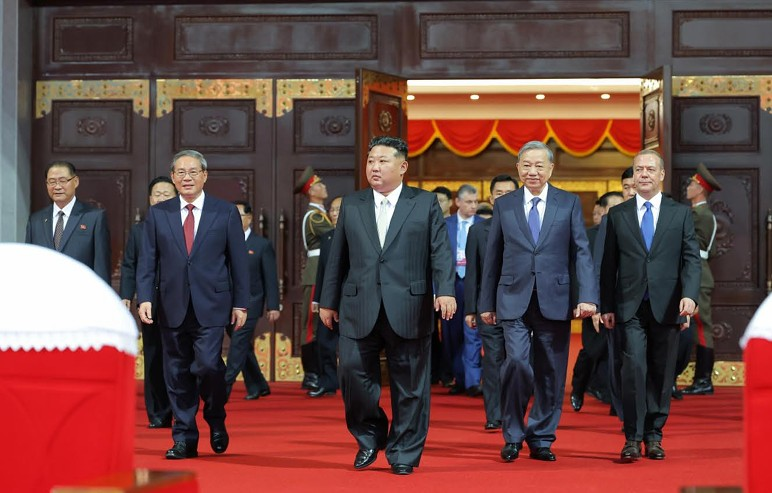 [North Korea Inside]
North Korea Inside· North Korea’s Arrogance, Backed by China and Russia: Daily Rhetoric Targeting the United States· North Korea Urges Internal Unity: Focus on Completing the Five-Year Plan Ahead of the 9th Party Congress· Kim Jong Un’s Motives in Raising the Issue of “Acts Undermining Authority” Despite His Firmly Established One-Man Rule· Kim Jong Un Warns: “South Korean Territory Can Never Be a Safe Zone” — Assigns “Special Assets” to Key TargetsKim Myong-sungSecretary General of the SAND InstituteNorth Korea’s Arrogance, Backed by China and Russia: Daily Rhetoric Targeting the United StatesNorth Korea has intensified its anti-U.S. propaganda campaign, employing phrases such as “hegemony and tyranny” and “arrogant and rude” in its state-run media. Recent coverage has reflected a pronounced alignment with Beijing and Moscow — defending China amid the ongoing U.S.-China trade dispute and amplifying the humanitarian toll in Gaza while deliberately omitting references to U.S. diplomatic achievements, including former President Donald Trump’s mediation of the Israel-Palestine peace agreement.Analysts interpret this rhetoric as Pyongyang’s attempt to project itself as a key pillar of an emerging “anti-U.S. coalition,” emboldened by its nuclear status and diplomatic backing from China and Russia.The Rodong Sinmun, the official newspaper of the Workers’ Party of Korea, published an article on October 16 asserting that “calls are growing to relocate the UN headquarters from New York to another country,” attributing such sentiment to what it termed “America’s arrogant and coercive behavior.”The paper accused Washington of subordinating international treaties and institutions to its own interests, halting funding, and even withdrawing from organizations such as the World Health Organization and UNESCO. It claimed such actions have “paralyzed the functions of the United Nations.”The article cited as evidence the recent U.S. decision to revoke the visa of the Colombian president during the 80th UN General Assembly session, describing it as a blatant violation of the 1947 UN–U.S. headquarters agreement and an affront to diplomatic immunity. The Rodong Sinmun argued that the decision demonstrated “America’s disregard for international law” after the Colombian leader criticized Israel’s military actions in Gaza. It also highlighted remarks from a senior UN spokesperson noting that discussions were underway regarding potential relocation of UN offices, allegedly due to “U.S. financial pressure and political interference.”According to North Korean media, multiple countries — including Türkiye, Qatar, Rwanda, Kenya, and Serbia — have expressed interest in hosting UN institutions. The paper framed this as “a global movement to resist U.S. domination,” claiming that Washington expects all entities to serve its interests and discards international mechanisms when they do not.Other North Korean outlets, including Minju Joson, echoed these criticisms, citing Venezuela’s defense minister, who denounced U.S. military deployments in the Caribbean as a “relic of colonialism.” The following day, China’s Permanent Representative to the United Nations also condemned U.S. actions in the Caribbean at a Security Council meeting, characterizing them as violations of sovereignty and international law — a stance that aligns with North Korea’s broader effort to support Beijing’s position in global affairs, including the tariff dispute with Washington.Regarding the Israel-Palestine issue, North Korean media made no mention of the Trump administration’s mediation or the signing of peace accords, instead devoting extensive coverage over October 15–16 to the destruction in Gaza caused by Israeli airstrikes. North Korea also referenced a mass shooting in South Carolina as further evidence of “America’s internal disorder.”Observers view these statements as part of Pyongyang’s broader strategy to consolidate its standing within a China-Russia axis and to frame itself as the “vanguard” of global anti-American sentiment. “North Korea’s sustained criticism of the United States is aimed at signaling its alignment with Beijing and Moscow,” said one diplomatic source. “By doing so, it seeks to reinforce its status as a nuclear power, emphasize its defiance of Washington, and strengthen domestic cohesion.”North Korea Urges Internal Unity: Focus on Completing the Five-Year Plan Ahead of the 9th Party CongressIn the aftermath of celebrations marking the 80th anniversary of the Workers’ Party of Korea (WPK), North Korea has directed its citizens to concentrate national efforts on completing the current Five-Year Economic Development Plan and preparing for the 9th Party Congress, expected to convene in early 2026.In a front-page editorial on October 15 titled “Let Us March More Vigorously Toward the Glorious Party Congress with the Momentum of the 80th Anniversary Celebration,” the Rodong Sinmun emphasized that “the period for implementing the five-year plan presented at the 8th Party Congress is now drawing to a close.” The paper acknowledged that “challenges and difficulties obstructing our advance remain severe” and called on officials to “ensure that all undertakings yield excellent results.”The editorial urged cadres to recognize “the weight of their positions and roles in today’s all-out advance toward the Party Congress,” and to identify and correct “any shortcomings or perfunctory approaches” in executing Party directives.This year marks the final stage of the Five-Year Economic Development Plan announced by Kim Jong Un at the 8th Party Congress in 2021. Following high-profile displays of military strength—including parades and large-scale exhibitions in recent months—Pyongyang appears to be intensifying its internal review of “economic achievements” and “policy outcomes” ahead of the upcoming Congress.The 9th Party Congress is expected to conduct a comprehensive review of the regime’s economic, military, and social performance over the past five years, while setting the strategic direction for the next planning cycle. During a recent inspection of the Academy of National Defense Science, Kim Jong Un stated that “the policy of simultaneously advancing nuclear and conventional forces will be clearly presented at the 9th Party Congress.”At a separate ceremony marking the completion of the Pyongyang General Hospital earlier this month, Kim also pledged to unveil “a concrete plan for modernizing the healthcare system, including the establishment of a second Pyongyang hospital,” at next year’s Party Congress. These remarks suggest that the Congress may introduce a new five-year policy blueprint encompassing national defense, the economy, and social welfare.Analysts interpret the Rodong Sinmun editorial as part of Pyongyang’s effort to consolidate internal unity and mobilize public enthusiasm ahead of the 9th Party Congress. Following the extensive loyalty campaigns surrounding the WPK’s 80th anniversary, the regime now appears focused on linking ideological cohesion to measurable economic and policy outcomes.Kim Jong Un’s Motives in Raising the Issue of “Acts Undermining Authority” Despite His Firmly Established One-Man RuleIn advance of the 80th anniversary of the founding of the Workers’ Party of Korea (October 10), Chairman Kim Jong Un has reportedly directed a comprehensive campaign to identify and eliminate “acts undermining Party authority.” This directive, issued alongside his declaration of a “Second Era of National Founding,” reflects a dual effort to consolidate political discipline and redefine national strategy for the coming decade.According to the Korean Central News Agency (KCNA), Kim delivered instructions during a visit to the Party Founding Memorial Hall in Pyongyang, ordering officials to “prioritize the identification and elimination of all elements and acts that undermine the Party’s leading authority.” He further called for “firmly establishing strict discipline and a sound culture of order within the Party.”Analysts note that this renewed emphasis on Party authority—despite Kim’s already entrenched one-man rule—suggests concern over potential internal instability. It likely serves as a preemptive measure to neutralize dissent and maintain regime cohesion during what many view as the preparatory phase for fourth-generation succession involving Kim’s daughter, Kim Ju-ae.This directive follows a June Rodong Sinmun editorial that underscored the “unique leadership of the Party Central Committee” and the “irresistible authority” of the Party and state. The repetition of such rhetoric, experts argue, signals internal anxiety rather than confidence.One North Korea specialist observed, “As regimes stabilize, political discourse usually becomes simpler; the reintroduction of complex ideological symbols indicates heightened tension and an ongoing effort to manage elite alignment ahead of succession.”In the same speech, Kim described the present period as the “Second Era of Nation-Building,” asserting that “all sectors and regions must undergo comprehensive transformation within ten years.” Observers interpret this slogan as an attempt to construct an ideological and institutional foundation for hereditary continuity, positioning Kim Ju-ae as the future leader of the regime.Recent developments appear consistent with this trajectory. South Korea’s National Intelligence Service (NIS) reported to the National Assembly’s Intelligence Committee last month that Kim Ju-ae’s participation in her father’s visit to China was part of a broader effort to embed her within the “revolutionary narrative” of the Kim dynasty.Moreover, Rodong Sinmun has increasingly emphasized themes of “Baekdu bloodline” legitimacy and the “completion of revolutionary succession.” A September 3 editorial asserted that “the question of carrying forward the revolutionary cause has been elevated to an issue of eternal national significance, now resolved both theoretically and practically.”Taken together, these developments suggest that Kim Jong Un’s latest call for internal discipline represents not merely routine political maintenance, but a calculated effort to secure the Party’s absolute loyalty as North Korea transitions into a new phase of dynastic entrenchment.Kim Jong Un Warns: “South Korean Territory Can Never Be a Safe Zone” — Assigns “Special Assets” to Key TargetsNorth Korea has escalated its threats against South Korea and the United States, unveiling a full array of strategic weapons—including intercontinental ballistic missiles (ICBMs) and hypersonic systems—at its latest military exhibition in Pyongyang.During the event, Kim Jong Un declared that “special assets have been assigned to key targets,” a statement widely interpreted as signaling North Korea’s intent and capability to strike U.S. bases in South Korea and critical South Korean infrastructure.According to the Korean Central News Agency (KCNA), the “Defense Development-2025” exhibition opened on October 4 in Pyongyang. In his keynote address, Kim accused Washington and Seoul of intensifying nuclear cooperation and military training “based on nuclear operational guidelines,” adding that the U.S. has been “increasing its military presence in South Korea and surrounding regions.”He warned, “We have taken decisive measures to deploy special assets against key targets… South Korean territory can never be a safe zone.”The exhibition featured a comprehensive display of North Korea’s modernized missile inventory, including the Hwasong-11 short-range ballistic missile (SRBM) fitted with a hypersonic warhead, supersonic cruise missiles, anti-submarine missiles, and the Hwasong-18 and Hwasong-19 ICBMs. The event effectively showcased Pyongyang’s full strike spectrum—from tactical weapons aimed at U.S. forces on the Korean Peninsula to strategic systems capable of reaching the U.S. mainland.Kim warned that if the United States “continues to disregard regional security concerns and pursue a unilateral military buildup,” North Korea would be “left with no choice but to accelerate military and technological measures to preserve the balance of power.”The Rodong Sinmun, the official party newspaper, described the exhibition as a “resounding success,” publishing extensive photographs of advanced weapons systems.Since 2023, North Korea has institutionalized annual arms exhibitions under the “National Defense Development” brand, following the “Self-Defense-2021” show. Analysts view these events as intended not only to counter the expanding U.S. military posture in the region but also to enhance Pyongyang’s bargaining leverage in future negotiations with Washington.As part of the exhibition schedule, Kim Jong Un also inspected the new 5,000-ton destroyer “Choe Hyon Ho,” calling it a “super-powerful warship” that demonstrates the “justice and vitality” of North Korea’s self-reliant defense line. The destroyer, launched in April 2025, has been described as North Korea’s version of an Aegis-class vessel.During the inspection, Kim stressed the importance of ideological discipline within the navy, remarking, “The strongest power of a guardian lies not in weapons or equipment, but in ideological commitment, inherited from the spirit of revolutionary forebears.” He added that the navy must ensure “the eternal tranquility of our homeland’s seas” through robust maritime power.The destroyer features a photo and statue of anti-Japanese guerrilla Choe Hyon, Kim’s grandfather and a symbol of revolutionary lineage. Kim explained that the installation is designed to instill “an indomitable fighting spirit” in the new generation of sailors.Photographs released by state media revealed interior images of the ship’s bridge and combat control room, including electronic charts displaying the Northern Limit Line (NLL) in the West Sea.Rep. Yoo Yong-won, a member of the National Assembly Defense Committee (People Power Party), assessed this as “a deliberate disclosure intended to signal operational readiness for ship-based attacks in the NLL area.” He also noted potential prospects for maritime cooperation with China and Russia.Since August, North Korea has been conducting performance tests on the ship's vertical launch system(VLS), sensors, and combat integration systems. Rep. Yoo projected that “trial operations and performance verification could begin as early as October.”North Korea has reportedly committed to constructing additional destroyers of the same class by October 10, 2026—following the Choe Hyon Ho and Kang Gon Ho. Analysts interpret this as part of Kim Jong Un’s broader initiative to modernize naval capabilities and achieve what Pyongyang describes as “world-class maritime power.”
25.10.17 -
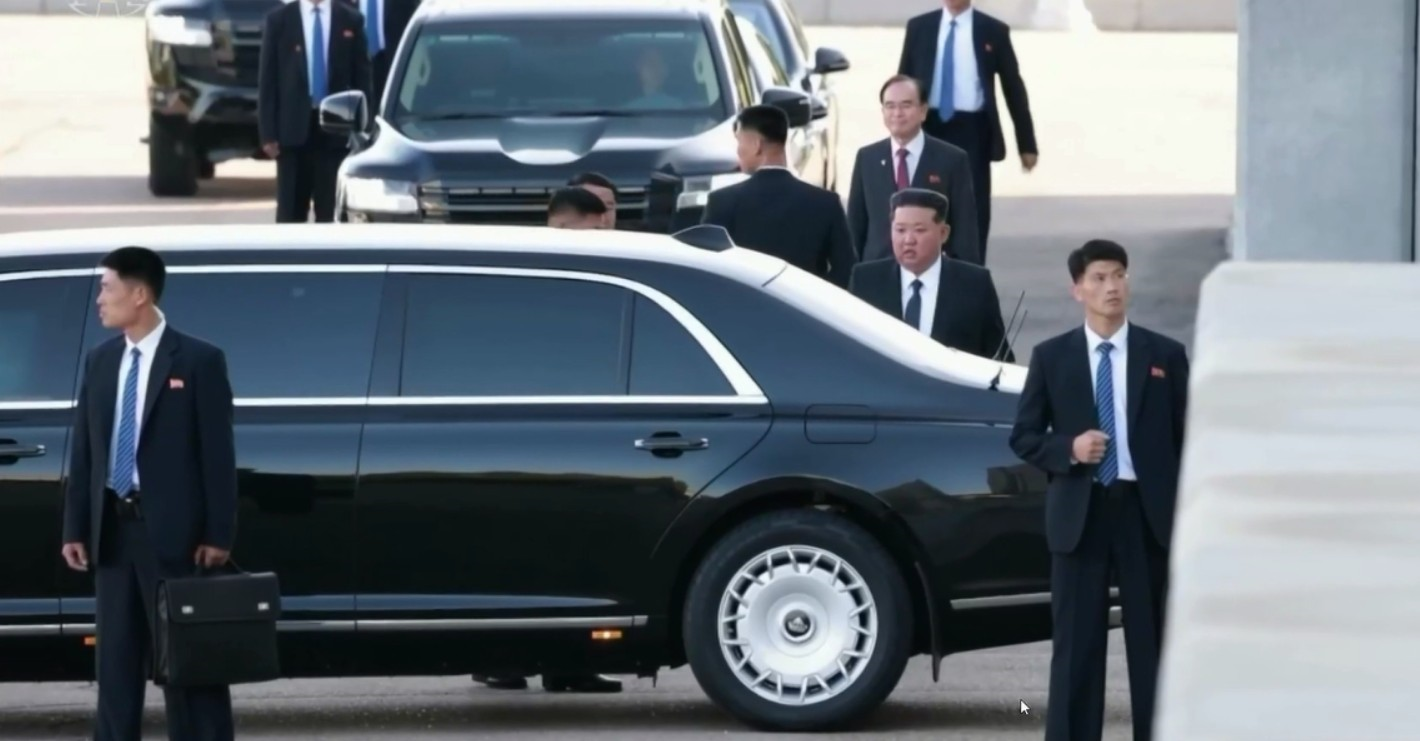 [NK Focus]
North Korea’s Concurrent Military Strengthening and Social Control – September 2025 Lee Seung-hyunResearch Fellow at SAND Institute / Ph.D. in Public AdministrationIn September 2025, North Korea undertook a series of coordinated measures aimed at simultaneously enhancing military capabilities and consolidating internal political control. These actions, directed by Kim Jong-un, reflect a strategic calculus to reinforce regime stability while signaling deterrent capacity to both domestic and international audiences.Military Activities and Strategic SignalingKim Jong-un prioritized military modernization, overseeing an expanded meeting of the State Defense Commission, observing a missile test at the Academy of National Defense Science, and addressing military commanders. On September 18, North Korea test-launched a new medium-range ballistic missile. While officially framed as a technical verification of solid-fuel propulsion and re-entry vehicle resilience, the launch carried a pronounced strategic message aimed at U.S. bases in Guam and Japan. This action is widely interpreted as a countermeasure to the intensification of U.S.-ROK joint military exercises, while also signaling the potential for future ICBM deployments or military reconnaissance satellite launches.Kim emphasized scientific and technological advancement at Kim Chaek University of Technology, directing independent progress in rocket engines, satellite communications, and artificial intelligence. This effort signals an intent to develop domestic research and defense capabilities, consistent with North Korea’s growing military-technical cooperation with Russia. Kim also reinforced regime loyalty through engagements at the Mangyongdae Revolutionary School and Youth League events, underscoring the long-term goal of sustaining elite cohesion.Internal Social and Political ControlNorth Korea’s leadership concurrently strengthened social and political control mechanisms. Choe Ryong-hae highlighted compliance with laws and elimination of “anti-socialist and non-socialist acts,” addressing concerns about market proliferation and public discontent. Cabinet discussions, chaired by Premier Kim Duk-hun, nominally addressed agricultural and energy issues but focused largely on production slogans rather than substantive policy measures, reflecting structural economic constraints and the continuing impact of international sanctions.Kim Jong Un, Chairman of the State Affairs Commission of North Korea, boards a vehicle after delivering a policy speechat the 13th session of the 14th Supreme People's Assembly at the Mansudae Assembly Hall in Pyongyangon September 21. 2025.09.22/Photo: Korean Central TelevisionExternally, Pyongyang conducted a mass loyalty rally emphasizing nuclear deterrence as central to national survival. The event framed the United States as a “provoker of nuclear war,” serving both domestic propaganda and strategic signaling functions. The coordination of military and ideological measures underscores North Korea’s strategy to maximize regime security and leverage its position in potential future negotiations.Analytical AssessmentFrom an international relations perspective, North Korea’s September 2025 actions exemplify realist behavior: maximizing security under external pressure and isolation. Sociologically, the regime employs a “crisis mobilization” model, reinforcing compliance and loyalty through youth engagement, propaganda, and ideological education. From a North Korea studies perspective, these measures may be effective in the short term but risk accumulating public fatigue and the eventual erosion of social control.Future OutlookMilitary Trajectory: High likelihood of a military parade, unveiling of new weapons systems, and potential ICBM or reconnaissance satellite launch around the October Party Founding Day anniversary. Such actions would serve as both a direct strategic warning to the U.S. and ROK and as a demonstration of enhanced military cooperation with Russia.Domestic Control: Social control measures are expected to intensify in response to worsening economic conditions and growing public discontent. While such measures may preserve short-term regime stability, they could exacerbate political tensions and impose long-term governance challenges.ConclusionNorth Korea’s September 2025 activities reflect a coordinated strategy of military strengthening and social control designed to safeguard regime survival, project deterrence, and manage internal dissent. U.S. and allied policymakers should monitor both military signaling and domestic control trends to assess regime stability, potential escalation risks, and negotiation postures.
25.10.03
News Letter
We are leading the global communication via Newsletter.
We will deliver the latest information and proven facts on Korean Peninsula status including North Korea situation.