

-
 [Defectors' Podium]
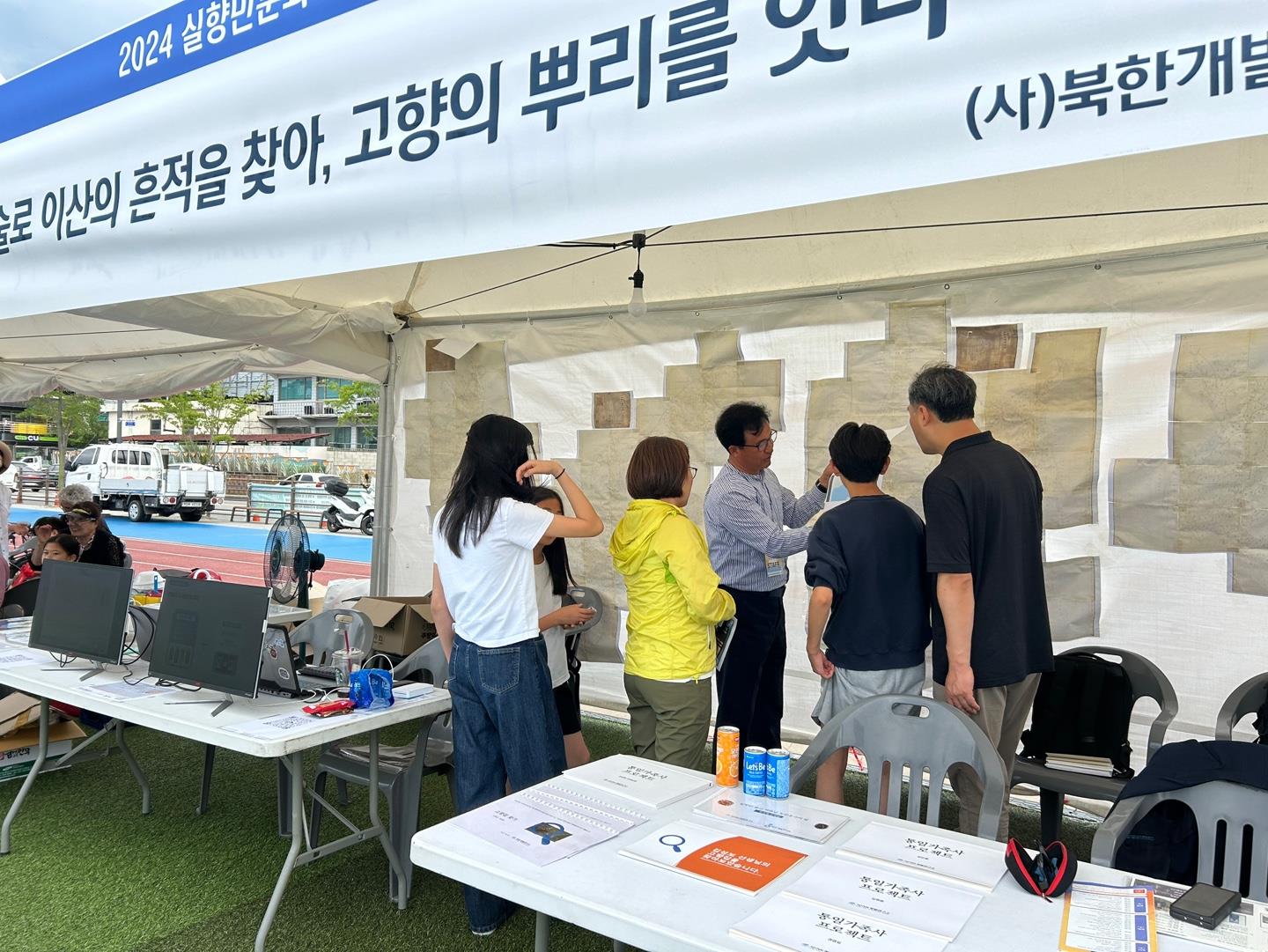
From the Sorrows of the First Generation to Vision and Hope: The Journey of North Korean DefectorsKim Byung-wookDirector of the North Korea Development Institute (NKDI)According to the Ministry of Unification, as of December 2023, there are 27,086 elderly individuals over 80 among the surviving first generation of displaced persons. Of these, 12,463 are over 90 years old, and 14,623 are between 80 and 90 years old, comprising 66.7% of the total survivors. With South Korea's average life expectancy at 83.6 years, most of these individuals are expected to pass away by 2038, leaving only about a decade. Their primary wish is to reunite with their separated families. However, given North Korea's historical stance and the current tense relationship between the North and South, family reunions seem unlikely.As the possibility of family reunions fades and the end of life approaches, they wish to see how their hometowns have changed and to pass on the location of their ancestral homes to their descendants. However, despite the assistance of their children or grandchildren using Google Maps, they are unable to locate their old homes, leading to frustration.North Korea's land reclamation policies, implemented as part of its unification preparations, and the use of Japan's Tokyo coordinates in cadastral maps that replaced old land documents, make it impossible to find these locations on Google Maps. Solving this issue should be led by the North Korean defector community.To address this, defectors at the North Korea Development Institute (NKDI) have developed technology to identify the locations of ancestral homes. They hold two related patents. With the motto, "While family reunions require North Korea's cooperation, we can find hometown locations with South Korea's resources." the NKDI has been assisting the first generation of displaced persons in locating their hometowns for nearly a decade.During the 2024 Sokcho Cultural Festival for Displaced Persons on June 14, NKDI presented a booth with the theme "Using AI Technology to Reconnect Separated Families and Rediscover Roots."The NKDI booth has been a regular feature at the Sokcho Cultural Festival for Displaced Persons, held annually since 2016, and is known for helping to alleviate the sorrows of the first generation of displaced persons. Initially, the booth's activities included locating ancestral homes for those living in special triangular and overseas areas, in collaboration with the Busan Historical Records Center of the National Archives. These activities involved presenting framed photos of hometown locations found on Google Maps, videos on family reunification, and 3D printed models.Currently, various AI technology-based activities led by Millennials and Gen Z defectors are being showcased. For instance, they offer services that restore old photos of hometowns or family members to resemble current images and recreate the voices of the first generation to provide answers applicants wish to hear. Additionally, they are developing an app called "Digital Legacy and Life Archive (DL-LA Archive)" to help the first generation manage their life records and assets for inheritance by family members still in North Korea.These efforts are transforming the festival venues into places of hope, where one can see messages from the young generation, aiming to continue the spirits and roots of the first generation, rather than just sites filled with sorrow and separation.Instead of just acknowledging the sorrows of the first generation, our focus today is on providing vision and hope to future generations. We should remember their initial defection and continue this journey together.
24.07.19 -
 [Current Affairs Review]
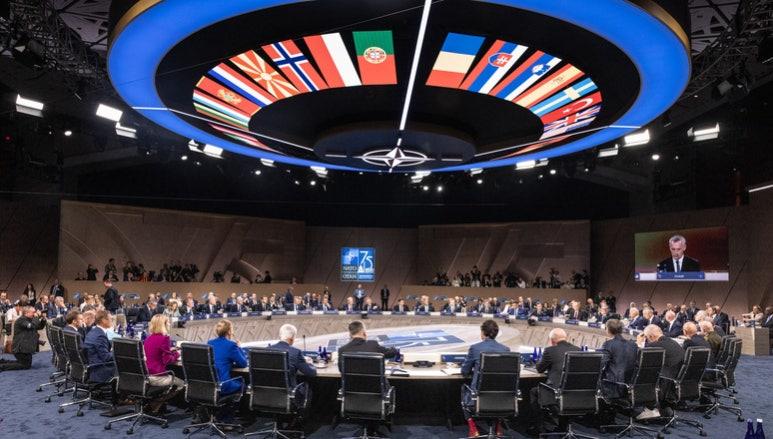
Key Takeaways and Strategic Implications from the2024 NATO summit in WashingtonLee Soo-hyungSenior Research Fellow at INSS Institute for National Security StrategyThe NATO summit, held in Washington, D.C., USA, from July 9 to 11, 2024, commemorated NATO’s 75th anniversary. This summit occurred amidst significant internal and external challenges. Key issues included the ongoing Russian invasion of Ukraine, the debate over Western support for Ukraine, former President Trump’s critical views on NATO, which have become contentious during the 2024 U.S. presidential election, and the strengthened North Korea-Russia relations following the June summit in Pyongyang, which negatively affect the Ukraine conflict and Korean Peninsula security. These factors contributed to a tense atmosphere for the Washington summit. Thus, the summit was not merely a celebration of 75 years of the Euro-Atlantic Partnership, but a crucial meeting to discuss and address the pressing security threats and future challenges facing NATO.Given these factors, this article aims to explore the key takeaways from the Washington summit and identify their strategic implications. The primary topics discussed at the summit included support for Ukraine in relation to the ongoing conflict, enhancing NATO’s defense capabilities, NATO’s stance and response to Russia, and security cooperation with partner countries.Firstly, NATO committed to long-term security support for Ukraine during the Washington Summit Declaration. The alliance decided to establish NATO Assistance and Security Training for Ukraine (NASTU) to coordinate the provision of military equipment and training. NATO affirmed its commitment to help Ukraine build an army capable of repelling Russian aggression and deterring future invasions, agreeing to provide at least 40 billion euros in funding by 2025.33rd NATO Summit in 2024/NATO homepageThis commitment to long-term military support for Ukraine is also seen as a strategic move in light of the potential election of Trump, who has been less supportive of aid to Ukraine. NATO thus reaffirmed its dedication to Ukraine’s security, independent of the potential political changes in the U.S.Another significant aspect of the summit was the enhancement of NATO’s defense capabilities amid rising military tensions and conflicts in Europe due to Russia’s invasion of Ukraine. At the Madrid summit in June 2022, NATO introduced a new Force Model to counter the Russian threat, capable of mobilizing 100,000 troops within 10 days, 200,000 within 30 days, and 500,000 within six months. The 2023 Vilnius summit adopted a regional defense plan to activate NATO Response Force and provide reinforcement troops against Russian aggression.The Washington summit reaffirmed the commitment made at Vilnius to fully implement the defense commitments, aiming to strengthen NATO’s defense capabilities by providing the necessary troops, resources, and infrastructure for the new defense plan. Additionally, NATO decided to enhance its missile defense system based on a holistic approach.The summit also focused on evaluating and understanding the threat posed by Russia and its allies. At the Madrid summit, NATO identified Russia, the aggressor in Ukraine, as a significant and direct threat. This perspective remained unchanged at the Washington summit. NATO stressed that Russia aims to fundamentally alter the Euro-Atlantic security framework. The threats from Russia are expected to continue long-term, with Russia diversifying its nuclear arsenal, increasing reliance on nuclear systems, developing new ones, and deploying short and medium-range dual-strike capabilities, which pose a growing threat to the alliance. NATO also expressed concern over Russia's aggressive hybrid actions across the Euro-Atlantic region. In response, NATO plans to develop strategic approaches to counter Russia’s threats at the Hague summit in June 2025.North Korea and China are closely linked with Russia’s efforts to change the European security structure. North Korea, along with Iran, exacerbates Russia's war in Ukraine by providing military support such as munitions and drones, severely affecting Euro-Atlantic security and undermining the global non-proliferation regime. China, having formed an extensive partnership with Russia, plays a crucial role in supporting Russia's defense industry in the Ukraine war.Therefore, NATO calls on China to halt all material and political support for Russia's war efforts, including the transfer of dual-use materials like weapon components, equipment, and raw materials. NATO is also concerned that, aside from supporting Russia, China continues to challenge Euro-Atlantic security by rapidly expanding and diversifying its nuclear arsenal with more warheads and sophisticated delivery systems. NATO emphasizes that it remains open to constructive engagement with China, urging China to join strategic risk reduction discussions and promote stability through transparency. This Washington summit, like the 2022 Madrid summit, identified China as a systemic challenger. However, since China was first mentioned in NATO’s official documents at the 70th-anniversary London summit in 2019, NATO’s perception of China has evolved from viewing it as a competitor to recognizing it as a significant security threat. U.S. Secretary of State Blinken highlighted in this summit that the current security threat in Europe is the most severe since the Cold War, attributing this to China’s support for Russia and the deepening North Korea-Russia relationship. Lastly, the summit underscored the importance of security cooperation with partner countries. NATO highlighted that its cooperation with the European Union, a strategic partner, has reached unprecedented levels. NATO and the EU are enhancing practical cooperation in areas such as space, cyber, climate, defense, and emerging and disruptive technologies (EDTs). NATO also celebrated the 30th anniversary of the Mediterranean Dialogue and the 20th anniversary of the Istanbul Cooperation Initiative, inviting these partner countries to the summit to promote stability and peace in the Middle East and surrounding regions. Particularly, NATO emphasized the security link between the Euro-Atlantic and Indo-Pacific regions, stressing the importance of addressing common security challenges and enhancing practical cooperation with NATO IP4 countries: South Korea, Japan, Australia, and New Zealand. The Washington summit, held to mark NATO's 75th anniversary, focused more on addressing current and future security threats than on celebration. The primary strategic implications derived from this summit include the likelihood of a prolonged conflict between NATO and Russia, given NATO’s view of Russia’s invasion of Ukraine as a fundamental restructuring of European security. This tension will likely serve as a major battleground for global order reorganization, leading Europe into a long-term conflict phase. Secondly, NATO increasingly views China as a significant security threat.NATO's changing perception of China is part of a broader global competition aimed at altering the rules-based liberal international order. This rivalry is expected to grow and become more intense across political, economic, and security spheres at both regional and international levels. Additionally, the strengthened ties between Russia and North Korea has increased the security interdependence between the Euro-Atlantic and Indo-Pacific regions, reflecting in the realities of international politics. Consequently, most security issues in these regions will likely escalate into broader bloc issues, grouping related actors regardless of their national or regional affiliation. If not managed properly, a specific issue could evolve into a “chain-gang” problem, involving all directly or indirectly connected parties.
24.07.19 -
 [Column2]
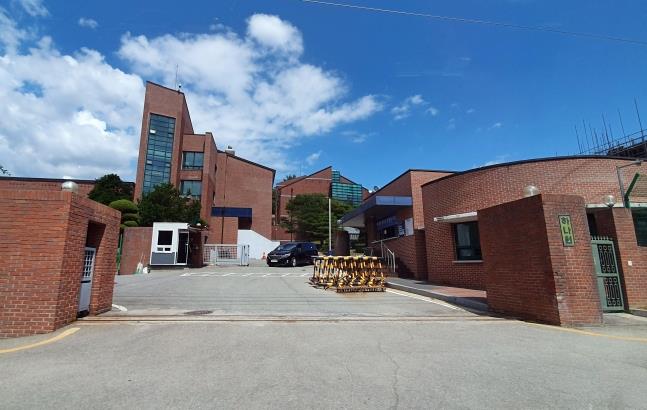
Aspirations for the Inaugural ‘North Korean Defectors Day’on July 14, 2024Sohn Kwang-jooFormer President of the Korea Hana Foundation1. Reflecting on 30 Years Since Kim Il-sung's PassingJuly 8, 2024, marks the 30th anniversary of Kim Il-sung's death, an event that signified the end of an era. Like the unification of East and West Germany in 1990 and the collapse of the Soviet Communist Party in 1991, North Korea had an opportunity to move away from its old communist regime towards a new era of reform and openness.Yet, when Kim Jong-il assumed power, he reinforced the dictatorial regime with severe repression, fear tactics, nuclear development, and a military-first policy under the so-called 'Arduous March.' During the mid-1990s great famine, which claimed the lives of three million people, many North Koreans began crossing the Amnok and Tuman Rivers seeking freedom and survival. It was around this time that the term 'North Korean Refugee' started to appear in South Korean and international media.On January 13, 1997, the 'North Korean Defectors Protection and Settlement Support Act' was passed by the National Assembly and came into effect six months later on July 14. This act aimed to provide legal support for the settlement of North Korean defectors in South Korea as a practical step towards reunification.A view of Hanawon, a facility for education and settlement support for North Korean defectorslocated in Anseong, Gyeonggi-do/Ministry of UnificationSelecting July 14, the day this law was first implemented, as 'North Korean Defectors Day' is a decision that perfectly captures both the significance and spirit of the occasion.2. The Second Generation of North Korean Defectors Paving the Way for ReunificationNorth Korean defectors started arriving in South Korea in the 1990s, and their numbers continued to grow through the 2000s. From 2006 to 2011, more than 2,000 defectors entered South Korea each year. In 2009 alone, 2,914 defectors arrived, nearly reaching 3,000. However, during Kim Jong-un's regime, this number dropped, with an annual average of around 1,300. In 2021, only 63 defectors arrived, followed by 67 in 2022. Last year, 196 defectors entered South Korea, bringing the total number to 34,078 by the end of 2023.A generation is generally considered to span about 30 years. This year, as the 30th anniversary of Kim Il-sung's death is commemorated, it also marks a generation since the first North Korean defectors arrived in South Korea in the mid-1990s.Three decades into the wave of North Korean defection, it is crucial to focus on the progress of both the defectors and their second generation in South Korea. While the total number of 35,000 defectors may not seem large, their impact as the "first unifiers" will be exponentially significant in the future. The 30-year history of North Korean defection is a considerable journey.Attention is now shifting to the second generation of North Korean defectors. Thanks to their parents' dedication, these young defectors are not only integrating into South Korean society but also making their mark globally. Emerging professionals such as lawyers and accountants, along with those excelling at prestigious institutions like Harvard and Columbia in the United States, are already becoming pivotal figures in a reunified Korea.Given this, designating the first ‘North Korean Defectors Day’ on July 14, with the theme 'From 30 Years of North Korean Defection to a Thousand Years of Reunified Korea,' seems fitting.A vision of collaboration between the second generation of North Korean defectors in South Korea and the jangmadang generation in North Korea is inspiring. Picture a unified generation of young adults in their 20s and 30s from both North and South Korea, setting new agendas for the peninsula and leading East Asia into the 21st century as a global powerhouse.Society today appears to have lost its collective dream. Without a shared vision, politics devolves into petty disputes and populism. This trajectory could endanger the nation in a decade. It seems that the time has come for the young generation of North Korean defectors to step forward and lead.Elevating the issues of North Korean freedom, human rights, and reunification to the top of the agenda is essential, along with striving to connect with the jangmadang generation in North Korea. Additionally, reaching out to young North Korean human rights activists worldwide—in the United States, Japan, Europe, Canada, and Australia—can help collectively dismantle the barriers of the dictatorship.‘North Korean Defectors Day’ should not merely be a celebration for defectors but a day to pave the way for reunification, thereby capturing its true essence.
24.07.05 -
 [Column1]
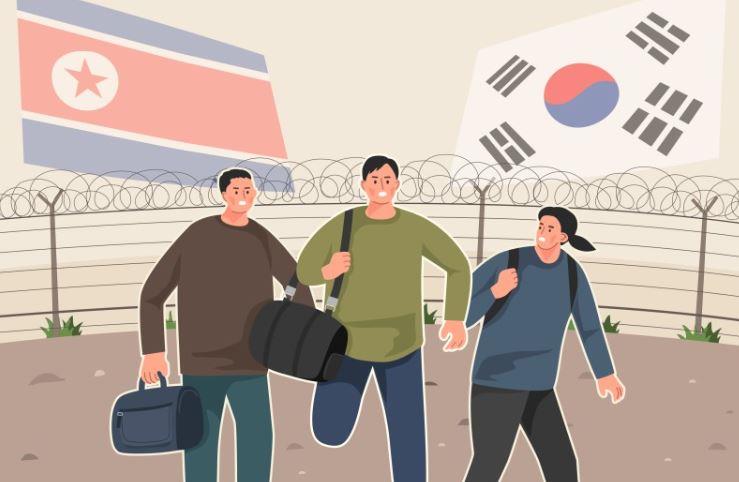
The Establishment of North Korean Defectors' Day:Declaring North Korean Residents as South Korean CitizensYoung-Hyun LeeCorporate law firm IRE attorney the first North Korean defector lawyerJuly 14 marks the enactment of the "North Korean Defectors Protection and Settlement Support Act," which is fundamental to the legal status and support policies for North Korean defectors. It is now officially recognized as "North Korean Defectors' Day," a national commemorative day. The designation of "North Korean Defectors' Day" as a national holiday has been warmly received by the North Korean defector community. Reports indicate admiration from North Korean residents and positive reactions from North Korean workers abroad. This day holds significant implications domestically, internationally, and for North Korea.Within South Korea, the creation of "North Korean Defectors' Day" is aimed at enhancing support for defectors' integration and fostering unity with the general populace.Despite the considerable efforts by both the government and private sector to help North Korean defectors settle successfully, adapting to South Korea's competitive environment remains challenging for many defectors who have lived under a different regime for a long time. Additionally, the cold stares, discrimination, and prejudice from some South Koreans add to their difficulties. Some defectors have candidly expressed that "it's harder to settle in South Korea than to defect," or "the South Korean government accepted us, but the people did not.“The government should use "North Korean Defectors' Day" to identify and address the challenges defectors face and improve any legal, institutional, or policy gaps in settlement support. Additionally, initiatives are needed to change and improve the public's negative perceptions of defectors. As the "first wave of unification," enhancing support systems and public perception is crucial to bridging gaps and enabling true integration. Successful settlement of defectors in South Korea will inspire North Korean residents to dream of and hope for national unification.North Korean defectors fleeing North Korea/Clip Art KoreaInternationally, this day serves to meet our constitutional and legal obligations under the North Korean Defectors Protection and Settlement Support Act to protect defectors abroad, showcasing the special relationship between South and North Korea to the world.Many North Korean defectors escape to China by crossing the Amnok or Tuman Rivers. Support organizations estimate that around 100,000 defectors live in China. Despite international concerns, China continues to forcibly repatriate defectors. Recently, alarming news surfaced that China repatriated 60 defectors, following the repatriation of 200 defectors in April.The government should use "North Korean Defectors' Day" to highlight the human rights issues defectors face abroad and urge the international community to address forced repatriation. Defectors abroad will view this day as a commitment from South Korea to their protection. Efforts should also be increased to press China to adhere to non-refoulement principles under the Refugee and Torture Conventions and improve the human rights situation for defectors in China.Defectors abroad are constitutionally South Korean citizens and deserve protection. Unlike North Korea, which has declared the South and North as separate states and abandoned unification, we must emphasize that South and North Korea share a special relationship and aim for peaceful unification, continuously spreading this message to the international community.From the standpoint of engaging with North Korea, this day represents a dedication to enhancing human rights and striving for peaceful unification rooted in the idea of a single ethnic community.Despite recent actions by the Kim Jong-un regime to reject the idea of a single ethnic community and declare a two-state Korea, North Korean residents' perception of the South and North as one ethnicity cannot change overnight. The establishment of North Korean Defectors' Day affirms that North Korean residents, like defectors, are part of the same nation, entitled to the same freedoms, human rights, peace, and prosperity. It sends a message of commitment to separating the North Korean regime from its people and continuing efforts to remember and improve their dire human rights situation.In the future, North Korean residents may increasingly trust and admire South Korea's policies towards defectors, fostering a growing desire among them to flee their repressive and anti-humanitarian regime, governed by laws like the Reactionary Ideology and Culture Rejection Law and the Pyongyang Cultural Language Protection Law, and seek refuge in South Korea. The potential for a unified Korean Peninsula through democratic means has also grown. During "North Korean Defectors' Day," the government should underscore that peaceful unification based on democratic principles is crucial to addressing the human rights challenges faced by North Korean residents.The Ministry of Unification announced that the inaugural "North Korean Defectors' Day" will feature a memorial ceremony and related activities honoring defectors who lost their lives during escape attempts, while also conveying a message of hope for freedom and prosperity to North Korean residents. This event aims to underscore the historical significance of defectors and the establishment of their dedicated day. Moreover, it presents an opportunity for the 34,121 defectors to reflect on their pivotal role in advancing Korean Peninsula unification.
24.07.05 -
 [Column]
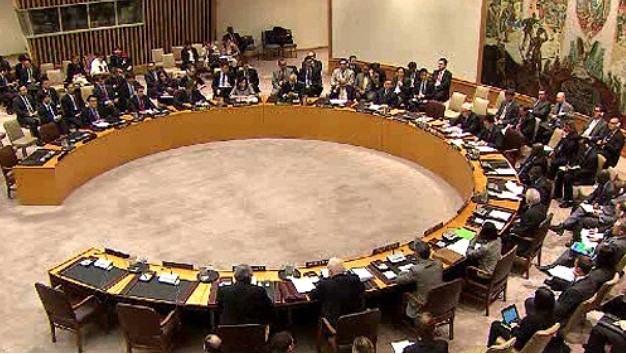
Illuminating North Korea's Human Rights Crisis:The Role of the International Community Hanna SongExecutive DirectorDatabase Center for North Korean Human RightsThe international community has a long history, marked by various milestones, notably at the United Nations, to address the dire human rights situation. Through civil society’s relentless advocacy, the UN has passed resolutions on North Korean human rights for over twenty years, creating mandates for the Special Rapporteur on the situation of human rights in the Democratic People’s Republic of Korea and establishing the UN Human Rights Office in Seoul. Yet, decades on, the crisis in North Korea remains dire and frighteningly overlooked in the midst of growing global crises around the world.The landmark milestone was achieved more than ten years ago, in 2013, when a group of independent experts were mandated by the United Nations to investigate the “systematic, widespread and grave violations of human rights in the Democratic People’s Republic of Korea with a view to ensuring full accountability, in particular for violations which may amount to crimes against humanity.” The decision to create a Commission of Inquiry on Human Rights in the Democratic People’s Republic of Korea (COI) was driven by civil society’s calls and widespread concerns at the UN about the human rights situation in North Korea, a nation long recognised as one of the most closed and repressive regimes in the world.UN Human Rights Council passing the North Korea Human Rights Resolution on March 22, 2013 / Photo: SBSTen years since it has been published, the COI report has had a profound impact on the human rights movement. It provided a clear and detailed picture of the human rights situation in the country, and helped to galvanise international support for human rights activism. Moreover, it helped to strengthen the international legal framework for addressing human rights abuses in North Korea. The conclusion that “violations of human rights found by the commission constitute crimes against humanity” have been used to support efforts to hold the North Korean government accountable for human rights abuses, and to encourage the international community to take action to address the issue. The COI’s findings and recommendations once reverberated throughout the international community. For the first few months after the report was released, it prompted increased scrutiny and condemnation of the DPRK and catalysed efforts to hold the regime accountable for its actions. There was a moment in time in which victims and the human rights community held their breath as the UN called for North Korea’s crimes to be held accountable at the International Criminal Court. However, ten years later, the North Korean human rights issue is being met with indifference.Since the COI for North Korea, there have been forty-four international commissions of inquiry and fact-finding missions mandated by the United Nations: Syria, Sri-Lanka, Eritrea, Yemen, Mali, Palestine, Myanmar, Ukraine… the list goes on. At the same time, there have also been proposals for less mechanisms to address human rights issues. Against the backdrop of evolving geopolitical dynamics and the ongoing conflict in Ukraine and in Gaza the North Korean human rights issue finds itself in a disheartening predicament, grappling with waning international attention and a growing sense of fatigue. While the plight of North Korea’s population remains deeply troubling under Kim Jong Un’s continued isolation of the country, the shifting global focus has had profound implications for the prioritisation of this critical concern.While human rights issues are met increasingly with a shrug, North Korea’s supply of munitions to Russia has dominated international headlines as the geopolitical realities once again overshadowed human security. The North Korean conundrum is characterised not only by its nuclear ambitions and security implications but also by pervasive human rights abuses that have been consistently documented over the years. Yet, the international community struggles to recognise the significance of finding a nexus between human rights and security issues in North Korea. It is increasingly evident that security and human rights in North Korea are intrinsically linked. The North Korean regime’s determination to maintain its grip on power through suppression, forced labour camps, and widespread human rights violations contributes to regional instability. These abuses can also serve as a source of discontent and desperation among North Koreans, potentially leading to further unrest or mass refugee flows. Moreover, focusing solely on security matters could signal to the North Korean leadership that human rights violations carry no consequences, thereby perpetuating a cycle of impunity. To address North Korea comprehensively, a paradigm shift is necessary. Security and human rights concerns should not be viewed as separate silos but as interconnected elements of the same complex issue.This month, the United Nations Security Council (UNSC) held an official meeting on North Korean human rights issues, as South Korea, serving as this month's UNSC president, seeks to highlight the link between the North's security challenge and its repressive political climate. Raising human rights issues at the UNSC is essential because it connects human rights abuses to peace and security concerns. The systematic nature of North Korea’s human rights violations clearly show that the exploitation of labour, allocation of resources and prioritisation of state policy is all focused on the development of missiles. The North Korean government has failed to prioritise its people over missiles, but that does not mean the international community should do the same.At the same time, member states should also recognise and utilise the significance of engaging the North Korean government directly on human rights issues. One example is the UN Human Rights Council’s process, known as the Universal Periodic Review (UPR). The public human rights forum enables member states to assess and evaluate each other’s human rights records. Since its first UPR in 2009, North Korea has participated in three cycles thus far and is expected to undergo its fourth review in November 2024. North Korea is known for its isolationist policies and lack of transparency when it comes to human rights issues. The UPR offers a rare opportunity for the international community to engage with North Korea on these matters. It is one of the limited channels through which North Korea participates in human rights discussions. Through the UPR, North Korea is required to submit a national report detailing its human rights situation and the measures it has taken to address human rights concerns. This report, along with information provided by civil society organisations, offers a valuable source of information about the human rights situation in North Korea. It allows for the exchange of data and perspectives among UN member states and the international community. While the UPR alone may not bring about dramatic changes in North Korea's human rights practices, it plays a crucial role in shedding light on the situation and promoting international dialogue on the issue. It offers a platform for information exchange and diplomatic engagement, which can be important steps toward addressing human rights concerns in a country that has traditionally been highly secretive and resistant to external scrutiny.Despite the challenges that exist with the fatigue and lack of information, it is crucial to underscore that the North Korean human rights issue remains an enduring and fundamental concern. While geopolitical dynamics may ebb and flow, the urgency of addressing the grave human rights abuses within North Korea must not be forgotten. Advocates, activists, and international organisations must continue their tireless efforts to ensure that the plight of North Korea’s citizens is not lost amidst the complexities of global geopolitics and conflicts.In the most recent human rights council resolution, member states called on the UN High Commissioner for Human Rights to "comprehensively update" the 2014 report of the UN Commission of Inquiry (COI) on human rights in North Korea and submit it to the 60th session of the Human Rights Council, which is scheduled to take place in September 2025. This is an important opportunity to provide a platform for North Korean victims, particularly those who have suffered since Kim Jong Un took power, and amplify their stories on the international stage. While the 2014 COI report certainly made a diplomatic impact and informed efforts led by civil society, only a few, if any, judicial measures have succeeded to bring even a modicum of accountability for these widespread abuses. The COI concluded that North Korean institutions and officials have committed numerous serious human rights violations, including acts that qualify as crimes against humanity “so as to merit a criminal investigation by a competent national or international organ of justice.” However, there remains a critical gap: the limited understanding and participation of the victim and survivor community. Their involvement is crucial for a victim-centered approach to shaping the future of transitional justice and ensuring effective accountability efforts. Understanding accountability mechanisms and processes is indispensable to victims’ healing and empowerment. Victim-engagement further enhances the efficacy of accountability efforts, ensuring the collection of relevant documentation and assisting international advocacy movements intended to strengthen access to justice. An updated COI report should be used to demonstrate how widespread and systematic abuses constituting crimes against humanity have persisted under the Kim Jong Un regime. This presents a crucial opportunity to illustrate that these violations are ongoing and that accountability is urgently needed now more than ever. It is also essential that this process prioritizes the victims of these violations and serves as a platform for truth-telling within a comprehensive approach to accountability.While the spotlight may temporarily dim, the moral imperative to address human rights abuses remains undiminished. The UN mechanisms offer a structured and diplomatic approach to addressing North Korean human rights abuses. With South Korea, Japan, and the U.S. set to be members of the UNSC in 2024, there is a unique opportunity for these countries to work together and make a meaningful impact. By leveraging their positions, advocating for change, and coordinating their strategies, they can contribute to a more hopeful future for the people of North Korea and demonstrate the UN’s commitment to upholding human rights worldwide. However, they must be prepared for the challenges and complexities that lie ahead in this endeavour.
24.06.21 -
 [Current Affairs Analysis]
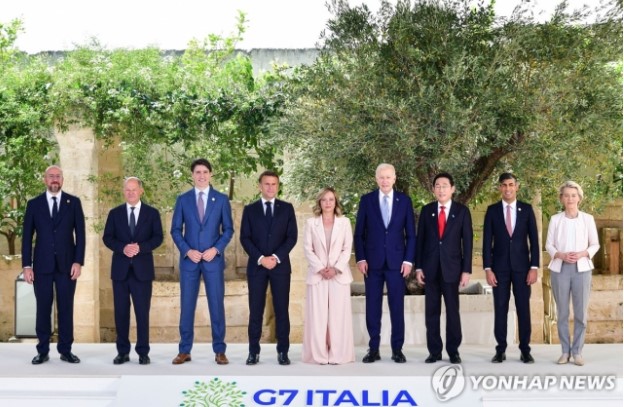
The implications of the G7 Summit for the security environmenton the Korean Peninsula.Yongmin Kim (Konkuk University)OverviewThe G7 Summit was convened once again this year in Italy from 13 to 15 June. In contrast to the G7 held in Japan last year, this year's meeting did not extend an invitation to South Korea and instead focused on European affairs. This further illustrates the prominence of the Russo-Ukrainian conflict on the European political agenda and the significance that Europe attaches to the situation in Ukraine. In particular, the results of the European Parliament elections, which were held shortly before, demonstrated an unexpected advance of the far-right, intensifying the sense of crisis in Europe and influencing domestic politics in G7 member states.It is reasonable to conclude that all G7 members were compelled to present a unified stance on the Russia-Ukraine conflict at a time when all European countries were experiencing the fatigue of a prolonged war. Additionally, there was a sense of urgency to institutionalize the decisions taken, as some members were facing elections. This has resulted in a number of significant decisions, spearheaded by the United States, that will have far-reaching implications for the geographically distant Korean Peninsula. Let us now examine the pivotal agreements.G7 leaders pose for a group photo at the G7 Summit held at the Borgo Egnazia Resort in Brindisi, Puglia, Italy, on June 13, 2024. From left to right: Charles Michel, President of the European Council; Olaf Scholz, German Chancellor; Justin Trudeau, Canadian Prime Minister; Emmanuel Macron, French President; Giorgia Meloni, Italian Prime Minister; Joe Biden, US President; Fumio Kishida, Japanese Prime Minister; Rishi Sunak, UK Prime Minister; and Ursula von der Leyen, President of the European Commission. / Yonhap News AgencyAgreements on SecurityIn accordance with the established theme and the limitation of the consensus to security issues, the following agreements are presented. ① Supporting Ukraine’s Fight for Freedom Joined by Ukrainian President Zelenskyy, G7 leaders reaffirmed their unwavering support for Ukraine for as long as it takes. 1) Unlocking $50 billion for Ukraine: G7 leaders announced a plan to provide Ukraine with $50 billion in new financing by bringing forward the interest earned on immobilized Russian sovereign assets held in the European Union and other jurisdictions. Leaders reaffirmed their commitment that Russia’s sovereign assets within G7 jurisdictions will remain immobilized until Russia ends its aggression and pays for the damage it has caused to Ukraine. 2) Driving Up Costs for the Russian War Machine: The Biden Administration this week issued a sweeping set of new sanctions and export control measures, guided by G7 commitments to intensify the pressure on Russia for its war against Ukraine. Foreign banks now face increased sanctions risk when they deal with Russia’s war economy 3) Supporting Ukraine Now and in the Future: In Puglia, President Biden and President Zelensky signed the U.S.-Ukraine Bilateral Security Agreement as a demonstration of enduring U.S. support for Ukraine, including through binding commitments to deepen our security and defense cooperation and to consult in the event of a future armed attack. ② Advancing International Peace, Security, and Prosperity The G7’s work is grounded in a shared commitment to respect the UN Charter, promote international peace and security, and uphold the free and open rules-based international order. They are calling for a Comprehensive Deal in Gaza, Standing with Allies and Partners in the Indo-Pacific, and Deepening Cooperation with Partners in Africa. These are significant security-related agreements that will also have implications for the security of the Korean Peninsula. It is therefore important to consider their implications for the security of the Korean Peninsula.What are the implications for the security environment on the Korean Peninsula?Firstly, the cohesion of the liberal camp centred on the United States has been reinforced, which implies that South Korea will be more significantly influenced by the existing alliance structure, including the trilateral alliance of South Korea, the United States, and Japan, and will be expected to assume a more prominent role. It is, however, crucial to acknowledge that South Korea, situated in a geopolitically challenging region, is compelled to navigate its diplomatic relations with China and Russia. Consequently, it is likely to be confronted with challenging diplomatic decisions, and it must be prepared to address them. From an economic perspective, the Chinese market represents a significant concern. Additionally, the situation in North Korea and the Taiwan Strait requires attention. Diplomatic efforts are necessary to ensure that other countries are aware of these regional characteristics. Ultimately, South Korea will be compelled to assume a more prominent role within the international community because of the G7's agreements. Consequently, it is imperative to anticipate and prepare for a range of potential scenarios, including the possibility of a regime change in the United States.
24.06.21 -
 [Defectors' Podium]
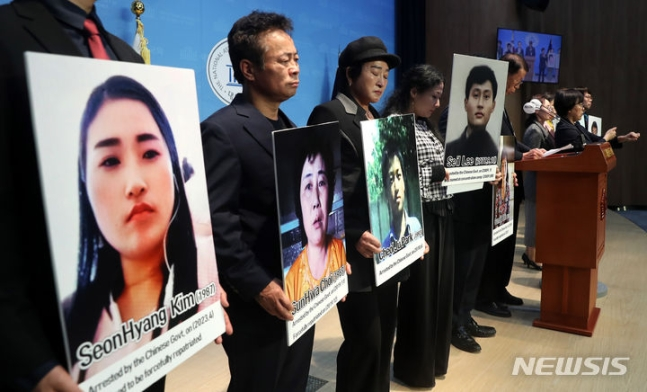
"Please Let Me See My Forcibly Repatriated Son Just Once"Lee Byung-rimNorth Korean DefectorMy name is Lee Byung-rim, and I’ve been living in South Korea as a North Korean defector for 15 years. I am writing to share the deep sorrow of a mother who lost her son to forced repatriation and to seek help from the international community. I am that mother.North Korean defector Lee Byung-rim (third from the left) holding a photo of her son during a press conference on October 31, 2023,at the National Assembly Building in Yeouido, Seoul, urging resolution of the forced repatriation issue of North Korean defectors in China./NewsisMy son, Park Cheol-ju, was forcibly repatriated from China in 2010, and I haven’t known his whereabouts since. If he is alive today, my son, who was 17 at the time, would be 31 years old.My innocent son just wanted to live in a freer and better world. This led to his arrest by Chinese police in Kunming while he was on his way to South Korea.Kunming is a border city and a common transit point for many North Korean defectors heading to South Korea. My son, along with five other defectors, was reportedly sent back to Sinuiju via Dandong City, China, within 15 days of his arrest.More than 14 years have passed, but I still don’t know where my son is being held. If he were in a re-education camp, I might have found him by now. But the fact that I can't locate him despite all my efforts suggests he was likely sent to a political prison camp by North Korea's Ministry of State Security. They charged my young son with treason.My son, too young to fully understand the world, simply wanted to see bright lights at night and eat full meals. For this "crime," he became a political prisoner and has been trapped in a place from which there is no return for over 10 years.When my son was repatriated, I felt like dying many times. Even now, I carry a heavy weight in my heart. Since losing him, I've lived in constant pain and guilt, unable to notice when flowers bloom or leaves change color. I've struggled with suicidal thoughts, severe depression, and insomnia because of the pain of losing my son. I haven’t done anything to deserve this suffering. My son didn’t commit murder or steal anything.My son just wanted a better life, but the country turned him into a traitor. For 14 years, I have prayed to God every day to let me see my beloved son alive just once, to give him a warm meal, and to say "I love you" just once.How desperate must someone be to leave their beloved hometown, abandoning parents, siblings, and children? Those who leave shed tears from the depths of their souls. Even now, in my beloved homeland of North Korea, where I long to return, our parents and siblings groan under inhuman oppression, living day by day as slaves of Kim Jong-un.During the Arduous March, I can’t forget the neighbors who peeled pine tree bark with their fingernails and survived on grass roots to save their children from starvation.I still can’t forget the faces of the children in my neighbor’s house, who turned green and swollen from eating nothing but grass roots for several days. My heart aches when I think of the mothers who, instead of receiving blessings and resting in maternity care centers after giving birth, had to climb markets, farmlands, and mountains just days after giving birth to make a living.They say nothing has changed in North Korea even now. I was shocked to hear from a young man who escaped from Ryanggang Province in 2019. He said that just before he escaped, he visited a mountain village in Unhung County, Ryanggang Province, a potato-producing area, and saw a family with a mother and daughter starving because they didn’t even have potato skins. This sight made him feel disgusted with the North Korean regime.Such pain continues even now, and we must prevent more people from losing their children due to defection. The trauma of a family torn apart will never be forgotten. We must stop the repeated pain of mothers losing their children.Forced repatriation is an act of 'invisible massacre.' I appeal to parents around the world. Please listen to the voices of the victims of forced repatriation among North Korean defectors.
24.06.07 -
 [Opinion]
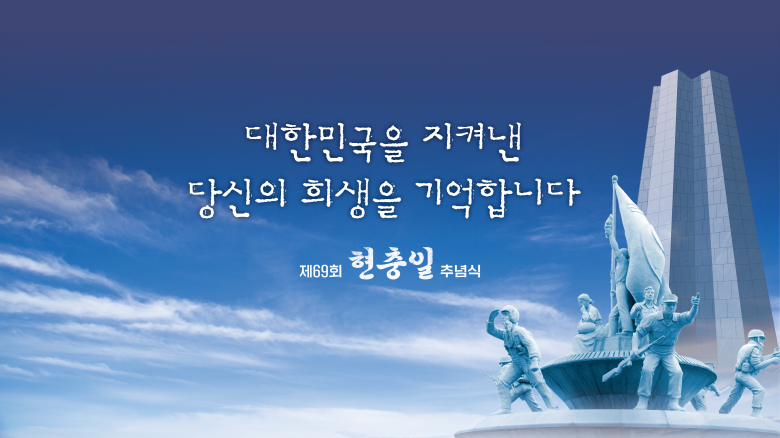
74th Anniversary of the Korean War:Honoring the Voices of Our Fallen Patriots Song Dae-sungPresident of Korea, the America Korea United Society (AKUS)This June marks the remembrance month for the 74th anniversary of the Korean War. Our fallen patriots would mourn if they were alive, seeing that the brutal regime responsible for this tragedy has persisted in North Korea for over 70 years. Many of these patriots lost their lives before they could fully bloom, becoming restless spirits due to the actions of this regime. For them to find peace, the communist group in North Korea must be swiftly eliminated, and the suffering people of North Korea must be liberated, achieving the dream of a unified, democratic Korean Peninsula. However, rather than being ousted, this cruel regime has only grown more oppressive, with power passing through three generations. Today, they are even attempting various devious methods to annex democratic South Korea, deepening the grief of our fallen patriots.69th Memorial Day Poster/Ministry of Patriots and Veterans AffairsNorth Korea relentlessly aims to destroy South Korea by adhering to its Military First Policy, or Songun Politics. This policy hinges on the belief that with strong military power, the regime will never fall, they can unify South Korea under communism, and they will maintain strong bargaining power against the United States and South Korea. Central to this military strength are Weapons of Mass Destruction (WMD), including nuclear weapons, missiles, and biochemical weapons. They doggedly pursue the development of these WMDs, following the directives of Kim Il-sung, Kim Jong-il, and Kim Jong-un. The North Korean regime is prepared to use these formidable weapons to reduce South Korea to ashes at any moment.The submissive approach of past South Korean regimes in handling inter-Korean relations, which has damaged national pride, is also troubling. These administrations secretly spent billions to meet with the North Korean leader, bringing along intelligence chiefs and high-ranking aides to bow and scrape. They even referred to the South Korean president as the “president of the South,” behaving as if South Korea were a satellite or tributary state of North Korea. Such actions would undoubtedly cause our fallen patriots to grieve if they saw it.We must be vigilant against “treasonous influences” that harm South Korea and benefit North Korea. These influences undermine South Korea’s legitimacy while recognizing North Korea’s, display anti-American and pro-North Korean tendencies, devalue liberal democratic principles in favor of socialist and communist ideals, weaken South Korea's security and the ROK-US alliance, and promote a false sense of peace to push for ending the war, withdrawing US forces, and dismantling the ROK-US alliance. Ultimately, this culture aims to communize South Korea and achieve unification under North Korean communism without war. These treasonous elements reject the legitimacy of South Korea and its founding president, Rhee Syng-man. They also dismiss the contributions of President Park Chung-hee, who revitalized South Korea, and the true patriots who contributed to the country’s development and prosperity. They thoroughly reject the United States and the ROK-US alliance, spreading propaganda that portrays the US as the enemy and the root of all evils on the Korean Peninsula. They disparage the ROK military personnel who protect South Korea and continually work to dismantle the military, exaggerating minor incidents to damage its reputation and portray it as a disorganized force.The serious crisis facing South Korea stems from the rampant spread of treasonous culture and North Korea’s unilateral possession of nuclear weapons under Kim Jong-un’s regime. This culture threatens South Korea’s stability, potentially leading to its collapse from within without any external invasion. North Korea's nuclear weapons hold South Korea hostage, much like a gangster wielding a deadly weapon. Addressing these national crises involves overcoming three main issues among many South Koreans. First, many do not recognize these serious crises for what they are. They lack a clear understanding of North Korea’s reality and do not perceive the North Korean regime as a grave adversary. They also mistakenly believe that North Korea would never use its nuclear weapons against South Koreans. Additionally, they view the rampant treasonous culture as merely a diverse cultural phenomenon among conservatives and progressives.While many people are deeply concerned about the potential collapse of our country, they often expect others to take action rather than actively working to resolve these concerns themselves. They are quick to criticize but fail to take practical steps to address the problems. Instead of confronting the crises head-on, they prioritize their own safety and look for ways to escape. To honor our fallen patriots, we must confront and either transform or permanently eliminate the dictatorial regime in North Korea, which stands as the root of all evils on the Korean Peninsula. Additionally, it is imperative for all citizens to recognize and actively work to eradicate the treasonous culture within South Korean society. Finally, a genuine national movement must emerge, one that equips our citizens with the spirit and resolve needed to protect and preserve the free and democratic Republic of Korea. Only then will the grieving of our fallen patriots cease, allowing them to rest in peace.
24.06.07 -
 [Defectors' Podium]
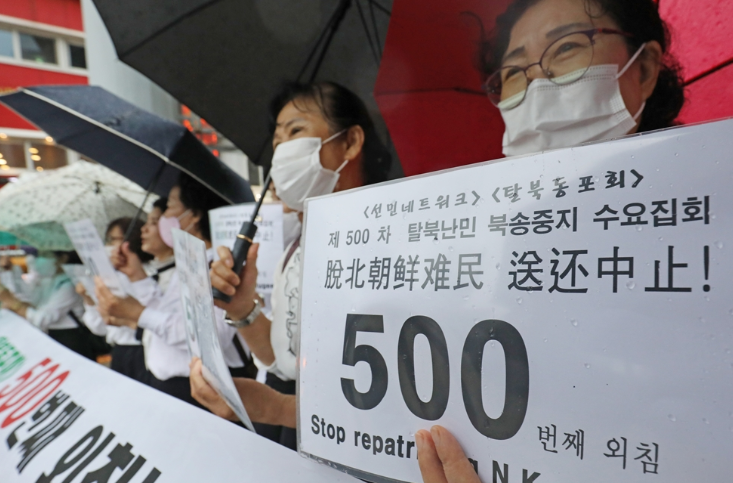
Will the Serious Human Rights Violations Against North Korean Women in China Ever End?Choi Cheong-haNorth Korean DefectorChairman of the Folklore Conservation Association for North Hamgyong ProvinceActivists hold a rally in central Seoul to urge China to stop repatriating North Korean defectors back to the North in this July 2022 photo. Korea Times fileKorean women traditionally dedicated their lives to caring for their families, and it is heartbreaking that these innocent women had to endure degradation and shame throughout history. The plight of the 500,000 women taken to Qing China after King Injo's surrender during the 1636 Qing invasion of Joseon illustrates just how miserable their lives were.These women became mere pawns for Qing China, sacrificed by incompetent kings and rulers who were more concerned with flattery and subservience than the welfare of their people. In a strange and hostile land, these women risked their lives to escape and return to their country, only to be labeled "Hwanhyangneo" (returned women). They lived in shame, with many ending their lives in suicide—a truly tragic history.Although these women have faded into history, the derogatory nickname "hwanyangnyeon"—with 'nyeon' being a term used to demean women—remains. Even now, there are no attempts to reexamine their suffering. The anguished cries of the comfort women, forced into sexual slavery during the Japanese colonial period, continue to echo today. The incompetent submission of those in power, who believed "a bad peace is better than a small war," led many women to long for their homes and families until their deaths. Only those who barely survived tried to address their painful past, but this is often dismissed as a mere excuse for a weak nation.We thought the painful history of our women had ended there. Who could have imagined that such events would still occur in modern times?Escaping the oppressive rule of the Kim family—Kim Il-sung, Kim Jong-il, and Kim Jong-un—36,000 North Korean defectors have sought freedom and entered South Korea.After being halted by COVID-19 for three years, the flow of North Korean defectors has resumed, and the number entering South Korea has increased again. This movement of North Koreans seeking freedom will continue.However, the path to freedom is not easy. While many aim for South Korea, the number of North Korean defectors wandering through third countries is much higher than those who have reached South Korea. More than half of these defectors are women who fall into the hands of human traffickers, are sold from place to place, and face forced prostitution and humiliation.A woman in her twenties, sold in Tumen, China, to Horqin Right Front Banner in Inner Mongolia, was alternately raped by three elderly Chinese widowed brothers. She miraculously escaped to South Korea, where she now lives reclusively and receives psychological treatment. The number of North Korean defector women facing hardships in third countries is hard to estimate, yet nobody speaks about this issue. It is a sad reality that those claiming to be human rights activists for North Korean defectors roam endlessly across China and other countries with donations and offerings, yet fail to solve the problem.When a university professor in South Korea writes an absurd paper claiming that "reunification should absolutely not occur at this time and that South and North Korea are not brother countries," the world barely takes notice. If this is the rhetoric of an academic, one wonders how the tens of millions of separated families in South Korea can be explained. The existence of such viewpoints in South Korea, along with the Kim Jong-un regime, means that these precious women are desperately hoping for salvation on the brink of life and death, yet no benevolent hand is extended.I want to ask everyone who cries for human rights: What will you do about the North Korean defector women being violated in third countries? Will they eventually just be labeled as "hwanyangnyeon" after many years?I appeal to all peace-loving, kind-hearted people: Please extend a helping hand, give these precious women a chance to bloom again.
24.05.17 -
 [Opinion]
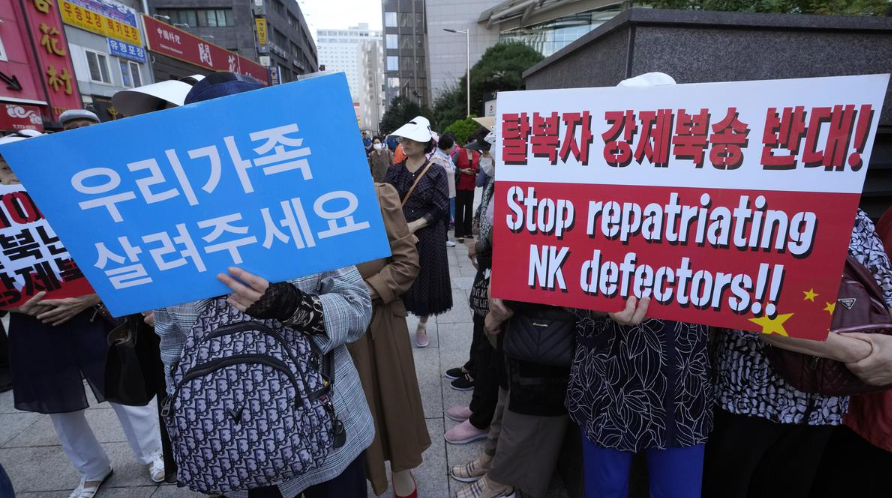
China's Inhumane Crimes: When Will They Stop? Kang Dong-wanProfessor at Dong-A UniversityFile picture of North Korean defectors holding banners during a rally demanding Chinese government to release North Korean defectors captured in China, near the Chinese Embassy in Seoul, South Korea | Photo Credit: APChina has once again committed an inhumane act, leaving us heartbroken and distressed. Human Rights Watch (HRW) reported that the Chinese government forcibly repatriated about 60 North Korean defectors on the 26th of last month. Jang Se-yul, the leader of the Korean Unification Solidarity of North Korean Defectors, also mentioned, "I heard from various sources, including families of North Korean defectors in South Korea and local informants, that about 200 North Korean defectors detained in the 'Baishan City Detention Center' in Jilin Province were repatriated to North Korea." Despite the Chinese government's consistent denial, testimonies from international NGOs and families of defectors confirm these repatriations.Last October, the Chinese government forcibly repatriated about 600 North Korean defectors despite repeated concerns and requests from the international community and our government. It is cruel to drag away defectors like animals when they should be entitled to basic human rights. The Chinese government knowingly sends these defectors back to a fate of imprisonment or worse, which is akin to aiding and abetting murder.China, a permanent member of the United Nations Security Council and a signatory to both the 1982 Convention Relating to the Status of Refugees and the 1988 United Nations Convention Against Torture, is blatantly violating international human rights norms by forcibly repatriating North Korean defectors. The Chinese government must immediately stop these repatriations in accordance with Article 3 of these conventions, which state that "no State shall expel, return, or extradite a person to another State where there are substantial grounds for believing that he would be in danger of being subjected to torture.“Most of the North Korean defectors forcibly repatriated are women and minors. With over 35,000 defectors having entered South Korea, approximately 70% are women, and about 60-70% of these women are victims of human trafficking in China. A study based on interviews with 100 female defectors in China revealed that 17 were trafficked as teenagers and 53 in their twenties. There was even a case of a 13-year-old girl sold along with her mother. It is unbelievable that in the 21st century, people are still being bought and sold. Their lives, marked by domestic violence, contempt, degradation, and abuse, are beyond what any negative words can describe. For North Koreans struggling with food shortages, crossing the Amnok River and Tumen River into China seemed the only way to survive.These women were deceived by brokers who promised that a month of work in China could save their families back in North Korea. They have spent decades in a foreign land, living each day in tears. They cling to the hope of seeing their homeland again. Even in death, they yearn to return to their homeland, if only for a day, to fulfill their roles as daughters. They cry out even now. Living and merely surviving are very different; some people are just getting through each day. The journey they took seeking freedom from oppression has turned into a path of death. Even now, families hope for their return, praying their loved ones stay alive.The Chinese authorities must ensure the basic human rights for all, beyond ideology and regime. Forced repatriation of North Korean defectors directly leads to death or torture. To be a responsible member of the international community, China must immediately halt these forced repatriations and ensure proper treatment for defectors. If China continues these repatriations due to its alliance with North Korea, it will inevitably face consequences.A nation cannot continue to exist if it drives countless people to their deaths. China's barbaric act of repatriating defectors to appease the North Korean regime deserves condemnation. These atrocities must come to an end. Beyond condemning China, global citizens must take action against these inhumane crimes. There is no justification for forced repatriation. The international community must unite more strongly to demand an end to this practice. One voice may be faint, but together, our voices can be powerful.
24.05.17 -
 [Column]
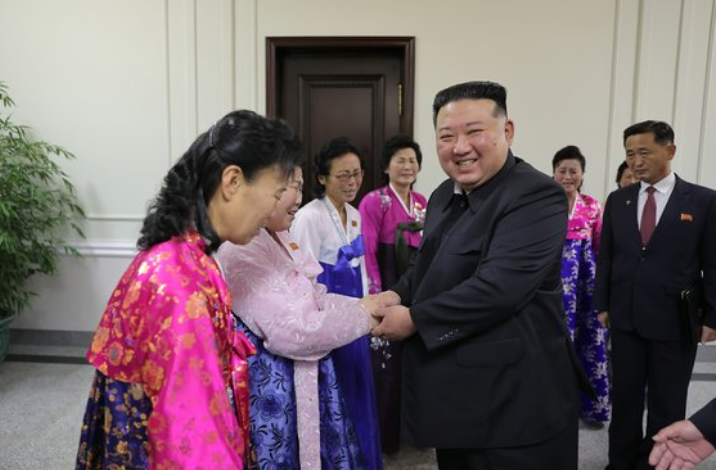
Different Family Affection for Parents: Observing the Differences in Filial Piety Culture between North and South Korea Choi Kyong-huiPresident of SAND and doctor of Political Science at the University of TokyoIn South Korea, May is celebrated as Family Month, featuring several significant days: May 5th is 'Children's Day', May 8th is 'Parents' Day', May 21st is 'Couple's Day', and May 15th is both 'Buddha's Day' and 'Teachers' Day'. Among these traditional Confucian holidays symbolizing 'filial piety', the most significant is 'Parents' Day'. This day is dedicated to expressing gratitude to parents for giving birth and raising their children and practicing the traditional virtue of respecting elders. Children give carnations and various gifts to their parents and grandparents, often arranging trips. For Koreans, May serves as a reminder of the importance of family amidst the hustle and bustle of modern life.In contrast, North Koreans have two perspectives on parents: biological parents who gave them life and the 'great parent' who provides socio-political life. In the traditional family, the mother’s role is paramount as she cares for the family and raises the children. Nationally, the entire country is seen as 'one great family', with the ruler as the 'great parent' and the citizens as children, reflecting a master-servant dynamic.North Korea observes 'Mother's Day' on November 16, but there is no equivalent day for fathers. Instead, Kim Jong-un is referred to as the 'Parent'. In 2024, the notion of 'One Great Family' has resurged. Kim Jong-un has emphasized the roles of women as daughters-in-law, wives, and mothers, highlighting their significance within the family. This creates a framework where individual families have their mothers, while the state is represented by a single paternal figure.Meeting participants of the 5th National Mothers' Convention in December 2023. / Rodong SinmunKim Jong-un, now 40 years old, is shifting his title from ‘Great Leader' to 'Great Parent'. To maintain a lifelong dictatorship, it is crucial to enhance the ruler's charismatic authority. In this context, the culture of filial piety proves highly effective. According to traditional Confucian values, no matter how tough the circumstances, children do not blame their parents and cannot replace or surpass them. Parents provide love, and children are obligated to show filial piety.The concept of ‘One Great Family’ first emerged in North Korea in January 1992, after the Cold War ended and the Soviet Union collapsed. As the communist bloc disintegrated, North Korea promoted ‘One Great Family,’ with Kim Il-sung as the parent and Kim Jong-il as a model of both loyalty and filial piety. This culture spread nationwide through the 'Jong Chun-sil Movement,' popularized by the film 'Filial Daughter,' featuring Jong Chun-sil, a rural girl who calls Kim Il-sung her “father“. This effort aimed to propagate a culture of filial piety that venerates Kim Il-sung as the parent.During the later years of Kim Il-sung's rule, when the economy struggled, social order was unstable, and international isolation increased, emphasizing ‘One Great Family’ helped stabilize society and clarify dictatorial power. Kim Jong-un appears to be following a similar path.Kim Jong-un attended the 75th-anniversary military parade of Korean People's Army Foundation Day on February 8 last year with his daughter Kim Ju-ae (front row, left) and his wife Ri Sol-ju (back row, left). / Korean Central News AgencyIn November 2022, marking 10 years of his rule, Kim Jong-un took his 10-year-old daughter Kim Ju-ae to a high-profile nuclear missile launch, presenting himself as a caring father and showcasing her as a symbol of filial piety. Their frequent public appearances, even at everyday sites, effectively promote this model to North Korean residents.At the New Year's performance on January 1, 2024, the students referred to Kim Jong-un as their father. / Minju ChosonSince Kim Jong-un came to power in 2012, North Korean youth have been calling him 'Great Father'. Now that he holds the highest positions in both the party and the state, he seems focused on establishing himself as the ‘Great Parent of all the people,’ encompassing all generations.Although North and South Korea share a long tradition of Confucian culture, the realities of filial piety in each country are starkly different. In South Korea, filial piety is celebrated through love and respect for parents during Family Month in May. In contrast, in North Korea, filial piety is used as a tool of national governance.South Korea's Family Month, which seeks genuine family happiness, contrasts sharply with Kim Jong-un's 'One Great Family' and his self-proclaimed title as the Great Parent, which restricts individual freedom and happiness. It's essential to create an environment and raise awareness so North Korean residents, forced to serve Kim Jong-un and practice loyalty and filial piety, can reclaim their dignity and rights.
24.05.17 -
 [Defectors’ Podium]
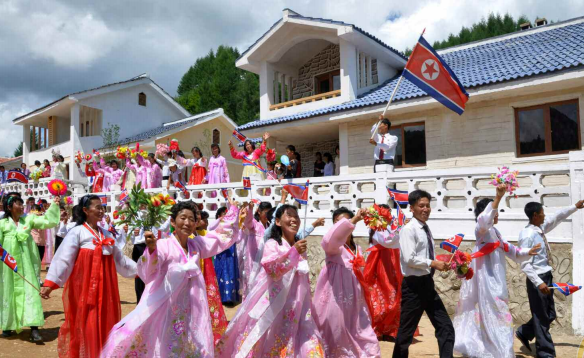
 Rural Development and the Daily Struggles of North Korean Farmers Cho Chung-hui Director of Good Farmers and Ph.D. in North Korean Studies,Former North Korean Government OfficialIt's the busiest time of the farming season. In South Korea, where machines take care of all the agricultural work, you might only see a single harvester in an extensive, eerily quiet field. However, North Korean farmers still start their day at dawn and don’t return home until 9 p.m.The Workers' Party of Korea (WPK) has recently intensified its focus on reshaping farmers' mindsets as a key part of rural development. This raises an important question: Are the perceived deficiencies in farmers' loyalty or cultural awareness actual obstacles to progress? Today, I'll highlight the daily challenges faced by farmers in rural North Korea.North Korea's stringent political, economic, cultural, and social structures profoundly shape farmers' lives. The government pledges to improve the economy for all to enjoy "rice and meat soup," highlighting food. Yet, farmers endure immense pressure for loyalty and sacrifice, despite the promised benefits.North Korean media feature a housewarming party celebrating the 'New Era of Rural Development.' (Image: Rodong Sinmun)Looking back, farmers in the post-liberation era were less focused on profits and productivity than those of today. They farmed primarily to sustain themselves, leading a relatively relaxed agricultural lifestyle. The land reforms that were enacted based on the demands of these farmers brought significant improvements, allowing them to become landowners rather than mere tenants.Agriculture was predominantly a small-scale, family-based activity, free from the compulsory social organizations like the party or labor groups. This environment enabled a more vibrant and livable rural life after liberation, but the advent of collective farming post-war devastated the farmers' lives.Today, 'agricultural collectivization' is the main cause of hardship in the daily lives of North Korean farmers. It leads to social, financial, and psychological difficulties due to the dominance of the party and the collective farming system.For centuries, South Korean farmers operated independently, valuing ownership of their tools and produce as sacrosanct. This perspective is now challenged by forced collective farming, which is promoted as more productive than individual management, diminishing their traditional values and subjecting them to collective interests.Collectivization has thrust North Korean farmers into a two-fold existence, where communal obligations overshadow personal pursuits. With organizational duties taking center stage, they have little opportunity for individual endeavors. The immense burden of securing the nation's food supply leaves them physically drained, bound to the fields throughout the year.In October 2019, residents of the Namyang Workers' District in North Hamgyong Province, North Korea, were photographed while transporting cabbage in a field using a bullock cart. (Image: KBS North-South Windows)They're obliged to attend reviews conducted by the party and agricultural union every ten days, with scheduled rest days falling on the 1st, 11th, and 21st, but these breaks are often overlooked during peak farming seasons.There have been notable changes. During the economic difficulties of the 1990s, North Korea's economic structure transformed into a dual system, integrating both planned and market economies. This shift also brought changes to the daily lives of some rural farmers, who began engaging in personal side businesses and generating profit through the distribution of agricultural products.Faced with the disadvantages of not participating in organized activities, some farmers opt to either tolerate them or alleviate them by allocating a portion of their profits to gain favor with farm bureaucrats. This emerging dual economy allows farmers to pursue personal endeavors, often yielding higher profits than communal earnings, thereby diminishing their dependence on and control by collective farm organizations.Yet, with Kim Jong-un's recent policies aiming to reshape farmers' mindsets, daily life is reverting to the severe hardships experienced before economic reforms. This is especially challenging for ordinary farmers lacking special skills or connections, who struggle to escape the constraints of cooperative life, even if they own personal land.Currently, North Korean farmers oscillate between active engagement and passive resistance, experiencing a range of behaviors including cooperation, compliance, compromise, and passive resistance.When assessing North Korea's rural landscape today, it's crucial to not only focus on the influence of party authorities hindering farmers' daily life changes but also to understand how farmers perceive and manage their demanding circumstances. Identifying the underlying reasons and considering possible solutions are essential. Drawing insights from their daily experiences aids in understanding their culture and envisioning strategies to alleviate the burdens faced by North Korean farmers.
24.05.03 -
 [Opinion]
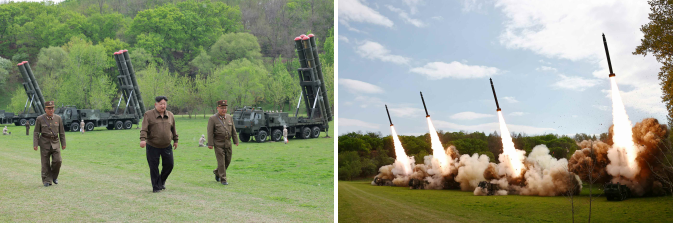
 Analysis and Outlook on North Korea's Public Disclosure of Nuclear Strike Drills Moon Seong-mook Director of the Center for Korean Unification Strategy at the Korea Research Institute for National StrategyOn April 23rd, the Korean Central News Agency reported that "units with the 600mm Super-large Multiple Launch Rocket Systems (MLRS) took part in their inaugural comprehensive nuclear retaliatory tactical exercise." It was also noted that Kim Jong-un supervised the prior day's training. The detailed report explained the sequence included transitioning to nuclear retaliatory readiness under the highest nuclear crisis alert, operational exercises of the command system, and culminated in firing drills using rockets equipped with mock nuclear warheads.Rodong Sinmun reports that on April 22, Kim Jong-un attended the inaugural comprehensive nuclear counterattack drill, featuring the 600mm Super-large MLRS. (Image: Rodong Sinmun)This second nuclear retaliatory drill involved North Korea's KN-23 short-range ballistic missiles, known as the North Korean Iskander, similar to last year's March exercise. State media reported that Kim Jong-un had reviewed "nuclear trigger" technology before furthering the nuclear weapons program. This drill was the first to use the term 'volcanic alert,' indicating the utmost nuclear crisis level.The Korean Central News Agency reported that the exercise successfully hit island targets 352 km away. This range includes South Korea's military headquarters at Gyeryongdae and the Kunsan Air Base, sites of US-South Korea flying training. The report also escalated threats, stating that North Korea would "resolutely execute a significant mission" if confronted by enemy forces.This article analyzes Kim Jong-un's public demonstration of nuclear exercises as intimidation toward South Korea, forecasts potential escalations of nuclear threats, and outlines appropriate responses.What's Behind North Korea's Public Display of Nuclear Exercises and Expansion of Capabilities?Firstly, North Korea aims to finalize its nuclear capabilities to ultimately achieve its strategy of coercive reunification with South Korea. This goal aligns with Kim Jong-un's declaration at last year's Workers' Party meeting that inter-Korean relations are combative, not fraternal. In a speech earlier this year, he labeled South Korea as the primary enemy, pledging to use all means to dominate and devastate its territory. This also ties to efforts to erase the concepts of unification and nationalism handed down from Kim Il-sung and Kim Jong-il, rejecting peaceful unification for forced reunification through military power.By completing its nuclear arsenal and being prepared to use nuclear weapons preemptively, North Korea aims to demonstrate its readiness to conquer South Korea and enforce reunification, asserting itself as the dominant force on the Korean Peninsula.Secondly, North Korea's actions serve to sow discord within the US-South Korea alliance and stir up internal conflicts within South Korea. Officially, North Korea has expressed its displeasure at joint military exercises and enhancements in the allied deterrence capabilities.The recent drills with the Super-large MLRS serve as warnings against US-South Korea joint exercises, highlighting North Korea's displeasure. These actions likely reflect North Korea's anxiety about enhanced US-South Korea deterrence, causing concern for Kim Jong-un as responses intensify.As Kim Jong-un legalizes nuclear capabilities and threatens Seoul, the US and South Korea have strengthened their deterrence through measures like the Washington Declaration. This development sharpens Kim Jong-un's anxieties, prompting him to increase threats, stir unrest among South Koreans, and foster discord between the US and South Korea, aiming to intensify internal conflicts.Thirdly, Kim Jong-un appears to be consolidating power and solidifying his regime amidst internal unrest. Who does he fear most? The US, Japan, South Korea? Probably it’s the North Korean citizens. In 2012, during Kim Il-sung’s centennial, he promised that North Koreans would no longer suffer hardship—a promise that remains unfulfilled, leading to mounting dissatisfaction among the populace.In this context, Kim Jong-un can only showcase his greatest achievement—his nuclear missile capabilities. He seeks to project himself as a formidable leader thwarting supposed US and South Korean nuclear threats and warmongering, thereby urging North Koreans to persevere despite hardships. This also serves to intensify hostility towards South Korea, cutting off all ties as part of his strategic maneuver.Lastly, this could also be part of North Korea's efforts to strengthen ties with Russia. In a meeting with Vladimir Putin at the Vostochny Cosmodrome last September, Kim Jong-un continued what some call 'a deal with the devil.' With Putin's aid, North Korea hopes to not only alleviate its severe economic woes but also to shield its illegal actions from global scrutiny and secure critical military technologies. The recently tested super-large MLRS, potentially useful in Ukraine, seems aimed at impressing visiting Russian military officials.Prospects for Future North Korean Nuclear Threats and Our Response DirectionsNorth Korea is focused on completing the five strategic weapons tasks set by Kim Jong-un at the 8th Party Congress in 2021. Meanwhile, South Korea and the US aim to refine their strategies during the Ulchi Freedom Shield (UFS) exercises in August this year, via the Nuclear Consultative Group (NCG). Kim Jong-un is expected to counter vigorously, showcasing his nuclear system's capabilities with additional exercises and announcing plans for three reconnaissance satellite launches.Additionally, Kim Jong-un could conduct a seventh nuclear test at any time. He is exploiting the emerging new Cold War dynamics to bolster his nuclear capabilities. Both China and Russia are using their veto powers as permanent members of the UN Security Council to support North Korea and protect its unlawful actions.The operations of the UN Sanctions Committee's expert panel on North Korea have been halted due to Putin's objections. For Kim Jong-un, this situation presents an ideal opportunity, particularly with Vladimir Putin's upcoming visits to China and then Pyongyang. North Korea is also expanding its interactions with China, with predictions circulating that Kim Jong-un will meet Xi Jinping in China later this year.The Republic of Korea Joint Chiefs of Staff noted the exaggerated capabilities of North Korea's super-large MLRS and emphasized readiness to intercept any missile launches. They sternly warned that nuclear weapon use would doom the North Korean regime. The US Department of Defense confirmed ongoing consultations with allies like South Korea and Japan on regional security, ensuring that Kim Jong-un’s aggressive plans are countered.We must ensure that Kim Jong-un's malicious intentions do not succeed. Our response requires a multi-faceted approach: Firstly, we need to assert that eliminating the concepts of nationality and unification won't eradicate these ideas; we must aim for unification based on constitutional principles. Secondly, as North Korea intensifies its nuclear threats, strengthening the US-South Korea alliance and enhancing trilateral security cooperation with Japan through regular military exercises is crucial. Thirdly, all South Koreans must acknowledge that North Korea is the origin of these threats and unite for national security. Finally, we must persistently pursue North Korea's denuclearization and transformative change through ongoing diplomatic efforts.
24.05.03 -
 [Opinion]
 North Korea Calls for Impeachment of President Yoon Suk-yeol, Emphasizing 'Two-Korea Policy' Nam Sung-wook Director of the Convergence Institute for National Unification at Korea University,former President of the Institute for National Security Strategy1. Removal of the Monument to the Three-Point Charter for National ReunificationIn early January 2024, Kim Jong-un, during the 10th Session of the 14th Supreme People's Assembly, ordered the removal of the 'Monument to the Three-Point Charter for National Reunification' at Pyongyang's southern gateway, labeling it a 'disgrace.' He also directed practical measures for handling 'remnants of the past' symbolizing 'peaceful reunification' or 'unity.'Kim Jong-un emphasized the need to remove the concepts of '"unification," "reconciliation," and "same ethnicity" entirely, stating that even the expression "Independence, peaceful reunification, and great national unity" in the constitution should be deleted. Satellite images analyzed by NK News on January 19th showed the monument intact, yet by the 23rd, it had vanished, apparently demolished in line with Kim's orders, with North Korea discreetly concealing this information from its citizens.The monument was erected by Kim Jong-il, the father of Kim Jong-un, in August 2001 on Unification Street in the Rangrang District of Pyongyang. It featured a 30-meter tall, 61.5-meter wide stone structure depicting two women holding a map of the Korean Peninsula. North Korea has historically promoted the Three-Point Charteras a cornerstone of its national propaganda.The charter originated from the July 4 South–North Joint Statement made in 1972 by Kim Il-sung, emphasizing "Independence, peaceful reunification, and great national unity." It also encompasses proposals from the 6th Congress of the Workers' Party of Korea in 1980, advocating for the establishment of the "Korea Confederation," and the "Ten Point Programme for Reunification of the Country," presented during the 5th Session of the 9th Supreme People's Assembly of the DPRK in April 1993. The monument symbolized the joint legacy of Kim Il-sung and Kim Jong-il concerning unification policy.2. Analyzing the Intentions Behind the Two-Korea PolicyWith the start of the new year, Kim Jong-un has reignited his pursuit of the two-Korea policy, evident in military provocations like launching solid-fueled IRBMs and discussions on declarations of hostility, territorial disputes, pacification, and constitutional amendments.Kim Jong-un's recent directive in Pyongyang aims to remove sentimental expressions like "unification," "reconciliation," and "same ethnicity," along with phrases such as "the beautiful Korean Peninsula" and ideals like "independence, peaceful reunification, and great national unity."Changes to North Korea's national anthem, notably substituting "beautiful mountains and rivers of Korean peninsula" with "beautiful mountains and rivers of our nation" on the Ministry of Foreign Affairs website, eliminate the symbolic unity of the two Koreas. North Korean media's avoidance of the removed lyrics during the national anthem rendition at the Hwasong Area 3 construction site is noteworthy.North Korea historically advocates unification based on 'One People, One State, Two Systems,' along with the spirit of 'Uriminzokkiri.' However, when South Korean President Park Chung-hee proposed simultaneous UN membership for both Koreas in 1973, North Korea vehemently opposed, denouncing it as a ploy to divide the two Koreas.In 1991, when both North and South Korea joined the UN simultaneously, North Korea vehemently rejected the two-Korea policy during the December negotiations for the Inter-Korean Basic Agreement. Their persistence led to a compromise, framing the relationship as a "special bond striving for unification" rather than a nation-to-nation relationship. This sudden shift aimed to safeguard regime stability and preemptively prevent unification by absorption.Leveraging its nuclear capabilities, North Korea is pressing the 'two-Korea policy,' masking intentions for armed unification. While promoting war, it emphasizes defensive measures to stabilize its regime and secure succession. This assertive stance suggests potential future border violations, such as those at the Northern Limit Line (NLL). Kim Jong-un intends to enhance military readiness by adjusting border lines north of Yeonpyeongdo and Baengnyeongdo, critiquing South Korea's adherence to the NLL for its lack of international legal backing.North Korea's shift towards a militaristic approach for unification with South Korea is driven by several factors. These include the desire to reshape relations with the conservative government, sow discord within South Korea, quell internal dissent amid economic struggles, and capitalize on global security uncertainties fueled by conflicts in regions like Russia, Israel, and Ukraine.The 'two-Korea policy' functions as an internal governance tool for Kim Jong-un, intended to suppress internal discontent stemming from ongoing economic difficulties. Kim's strong opposition to the influence of Hallyu culture is evident in legislation like the Reactionary Ideology and Culture Rejection Law (2020), Youth Education Guarantee Law (2021), and Pyongyang Cultural Language Protection Law (2023).Amid internal strife in South Korea, the Pan-Korean Alliance for Reunification was dissolved, reflecting North Korea's strategic move to centralize control over unification efforts. Following Kim Jong-un's directives, various unification-related organizations underwent restructuring, including the Pan-Korean Alliance for Reunification Northern Branch, the June 15th North–South Joint Declaration Implementation Committee, the Korea Council for Reconciliation and Cooperation (KCRC), and the Dangun National Unification Council.At a meeting on February 17th, the headquarters decided to dissolve, announcing the formation of the Korean Independent Movement Union (tentative name) to continue its work. This marks the end of its 35-year history since establishment in November 1990. While previously rooted in nationalism, the new organization's name reflects Kim Jong-un's guidance by omitting the term ‘same ethnicity’. The newly established Union aims for independence through the repeal of the National Security Act and the withdrawal of US forces from South Korea, in line with Pyongyang's directives, prompting swift mobilization among leftist groups in South Korea.3. North Korea's Intent Behind Anti-Government Campaigns in South KoreaNorth Korea initially maintained silence during the election period, possibly anticipating that pre-election provocations would favor conservative parties. However, on April 16, the Rodong Sinmun characterized the South Korean election outcome as a "stern judgment of the people against Yoon Suk-yeol's party." Subsequently, North Korea intensified its anti-government propaganda in the South, exemplified by an article reporting calls for President Yoon Suk-yeol's impeachment within South Korean universities. This tactic seeks to tarnish the president's image and meddle in South Korea's politics and public opinion, constituting a dubious form of manipulation.North Korea's Rodong Sinmun shakes up South Korea's internal affairs. (April 16, 2024)Within the framework of the two-Korea policy, North Korea considers South Korea a foreign entity. Consequently, actions such as presidential impeachment are deemed direct interference in internal affairs. North Korea's aggressive propaganda campaign against the South appears designed to stoke inter-Korean conflicts and nuclear threats, employing a militaristic approach to its reunification propaganda strategy.Particularly, with recent diplomatic strategies involving leftist Russia and right-leaning China, while Japan's Kishida Fumio, facing declining approval ratings, is contemplating a DPRK–USA Summit after the U.S. presidential election, North Korea will likely use the two-Korea policy to pressure and manipulate South Korea.North Korea will persist in undermining the Yoon administration by partnering with pro-North Korean factions in South Korea, exploiting tense inter-Korean relations to exert political pressure. Expect escalating overt and covert pressure from Pyongyang under the guise of the two-Korea policy. Accurate interpretation and customized responses are crucial.Nam Sung-wook presently serves as the Director of the Convergence Institute for National Unification at Korea University. Prior to this, he held positions as President of the Institute for National Security Strategy and head of the Department of North Korea Studies. He previously served as President of the Institute for National Security Strategy under the National Intelligence Service in 2008 and as Secretary-General (Vice Minister) of the Peaceful Unification Advisory Council (PUAC) in 2013. Since then, he has dedicated himself to mentoring successors and researching North Korean issues.He has authored several books, including "Kim Jong Un's Nuclear Weapons and Economy" (2022, ParkYoungSa), "North Korean Women and Cosmetics" (2017, Hanul Academy), and "Cooperative Project on the Korean Peninsula" (2009, NaNam).
24.05.03 -
 “Radiation victims in Kilju County need our attention.”
Lee Young-ran, Chairwoman of the Mantap Mountain Association (originally from Kilju County)I spent over five decades in Kilju County, Hamgyongbuk-do, home to the Punggye-ri Nuclear Test Site. I lived through the first three nuclear tests between 2009 and 2013 before defecting from North Korea.It was only after arriving in South Korea that I began to connect my unexplained headaches and low white blood cell count to nuclear testing and radiation exposure. Back in North Korea, I had felt a sense of pride knowing the tests were conducted in Kilju, oblivious to the potential for radiation harm. Reflecting on it now, the Punggye-ri site and the subsequent underground tests significantly disrupted the local ecosystem. The rivers of Kilju, once abundant with trout, saw them vanish post-test site establishment. Similarly, the once plentiful matsutake mushrooms in the surrounding mountains disappeared. The residents of Kilju County rely on groundwater from Mount Mantap for their drinking water. Subjected to six nuclear tests, even the strongest granite could not withstand the strain. I remember feeling mild tremors during the first and second tests, but the third shook the ground like an earthquake, knocking items from shelves. Reports suggest over 40 natural earthquakes occurred near Punggye-ri following the sixth test, likely contaminating the groundwater flowing into Namdaecheon, which supplies the region. My own son, then in his twenties, contracted tuberculosis shortly after the third nuclear test in 2013, a diagnosis confirmed by Kilju's doctors. My defection was driven by the need to secure funds for his treatment. Despite sending back the money I earned in South Korea, I couldn't save him. After worsening post the sixth test, he was denied treatment in Pyongyang due to restrictions on tuberculosis patients from Kilju, leading to his untimely death. Seven of his friends also succumbed to the disease within four years. In Kilju, every other household has someone suffering from stomach or lung cancer. Increases in mysterious headaches and rheumatoid arthritis have led locals to dub these afflictions 'ghost diseases.' This February, the Ministry of Unification disclosed findings from radiation and exposure tests on defectors from Kilju and nearby areas. While chromosomal changes were observed, a direct link to nuclear tests couldn't be established due to the inability to collect key evidence like soil or water samples from the test site. For over eight years, defectors from near the Punggye-ri site have reported unexplained symptoms and pain. We urge the government and international bodies not to overlook the suffering of these individuals and to provide them with necessary medical support and detailed research.
24.04.19 -
 North Korean Human Rights: 10 Years After the COI Report on North Korea Human Rights
Jeong Jun-heeFormer Director of North Korean Policy Analysis Division at the Ministry of UnificationIt’s been a decade since the United Nations Commission of Inquiry (COI) presented its report on human rights in the Democratic People's Republic of Korea. Despite the report drawing significant global attention and yearly calls for North Korea to enhance its human rights, evaluations suggest the situation is worsening rather than improving. North Korea’s tightening of internal control and ongoing external military provocations post-COVID-19 are exacerbating the human rights crisis. Amid the weakened authority of the UN due to conflicts in Ukraine and the Middle East, and the neglect of North Korean human rights by concerned nations, it’s imperative to reassess our human rights policies and directions to address the situation in North Korea.International efforts to improve North Korean human rights have been ongoing since 2003, including the adoption of resolutions by the United Nations Human Rights Council (UNHRC) and the General Assembly, and the appointment of a Special Rapporteur on North Korean Human Rights. The establishment of the UN COI in 2013, following a unanimous resolution by the UNHRC's 47 member states, marked a significant turning point in addressing North Korean human rights.The report published by the COI in 2014 after a year-long investigation categorized the findings of the North Korean human rights situation into six areas, including: ① Violations of the freedoms of thought, expression, and religion, ② Discrimination, ③ Violations of the freedom of movement and residence. It concluded that crimes against humanity had been committed in North Korea, primarily due to policies established by its leadership and a culture of impunity, leading to continued violations. Therefore, the COI suggested holding accountable the main perpetrators of these crimes, proposing measures such as referring the North Korean situation to the International Criminal Court (ICC) and establishing a UN special tribunal.However, ten years after the COI report, its recommendations for North Korea remain largely unimplemented. The assessment in the report that North Korea's human rights situation is exceptionally severe still holds true. Instead, the situation has worsened, especially following the COVID-19 outbreak in 2020. Changes in the criminal code, notably in 2022, have expanded provisions significantly, including imposing the death penalty for eleven offenses, up from eight in 2015. Additionally, laws like the "Reactionary Ideology and Culture Rejection Law" (2020), "Drug Crime Prevention Law" (2021), "Emergency Quarantine Law" (2022), and "Pyongyang Cultural Language Protection Law" (2023) stipulate the death penalty, enhancing control over external information. On the COI report's 10th anniversary in 2024, Kim Jong-un designated South Korea as the 'primary hostile state' and 'unchanging enemy' in his Supreme People's Assembly speech.North Korea has made changes to some of its laws and policies related to human rights, despite its lack of compliance with most of the COI recommendations. Internationally, the country has selectively participated in UN human rights mechanisms by submitting reports and ratifying agreements concerning vulnerable groups such as women, children, and persons with disabilities. In June 2021, North Korea also submitted a Voluntary National Review (VNR). Domestically, it enacted the "Prevention of Torture Act" in 2021 and subsequently established the "Law on the Protection of the Rights of Persons with Disabilities" in 2023.Testimonies and reports on the dire human rights situation in North Korea continue, but the momentum for international efforts to improve North Korean human rights has weakened. Amidst North Korea's intensified oppression, both South Korea and the international community need to consider what actions should be taken to address the human rights violations. The issue of North Korean human rights stems from the nature of its closed authoritarian regime, making it a political problem obstructing the universal basic rights of humanity. Therefore, there are practically no effective remedies to compel North Korea to improve its human rights situation. Despite these limitations, it's imperative to identify what actions can be taken both domestically and internationally.Firstly, there is a need to strengthen the international network to prevent North Korean human rights issues from being overlooked. Enhancing bilateral consultations with the EU and the United States, who appointed a special rapporteur on North Korean human rights after six years, should be prioritized. Building on this, trilateral dialogues among South Korea, the United States, and the EU should be regularly convened to discuss joint responses. Utilizing such a network, annual UN resolutions on North Korean human rights should go beyond expressing intentions for improvement and adopt a "transitional justice" approach aimed at addressing past atrocities and laying the foundation for reconciliation under the old regime. This approach should focus on investigating and documenting widespread human rights abuses occurring or ongoing within North Korea.Efforts should be directed towards empowering North Korean residents to raise their awareness of human rights. This is crucial for fostering long-term change from within North Korea, rather than expecting immediate results. Considering the widespread use of mobile phones in North Korea, methods such as utilizing a satellite network like "Starlink" that the regime cannot control should be employed to introduce external information. Furthermore, to improve socio-economic rights alongside civil liberties, international cooperation with North Korea is essential. Efforts should be made to resume human rights dialogues with the EU and actively utilize occasions such as VNR discussions to ensure improvements in the lives of North Korean residents.Internally, a critical reevaluation of human rights policies is imperative, necessitating the redefinition of standards and values. South Korea's involvement in proposing UN resolutions on North Korean human rights needs regularity, alongside active advocacy in international human rights forums. Establishing the North Korean Human Rights Foundation and normalizing the North Korean Human Rights Records Center's functions are crucial steps toward transitional justice preparation. Moreover, clear role division between the government and civil society is essential. While the government should uphold universal standards internationally, civil society organizations must spearhead pressure activities, including exposing North Korean human rights abuses, often challenging for the government to address openly
24.04.19
News Letter
We are leading the global communication via Newsletter.
We will deliver the latest information and proven facts on Korean Peninsula status including North Korea situation.