

-
 [Current Affairs Planning]
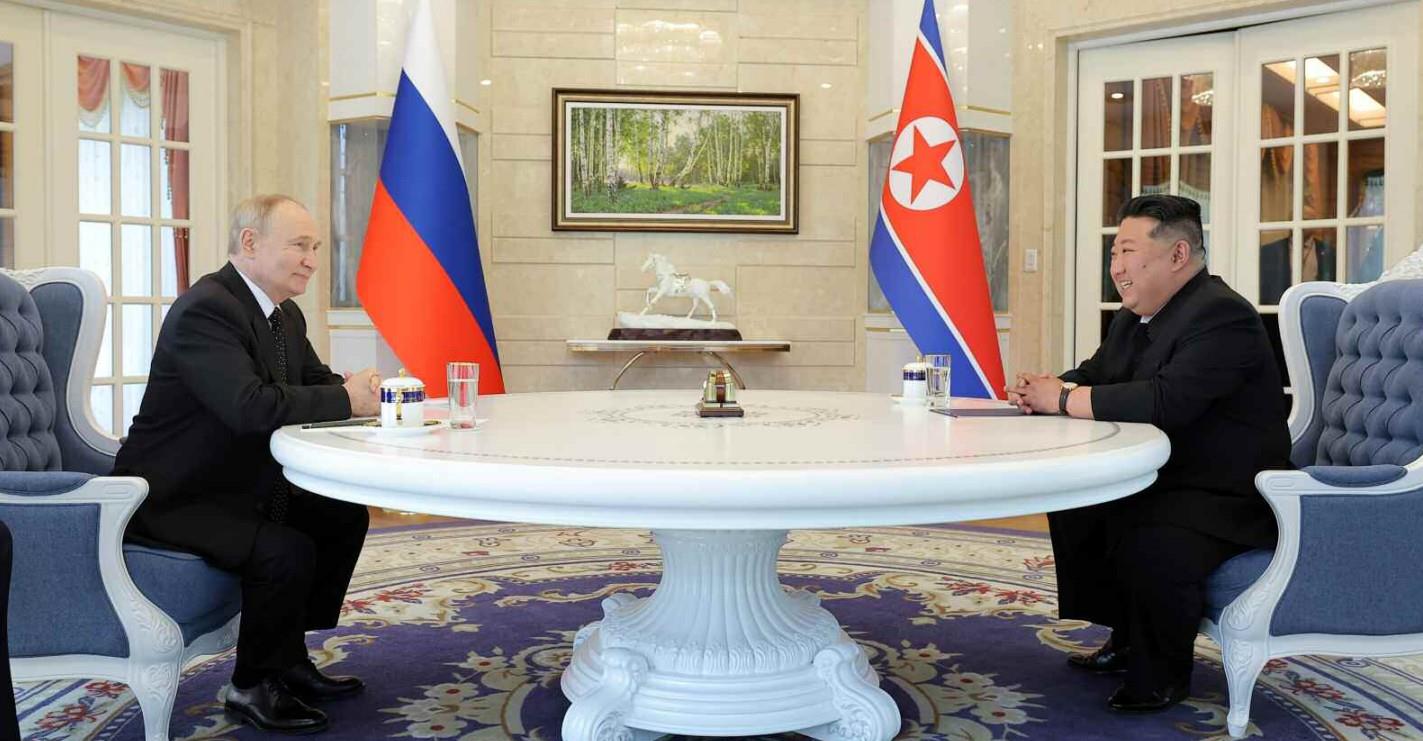
North Korea and Russia Revive Cold War-Era Pact with Comprehensive Strategic Partnership, Shaking Regional Security Lee DonghoonContributing editor of Tech FocusPyongyang and Moscow have signed a "Treaty on Comprehensive Strategic Partnership," a landmark agreement that includes a mutual defense clause, significantly upgrading their relationship to a level reminiscent of their Cold War-era alliance. The pact, signed by North Korean leader Kim Jong Un and Russian President Vladimir Putin in Pyongyang, has sent shockwaves across the region and beyond, with major implications for the security dynamics of the Korean Peninsula and the broader international order.The core of the treaty is its powerful mutual defense commitment. Article 4 of the treaty states that if either country is attacked, the other will provide "military and other assistance with all means in its possession without delay." This clause effectively restores a military alliance that had lapsed after the fall of the Soviet Union, providing North Korea with a significant security guarantee from a nuclear-armed permanent member of the UN Security Council.Beyond the military dimension, the comprehensive nature of the treaty signifies a deep and wide-ranging alignment between the two nations. The main contents of the treaty span several key areas:Military and Security Cooperation: The pact calls for joint measures to strengthen defense capabilities and institutionalizes security cooperation. This could pave the way for joint military exercises, exchanges of military technology, and Russian assistance for North Korea's satellite and missile programs, which are currently sanctioned by the United Nations.Economic Partnership: The treaty aims to boost trade and investment, creating a framework to circumvent international sanctions. This includes developing alternative trade and payment mechanisms that are not controlled by the West, potentially providing a lifeline to North Korea's beleaguered economy and a source of munitions and labor for Russia's war effort in Ukraine.Scientific and Technological Exchange: The treaty explicitly mentions cooperation in "peaceful nuclear energy," space exploration, and other high-tech fields. This has raised alarms about the potential for Russia to transfer sensitive technologies that could advance North Korea's nuclear weapons and ballistic missile programs.Political and Diplomatic Alignment: Both nations have pledged to support each other on the international stage and to work together to create a "multipolar world," a clear challenge to the U.S.-led global order. They also jointly oppose what they term "unilateral coercive measures" – a direct critique of international sanctions.The ExchangesIn accordance with this treaty, the following exchanges have taken place between North Korea and Russia to date.● Deployment of North Korean combat troops to Russia:In accordance with Article 4 of this treaty, North Korea deployed the first batch of 11,000 combat troops to Russia in October of last year. Article 4 of the treaty stipulates that if either side is invaded by force, military and other aid will be provided without delay. North Korean authorities belatedly acknowledged the deployment in April of last year, explaining the justification for the deployment by saying, “The military activities of the Republic’s armed forces conducted within the territory of the Russian Federation are fully in accordance with the provisions and spirit of the Treaty on the Comprehensive Strategic Partnership between North Korea and Russia, and international law including the UN Charter.”From the perspectives of Russia and North Korea, the argument is that since Kursk is an Russian area invaded by Ukraine, there is no problem with North Korea’s participation in the war according to the treaty. According to estimates by the British Military Intelligence Service, 6,000 of these soldiers were killed or wounded as of June of this year.North Korea dispatched an additional 3,000 combat troops as the second batch in January and February of this year, and recently decided to dispatch an additional 6,000 engineering troops as the third batch during the Shoigu and Kim Jong-un meeting. This is because Russia, which needs to quickly rebuild bridges and military facilities in the recaptured Kursk region, is in dire need of excellent engineering personnel.● Dispatch of North Korean workers to Russia:Russia has been sending many young men who would otherwise be working to the military and defense industry to carry out the Russo-Ukrainian War. In order to operate the economy normally, workers are needed. It is estimated that North Korea dispatched about 8,000 workers to Russia.● Export of North Korean military equipment to Russia:The Russian defense industry has been unable to replenish the enormous equipment consumption due to the Russo-Ukrainian War that has been going on for more than three years. Therefore, the Russian military has no choice but to rely on North Korean military equipment.According to a report titled “Unlawful Military Cooperation Including Arms Transfers Between North Korea and Russia” published by the Multinational Sanctions Monitoring Group (MSMT) on May 29, North Korea delivered approximately 9 million shells (including artillery shells) to the Russian military via cargo ships on 49 occasions from January to December of last year. The shells were transported to ports in the Russian Far East and then transported by rail to ammunition depots in central-western Russia. Since September 2023, over 20,000 military supply containers have left North Korea for Russia. These include 82mm, 122mm, 130mm, 152mm, and 170mm shells used for D-20, D-30, M-30, M-46, and D-74 artillery. In 2024, North Korea transferred more than 200 heavy artillery pieces, including finished vehicles, rocket launchers, self-propelled guns, and reloading vehicles, enough for three Russian brigades.● Russia's military and economic support for North Korea:It is known that North Korea received significant military and economic support from Russia in return for sending troops. First of all, the monthly salaries of the dispatched North Korean soldiers come from Russia. It is known that each dispatched North Korean soldier receives $2,000 per month, which is a huge amount considering that the monthly salary of North Korean soldiers stationed in North Korea is only about 90 South Korean won. The North Korean authorities are embezzling a significant portion of this money instead of giving it to individual soldiers.Through this, it is expected to upgrade the aging naval and air force capabilities, serve as a maintenance, repair, and operation (MRO) base for Russian military supplies, and fill foreign exchange reserves. It has been confirmed that Russia transferred advanced air defense technology and ballistic missile technology to North Korea in return for its military support. In addition, there is a possibility that some of the most advanced technologies, such as drone technology, military reconnaissance satellite technology, submarine technology, intercontinental ballistic missile (ICBM) technology, and nuclear weapon miniaturization technology, may also be transferred. Since no other ally has sent troops to Russia, North Korea should be given an appropriate countermeasure. Recently, as the instability in the Middle East deepens due to Israel’s surprise preemptive attack and Iran’s counterattack, there is also the possibility that Chairman Kim Jong-un demanded a written regime guarantee from Russia in return for sending troops.Future Impacts of the TreatyThe North Korea-Russia pact is poised to have a profound and lasting impact on the two signatories and their neighbors.For North Korea:Enhanced Security and Deterrence: The mutual defense clause provides the Kim regime with its strongest security guarantee in decades, potentially emboldening it to act more assertively towards South Korea and the United States. It significantly raises the stakes for any potential military action against the North.Economic and Technological Boost: The promise of Russian economic support and technology transfer could help North Korea weather the impact of sanctions and advance its military capabilities. This could lead to a more potent nuclear and conventional threat.Reduced Diplomatic Isolation: The high-profile summit and treaty have elevated North Korea's standing and provided a powerful counter-narrative to its international isolation.For Russia:Access to Military Supplies: The treaty solidifies a critical partnership for Russia as it continues its war in Ukraine. North Korea is a significant source of artillery shells and other munitions for the Russian military.Challenge to the West: By deepening ties with a designated adversary of the United States, Russia is actively working to undermine the international sanctions regime and challenge American influence in Northeast Asia.Increased Leverage: The pact gives Moscow greater leverage in its dealings with other regional players, including China, and reasserts its role as a major power in the Asia-Pacific.For Neighboring Countries and the International Community:South Korea: The treaty poses a direct and immediate threat to South Korea's security. It fundamentally alters the military balance on the Korean Peninsula and is likely to spur Seoul to strengthen its own defense capabilities and its alliance with the United States. In response, South Korea has indicated it may reconsider its policy of not providing lethal aid to Ukraine.United States: The pact represents a significant challenge to U.S. interests in the region and its efforts to denuclearize North Korea. It will likely lead to a bolstering of the U.S. military presence in the Indo-Pacific and a strengthening of trilateral security cooperation with South Korea and Japan.Japan: Japan also views the deepening military cooperation between its two neighbors with alarm. The potential for advanced Russian technology to be transferred to North Korea heightens the missile threat to Japanese territory, likely leading to further investments in missile defense and a more robust security posture.China: China, while sharing a desire to counter U.S. influence, finds itself in a complex position. While the pact strengthens the anti-Western bloc, it also risks destabilizing the Korean Peninsula, a scenario Beijing has traditionally sought to avoid. The close-knit military alliance between Pyongyang and Moscow could also diminish China's own influence over North Korea.In conclusion, the North Korea-Russia Comprehensive Strategic Partnership treaty is a transformative development with far-reaching consequences. It marks a new era of alignment between two of the world's most isolated and anti-Western states, significantly raising the potential for conflict and an arms race in Northeast Asia. The international community now faces the challenge of navigating a more complex and volatile security landscape, with the specter of a revitalized and emboldened North Korea backed by a revanchist Russia.
25.06.20 -
 [Feature Article Series]
Marketing In North Korea (25)Why North Korea Honors a Christian Capitalist: The Story of Paek Son-haeng Jeon Byung-kilSenior Consultant of YESInnovationformer of Secretary General of UniKorea FoundationIn Korea, the idea of businesses helping society goes back hundreds of years. In the past, Koreans had community systems like “Dure” and “Hyang-yak” that were all about sharing and helping neighbors. This spirit of community giving—called “Taedong,” meaning great unity—has influenced how Korean companies think about their role in society even today.North Korea, even though it is a socialist country, also honors people from the past who helped others. One of the most respected figures is Paek Son-haeng, a woman who lived in Pyongyang during the time Korea was under Japanese rule.Who Was Paek Son-haeng?Paek Son-haeng 1848–1933) was what we might call a social entrepreneur—someone who uses their wealth and business skills to improve society. She became a successful and generous businesswoman in Pyongyang. After losing her husband at age 16, she lived on her own and built her fortune from scratch.In 1917, she bought land near Mandal Mountain in what is now Gangdong County, across from the Taedong River. She didn’t know it at the time, but this land was rich in limestone, the key ingredient used to make cement. When Japanese companies started mining there, the land’s value exploded—rising more than 10 times in price.Later, a cement factory was built on that land during Japanese rule. Today, that same area is home to the Seungho Cement Factory, one of North Korea’s major producers. Paek Son-haeng’s smart decision helped her grow from a local landowner to one of the wealthiest people in Pyongyang.Using Wealth for GoodEven though she became rich, Paek Son-haeng didn’t keep the money for herself. She believed in giving back, especially through education. In 1919, the March 1st Independence Movement—a major protest against Japanese rule—deeply moved her. Five years later, in 1924, she made a big decision: she would donate all her wealth to social causes.She gave large pieces of land to help build schools:• 26,000 pyeong (about 86,000 square meters) to Gwangseong School• Another 26,000 pyeong to Sunghyun Girls’ School• She also donated property to Changdeok elementary School, founded by an American missionary, Samuel A. MoffettIn total, Baek donated land and money worth 180,000 won at the time. That would be worth over 20 billion won (more than 15 million USD) today.What makes her story even more amazing is that she couldn’t read Hangul (the Korean alphabet) or even numbers. Yet she had the vision and courage to use her fortune to help future generations.Why North Korea Respects Paek Son-haeng , a Christian CapitalistPaek Son-haeng was a Christian and a capitalist—someone who made a lot of money through private business. Normally, people like her would not be accepted in North Korea, especially after the country was divided from South Korea. After the division, North Korea banned private property and religious activities, and many people left the country to find religious freedom in the South.So it may seem surprising that North Korea speaks positively about Baek Sun-haeng. But they do.Kim Il-sung’s PraiseNorth Korea’s first leader, Kim Il-sung, wrote about Paek Son-haeng in his autobiography With the Century. He said, “There are many rich people who create social problems with their bad behavior, but not all rich people are like that.” He pointed to Paek Son-haeng as a good example of a wealthy person who used her money to help society.In North Korea, where Kim Il-sung’s words are treated like law, this means no one is allowed to criticize her publicly.Rediscovering Her StoryFor many years, Baek’s name wasn’t well known in North Korea. But that changed in the mid-1990s, when Kim Il-sung’s autobiography was published. After that, her story began to appear in North Korean newspapers and TV programs.In 2006, North Korea made a documentary about her life. They also reopened a memorial hall that had been built in her honor in the 1930s. This was a time when South and North Korea were having more cultural and economic exchanges, and many South Korean businesspeople and religious leaders were visiting the North.Some believe that North Korea promoted ’s Paek Son-haeng story to create a positive image for those visitors. The idea was simple: showing respect for someone who was both religious and successful might lead to economic support from the South.A Shared Value Between North and SouthPaek Son-haeng is now seen as a rare “shared value” between North and South Korea. People on both sides of the border admire her for her generosity.Today, as the world talks more about corporate responsibility—the idea that businesses should do good for society—Baek’s story feels even more important. She is a great example of someone who used her wealth to give back. This is called “creating social value.”Her legacy can be a helpful tool in the future for North-South economic cooperation. Her story also inspires public campaigns and positive branding based on values like kindness, generosity, and helping others.
25.06.20 -
 [Analysis and suggestion]
Shifting Sanctions Dynamics: China and Russia’s Stance on North Korea and Pyongyang’s Evolving Evasion Methods Lee Sang-man, Visiting ProfessorKyungnam University / Shandong Normal University1. The Decline of the Sanctions Framework and the Rise of Alternative GovernanceIn recent years, China and Russia have consistently urged the easing of sanctions on North Korea. Since 2024, North Korea’s increasingly sophisticated evasion tactics have revealed structural weaknesses in the UN-led sanctions regime. By repeatedly pressing for relief at forums like the UN Security Council, Beijing and Moscow have only intensified the crisis.In March 2024, Russia vetoed the extension of the UN Panel of Experts monitoring North Korea sanctions, calling for a full system review. This effectively dismantled the international oversight mechanism, leaving the sanctions regime without its core enforcement body.China argues that partial sanctions relief is needed to address North Korea’s economic and humanitarian issues. Stressing its strategic partnership with Pyongyang, Beijing maintains that UN sanctions have lost their effectiveness.On May 8, 2025, during Russia’s Victory Day celebrations, the Chinese and Russian leaders issued a joint statement calling for an end to sanctions and renewed diplomacy on the Korean Peninsula. The declaration openly rejected the U.S.-led sanctions framework and reflected a broader effort to strengthen strategic ties with North Korea. These moves reveal the growing gap between global consensus and the unraveling sanctions regime.In response, 11 countries—including the U.S., South Korea, and Japan—formed the Multilateral Sanctions Monitoring Team (MSMT), a public-private initiative aimed at restoring oversight and institutional legitimacy. This effort also signals a shift toward more flexible, multilateral sanctions governance.2. North Korea’s Sophisticated and Multi-Layered Sanctions Evasion TacticsNorth Korea has moved beyond traditional smuggling and third-country rerouting, adopting increasingly complex methods across cyberspace, maritime trade, and forced labor networks.(1) Cyberattacks and Disguised IT LaborPyongyang has turned cybercrime into a high-yield revenue stream by deploying fake IT workers and stealing cryptocurrency. Using deepfakes and fake IDs, these workers secure remote jobs in Western firms, with profits funneled into weapons programs. In 2024 alone, North Korean hackers stole around $1.34 billion—over half of all global crypto losses.(2) Arms-for-Cash Deals and Oil Imports from RussiaSince 2024, military cooperation between North Korea and Russia has deepened notably. In return for supplying arms and ammunition, Pyongyang reportedly earned about $540 million in foreign currency. Satellite imagery also confirmed that Russia provided over 1 million barrels of refined oil—double the UN’s annual cap of 500,000 barrels. This not only reflects the growing strategic alignment between the two nations but also underscores the breakdown in sanctions enforcement.(3) Maritime Smuggling and Shadow Fleet TacticsNorth Korea continues maritime smuggling by disabling AIS (Automatic Identification System) trackers and falsifying vessel identities. Its so-called “shadow fleet” often sails under false third-country flags and conducts ship-to-ship transfers in international waters to move oil, weapons, and luxury goods. In April 2024, South Korea drew international attention by releasing satellite images of such activity involving the North Korean vessels Deo-i-ho and Deokseong-ho.(4) Overseas Labor and Human Rights ConcernsDespite UNSC Resolution 2397 mandating the repatriation of North Korean workers by 2019, labor dispatch continues in parts of China and Russia. In January 2024, a wage protest in Helong, China, turned deadly, leading to the death of a factory manager and prompting international criticism. The case highlights ongoing rights abuses.3. North Korea’s Smuggling Operations with China (2024–2025): Case Analysis(1) Cryptocurrency HeistsNorth Korean cyberattacks on blockchain assets intensified in 2024, with estimated thefts of $1.34 billion. These funds reportedly support the regime’s nuclear and missile programs, making cyberspace a key arena for sanctions evasion. (2) Counterfeit Cigarette TraffickingNorth Korea continues to generate revenue by smuggling fake cigarettes. In February 2024, a Chinese national was arrested in Australia for trafficking $700 million worth of counterfeit tobacco. The proceeds are suspected to fund military development.(3) Illicit Coal ShipmentsIn February 2025, a North Korean coal vessel sank after colliding with a Chinese ship in southeast Chinese waters, killing 15–20 sailors. The vessel was operating without AIS, and the muted official response revealed how deeply entrenched the smuggling network has become.(4) Smuggling of Secondhand VehiclesNorth Korean and Chinese traders have developed a route to re-export used Japanese vehicles from North Korea to China. Techniques like AIS spoofing and ship disguise reflect the increasing technical sophistication of North Korea’s smuggling networks.(5) Labor Exports to ChinaNorth Korean laborers remain active in some parts of China despite UN sanctions. These workers face severe exploitation, and China’s permissive stance has enabled ongoing sanctions evasion through structural complicity.4. Reconfiguring Sanctions Governance: Strategic Challenges AheadChina and Russia, despite their roles as UN Security Council members, have remained uncooperative in enforcing sanctions, weakening the regime’s effectiveness and credibility. As North Korea sharpens its evasion tactics, the existing framework continues to lose traction.Moving forward, stronger public-private coordination and regional multilateral efforts are vital. Future sanctions must be more targeted—rooted in better monitoring, information-sharing, and legitimacy. Crucially, sanctions should aim to halt North Korea’s weapons programs, not inflict suffering on its people. Ensuring political unity and integrated governance remains the long-term priority.
25.06.06 -
 [Feature Article Series]
Marketing In North Korea (24)Broken Supply Chains, Unbroken Dreams Jeon Byung-kilSenior Consultant of YESInnovationformer of Secretary General of UniKorea FoundationThe First North-South Brand: Hanmaeum CigarettesHanmaeum (which means "One Heart") was the first brand created through a partnership between North and South Korea. South Korea provided the money, machines, and technology, while North Korea provided raw materials, workers, and a factory building. In 1998, a South Korean company called Korea Tobacco & Ginseng Corporation (now KT&G) made a deal with North Korea’s Kwangmyongsong General Corporation. They agreed to work together to make cigarettes.In 2000, the Hanmaeum cigarettes were officially produced at a factory in Pyongyang, the capital of North Korea. These cigarettes were sold in both countries: about 800 million packs were sold in South Korea and 200 million in North Korea. South Korea also hoped to sell these cheap cigarettes to China.But the project didn’t last. By the end of 2001, the Hanmaeum brand stopped being made. North Korea’s poor electricity supply and outdated technology made it hard to keep quality high and production steady. This showed a major problem: even if companies wanted to invest in North Korea, they couldn’t do much because the country lacked reliable infrastructure like water, electricity, and transportation.This failure led to a new idea: building a special industrial zone where North and South Korea could work together with stable facilities. That idea became a reality in 2004 when the Kaesong Industrial Complex opened.SISBRO: A Clothing Brand from KaesongIn 2014, when the Kaesong Industrial Complex was operating at full speed, several clothing companies decided to launch a joint brand called SISBRO. Most of the businesses in Kaesong were small and made clothes for other big brands (called OEM factories). After a shutdown in 2013, many companies in the complex lost their clients and didn’t know what to do next.Seven companies (later 15) teamed up to start SISBRO, a clothing brand that made jackets, jeans, shirts, underwear, socks, and shoes. The name SISBRO combines “sister” and “brother,” symbolizing that North and South Koreans are one family. It also refers to the idea of “South Korean men and North Korean women,” which is a traditional stereotype. The message was clear: this was a brand about unity and peace that anyone—no matter their gender or nationality—could wear.SISBRO also made headlines in 2014 when it provided uniforms for 7,000 volunteers during Pope Francis’s visit to South Korea. It supported historical tours for people with disabilities and was even introduced at a United Nations business event in Turkey as a peace-focused company.The project also created a company called K is One—which stands for “Korea is One.” SISBRO wasn't just about making clothes. It represented cooperation between South Korea’s materials and design, and North Korea’s labor. It was a symbol of peace.What Made SISBRO Different—and Why It StruggledOne big difference with SISBRO was that it openly told customers the clothes were made in Kaesong, North Korea. Normally, companies wouldn’t say where their clothes came from, even though the quality was high. Most people just assumed the products were made in South Korea or somewhere else in Asia. But SISBRO was proud to say that North and South had worked together.The companies that made SISBRO had strong motivation to succeed and offered lower prices while keeping the quality good. When a trade agreement between Korea and China was signed, people thought SISBRO might grow even faster. They expanded into cosmetics and shoes, opened a store in Goyang city, and made plans to sell in China. There was even a plan to build a big North-South logistics park in Paju.But in February 2016, everything changed. The South Korean government shut down the Kaesong Industrial Complex because of rising tensions with North Korea. SISBRO was forced to close. The idea of a brand created by both North and South disappeared, and the companies involved had to stop their plans. Like Hanmaeum, SISBRO had strong symbolic meaning—but it couldn’t survive because of political and practical problems.The Reality of Business with North KoreaIn South Korea, public opinion about North Korea is complicated. While many people feel sorry for ordinary North Koreans, they don’t trust the government or see North Korea as a reliable business partner. This makes it hard to sell products made in North Korea.Also, North Korea’s production systems and product quality are much lower than South Korea’s. Even if products from North Korea are cheaper, many people worry that the quality won’t be good enough.So if companies want to make North-South cooperation work, they need more than just low prices. They need to focus on peaceful messaging or eco-friendly branding. For example, they can promote the idea that these products are good for the environment and made in a clean, natural area. For now, that might be the best path forward.
25.06.06 -
 [Current Affairs Analysis]
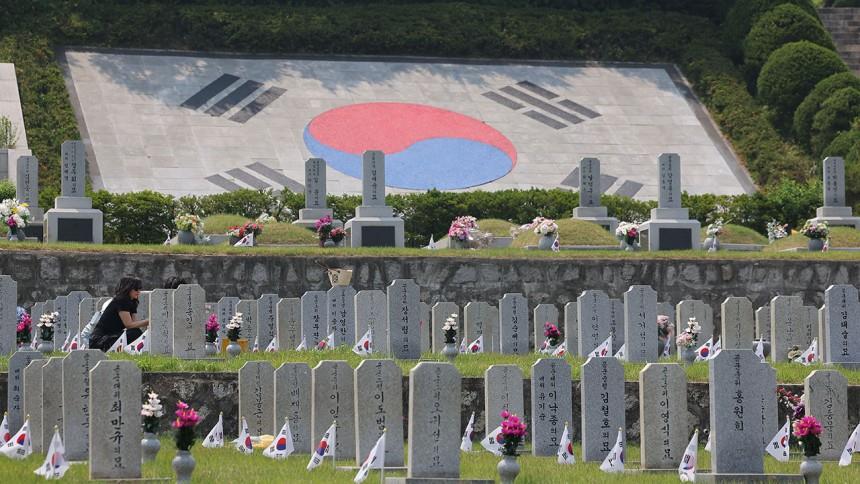
Remembering Sacrifice vs. Promoting Loyalty:How Veterans Policies Differ in South and North Korea Yoon Seung-biProfessor, Department of Human Social Services, Seoul Christian UniversityAs the 74th anniversary of the Korean War approaches, a key question returns: how do nations remember their fallen? South and North Korea’s veterans policies offer starkly different answers, reflecting the core of their political systems.In South Korea, veterans policy reflects the state’s respect and responsibility toward those who sacrificed for freedom, independence, and democracy. Legal structures ensure their sacrifices are honored and promote shared patriotic values across society.North Korea, in contrast, uses veterans affairs to reinforce ideological continuity. It praises those who resisted Japanese rule, fought in the war, or served the Kim dynasty as “revolutionary martyrs.” While South Korea sees veterans policy as a democratic obligation, the North treats it as a measure of loyalty to the regime.South Korea’s veterans system is grounded in the 1984 Act on the Honorable Treatment of and Support for Persons of Distinguished Service to the State. The law outlines eligibility and provides broad support—covering compensation, education, healthcare, housing, jobs, loans, and funerals—across 87 articles and provisions.Beneficiaries include independence fighters, Korean War veterans, democratization activists, fallen civil servants, and discharged soldiers—anyone who helped secure national growth and security. Support is tailored to the degree of sacrifice and family need, under the principle of lifelong state responsibility.North Korea, lacking a unified law, manages veterans affairs through internal regulations and decrees. These include aid for soldiers’ families, job guarantees for veterans, and educational support for their children, offering basics like housing, food, jobs, and school supplies.However, these benefits are given selectively, based on political loyalty and one’s songbun (social status). Veterans support is treated not as a right, but as a favor granted by the regime.In South Korea, veterans affairs aim to preserve collective memory and provide fair compensation. Sites like the National Cemetery, Memorial Day ceremonies, and veterans hospitals embed remembrance in daily life. Education and outreach further foster unity and national identity.North Korea, meanwhile, emphasizes glorification. Titles like “Hero of the Republic” and medals honor loyal fighters while reinforcing ideology. Their descendants often attend special schools and gain symbolic prestige as “revolutionary heirs,” ensuring the legacy aligns with regime propaganda.South Korea continues to grow its veterans programs, now involving private-sector support. In 2024, the Ministry of Patriots and Veterans Affairs received nearly 6 trillion KRW to strengthen welfare for veterans and their families.North Korea discloses no formal veterans budget. Its support system, cloaked in revolutionary rhetoric, is weakened by economic difficulties. Under Kim Jong-un, funding has shifted toward nuclear weapons and military buildup, leaving veterans care underfunded and largely symbolic.Veterans policy is more than welfare—it shows how a nation remembers its past and shapes its future. South Korea’s system is legally grounded and structured, while North Korea’s remains a tool for loyalty and propaganda.In the end, how a society treats its veterans reflects its stance on dignity, sacrifice, and legacy.The two Koreas’ differing approaches reveal a deeper systemic divide—one that could challenge efforts toward unity in a post-unification era.
25.06.06 -
 [Analysis and suggestion]
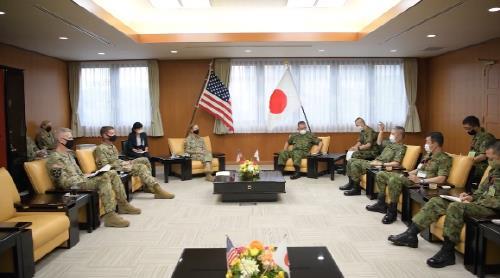
Implications of U.S.-Japan Alliance Shifts and the “One Theater” Concept: Stronger Joint Response to North Korea in a Korean Peninsula Crisis Likely Jang Hye-jin,Research Fellow, Korea Institute for Defense AnalysesAt the March 30 U.S.-Japan defense ministers’ meeting, Japanese Defense Minister Nakatani Gen proposed the “One Theater” concept to U.S. Secretary of Defense Pete Hegseth, drawing attention to its rationale and implications.Japanese media report that this idea—combining the East China Sea, South China Sea, and the Korean Peninsula into one unified operational theater—originated from a senior officer in the Japan Self-Defense Forces (JSDF).However, this concept has only been reported by The Asahi Shimbun, and even within Japan’s Ministry of Defense, there seems to be no consensus on its precise meaning. In other words, “One Theater” is still at a very preliminary stage and hasn’t been widely debated domestically.Some even question whether the Japanese government is truly committed to developing the concept. It's also uncertain whether Japan’s efforts to expand JSDF’s regional security role and deepen defense cooperation with countries other than the U.S. represent a meaningful departure from past policies.While much of the “One Theater” discussion centers on U.S.-China strategic dynamics, it may be more appropriate to view it as a reflection of shifts in Japan’s defense posture and the evolving structure of the U.S.-Japan alliance.Under Article 6 of the Treaty of Mutual Cooperation and Security, the alliance extends to the “Far East,” not just Japan. The notion of “One Theater” likely stems from this regional framework. Japan has traditionally maintained a restrained, postwar defense strategy that restricted JSDF activities beyond its borders. Even with expanded cooperation under revised guidelines, its role largely remained confined to logistical support for the U.S., not direct involvement in regional security.For much of the post-Cold War period, Japan saw itself as a rear-area actor, separated by time and space from the frontlines. Accordingly, the “One Theater” idea didn’t take hold. U.S. forces stationed in Japan were also primarily configured for support roles rather than direct combat.However, evolving threats—such as North Korea’s growing missile capabilities and China’s assertive military expansion—have blurred the traditional distinction between front and rear. As North Korean missiles have gained range, Japan has come within striking distance, making it more likely to be targeted in any Korean Peninsula contingency. The increase in missile quantity and platform diversity has also challenged Japan’s missile defense systems, prompting the country to adopt a counterstrike capability. Meanwhile, China's expanding military and its aggressive maritime ambitions, particularly in areas like the East China Sea and around the Senkaku Islands, have posed an even more immediate threat. These factors influenced Japan’s decision to pursue collective self-defense. Previously, both counterstrike capabilities and the right to collective self-defense were constrained under Japan’s strictly defensive policy, seen as exceeding the minimum necessary force allowed.Alongside this, growing strategic competition between the U.S. and China has heightened concerns about the possibility of conflict in the Taiwan Strait. For Japan, Taiwan is geographically close and security developments there are deeply linked to its own, especially given the presence of U.S. bases and territorial disputes over the Senkaku Islands. These concerns deepened after Russia’s invasion of Ukraine. Statements by former Prime Minister Abe—calling a Taiwan crisis a Japan crisis—and similar warnings from Prime Minister Kishida reflect Japan’s view of regional instability as a direct national security threat.As Japan increasingly sees itself as part of the frontline rather than a safe rear area, it has begun shifting away from its traditionally passive defense posture. The focus now is on building real combat capabilities and readiness. Japan’s 2022 National Defense Strategy outlines the acquisition and use of standoff missiles for counterstrikes, emphasizes the need for transport capabilities to protect civilians, and highlights measures needed to sustain operations in times of conflict. To address evolving battlefield conditions and strengthen coordination with the U.S., Japan established the Joint Operations Command on March 24, 2025. Unlike the advisory-focused Joint Staff Office, it serves as a unified command for land, sea, and air JSDF forces.The U.S. military presence in Japan is also being reshaped to enhance its combat role. Strengthening coordination between this new command and the U.S. Integrated Command helps transition the alliance toward a posture capable of joint combat. In this light, the “One Theater” proposal may carry implications that go beyond traditional security and diplomatic policy.It is premature to determine exactly how changes in the U.S.-Japan alliance and the “One Theater” concept are interconnected. The newly established U.S. Integrated Command in Japan is still in its early stages, and as previously noted, the “One Theater” concept has yet to be clearly conceptualized. Likewise, it remains uncertain how Japan’s regional security role will evolve within the “One Theater” framework. While Japan has expanded its role in Korean Peninsula and Taiwan Strait contingencies beyond providing bases and rear-area support for the U.S. in response to changing security dynamics, its activities remain constrained outside Japanese territory and international waters. Counterstrike capabilities are exercised from within Japanese territory toward foreign targets, and collective self-defense is to be carried out in international waters. The Nansei Islands are also within Japanese territory.If the “One Theater” concept strengthens U.S.-Japan coordination, their joint response to a Korean Peninsula crisis would likely improve, enhancing their regional influence—particularly Japan’s ability to support counterstrikes against North Korea. One of the core missions of the new Joint Operations Command is to manage Japan’s standoff missile systems and its integrated air and missile defenses, including counterstrike capabilities. While Japan has maintained that any decision to launch such capabilities would be made independently, its limited satellite surveillance capabilities make joint operations with the U.S. a more viable and immediate option.Strengthening coordination between Japan’s Joint Operations Command and the U.S. Integrated Command under the “One Theater” framework could make counterstrikes against North Korea more viable, potentially under collective self-defense. Continued attention is needed to see how this evolves and influences Japan’s response to a Korean Peninsula crisis.
25.05.16 -
 [Feature Article Series]
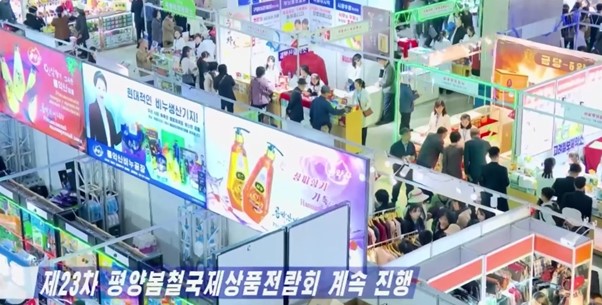
Marketing In North Korea (23)North Korea’s Quest for Quality: Medals, Mistakes, and Modernization Jeon Byung-kilSenior Consultant of YESInnovationformer of Secretary General of UniKorea FoundationNorth Korea’s Efforts to Improve Product QualityEven though North Korea is one of the most closed-off countries in the world, it has still tried to improve the quality of its products and services in different ways.Since 1981, North Korea has had a national system to check the quality of products made in its factories. In 1997, it even passed a law for quality control. On February 2, 1981, Kim Il-sung, the country’s leader at the time, held a big meeting with people in charge of quality supervision. He told them to take quality more seriously. After that, North Korea created a special certification system called the “February 2nd Product.”Each year, North Korea hosts a product exhibition where factories show off their goods. The government picks the best ones and gives them the “February 2nd Product” certification—more than 100 products get this award each year.In December 2021, a North Korean news source called Choson Sinbo reported that products like student backpacks, kids’ raincoats, shampoo, soy milk, and even schisandra wine were awarded as February 2nd Products.The “12th December Quality Medal”Another quality award is called the “12th December Quality Medal.” It was created to honor a speech made by Kim Jong-un in 2012 about making better products and buildings. The medal has been awarded since 2014.To win this medal, a product must meet at least one of the following standards: 1. It has to already be certified as a February 2nd Product and be good enough to compete in the global market. 2. It must be made using local materials and help improve everyday life for North Korean people. 3. It must use advanced technology and be one of a kind, both in North Korea and in other countries.The first product to win this medal was a type of alcohol called “Pyongyangju,” made by the Taedonggang Food Factory. Since then, many different types of products—like food, clothing, and chemical goods—have received the medal.Products with the 12th December Medal are also registered with the World Intellectual Property Organization (WIPO). This is a way for North Korea to prove that their products are good enough for export and to show the world that their items can be high quality.But Not Everything Meets the StandardWhile the government talks a lot about improving quality, not all products in North Korea are actually good. One example is the “8.3 Consumer Goods” program, which began in the mid-1980s.The name “8.3” comes from August 3rd, and it refers to homemade products made by recycling leftover materials from factories. These goods were made outside the official state plans. The idea was to help fix the shortage of everyday items like clothes or soap. Most of these products were made at home by women and elderly people who didn’t work in factories. Because of this, the quality was often very low.There were also many problems. Some workers secretly took raw materials from factories to use for their side jobs. People who did this were called “8.3 workers,” and the bribes they paid were called “8.3 money.” The whole system became known as the “8.3 business.”Over time, the quality of 8.3 products became so bad that people started using “8.3” as a negative word. It came to mean something fake, low-quality, or unreliable. In fact, in North Korea, even secret romantic relationships are sometimes jokingly called “8.3 couples.”North Korea Tries to Get International Quality CertificationsSince Kim Jong-un became the leader of North Korea, the country has worked not only on getting local (domestic) quality certifications but also on international certifications. Starting in 2017, North Korea made it a legal requirement for certain industries—like food, cosmetics, medicine, vehicles, electronics, medical tools, and pesticides—to follow global quality standards. This means they must meet international rules for safety, hygiene, and quality.Many food and medical products made in North Korea now have international labels such as: • HACCP: A system to make sure food is safe • GMP: A system that ensures medicine is made safely and correctlyHow North Korea Gets CertifiedNorth Korea’s National Quality Supervision Committee is allowed to give out international certifications. This committee follows rules from international organizations like ISO (International Organization for Standardization).Here’s how the process works: 1. A factory upgrades its production system to meet international standards. 2. It writes safety, hygiene, and quality control manuals. 3. It applies for certification through the committee. 4. The committee reviews the application and decides if it passes.Some examples: • Taedonggang Beer got ISO 9001 (quality management) in 2008. Later, it also received ISO 22000 and HACCP (food safety). • Ryugyong Kimchi Factory and Pyongyang Foodstuffs Factory (which makes soju) also got ISO 22000.International Help and Joint ProjectsIn 2005, with help from a South Korean group called KSM (Korea Sharing Movement), North Korea built its first modern factory for IV solutions (the fluids used in hospital drips). This factory followed GMP rules.A company called Pyongsu Pharmaceutical, created with Swiss investment, received GMP certification in 2007. Later, many other factories followed, including the Sinuiju Cosmetics Factory, which makes the Pomhyanggi brand.By the end of 2021, North Korea reported that over 320 types of medicine—including pills, creams, powders, and IV fluids—had received GMP certification. In fact, South Korea has found GMP-labeled IV fluid bags from North Korea floating on its western shores.Why This Matters to North Korean ConsumersAs North Korea’s market has opened up a bit and more foreign goods have entered the country, people have started comparing North Korean products with imported ones. They’ve become more aware of what high quality looks like.A North Korean newspaper, Rodong Sinmun, wrote on March 17, 2020:“If we keep blaming poor conditions for low-quality products, we will fail to meet our people’s needs. It will also hurt our economy and make people depend more on foreign goods.”That’s why North Korea keeps promoting the idea of “quality first, quantity later.” This is their way of trying to improve the quality of products so that people will trust and use North Korean goods—both at home and (possibly) in other countries too.What Is a Quality Differentiation Strategy?North Korea’s idea of “quality first, quantity later” is similar to something in business called a quality differentiation strategy.So, what does that mean?A differentiation strategy is a plan companies use to stand out from their competitors. Instead of making the cheapest or the most products, they try to make better, more unique, or more useful ones. This helps them gain an advantage in the market.To succeed with this kind of strategy, a company (or country) needs to have something special about its product—something better than what others offer. That could be better performance, design, service, or features.If North Korea wants to follow this strategy, it needs to: • Understand what customers want • Focus on the most important parts of product quality • Make sure customers can clearly see the difference in qualityThat’s what North Korea is trying to do by following the “quality first, quantity later” principle.Quality and Socialist Values in North KoreaIn a video titled “Understanding the True Meaning of the Times – Quality First, Quantity Later,” Jeong Young-ran, the head of North Korea’s National Standards Institute, said:“Even if someone only owns one house or one outfit, they still want it to be high quality and match our socialist lifestyle and modern style.”In North Korea, improving quality is not just about making good products—it’s also tied to ideas like socialist values, patriotism, and national pride. The government says that high-quality products should reflect these ideals. However, in reality, not everyone has access to these higher-quality goods. The number of people who can actually use them is small.How North Korea Can SucceedTo make the “quality first, quantity later” idea work, North Korea needs to: • Use resources wisely • Train workers and improve skills • Follow a clear, organized plan • Work with passion and careIf these steps are followed, the country has a better chance of making higher-quality products and improving life for its people.In any quality strategy, the main goal is always customer satisfaction. No speech, slogan, or system can replace how important it is to make customers happy. Without satisfied users, no product can truly succeed.
25.05.16 -
 [Current Affairs Planning]
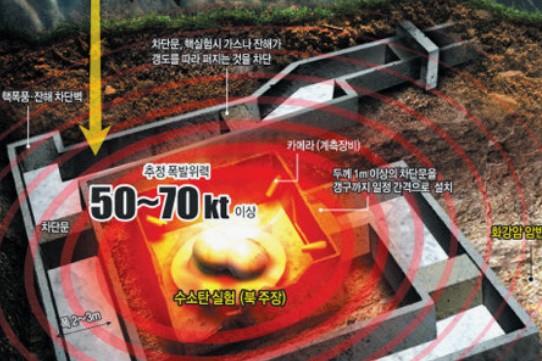
North Korea’s Reckless Nuclear Tests Could Unleash a Catastrophic Chain ReactionHwang Si-wan,a researcher at the Unification Vision InstituteOn May 1, an earthquake struck Kilju County in North Hamgyong Province, North Korea—marking the second tremor in the area this year. Experts suspect that the region’s geological stability has been compromised by North Korea’s six underground nuclear tests conducted between 2006 and 2017.The sixth and most powerful of these tests, carried out on September 3, 2017, at the Punggye-ri Nuclear Test Site, triggered a man-made earthquake with a magnitude of 5.7. Just minutes later, the ground above the testing site collapsed, causing a magnitude 4.1 aftershock—an indication of the explosive force unleashed.In the months following that test, seismic activity in Kilju spiked dramatically, with seven earthquakes recorded by the end of 2017. In 2023 alone, the number jumped to 33, pushing the cumulative total to 88 quakes. Notably, there had been no recorded earthquakes in the region prior to the sixth nuclear test. This pattern strongly suggests a link between North Korea’s nuclear activities and the area's rising seismic volatility—possibly signaling the early stages of a geological disaster.Standing at 2,744 meters above sea level, Mount Paektu is the tallest peak on the Korean Peninsula and the site of one of history’s most violent volcanic eruptions—the Millennium Eruption of 946 AD. With a Volcanic Explosivity Index (VEI) of 7, it was a blast estimated to be 160,000 times more powerful than the Hiroshima atomic bomb. For context, the eruptions that destroyed Pompeii and shook Mount St. Helens were both rated at VEI 5, highlighting just how cataclysmic Paektu’s eruption was.Since that event, Mount Paektu has erupted more than ten times. Despite the century-long dormancy since its last known eruption in 1925 (as claimed by North Korea), it remains classified as an active volcano. Mount Paektu is back in focus due to seismic monitoring between 2002 and 2005, during which more than 3,000 microearthquakes were recorded in the surrounding area. Chinese geologists interpreted this seismic activity not as natural tremors, but as signs of magma movement and pressure building deep underground.Further cause for concern came in 2016, when a joint research team from the UK, US, and North Korea published findings in Science under the title “Evidence for partial melt in the crust beneath Mt. Paektu.” Their study confirmed the presence of molten rock at depths of 5 to 20 kilometers beneath the volcano—evidence that Paektu may be quietly reawakening.Despite these warnings, North Korea built its nuclear test site at Mount Mantap, a 2,200-meter peak in Punggye-ri, just under 100 kilometers from Mount Paektu. The site was chosen for its mountainous terrain, which makes foreign surveillance difficult, and its granite bedrock, assumed to be strong enough to contain nuclear blasts. But experts now caution that the artificial quakes caused by such testing could disturb underground magma systems—raising the terrifying possibility of a volcanic eruption akin to what once destroyed Pompeii.The consequences of nuclear testing extend beyond the geological. Before the tests, Kilju County was known for prized local delicacies like pine mushrooms and cherry salmon, once classified as luxury “No. 8 products” reserved for the elite. But after the tests began, these species vanished, and alarming health issues surfaced. Locals reported mysterious illnesses, birth defects, and spikes in cancer rates. Chang In-soon, former head of the Korea Atomic Energy Research Institute, noted that while melted granite may trap radiation, leaks can still occur due to fractures, ground subsidence, or collapsed cavities—especially given North Korea’s limited technical capabilities.The North Korean government has not publicly addressed the potential radiation leaks. Even residents in the affected areas are kept in the dark. Many suffer and die from what they call “ghost disease,” unaware that radiation may be the cause.In an interview, a woman identified as “Kim Young-sook” from Kilju County revealed that locals rely on water from streams flowing down from Punggye-ri, about 30 kilometers away. Despite this distance, residents have fallen ill from what are likely radiation-related diseases. She herself didn’t realize the cause of her illness until reaching South Korea.To suppress awareness of radiation-related health damage, the regime has imposed tight restrictions on the movement of people in and around Kilju and Punggye-ri. Tragically, Kim Young-sook’s son also succumbed to a radiation-induced illness.In May 2018, North Korea announced it had closed the Punggye-ri test site by demolishing entrances to Tunnels 2, 3, and 4. But satellite imagery and reports from 2022 and 2023 suggest otherwise. A new access point was created at Tunnel 3, leachate was spotted seeping from within, and electrical and communication cables were seen near the entrance—evidence that preparations for another test may be underway.North Korea’s defiant nuclear experiments pose not only a grave threat to the region’s geological safety but also endanger its own citizens. With the risk of disaster mounting, the international community must take a more proactive and urgent stance to address this looming crisis.
25.05.16 -
 [Feature Article Series]
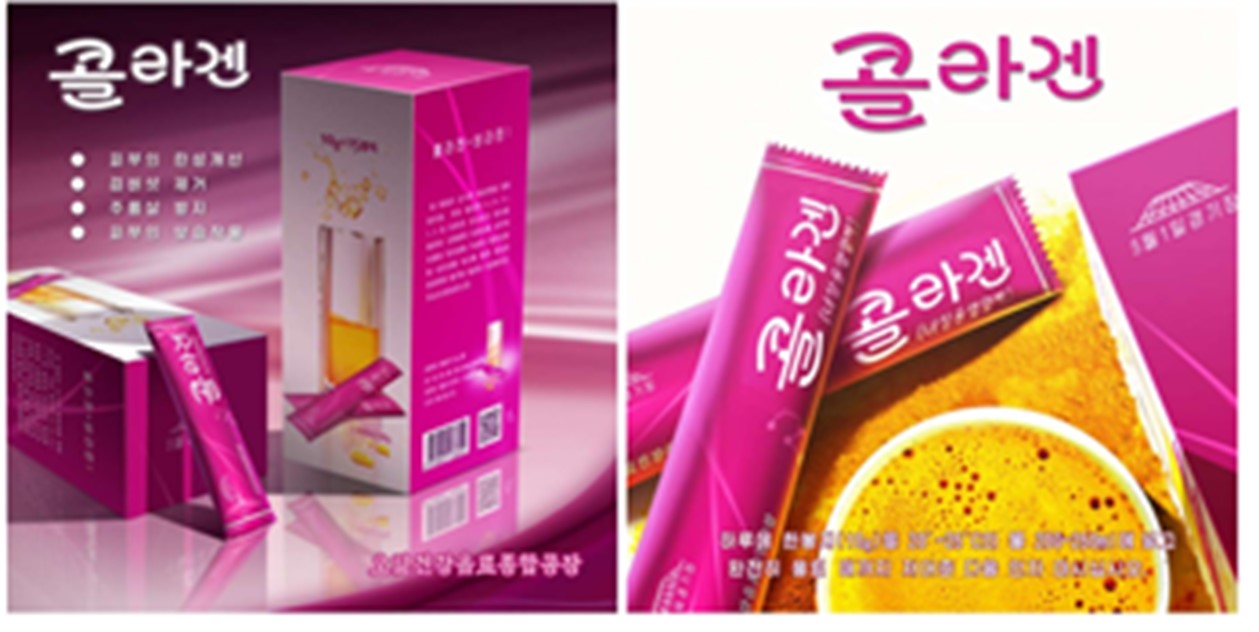
Marketing In North Korea (22)The Rise of O-il: North Korea’s Health-Driven Beverage Brand Jeon Byung-kilSenior Consultant of YESInnovationformer of Secretary General of UniKorea FoundationThe O-il (May Day) BrandIn North Korea, the word "O-il" doesn’t mean "oil" like it does in English. Instead, it’s a short form of "May Day," a holiday celebrated on May 1st to honor workers. Just like South Korea has big sports venues like the Jamsil Sports Complex or Sangam World Cup Stadium, North Korea has the Rungrado May Day Stadium—known locally as the O-il Stadium.The O-il Stadium was built in 1989 as a response to South Korea hosting the 1988 Seoul Olympics and building its own major stadium. With room for 150,000 people, it’s one of the largest stadiums in the world. Many Koreans recognize it as the site of major events, like the 2002 Arirang Festival or the 2018 speech by South Korean President Moon Jae-in in Pyongyang.In 2008, a food factory opened near the stadium, making ice cream and frozen treats. It was named the O-il Healthy Drinks Factory because of its location near the stadium, and its logo is based on the stadium’s design.North Korea started making ice cream back in the 1980s. But during the tough years of the 1990s—known as the “Arduous March”—production stopped. When the economy began recovering in the 2000s and local markets (called jangmadang) became more active, ice cream production and sales started again. Interestingly, instead of calling it "ice cream," North Koreans often use the word “Eskimo,” which refers to people living in the Arctic region.Products from the O-il Healthy Drinks Factory started getting national attention around 2018, as North Korea began pushing for better product quality and more exports under Kim Jong-un’s leadership. As distribution networks improved, items made in Pyongyang could be found all over the country. Some of this packaging, with the O-il Factory logo, has even been found washed up on beaches along South Korea’s east and west coasts.The Core Concept: HealthThe O-il Healthy Drinks Factory started out by making ice cream. But as North Korean consumers began to want more variety, the factory expanded its product line. It added yogurt, milk, and juice, and by 2015, it began focusing more on producing drinks. Since then, the factory has specialized in health drinks, including energy drinks and beverages infused with hydrogen. These drinks are now widely available in North Korea.In North Korea, it's unusual to name a factory based on what the product does. Most factories are simply named after what they make, like “Cosmetics Factory” or “Kimchi Factory.” That’s why the name “Healthy Drinks Comprehensive Factory” stands out.It focuses on function—health—rather than politics or revolutionary ideals, which is rare in North Korea.A Pro-North Korean newspaper called Choson Sinbo, described the factory in an article on November 7, 2021. The article said:“This factory sterilizes the entire production process—from raw ingredients to final packaging—to make sure the products are safe and healthy. It also has strict systems for quality checks and product management.The factory’s management strategy focuses on people’s health. It makes drinks that not only taste good but also offer health benefits.”The main idea behind all of O-il’s products is health. Their product strategy is based on three key points:1. What the product is and what it’s made of.2. Why consumers should want to buy it.3. What specific benefits the consumer gets from using it.This way of thinking is also reflected in their advertisements.For example, on May 15, 2021, Choson Sinbo featured an ad for a health food product called Collagen, made by O-il. The ad clearly explained the product's concept—its ingredients, purpose, and benefits:“This product is a daily nutritional supplement designed to improve women's skin. It includes pure collagen from fish, calcium, vitamins, and powerful antioxidants. It supports beauty and helps strengthen bones and tendons, making you feel younger.”“Collagen is directly related to skin elasticity. As people age, collagen production decreases, which causes the skin to lose elasticity and form wrinkles.”“Using this product regularly can improve skin elasticity, prevent wrinkles, and even reduce age spots. It delivers impressive results for skin health.”According to the ad, the product type is a functional health supplement. The reason to buy it is that it contains collagen and other helpful nutrients. The benefits listed on the packaging include better skin elasticity, fewer wrinkles, age spot reduction, and better skin moisture.Other products made by the O-il factory focus on similar health benefits. For instance:• Bifidus yogurt is said to help prevent colitis and diarrhea, remove toxins from the body, and may even help prevent cancer.• Brown rice milk is promoted as good for lowering blood pressure, preventing clogged arteries, reducing obesity, and helping prevent diabetes.All of this fits with the factory’s strategy of promoting health as the main focus of its brand and products.Expanding the O-il Brand: More Products, More PossibilitiesNorth Korean media says that the O-il Healthy Drinks Factory is the top company in the country’s beverage industry. In 2018, reports claimed the factory was making around 200 types of drinks and 100 types of ice cream—more than 300 products in total. By 2021, that number had grown to over 400.The factory’s products now include more than 10 types of items like milk, yogurt, sour milk (a tangy processed milk), juice, carbonated drinks, ice cream, and jelly. It’s widely known as North Korea’s leading food and beverage company.The factory is expanding its product line by mixing new ingredients with existing products. For example, yogurt now comes in different flavors and types, like:• Bifidus Yogurt• Probiotic Yogurt• Red Grape Yogurt• Goat Milk Yogurt• Red Bean YogurtMilk has also been diversified into:• Brown Rice Milk• Black Tea Milk• Peanut Milk• Peach MilkUsing a variety of ingredients, the factory is creating new flavors. These include fruity drinks like strawberry, apple, banana, and mango, as well as health-based drinks made with ingredients like dongchongxiao (a medicinal fungus) and spirulina (a health supplement from algae).Each product is designed around the core idea of health, either by adding functional ingredients or adjusting the sweetness or sourness to match what consumers like.This approach is similar to what South Korean beverage companies did in the 1970s and 1980s when they began diversifying their products to meet growing demand.North Korean media often says these changes are a response to the “people’s growing needs.” But it also shows how North Korea’s food and drink market is slowly changing.In an article titled “It’s Delicious!” published on April 23, 2020, by the North Korean media outlet Choson Sinbo, the report explained:“Food factories are constantly watching what people want and how they respond to new products by using different sales channels. They take what works well and improve what doesn’t, while continuing to develop new products.”The O-il Healthy Drinks Factory continues to build its brand around the idea of health. It produces and sells various food and drink items to people all over North Korea. With enough support from the government and by copying the strategies of other countries, the factory could grow quickly.But if the company wants to sell its products overseas or meet the higher standards of today’s North Korean consumers, it will face big challenges.Will O-il stay safe by copying others and focusing only on its local market, or will it take risks, keep improving, and try to compete on a global stage?In 2018, the O-il Healthy Drinks Factory registered the trademark “O-il Stadium” with the World Intellectual Property Organization (WIPO)
25.05.02 -
 [Feature Article]
South Korea–Syria Breakthrough: Is North Korea Losing a Key Arms Trade Hub? Lee Yoon GyuDirector of Research, Korea Institute for Military Affairs (KIMA); Ph.D. in Political ScienceNorth Korea’s Dilemma, South Korea’s Diplomatic Win On April 11, 2025, South Korea formalized diplomatic ties with Syria, completing its network with all 193 UN member states. Syria had been the final country with no official ties to Seoul.This step goes beyond mere symbolism. It presents a serious challenge to North Korea, which is becoming increasingly isolated. South Korea’s deeper engagement in the Middle East—a region North Korea long leveraged for military, diplomatic, and economic advantage—threatens to disrupt Pyongyang’s networks for illegal arms trading and its strategic presence in the region.North Korea has spent decades cultivating military ties with Shia-dominated states such as Syria and Iran. These relationships have enabled Pyongyang to export weapons, earn foreign currency, and circumvent international sanctions. The Korea-Syria diplomatic breakthrough could now mark a fundamental disruption to those longstanding arrangements. Behind the Alliance: Cracks in the North Korea–Syria Military Axis Military collaboration between Pyongyang and Damascus dates back to the 1973 Yom Kippur War, when North Korea sent fighter pilots and military advisers to Syria. Over the years, Pyongyang expanded its assistance to include chemical weapons development and missile technology transfers. UN reports have highlighted substantial North Korean involvement in Syria’s chemical weapons program. North Korea’s arms exports through Syria have ranged from light weapons like rifles and RPGs to ballistic missiles such as the Scud-B and Rodong, as well as drones and components for chemical weapons. During the Iran-Iraq War in the 1980s, Pyongyang sold Scud missiles to Iran for about $900,000 each, with annual weapons exports exceeding $300 million—briefly placing it among the world’s top eight arms exporters.These deals often relied on intermediaries like Syria—states operating in legal and diplomatic gray areas. Tactics included front companies, covert diplomatic channels, and the dispatch of military technicians. Syria served as a key transit hub for North Korean arms across the Middle East and Africa. But recent geopolitical changes are steadily closing off these routes.Since the outbreak of the Israel-Hamas war on October 7, 2023, which escalated into a broader Iran-Israel conflict, Iran’s sphere of influence has steadily crumbled. Tehran-backed groups such as the Houthis, Hamas, and Hezbollah have suffered serious setbacks under U.S.-led military action. Syria’s Bashar al-Assad regime also collapsed during this period, with Assad’s exile to Russia in late 2024 serving as a clear signal of North Korea’s fading grip in the region. Strategic Implications of South Korea–Syria Normalization: Disrupting North Korea’s Diplomatic Web South Korea’s decision to normalize relations with Syria amid this regional upheaval is more than a symbolic gesture. By helping Damascus rejoin the international community, Seoul has created new structural realities that discourage further military cooperation between Syria and North Korea. As a state committed to upholding UN sanctions, South Korea is building legitimate and stable partnerships in the Middle East—including with Syria—thereby undercutting North Korea’s traditional arms smuggling channels.This shift also sends a strong signal to other regional players: working with South Korea offers legitimacy and opportunity, while ties to North Korea carry growing risks. A diplomatic domino effect could unfold. Following its reestablishment of ties with Cuba in February 2024, Seoul’s normalization with Syria marks another step in peeling away North Korea’s old ideological and military partners.North Korea’s Options and Possible ResponsesAs it faces growing international isolation, North Korea is scrambling to adapt. It has tried to deepen ties with Russia, but the results have fallen short. Acquisitions like Russia’s A-50 early warning aircraft and the launch of a 5,000-ton warship are largely symbolic and fail to address Pyongyang’s deeper strategic needs. The evolving global order, shaped during Trump’s first term and Biden’s presidency, emphasized confronting authoritarian regimes—an approach now gaining momentum under Trump 2.0. The fall of Assad’s regime in late 2024 and the rise of a pro-Western Syrian government reflect this new alignment. Meanwhile, Trump’s second-term administration has downgraded North Korea’s diplomatic priority, and even China appears increasingly wary of backing Pyongyang too closely.North Korea now faces an acute dilemma: it is moving against the tide of global realignment. Belatedly, Pyongyang is reverting to old tactics—using its nuclear and missile programs as bargaining chips to win concessions from Washington and reassert control over a disillusioned population. Although some speculate about potential provocations, the global environment is less receptive than in the past. Sympathy or negotiation leverage through brinkmanship is no longer assured. North Korea’s Struggles and South Korea’s Strategic ChallengeThe diplomatic breakthrough with Syria delivers a multifaceted blow to North Korea—diplomatic, economic, and strategic. This isn’t just about forming relations with another country; it’s a deliberate strategy to block North Korea’s illicit arms trade and diminish its sources of foreign income. Still, South Korea must prepare for Pyongyang’s potential reaction.Facing mounting pressure, North Korea may opt for military provocations. To prepare for such contingencies, Seoul must reinforce its alliance with the United States and broaden multilateral cooperation with global partners. In this rapidly shifting international environment, South Korea must go beyond diplomatic victories—it must also prove it can manage the evolving strategic landscape with resilience and foresight.
25.05.02 -
 [Hacking & Coins]
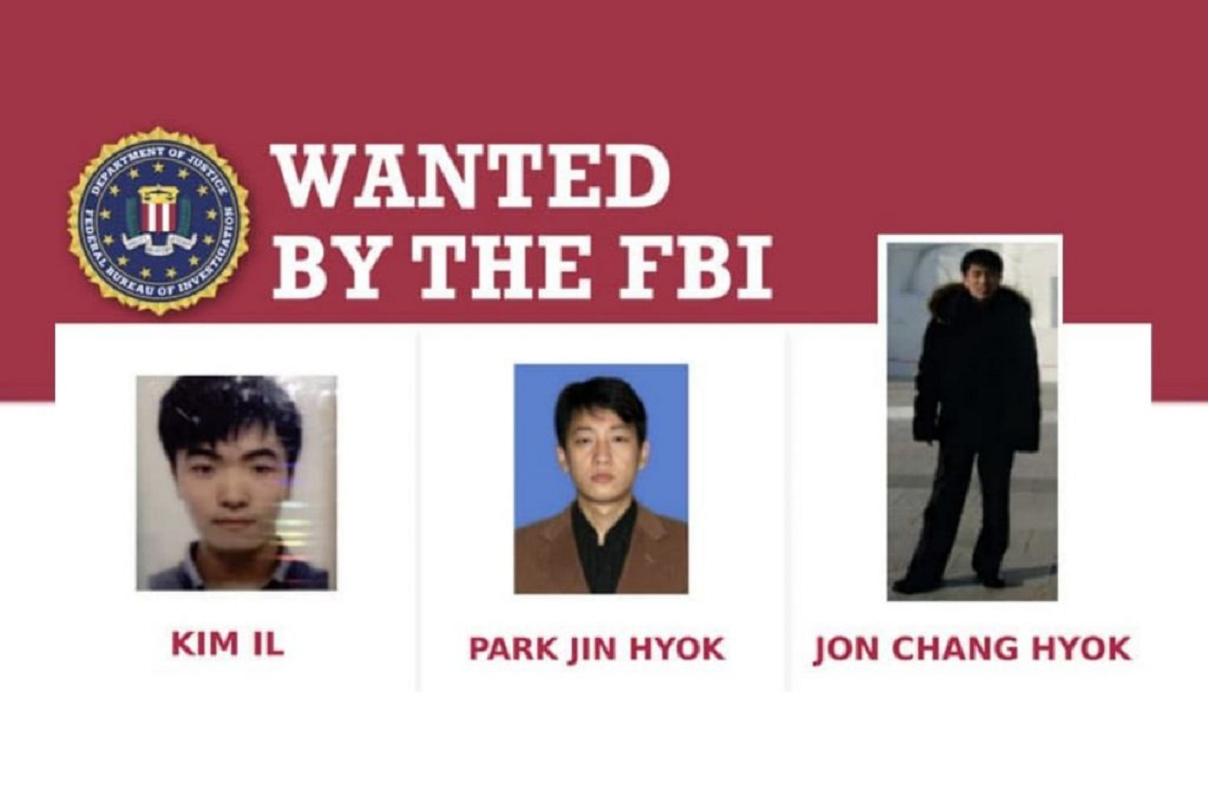
North Korea Hacks and Steals Cryptocurrency to Fund WMD Development Lee DonghoonContributing editor of Tech FocusThe recent incident of the North Korean Lazarus Group stealing cryptocurrency at an unprecedented scale shocked the world. This is also a case that clearly shows North Korea’s cyber warfare capabilities.In this article, we will look at their cyber warfare capabilities, characteristics, and countermeasures, focusing on this theft and subsequent incidents.On February 21, Bybit, the world’s second largest cryptocurrency exchange, suffered the largest hacking damage ever. The hack by North Korea’s Lazarus Group resulted in the theft of $1.46 billion (about 2.1 trillion won) worth of cryptocurrency.The hackers stole Ethereum (ETH) and Ethereum-based cryptocurrencies, and the stolen assets were converted into Bitcoin (BTC) through a money laundering process.As a result, North Korea suddenly came into possession of 13,562 BTC, becoming the third largest country in Bitcoin holdings. The Bitcoin acquired in this way is used as funds for North Korea’s WMD development.The reason North Korea is desperate to steal cryptocurrencies is because they are all virtual assets that do not have any physical form, so they can be stolen with sufficient hacking skills, and there is no other way to secure a source of funds due to the international sanctions.This coin theft occurred during the process of transferring assets from a cold wallet to a hot wallet. Exchanges usually use an offline wallet (cold wallet) to increase security and an online wallet (hot wallet) with fast deposits and withdrawals.Cold wallets are safe from online hacking because they store cryptocurrencies while not connected to the Internet. Exchanges usually store about 80% of the assets entrusted by users in cold wallets that are relatively secure, and the rest in hot wallets with fast deposits and withdrawals. Hackers mainly target when funds are transferred between wallets.Wanted poster for North Korean hackers distributed by the FBINorth Korean hackers have already shown their prowess in cryptocurrency hacking. The amount stolen by North Korean hackers increased from $660.5 million (KRW 955.2 billion) in 2023 to $1.34 billion (KRW 1.9376 trillion) in 2024, which is a 102.88% increase from the previous year.It accounts for a whopping 61% of the total cryptocurrency hacking damage last year. The number of cryptocurrency hacking incidents they committed also more than doubled from 20 to 47, but the problem is that the frequency of attacks is increasing as well as their scale.The average time it takes to successfully attack is steadily decreasing, and attacks worth more than $100 million (KRW 145 billion) are much more frequent than before. North Korean hackers use specialized money laundering techniques such as mixers and bridges to cash out the stolen funds. A mixer is a technology that splits and mixes cryptocurrencies to obscure the source of the funds.It was created for the purpose of anonymizing most of the transaction information for customers who want to strengthen the anonymity and decentralization of their assets, but it is currently being abused to hide the source of funds and the remittance destination.The bridge is a function that allows transactions between different types of cryptocurrencies, but it is being abused for the purpose of changing the stolen cryptocurrencies into other cryptocurrencies to make it difficult to trace the funds.What is more serious about North Korea's cryptocurrency theft and money laundering is that it uses overseas infrastructure as well as North Korea.In particular, it was revealed that the US currency exchange network THOR Chain was used to launder $1.2 billion, which is 85% of the cryptocurrency stolen from Bybit in February. Despite pressure from the US government, THOR Chain is not blocking North Korea-related transactions.According to blockchain security researchers who told CoinDesk, a US journal specializing in the field, this is because the main developers and validators of THOR Chain received a considerable fee from the transaction. It is estimated to be over $12 million.Chinese crime syndicate is also involved in North Korea’s cryptocurrency money laundering. According to research by TRM Labs (hereinafter referred to as TRM), a U.S. blockchain research institute, the black market financial network operated by Chinese crime syndicate is providing critical assistance to North Korea and other rogue states and criminal organizations in exchanging cryptocurrency. Ari Redboard, TRM’s chief international policy officer, pointed out that U.S. law enforcement agencies have failed to stop their activities until now because they have not faced this clear fact.Nick Carlson, a former FBI analyst and investigator for TRM, said, “North Korea laundered the stolen Ethereum and converted it into Bitcoin, making it difficult to track,” and revealed that this money laundering was not done directly by North Korea, but by third parties such as THOR Chain and the Chinese black market financial network. He also pointed out that even a small portion of the money laundering capabilities of the Chinese black market financial network were enough to satisfy North Korea’s needs.According to TRM's research, this powerful Chinese black market financial network is operated by violent organizations such as the Black Society, and various criminal organizations exchange cryptocurrencies deposited by them for legal tender.This is because the government's surveillance of China's institutional banks is very strict, making it difficult for criminal organizations to use them. This is also why people who want to evade taxes while conducting large-scale transactions often use this black market financial network.North Korea is also directly securing overseas bases. According to Reuters on the 24th, it was revealed that North Korean hackers set up front companies in the United States and used them as bases to spread malware to developers.According to an investigation by Silent Push, a U.S. cybersecurity company, Blocknovas, Softglide, and Angeloper Agency were among the front companies established by North Korea. All of them use non-existent representatives and fake addresses.However, except for Angeloper Agency, all of them are officially registered businesses with the U.S. government, making it a very rare form of attack. North Korean hackers posted fake job advertisements in the names of these companies, conducted remote interviews with developers who responded to the advertisements, and sprayed them with malware.This malware stole not only the developers’ cryptocurrencies but also their passwords and credentials, helping the North Korean hackers carry out subsequent crimes. The operators of these front companies were small groups under the North Korean hacking group Lazarus, which became famous for the Bybit hack in February.Tracking and eradicating the funding sources for North Korea's WMD development will not be easy in the future due to North Korean hackers who use cutting-edge IT technology to fool the world, as well as third-country citizens who turn a blind eye to this for economic gain.In conclusion, it is essential to establish an international cooperation system that goes beyond individual responses to North Korea's hacking. To this end, governments and companies of each country should establish a closer information sharing system and introduce a surveillance system that can detect suspicious transactions in real time.In addition, regulations should be strengthened to prevent cryptocurrencies stolen through hacking from being illegally distributed through money laundering. It is also advisable for general users to thoroughly manage their personal security and use platforms with verified security.When governments, companies, and individuals cooperate to build a multi-layered defense network, they will be able to maintain market trust.
25.05.02 -
 [News&Issue]
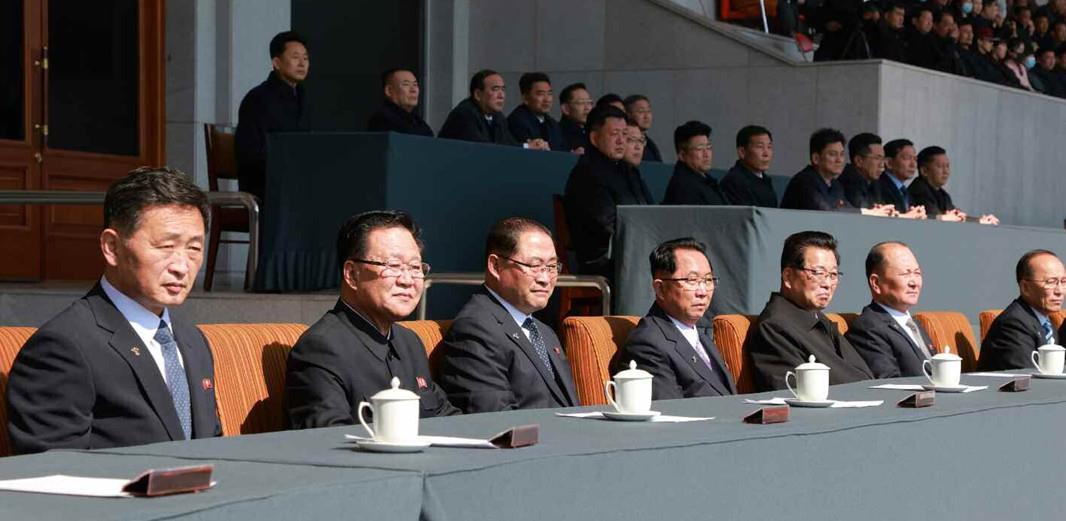
Choe Ryong-hae’s Solo Power Broker Role: A Potential Risk to North Korea’s Stability Lee Seung-yeol,Analyst, National Assembly Research ServiceIn North Korea, political purges have long been seen as inevitable. In the early years of Kim Jong-un’s rule, it was almost routine for high-ranking officials to quietly disappear from view.But the current power reshuffle marks a clear shift from those violent traditions. Since around 2017, purges have mostly disappeared, replaced by a system built on informal networks—with Choe Ryong-hae, Chairman of the Standing Committee of the Supreme People's Assembly, at its center.Choe’s 2017 appointment as Director of the Organization and Guidance Department signaled Kim Jong-un’s formal backing. The powerful “party within the party” controls appointments, inspections, and reports. Choe is the first non-Paektu bloodline figure to hold the post since Kim Jong-il.This move effectively confirmed Choe Ryong-hae as the second most powerful figure in the regime.According to Chester Barnard’s Organizational Theory, informal groups are a natural part of human organization and can only become formal structures with top-down approval. Using this framework, we can draw a meaningful comparison between Choe Ryong-hae and Jang Song-thaek.Jang built his base through the Socialist Patriotic Youth League and Party Administration Department, weaving informal ties into the formal system. But his monopoly on economic power sparked clashes with allies and led to his purge.By contrast, Choe also facilitated the rise of key elites but focused on reducing internal friction and reinforcing the regime’s internal cohesion.Military leaders Ri Yong-gil, Kim Su-gil, and No Kwang-chol, along with Party officials Kim Jae-ryong, Jong Kyong-thaek, and Ri Hi-yong, all rose from lower ranks through direct ties to Choe as he advanced in power.A notable case is former Premier Kim Tok-hun. Despite a harsh rebuke from Kim Jong-un, he wasn’t purged but later reinstated to a top position—widely seen as a sign of Choe Ryong-hae’s protection.Choe’s expanding network reshaped the regime’s power balance. Despite pushback from rivals like Kim Yo-jong and Jo Yong-won, he installed loyalists across the Organization and Guidance Department, military, and inspection bodies. By 2022, analysts dubbed it a “single power broker system.”This isn’t just a personal power grab—it signals a structural shift in North Korean politics. In a system centered on the supreme leader, Choe’s quiet consolidation has brought stability. But with little elite competition, this centralization may limit adaptability, casting doubt on how lasting that “stability” truly is.Ultimately, the future of the regime may hinge on whether Kim Jong-un’s symbolic authority and Choe Ryong-hae’s administrative control can continue to coexist in harmony.
25.04.18 -
 [Feature Article Series]
Marketing In North Korea (21)Between Imitation and Erasure: The Story Behind Air Koryo’s Logo Change Jeon Byung-kilSenior Consultant of YESInnovationformer of Secretary General of UniKorea FoundationNorth Korea no longer talks about reunification.In late 2023, North Korea’s leader, Kim Jong-un, officially declared an end to the country’s goal of unifying with South Korea. This new position, known as the “Two-Koreas Policy,” marked a big shift in North Korea’s national identity. After the announcement, the government began removing all symbols of reunification. Monuments, school textbooks, songs, and even public slogans were rewritten or taken down. One of the most symbolic examples of this change is the redesign of the Air Koryo logo.Air Koryo is North Korea’s only national airline. Since 1992, its logo featured a goose flying with wide-spread wings. If you looked closely, the shape of the bird’s wings resembled the map of the Korean Peninsula. The logo wasn’t just artistic—it was a political message showing North Korea’s desire for reunification with the South. But in March 2024, the airline replaced the logo with a completely new design. The new logo removed the Korean peninsula shape and now shows wings that look like a flame or torch.This wasn’t just a small design update. The new logo was applied to airplane exteriors, tickets, office signs, international branches, and more. Experts say this project likely cost millions of dollars. The surprising part? The old logo that North Korea is now trying to erase was actually inspired by South Korea’s Korean Air.The Birth of Air Koryo in 1992The year 1992 was important for both Koreas. After the collapse of the Soviet Union and other communist countries in Eastern Europe, South Korea quickly established diplomatic relations with many of them. At the same time, Korean Air, South Korea’s major airline, was growing fast—opening new routes to Russia, China, and Eastern Europe. Korean Air became a global airline, flying Boeing 747s to the U.S. and Europe.Meanwhile, North Korea was falling behind. Its airline, then called Korean Airways, only flew to a few places like China and the Soviet Union. The names “Korean Air Lines (South Korea)” and “Korean Airways (North Korea)” were so similar that foreigners often confused the two. To fix this, North Korea decided to rename its airline to Air Koryo on October 1, 1992. It also introduced a new logo.The new logo showed a blue goose flying in front of a red sun. This design looked surprisingly similar to the old Korean Air logo used between 1969 and 1984, which featured a swan in flight. North Korea claimed it was a goose, not a swan, and added wings shaped like the Korean Peninsula. The design was clearly meant to show national pride and hope for a unified Korea.When Design Becomes PoliticalSo why is this goose logo a problem now? The answer lies in the wings shaped like the Korean Peninsula. After 2023, North Korea began deleting everything that reminded people of “One Korea.” That included this logo.According to news reports, Air Koryo had used the same logo across all of its businesses, including a luxury resort, a taxi company, and a food brand. Changing the logo everywhere shows how serious the government is about this new identity. The updated design replaces the goose with something that looks like a flame or torch. In North Korean symbolism, a torch (called bonghwa) is not just fire—it represents the beginning of a new revolution.In other words, they replaced the dream of reunification with a symbol of loyalty to the ruling party. The logo is no longer about the Korean people—it’s about the North Korean regime.The Irony of Imitation and ErasureLooking back, the creation of Air Koryo in 1992 was already ironic. North Korea wanted to be different from South Korea, but it copied its logo design and even used a similar airline name. At the time, North Korea was trying to balance competition, imitation, and a unique identity. But today, even the parts that once copied from South Korea must be erased. Anything connected to the South is now unwanted. Even the idea that Air Koryo once looked like Korean Air is too uncomfortable for North Korea to accept.In North Korea, design isn’t just about how something looks. Logos, colors, and symbols all carry deep political meaning. The decision to remove the Korean Peninsula shape from Air Koryo’s logo is a clear signal: North Korea no longer believes in “One Korea.” At the same time, it’s an attempt to hide the fact that the old design was inspired by the South.Reading Politics Through Visual LanguageNorth Korea is not only rewriting its future—it’s also deleting its past. Reunification slogans, South Korean references, and even parts of its own design history are being wiped out. The change in Air Koryo’s logo is just one example. But it tells us a lot.Politics isn’t always about speeches and laws. Sometimes, it’s in the curve of a logo, the shape of a wing, or the flame of a torch. Air Koryo’s redesign is not just a corporate decision—it’s a symbol of North Korea’s new direction.Today, planes from Air Koryo no longer carry the shape of the Korean Peninsula. They no longer fly under the hope of “One Korea.” In North Korea’s skies, the dream of reunification is disappearing.
25.04.18 -
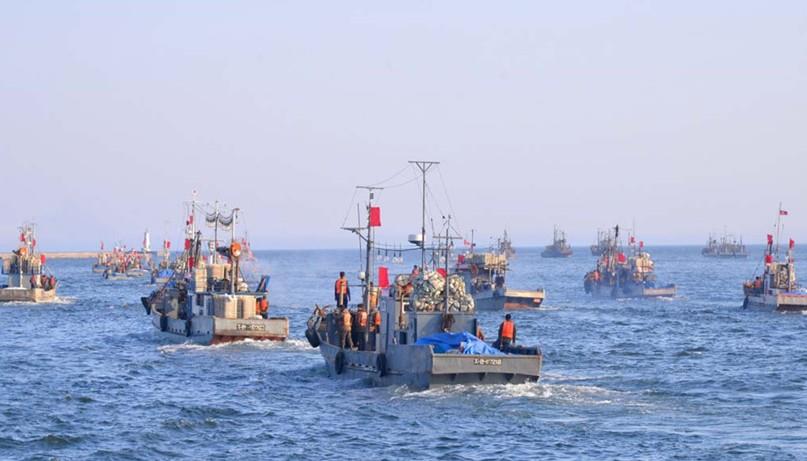 [Analysis and suggestion]
China’s Taiwan Invasion and Kim Jong-un’s Potential Provocation Kim Yeolsoo,Director of the Security Strategy Office, Korea Institute for Military Affairs◯ Rising Likelihood of a Chinese Invasion of Taiwan Tensions over a potential Chinese invasion of Taiwan have intensified, especially after U.S. House Speaker Nancy Pelosi’s visit in August 2022, which angered Beijing. While the U.S. normalized relations with China in 1979 under the “One China” policy, it maintained unofficial ties with Taiwan through the Taiwan Relations Act, allowing arms sales. As China’s influence grew, so did U.S.–China rivalry, spotlighting the risk of China using force to unify Taiwan. In response, the U.S. passed the TAIPEI Act in 2019 to support Taiwan diplomatically, followed by the Taiwan Assurance Act in 2020 to reinforce its strategic importance and boost its asymmetric defense.Despite repeatedly calling Taiwan a core interest under the “One China” principle, China responded to Pelosi’s visit with a show of force. Within hours of her departure, it launched four days of large-scale drills encircling Taiwan, including live-fire exercises and coordinated air and naval operations. Eleven Dongfeng (DF) missiles were fired, one of which flew over Taipei. In 2024, China conducted similar encirclement drills under the codenames “Joint Sword-2024A” and “2024B.” Again, in April 2025, it mobilized army, navy, air force, and rocket units for another blockade simulation. This time, no codename was released—hinting that such exercises may now be standard practice.Taiwan has continued its annual “Han Kuang Exercise,” first launched in 1984 to test its readiness against a potential Chinese attack. In 2025, a senior-level war game was held in March, with a command post drill planned for May and a live-force exercise set for July. Notably, Taiwanese media reported that this year’s drills are based on a scenario of a Chinese invasion in 2027—the 100th anniversary of the People’s Liberation Army and the end of Xi Jinping’s third term—fueling speculation that Xi may use force to achieve unification and solidify his extended rule.◯ The Second Trump Administration’s Defense StrategyAs China ramps up its exercises and Taiwan strengthens its defenses, a report outlining the Trump administration’s second-term defense priorities was leaked in late March. The “Interim National Defense Strategic Guidance,” drafted by the Pentagon, classifies China as the sole pacing threat and identifies one core objective: deterring Beijing from forcibly taking Taiwan while simultaneously protecting the U.S. homeland. The report also notes that the U.S. would be willing to “accept risk in other theaters,” expecting allies to play a bigger role in containing threats from nations like Russia, North Korea, and Iran. To bolster regional strength, the U.S. plans to deploy submarines, bombers, unmanned vessels, and special forces to the Indo-Pacific. It will also use high-impact weapons, such as bunker-busting bombs designed to destroy hardened targets. This strategic shift has significant implications for South Korea. It could redefine the role of U.S. Forces Korea (USFK), increase South Korea’s responsibility in deterring North Korea, and lead to higher defense spending and cost-sharing. While USFK has traditionally focused on defending South Korea and maintaining regional stability, the new guidance suggests a possible role in Taiwan’s defense as well.Under the concept of “strategic flexibility,” U.S. forces stationed in Korea could be redeployed in times of crisis. Beyond just a change in mission, this may involve structural realignments, such as relocating air assets or altering the rotation of the 2nd Infantry Division’s brigade. This raises concerns that a Taiwan crisis could expose South Korea to instability, creating a window of opportunity for North Korean aggression.◯ China’s Invasion and Kim Jong-un’s Possible Military ProvocationsSouth Korea’s stance on cross-strait relations has gradually evolved. After cutting ties with Taiwan in 1992 to establish relations with China, Seoul maintained the “One China” policy while expanding informal cooperation with Taipei in the 2000s. As U.S.–China tensions grew, South Korea took a pragmatic, ambiguous approach—but China’s strong backlash to THAAD deployment and its pro-North Korea stance pushed Seoul toward value-based alliances. South Korea’s shift in policy stemmed from its opposition to China’s revisionist stance on Taiwan. This was reaffirmed in February during a trilateral meeting with the U.S. and Japan at the Munich Security Conference. Their joint statement stressed peace in the Taiwan Strait, called for a peaceful resolution, opposed unilateral changes by force, and backed Taiwan’s international participation. The message was clear: if China invades, South Korea will coordinate its response with the U.S. and Japan. If China does invade Taiwan, two scenarios are plausible. One involves a limited strike focusing solely on Taiwan. The other—more likely—entails China provoking North Korea to simultaneously initiate aggression against South Korea to divide U.S. and allied military resources. Even if China wishes to limit the war to Taiwan, it may find it hard to resist the tactical advantage of fragmenting allied responses. Thus, the second, more complex scenario seems more probable.Whether backed by China or acting on its own, North Korea may exploit the redeployment of U.S. forces to Taiwan to pursue its goal of unifying the peninsula under its rule. Its actions could range from limited provocations to a full-scale invasion. A Taiwan conflict is unlikely to stay localized—it could escalate into a broader U.S.–China clash or even a world war. If North Korea launches a major offensive, South Korea would likely respond independently and possibly seek unification, leaving it no choice but to focus entirely on national defense rather than intervening in the Taiwan crisis.Even a limited provocation is possible. North Korea could go beyond past acts like the sinking of the ROKS Cheonan or the shelling of Yeonpyeong and attempt to occupy parts of the five western border islands. The attacker always has the advantage of selecting the time, location, and means of assault, making defense harder. At the mere sign of an attack, South Korea would likely prioritize defending its territory over participating in any regional defense effort for Taiwan. Ultimately, the best way to prevent a Chinese invasion is through strong deterrence—both diplomatic and military. The second Trump administration’s “peace through strength” strategy, outlined in the Interim National Defense Strategic Guidance, puts Taiwan’s defense at the core of U.S. planning. Likewise, South Korea’s priority should be deterring North Korean aggression under its own leadership. If deterrence fails and conflict breaks out, South Korea must focus on defending the peninsula rather than becoming involved in the Taiwan crisis.
25.04.18 -
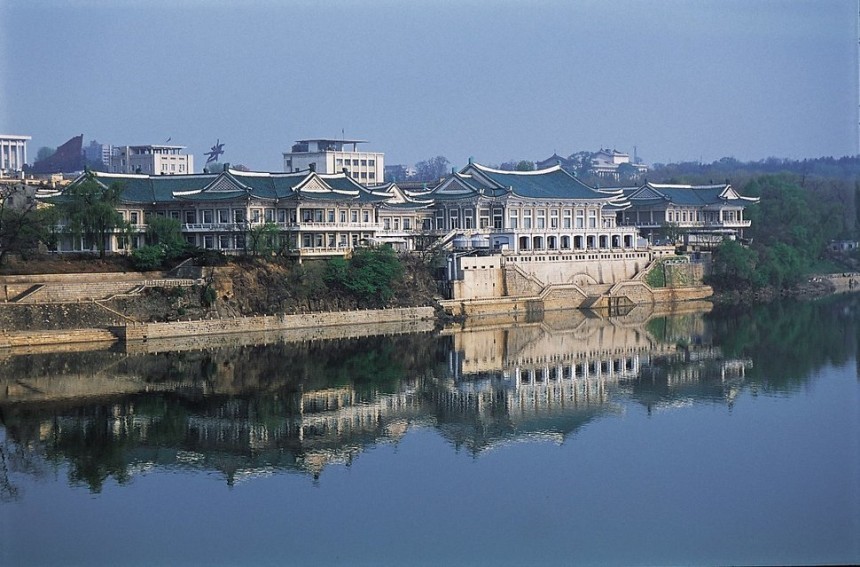 [Feature Article Series]
Marketing In North Korea (20)The Weight of a Name, the Taste of Politics: The Story of Okryugwan Jeon Byung-kilSenior Consultant of YESInnovationformer of Secretary General of UniKorea FoundationA Cold Noodle Craze BeginsIn 2018, something surprising happened. During a meeting between the leaders of North and South Korea, North Korean leader Kim Jong Un made a lighthearted comment about a famous North Korean dish: Pyongyang naengmyeon, a cold noodle soup. He said the noodles had “come a long way” to South Korea. After that, people in South Korea became very curious about the dish—and especially about the restaurant it came from: Okryugwan, a well-known restaurant in Pyongyang.But the story of Okryugwan in South Korea had already begun almost 20 years earlier.Two Okryugwans in Seoul?In 1999, two restaurants in Seoul opened using the name Okryugwan. One opened in May in a neighborhood called Yeoksam. It served about 20 kinds of traditional North Korean food, including naengmyeon, hot rice soup, and grilled beef. According to news reports, many of the ingredients—and even kitchen supplies—were brought from North Korea. The head chef was a Korean living in Japan, connected to a pro-North Korean group.Around the same time, another Okryugwan opened in the neighborhood of Gaepo. Both restaurants claimed they had the right to use the name Okryugwan. The first was opened by a company (let’s call it Company A), which said it had signed a deal with a Japanese company connected to the real Okryugwan. The second restaurant was opened by Company B, which said it had made a deal through a Chinese partner.Company A took Company B to court, asking for them to stop using the name. But the court rejected the request. The judge said that since both companies had worked separately to open their restaurants, it wasn’t clear who had the “real” rights to the name. In fact, the judge even said it wasn’t certain whether either restaurant was truly a branch of the original Okryugwan in Pyongyang.Soon after, the real Okryugwan in North Korea made a strong statement: it had never approved any restaurants in South Korea, and it called both Seoul restaurants fake and dishonest. Over time, both restaurants closed.A New Try in 2018After the 2018 North-South Korea summit, talk of opening a real Okryugwan branch in South Korea came up again. A South Korean peace organization worked with North Korea and the local government in Gyeonggi Province to plan a new restaurant.According to their agreement, chefs from the original Okryugwan would come to South Korea to cook, using North Korean ingredients. Several cities, including Goyang, Paju, and Dongducheon, were interested in hosting the restaurant.But again, the plan ran into problems. Back in the 1990s, someone had already registered the name Okryugwan as a trademark in South Korea. Without that person's permission, the name couldn’t be used. On top of that, political tensions between the two Koreas made it difficult to move forward. In the end, the new restaurant never opened.North Korea’s Own PlanInstead of working with South Korea, North Korea decided to promote Okryugwan and naengmyeon on its own. In 2022, North Korea successfully registered “the tradition of eating Pyongyang naengmyeon” as a UNESCO Intangible Cultural Heritage. It also registered the name Okryugwan as a trademark with the World Intellectual Property Organization (WIPO).North Korean media now presents Okryugwan as the symbol of authentic Pyongyang naengmyeon, and promotes it as part of their national pride and cultural identity. Rather than sharing it with South Korea, they are building it as their own global brand.
25.04.04 -
 [Current Affairs Analysis]
North Korea’s Food Crisis: Structural Challenges and Solutions Amid Rising Prices and Starvation (March 2025) Lee Seung-hyunPh.D in Public Administration (Research Fellow at the SAND Institute)drharacearthur@gmail.comAs of March 2025, North Korea faces a severe food shortage and worsening agricultural crisis. For the 19th consecutive year, the Food and Agriculture Organization of the United Nations (FAO) has listed North Korea among 45 countries requiring external food aid—a situation that has continued since 2007. This is no longer a short-term problem but a deeply rooted, structural issue—one that demands practical, long-term solutions.At the heart of North Korea’s food crisis lies a steep decline in agricultural productivity. The country’s rice output stands at just 36% of South Korea’s, having dropped sharply from 2.8 million tons in 2019 to 2.11 million in 2020, with no signs of recovery since. This drop is linked to a mix of natural disasters, climate change, and persistent shortages of essential inputs like fertilizer and fuel. Farming practices remain largely manual and outdated, with minimal access to modern equipment or agricultural technology. Furthermore, the collective farming system leaves farmers with little independence or incentive, locking the system into a cycle of low yields and inefficiency.In March, as the spring sowing season for wheat and barley began, North Korean authorities instructed agricultural sectors across the country—including in the key region of Hwanghae-do—to complete planting by mid-month. But the reality on the ground tells a different story. Chronic food shortages and a lack of manpower are delaying vital prep work such as plowing and drainage. One local source noted, “The central command called for swift and quality planting, but there’s no one left to do the work. Many farmers are too hungry to even show up, and those who do are too weak to work properly, so planting is falling behind.”In short, the countryside faces a critical labor shortage. With young workers drafted into construction units or the military for national projects, most of the remaining workforce consists of elderly people and women—making it nearly impossible to meet the demands of the planting season. This shortage in production is directly driving up food prices across the country. By late February, rice prices in major cities like Pyongyang, Sariwon, Pyongsong, and Hamhung had climbed from 8,700 to 9,100 won per kilogram, while corn prices rose from 3,900 to 4,100 won. In northern areas such as Chongjin (North Hamgyong Province), Hyesan (Ryanggang Province), and Manpho (Jagang Province), rice prices jumped from 8,800 to 9,200 won and corn from 4,000 to 4,300 won. On average, both staples saw an increase of 300 to 400 won in just one week—a clear indicator of worsening food insecurity as February came to a close.Rising food prices in North Korea stem not only from outdated farming methods but also from deeper structural issues, such as currency fluctuations and the effects of 2024’s natural disasters. In particular, heavy rains and floods in late July severely damaged crops. In inland regions like South and North Hwanghae Provinces, flooding disrupted rice pollination, resulting in large amounts of empty husks. This led to a sharp drop in rice production and further price increases. With crop yields down and prices rising, North Koreans are finding it harder than ever to secure food—especially under ongoing international sanctions. The flooding last July also contributed heavily to the current spike in rice prices. According to one source inside the country, “Once rice prices go over 5,000 won per kilo, starvation begins—and that threshold was passed long ago. Since early January, we’ve heard rumors of people dying from hunger on farms, especially in inland regions like Hwanghae Province.” In short, food prices have remained dangerously high for months, and as March begins, there’s growing concern that starvation deaths could surge unless conditions improve quickly.As noted earlier, North Korea’s food crisis is rooted in structural issues beyond outdated farming. Addressing it requires systemic reform, including agricultural modernization through mechanization, better fertilizers and seeds, and improved irrigation. A more open stance toward international cooperation could also lead to stronger partnerships with countries like South Korea, China, and Russia.Secondly, North Korea needs to reform its agricultural system by moving away from collective farming and allowing more autonomy for individual households. Experts say limited market reforms could boost productivity. In fact, when private crop sales were permitted in the early 2010s, some regions saw output rise. Expanding such measures could help ease the ongoing food crisis.Third, humanitarian aid must be revived, as severe food shortages are expected during the May–August lean season. This crisis should be seen as a humanitarian emergency, not just an economic issue. The international community should continue food support regardless of politics, and Pyongyang must show greater openness in accepting it.North Korea’s food crisis is far from being a domestic issue alone—it has broader implications for the Korean Peninsula’s overall stability. Continued internal hardship could fuel unrest and increase external tensions. That’s why solving the food shortage is not just a humanitarian responsibility, but also a matter of maintaining peace and security across the Northeast Asian region.Ultimately, tackling North Korea’s food crisis will require a two-pronged approach: sustained international support and meaningful domestic reform. While short-term relief depends on external aid, long-term stability hinges on North Korea building its own capacity through agricultural transformation. If the regime takes a more open stance and works with global partners, it may finally find a path toward resolving its chronic food insecurity.
25.04.04
News Letter
We are leading the global communication via Newsletter.
We will deliver the latest information and proven facts on Korean Peninsula status including North Korea situation.